
Now that the Spring season is fully over and all of the series I’ve been following have either ended, gone on hiatus, or (in a handful of cases) are continuing into next season, it’s time to look at how the series I followed finished out.
My Ribdiculous Reincarnation will not be covered here because I have been covering it in a separate series of articles. I will also skip commenting on a few other series where my opinion/rating on it hasn’t changed since the Mid-Season Report and/or I don’t have anything more to say about the series beyond the comments I made then.
Titles from Mid-Season Report part 1 that I will not be covering here include MAO, The Beginning After The End s2, and The Strongest Job is Apparently Not a Hero or a Sage. . . Please see that article for thoughts on these series.
The one title from Mid-Season Report part 2 that I will not be covering here is Re:Zero s4. Please see that article for thoughts on that series.
Overall, this seemed like another fairly strong season, though this time I didn’t end up following some of the other highly-lauded titles (like Akane-banashi or Nippon Sangoku). However, the ratio of weak titles seemed a bit higher this time around.
BEST OF SEASON: Needy Girl Overdose (#1), Witch Hat Atelier (#2)
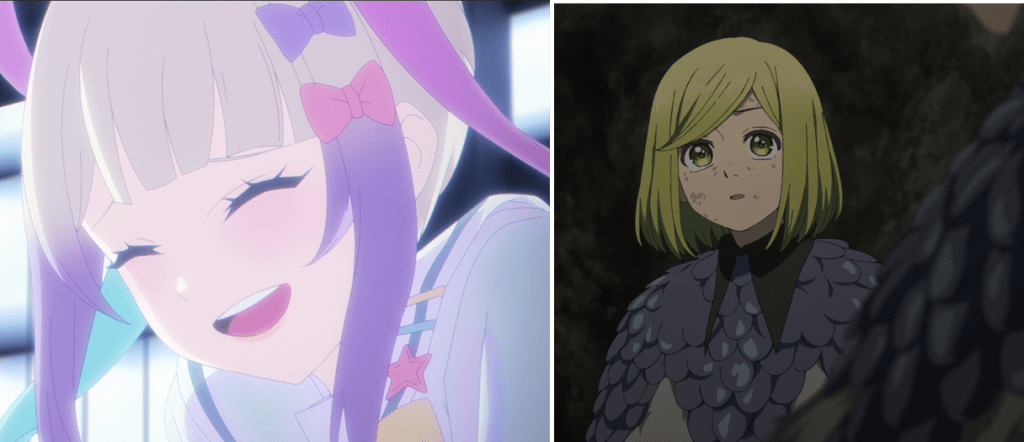
Series Rating: A for NGO, A- for WHA
Witch Hat Atelier is unquestionably a production masterpiece and does a stellar job with its world-building, but it is also very much a “safe” choice. Its approach, characters, and storytelling are conventional; hardly bad or boring, but nothing which in any way challenges a viewer or would tremendously stand out without its technical merits to back it up, and its season ends at an awkward point. NGO, on the other hand, is fantastically bold and daring even up to its final epilogue scenes. It goes into some very dark places (domestic abuse, depression, drug overdoses, self-harm, and suicide) as it employs rampant symbolism and all manner of movie and literary references to take a very critical look at Internet streaming cultur, in particular how it can provide salvation for some while exacerbating the insecurities of others. The climactic duel in episode 11, where the streaming group Karamazov seeks to take down the #1 streaming star, is an eye-popping spectacle, but the follow-up in the next episode, where the loser melts down in the wake of defeat, is the true work of art. (And that’s not to say that there isn’t some pretty incredible content before and after that, too.) It’s a legitimate Best of Year contender and will almost certainly be in my Top 5 at the end, while WHA will likely make my Top 10.
The Rest:
Agents of the Four Seasons
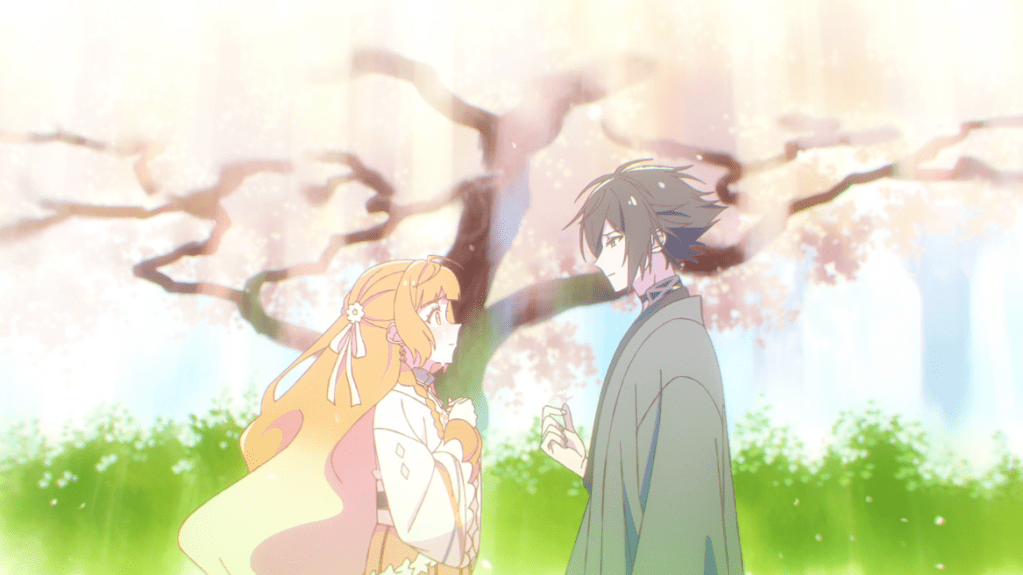
Overall Rating: B-
This series continues to have a number of significant flaws, including rehashing some points ad nauseum, stretching out scenes way too much, having phone conversations under illogical conditions, having terrorists pop up in situations that don’t always make sense, and most importantly, not even hinting at the terrorists’ motives until near the very end (and even then they’re ill-defined). For all the flaws, though, I do feel that the series delivered well enough on its emotional core. That matters because this was ultimately much more a story about emotion than anything else. In the end it was far from a perfect series but I was satisfied enough with it.
Always a Catch!
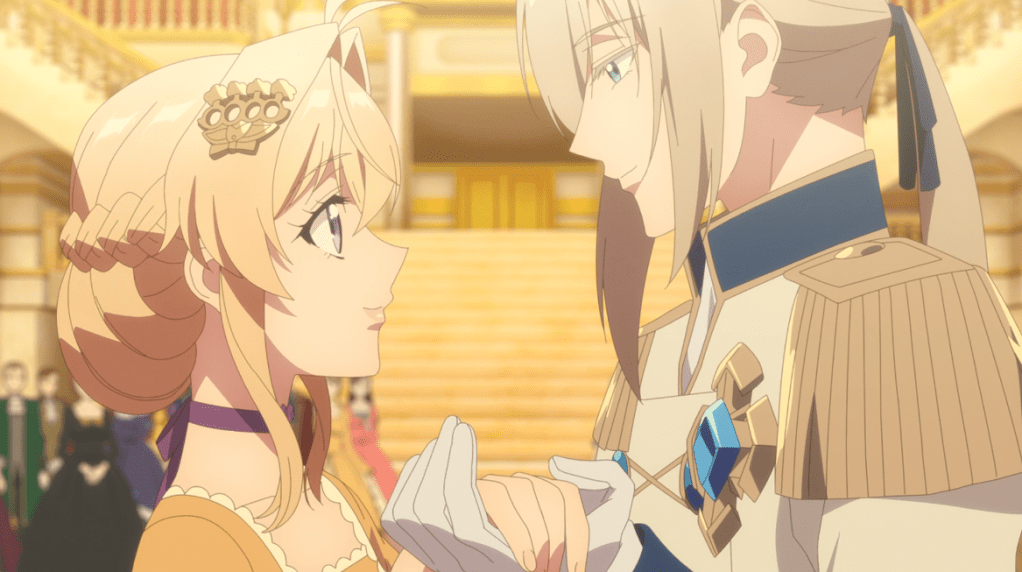
Series Rating: B+
This remained one of the most fun titles of the season to its very end as Maria successfully endures a few challenges and succeeds at formally being declared as Renato’s betrothed, all done in a fashion all Maria’s own. Ultimately this one is second only to the title below it for having the season’s most satisfying ending.
An Observation Log of My Fianceé Who Calls Herself a Villainess
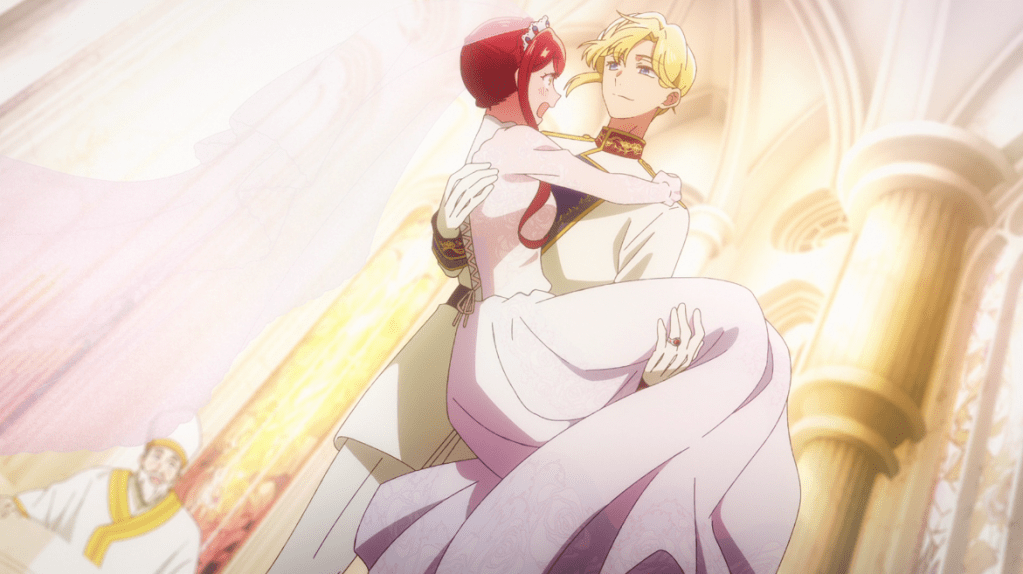
Overall Rating: B+
Isn’t it great to see one of these series tell a complete-feeling story in just one season? That’s exactly what we get here as Heronia’s efforts to push the narrative back to the original course fall apart and Cecil comes to understand exactly why Bertia has long been talking up her villainess role, even if she seems increasingly apprehensive about the cost to her for fulfilling it. Cecil’s unwavering determination to convince Bertia that yes, he really is serious about her being the person who will ultimately make him happy leads to one of the most satisfying endings I’ve seen for an anime series in quite some time. This is one that I can easily see myself coming back to rewatch multiple times.
Ascendance of a Bookworm s3

Overall Rating So Far: B
I almost didn’t include this one here since most the second half of the season could be described as “more of the same,” but with the last couple of episodes the politics which have long been hinted at have finally started to rise to the forefront. This is an aspect that Rosemyne has largely been distanced from, but with her formal debut into noble society, even staying at the cathedral is not going to entirely separate her from it; she is the Aub’s adopted daughter, after all, and thus automatically a candidate to succeed him. Getting to see Rosemyne in all the fancy new outfits is also pretty sweet, as is the way she continues to twist noble expectations even while playing along with them. I have seen some complaints from those familiar with the novels that the series is speeding through content, but that isn’t as evident for an anime-only viewer (or at least one who hasn’t gotten this far in the novel), so the production continues to be a delight.
Daemons of the Shadow Realm
Overall Rating So Far: B+
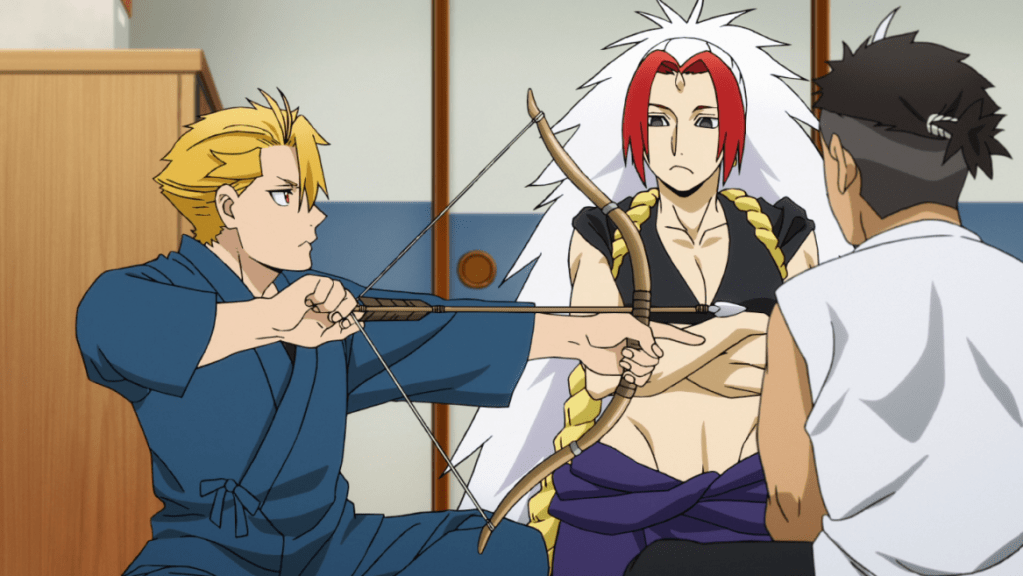
Although this one doesn’t do anything dramatically different as supernatural actioners go, it’s been widely-regarded as among the season’s best series because it executes pretty well on what it does do. A fair amount of the credit for this goes to the portrayal of Yuru, who comes across as unusually pragmatic and no-nonsense for a male character in his position. While he doesn’t hesitate to take action, he never does so recklessly if he can avoid it, and that lends a decidedly more mature feel to the content. I’m much less impressed with Asa; after how hardcore she seemed in the first episode, she’s regressed to being too soft in appearances since, but I do like the series’ implication that she’s just traded one cage for another in leaving the home village. Developments in the most recent episode are also promising for future plot developments, so this one is a definite keeper going forward.
Farming Life in Another World s2
Overall Rating: B
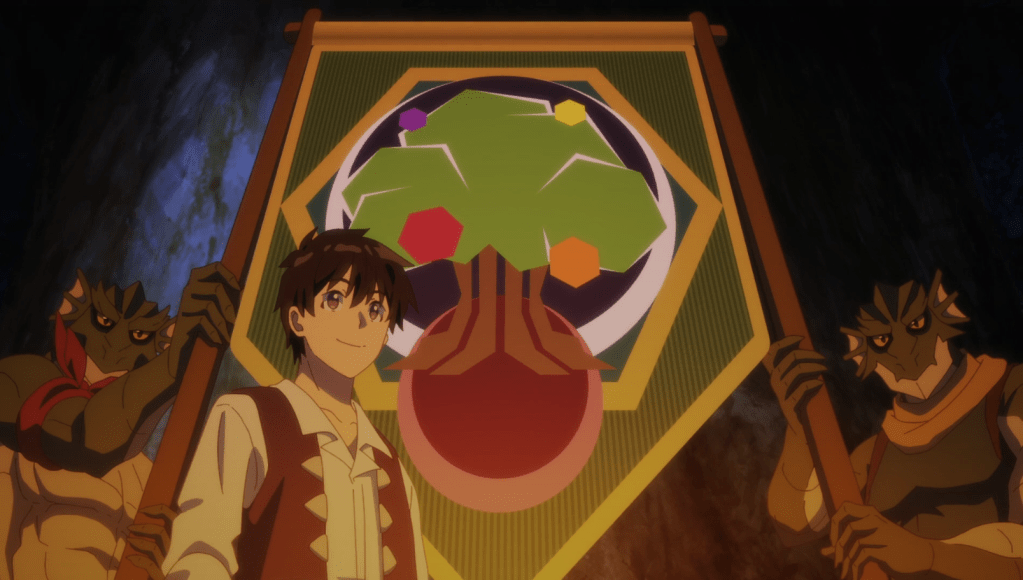
This series can’t really be evaluated by the same standards as other fantasy series because it has an entirely different goal: to foster the creation of a congenial (if also absurdly powerful) society. By the end of the series the Great Tree Village has a fourth village in the form of a floating castle, and setting that up and securing it provided one minor plot string. So does the imprisoned archfiend, but in typical series fashion that problem is conquered without anyone ever realizing the full extent of the problem. The series is still a delight, and I’ll happily come back for more if another season is ever made.
Gals Can’t Be Kind to Otaku?!
Overall Rating: B+
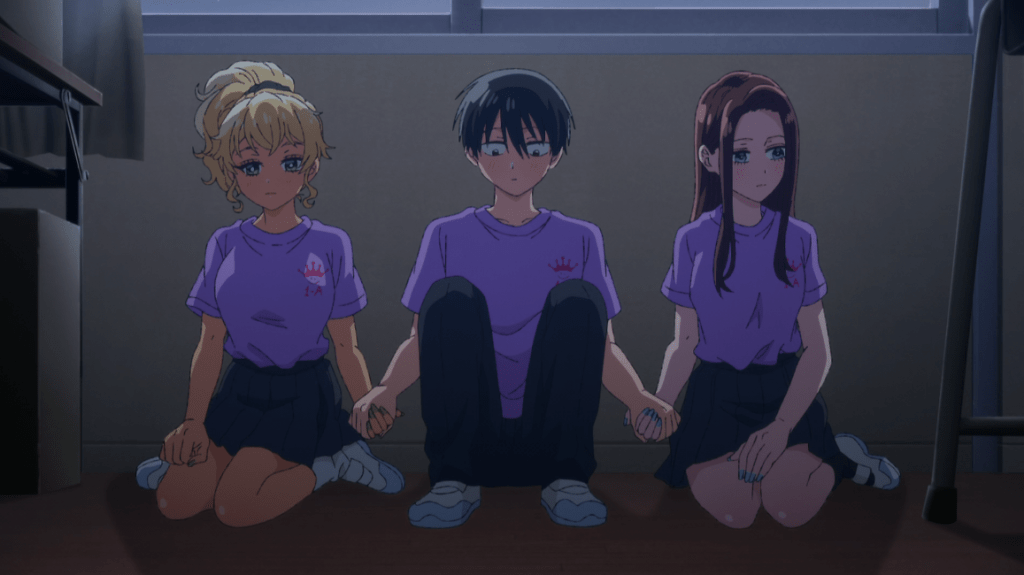
This one wound up being one of the minor surprises of the season, primarily because it provided convincing reasons why confidence-deficient Takuya could wind up hanging with the two girls widely-regarded as the class’s idols. It also made the love triangle which forms as a result feel natural (and adorably awkward!) rather than forced by plot convenience. Honestly, it’s one of the better recent series of its type, and having one of the season’s best OPs certainly doesn’t hurt. While I don’t think the series needs a second season (it’s fine where it stopped), I would certainly be back if more is animated.
Ghost Concert: Missing Songs

Overall Rating: C
I labeled this one “confusing as hell” at the halfway point concerning the plot and world structure, and the second half of the series only made those problems worse. The last episode does finally explain the mechanism by which MiucS took control of music, and it’s a bit concerning that something to passively draconian isn’t outside of the realm of possibility, but that doesn’t compensate for the way the plot resolved making no sense or how erratically the motives of one key character seemed to shift. There might be a decent story somewhere in here (the extended flashback in the last episode is actually one of the best parts of the series in a narrative sense), but the series isn’t put together well enough to tell it.
Reborn as a Vending Machine s3

Overall Rating: C+
I will give this last installment credit for staying true to its spirit through to the end and for finding creative ways to allow a vending machine to be a hero, but by this point the premise is wearing thin and reveling in its own absurdity isn’t enough to compensate. Doesn’t help that certain supporting characters have proven not to work in the long run. It does at least deliver a decently-interesting final battle (if also one which makes all characters but Boxxo amd Lamis irrelevant) and maintains a generally coherent plot throughout.
Snowball Earth
Overall Rating: C
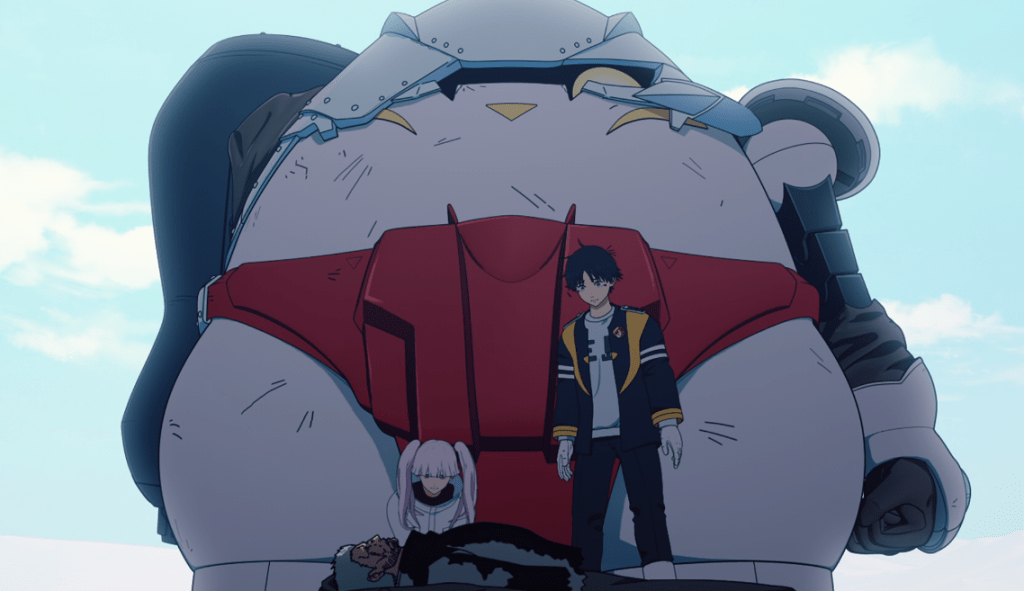
Gotta knock this one back down a notch, not because of the CG but because of how horribly it drags things out. (Nearly half of the series is one long action scene interspersed by lengthy flashbacks.) Its last episode does at least reveal the more monstrous villain that’s actually been lurking in the background the whole time in disguise, thus setting up a suitable challenge for Tetsuo and Yukio in the upcoming second season (which was announced at the end of episode 13).
That Time I Got Reincarnated as a Slime s4
Overall Rating: B-
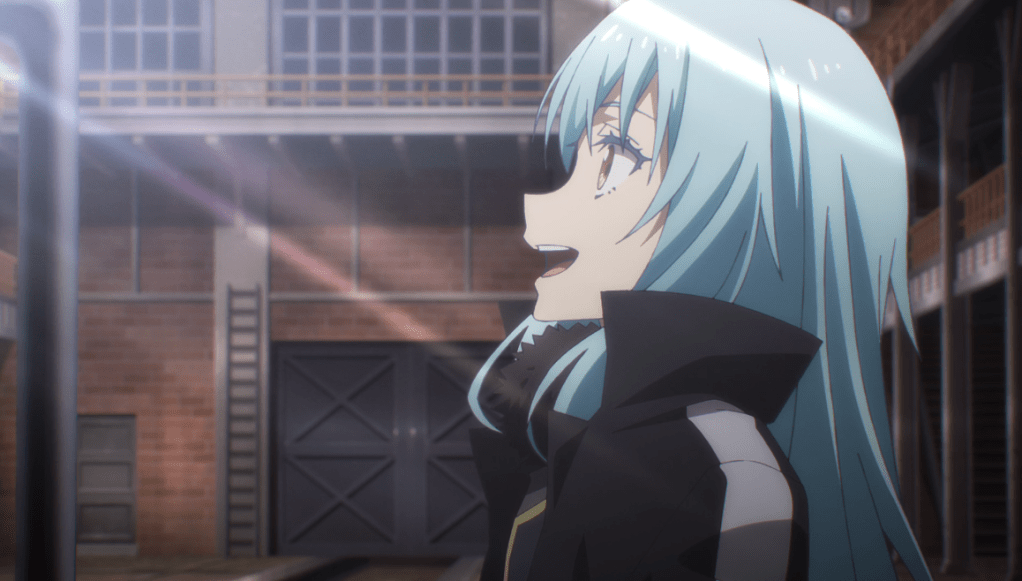
A lot of the debate over evaluating this season as a whole has been over whether or not Mariabell makes a sufficient foil for Rimuru. I think she was even if she didn’t have a power level to truly challenge Rimuru in the end because her actions reinforce that Rimuru’s one vulnerable point is still someone attacking him sideways with scheming. If he can solve the problem with forceful action then he’s virtually unbeatable at this point, but he still struggles some with being outmaneuvered. This approach does result in the most action-light season so far, but I’m fine with that in the end because it does vary the challenges he faces some.
The Classroom of a Black Cat and a Witch
Overall Rating: C
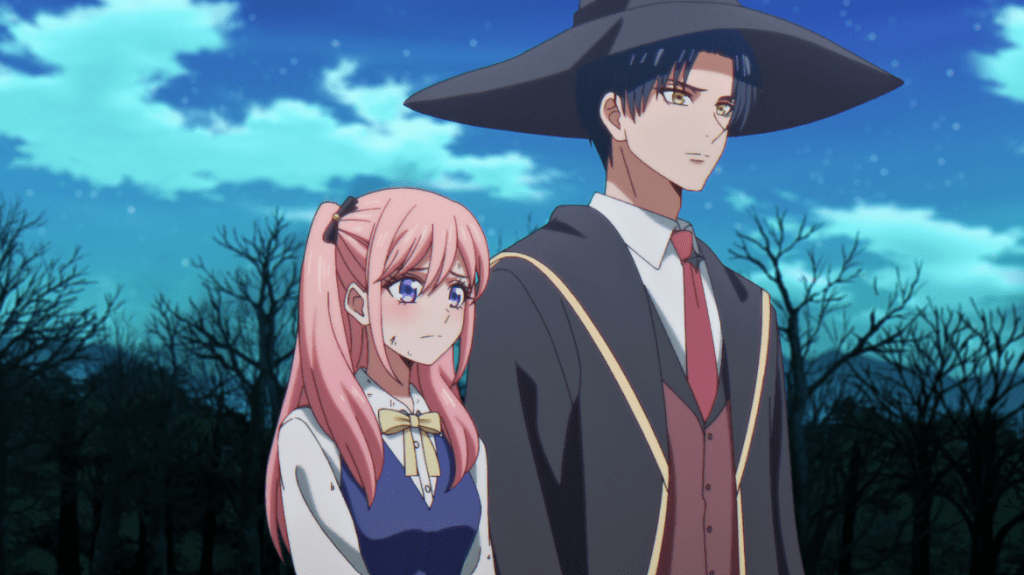
There’s only minimal (literal!) cat ass-kissing and some revelations about the villain organization which seems to be targeting Spica, but none of this changes what is otherwise a bog-standard magical school series. It doesn’t help that one of the new antagonists is such an over-the-top disgusting creep that his portrayal descends into the realm of parody. This series is continuing into a second half, but me continuing to follow it isn’t going to be a high priority.
The Most Heretical Last Boss Queen
Overall Rating: B
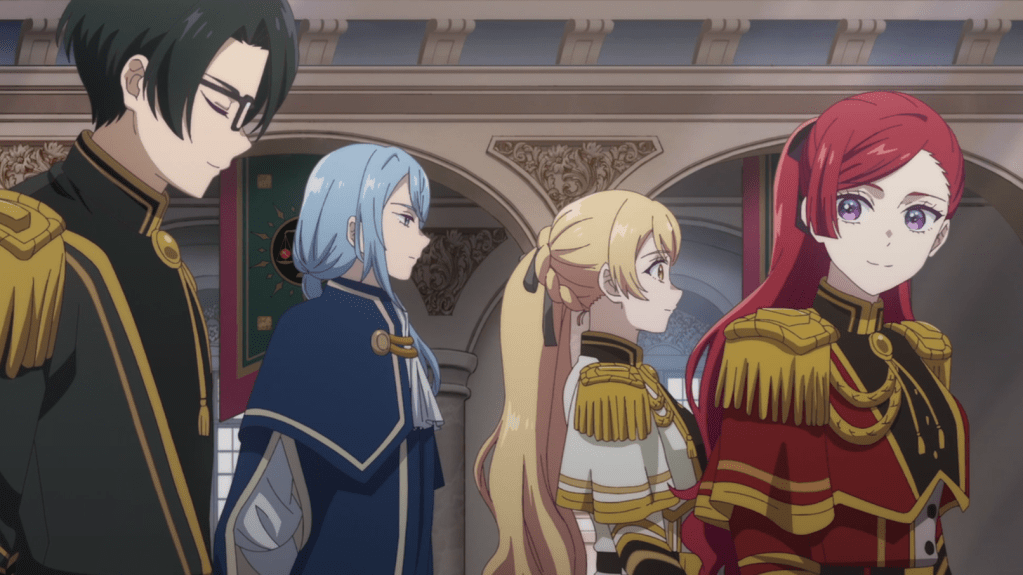
I actually don’t have a lot new to say about this one, and haven’t updated my grade, so I’m including it here for precisely two reasons: to acknowledge how sharp Pride and Tiara look in male military uniforms and to express my annoyance at where the season cuts off. Unlike the first season, there’s no sense of closure at the end of this one, just a march off to war (or more precisely, to thwart the invasion of an ally). If there is isn’t a stray follow-up episode to come then there had best be another season announced sooner rather than later.
The Warrior Princess and the Barbaric King
Overall Rating: B-
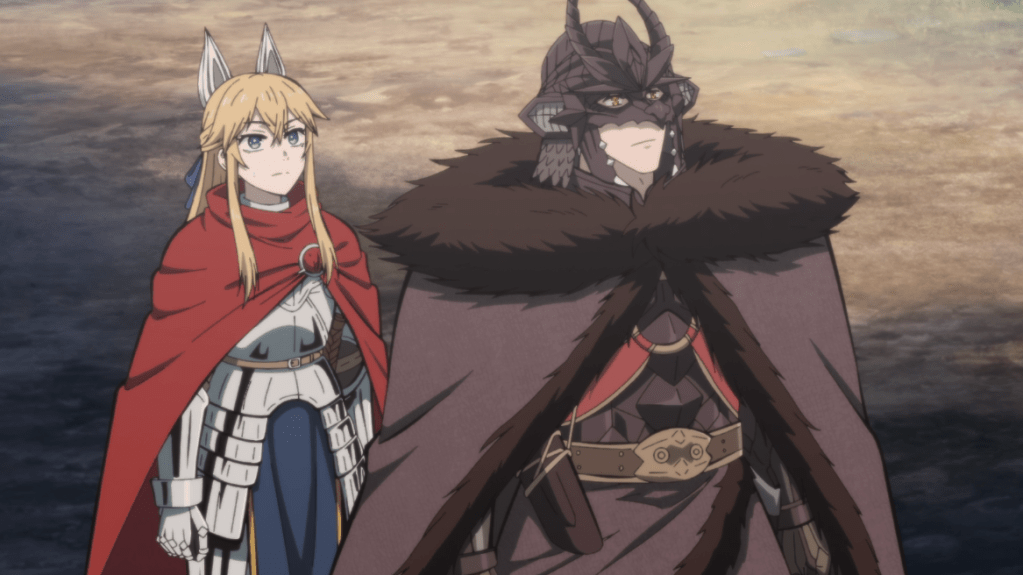
While I like this series quite a bit (and in particular how Serafina is gradually warming up to Veor), it’s not without some problems. The series is still woefully underusing Cersei and some odd world-building choices – like this world’s version of dwarves having developed machine guns – feel anachronistic. The nun Alyssa doesn’t add much to the mix, either, beyond providing the viewpoint of someone who has yet to gradually warm to barbarian culture, and there’s still that nagging issue of how Veor’s people have made a decades-long custom of kidnapping female warriors from the battlefield to become their brides. If they’re won over the way Veor is trying to win over Serafina, that’s fine, but reality suggests this can’t always be the case. As favorably as barbarian culture and inter-racial relations are regarded compared to “civilized” lands, this is still a glaring fault, and the series has largely avoided addressing Serafina’s criticisms about how barbarian culture seems a bit too cavalier about death. But it’s still been more fun that not, and seeing Serafina fight on equal terms with Veor given equal equipment is a delight, so I will happily watch more if another season is made.
This Angel Spoils Me Rotten s2

Overall Rating: C+
I still like Amane and Mahiru as a couple, and it is kind of neat seeing their relationship progress through territory that anime relationships usually either skip over or simply don’t get to, like discussions about living together, eventual marriage, and even having sex, which (surprisingly!) Mahiru seems more eager for than Amane does. However, that can’t overcome the fact that there simply isn’t much tension here. It’s not especially funny, either, and Mahiru’s version of cute only goes so far. The back half is perfectly pleasant but simply too bland, so I must downgrade the grade even further.
Wistoria: Wand and Sword s2
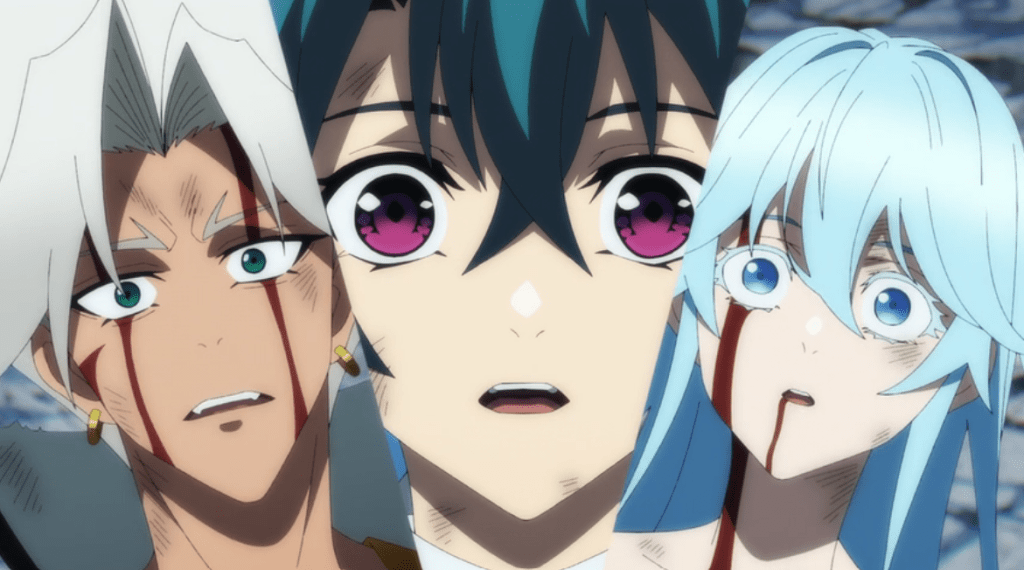
Overall Rating: B
Honestly, this grade is largely on the strength of technical merits because the story though the second half does nothing special. But man, can this series excel on spectacle, especially the battle between Elfaria and fellow Magia Vendar Zeo over Will, which takes up most of the next-to-last episode; that is a top-tier mage vs. mage slugfest. This half also brings us the long-awaited Will/Elfaria reunion and explains better (with some flashbacks) why the two are so strongly emotionally connected. The story leaves a lot of loose ends with its finale, but that’s fine since a third season has now been announced.
That’s it for the Spring 2026 season! Be sure to check out the ongoing Summer 2026 Preview Guide if you haven’t already.


One thought on “Springs 2026 Wrap-Up”