Jeanne, talking to Kazuya in a formal diplomatic matter
Rating: 4
The series is back for its second half, and picking up right where it left off: arranging to deal with the Gran Chaos Empire as it arrives in Amidonia with a large army, all to advocate on behalf of Julius in his attempt to regain control of Amidonia and the capital city of Van in particular – something that he claims Kazuya unlawfully seized. That sets the stage for an episode which entirely involves characters talking but is hardly without conflict.
Saying that a battle is taking place here despite no blows being struck would hardly be an exaggeration. The first part of the episode involves Kazuya adjudicating infrastructure within Amidonia, though with goals that are not just purely practical; he’s choosing bridges and then having them named after Elfreiden officials, with the goal of goading Julius into destroying them upon a return to power and thus riling up the locals against him. This is just the long-term aspect of going on the (verbal) offensive in the upcoming meeting with Julius and the Empire, represented by Jeanne. There he pulls no punches in poking at Julius while also arguing, with documentation, that Amidonia did well more than just invade in trying to destabilize Elfreiden. Jeanne seems to realize what he’s doing, as she never loses her composure as Kazuya systematically maneuvers Julius out of the negotiating picture. In fact, the only times Kazuya seems out of his element is when he briefly has to make small talk and does not correctly understand the full extent of a summoned maid’s inclination to mess with Julius while keeping him occupied.
The more I see of her, the more I like Jeanne as a character. She’s caught in the middle of the situation here but doesn’t flinch or hesitate in keeping Julius on a short leash and never loses her composure. (She also looks more convincing than most in her heavy armor.) Empress Maria is well-represented by Jeanne. Kazuya isn’t going to be able to manipulate her with practicalities as he has so many others, so I look forward to seeing the conclusion of their negotiations next episode. Juna also looks good in her navy uniform (with pants!), too.
On another note, who or what exactly is Albert and his queen talking about at the beginning of the episode? They’re certainly suggesting that something like this has happened before, only this time it’s more successful? More seems to be going on here than was originally apparent. . .
Welcome to my version of the Winter 2022 Preview Guide! I expect to be covering nearly every full-episode series that will be debuting or returning this season which has an official English-subtitled stream. (The exceptions will be the second season of The Case Study of Vanitas and the third season of Teasing Master Takagi-san, as I am not caught up on either.) These will be listed in newest to oldest order, and this post will be updated multiple times per day on busier days.
Note #1: All titles for the Winter 2022 season have now been posted, with Salaryman’s Clubgetting a separate entry due to its lateness.
Note #2 (updated):How a Realist Hero Rebuilt the Kingdom s2 will go directly to episode reviews, since I did those for the first season. I am also taking requests for what to do for a second series this season.
So without further ado. . .
Arifureta 2
Streams: Funimation on Thursdays
Rating: 3 (of 5)
I’ll be frank: I always thought the first season of Arifureta was a bad show for any number of reasons, but I still watched it anyway because it was so serious about its badness that it came off as corny, and I enjoyed it at that level. The second season’s opener suggests that things won’t be too much different, aside perhaps from the change of animation studio resulting in slightly better CG monsters. Hajime’s still the edgelord traveling with a bunch of girls all keen about jumping his bones and a little girl who calls him “Poppa,” and he’s leaving most of his classmates in the dust, to the chagrin of at least one in particular. The main difference this season is that Kaori is also along for the ride and in full competition.
The first episode is mostly just about re-establishing everyone’s relative position and providing the hook for the next big arc (including who the next enemy to get utterly butt-kicked by Hajime will be), so nothing much special is going on there. And while all of the cattiness in the military vehicle was annoying, it was saved by a few choice lines. One was Yue’s pointed assertion that while the other girls just want to bed Hajime, she’s actually done it. The other is Kaori’s very pointed (and true!) observation about Hajime’s current status, as shown in the screencap above. Rarely has the “slam head into table” (or in this case, steering wheel), which immediately follows this shot, felt more warranted. Keep popping off a bit more like this and the second season might hold my interest just like the first did.
Love of Kill
Streams: Crunchyroll on Wednesdays
Rating: 3.5 (of 5)
In this manga adaptation, Ryang-ha Son is a veteran hitman so notorious that everyone in the Underworld has a bounty out on him, but for reasons even he doesn’t fully understand, he’s taken an interest in young, relatively new female bounty hunter Chateau. Actually, “stalking” might be the appropriate word here, as she cannot seem to shake his attention or dissuade him and he even helps her out by killing some of her targets for her and allowing her to take credit. Maybe his interest is romantic, or maybe he just wants a connection that doesn’t seem rotten to him. But she has her own baggage to deal with and Ryang-ha as a potential target.
How well this goes over with viewers may come down to how much they can tolerate Ryang-ha’s very stalkerish behavior. Though he never gets physical except in self-defense, he can clearly manhandle her if needed, so this isn’t an even pairing at all; the power dynamic is all in his favor. This isn’t quite as creepy as it could be, though, because the only real menace present here is that he is a legitimate cold-blooded killer; this seems more a case of him trying to feel out a potential relationship he’s never really had. Meanwhile, Chateau seems very deadened emotionally beyond her obvious frustration with Ryang-ha. I suspect the plan here is to see them gradually coming to understand each other as more of their sordid pasts are revealed, and I can see that working if it’s handled carefully. It’s walking a thin line so far, but I am cautiously optimistic.
The Genius Prince’s Guide to Raising a Kingdom out of Debt
Streams: Funimation on Tuesdays
Rating: 4 (of 5)
Well, this was a lot more than I was expecting. Rather than being a carbon-copy of How a Realist Hero Rebuild The Kingdom, this one goes at the “rebuild a fantasy kingdom” gimmick from a wholly different angle: the prince is trying to fail, without looking looking like he’s doing it deliberately, in order to secure himself an easier life. Unfortunately for him, failing is the one thing he’s not good at. His unwanted successes are starting to compound into a reality that’s going to require a lot more work for him.
The first episode sells this concept remarkably well. It lets us see quite clearly how much of an ass Prince Wein is internally, but much like Tanya in Saga of Tanya the Evil, he knows that he has to at least keep looking good to secure his desired easy life. Like with that show, the great and amusing irony here is that his attempts to maintain a facade are too good and bought into too fully by everyone around him – well, everyone but close advisor Ninym (who is a different race, I guess?) anyway. This results in some surprisingly effective comedy, though the series isn’t entirely light-hearted, even with jaunty music playing during a major battle scene; Ninym’s encounter with a defeated enemy general is decidedly more serious, for instance. I like that balance so far, and also the rapport that exists between Wein and Ninym. Not sure how well the series maintain the premise, but it is off to a rousing start.
She Professed Herself Pupil of the Wise Man
Streams: Funimation on Tuesdays
Rating: 2 (of 5)
To be clear, the low rating for this one should be taken less as an indication that the concept or series as a whole is bad and more as in indication of how unsatisfactorily the first episode is executed. The basic premise is the Danblf is one of the top wizards (aka Wise Men) in a wizard-focused kingdom of an open-format online game, and entirely too much of the first episode is spent establishing that. I don’t mind a bit of exposition as a stage-setting technique, but this series then rambles on showing an utterly run-of-the-mill big battle scene and partly introducing numerous characters who won’t be important immediately, before finally getting to the big twist near the end of the episode: that somehow the classic white-bearded wizard has become a cute white-haired girl. Maybe the episode could have explained a bit more here – did the character just change, or is the player now stuck inside the game in this form – but instead it shows a wordless montage of here wandering around, giving cameos to various characters already introduced and/or important later, before declaring herself cute. In other words, the first episode does not even fully complete the basic premise.
I have to think that there’s a better series afoot here, as there are some interesting concepts shown concerning fantasy RPG play, but this first episode does nothing to promote the series. I will probably give it at least one more episode to prove itself, but it faces a lot of genre competition this season, so it cannot afford too slow a start.
Life With an Ordinary Guy Who Turned into a Total Fantasy Knock-Out
Streams: Crunchyroll on Tuesdays
Rating: 3.5 (of 5)
A 32-year-old stud who’s never had any problem attracting women but is more comfortable around guys and his longtime friend, who’s so average that he drunkenly wishes to be a petite hottie, get transported to a fantasy world by a goddess of beauty, who grants the second man’s apparent wish and reincarnates him as a petite blonde girl, all as part of a scheme for them to become heroes and defeat the Demon Lord. Uncomfortably, they both immediately start to find themselves attracted to each other, but whether that’s the result of the curse of the Goddess of Beauty (whom they managed to tick off) or a pre-existing attraction is unclear. What is clear is that both have special abilities: he has a high starting level, she has a plethora of skill that make her irresistible.
I was expecting something at least a little crazy and very trashy out of this, but I was surprised by how fun and well-thought-out it turned out to be. Each of the two leads is well-established and gets a lot of play out of adjusting to the other one now being the opposite gender and trying to sort out how that changes his/her feelings about the other. The irony here, of course, is that both see the other as ideal now that they are opposite genders, and I hope the series goes a long time before clarifying if the goddess’s curse is responsible for that or not. The series even proclaims itself as a “romantic comedy” rather than an isekai title, and it should be entertaining if it keeps that up.
Princess Connect! Re:Dive s2
Streams: Crunchyroll on Mondays
Rating: 4 (of 5)
While Spring 2020’s edition of this mobile game-related title was never a favorite, it was always a series that I enjoyed and appreciated for its goofy fun mixed with occasional touches of strong sentimentality. No doubt this had a lot to do with being directed by Takaomi Kanasaki, the same person behind the anime sides of the Is This a Zombie? and KONOSUBA franchises, and with it just focusing on side stories for its affiliated game rather than trying to shoehorn in too much of the game’s main plot. The first episode of this season beautifully reminded me of why I liked the first.
There’s nothing extraordinary about any of the characters or what they’re doing here, but they make for a cute, fun mix and look like they are genuinely having fun together while out on a silly quest for a legendary ingredient. The series’ trademark humor style is well in evidence, but it also finds a surprisingly affecting place for a story about an old man and his former adventuring party before finishing the episode with a devious twist. It still looks pretty good, too, even if it does tend to have a KONOSUBA-like affinity for not staying tightly on model. I thoroughly enjoyed this episode and will absolutely be following it again.
Sabikui Bisco
Streams: Funimation on Mondays
Rating: 3.5
In a post-apocalyptic Japan, a condition called the Rusting is ravaging metal and people alike and turning the land outside of cities into desert wastelands. While young doctor Milo does his best to make his home city a better place (and find a cure for his elder sister’s advanced Rusting condition), including using illegal mushrooms to try to concoct new medicines, an archer is on his own mission, one which causes mushrooms to sprout everywhere and gets him regarded as a terrorist.
This light novel adaptation was widely-considered one of the most anticipated new titles of the season, but its first episode feels like it’s not quite living up to the series’ full potential. Much of this is because too little that has been shown so far makes much sense, but it also suffers from some minor pacing problems; conversations often go on just a little too long, apparently intent on stuffing little extra background tidbits into the story in a not-too-graceful fashion. Honestly, a lot of the problems could have been alleviated by just making this an extra-length premiere. Even so, it has enough style points and neat ideas to feel like the series is capable of quite a bit more than it has shown so far. The score I am giving this episode indicates cautious optimism, as this could eventually be one of the big shows to watch this season. I will definitely give it at least a couple more episodes.
Fantasia Sango – Realm of Legends
Streams: Funimation on Mondays
Rating: 3 (of 5)
This one has a somewhat unusual pedigree, in that it’s based on a Taiwanese RPG which adds supernatural elements to the classic Chinese novel Romance of the Three Kingdoms. Hence it uses Chinese naming conventions even though it is fully a Japanese production. (The title was originally advertised with Japanese character names, but the subtitles use the Chinese equivalents.) The set-up is a fairly standard “gather a team of unique individuals to fight the miasma causing humans to turn monstrously evil” scenario, only with the godlike sponsors seemingly more directly involved here.
Don’t expect any more from the series than that and it actually works pretty well. The character designs are decent (if a little generic and obsessed with buxom figures for adult women) and the content delivers better-than-average action execution and battle flow, with solid musical and at least competent animation support. I cannot see this getting too deep, but it should be at least passable as a pure actioner.
Tribe Nine
Streams: Funimation on Mondays
Rating: 2 (of 5)
Baseball gets taken to ridiculous extremes? Okay, I can buy that, as this is hardly the only title over the years to pull that stunt. Sports used as a matter of settling conflicts is also a time-honored tradition, one that is known to date back several hundred (if not several thousand) years in certain parts of the world. Youths in Japan becoming so uncontrollable that they break down into tribalism is also an idea that’s been used to some degree in many other series. However, combining all three just creates an excuse for a shonen action series that is over-the-top ridiculous, and not in a good way.
I will give the series credit for trying hard to promote its cool factor with a funky musical score and outlandish visuals. However, I have to give this a low score for two reasons: the very disconcerting eyes of characters in the protagonist group and hair styles which suggest that the characters either never wash their hair or use way, way too much product on horrible notions of what good hair looks like. The series does have some energy going for it, but that isn’t enough.
Futsal Boys!!!!!
Streams: Funimation on Sundays
Rating: 2.5 (of 5)
Futsal is an actual sport which has an international following, though it’s practically unknown in the States. It is played in teams of five and uses rules similar to indoor soccer, which makes it ideal for adaptation into anime form. The first episode here makes the wise decision to move along quickly, only briefly introducing its core cast as two impromptu matches get played out. The personality mix so far seems typical for series about boys’ sports teams, as do the problems the team faces (attitudes not conducive to teamwork, etc), so this is a run-of-the-mill sports series in most regards.
The problem – and the reason why I’m rating this below average – is that it’s really stretching to create some antagonism here. Delinquents who settle things with futsal? Really? The series lost all credibility with me over that, and the animation isn’t and choreographer are not that great, either. Don’t see much promise here.
Sasaki and Miyano
Streams: Funimation on Sundays
Rating: 3.5
I’ll be frank: BL is absolutely not my thing, and I don’t care for the heavily shoujo-influenced character design style here on on top of that. Even so, I have to acknowledge that this is a pretty solid start for a light, fluffy romantic comedy that will no doubt charm audiences less averse to BL. The series is refreshingly not coy at all about whether Sasaki’s genuinely attracted to Miyano, and while Miyano does not seem to reciprocate (yet), it’s not hard to see that developing. I might quibble about the somewhat confusing way that the episode bounces around its timeline with little to no hints of transitions, but the series’ easy flow and gentle humor more than make up for that. In other words, this is shaping up more and more to be one of the better seasons for romcoms in quite some time.
Attack on Titan Final Season (ep 76 overall)
Streams: Crunchyroll and Funimation on Fridays
Rating: 4.5 (of 5)
Nine months ago, the first half of the final season left viewers on a major cliffhanger. So what do we get for the wait?
One hell of a spectacle, but also one of the franchise’s more graphic episodes.
Oh, and Levi is maybe dead, but maybe not, and Zeke is still alive but with a weird experience, and Yelena’s plans are falling apart in the face of the Marley attack (which Eren thinks is risky, based on Marley’s “limited knowledge” of something, and not everyone from Yelena’s faction is on board with the sterilization plan, and Eren may be up to something beyond what the others are. . . Yeah, there’s a lot going on here to sort out, but what’s most important is the return to good ol’-fashioned Titan-on-Titan bashing, including Eren using the War Hammer Titan’s abilities. It’s messy, and Yelena’s people are getting their butts kicked, but too much time is left in the series for a major reversal to not be coming.
Yeah, Attack on Titan is back, and it’s great. This should be a fun run to the finish.
Rusted Armors
Streams: Crunchyroll on Sundays
Rating: 1 (of 5)
This is the anime branch of a mixed media project with an unusual progression: it started out as a stage play first, then got animated.
Or perhaps I should say it got the semblance of animation? This is an all-CG production that, frankly, features the weakest artistic and animation efforts at least since last year’s epically bad EX-ARM. The story isn’t much better; it features an array of colorful guys using special Armors (some of which feature tech way beyond the time period) to defend their home village of Saika during the Warring States era. This involves fighting off faceless enemy forces wearing full plate armor of a style never seen in Japan (or anywhere else, for that matter) and using all sorts of annoying verbal quirks. There’s an amnesiac member to provide a semblance of mystery, too, but in general this is the most half-baked production I’ve seen since EX-ARM. The live-action bit at the end, where two of the actors visit actual sites which correspond to the series, is actually the most interesting part, and that should never happen.
Requiem of the Rose King
Streams: Funimation on Sundays
Rating: 2.5 (of 5)
This series adapts a manga, which itself was inspired by Shakespeare’s historical plays, in particular the Henry VI trilogy and Richard III. It does not seem to begin at the start of the manga (Richard III’s birth), but rather at some later point, and depicts events and characters involved in the War of the Roses, the period of on-and-off civil war in England from 1455 to 1487. While the first episode does depict some actual historical events, to say that it is a fantastical interpretation might be a bit of an understatement. Richard III generally doesn’t come off well in historical accounts, with various minor deformities attributed to him, but the only one retained in this case is that he was slight of stature. Here, instead, he’s both hetorochromatic and not fully a “he” – in other words, intersex. This is used to reinforce in Richard’s mind that he is a demon child, and significantly, he is always depicted wearing black and whispering into his father’s ear to push him to take the English crown. The scene shown in the screen cap, which involves the all-white Henry VI (though Richard doesn’t know that), also carries homoerotic undertones. (The story is at least consistent on the point that Henry VI was not regarded as a mentally strong individual.)
As much of a history buff as I am, that angle doesn’t work for me. I will acknowledge that the very limited animation uses some very interesting visual styles, so I could see it finding an audience, and the actual story of Richard III has no shortage of twists and turns beyond that. The depiction of Richard III as a generally tortured soul is also somewhat interesting, but I doubt I’ll watch the series further. Pass here.
Miss Kuroitsu From the Monster Development Department
Streams: Crunchyroll on Saturdays
Rating: 4 (of 5)
Kuroitsu works for the Monster Development Department of secret organization Agatsya, whose ultimate goal is world domination. The barrier to this is assorted Super Sentai heroes, including local hero Divine Swordsman Blader. Hers is a taxing job, which can include making proposal on the fly before the organization’s leadership, dealing with the whims of its absolute leader, and managing the situation when new ace monster Wolf Bete doesn’t turn out quite like the monster’s mind expects.
This manga adaptation was one of my most-anticipated titles based on its premises, and despite an unpromising start, it winds up shining as a silly mix of workplace comedy and Super Sentai parody. It deftly recovers from its weaker initial gag about a mascot-like monster which Kuroitsu has to pitch as a real threat due to a slapdash presentation her boss provides her, with the pivot point being the chief strategist’s unexpectedly accommodating attitude. From there, it presents a much more inspired bit about a wolf warrior who winds up female instead of male, much to his dismay, and how that ironically proves to make him much more effective against the hero. I laughed at the episode several times, and even the way fan service and censoring is handled is both funnier and sexier than in World End Harem (whose rating I might drop further after seeing this). The lengthy episode titles are a hoot, too, and the regional Sentai heroes shown early in the episode are apparently actual regional mascots – another clever twist.
This is one that I’ll definitely be watching and specifically recommend checking out, though you have to stay for the whole episode if you do.
Akebi’s Sailor Uniform
Streams: Crunchyroll on Saturdays
Rating: 3 (of 5)
In this manga adaptation from CloverWorks, Komichi Akebi is a junior high girl eagerly looking forward to attending the same school as her mother and wearing a sailor uniform, just like her mother did. However, they somehow both fail to notice that the school has moved on to wearing blazers in the time since the elder Akebi attended. (Really, how could they not notice this?) The sailor uniform is allowed since it is part of the school’s history, but that still leaves Akebi nervous about sticking out in a bad way.
I can see this series going over well, but the first episode did not work for me for one superficial reason: I do not care for the character design aesthetic. There’s just something about the shape of the heads and neck that I find distracting, and after looking at some of the manga art, the blame at least partly goes to the source material. Otherwise this looks like a sweet little story about an athletic girl from the countryside being herself around peers that don’t share her background as she navigates high school life. Fair warning that the first episode at least is a bit more fan service-y than might be expected, and I could maybe see that making some people uncomfortable.
My Dress-Up Darling
Streams: Crunchyroll on Saturdays
Rating: 3.5 (of 5)
In this manga adaptation, Wakana is a social recluse because he find himself unable to find common ground with other students, given his passion for (obsession with?) traditional Japanese hina dolls. That may be starting to change due to fateful encounters with class popular girl Marin, who, upon discovering that Wakana can sew, practically begs him to help her with her effort to make a cosplay outfit for a favorite character.
This was maybe the most widely-anticipated non-sequel of the season, and after the first episode, I can sort of understand why. It is, at heart, a classic story about the Social Outcast finding common ground with the Popular Girl, and naturally the Popular Girl seems to have some hidden otaku-friendly hobbies. However, this one feels like it might show at least a little more depth. Marin is a more genuine character than normal for this role, one who does not let her image get in the way of her convictions. (She detests people who don’t respect another person’s interests, and I’m presuming that’s because she will be revealed to have had problems with that in her past.) And the twist at the end about who, exactly, she wants to cosplay was pretty funny. The series looks pretty sharp and has a scattering of mild doses of fan service, but I’m a little hesitant to fully commit until I see if the series avoids common genre traps. Will certainly check out more of it, though.
The Strongest Sage With the Weakest Crest
Streams: Crunchyroll on Saturdays
Rating: 2 (of 5)
In this light novel adaptation, Gaius the Sage was a menace against demons in his time, but he felt that he had maxed out his power with his first of the four Crests granted by the gods. Hence he apparently chose to reincarnate in a later age with a different Crest that wasn’t as strong but had more growth potential. (I say “apparently” because a sizable time gap is implied rather than spelled out.) That just means that, as an incoming student at Second Academy, he’s vastly stronger than anyone else, and his familiarity with older magical means allows him to ferret out a plot by demons to weaken the magical strength of humans overall. Oh, and he’s getting a girlfriend this time, too, which he apparently didn’t have the first time.
This series isn’t going to avoid comparisons to The Misfit of Demon King Academy even though the story circumstances are significantly different, and the comparisons won’t be favorable ones. The thing about the potential girlfriend has some cute potential, but Matthius is not that interesting a character and events in the first episode feel like they’re moving way too fast. (I would be interested to see commentary on this from someone who has read the first novel.) The plot about demons infiltrating to sabotage human power by promoting inefficient spellcasting styles is a little interesting, but this is too much of a naked power fantasy with not enough other attracting factors to compensate.
Cue!
Streams: Crunchyroll on Fridays
Rating: 3
15 girls/young women join new agency AiRBLUE with the aim of becoming seiyuu (i.e., Japanese voice actresses). As a first exercise, they must read a famous scene from Shakespeare’s Hamlet.
And that’s the entirety of the plot so far from this mobile game adaptation. It briefly introduces a whopping 15 girls (not counting the agency staff), with the greatest focus on Haruna (the one on the right in the screenshot). The only real gimmick here is the way that the voice acting can cause characters to visualize the scene, and frankly, that didn’t work so well in this case; much of the problem, I think, is that Shakespeare doesn’t sound right to my ear in Japanese, no matter how it’s interpreted. The cast seems like it’s going to offer just about every standard body and personality type from idol shows, but overall, it’s a pretty bland start, hence the middling grade.
World’s End Harem
Streams: Crunchyroll on Fridays
Rating: 3 as a fan service title, 2 otherwise
In anime and its associated works, going into cold sleep for whatever reason inevitably results in the subject being ensnared in the after-effects of calamities which happen while the subject is sleeping. That’s exactly the case here, with nearly all of the men in the world dying off to the MK (Male Killer) Virus while protagonist Reito is sleeping until AIs come up with a cure for his disease – which, ironically, is likely the reason why he comes out immune. As one of only a handful of men left, he’s faced with an intimidating responsibility: impregnate as many women as possible in an effort to pass his immunity on to male children. And it has to be done the natural way, too! The problem is that Reito is still completely hung up on long-time girlfriend Erisa, who has since disappeared. How tolerant can The Powers That Be afford to be with him?
Okay, so the premise is sleazy as hell, and clearly tricked out to force a harem situation. Even so, the premise raises some interesting ideas: could society survive (and maintain its existing technical level) if half its population quickly died off? And while Reito’s devotion would be commendable in other circumstances, does his obligation to humanity as whole override what he wants? Somehow, I don’t think this series cares too much about exploring these details, as the sex potential here is far greater. The first episode doesn’t have any sex scenes, but they are likely coming, and (as the screen shot shows) it certainly has select censoring. Artistry isn’t bad, either, though it does appear that very large-breasted women will be favored.
I’m giving this episode the rating I am because this is an okay set-up for a fan service scenario, but this series has the very real potential to be one of the season’s worst.
Girls’ Frontline
Streams: Funimation on Fridays
Rating: 2.5 (of 5)
This series is based on a mobile game, so contemplating the foundational logic in anything beyond a meta sense is probably pointless. Even so, I have to ask: if you’re going to make AI-driven combat androids, why make the generic ones look like female S&M enthusiasts, the elite ones look like maids, and the rest look like Japanese school girls, complete with mini-skirts? I also have to question the stability of a unit firing four auto-fire weapons attached to their legs in continuous barrages, but whatever. Logic clearly isn’t a core element of this one, no matter how much it tries to play up its technical side.
The actual episode here – which involves “T-Dolls” fighting each other post-WWIII – feels more like a prelude than an actual first episode, with the woman who will presumably be the Commander arriving at the end of the episode. Hence it’s hard to see how this might play out at this point. The visuals look decent, but this does not feel like a title that is going to be plot-heavy. The series should work for Girls With Guns fans, but I question its staying power otherwise.
Slow Loop
Streams: Funimation on Fridays
Rating: 4
Introverted, boyish Hiyori learned fly fishing from her father, and still does it even though he passed away three years ago. Her soon-to-be high school life gets upended when bubbly, ditzy Koharu arrives on the scene and immediately expresses enthusiasm for fishing, since she’s never gotten to do it for real before. Oh, and Koharu is also to be Hiyori’s new stepsister, too.
I wasn’t expecting anything more than “cute girls do fishing” out of this, and that looks like it will, indeed, be a major component of this light-hearted series. However, the first episode impressed by adding in the context of having to adjust to a new family situation, and how she’s not the only one who needs to adjust. There also looks to be a cooking component as well, though whether or not that will be a regular thing remains to be seen. This isn’t quite as laid back as Laid-Back Camp, but it has some legitimate charm in that vein. I might actually watch more.
Tokyo 24th Ward
Streams: Crunchyroll and Funi on Wed.
Rating: 3.5, I guess?
A year ago, friends Ran, Koki, and Shuta attempted and failed to save mutual friend (and Koki’s sister) Asumi during a fire. A year later, they are drifting apart when a memorial for that fire is held. Shortly thereafter, all three get a mysterious phone call which seems to be from Asumi and experience some kind of brain hacking which gives them abilities beyond what they had before – abilities which might be used to stop an impending calamity in Tokyo’s 24th ward.
And that is all that really makes sense about the double-length debut of this original anime series, which comes from the director of planetarian, Inu X Boku Secret Service, and most of the 2010s Jojo’s Bizarre Adventure titles. I’m giving this an above-average rating because it is animated well and the climactic scene involving the train is suitably thrilling, but so much else is going on here that another episode or two may be necessary for everything to settle in. Certainly this is an ambitious-looking series, with the first episode dangling all kinds of potential plot threads and character developments in addition to the central mystery about Asumi and the boys’ new abilities, and I can appreciate how the character development is already firming up, but I’m cautious in my optimism here for now.
Police in a Pod
Streams: Crunchyroll on Wednesdays
Ranking: 3 (out of 5)
This new series is based on a comedy manga, and comedy is, indeed, an element present throughout the first episode. The premise features a rookie female cop (the one on the right in the picture) who is being discouraged to the point of considering quitting by the abuse heaped upon her while doing her her job, but a beautiful new trainer (the woman on the left) convinces her to give the job a second chance. While this can result in some somewhat serious parts – such as a career burglar’s commentary on what signs he looks for in good targets – and some sincere moments, more often than not the encounters are a vehicle for light humor.
Whether that humor works sufficiently enough to drive the series is another story. I did get a couple of chuckles out of the swearing the more experienced female officer does under her breath in response to angry traffic stops, and the funniest moment involves her reaction to realizing that she had just posed like a poster she hates. However, this is by no means a slapstick series, and I just didn’t find enough going on here – or things coming together well enough – to sustain the episode. Still, it might be worth watching just for the gorgeous character designs. (And, notably, its lack of fan service despite that.) The manga it’s based on is an award-winner, so I will probably give it another episode or two to prove itself.
In the Land of Leadale
Streams: Crunchyroll on Wednesdays
Rating: 3.5 (of 5)
The first episode only hints at the background involved (so it may be elaborated on more in ep 2), but the basic premise is that a young woman was critically injured in an auto accident, to the point of being perpetually dependent on life support. While in that state she became a top player in a VR game called Leadale, presumably in part because it allowed her the semblance of physical activity that she was unable to do in the real world. After a power outage knocks out her life support, she wakes up in a setting resembling Leadale, complete with her stats, equipment, and even menu controls all intact. However, 200 years seems to have passed since the time of the game. Her early encounters in a border village she once visited and at her former tower indicate that what happened in the game seems to be part of the lore of this setting, but also that a lot has changed over time, including her (self-admittedly) OP abilities and resources being even more out of whack with the current power scale.
In other words, this is a set-up somewhat like Overlord, where a lot of uncertainty exists about both whether this is more a “transported to another world” or a “trapped in a game” scenario and whether other former players are present or not. The added mystery in this case is the time gap, and presumably that will be an underlying plot thread for the duration of the series. Beyond that, this is setting up as a typical power fantasy, albeit with a female instead of male protagonist, but it does have one saving grace: the production team made the wise choice to play up the cheesier aspects of the source novel by using a goofy tone. That helps compensate for mediocre technical merits and turns the way the episode plays out into a lot of fun. I wasn’t impressed by the first novel, but I like the approach taken here well enough that I may follow this one.
Orient
Streams: Crunchyroll on Wednesdays
Rating: 3 (of 5)
The arrival of oni put an early end to the Warring States era in this shonen action series set-up. 150 years later, the oni control everything, with only the Bushi (i.e. descendants of samurai) remaining to resist them, and those that do remain are mocked and looked down upon for it. The hot-headed redhead naturally cannot accept the order of things, so he plans for a rebellion at the right time, while his childhood friend/sparring partner becomes disillusioned over time. That is, until push comes to shove.
As shonen action series go, this one is as formulaic as they come, with only the time period differentiating it at all. (And yet motorcycles exist in a time period that should be equivalent to the mid-1700s?) For all of its generic procedurals and uninspired action scenes, though, it does come together pretty well near the end of the episode, enough so to have at least some hope that the series might amount to something.
The season finale for The Faraway Paladin splits itself into three major components: Will’s Struggle, The Climactic Battle, and What Comes Next. (These are my names for the components, not official ones.) While the finale would be lacking with any one of these components missing, and some elements do carry over from one part to another, the components do not come together to form a smooth, integrated whole. Even so, the episode makes for a passable climax and stopping point overall.
The first part – Will’s Struggle – feeds directly off of how episode 11 ended, with Will being plagued by doubt over expecting too much of people who clearly are not on his level. I like how Reystov later coins this “the illness of the strong,” because he’s absolutely correct that you have to be one of the strong ones to even have concerns like this. Will finds himself falling into depression, and thinking he has to do everything on his own, because he does not understand that everyone in a party has to be equally strong in order for the party to function effectively. Any veteran RPG gamer can affirm that lower-level characters can still ably support and work with higher-level characters in a fight, and thankfully Meneldor is tough enough and determined enough to shake Will out of that funk. Really, it’s just Menel returning the favor for Will giving Menel new direction when the latter was unsure of his path, but I liked how Menel stubbornly insisted that friendship was the true, pure motivating factor here. In general, this part works passably well, though it fell short of achieving the emotional impact it was aiming for.
The second part, the Climactic Battle, is arguably the weakest. It does show well how the overall battle force comes together to give the demon beasts a proper fight the second time around, and the action scene involving Will and Menel dueling with the chimera attains at least some thrill factor as Will methodically fights with Menel’s arrow and magic backing – in other words, exactly how their team-up should work. However, despite the most involved fight animation since the early episodes, the action never achieves a fully satisfying zing. It’s going on and it’s cool, but it does not have much impact, and Reystov further makes it anticlimactic. Not a bad fight overall, but not a memorable one, either.
The last and shortest part, What Comes After (which follows after he credits), was my favorite. Few anime protagonists have more completely but also cluelessly stumbled into the role of establishing themselves as a Lord than Will does here, and I very much liked how Menel laid that out to Will. That was clearly what Ethelbald thought Will’s intent was, and Will did, indeed, accomplish it without even realizing that he was doing it. But he does meet all of the criteria, and becoming the Lord of the Beast Forest would, indeed, position himself well for later objectives. Hence this part is a success.
And that’s it for now. A second season has been green-lit since last episode, one which will likely adapt the remaining 2.5 or so novels. No details yet on when that might happen, so for now, the series wraps as an overall decent fantasy isekai highlight by occasional stronger elements.
And with this, the episode review coverage for the Fall 2021 season wraps. Looks for episode reviews for the Winter 2022 season to begin during the third week of January.
Welcome to 2022! Let’s get the years started off right by cleaning up the last remaining anime-related business from 2021.
Prior to Anime News Network starting its current “Best of Year” format in 2016, I spent several years teaming up with one of two fellow reviewers to make a “Best of Year” format that was part serious and part flippant, with some categories that were occasionally unconventional. I am returning to that format here, albeit with only my view on the awards. (For now; if I’m still doing this at the end of 2022, then I hope to have a guest reviewer for it.) Thus the Top 10 list will be followed by a collection of individual awards.
So without further ado:
Top 10 Series for 2021
Series of the Year: 86
This should come as no surprise to anyone who’s followed my reviews for the series, as this has been the series to beat for me ever since the first half finished. While the still-unfinished second half was a bit weaker, it didn’t drop off enough to change my mind. It just does too many things too well to ignore: fantastic action sequences, deep and rich use of symbolism, and a compelling story which delves into hard, complex themes like institutionalized racism and the impact of warfare on child soldiers. It’s also a fantastic adaptation which elevates its source material.
And now the best of the rest. . .
2.The aquatope on white sand – I had to think a lot more about this one, but I ultimately went with it here because it was the most complete series that I saw in 2021. It featured subtler but still potent themes about finding direction and dealing with change in one’s life, all set against the surprisingly-involving backdrop of a pair of aquariums. High production values and a strong finish also helped.
3. Mushoku Tensei: Jobless Reincarnation – Despite crass content that some found objectionable to a deal-killing degree, this isekai series still delivered some of the year’s best animation and visuals and provided a compelling look at a loser who is trying to remake himself in a new world, even while not fully able to shake off previous bad habits and self-doubts. A strong run of episodes to close out the second half secured its place this high.
4. Re:Zero season 2 part 2 – This year’s installment was not the franchise’s strongest part, but I still felt it accomplished its focus and themes plenty well enough to deserve its place here. The resolution of Beatrice’s situation in particular was highly satisfying.
5. Taisho Otome Fairy Tale – This one had by far the weakest technical merits of any of my Top 10 titles, but I am still ranking it this high because of how consistently and well it sold its emotional aspect. Tamahiko’s development from the beginning of the series to the end is a wonder to behold, and the relationship which develops between him and Yuzuki makes them one of the year’s best couples. This was a regular surprise and constant delight.
From this point on, the titles are interchangeable in ranking.
6. Vivy -Flourite Eye’s Song – While I always found this to be a strong title, it impressed me more on a rewatch; seeing where everything it’s doing early is ultimately going makes a significant difference. Generally strong technical merits and some spectacular action sequences accompany strong musical numbers and one the most thoughtful approaches to AIs since 2018’s highly-underappreciated Beatless.
7.Idoly Pride – While Vivy topped it in performance number quality, this one still did fine on its songs and delivered consistent high quality on the technical front. More importantly, it uses its gimmickry effectively to show the powerful impact that a single life can have on those around them, even after they’re gone, and much more adeptly uses its supporting cast than its idol show competitors. It is definitely one of the year’s most sentimental titles and features a highly emotional finale.
8. The Heike Story – This one offers an excellent, stylish rendition of a key early period in Japanese history. It shines particularly brightly in its emphasis on individual character motivations within its big picture and its smooth incorporation of both some of the more fantastical stories from its source material and its biwa instrumentation.
9. Laid-Back Camp season 2 – This one is here for being a perfectly pleasant and surprisingly engaging story about girls just being girls as they enjoy a mutual hobby of camping. Actual plot developments may have been rare, but it captured the mellow and relaxing feel it was aiming for better than any other series in recent memory.
10. Fruits Basket the Final – I always liked this series but never considered it a favorite, but I include it here as acknowledgement of how well and powerfully it finished out its story. A couple of hiccups prevent me from ranking it much higher.
Of titles which did not make the cut, 2021’s Attack on Titan episodes came closest; the #10 spot was a toss-up between Furuba and this one. Despite numerous powerful moments, I found it a bit too dreary to fully appreciate. Others I considered included Miss Kobayashi’s Dragon Maid S (terrific action scenes but not quite enough story impact) and So I’m a Spider, So What? (a good adaptation overall, but it stumbled at times due to erratic design in certain episodes). I did not see to completion other titles which got wide praise, such as ODDTAXI, Ranking of Kings, and Megalobox 2: Nomad.
Movie/One-Shot of the Year:Evangelion 3.0+1.0
If I was going with my favorite here, it would absolutely be Sword Art Online Progressive: Aria of a Starless Night, with Saga of Tanya the Evil: Operation Desert Pasta and the first Princess Principal: Crown Handler movie as runners-up. However, Evangelion 3.0+1.0 was a spectacle of spectacles, every bit the jaw-dropper that End of Evangelion was in its use of imagery and symbolism, and that must be acknowledged.
Character of the Year: Kumoko (aka the spider), So I’m a Spider, So What?
Although technically only the co-protagonist of the story, no other character in any 2021 title more completely defined and dominated their series than The Little Spider That Could did. As a novel reader for this franchise, I was more than a bit concerned about the adaptation’s ability to pull it off, but they hit a home run on all fronts – visual, writing, and voice acting. (Aoi Yuki also wins Best Japanese Vocal Performance for her delightful rendition of the character.)
Anime Song of the Year: “Flourite Eye’s Song” by Kairi Yagi, Vivy – Flourite Eye’s Song
This was a strong year for musically-oriented series. Those Snow White Notes, Zombie Land Saga Revenge, and Vivy – Flourite Eye’s Song all offered up an assortment of fantastic performance numbers, and series like Idoly Pride and Selection Project offered other good options. For performance numbers, “Saga Jihen” from Zombie Land Saga Revenge was a stand-out, while “Blizzard” from Those Snow White Notes, “The Sea and Pearl” from Fena: Pirate Princess, and “Glorious Days” from Selection Project (the anisong most stuck in my head this year) all made great openers. However, I’m going with the title song from Vivy – Flourite Eye’s Song because no anisong in 2021 had a deeper emotional impact. Its instrumental version made for a great, melancholy regular closer, and its full performance at the series’ climax carried a power rarely achieved in anime series. The song was a major plot device and the delivery (set against the series’ climactic action sequences) was outstanding, sure, but it also beautifully encompassed and brought to a completion Vivy’s century-long journey through the story.
Duo or Couple of the Year: Red and Rit, Banished from the Hero’s Party
These two have some strong competition, as Lev and Irina from Irina the Vampire Cosmonaut also make a delightfully cute couple, Tamahiko and Yuzuki from Taisho Otome Fairy Tale impress with how they are growing to genuinely love each other, and a case could be argued for Yoshida and Sayu from Higehiro as well, no matter how awkward that pairing can seem. However, Red and Rit just seem so perfectly sweet together, and the numerous moments showing the two getting comfortable with each other are completely adorable.
Scene of the Year: Gabi shoots Sasha, Attack on Titan episode 67
For sheer visual presentation, the “declaration of war” scene from episode 64 (which, yes, aired in 2021) might have been a stronger choice, but this was the moment when the series put all of its cards on the table, when it showed that even one of the franchise’s longest-standing and easily most-beloved characters was still considered expendable. Sasha’s death actually came later in the episode, but I went with the shooting instead because that immediately looked like a fatal injury. The broader and deeper implications of the scene also factor in, but the scene deserves to be here if for no other reason than that no tragic moment in a 2021 title more widely or deeply shook fandom.
Guilty Pleasure:High-Rise Invasion
I classify a handful of titles each year as “stupid fun,” and of that lot, High-Rise Invasion was easily and most consistently the biggest blast to watch. (Other titles which fell into that category included Fruit of Evolution, Tsukimichi -Moonlit Fantasy-, and to a lesser extent The Detective is Already Dead.) I wasn’t completely sold until the episode with the masked pitcher, but the storytelling style, characterizations, and opener have a cheesy infectiousness to them that will grow on you given enough time, as will the main characters. Some random (if relatively mild) fan service also doesn’t hurt.
Better Than It Looked: I’m Standing on 1,000,000 Lives p2
This award goes to the title which most suffered from lackluster (or just outright bad) technical merits but still managed to tell a quality story. The second season of this 2020 debut suffered mightily on the animation front, but unlike Battle Game at 5 Seconds (which was at a similar technical level), it still delivered effectively on its characterizations and storytelling.
Copycat Award – Series:Selection Project (copying Idoly Pride)
I have detailed the similarities between these two in another post, so I won’t go into detail again here.
Let’s take a look at final thoughts on Fall 2021 Series that I was not episode reviewing and have not already reviewed in full.
Surprise of the Season: Taisho Otome Fairy Tale
(from episode 12)
This one isn’t just my surprise for the season; it ranks as my biggest Hidden Gem for 2021, even over the equally-little-heralded Idoly Pride. For all of its silly elements and mediocre animation, few series in 2021 hit home on the storytelling and character development fronts as firmly and consistently as this one did, and that made for a thoroughly enjoyable viewing experience overall.
I did a full review of the title back after its 8th episode, so I will only cover here what has transpired since. Essentially, the trends established in the series up to that point continued: Tamahiko continuing to climb out of his depression thanks to the attentions of Yuzuki, and the two gradually genuinely falling in love with each other. The massive twist thrown into the series was an event whose presence was inevitable given when and where the series is set: the Great Kanto Earthquake of 1923, all while Yuzuki was visiting a pregnant friend in Tokyo. The strength and decisiveness that Tamahiko shows in the face of this calamity is meritorious by any standard, but all the more so because it shows exactly how much he has grown. And really, could there be any stronger testament about his feelings towards Yuzuki than the fact that he not only worries about her first but was also willing to walk all the way to Tokyo just to find her?
Honestly, I cannot think of any other recent series which has hit more strong emotional beats than this one has. It is well worth checking out if you overlooked it the first time.
Other Titles I Followed:
Banished From the Hero’s Party – This series suffered some in its last third from uneven pacing issues, but over that same period its examination of how god-granted Blessings affect the lives of people becomes an even stronger selling point for its unique angle on the topic. I also greatly appreciated how the Red-Rit relationship was allowed to continue to build in a natural direction and proved strong enough that even Ruti’s returned presence could not disrupt it. Was slightly disappointed that Ares essentially became the Fall Guy, and way too much has been left unresolved, so I am eagerly hoping for a second season.
Demon Slayer: Entertainment District Arc – On the whole, this is my least favorite story arc to date, in no small part because Nezuko has been given absolutely nothing to do; in fact, she’s barely made an appearance, even though she would probably fit in quite well. At least episode 4 finally introduced an interesting-looking battle sequences, but it’s going to need more than that to get back on track.
Mushoku Tensei: Jobless Reincarnation – This one finished very strong, enough so that I may have to elevate it to my Best of Year list. (It’s a shoe-in to at least be in my Top 10.) Strong character writing matches up with the excellent visuals, and I especially loved seeing how much of a positive influence Rudeus has had on others even though he cannot seem to realize it himself. Will definitely be back for more if more gets animated.
Restaurant to Another World Season 2 – Holy heck – actual plot developments in the final two episodes! Add in a surprise guest appearance and you have an entertaining finish to a series which never wowed but consistently provided comfortable foodie entertainment with a fantasy twist.
Takt op. Destiny – The finale of this series has left me with very mixed feelings, and I didn’t feel that it resolved much of anything major. A significant disappointment.
The Fruit of Evolution – The whole series was dumb, so I suppose not much could have been expected from the ending. The finale did offer a tantalizing hook for what might happen next (i.e., Seiichi finally crossing paths with his former classmates with his harem in tow), so I suppose I’ll be back if more gets made, but it is not a franchise who continuation I am eagerly anticipating.
Yashahime: Princess Half-Demon – The Second Act – I haven’t talked about this one much this season, but its more plot-intensive focus has moved it in a more positive direction and episode 37 (the most recent as I write this) is one of the strongest episodes yet. I will definitely continue to follow it.
Yuki Yuna is a Hero: The Great Mankai Chapter – The final episode of the earlier series was a powerhouse that I rated as an A+ for how completely it finished off its story. As the waning episodes of these series showed, though, there were still a few missing pieces to be filled in, and the final episode of this one – which fully extends beyond its predecessor – does a wonderful job at that. A very strong finish for an installment that certainly had its ups and downs
A contest is held to determine new/top idol performer. However, the contest’s brightest star dies suddenly. Three years later, a new round of the contest is being held. This time around it includes the dark-haired, serious-minded younger sister of the dead idol, who is getting into performing herself to see what her sister saw on stage, since her sister’s success had distanced the two before the star’s death. Also involved is a more brightly outgoing, enthusiastic shorter-haired girl, who was inspired to endure through childhood poor health by the dead idol and has an unusual connection to her. They form the dramatic center of a new idol group, and the connection that the second featured girl has to the dead idol becomes a plot point midway through the series but doesn’t ultimately define it.
This basic premise could apply to two different anime series in 2021, both of which are connected to broader multimedia projects. Despite some gimmickry of its own, Selection Project is the more mundane of the two, as unlike the earlier Idoly Pride, it has no inherently supernatural component to it. Because it came along second, it also inescapably comes off as more than a bit of a copycat, and the differences between the two series are not enough to fully shake that impression. While this series about equals its predecessor in terms of production values and is at least in the ballpark on musical quality, it is also distinctly the weaker of the two on the storytelling front. That’s not to say that Selection Project is bad – it’s actually a solid production overall as idol series go – and it does have its moments, but its final episode is distinctly lacking by comparison to Idoly Pride’s powerhouse finish and it never achieves the full emotional resonance that made Idoly Pride so wonderful.
The main problem is that the characters in Selection Project are simply not as compelling. Akari, the dead idol, comes across as a run-of-the-mill ideal idol, to the extent that only her look gives her any credibility as a major star. Contrarily, Mana (Pride’s equivalent) shines so radiantly that the credibility of her popularity and dominance is never in question, and she establishes a much stronger emotional connection with the audience by being featured through most of the first episode and then later as a ghost. Her death feels tragic and can hit audiences who didn’t know it is coming hared, while Akari’s death was just something that happened. Selection Project does better with developing its two central girls and the relationship between the two, and the two series are about equal in that regard. However, all of Project’s other characters suffer as a result. They are just one-note characters mostly defined by a singular gimmick stressed ad nauseum (one likes to eat, another is a fitness junkie, another is a motherly type, etc.), and none of them get more than a surface exploration. The one note in their favor is that they do interact smoothly and form convincing subgroups.
The story does have some strong points. The sequence of events involving why Suzune doesn’t want to wear a swimsuit in one of the rounds, and the way the other girls (who should be her rivals) ultimately unite around her over it, is a convincing exercise in group bonding. That also sets up well later circumstances where the girls strike out on their own for a while after they all fall out of the contest; in fact, the series may be at its strongest in showing their struggles to go independent and the way those around them and their fans from the contest feel about it. However, the series also overplays Suzune’s health scares, resulting in one of the least convincing “we need to get to the venue at the last minute” situations I’ve ever seen in a series like this; basically, the series just ignores that the timing and physical circumstances cannot possibly work.
At least the series does fully come through on other merits. All the girls look sharp and distinct both in base form and in most of the outfits that they use and the CG used in performances is better than normal. The songs are also perfectly pleasant, and while they may lack impact, they can be catchy; the opening theme “Glorious Days” (which is also the featured performance song in the last episode) has been stuck in my head for the past couple of weeks, and closer “One Yell” is a memorable number, too.
Basically, this is a series worth checking out if you’re into idol shows to begin with. If you’re not, go with Idoly Pride instead.
These two episodes are getting reviewed together entirely because of an oversight on my part: I somehow forgot that I had not finished and posted episode 10’s review and did not realize my error until Thursday this past week. With only a couple of days left until the next episode aired, I just decided to delay it further and do these two together. My apologies to any who were following along weekly!
In the end, looking at these two episodes together may have been fortuitous, as they sharply contrast with each other even while being intrinsically linked thematically. Episode 10, which is the slower of the two (to the point of having no action at all), is the set-up side of the pair and arguably the stronger episode. It primarily involves Will formally becoming a paladin, which in this setting refers to not a holy warrior of the church, but rather a knight who has the backing of both the local lord and the church and answers equally to both. This is an atypical and very interesting arrangement for a fantasy setting, one that I hope to see explored more. At the very least, it does formalize Will’s status as a paladin and given Robin the impetus to name him The Faraway Paladin in song. The episode’s other main task is the assemblage of the team who will accompany Will on his quest to deal with the demon boss of the Demon Forest, and that finally brings into the picture Reystov, the scruffy, dark-haired warrior who has been prominently-featured in the opener from the beginning. That gives Will another front-liner of his caliber, which should be quite useful in the battles to come.
The other interesting feature of episode 10 is the greater exploration of Bishop Bagley. Some parts of episode 9 suggested that he was not just the standard, pompous church leader, nor is he a charlatan. No, he is a main of genuine, powerful faith, one who is so conscientious that he deliberately distances his diving blessing from the more earthy tasks he must undertake. His faith and divine power are not meant to be shown off; they are strictly for furthering the cause of his god, and he will not allow that to be corrupted. A case could be argued that his behavior is rather selfish, in that he is foisting duties on others so he can maintain his own private piety, but he is one of the most genuine-seeming of all religious figures I’ve ever encountered. As a non-religious person, I can respect that and find him to be a surprisingly likable character.
Episode 10 also features a couple of different scenes where both of Will’s superiors-to-be caution him that the path he is choosing can only lead to despair. Will has rather flippant answers in both cases, but that comes back to bite him in episode 11. Things work so well in the early going of the mission that the episode does not bother to animate it much, despair does come, just not in the way he at all expected. It happens in the form of an ambush of demon beasts led by a chimera, one where Will loses it after Menel is badly-injured trying to hold his ground against the chimera. The incident was not at all Will’s fault; any veteran adventurer would be much more likely to lament their own inadequacy while thanking Will for saving their life by healing them, and Menel is probably no different. However, Will not only blames himself but also spins that blame in a troublesome direction: by somehow twisting it into the belief that he was wrong because he expected someone who wasn’t on his power level to operate on that level. Menel would probably be insulted by that, so I can see a good talking-to in Will’s future from both him and Reystov. This showcases Will’s greatest current weakness: as powerful as he is, he still does not have much experience working with a group or relying on others.
Sadly, these episodes still show the technical limitations of the series. While the artistry still usually looks good, the animation shortcuts are way too prevalent, especially when compared to the brilliance that 86 achieved in its episode on the same day. While I still think the series is doing some good things overall, that is still a big limiting factor.
Episodes 22 and 23 may be delayed until March, but that still leaves one more episode to deliver within the confines of the Fall 2021 season, and it’s one hell of an episode to watch play out. By the cliffhanger ending, nearly every major character’s fate is in question, leaving an agonizing wait of 11 weeks for those who are anime-only viewers.
What’s not in question is the fate of Kiriya and the Morpho. I knew how this was going to play out according to the novels, but the head-to-head battle between Shin and Kiriya was still a thrilling affair nonetheless, and one which I felt had even more impact because we could see Frederica in this version. That she would somehow be involved in this final conflict was a narrative given, as in many ways she is much more the key to Kiriya’s defeat than Shin is. As the presence that Kiriya cannot ignore or deny, she is the ultimate distraction, and the one who can pinpoint the exact location of Kiriya’s brain. That she had enough savvy and determination to use what she could do to the ultimate extent – even if it meant turning a gun on herself (which was easily one of the series’ most chilling scenes) – just impresses all the more.
Of course, Shin had other help, too. The other four 86s all took “I’ll take care of this, you move on” roles to set the stage, and Raiden even managed to get back in the action to be a distraction again at a key point. Then there’s the mysterious, mostly-muddled voice which came over the Para-RAID and seemed to be heralding the arrival of the artillery fire and flammables, which were also key to limiting the Morpho long enough to Shin to get his shot. Given the way the camera briefly focused on where Shin used to wear the Republic’s Para-RAID on his ear during one of those call-outs, there’s only one realistic possibility for who that could be. The Republic may not be as dead and defeated as everyone had feared. . .
While the fantastic battle sequence is certainly the featured content here, the episode adds in so many other neat little touches, too. Anju silently mouthing something as she went into action is a clear callback to the way her would-be paramour Daiya did the same thing right before his death, and guessing what she was saying does not require any great feat of mental gymnastics. The field of grounded blue flyers around the Morpho made for a pretty visual, but they may also have been the key to the mysterious support artillery being able to target the Morpho, since those blue fliers were what would normally provide a defense against radar. The scene where Frederica witnesses Shin, Kiriya, and Rei all together in a classic “what might have been” moment was a worthy addition, and this also marks the second time that a Shepherd has been undone in part by the memory of a little girl. (For Rei it was a young Lena, if you recall.)
But as much as the storytelling did well here, this was the technical side’s time to shine. This episode absolutely shows where all that extra production effort was going, and the musical support was phenomenal, too. Those efforts contribute towards yet another impressive episode for this series.
The Tale of the Heiki is a 12-chapter epic assembled no later than the early 14th century from a collection of oral traditions. It chronicles the rise and fall of the Taira (aka Heiki) warrior clan in 12th century Japan, events which brought the Heian Period to an end and directly contributed to the foundation of Japan’s first shogunate. It has been published in several forms over the years, including a 2016 novelization called The Heiki Story. This 11-episode ONA series is directly adapted from that novel.
Though some elements in the story are no doubt dramatized, this is a hard-history story with only a bare thread of supernatural elements woven within and underneath it. Those elements mostly show up in the form of Biwa, a heterochromatic girl who can initially see the future (and later also inherits the ability to see the dead) but is consistently unable to do anything about it. She also, oddly, does not age at all, despite a story which covers roughly 20 years. Exactly what’s going on with that is never explained, but ultimately that is not an important detail; with one exception, she is not an actor in the story but rather an observer, occasionally even an innocent confidant who allows characters to sound out their innermost concerns. In fact, she may well be the embodiment of the story itself, as an alternate version of her is shown strumming the biwa while reciting poetic lines (presumably the original lines of the story) as major events happen, and later in the story she finds her purpose in resolving to recount what she has witnessed of the Heiki clan. While an interesting approach, the downside to this gimmickry is that her thinly-used side story about trying to find her long-absent mother ultimately has little impact when it does finally resolve.
The story told here is a messy one, filled with multi-angled power struggles and the way people can get chewed up and spit out by the relentless ebb and flow of events. Good-hearted souls inevitably get overwhelmed by the deeds they must do in furthering their clan’s cause, the weak get ignored if they’re lucky, and any who even slightly defy the powers that be do not live long enough to brag about it. While the story shows that those who get ahead are the most cold-hearted, practical, and cynical souls, the underlying them of the story is actually the impermanence of power and how even the mighty can fall low. To call this a morality play would be a stretch, however. This is a story designed to inform, and the only judgment cast is the suggestion that Kiyomori, the leader of the Heike clan and one of the two key power brokers in the story, may have been divinely punished for his actions.
That being said, the story does have at least some human element to it, which can be found in a few key characters. Shigemori, Kiyomori’s eldest son and most honest and trusted adviser, is the focus of this early on. He is the one who takes Biwa in when she is about to be killed by Heike underlings, and is the first shown to struggle with the amorality of what his clan is doing. Watching him try to do his duty while also trying to keep his uncle from doing anything too extreme can be compelling, and that role falls to one of his sons after he passes on. That role also falls to Tokuko, Kiyomori’s daughter, who befriends Biwa and is the one to most use her as a confidant as she gets married to the son of the current emperor and gives birth to a son who will, for a time while and infant, technically be the emperor. She is arguably the most durable and adaptable of all the major characters, as she finds ways to adjust to her circumstances in each stage of the story and maintain her loyalties even when others are not loyal to her. Watching how other characters get destroyed by being forced into roles that they are ill-suited for can also be morbidly fascinating.
Because the story focuses only on major events, the writing can feel choppy at times, with major events often being glossed over. However, doing so prevents the story from ever getting bogged down. It also allows more breathing room for characters to develop and show how they come to the decisions about their fates that they ultimately make. Doing the story this way also occasionally results in some goofy behavior; curiously, Minamoto no Yoritomo, who would later become the first Shogun, gets the most consistent treatment in this respect, coming off as a caricature of a man who barely seems to understand what’s going on around him rather than a shrewd man able to position himself to effectively rule Japan. Have to wonder if someone didn’t have an agenda there.
The animation production by studio Science SARU takes a stylized approach seen in many other works that they have animated (Devilman Crybaby, Night is Short, Walk on Girl, Keep Your Hands off Eizouken!), in this case favoring designs more in line with classical period drawings. It offers some excellent and likely well-researched renditions of locations, boats, and especially modes of dress, and on the rare times it shows action scenes the animation holds up well. Some of the strongest visuals involves the alternate forms of Biwa playing the biwa for key events. Overall, the look is definitely not a traditional one for anime, but it has its own appeal. A musical score regularly punctuated by biwa music quite effectively supports the story, lending a suitably dramatic feel to the biggest events and providing a quality opening song. The one exception is closer “unified perspective,” a weird mix of rap and electronica that never set right with me.
The Heike Story is, on the whole, a strong production which lies off the normal beaten anime path but is sure to appeal to history buffs. I can easily see it making both Best of Season and Best of Year lists and will be considering it for the latter myself.
After yet another week off, 86 is back to remind us once again why it is, at worst, one of the year’s best series. And it does so despite dodging the one opportunity it had for an action scene by only showing the aftermath.
Avoiding animating the skirmish was not a cost-cutting measure, however. The writing had enough other territory to cover here, so it does not need what would have amounted to a filler battle at this point. (Still, seeing a little more action here would have been cool.) Besides, this episode is a very direct adaptation of pages 131-164 of the third novel, down even to exactly duplicating a lot of the dialog, and a description of the skirmish was skipped in the novel, too. Really, a more faithful adaptation of the source material could not possibly be expected at this point.
And it’s not like the episode is just killing time. Shin’s behavior has been reckless in battle of late, and he absolutely needs to be called out for it. Raiden – who is his longest-standing companion – gets the first opportunity, but his “we’re in this together” tack is simply not resonating with Shin at this point. Though he leads the 86s, and though they look to him as a companion and put their faith in him as their personal Reaper, he is not on the same mental track at them, a reality that the visuals reinforce with the background images first of a track behind Shin which curves away from the straight track behind Raiden and then with an image of parallel straight tracks when Raiden tries to insist that they should not separate. The visuals further the metaphor by showing a track behind Shin with a stop marker on it, while Raiden’s track doesn’t have one; this is a not-so-subtle indicator of what each sees as possibilities ahead of them. The way the focus on the tracks shifts in and out also serves to emphasize these metaphors.
The person who can most get through to Shin is, perhaps not surprisingly, Frederica, and she gets her chance during a night camp towards the end of the episode. Her special vision has given her an understanding of things far beyond her years, enough to know that her sense of not having a future – of the world probably being better off without her (and that isn’t just depression talking, given the potential her existence offers as a rallying point for remaining imperialists) – is closer to Shin’s own lack of purpose than any of the others can manage. Each of the other 86s would probably function fine in civilian life if they had to, but what place is there for Shin? What goal does he have to pursue? Even dealing with Kiriya is just a substitute, as he admits himself. He can get manic in battle because he has nothing else, and as Frederica so indelicately puts it in the episode’s one light-hearted sequence, even romantic interest from a comrade like Kurena isn’t enough since he doesn’t see her that way. In another stark visual metaphor, he is even shown standing apart from the others as they all look out over the “sea.” Unlike the others, Frederica fully understands this, both from her own circumstances and from what she saw happen to Kiriya, and her presence in the story allows him to articulate it.
But even though Frederica understands Shin and can get him to talk about the heart of the matter, she cannot save him. Only one person can do that, and all signs are pointing to that person not being alive anymore, a reality that the 86s themselves are well aware of.
The characters in the backfield have not been entirely forgotten about in all of this. They get enough screen time to explain the strategy being used to set up the 86s’ final push at the Morpho and the back-up that will be in place for them should the opportunity for support arrive. In other words, those scenes are a reinforcement of something that Raiden later points out: as dire a situation as they are heading into, at least this time they do have people working with them, instead of just wanting to see them disposed of. The visual metaphor of the downed butterfly being swarmed by ants is also an interesting choice here; if the butterfly is meant to be a reference to the Morpho, then the ants are the Reginleifs, perhaps?
With more stable and consistent visuals supporting the writing and the full array of symbolism at hand, this episode serves well as the final downtime before the season’s climax. I am very interested to see where the penultimate episode ends, as I feel that what’s left would play out best as a double-episode. Regardless of how that’s handled, however, I cannot imagine anime-only viewers being disappointed by their upcoming Christmas treat.


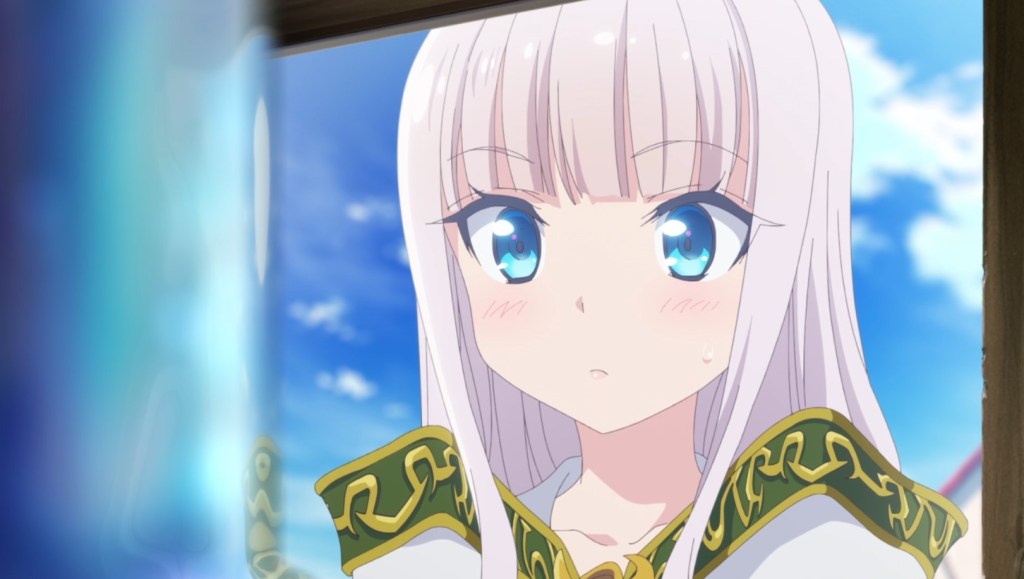
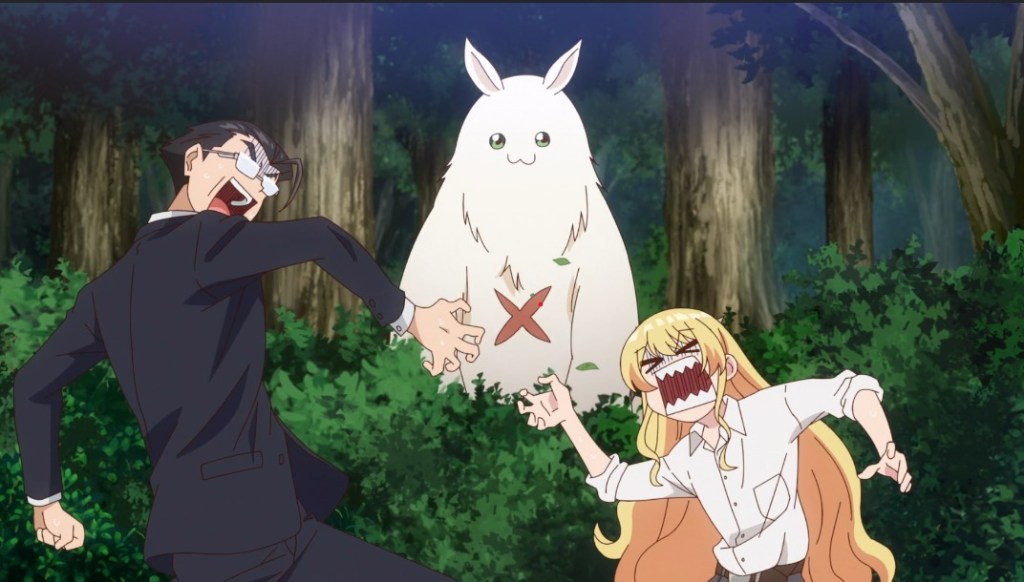


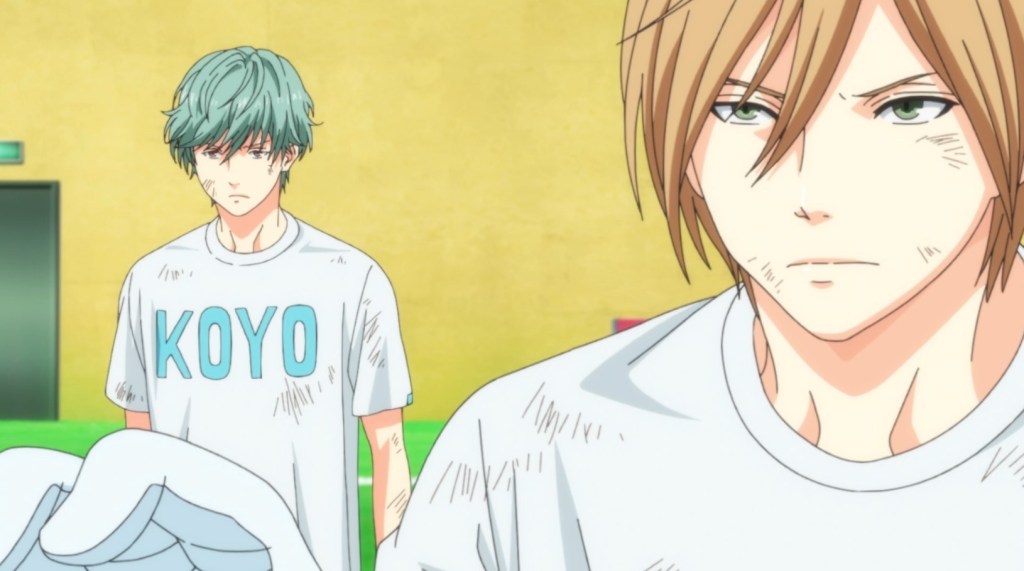


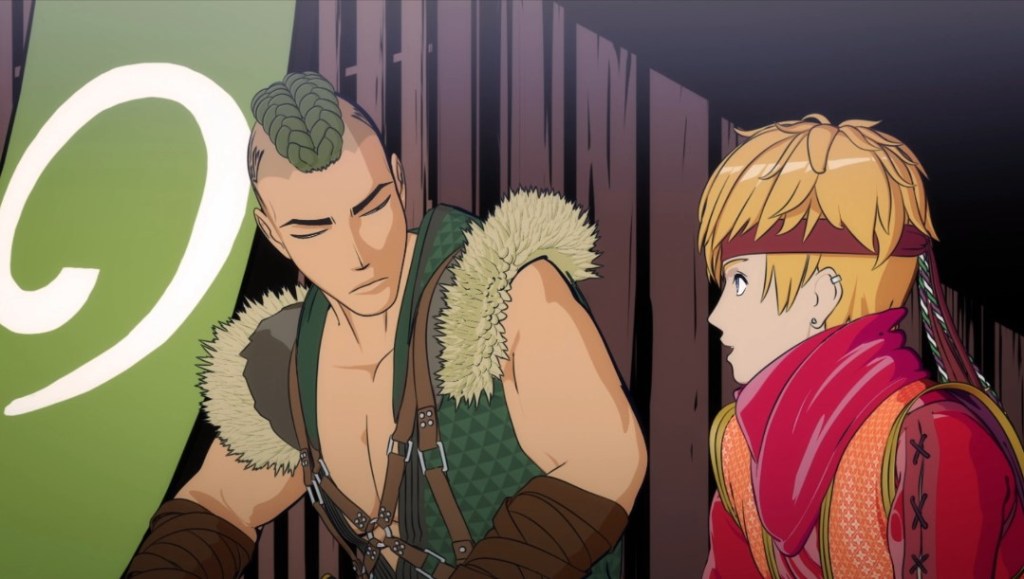




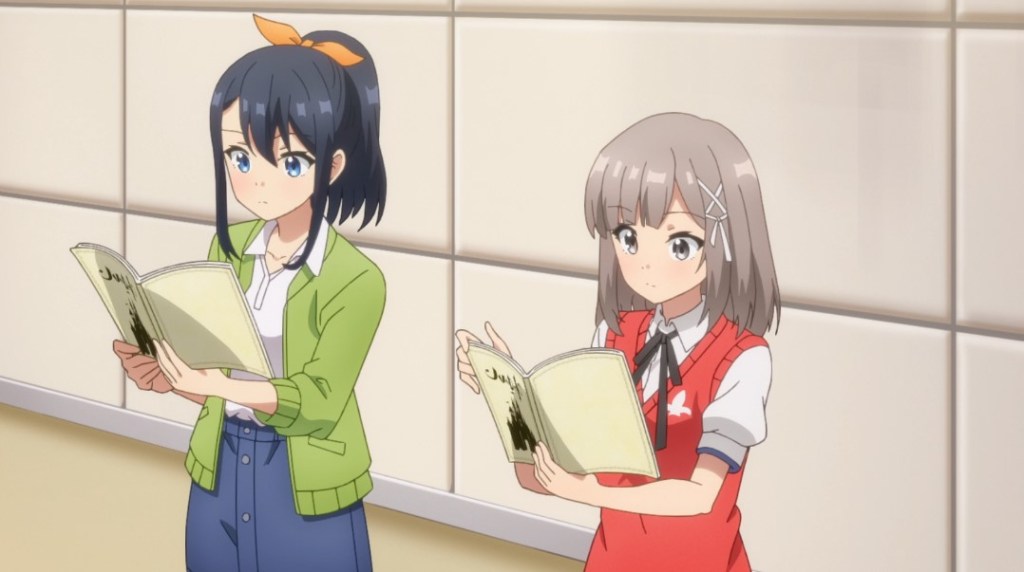

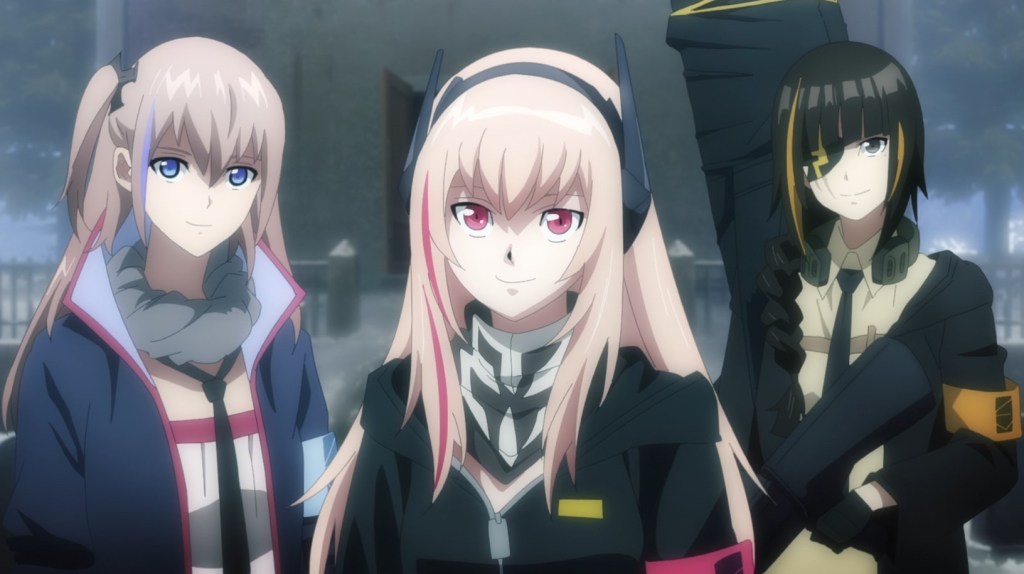


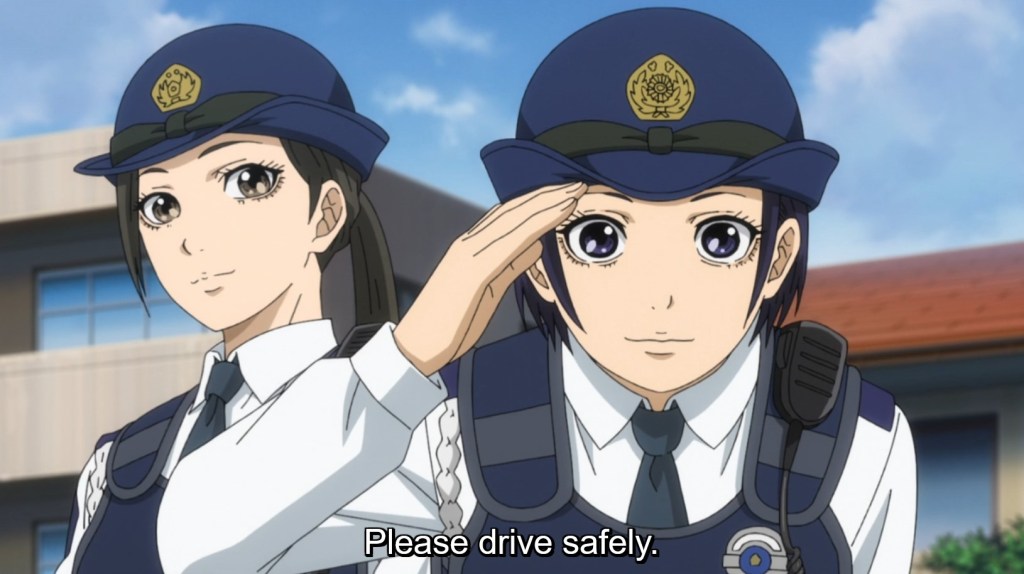

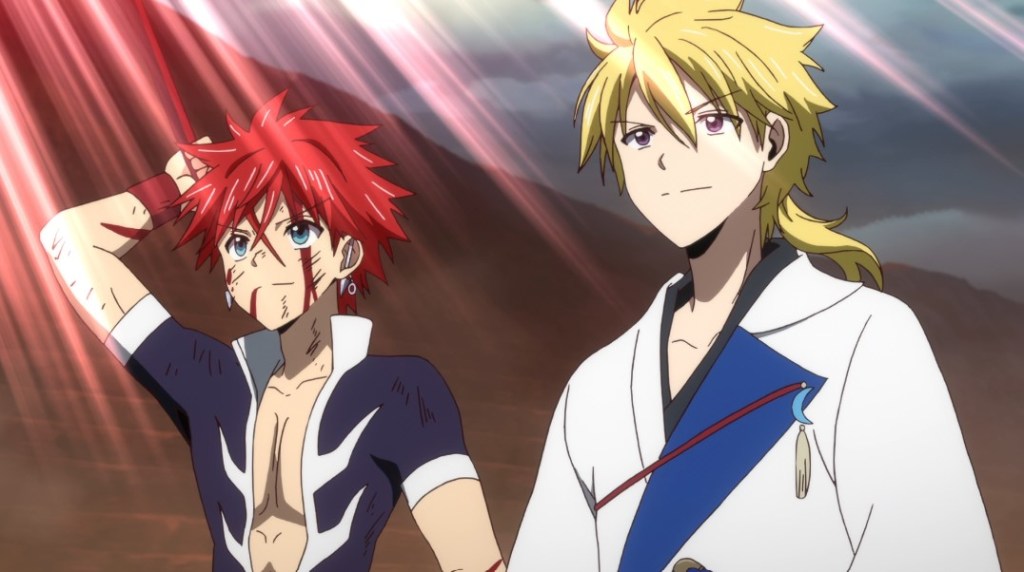




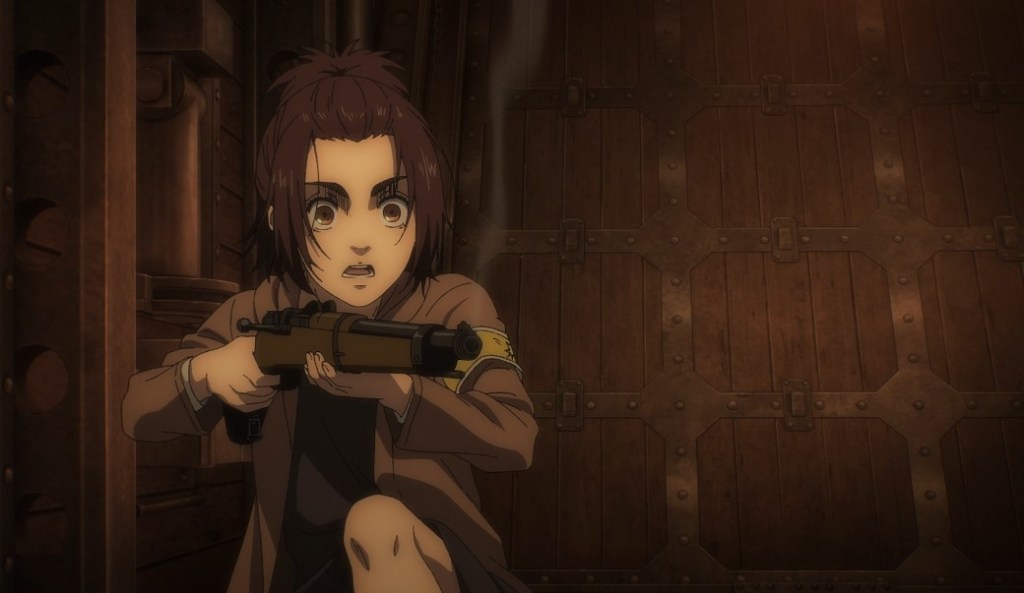
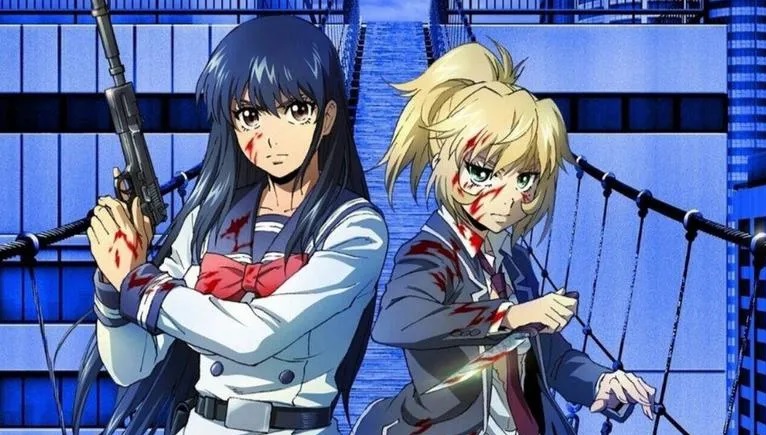






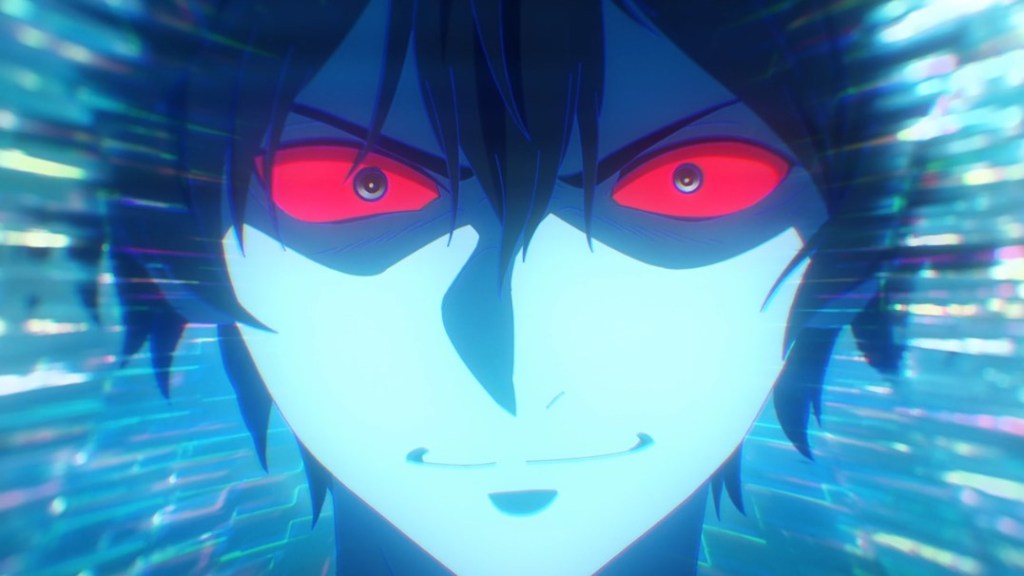


 USA Anime