To a certain extent, this part of DanMachi has become a tale of two redheads. On one side is Alise, the Captain of Astrea Familia and, once, Ryu’s closest friend. Back before she discarded her pride for revenge, Ryu was a very proud and dignified elf, which made her the subject of much teasing from the (all-female) members of Astrea Familia, though clearly it was a loving teasing, and Alise was the kind of lively spirit who could inspire anyone; she certainly got Ryu to practically idolize her. That only makes the tragedy that Ryu’s dream is leading towards all the more heartbreaking. A year after the infamous Nightmare on the 27th Floor (which has barely been mentioned in the main series, but has been described much more extensively in Sword Oratoria), Evilus baited Astrea Familia into the trap Jura mentioned in a previous episode. In other words, this is the clearest picture yet of what, exactly, Ryu lost. After seeing the others and especially Alise’s winning smile, it’s not hard to understand how the noble elf turned into the vengeful vigilante who almost single-handedly ended the remnants of Evilus on the surface. Would Alise have approved? Probably not, and that Ryu knows that may well be her greatest sorrow.
At the other bookend of the episode is Welf. Ever since he was introduced, Welf has always been in the midst of any group action scene and an active participation, but outside of his release of Full Moon in the battle against the Black Goliath in episode 13 of season 1, he really hasn’t had a true feature moment. Without question, he has always contributed, and the swords he makes have been critical to mission effectiveness on many occasions, but he has always been more of a team player than a star. This is where he gets to be a star, and that’s why the scene beginning at the end of the episode was one of my most-anticipated moments of this season. And he’s doing it by playing to his greatest strength: being a smith, anywhere, anytime, under any conditions, even if that stretches the logic of what’s appropriate to do in the Dungeon. Who better than the talented descendant of a legendary family to potentially revolutionize weaponcrafting by actually making magic swords in a Dungeon? Unlike with Ryu, his idol would approve.
As a follow-up thought, Aisha is also interesting to watch here. While she allows Lily to be the brains of the operation, she is much more of the take-charge, lead-by-example type, and that aspect of her is what’s keeping this mission from collapsing maybe even more than her combat ability. The discovery of Bors and how she reacts to him, versus how she reacts to Welf, is typical of how she has been portrayed so far in the franchise. She respects a male who stands strong and has no respect for one who doesn’t.
And we cannot forget about the other strong women present in this episode: Tsubaki and her troop of Hostess of Fertility maids. Tellingly, they flinch more from having to climb down than from any threat that the 27th floor (which they must descend to after seeing the disaster that is the 24th floor) might offer them. I pity any monster that actually runs into them, even as Ahnya offers more hints about who else in the franchise she might be related to. (There’s only one truly strong male cat person who’s ever been introduced in the anime side of the franchise. . .)
On the technical side, the artistry seems more stable this episode, though that could partly be because the animation is also less ambitious. The musical score also continues to shine with its variations on core themes. Overall, it makes for another solid episode, though the best is still yet to come.
NOTE: Due to me somehow forgetting that I hadn’t written up episode 13 yet, these two episodes are being covered together.
Rating – Both Episodes: B+
After focusing almost exclusively on Bell’s crew in episode 12, episode 13 gives a roughly even split to Bell/Ryu vs. Bell’s crew, with just a little bit of time devoted to what’s going on with the rescue party as well. In the latter case, Tsubaki, the leader of Hephaistos Familia (who appeared in the main series a couple of times back in season III and had a more prominent role in Sword Oratoria), has gotten involved in the rescue mission effort as well and is leading the trio of Hostess of Fertility waitresses, who are all decked out in adventuring gear. She seems to have no qualms about going down to the 25th floor with them, so even anime-only viewers should be accepting at this point that they’re stronger than they may look. But that encounter with Dormul and Luvis (whom Bell and crew rescued during the matter with the Moss Huge) is the last we see of them in these two episodes – and right so, as there’s plenty of other business to attend to.
Essentially, both episodes 13 and 14 split time between the two main fronts, with Bell/Ryu getting more attention in 13. Though both are level 4, their situation is dire, as they are injured, out of supplies, and isolated in the Deep Floors, with the surprisingly effective threat factor of the Skull Sheep haunting them even after they manage to gain some separation from the Juggernaut. Here the ambiance promoted by the series has its greatest effect, as the crushing despair engendered by these dark depths is not hard to understand, nor is why a past adventuring group may have committed suicide after being trapped down there. Ryuu has dealt with this before, and her experience and maturity is more vital to keeping Bell in the game than she initially gives herself credit for, as is keeping watch while they exchange short naps. She still hasn’t overcome her sense of fatalism by the end of episode 14, as her goal is about getting Bell out alive, not both of them.
Ryu coming to a turning point on that is likely to be key to the two of them surviving their situation, and perhaps the dreams of her past – which we get the first taste of in episode 14 – is the starting point for that. This is Astrea Familia, Ryu’s former familia members who are, in current time, buried on the 18th floor. If the anime follows the novel closely, we’ll see them pop up more in flashbacks as the story progresses.
Meanwhile, the main group has its hands full as the fight against Amphisbaena stretches out across both episodes 13 and 14 before finally coming to a resolution. Granted, this fight and its immediate aftermath covered close to 90 pages in the original novel, so it should have been a long fight, but even so, spreading it over three episodes in the anime version still feels a bit stretched. At least the anime adaptation makes up for that by keeping things active throughout the fight. There’s always action going on, or always a threat, or always someone who needs to struggle to keep their wits about them, and the way the fight ends is plenty satisfying, with the cost of such a rough battle also seeming commensurate with the threat factor. The battle is also significant for finally giving Aisha a chance to shine. Those familiar with the Sword Oratoria novels past where the animation ends know that she’s not commonly on the winning side. The collapse of the floor – presumably triggered by what Jura did below to summon the Juggernaut – finally pushes their side of the story to the next stage and gives Cassandra her first real validation and, perhaps, sense that the calamity she foresaw can be avoided after all through correct interpretation.
The musical score continues to be outstanding throughout, but I am concerned that the quality control in the artistry is becoming increasing unsteady, especially in episode 18. Though action scenes look well-animated, too many other shots had a roughness to them not commonly seen in earlier seasons.
In an adaptation sense, the first three episodes of this half have been spot-on so far, though they are adjusting some timing here; in the novels, the Amphisbaena scene concluded and scenes that will probably compose much of the next two episodes transpired before getting back to the Bell/Ryu situation. Whether splitting time between the two story branches in alternating fashion is the better way to handle things in debatable; on the negative side, it is responsible for stretching the separate scenes out, but on the plus side, it does allow for the more immediate contrast of the similarities and differences in the threat of despair on both levels. If the page counts are added together, these two episodes cover roughly a third of novel 14. This is the longest novel in the series, but I still feel like eight more episodes is probably two more than will be needed to finish this adaptation, and I don’t feel like putting extra content about Astrea Familia in will be enough to pad the story out. We shall see what they come up with on that in time, I guess.
The first half left off on one hell of a double-cliffhanger: Bell and Ryu are stranded in the Deep Levels, while the rest of Bell’s expedition must face off against the floor boss of the Great Falls, the double-headed dragon Amphisbaena, without him. There’s plenty of despair to go around!
Though both sides get addressed to some degree, the bulk of the attention is on the Amphisbaena fight. This is a classic “the troops must rally” scenario, but this time they must do it without their normal leader to inspire them. Aisha finds she’s not the one who can do it, in part, I think, because her approach is too practical. That Welf is the one who gets the ball rolling is a little bit of a surprise, but he’s right that they have to prove that they don’t need to rely on Bell as a finisher, and that fits with his character. Daphne is the other star here, as she first rallies their Commander (Liliruca) and then their resident pessimist (Cassandra). That results in one hell of a beautifully-choreographed fight, one which mostly smoothly mixes CG with 2D and 3D effects as the team dodges and strikes against the dragon while avoiding its devastating combo of napalm and anti-magic breath weapons. This is how fantasy battles should look, and I cannot say enough about the excellent variations on the franchise’s core adventure musical theme which are used to back the battle.
13 floors below, Bell’s situation is even more desperate, though he and Ryu are stuck in a bit of a holding pattern. The series nails the ambiance of the Deeper Levels and delivers a convincing sense of desperation; how will those two rally, since overcoming despair is the prevailing theme so far? But not much actually happens here until the Juggernaut arrives. Really, the series has just extended the cliffhanger on that front to the next episode. That connects to the one minor negative in the Great Falls fight: for a franchise not known for lengthy battles, it sure seems to be stretching things out. I’m giving it some leeway here because the execution is high enough and the themes in play are worked in well enough.
But those are not the only interesting things going on. Hestia is visiting the Hostess of Fertility to let Ryu’s fellow staffers in on what’s happening below – or at least as far as Ryu being accused, anyway. Curious that she approaches the maids Anya (brown-haired catgirl), Chloe (brunette catgirl), and Lunor (human) about getting reinforcements, isn’t it? All three are briefly shown in the new OP in battle pose, so it looks like we’re going to find out that Ryu is far from the only tavern waitress that can hold her own in a fight. The OP and the ED also both show a bunch of characters that will be new to anime-only viewers. The presence of those characters, and the presence of Ryu with longer hair, both strongly suggest that this season may delve more deeply into Ryu’s backstory to help fill up space. As long as that doesn’t bog down the pace, I welcome it, as understanding where Ryu’s coming from is going to be critical to understanding what goes on the rest of this season.
Overall, this is a strong return to action for the franchise, even if it is stretching things just a little.
Welcome to my Winter 2023 Preview Guide! (For the debut schedule, see here.) I expect to cover every full-episode series that will be debuting this season, including some of the sequels; yes for The Misfit of Demon King Academy, In/Spectre 2, BOFURI 2, and The Fruit of Evolution 2, no for D4DJ All Mix, The Vampire Dies in No Time 2, Vinland Saga 2, Show Time 2, By the Grace of the Gods 2, and Don’t Toy with Me, Miss Magatoro 2nd Attack. (DanMachi IV part 2 will go straight to episode reviews, so it will not be covered here.)
These will be listed in newest to oldest order, and this post will be updated multiple times per day on busier days. Although there are a couple of super-late-debuting titles this season (most notably the new Demon Slayer arc), I expect to wrap this Guide with Flaglia on Monday 1/16 and cover any debuts after that as special write-ups.
NOTE: As of the time of this last update, the last remaining title – FLAGLIA – has not been licensed. If it is not picked up by its scheduled debut date (MO 1/16) then this is the last update for the season.
The Fire Hunter
Streams: Crunchyroll on Saturdays
Rating: 4 (of 5)
Though the novel this series is based on is contemporary, everything about the artistry instead suggests that it was made in the early-to-mid-2000s. Whether this was intentional or not is hard to say, but it certainly makes the series stand out visually; no other series else this season looks even remotely like this one. And that’s the not the only thing distinctive about its first episode, either.
The premise is quite the whopper: some apocalyptic (and likely war-related) event happened in the past which caused humans to start combusting in the presence of fire. Human civilization collapsed because of this, but has been able to start rising again thanks to warriors called fire hunters, who harvest fire-equivalent fluids from beasts called flamelings. Touku gets save from a flameling by a fire hunter who gave his life in the process, and now has been tasked with going to the capital (where the fire hunter was believed to have come from) to return his weapon, dog, and effects. Meanwhile, in that direction, a young man has just lost his mother to toxic poisoning from her job in a crude factory and now contemplates his future.
Conceptually, the series is a marvel, with the first episode already showing rich and well-realized world-building and characterizations. The writing, courtesy of Mamoru Oshii, is not as smooth in its dialog as it could be, leaving the first episode just a few minor tweaks short of an even higher score. Still, what we’ve seen so far has the potential to develop into a fascinating story.
The Fruit of Evolution 2
Streams: Crunchyroll on Fridays
Rating: 2 (of 5)
The first season of The Fruit of Evolution was dumb as hell, but it at least entertained me often enough that I ended up watching the whole season. After a year off, it’s not back for a second round, and. . . wow. Either it’s taken a qualitative drop or else I’ve forgotten what I found funny about it. Maybe both.
Last season ended with Seiichi being recruited to go to a magic school where he might meet some other isekai students. This season starts with the crew traveling to the school, where Seiichi will be a teacher for a problem class, Artoria will be an adventuring instructor, and Saria and Lulune will be students. To celebrate this, the production trots out multiple visual gags where the production team feels compelled to put notes on the screen to the effect of “ask your parents about this outdated joke.” Yeah, that’s not a good sign. Some new villains are on track to show up at the school and cause trouble, and the isekai teacher meeting the isekai students could still happen, but given how hard the jokes are bombing in this first episode, will anyone stick around long enough to see what those threads amount to?
Kaina of the Great Snow Sea
Streams: Crunchyroll on Wednesdays
Rating: 3.5 (of 5)
This is an original anime project from the creative mind behind Knights of Sidonia and Blame! That also means that it’s a Polygon Pictures production, which means that it’s all-CG, and whether you appreciate this entry or not will probably hinge mostly on how you have reacted to past productions from this studio. While the CG is not my favorite art style by any means, I find it at least tolerable, and when the first episode has as much potential as this one does, that’s enough.
Like the other previous works from Tsutomu Nihei, the set-up is one about humanity living on the fringe in a far-flung (and this case, likely post-apocalyptic) future. In this case, rather than space or an ever-expanding city, the setting is a dual-structured world. Some humans live on a sea of snow below, while others live far, far above, in the branches of massive trees that seem to support a canopy of ice. The top-dwellers have become mythical figures to those who live below, while those who live above live simple lives and are gradually dying off, unaware of anyone living below and with such limited knowledge that scraps of signs with print on them are special relics. The titular Kaina is the sole young man in a village of old people, while Liliha is the princess of a small nation below troubled by environmental conditions and struggling with a war against another people. The two are fated to meet when she makes a desperate effort to reach the “sages” above.
The design elements are spectacular, and the storytelling finds a sufficient balance between establishing particulars and not revealing too much. Characterizations are thin so far, but we’ll see how things develop when the two main characters finally get to interact next episode. I am cautiously optimistic here.
BOFURI 2
Streams: Crunchyroll on Tuesdays
Rating: 3.5 (of 5)
BOFURI was somewhat of a surprise hit when it debuted exactly three years ago, endearing even some viewers who don’t normally go for game-structured series with the adorable antics of a newcomer who stumbles into gradually becoming extremely OP in an online VR game. Despite essentially being a power fantasy, it worked in ways that others didn’t because protagonist Maple wasn’t specifically trying to be awesome; it just happened as she was developing her own unique way to have fun the game, and she never lost her focus on that point. This season picks up a little while after the first season, with the opening of the game’s 4th level. That provides new venues to explore and a new Christmas-themed event, too. Oh, and the first Maple/Payne team-up as well.
The content is essentially the same as what became typical in the first series: while Maple innocently does broken stuff, the others in her guild go around picking up new tricks of their own (at least one with unfortunate side effects) and the admins try to figure out what to do about Maple without throwing game balance off. The charm factor – especially in the final scene shown above – is just enough to carry along what is otherwise an ordinary, low-key episodes, and the text message stream is back, too! Not one of the franchise’s stronger episodes, but not a disappointment, either.
Campfire Cooking in Another World with My Absurd Skills
Streams: Crunchyroll on Tuesdays
Rating: 3 (of 5)
In 2017 and 2021 we had installments of Restaurant to Another World, which was essentially an isekai foodie series. This more pure version of the concept is its successor. While it may eventually prove to have adventure elements, too, the first episode primarily focuses on the protagonist impressing his escort party (and, later, a giant, legendary wolf) with cooking partly using ingredients he’s able to order from the other world.
Yep, this is also one of those “protagonist is an afterthought because of unconventional gifts that prove to be broken once he understands the exploits” kind of show. In this case, Mukoda was summoned as well when three other heroes were summoned to a particular kingdom, but when he learns his power – Online Grocery – isn’t a heroic type, he bails as soon as he’s able and skips town, sensing something is off. On a journey out of the country, he learns that his Item Box and Appraise skills alone are quite rare, and Online Grocery allows him to order items from Japan, too. He volunteers to cook for his escort party and discovers that his food offers buffs as well. And that’s enough to attract the attention of Fenrir, who offers to contract with him in exchange for being fed regularly. So much for keeping a low profile. . .
There’s some potential for an interesting story here, especially since Mukoda seems more self-aware than your typical isekai protagonist, but in a busy season this one just doesn’t stand out much. I’ll wait for the eventual anime version of Delicious in Dungeon instead.
Kubo Won’t Let Me Be Invisible
Streams: HIDIVE on Tuesdays
Rating: 3 (of 5)
I never got into Don’t Toy With Me, Miss Nagatoro or Teasing Master Takagi-san because both (whether fairly or not) initially came across to me as somewhat mean-spirited. That’s not a problem with this manga adaptation, which is a veritable cousin to its predecessors in the “cute girl teases a guy” genre. The titular Kubo does, indeed, seem to have a crush of some degree on protagonist Shiraishi, and she does genuinely seem to care that he virtually has a super-power when it comes to being unnoticeable. She doesn’t seem to appreciate that sometime Shiraishi actually wants to be invisible, but her actions seem both genuinely flirtatious and well-intentioned. This all makes for much sweeter and more mellow interactions.
The problem with the first episode – and the reason I cannot rate it higher – is that it’s too mellow. It is essentially repeating the same gag over and over again, giving the episode a drawn-out feel. It needs to do a bit more: be a bit more sharply funny, or introduce some new angles, or maybe even explore more the implied meaning of its title (i.e., that Kubo is rescuing him from being a social nobody). The odd shading on Kubo’s cheeks also bothered me, but that’s a minor stylistic issue. I could maybe see following this in a lighter season, but there is plenty enough more interesting fare to watch this season for this one to have any chance of making my viewing card.
Reborn to Master the Blade: From Hero-King to Extraordinary Squire
Streams: Crunchyroll on Mondays
Rating: 3.5 (of 5)
So we’ve got two gender-swap series this season, and they’re both debuting on the same day. Rather than a curse transformation, this one is a reincarnation, following a typical pattern for non-isekai fare: the character is reincarnated into a later age in the setting which has either lost or greatly reduced magic, hence making what the character is reincarnated with unusually potent.
Despite this one also having underwhelming technical and artistic merits, it at least has more developed and better-staged action scenes than its same-day competitor, and it’s far more entertaining, too; the “tough baby” scene amused me to no end, as did the various moments where the protagonist realizes that she’s showing off too much and tries to act normal to fool those around her. And it could be interesting to see how she handles the fact that women are not normally warriors in this setting as she grows up, and how the setting will adapt to handle a talent as obvious as what she shows off in the episode’s duel scene. I am cautiously optimistic here that this one could be a keeper.
Ayakashi Triangle
Streams: Crunchyroll on Mondays
Rating: 2.5 (of 5)
For the first 20 minutes, this manga adaptation looks every ounce like an utterly generic shonen action series, one where a boy becomes a “ninja exorcist” so he can fend off the ayakashi who seem constantly attracted to his (female) childhood friend – whether thse wants him to or not. Sure, there’s an extra female character shown in the OP who might form a love triangle between the three, but no biggie, right? But around the 20 minute the major twist is revealed: that buxom second female character is the protagonist, after an ayakashi curse gender-swaps him. And now, suddenly, an episode which had only the barest hint of prurient content to that point requires extensive censoring. Moreover, a re-evaluation of the opener suggests that female lead Suzu may not care in a romantic sense that Matsuri is now a girl.
Um, yeah. I’m almost interested enough by this gimmick to watch more and see how it plays out, and the irony that the gender-swap was intended to keep the two from getting frisky and may instead accomplish the opposite is actually kinda funny. The problem is that nothing else the first episode shows merits watching more. Action scenes are so limited that they can barely be considered animated and nothing else is the slightest bit novel about the underlying premise, powers, monsters, or personalities involved. The season otherwise seems like on fan service titles, so it might sneak in as a guilty pleasure.
Malevolent Spirits: Monogatari
Streams: Crunchyroll on Mondays
Rating: 2.5 (of 5)
This manga adaptation focuses on tsukumogami, spirits who have possessed old objects to take on human form. Hyouma had an epically bad experience with them as a kid (he saw one murder his elder brother and sister), and now as a young adult he takes his anger out on tsukomogami when he’s supposed to be interacting with them more peacefully instead. To quell his brashness, his grandfather is sending him to live with a human girl who peacefully cohabitates with six tsukomogami. . . and of course a duel ensues right away.
The first episode is not a bad start, but it simply does not do much to endear itself to viewers, either. Its biggest error is in making protagonist Hyouma unappealing and unlikable, and the cute Nagatsuki (who comes into the episode only at the end) is not yet enough to offset that. None of the lore or action scenes are especially exciting, either. Maybe this might amount to a decent story if sparks fly between the two humans, but will anyone be watching long enough to find out?
High Card
Streams: Crunchyroll on Mondays
Rating: 3.5 (of 5)
Special playing cards exist which can apparently grant wielders super-powers like stupefying luck, the ability to manifest weapons, or the ability to turn anything touched into marbles. Due to the interference of a goddess-like figure during a heist, several of them got dispersed to the winds Dragon Ball-style. One ends up in the hands of a young thief who doesn’t understand what it really is and can do, but he finds out when an attempt to gamble to earn money to protect an orphanage causes him to cross paths with gangster-types who have cards of their own.
This is apparently the anime side of a new multimedia project, and every indication from the first episode points towards this being a modern day super agent-type show. Even when it gets messy, it has a jazzy flair, and the powers granted by the cards so far have proven to be rather interesting. Apparently one card cannot trump another within its strong suit – so the person with superior luck is almost impossible to directly harm, even by another card holder – but that can be played around by targeting the wielder indirectly, which gives even the underlying mechanics a card game-like feel. It’s an interesting approach, and the action scenes so far are crisply-delivered. This feels like it’s still in the set-up mode at the end of the episode, so I’ll want to see where it’s going before passing judgment, but it shows at least some potential.
“Ippon” Again
Streams: HIDIVE on Sundays
Rating: 3.5 (of 5)
An anime focusing on girls doing judo is not unprecedented; Yawara! A Fashionable Judo Girl is, at 124 episodes and two follow-up movies, the sport’s biggest title by far. However, this manga adaptation is the first such entry in more than 25 years, and it’s done with a surprisingly high level of technical acumen for a project helmed by a first-time director and likely to be just a niche title. If you’re looking for a “Cute Girls Do Sports” title with absolutely zero fan service angle, this one should scratch that itch quite well. (“Ippon,” by the way, is a full-point score in judo, which is effectively equivalent to a knockout punch in boxing.)
And it is absolutely a standard sports series in construction. Genki girl Michi enthusiastically approached judo in middle school, but plans to quit it in high school because she’s tired of injuries and other inconveniences and wants to concentrate more on living up her high school life. But friend Sanae is quietly unhappy about that, and so is Michi’s last opponent Shino, an apparently socially-awkward girl who ended up at the same high school and desperately wants to maintain the soon-to-be-defunct Judo Club, while Anna wants to recruit Michi for kendo instead. Can Michi do the judo she clearly enjoys and still have a high school life outside of it?
Good technical merits and an emphasis on key judo points like footing and holds makes this interesting to watch even if you don’t follow the sport, and the sentiment – that enjoying the sport itself, rather than being the best at it, is what matters – lands effectively enough. I can’t see myself following it and was bothered by facial designs for the girls that are a bit too rounded, but it’s a well-made enough start to earn an audience.
Handyman Saito in Another World
Streams: Crunchyroll on Sundays
Rating: 4 (of 5)
While many of the isekai titles which have come out over the last few years have had some comedic elements to them, few can be classified as primarily a comedy. This is one of them. It does have some serious moments, and a uniting theme in exploring the connection of finding value and fulfillment, but it aims for gags more often than not and some of them are quite funny.
The episode is composed of a set of short vignettes, which makes senses since the source manga is composed of 4-6 page long chapters. (The first six are covered by this episode.) Five focus on Saito and/or one of his three party members: a human tank-style warrior, a senile human wizard, and a fairy cleric. A sixth introduces a dwarf battle mage and a girl wielding a huge axe who eventually works with him; presumably they will pop up more later. How Saito – one of those on-call people for a store – ended up in this setting isn’t explained yet, but experiences in his original world left him shaky about his self-worth. Here he shines as a locksmith/jack-of-all-trades, the kind of character that every fantasy RPG party on long-term quests/explorations needs even if they claim they’d rather focus on DPS. All of this character establishment can lead to some quite funny situations, with the best joke by far being the explanation for where the fantasy world’s standard unit of measurement comes from. (Sometimes it’s best not to know such tidbits. . .)
The limited format doesn’t give the artistry much to do, but the design work and coloring is sharp nonetheless, a distinct improvement over the shaky art quality of the source material. While a full-episode format might be long for a series mostly made of thee minute bits, that won’t be a problem if the vignettes continue to be grouped thematically. Overall, this one looks highly promising.
The tale of outcasts
Streams: Crunchyroll on Sundays
Rating: 4.5 (of 5)
Descriptions of the premise of this manga adaptation intrigued me enough that it was on my Anticipated list for the season, but even so, I did not expect it to have quite the impact on my that it did. Thanks in large part to a strong emotional impact, this title outdoes even Magical Revolution as the one that I am now most eager to see more of this season.
Wisteria is an orphan girl in 19th century London with a talent that has more often than not brought her grief: the ability to see demons. Malbus is a demon who has grown weary of his immortality and been reduced to aimless wanderings. He takes an interest in Wisteria when he realizes that she can see him (humans normally can’t unless he assumes human form, which is bothersome for a number of reasons) and winds up coming to her room at night to tell her stories. When he learns that Wisteria has been sold off to a noble with an ugly reputation, he violates the very mercenary rules demonkind must live by (i.e., they can’t help humans without a pact that exacts a price) to come to her rescue, and Wisteria volunteers a dear price to offset that and help him succeed against another demon. With a pact now formed, they will become traveling companions, though unbeknownst to them, holy knights are on their trail.
Some parts of the set-up give off a strong The Ancient Magus’ Bride vibe, and I suspect that any fan of that title will like this one, too; in fact, I suspect that I will be doing a compare/contrast write-up between that series and this one once a few more episodes are in play. However, while the Wisteria/Malbus relationship dynamic is very similar to the Chise/Elias relationship in some ways, it is much different (and much healthier!) in others, and that makes the emotional bond forming between the two much more potent, sweet, and immediate. Both are benefiting from the relationship in a practical sense, but more importantly, both are happy with it. The technical merits are not the strongest and the writing goes overboard in making the noble outright evil, which is why I cannot justify a maximum rating, but this is a potentially special series.
In/Spectre 2
Streams: Crunchyroll on Sundays
Rating: 3 (of 5)
Though it’s only be about three years since the first season aired, this is not a series whose later events I remembered at all. Turns out that a review of the first season isn’t necessary to be up-to-speed on this one, as an opening conversation between yokai re-describes the basic premise, who main characters Kotoko and Kuro are, and provides a very brief summary of what happened in the first season. It also helps that the case for this episode is wholly unrelated to anything which happened in the first season, so returning viewers should be able to jump right back in.
The first season was always a bit more of a mystery format than anything else (hence the wordplay in the series name), and that’s what’s going on here, too: strange sounds are coming from an empty room, Kotoko (in her role as Goddess of Wisdem) is asked to investigate, and that results in them having to deal with a cursed doll which is a cross between an oni and a sumo wrestler. This allows both of them to show off their respective talents and the relationship which exists between them, while also providing some interesting details about sumo wrestlers. (The stomping in a sumo match may have originally been part of a ritual to ward off spirits, for instance.) Unfortunately, this episode also shows off one of the major weakness of the first season: that Kotoko can sometimes be a little too verbose. Still, if you liked the first season then I don’t see any reason why you shouldn’t be satisfied with this episode, too.
Saving 80,000 Gold in Another World for My Retirement
Streams: Crunchyroll on Saturdays
Rating: 3.5 (of 5)
Mitsuha lost her parents and older brother in some kind of accident, and now she’s fallen off a cliff during a scuffle with ruffians. But she was able to latch on to the power of an energy being who happened to be in the area, and now she finds that she can transport between modern Japan and a medieval fantasy world. Just finding humans was a task, the language was a problem, and dangers lurked, but after earning some money for killing a wolf (using items from her home in Japan), she gets the idea to sell modern items in the fantasy world to pile up an investment that she can eventually retire on.
In other words, isekai travel meets entrepreneurial spirit in this light novel adaptation. The concept is a neat twist on the standard isekai gimmick, and I fully appreciated the writing actually bothering to initially have a language issue. While the technical merits are not a stand-out effort, the artistic quality is nonetheless a step above other isekai titles which have debuted this season and Mitsuha makes for a fine heroine in both behavioral and visual sense. This one has at least a chance to appeal to those not normally enamored with the genre and stands a good chance of making my viewing list for the season.
Chillin’ in My 30s After Getting Fired from The Demon King’s Army
Streams: Crunchyroll on Saturdays
Rating: 3 (of 5)
The premise is a fun one: 32-year-old Dariel gets fired from the Demon King Army when new leadership decides not to tolerate his lack of magic. All he’s ever known is being a general’s assistant, so he wanders aimlessly until he encounters a young human woman endangered by a giant ape. Saving her leads to him getting taken in at her village, where he gets connived into signing up as adventurer. When he discovers previously-unrealized talent during his evaluation, he is set on a path to living in the village and doing adventurer stuff instead.
Why Dariel would want to stay in the village isn’t hard to figure out: even if he wasn’t grateful for being given a new place after being thrown out of his old one, there’s still Marikel and her bodacious cleavage, which he can’t seem to take his eyes off of. (The episode tries to indicate that he cares about her feelings, too, but yeah, we understand.) The writing also raises the interesting possibility that he couldn’t use magic because he was actually a human all along. (Inherent magic use is what separates humans from demons in this setting.) Technical merits are weak here, with the action animation being particularly limited, but the humor and charm factor make up for that. I don’t expect greatness out of this one, but it looks like it should at least be entertaining.
The Reincarnation of the Strongest Exorcist in Another World
Streams: Crunchyroll on Saturdays
Rating: 3 (of 5)
This light novel adaptation is an isekai title, but it involves the protagonist being reborn from early Japanese history (perhaps the Heian Era?) into a fantasy setting, rather than from modern Japan. Not sure that makes much of a difference (beyond explaining how he is able to summon one spirit that he sealed away in his previous life), as the basic story beats are still the same. In his new life, the former exorcist is a nobleman’s child who has none of the normal magic but a lot of spiritual power. This results in him being looked down upon by his brothers, even after showing that he can use this spiritual power to effectively reproduce magic. It also allows him to notice that one of the young maids (his brother refers to her as a “slave,” though whether she actually is or not is unclear) also has spiritual affinity that could be quite potent. Both of those come into play when a giant salamander rages.
The ED (which I’m assuming is going to be the regular OP) indicates that Seika is going to go to magic school with that maid and one other yet-to-be-introduced girl, so apparently the salamander incident is going to set things in motion. Too soon to tell if that’s going to lead to anything interestingly different, and the technical and artistic elements are respectable but not anything special. I’ll put a “maybe” by this one for now.
The Misfit of Demon King Academy II
Streams: Crunchyroll on Saturdays
Rating: 3 (of 5)
The first season of Misfit was such a success that it made my Top 10 list for 2020 and set a new standard for how to get away with doing a naked power fantasy about an OP protagonist. Hence the return of Anos Voldigard, the reincarnation of the true Demon King, and his crew was one of my most-anticipated debuts of the season. While I wouldn’t exactly say that the return is lackluster, the first episode just don’t achieve quite the impact that the original series did. Part of that is that the replacement of Tatsuhisa Suzuki, who did such a perfect job voicing Anos but got himself into some scandal trouble since and so had to bow out. The role is certainly in veteran hands with Yuichiro Umehara (the voice of Goblin Slayer, among many, many others), but his take on the character just doesn’t have the same degree of arrogance which made the original work.
Or it could be that the new lead villain just isn’t clicking yet. The Demon King was originally fighting the gods, so it’s only fitting that one shows up here to announce the eventual appearance of the Child of God who can kill the Demon King. While Anos and minions are looking for clues on that, servants of former rivals of the Demon King from 2,000 years ago have popped up to mess with his minions and generally interfere with his plans. On the plus side, this will keep Anos from overshadowing everything and giving other characters a chance to shine, so maybe I’ll be able to get my enthusiasm for the series worked back up. It’s a keeper in any case.
NieR:Automata Ver1.1a
Streams: Crunchyroll on Saturdays
Rating: 3.5 (of 5)
Though I have long heard of this title, I have never actually played the RPG video games on which this series is based, so I am approaching this one purely as an anime-only viewer. Based on that impression, this seems to feature a war between human-created androids and (possibly?) alien-originating machine life. Nearly the entirety of the first episode is one prolonged action sequence, all using high-end CG work and a distinctive design aesthetic to create a sharp visual contrast between the human-looking androids 2B (the female one) and 9S (the male one) and their simple robot and industrial machine-like opponents. The obvious question here is why 2B was giving a quasi-fetish costume as an outfit for a mainline combatant-type, but hey, Rule of Cool, right?
Though the action scenes are involved and ambitious, it’s that same Rule of Cool which keeps this first episode afloat. There are hints that the possible emotional development of androids is going to be a factor in the story, so this might eventually have some more depth, but for now this one is worth checking out just because it looks great. Oh, and don’t miss the Puppet Theater at the end!
UniteUp!
Streams: Crunchyroll on Saturdays
Rating: 3.5 (of 5)
This is the anime branch of a mixed media project which started in 2021 with a YouTube channel featuring songs from various artists. Any description of its premise makes it sound like Generic Male Idol Project #3,422, and it’s entirely possible that the series will ultimately turn out that way. However, a surprisingly endearing first episode leaves some hope that it might prove to be something a bit more than ordinary.
The episode opens with a CG performance by a male idol duo, which was apparently from a few years earlier because in current time that duo are the operators of an agency specializing in training up-and-coming (male) idol talent. (I could not help but watch that performance without wondering how fans near the stage could even see the idol duo performing because of the angle, but that has nothing to do with the rest of the episode.) The rest of the story is about Akira, a teen dispirited after giving up on baseball. A close friend has secretly been recording his karaoke and uploading it as videos, and that’s gotten the attention of the talent agency. Akira is unsure how he feels about being an idol, as that was not an option he had even considered, but the encouragement of everyone around him to go for it – he has a singing style with a lot of emotional resonance – ultimately pushes him to try.
Technical merits here are very ordinary overall, but what got my attention was the sincerity of it all and (beyond the opening number) the distinct lack of airs and cheesy flair. Akira’s friend should not have uploaded those recordings without Akira’s permission, but he did have Akira’s best interests in mind; he can hear Akira’s talent and wants everyone to be able to appreciate it, too. This low-key, heartfelt approach works, though I am concerned that the introduction of the other two central group members in the last scene could disrupt the balance the first episode achieves. I don’t intend to follow the series, but if you’re into that sort of fare then it certainly deserves a look.
Trigun Stampede
Streams: Crunchyroll on Saturdays
Rating: 3 (of 5)
If you were active in the anime scene in North America in the early 2000s then it was almost impossible to not have run across Trigun. It was one of the most popular titles of that era in the U.S. despite having technical merits and artistry that, even for the standards of the time, weren’t that great. This reboot goes all-out on that front, providing a high-level CG effort with richer animation and much cleaner and more consistently on-model character art. But the mix of goofy charm and sincerity so critical to the original version’s success may be getting lost in the process. (For those who never saw the original and want to compare, it is available on Crunchyroll.)
For returning fans, this opener is totally different. Meryl is a rookie reporter working with an older male rather than an insurance agent working with Milly, and the first episode starts off with a prologue explaining some things up front that are not revealed until much later in the first adaptation, such as the role of the Plants, the presence of Nails, and the whole business about the sleeper ships. For newcomers, the establishes that at some point in the past a calamity happened involving sleeper ships (or perhaps “sabotage” might be a better word) and implies that humanity being on this desert planet is a result of that. The result is a strongly Wild West-flavored sci fi scenario, one where Vash the Stampede – aka “The Humanoid Typhoon” – is an outlaw with an outrageous bounty on his head, though he’s actually a good guy who doesn’t like fighting and prefers to hide his competence behind the demeanor of a pathetic goofball. Headstrong rookie reporter Meryl has come in search of him for a story, and she’s already starting to get one hell of one as she watches Vash duel a military police officer for his freedom and to protect a town.
The first episode raises a lot more questions about how it’s done than about plot or characters. While this could play as a decent (mostly) light-hearted actioner to newcomers, it looks every bit like the familiar case of cleaning up a title equating to losing what made it special. (Certainly the end theme is a major step down from the great ED of the original, too.) I am hesitant to go as far as calling is soulless, but that is the word that most immediately comes to mind. The episode is well enough made that the series won’t be a failure, but I cannot see it recapturing the magic of the earlier version.
The Angel Next Door Spoils Me Rotten
Streams: Crunchyroll on Saturdays
Rating: 3.5 (of 5)
This light novel adaptation gives every indication of following a classic romance format: unbeknownst to his classmates and even best friend, male lead Amane lives alone next door to Mahiru, the Perfect Girl commonly referred to as an angel at school. They normally never interact until the day that Amane helps her out when she’s sitting morosely in the rain. (And for the record, I never knew any of my neighbors by name when I was an apartment dweller myself, so I don’t at all find this unusual.) From that point on, Mahiru starts taking an interest in Amane, including cooking for him and insisting on helping him clean up his pigsty of an apartment. She insists she’s doing it only for her own satisfaction, so Amane carefully keeps his behavior neutral towards her. But surely that’s not going to last, right?
While this mostly comes off as a male wish fulfillment scenario, there are already hints that a bit more is going on here than what Amane is seeing, and that’s the part that is keeping me interested at this point. Mahiru vehemently doesn’t like being referred to as an angel (or at least she doesn’t tolerate Amane doing it), admits that her perfect school persona is something she’s been projecting for years, and she’s living alone in an apartment and watching her expenses. Her claims that she’s getting satisfaction from cooking for Amane come off as more genuine than the normal tsundere routine that might be expected here, too. And why was she sitting in the rain before? These little touches are just enough to convince me that there might be something worth watching here. I’ll give this one another episode or two at least.
The Legend of Heroes: Trails of Cold Steel – Northern War
Streams: Crunchyroll on Fridays
Rating: 3 (of 5)
The Legend of Heroes is a decades-old Japanese video RPG franchise which started as an entry in the Dragon Slayer franchise back in 1989 and has since seen the release of 20 games. A subseries of four Trails of Cold Steel games was released from 2013 through 2018, but rather than being an adaptation of the events of those games, this anime is an original story set in the same part of the world as those series. The protagonist of those games is featured prominently in the OP and makes a brief cameo, though, so some crossover can probably be expected.
As to whether a viewer needs to be familiar with the games, the jury’s still out on that one, as the first episode dumps out a lot of details that are not easy to keep track of. However, the essence of the story is straightforward enough: protagonist Lavian (pictured above) is a young woman who has joined a military group known as the Jaegers and is conducting missions in snowy North Ambria. Presumably this has something to do with her grandfather being a disgraced former hero of the country’s revolution 27 years earlier and, based on flashbacks, her home village was either endangered or destroyed, too. In the wake of helping a village which had been beset by monsters, Lavian and her unit encounter Rogan, an heroic figure in the region who is looking to start a new revolution. Lavian and her unit will clearly get dragged into this whether they want to or not.
The technical merits on this one are less than stellar and the action scenes are not going to carry the series. Also, Lavian is present but in a non-speaking capacity for the first half of the episode – and doesn’t say much even when she does talk – so it’s hard to get a read on her personality so far. Enough setting tidbits and potential plot hooks are thrown out that this one has the potential to be at least a decent military-minded action-adventure-drama story, hence the middling rating, but I cannot see this being a breakthrough title.
Buddy Daddies
Streams: Crunchyroll on Fridays
Rating: 3.5 (of 5)
If you’re in your 40s or 50s then the defining “assassin takes in a kid” movie is 1994’s Leon: The Professional, starring Jean Reno and Gary Oldman and featuring the star-making debut of a very young Natalie Portman. Despite the similar basic premise, this is not at all the same kind of show. Even with the high level of graphic violence, the tone is much lighter and more high-spirited, making this feel more like a cross between Spy x Family and Baccano! in terms of how it mixes humor, sweetness, and violence.
The concept here involves two professional hitmen, who get a contract to take out a human smuggler during a Christmas Eve party. The more personable one won’t let the more anti-social one keep a stray cat because of the instability and danger of their occupation, so of course he winds up in a much more troublesome situation: taking in a little girl who stumbles into the midst of their plan while looking for the father she’s never met. The personable one lost an opportunity for a family according to flashbacks (whether because the baby died or the wife divorced him or both is unclear), and now he’s got a replacement option – and the kicker is that she might actually be his real daughter, too!
This is a P.A. Works production, and they have put out another strong visual effort here. I was more than a little incredulous that the little girl would be oblivious to all of the violence going on around her, and some may find the mix of humor and violence to be dissonant, but the flow of the story glides along smoothly, the assassins make an appealing duo, and the girl is certainly cute enough. I can see this one doing well.
Sugar Apple Fairy Tale
Streams: Crunchyroll on Saturdays
Rating: 2.5 (of 5)
In this light novel adaptation, heroine Anne is a confectioner who seeks to become a Silver Sugar Master (the most prestigious rank for her profession), like her recently-deceased mother was. She sets off for a competition in a distant town to work towards earning that honor, but since the road to get there is potentially dangerous, she’ll need protection. Enter warrior fairy Shall, a slave whom she purchased for that purpose. He’s good at what he does and dashingly handsome, but also quite prickly – so much so that he does not respond well to Anne’s attempts to be nice.
Yep, this is a blatant gender-reversal of the normal case of a male protagonist buying a slave and trying to come off as not so scummy because he treats her decently. This one does actually aim a little higher thematically, as it does not ignore that Anne is a bit of a hypocrite for how she talks about trying to get along with fairies but still went out and purchased one anyway, and Shall’s ass behavior towards her feels more justified because of his long period of servitude to humans. I actually thought for a while that it might even be trying to say something serious here, but then that “sexy danger” scene comes at the end where Shall is doing everything to bait Anne into ordering him around. That feels like something ripped from a shojo drama and slapped on here just to play to audiences who like the bad boys, and that did not set well with me for a show at least toying with higher ideals. I’m not letting the series off the hook for using its ED (most likely regular OP) to imply that this will be a “started out as a slave but became a lover” scenario, either. 86 proved that the “sympathetic oppressor standing with the oppressed” story angle can work, but this one has already had a major stumble.
Endo and Kobayashi Live! The Latest on Tsundere Villainess Lieselotte
Streams: HIDIVE on Fridays
Rating: 4 (of 5)
One of the reasons I keep doing this Preview Guide each season even though it’s not my job anymore is because of the neat little surprises that come out once or twice a season. Even though it is well-entrenched in elements of the “otome game villainess” genre, this particular spin is so interesting that I can recommend the series even for those who normally have little interest in the genre.
The gimmick this time is that the prince of said otome game, who is part of the most stereotypical otome game premise imaginable, can somehow hear the voices of two of its players: expert Kobayashi and her club mate/boyfriend wannabe Endo, who have decided to practice for Broadcast Club duties by doing a running commentary on the game. The princes thinks they’re gods and is able to speak to them through on-screen text from their point of view, and by listening to their suggestions he can act outside of the game’s normal parameters. This causes the prince to start to appreciate the tsunder Lieselotte – his designated fiancee – in a new light and gives Kobayashi the idea to coach the prince to prevent Lieselotte’s certain doom in the game. Endo goes along with this because it gives him the chance to hang out more with Kobayashi, so there’s potential romance on two levels here.
This is a fantastic concept for a story, and it more than offsets the show’s unimpressive technical merits. The writing already has a lot of neat touches so far; for instance, I don’t at all think that the prince making his one question to the “gods” be “what is a tsundere?” was a bad choice, since it’s highly relevant here. I am also more than a little curious to see if romantic developments in the game might have some impact on real life in the setting. If the series can sustain the level of appeal that the first episode shows then it could be a winner for the season.
Giant Beasts of Ars
Streams: HIDIVE on Fridays
Rating: 4 (of 5)
This is an original anime production which marks HIDIVE’s first foray into anime co-productions. (John Ledford, the head honcho of Sentai Filmworks, is an executive producer.) If this is the kind of quality that such co-productions can pull off in the right hands, then hopefully this won’t be the last one.
The story is set in the land of Ars, where enormous beasts roam and occasionally prove a threat to humanity, to the point that each city has massive walls and organized beast hunters and some even have economies based around selling and using monster parts. The setting mostly has 16th century-level tech, though flying ships (due to monster parts) are a reality and magic in some form is present. Here, clerics team up with paladins, with the cleric becoming the power behind the paladin’s attacks – apparently literally so, based on an opening scene. A girl who is apparently some kind of test subject – and who clearly has superhuman capabilities – breaks out from a research facility and winds up running across first a magic ring and then the disaffected beast hunter Jiro, who also may be way more than he seems. Will she become the cleric to his paladin as a giant beast threatens to overrun the city?
The opening throw out a lot of potentially interesting threads without clarifying much of anything, but that’s wholly in a classic fantasy style, a vibe that pervades everything about this production – and I do consider that a positive. The technical merits are also top-grade, with character design, background and equipment design, monster design, and animation all being well above the norm and Kumi in particular having a visual appeal which transcends ordinary anime-girl cute. I see a lot of potential here, and expect it to be on my view list for the season.
Farming Life in Another World
Streams: HIDIVE on Fridays
Rating: 3 (of 5)
Welcome to Minecraft: The Animation!
Okay, that’s not what this actually is, but I challenge anyone familiar with Minecraft to watch this and not ever think of that. In fact, the first episode even specifically seems to playing to aficionados of such games in the way it focuses on farm layout and emphasizes clearing land, creating resources, and building – which Hikaru can do amazingly well thanks to the highly-versatile divine gardening tool he was given when reincarnated into this new fantasy world. A prologue scene shows that this will eventually grow into a mansion-level construction that will house numerous women of diverse races, giving a decided harem feel to the ultimate goal of creating a wonderful farm, but Hikaru is entirely on his own here to start. The end of the episode suggests that the first new arrival will be joining next episode.
For as utterly bland as the concept is here, and for all of the shaky quality control in the character animation, this episode was actually not the drudgery to sit through that I had feared. It has just enough of a light-hearted touch and attitude to be pleasantly watchable; even one sequence involving building a toilet is highly relatable. This actually has a chance to work as a low-key entry for the season, hence the mid-range grade.
The Iceblade Sorcerer Shall Rule the World
Streams: Crunchyroll on Thursdays
Rating: 2.5 (of 5)
In this light novel adaptation, Ray White is the first “Ordinary” (i.e., not a noble or from a sorcerer lineage) to attend the Arnold Academy of Magic, so he’s subject to a lot of scorn. But it’s not all bad, as he gets a Best Muscle Bud for a roommate and starts the process of building his harem by having pleasant encounters with a number of girls, including an upperclasswoman, an elite noble, a rare half-elf, and a proud pigtailed blonde, all amidst lots of tedious info-dumping about the way this setting works. And of course he’s secretly a bad-ass: the revered Iceblood Sorcerer, who disappeared after playing a key role in a war a couple of years before. That guy who’s personally offended by the mere presence of Ordinaries probably shouldn’t mess with him. . .
If that all sounded a bit flippant, that’s because the whole thing is a pretty standard magic school scenario and doesn’t even pretend like it’s not. The way it goes around and has Ray encounter and introduce himself to all the key players all in the first episode is also reminiscent of a visual novel set-up, which doesn’t help. Most of the characters are stock personality types, too. The one fresh moment – and the one scene which caught me completely off guard – was the “bonding over muscles” scene shown in the screen shot. None of this is actually bad, as even the technical merits are at least average, but the series is going to have to show a lot more in the next episode or two to be worth following.
ONIMAI: I’m Now Your Sister
Streams: Crunchyroll on Thursdays
Rating: 3 (of 5)
In this manga adaptation, hikkikomori (he calls himself a “home security specialist”) Mahiro wakes up one morning to discover that he’s turned into a middle school-aged girl. His all-too-perfect genius sister is apparently responsible for this, and is fully intent on coaching him through the transformation, including things like providing cute outfits, bra shapping, and using the transformation as an excuse to improve his hygiene, sleep and fitness habits, and wean him off eroge.
This sounds like a potential sleazefest, and I’ve seen other reviewers predictably blast it as lolicon bait. Those complaints are not completely without merit, as I can see how such an interpretation could be gotten from this content, but I do not feel that’s an inescapable reaction; I did not have that reaction myself. Despite the gimmicky nature of the set-up, the first episode was instead trying to push a different notion: that Miharu was not comfortable being the big brother to someone who outshined him so completely, but he might be more comfortable being the little sister instead. That’s a context loaded with meaning, and whether the series amounts to anything may depend on how much it explores than angle. I’m willing to give it one more episode to see if it truly is aiming for a higher or lower road.
My Life as Inukai-san’s Dog
Streams: HIDIVE on Thursdays
Rating: 3.5 as fan service, 2 otherwise
This one ain’t complicated, folks, as the premise is right in the title: a teenage boy has mysteriously found himself reincarnated/changed into a puppy, who is found and taken in by Inukai, the sexy but unapproachable girl in his class he’d always admired. And it turns out that the dour expression she has for everyone else (even her own mother) melts into beaming, playful smiles for him.
If this sounds like a teenage wet dream, that’s pretty much how it actually plays out. The roughly 13 minute running time is dominated by one big, prolonged bath scene whose intentions are far less obscured than the naughty bits are by steam and paw print-based censoring. Two other girls are featured prominently in the opener, but they will apparently get introduced later. Honestly, this has no redeeming merits beyond its fan service, but it works pretty well for that purpose and half-length episodes feel just right for its thin content. Guilty pleasure potential here!
Spy Classroom
Streams: HIDIVE on Thursdays
Rating: 3 (of 5)
This light novel-based series takes place in a setting reminiscent of early 20th century Europe in the wake of a devastating Great War. (The implication is that this war is meant to be a parallel to World War I.) In the decade since, the main battlefront has shifted to espionage, so spy training is a major objective. Lily and six other girls who are all washouts from their respective spy academies have been gathered as team Lamplight to perform a particularly difficult mission under supremely-talented spy Klaus. The problem? Klaus is so masterfully intuitive that he’s supremely terrible at teaching. Together they have to find a way to accomplish the impossible without ending up as sacrificial pawns.
The concept here is somewhat neat, though in some senses also a very standard “collect the misfits” scenario. Lily reveals by the end of the episode that she’s a master poisoner, so presumably each of the other girls also has a specialty that they will show off in turn; that the first episode is titled “Flower Garden I” (a reference to Lily’s code name) seems to suggest that the series may intend to cycle through each of the girls in turn and look at her respective situation. This set-up also suggests that the girls actually do have the skills to pull off the mission if they can just come together as a team. The series also looks pretty good, including some touches of fan service, and has a certain dry sense of humor.
The main problem for me is that I could not watch this opening episode without thinking of Princess Principal, a far better series which also featured a team of young female spies. If it can capture even a fraction of Principal‘s magic then it might be worth watching, but for now I’m ambivalent.
Revenger
Streams: Crunchyroll on Thursdays
Rating: 3 (of 5)
This original animation is probably most notable for being written by Gen Urobuchi (Fate/Zero, Thunderbolt Fantasy). It looks like it will focus a group of hitmen in 19th century Japan who take revenge for those who have no power – in other words, the primary supporting cast in the first episode, which focuses instead on a samurai conned into killing his future father-in-law. Whether the Revengers will continue in this format in a “client of the week” approach or step into the forefront has yet to be seen, but a number of twists have been promised so the latter seems likely.
The episode mostly has the look and feel of a samurai period drama, though with a few nods to cool factor. (Most of the hitmen have creative ways to kill, for instance.) Though not over-the-top on its graphic content, it nonetheless gets quite graphic. The main problem with the first episode it that it moves along a bit too fast, not giving the weight of the samurai’s situation enough time to sink in. In general, it just doesn’t stand out that much despite being put together relatively well, so despite the pedigree, it seems likely to be pushed aside in a series already pretty deep on Thursdays.
Tomo-chan is a Girl!
Streams: Crunchyroll on Wednesdays:
Rating: 3.5 (of 5)
The set-up is a classic romcom gimmick: Tomo is a very tomboyish girl who, in her high school years, has fallen romantically for longtime best friend Junichiro, but he only sees her as a “best bud.” So a girl who’s unfeminine in every sense except her curves now strives to establish herself as girl. The problem is that Junichiro, despite being generally dense, may not be as oblivious as she thinks; he is aware but just doesn’t want to let his mind go there. It doesn’t help that she isn’t the sharpest tool in the shed, either.
Unlike Ice Guy (see below), this romcom has a chance to succeed because it’s not a one-trick pony. The central gimmick is but one of a few floating around, including the various different viewpoints and relationships involving Karate Club head Misaki. The one that really makes the first episode work, though, is Misaki, the evil best friend of Tomo, who used to also be a playmate of Junichiro but now has a hate-hate relationship with him. She alternately tries to push them together or connive them into conflict, depending on her mood, and is certainly not above taking advantage of others who give her an opening. The show almost might be worth watching for her antics alone. Paired with a variety reminiscent of a Monthly Girls Nozaki-kun and solid visuals and it’s enough to earn a mild recommendation.
Technoroid OVERMIND
Streams: Crunchyroll on Wednesdays
Rating: 1.5
So this is a male idol group show, except that it’s set in a future where population decline has necessitated the widespread presence of androids. That means the core group of four bishonen are all androids, and they start performing at a tower named Babel (get it?) to pay their electric bill. They also encounter a recently-orphaned boy who inspires them with a song and run across a possible case of robot murder.
Yeah, that last one is a really weird twist on what is otherwise a bland idol show premise, but that’s not enough to make me at all interested in wanting to see more. Despite the sci fi angle, it still suffers from stock personality types, bland character designs, and a thoroughly mediocre CG-based performance number. Maybe the series might work if it keeps an actual plot going and throws in some commentary on society and technology, but after this first episode, who’s going to stick around to find out?
The Ice Guy and His Cool Female Colleague
Streams: Crunchyroll on Wednesdays
Rating: 2 (of 5)
Himuro is a descendant of a snow woman, so he tends to manifest snow, ice, and little snowmen around himself when he gets emotional. Fuyutsuki is, ironically, a young woman who comes across as cool because she doesn’t get emotional about things. Both are fellow new hires at the same company and work in an office with a fox girl descendant, a very Buddha-like section chief, and another normal human.
I really wanted to like this new manga adaptation, as anime romantic comedies featuring adult characters are sparse. However, this one just doesn’t work in anime form, especially not in a full-length-episode format. Its one good joke gets tiresome fast, Fuyutsuki is so flat that even her cat’s antics cannot compensate, and none of the other three new characters have shown any indication of being able to carry the load. Unless episode 2 is a dramatic improvement, this one is a hard pass.
The Magical Revolution of the Reincarnated Princess and the Genius Young Lady
Streams: Crunchyroll on Wednesdays
Rating: 4 (of 5)
This light novel adaptation is one of the more anticipated shows of the season, and the first episode establishes a firm foundation for why. This debut won’t knock your socks off, and certain elements will feel very retread for the current anime environment, but it does enough effectively enough to well outweigh the negatives.
Princess Anisphia is an oddball in many ways: she wasn’t (unlike most royals, apparently) born with magic, has a free spirit unconcerned with decorum, says things no one understands, and readily forswears any claim to the throne in order to explore new ideas on magic that she calls “magicology.” (So far, she looks to be making herself into an artificer in D&D terms.) Euphilia is a talented magic-user betrothed to Anisphia’s princely brother. She’s trying to make the best of the situation, but the prince isn’t interested and engineers a situation where he can push Euphilia aside with false accusations and claim another girl he’s actually interested in as his new betrothed. Anisphia literally crashes the scene while testing a flying broom, quickly figures out what’s going on, and literally sweeps Euphilia off her feet, claiming her as her own.
So yes, this is the standard “cast in an otome villain’s role but not actually a villain” scenario mixed with an isekai scenario, though the latter only barely impacts this story. However, Anisphia is so instantly-likable as the free-spirited type, and the way she pulls Euphilia out of her situation (in the process implying a yuri scenario that Anisphia may not have intended) is so adorable, that the more stereotypical factors don’t matter. Just as important is the way the first episode implies some depth with subtle details. The way the prince reacts to Anisphia’s behavior, combined with how he reacts to Euphilia, suggests that he feels stifled in his role as being the responsible successor and would, perhaps, dearly love to cut loose and disregard everything like his sister does. In that light, his attempt to force a new fiancee feels more like an act of rebellion than true villainy.
Essentially, the actions of Anisphia genuinely feel like they are setting in motion much bigger events, as the title indicates. Because of that, respectable technical merits, and a nice touch of humor in the montages about Anisphia’s failed past flight attempts, I am cautiously optimistic here.
Ningen Fushin: Adventurers Who Don’t Believe in Humanity Will Save the World
Streams: Crunchyroll on Tuesdays
Rating: 3 (of 5)
The band of outcasts/rejects who come together to accomplish some great task has been a tried-and-true story gimmick for ages, well predating the existence of anime. Based on the first episode, this light novel adaptation is going to be one of the purer takes on that concept that you will ever see. There’s not even a mild twist on the basic concept of said rejects forming an adventuring party that, according to the narration, will eventually save the world, so this is going to be all about how entertaining it is to watch them come together as a group and deal with their respective issues.
The first episode gives at least some hope for this to be entertaining, as despite some series content, it plays most of the betrayals up to cheesy levels and has some good touches of humor. Male lead Nick has been dumped by his adventuring party and conned by his (now-ex) girlfriend, while promising noble mage Tiana has been dropped by her fiance and finds that her status gets in the way of finding a job. Dragonoid Curran, meanwhile, has had something stolen from her and become a bad drunk, while priest Zem has been framed by a girl who liked him but would not have relations with and then fell into corruption since being excommunicated. Yeah, that last one may be touchy for some, but the personality mix shows some potential, the direction is creative, and the visuals are at least average. This one may need another episode or two to prove whether it is worrth following or not.
As we say good-bye to 2022, it’s time to take a look at the highlights of the year.
Prior to Anime News Network starting its current “Best of Year” format in 2016, I spent several years at the site teaming up with one of two fellow reviewers to make a “Best of Year” format that was part serious and part flippant, with some categories that were occasionally unconventional. I am returning to that format here, albeit with only my view on the awards this time. If you saw my like posting for 2021, the format this time will be very similar.
Despite lingering traces of the COVID pandemic occasionally impacting anime production schedules, 2022 was still a very full year, with over 150 new titles, remakes, and/or new seasons of established franchises debuting. I at least sampled about 90% of these titles, with the remainder mostly being sequels to titles I was not caught up on, and watched around 50 to completion. Hence, while I have not seen everything fully, I did get a very broad sampling of what was out there in 2022. That’s a lot to choose from, so I am not at all confident that I didn’t forget about a few worthy options. However, each of the titles brought up below is deserving of the attention it got.
Top 10 Series for 2022
Series of the year: 86
This choice is, admittedly, a bit of a cheat, since only the last two episodes of the series debuted in 2022 ( and then only due to production delays). However, both of these episodes easily stand among the three or four best episodes of any series I saw in 2022, so the average quality level can’t be beat. As the story picks up the pieces in the wake of the franchise’s second action climax and finally bring together characters that have been separated all throughout the second half of the series, it provides a fantastic, emotional, and highly-satisfying finish, one which seamlessly mixes in loads of symbolism (even up to the very last shot!) without ever being obtuse and continues to confront its weighty themes head-on. With the conclusion now added in, this is one of the best series I’ve seen in years, maybe the best anime adaptation of a light novel that I’ve ever seen, and an early contender to make my Top 10 of the 2020s list.
2. Made in Abyss: The Golden City of the Scorching Sun – Certain aspects of this second season were exceedingly gross, but given how well the rest is executed, it’s hard to hold that too strongly against the season. Outstanding and wonderfully creative visual design highlights a complex tale about how a group of refugees survived long enough to found a community deep in the Abyss, and the unique value system that the trio of Riko, Reg, and Nanachi encounter when they find that “golden city.” The emotions also run deep in this one and the technical merits are among the year’s best.
3. Spy x Family – This was one of the year’s most-anticipated new titles and became one of the year’s two megahits (the other being Chainsaw Man), and deservedly so. Its concept about a fake family – where the father is secretly a master spy, the wife is secretly an assassin, and the young daughter is secretly a telepath who knows the truth about her “parents” and thinks it’s really cool – is brilliant to begin with, and the series dazzles further with thrilling action sequences, a high level of adorability, and plenty of humor from all of the absurd situations that arise. The second half may be a little weaker, but it still delivers often enough that this series was a constant delight to watch and a legitimate cross-over hit.
4. Raven of the Inner Palace – This elegant tale of magic, mystery, and intrigue in a Chinese Imperial Court-styled fantasy setting takes a while to work its full effect, as its strongest appeal comes from the way seemingly-disparate cases combine with the setting’s deep backstory to round out the full picture of who and what the Raven Consort is. However, a strong and interesting titular character, her gradually evolving relationship with the new Emperor, and the intricate details of each ghostly case are plenty enough to keep viewers involved until the series works its true magic in the late stages. Also features some excellent music and design work.
5. My Dress-Up Darling – I never originally expected to even follow this series, but it somehow sucked me in. Now, every time I think about quality series that I saw earlier in the year, I keep coming back to this sweet story about an up-and-coming traditional Japanese dollmaker who finds himself becoming the cosplay costume creator for a gal-type female classmate. The details about designing, creating, and even wearing cosplay outfits and make-up were plenty involving even to someone who normally doesn’t give the cosplay scene a thought beyond admiring costumes at ‘cons, and the gradually-evolving relationship between Wakana and Marin made them one of the year’s best couples. (I was especially impressed by the scene where they come close to having sex, as that was handled far more seriously and frankly than anime normally manages.) Good technical merits and a refreshingly casual attitude about fan service also help it rank this high.
6. Summer Time Rendering – Sadly, this series has yet to escape Disney Jail in the U.S., as it deserves far more exposure than it’s getting. This Spring/Summer series spins an intense, taut horror/mystery tale about Shadows which seem to be gradually taking over a Japanese island community and the former island native who, upon returning home for the funeral of a childhood friend, finds himself time-looping as he hunts for a way to avoid ultimate catastrophe. Solid technical merits, strong character designs, and plentiful twists and turns are all highlights of this dark and sometimes bloody tale.
7.Is It Wrong to Try to Pick Up Girls in a Dungeon? IV – Had to figure this one would be here, right? After a couple of seasons of activity mostly taking place on the surface, the series returns to its roots in dungeon-delving – almost to the exclusion of surface content, in fact. It quickly proves that the series has lost none of its touch for setting up and executing spectacular hero-on-monster battles or displaying cool new power tricks. It also adds solid character development for a couple of established supporting characters who have previously received little attention and adds in a new and instantly-likable character, all while doing a fantastic job with visuals, music, and especially sound effects to craft a tense, chilling ambiance. I highly look forward to seeing what the production crew can do with the second half, due to air in the Winter 2023 season.
8. Attack on Titan Final Season p2 – I’m feeling a bit conflicted on this one, as I simultaneously think it’s dragging things out while also respecting the thoroughness with which it’s gradually bringing its story to a conclusion. But there’s no denying that the series looks sharp, successfully piles on the gravitas, and gives viewers plenty to think about concerning the decisions Eren has made and how his closest former companions struggle to figure out how to react to him. The big question now for anime-only viewers is whether or not such an epic effort can land the ending due out sometime in 2023.
The next two picks were the hardest, as 10 titles could have filled these slots. It’s been many years since I’ve had such a wealth of worthy contenders, but a decision had to be made, so. . .
9.Akiba Maid War – This one deserves a place here because it took a concept that shouldn’t have worked – recasting the maid cafe scene in late 1990s Akihabara as a yakuza-style turf war – and somehow pulled it off magnificently well. Much of it was awash in cleverly-used cliches and genre tropes (albeit for a different genre than would normally be associated with maid cafes) and all of it was absurd, but that was entirely the point. Strong, creative choices for opener and closer bookend solid technical merits and the occasional jaw-dropping stunt. It is remarkably graphic, but a fun ride if you can handle the graphic content.
10.Chainsaw Man – Honestly, I’m not very enthusiastic about this choice, and it certainly wouldn’t make my list for favorite series of the year. However, this series is a technical masterpiece on a level beyond any other title on this list, and that is a feat which has to be acknowledged. It is gleefully graphic, much more sexy than normal for a shonen romp, and features characters who are lovable even if they are doofuses. Not sure about the new crowd of reinforcements introduced in the last couple of episodes, but I’ll definitely give its eventual second season a try.
Other titles seriously considered here include Demon Slayer: Entertainment District Arc, Lycoris Recoil, The Eminence in Shadow,Call of the Night, Uncle From Another World, My Stepmom’s Daughter Is My Ex (far better than you’d expect from the lurid gimmick), and personal favorites Demon Girl Next Door 2 and Ascendance of a Bookworm 3; I could have justified either of the latter two in most other years, but the technical merits of Top 10 titles were just so high that a series with more mediocre visuals just cannot worm into a high spot for 2022.
Individual Awards
Character of the Year: Anya Forger, Spy x Family
Of all the awards that I am giving, this was the easiest pick by far. Almost from the moment she first appeared on screen, the little scene-stealer was a constant delight to watch. She has the adorable cute factor going for her, sure, but much more charming is the 6-year-old way she tried to interpret and act upon what she reads from others with her telepathy and the (sometimes very effective, sometimes not) ways she tried to help out with Twilight’s tasks without revealing her telepathy. But really, it’s all about those priceless reactions and facial expressions. Honorable mentions here would be “Dark Peach” Momo in The Demon Girl Next Door 2 and Fran in Reincarnated as a Sword.
Duo or Couple of the Year: Fudo and Desumi, Love After World Domination
There are a lot of solid choices for this award this year, with Honorable Mentions including Wakana and Marin in My Dress-Up Darling, Hinata and Tsukasa in Life with an Ordinary Guy Who Reincarnated into a Total Fantasy Knockout, Chisato and Takina in Lycoris Recoil, Tiger and Barnaby in Tiger and Bunny 2, and Fran and Master in Reincarnated as a Sword. Out of all the top options, though, the one that thoroughly charmed the most was this pair of lovable dorks stuck in a semi-Romeo and Juliet-style situation from a classic sentai series. Though they must pretend to fight each other as the aces of their respective sides, even their silliest interactions are just so cloyingly sweet that the two are clearly made for each other.
Scene of the Year: “It’s been a while, Handler One.” – 86 episode 23
I have watched this episode easily more than a dozen times since its debut, and the emotional impact of the first face-to-face meeting of Lena and the former Spearhead Squadron – the series’ dramatic climax – still hits me every time. This is the moment that everyone who became a fan of the series wanted to see, the moment which affirms the value of all their struggles and each sides’ respective character development. Animation, music, and scene design are all spot-on, the parallels in the build-up to the scene from both viewpoints were flawlessly-handled, and the comparison/contrast it draws to the emotional climax of the first half – where Lena was also in tears over them, but for a wholly different reason – was a beautiful touch, too. This is a scene that people will remember and point back to for years to come.
Honorable mentions include Hitori’s performance-saving solo in Bocchi the Rock! episode 8, Renner’s dance of exultation in Overlord IV episode 13, Al killing a dragon with a carrot in I’ve Somehow Gotten Stronger When I Improved My Farm-Related Skills episode 1, and both Ranko shooting the bunny maid and Ranko battling the amassed bunny maids in Akiba Maid War episode 1.
Best Opener or Closer: tie – “Mysterious” from Raven of the Inner Palace and “Bloody Power Fame” from Bastard!!
Lots of excellent options in this category, too, with other stand-outs including “Fallen Angel,” the hip OP for Call of the Night; the eccentric OP “Great Maid Revolution” for Akiba Maid War; and the grimly bombastic “The Rumbling,” which is the OP for this year’s portion of Attack on Titan Final Season. I went with these two instead because, in dramatically different ways, both speak flawlessly to the spirit and content of their respective series in all of musical style, lyrics, and visuals. “Bloody Power Fame” is a sexy, bloody, flashy, bombastic rock paean for a series and titular character who embody all of those traits with gusto, as well as just being a catchy song on its own. “Mysterious” is a milder song whose lyrics speak to playing a role in a mystery story, which is the exact essence of its series. How perfectly both the songs and visuals represent its series’ content and spirit – even in seemingly-innocuous details – may not be apparent until late in the series, so the greatness of this one may only manifest in retrospect, but it’s still a lovely song until its full impact gels.
Best Gimmick: Creepy Nuts cameos in episode 6 of Call of the Night
The hip-hop duo Creepy Nuts performs the OP, ED, and recurring insert song for the series, but in episode 6 they stepped up their game by actually appearing in animated form as two dudes who try to hit on Nazuna at a party. Especially fitting, given that the series’ ED was the namesake for the series’ source manga, rather than the other way around.
Biggest Anime-Related Irony: The Death of Billy Kametz
Kametz is a voice actor who did numerous prominent English dub roles for anime in recent years, including Asmodeus in Welcome to Demon School, Iruma-kun, White Blood Cell in Cells at Work!, and Naofumi in The Rising of the Shield Hero. As Shinei Nouzen in 86, he voiced some lines for dubs which debuted earlier this year which spoke very pessimistically about Shin’s survival and inability to see a future for himself. A couple of months later, Kametz was diagnosed with advanced colon cancer and had to drop out of dubbing the final two episodes while undergoing treatment. He died in June while his character survived near-certain death to live on.
Most Boring Dungeon Crawls: Harem in Another World
This series had a number of faults, but the most egregious one to me was its utter inability to make the dungeon-crawling aspect of the series any better than an exercise in tedium. Monsters were flatly uninteresting, challenge levels gave no real sense of danger, and the dungeon’s visual design was as drab as could be. Those scenes make grinding look every bit as dull an experience as it actually is. For the diametric opposite result, just look at what DanMachiIV did with dungeon-crawling the same season.
Yandere of the Year: (former) Princess Renner, Overlord IV
This might even be an understatement; she deserves to be on the all-time list for yandere characters. All she did to make sure that she and her chosen man (her loyal bodyguard climb) could live together literally forever was betray her entire kingdom, even to the point of poisoning orphans and helping lay out plans for the attackers to efficiently slaughter everyone and get her man essentially killed so they can both be reborn as eternal demons in the service of the invaders. And then she danced and sang to celebrate the deed! We knew since early on that she was dangerously smart, but this went beyond all expectations.
And that’s a wrap for this time around! Look for the Winter 2023 Preview Guide to start in a few days.
Japanese Premiere: 6/10/2022 English Premiere: 12/21/22 (on Crunchyroll)
Though American media has a tradition of cross-overs going back at least 40 years, they have always been quite rare in Japan, which is part of what made the two TV seasons of Isekai Quartet (aired in Spring 2019 and Winter 2020) so much fun to watch. This 2022 movie is a follow-up to those two seasons.
Having watched the TV series is not strictly necessary for following this one, provided that the viewer is familiar with the basic premise: core casts from four (later five) different Kadokawa-published isekai series have been pulled into an alternate world and forced to attend a school together, where the instructors and even principal are also characters drawn from those worlds. The conceit is that the protagonist in each case was also either transported from their original world to that setting or reborn into it after dying, effectively creating a double-isekai situation. However, for full appreciation of the movie, viewers should be familiar with all five component series: The Saga of Tanya the Evil, Overlord, KONOSUBA, Re:Zero, and The Rising of the Shield Hero. In the case of Re:Zero, being familiar with all of its second season (which has aired since Isekai Quartet 2) is expected for this movie, as the character personalities and relationships have been updated to reflect how that season ended.
By opening the movie with the whole main class randomly being pulled into a wormhole into yet another world, we effectively get a third isekai progression as well. The world they arrive in is a desolate, post-apocalyptic setting inhabited mostly by golems and a mere two humans, both of whom were also transported there from their source worlds. The gang – initially mostly together but quickly split up after a giant golem attacks – must figure out where they are, how to get back together, and how to get back to where they were. Along the way, they also get involved in the stories of the three characters already present in the world.
Some of the most interesting parts of the movie involve how those three new characters fit into the picture. Pantagruel (pictured below on left) is the chipper and sociable sentient golem girl who reminds everyone of Megumin; the reaction of those two to each other when they finally meet is one of the movie’s highlight scenes. However, she is native to this new world. Vera Mitrohina (middle below) is – as might be guessed from the uniform style – from the setting for Saga of Tanya the Evil, though I believe she is an entirely new character for that setting. Who, exactly, she is in that setting is a spoiler which provides both one of the neater plot twists and the impetus for what happens in the second half of the movie. The third newcomer (right below) is Alec Hoshin, who makes his animated debut here but is not entirely new; he’s a prominent figure in the backstory of Re:Zero and has been referred to a couple of times before in animated content. (Among other thing, he’s the namesake – though not ancestor – of current-timeline character Anastasia Hoshin.) The settings for KONOSUBA and Overlord also source guest appearances; the old man who pops up a couple of times appeared in the first season of the former, while the knightly figure seen only the in the end credits is from the backstory of the latter, but would only be recognized by deeply-dedicated novel readers.
Like the TV series, the movie has a good amount of the familiar antics, banter, and silliness, including one inspired gag where Ains needs to act out an example of “chunibyo”for Vera, who is unfamiliar with the term or concept. It also has a handful of action set pieces, including a climactic golem battle which has both battle elements and a dazzling sequence where one character must be flung in a chain to get the character to a necessary location. Also like the TV series, the greatest strength of the movie is how well it balances the involvement of its component series. It accomplishes this partly by trimming out all of the side characters (including teachers, admins, butlers, and members of other classes) who accumulated over the two TV series, but even so, keeping members of each series involved in most scenes, and keeping the protagonists from each series from outshining one another while still giving them all a chance to show off, required one hell of an intricate, detailed plan. The combo plays also continue to be great, like Aura from Overlord riding around on the back of Filo (from Shield Hero) in combat, various Saga characters flying around Naofumi and others in his Shield Prison, or Aura from KONOSUBA and Albedo from Overlord teaming up to make a door that is carried by Saga characters and used by Re:Zero characters.
However, unlike the TV series, the movie is not just an exercise in fun and frivolity, for better or worse. The plot, though not especially complicated, is hardly an afterthought, and some of the character dynamics involving the new characters are a bit more complicated and meaningful; in some cases, the movie even gets a little emotional, including one awesome late scene where the true target of Kazuma’s final Steal attempt is revealed. On the balance, it is a much more serious endeavor than any of the TV series content. Of course, there’s still a limit to how completely seriously the content can be taken when all the characters are chibi versions of the originals, but that dichotomy does not interfere as much as might be expected.
The movie fully retains the distinctive animation and visual style of the TV series while enhancing it a bit with some quality CG work on the golems. Also watch for some clever visual gags, such as how Vera makes a scooter from the bodies of two small golems. The varied musical score is at its best in more dramatic moments but is not anything special overall. However, the closer is absolutely worth watching for all of the backstory details it provides about how things came to be in the new setting.
The epilogue of the movie introduces a couple of new “transfer students” that will be familiar to Re:Zero anime followers. (One does require familiarity with that series’ second season, however.) Combined with some of the conspicuous choice of wording in the final scene, the movie certainly implies that more IQ content could be coming, though nothing has been announced officially as of this writing. Overall, the movie should be a fun view for any fan of the TV series, with its one significant flaw being that its gimmick doesn’t work quite as well in an 111 minute long movie form.
Minoru Kageno was a young man who never outgrew his childhood desire to be a hero – specifically, a warrior from the shadows known as Eminence in Shadow. He trained hard so he could beat up biker punks and criminals, but that only went so far; shonen-style great power eluded him. So, when an encounter with Truck-kun ended his life in modern Japan and found him reborn into a late 19th century-era world where magic and swordplay prevailed, he seized that opportunity to make his long-held wish come true, even to the point of rescuing an elf girl from a magical overload and convincing her that a diabolical cult needed to be fought in a shadow war.
But what now Minoru – now the nobleman’s son Cid Kagenou – failed to appreciate is that new follower Alpha took his playful delusions both whole-heartedly and utterly seriously. By the time he enters the prestigious Midgar Academy for Black Knights, she has assembled a powerful, extensive (and curiously all-female) secret organization named Shadow Garden around him. As he plays at being Background Character A by day and Shadow Garden’s indomitable leader at night, he also fails to accept that the Cult of Diablos that he thought he made up on the spot is actually real, or that Shadow Garden is really one big harem focused on him. And never mind that he is also getting unwelcome attention from two different princesses. as well. This is a dark fantasy tale, not a rom-com, after all!
In other words, this whole light novel adaptation is all about a young man knowingly living out the chunibyo fantasy he crafted for himself, with the supreme irony being that all of it is real and certainly not a game to anyone but him. It is both an amusing and fascinating conceit for a series, one that has been toyed with before but never carried out to this extent, and it puts an intriguing spin on the standard isekai reincarnation/power fantasy tale. Much of the series’ extensive humor comes from the way Cid pursues both his Background Character A and Eminence in Shadow personas with complete gusto, with the added joke being that what looks cheesy as hell to experienced anime viewers is being taken completely at face value by characters in the story, to the point that it sometimes either backfires on Cid or catches Cid off guard with how far someone takes it; a favorite example is a mid-season scene where Cid learns that a popular new department store (which sells products suspiciously similar to items Cid knows from Japan) was actually set up by one of his original “Seven Shadows” as a way to fund Shadow Garden’s activities, which has generated a war chest of truly stupefying size.
Far from all the content is comedic, however. Most scenes that are not from Cid’s perspective are played straight, and even Cid’s play-acting scenes can sometimes have very dark overtones; for instance, one scene from episode 4 shows Cid going all out to be the hapless background character while being subjected to a brutal interrogation. The level of graphic violence is also very high – almost to the point of absurdity at times – which makes this this easily one of the year’s bloodiest series. At times, this makes for a seemingly-awkward balance.
However, that stark contrast may be part of the point here. For all the antics going on at the academy, this is a setting with an ugly underbelly, and yet Cid is still treating this whole situation like it’s one big game. Furthermore, he’s got the anti-hero vibe down so completely that he’s just one step away from being a villain himself: he has a callous attitude towards killing and seems unconcerned about collateral damage when he wants to do something cool. He is also so deep into his “secret hero” role that he diligently avoids or ignores anything that might push him in a romcom direction, such as Princess Alexia’s initially-manipulative motivation for dating Cid gradually turning into real love, the affections of a different princess later on, or apparently deliberately remaining ignorant of the fact that several (if not all?) of his chief underlings are romantically interested in him. Fortunately for him, the young women who have assembled under him are plenty capable and vastly more thorough.
Which brings us to the series’ attitude about fan service. The first nine episodes are lightly sprinkled with various prurient scenes and camera angles, but they are hardly intrusive. That changes with the light-hearted episode 10 and the slightly more serious episode 11. (Of course, for this series, “light-hearted” includes scenes where a priest is impaled on a statue and a foe is struck down in a spray of blood.) Just like Minoru takes off his weights before going into battle in episode 1, these two episodes unfetter limiters on fan service and go all out, using an eccentric look at the downtime behaviors of various characters to engage in all manner of sexy shenanigans, much of which is played even more for humor than it is for sex appeal. Perhaps the most interesting detail during this run is that Cid has somehow gone from a very ordinary physique in episode 4 to a supremely chiseled one in the hot springs scene which opens episode 11. It’s possible that he may be using magic to redefine his body (much as one of his underlings is shown doing in episode 10 to “defeat nature”), but this is undoubtedly intended as a joke and definitely not intended to be thought about too hard.
Of course, the staff could also have just been giving audiences some relaxing downtime before dropping the metric ton of deeper revelations that is episode 12. This is the first of what looks to be a two-parter that could be a game-changer for the entire setting. We’ll have to wait until episode 13 airs to see how far the series is going with this, though in retrospect there have been some vague clues all throughout the series about the direction that episode 12 may be implying. (It does tend to kill the theory that this whole thing may just be in Cid’s head, however.) Fortunately, we won’t have to wait long, since HIDIVE is indicating that the series will run continuously for two cours, and without taking a week off, too.
On the technical front, the artistic effort is sharpest in its background details and character designs. It impresses much less with the flow of its action scenes, which show the (perhaps partly budgetary) limitations of the series, but it is more interesting in showcasing dramatic flair and blood sprays anyway. Fights are still a grade above those in titles like Beast Tamer, but certainly don’t expect Chainsaw Man or Spy x Family level of flow, detail, and choreography. Musical support is effective in all modes, with the most distinctive detail here being that the closing theme song remains the same but is sung by a different voice actress from Shadow Garden’s elite each time, with the singer’s character featured in the puzzle piece-assembling visuals.
Overall, The Eminence in Shadow compensates well enough for its sometimes-shaky mixing of lighter and darker elements to be a consistently fun view. The one knock against it so far is that it does not spend enough time exploring the Shadow Garden members; an OVA or two which tackles this at some point would be most welcome.
Rating: B
Note: An English dub for this series is due to start next week. I may add commentary on this to this review once a couple of episodes of that have streamed.
The recent BD English release of the second installment in the Princess Principal: Crown Handler OVA series led me to realize that I never did get around to reviewing the first installment when it was released back in March (of 2022). Hence this review covers both installments.
The anime-original Princess Principal TV series aired for 12 episodes during the Summer 2017 season, telling an intact story that nonetheless left plenty of room for more. The planned sequel took the very unusual approach of playing out as a series of six movies/OVAs with a total expected running length roughly equivalent to a 12-13 episode series. (The only other series which started out on TV that I can recall doing this is Strike the Blood.) The first two installments have been released as of this writing, with the third scheduled for a Spring 2023 release in Japan. Based on the first two installments, the sequel is going to take an overall more cohesive approach, rather than jumping around as the TV series did. Whether or not that will ultimately be an improvement remain to be seen, as the TV series did just fine; it made my Top 5 list for 2017, after all. However, fans of the TV series are unlikely to be disappointed with the result so far.
The OVAs are not at all an entry point for the franchise; full familiarity with the characters and set-up is expected. Since it’s been a while, the original series was set in a steampunk version of turn-of-the-20th-century London, one where the Kingdom of Albion’s monopoly on the gravity-defying ore Cavorite (an H.G. Wells reference) made Albion the leading world power. That didn’t stop civil unrest from splitting Albion into two countries, with a wall mostly surrounding London splitting the Kingdom from the Commonwealth. That makes London a hotbed for spy activity. The story focused on the capers of two female spies for the Commonwealth undercover in London, which led to them associating with both a Japanese girl connected to her nation’s embassy and Princess Charlotte, a princess of the Kingdom deep in the line of succession and with no real backing, who learned of the spy’s activities and chose to get involved; in exchange for her silence and assistance on missions, the spy’s superiors would help her step up in the succession. That temporarily set aside an original plan for one of the spies to impersonate the princess. What none but Charlotte and her would-be impersonator Ange know (not even the princess’s loyal attendant, Beatrice, who is otherwise in on the spy scheme) is that the two girls have already been impersonating each other for a decade. “Charlotte” was the actual street urchin and “Ange” was the actual princess, and the split between the two parts of Albion forced them apart while they had (they thought briefly) exchanged roles as children.
That layered subterfuge was an occasional element during most of the TV series before becoming a key factor near its end, and it continues to play a big role in part 1 of Crown Handler. In it, Ange’s team is assigned to investigate whether a mole the Commonwealth has long had in the royal household has become a double agent. The mole turns out to be the Queen’s Grand Chamberlain, and he identifies Ange as the real Charlotte (whom he often looked after personally) on first meeting. Though Ange’s team is, through some codebreaking cleverness, eventually able to outfox the longtime mole and show that he is a double agent, they are not able to learn who else he was working for. A mysterious figure, who seems to be a quite skilled agent who likely represents the other power the Chamberlain was working with, appears near the end.
That mysterious figure returns to play a significant role in the second installment, this time attempting to assassinate on Charlotte’s elder brother Richard, the prince third in line who had returned from serving as Viceroy in “the colony” (i.e., this world’s United States, which apparently never had a revolution) after several years away. While Charlotte seeks to bolster and reassure younger Princess Mary (who makes her first franchise appearance in person; see below), Ange, Dorothy, and Chise investigate the theft of Commonwealth-created Cavorite bombs and some suspiciously convenient leads concerning them. That brings them into more direct conflict with the mysterious figure, while Charlotte stumbles onto a much bigger and deeper plot, one that may be connected to what the Grand Chamberlain was doing in the previous installment.
Both of the nearly hour-length installments eschew the emphasis on character development (at least for the spy team) seen in the TV series in favor of a more plot-intensive approach, with the establishment of the Grand Chamberlain in the first installment being a much more satisfying addition than the timid Mary in the second installment. Both have some action elements in the spirit of what was seen in the TV series, but as with the TV series, those are more highlights than focal points. The emphases on intrigue and the wonderfully-detailed steampunk setting remain, as does Yuki Kajiura’s entertaining musical score. The opener and closer used for both installments aren’t bad but unfortunately, they are not up to the same level as the stellar entries for the TV series.
In general, the second installment is distinctly the weaker one on both storytelling and production fronts. Though neither entry has technical merits significantly higher than those of the TV series, more pronounced and frequent artistic quality control slips can be found in the second installment, especially in one early scene where the girls are all talking in their club room at school. (This is not a big problem but is noticeable.) The installment also suffers more pronounced logical gaps. Any U.S. viewer will immediately recognize the clothing and equipment the mysterious figure is wearing/using as being a mix of 19th century U.S. military and Native American, an interesting combination which has big implications for who the other power involved in these incidents is. However, even after encountering and fighting him, the girls act like they have no clue about his origin, which seems unlikely; even if they are not personally familiar with tomahawks, someone in their organization surely is, and the use of that weapon would be distinctive enough in London for that detail to get attention. Also, there are a couple of uses of the Cavorite ball in this installment which seem like they might be undesirably public. Even beyond that, the second installment just isn’t quite as engaging as the first.
The second installment partly makes up for that at the end by concluding with a couple of major plot twists that set up a cliffhanger, one which leaves Charlotte in a potentially dangerous situation away from any of her normal support. Charlotte has been savvy enough to pull off pretending to be the princess for a decade, so I have no doubt she’ll find her way out of this situation, too, but wanting to see how she manages it leaves me eagerly anticipating the next installment. Hopefully that will be available in the States before the end of next year.
Note: While part 1 of Crown Handler is available on HIDIVE, part 2 is currently only available in the States on BD.
While I don’t specifically consider myself a fan of Chinese Imperial Court-influenced fantasy series, I must have a high tolerance for them; after all, three titles which would probably make my all-time Top 10 list for favorite anime series – The Twelve Kingdoms, Story of Saiunkoku (aka ColorCloud Palace), and Moribito: Guardian of the Spirit – all fall into that category to some degree. That all but assured that I would give this light-novel based series a fair shake, and the notion of a non-traditional imperial consort who uses magic to help solve oft-supernatural mysteries intrigued me further. I am pleased to say that, even though this was a highly-anticipated series for me, I may have underestimated it a little.
The premise of the series (which is explained at the beginning of most episodes) is that a woman with a special position has long existed within the sprawling Imperial Court: the Raven Consort. Despite the title, she does not service the Emperor, nor interact with him – or much with anyone else, either, for that matter. She has mystical abilities, is intrinsically linked to a certain goddess, and is the person to seek out if you have a supernatural concern, but she is always isolated, though whether by policy or by her personal choice is initially unclear. She looks young but could even be a century or more old. (That she is legitimately young gradually becomes abundantly apparent as the series progresses, though her actual age is not brought up until episode 11.) The new Emperor Gaojun, who came to power after overthrowing the Empress Dowager who murdered his mother and disinherited him (as shown in episode 1), finds the Raven Consort, Shouxue, intriguing enough that he seeks to ingratiate himself to her, despite her efforts to dissuade him and warnings from others that the Emperor should have nothing to do with the Raven Consort. This leads to all manner of supernatural mysteries and intrigues playing out as a kinda-sorta romance brews on a slow burn.
Nothing may seem terribly novel about this on paper, and initially the series gives the impression of a “mystery of the week” type of format. However, as the series plays out, it gradually reveals a far more intricate and fully-realized setting and set of circumstances. The world-building is vastly more involved than one might expect from a series where more than 90% of the total running time takes place within the Inner Palace, with the spread and detail devoted to the construction of the Inner Palace being a big part of that. Each individual residence has its own array of distinctive details, and each building houses secrets and mysteries accessible to one who can see and communicate with the dead. The recent history of the series – with its revelation that Shouxue is actually one of the last surviving members of the outlawed previous dynasty and all of the machinations and cruelties that the Empress Dowager inflicted on everyone around her – are core elements of the story as well.
However, the most fascinating parts of the series involve the exploration of the setting’s foundational lore, and especially how the goddess-chosen Raven Consort fits into that. One mid-series episode details the very specific reasons for everything about her: why she’s in the Inner Palace, why she’s isolated, why the Emperor has traditionally kept his distance from her, why she has status second only to the Emperor despite that, and why she has the powers that she does. All of this involves actions and power plays which go back centuries and have resulted in a delicate power balance where the Emperor cannot live with or without the Raven Consort – effectively, he’s trapped by the circumstances almost as much as she is, though the Raven Consort bears a far more onerous burden. Gaojun’s efforts to change that and release Shouxue from her prison of fate become one of the underlying plot threads of the second half of the series.
But the series has a lot more going for it than just that. With an emphasis heavily on talking and character interaction, getting the characterizations and emotions right is essential, and the writing does a wonderful job at that. Shouxue is a delight as a young woman who mixes the wisdom and cynicism of a much older person with an emotional temperament more befitting a teenager. She knows the role she’s supposed to be playing, and tries to stick with it, but she cannot help herself from reacting in a very tsundere-like way to Gaojun’s regular presence, entreaties, and even mild flirtation. Gaojun, contrarily, is perpetually somber and acts like the weight of the world is on his shoulders (which, to a degree, it is), but he also clearly gets some satisfaction from bribing Shouxue with treats to get her to cooperate with him and he is definitely interested in her in a more romantic sense. Their interaction is not one of big gestures and dramatically-expressive faces, but rather of little details and reactions that nonetheless fully convey their feelings. Over the course of the series, an array of more colorful characters (almost entirely eunuchs, ladies-in-waiting, and ghosts) gradually surround them to provide a greater range of expressiveness, interactivity, and even humor. The one minor negative here is a chicken which functions as a mascot but technically has a role to play as a (non-speaking) representative of the Raven Consort’s associated bird-goddess. He’s an annoyance who adds nothing to the story.
The artistic style of the series favors long, slender builds with long necks for the character designs and the flowing, elaborate dresses and robes typical of Chinese Imperial-influenced titles. Shouxue’s design – whether fully-coiffed or with her hair down – is a masterpiece of delicate beauty, but nearly as impressive is the multi-winged design of the bird goddess. Male designs tend to blend together a bit, requiring some effort to keep names straight, but all the designs are almost unfailingly elegant and pretty (except when they’re supposed to be ugly). Excellent background art and magical effects are complemented by a distinctive color design aesthetic, while stories of past events are often depicted through the art style seen on old Chinese and Japanese scrolls. Animation quality is generally good but not top-tier, with the one minor complaint here being the use of stock footage when Shouxue invokes her magic.
The music of the series also warrants some comment here. The series features some deep emotions, and the musical score does a stand-out job of supporting them, with its mix of symphonic arrangements and simpler string and percussion arrangements. The truly special part, though, is the opener ”MYSTERIOUS” by Queen Bee. It’s a great song on its own, but it warrants regular rewatches as the series progresses because the series also gradually shows that the lyrics and visual content are intrinsically related to the status of the Raven Consort. Taken fully in the context of its series, it’s one of the year’s top anime themes.
An English dub is also available for some of the series, trailing the main release by four episodes. It’s serviceable, but supporting roles are better fits than the leads are. Some of the attitude that original performer Saku Mizuno (also Ryo in Bocchi the Rock!) gives Shouxue doesn’t quite come through in Alexis Tipton’s interpretation, and Christopher Wehkamp is a little too morose as Gaojun. Not bad performances, but this is one case where I distinctly prefer the originals.
Through 11 episodes, Raven of the Inner Palace it has proven to be one of the Fall 2022 season’s best and most under-appreciated series, and it is a legitimate contender to make my Top 5 list for the year.
One interesting trend in anime in recent years (and by extension its common source material) is fantasy series with an entrepreneurial bent. While the series may have flashy magic and action elements and typically features a protagonist that’s unusually capable (if not outright OP), it focuses much more on building a business or kingdom, and plot elements deal at least as much with the business-side and/or political aspects. They can appear in both isekai and non-isekai forms, too. 2022 has brought titles in this vein like The Genius Prince’s Guide to Rising a Nation Out of Debt, Parallel World Pharmacy, and the third season of Ascendance of a Bookworm, and other recent fare of this type include By the Grace of the Gods, Drug Store in Another World, How a Realist Hero Rebuilt the Kingdom, and (essentially) Banished From the Hero’s Party. This series falls more squarely in this category than most and is as true to the spirit of its entrepreneurial style as any of them, and so should have at least some appeal to those who appreciate titles of this type. Whether or not the series can be considered a success overall after nine episodes is more nebulous.
Whereas the first episode focused on establishing protagonist Sarasa as a character and setting her on her career path, the eight episodes since then have focused primarily on her establishing and growing her business in the remote village of Yok. Key to this is recruiting the team of three young women who work with/under her: the local girl Lorea, who becomes the shop assistant and cook, and the gatherers Iris and Kate, who do jobs specifically for Sarasa to help work off a debt they owe to her for reattaching an arm Iris got severed during a gathering job gone wrong. They are an amicable bunch who combine with Sarasa to generate the series’ decided “cute girls do cute things” vibe. The most frequently-appearing characters who are not part of Sarasa’s effective household are a group of male gatherers who are both regular suppliers of raw alchemical ingredients and regular purchasers of Sarasa’s finished products, as well as extra hands for bigger jobs. Sarasa’s former master Ophelia – one of the most famous and accomplished of all alchemists, naturally – has also popped up a few extra times in one capacity or another, though hers is not an every-episode role. A few other contacts who might appear or be references on a regular basis are also gradually accruing.
While the story content so far has not exactly been episodic, neither is there much of an overarching plot. Sarasa is out to come up with all kinds of inventive creations to sell, the female gatherers have their debt to pay down, and that’s about it. Dangers regularly crop up like ravaging flaming bears attacking the village, a rival alchemist trying to undercut Sarasa via market manipulation, or the uncomfortable hazard of eating unprocessed honey, but only the faintest hints have been dropped so far that either of those first two cases are leading to anything bigger. We do learn that Sarasa has so much mana that she cannot easily control it without an artifact given to her by Ophelia, but that’s hardly an uncommon inconvenience for characters of her type and Sarasa is certainly still capable enough to kick some serious butt when she has to. In fact, she’s capable to an OP degree, which feels out of scale in a setting which focuses on more mundane applications of alchemy.
And that’s exactly where the main appeal of the series lies – or at least should lie, anyway. Sarasa is always innovating and coming up with clever applications for her alchemy, and the mechanics for how alchemy works in this world are different enough to be interesting on their own. They also give Sarasa a chance to show off an almost ruthlessly conniving side under her good-girl image, and she certainly has a coldly practical one when it comes to matter-of-factly slicing up monsters for parts. And some of the inventions are neat. However, the process can also come across as a bit too goofy and gimmicky.
This contributes to a light-hearted tone, one less interested in taking things seriously than in having fun and one which keeps things clean to an almost sterile degree. That does allow for some genuinely humorous sequences, such as the handling of the unprocessed honey’s deleterious side effects, but the series does not have enough of that to be truly effective as a comedy, and the closest it has to any substance is Sarasa’s punishment of bandits. (Bandits possibly driven by scheming from those seeking her parents’ business were responsible for her parents’ deaths.)
The series does not have much to carry it on the technical front, either. Main character designs are eye-pleasing and suitably cute, but design quality slides quickly once past the main cast. Don’t expect much for robust animation of thrilling fight scenes, either. This is definitely one of the season’s lower-budget productions.
Overall, Management is fluff, but at least mildly watchable fluff. Little that it has shown so far has much rewatch value, and I cannot see the series being very memorable, but it does at least try to be interesting and can be low-key filler if you’re having a slow day.

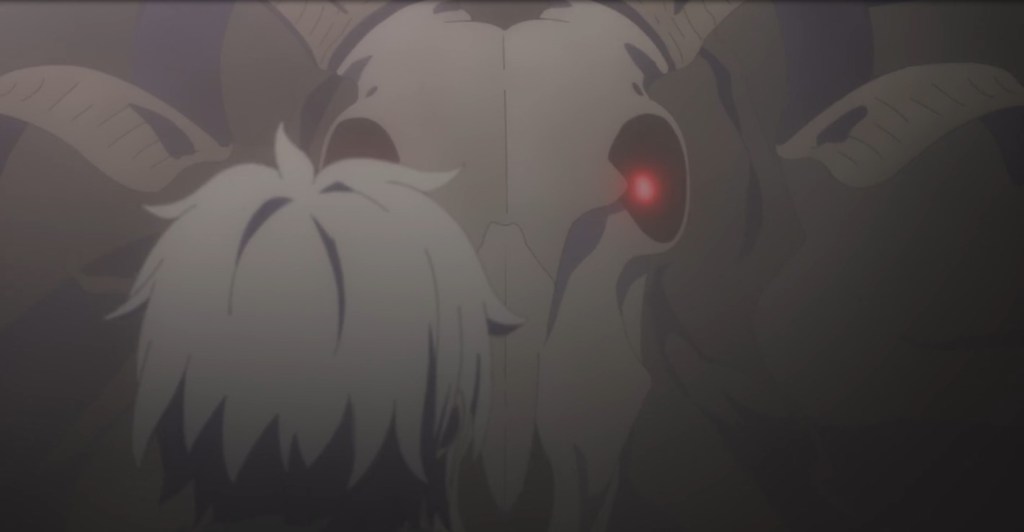

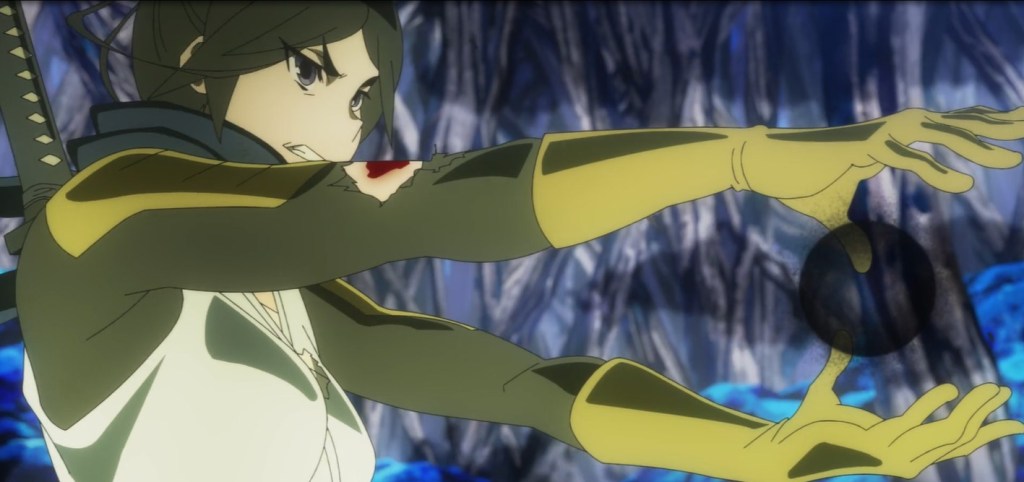
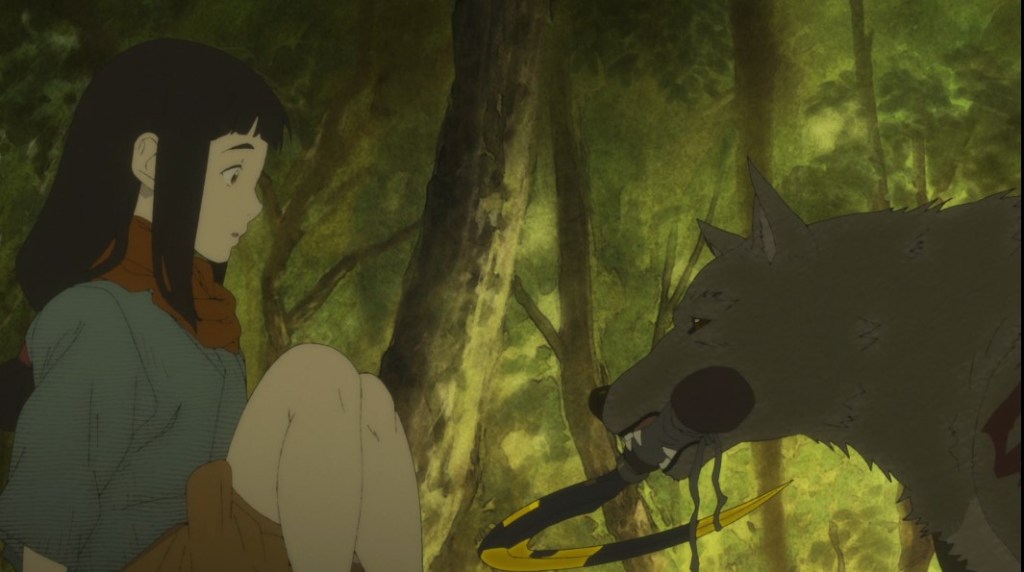

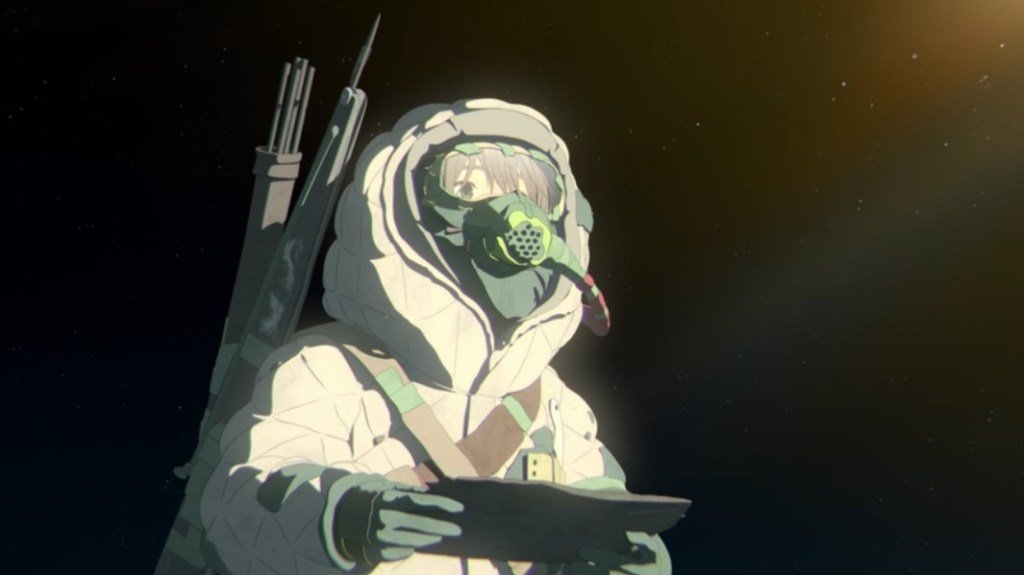

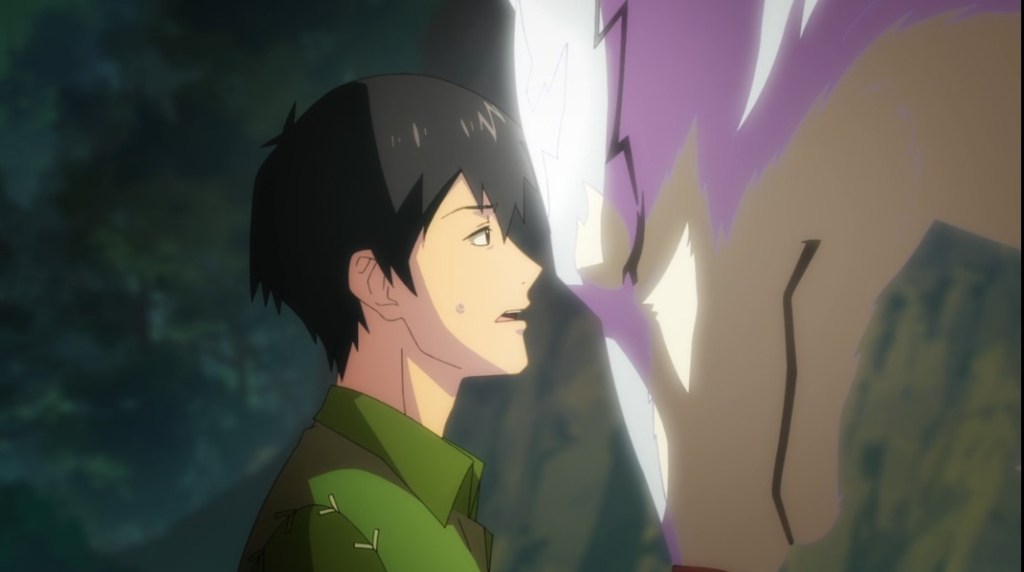

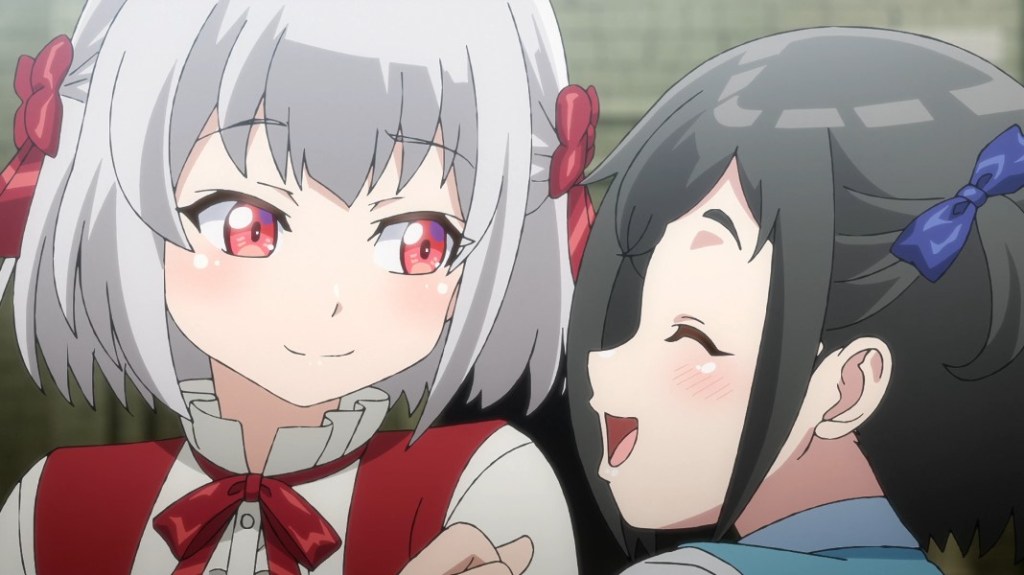

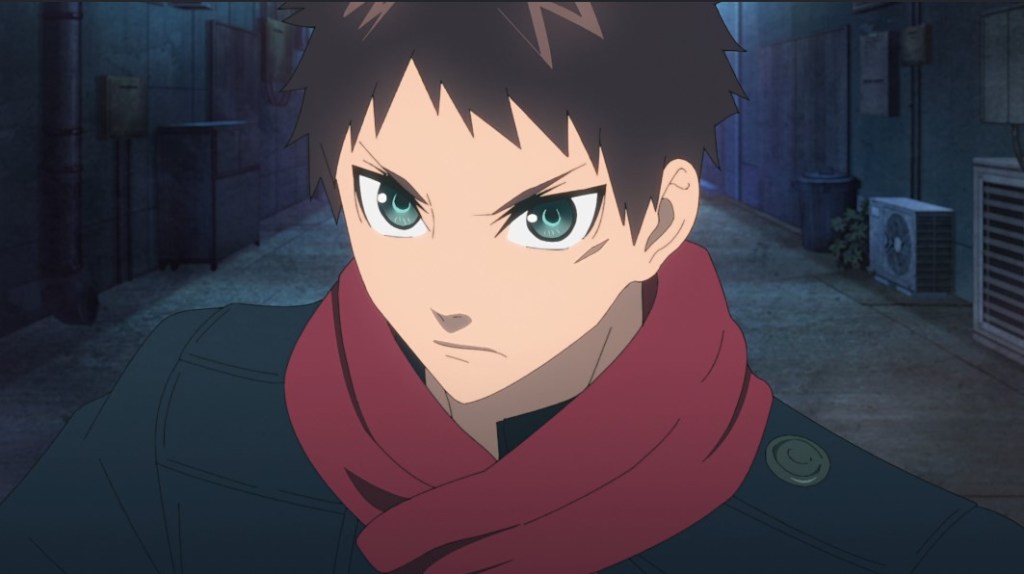

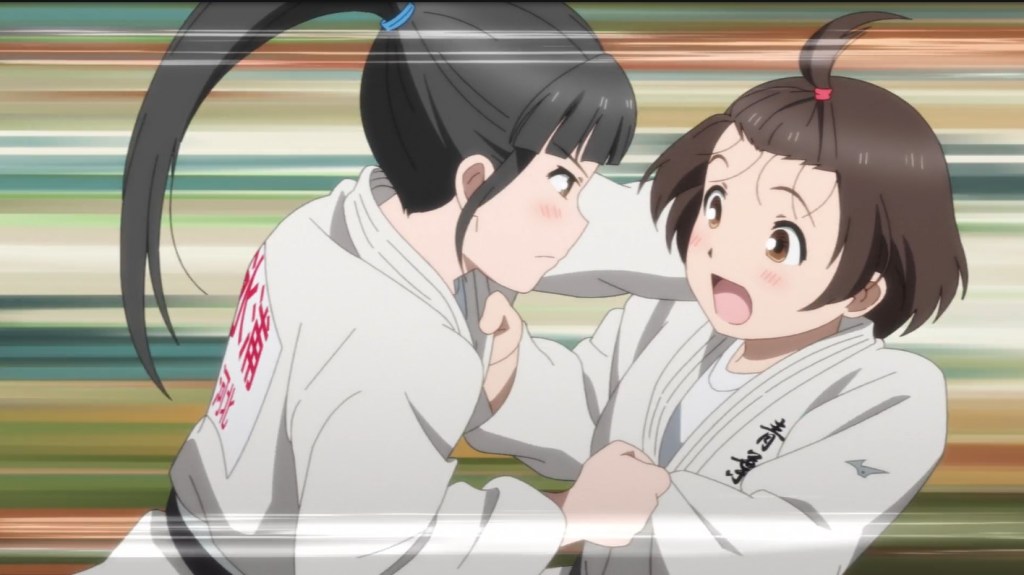

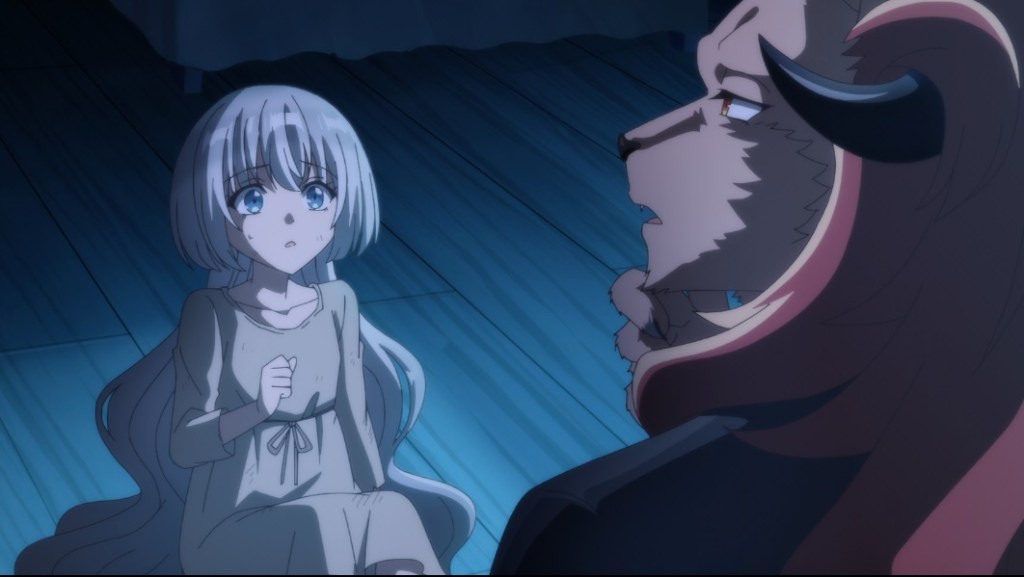
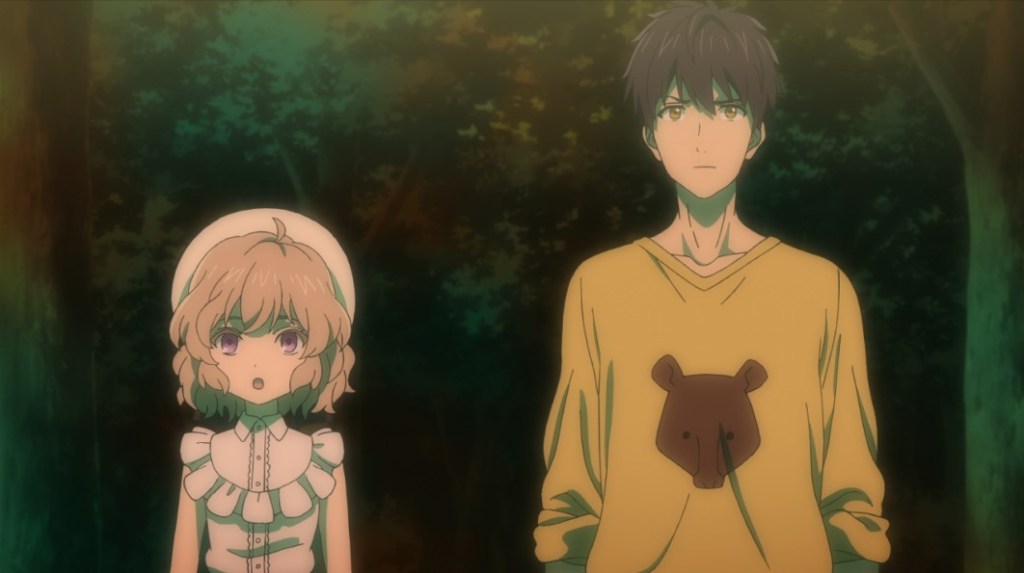
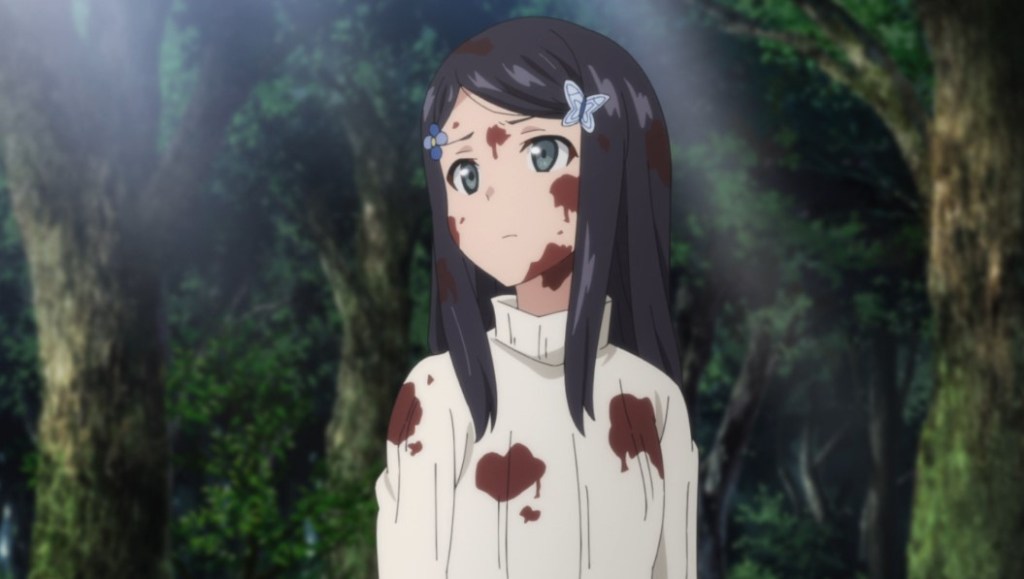

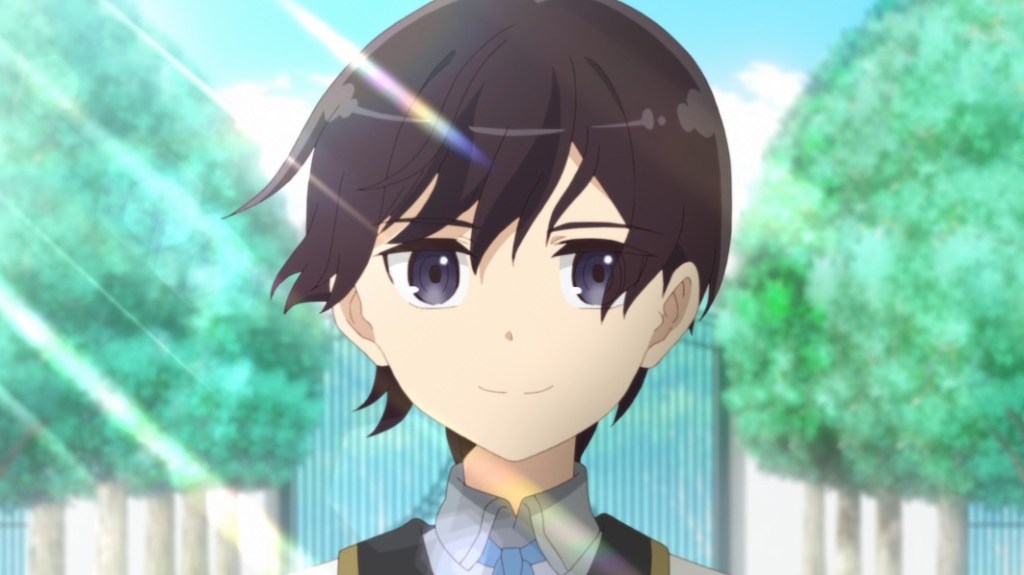
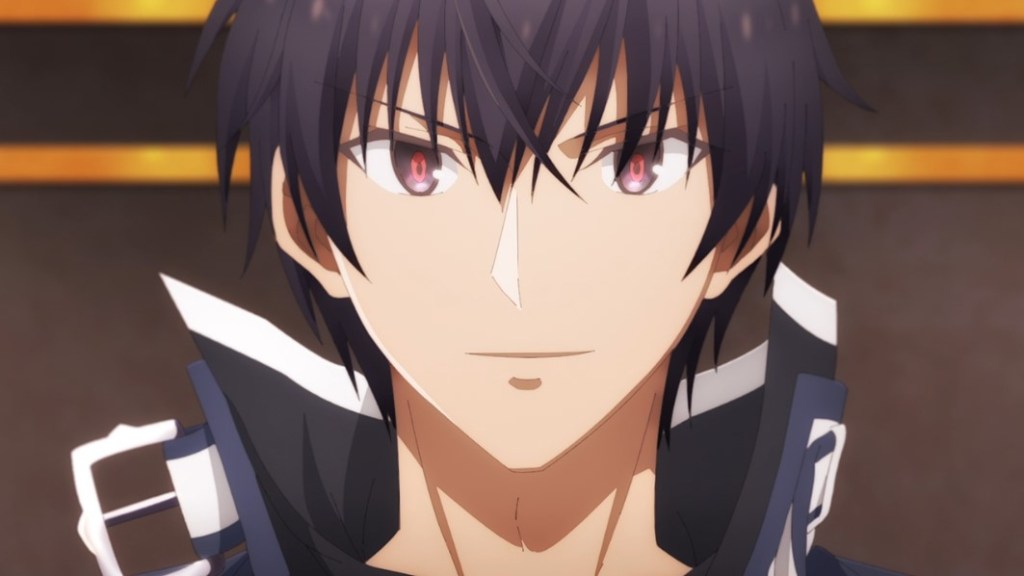

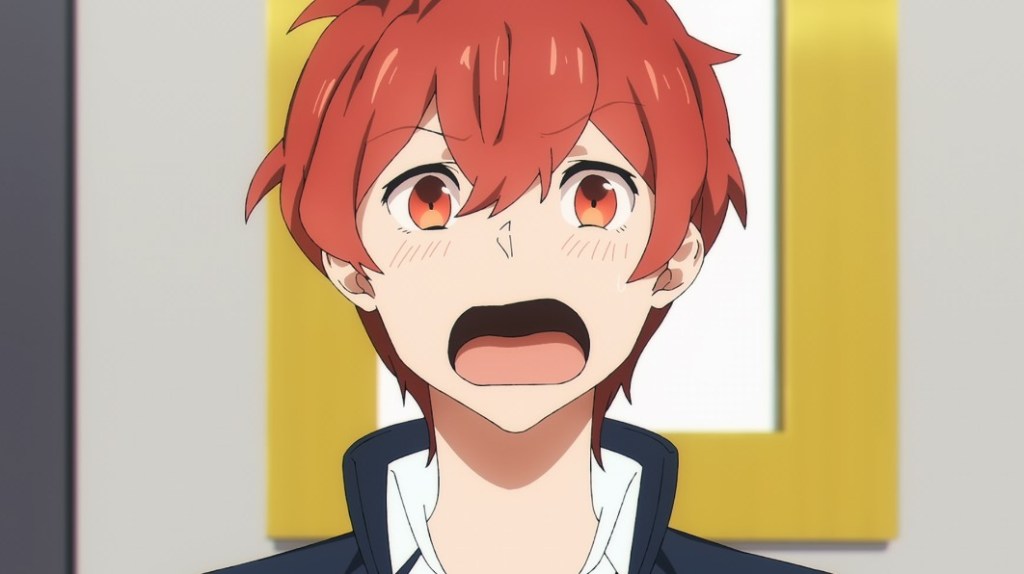
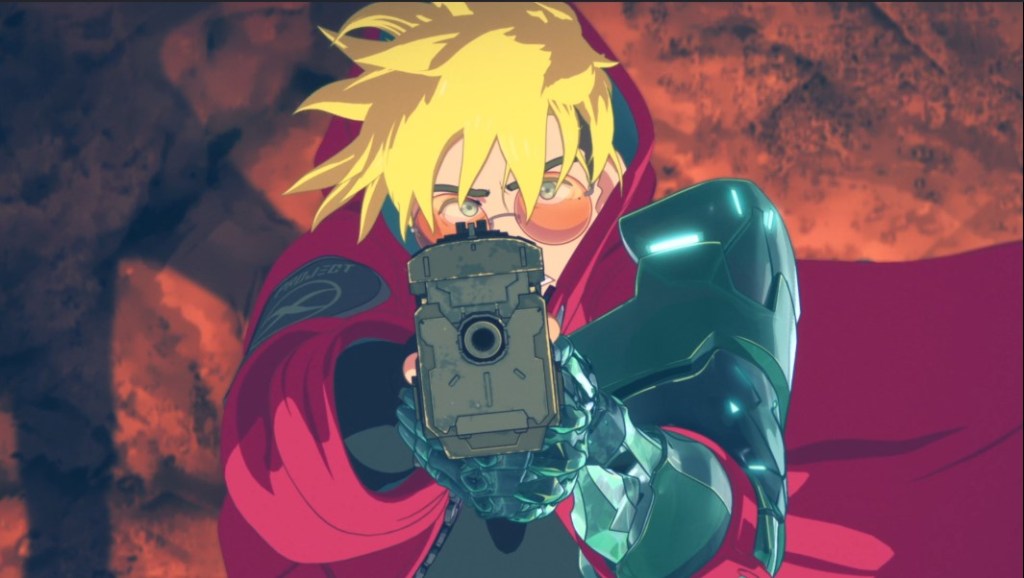
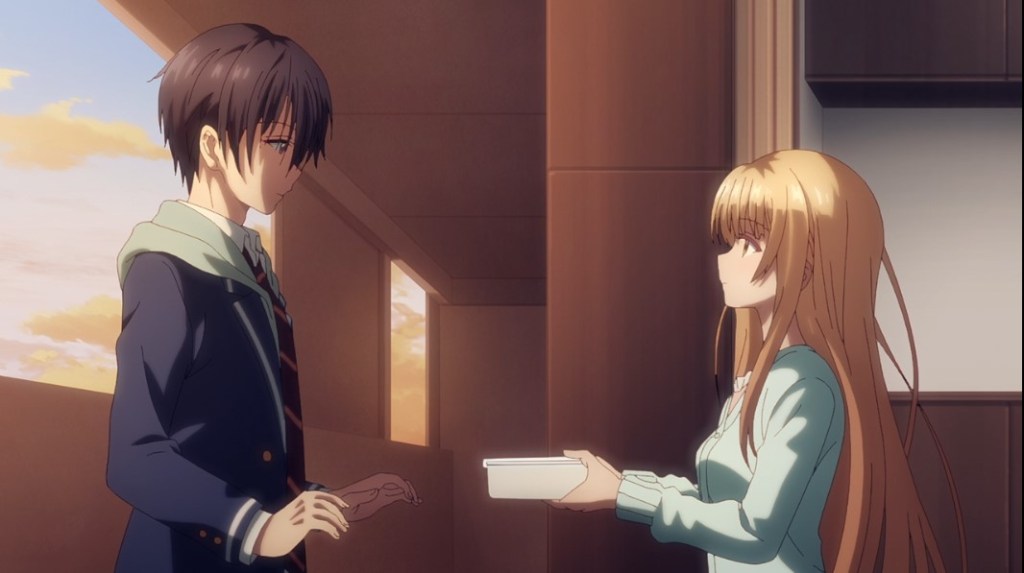


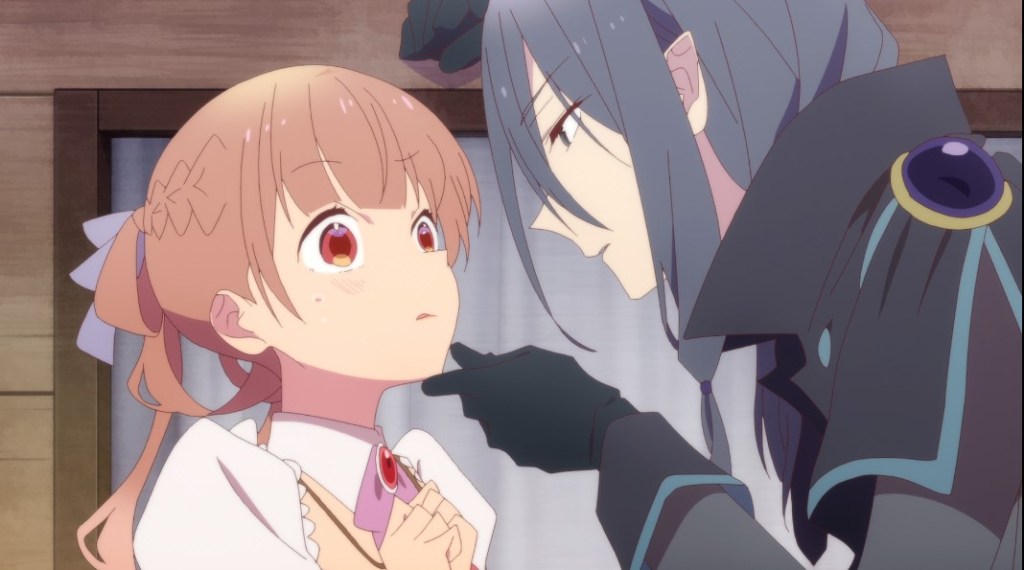

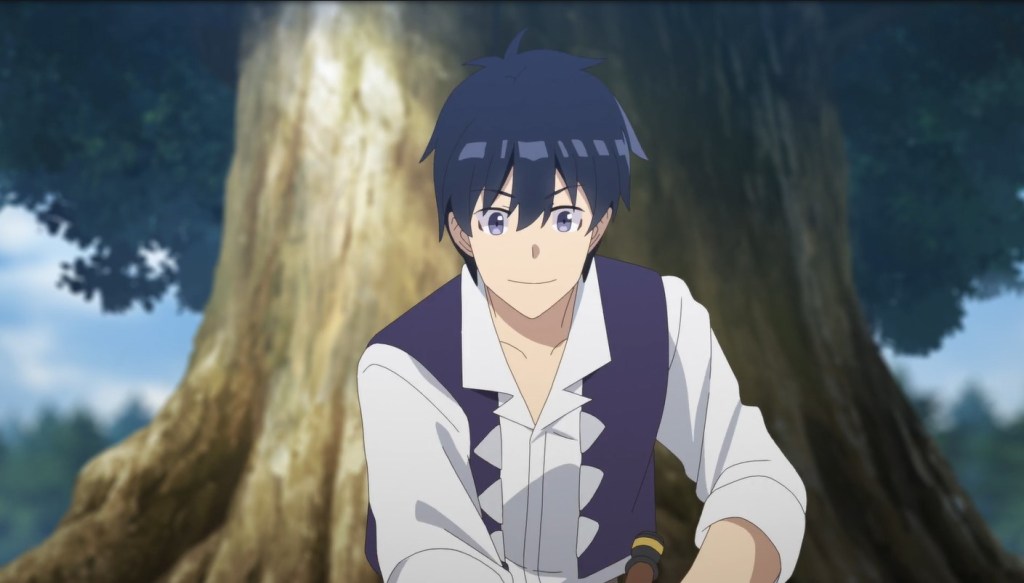
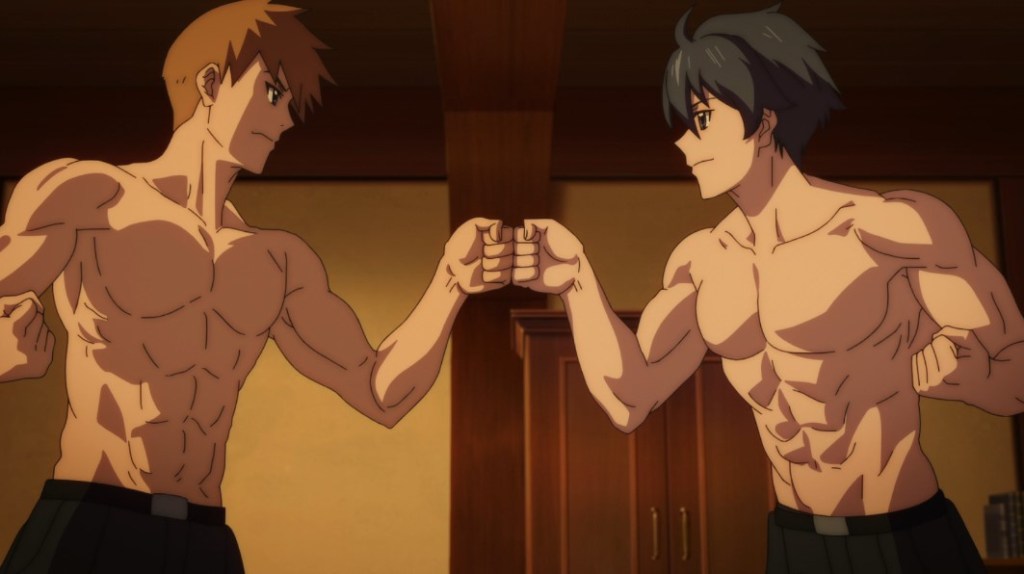
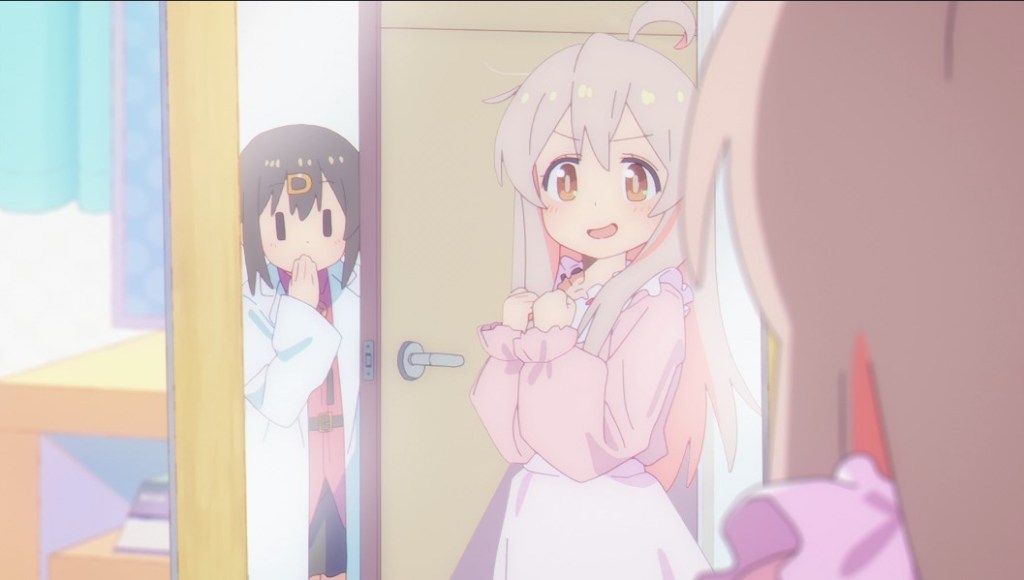

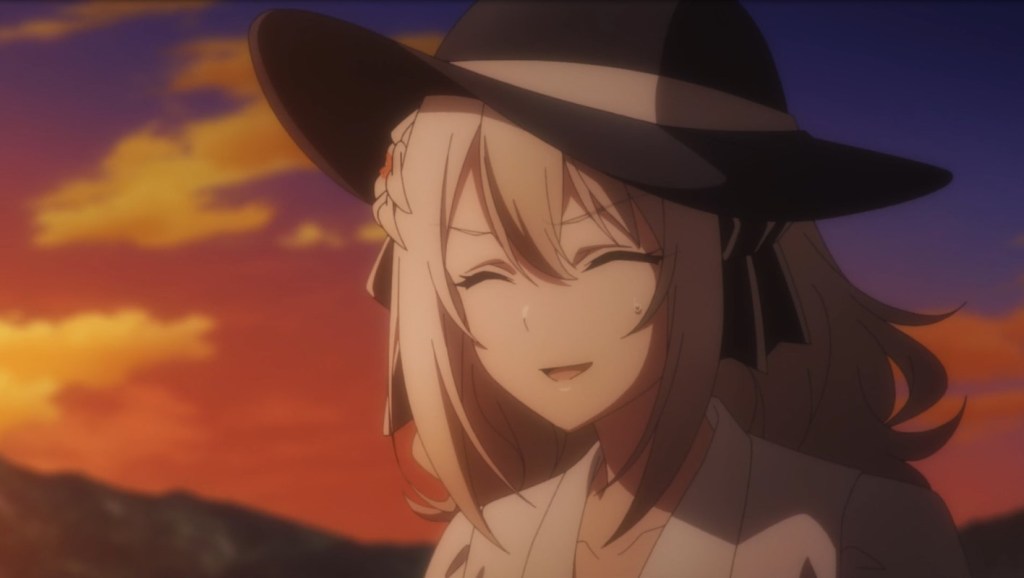

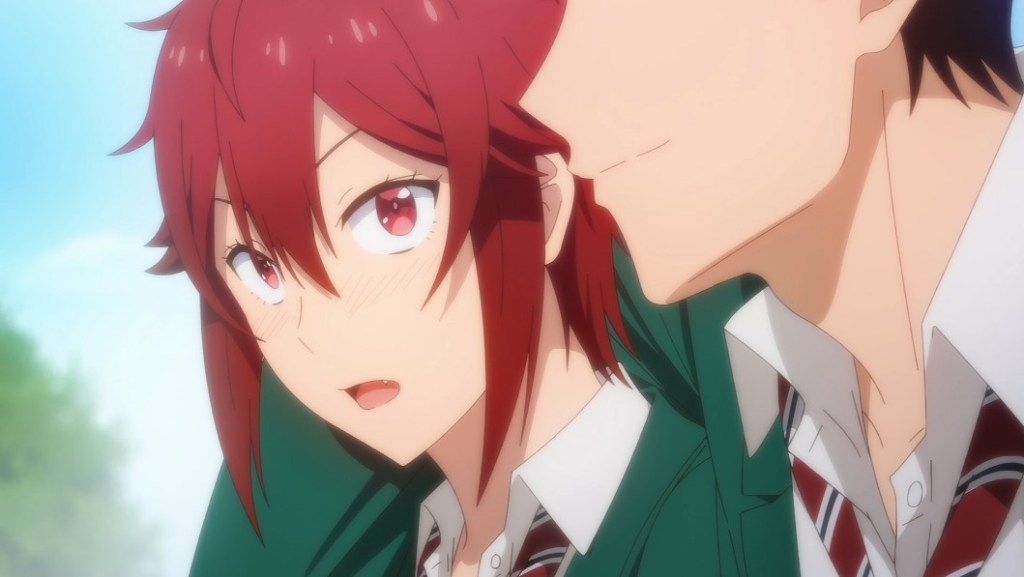
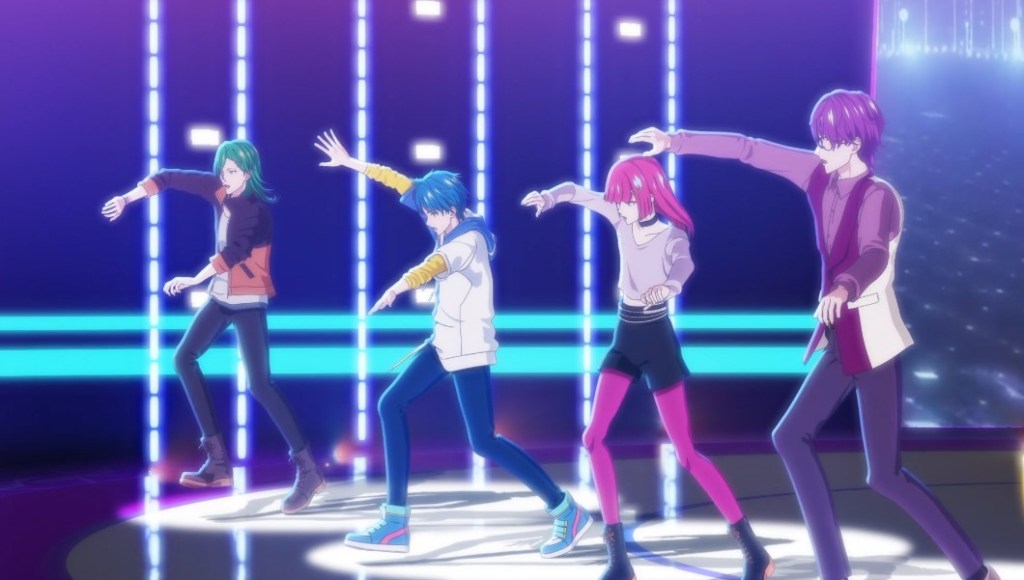
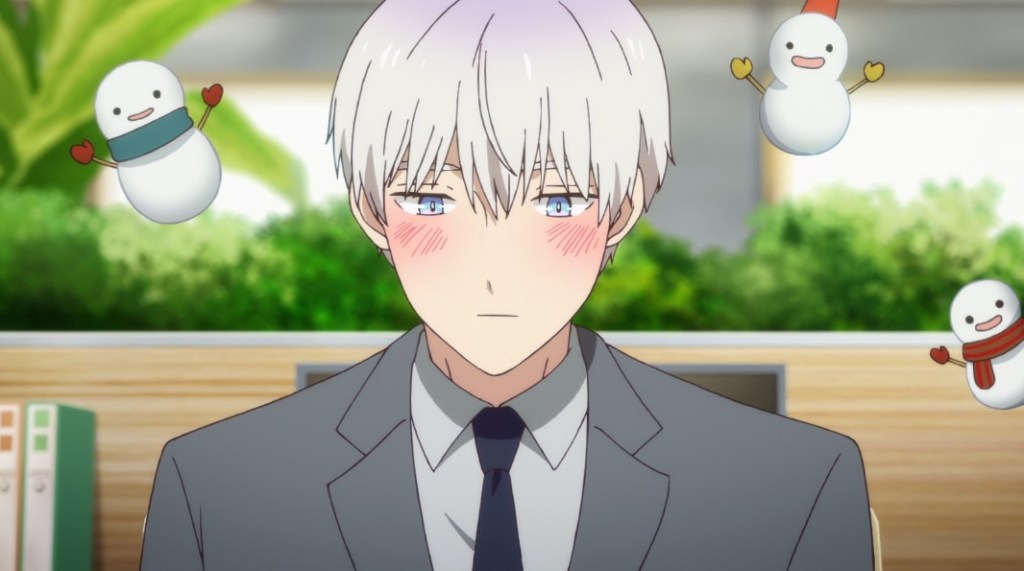
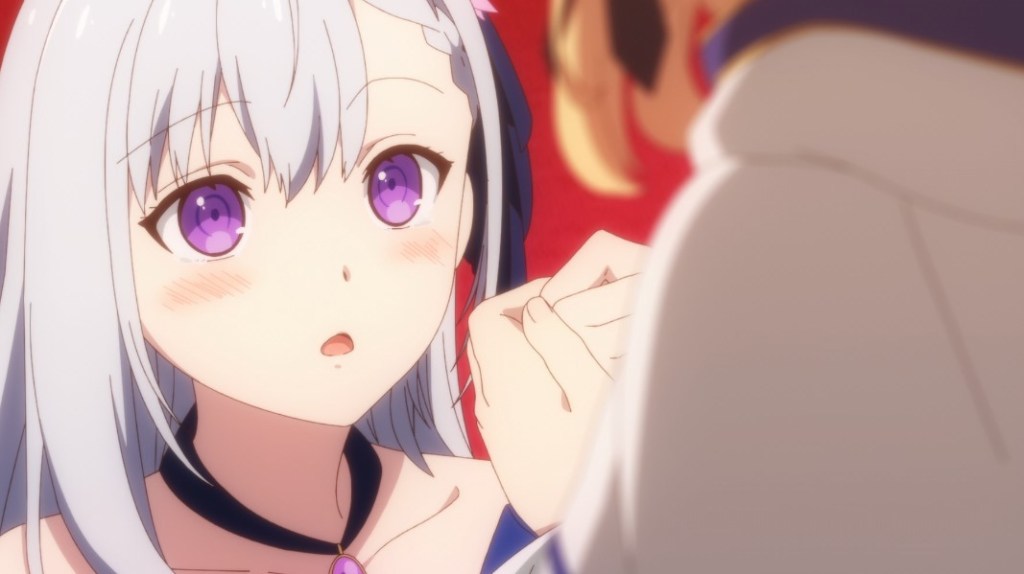
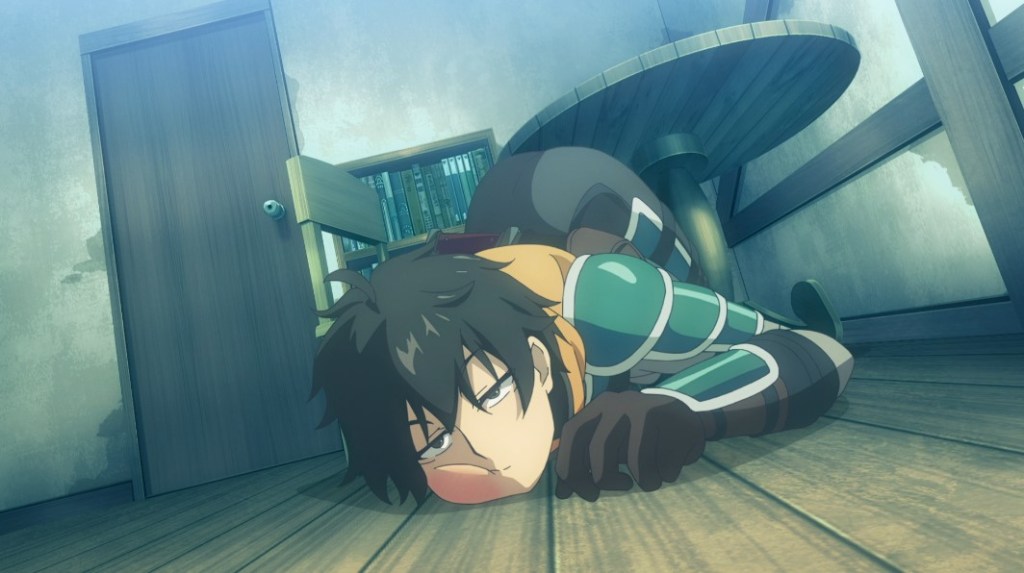
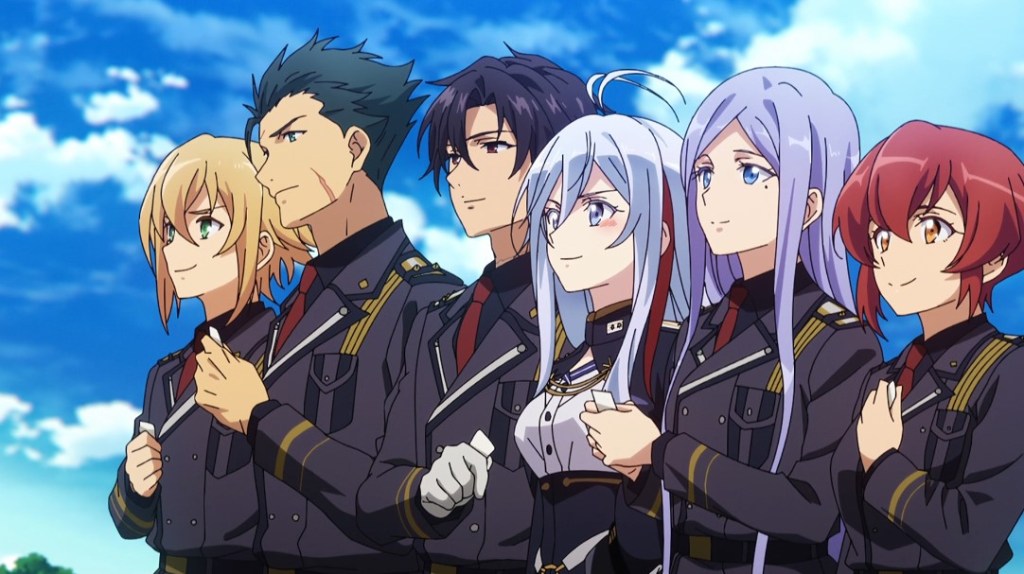

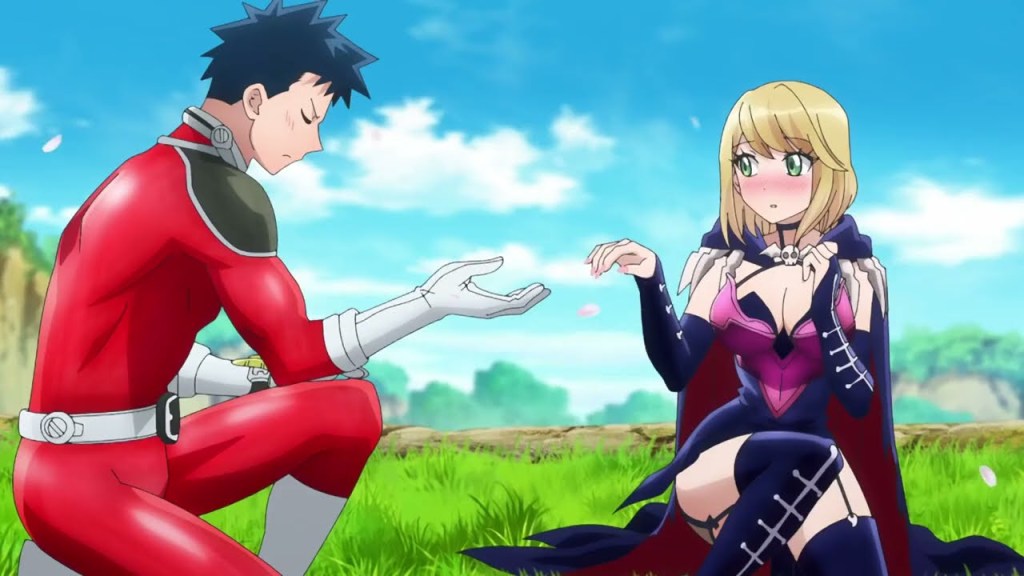

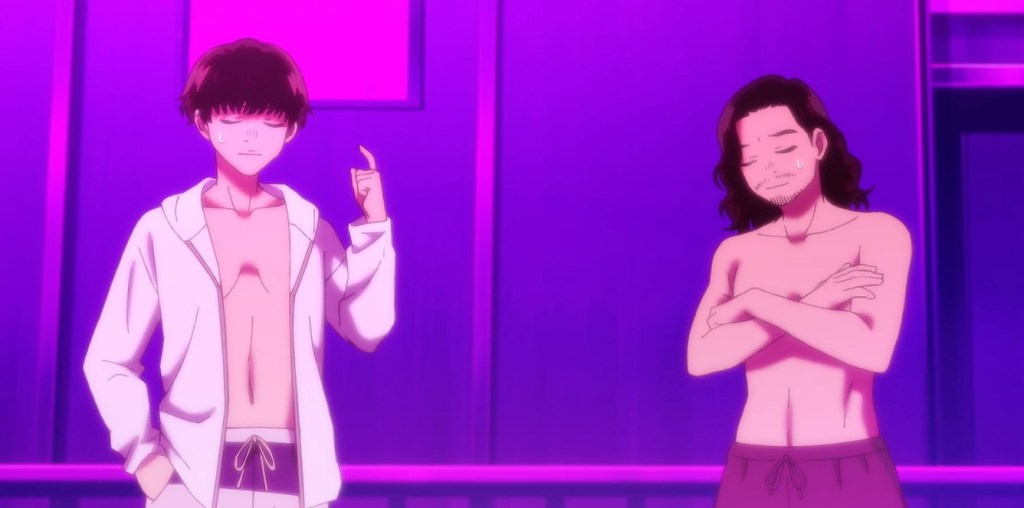

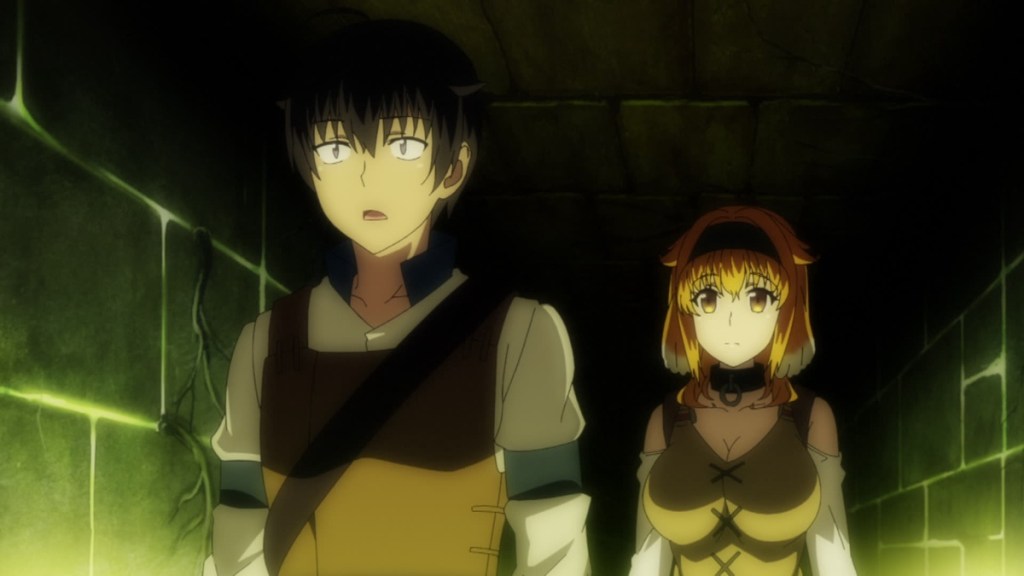
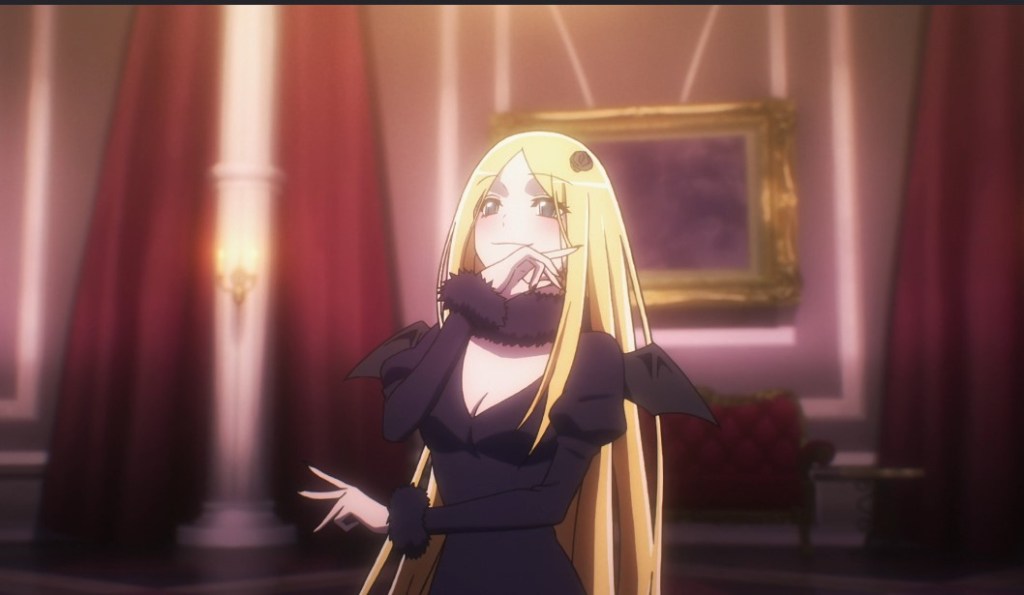
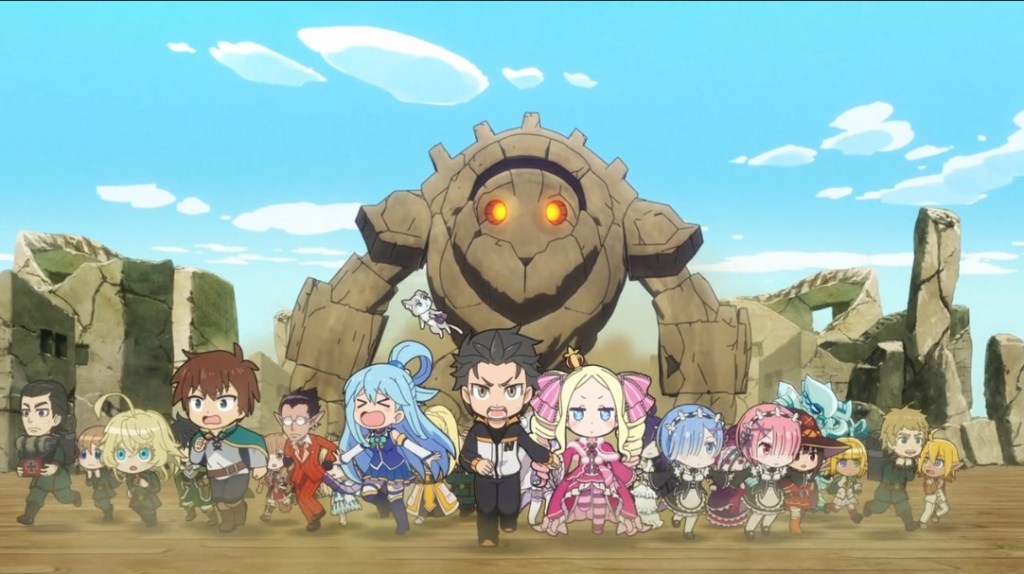

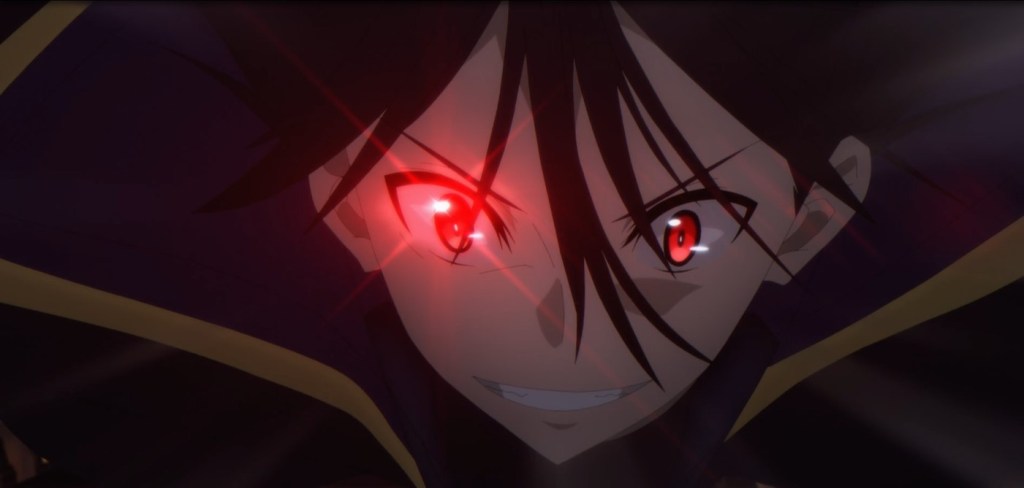


 USA Anime