When Fena was very young, she was set loose on a lifeboat from her father’s ship as some calamity befell it. She came ashore on an island, where ten year’s later she’s about to be indoctrinated into life as a prostitute – and she’s in high demand for her “first time” because of her beauty and unusually pale hair. However, she has no intention of following through. Her complicated escape plan gets upended when old men once loyal to her father come to her rescue – albeit not without help. She eventually winds up on Goblin Island, which was once controlled by Fena’s family and where Japanese-themed travelers shipwrecked generations ago and have built their own little microcosm of Japanese society. Due to their enduring loyalty to Fena’s great-grandfather, the Japanese-types seek to carry out the last request of Fena’s father, which involves a strange block of transparent material. All Fena knows about it is that the word “Eden” may be associated with it, so she sets out on a journey on a special submersible boat to seek answers.
This collaborative project seems to be streaming subtitled on Crunchyroll and airing in dubbed form on Adult Swim. Though created and directed by the creator and director of Netflix’s B: The Beginning and animated by Production I.G., the series’ first two episodes felt like a deliberate effort to mix Western animation sensibilities with anime style, and this sometimes creates some jarring tonal jumps. The Western influences mostly show through in the more slapstick humorous aspects, while the action, designs, and ambiance are more typical of higher-end anime productions. The target audience here is also a bit confusing; at times the first two episodes feel like they are geared to be accessible to younger audiences, but Fena and her prostitute friend (guardian?) also speak frankly about Fena selling off the rights to her virginity (the series uses the term primae noctis for this) and some brigands tasked with killing Fena do talk about “having fun” with her first before being slain.
Beyond that, the first two episodes feel disjointed in other thematic ways. This is a clearly Western setting which has a very traditional Japanese-style enclave nearby? A time period which looks like it might be late 16th or 17th century, and yet there’s a submersible all-metal boat which looks like it could have sailed out of the pages of a Jules Verne novel? I also found it strange that Fena would have been sent off on her journey at the end of episode 2 without a clothing change, especially since she is shown in more appropriate sailing clothes in the opener and closer.
The jury’s still out on Fena herself as a character. She does seem independent-minded and ambitious while still having some bratty qualities, but she is not quite the instant charmer that Pacifica Casull from Scrapped Princess (the character she seems most spiritually similar to) was. Other characters are more stock personality types at this point. The plot seems like a fairly standard “explore to get to the bottom of a mystery” caper, but we’ll see on that, too.
Overall, the first two episodes have enough going for them on the set-up and technical front for me to give them a mild recommendation, but I am a bit leery on how this might play out.
Last episode ended with what appeared to be a shocking revelation to Kazuya from Glaive Magna, or at least something that he called “heavy.” And yet this episode entirely passed without any follow-up on that – or, indeed, any indication at all that such an issue is lingering. Granted, the elder Magna did say that he was not expecting the king to do anything about it at that time, and this being held off as a big hook for later seems entirely plausible. Still, a matter of such stress going completely unacknowledged is an awkward way to the handle the situation if it is not a complete oversight.
What the episode does do is use its now-traditional extemporizing in the intro to explain the organization of magic both in the world in general and in Elfreiden in particular. Much of this should be familiar to anyone who watches a lot of fantasy anime and/or plays fantasy RPGs, with the only minor tweak here being how specialists in each magic type generally end up in different military roles in Elfreiden. The one interesting point here is how “dark” magic is the catchall designation for “not easily classifiable as light or elemental,” which seems like it was brought up entirely to explain why Kazuya’s Living Poltergeist counts as dark magic. Honestly, explaining all of that probably was not necessary for introducing the mascot-sized version of the little ninja guy Kazuya was manipulating earlier using LP, but at least that allows for a vague thematic connection. And my, it looks like the ninja mascot could be as much of a charmer as Kazuya is proving to be.
The whole “adventure into the underground” part was just the fluff piece part of this episode, however. The real business is about the building of the new port city. The lead-in to this, where Kazuya is rallying and praising the white-collar workers who helped get the kingdom’s finances in order to make the project possible, is a little funny but also felt like it was stretching to use up time even at the time it happened. The series also uses another now-familiar gimmick by having Kazuya explain the purpose for it to Liscia so that it can also be explained to the audience. That people from a Renaissance-level setting would not be fully cognizant of economic principles like the Laws of Supply and Demand is at least somewhat credible; there is some evidence that earlier scholars understood the underlying concepts, but the laws did not start getting formalized until the late 17th and 18th centuries. These days, anyone with a high school level of knowledge about economics would be familiar with the basics of it, and someone like Kazuya, who was studying for civil service, would certainly know more than the average.
Even so, building a new port city expressly for the purpose of using these laws is quite ambitious, long-term thinking. So is the notion of specifically designing the city to minimize the impact of future disasters. This isn’t at all a new concept, but it is one that rarely gets used since cities are rarely planned out in advance. (I also find it interesting that this topic comes up when another concurrently-running series – I’m Standing on 1,000,000 Lives – is also using the concept of the lack of planning for disasters as a plot point.) I have always liked the concept of couching a natural disaster in mythological or supernatural terms (again, another direct parallel to what 1,000,000 Lives has been doing recently), and leave it to a dweller of a nation historically ravaged by tsunamis to figure out that the “sea god” was probably that: it wasn’t that a sea god was angry at people settling there, it was that the area is in a common long-term path for tsunami.
That is the aspect where the series is at its strongest, although these little moments between Kazuya and Liscia are growing on me, too. Once again, little that’s exciting is going on, but at least the series is staying consistent to the tone and nature it has shown so far.
English Dub: The first two episodes of the English dub are now available. Despite some minor, occasional points of stiffness in deliveries (mostly, I think, due to being too diligent about matching lip flaps), it seems to be a decent dub job so far. Casting seems fine, especially veteran Keith Silverstein as the former king, though the acid test will come when a passel of new recurring characters gets introduced in episode 3.
Other Series I Am Following:
With the school year back in session (and with heavier time demands than during COVID lockdowns last year), I am fully expecting at least a couple of series that I have been watching to this point to fall by the wayside; Kageki Shojo! is currently seeming like the most likely candidate for a drop, and it may not be the last one to go. Since there’s not much that I am highly excited about this season, that means that this section will probably continue to be shorter than what it was last season.
Fena: Pirate Princess – This has now debuted, but I will be writing it up separately.
86 English dub episode 9 – Okay, so this isn’t technically part of the season, but the dub has now advanced this far and is spectacular; it’s easily one of Crunchyroll’s best recent dub efforts. I am strongly considering doing a viewing guide for the series as a special posting once the dub is complete.
The Detective is Already Dead episodes 6-7: This series is starting to aggravate me, as it feels like someone got lazy while putting a much better series together. I wholly agree with ANN reviewer Christopher Farris that the series invariably shines brightest when Kimihiko and Siesta are interacting with each other, and that can be seen in both of these episodes, especially in the bedroom scene. (Siesta bouncing around while drunk was a delight in more than one sense.) The randomness of the series’ construction had also been bothering me, but with episode 7 it finally clicked that the “Eye of Sapphire” mentioned at the end of episode 6 – and which Kimihiko and Alicia are looking for throughout episode 7 – is probably the idol’s false eye from the episode 3-4 arc. How or why those are linked is unclear, but it seems too much of a coincidence to ignore.
That Time I Got Reincarnated as a Slime ep 42 – One last set-up episode before Walpurgis events begin, and this one may be the most interesting of the lot. Rather than entirely focus again on what Rimuru is up to, it introduces us to one of the other Demon Lords and looks at what they are up to and think about what Rimuru is doing. The mix of misconceptions and keen insights is interesting, as is the introduction of another Demon Lord on Milim’s level, another dragon on Veldora’s level (his older sister, in fact), and an explanation for how Milim came to be Clayman’s pawn. This series might finally get lively.
This time around, the episode begins with some lecturing on the political situation of the continent, as having at least some understanding of that is necessary for understanding the conversation that Kazuya and crew were starting to overhear at the end of last episode. The short version is that Elfreiden has, at best, only a neutral relationship with most of its neighbors and a potentially hostile relationship with one. Even more problematic is that Elfreiden’s three main dukes do not trust Kazuya (for understandable reasons, given how he came to be king), though fortunately for Kazuya, the Dukes also don’t trust other kingdoms which have been making overtures to them, either (again, for understandable reasons, given the situation). That will eventually give Kazuya an opening to deal with the problem, but for now, his goal is to win over one promising young soldier who seems inclined to side with one of the dukes aiming to oppose Kazuya.
I did like how Kazuya taking his time to win over the young man unfolded, as it showed Kazuya doing it not through threats, grand deeds, or charisma but instead by approaching the young man in terms that the soldier could appreciate: namely, that siding against the king would put him at potentially battle-level odds against the girl he was at least longtime close friends with and quite possibly in love with. Kazuya further gets credit for recognizing the thoughtfulness of the fox girl and further realizing that he can kill multiple birds with one stone by appointing her as a staff officer under his strategist, which not only takes advantage of her insight and encourages her loyalty but also draw the young man (Halbert Magna) tightly into position by putting her at the fox girl’s side. Doubtless this will also insure Halbert’s father’s loyalty as well, as his son gets both leniency and a worthy position out of it.
On the downside, the gracelessness of these info dumps leaves a lot to be desired. Director Takashi Watanabe is more known for high-spirited action-heavy fare like The Slayers, Ikkit Tousen, Shakugan no Shana, and Freezing, but he has also done more thoughtful titles like Starship Operators and especially Boogiepop Phantom, so I have to think this is more a problem with either the original writing or the series composition. Either way, the production team still has not figure out how to get these dumps to flow better with the storytelling. At least this is partly balanced out by a nice Kazuya/Liscia scene, Kazuya’s more advanced use of his Living Poltergeists, and whatever Juna was preparing for with what she was holding behind her back; she may be much more dangerous than she looks.
Once again the episode ends on a minor cliffhanger, as the matter that the elder Magna brings up certainly doesn’t seem to be trivial. Hopefully it’ll be something to shake the series out of the rut that it is sinking into; we’re six episodes in and it still feels like the series is in set-up mode.
Other Series I Am Following:
Limited additional commentary again this time, and it may stay that way for a while, as the return of school in my area is going to start seriously cutting into my free time. (My school’s first day for students is tomorrow as I write this.)
Night Head 2041episode 4: While I still have issues with aspects of the underlying premise (I have a hard time buying that something that drastic could be implemented so fast, war or not), the plot developments and better-than-average 3DCG are enough to keep me going on it. The series certainly has a good eye for staging action scenes, at least.
The Detective is Already Dead episode 6: Still want to love this series, but it’s fading. I can see the kind of attitude that it is striving for, but it is not pulling it off, and the current flashback is not yet contributing anything to the overall sense of continuity.
I will give the continuation of the foodie broadcast some credit: it did find something interesting to finish its cooking segment on. The notion of using a specially-killed slime gelin as the base for making what is essentially udon noodles is a clever twist, one that I might expect more from the manga Delicious in Dungeon. (On a side note, that is one of the two as-yet-undapted manga that I most want to see an anime version for.) Discovering things that most had not even conceptualized as food (much less considered) proves Poncho’s value to the kingdom of Elfreiden. However, he’s the least charismatic of the supporting characters so far, so I hope he fades into the background for a while.
Beyond that, the otaku-pandering nature of the series is gradually showing more and more, which gives it further separation from more dedicated world-builders like Ascendance of a Bookworm. That’s not necessarily a bad thing; it just depends on what you want from the series. This shows most clearly in the second half. I don’t at all have a problem with the notion of a ruler going undercover to scope out life outside the palace; there is plenty of literary and even some historical precedent for this, after all. But doing it in school uniforms with a suspiciously modern design to them? Trying to disguise himself behind glasses, especially after showing his face in a nationwide broadcast? Someone’s trying too hard to gimmick the story here.
The topic which comes up for discussion while Kazuya, Liscia, and Aisha are at Juna’s café is an additional bit of pandering, even if there is historical precedent there as well. With so many pretty girls around, Kazuya not ending up in a harem situation at some point would have been more surprising. To make things easier, the harem concept is built in here: polygamy is widely-practiced and accepted in this world, including both men having multiple wives and women having multiple husbands (though the latter is rare). That means that the situation of Liscia’s parents being monogamous is rather unusual, with her father marrying into royalty rather than the other way around, but they do have special circumstances and that does explain why everyone seemed to be deferring to the queen even though the king is announcing the decisions. Even so, Liscia not batting an eye at the notion of being just the first of Kazuya’s theoretical “less than eight” wives seems awfully convenient. Guess she might not end up being the resident tsundere after all?
Still not a fan of the weak way that this series sets up its hooks for the next episode, but at least it looks like Hakuya is going to be back in the picture more prominently. So far, the series feels like it is just settling into cruise mode.
Next week I will have thoughts on the English dub, which began this past weekend with episode 1.
Other Series I Am Following:
Limited list this week, partly because I am already behind on getting this posted.
I’m Standing on 1,000,000 Lives eps 16 – For all of the substandard production values that weight down the series, and for all of the weak staging of the orc fights, this one still somehow continues to land occasional moments of greater gravity and impact. That is quite evident in the chaos of the eruption, which disrupts the fight against the orcs. I loved the way the island’s songs spoke to past eruptions, hence preserving the legacy of the island’s dangers in a way later generations might appreciate if they can just remember the context; very reminiscent of a key storytelling element from one of my all-time favorite fantasy series: Moribito – Guardian of the Spirit. Stuff like this is why I keep coming back to this series.
Streams: Crunchyroll on Saturdays Rating: 3.5 (of 5)
Jahy was once the domineering second-in-command of the Dark Realm. However, a magical girl smashing her main mana crystal didn’t just throw her out of the Dark Realm and into the human realm; it also reverted her to the body of a child. The mana crystal pendant she has left still gives her some power, enough so that she can temporarily revert to her adult form, but until she can collect more mana crystals she has to use that time to eke out a living at a waitress at an izakaya restaurant, while also contending with her employer’s sister, who is her landlord and, for some reason, expects to be paid rent on schedule. Oh, the ignominy!
This much-anticipated manga adaptation is a straight comedy in a familiar vein: a once-powerful person must lower themselves to squeaking by as an hourly employee after finding themselves largely-depowered and destitute in this one. In concept it much resembles The Devil is a Part-Timer!, even down to the magical girl responsible for Jahy’s situation also eventually showing up (based on the opener, anyway). This version is aiming for less sophisticated humor and more of a slapstick-style focus, but that is not necessarily a negative here. Jahy may not be a terribly original character, but a girl who could easily be mistaken for having delusions of grandeur is ripe with comic possibilities. Also, as cute as she is in child form, she is one of the sexiest of recent anime character designs in her adult form and skimpy demonic dress; if a flood of doujinshi doesn’t result from this title, I will be quite surprised. The animation does not seem to be overly stressing the potential fan service angle, so those concerned about being distracted by such content need not worry.
While I am not likely to follow this one (my viewing schedule is already unmanageably full as it is!), I might check in on it from time to time, as it looks like a good deal of light fun.
Note for anime-only followers of the franchise: The events of this novel take place after the arc likely to be covered by the upcoming season 4 of the anime. Being familiar with that arc (covered by novels 12-14) is not strictly necessary for understanding what this review will be talking about, and no spoilers for it will be given.
Note for novel followers of the franchise: Reading the Familia Chronicle: Episode Freya novel before reading this one is very strongly recommended, as that introduces some of the key members of Freya Familia who are present here but haven’t previously been brought up in the main series or Sword Oratoria and provides some vital clues about the truths underlying this novel.
One of the longest-standing supporting characters/wannabe love interests in the DanMachi franchise is Syr Flover, the waitress at the Benevolent Mistress who regularly makes Bell’s lunches and has clearly long been sweet on him. Throughout the main series, Familia Chronicles: Episode Lyu novel, and various stories in the Memoria Freese game, an element of mystery has persisted about who she really is. Despite having no Falna, she has shown an uncanny ability to win people over and is frightfully unbeatable at poker. More significantly, connections to Freya Familia have long been implied despite her not being one of their adventurers; one of Freya’s Level 6s has been known to watch out for her, she has been known to name-drop the familia, and she is working at a tavern run by a former captain of the familia, who once mentioned about having to go to Freya Familia to talk to them about something because of her. Further, Bell obtaining the grimoire which gave him his magic after Syr indicated that he could borrow the book (and after Freya specifically pulled it off her shelves with the intent of it getting to him) has always seemed too coincidental, and Syr has always seemed to get away with things that the other waitresses couldn’t (or at least with far less harsh punishment). The Episode Freya novel is even more clear about the connection. So who is Syr, really?
That’s the question that this novel spends almost its entire time preparing to answer, with the revelation finally dropping on the next-to-last page of the main story. The impetus of the novel’s plot is Syr formally inviting Bell on a date during the Goddess Festival, with an implication that it is part of a high-stakes challenge between Syr and Freya. The story takes Bell through the preparations for the date and then the date itself, while the rest of Hestia Familia is being distracted by a favor being called in. Naturally, given the individuals involved, this is not without complications, both in the form of Freya’s overzealous and overprotective minions and Syr’s own desires to upend the plans, to say nothing of certain individuals with an interest in one or both parties who wind up spying on the date.
At its most amusing, the novel shows Bell living up to the series’ title as part of his “training” to become a proper date for Syr, and there is something inherently funny about the normally-timid Bell suddenly outwardly becoming a suave ladies’ man, to the point that even Syr takes a while to get a handle on what she’s dealing with. The date visits some familiar locations but also allows the introduction of some of the more touristy features of Orario (although the dimensions of some of them strain credulity!) and throws in cultural features as well; the Goddess Festival, which is basically a Harvest Festival done Orario-style, is an interesting addition, and references are made to other celebrations which, to this point, have only been mentioned or appeared in the Memoria Freese game. Details on one of the in-setting book Dungeon Oratoria’s best-known stories are also introduced.
However, the novel does have a much more serious side, and that kicks in as the temptations rise for Bell and the stakes seem to rise for Syr. The novel also does not forget Bell’s supposition at the end of novel 15 that there might be a connection between the ancient hero Albert and the current hero Aiz Wallenstein based on surname similarities, though that is more of a side point. (That Albert was responsible for the Black Dragon being one-eyed is, I believe, a new revelation as well.) All of those lead to the dramatic climax, which is followed further by the revelation of Syr’s identity, which is followed by what writer Fujino Omori refers to as a “plot bomb” in the Afterword. And yeah, that’s an apt name for that final development. It has the potential to shake up the story at least as much as Weine’s introduction at the end of novel 8 did. However, given the character of the person responsible for the development, it is something which had to be expected to happen eventually.
Without getting into spoilers, the revelation about Syr’s identity is, unlike the revelation of the true masterminds in Sword Oratoria volume 12, something which is reasonably deducible. It is a possibility that I have long had in the back of my mind but was not fully convinced could be supported by circumstances. The logistics of it also seem a bit suspect. However, a handful of details scattered throughout this novel point firmly in that direction, and in retrospect, certain events and behaviors which have been scattered across the breadth of the main series and Familia Chronicles novels make much more sense within the context of this revelation. This also raises the question of who all knows the truth. The upper echelon of Freya Familia seems to, and I have to think that Mia does, but the rest of the Benevolent Mistress waitresses (and especially Lyu) clearly don’t.
In a technical sense, this may be the best of Omori’s novels yet, as it avoids nearly all of the niggling style quirks that have frequented Omori’s previous novels. The one downside is that he seems to conveniently forget about certain supporting characters that were left in a bind shortly before the end, but presumably the next novel will have something to say about that.
In all, the story is a satisfying addition to the franchise, one which leaves shivers of anticipation about the upcoming consequences of its ending.
Note: Click here to skip to the “Other Series I Am Following” part
Tomoe and Kazuya
Rating (first half of ep 4): 4 (of 5) Rating (second half of ep 4): 2 (of 5)
Ugh, again, apologies for this being much later than it should be; my weekend was unexpectedly busy, and then the arrival of a high-priority novel (which may be reviewed separately) delayed this a couple days more. But I should be back on schedule for episode 5! For real this time!
With the advent of episode 4, Realist Hero is proving to be nearly a frustrating a series as it is a fascinating one. This trend clearly started last episode with the all-too-long introduction of characters who will play key roles in the story going forward, and it continues this episode by spending nearly half of its run time on a food-tasting broadcast. . . one which – impossible though it may seem! – ends on a food tasting-related cliffhanger. Hopefully, the carry-over of this one to the next episode will prove to be as significant as last episode’s cliffhanger about the little wolf girl’s secret was.
And speaking of that, I was not expecting that to amount to much more than a throwaway moment, but it actually does turn out to have been at least partly worth the cliffhanger treatment. The revelation that communicating with the seemingly-inscrutable enemy might be possible is, as Kazuya correctly surmises, one that could rock the entire continent to its core, so Kazuya’s caution over both who might have heard it and over protecting Tomoe is certainly warranted. Proclaiming her to potentially be one of the kingdom’s most important people is not an exaggeration, either, so the time and care spent in sorting out how best to protect her without raising suspicions is welcome. I also especially liked how both this episode and the last one took pains to show Kazuya crouching down to Kazuya’s level, so she would not feel so intimidated. This is a markedly different approach than seen in a series like Ascendance of a Bookworm, which regularly emphasized that Main was at a seeming disadvantage in dealing with adults because she had to always look up at them. While that wouldn’t intimidate a child with the mentality of an adult, it would a true child in most cases. (Another potential parallel is the situation of Tomoe needing to be adopted for her own protection, a situation that Main will probably be facing if a sequel of her series ever gets made.)
Tomoe’s part is, by far, the most interesting part of the episode, even if it does lean a bit too heavy on narrator exposition about some relevant details for my tastes. The scene with Kazuya and Liscia after that is also cute. Sadly, the whole episode could not be spent on those because two other new inductees need attention – or, more specifically, the point to the enthusiasm over Poncho needs attention. As expected, Poncho’s desirable expertise is in his knowledge of food alternatives for a country facing a food shortage. I don’t necessarily have a problem with the concept here – i.e., using palace personnel to show off how edible and even tasty local delicacies can be – and some of the foodie details are a little interesting, but did a whole half an episode (and potentially then some, since the scene is not complete at the end of the episode) have to be devoted to this? I wonder if there wasn’t a better way to streamline this.
The one other note here is that artistic quality control is starting to look shaky. This is particularly noticeable in how the exact placement of Tomoe’s tail on her backside seems to shift around, but it also shows in the Kazuya/Liscia scene and occasionally others as well. This is hardly a major concern yet, but since this series is more visually detail-conscious than a concurrently-running isekai series like Tsukimichi, it bears paying attention to going forward.
Other Series I Am Following:
The Detective is Already Dead eps 1-4 –I really want to like this series, and I do like the concept of a former sidekick having to step up when the “great detective” unexpectedly passes on, but I feel like it is still settling into its long-term format. The introduction at the end of episode 4 of the blond girl seen prominently in the opener should help fill that out. This one seems like a fine view as long as it is not taken too seriously. 3.5/5.
Battle Game in 5 Seconds eps 1-3 – As much as I recognize that this is just a straight super-powered death game format, I still find myself getting drawn in by it. I still do not like the main catgirl villain at all, but the quirks and intricacies of each person’s powers still holds a lot of potential and Yuri is starting to grow on me. Not so much the personality of lead protagonist Akira, but we’ll see how things go there. 3/5
Seirei Gensouki – Spirit Chronicles eps 1-4 – Though arguably the weakest of this season’s crop of isekai titles on visuals, this one is also offering at least some appeal even to those not won over by the girly-cute character designs. The path to collecting the scattered isekai cases is the biggest draw for me so far, which makes Rio’s encounter with the little girl-reincarnate in episode 4 a potentially intriguing point. I do like how Rio has not fully accepted yet that he was Haruto, instead talking about him like a different person; this would, I think, be a more common reaction. Might hang on this one a while longer to see where it goes.
That Time I Got Reincarnated as A Slime eps 38-40 – The meeting has been going on now for four friggin’ episodes? What the hell? Even by shonen action standards, that’s one hell of a long meeting. I continue to watch this one because nothing else is being released on Tuesdays, but it is doing absolutely nothing right now to get me enthusiastic about it.
Tsukimichi – MoonLit Fantasy- episodes 1-4 – Somehow this series does not feel as generic and cheesy as it actually is, for it is a mostly-pure power fantasy with harem elements attached. The attitude that none of this should be taken too seriously is the right fit for the series, and as a result, each of the four episodes so far has been loads of fun. Even if you’re not looking for another isekai title, I do recommend this one.
Miss Kobayashi’s Dragon Maid S episodes 1-3 – So far this season is not quite as crisp as the first one, and some of its content is edgier. However, I feel it is at least close to recapturing the spirit which made the first season such a fan-favorite title.
Night Head 2041 episodes 1-2 – Haven’t had time to get to episode 3 as I write this, but this one is showing some potential as a much heavier take on controlling those with special abilities. I am not ruling out going to episode reviews on this one since Anime News Network is not covering it this season.
Scarlet Nexus episodes 1-4 – This is probably the most tenuous title on my watch list at this point, as I am not being won over by the nihilistic spirit of its apparent villainous plot. Will give it maybe one more episode to impress me.
The Aquatope on White Sand eps 1-3 – This one is a major winner, quite possibly one of the season’s best. It is fully in the spirit of predecessors like Hanasaku Iroha and Iroduku, and the dynamics between the two lead girls are shaping up quite nicely. Seeing in episode 3 that other characters are going to be allowed in on the magic of the setting was also a nice touch. This will likely be a priority view each week.
I’m Standing on 1,000,000 Lives eps 13-15 – This is a series that I will probably continue watching even though I will never consider it a favorite or priority view (especially with Kahvel apparently permanently sidelined). Its technical merits are also still as lame as ever. Still, I find myself not quite able to drop it yet.
Remake Our Life! epis 1-3 – Although I like this series, I am already an episode behind on it, and that puts it at risk of being dropped. (This may be a series that I will watch in chunks as the season progresses.) Still, it is a good series with strong technical merits, and I like how the character developments are setting up so far.
Kageki Shoujo!! Eps 1-4 – Somehow I am still watching this one, and episode 4 was impressive in how it handled the situation with Ai and the not-really-a-stalker guy. On the downside, the upcoming bulimia story arc does not interest me at all. The one thing kinda keeping my interest is seeing how Sarasa’s kabuki background might emerge, but I’m not sure if that’s going to be enough when I have to start cutting back on my view list (due to the imminent restart of school for the season).
Note: This will be one of my regular weekly reviews, and it should be on a regular “no later than next-day” schedule starting this coming weekend.
Kazuya and Princess Liscia
Rating (ep 1): 4 (of 5)
Rating (ep2): 4.5
Rating (ep 3): 3
Though Social Studies in Secondary Education was my college major, Economics was the one subject in the field that I avoided taking a collegiate-level course on, in large part because the high school version of it bored me. Hence me eventually developing an interest in anime series which are heavily-grounded in economics is quite ironic, but I have favored them ever since starting to follow the Spice & Wolf franchise in the late 2000s. That interest continued with MAOYU and Ascendance of a Bookworm, and one or two others along the way that I am sure that I am forgetting. This isekai series, which is based on a light novel series, has a similar kind of foundation to its predecessors, one which looks more at the nitty-gritty details than the grand adventures of its medieval fantasy setting – at least so far, anyway. That gives it the potential to be involving for those who were fans of any of the aforementioned franchises, though episode three also shows some troubling warning signs.
In the story, Kazuya Souma is a studious young man in modern Japan who doesn’t have any family ties left, but suddenly getting summoned to another world still throws him off. Worse, he finds that he’s not supposed to be a battle hero for the Elfrieden Kingdom who summoned him, but rather a tribute to the Gran Chaos Empire (in lieu of money), which is bearing the burden of the fighting against the invasive Demon Territory and expecting other natures to contribute. To avoid that fate, Kazuya sees only one option: convince the leadership of the financially-troubled Elfrieden to reform their kingdom’s finances so that the tribute can be paid after all. To his surprise, he is so convincing at this that the weak-willed current king chooses to abdicate in favor of Kazuya, as he sees the young man to be more suited to the task.
While this might seem overly optimistic and irresponsible at first, the first episode does at least clarify that multiple nights of discussions led to this decision, and that it might be the first truly sound decision that the spineless king has made. (Interesting that even the ministers seem to look to the queen for approval, though!) The other mild surprise is that Princess Liscia, a boyish type who actively serves in Elfrieden’s military, has not yet turned into the total tsundere which might be expected for a character in her situation. After all, she was promised in marriage to Kazuya as part of the deal, and that suddenly happening would throw anyone off, but through the first three episodes she is shown quickly coming to appreciate how serious and thoughtfully Kazuya is taking his new role and how hard he is working for the betterment of Elfrieden. He’s even being thoughtful towards her, both by giving her the option to reject the marriage arrangement and by showing her what she needs to know so that she can eventually rule herself. By the end of episode 3, signs are already showing that she may be falling for him, so anything less than that eventually happening will be a disappointment at this point.
The first three episodes are all about laying the foundation for the economic revitalization of the kingdom, based on Kazuya’s premise that things like wars cannot be handled unless the kingdom has a firm financial basis first. Episode 2, where Kazuya makes a kingdom-wide announcement that he is recruiting talented individuals in all fields regardless of status or background after realizing that most of the kingdom’s administration is lacking, is the strongest and most effective episode so far at promoting this revitalization. In fact, it’s done well enough to give me high hopes about the series accomplishing grand things despite its more mundane focus. It also furthers some indications made in episode 1 that the series will also be tracking how others in power and information positions view Kazuya’s actions.
Sadly, episode 3 is a regression on this front, one that bogs down badly by taking nearly the whole episode to introduce several individuals shown (and named!) in the opener. The characters being introduced are not the problem, and the specialist role each will play for Kazuya is obvious in most cases: the dark elf is his champion, the singer is his tool for influencing the kingdom’s morale, the smart human will be his advisor, and the beast girl’s ability to communicate with animals has all sorts of potential applications. The most interesting case is the hard-core foodie, who worthiness is least obvious but still important: his knowledge of cuisine from all over the world will be invaluable for determining which food crops would be worthy financial investments both for feeding the populace and for trade, especially since Kazuya is seeking to reverse a previous trend towards cash crops that have gone bust. I did particularly like how the adviser guy’s estimation of Kazuya switched to favorable based on Kazuya picking up on that. But did a whole episode really have to be spent on this? They didn’t even finish with the beast girl’s introduction, either – and hopefully she has something more crucial than just needing to go to the bathroom that the episode cliffhangs on, though I wouldn’t put it past the writing to pull that stunt.
As for the economics side of things, all the points and observations that Kazuya makes are sound, practical ones, such as monetizing treasures that are just sitting around gathering dust and have no major symbolic value or realizing that the over-commitment to a cash crop has cut into the kingdom’s ability to feed itself. Also, some fresh blood with fresh ideas was clearly needed to shake up a kingdom which had become too staid in its ways due to weak leadership. However, did the person doing the shake-up have to be an isekai individual? After all, Machiavelli’s The Prince (which Kazuya was shown reading before getting spirited away) was written during Italy’s Renaissance period, and the economics of things like cash crops – and how that could go awry – was understood (if not widely-used) even earlier than that. The idea of recruiting the most talented regardless of social background is also hardly a modern concept; leaders as far back as antiquity were known to have done that (though admittedly it wasn’t a common practice). Basically, I’m a little concerned about too much credit being given to Kazuya for his innovations based on him simply being from a more modern world.
But I am willing to give the series time to set itself up on that point, since this is not going to be a fast-moving story. Technical merits so far are only average at best, and none of the character designs used so far stand out. Both the OP and ED themes are solid (though the visuals for the latter are lacking), but the musical score is not otherwise remarkable. Hence the series is going to have to carry itself entirely on its story content, but at this time, I can see no reason why it will not be able to do so.
First, apologies for the delay on posting this. I have talked about this final episode extensively in other forums, so it slipped my mind that I had not done a proper write-up here.
After episode 23, I was a bit worried about how the final episode would manage to cover everything that was left in novel 5 without seeming too rushed. But that’s exactly what the final episode did: it powered through all of the key points at a brisk pace, which amounts to a more frenetic episode than normal for this franchise. In the process it brings the human side of the story to a cliffhanger stopping point, while also progressing the spider side to the point where Kumoko formally hooks up with Demon Lord Ariel and baby Sophia.
On the human side, the addition of the Glorias to the battle against Kyouya and Sophia has (as expected) a negligible effect on how the battle plays outs. Even those war machines do not pose much of a threat to those two powerhouses, and Shun and his companions are clearly not in Kyouya’s league any more than they are in Sophia’s. (Exactly why they’re so much stronger is beyond the scope of this series, but will be covered in both cases if there are follow-up seasons; Kyouya’s story is told in novel 8 and Sophia’s is given piecemeal from volume 6 on.) Though hardly good, the CG and battle staging is at least a bit better than in the previous couple of episodes, so the real problem spots here are how both Anna’s sacrifice and Shun’s use of Mercy triggering Taboo are handled. In the former case, the anime has done a poor job of establishing Anna’s importance to Shun (and vice versa), which is a failing compared to the novels and sure to leave anime-only viewers scratching their heads. The latter case may also confuse anime-only viewers, since the series has skipped over Shin using Mercy in three other cases; in the anime, he has only been shown using it for Katia and Anna. Otherwise, the series ends the human side exactly where it does in the novels, though it leaves out one slight detail: Hiiro Wakaba was especially memorable because – despite her reclusive personality – she was universally regarded as the prettiest girl in class.
The spider side is handled better, though the series could have put a little more effort into setting up that Kumoko could survive by transferring her mind to one of the newborns created via the Egg-Laying skill; this was only vaguely hinted at as a possibility a few episodes back. The adaptation is skipping a little in having Kumoko go right to Arachne form, but I saw nothing problematic here about how that sequence is handled. Further, seeing the expressions on Kumoko’s human face as she continues to talk mentally (and not through her human mouth!) was a delight. That dovetails directly into Potimas’s efforts to first take – and then later kill – Sophia, who is revealed to have turned Merazophis into a vampire out of desperation for a protector who won’t die on her.
That part and Kumoko’s ensuing arrival and duel with Potimas (or, rather, the remote-controlled Potimas Terminator (which is, presumably, how he survived being beheaded by Sophia on the human side several episodes back) are also handled pretty well; given the production problems the series was dealing with, I have to wonder if that sequence was originally intended to be done in CG but had to be redone in 2D animation when the CG work broke down. Ariel’s arrival ends that, shows the full extent of Body Brain integrating with her, and shows how the two came to a peaceable working relationship. In other words, while the human side comes down to a cliffhanger, the spider side ends the first major stage of its story and sets up for the transition into the next stage.
On the whole, I can see this episode being a messy experience for anime-only viewers, as it does not resolve much (especially on the human side) and throws out a ton of hooks for future stories. The revelation that the elves are completely the bad guys, rather than just doing some bad things, may also be a bit jarring. As a novel reader, though, I am generally pleased with how both the last episode and the adaptation in general has played out. Yes, the adaptation has had some animation and editing issues that can probably be attributed to a too-ambitious production schedule, and the series would be better if a couple of second-half episodes were entirely redone, but I found it plenty entertaining enough, and enough of a departure from the normal isekai power game routine, to still give the adaptation a favorable rating.
The following entries will provide brief reviews of the debut episodes for most series this season, in the order that the debut. Sequels where I have not seen the earlier season will be skipped over, but there are only a handful of these this season.
To se the list of where each title is streaming and when they debut, see this link.
NOTE: With only a handful more titles set to debut for the season (and not for a while), this will be the last daily update and will go off sticky status with the next episode review. I will add in previews for The Great Jahy Will Not Be Defeated, and Fena: Pirate Princess as they debut.
The Idaten Know Only Peace
Streams: Crunchyroll on Thursdays Rating: 3 (of 5)
800 years ago, a group of warrior deities known as Idaten answered human calls for salvation and drove rampaging demons out of the lands, with all but the youngest – Rin – using their essences to seal the demons away. In present day, Rin continues to take her duty to protect the seal seriously, and so ruthlessly trains (aka “brutally pummels”) three newer Idaten, a task which takes on renewed urgency when a frozen leftover demon is unthawed and demons who have been give human form have infiltrated and become part of one of the major human world powers.
This is the new adaptation from MAPPA, which is based on a manga from the creative minds being Interspecies Reviewers (writing) and Miss Kobayashi’s Dragon Maid (art). Given that combination, the extreme, visually ambitious production that might be expected is exactly why what we get – only it may be too ambitious for its own good. Certainly, it dazzles with its action scenes and flippant attitude about blood-splattering violence, but that’s all fine, since Idaten can apparently get holes blown straight through them without it more than hurting a bit. It also has a highly distinctive visual aesthetic (especially in the use of color) and one of the most distinctive and catchy openers of the new season. However, it also features one of the most tonally jarring scenes in recent memory, when the first of two debut episodes ends on an almost Clockwork Orange-like scene of evil-looking soldiers raping a nun. (A later scene in episode 2 also has soldiers talking about ravaging every enemy of any age range in a similar fashion.)
Granted, the second episode goes on to clarify that cases like the nun’s rape and human prayers for salvation from such horrors are what allow the Idaten to come into being, and further that genuine demons are behind the human atrocities. That episode also seems to be staking out a divide between humans and the Idaten, who only interfere for major existential threats to humans and don’t get involved in affairs between humans. Since there does seem to be a point to it, I’m not against the rape scene being there per se (and that’s why I am not docking the rating too much), but this was, at best, an inelegant way to handle it, one which contrasts jarringly with the upbeat closer which immediately follows.
If this series goes back to purely focusing on crazy content, and stops trying to do anything seriously, then I can see it succeeding. I can also see this turning off a number of potential viewers.
Sonny Boy
Streams: Funimation on Thursdays Rating: 3 (of 5)
For several days now, a high school and thirty-odd of its students have been stranded in a black void space. Some of the students have even developed super-powers. Some merely choose to do nothing at all, while others turn to destructive paths or seek to maintain the status quo, in case they get transported back to where they belong. One girl, who was frustrated with the status quo even before the incident started, seeks to challenge their circumstances, even if that means leaping into the void.
This sci fi-themed Lord of the Flies-type scenario was one of the more anticipated titles of the season because of its pedigree (animated by Madhouse, created and directed by the director behind Space Dandy, One Punch Man, and Boogiepop and Others), and it’s certainly a bit different; its animation style is distinctive from all other titles this season and it uses almost no musical score at all. The first episode entirely involves establishing the situation and what will presumably be the core cast members, with a dramatic venue change in the final scene, so I am not clear yet where this is going. It does seem intent on analyzing the different ways that teens respond to a stressful situation, however. Not sure if I can see that being enough to hold my interest, either. The concept has potential, so it gets a middling score for now.
Night Head 2041
Streams: Crunchyroll on Wednesdays Rating: 3.5 (of 5)
In a near future where World War 3 has been fought, Japan has outlawed all religions and supernatural beliefs as “thought crimes.” The SWE is a paramilitary organization charged with hunting down offenders, but an effort to capture cult leader Miracle Mike takes an unexpected turn when two agents encounter a girl who otherwise isn’t detectable and experience other strange phenomena which hamper their mission. Meanwhile, two brothers have (with help) escaped from a research facility, only to learn that the public has turned harshly against spiritual energy – which is a problem, since both can use it.
This new anime series originates from a 1992 TV series called Night Head, which spawned a (badly-animated) 2006 anime series called Night Head Genesis. As near as I can tell from the first episode, however, you don’t need any familiarity with either of the two previous properties. This looks like a stand-alone version, one which uses some characters and elements from previous versions but is taking a different angle. It is also the second all-CG production of the season, but this is a vastly superior grade of CG compared to what was seen in D_Cide Traumeri. On the downside, nothing at all is fresh about the premise; the set-up looks like a fairly standard one for a sci fi series where the line gets crossed between tech and the supernatural, with youths from both sides caught in the middle. Still, the execution in this first episode is good enough that I am cautiously optimistic, hence the above-average grade.
Mother of the Goddess’ Dormitory
Streams: HIDIVE on Wednesdays Rating: 3.5 on ecchi scale, 2 otherwise
12-year-old Koushi has the misfortune to have lost his house in a fire and then been abandoned by his father. Desperate for a job and a place to stay, he gets taken in by one of the residents of the Goddess Dormitory, a dorm for female college students. Since they have long been lacking a “dorm mother,” Koushi is offered the position, much to the consternation of the man-shy Atena. Many sexy hijinks ensue.
Literally the first shot in this manga adaptation shows exposed nipples, so no one can accuse it about not being up-front about being a dedicated ecchi series. In fact, it’s by far the most concentrated dose of ecchi to debut so far this season, and Sentai seems to have gotten an uncensored version to boot. That’s basically all the first episode (which is split into two distinct parts) is, too: just putting Koushi in a succession of ecchi situations where he is overwhelmed by the sex appeal of these older, well-endowed young ladies. The rest is just standard set-up, such as how the dorm is a collection of misfits avoided by the rest of the university, they’re incompetent at looking after themselves, and don’t mind Koushi chewing them out a bit even though he’s mortified by it. The naming theme (Atena, Frey, possibly others) is really the only other twist here. So it’s a solid opener for those looking for nothing more than fan service and not worth watching otherwise.
Battle Game in 5 Seconds
Streams: Crunchyroll on Mondays Rating: 3 (of 5)
Akira is a high school student who excels at the games he constantly plays but appreciates nothing else in life. Even when attack by a monstrous man he suddenly encounters, he treats the man’s defeat as a game scenario. That leads to him getting taken in (some might say kidnapped) by the cat-woman Mion, who is using Akira and numerous others to test special abilities for the company she represents. In that environment, Akira resolves to master his doozy of an ability until he can get his freedom and revenge.
This manga adaptation looks and feels much like any other scenario where diverse participants are given special abilities and thrown at each other in battle, with the title referring to the five-second delay after meeting an opponent and before the battle starts. The scenario even uses a standard array of participants, the Delinquent, the Sexy Woman, the Meek Girl, the High School Girl, the Muscle Guy, and so forth. What might make this one watchable is that the seeming protagonist is given one hell of an odd, not-at-all-straightforward ability, and seeing how he uses it to defeat opponents could be a lot of fun. The closer and Next Episode preview suggest that other characters and their stories will also make it into the limelight, so this series’ success going forward will depend on how interesting those scenarios are as well. Oh, and it has an evil catgirl, too, who is so disconcerting that I’m not sure what to make of her at this point.
D_Cide Traumerei
Streams: Crunchyroll on Saturday
Rating: 2 (of 5)
In this anime branch of an upcoming mixed media project, teenager Ryuuhei trains for kickboxing but is plagued by the mysterious death of his older brother several years earlier. After a mysterious creature bites him, he finds himself able to access an alternate-dimensional space where bizarre creatures roam and two youths fight them off. When that setting – and those monsters – bleed into reality, he learns that the others are Knocker-Ups (nope, no room for snide jokes there. . .), individuals who can manifest weaponry to fight off the Weirds, which can be empowered by the dark desires of humans. Ryuuhei learns that he can become a Knocker-Up, too, and that this all might have something to do with his brother’s death.
This new action series is going to take an immediate hit from many viewers for its exclusive use of CG. While this isn’t a top-grade effort, I found the animation to be at least tolerable and the battle design respectable. The more genuine problem here – and the reason I cannot rate this first episode any higher – is that it does basically nothing fresh. Cool action scenes, weird monster designs (giant hands with tongues and demeanors like dogs), and nifty battle gimmicks (I especially liked the blond girl using the minigun, who is voiced by Aoi Yuki using her Tanya Degurechaff voice) can only go so far when the mechanics and presentation feel like something I’ve seen dozens of times before. To gain broader popularity, the series is going to need some more distinctive hooks than what it has shown so far.
I’m Standing on 1,000,000 Lives 2 (ep 13)
Streams: Crunchyroll on Fridays Rating: 3.5 (of 5)
A week after the last mission, the next one finally arrives, only this time Yusuke and the girls are joined by their fifth member: Keita, the blond boy Yusuke helped separate from a mobster at the end of last season. Upon encountering a much older, retired Kahvel, they learn that 15 years have passed in that world. It is a bittersweet reunion for Yusuke, but that doesn’t change the mission that they have 20 days to complete: go to an island and offer a buffalo at a local festival. The big problem is that a fortress on the island in question has been taken over by shipwrecked orcs, who are forcing tribute from the islanders and thus preventing the festival from happening.
While I wouldn’t by any stretch call it a favorite, I did follow and episode review the first season back during the Fall 2020 season (see the write-ups here) and felt that the series did have its moments by the end. One of them was the female knight Kahvel, with whom Yusuke had an understanding and rapport that he never managed with the other girls. She proves to be the highlight of this episode as well, though for different reasons: she mellowed and became a mother after losing a hand in a war which followed the events of the previous season, and she uses this reunion as an opportunity to confess that she had fallen for Yusuke (something that was suggested but never overtly-stated in the first season) – but pointedly, she uses past tense, as time and circumstances forced her to move on. (Disappointingly, we do not see who she ended up marrying.) That and the scene where Kusue encounters the grown-up version of the boy she protected back early in the first season make for effectively poignant moments, and the scenario involving the orcs at the end looks like it will be an appropriate new challenge. Not sure how Keita is going to fit into the mix as yet, but he has a brasher spirit than the others, so he could wind up partly taking on Kahvel’s role.
Overall, this is a solid continuation of the first season and provides no reason for those who followed the first season not to continue with it.
The Dungeon of Black Company
Streams: Funimation on Fridays
Rating: 2 (of 5)
In Japan, Kinji prided himself on building up investments at a young age sufficiently so that he could be an “Uber Pro NEET” as an adult. The flaw to his plan was a random portal opening up and transporting him to another world, where he winds up as a peon mine worker. Discontent with that, he uses his discovery of a hidden passage, and the ensuing alliance with a large monster gril and help from a magical hypnotizing staff, to take over for a time. . . until the staff breaks, anyway.
Based on its art and advertising blurb, I fully expected this manga adaptation to be a dark comedy with a bum of a protagonist. What I didn’t expect was for Kinji to be a complete ass, and not in the lovable sense. He loves to feel superior and not only makes fun of the working masses but also takes advantage of them when he can. Based on the first episode, I suspect the intent here is to show him getting comeuppance on a regular basis when his schemes go awry, but there is a balancing act to making these kinds of protagonists work, and this series is not off to a good start in finding it. (By comparison, Combat Agent Six from Combatants Will Be Dispatched! is an example of this character being done successfully.) At least a bit of the humor does work, hence why I am not giving the episode an even lower rating, but it is not looking promising so far.
The aquatope on white sand
Streams: Crunchyroll on Thursdays Rating: 4.5 (of 5)
Studio P.A. Works has been on my radar ever since it blew me away a decade ago with Hanasaku Iroha, and director Toshiya Shinohara has caught my attention for his direction of the underrated P.A. Works titles Red Data Girl and Irodoku: The World in Colors (and was also an episode director for Hanasaku Iroha), so this one was one of my more anticipated debuts of the season. It doesn’t disappoint. The technical merits and visual style are all up to the high standards of the studio, but at least as importantly, it sells the premise. While the specifics may differ, this is, at heart, a similar structure to all of the previously-mentioned titles: a young woman is at a point of transition in her life, so a relocation to a new venue leads to new encounters, a new way to look at the world, and an opportunity to discover herself.
In this case, the young woman is Fuka Miyazawa, a small-town girl who went to Tokyo to become an idol and put in a lot of hard work towards it, but she gave up on her dream when she realized that a newcomer totally outclassed her. Left directionless, she goes to Okinawa on a whim, rather than going back to her hometown, and winds up at the Gawa Gawa Aquarium, where she has a mystical experience while gazing at the tropical fish. When aquarium director Kukuru talks to her about it and mentions that the aquarium is short-handed, Fuka practically begs Kukuru to let her to stay (and presumably work) there. Meanwhile, a very short individual (possibly a god or spirit?) is popping around unobtrusively.
The individual scene which impressed the most is the one depicted in the screenshot, where Fuka experiences the water seeming to flow out of the aquarium and envelop her, but really, everything about this episode hits exactly the right note. Each of the leads and her situation is already appreciable, and the gentle flow of the story perfectly paces itself. It has exactly the right mix of casual character introductions and more than a touch of mysticism, yet the story remains ground by the circumstances of especially Fuka. Given the pedigree, this first episode being strong is not a surprise, but this is easily the most impressive debut so far this season.
Miss Kobayashi’s Dragon Maid S
Streams: Crunchyroll on Wednesdays Rating: 4 (of 5)
The dragons are back for another round of full-length episodes! And there’s a new one arriving on the scene: Ilulu, a red dragon with a short, extremely busty humanoid build. She is a member of the chaos faction and simply cannot abide that Tohru is living with a human, so she first challenges Kobayashi to a duel, and when that fails to gain results, decides to approach Kobayashi privately to see if she can figure out what’s luring Tohru into a peaceful life. Before that, Tohru learns of a maid café opening nearby and decides she has to investigate it personally, only to wind up giving the maids there an unusual quirk in how they present omurice.
Although I watched and liked the first series, I was never a mega-fan of the franchise, so this was not one of my high-priority titles for the new season. Even so, I can still appreciate how readily and comfortably the series settles back into its earlier routines. Ilulu is certain to shake things up a bit, especially with the gimmick she appears to have pulled on Kobayashi at the end of the episode, and her earlier fight with Tohru is no joke; arguably, it’s the most intense and well-animated action sequence so far in this new season. In fact, the animation in general is a grade above most other new titles this season. I was also impressed by the balance it found between its humorous and serious elements. The minor negatives are that the humor is not quite as sharp and I don’t like Ilulu’s character design, but the new season still shows a lot of promise.
Tsukimichi – Moonlit Fantasy
Streams: Crunchyroll on Wednesdays Rating: 4 (of 5)
Makoto Misumi thinks he’s an ordinary Japanese high schooler, but an encounter with the god Tsukuyomi reveals to him that he’s actually the son of parents who are from another world, so to complete a contract they once signed, he is being returned to that world. The problem is that the goddess of that world doesn’t like him and decides she has others to fill the role of Hero, so Makoto finds himself exiled to the wastelands on the edge of the world. Encounters there with a cute orc girl and a dragon lead him to understand that he has more than just a gift of language available to him; he’s also quite strong by the standards of that world, even if he is only level 1.
This isekai tale seems at first to operate only on a minor gimmick that has, to some extent, been used before: that he has not been summoned for any particular purpose, and is on the bad side of his summoner. More ordinarily, he’s also quite OP (though he does not realize this at first). What seems like the set-up for a fully generic isekai tale instead turns into a surprisingly fun and entertaining little adventure, enough so that I may actually have to watch more of this one. It works, I think, because it hits exactly the right pacing, tone, and use of satire: brisk without being rushed, a smooth balance of comedic and slightly more serious elements, and a full acknowledgement of standard isekai tropes while still rolling with them. The visuals are nothing special, but they suit the comment well, and the closer is a delight. The lead voice work by Natsuki Hanae (Tanjiro in Demon Slayer) also merits special recognition. This one could be one of the season’s sleeper hits.
Drug Store in Another World – The Slow Life of a Cheat Pharmacist
Streams: Crunchyroll on Wednesdays Rating: 2.5 (of 5)
Over the last few years, a subclass of isekai titles has emerged which focuses more on general cutesiness and low-key, slice-of-life moments in an alternate world rather than grand plots or dire threats. Ascendance of a Bookworm arguably kicked off the anime adaptations of this trend, and the past year has seen entries like By the Grace of the Gods and I’ve Been Killing Slimes for 300 Years and Maxed Out My Level. This light novel adaptation would not only appear to be the next entry in that subclass, but also take that concept to the extreme, to the point that I must wonder why this is even an isekai story in the first place. Really, nothing about the first episode in the slightest involves protagonist Reiji Kirio originally being from another world. The closer vaguely suggests that he may be applying to chemistry to his alchemy, but even that does not show in the one scene here where Reiji is mixing things up.
Don’t expect any background on how Reiji came to be in this situation, either. (That this might be an in media res introduction, and thus the background is upcoming in the next episode, is a possibility, though.) The episode starts with him settled in as a drugstore operator with a cute female ghost as his assistant and an even cuter little werewolf girl as the store mascot. Throughout a trio of vignettes about energy drinks, a tea to sooth a girlfriend prone to anxiety, and a botanical deodorant, cute factor gets stressed more than anything else. Even the medicine-mixing routine has more of a song-and-dance number type of feel to it. Some of this is a little funny, and all of it is inoffensive, but with its mediocre artistry and lake of stress factors, if the cute factor does not carry the show for you then I see little appeal here.
That Time I Got Reincarnated as a Slime s3 (ep 37)
Streams: Crunchyroll on Tuesdays Rating: 3 (of 5)
Continuing directly where the Winter 2021 season left off, Veldora is now free in human form and gets introduced to the rest of the Tempest Kingdom, who are dubious about his identity at first. (Diablo also gets introduced.) After a celebration, a strategy session about the future commences, one which is eventually joined by a couple of unexpected guests.
And this might even be overstating how much the first episode of this season accomplishes. For the most part, the episode is just an exercise in allowing several key personalities to show off, especially uber-blowhard Veldora, who has been influenced way too much by Rimiru’s knowledge of manga, and Eren’s overprotective father. Of all of this, the most interesting aspect is the new twist on Shion’s cooking, though I am liking Raphael and her attitude more and more. I’ll give this episode a bit of leeway, since it is clearly laying some groundwork for the season’s bigger plots, but this was never among my favorites to begin with as isekai series go, so it will have to do more in future episodes to keep my interest. The mediocre quality of the artistry at several points is also concerning.
Seirei Gensouki: Spirit Chronicles
Streams: Crunchyroll on Mondays Rating: 3 (of 5)
Haruto was a young man living in Japan until his life ended in a bus/train accident. Rio, the son of immigrants, is an orphan boy living in the slums of Bertram Kingdom until he can find out who killed his mother. When Rio suddenly finds himself remembering things about Haruto, a special magical power also starts to awaken in him. That’s fortunate, since he also finds himself in the midst of a plot to kidnap a girl who turns out to be his kingdom’s second princess. Though mistaken for working with the kidnappers at first, he eventually becomes recognized as helping to save the princess, and meets a magic-using girl named Celia in the process.
Though the first episode of this light novel adaptation (which actually feels more like a mobile game adaptation) reveals that Rio is a reincarnation of the modern-Japan Haruto, that detail is largely irrelevant to how the episode plays out. Instead, the story focuses mostly on laying the groundwork for how Rio ends up attending a magic academy and eventually becomes an OP bad-ass strongly (at least visually speaking) in the “Kirito from SAO” vein. The opener and closer further suggest that Rio will eventually adventure with a gaggle of cute girls, at least some of which may be reincarnations from the bus accident themselves. All of this comes with a bit harsher edge than the norm for bland fantasy series, and hints already thrown out about bigger plot arcs (nineteen volumes of the source material already exist), so there’s at least a possibility floated that this series could wind up being more than just another SEVEN KNIGHTS REVOLUTION: Hero Successor or Hortensia Saga. Certainly it has cute character designs on its side for the girls introduced so far, and the one sustained action scene is crisp. I’m giving it a middle-of-the-road grade for now, but I will probably watch at least one or two more episodes to see if it amounts to more.
Life Lessons with Uramichi Oniisan
Streams: Funimation on Mondays Rating: 3 (of 5)
31-year-old bachelor Uramichi Omota is a “gymnast oniisan” (essentially, the exercise leader) in a popular show for young children. Though he puts up a cheery front for the young children, some of the intense ennui he feels about his life bleeds through in the “life lessons” that he delivers to the children amidst the show’s normal antics. Each of his four fellow actors also has their own discontents with their lives.
The description for this one is short because the whole series is, basically, a sketch comedy operating under the premise described above. The overriding running joke is that the adult actors cannot help but convey their jaded outlooks on adult life to the pre-school-aged children in the form of comments about how soul-crushing adult life can be. In Uramichi’s case, he even works this into a song using the syllables of his name; expect more of this in future episodes, as jaded song lyrics are also a regular feature of the source manga. I have read the first two volumes of the source material, and what you see in the first episode is pretty much what you can expect the whole series to be (although the side characters (especially the other members of the adult cast should sporadically get more screen time). The big concern here is that the routine could eventually get old, and this style of humor definitely will not work for everyone. If you have a positive reaction to this episode, though, then you will probably like the series as a whole.
One other fun fact for anime-only viewers: all of the roles shown here are standard ones for Japanese children’s shows, so this series is also a parody of that format.
The Detective is Already Dead
Streams: Funimation on Sundays Rating: 3 (of 5)
Kimihiko has always been plagued by misfortune, including having parents that have long been missing. Maybe that’s why he has a hard time telling if meeting self-proclaimed “great detective” Siesta on a plane is a blessing or a curse. Certainly, she’s cute and has both phenomenal physical skills and deductive capabilities, as well as several “legendary tools” at her disposal, but she seems weirdly insistent on dragging him along as her sidekick during an incident involving a possible hijacker on the plane, one which winds up involving a possible minion of an evil organization. After a further incident involving the true nature of several disappearances at Kimihiko’s school, and how they might be connected to the legend of Hanako-san, Kimihiko concedes defeat and agrees to be her sidekick until death do them part. He just didn’t expect that to come so soon.
This light novel adaptation was probably my most-anticipated title of the new season based on advertising clips and premise, and it even got a double-episode debut! Hence, I am particularly disappointed that the first episode gets the series off to such a tepid start. To be sure, the first episode shows no problem with the sharp visuals, animation, and especially character design; Siesta, with her vaguely Gothic-themed outfit or wedding dress iterations and easy smile, is a visual charmer, a character certain to be immortalized in figma. The overall concept – of a young man becoming the sidekick of a bewitching brilliant detective, only to wind up outliving her – is also fine, as is a first case which hints of bigger conspiracies and a second case which ultimately proves to have a more mundane evil behind it. However, the story execution leaves a lot to be desired.
The main problem, I think, is that the dialog exchanges between Siesta and Kimihiko bog the writing down. They are so self-absorbed and so intent on using a certain verbose, snark-laden style seen in a few other series that they disrupt the pacing. The episode further hurts itself by trying to load itself up too much on fan-favorite elements; for instance, what was the narrative point of the whole wedding cosplay? Sure, we got to see Siesta look gorgeous in the wedding dress and do the reverse-gender-role carry, and it does set up the later “’til death do us part” line, but it had no functional value for what the two were doing at the time. Still, the main part of the premise – that Siesta is dead in the present – only lands at the end of the episode, and one of two other girls shown in the will-be-opener debuts in the epilogue, so I’ll give this at least one more episode to see where it’s going before passing judgment.
The Duke of Death and His Maid
Streams: Funimation on Sundays
Rating: 4 (of 5)
As a five-year-old, the Duke of Death was cursed by a witch such that anything living that he touches – even with gloves on – dies. Because of this, his family has exiled him to live in an isolated mansion, served only by a butler (who does not appear in this episode) and his maid Alice, who is the daughter of his family’s head maid and someone he has known since childhood. Despite knowing what he can do, Alice often gets uncomfortably close and acts provocatively towards him, but she is also firmly supportive when a onetime friend of the Duke comes to visit.
This manga adaptation seems to operate on a single joke: that saucy, full-figured Alice regularly gives the Duke teasing glimpses of bare flesh and gets so close to the Duke that it would be an uncomfortable violation of personal space even if direct contact with him wouldn’t kill her. In other words, it operates on the premise the he has reasons beyond just an innocent’s shyness for being anxious about her behavior. I don’t know how long the series will be able to sustain this joke, but it works delightfully well through the first episode. The content is not just comedy, however: the visit of former friend Philip turns out to be a more serious affair involving an ulterior motive Philip has and how it connects to the Duke’s mother. That encounter affirms that, for all of the teasing Alice does, she does seem to genuinely care for the Duke as well. That’s good, because I am not sure that the series – with all of its Victorian style and propriety – would fully work without that. On the downside for some, all of the character animation seems to be done in CG, but I didn’t find that to be a problem. This is quite entertaining fare definitely worth another look.
How a Realist Hero Rebuilt The Kingdom
Streams: Funimation on Saturdays Rating: 4 (of 5)
After his last remaining relative died, Kazuya Soma studied to become a civil servant. He’s going to meet his goal sooner than expected, and in a way he never expected, when he gets transported to another world under the order of the King of Elfrieden, a multiracial nation in a fantasy world. Elfrieden’s leadership is desperate to find some way to pay tribute to another nation which is busy fighting off an encroaching horde of monsters, and since they have no money to send (partly due to refugees from the monster horde), they initially intend to send the hero instead. Kazuya manages to argue the case that he’d be better-used reforming the kingdom’s finances to the point where they can pay tribute, which leads to the king unexpectedly abdicating to Kazuya and giving his military-minded daughter, Liscia, as Kazuya’s bride. Now both are stuck in situations they don’t want, although with the common goal of the betterment of the kingdom.
I have been mildly interested in this franchise ever since its light novels first started getting released in the States, but I never got around to reading the novels. After seeing the first anime episode, that is now a big regret, as it fits even more firmly in my sphere of interest than I would have imagined. This is a quite different take on the standard isekai scheme, but a plausible one; sometimes it can take an outsider’s view to recognize opportunities and inefficiencies in an established system, and Kazuya is absolutely right that the kingdom cannot be effective on a continent-wide stage until it gets its own house in order. The first episode efficiently establishes the situation and at least briefly introduces several individuals who will presumably be key players in the long run, while also laying the groundwork for Liscia to accept Kazuya. (Again, her mother seems to understand things perfectly.) Visuals and design elements aren’t extraordinary but are at least solid. Overall, this is by far the most interesting debut yet and an early contender for one of the series that I will episode-review this season.
Kageki Shoujo!!
Streams: Funimation on Saturdays Rating: 4 (of 5)
The Kouka Revue is an all-female theater troupe patterned off the historical Takarazuka Revue. In later years, the exclusive Kouka School of Musical and Theatrical Arts was established to foster new generations of revue members. Attendees come from all sorts of backgrounds, including Kouka Revue legacies and ballet. Ai comes from a bit different background: she was a pop idol group member before being forced to “graduate” after a bad encounter with a fan, which has left her skittish around men. She seeks the all-female student environment of the school, but finds herself saddled with Sarasa, an unusually tall, loud, and very forward young woman who becomes her roommate and seems to already regard Ai as a friend, much to Ai’s dismay.
This manga adaptation was one of the most-anticipated by anime reviews, and I can kind of see why from the first episode. While it has the flavor of a fairly standard performing arts school series, Ai is already presenting herself as a compelling lead, one who (I suspect) had a very bad experience with a fan. Sarasa makes almost the perfect foil for her with her height and brash energy, but a more unusual performance background is also strongly suggested. Both should make for good storytelling fodder, especially with an obsessive fan on the hunt for Ai already being shown. What impressed me more, though, were the little details. Possible character hooks for numerous other girls have already been worked in, and background characters are not just reacting passively to foreground events. Not sure how pleased I am with the art style, but I might actually check out a second episode to see if the series can stick or not.
RE-MAIN
Streams: Funimation on Saturdays Rating: 3.5 (of 5)
In middle school, Minato Kiyomizu was a core member of a national champion water polo team, but a car accident left him in a coma for 6½ months and with no memory of the preceding three years – which means, of course, no memory of water polo or the teammates he won the championship with. As he and his family struggle to come to terms with the time that he has missed, he waffles over whether he should pursue water polo again or not. A persistent former teammate certainly wants him to, as does the water polo captain at the school he gets into, but maybe he needs a stronger incentive – like the kiss of a very pretty girl he saw in a sports magazine, for instance.
Water polo does not interest me in the slightest as a sport, and the emphasis on the swim trunk-adorned bodies of young men in the visuals further convinces me that I am not in the target audience, so there is almost zero chance that I will follow this one. However, I did actually like the approach taken here. This episode does not skimp on the lingering impact of the accident on Minato or his family, and that makes him a more sympathetic character than he might otherwise be. Sure, it’s still a bit gimmicky, and still has the flavor of familiar character archetypes for sports series, but spending the whole first episode without providing even a sample of the featured sport in the first episode is bold move. This series could have potential for genre fans and others who went gaga over Free!
(Oh, and fun factoid: the title is a play on words that also references a type of offsides violation in water polo.)
The Honor at Magic High School
Streams: Funimation on Saturdays Rating: (2.5 of 5)
In this alternate-angle look at the Mahouka universe, Miyuki is the primary character and most of what transpires is channeled through her viewpoint. This episode’s events take place shortly before the beginning of the first anime series and features Tatsuya treating Miyuki to what amounts to a date to celebrate her 15th birthday. In the process, she gets what will become her signature snowflake hair clip as a birthday gift.
Miyuki has always annoyed me as a character because her personality mainly seems limited to going gaga over her brother. I had at least some hope that this series would allow her to step out of the shadow of her brother and become her own character (in much the same way that A Certain Scientific Railgun served for Mikoto Mikasa), but the first episode here does not leave much cause for hope. Even when she goes bad-ass to defeat the terrorist (easily the episode’s most entertaining scene), she still defines her motives in terms of Tatsuya. While I normally like alternate-angle retellings, I’m not sure how much of this I will tolerate if the series is not going to strive for more than this. The creators seem aware of that, as they offer a couple of doses of Miyuki fan service to help entice viewers. On the whole, this is for people who were big fans of Miyuki and her relationship with Tatsuya and no one else.
Remake Our Life!
Streams: Crunchyroll on Saturdays
Rating: 4 (of 5)
When the small game company that 28-year-old Kyoya Hashiba works for goes out of business, he finds himself wondering if he made the right decision to go to a regular college instead of the art school he also got accepted to. A chance encounter leads to him working at a major game company – one where the “Platinum Generation” are collaborating on an anniversary project – but that also eventually goes bust when that project is cancelled and staff (including him) is laid off. He falls asleep while pondering what to do next, only to awake to find that time has rolled back 10 years to his critical decision point. Opting for the art school path this time, he soon encounters the college student version of his boss from the major game company and also falls in with an eclectic bunch of freshmen who live at his share-house. Though he worries about whether he can cut it or not in the presence of so many talented people, he also learns that even those who will eventually be placed in the “Platinum Generation” have their own insecurities to deal with.
This light novel adaptation was not on my radar going into this season, but it is now. It uses a double-length debut to establish its premise, which I think was a wise choice, since this set-up could not have been done in a single episode’s time. It uses the first 15 minutes or so to establish where Kyoya is coming from and the rest of the timing to establish his alternate path as a college freshman, including the four other characters (his former boss and three house mates) who look to form the core of the rest of the cast. By the end of the episode, one of his house mates has already been revealed to be one of the “Platinum Generation,” and probably no one would be surprised if the other two house mates also end up being part of that group.
Given what has been shown so far, my suspicion is that Kyoya will eventually find his place as the person who can hold the other three together as a viable working group through his organizational skills, rather than as a contributor to the creative process. That would make for a fine story, and I’d probably watch it out. The artistic and animation effort from studio feel. also looks very solid, though it does have some traces of fan service elements to it. That and some more stock personality types keep me from getting fully enthusiastic about this one, but it shows a good amount of promise so far.
Girlfriend, Girlfriend
Streams: Crunchyroll on Fridays Rating: 3
Naoya has long been in love with his childhood friend Saki, and now, at high school age, he has finally convinced her to date him. There’s just one problem: one day while waiting for Saki, first-year girl Nagisa earnestly confesses to him, including indicating that she had diligently prepared both her body and cooking for months for that moment. Naoya genuinely loves Saki but cannot deny Nagisa’s earnestness, so he proposes not only dating both but also being completely up front about it. Then he further proposes that the trio live together. Then the prospect of a three-way comes up.
Has any male harem lead in recent memory more justly deserved the punch to the face that he gets from his girl after first proposing this scheme to Saki? This being an anime romcom, though, he naturally manages to somehow succeed at getting both girls to agree to both date him simultaneously and live with him. (There’s a strong implication that Saki may be attracted to Nagisa more than she care to admit as well, which could be part of why she ultimately gives in.) That provides the foundation for a raucous, fan service-featuring romcom which promises to be the trashiest series since Domestic Girlfriend, and both advertising copy and the OP and ED suggest that a blond third girl is waiting in the wings as well. Over-dramatic behavior from both Naoya and Saki looks to be a staple of the series (for better or worse), and the artistic elements will attract no one on their own. However, once I got over eye-rolling the premise, I did actually laugh at the antics a fair amount, and that’s why I am giving the first episode a middle rating instead of a much worse one. The humor potential is there if you can stomach the ridiculous premise.
The Case Study of Vanitas
Streams: Funimation on Fridays Rating: 4 (of 5)
In a steampunk version of Paris, the few remaining vampires can normally control their bloodsucking urges, unless their true names are corrupted by a malady. Noé, a young vampire on a quest to find the legendary Book of Vanitas (which is connected to a legend about a vampire who seeks to kill other vampires), discovers this first-hand when a young woman on the airship he’s on gets so corrupted. Just as the problem is getting out of hand, a young man who calls himself a doctor arrives who seems to have the Book of Vanitas. The newcomer uses it to reverse the corruption, then tries to recruit Noé to his cause.
This is based on a manga from the creator of Pandora Hearts, and it quickly makes an impression as a stylish, high-spirited vampire tale which could also have some comedy leanings. Character and background designs are immediate strong points, as is a musical score from Yuki Kajiura, whose signature musical style suits this content well, but the potentially fun relationship between Noé and Vanitas could be the biggest strength. This one looks entertaining enough that I am cautiously optimistic about it.
Peach Boy Riverside
Streams: Crunchyroll on Thursdays
Rating: 3 (of 5)
In the legend of Momotaro, a peach floated down a river and opened to reveal a boy, who would grow up to defeat oni (ogres). But what if there was more than one peach? That is the strong implication behind Sally, a young woman who might be a former princess who’s out on a journey to find a young man named Mikoto (possibly a brother?). She befriends the demihuman hare folk Frau, who also proves quite proficient at fighting oni but also is quite feared by villagers. When not even Frau’s strength can prevail against a walrus oni threatening a town they visit next, Sally’s real power awakens.
Honestly, I’m not sure what to make of this one after just one episode, as the tone is all over the place. It seems at times like a cute little story about a girl befriending a rabbit person, but the artistry also tends to emphasize Sally’s rather large bust and has a random scene later on where she imagines an octopus doing naughty tentacles on her. Also, while the first battle scene (in the village) is tame, the scene with the walrus gets shocking graphic very fast. This gives the feel that the episode is trying to be too many things at the same time, and a merely mediocre artistic effort (not bad, but on the bland side) is not enough to compensate. The first episode has some interesting enough content that I will check out at least one more episode before deciding, hence the middle-of-the-road rating for now.
Scarlet Nexus
Streams: Funimation on Wednesdays
Rating: 3 (of 5)
Humans are being attacked by mysterious Others, and a unit of psychically-powered individuals called the OSF has been assembled to defend the populace. Seeming protagonist Yuito and best friend Nagi are new recruits who wind up getting involved in a defense action against the Other on their first day as cadets, an experience they survive thanks to working with sisters Naomi and Kasane, whom they both work with and against on following training and missions.
In other words, this video game-connected title is about as generic as a “super-powered individuals fighting off invaders” kind of show can get, with one exception: the really bizarre designs of the Others. Those are rather unique-looking, though they seemed to me like someone was trying too hard to borrow from Madoka Magika and its witch designs. The elements for a better show are present: the outfits are sharp without being impractical, character designs and basic personalities are appealing, a hint of a mysterious connection exists between Yuito and Kasane, and production values are generally solid (although they already show some weak points). However, the show lacks a spark, or at least some other element beyond the weird monster designs which will distinguish it from the competition. The second episode offers suggestions of a grander plot and dire circumstances for one character (whose survival looks doubtful), but the series is ultimately going to need more of a spark than it shows so far. I put this about on the same level as SEVEN KNIGHTS RVOLUTION: Hero Successor from last season.


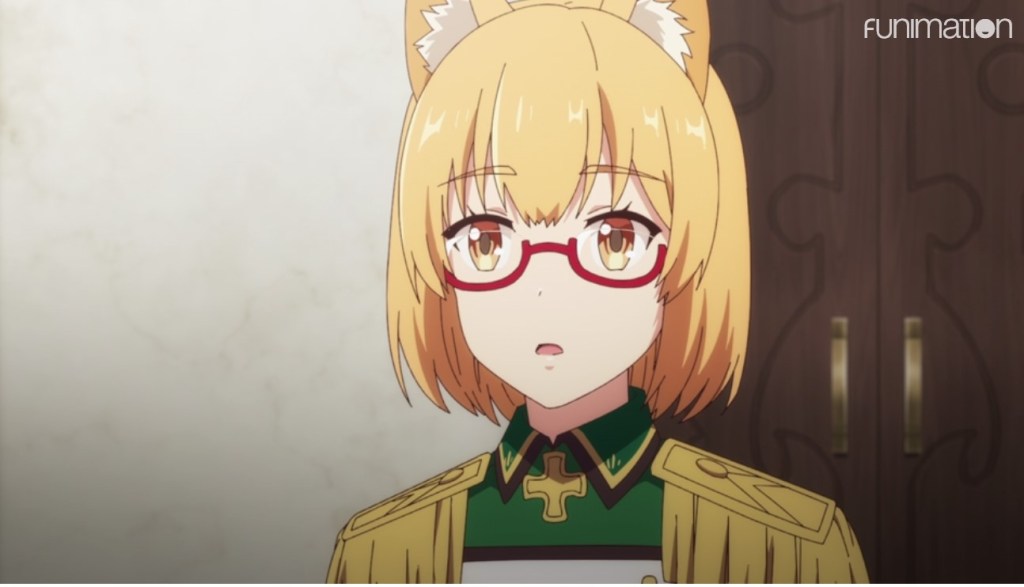


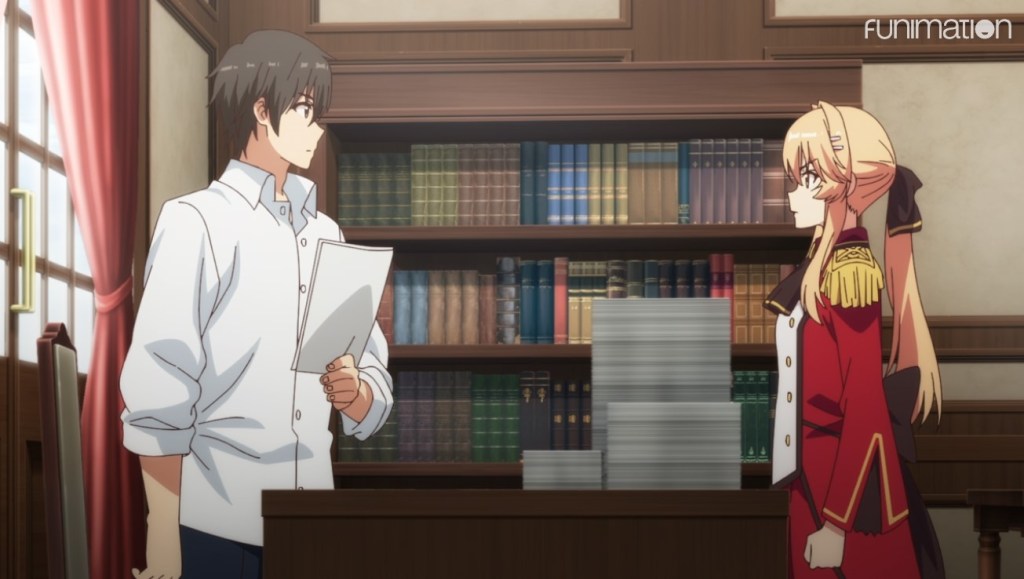
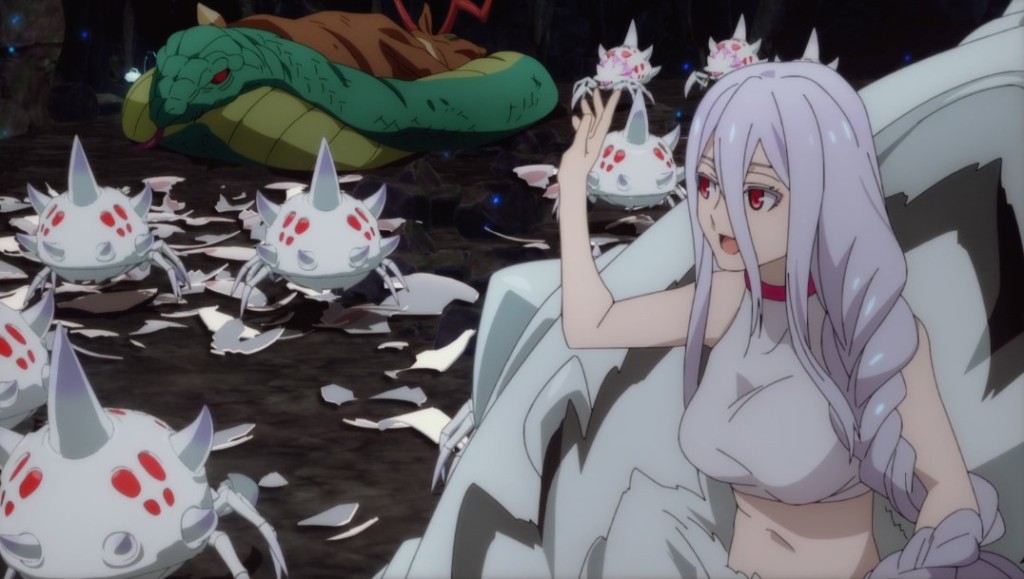


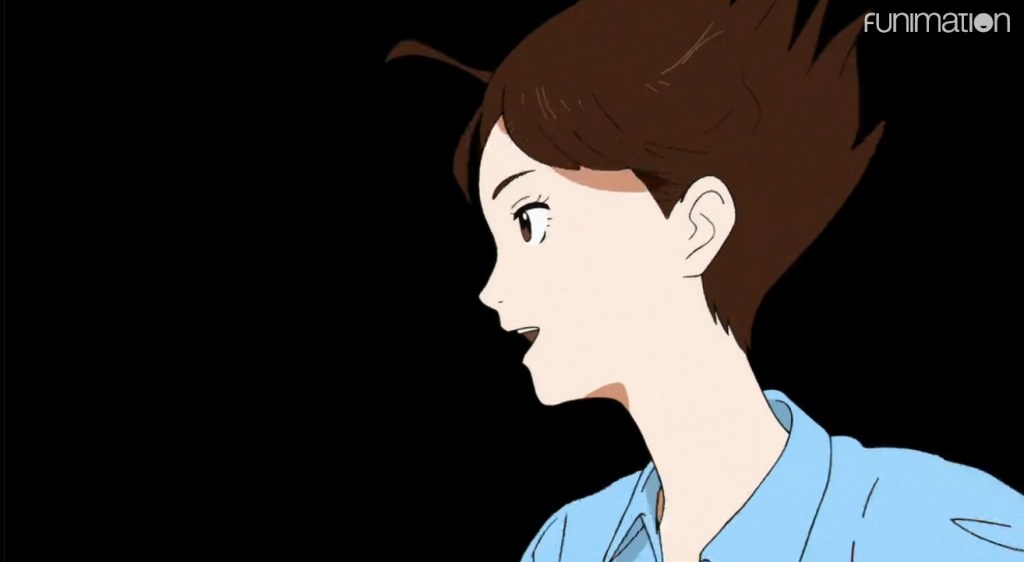


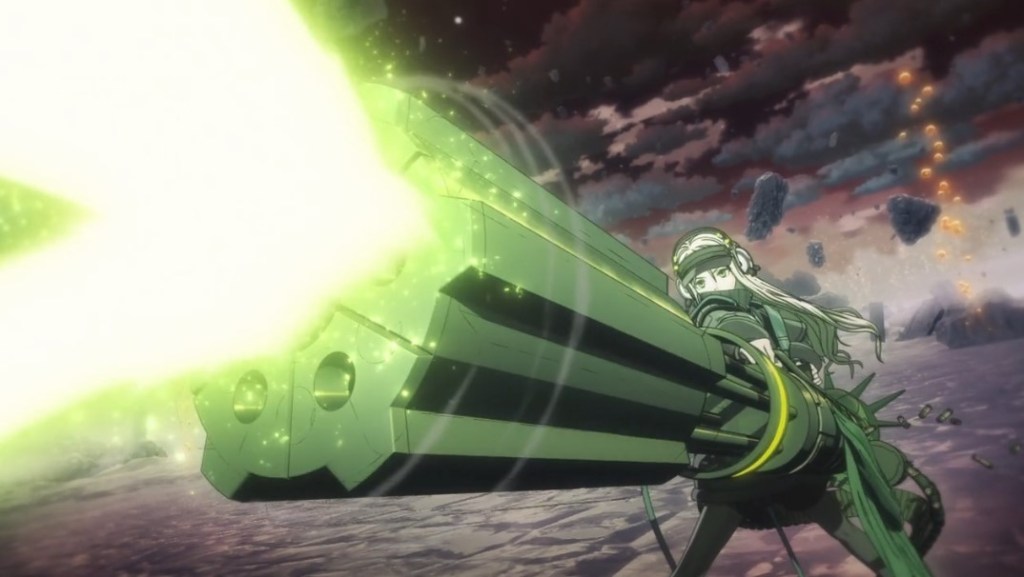


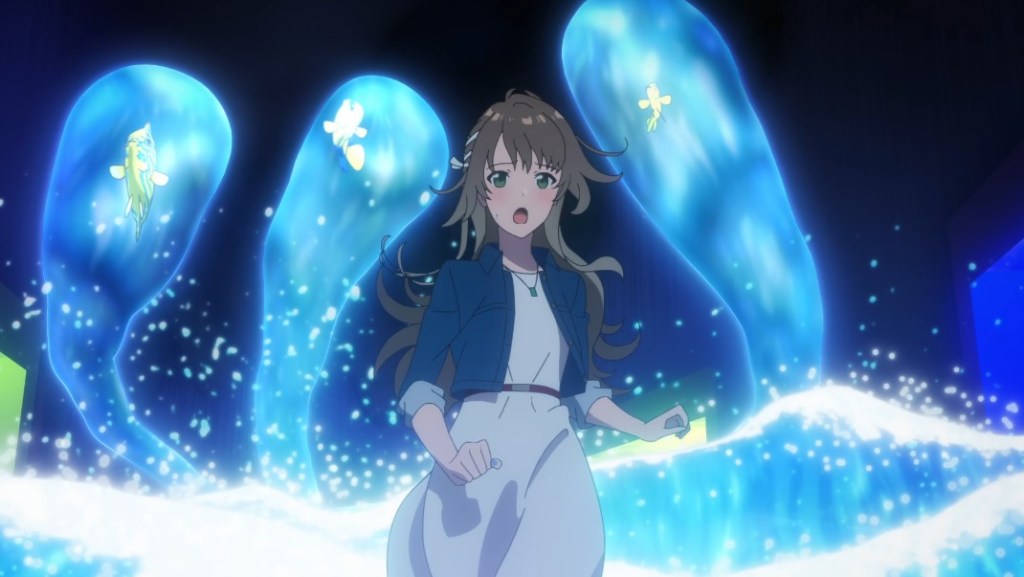



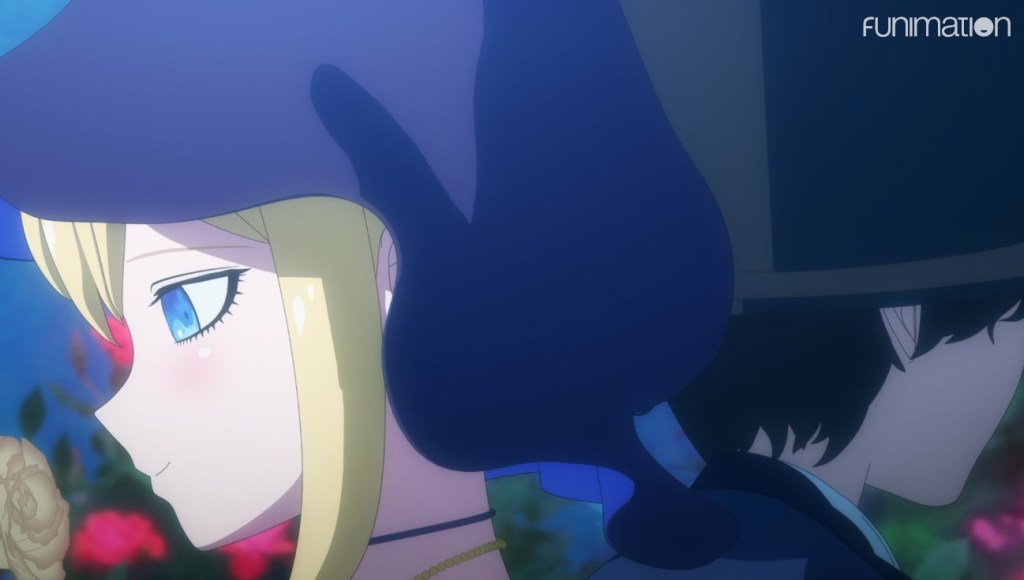




 USA Anime