From left: Eminence’s Eta and Delta, Overlord’s Lupusregina Beta and CZ2128 Delta
Rating: B
If episode 1 was the tease of the arrival of the Eminence in Shadow crew then episode 2 is that series’ formal introduction to the Isekai Quartet sphere. Specifically, Cid and the Seven Shadows all join class 1, which prior to this point had consisted of the Shield Hero trio and the secondary characters from Overlord and Re:Zero. This sets up a situation primed for naming chaos, since the secondary Overlord characters in question are the Pleiades (i.e., the combat maid squad of Nazarick), and six of them have the first six Greek letters in their names (Yuri Alpha, Lupusregina Beta, Narberal Gamma, CZ2128 Delta, Solution Epsilon, and Entoma Vasilissa Zeta), while all seven of the Seven Shadows are named only by the first seven Greek letters when not using aliases. Of course, the writers do not miss the golden opportunity to exploit this by drawing comparisons/contrasts between like-named characters.
And as with other pairings of series in the franchise, some of the fun is seeing which characters align with each other. In this case, the two Alphas, as team leaders, are both the most responsible and sensible members of their respective teams. Beyond them, Eminence‘s Delta definitely aligns with Overlord‘s Beta as the aggressive idiots of their respective groups (although this characteristic seems more pronounced here for Lupsregina than in her home anime series), while Eta and Overlord‘s Delta also seem to be on the same wavelength. The two Epsilons having a brief conversation was to be expected, since the Overlord version is a slime, while the Eminence version has the most masterful control over her slime suit; that both of them literally have busts made mostly or entirely of slime is a joke which has to come up at some point. (For those not familiar with The Eminence in Shadow, their body suits are made of magical slime, and the slightly-built, very self-conscious Epsilon has put considerable effort into mastering realistic bounce for the slime enhancement to her assets.) Eminence‘s Beta and Gamma only get a line each, but there are other characters in other series that each of them would better bounce off of, so their turns will presumably come later. The commonality on both sides is that members of each groups got their names from people they venerate, so getting around the overlapping name issue won’t be easy. Honestly, I kinda feel sorry for Naofumi.
And of course the writing isn’t going to pass up an opportunity to work in Cid Kagenou/Shadow’s quirks. He’s worked diligently to be Background Character A in his source series, so playing that aspect up to the point that he’s virtually invisible when in the classroom or walking by other characters could make for a great running joke. (Curious that Kazuma did notice him, though.) Him finding Ainz being referred to as the “ruler of darkness” being cool would be completely in-character for him, and even reading Don Quixote in class kinda fits with his delusional state, too.
And what would an Eminence introduction be without Shadow getting to combine his signature “I am atomic” spell with one of Megumin’s Explosion spells? The intersection of the two creating fireworks seems about right. I also chuckled at how everyone knew the end of the school day had come from the skies darkening as Megumin preps and fires her daily spell.
Also deserving of comment here is the animation effort. While the art style may seem simplified, there is a fair amount of background animation in this episode. Particular attention seems to be paid to Eminence‘s Zeta twitching her animal ears (for those not familiar with Eminence, the Seven Shadows are all either elves or Beastkin), to the point that this could become a running joke.
When will Cid find a music room with a piano? Will the Tuna King restaurant from the Eminence setting make an appearance? These are jokes I’m expecting to see. But while this may not have been one of the franchise’s funniest episodes, it’s still a pretty solid introduction for the new team.
To be clear, season 3 of this crossover wonder is a direct sequel to the movie ~Another World~ rather than season 2. While you don’t necessarily have to have seen the movie first to be able to follow along here, it is strongly recommended, as references to what happens in the movie are broadly made in this first episode.
Rather than begin with the addition of the franchise’s well-advertised newcomers, the first episode instead opens with cameos from an entirely different series: Lista (Ristarte) and Seiya from Cautious Hero: The Hero is Overpowered but Overly Cautious. Some kind of appearance was expected, as that series’ original novelist, Light Tuchihi, has been credited for “original work collaboration” on this new season. Their actions are fitting for the dynamics of their franchise but I’m still a bit surprised to see it represented here, as I was not under the impression that their franchise was anywhere near on the same popularity level as the other five (soon to be six) involved. The manner of their relatively brief appearances indicates that they won’t be recurring, though.
The bulk of the main part of the episode consists of various interactions from assorted cast members, with the writing once again doing a commendable job of getting just about everyone involved to some degree. Somehow a random round of sumo matches to determine who’s stronger than whom breaks out, with the feature match winding up being Re:Zero‘s Garfiel vs. Overlord‘s Albedo. (And poor Weiss; in his setting, he is possibly Tanya’s strongest subordinate, but he’s nowhere near on the level of some of the literal monsters in other groups.) There’s also a brief, inexplicable scene of William, the butler from Re:Zero, having tea with Overlord’s Hamsuke and Death Knight.
But for all the normal antics, there is a curiously serious part to this episode, in the form of Ains’ conversation with Roswaal about how they might not be originals and are being influenced by what their originals do, but that could also go both ways. It’s an intriguing bit of meta, and I am now very curious to see if that becomes a recurring theme this season. Roswaal’s statements near the end, after Ains leaves his office, about how powerful individuals from the various component settings aren’t going to have their way with this world, is also quite interesting, as it suggests that there may be a purpose to all of this beyond just a silly excuse for a cross-over. But it’s also possible I’m reading too much into this.
At least the newcomer finally appears at the end of the episode, though his Seven Shadows do not yet seem to be in two. His whole “chunibyo is actually real” shtick should fit in quite well with the others, so I’m very curious to see what kind of chaos their addition can generate. Looks like we’ll see next week.
In the kingdom of Ridill, the seven preeminent mages are known as the Seven Sages. Each of the seven has a title reflective of their specialty: the Barrier Mage, The Star-Seer Witch, the Witch of Thorns, and so forth. Of them, the most extraordinary is also the youngest: Monica Everett, called the Silent Witch because of her unprecedented mastery of incantation-free spellcasting. Though capable enough in magic that even one of her peers refers to her as a “monster,” she’s actually an extremely anxious and timid girl whose development of silent casting was her solution to getting around having to chant in front of others. Because of her specialty and few knowing her face, she gets cajoled into becoming the secret bodyguard for Felix, the kingdom’s second prince, and that means attending the prestigious Serendia Academy boarding school to go undercover as a ordinary, low-ranking noble student. Despite her shyness, Monica is able to develop a few friends and confidants as she deals both with assorted threats and a prince who’s far less oblivious, and far more amused by her antics, than initially expected.
So goes the premise for this 13 episode (14 if recap episode 9.5 is included) adaptation of the first three light novels from author Matsuri Isora, which aired during the Summer 2025 season. Though hardly one of the season’s flashiest titles, it still ranked among the season’s best and most entertaining series and was a personal favorite despite some stiff competition. It accomplished this by taking a somewhat unusual approach for recent entries in the fantasy genre: rather than making Monica an up-and-coming talent or emphasizing how powerful she is, the writing made her supremely vulnerable, the kind of person who can get the job done when really needed but is a complete mess otherwise.
The angle of having a cripplingly socially awkward protagonist is hardly a new one in anime (see Bocchi the Rock, among others), but pulling that off requires walking a tightrope. The character must be sympathetic without seeming too pathetic and any humor involving that awkwardness has to be tempered so that it doesn’t seem mean. Thankfully, this is the realm where Secrets stands strongest. Laughs at Monica’s foibles are most commonly sympathetic ones, and she’s hardly the only source of humor; Ryn, the spirit familiar who serves as the maid and messenger for the Barrier Mage, is also a particular delight with her stone-faced sardonic wit, and other characters have their moments, too. The humor also excels at its timing; jokes never get in the way of the flow of other events and never run too long.
The story isn’t just light-hearted frivolity, though. While its crises rarely approach the potentially calamitous level of scenes involving the dragons in episode 1, the story does have serious threads about plots against the prince, embezzlement, mana run amok, potential friends who feel forced by circumstances to resort to drastic action, poisoning, and dealing with past emotional trauma. The social elements aren’t forgotten, either; one of the girls who ultimately befriends Monica in her school identity is dogged by other noble girls looking down on her for being nouveau riche, for instance, and social standing frequently plays into events in other ways, too.
The heart of the series is, of course, Monica, a slight, mousy (or perhaps squirrely, since she’s sometimes compared to one) girl who’s enormously timid about most things but can flip into analytical or even passionate modes when either of her twin loves of magic and mathematics are involved. Flashbacks reveal that emotional trauma involving family, a former school friend, and severe bullying helped make her this way, and moments where Monica seems a slave to those influences are heartbreaking. Contrarily, little moments throughout where friends and associates help coax a bit more confidence out of her prove eminently satisfying. Moments where she must overcome challenges with some combination of math and magic also convincingly show that she doesn’t deserve her Seven Sages standing just because of her silent spellcasting.
While Monica can carry the series on her own, she doesn’t have to, as she’s surrounded by a solid supporting cast. Nero, her talking cat familiar, provides the most direct emotional support with his reassuring paw pats, and the aforementioned Ryn is a delight as a comedy straight woman. (Things get especially amusing when Nero and Ryn team up in human forms later in the series.) Isabel, the daughter of a Count, has entirely too much fun playing up being a villainess as part of Monica’s cover story (and her maid/accomplice has clearly bought into her mistress’s efforts, too!), though Isabel also makes it quite clear that her unquestionable loyalty is to Monica for having saved both her personally and her realm in general from the dragons in episode 1. Each of the boys on the student council shows themselves to be at least a little more than the stereotypical pretty boys as they interact with Monica (though the other girl on the student council, Bridget, is given little to do beyond make occasional observations on other council members), and both Casey (a horse-loving friend with a big secret) and Claudia (a raven-haired beauty who stands as a blunt voice of reason but also has her quirks) make big contributions in the middle and later stages of the series. And we can’t forget Louis, the Barrier Mage, and his predilection to “bully the strong.”
Among the supporting cast, Prince Felix deserves special mention, as his presence and behavior elevates the series. He can smoothly transition between being kind, playful, and harshly judgmental all while maintaining a soft voice and gentle smile but he’s also quite sharp; he’s well aware of where he stands politically and how people perceive him and uses that to his advantage. Though he suspects Monica may not be what she appears, he seems to take an interest in her for other reasons. She amuses him, yes (one of the series’ funniest scenes is one where he feeds cookies to a nearly-passed-out Monica) and he certainly recognizes and appreciates her mathematical talents, but there are also hints that he sympathizes with her, too, and wants to help her the same way a senior once helped him. He also seems fascinated by how his normal charms don’t work on Monica. Many of the series’ best non-magic-use scenes involve the two directly interacting, even though romantic tension is more wishful thinking than intended.
The series’ charms aren’t just limited to the writing. Beyond the spectacular scene near the end of the first episode, dramatic visual displays of magic are limited and of a generally smaller scope than many other magic school series, yet they sacrifice little on the impression that they make; this isn’t at all a battle series, and those go in expecting the scene in episode 1 to be a staple may be disappointed. The artistic effort led by Studio Gokumi makes efficient use of the more eventful scenes it does have, though, and supports them well with sharp, detailed background art and distinctive character designs (especially Monica’s makeover in the last quarter) which vary just enough from common archetypes to not feel like retreads. It also handles its SD comedy moments effectively and occasionally gives Monica some great facial expressions. Musical support is strong as well, with the score expertly evoking whatever emotions the scene requires, whether it be dramatic, comedic, or sorrowful; this is one worthy of listening to as a separate OST. Opener “Feel” by hitsujibungaku (who also did the great closer for the second season of Osihi ni Ko) also perfectly matches the feel of the series both audibly and visually. Gentler and more wistful closer “mild days” by the same band also fits well but makes much less of a visual impression.
The series also has a complete English dub at this point. While it’s not flawless – there are a handful of places where slightly awkward pauses are used to assist in aligning with lip flaps – the casting choices and performances are generally solid, especially the little-used Harrison Xu as Prince Felix and Brenna Larsen as the maid/familiar Ryn. (She also voices Bridget.)
Nothing has been announced at this point about a second season, but there are still enough more novels for a couple more seasons and enough potential plot threads left open to provide a good lead-in to more, so I dearly hope additional animation is coming. The series seems to have been a solid performer based on Crunchyroll any MyAnimeList rankings, coming in near the top end of the middle tier (in the same vicinity as The Water Mage) so popularity sufficient to warrant more is there, and it’s certainly deserving on a qualitative level. With high merits on many fronts, it easily deserves to be considered among its season’s best titles.
Now that the Summer 2025 season is fully over and all of the series I’ve been following are either ending or going on hiatus, it’s time to look at how the series I followed finished out.
Because of the high volume of titles, covering every one of them here would make this post cumbersome. Hence I am only including those titles for which I have updated my grade since the Mid-Season Reports and/or have additional commentary to offer. Also, I won’t be including Secret of the Silent Witch here, since I intend to give that series a full, independent write-up after its last episode airs on (presumably) 10/3.
Summer Mid-Season Report part 1 titles which will not be covered here include DAN DA DAN, New Saga, Private Tutor to the Duke’s Daughter, and Reborn as a Vending Machine 2. Please refer to the linked article for my impressions on those.
Summer Mid-Season Report part 2 titles which will not be covered here include Scooped Up By an S-Ranked Adventurer; The Rising of the Shield Hero s4; Uglymug, Epicfighter; and Witch Watch. Please refer to the linked article for my impressions on those.
BEST OF SEASON: Clevatess
Overall Rating: A-
Honestly, I don’t have a whole lot to add on this one, so I’m including it mostly to just encourage people again to watch it. The series stays true to its nature as classic old-school fantasy through to the end of this season and along the way delivers a number of flashy and beautifully-designed battles, too, along with some seriously gross graphic content. It also raises big mysteries about the ancient history of the setting and why things are the way they are now, and I always appreciate that in any series. This is top-tier fantasy animation. It is getting a sequel, and I’m a bit ambivalent over the suggestion that this one might be taking a “magic school” path, but I’ve enjoyed the characters and setting so far, so I’ll give it a chance. Kudos also again for the stellar English simuldub, especially Katie Wetch as Alicia and Celeste Perez as Nell/Nelluru.
OTHER TITLES
Betrothed to My Sister’s Ex
Overall Rating: C+
This one has some interesting twists in the late stages; it’s not every day you see a major plot development and pivotal conflict in an anime series hinge on literacy (or the lack thereof). The twist involving what happened to Anastasia was actually far less surprising, since it had been telegraphed to a degree, though it was still interesting in the way that it was neither entirely an accident nor entirely planned, but instead more a case of adapting a rough plan to the circumstances. (Anastasia’s motives also make her a more rounded character than I was initially expecting, even given that I recognized right away that she wasn’t part of the villainy towards Marie.) The happy, lovey-dovey ending leans on the saccharine side but it’s still quite satisfying, especially for Anastasia.
Call of the Night s2
Overall Season Rating: A-
The first season of Call of the Night was a strong effort with a unique appeal, but this second season, taken as a whole, may be even stronger. It explores points about both vampires in general and Nazuna’s origins in particular that have been neglected so far, while also delivering a semi-uniting plot in the anti-vampire endeavors of the detective Anko, who turns out to be a far more interesting character than she might have appeared to be at first. What drove her to go on assault against the vampires, and how this involves Nazuna (even though Nazuna isn’t technically responsible for it) makes for a strong character arc, and it gives us a surprisingly robust running battle scene in the season’s 10th episode, too. This season also reveals that the story is far more gay (or, more specifically, yuri) than it initially appears to be, and rather than being lurid (as, arguably, There’s No Freaking Way leans towards), it makes sense here. Ending the last episode with the original closer was also neat. This one joins Clevatess, Rascal,Darling, and maybe DAN DA DAN as one of the top five series of the season.
Kaiju No. 8
Overall Season Rating: B
Who cares if you’re being formulaic if you execute that formula well? That’s what the latter part of this season comes down to for Kafka and the Defense Force around him. On the downside, spreading the focus so thin limits the focus on great character Kafka, but it does give other characters chances to shine, and they show that beautifully as No. 9 makes his move in the last two episodes. The later episodes also give the series a much-needed Mina/Kafka introspection and shows, for the first time, where her real feelings lie. Other particular highlights include Kikoru getting to wearing the same suit her mother wore and Hoshina’s odd relationship with No. 10 (as shown above). All of that buoys up some weaker content in the center of the season. The season ends on a major cliffhanger, so I’ll definitely be back for the inevitable continuation.
My Dress-Up Darlings2
Overall Season Rating: A-
Glamor girls in anime might be admirable, but you’d rarely call one truly adorable. And yet somehow this series has accomplished that feat beautifully with Marin. We’ve seen plenty of anime girls go crazy over trying to figure out how to admit that they love a male character, but there’s just something charmingly sweet about how Marin first comes to realize that she’s in love with Wakana and then tries to work up the nerve to confess to him. Meanwhile, all sorts of other interesting characters are afoot as the series cycles through various cosplays scenarios, including the gleefully gruesome group “Coffin” cosplay, and Wakana gets a fair amount of character growth, too. The series was a delight to watch and easily one of the top five series this season.
Rascal Does Not Dream of Santa Claus
Overall Season Rating: A-
This may be far from the flashiest series this season, but if any other series had better character writing, I didn’t see it. I’ve always loved how this franchise takes ordinary human foibles and transforms them with understated supernatural spins, and we see plenty of opportunities for that in the overarching (and apparently not completely resolved!) mystery about who singer Touko Kirishima really is. The breadth of franchise familiarity necessary to completely understand everything is also impressive; I plan to rewatch the movies before rewatching this series again, and may give the franchise a full write-up once I’ve done so. Anchoring it all is one of the neatest relationship in all of anime: the couple of Mai and Sakuta, which is rarely at the forefront of events in this part of the series but is never completely pushed into the background, either. A follow-up movie that will adapt the last two novels in the franchise is coming, and I will definitely be back for it.
Sword of the Demon Hunter
Overall Rating: B
Despite some solid writing, I sadly have to lower my grade on this one because the artistic issues which develop in the later parts of the series simply can’t be ignored. The end of the series, which felt more like the end of an arc than a seasonal stopping point, was also a bit unsatisfying, even if it was a neat story which was foreshadowed by a random comment made in 2009 several episodes back. (In fact, the sword master demon’s appearance in modern day was also foreshadowed in a background scene late in the series’ first half.) While I would have liked to see more of the story in 2009, the series makes excellent use of recurring cast members in the 1800s and in drawing connections to modern day. Still, this feels like only part of a much, much bigger story, one that is nowhere near conclusion as the series ends. I’d love to see more animation on this one, but was the series successful enough to warrant that? MAL’s rankings suggest that the series was only moderately popular rather than a hit. I guess we’ll see going forward.
Summer Pockets
Overall Rating: B
For better or worse, this series stays true to the spirit and rhythm of Key adaptations through to its last scene. That means that its last five or so episodes are its strongest and most emotional content, though this isn’t anywhere near the intense tearjerker that some of its predecessors were. (Not for lack of trying, though!) While the story may have been a painfully slow burn at times, its finale shows that there was a point to all of it, that everything really was building towards something (i.e., Umi’s story), and that the name of the series has a very specific symbolic meaning within the context of the series. I wouldn’t necessarily say that everything is satisfyingly resolved in your end, and how you react to the series’ last quarter will depend heavily on how much you can become invested in Shiroha being the Main Girl (and especially how Umi’s part supports that), but the story largely achieves what it set out to do, even if that wasn’t done in a splashy fashion.
The Water Magician
Overall Rating: B-
While criticism about the series’ lackadaisical pacing isn’t without merit, the series shows in its second half that it can deliver in its big moments. The duel between Ryo and the Inferno Mage in episode 12 was as scintillating a battle as his duel with the akuma in the first half, and his test match against Sera was no slouch, either. Seeing Ryo seriously pissed off for a change in the former case was a real treat, too, as is Sera in general; she’s probably my favorite supporting character from any series this season. (The way she smiles has a lot to do with it, but it’s also her energy and her very balanced character design. Every scene with her and Ryo hanging out together just feels natural, too.) On the downside, the series’ efforts to showcase other characters, too, limits Ryo’s participation at times. This was a pretty successful series, so it seems likely to get a sequel. I’ll definitely be back if it does.
There’s No Freaking Way I’ll Be Your Lover! Unless. . .
Overall Rating: B
As expected, the season ends with three of the four girls in Renako’s friend group now firmly in her harem (whether she wants it that way or not). However, the shift in the main conflict going from the more antagonistic Satsuki-Mai rivalry to a Mai-Ajisai rivalry is an interesting twist, and Renako having been attracted to Ajisai all along (whether she admits it or not) only complicates things further. Mai comes off as a bit more sympathetic in the end, but it’s hard not to root for Renako to ultimately hook up with Ajisai instead. All of this plays out in a mostly-delightful succession of romantic comedy scenarios, complete with continuing light doses of fan service. A movie sequel, which I’ve been led to believe will finally focus on the fourth girl (who’s been almost entirely absent for the past few episodes), has been announced, so the fun isn’t over yet.
Turkey! Time To Strike
Overall Rating: B+
I have to respect this series some for having the moxie to pull off the stunts that it does. The way that bowling is forced into each episode of this time-travel series – even to the extent of making it a major crisis and plot point! – practically becomes a running joke, but somehow the series makes it work. It pulls off a number of slick tricks, including recasting the OP for one episode with the bowling team member’s Sengoku-era counterparts and delivering a truly jaw-dropping final twist that, in retrospect, had been hinted at all along due to concealing who voices a certain role, and it does all of this while taking a serious look at each of the girls and their backstories and concerns. And I can’t fault the series for making Mai an obvious lefty, either! This was a real surprise which ended up being way better than just a silly series with a stunner of a founding gimmick.
Welcome to the Outcast Restaurant
Overall Rating: C
And, honestly, this rating might even be too high, as the series takes a distinct nosedive in its second half as it tries to explore a bigger but also very formulaic plot. It also tries too hard to make its battle component work with its cooking component. The only minor upside is the bath scene which confirms which confirms that Vivia may be effeminate, but is actually a guy and not a woman pretending to be a guy. Not really sure where the story could go next, either. This was ultimately one of the season’s most forgettable series.
Except for the aforementioned Secret of the Silent Witch review, that’s all for this season. Be sure to check out the Fall 2025 Preview Guide if you haven’t already.
Both subjectively and objectively speaking, this is not one of the season’s top-tier series, especially given the level of competition it had. (The Summer 2025 season is widely being regarded as one of the stronger recent seasons, an assertion that I am ambivalent about.) Even at its best, its technical merits never rise above mediocre, and designing exciting action sequences is not its forté; the confrontation between the twins and the Demon Lord in this episode has at least some sense of motion, so it’s not a bottomfeeder scene, but it also doesn’t achieve much on dramatic flair, despite the efforts of the musical score. The series does a bit better on dramatic visuals, but it also shows inconsistencies here; body proportions felt off in a handful of scenes in this episode, particularly in the crowd shots of the dark elves. And while I do find criticisms of the series’ pacing to be overstated, it isn’t without problems on this front; this last episode felt a bit rushed in how it resolved things, which, ironically, is at odds with the too-slow pacing the series is sometimes accused of having. Despite some improvement in this final episode, the series has also never overcome its protagonist being one of the series’ least interesting named characters.
However, no other series I saw in the Summer 2025 season was as conceptually innovative as this one, and that holds especially true for this final episode. Ever since the notion that competing game systems – and thus competing game mechanics – could be afoot in this setting, there’s been an implication that the battle between the Saint and the Witch in the north represented yet another game system option, and here’s it’s firmly revealed to be a TTRPG. It shows off two balance-breaking gimmicks which would be troublesome for other game systems: the “auto-success” that is the critical hit/success (though it usually doesn’t involve rolling a 100-sided die, as shown here) and the ability to tweak characters before retrying failed scenarios which result in a character’s death. (Who that’s played TTRPGs for a long time hasn’t brought back a beloved character as a slightly-tweaked twin of the original?) 19 attempts to get a success is pretty damn diligent for that format, though!
But while that twist was expected, the intercession of the young man in the twins’ fight against the Demon Lord wasn’t. He looks deliberately designed to be the stereotypical OP isekai protagonist, down even (in a savage bit of satire) to having a loyal slave girl waiting for him. Is he intended to represent yet another game system – visual novels or “choose your own adventure” stories, perhaps? – or is this poking another element into the setting? Given that he’s being directed by “God,” it’s most likely the former, but either way this doesn’t seem like a random homage just being tossed in.
And then there’s the matter of said Gods. Last episode was the first one which implied that individuals exist who might be actively manipulating this setting, and now we suddenly have multiple instances of it. The Demon Lord made a deal with some entity, the isekai boy did as well, and the Witch was being guided by a “Game Master” (who might as well be called a god in this situation). Someone’s acting behind Mynoghra, too. Is this all the same individual just trying to stir things up to keep things interesting (a la So I’m a Spider, So What?) or is this setting a battlefield for various comparative godlike individuals? And does the fact that Takuto is personally present, rather than directing things from out of sight, shake up the balance of whatever’s going on? He certainly discovers that he’s personally quite strong in the midst of all of this.
I also appreciate that the story doesn’t overlook that Takuto’s behavior had been sliding in a negative direction. That the twins were going to come to their senses because of what Isla previously told them was a given, but not so much with the way Takuto was shifting away from the “work with everyone” attitude to a more authoritarian one as events partly went south. As much as I might complain about how Takuto doesn’t have enough personality, turning him into a tyrant is not the answer, and thankfully, the writing backs off on that. The scene of the twins consoling him for him being mortified about his behavior just feels right. Do have to wonder what him being engulfed by the black aura in the last shot means, though; this series has always been particular about the viewpoint of Takuto and whether or not he’s shown with that aura, so it’s likely significant.
Sadly, all of these interesting developments and revelations come in the season finale. It definitely leaves plenty of fodder for further storytelling, but will this series get more? It is a solidly mid-tier title on popularity on both Crunchyroll and MAL, but how it’s doing in Japan is what really matters and that’s not clear. A second season wasn’t announced immediately, though, so we’ll have to wait and see if it gets more animation or not. I dearly hope it does because this one showed of plenty enough interesting ideas to justify its existence.
Welcome to my seasonal Guide! (The debut schedule can be found here once it’s been posted, which I hope to have done by Friday 9/26.)
I expect to cover every full-episode series that will be debuting this season and is available in streaming form, including many of the sequels/returning series. The ones I will NOT be covering (because I’m not caught up on the franchise) are the new seasons of Kakuriyo -Bed & Breakfast for Spirits, Kagaku x Boken Survival!, Kingdom, My Hero Academia FINAL SEASON, To Your Eternity, Blue Orchestra,Campfire Cooking in Another World with My Absurd Skill, and Uma Musume: Cinderella Gray. I will also only cover the GINTAMA spin-off if it looks like a sufficient stand-alone that someone with only passing familiarity with the franchise can follow it. Isekai Quartet 3 is a special case: it will not be covered here because I am taking it straight to episode reviews.
As always, the entries are posted below in newest to oldest order and multiple updates per day should be expected on busier debut days.
Note: With the addition of With You, Our Love Will Make it Through, this edition of the Preview Guide is largely done. One final update may be done when Monster Strike: Deadverse Reloaded debuts on 10/21 if that series proves to be a standalone.
With You, Our Love Will Make It Through
Streams: Crunchyroll on Tuesdays
Rating: 3 (of 5)
High schooler Mari is running late for school when she bumps into new transfer student Tsunagu, who’s also late because he got lost. He’s different, but she’s quickly swept up by his gentle nature and taken in by a later peek at his sexy abs. Though he faces significant discrimination, Mari finds herself attracted towards Tsunagu, and he seems to be attracted to her as well. . . maybe a little too much. That he’s a dog-headed Beastfolk (who normally live in a physically segregated community from humans) doesn’t seem to matter at all to Mari after the initial shock of meeting one for the first time.
Love across cultural, racial, social, or religious divides has been a staple of romance stories since time immemorial, and this adaptation of a shojo manga looks to be just the newest iteration on the concept. Mechanically, the first episode plays out like a completely typical example of its type, showing that a bit of fur and a dog head is no barrier to mutual attraction. In the episode’s edgiest moment, it even engages in the standard trope of animal instincts starting to override human reason – which, honestly, isn’t a stretch, since humans have repeatedly proven over time that you don’t have to have literal animal urges in order to lose your head to attraction. That puts a question mark (and lowers the rating) on what it otherwise a pretty solid opening episode for its type. Just can’t shake the impression that this is at least half-intended as an ode to the furry fetish, though!
One-Punch Man 3 (ep 25)
Streams: Hulu on Sundays
Rating: 1.5 (of 5)
Wow, how the mighty have fallen! This may not be the worst debut of the season, but it’s easily the most disappointing. Someone seems to have forgotten that the foundation of this series is Saitama personally doing some cool-ass shit, not watching a bunch of characters who mostly aren’t Saitama sitting or standing around strategizing about the conflict between the Hero and Monster Organizations.
To be fair, an episode like this was needed after all of the battles that made up the latter half of season 2. (And rewatching the last few episodes of s2 before watching this episode is highly recommended.) However, given that more than six years have passed since season 2 aired, some recap or at least a greater amount of reflection on previous events would have been warranted. Instead, this episode jumps right in to discussions on the hero side about putting together a rescue team and trying to track down the Hero Hunter, while Blizzard goes to pay Saitama’s crew a visit to clue them in. On the monster side, they are looking to formally recruit Garou and monster-upgrade the speedster guy.
The biggest storytelling problem is too little Saitama. While he may be one of the blander personalities in the cast, he’s still what makes this series tick. However, the episode also suffers from some narrative jumps which give the impression of scenes having been skipped over. Artistically, it doesn’t look bad, but there’s nothing special about the animation, either – and that’s not good enough given the standards this series set early on. (Frankly, I never thought the second season looked that much worse, but it was being compared to something special.) I’ve heard that Saitama’s direct presence decreases even further as the story progresses, and that’s not a positive sign for this season.
Li’l Miss Vampire Can’t Suck Right
Streams: Crunchyroll on Sundays
Rating: 3 (of 5)
Even at a school where supernatural entities aren’t rare, Luna stands out as the cool and alluring vampire girl who captivates male and female students alike. Only her very ordinary seat neighbor Tatsuta knows the truth: she actually sucks at sucking blood, and a constant stream of snacks sometimes isn’t enough to fully offset her hunger from avoiding taking blood. Though initially apprehensive about this discovery, Tatsuta soon decides to help Luna out by allowing her to practice on him, which she’s initially reluctant to do. And so a relationship is born.
Although I like the way this manga adaptation just casually throws in other supernatural beings in both the foreground and background (Luna and Tatsuta’s school has a guardian deity, for instance), the premise has way too many logical holes to be appreciable. Why can’t Luna get blood packets to drink? How did she make it to this age while being so truly incapable at sucking blood? The setting seems to assume that the simple work-arounds seen in so many other vampire series set in modern times aren’t options here. Get past foundational issues like these and you do have a cute, sometimes legitimately funny school comedy series which promises several potentially lively and eccentric supporting characters and a minor mystery abut whether or not Luna really shrinks down to chibi size while drinking blood. Technical merits aren’t anything special (though the thing about how Tatsuta’s mouth disappears in most scenes is kinda weird), but I expect that this one will find an audience.
Gnosia
Streams: Crunchyroll on Saturdays
Rating: 3 (of 5)
The Gnos are a little-understood alien scourge who can invade a person’s body and co-opt the person. The resulting entity, called a Gnosia, can behave perfectly normal as it goes around surreptitiously disposing of normal humans around them. So dangerous and invasive are they that standard protocol when one is detected on a ship is to self-destruct the ship. Yuri is awoken from a medical capsule on a spaceship which is in exactly that situation, but he has no memory of who he is or what’s going on. He must interact with four others to vote on who the Gnosian infiltrator is within their ranks and put that person into cold sleep. If the selection proves not to be the right one then the Gnosian may attempt to kill someone overnight and a new vote is taken the next day. Yuri winds up being one of the last two, but the other is the Gnosian, so he perishes. . . or so it would seem, until a reset starts to happen.
This adaptation of a social deduction RPG video game was one of the season’s most-anticipated titles, and while I don’t share in the hype, I can understand why it was anticipated. It’s essentially a sci fi variation on social deduction games like Werewolf and Mafia, complete with a roster of colorful characters to sort through. (It starts with only five so the first go-around can be carried out in one episode, but the apparent OP shown at the end reveals the rest, who will presumably show up next episode.) It builds its suspense on classic body snatcher-type tension, where no one knows who the real enemy is and every quirk might or might not be a sign that the person is an alien, and it has an interesting visual style heavily dependent on remarkably vivid coloring for an eerie sci fi setting and a freely-roaming camera. The problem I have with this, and the reason I may not be able to appreciate this series, is the shaky and even sometimes ridiculous logic on which this is all based. The ship’s AI can detect that a Gnosia is present but not who it is or where it is? How does that work? You have to be able to ignore that in order to get into this one, and I just can’t.
Wandance
Streams: Hulu on Wednesdays
Rating: 4
Kaboku Kotani is a tall boy who’s always gone with the flow, partly because he doesn’t like to stand out due to his stuttering problem. He particularly shies away from dancing due to an embarrassing incident with it in middle school, but his attitude on that changes when he meets classmate Wanda and observes her dancing. He’s won over the by the sense of freedom in her dancing and how she doesn’t judge him for his stuttering (and that she’s gorgeous doesn’t hurt), and she seems interested in how he looks beyond the surface. She may well be the impetus he needs to get into dancing himself.
I’ve seen some criticism for this one over the use of CG in its dance scenes, this isn’t truly bad CG and getting too hung up on that misses the point here. As someone who had issues with stuttering as a kid, I was pleased with how the series tackles the topic, especially its accuracy in the stuttering. (Many current or former stutterers, like me, can get hung up on initial sounds but are often fine once we get going.) Stuttering is very much a rhythm thing, too, which is why it’s not unusual for stutterers to be able to sing more clearly than they can speak; the video clip of Scatman John (see the full version here) was an especially nice touch. And while dance routines in anime are hardly unusual, this is one of the much rarer cases where it feels more like a mode of expression than just a work of entertainment. Those elements have enough appeal to me that I might consider watching more.
The Dark History of the Reincarnated Villainess
Streams: Crunchyroll on Wednesdays
Rating: 3.5 (of 5)
Throughout her middle and high school years, Konoha wrote an otome game-like fantasy story as prep for an expected summons to an alternate world, but by adulthood she’s set it behind her. . . maybe too soon, for ironicially, the isekai experience she once longed for actually happens. Now her very survival depends on her remembering as much as she can about the “dark history” she wrote because she’s found herself in the world she created – and not as the heroine she imagined herself to be, but as the heroine’s jealous younger sister, who’s effectively the story’s villainess. And she wants to not only save her own skin but protect her beloved heroine as well.
Of the villainess or villainess-like series this season, this manga adaptation is easily the weakest on both artistic design and animation fronts (aside from Iana’s dress). However, it’s still quite the fun presentation, enough so that it’s certain to make my seasonal viewing list. The twist of Konoha being in a world she created is a neat one, as it provides Konoha/Iana with greater pause than normal for reflection; isekai protagonists having to consider that characters in what was a game for them are actually real is hardly unusual, but she also has to ponder that it was her own manipulations which set everything up this way, so she’s literally responsible for everything that happens. But the first episode doesn’t dwell too much on the serious aspects of that, as it has too much fun showing Iana have to figure out how to avoid the assassination she knows is coming and the bishonen around her trying to second-guess her motives. Its OP is also of a starkly different style than you’d normally expect and a contender for being one of the season’s best.
Ninja vs. Gokudo
Streams: Amazon Prime on Tuesdays
Rating: 1.5 (of 5)
In Shinoha Tanaka’s version of modern-day Tokyo, ninja still exist who secretly combat the gokudo (read: yakuza), as they have for hundreds of years. Shinoha is secretly a young ninja who ruthlessly deals with gokudo members but has trouble smiling or making friends. That may change when he crosses paths with Kiwami Kimura, an executive who turns out to be a fellow big fan of Shinoha’s favorite magical girl franchise. The two really it if off talking about their mutual interest, to the point that Kiwami even offers to be Shinoha’s first friend. The long-term problem is that neither is aware that the other is on the opposite side of the eternal ninja/gokudo conflict.
This manga adaptation teaches us one important lesson: that severed heads can still carry on their dialogs for a few seconds after being detached from their bodies. That’s the level of non-ironic ridiculousness that this series will apparently traffic in, and that makes it hard to take anything else about this first episode seriously. Ultimately there’s not anything more to this than an ordinary set-up about two individuals on opposite sides of an ancient battle who come to like each other before discovering they’re enemies. Despite the severed heads and general graphic content, the animation is limited, and you’re best off not even being aware that the English dub exists. While this might play okay as an action title, I see little potential here.
Chitose is in the Ramune Bottle
Streams: Crunchyroll on Tuesdays
Rating: 3.5 (of 5)
High school student Saku Chitose lives by the motto “If I don’t live a beautiful life then I might as well be dead.” Indeed, he’s the most popular guy in school, enough so that he’s either loved or hated by everyone, and his friend group includes both top athletes and many of the school’s prettiest girls, some of the latter of whom are clearly romantically interested in him. He’s also dependable and supremely self-confident, which is part of the reason why his homeroom teacher assigns him to reach out to Kenta, a classmate who has been absent for months. Saku makes a couple of attempts to do so, each time with a different member of what other students refer to as his “harem,” before deciding that more drastic measures are required.
Although this light novel adaptation begins with what looks like a double-length debut episode, the actual animation is only 34 minutes, with the rest of it being a live-action extra where two of the key voice actresses visit Fukui (where the series takes place) and check out some of the restaurants that will apparently be featured prominently in the series. (None of them appear in the first episode.) As unusual an approach as this is, it was the right call, as the extra 10 minutes of animation allows the story to get to its pivotal scene without rushing any of the carefully-crafted set-up. A lot of debate could be had about whether or not Saku is really the right person for this job, since he seems like the complete antithesis of Kenta, but that study in stark contrasts may be the goal here. The writing takes on an almost poetic flavor at times as it engages in the mix of light humor, witty dialog, pretty girls, and undercurrents of more serious issues akin to the Rascal Does Not Dream franchise, and Saku might invite comparisons to Masachika from Alys Sometimes Hides Her Feelings in Russian, so if that vein of writing style doesn’t normally appeal to you then this one probably won’t either, but I am curious to see how the consequences of the last scene play out and especially curious to see how the series’ name gets explained, so I’ll be sticking around.
Plus-Sized Misadventures in Love
Streams: Crunchyroll on Mondays
Rating: 3?
Yumeko is an overweight young adult woman who hated herself, so when she’s gravely injured in a fall (it’s initially implied to have been suicide,but evidence later arises that it may not have been), she wishes to be reincarnated as a different person. She gets her wish – sort of. Instead of a true reincarnation, she suffers from retrograde amnesia when she wakes up. She only knows the person she was before from the hints she left here and there, but now she has a much more positive, take-charge on everything, even including her own appearance. As she returns to work, she encounters the young man her former self had been practically stalking and shocks everyone around her with her new attitude and assertiveness, including her more conventionally pretty cowoker Tamai. But not everyone is necessarily thrilled by the new her.
This manga adaptation is the trickiest series so far this season to rate, as I can see viewers responding to it in dramatically different ways. In some senses Yumeko’s fresh new take on life is heartening; this was a woman who was plenty creative but too anxious to make her ideas known and once loathed herself so much that she broke any mirror around her, so seeing her acting so confident and cheerful is practically dazzling. However, just about everything in this episode is also deeply layered with subtext, and I could easily see Yumeko’s new attitude being regarded as escapism. Just about every scene can take on some degree of social commentary if looked at certain ways, even down to how Tamai fits into the office environment. (She is, at best, the office’s eye candy, and she’s painfully aware of that.) And oh, yes, there’s a possible murder-mystery afoot, too. In more than one sense, Yumeko’s return to work may be stepping into a lion’s den.
Honestly, the approach taken here is so odd that I’m tempted to see how this plays out. If you’re looking for something different this season, this one might surprise you.
A Manga-ka’s Weirdly Wonderful Workplace
Streams: Crunchyroll on Mondays
Rating: 3.5 (of 5)
25-year-old Nana Futami is working on her first published manga but she’s a neurotic wreck about it, as well as being prone to wildly fantasizing about the love life of Kaede, her editor. Highly competent assistant Mizuki helps keep her in line and be the voice of sanity and reason, though it’s quite the task. Kaede, meanwhile, has her own quirks that don’t necessarily make her the easiest person to work with, either.
This manga adaptation could probably most simply be described as a madcap workplace comedy, albeit one where much of the work (at least in episode 1) takes place in a home studio. Much of the episode’s humor involves Nana wallowing in her fantasies and neuroses about things like the proper timing and wording for emails (the latter of which I can relate to, as I tend to obsess over that myself) and her assistant calmly trying to guide Nana through while dropping the occasional bit of snark. While that could be entertaining on its own, it would also grow old rather quickly, so the series also wisely makes her editor also contribute to the character foibles in a much less spastic fashion. All of it ends up being mildly entertaining, and it’s supposed by vividly-colored, attractive artistry, too. Not sure if I’ll end up following this one, but it looks like a work comedy series with some potential.
My Status as an Assassin Obviously Exceeds the Hero’s
Streams: Crunchyroll on Mondays
Rating: 2.5 (of 5)
Note: Simuldubbed
Akira is the kind of person who fades into the background in school, so it’s no surprise to him or others that he gets the Assassin class when his entire class is summoned to a fantasy RPG-based world. However, he’s also wary, because his stats are secretly vastly stronger than those of the classmate who became the Hero and he has a maxed-out Conceal skill to start, which he later learns is practically unheard-of. He also immediately distrusts the king who summoned him, and talking with a Royal Knight who takes an interest in him and trains him convinces him that things are not as simple as they were made out to be. Indeed, when the first dungeon crawl of the summoned students starts to go south, the king’s female attendant seems to be responsible for it.
Not every series warrants a two-episode introduction, but this one could have probably benefited a lot from it, as the first cuts off at a rather awkward point and without fully establishing the premise. To be sure, plenty of hints are dropped that something unsavory is afoot here, and it’s not entirely clear who the good guys are in this new setting (if, indeed, any of them are). The episode also feels like it’s rushing events along, which makes the stopping point all the more curious. Balanced against the potential intrigues is very rudimentary execution on other fronts, including character and setting design, world mechanics, and cast personalities. Really, there’s not much here that you wouldn’t have seen in series like Arifureta or Failure Frame. Not holding out high hopes for this one, but I’ll probably give it another episode or two to see the obligatory sexy elf show up and see if the plot amounts to enough to carry the series.
Ranma ½ s2
Streams: Netflix on Saturdays
Rating: 3.5 (of 5)
Male Ranma finds himself the subject of a stalker; specifically, it’s Hikaru Gosunkugi, a student who’s largely invisible to his classmates but has long had a crush on Akane. And Gosunkugi is determined to find Ranma’s weakness. Despite Ranma’s insistence that he doesn’t have a weakness, he actually does. . . and as one might expect, Genma and his bizarre notions on training methods has everything to do with that weakness. Also as one might expect, everything goes to hell when Gosunkugi tries to exploit that weakness.
The first episode of reboot’s second season starts slow, but by the end it’s gotten up to the frachise’s signature zany antics – surprisingly, with female Ranma having very little to do with it – and is thus just as much fun as always. The antics also lead to the momentous scene shown above. Long-term, the new OP and ED indicate that we will eventually see Happosai this season, despite some speculation that he might be edited out because his character wouldn’t go over as well with current audiences. We’ll have to see how that plays out, but for now, the series seems to be back to its usual routine.
Hands Off: Sawaranaide Kotesashi-kun
Streams: Crunchyroll and OceanVeil on Sundays
Rating: 3.5 for fan service, 1.5 in general
One of the most common gimmicks for sexy harem romcoms over the years has been the young male character becoming the manager for what is otherwise an all-female dorm. That’s exactly the premise in this half episode-length, with the specifics in this case involving Koyo Kotesashi taking on the job at a dorm which houses several of his new high school’s top athletes. We’ll ignore for now the seeming incongruence of top performers living in a rundown building; that’s beside the point when you have a whole building full of sexy athletes and the male lead having reason to be in physical contact with them. That’s because Koyo is seeking to make a career in massage therapy, and has already enough from his parents to be practically a miracle worker. And naturally his massages can induce orgasmic reactions in the ladies he treats.
Yeeaaahhh. At least the first episode does offer full-on nudity, and arguably of a higher visual quality than what Tales of Wedding Rings presents. (And this is true in Crunchyroll’s surprisingly-uncensored stream, too.) That’s really the only reason to watch this one, as the story doesn’t go anywhere, but if that’s all you expect from it then you likely won’t be disappointed.
Dad is a hero, Mom is a spirit, I’m a reincarnator
Streams: Crunchyroll on Sundays
Rating: 3 (of 5)
In her original life in the modern world, Ellen was a top-tier scientist. In her new life after reincarnating, she’s the now-8-year-old daughter of the Hero who once saved the kingdom and the Spirit Queen, who carried the Hero off to the spirit realm when he fell after triumphing in battle. (Whether or not her parents are aware she’s a reincarnator is unclear.) Because her father became a half-spirit, Ellen is a full spirit herself, with her power manifesting in the ability to manipulate substances at the atomic level. Ten years after her father left the land he saved, he has returned, though he’s not particularly happy about it. And he may have reason for that, since he doesn’t relish either being lauded as a hero or dealing with the fiancée he left behind, a princess who was always a difficult woman and who went on to marry his younger brother.
The most interesting twist about this light novel adaptation is that Ellen’s father is as much at the center of events as Ellen is herself, though how long that will last remains to be seen. What also remains to be seen is where the story will go from here. Ellen is a special child in all kinds of ways, and both her power and her parents’ stations (in both the spirit and physical words) could make her a nexus for all kinds of intrigue, though the light tone of the first episode doesn’t suggest too dark a path. The series does have inviting central character designs and a well-established foundation in its favor, so I’m willing to give this one a bit of time to see how it plays out.
Alma-chan Wants to Be a Family!
Streams: Crunchyroll on Sundays
Rating: 2.5 (of 5)
Two genius scientists – one a female mechanical expert, the other a male AI expert – have collaborated to create Alma, a top-tier combat android who looks like a little girl. Alma, who’s still learning about many things, calls them her parents, which the scientists have a hard time accepting since they claim that they cannot stand each other’s personalities. This leads to many humorous misunderstandings on everyone’s part.
Boy, this is a season for inexpressive girls, isn’t it? Essentially, this manga adaptation is looking like a light, sweet comedy about Alma learning many things and doing “missions” while her “parents” try to get along. The first episode isn’t much to look at but does offer a few genuinely funny and genuinely sweet moments, and the OP promises complications from further androids getting thrown into the mix. The series isn’t a hard pass, but at least for me, it’s going to get washed out by all the other titles available over the weekend.
Mechanical Marie
Streams: Crunchyroll on Sundays
Rating: 3 (of 5)
Arthur, the heir to his country’s largest conglomerate, has become such a misanthrope (due to repeated assassination attempts by envious family members) that he can’t trust anyone, so he’s ordered a robot maid. Enter Marie, a top-tier martial artist known for her utter lack of outward expressiveness, who has agreed to pose as a robot maid in exchange for her debts being covered. Though Marie inwardly fears being discovered, Arthur accepts her at face value and even starts to trust her, and the softer, lonelier side he shows only to her appeals to her, too. Her exploits in rescuing him from danger during a kidnapping attempt further forge the bond between them.
As sharp as Arthur seems otherwise in this manga adaptation, he’d have to be an idiot to not notice that Marie is human. But the suspension of disbelief on that is a key part of this gimmick and the series doesn’t work if you don’t overlook it. Despite a rather flat and unexciting artistic look, there is potential here, as the relationship between Arthur and Marie is already a bit sweet and its humor balances pretty well with its more dramatic elements. I could easily see this one getting lost in a very busy weekend this fall, but it shows enough potential to be worth checking out a little more.
SI-VIS
Streams: Crunchyroll on Saturdays
Rating: 3?
Enthusiastic Minami seeks to leave the countryside and join top coed musical group SI-VIS, where his second cousin (who trained him to sing and dance during family visits) is a leading member. However, he is utterly unaware of what he’s getting into, since SI-VIS isn’t just an idol group; they also use power gathered from their live performances to fight off the incursion of alien/extradimensional constructs, under the guise of the fights being special promotional events.
Honesty, I’m not fully sure what the hell is going on here based on the first episode of this original creation, as the writing doesn’t explain anything. It’s not even clear who the lead protagonist is going to be, as Minami wasn’t in the original advertisements for the series and one of the always-advertised SI-VIS members seems out of thepicture by the end of the first episode. What is clear is that this is part idol series and part super-powered action story and rhe first episodemakes a decent go as mish-mashing the two normally-disparate genres. I will reserve judgment on this one in the hopes that episode 2 will explain things better.
Let This Grieving Soul Retire s2 (ep 13)
Streams: Crunchyroll on Saturdays
Rating: 3.5 (of 5)
On the fifth anniversary of her meeting and being rescued from would-be kidnappers by the Grieving Souls (which was, of course, initially an accident that Krai got them involved), Tino passionately reminisces about the experience to anyone and everyone – much to the amusement or consternation of all present.
This serves as a good beginning to the season’s second cour, as it both explains a key bit of backstory (i.e., why Tino idolizes Krai) and offers at least cameos by many of the supporting characters introduced throughout the first cour. Most significantly, it shows a bit of what the armored Grieving Soul (who was conspicuously absent in current-time and action scenes during the first cour), which suggests that he may show up more this season. The one interesting quirk here is how the flashback content is indicated by being set in a different aspect ratio rather than by applying a filter or one of the normal gimmicks. Otherwise this is pretty standard antics for a series that was never spectacular but always consistently entertaining.
Spy x Family s3 (ep 38)
Streams: Crunchyroll on Saturdays
Rating: 3.5 (of 5)
Lloyd, Anya, and Nor are back for another round of capers, in this case involving Anya trying to secretly clue in her parents that Bond has foreseen a frazzled construction worker running amok during their park outing. But other characters are also back in action, including Franky teaming up with Nightfall to help her get in contact with a capable forger (that’s not Lloyd).
Overall, these two vignettes are perfectly part for the course for series, though atypically, the one that doesn’t feature the Forgers may actually be the more entertaining one. Sure, seeing to construction vehicles duel it out was kinda neat, but Franky’s “undercover” antics and especially Nightfall’s action scenes near the end had more pop to them. While this isn’t the series at its strongest, established fans should have little to complain about.
Tales of Wedding Rings s2
Streams: Crunchyroll on Saturdays
Rating: 2.5 (of 5)
The game is back on for Satou and his assemblage of Ring Brides, with Hime’s sister Morion – an accomplished mage – having shown up to teach the Ring Brides more about using the mana inherent in their rings. That proves particularly challenging for Hime (who should have magic through her family lineage but has never developed it) and Granart (who may not have any). Hime eventually overcomes her limitation with a kiss, while Granart may be more of a work in progress. Morion also seems to take particular interest in how Satou is getting along with her sister.
The strongest points in this series’ favor during its first season were the wide variety of ladies in Satou’s harem and the uncensored nudity it featured. The second season doesn’t let you forget that, as the OP has more nudity in it than any series in many years and the regular episode content has a couple of additional scenes of it, too, not to mention lesser types of fan service, too. That’s really the main reason to keep watching this one, as the technical and artistic merits beyond the nudity are still thoroughly mediocre and the plot isn’t doing anything interesting. Maybe the more saucy Morion will shake the dynamics up a bit, but I’m not expecting more than we’re already getting.
My Friend’s Little Sister Has It In For Me
Streams: Crunchyroll on Saturdays
Rating: 2.5 (of 5)
High schooler Akiteru, an aspiring game designer, is all about efficiency, so there’s currently no place for romance in his life. Despite that, he’s found himself involved with two young women. One is Iroha, the younger sister of his best friend, who teases/torments him mercilessly, even flirtatiously at times. The other is Mashiro, a cousin he often played with when they were both kids. Her father (Akiteru’s uncle) is looking for a fake boyfriend to deflect romantic attention from Mashiro as she transfers to Akiteru’s school, and he’s set Akiteru doing that as a condition for Akiteru and his whole game development team being allowed to join the uncle’s game company on graduation. Iroha is less than pleased with this, but also knows that going along with this is a condition for her father to accept her transfer.
This one adapts a light novel series from the same author behind Days With My Stepsister, though it has such a markedly different feel that most wouldn’t suspect the connection. Everything (including both the OP and ED) points towards this being a love triangle where the main protagonist is caught between two difficult girls, neither of which is going to openly admit to (currently or eventually) liking him, though probably do/eventually will. The first episode does have some mild bits of fan service and hints at a little depth in the unspoken reasons behind why Mashiro is transferring, but the make-or-break point on this one is more likely to be how intolerable (or not) you find Iroha. Her kind of character really grates on my nerves, so I’m probably not giving this one more than one more episode unless episode 2 shows something more to latch onto.
Tojima Wants to be a Kamen Rider
Streams: Crunchyroll on Saturdays
Rating: 3.5 (of 5)
As a kid, Tanzaburo Tojima obsessed over the ’70s tokusatsu show Kamen Rider, to the point that he strove to be a Kamen Rider himself. That wound up isolating him, even scaring off a girl in high school who had started to take a liking to him when he “became” Kamen Rider to fight off ruffians. By age 40, he was strong enough to fight off a bear but all alone, and was starting to accept that his dream would never happen. That changed when a wave of crimes inspired by the Shocker villains from the series started happening, including one incident which happens at a festival right in front of him. Despite fearing how people would react, he buys a mask and takes on the role of Kamen Rider to fight off the hoodlums disrupting the festival.
This series adapts a manga by the same manga-ka who originated the early 2000s series Air Master, using an old-school art style which emphasizes thick, heavy lines and features stereotypical delinquents. It also winds up being more involving than expected. Tojima’s passion is easy to understand and sympathize with, as is how much that passion costs him over times, so seeing him finally get to do what he always wanted to do – i.e., use his strength to fight of “Shocker” (or, more accurately, Shocker posers) – was remarkably cathartic. The gangster who always admired the Shockers more was also an interesting way to explain their presence, and the woman at the end who apparently also aspires to be a hero adds a further wrinkle. This may be a more involved series than I expected at first, and while I don’t thinking I’ll be following it, it’s worth a look.
Touring After the Apocalypse
Streams: Crunchyroll on Saturdays
Rating: 4 (of 5)
Before some kind of apocalyptic event, Yoko’s “Big Sis” went out on a motorbike tour of Japan. Yoko is determine to follow in her sister’s footsteps with pictures from the original tour as her guide, so she slips out of a shelter and goes on a trip on an electric box with the girl/android/cyborg(?) Airi. Their first destination is Hakone, where they discover food supplies, clean up in a hot springs, and deal with an AI-controlled military vehicle which isn’t quite dead even though its occupants have long since passed.
By far the most amazing feature of this manga adaptation is its gorgeous scenery; in fact, this may be one of the prettiest, most colorful post-apocalyptic tales ever, as great care has been taken in showing the way nature has beautifully overtaken the wreckage of civilization. Strong animation support is another feature, top, but that’s not all this one has going for it. Rather than spell out what apocalypse happened or how – which I initially saw as a weakness – the episode throws out all sorts of of tantalizing clues, some of which you have to pay close attention to catch. (The damaged, steaming Mount Fuji is obvious, but there’s also top-tier combat equipment out, a radiation warning, and some kind of dinosaur-like sea creature in a background shot.) Something strange happened here, and I get the sense that figuring out what the apocalypse was is part of the story here. Airi’s nature is another interesting mystery, too. I was concerned about this being a retread of Grils Last Tour, but this one should stand fine on its own.
The Banished Court Magician Aims to Become the Strongest
Streams: Crunchyroll on Saturdays
Rating: 2 (of 5)
Alec Ygret was warned by the person who trained him in magic not to become a court magician, but after seeing his mentor dismissed he decided to try it anyway, with the goal of reforming the court magicians from the inside. That plan ended in failure when the crown prince dismissed him from his dungeon-delving party partly because Alec only did support magic and partly because Alec was a commoner. (The class divide in Alec’s home country is huge.) That gives Yorha, a friend from magic school, a chance to recruit Alec into the party Last Period, which he helped form in his school days and which continued without him for the four years since. The arrogant prince doesn’t know what he’s missing, since Alec apparently (as the only commoner in the prince’s party) never showed that his real specialty wasn’t support magic, but attack magic.
This light novel adaptation actually looks pretty decent, and I love both Yorha’s character design and outfit and the way she’s shown quickly syncing with Alec’s magical style when the two do a dungeon level together as a warm-up; that they once worked together and implicitly trust each other is quite clear. However, the series suffers greatly from providing absolutely no fresh twist on the standard “banished from the Hero’s (or in this case Prince’s) party because the Hero didn’t appreciate his contributions” set-up and execution.The first episode also provides no hint of interesting visual style or world-building, either. It’s not an awful series, but little here leads me to expect anything from it.
Inexpressive Kashiwada and Expressive Oota
Streams: Crunchyroll on Saturdays
Rating: 3.5 (of 5)
When it comes to expressiveness, middle schoolers Kashiwada and Oota are polar opposites. She is supremely stone-faced no matter what emotion she’s actually feeling, while he constantly wears his heart on his sleeve. Oota is dead-set intent on getting some kind of reaction out of Kashiwada because he claims the her lack of doing so bugs him, though it actually seems like he’s interested in her. Kashiwada, meanwhile, seems to like the attention even if she doesn’t show it. Meanwhile, their classmates watch on with varying degrees of amusement.
The first episode of this manga adaptation presents it as a promising light comedy. (It even promotes that feel with a light color scheme and a playful musical score.) Its one negative is that it does walk a bit of a fine line, as some of Oota’s tactics border on bullying, but none of them are truly mean-spirited, and the tsundere-like behavior of Oota (who visually reminds me a lot of Kyo from Fruits Basket) seems to suggest that he finds her more interesting than he cares to admit. There are hints that the series may eventually show a bit more depth, too; seeing Kashiwada invited to participate in the pool water fight in the second half was oddly satisfying, and an off-hand comment about how she’s always alone seemed meaningful. Not sure if I’ll follow this one, but if you’re looking for a replacement for Witch Watch this season, this one should satisfy.
I Saved Myself With a Potion: Life in Another World
Streams: Nowhere legally on Thursdays
Rating: 2 (of 5)
In this half-length “light anime,” Kaede is a Japanese teenager who suddenly awakens to find herself in a world where the tech level is medieval but humanoid races and potions exist. A book tells her that she was shanghaied here and should treat this like a game, though she can die. The book also tells her how to makes potions, which gives her a means to earn some initial income.
As expected, the anime for this light novel adaptation is quite limited, and nothing much is special about the artistry or designs, either. Story-wise, it’s a pretty typical isekai series in a vein similar to I Shall Survive Selling Potions, with a focus which looks like it will emphasize its heroine’s industriousness rather than action elements. It’s not horrible, simply nothing special, and not being on a mainline streaming service will further hurt its potential appeal.
Shabake
Streams: Crunchyroll on Fridays
Rating: 4 (of 5)
In Edo-era Japan, Ichitaro is the heir to one of the largest stores in Nihonbashi, but he’s always been sickly. He does, however, attract spirits, and is both friendly with them and attended by two fairly powerful ones. As he gets older, he sneaks out one night on a day he feels well. During his travels he meets a friendly female spirit but also a robber seeming out for blood. In escaping from the robber, he comes across other dead bodies. Someone is going around committing bizarre murders.
This is the newest anime adaptation of a novel series which dates back to 2001. (It was originally adapted as a one-shot ONA in 2021.) It looks like it’s headed towards being a supernatural version of a period murder/mystery, and this first episode does an excellent job of both establishing that and providing a colorful array of different spirit designs for Ichitaro to contend with. Most significant, the series looks great; it’s easily one of the prettiest series so far this season, is rich in period detail, and even has respectable animation quality. The one minor knock is that the female spirit Ichitaro leans almost incongruously much into a more stereotypical anime look. While I doubt I’ll follow it (I’m not generally a fan of mystery stories), it’s worth a look if mystery or supernatural stories are your tthing.
SANDA
Streams: Amazon Prime on Fridays
Rating: 2 (of 5)
In a future Japan where seasonal change no longer happens and Christmas is a thing of the past, the identity of Santa is actually a family curse that student Kazushige Sanda tries to keep hidden. But classmate Shiori has somehow figured out both that he has the curse and how to awaken the Santa identity – which is that of a giant, muscular superhuman with white hair and a beard. She desperately needs him to help locate a classmate and close friend who has gone missing and been declared dead, and she’s willing to force Kazushige to transform if need be.
This one is a big “nope” for for one simple reason: I absolutely hate the visual style. Yeah, the animation is pretty fluid and will no doubt dazzle many, but I find it distractingly ugly, enough so that it overpowers the somewhat interesting premise. If that doesn’t bother you so much then you might find this to actually be and odd, entertaining romp, but I struggled enough to get through the first episode that I can’t see myself watching more of it.
May I Ask for One Final Thing?
Streams: Crunchyroll on Fridays
Rating – episode 1: 5 (of 5)
Rating – episode 2: 4 (of 5)
In an otome game-like set-up that shows no signs of actually being an otome game, Scarlet, the daughter of a duke, would be the villainess. Indeed, that’s certainly how her fiancée, the second prince Kyle, and the supposedly-bullied girl who has won his heart see it, so he gleefully and publicly annuls their marriage during the party. Scarlet, who’s had to put up with Kyl’s crap for years now because of their arrange marriage, proceeds to calmly don spiked gloves and beat the crap out of Kyle, his new love, and the whole room of sycophants present, much to the amusement and delight of the Julius, the first prince, who’s taken a teasing interest in Scarlet. Rather than being punished for her actions, Scarlet finds herself being lauded as the Blood-Stained Lady, as her actions inadvertently exposed the corruption of numerous nobles. But there’s still work to be done on that front. The biggest source of corruption, the Prime Minster who was backing Kyle, still needs to be pinned down, and Scarlet intends to get involved personally.
This adaptation of a web novel was one of the season’s most-anticipated new titles, but its spectacular first episode far exceeds any expectations I had for it; its first episode gets a rare top score from me because I’m not sure how it could have been done better. I was mostly won over by the time Scarlet starts to throw her first punch roughly 3½ minutes in, and was fully won over when the great opener (the aptly-named “Flower of the Battlefield”) showed Scarlet donning spiked gloves. Most of the first episode is spent in a flashback showing how things got to this point, which helps lay out why Kyle deserved what was coming to him and his followers here and why this wasn’t actually out of character for Scarlet. Most importantly, it establishes both Scarlet as fierce young woman who could easily become a fan-favorite character and Prince Julius as a wonderfully perverse foil for Scarlet. (And as strong a character as Scarlet is, the concept wouldn’t work as well without Julius.) The orgy of violence which followed the flashback could easily be remembered as one of the season’s highlight scenes, and the follow-up in episode 2 establishes that there’s plenty enough story options to carry the concept forward. Kudos also go to a fabulous English dub led by long-time veteran Morgan Lauré and somewhat newer Reagan Murdock as Scarlet and Julius, respectively. This series is a delight that will be one of my top-priority views for the season.
Backstabbed in a Backwater Dungeon
Streams: HIDIVE on Fridays
Rating: 2 (of 5)
In Light’s fantasy world, humans like him are on the low rung of the nine humanoid races, but he still strives to become an adventurer to help support his family. He does have a special ability – Unlimited Gacha – but it only seems to summon random useless things. He learns the hard way that the reason for that is because there’s not much mana on the surface. But in the deepest depths of the world’s most dangerous dungeon, where he ends up after being betrayed and nearly killed by the multiracial party which took him on, he can accomplish much more with it, like summoning a level 9999 maid who’s immediately swears fealty to him. (In this setting, strong adventurers have levels in the 300-500 range, so her level is utterly ridiculous.) But rather than have the maid Mei wreak vengeance for him, Light seeks to get stronger so he can do it personally.
It was inevitable that we’d eventually have a protagonist whose power was Gacha-related, wasn’t it? And the first episode of this light novel adaptation doesn’t even pretend like it’s not just borrowing a common mechanic of mobile games, as card imagery is an integral part of Light using his ability. The concept does try to make things a little more interesting by applying the very-sensible notion that more magic present = better potential results (effectively equivalent to paying to draw from an exclusive deck) and implying that the Concord of the Tribes which screwed Light over had more motive than just being evil bastards, but this is still a bottomfeeder revenge porn premise at heart, complete with almost comically evil villains and sexy ladies utterly loyal to the protagonist. (Only the maid has been introduced so far, but the ED makes it clear that more are coming.) I might give this one an episode or two more to see if does anything more with the concept, but I’m not expecting anything from it.
A Star Brighter Than the Sun
Streams: Amazon Prime on Thursdays
Rating: 3.5 (of 5)
Sae has always been the biggest girl in her class and has always been a bit self-conscious about that. In elementary school she befriended a boy named Koki who always shined brightly to her but was largely ignored by other girls. During junior high, though, a growth spurt turned Koki into a tall bow no one would overlook, something which Sae has conflicted feelings about even as she starts to accept that the crush she’s had on him for a long time may be full-blown love, and she finds out that he at least still sees her as cute. When she learns that they will be going to the same high school together, she resolved to admit her feelings.
I’m told that this first episode is just the prologue for the actual story, which will start properly with episode 2. It firmly lays the foundation for the romance that will apparently be at the core of the story, but only in its final scene is there a hint of the complications that will rise. That’s perfectly fine, as the episode does a strong job of establishing Sae and Koki’s background together and where her feelings lay. The artistic side can deliberately be a bit rough at times, but the visual effect all works well to support the episode’s sentiment; the only concern is some distinct inconsistencies in body proportions,. It’s also available with a solid English dub, though Isabaella Crovetti’s performance as Sae clearly outshines complete anime newcomer Maxwell Donovan as Koki. Not clear yet if this is aiming to be more of a romantic drama or a romcom, but it looks like it could a respectable entry in the teen romance category.
Pass The Monster Meat, Milady!
Streams: Crunchyroll on Thursdays
Rating: 4 (of 5)
In this light novel adaptation, Melphiera is a count’s daughter of marriageable age who’s gained an unfortunate nickname – the Voracious Villainess – because of her odd hobby: she likes to find ways to safely prepare and eat monster meat. This predilection leaves most in Melphiera’s circles aghast, because monster meat that isn’t prepared properly can easily sicken or even poison people. However, it doesn’t seem to faze Aristide of Galbraith, the notorious “Blood-Mad Duke,” who saves her when a rampaging monster attacks the dinner party she was attending. To Melphiera’s great surprise, he actually seems intrigued by the notion of trying monster meat, even to the point of offering to hunt something specifically for her request, and he’s quite the handsome fellow, too. Though Melphiera tries not to get her hopes up, he could be the ideal potential husband that she was supposed to be looking for.
Of the two full-blown romantic comedies airing on Thursdays this season, this is the one that I am going to be following. The notion of finding someone with whom she can potentially share her very unusual hobby is a geek’s dream, and it resonated deeply to me. But even that might not have worked with out the fine byplay between Melphiera and Aristide, and the artistic work on each’s expressions get a lot of credit for that. The value of good pacing and an understated but highly complementary musical score shouldn’t be underestimated, either. This one isn’t going to be an animation wonder, but between its designs (the sunflower dress Melphiera changed into was quite lovely) and little touches, it doesn’t need to be to carry the series. This series may not end up being super-special, but it’s giving me one of the most promising vibes I’ve seen so far this season.
My Awkward Senpai
Streams: Cunchyroll on Thursdays
Rating: 3.5 (of 5)
In this manga adaptation, Azusa Kannawa is a cool and capable ace employee for her company’s Publicity department. She acts brusquely with everyone to hide how socially awkward she is, but even she’s not comfortable acting that way towards her new charge: Yuu Kamegawa, a promising new recruit whom she’s been asked to mentor. Though her initial attempts to change her approach fail miserably, Kamegawa seems to at least partly see through the awkward outer image she projects.
Nothing about the content of this episode is explicitly romantic, as Azusa is shown to be nervous about whether or not she can properly mentor Yuu, not the fact that he’s handsome and likable. (She really only thinks about that aspect in the context of how asking him out to lunch in a mentorly fashion could be perceived as something else.) However, things are clearly trending in a potentially-romantic direction, and that Azusa is distinctly well-endowed is hard to ignore, so this one will likely play out as a workplace romcom. Such fare isn’t usually my thing, so I probably won’t follow this one, but the first episode does lay out a firm foundation for future developments and Azusa is a likable enough character both visually and personality-wise. So is Yuu. Naming the series so it seems like it’s from Yuu’s viewpoint but showing the whole first episode from Azusa’s viewpoint is also an interesting quirk; will the series perhaps alternate viewpoints? I can see this series being successful with more mature audiences, hence the higher-than-average grade.
This Monster Wants to Eat Me
Streams: Crunchyroll on Thursdays
Rating: 3.5 (of 5)
Hinako, a morose teenager who attends an ocean-side school, hates the summer and is really just going the motions of life since her parents (and possibly brother, too) died in what’s implied to be an ocean-related accident. Her best friend Miko tries to look out for her (while she claims it’s for other reasons, there’s some sense that she’s aware of Hinako’s mindset), but Hinako’s heart longs to be with her family. Her life is shaken up by meeting Shiori, a long-haired beauty whose presence reminds Hinako of the sea, and it turns out that Shiori is secretly a mermaid who has her sights set on Hinako, specifically with the intent of eating her. (Hinako’s body is apparently unusually delicious to monsters, Shiori claim, and a sea monster trying to attack Hinako lends credence to that.) But Shiori’s not going to eat Hinako yet, and seems intent on defending her from other monsters until the proper time comes. Rather than fearing Shiori, Hinako sees Shiori’s ultimate intent as the solution to her desire to die.
The first episode of this manga adaptation displays very well how setting the proper tone can allow an anime series to overcome even significant technical limitations. Music, voice acting, and visuals which both portray the dead look in Hinako’s eyes and suggest that she often feels underwater all combine to effectively establish the melancholic reality of Hinako’s not-really-a-life. The impact that Shiori’s presence has on her is also effectively displayed, even without considering Shiori’s blood-splattered appearance after fighting off the seas monster or the (well-used) brief flashes of her partial transformation. There’s also a sense that, while Shiori might literally mean what she says, she could also be speaking metaphorically; the strong yuri vibe their meeting gives off is no doubt intentional and likely a focal point. The episode does a reasonable job of masking its animation limitations – the fight scene mostly happenings off camera, with just hints of how graphic it is, and Hinako’s fellow students mostly being still and eyeless around her could be construed as an artistic effect rather than limitation – but that’s enough to make me cautious about grading this one even higher. Overall, though, this one establishes its concept plenty well enough to be worth following.
Cat’s Eye (2025)
Streams: Hulu on Fridays
Rating: 2.5 (of 5)
NOTE: This series actually debuted on 9/26, but I somehow didn’t notice it at the time.
By day, the three Kisugi sisters operate a café called Cat’s Eye, which is a favorite hang-out for Toshi, a young police detective (partly because one of the sisters, Hitomi, is his girlfriend). Unbeknownst to the clueless Toshi, the trio collective are also the mysterious, notorious cat burglar Cat’s Eye, whom Toshi is regularly being outsmarted by in various heists. (Yeah, Toshi’s really that dense.) In the span of the first episode, Cat’s Eye gets away from him multiple times, though he does eventually discover that Cat’s Eye is actually a woman when he accidentally cops a feel on a masked Hitomi during a heist.
The early ’80s manga on which this series is based was an earlier work by the same manga-ka who would go on to create City Hunter, and where some of that franchise’s style comes from can be seen quite clearly here. It saw a 73-episode adaptation back in the mid-’80s (which I reviewed here when it was released in the States in 2008), but that version never received an English dub. This reboot, however, is both simuldubbed and, to an extent, updated for current times; smart phones, social media, and a rock-climbing center are among various more modern innovations seamlessly worked in, though the convenient lack of ubiquitous security cameras seems inconsistent.
But even with the updates, this is still an old-school series at heart, one which emphasizes a mature sexiness with the ladies’ sleek bodysuits when on the prowl. All three of the sisters are solidly-built and even somewhat masculine in feel despite their curves, but both that and some shaky consistency in maintaining character designs were present in the original animation, too. Nothing is special about the design of the capers, and they still lean as heavily on Toshi’s incompetence as they do on the skills of the three sisters. The animation quality is a bit better this time around, but nothing spectacular, either. The original was consistently mildly entertaining as long as you turned your brain off, and I’m expecting much the same from this version.
Let’s Play
Streams: Crunchyroll on Wednesdays
Rating: 2.5 (of 5)
Sam is a young, single college graduate who works a low-ranking job at her father’s company but will eventually inherit it, though she’d rather be a game designer. She’s even designed her own game that gets positive ratings initially. That all goes in the toilet when a popular VTuber who (it’s implied) misunderstands what type of game it is gives it a scathing review. Sam is crushed, but now she’s going to have to deal with that same VTuber moving in next door.
This one is based on a webcomic originally published on the Korean platform WEBTOON, but it is being turned into an anime by studio OLM and director Daiki Tomiyasu, who’s mostly known for work on assorted Pokemon titles. It’s clearly trending in the direction of being an adult-focused romance story, with at least two (possibly three) potential suitors for Sam having already been introduced, including a handsome barista, an even hunkier section manager at her dad’s company, and possibly the bishonen VTuber, too. Most of the episode actually takes itself pretty seriously, with some minor bits of humor awkwardly inserted in, which makes for an uneven feel on the tone. An artistic style and somewhat simplistic look that some may find off-putting also doesn’t help. I do see some characterization potential here but can’t see this one having enough appeal to be successful.
Yano-kun’s Ordinary Days
Streams: Crunchyroll on Tuesdays
Rating: 1.5 (of 5)
In this manga adaptation, Kiyoko is used to being the medic for her much younger siblings, so she takes an interest in classmate Yano, who is perpetually coming to class with one injury or another. Though she suspects something worse, he turns out to just be that much of a klutz (he crashes headlong into a wall while running out of the path of Truck-kun, for instance), but he still is good-natured about it and at least a bit handsome, too, under all those bandages. Kiyoko has to face up to the reality that her concern for him is morphing into attraction, so she resolves to fully support Yano in his wish to lead as ordinary a school life as possible.
At heart, this is a sweet little romantic comedy centered around a singular gag: Yano has epically bad luck. The problem is that its sweetness does not prevent it from also being outright boring; I struggled to finish the whole episode, which feels like a collection of gag strip bits strung together under a loose narrative. This approach can work in anime form, but here the gag wears thin too quickly. Maybe this could still work if the perpetually-injured gag gets relegated to more of a supporting role than the focus, but I’m not optimistic.
A Gatherer’s Adventure in Isekai
Streams: Crunchyroll on Mondays
Rating: 1.5 (of 5)
Takeru is living an unfulfilling life as a single corporate drone when he apparently dies for no particular reason and encounters a being who casts himself as a divine middle manager, who is seeking to use Takeru to create “ripples” in a world the being is managing that just isn’t going well. Naturally this means Takeru will be giftered with a few choice items and OP magical power, including a supreme “Search” skill which will allow him to support himself as a Gatherer. His first true gathering job leads him to an encounter with an Ancient Dragon, who drafts Takeru (whom he recognizes as an equal magically) to help hatch his son, who is going to journey around with Takeru as the “cute companion” he requested from the god.
The basic premise to this light novel adaptation sounded uninspired when I first saw it, and the anime’s execution doesn’t help. Seriously; this series would have to actively try to get off to a more bland and uninteresting start as an isekai power trip, but at least it doesn’t dawdle at getting to the meat its premise. How abnormally tall Takeru is in this setting is an odd little quirk, and the way Takeru makes various attempts to get his magic to work before hitting on the right (English) command is slightly interesting, but the only factor which makes this episode even slightly watchable is that the visuals actually aren’t bad. They’re completely going to waste here, though, to the point that I can’t find any reason to recommend this one.
A Wild Last Boss Appeared!
Streams: Crunchyroll on Saturdays
Rating: 2.5 (of 5)
An unnamed man was top-tier character Lufas Maphaahl (The Black-Winged Tyrant) in a popular MMO known for writing characters’ actions into its foundational story. Lufas became an effective boss villain in the story, but after being defeated in a satisfying epic battle, he’s given the option to play a new role in the game. He’s not aware up front that this involves being transported into the game as Lufas, who has accidentally been released from being sealed 200 years after her epic defeat. Reveling in the freedom actually being in the game allows, Lufas decides to track down former underlings and the surviving members of the Seven Heroes who defeated her, though she has to keep a low profile since she’s still quite infamous to the public.
The execution on this light novel adaptation actually isn’t bad; it opens with a well-designed epic battle, convincingly shows how powerful Lufas is compared to contemporaries, doesn’t piddle around with needless exposition or staging, and has much stronger-than-average musical support (including a heavy closing piece that I’m guessing will be the regular opener. Lufas’s design is also that of a more mature-looking beauty, which is distinctly different than the norm. However, I can’t give this one more than a mediocre grade because nothing about the set-up here covers any new ground, and the only slight twist on the base concept is that the protagonist was formerly playing as a villain – and that’s honestly not that much different than How NOT to Summon a Demon Lord. I did watch through similar-concept titles In the Land of Leadale and New Gate and would currently put this one between them on an appeal scale, so I’ll give it an honest try, but it’s not looking like one of the season’s break-out titles.
Dusk Beyond the End of the World
Streams: HIDIVE on Thursdays
Rating: 4 (of 5)
At age 7, Akira lost his parents in an automobile accident and was taken in by a colleague of his father and Towasa, the colleague’s genius daughter, who’s a year older. Ten years later (in 2038), Towasa is an internationally-recognized expert in AI who’s gradually found herself becoming romantically attracted to Akira, and he also wants to advance from just regarding her as “big sister.” But Towasa’s standing has gained her dangerous attention as well, and on the cusp of both a step forward in her relationship with Akira and a big leap forward in AI planning, tragedy strikes. Badly injured, Akira passes out, only to wake up in a wholly unfamiliar environment suggestive of apocalyptic events.
This is actually episode 0 of this original anime from studio P.A. Works and thus apparently serves as a prologue to the premise described in advertisements for the series, a premise which is only barely hinted at in this episode’s ending scene. It’s written and directed by Naokatsu Tsuda, who’s probably best-known for helming several of the 2010s Jojo’s Bizarre Adventure installments but also led the wistful planetarian, and the vibe this one gives is much more similar to the latter. While the central romance may raise some eyebrows, this episode is as much about the very timely issue of concerns over the advancement of AI, which I have no doubt is part of the foundation of the future content starting next episode. It’s a compact and efficiently-told set-up which feels like it’s delivering a lot of foreshadowing, and I’m already heavily-invested in seeing where this all goes. Despite being a prologue, it’s still a firm start for a series that will absolutely be on my viewing schedule this season.
Hero Without a Class: Who Even Needs Skills?
Streams: HIDIVE on Wednesdays
Rating: 2 (of 5)
In Arel’s world, everyone gets assigned a class by the Goddess at age 10, which gives them access to skills. Arel, however, seems to be the exception: he is judged “classless,” which theoretically should put him at a major disadvantage. However, his mother was once known as the Sword Princess and his father was an Archmage, so he has genetics on his sides and has diligently trained under the strongest person around, so he’s quite capable of holding his own against those who do have the Swordsman class and even learning techniques that mirror those skills, as the red-headed child of the local town guard captain learns the hard way. (I say “child” here because the person is pitched as a boy but in all likelihood is actually the red-headed girl shown in older form in promo art.)
Boy, could the schedulers have picked a much blander series to start off the season with? Yet that’s the main problem with this light novel adaptation: there’s no real spark to it so far. The skill-less/powerless/classless aberration concept has been done a few times before and with much, much stronger hooks than this one offers. The notion that classes and the skills offered by them may just be rigid assists which can be equaled by diligent work and determination (and exceeded in terms of flexibility) is a somewhat interesting one, but will the series commit enough to exploring that to hold an audience? So far, I can’t see that happening, and the mediocre technical merits give the series no crutch to fall back on. I’ll give it another episode or two to prove itself, but so far it’s looking like a pass.
SPECIAL: Room of Guilty Pleasure
Streams: OceanVeil on (see below)
Rating: 2.5 (of 5)
Note: This was available on 9/12 as a special preview ahead of its regular debut on 10/5
In this AnimeFesta short (7 minute episodes), Sasaki is a harried young high school teacher who is starting to question his career choice. As he locks up at midnight one night, he experiences what he thinks is a dream: an opportunity to pick one girl at the school (by choosing her picture on her shoe locker) and go into a room to have sex with her. He ends of picking Mai Hoshino, a busty blonde who has a standoffish attitude but secretly aspires to be a fashion designer And after a little teacherly coaching, they do, indeed, have (limited) sex.
Not all OceanVeil titles are full-blown hentai, but this one is, and it’s completely uncensored. It’s passable for what it is, but the limits of its short running time are a serious constraint both on executing its sex scene and getting to any explanation of what’s actually going on or why there was a scenario limitation on the chalkboard. The prospect of at least some plot makes this one just barely worth checking out if you’re into this sort of thing.
This episode may not have the action elements that the previous two episodes (especially episode 11) had, but it nonetheless delivers a far greater and sharper punch, partly by solving two mysteries and delivering tantalizing hints of a new and much bigger one.
The first (and more short-term) of the two mysteries is what gimmick an RPG game could pull which could trump the inherent advantage in a fight that a 4X game Hero would have. In retrospect, I should have seen this coming as much as Takuto should have, as one RPG element has long been inviolable in terms of its impact on the story: what Flamin calls a “scripted event” but is probably more commonly referred to as a “cut scene.” (This even has an equivalent in tabletop RPGs, in the form of the dreaded “boxed text.”) For any who might be unfamiliar with these, they are scenes which play out without the player’s ability to directly influence them, which means that they are sometimes used to force plot points that the player could have otherwise possibly avoided or prevented. Most 4X games don’t have these, which is why it caught Isla off guard, and the way the scene locks out interference by preventing outside communication makes total mechanical sense.
So why did the twins get dragged into the scene? Because in Flamin’s “go out with a bang” scene, one of the hero’s companions sacrifices himself so the Hero can go on, but Isla has no one with her to fill one of those two roles. That someone close to Isla would be summoned to serve that role only makes sense in that context, and doubly so since Isla has taken on a motherly role towards them. Honestly, I’m impressed by how well-thought-out all of this now looks.
That brings us to the other, much longer-seeded mystery: why the twins have always been featured going murderously crazy-looking in the closer. The presumption since they first got established as recurring characters is that something was going to happen at some point to break them. Isla first sacrificing herself to protect them from Flamin’s death burst and then urging them to eat her heart so that she can pass on her Hero power to them (via a 4X game mechanic, apparently) would certainly do it, especially given how things ended with their biological mother. Much of the other imagery used in the closer – especially the emphasis on the full moon – now much makes much more sense, too. The monstrous powers the twins gain from their Awakenings also makes them genuinely terrifying; kudos go to the music direction for so effectively playing this up, though the way the game’s message notices support how Maria’s memory-wiping power works also deserves recognition. The melting flesh Caria inflicted on the Wind General was pretty damn nasty, too. And the game registering them as new witches due to these circumstances also makes sense, taking advantage of a classification that has been around since the early stages of the series but generally set aside over the last few episodes.
Also not lost here is what all of this means for Takuto. This is, arguably, the first time he’s been shown as fallible: he had the knowledge necessary to figure out the end that events were proceeding towards, but he got so wrapped up in following Isla’s battle that he didn’t think things completely through until it was too late. Was it even possible for him to have intervened in some way to prevent this? Maybe not, given the strength of cut scenes, and losing a Hero from time to time is a part of the game in many 4X set-ups. This has clearly sobered him up, and his underlings have also started to notice; this is the first time, I think, that he directly ordered Atou to do anything.
But there’s another big mystery that’s suddenly popped up, too. What, pray tell, is going on here?
This is the first clear indication the series has been given that this isn’t all happening on autopilot. Someone behind the scenes is responsible for this clashing of game worlds and can apparently meddle as they see fit. This very much reminds me of the “evil god” D in the So I’m A Spider, So What? franchise, and I wouldn’t be surprised if the motives in this case end up being similar. I do hope that this is an element which gets returned to if addition season(s) is/are animated.
But first the series has to finish out this season. Nothing about this episode indicated it was hitting a stopping point, so there should be one more episode next week. Will Atou and Takuto be able to rein back in the broken twins? This is arguably the series’ biggest cliffhanger yet, and that helps make this possibly the series’ strongest episode so far.
This episode once again reminds us that action scenes are never going to be this franchise’s forté. Thankfully, some other interesting developments are afoot here to help carry the entertainment load.
At least this episode tries to put some “oomph” in its action scenes, as the battle between Isla and Demon General Flamin has a greater sense of movement than previous battles and even some true back-and-forth exchanges. However, it’s still not a very dynamic affair, and Flamin is underwhelming in his reliance on fire emanations and basic ranged fire takes; the only thing remotely flashy he does is a pillar of fire. We don’t see him setting fire to the local forest, either. Isla has fare more tricks up her sleeve and generally completely outclasses him, to the point that the battle’s outcome is never even slightly in doubt. The one thing the visuals and animation do succeed at through this part is a moderately effective job at portraying Isla’s body language. As a multi-limbed, vaguely mantis-like insect, she should move markedly differently from a humanoid even if she still uses some humanoid gestures, and we do see some of that here.
But while the Hero/General battle was ostensibly the feature scene, there were a few other interesting details afoot. For one, the fact that the “Demon Lord” looks very human lends credence to the notion that he may be a Player like Takuto is, and the conversation of the two minions right before Isla attacks seems to support that. And like Isla and Atou, Flamin seems to have awareness of his circumstances. Unlike those two, though, he (and perhaps the Demon Lord, too?) seems to be trapped in his role, presumably by the circumstances of the game mechanics he’s coming from. Is this because they were enemy forces in their respective game rather than aligned with a player, or is something else going on there? And why did they seem to think that they could gain their freedom by offering up the world? A lot of important hints and details get exchanged amidst the barbs Flamin and Isla fling during the battle, and not enough information is yet available to judge where, exactly, it points.
What, exactly, is going on at the end of the episode, where the twins get suddenly teleported out to where Isla is, is also unclear. Given the foreshadowing earlier in the episode, it almost certainly has something to do with RPG mechanics, but I’m not quickly coming up with a gimmick that would do that. We also didn’t see if the twins just disappeared from Takuto’s presence or if they were replaced by someone else. The communication cut-off in conjunction with his is also strange, perhaps suggesting some kind of close field was implemented? We’ll presumably find out the truth next week, but I do suspect this is a situation where Takuto may, for the first time, have to undertake direction action. I’m looking forward to seeing how that turns out.
Conceptually speaking, this is one of the most intriguing episodes of any series so far this season. With a single revelation, the writing adds a novel twist to the basic “transported to a game world” concept and partly upends the whole foundation of the series, while also explaining away some seeming inconsistencies in the setting.
That revelation is Takuto’s realization that this new world he and Atou have found himself in isn’t solely an Eternal Nations derivative, or even one just for 4X games; there’s at least one more game active in this setting, and like Eternal Nations, it’s operating under its own mechanics. The hordes of monsters which keep popping up around Dragontan without warning, and the way major monsters disappear and are replaced by gold coins when killed, are products of clear Dragon Quest rip-off Brave Questus and its classic JRPG mechanics.
The implications of this is huge, as it means that the way Mynoghra has been building so far is not because this world is inherently structured like a 4X game, but because 4X mechanics are intruding onto this world in the sphere of Mynoghra. Or maybe this is a 4X-based world and the JRPG element is just intruding, like an otherworldly invasion? That point is currently unclear, but either way, this may also explain what is going on with the Saint and the Slurping Witch in the cutaway scene; the Saint having killed the Witch 18 times makes a lot more sense if each of these cases was a different iteration of game play-throughs that both participants remember. (And, like Atou, Isla, and now Ice Rock, they seem to recall those previous iterations, too.) The big tag question there is whether or not they’re both from another game that Takuto is familiar with; could this be a setting populated by games Takuto has personally played?
The potential consequences of this development, which are highlighted in Atou’s fight against Ice Rock and his minions, are fascinating. Since both sides operate within their respective game’s mechanics, rather then being beholden to the base world’s mechanics, the clash between Mynoghra’s forces (okay, really just Atou and Elder Moltar) and the Demon Lord’s minions are as much about clashing game mechanics as they are about clashing individuals. Because a 4X game operates on a tactical scale, Mynoghra has a huge advantage in a mass battle scenario against an RPG, so Atou can wipe the floor with the hordes with only an assist from the Elder’s magic giving her home-field terrain advantage. (Don’t underestimate how strong that spell would be on a 4X tactical level, though!) However, that should also mean that Mynoghra is going to be at a disadvantage against RPG elites on a smaller scale, Looks like we’ll get to find out if that is true next episode, when Flamin makes a direct incursion into Mynoghra.
On the downside, this episode shows once again how much the series’ animation quality is restricting it. The production does at last make some effort to allow Atou to show off some nifty combat moves, but the limitations on what the production team can do are nearly as evident here as they were in the battle against the paladins. (The Demon Lord’s generals also look practically cartoonish, though that could possibly be intentional, given that they come from an old game.) But at least we get expressions like this, right?
With just a couple of episodes left, the stakes have been raised and the setting’s potential has expanded. I’m already feeling like a sequel is desperately needed here.
After how, ahem, “eccentric” the Brain Eaters proved to be, I wasn’t sure what to expect from Isla, Queen of Bugs, once she finally got summoned. Would she be similarly twisted by the evil alignment of Mynoghra? I’m pretty sure I wasn’t expecting her to be everyone’s kindly grandmother, however.
Isla having an evil side that will finally manifest when Mynoghra is threatened certainly is still a possibility, but that doesn’t show in her introductory appearances. Instead, we get the kindly, doting grandmother, one who can reduce even Atou (who was giving motherly scoldings to those involved in the Dragontan incident just a few minutes earlier) to a child as she gives out her head pats. In fact, head pats seem to be her solution to everything, and she’s not above scolding Takuto over his poor sleeping habits and encouraging him to buck up and deal with business matters on his own, such as (gasp!) actually speaking directly to his underlings! Even Head Warrior Gia crumbles under her gentle admonishments and head pats, and it looks like she’s going to quickly endear herself to the common dark elves, too. This begs the question of whether Isla turning out this way is inherit to her nature as a defensive-focused Hero or if her personality was perhaps influenced by Takuto subconsciously understanding that a stabilizing influence like hers was sorely missing in Mynoghra so far.
The other interesting aspect here is that Isla, like Atou, is also aware of Takuto from his times using her in Eternal Nations. Perhaps that’s why all shots of Takuto in Isla’s presence show Takuto’s true appearance, while he still is shrouded in his black aura when she or Atou are not around. Again, I feel like this is a very important detail, but the series hasn’t explored it enough to make more than a guess about what it all means.
As for game-related strategy points, the Learning Institute sounds somewhat similar in function to a Library in other 4x games. That’s often one of the earliest buildings that I go for (after military barracks) when it’s available, as research bonuses are essential for expanding and advancing a civilization’s learning tree, so I heartily approve of its prioritization here and how the series works in a practical int-story reason for it as well.
The end of this episode suggests that we’ll see Atou in more direct action next episode. (A new trailer for the remainder of the season also suggests that her battle against the Barbarians threatening Dragontan isn’t the only action we have upcoming.) Given the series’ animation track record so far, I’m not expecting anything dynamic out of it, but perhaps we’ll get to see a bit more of what Atou can do on offense.

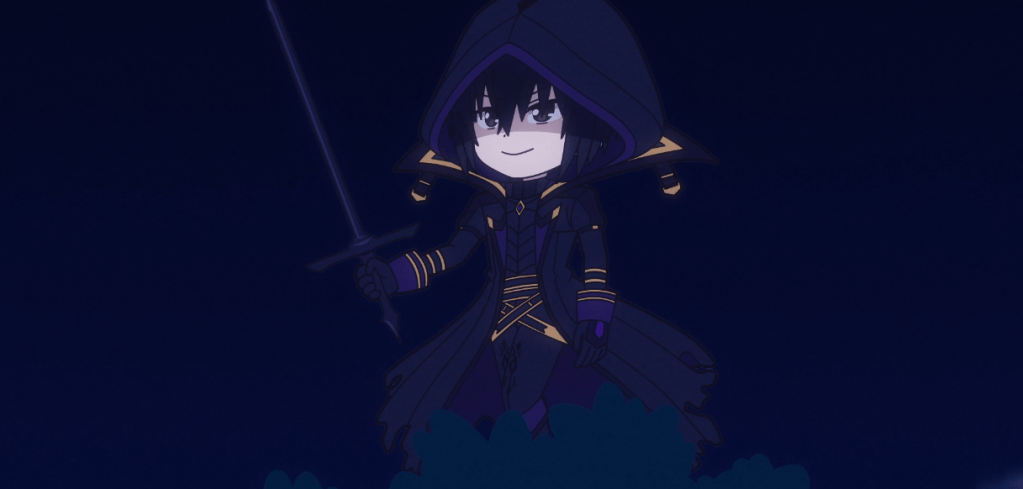

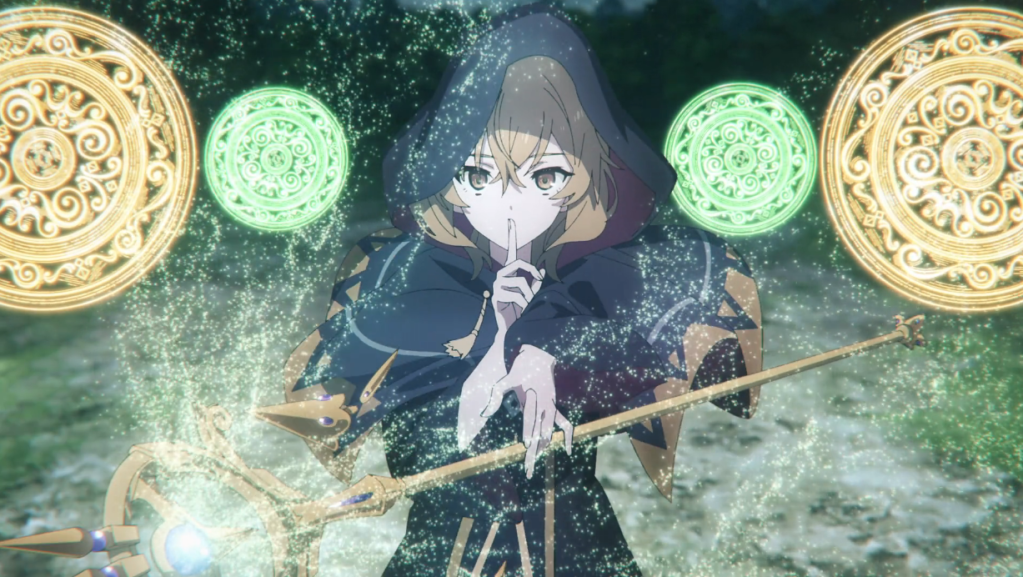


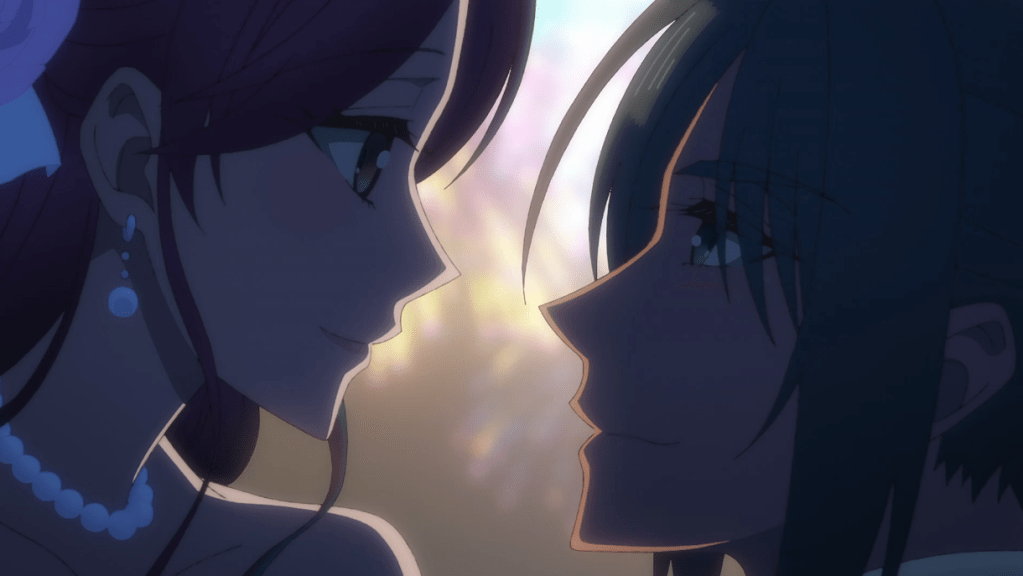

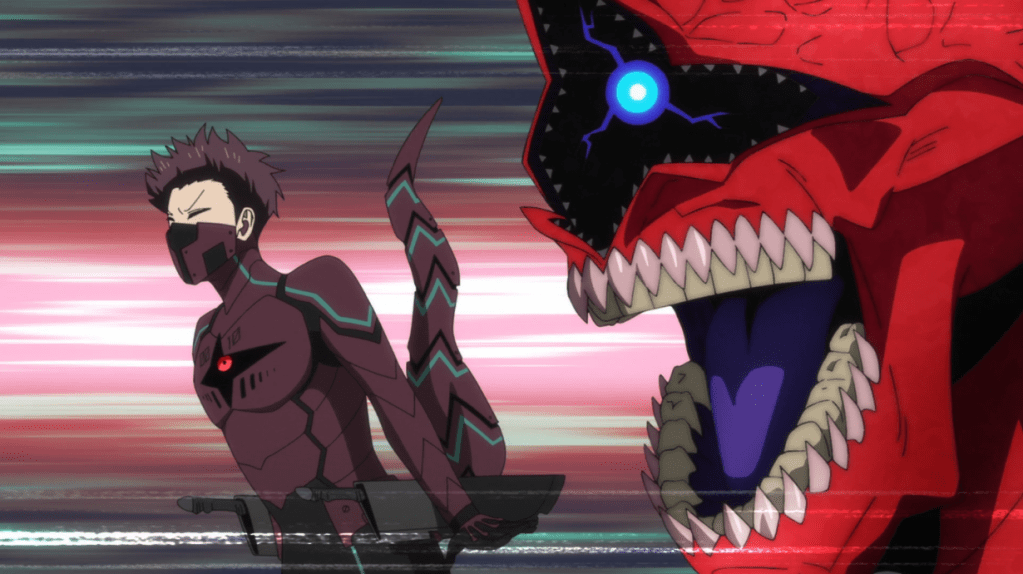


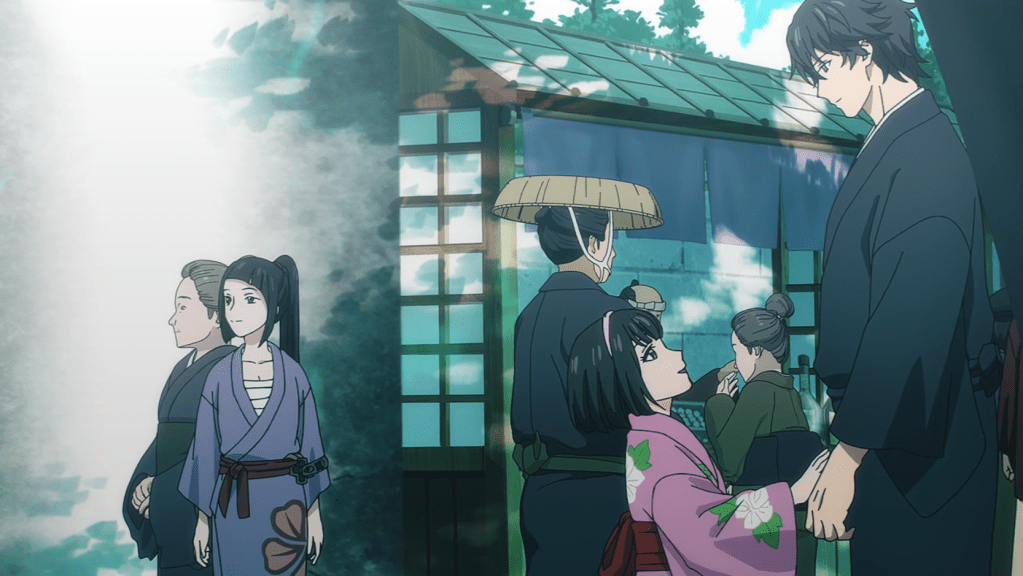

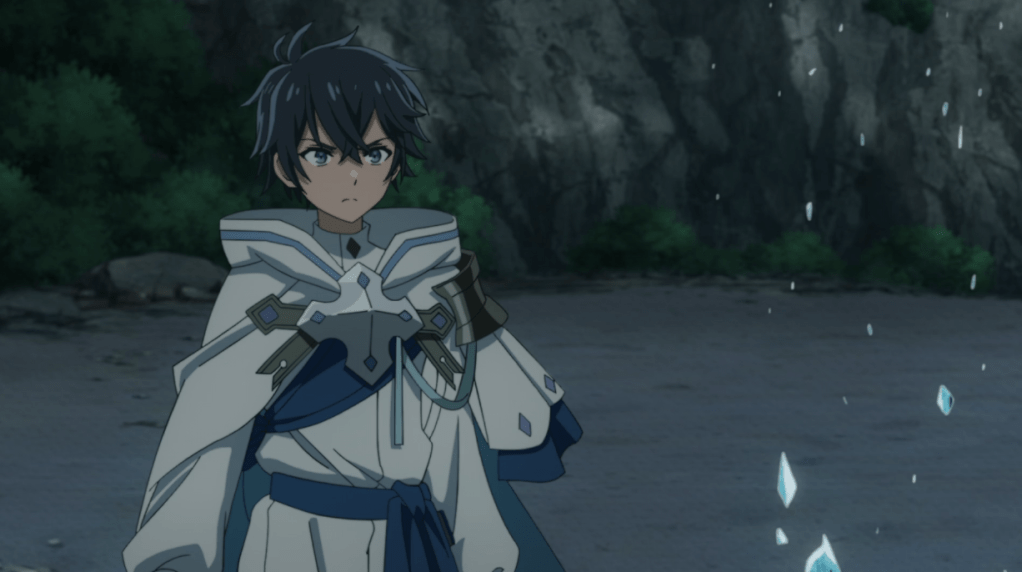

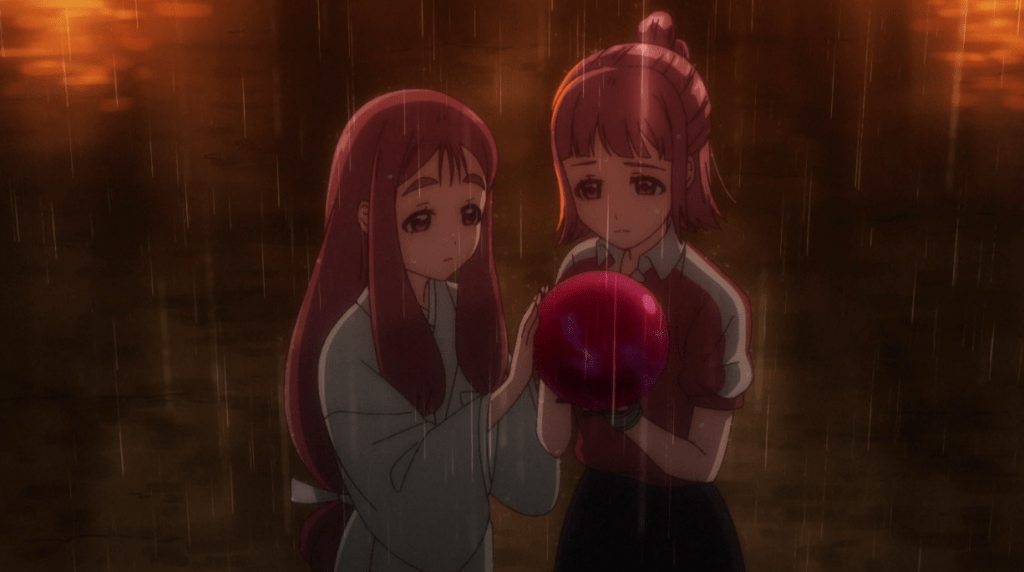
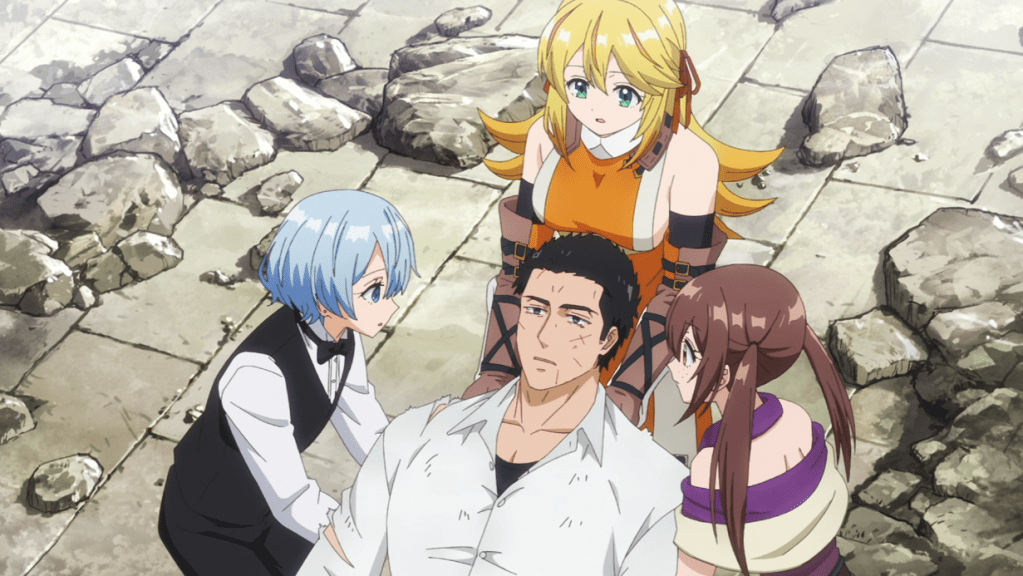

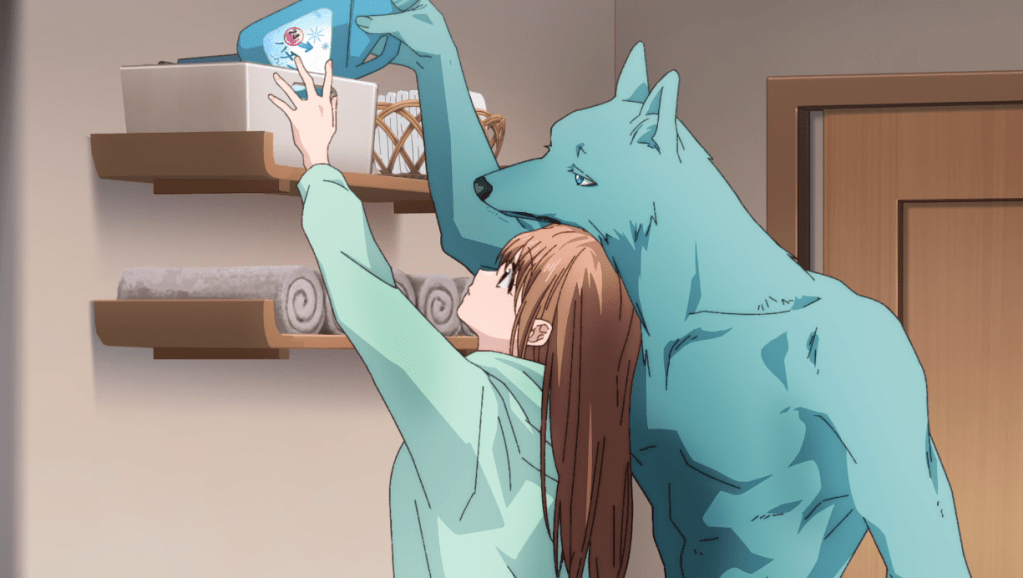

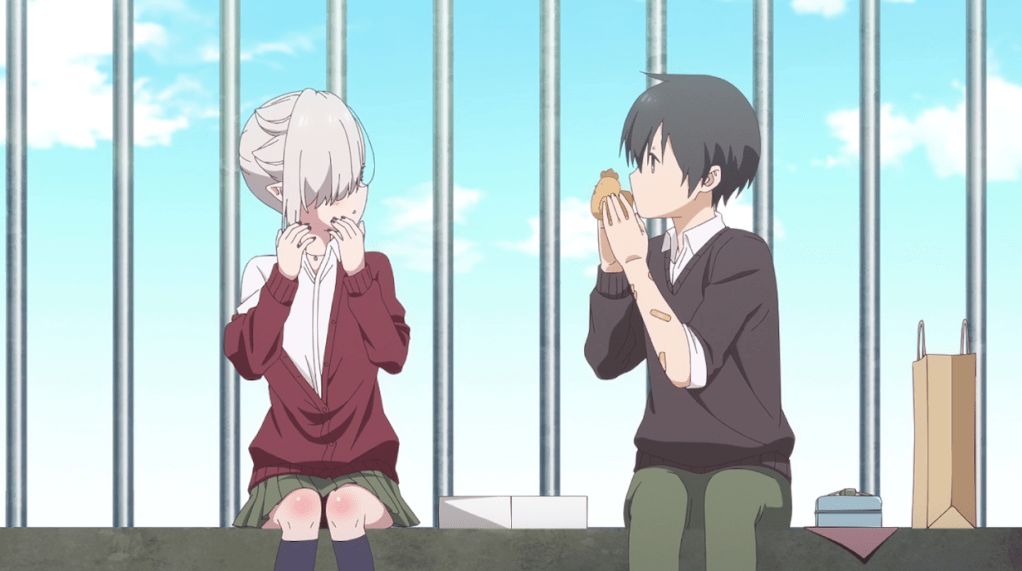
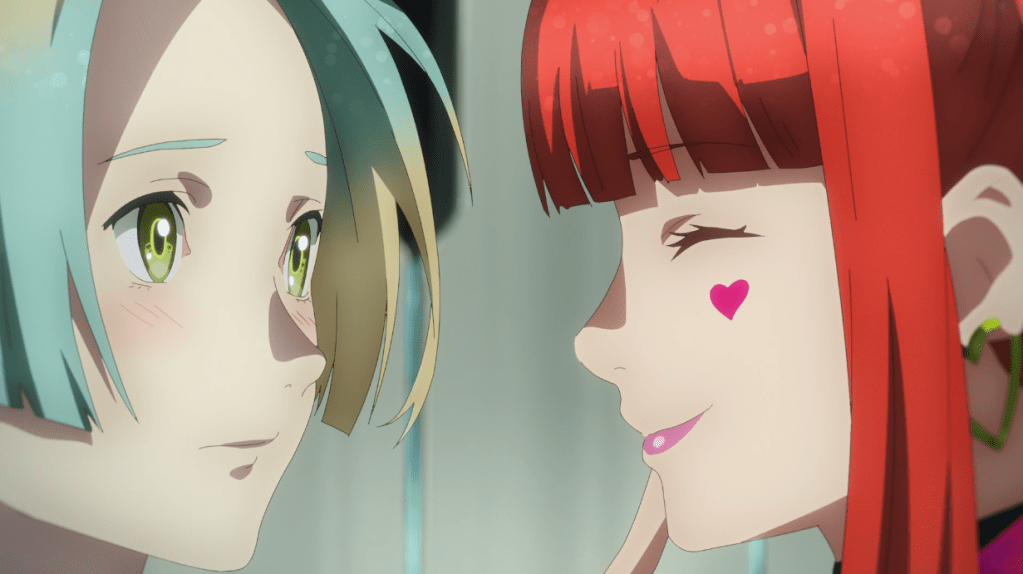
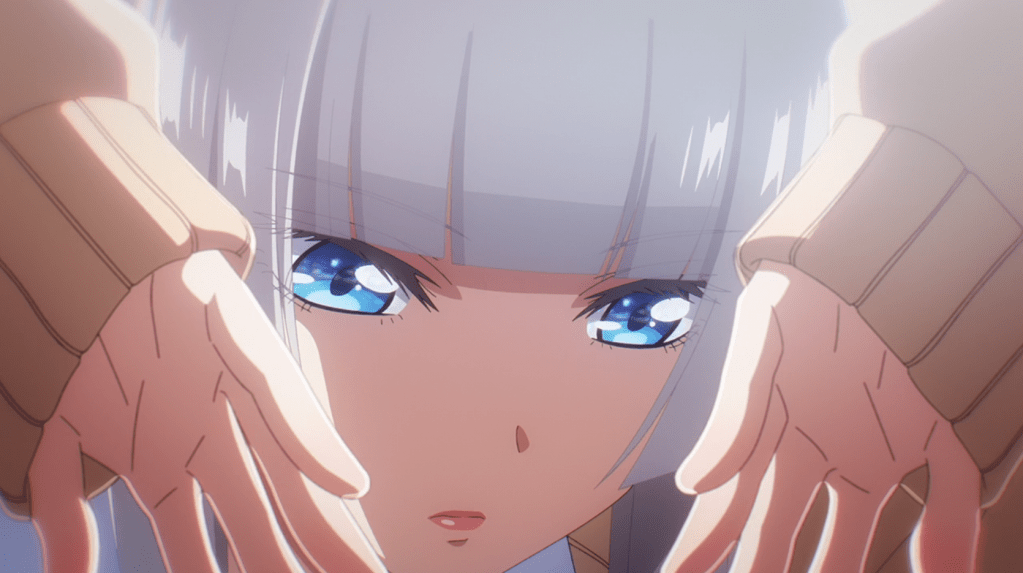

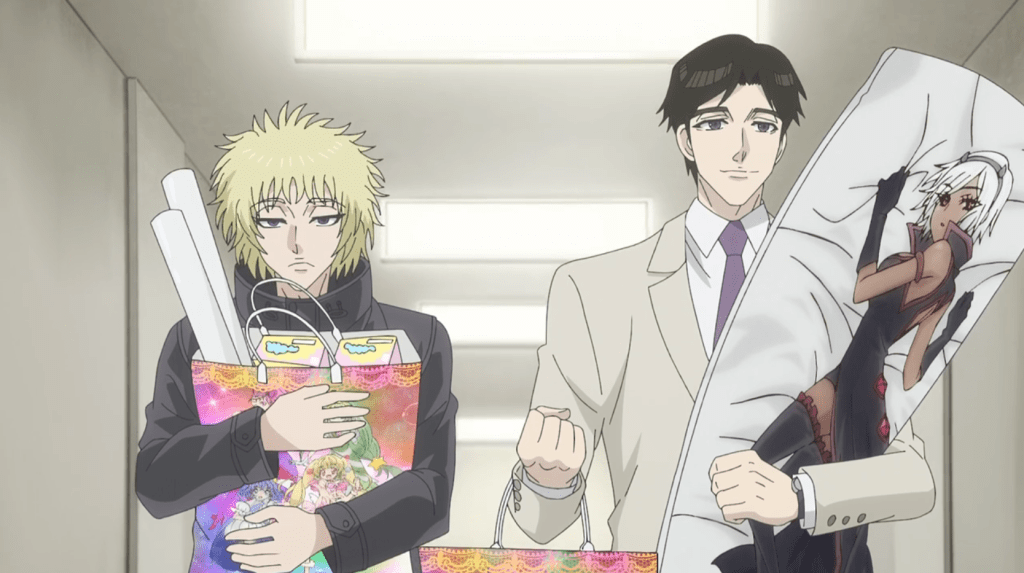



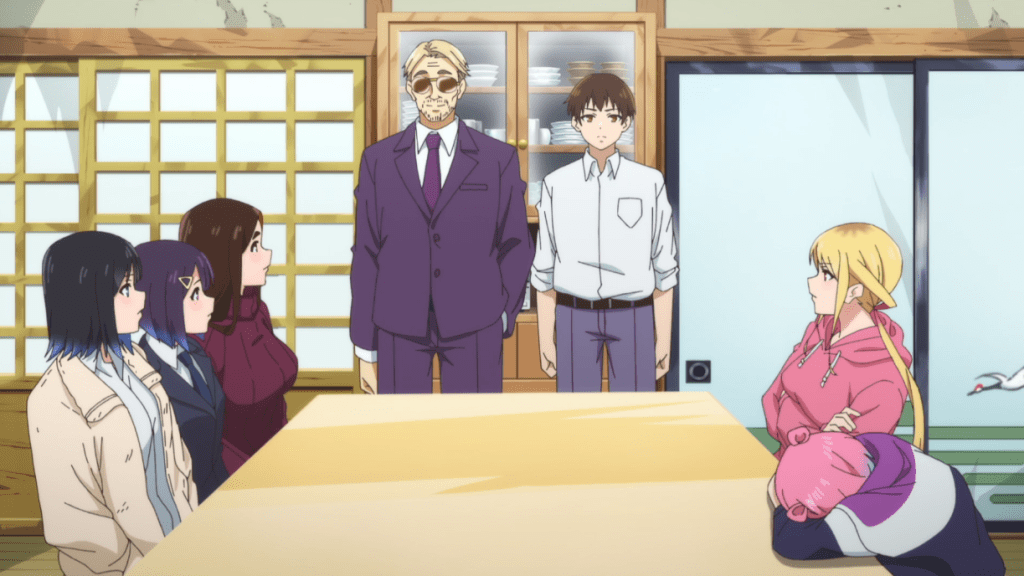


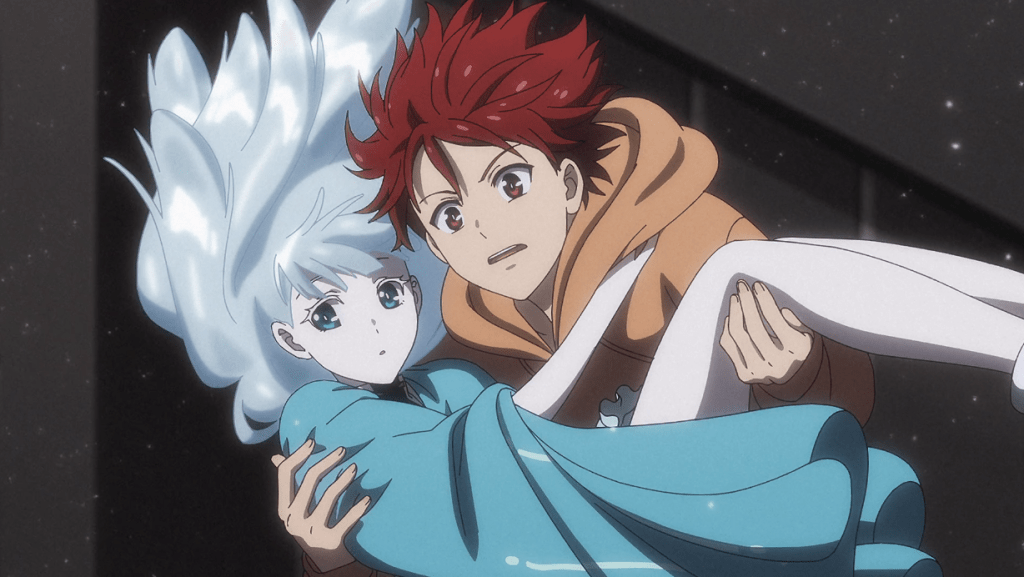
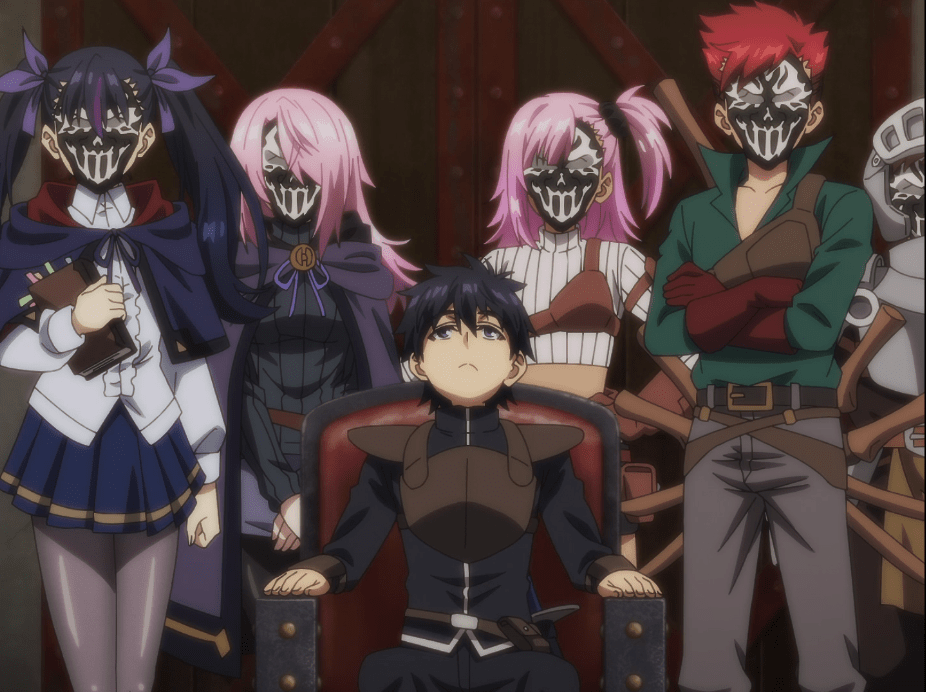


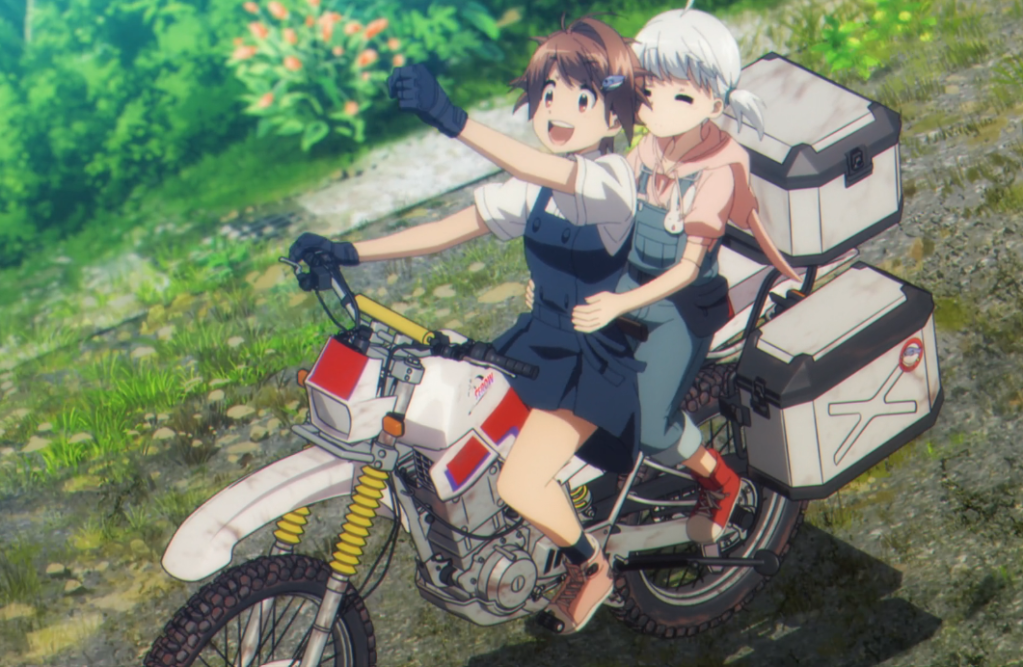


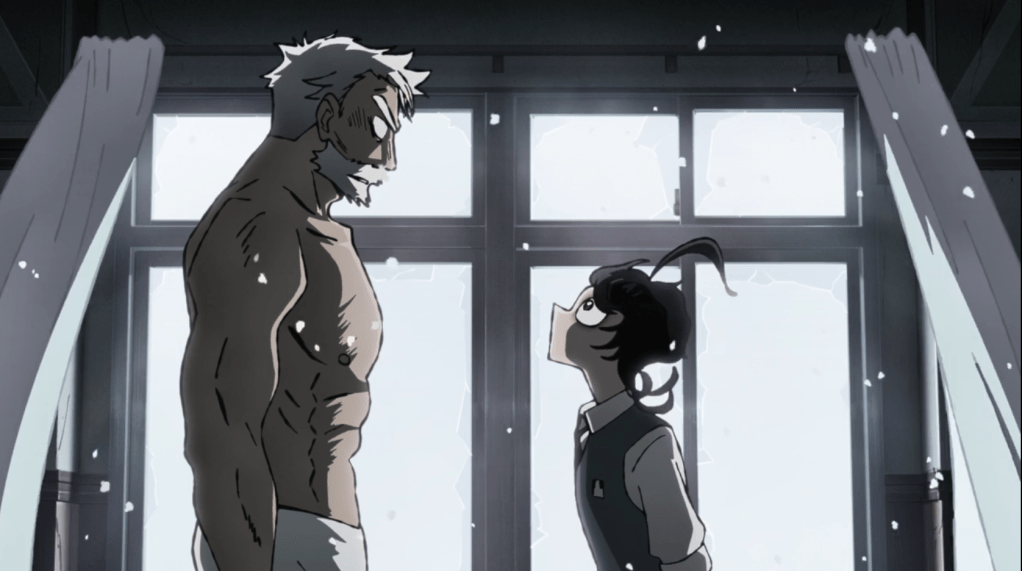
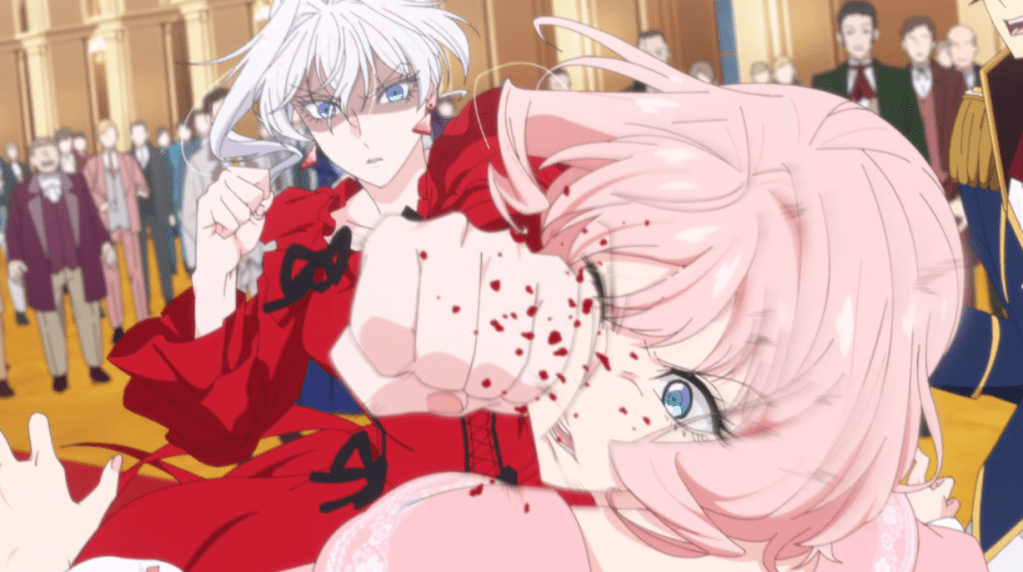

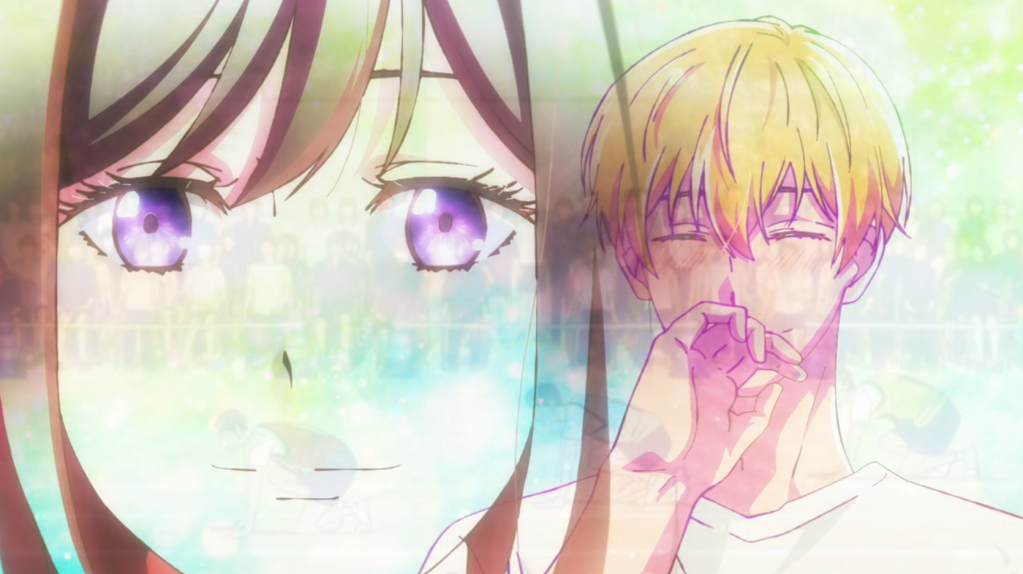


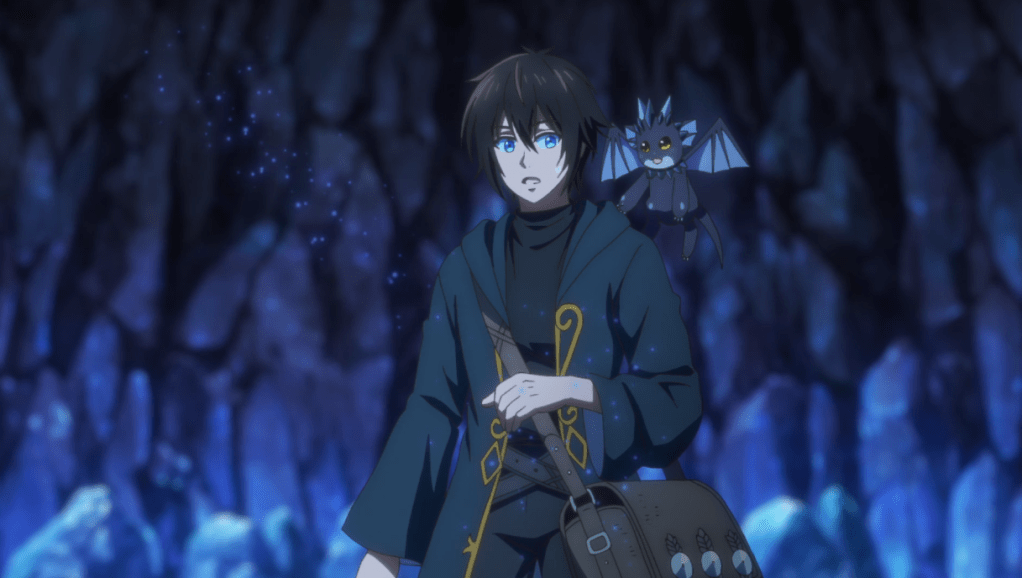
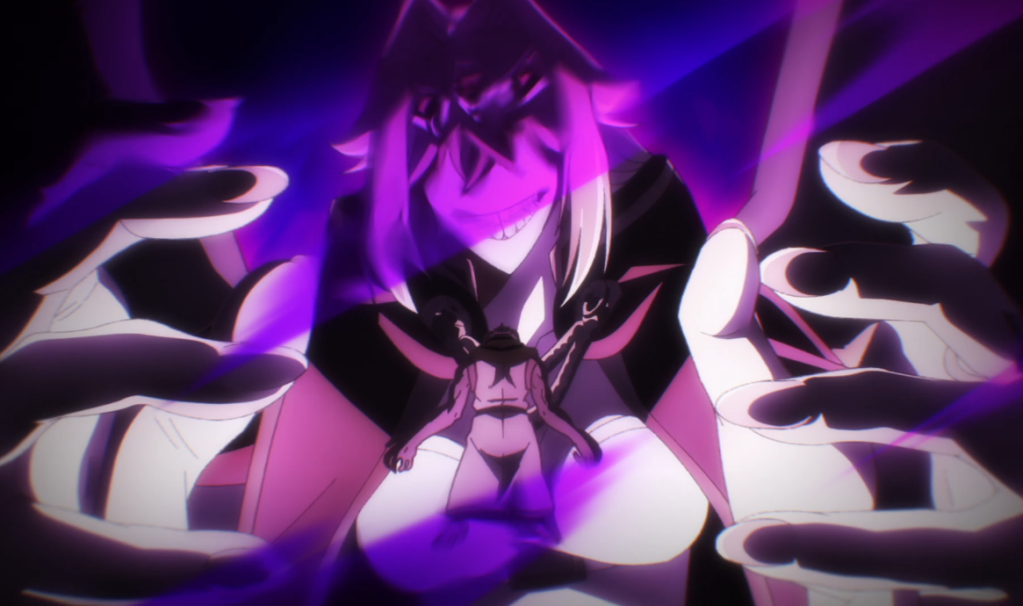

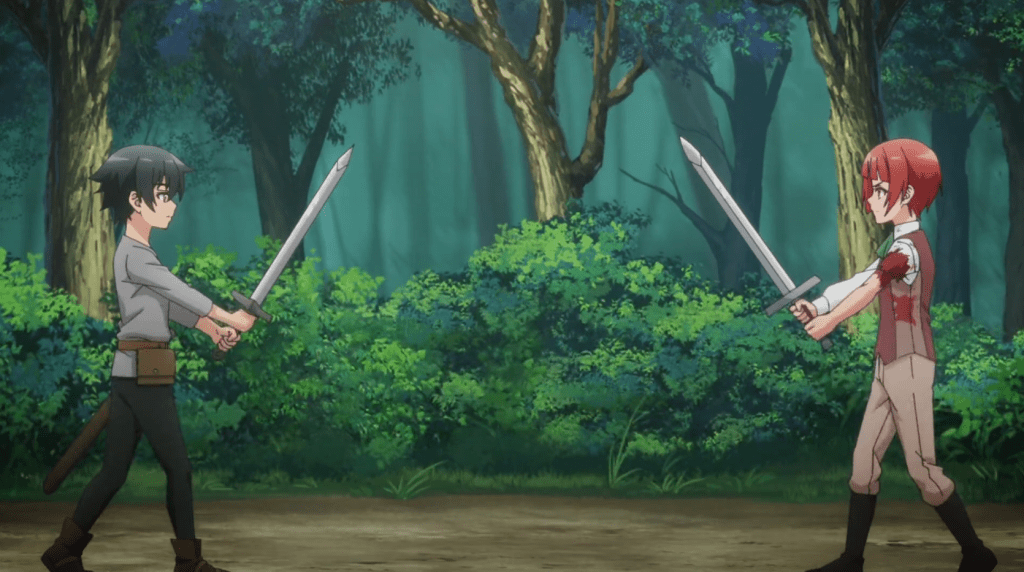
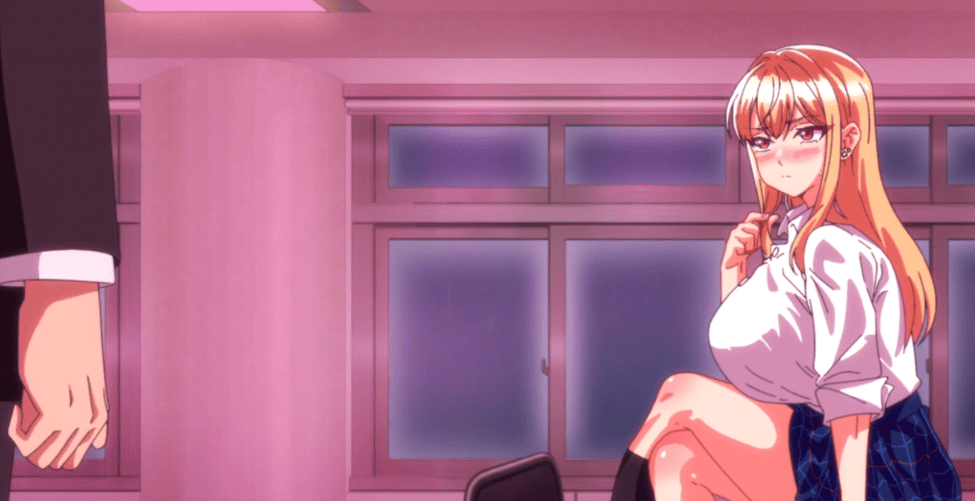


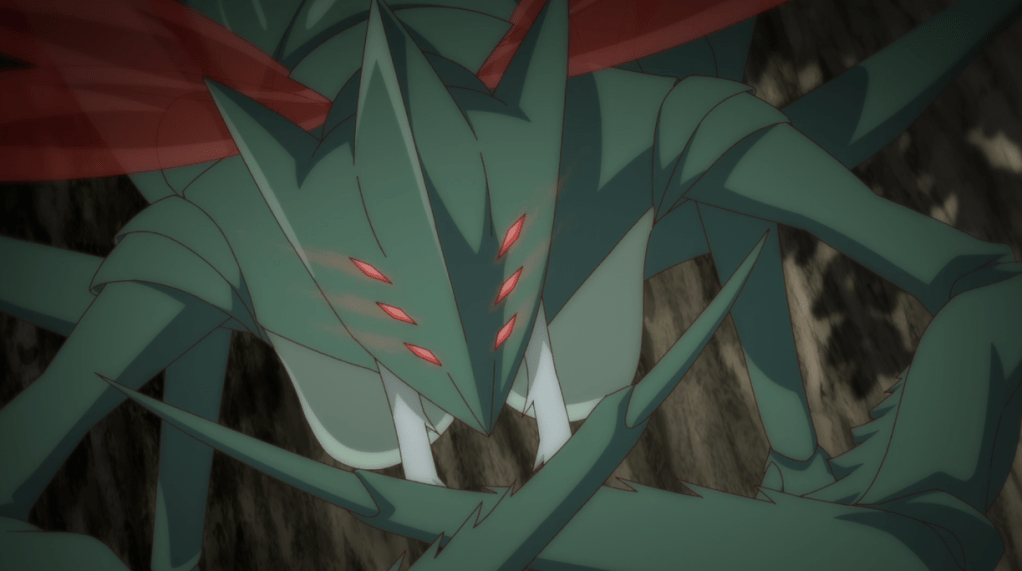
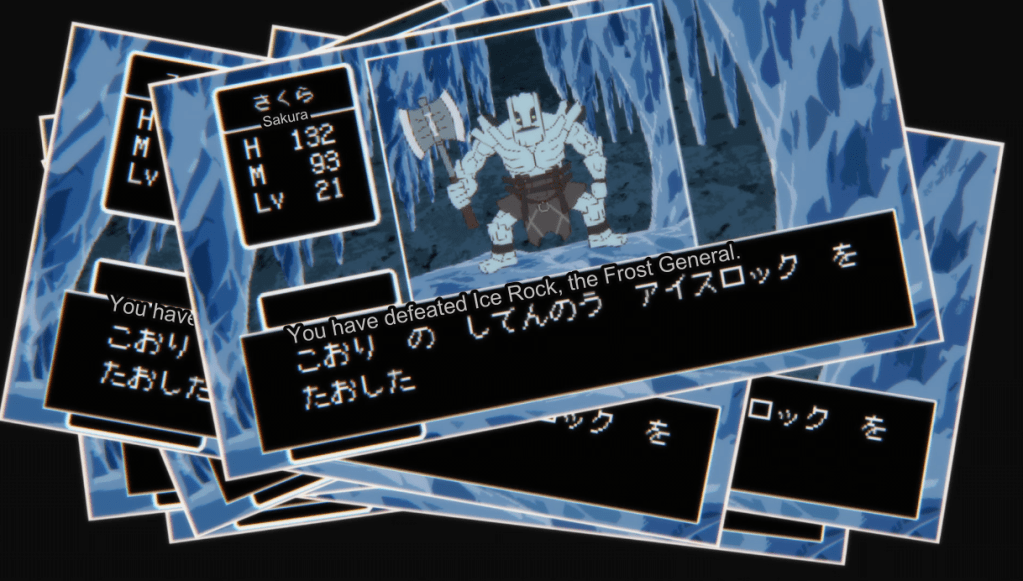
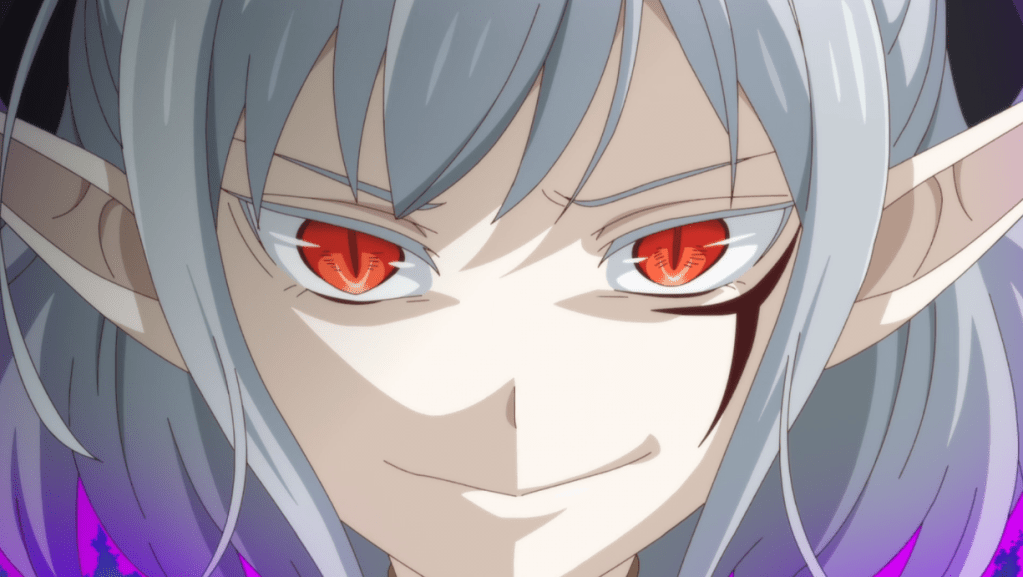
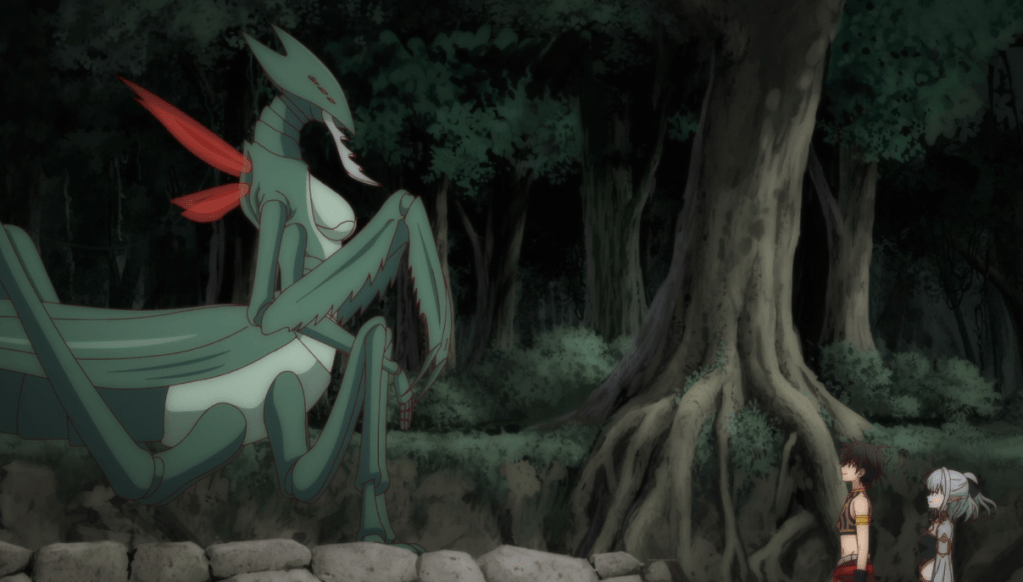
 USA Anime