Note: My apologies for getting nothing posted last week! I had fully intended to continue rotating through various series airing in the Fall ’22 season, so to make up for that, I am combining the intended topic for last week with this week’s to create a compare/contrast perspective on two currently-airing fantasy series: I’ve Somehow Gotten Stronger When I Improved My Farm-Related Skills (hereafter just Farm-Related) and Beast Tamer.
The Basics
Farm-Related and Beast Tamer are intrinsically linked in that they are both non-isekai fantasy series which debuted on the same day, and thus have both aired eight episodes as of this writing. Both originated on the user-generated publishing site Shosetsuka ni Naro and are based on light novels (albeit from different publishers) which have manga adaptations. The one distinct difference here is that the novel run for Farm-Related is finished, while the one for Beast Tamer is ongoing.
The Comparison
Though neither series is isekai (or at least has not been revealed as such as of yet!), both have a very isekai-like feel, down even to Farm-Related using game-like menus and stat/skill systems. Both feature male protagonists who, by the scales of normal conventions in their respective worlds, are very OP, and the implication in both cases is that their heritages have at least something to do with it; Farm-Related‘s Al has an intimidatingly-powerful mother, while Beast Tamer‘s Rein comes from a village where what he considers normal for a Beast Tamer is considered outrageously beyond the capabilities of typical Beast Tamers in the rest of the world. (This is implied to be a situation similar to Lloyd in Suppose a Kid From the Last Dungeon Boonies Moved to a Starter Town, but it has not been elaborated upon much yet in the anime.) Both series also at least dangle the vague possibility that their respective protagonists have some bloodline connection to a past Hero, though neither has actively pursued that angle.
In both cases, the protagonist is a mild-mannered good guy who either wittingly or unwittingly tries to distance himself from romantic entanglements with the girls who gather around him. And indeed, in both cases a bevy of special girls flock around the protagonist, forming veritable harems. By the end of episode 8, Al has three around him: a princess, the direct descendant of the Hero, and a Guild Girl who possesses the essence of an ultra-powerful dragon. All have been won over by being helped mightily by Al in sticky situations. Rein is up to four, though two came as a pair: a melee-oriented cat girl, a dragonoid strong in magic or melee, and magic-oriented identical twin fairies, with a fifth promised by the opener but yet to debut. Each of them is a member of an Ultimate Species whom Rein has formed a taming contract with, though under different circumstances in each case: the twins were rescued from a sticky situation and had to leave their village anyway, the dragonoid was defeated in a duel, and the cat girl was a case of two solo adventurers who cooperate against a monster befriending each other.
Despite the bevy of beauties gathered around each one, both series have generally been quite tame on the fan service front; Farm-Related has had very little which could count as true, prurient fan service, while the censored bathing scene in episode 8 of Beast Tamer was the exception rather than the rule. Both also feature regular action scenes, though neither depend entirely on them; cast member interactions are also important, as are the regular, very generic aspects of adventuring life. Both have featured the protagonist interacting with the current Hero or a Hero Candidate, but neither has shown much for an overarching plot so far. A Demon Lord is in the picture to be dealt with, but confronting it is not on either protagonist’s long-range radar; shorter objectives have been the standard so far.
The two series also have a more negative commonality: very mediocre artistic and technical merits. With Beast Tamer, it begins with Rein’s character design, which has felt oddly-proportioned since I first saw it, while Al is about as generic-looking a male protagonist as one can find. With the possible exception of Beast Tamer‘s Tania (the dragonoid), none of the female character designs in either series stand out much; they are pretty/cute enough but not to a memorable degree. Both series suffer heavily from lackluster and sometimes very limited animation and both have had quality control issues on at least a semi-regular basis. Neither one does much that’s interesting with their setting, critter, or race designs, either, except possibly for the (all-CG) dragon that the Guild Girl is connected to in Farm-Related. Oh, and the two series also share some voice actresses in major roles, with two of them (Minami Tanaka and Rumi Okubo) having a role among each harem.
The Contrast
For all of the two series’ similarities, they do differ in at least some ways. Beast Tamer looks more closely at the procedures involved in the Hero’s party and the mechanics of being a Beast Tamer, while Farm-Related traffics much more in absurdity involving its farm theme; this is the series where a thrown carrot is used to kill a dragon and a daikon radish is used to thwart a sword strike. While both have their mixes of light-hearted and serious elements, Farm-Related swings much more between extremes than the more even-tempered Beast Tamer does. It can be every bit as heavy as it is painfully silly. And Beast Tamer thankfully does not have the obnoxiously overbearing mother character who plagues Al in Farm-Related, or really anything close to her. Overall, Farm-Related tends to be the funnier one, while Beast Tamer tends to be the more charming one.
The Summation
Neither series entirely lacks for entertainment value, but neither has anything compelling about them, either. Even within the fantasy genre, both are thoroughly mediocre diversions which mostly won’t be remembered at all a couple of seasons from now. (Except for that carrot killing the dragon thing. That will last forever.)
Though easily the most successful of the “ship girl” franchises to come out of the 2010s (it had an enormous presence in doujinshi markets through much of that decade), the mobile game Kantai Collection has only had two previous anime adaptations: a 12-episode 2015 TV series and a 2016 movie. This eight-episode series represents an alternate storyline rather than a continuation of either of the previous entries, and seems to be happening with an entirely different cast of characters. (A few of the original cast have background or flashback cameos, but that’s it.) Hence no familiarity with previous animation is strictly necessary to follow this this series. The first episode does, however, expect that audiences are at least generally familiar with the franchise’s operating conceits: that (mostly) teen girls called Ship Girls exist who possess the spirits of World War 2-era Japanese naval vessels. That allows them to glide across the water and use equipment and weaponry in line with their source ships to fight the Abyssal Fleet, an alien presence from the deep seas which threatens humanity’s presence on the seas. And this Abyssal Fleet is, of course, based on the American and Australian fleets that Japan fought against in WW2.
For returning franchise fans, the first episode quickly offers up one key difference: the overall tone is decidedly more somber and desperate. The CGDCT antics which characterized downtime in the first series are still present to some degree, but the high spirits of the first series have been replaced by suggestions of grievous losses, passing comments about dwindling numbers, and the fleet that feature character Shigure (originally a Shiratsuyu-class destroyer) is assigned to being given a diversionary suicide mission. The reason for this is revealed by the end of the episode: this is the set-up for the Battle of Leyte Gulf, originally fought in October 1944 over the U.S.’s attempt to land in the Philippines. The historical conflict was the largest naval battle of WW2, and is the largest naval battle in recorded history in terms of the number of combatants involved. It was also, effectively, the last stand for the outgunned Japanese navy; the few surface ships which survived to make it back to port either never sortied again or were used only for escort missions for supply ships. In other words, as Shigure and crew sortie out at the end of the episode, they’re in for a bitter fate if the series closely follows history.
Of course, as the first series showed, the storytelling is capable of deviating for dramatic effect, so I am curious to see how far this installment will go in following the multifaceted battle awaiting them. The storytelling is already fudging a bit, since the “Northern Force,” rather than the “Southern Force” centered around Fuso and Yamashiro, was the intended decoy in the original battle. The battle did feature spectacular events such as the last battleship-on-battleship battle ever fought and the first kamikaze attack, so there should be a lot of flash and excitement even if the writing does not bail the Ship Girls out in the end. Shigure, with her more subdued but still determined demeanor, serves well as the viewpoint character for this situation; she may have also been chosen for other reasons that are spoilerish for anyone who has not studied WW2 naval battles in detail.
The riggings worn by each of the ship girls look as awkward as ever, but the technical and artistic merits are at least as good as the original (albeit with perhaps a slightly heavier emphasis on CG) and some fog-shrouded shots of the main (historically Center) fleet are visual features. Overall, the first episode is a solid effort, but will probably hold limited appeal for those who are not franchise fans or WW2/naval warfare buffs.
Anime series which adapt mobile games are hardly unusual in recent years, but I am hard-pressed to think of another one which is based on a tower defense game. Yet that’s exactly what’s going on with this adaptation of a Chinese mobile game. (It has also been released in other countries and does have an English language host website.) Rather than being a prequel or a side story to the main game – as many game-connected series in the last couple of years have been – this one seems to be taking a more ambitious approach: use the rich setting details that the game is known for to play out the game in narrative form. The result is hardly anything special, but it is at least competent enough that it could pull in viewers beyond just fans of the game.
The central (though not necessarily focus) character is the same as the player self-insert in the game: a masked Doctor suffering from amnesia as an after-effect of having been put in cold sleep. (Why the indeterminate-gender Doctor was put in cold sleep is not commented on, but the suggestions are that it was not long-term and done because of some grievous injury or health condition.) In the post-apocalyptic setting the Doctor awakens to, female characters exhibit characteristics of animals or mythological creatures, which is most visible in the form of animal ears; whether male characters also have this or not is unclear, but the one male character shown without a head covering doesn’t have the special ears. There’s also a disease called Olipathy, which allows the use of magic but is also ultimately fatal. Sufferers of the disease have broken into two camps: the violent Revolution, which seeks to retaliate for persecutions, and the more cooperative-leaning Rhodes Island, whose members the Doctor is recovered and protected by.
The game origin persists in a phase-driven feature battle towards the last part of the episode and in how the Doctor, despite the amnesia, ends up directing it. Action scenes emphasize tactical elements than pure mano-a-mano action, and the technical merits supporting the action aren’t bad. The one visual complaint I might voice here is that the animal ears seem more tacked-on than integral parts of the character designs (especially for the bunny girl, who is Rhode Island’s young leader), and the fact that most characters use full-body suits limits animation needs. The setting offers some somewhat interesting setting elements, and there is a sense of a bigger story here, but that is also limited by an overall generic, game convenience feel. The one truly interesting element is the name convention: the U.S. state Rhode Island was originally a colony formed as a secular haven for outcasts, which implies that the group may be a splinter factor of the Revolution.
Whether that’s interesting enough to warrant watch more is another story. This first episode isn’t bad, but it just doesn’t do anything much to warrant attention, either.
This is one series that I did not expect to be commenting on week-to-week, and I’m still not sure if I will write it up every week. However, episodes 2 and 3 added enough to the basic premise laid out in episode 1 that I felt they merited further commentary and should earn this series more attention than it’s probably going to get.
Dismissing this series after episode 1 would have been easy to do, and complaints that the first half of the episode dwelt too long on the sword (hereafter called Master) powering up were warranted, even though that is still a compacted version compared to the novel. However, many other reviewers also noted that the episode experience a distinct uptick once Fran came into the picture, and the relationship that was already starting to develop before the end of the episode could give something for otherwise-disinterested viewers to latch onto. Episode 2 furthers this critical relationship-building as Master guides Fran through getting signed up at the Adventurer’s Guild (and the combat test she must pass in order to earn certification despite her youth) and learns a bit more about how Fran ended up in her current situation and what her current goals are: to prove that Cat People, who are widely-derided as the weakest of the beast people, are capable of Evolving like other demi-humans and monsters are. Master’s protectiveness and beaming over Fran’s accomplishments, along with Fran’s seemingly simple-minded nature, give the impression that a sweet father-daughter type of relationship is forming.
Episode 3, however, shows that classifying their relationship that way may be oversimplifying things. They’re absolutely still working together as a team, and the way Master seeks to help Fran is still very parental in nature, but as the episode progresses, Fran’s own will starts to show more and more. There were hints of this in the previous two episodes, but the battle against the goblins shows that she has no need to just act at Master’s directions; she can make her own decisions and take charge of the situation. She also won’t be cowed by the challenges before her, and the production team does an excellent job of showing that, despite her ability to overwhelm goblins individually with Master in hand, the goblins are still quite capable of being a threat as a group. She shows a tenacity and gritty determination worthy of any shonen action hero. Perhaps most importantly, she shows that she can carry the series on her own. By the end of episode 3, Fran is at least as much the series protagonist as Master is. Audiences will root for her even if they cannot much get behind Master.
Of course, that Fran has a hefty dose of moe-grade charisma working for her also doesn’t hurt. She could have her own short where she just goofs around and enjoys simple pleasures and I would absolutely watch it. She doesn’t just have cute factor working for her, either. The animation team is doing an impressive job with visually portraying the fighting style of a girl using a sword as big as she is and still making it look realistic. (That they are also remarkably graphic for the genre may or may not be a plus.) Put simply, watching her fight is fun, and that’s something that cannot always be said about dedicated fantasy action shows. Infusing the battles with a heavy rock musical score certainly does not hurt, either.
The one weakness of the series so far is that, for all that it is innovating a bit in the specifics of its situation, it is still hewing closely to a lot of isekai reincarnation tropes, including game-like stats, Adventurer’s Guild rankings, and so forth. However, I can tolerate that because of what we’re getting in exchange. In a season which has no shortage of high-interest, high-profile titles, this one is showing at least some potential to be a sleeper hit.
When Shinpei Ajiro left his home island of Hitogashima to attend school in Tokyo, his childhood friend Ushio (whose family he had lived with since the death of his parents) didn’t take it well. Now, two years later in mid-July, he is finally returning to the island – but for her funeral, after she drowned trying to rescue a child. Though Shinpei was welcomed back by Ushio’s younger sister Mio and their father Alan, something on the island seemed off, and Shinpei soon discovers what: Shadows, supernatural entities which can copy and replace a person (which typically results in the person’s impending death) are afoot on the island, and they not only may have had everything to do with Ushio’s death but also are a growing and existential threat to everyone else. The problem is that learning about this leads to his death. But that’s just the start of a time-looping journey, one which could be the ticket to the island’s salvation if Shinpei can only piece together the grand puzzle that is the Shadows and stay a step ahead of the forces behind the scheming Shadows in the process. And it may be the ticket to reuniting with Ushio as well.
Such is the premise of this adaptation of a completed Shonen Jump! manga, which aired during the Spring and Summer 2022 season. Over the course of 25 episodes, it tells an intact story, one which throws in occasional bits of humor but is mostly grounded in mystery and graphic, supernatural horror. At its core is a time-looping element initiated by Shinpei’s death, typically in very violent and occasionally even suicidal ways. To any veteran anime fan, this will evoke far more comparisons to Re:Zero than something like Groundhog Day, even down to the “save point” Shinpei returns to occasionally advancing. Unlike with Re:Zero, though, the save point advances at least a little every time, effectively becoming a plot point on its own later in the series. Figuring out how this works is intrinsic to the ultimate success or failure of Shinpei’s efforts to defeat the Shadows, and it is a major source of tension especially in the series’ second half.
But while the series’ defining element is its time looping, it is not just about that. Bonds must be forged or reforged with islanders past and present and who is and is not already a Shadow at different points in the loops, and who is and is not a potential ally among the humans, must be determined. The lore and history of the island must also be explored, as what happened both a few years ago and a few hundred years ago are intrinsic to what is happening now. Also, this is not just a simple case where Shinpei can change a few things each time and see what works and what doesn’t. Anything Shinpei does differently has broader ramifications, and as he eventually discovers, the enemy has become aware of his time looping and actively tries to interfere with its efficacy. That turns the second half of the series into a veritable chess match, one full of strikes and counter-strikes, as each side tries to outmaneuver the other across the loops. I don’t doubt that the production team use complicated flow charts to keep track of who knew what, and did what, and when.
Another key element of the series is the nature of the Shadows themselves. While they resemble the doppelgangers of folklore, that’s not exactly how they operate, as they can replicate from snapshots of both people and objects. (This is called “rendering,” hence the source of the series’ title.) They have interesting properties, like how one has to damage the Shadow’s shadow in order to harm, immobilize, or even destroy it, and some can have special movements and attacks. Not all remain beholden to their creator, either. The latter is how Ushio gets involved in the story starting a few episodes in, despite starting the story dead. (I consider this only a minor spoiler, since she is too visually distinct, and featured too prominently in advertising art, for her to not have a major role.) That’s definitely for the best, since she is easily the most vivacious and fun character in the cast. Once she first appears, the parts where she is not involved are almost always less dynamic.
Ushio also stands out in a visual sense. Even though not everyone else on the island has traditional Japanese looks, Ushio is still strikingly different, with long blond hair (including, conspicuously, blond eyebrows and even eyelashes!) and fair skin more typical of someone from northern Europe; while this isn’t explained anywhere in the anime, supplementary materials clarify that Alan is French, so she is half-Japanese but completely favors her father. (Unlikely genetically, but hey, let’s roll with it.) She also appears in a one-piece navy blue swimsuit through most of the series (since that was what she was wearing when she died). Other character designs have more traditional appearances but are still well-designed, and production values in general are on the high side. Scene design supports the horror element quite well, and the sometimes-ambitious animation effort allows for both some great expression work and some slick action sequences, especially ones involving Shadow-Ushio’s creative use of her hair. CG effects used to give the impression that appearance of Shadows is glitching at times also serves the purpose well.
The musical score also proves quite capable. The mix of ominous piano notes and electronica themes hit strongest in the darkest and tensest scenes, while the score properly remains passive in lighter ones. Bother opener and closer are fitting but unremarkable, while a couple of insert songs fare much better.
The series does warrant some content cautions. Graphic violence hits extreme levels at times, some death scenes can be quite bloody, and suicide is a factor. While the opening episode and Ushio-in-a-swimsuit suggest a fan service-laced production, that element is actually sparse; aside from one near-nude scene involving Ushio late in the series, there’s barely any after the first episode. if you’re normally turned off by such things, this series shouldn’t be a problem. On the dubbing front, the Japanese dub makes heavy use of accents, and even those not proficient in Japanese can probably catch when Shinpei and one other character returning to the island start slipping back into the island way of saying things even without the subtitles. By far the most distinctive performance also involves Ushio; relative newcomer Anna Nagase (this is her first starring role) gives her a voice much more brassy than the typical anime genki girl, but it still fits for the more rough-and-tumble Ushio.
This series should theoretically be streaming on Disney+ at some point, since they have the rights to it, but it is not in the U.S. as of the time of this writing. (If you don’t mind seeking it out on alternative sites, I recommend Animepisode.) I will update this review when it is, as given the heavy use of islander accent in the Japanese dub, I am very curious to see how an English dub will be handled. Overall, the one complaint I have about the series is that it seems to be dragging things out a bit in its second half; even though a lot is going on, it feels like one episode less would have made the content much tighter. Also, the plot of the series ends with episode 24, with the entirety of episode 25 kinda-sorta being a “what happens after” scenario. This is still highly recommended viewing, as the overall story does not feel properly rounded out without it. For all of the struggle and pain the cast goes through, that ending feels both deserved and highly satisfying, and a series could not ask for a better note to end on.
There is a moment early in this episode which speaks best to the spirit and attitude of the show: the scene where Maou and Ashiya have to take the subway to get to the second tower, while Emi just conjured up magic boots and flew over to the first tower. Sadly, it’s one of the few places in the disappointingly-drab season finale which seemed entirely on point.
What makes the episode even more disappointing is that it had some material to work with. The big revelation here is that Emi’s father, Nord Justina, is not only alive but also in Japan. Since the foundation of Emi’s motivation for fighting the Devil King is her father’s death, this is an Earth-shattering blow not just to Emi’s raison d’etre, but also to her attitude towards Maou. How can she justify her actions if she does not have specific reason to hate him anymore? This is a matter with such heavy future consequences that the episode-ending confirmation that Lailah was, indeed, the angel who saved Maou as a child pales in comparison. So does the implication, from various tidbits throughout the episode, that Lailah is being sought partly because she is trying to fix something intrinsically wrong with Enta Isla that was caused by Heaven, and doing so would be detrimental to Heaven. (That Lailah is also being sought because having a child with a human implies that humans and angels are more genetically similar than the angels care to have acknowledged is also an interesting point with possibly greater implications.)
There’s also Chiho finally getting to have her turn at being part of the super-powered action. Granted, everything she’s doing is more or less just channeling for Lailah, and she looks good in the action pose of firing the magical arrows. Sadly, the action is otherwise a letdown. Although this has been a problem all season, the action in this episode feels extra-limp; it has no dynamism, energy, or real sense of battle choreography to it, and the musical score is not helping much. Admittedly, the actual fighting here does not amount to much, and this has never been an action-focused series anyway, but I still expected more than this. That this episode aired on the same day as the action extravaganza that was DanMachi‘s cour-ending episode, and just a day after the equally visually-awesome season closer for Made in Abyss, is an additional bit of unfortunate timing. But hey, at least they kept the detail about how Chiho is so busty that her hospital pajamas are straining a bit to stay buttoned. . .
In all, the episode had enough interesting reveals, plot hooks, and commitment to the series’ sometimes-quirky style of humor that I cannot give the episode too bad a grade. Additionally, an announcement has been made that another season is coming next year, and that it will feature the debut of a new core (and, by extension) new peripheral cast member. While this is not the franchise’s strongest material, enough is still going on here that I would be back even if I had not read far ahead in the novels.
Welcome to my Fall 2022 Preview Guide! I expect to cover every full-episode series that will be debuting this season, but atypically, I will not be able to do most of this season’s sequels; only Spy x Family (which I may take straight to episode reviews, to continue what I was doing in the spring), Peter Grill, and Bleach are likely to get done. I do intend to sample Mobile Suit Gundam: The Witch From Mercury with a “do you have to be a diehard Gundam fan to appreciate this?” eye and will certainly be giving the reboot of Urusei Yatsura a close look, too.
These will be listed in newest to oldest order, and this post will be updated multiple times per day on busier days. With no super-late-debuting titles this season, I expect to wrap this Guide on October 15th.
Note #1:I’m the Villainess, So I’m Taming the Final Boss had a sneak preview a week early, so it was covered separately here.
The Little Lies We All Tell
Streams: Crunchyroll on Saturdays
Rating: 3.5 (of 5)
The concept here is a tried-and-true one for anime: take four girls from stock archetypes, put them in a friends group, and simply watch their personalities idiosyncrasies bounce off each other for comedy effect. The defining gimmick this time is that each one has a huge secret they need to keep from the others: the Boyish-Looking/Acting Girl actually is a boy conned into attending the elite all-girls school by his “identical twin” sister (in the same sense that Hazuki and Minami from Baka and Test are “identical”), the Loli Girl is actually an alien soldier whose flying saucer has crash-landed into the top of the school (and who is using memory manipulation to conceal her identity while she awaits rescue), the Elegant Girl is actually a ninja who defected from her village to enjoy a normal school life (and thus is constantly dealing with ninjas out to assassinate here), and the Glasses Girl is a psychic who knows the secrets of the Loli Girl and Elegant Girl but not the Boyish Girl.
Through the first episode at least, this juicy mix of gimmicks works quite well. The humor is a bit more on the earthy side than the norm: one whole sequence involves the Loli Girl needing to fart, which is more of an issue in her case since the fart comes from her head tentacles (which she’s memory-manipulating people into believing are hair ribbons!) involves deadly chlorine gas, and another involves the ninja girl trying to pass off blood splatter from a ninja assassin as a problem menstrual period – and, of course, two of the other three don’t get the “time of the month” reference since they’re not human girls. (Though unless Japanese sex education is very different from that in the U.S., the boy should at least be aware of that by middle school age.) In general, much of the humor depends on most of the girls not understanding what’s really going on with one of the others because of lies and lack of context, with the psychic girl playing the Straight Man in this situation since she mostly does know what’s going on and is just trying to maintain normality in the group. There are also background jokes (the ninja girl makes cookies shaped like ninja-masked bears, for instance) and one fourth wall-breaking stunt as well, for a steady flow of humor.
The main reason why this all works is the timing. Series who try this format and flop often do so because they let jokes linger too long, but this one steadily moves the humor long, giving each joke the proper time to develop but no more before moving on. The series also provides a good variety which keeps all of the main characters involved. Visuals are not anything special, but this does not look like a series which is going to have a high animation need, either. Overall, this is a comedy that I can recommend both as a fun diversion from heavier fare and standing on its own merits as well.
Exception
Available: Netflix
Rating: 3 (of 5)
This is an 8-episode Netflix series posted on 10/13 and based on an original story by Hirotaka Adachi, an author mostly known for horror short stories. While the whole series is available on Netflix, only the first episode is being reviewed here.
The sci fi concept here is an intriguing one: because humans cannot survive travel through hyperspace, a ship equipped with the biological equivalent of a 3D printer and back-ups of the memories of five key crew members is sent ahead via that means to establish terraforming on a new planet while the actual colonists are traveling behind, in cryosleep, on a course that will take a century. All’s well and good until the fifth and final crew member doesn’t print right due to the interference of a solar flare. Doesn’t take a lot of guessing to figure out what happens when the crew decide to recycle the monstrously malformed body and reprint.
While the ideas being worked with here are potentially fascinating, the set design is overly-elaborate to an incredulous degree and the character design aesthetic leaves a lot to be desired. An ultimately, it’s really just an elaborate excuse to have a “monster on a spaceship” scenario. Since it’s relatively short, it might be worth watching out if you’re a fan of space-based horror tales.
Urusei Yatsura (2022)
Streams: HIDIVE on Thursdays
Rating: 3.5 (of 5)
The original run of the adaptation of Rumiko Takahashi’s romantic comedy manga debuted almost on this same date in 1981 and ran for 195 episodes, a dozen OVAs and specials, and six movies over the next decade. In the process, it defined many of the tropes that have been staples of anime romantic comedies ever since and established one of the all-time most iconic anime girls in the tigerskin bikini-clad Lum. Now it’s back in a hard reboot in an attempt to win over whole new generations of anime fans with its crazy antics about the hapless lech Ataru, the girl he really wants (Shinobu), and the alien invader whom he beat in a game of tag with the fate of the world on the line and who mistakenly (but insistently!) believes that Ataru proposed to her. And she’s not about to let him go or two-time, either.
From what little I have seen of the original series, this new production fully retains the spirit and frenetic pacing of the original, where characters barely stop to breathe before getting involved in the next stunt. Most anime comedies in recent years don’t pace themselves anywhere near this intensely, or at the very least use more build-up to gags like super-strong Shinobu dropping a telephone pole on Ataru over a misunderstanding. Some of that could be because this version is reportedly compacting the original content down to only 50 episodes, but this still could require an adjustment for franchise newcomers.
The technical merits for this new version are not anything spectacular, but are good enough to capably support all of the hijinks and put a sheen on the series more inviting to 2020s audiences. In a neat bit of casting, the original seiyuu for Ataru and Lum are now voicing Ataru’s parents, but they have strong, veteran replacements. Overall, the style of some of the jokes may come off as a little dated, and its antics are no longer fresh (since other series have used them for close to 40 years now!), but it still packs enough comedy value for me to recommend it. And that’s even before the rest of the expansive core cast of loonies get introduced.
Love Flops
Streams: HIDIVE on Wednesdays
Rating: 2.5
This one opens to a scene of the protagonist toasting a banana. Who does that? Is this actually a thing and I’ve never heard about it?
That aside, this is an original anime which feels every bit like it’s being deliberately modeled off of a dating sim. Generic protagonist Ryota has oft-slightly-racy encounters with three girls, one boy (who’s almost certainly a girl disguising her true gender), and a new teacher on his way to school, and discovers upon getting there that they’re not only all in his class but also the teacher is his homeroom teacher and the students are all seated around him. There’s also the friend who seems to know details on all of the girls as well. There are some misunderstandings involving a bra and panties and a confession by the end, although the series’ premise indicates that all five will eventually have romantic entanglements with Ryota. Even the “running with toast in mouth” classic encounter scene is replicated here. Oh, and most of the girls are foreigners, just to artificially up the variety factor.
The one minor twist on the basic concept is a mild sci fi element, but that does not fundamentally change that this is a stock scenario. Again, too much of this is too specifically aping genre norms for at least some degree of parody not being in play here, and seeing how far the series goes with it could keep things interesting. I did like the details worked in about how one girl being braless affected her, and some of the jokes in place were actually funny, though the “randy dog” thing was overdone to the point of tastelessness. While I’m leaning negative on this one right now, just enough potential exists here that I will probably give the second episode a try.
Chainsaw Man
Streams: Crunchyroll on Tuesdays
Rating: 4.5 (of 5)
Without question or hyperbole, this manga adaptation was the most-anticipated anime title of the Fall season (if not the whole year). The first episode gloriously lives up to those expectations. This is also easily the most intensely graphic debut of the season (if not the whole year), with a high enough gore factor that it is only suitable for older teens and adults – and even then, those sensitive to such things should stay away. Those who can handle such things will find a rip-roaring debut which makes such an impression that it stands in league with legendary debuts like the first episodes of Attack on Titan and Demon Slayer.
Other than the graphic violence, the one negative I could see here is that protagonist Denji’s situation is unrelentingly bleak, almost to the level of self-parody. His father’s suicide leaves him with debt to yakuza that’s functionally impossible to pay off (he’s even sold body parts to make a dent in the debt), he lives a destitute life where he lives in an old shack and tries to subsist just on sliced bread, and he winds up dying by getting torn apart by zombies. He had simple dreams that he wasn’t able to achieve, either. His salvation is the devil dog he befriends – easily one of the great character designs of the year! – who turns him into the titular half-devil and allows him to wreak bloody mayhem.
Still, watching Denji drag his way out of literal death and find a possible road forward is quite satisfying, including the suggestion that something as simple as a hug can draw him out of his altered form. (The pull cord imbedded in his chest, which triggers his transformation, is also a neat touch.) Studio MAPPA has also brought their A+ game to the table on the visuals, with credit specifically going to fantastically gross demon designs that are a rival to the critter design in Made in Abyss. Overall, it’s a must-see premiere for anyone into really graphic content.
Bleach: Thousand Year Blood War
Streams: Hulu on Mondays
Rating: 4 (of 5)
After more than a decade off, Bleach is back to animate the source manga’s final, controversial story arc. It’s allotting 50 episodes to do so, but considering that the series’ original run was 366 episodes, that’s not so big a commitment. Besides, what’s most immediately important is that the debut delivers on all the supernatural action and bloody threat factor we came to expect from the original, and with both a return of one of the original series’ core musical themes and a freshly-upgraded visual and animation look. Bleach has rarely looked better than it does in this episode, even if a fair amount of the action happens in an overly dark setting.
This is definitely not an entry point for the franchise, though. A fan wouldn’t necessarily need to have seen all of the original to follow this, but much of the old, familiar cast is introduced with only cameo-level attention (curiously, Renji and Rukia don’t appear) and terms like Quincy, Hollow, Arrancar, Bankai, and Rukon District are thrown out with the expectation that the viewer is familiar with them. Ichigo and his team all get an opportunity to remind us what they were capable of at the end of the series, a couple of new, possibly-recurring lower-level Soul Reapers are introduced, and a new existential threat to the Soul Society arises, with the strong implication being that they are Quincies.
In other words, the first episode does absolutely everything it needs to do to re-establish itself with former viewers. My only complaint is that it streams on Hulu. (But that’s a complaint that has nothing to do with the series itself.) Looks like this will be a lot of fun, so get strapped in for the ride, kiddies!
Peter Grill and the Philosopher’s Time – Super Extra
Streams: HIDIVE on Sundays
Rating: 3.5 (of 5)
Peter Grill is back for more sexy fun! After a brief but rather funny recap, the next sexy female demi-human has come to play. This time it’s a horde of female goblins in heat who are ravaging the countryside in a sort of gender-reversed take on Goblin Slayer. (And I have to think that this comparison is intentional, since certain scenes are a little too on-the-nose for the similarities to be coincidental.) In the midst of that chaos, the lusty demi-humans Peter screw. . . er, met and befriended in the first season are all back hankering for more. But Luvilia getting captured by goblins may mean that Peter will have do the Goblin Queen!
In other words, this is business as normal for this franchise. It’s got all the sex and sauciness it should have for a fantasy fan service fest, and still clocks in at 13 minutes – a time just long enough for each episode to accomplish something but just short enough that it doesn’t overstay its welcome. I’m rating it within its genre, and that basis, you could do a whole lot worse.
More than a Married Couple, but Not Lovers.
Streams: Crunchyroll on Sundays
Rating: 2
If I had watched this debut during my teen or college years, I would have probably loved it. As an adult viewer, I have very conflicted feelings about it.
Essentially, the series is a combination of two common anime tropes: the “school so eccentric/lavish that it could not possibly exist in real life” and “pair up two people who believe they’re in love with others.” In this case the pairing up of introverted Jiro and Gyaru Akari happens as part of a graduation-requirement “course” where they have to live together as a married couple in a student dorm equipped like a traditional Japanese apartment. Fancy simulations do occur in real life; at the school where I teach, Economics students have a semester-long program to manage expenses using Monopoly money, and I’ve taught at schools which use baby dolls for infant care simulators. But this one has soooo much room for problems. The pair do have separate bedrooms, but a really invasive-seeming sensor in each apartment tracks how they interact and awards positive or negative points based on whether or not the pair is engaging in married couple-like behavior. But who sets the standards for that? Also, no allowance seems to be made at all for same-sex marriages. This is clearly one of those case where you’re not supposed to think at all about the details, because the more you do, the creepier (and perhaps even more sinister) the scenario becomes.
That aside, Jiro and Akari are looking to be a standard pairing of complete opposites, so much so that it makes me wistful for how well Marin and Wakana in My Dress-Up Darling played out. In fact, this is pretty much the poor man’s version of that relationship, down even to the brassy way Akari’s sex appeal is flaunted. The technical merits do not impress, either. Some of the relationship dynamics do have a little potential, but everything this series is doing so far has been done better by other titles. Pass.
BLUELOCK
Streams: Crunchyroll on Saturdays
Rating: 1.5 (of 5)
I am not a fan of soccer, and especially not soccer-centered anime, so I was all ready to roll my eyes at this one and give it a hard past. After watching the first episode, I am still rolling my eyes at it and giving a hard pass, just not at all for the reasons that I originally expected.`
Rather than taking a more traditional route, this series turns an experiment to create the “best forward in the world” into a survival game, where only the last man standing can become the forward for Japan’s national time. Those who are eliminated only die figuratively, since they lose any hope to ever play for the national team, but they do have to immediately abandon their source teams for this opportunity. That part didn’t bother me so much, nor did making the first challenge involve “tag” with a soccer ball. What truly bugged me was the maniacal attitude of the man organizing all of this. (We’ll set aside how he could get away with it.) His theory is that having an enormous ego is required for being the best striker, since various legendary soccer players did have that, and so he’s going to inculcate that in whoever survives. In other words, this is a total rejection of the team-building focus these series normally rely on. Might be interesting to see if it works, but I’m not about to waste my time watching such conceptually ugly trash.
Bocchi the Rock!
Streams: Crunchyroll on Saturdays
Rating: 4.5
In some respects, this is just the latest in a long stream of series about girls trying to form bands. However, I doubt that any of this series’ predecessors had a titular character quite like Hitori Goto. She’s a self-diagnosed introvert who sought to use joining a band – specifically, playing rock guitar – to help overcome her social anxiety, but all three years of intense effort since middle school have gotten her is a significant online following based on her playing cover songs in a closet. She still cannot make any headway or get any attention at school, still cannot talk to anyone in person, and is so petrified that even when someone does finally approach her about being a fill-in guitarist for a performance, she can only manage it while inside of a box. In other words, she’s essentially the answer to the “what if” question about what might have happened if WATAMOTE‘s Tomoko had ever picked up a guitar.
Though the first episode takes a humorous look at Hitori’s travails, it does so with a sensitive – even compassionate – flavor. This is an achingly personal portrayal, to the point that I have to suspect that Hitori is a stand-in for the original manga-ka. It also raises the question about how many Hitoris there are out there in the world of Internet video clip makers; how many of them are posting videos as a means of just trying to break out of their shells? I also must give credit to the show for not giving Hitori an easy way out; overcoming introvert tendencies is one thing, but true social anxieties cannot be compensated for that easily. (If there’s one thing I might fault this first episode on, it’s on not making a clearer distinction between merely being an introvert and having full-blown social anxiety.) And boy, she needs to finish that original song and put it out there! If the existence of blues and alt-rock have proven anything over the decades, it’s that there’s a market for such laments.
This one made enough of an impression on me that I will have to at least consider following it, and that is not something I anticipated going in. As the wide split in opinions on it at Anime News Network shows, it’s definitely not for everyone, but it will find its audience.
I’ve Somehow Gotten Stronger When I Improved My Farm-Related Skills eps 1 and 2
Streams: HIDIVE on Saturdays
Rating: 2.5
You know you have tough competition in a season when you feature a scene where a human farmer makes a dragon explode by throwing a carrot at it and that still isn’t the most jaw-dropping scene of the new season. (We have a certain maid-centered series to thank for that.)
That is the early highlight moment of what is otherwise a fairly bland fantasy series, one where the other biggest surprise is that it is not an isekai series despite the setting using very game-like elements. Al just wants to be a farmer, but because he’s been blessed with rapid growth, he’s maxed out all his farming stats, and through some bizarre mechanism that makes him one of the most powerful beings in the world. But he still wants to be a farmer, so the princess he unwittingly rescues has to do some conniving to secure his services to protect her kingdom. This means adventuring on the side while he farms royal lands, but by the end of episode 1 he’s already defeated the aforementioned dragon and a demon commander. Of course, you can’t have such a hero go unchallenged, so by the end of episode 2 an entity who makes even Al’s OP stats look wimpy has appeared. That’s some damn fast power creep.
The episode displays some of the season’s weakest use of CG, and the regular visuals are nothing noteworthy, but these episodes do have at least a few things going for them. The proactive, somewhat scheming princess is rather likable, the writing has an odd sense of humor at times, and some drama which links the Guild Girl to the super-strong entity provides an interesting twist. However, unless we keep seeing absurd incidents like the carrot-kills-dragon gimmick, I cannot see this one retaining much interest.
Legend of Mana -The Teardrop Crystal-
Streams: Crunchyroll on Fridays
Rating: 2 (of 5)
Even if I didn’t know up front that this is based on a Playstation fantasy RPG dating back to the late ’90s, I could have easily guessed it from the art and creature design style. (The reason it has become an anime now is likely because it got rereleased last year in remastered form on a wide range of platforms.) The source game was the fourth in a series, but while the first episode seems to be referring to previous events, knowing anything about the previous games does not seem strictly necessary. Based on the title, opener, and characters introduced so far, the apparent intent is to adapt the whole game, with the subtitle being a reference to the game’s final arc.
Certainly the first episode has some pretty (and in some cases very creative) character designs and sharp technical merits; they are almost good enough to make the episode worth checking out for those reason alone. That’s good, because the characters, situations, and initial plot arc are all almost painfully generic. The whole thing is also just a bit too cutesy for my tastes, which is why I probably will not check out any more despite how good it looks. If you want a retro blast in your fantasy titles, or something accommodating to younger audiences, then this might fit the bill, but I cannot recommend it otherwise.
Bibliophile Princess
Streams: HIDIVE on Thursdays
Rating: 3.5
If this opening episode had to be described in only two words, I’d use “soft” and “pretty.” Everything in the visuals is pretty in an elegant way, and both soft and bright to a fault. This creates a sumptuous look, but not much contrast; there’s no sense that darkness can visually exist in this setting, even though the actions of some characters suggests that the setting is hardly devoid of such elements in a more figurative sense.
Indeed, some interpretation may be necessary on this one, as the story clearly has more going on than what we see. Because the viewer strictly follows Elianna’s point of view, we get to see the series only through her insular focus, one where her own evaluation of herself seems to miss that she is a stunning beauty who could easily capture the heart of a handsome prince just by existing. Sure, she may be bookish, but that also means that she’s not a schemer, and it’s not hard at all to understand why that might also be appealing to a crown prince. Besides, if the prince was only using her as a shield (as she suspects), he certainly wouldn’t go out of his way to track down an obscure book for her, or have the kind of reaction he does to seeing her joy over it. Unfortunately for Elianna, the traits that make her desirable also make her ill-suited to fend off a potential intruder on her own, putting her in a catty game that she does not even comprehend exists and leaving her feeling isolated as those around the prince try to keep her away from said intruder.
While I can totally see how this might all be too bland for some tastes, I was charmed enough that my reaction, for now, falls on the positive side. How will Elianna handle things as she is forced out of her comfort zone? This is something that I do want to see.
Akiba Maid War
Streams: HIDIVE on Thursdays
Rating: 4.5 (of 5)
This is is one of the few original series this season, and advertisements had been suspiciously coy about what the series actually would be. The first episode abundantly shows why. Opening with an assassination scene of a maid cafe worker in 1985 seems to set the stage for something pretty dark, but a time jump forward to 1999 leads to a more workplace comedy-type feel as young, enthusiastic new maid Nagomi starts to learn the ins and outs of working at a pig-themed cafe. Before her first night of work is done, though, she will be witness to an eye-popping display of bloody slaughter as fellow new maid Ranko guns down the staff at a rival bunny-themed cafe.
The implication here is, of course, that Ranko is the same young brunette maid who witnessed a coworker gunned down back in 1985, and that she’s back exacting vengeance, but that’s practically beside the point. This is an environment where pigtails get chopped off much like a yakuza would chop off a finger of an underling who had screwed up, where blood squirts from a headshot in cartoonish fashion, and where a couple of dozen bunny-maids get bloodily gunned down in the street (and finished off execution-style) all while the perpetrator dances in sync with a cutesy maid cafe performance, all while the blood-splattered Nagomi looks on in horror. And then it finishes it off with the signature maid cafe phrase “moe moe kyun!” sung in slow, jazzy film noir style in the closer. My jaw was on the floor from the utter absurdity of it all, as it’s the kind of thing where you cannot help but laugh at a bloody massacre.
That being said, this is definitely not a series for everyone. I can see it provoking some extreme reactions both ways. However, this is also a sterling technical effort from studio P.A. Works and director Soichi Masui, who directed both one of my all-time-favorite fantasy series (Scrapped Princess) and the more recent Rascal Does Not Dream of Bunny Girl Senpai, so something special should have been expected. I am absolutely, positively, going to be back for much more.
Do It Yourself!
Streams: Crunchyroll on Wednesdays
Rating: 3.5 (of 5)
There’s a pet pig in this series who wears sunglasses and is named Meat. If that isn’t a reason to check this series out, I don’t know what it.
Seriously, though, this is the latest iteration of “Cute Girls Do xxxx,” and the topic this time happens to be do-it-yourself projects. A lot of little technical details can probably be expected as the perfectly-named Serufu Yua (put her name in Japanese order and it’s nearly identical to the Japanese pronunciation for “yourself”) gets drawn in to being the second member of her school’s membership-starved DIY Club. Looks like three other girls – two of which are introduced in this episode – will also be added.
Though I don’t care much for the character design aesthetic used here, the first episode has a number of other factors in its favor. Serufu may be one of anime’s ultimate klutzes and figurative space cadets, but there’s a certain instantly-likable quality to her, too, and somewhat of a subplot already exists involving a neighbor girl who was a long-time friend but is now going to an ultra-elite school practically next door to Serufu’s; both seem unhappy about that circumstance. The background tech features in the show (frequent drones, automated mini-buses, cool-looking foot devices that might be a version of roller skates) provide an interesting addition to a warm, earthy overall visual aesthetic. The episode is also surprisingly funny at times. Wednesdays are too stacked for me to be likely to get into this one, but it shows some promise at filling the role of this season’s Laid-Back Camp.
The Human Crazy University
Streams: Crunchyroll on Wednesdays
Rating: 2 (of 5)
My immediate reaction upon finishing this one was, “what the hell did I just watch?” It is apparently based on a YouTube voice comic and animated like one of those really low-budget late-night Cartoon Network programs, with minimal actual movement – not that much is required. Apparently the viewpoint characters will change each episode as one bizarre situation or another of humans driven to extremes are examined, but this one features a death row inmate in the time leading up to his execution. The only problem is, he doesn’t die from the execution, and it turns out that he has survived an improbable level of other deadly situations over the years, too. Hence he’s to be studied at the Human Defect Research Center, aka the Human Crazy (“Bug”) University.
Yeah. The episode is actually very informative about modern Japanese executions, but the episode also feels like a joke should be coming at some point but never does; the story is taken entirely seriously, even down to the somewhat harrowing portrayal of his execution. Not really sure what entertainment value is to be found here, but it’s not a title I can recommend.
Immoral Guild (Futoku no Guild)
Streams: Nowhere legal
Rating: 1.5 (of 5)
A young ranger disaffected by a lifetime spent training seeks to retire, but lets himself get talked into training replacement adventurers first. That results him him taking on a busty but incompetent catgirl martial artist and a potent but also underaged healer who’s no good in a fight. When even slimes are a challenge, his prospects for retiring soon look bleak.
All of this is basically an excuse to collect a variety of fan service archetypes and stick them into raunchy situations for cheap sex appeal – which, based on the first episode, will include some nudity. Expect any higher aspirations than that and you’ll be disappointed.m Don’t expect much of a budget, either, as animation is minimal and action is basically non-existent. It has just enough functional humor and prurient appeal to not warrant a minimal rating, but I can’t even recommend this as a worthwhile fan service title at this point.
The Eminence in Shadow
Streams: HIDIVE on Wednesdays
Rating: 3, I guess?
Based on its intriguing premise, this was one of the most-anticipated titles of the new season, but I can easily see its first episode leaving viewers scratching their heads. The series’ actual protagonist, who seems a bit chunibyou, is just a supporting character for most of the episode, while the viewpoint character is a star high school girl who’s hiding her insecurities over once being kidnapped behind a Perfect Girl veneer. In a harrowing, bloody sequence, she gets kidnapped again, menaced, and then saved by a dual crowbar-wielding avenger named Balaclava Berserker. Only after he rescues her, and the girl’s sequence finishes, does he meet Truck-kun and wind up in an alternate world as a cheesy behind-the-scenes manipulator with a team of hot girls backing him up.
I have to assume that the serious, heavy (and fan service-laced) tone of most of the episode is meant to be his chunibyou inclinations made manifest, to demonstrate how he ended up with the mindset he has in the new world. If so, the production team may have overdone it a bit, as the stylistic transition at the end is jarring. (It’s also a shame the the girl’s time in the series may be done, as her character had some potential.) Because of this, I don’t think this series can be judged accurately on its first episode alone, so I am going to hold off on judgment calls until the real first episode airs next week. Hence a provisional grade for now.
Reincarnated as a Sword
Streams: HIDIVE on Wednesdays
Rating: 4 (of 5)
This one is yet another in a long stream of isekai reincarnation stories involving an individual being reborn in a game mechanics-based fantasy setting. Sure, the idea of being a sword instead of a living creatures is a novel twists (though intelligent swords are a long-standing concept in fantasy), and results in the juxtaposition of the special weapon being the isekai rather than the wielder, but its first episode still explores some genre standards. This one has two things going for it that most other isekai titles don’t, though, and those are the reasons I’m recommending this one even beyond genre fans: the relationship between its two central characters, and that the adaptation team knows how to best take advantage of the source material.
Though we see only glimmers of it here, the relationship which develops between Teacher and Fran was the biggest factor in making the source novel enjoyable, and the first episode sets that up well. Teacher needs Fran as much as Fran needs Teacher, and helping her fulfill her goals serves his purpose, too; maybe Teacher’s psychology is being affected by him now being a weapon (an interesting angle to explore!), but if he gets satisfaction from making his wielder stronger, who’s going to argue? And Fran’s already showing some of her quirks, such as how she tends to be dispassionate about things which should excite her but still isn’t lacking for determination. Paired with Teacher’s exuberant spirit, they make a great team.
It isn’t just the source material or the great vocal performance by Shinichiro Miki as Teacher, though. Director Shinki Ishihara (Fairy Taile Log Horizon) and his production crew make a number of wise decisions here, including condensing the early part where the sword is flying around powering up (the part of the novel that I felt dragged the most), using a rock-based musical score, and generally keeping the energy level high. They even deliver some inviting character designs and sharp action sequences, especially once Fran has the sword. So yeah, a lot to like here, and I have higher hopes for this one now than I would have expected.
VAZZROCK The Animation
Streams: Crunchyroll on Tuesdays
Rating: 1 (of 5)
Wow. This may not be the worst debut in recent years in a technical sense, but if there has been a more tedious and boring opening episode in the last few years then I (mercifully) don’t remember it.
To be fair, I am far from the target audience for this. The whole episode is just a bunch of hot-looking bishonen from two male idol groups talking, first as part of a fourth anniversary special and later as part of performing in some samurai-themed series. This still might be doable if any of them had anything interesting to say at all. Instead, it’s just a stream of insipid, canned routines with only the slightest hint of anything more meaningful to any of it – and that’s nowhere near enough. There aren’t any musical performances, either. Really, I have to wonder what the production team was intending with this episode, but I cannot recommend it for any audiences. (As additional note, it currently has one of the lowest viewer ratings I’ve ever seen on the site.)
Shinobi no Ittoki
Streams: Crunchyroll on Tuesdays
Rating: 3 (of 5)
The set-up for this one looks as generic as can possibly be: a middle school boy living a strict but essentially ordinary life suddenly discovers that he’s not only the scion of a prominent ninja clan, but he’s also become a target for a rival ninja clan which is going aggressive to avenge the loss of a former leader. Most of the people around him – including a childhood friend who always wears a mask and regularly denies that she’s hanging around him – are ninjas, too, who are keeping an eye on him. Which is good, since he almost falls for a honey trap scheme intended to kill him.
But while the concept may be as stale as a bag a chips left open for two weeks, the execution is better than expected. Ittoki gets established well in his situation, the action sequences have a bit more edge than normal, and there are some genuine cool elements as well. The first episode also briefly explains how ninjas can still be around today. Overall, this one may have at least some potential, though I’d want to see another episode or two before making a firm judgment call.
Management of a Novice Alchemist
Streams: HIDIVE on Mondays
Rating: 3 (of 5)
Determining the amount of time spent on a story’s set-up is always a delicate balancing act. Do too much and the story drags from the start. Do too little (I’m looking at you, My Isekai Life!) and the series becomes heavily-dependent on the audience just having to accept the starting situation. This new light novel adaptation edges towards the former, but not to a problematic level. It fully establishes where Sarasa is coming from: she was orphaned when her business-owning parents died on a trade mission that might have been rigged to get rid of them, lost everything she had to unscrupulous subordinates of her parents, and had to work her way out of an orphanage and into an alchemist’s school to try to make a life for herself. She made no friends due to her diligent studying, but at least had a quality master. After impressing on her final test, she’s now certified and destined for the boonies to open her own shop. . . if she can restore it first.
The opener indicates that most of the story will be about just that and the friends she makes while doing so, so this looks like it will eventually be a fairly cutesy, low-key tale. The visuals and plotting are not anything special, but the magic and alchemy systems show enough detail to have some promise. Sarasa is a heroine who can easily be rooted for, so I can see this being a pleasant, mild break from some of the most intense and dramatic titles this season.
Mobile Suit Gundam: The Witch From Mercury
Streams: Crunchyroll on Sundays
Rating: 4 (of 5)
I have only seen bits and pieces of the Gundam franchise over the years, but I get the impression both from the episode 0 prologue and episode 1 that no significant franchise familiarity is expected here. A total newcomer should be able to step in here and pick up quickly enough on this story about corporations plotting to control Gundams (read: mecha), even if they have to resort to dastardly means – like slaughtering a development outpost for instance. The problem with that is, if you’re going to do something like that, you’d better make damn sure that no one gets away. Otherwise, that will come back to haunt you.
That’s the overarching premise here, and will probably come more heavily into play later on. The more immediate plot involves a premise that seems standard on paper: a hotshot youth with a special mecha comes to a school where dueling is a big thing and unwittingly shakes up the status quo by defeating the existing champion in defense of another. The twist this time is that (in a rarity for the franchise) the special youth is a girl, and that, by the end of the first episode, she’s unwittingly won herself a fiancee (yes, that’s spelled right) by not just defeating, but absolutely overwhelming, the former champion dueler.
In other words, this is Revolutionary Girl Utena done mecha-style, with the added twist that the win also directly renders an assassination plot pointless. But hey, that’s what happens when you mess with a “country bumpkin” who bonded with her mecha – and wiped out enemies set to kill her – at just age 4. The fun premise isn’t the only thing the series has going for it, either; the animation from Sunrise is a grade above the norm for mecha series, resulting in a couple of spectacular battle sequences. (And as an interesting note, Mercury in astrology is associated with taking things apart and putting them back together. Is it a coincidence that a mecha from Mercury does the same?) Overall, this is a strong enough debut that I may even be underrating it a little.
M
Berserk: The Golden Age – Memorial Edition
Streams: Crunchyroll on Saturdays
Rating: 4 (of 5)
I have been around in the anime scene for even longer than Berserk has been around in anime form, and I have seen (and reviewed) the widely-derided 2016 sequel series, and got my start in fantasy in the bloody Conan the Barbarian novels, so the first arc should be right up my alley. Somehow, though, I’ve never seen any of this arc beyond the first episode of the 1997 series. Hence, while I know the ultimate disposition of certain characters introduced here, I am mostly coming into this TV-edited version of the 2012-`4 movies as a neophyte.
And that may be why I have a more positive reaction to it than some commentators in the review sphere. The CG elements here have been much complained-about, but they don’t bother me as much, and the non-CG animation looks quite sharp. First-person perspective gets used quite effectively, and battle scenes amply convey the level of bloody intensity characteristic of darker fantasy tales no doubt influenced by Conan. The level of character definition provided in this episode is also greater than most, as by the first episode viewers can get a sense of where all of the named characters stand and what they are like. The only thing I don’t like is how delicately feminine Griffith is, but I also know that I will never get over that.
While my predilection for hyper-masculine fantasy has faded over the years, this one is enough of a winner that I would likely be episode-reviewing it if it was new.
Spy x Family p2 (ep 13)
Streams: Crunchyroll on Saturdays
Rating: 4 (of 5)
Note: I am putting this here for now because I am yet unsure if I will continue episode reviews of this series. (I am seriously tempted to do Raven of the Inner Palace instead.)
For the most part, the first episode of the second cour is classic Spy x Family fare, so anyone who enjoyed the first cour should enjoy this episode, too. Twilight is doing spy stuff, Anya is getting into danger but also having fun, and Yor goes all aggressive on Anya being threatened while heavily misunderstanding what’s actually going on. The new addition, of course, is the dog shown briefly at the end of the first cour, a dog which seems to be smarter than normal and have precognitive ability. (Sadly, he was not smart enough to avoid running around in a circle. . .) And the Forgers were looking to get a dog anyway, so he will be a permanent cast addition.
So yeah, lots of danger, lots of fun, all of the characters being cool to some degree, and a couple of good side jokes; I especially liked the “war dogs” doing body builder poses for Anya in the background in one scene. Nice new set of opener and closer, too, though they are not as strong as for the first season.
Housing Complex C
Airs: Toonami on Sundays (at midnight); HBO Max later
Rating: 3.5 (of 5)
Effective horror-themed anime are quite rare, but this new mini-series is using the month of October to make a hard push for as creepy a production as it can muster. The premise here is that a rundown seaside apartment complex mostly inhabited by senior citizens is suddenly getting an influx of new tenants, and a bunch of strange things are going on that partly do and partly don’t have to do with that. One character tries to pass off seeing a monster as an optical illusion (the theme of the first episode), there’s a hikkikomori obsessed with drawing Cthulhu gods, an old storeroom with a mummified dog, and a cheery girl who may or may not have something odd going on with her talked-to-but-not-shown mother. Some of the unsettling factors are even more ordinary ones, like a bunch of foreigners with an unfamiliar religion. Flashes indicate that something really bad and bloody may have happened on the site centuries ago, and an opening scene indicates that one or more characters will eventually go berserk. Even the seemingly-normal new girl is implied by the opener to have a devilish side, too.
In other words, a whole bunch of teases and pieces are being laid out here, with the assumption that they will connect up later. I am a little concerned that the production is moving too fast and trying too hard, but this is supposed to only run four episodes, so it cannot afford to pace things out more. Production merits, characterizations, and voice work is good enough that I’m willing to give the series the benefit of the doubt for now.
Raven of the Inner Palace
Streaming: Crunchyroll on Saturdays
Rating: 4 (of 5)
As a big fan of titles like The Story of Saiunkoku/ColorCloud Palace and the (as-yet-unanimated) The Apothecary Diaries, this one was squarely enough in my wheelhouse that it was one of my most-anticipated new titles of the season. I’m pleased to say that it doesn’t disappoint for what I was expecting, even though it is a far more purely serious tale than the other two.
At the heart of this first story arc are two mysteries: exactly who (or perhaps what?) is the Raven Consort, who seems to have mystical powers, could be a century old despite her apparent youth, and has status equivalent to an Empress but live apart from all? And who was the wearer of a haunted jade earring? The latter is the query which brings the new Emperor to the Raven Consort, and the intrigue-riddle mystery she goes undercover to try to unravel when he bribes her with her favorite food. A scheme to honestly and incontrovertibly justify the execution of the imprisoned Dowager Empress (who is, based on flashbacks, a real piece of work) is also involved for further gravitas.
The series’ character design motif successfully portrays the Raven Consort as a thin, delicate, and mysterious beauty, and that together with the art design produces some lovely visuals. Certain aspects of the art design may be too CG-based for some tastes, but both the look and the sound of the series work together well to promote the overall aesthetic. That helps make for a quite promising start that I highly recommend for fans of ancient China-based historical fantasies.
Beast Tamer
Streams: Crunchyroll on Saturdays?
Rating: 3 (of 5)
Many years ago, I encounter a group of players on the TTRPG circuit who were so adamant about not playing with certain types of characters (whom they regarded as having poor combat effectiveness) that they even made and wore T-shirts stating that. I have no doubt that TTRPG gamers the world over are familiar with something like that, and have to wonder if that’s at the core of the slew of light novel-based stories about individuals being kicked out of Hero parties for apparent ineffectiveness. (Banished From the Hero’s Party is one anime predecessor, and I fully expect Roll Over and Die will get animated at some point.) In this variation, the useless person is a Beast Tamer, whose ability to control animals makes him more suited to support rather than combat roles, and that’s not good enough. The other difference here is that the Hero is one leading the firing effort and the rest of the party is clearly of one mind about it, rather than it being done behind the Hero’s back.
Of course, like in the other cases, Rein is extraordinary in ways that the Hero’s party just can’t appreciate. They will doubtless find themselves under-appreciating how vital his support role was, but more importantly, Rein is strong enough to make contracts with Spirits which have animal traits – in the case of this episode, the adventuresome Cat Spirit Kanade. Exactly what that means is unclear; the episode only differentiates between temporary and more permanent contracts and doesn’t elaborate at all on what benefits there might be to Kanade. Clearly there have to be some, for her to both propose and agree to it, but I can at least buy that Rein might not know himself how this works with sentient beasts since the possibility never even occurred to him before. Learning about that is just enough of a hook to get me to watch a little more, as otherwise this looks like a standard “collect a harem” set-up (four other Spirit girls are shown prominently in both the OP and ED) and is utterly mediocre on both visual and animation fronts.
The Master Has No Tail
Streams: HIDIVE on Fridays
Rating: 3.5 (of 5)
Mameda (which is apparently the general name for a young tanuki) is a fledgling tanuki on her first trip to Taisho-era Osaka. She aspires to fool humans just like her dad has, but she quickly learns that hard way that humans have advanced enough that they are no longer easy prey for standard tanuki tricks. But she does discover one way which might work: the distinctly Japanese comedy style called rakugo. She is so dazzled by the performance of one Bunko (who also instantly knows exactly what Mameda is) that she sets her mind to learning this art form herself so she can accomplish her goal.
I don’t get rakugo at all, and did not find the routine here all that funny or impressive in style. That’s a barrier which will probably keep me from appreciating this series. However, the set-up is interesting enough, the logical follow-throughs sensible enough (fake money doesn’t work because of the lack of watermarks, for instance), and the two key characters likable enough that I could see this one finding its niche audience. Mameda definitely has the spunky cute factor working for her, and the closing theme is a winner, too.
Last episode ended with Bell in his worst shape ever – possibly even dead. Naturally, a series so heavily-dependent on its protagonist was not going to kill him off, and as I noted last episode, the series did leave itself a combination “out:” The Goliath Scarf reduced what should have been a fatal blow to just a stunning one and the ally coming through the water to help had far more potent healing, than Ryu alone could manage, strong enough even to reattach a limb. For a change, not a bit of this feels contrived, as the scarf was the result of two of his allies and Marie’s help is the product of his unwitting diplomatic efforts with her. Reprieves are far more tolerable and dramatically satisfying when they’re earned, and this one definitely was.
That both directly and indirectly leads to some more fantastic action sequences. Ryu’s attempts to fend of Juggernaut as it goes after Boris provided terrific details and outstanding use of her expressions, as did the attempt of Boris and the Riviria spellcasters in their ill-fated efforts to take Juggernaut out with magic. And all that was just stage-setting for Bell’s triumphant return, where he uses Hestia Knife and the Goliath Scarf both offensively and defensively. Scene framing, battle choreography, and especially the musical score and sound effects all hit exactly the right notes, leading to Bell’s use of his newest ultimate technique:
. . .And in the classic spirit of shonen action series, it’s still not enough, because this foe is on another level from anything previous. Jura’s attempt to take control of the Juggernaut failing with fatal consequences was predictable enough, as he never seemed to account for the fact that Juggernaut simply exists to exterminate threats. Would such a primal force be at all controllable? The renewed presence of the Lambton was doubtless a surprise twist for anime-only viewers, and is the tool by which the story sets up its season-ending cliffhanger: a badly-injured Bell and Ryu stranded on Floor 37, far deeper than he has ever gone before.
And that’s not even all the fun! Even though the Juggernaut pursued, the rest of the gang up on Floor 25 has their own problem with the floor boss for the Great Falls, Amphisbaena, shows up early as a result of the area’s routines being disrupted. (In Greek Mythology, the Amphisbaena was a serpent with a second head on the end of its tail.) That sequence is itself a visual and presentational feast, even if it does rely much more heavily on CG. Hence we effectively have a double-cliffhanger and plenty of dramatic threat to go around for next time.
The events of this episode bring the fourth season’s first half to a conclusion at the arc’s most logical break point: the end of novel 13. A second half will be returning in January, and given the production quality we’ve seen here, I’ll tolerate the wait. If the franchise needed any reaffirmation that it’s one of the top fantasy action series of the past decade, this episode should provide ample reinforcement.
The Fall 2022 season does not officially get underway until Friday 9/30, but one title has debuted a week early on Crunchyroll. So let’s take an early first look.
Streams: Crunchyroll on Saturdays, beginning 10/1
Rating: 3.5 (of 5)
Isekai titles where the heroine reincarnates as the antagonist of an otome game – a character who is destined for a Bad Ending – have practically become their own subgenre in the last couple of years. This new light novel adaptation so wholeheartedly falls into that classification that it almost seems to be poking fun at it. Normally, I don’t care much for these branch of isekai, but this one’s debut proved surprisingly involving.
A lot of that has to do with heroine Aileen Lauren Dautriche, the daughter of a duke who finds herself remembering a past life where she plays an otome game which seems oddly similar to her current circumstances – namely, getting rejected by the prince in favor of the game’s heroine/insert character. She knows she’s destined to die at the claws of the Demon Lord (who happens to be the prince’s banished brother), so she quickly pivots and sets her efforts to making sure the DL has no impetus to into Dragon Mode. Her upbeat, take-charge attitude as she determinedly pursues the dashingly handsome Demon Lord makes her easy to root for, and pushing the pace was also absolutely the right call; it matches nicely with her spirit. The story also simply and effectively establishes Aileen’s background and where she might have gone wrong enough to end up in the villainess role. Even so, the episode wouldn’t work anywhere near as well if it did not also embody a somewhat flippant storytelling attitude. Aileen knows how ridiculous all of this is and just runs with it, and Claude’s reflexive magical reactions to what she does express his personality in an amusing way that his face doesn’t.
The first episode looks pretty good, too, especially in Claude’s character design, and delivers on just the right musical accompaniment. Overall, the first episode her has enough going for it that I may actually check out more of the series.
Ashiya is unquestionably devilish in the most literal sense of the word, but this episode we see that he can be that way in the figurative sense, too, and even without trying. Seems like Maou is not the only devil who is getting a human woman to crush on him.
And really, it’s not at all hard to understand why Rika is palpitating over Ashiya. He’s tall and handsome and has been proper and courteous – the perfect gentleman, in fact – in all of his encounters with Rika, even when Rika was being somewhat aggressive. Even Maou, who failed to notice for a long time that Chiho was crushing on him, is picking up on it. And while Suzuno has a point both about Maou’s indelicacy in asking Rika about it and keeping Rika out of their affairs, Maou has an equally good point about taking Rika into the loop: if Rika cannot handle the reveal, she is, indeed, best staying away, but if she can, then what’s the harm?
Of course, we’re talking about a scenario where the Hero is seeking out Yesod fragments, her angelic mother is (literally!) sneaking around behind her back, and another apparent angel with an Afro is up to no good, so things are not going to remain too casual for long. TVs are exploding and Chiho is in the hospital, and it all appears to be related to the angel Raguel*’s hunt for Lailah. (What the anime leaves out here from the novel is that phone service is also seeing disruptions around Tokyo, which kept Emi and Rika jammed with calls when they were at work.) As before, the series shows that, however emotionally insensitive Maou may be, he’s not all brawn, either, as he quickly pieces together what Raguel is doing and where he’s probably doing it from once he has the full picture. The little details here, like Suzuno working formulas concerning the application of celestial force, are also neat touches that have long been a franchise standard.
In general, this feels like the stereotypical episode for this franchise, and in this case, I mean that in the best sense. It has a good mix of the mundane and supernatural, lots of amusing little quirks, a playful tone that can become serious when needed, and the whole crew preparing to take action with the backing of one of the series’ staple dramatic themes. Watching how the season finishes out next episode – and what the deal is with the Yesod fragment ring Lailah puts on Chiho – should be fun.
* – In Judaic traditions, Raguel is the Angel of Justice, the one charged with essentially being the sheriff for fallen angels and demons, so this episode’s interpretation is largely following established religious lore
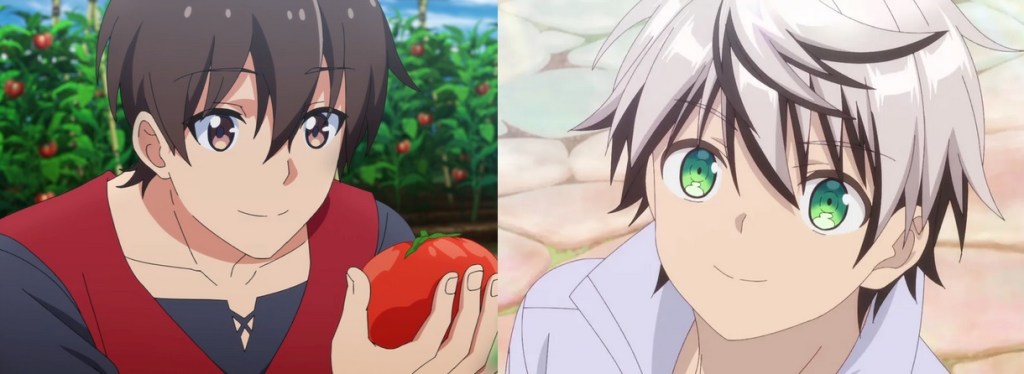



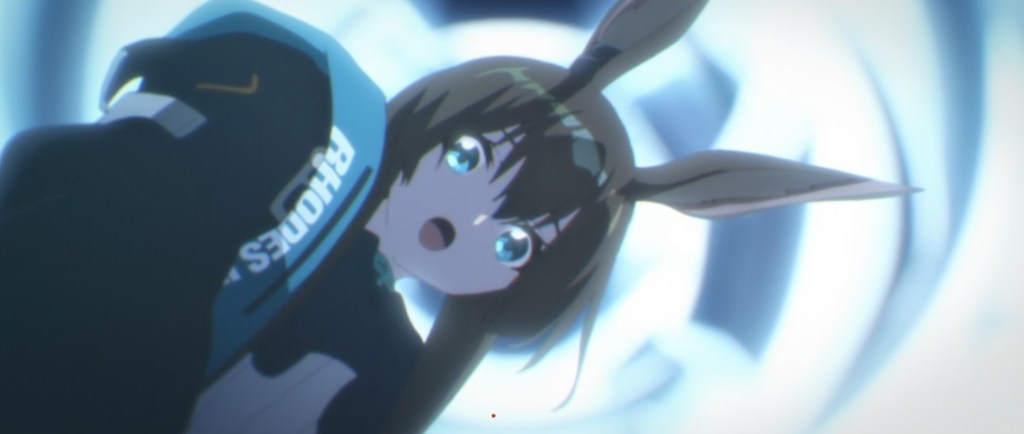
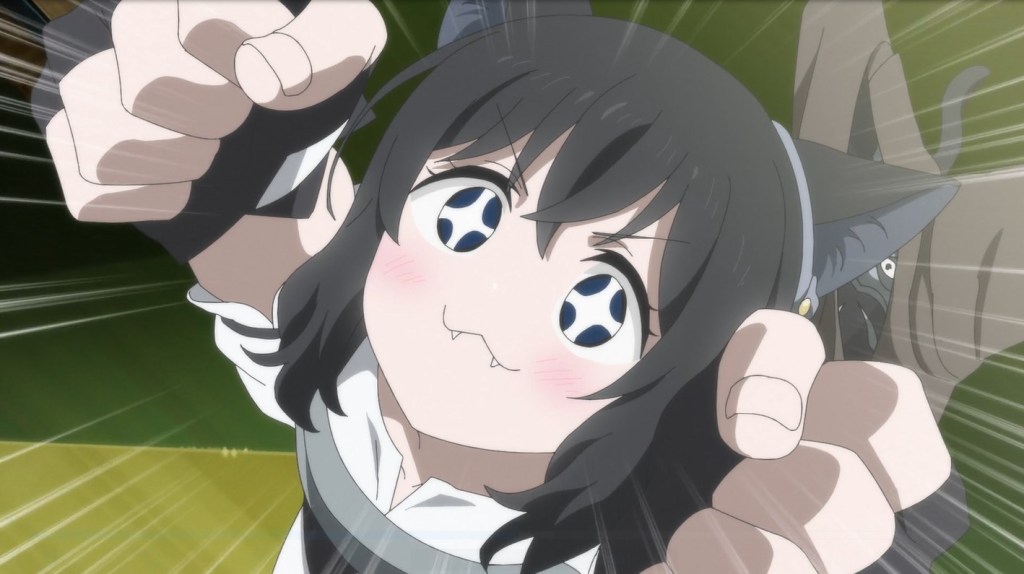
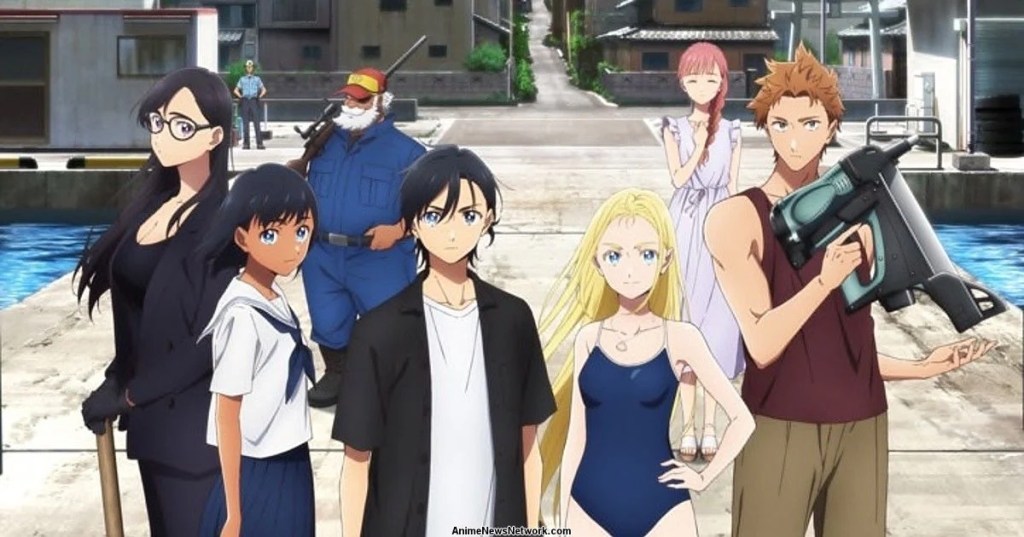
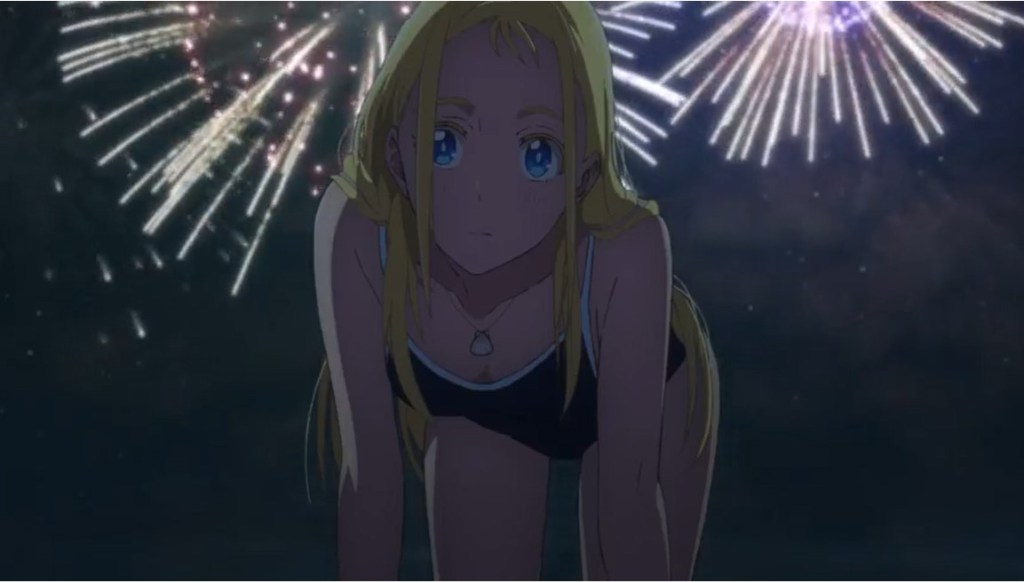


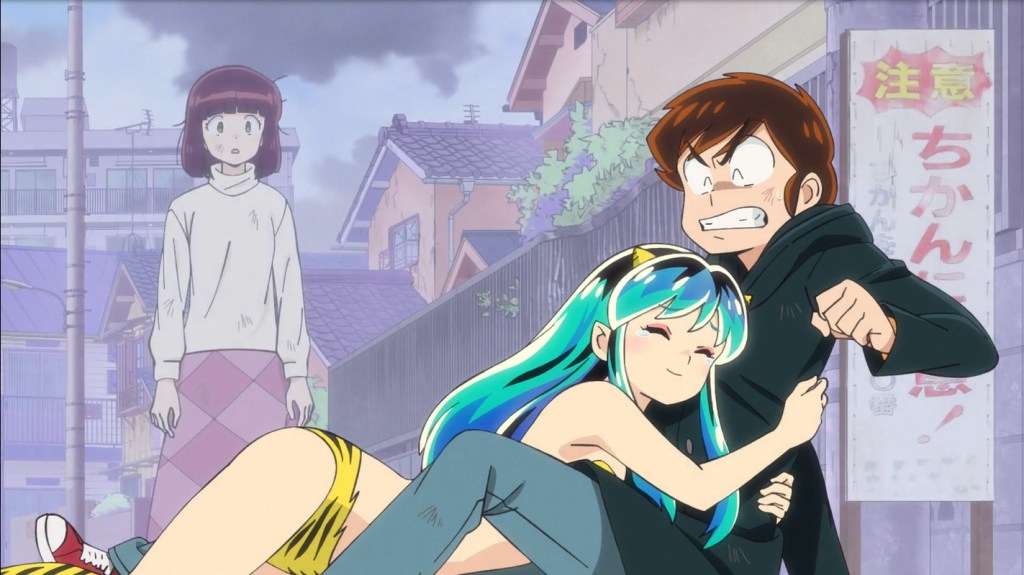

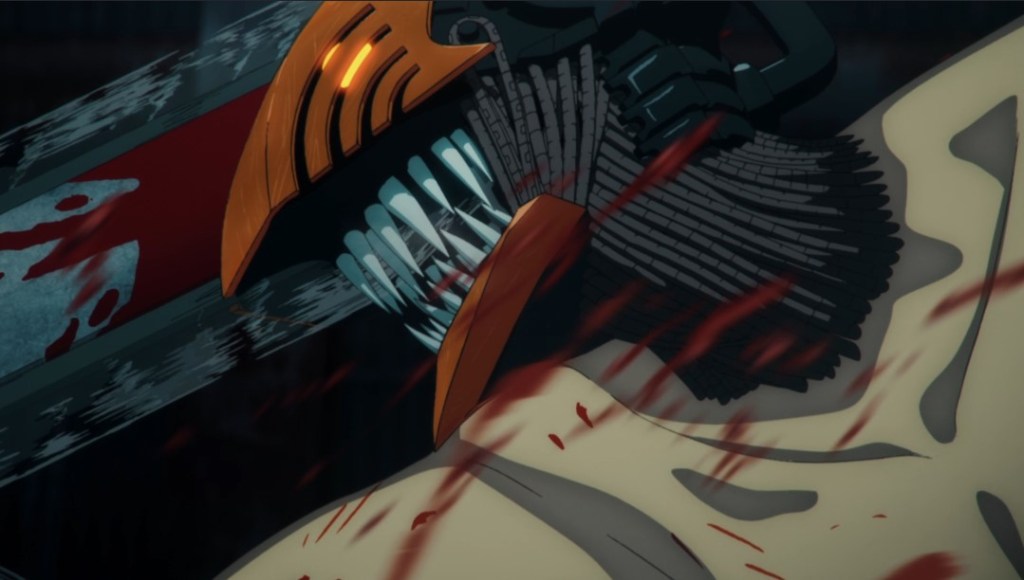
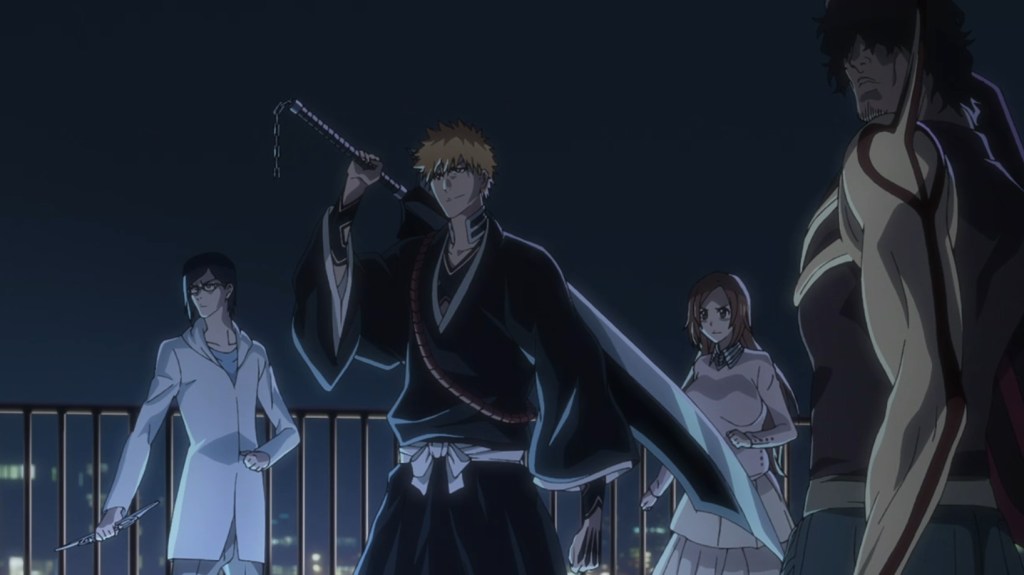


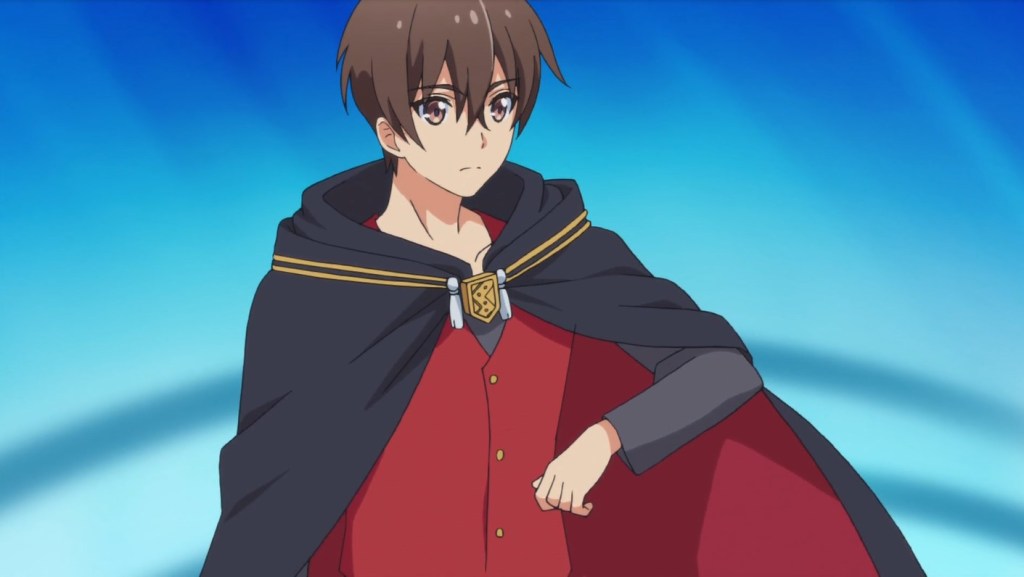

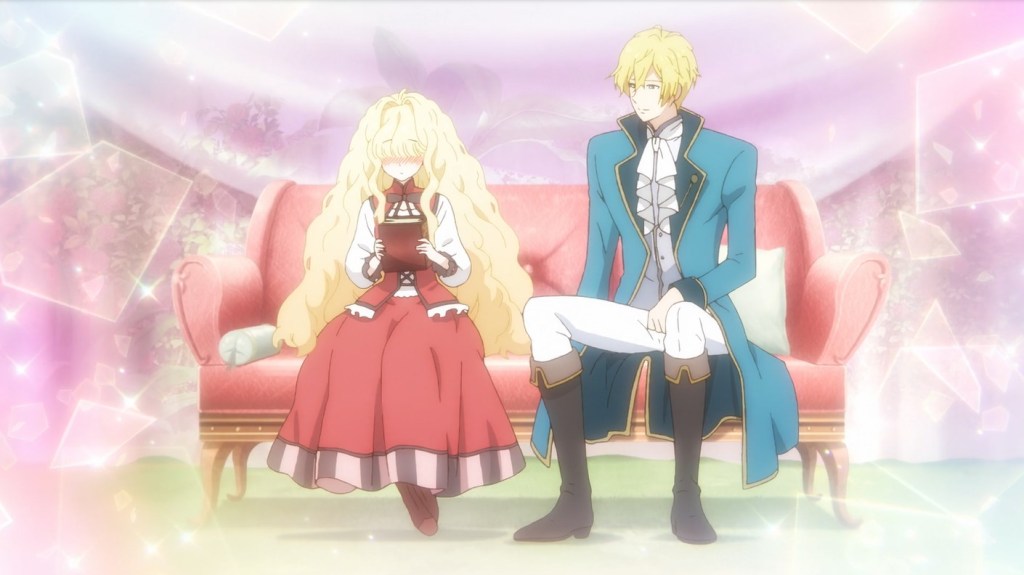
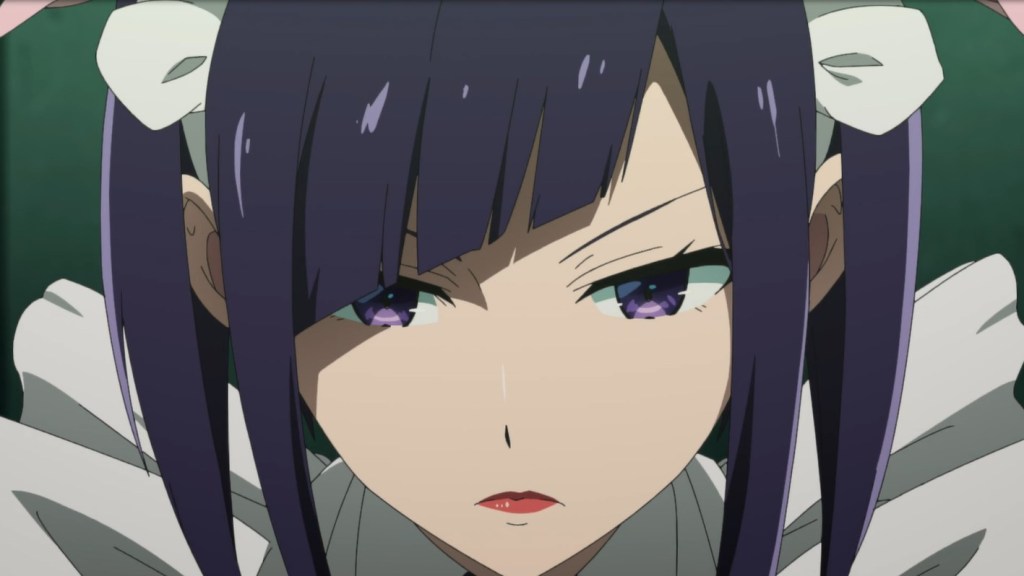


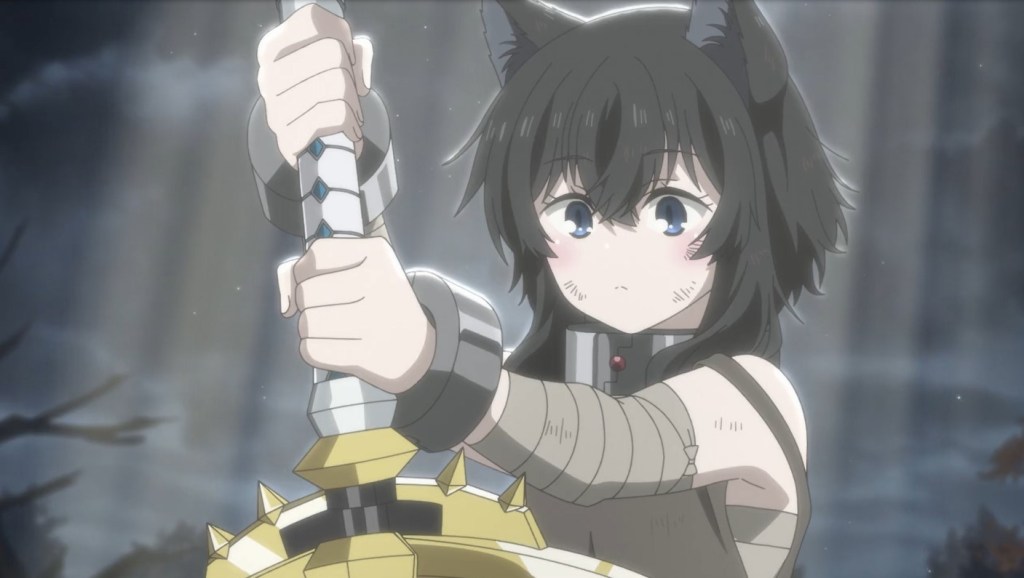




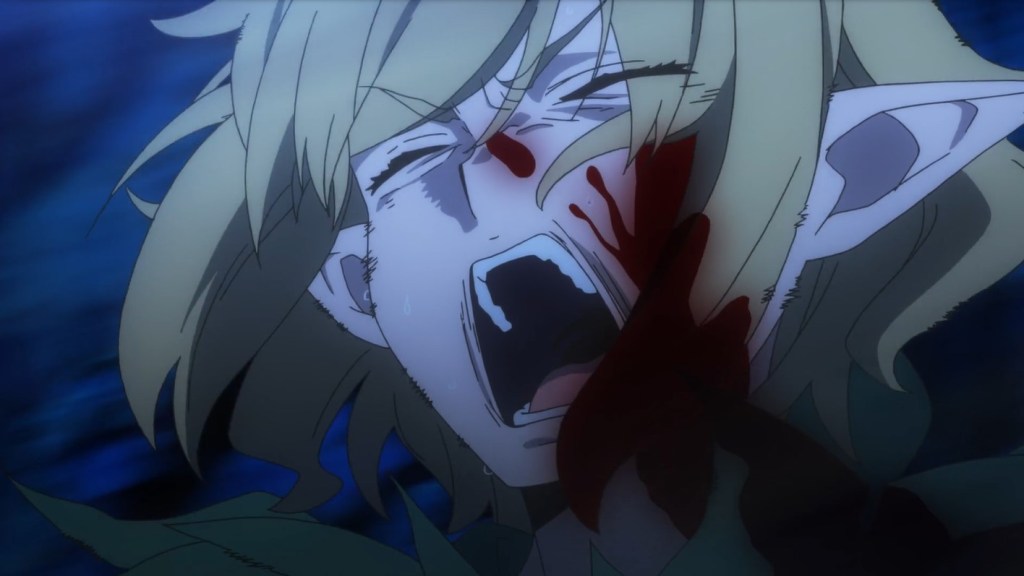
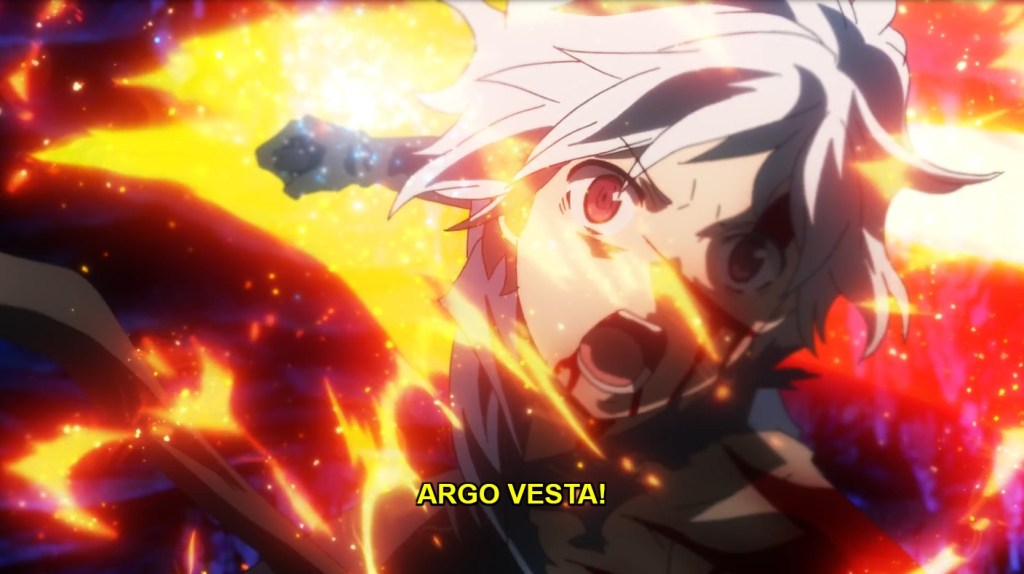
 USA Anime