After a week off, the second half of the series begins, shifting the adaptation into the territory of the second light novel and the 5th manga volume. This also marks a significant change in the setting: instead of being in the Rear/Inner Palace, Maomao is now working in the Outer Palace, directly under Jinshi. (Fear not about the Rear Palace being left behind, however; as the Next Episode preview hints, she’ll be back there for a visit shortly.) While that makes this effectively a set-up episode for the second half of the series, there’s still a lot going on here, and especially a lot of little hints about future directions.
One of those details is the little drinking session Jinshi has with the Emperor. It’s placed significantly earlier here than it was in the manga version, but I think the scene fits better at the beginning, as a precursor to everything, as it gives a better sense of where Jinshi is coming from and draws an interesting comparison/contrast between him and Maomao. That scene, and other snippets throughout the series to date, suggest that Jinshi feels like he’s only being appreciated for his looks when he’d rather be appreciated for his work, but he doesn’t have the option to disguise his natural beauty. Maomao does – except when others get in their heads to use her as a living dress-up doll, of course – and so she is getting appreciated for her efforts first and (when she reveals it) her looks second. Jinshi is clearly taken by her appearance when she dolls up, but that’s not what first drew him to her. That she’s able to do what he cannot could be a big part of his interest.
Of course, nothing that happens with Jinshi is without complications. He can’t keep servant help beyond the old woman who’s been seen wiping him down before because everyone falls for him, which makes Maomao the ideal attendant, even though Jinshi has higher aims for her. Naturally other court lady admirers are going to get jealous and catty, and naturally the prodigious skill and practical knowledge that Maomao has shown so far causes him to overestimate her ability to pass the test to become a court lady (essentially a court secretary); for all her practical knowledge, Maomao just doesn’t have the educational background for that.
But planted amongst all these scenes and a fair amount of humor are the seeds of this cour’s major plot lines. The tall, thin court lady is going to be a major player in one of them, and every detail shown about her so far is significant towards that end. The man wearing the monocle is also going to become a major player in another storyline, and the smoking pipe shown in the last scene will come into play either next episode or in episode 15, depending on the pacing. There may not have been more than hints of upcoming mysteries this episode, but expect plenty going forward.
Oh, and this episode introduces a new OP and ED. The OP gives a good sampling of the events that can be expected to come up in this cour (especially in closely-upcoming episodes), while the new, Jinshi-focused ED is a nice complement to the Maomao-focused first ED.
The second half is just getting started, so come back for more!
Welcome to my seasonal Guide! (For the debut schedule, see here.) I expect to cover every full-episode series that will be debuting this season and several of the sequels/returning series, including Tsukimichi -Moonlit Fantasy,Synduality: Noir, Mashle: Magic and Muscles, and Banished From The Heroes’ Party. (I may also cover the new Blue Exorcist installment, but we’ll see.) I will not be covering sequels for Classom of the Elite, Bottom-Tier Character Tomozaki, High Card, Kingdom, The Dangers in My Heart,Shaman King, and Fire Hunter, since I am not current on those franchises.
Debuts are listed below in oldest to newest order and may be added multiple times per day on busier days. Titles continuing from last season are not covered here.
NOTE: Turns out I’m not as caught up on Blue Exorcist as I thought, so I won’t be covering it here.
NOTE #2: The last expected entry for this Preview Guide is Meijin Gekki: 1874, on Sunday 1/14.
Meiji Gekken: 1874
Streams: Crunchyroll on Sundays
Rating: 4 (of 5)
This original series is a rarity among current anime titles: a true, dedicated historical drama. (Or, at the least, there’s no sign of a supernatural component within the first episode, though I did see one advertising picture which suggested that some may pop up later, a la My Happy Marriage.) It starts with the battle of Aizu Castle in 1868, whose eventual surrender was a key event in the Boshin War, before jumping forward to 1874, where a young former samurai named Shizuma, who was seen being a terror during the battle is now serving as a rickshaw runner as he looks for the little sister of a friend, who was to be his fiancee. He gets accused of involvement in an attempted assassination of a Japanese official due to one of his passengers, and in the process of clearing his name earns a recommendation into the police force from a police official.
That synopsis hardly covered everything going on in an episode so busy that it feels much longer than it is; in fact, the biggest knock against the episode is that it’s so busy that it’s hard to keep track of all of the threads. A turf war involving yakuza is involved, as are anti-Imperial plots, conniving foreign agents and their spies, and the circumstances of the fiancee Shizuma seeks. A relationship diagram may eventually be needed to keep track of who is connected to what, but the events shown here are deeply entrenched in actual history; some named officials were real people, and the assassination attempt of Tomomi Iwakura (who was most famous for leading a worldwide mission to study modern governments and economies with an eye to modernizing Japan) was an actual event. Technical merits aren’t bad and the detail work is impressive; this is a well-researched series. If your tastes include hard history, this one may be worth checking out.
Bang Brave Bang Bravern
Streams: Crunchyroll on Thursdays, beginning 1/18*
Rating: 4 (of 5)
Note: Crunchyroll will debut the first two episodes on 1/18. This review is based on an unofficial source.
We don’t get a truly bombastic mecha series even every year these days, which is why this original production is such a treat. Director Masami Obari has a long history with mecha titles (Detonator Orgun, Gravion, Secret Robot Wars OG: The Inspector) and it shows here in this gloriously over-the-top first episode.
The set-up is simple: Japanese and American forces are conducting joint training options (which, of course, include mecha) when apparent alien forces with overwhelming technical advantage attack. As things look their grimmest, a special, apparently sentient mecha arrives on the scene, invites one of the two featured mecha pilots inside it, then goes on a rampage against the invaders, all the while calling out dramatic attack names and playing theme music. (And we’re not just talking the OST; the pilot in question can hear it, too.)
The era where a mecha series can be a big breakout hit has passed, but in this one’s case, it isn’t for lack of effort. It features attempted camaraderie between an outgoing American pilot and a more reserved Japanese pilot, good-looking characters of both genders, and lots of visually appealing action scenes, including a suitable amount of tension when the chips are down. Most importantly, it has the necessary spirit and energy to succeed.
Bucchigiri?!
Stream: Crunchyroll on Saturdays
Rating: 3.5 (of 5)
I’ve never been a fan of semi-comedic series about brawling in a troubled high school setting, and so I probably won’t be following this original production, but I do have to acknowledge that this one is put together pretty darn well.
The story’s premise is basic: Arajin has transferred to a new high school that’s the lowest of the low, where gangs rule the scene and little real education happens. While getting intimidated by the gangsters, he bumps into an old friend who’s one of the local toughs and falls for a cute girl who turns out to be a gang leader’s sister who apparently likes to bait people into situations where her brother beats them up for getting to close to her. (Which, in retrospect, explains why she’s able to get away with looking so atypically cutesy in such a rough environment.) But then a genie shows up who’s connected to an old tradition of weaponless martial arts and makes a wish-based pact with Arajin at a crucial moment.
It’s all pretty silly, over-the-top stuff, but it’s delivered with a sharp, colorful visual flair, surprisingly good animation, and solid direction. The probably shouldn’t be a surprise, since it is directed and co-created by the director behind the similarly-impressive Sk8 the Infinity (as well as, interestingly, Free! and Banana Fish). It also has one of the most catchy EDs of the season, which is worth a watch even if you don’t bother with the episode. I could see this achieving a certain level popularity.
Snack Basue
Streams: Crunchyroll on Fridays
Rating: 2.5 (of 5)
In Japan, a “snack bar” is a kind of hostess club where female staff serve drinks to and flirt with male customers. While I didn’t have an opportunity to visit one in either of my trips to Japan, I have no doubt that the kind of inanity which goes on in them probably isn’t much different than what you’d find in a typical American bar. The operating premise of this comedy manga adaptation is that enough of those exchanges are humorous enough to make a vignette-based comedy series out of it. This first episode consists of two: one focusing on a businessman who has come to a snack bar for the first time (and thus provides an “in” for audiences who may be unfamiliar with the concept) and a second about a geeky guy who’s had no luck with the ladies but is still coming on hard to pretty junior hostess Akemi, while the would-be-motherly Basue watches and occasionally comments from the side.
Without a doubt, some of this is funny, which is why I’m giving this a mid-range rating. However, the presentation and style of the humor is definitely not aimed at the typical anime audiences, as the episode entirely lack anything visually dynamic. (The animation is limited, too.) That’s a barrier this series is just not going to be able to overcome in the States. Come in with low expectations and you might be entertained.
The Weakest Tamer Begins a Journey to Pick Up Trash
Streams: Crunchyroll on Fridays
Rating: 4 (of 5)
Wow, did this light novel adaptation come out of left field for me! I was certainly not expecting yet another story about an isekai main character taming slimes to look this good or have such a distinct emotional pull. While the episode’s hardly perfect, this one has at least some potential to be a true dark horse title for the season.
In this setting, a young girl flees her villages because she’s been proclaimed so useless that the village chief put a bounty on her head; she’s only got one Skill, and at the weakest possible rating. She’s determined to survive and strike out on her own, to the point of disguising herself as a boy and taking on a new name, and in the process meets a fragile little slime who’s as comparatively weak as she is. So of course the slime becomes her first successful tame.
As generic as that all sounds, the execution matters here. Visuals are sharp, detailed, and inviting, with unexpectedly strong animation backing them. The tale spun turns Ivy into a compelling character and invests serious effort into establishing the emotional connection she makes with the slime she calls Sora, but without getting overly schmaltzy. The gimmick with her talking to someone who’s presumed to be her memories from her past life may annoy some, but it didn’t bother me, and the musical support builds nicely throughout. The one legitimate knock is that Ivy takes a couple of minutes late in the episode to summarize information that can mostly be gleaned easily enough from implication and context, but even so this vastly exceed any expectations I had for this series. It’s worth checking out, even if isekai isn’t normally your thing.
The Witch and the Beast
Streams: Crunchyroll on Thursdays
Rating: 4 (of 5)
In the setting of this manga adaptation, a witch’s curse is one of the most powerful and intractable forms of magic. It can only be counteracted by the kiss of a true love, the witch changing her mind, or one other method that only works temporarily. A soft-spoken mage with a job to do (and a coffin on his back) and an apparent young woman with a bestial attitude and a score to settle have come to one particular city in search of the local witch, who’s regarded as a hero. But as the witch’s young helper learns the hard way, little is what it seems when witches are involved, and their grudges can run long and deep.
The title given for episode 2 in the Next Episode preview suggest that this is an in media res opening, but it still explains things well enough to allow viewers to understand what’s gong on and delivers on tone, character establishment, magic displays, and action. Long-time veteran VA Toshiyuki Morikawa is fantastic as the smooth-talking Ashaf, but the real winners here are the musical score and dramatic presentation. The delivery isn’t quite smooth enough to warrant a top-level grade; this one just hides its animation shortcuts better than most. Still, there’s plenty enough here to get enthused about, so this one will be a keeper.
Delusional Monthly Magazine
Streams: Crunchyroll on Thursdays
Rating: 2.5 (of 5)
A scientist who is researching a mysterious sunken continent that may or may not have existed (think Atlantis) has discovered an artifact from that continent and seeks to have a tabloid-like rag write about it since the regular scientific community won’t publish his work. But there may actually be a conspiracy keeping a lid on that investigation, and certainly some hoodlums are after the scientist. None of the mag’s staff may be normal, either; the dog seems a little too smart, the boy can heal, and the lackadaisical assistant editor both can sense that the scientist is cursed and winds up turning into a super-strong tiger man when he touches a relic.
Essentially, this original anime from studio OLM and the director of Raven of the Inner Palace seems to be a light, high-spirited “investigate weird stuff” kind of story, the kind that may even be meant to be accessible to younger viewers. The first episode establishes the premise and core cast well enough, but characters meant to be lovable come off more as annoying, the tone seems too cheery, and the animation effort is lackluster. Honestly I can’t see this one catching on with mainline anime fandom, and I see little here to merit watching more.
Cherry Magic! Thirty Years of Virginity Can Make You a Wizard?
Streams: Crunchyroll on Wednesday
Rating: 2.5 (of 5)
This is the anime version of a manga that has also been adapted into a live-action series, and after seeing the first episode, I have to wonder if that might be the preferable way to watch this. The gimmick here is that Adachi, who’s still a virgin at age 30, has suddenly gained the ability to read the minds of those he comes into physical contact with, and he accidentally finds out that male coworker Kurosawa has a thing for him. This starts making him incredibly self-conscious around Kurosawa, even as he starts to accept that Kurosawa is actually a good guy. The problem is that Adachi really isn’t ready for that kind of relationship, no matter what the gender is of the prospective partner.
And I will give the story credit for emphasizing that particular point: Adachi’s discomfort has everything to do with not wanting to take advantage of someone he knows like him and little to nothing to do with Kurosawa being a guy. Make either of these characters a woman, but keep the personalities essentially intact, and the play-out wouldn’t be much different. That said, there’s still a creep factor here that’s hard to overlook. I can see this developing into something stronger – and I’ve been assured by those familiar with the manga that this is the case – but I had a tough time sitting through this episode so I won’t be back.
Metallic Rouge
Streams: Crunchyroll on Wednesdays
Rating: 4 (of 5)
This original anime is effectively a 25th anniversary title for Studio Bones, and it is getting the deluxe treatment that might be expected from a studio with such a storied reputation. While not a mind-blowing spectacle, it still features some of the best production values and most impressive action sequences to date this season, all while firmly-establishing is tech noir ambiance and providing several potential plot hooks.
The story is hardly an original concept so far, borrowing heavily from Armitage III in setting and plot elements, Bubblegum Crisis in aesthetic style, and Blade Runner in many ways. In a future Mars where humans live alongside advanced androids called Neans, friction exists between the two. Rouge, a female Nean who goes by the name Metal Rouge in her armored form, is hunting down a special group of Nean called the Immortal Nine for as-yet-unrevealed reasons. She gets help in this from a human investigator named Naomi, and there’s also a drug(?) called Nectar involved, which is essential for the proper functioning of Neans. When a singer who’s taken Rouge in turns out to be one of the Immortal Nine trying to exit the organization and become just an ordinary singer, a battle erupts. Oh, and there’s a joker-like figure around.
The first episode doesn’t do the best job of laying out its circumstances, which is why I can’t rate this one higher. However, it is clearly a more adult-leaning title with a lot of promise and an awesome insert song (the one used in the series’ fantastic music video trailer). Definitely a keeper!
Sengoku Youko
Streams: Crunchyroll on Wednesdays
Rating: 3.5 (of 5)
A lot is apparently expected of this anime adaptation, as it has an unusual three-cour commitment up front and was among the most-anticipated new shows of the season. The first episode shows that the attention is not without reason. While it is hardly the sharpest-looking series out there, it still delivers well enough on its action, characters, and general spirit to be considered a success.
Part of the key to that is Tama, a fox spirit youko who is referred to as “elder sister” but looks like a kid and has a very child-like notion about justice mixed with some practical arguments that would be more expected from a much older individual. She’s clearly the heart of this Sengoku-era adventure, while her stepbrother, the misanthropic Jinka, is the enforcer. Shinusuke, a young swordsman seeking to make a name for himself, runs across them while investigating bandits and gets drawn to their supernatural supernatural conflicts. This involves multiple battle scenes, a transformation scene, and some entertaining exchanges amongst the three leads/ None of this is fresh or inspired, but the overall execution works so far.
Doctor Elise: The Royal Lady with the Lamp
Streams: Crunchyroll on Wednesdays
Rating: 3 (of 5)
This novel adaptation puts a somewhat unusual extra spin on the standard isekai concept: Elise was an Empress in her first life who got burned at the stake for as-yet-unspecified transgressions, which included the rest of her family being killed, too. In her new life in modern Japan, she diligently works to become an acclaimed surgeon in an effort to atone for the transgressions of her previous life, only to (apparently) die from injuries suffered in a plane crash. She then finds herself back in her original life, several years before her death. Or is this new opportunity just a fever dream as she lays comatose in the modern world?
While standard storytelling tactics suggests that this is a real second reincarnation, I’m not completing discounting that second possibility yet, as the situation seems too convenient. Regardless, this episode is just set-up for the overall plot thrust – i.e., that she will continue to use her medical knowledge in her redo of her original life – which will presumably get more fleshed out next episode, so this one is in a holding pattern for now. Despite the intriguing ideas afoot here, I can’t rate this one better because the medical drama aspect is too cheesy and some aspects of the way the plane scenes were animated felt too unnatural. Still, I’m not ruling out the possibility that this one could amount to something.
Villainess Level 99
Streams: Crunchyroll on Tuesdays
Rating: 3.5 (of 5)
I’ve always appreciated the rarely-used gimmick of starting a series with a complete fake-out, and this light novel adaptation does that more thoroughly than any title in years. Of course, the series’ name gives away the real truth of what the series is about. but here they even go as far as using a full opener indicating that the first half of the episode is what the series is actually about: a stereotypical otome game scenario about a commoner attending an elite academy on scholarship who collects a trio of hot guys around her on her path to eventually beating the Demon Lord. The actual protagonist, though, is an initial background character who’s secretly the story’s hidden ultimate villain. But this time around, she’s an isekai’d reincarnate who’s familiar with this game and wants no part in being the villain. Her efforts to stay inconspicuous and avoid the central quartet go up in flames, however, when an entrance level test reveal that years of level-grinding have unwittingly made her stupefyingly strong.
In other words, this is a cross between a standard isekai villainess scenario and I’ve Been Killing Slimes for 300 Years and Maxed Out My Level. What makes this both work and stand out a little is Yumiella’s utterly deadpan approach, one reminiscent of Mash in Mashle: Magic and Muscles, and the irony that the reveal of her high level is definitely going to interfere with the game’s intended path, just not at all in the way she intended. That combination gives the series enough of a spark to overcome the series’ weak use of CG and warrant watching more.
Synduality: Noir episode 13
Streams: Mondays on Hulu
Rating: 3.5 (of 5)
This series went into its seasonal break with the Silver Storm having been defeated but a passel of big mysteries floating around. The biggest and most obvious was, of course, that light-skinned, light-haired Noir had turned into a dark-skinned, dark-haired counterpart who called herself Mystere and referred to Noir as a “dud” and “safe mode.” Kanata taking Mystere around to various locations familiar to Noir does turn up a few interesting details, the most important of which is that Mystere was the Magus for Dr. Pascale, a name that has come up a couple of times before. By the end of the episode – and after briefly turning back into Noir – Mystere is suddenly enthused about going after Histoire.
Though I wasn’t impressed by this series at first, it turned into a fairly solid mecha action-drama series by the end of its first half. While the action components aren’t present in this episode, the episode still solidifies the already-firm foundation it had for its character development and more dramatic elements. I look forward to seeing more the hooks planted towards the end of the first season drawn in.
Hokkaido Gals are Super-Adorable!
Streams: Crunchyroll on Mondays
Rating: 3 (of 5)
This manga adaptation is defined by a central irony: a high school boy moves from Tokyo (the busiest and most worldly part of Japan) to the comparative backwater of Hokkaido, only to discover that his social life is is becoming more intense rather than more relaxed. That’s because curvaceous local gal-type Minami has quickly taken an interest in (and possibly liking to?) him. The result is a fairly standard “reserved boy is overwhelmed by the attention of a hot girl” scenario, with the only real variation being the setting. According to the OP and ED, at least two other girls will eventually become involved, too.
The whole scenario here hinges in part on Tsubasa not being able to get a read on Minami’s motivations. Is she just interested in him because he’s just something new in a place where there isn’t a lot to do, or does she genuinely like him? How much of what she’s doing is being innocently unaware of the effect she can have on young men vs. actually flirting and teasing? We’re seeing this entirely from Tsubasa’s view, so the only hint is that she did blush a bit when Tsubasa complimented her appearance. As run-of-the-mill as this all feels, the series does find some genuine humor in all of this, and Minami is hardly unlikable. I can’t see this series going anywhere big, but there’s just enough appeal here that it might be worth watching more.
The Foolish Angel Dances with the Devil
Streams: Crunchyroll on Mondays
Rating: 3 (of 5)
A demon sent from Hell to find someone to help rally the troops finds himself lovestruck at the sight of a girl who turns out to be an angel with a plan of her own – and some part of that plan involves turning the demon into a servant and having him help her with some task in exchange for sparing his life. This is the operating premise for this manga adaptation, and while the title may suggest that the devil (in this case Masatora) has the upper hand in their new relationship, events in the first episode strongly suggest otherwise. Up to the point where she reveals her true nature, he’s the one being overwhelmed by her cutesy charm, and even though he breaks her mystical chains once, she’s the one who utterly dominate their brief fight. That makes me curious about how this situation might turn around.
That and a decently convincing character design for the angel Lily are the two main things this debut has going for it and the reasons why I may watch another episode. This would normally be my type of romantic scenario, but the episode just spends too long setting itself up; what was done here could probably be accomplished in half an episode instead without losing much. I also find it baffling that someone who would be sent on a mission like that couldn’t better pick up on the unnatural allure of an angel. But hey, if the rest of the series plays out in entertaining fashion then I can overlook flaws like that. We’ll see what the next episode or two offers before I decide on this one.
‘Tis Time for “Torture,” Princess
Streams: Crunchyroll on Mondays
Rating: 2 (of 5)
The awards for both the Most Intriguingly Named and Most Misleadingly Named titles of the season go to this manga adaptation, which is about a warrior princess who has been captured and imprisoned (along with her sentient sword) by the Demon Army. The defining gag here is that the female torturer, unsubtly named Torture Tortura, is very good at what she does. She knows that the most effective torture has to be tailored to the subject, and in the princess’s case that means not physical abuse but gastronomic teasing. In other words, she tempts the princess with delectable foods in order to get her to spill secrets, creating a weird sort of foodie experience.
Some creative artistic effort aside, this approach has two crippling problems: it gets redundant all too quickly and some of the foodie gags are all too Japanese-specific. Using toast to sop up leftover gravy I can completely understand, but I’ve had takoyaki in Japan and it isn’t all that. The thing about late-night ramen and the side of rice left me scratching my head, too. And that’s without considering purely logical points, like why the sword is in the same cell with the princess. If she could slay that giant cyclops with that sword, she could certainly break out of a cell with it. Granted, someone (or in this case, something) has to be the straight man here, but even by the level of absurdity that this series is aiming for, that’s stretching it. The final pre-credit scene promises some new characters getting involved, but even with that and the joke in the epilogue I question the sustainability of the concept, too. While can appreciate what it’s trying to do, it’s a big miss for me.
Tsukimichi -Moonlit Fantasy- s2
Streams: Crunchyroll on Mondays
Rating: 3.5 (of 5)
Despite a very formulaic structure on paper (and in many was arguably derivative of That Time I Got Reincarnated as a Slime), the first season of this 2021 isekai power fantasy because of a combination of entertaining supporting characters, an exuberant spirit, and a few minor formula twists here and there. But it also left at least two major plot points hanging at the end – specifically, a gradually converging path towards Makoto meeting the other heros and his quest to learn more about the world. Dealing with both of those seems to be on tap as this new season begins. Makoto resumes his journey to the Academy, along the way winding up helping a village trouble by marauding bandits. Meanwhile, back in the demiplane, Rio is making some epically bad cooking efforts and Tomoe is seeing to the further training of new recruits.
Considering the chaos which typically reigned in the first season, this is a relatively mild start to the second. Even so, it still recaptures enough of the spirit of the first season to continue to be entertaining, and all of its little world-building quirks are still in play, and that’s all that matters. If you liked the first season, there’s no reason to have doubts about this one.
Pon no Michi
Streams: Nowhere legal on Fridays
Rating: 2.5 (of 5)
This original series, from the director of The Vexations of a Shut-In Vampire Princess, has, curiously, not been picked up for U.S. streaming as of this writing despite being a full-length episode and being neither a kids’ show nor a racy one. (All of the girls introduced so far have very distinct figures, but the first episode has nothing I’d count as fan service.) It features high school student Nashiko, who has to find a new place to hang out after she gets kicked out of her house for being too boisterous. Her father allows she and her friends to use a closed-down, standalone mahjong parlor which was apparently just being used for storage, provided that they clean it up. The girls decided to use it as their new hangout – and oh, yes, there’s a sparrow who professes to be a “mahjong spirit” whom only Nashiko can hear talk.
The first episode gives the impression that this will be a casual series where the girls can get together and be goofy, while also delving into how mahjong is played. It uses several visual parodies, mostly I believe of the gambling-focused franchise Kaiji, and has an enthusiastic fourth girl who shows up at the end, eager to play. (A fifth girl is shown in both the OP and ED but hasn’t appeared yet.) This is definitely not one of the prettier-looking series of the season, and that’s a big mark against this one. Its character design aesthetic also leans more towards sexy than cute, but, again, with no eye to fan service so far. Overall, I don’t see this one having a lot of appeal if you’re not into its featured game, but it does, at least, have energy in its facor.
Mr. Villain’s Day Off
Streams: Crunchyroll on Sundays
Rating: 2.5 (of 5)
In recent years, there have been a few humorous send-ups of super sentai team tropes, including excellent ones like Love After World Domination and good ones like Miss Kuroitsu From the Monster Development Department. Based on the first episode, this one is the least of that lot. Its particular take is to focus on one of the leading villains and how he enjoys his days off from trying to wipe out humanity. He’s become addicted to panda cuteness, so he’ll make sure to allow them to breed more freely once humanity is gone, and he has strict standards about not interacting with coworkers or fighting on off days, so he is trying to establish a proper work/rest mental attitude.
Some of this is definitely funny, but there are two problems here which prevent a higher rating. Once is the pacing; rather than more rapid-fire jokes, these are drawn our, making me wonder if this concept might have worked better in a short format. The other is that the series cannot sustain on Mr. Villain (and the hapless Red Ranger) alone. It’s going to need to quickly expand its cast. Fortunately the latter problem, at least, is easily surmountable, as other characters are shown in the OP. Still, this one isn’t a keeper unless its second episode does much better.
7th Time Loop: The Villainess Enjoys a Carefree Life Married to Her Worst Enemy
Streams: Crunchyroll on Sundays
Rating: 3 (of 5)
Few series more completely or succinctly describe their gimmick and operating premise with their title than this one does. The only real twist in this first episode is how Rishe, a young woman who had her engagement to the crown prince of her nation annulled by that prince, winds up marrying the man who was either directly or indirectly responsible for her death five years later (in six previous runs through ages 15 to 20), not that it happens. The one other potentially interesting factor here is how this might change her future prospects, as it’s entirely possible that having a good woman at his side might have kept Arnold Hein, the crown prince of an empire, from becoming the warmonger which got Rishe killed the last few times.
While the end result is easily anticipated, the path there has at least some merits. A fortuitous encounter in Rishe’s first go-through showed her that she had broader options in life, and in each new attempt she enthusiastically pursued a new path, rather than just try to repeat and tweak previous events. This accumulation of knowledge and skills leaves her stronger each time, to the point that she can catch the dour future Emperor’s eye; he seems the type more impressed by ability than beauty. That makes Rishe a suitably strong character for this kind of situation. The reason I’m not rating this higher, though, is that something about the art style – particularly in the way eyes are drawn – does not set right with me, and that’s a potentially major barrier for me. It may bother other viewers less, and so should be a more promising candidate for others.
Banished from the Hero’s Party s2
Streams: Crunchyroll on Sundays
Rating: 3.5 (of 5)
Banished was one of 2021’s most pleasant surprises, and Red and Rit were my pick for Duo or Couple of the Year for 2021, so this one’s return after a couple of years off is quite welcome indeed, especially since the last episode of season 1 did leave a couple of plot points hanging. I recommend reviewing that last episode before watching this one, as some of what’s going on here directly spins off of things going on there. Certainly not the least of that is the reappearance of the elf druid Yarandrala, who was seen in flashbacks in the first season. However, the reappearance of Theodora (now masquerading as the masked knight Esta) is just as significant, especially since she’s in the role of guiding Van of Flamberge, a prince of a fallen kingdom who’s the new Hero. But after seeing how Ruti became consumed with that role, can she successfully guide Van away from that trouble, especially he seems to be much more of a religious fanatic?
In other words, the lingering sense that the god Demis may not have the best intentions hasn’t gone away, but the more immediate concern for the rest of the returning cast is a trade mission to the gem giants, where Red intends to barter for a proper stone for Rit’s wedding ring. It’s mostly pleasant in the same way that much of the first season was, although there are starting to be hints of impending complications beyond just Yarandrala’s reappearance. All of that contributes to a satisfying start to the season. The one weird thing, though, is how the OP focuses almost exclusively on Ruti, and between that and the regular episode the camera seems more intent on ogling her (including some undefined nudity in the OP). This isn’t a problem for me, as Ruti is more my preferred physical type than Red is, but it seems strange to focus on her so much when the first episode isn’t. Still, that’s more a curiosity at this point than a problem.
Mashle: Magic and Muscles s2 (ep 13)
Streams: Crunchyroll on Saturdays
Rating: 3 (of 5)
Mash Burnedead is back to deal with the fallout from the first season’s end in his own unique way. This time, though, the stakes have escalated, for rumor is spreading about his lack of ability to use magic. And while some rules sticklers want to see him executed for that, others have taken interest in him for what he can do – for better or worse.
Really, the first episode back is just par for the course for the series, with Mash doing magic-like feats through sheer brawn, strange new characters popping up, and previous associates just hanging out. It still has a couple of standard sputter-worthy moments, but overall, the attempts at humor didn’t feel quite as sharp as was commonly-seen in the first season. Overall, it’s not a bad return, but not an especially exciting one, either.
Solo Leveling
Streams: Crunchyroll on Saturdays
Rating: 2.5 (of 5)
This one is based on a manhwa that’s supposedly one of the hottest properties in fandom right now, so this is one of the season’s biggest debuts. After seeing the first episode, I’m not sure why. While its technical merits are pretty decent, it’s not a spectacle like Chainsaw Man‘s debut was, nor does it have the gorgeous visuals and compelling drama of the Demon Slayer debut. There’s nothing special about the premise, either; in fact, it’s very derivative of other works about magically-empowered individuals fighting off threats from another world, with a bit of RPG-styled dungeon crawling thrown in. Sure, it’s on the graphic side, but other titles which have debuted this season have been at least this graphic. Protagonist Jinwoo (Crunchyroll is apparently keeping the original Korean names) has not shown anything special by the end of the episode, either; he’s just an ordinary bottomfeeder trying to scrape by for his family, with his only redeeming quality being that a mildly pretty healer seems to like him. Whatever gimmick is supposed to turn him into something special is beyond the scope of this episode.
In fact, this is one series that probably should have had a double-length debut, as it doesn’t feel like we’ve gotten anywhere near the defining premise by the end of the first episode. I’ll watch another episode or two to see how the actual premise plays out and see if that changes my mind, but so far I’m missing the hype boat here.
A Sign of Affection
Streams: Crunchyroll on Saturdays
Rating: 4.5 (of 5)
This manga adaptation is not my kind of series, so I probably won’t end up following it, but damned if it didn’t still impressed me enough that I have to give it a strong recommendation. I could even see this one being a bit emotional for some viewers.
In it, Yuki is a typical college student, except for the fact that she’s deaf. One day on a train she’s helped out by Itsuomi, a tall, handsome college student who’s a club mate of her best friend, and is startled into her first budding crush when he doesn’t seem thrown off in the least by her impairment. Rin’s interested in Itsuomi’s cousins, so the two support each other in getting the contact info for their interests, an exercise which has the potential to expand Yuki’s world greatly once she gets over her anxieties.
That plot may not sound like much, but the execution really matters here, and director Yuta Murano (Kakushigoto) fully delivers on that, including using three animators assigned just to getting the sign language parts right (though most communication is done through phones). All of the character designs are finely-detailed and gorgeously-rendered, but watching Yuki’s expressiveness is a particular delight; it’s not hard to understand why Itsuomi (and maybe others, too) might become enchanted with her, as there’s something positively magical about her expression of joy when Itsuomi messages to her, “let me into your world.” Great feels, a likable heroine, and effective use of light humor all add up to an impactful start.
The Strongest Tank’s Labyrinth Raids
Streams: Crunchyroll on Saturdays
Rating: 2.5 (of 5)
Fantasy stories about characters who have been kicked out of their party or organization because their talents and/or abilities were misunderstood and underappreciated have become practically their own subgenre in recent years; one of the most prominent ones, Banished From The Heroes’ Party, is even returning later this season. This appears to be another of that ilk, with defensive specialist Rud being kicked from the Hero’s party because his defensive abilities seem inefficient. The only minor twist here is that only the Hero is being an ass about it; the rest of his party that has adventured with Rud is much more sympathetic, and at least one even seems to be romantically interested in him. Naturally, Rud finds his way temporarily with another young party before encountering a girl (an illegally-created homunculus) who reassures him that his skills make him even more valuable to his party than he realized. Oh, and he’s a siscon with a young sister who’s incurable by normal means.
This one doesn’t seem like it’s going to be a fan service title, which is good, because both the girl Luna and many of the others shown in the OP look very young. It’s also a non-isekai fantasy which still operates on game mechanics (as most series of these types do) and doesn’t offer anything interesting in the monster or fight design categories. Rud is pleasingly good-natured, Luna is suitably cute (if also utterly generic in design), and the business about homunculi (which are used as slave labor in this setting) seems like a potentially interesting angle, but I just don’t see much here to hold interest.
Tales of Wedding Rings
Streams: Crunchyroll on Saturdays
Rating: 3 (of 5)
I hadn’t looked at any advertisements for this manga adaptation, so based on the title I was expecting a more pure romantic series, maybe even an anthology. Nope; the first episode (and especially its OP and sexy ED) make it clear that this is going to be a fan service-laden harem isekai series. Protagonist Satou has a human princess bound to him with a wedding ring by the end of the first episode, and it looks like four other hotties from diverse races will eventually join him, the Ring King, too.
This all comes about because the blonde foreigner that Satou has been friends with for a decade, Himeno, isn’t a princess just in name (Hime = princess) and attitude; she actually is a princess from another world who had been hiding out in modern Japan for her own protection. Satou was at the point of confessing to her when she left to return to her world to get married, so he followed her, and in a moment of crisis, got a kiss, a ring, a wife, a title, and a lot of responsibility to fight demonic creatures out of it. But if it’s all for Hime and what’s important to her. . .
Honestly, this title has some factors stacked against it. Its animation is less than stellar, its male character designers are basic and unappealing, and it is heavy on stereotypical story elements. However, what save the opener is that Satou, despite being anxious about the situation, does man up when he needs to. His feelings about Hime clearly run deeper than just her cleavage (which is saying something!), and he responds when he sees desperate soldiers all looking to him for what he can do – which is, essentially, turn any weapon he handles into a magical one capable of destroying demons in one hit. I’m not expecting greatness out of this one, but between that and the fan service (including just a touch of nudity), it actually feels watchable.
The Demon Prince of Momochi House
Streams: Crunchyroll on Friday
Rating: 2.5 (of 5)
The set-up is in many ways very reminiscent of Kamisama Kiss: a teen girl on her own, with nowhere else to go, ends up at an isolated structure that she can claim as her own and encounters there supernatural bishonen, including one with animal ears. Despite initial attempts to push her away, and some element of personal danger, she ends up living there with said bishonen. And she may well have some powers of her own – though, curiously, none of the bishonen comment on that despite one clearly having a run-in with it. That’s about where the similarities end, though, because one of the bishonen is the spiritual contractor, not the MC herself.
This is definitely playing to the same audience that went gaga over KamisamaKiss, though, so if you are familiar enough with that title to have a reaction to it, then you’ll probably have a similar reaction here. Certain aspects of it do look good – especially the mulicolored robe that Aoi wears – and the character designs are pleasing enough, but nothing about the set-up stands out, and Aoi is, frankly, too nice in his normal form. I just don’t see this one having a very broad appeal.
The Wrong Way to Use Healing Magic
Streams: Crunchyroll on Fridays
Rating: 4 (of 5)
Honestly, I’m shocked that I am rating this light novel adaptation this high. It certainly isn’t going to be one of the better-looking series this season, and for the first few minutes it’s mostly as bland and generic a “random guy gets caught up in an isekai summoning not intended for him” scenario as can be imagined, with Ken Usato being the ordinary guy beside school stand-outs like Class President Suzune Inukami and VP Kazuki Ryusen, who were the “accomplished people” targeted by the summoning. Then, after they’re summoned to the throne room of the fantasy world and go through the standard “defeat the Demon King” spiel, the screws gradually start popping out. That’s when the debut starts to show real promise as a fun little jaunt.
For starters, the Class President isn’t the expected straight person here. She’s actually as isekai-crazed as any chunibyou geek, and the expressions of glee she shows off (and Usato’s reactions to them) seem so against type that they’re fun to watch. The reaction of everyone to learning that Usato has the very rare healing magic is also what you’d more expect from a pure comedy show, as is Rose and her Recovery Team minions. In other words, this seems more like more a comedy-laced romp than a pure action-oriented isekai, and the series is better for it. I’m getting a good vibe off of this one, and will certainly be watching at least a bit more of it.
The Undead Unwanted Adventurer
Streams: Crunchyroll on Fridays
Rating: 3.5 (of 5)
The title on this light novel adaptation is very straightforward about what the series is: an average-ability adventurer gets in over his head, dies, and discovers that he’s still around as a sentient undead. Naturally, this creates some serious complications for MC Rentt, not the least of which is that he can’t walk back into town as a skeleton. Ironically, though, this may actually be his ticket to getting stronger after being stalled at a low level for many years, because undead, like other monsters, can evolve into stronger forms. He also has a sexy sage friend who might find his predicament very interesting indeed, since monster evolution is one of her fields of study. But first he has to evolve into a ghoul and figure out how to talk as an undead.
This one feels like it might have some promise, as it doesn’t hand-wave practical considerations like whether or not Rentt can even talk in his undead forms. Some hooks are also built in to provide reason to make connections to various female characters, leading to the potentially amusing irony that he may wind up doing better with the ladies as an undead than he did while alive. There’s also the mystery of why he’s fully sentient in his state. Unlike predecessor Skeleton Knight in Another World, this one isn’t an isekai, and it seems to be playing things straight rather than humorously so far, but the animation looks pretty good. Not expecting a lot out of this one, but it’s not trash, either.
Sasaki and Peeps
Streams: Crunchyroll on Fridays
Rating: 2.5 (of 5)
A lot is going on in the first episode of this light novel adaptation, which may be why it has a double-length debut. In fact, I’d even say that too much is going on here, as the series is distinctly trying to meld a “freely travel between the two worlds” isekai with a modern-world supernatural investigations story. Eventually, the two aspects are going to clash. But perhaps that’s the point
The titular Sasaki is a 39-year-old single guy who’s dependable but only satisfied with his job because he knows it could be worse. He’s got a thing for cute animals, so a pet store visit lead to him getting a pet bird, who turns out to be a reincarnated wizard from another world. Turns out Sasaki has an affinity for the magic “Peeps” teaches him, and with Peeps’ help he makes money on the side by jaunting over to the wizard’s original world. Then he discovers that people with magic-like psychic powers do exist in his world and they’re government-related, and he’s mistaken for one and gets pulled into that line of work. There’s also an over-enthusiastic female would-be partner in the psychic investigations, a possibly-scheming new boss, and a teenager neighbor girl who might be interested in him, too. What’s a mild-mannered guy like Sasaki to do?
I will give the series credit for throwing out a ton of potential hooks, including the neighbor girl having a less-than-stellar family situation, but again, it feel like it’s trying to do too much and not being much more than bland at any of them. Very average technical merits are also a negative, but seeing a series like this focus on an adult character is gratifying. I don’t feel like this one’s a keeper, but I may give it another episode or two.
My Instant Death Ability is Overpowered
Streams: HIDIVE on Thursdays
Rating: 1 (of 5)
Based on the title, I wasn’t expecting much from this light novel adaptation, but I am still shocked at how poorly this debut under-performs even my low expectations.
This is what I call a “spirited away” style isekai, where a bus on a field trip gets transported to another world by seemingly-young woman who’s looking for new “sages,” so she casually kills the teacher and driver for trying to interrupt her and gives most of the class video game-like displays and powers and a task to perform. The rest of the class callously leaves the four who didn’t get powers behind as bait for a dragon, but hey, one of those (who slept through the whole thing) seems to already have an instant-death ability, and he’s not shy about using it, except on one of the girls left behind with him because she’s got nice boobs. Oh, and a trio of other students have previously been isekai’d to this world, but they’re just complete asses who exist only so the MC can show off his power on unsympathetic targets. A slave collar and planned necrophilia are also involved, and somehow at least some of this is supposed to be funny, too.
I’d call this first episode tone-deaf, but even that isn’t adequate to describe how badly this comes together. The MC comes off as a complete sociopath, but the classmates who all just blandly accept leaving a few of their own as dragon bait aren’t any better, and the time frames involved make little sense. So do the motives and behavior of this “sage” character, whom the series is trying to pass off as a villain who comes across as a nice person. Add in mediocre technical merits and a complete inability to convey a desired tone and you have one of the worst debut episodes I’ve seen in quite a while.
Chained Soldier
Streams: HIDIVE on Thursdays
Rating: 3 (of 5)
When HIDIVE announced that this manga adaptation was going to stream uncensored, I expected a more graphic and/or tawdry debut than what we get here. I’m told that the fan service in this one gradually ratchets up as the series progresses, so this a relatively tame start may not be typical. Of course, the premise alone – the girl can make the boy her empowered slave, but she has to reward him for it, and in this case she’s been compelled into sexual behavior – is all kinds of wrong, so that will have to sustain for now.
Essentially, the setting is a modern world where only females can get special powers from a fruit found in another world which occasionally converges, and the ones who get the most combat-oriented powers become part of a corps who retrieves civilians who get transported to the desolate, monster-ridden alternate world. Naturally, why these are all teen-aged (or younger!) girls is a trivial detail, but one of the strongest among them – the swordswoman Kyoka – rescues the boy Yuki when he gets spirited away, then in a moment of desperation make him her slave, which works out so well that Yuki gets recruited to be a slave in combat and housekeeper for the girls on Kyoka’s team outside of it, something he has understandably mixed feelings about.
“Mixed” is my reaction to this, too. The action scenes aren’t bad, the character designs are plenty appealing, and the fetishy aspect of all of this doesn’t bother me. However, the overall look and color scheme aren’t inviting, and the beginning of the episode is clumsily handled at best. It’ll take another episode or two to see if this one will amount to anything.
Delicious in Dungeon
Streams: Netflix on Thursdays
Rating: 3.5 (of 5)
I have read most of the source manga that has been translated into English for this one, and long felt it would adapt well as an anime, so this was my most-anticipated debut of the season. It’s not a spectacular debut, but it mostly doesn’t disappoint, either.
The premise isn’t complicated: the priestess from a dungeon-crawling party consisting of human knight Laios, elven mage Marcille, and halfling rogue Chilchuck (and two members who got recruited by other parties!) got eaten by a dragon, and they have to get her body back before she gets fully digested. (The first episode doesn’t clarify this, but anyone who dies in the dungeon can be resurrected relatively easily as long as the body is mostly intact.) Short on funds, Laios declares that they’ll just have to live off the land on their quest – in other words, eat dungeon monsters, much to the dismay of Marcille. Fortunately, they run into the dwarf Senshi, who’s made a life of being a dungeon gourmet, and he agrees to join them.
In other words, this is as much a cooking show as it is a dungeon crawl, with recipes using ingredients like slimes, mushroom men, scorpions, and the fruit of carnivorous plants. At this stage it’s as much a comedy, too, with the first episode holding a number of funny moments. (Laios’s guilty expression when Marcille accuses him of ulterior motives with this plan is classic.) The visual presentation, courtesy of studio Trigger, is more brightly colorful than one might expect for a dungeon crawl but looks good, and the animation so far is solid but hasn’t been challenged much yet. It’s a faithful adaptation, too, except for not posting the full recipes on-screen. I don’t feel I can rate it any higher because something – the pacing, maybe – is just a bit off, but I can assure you that what you see in the first episode is what most of the series will be, so this is one case where you’ll know by the end of the first episode if this one is a keeper or not. I may episode-review it myself if nothing else grabs my attention more.
Ishura
Streams: Hulu on Wednesdays
Rating: 3.5 (of 5)
The first episode of this one doesn’t tell you much about what the series will actually be, since it mostly features a magic student watching as a friend gets ripped apart by a small golem and then a big golem, combined with a horde of small golems, thoroughly trashing her home city. Afterwards, a young man who’s a Visitor (i.e., from a different world) arrives and defeats the massive golem with style. The narration at the end and the OP suggest that this fellow is just one of many who will play prominent roles in what I’m assuming is going to be a very expansive story, and that this is not only just a character introduction episode, but just the first of a few of them.
Whatever the case, this one features an ambitious animation effort and at least one scene of very graphic content. The female lead deciding to help the sword-wielding dude in order to lead him to people who can take him out, rather than out of gratitude, was also an interesting little twist. While the musical choices are less than stellar, the visuals and that little twist may be good enough to carry the series until the story firms up more.
Gushing Over Magical Girls
Streams: HIDIVE on Wednesdays
Rating: 3.5 (of 5)
The first thing to know about this series is that HIDIVE successfully got the uncensored version, and in this case, that really matters. It takes less than three minutes for the first transformation scene involving detailed nudity to pop up, and the costume of Utena (pictured in the screenshot) literally has large pasties for frontal coverage. That’s just for starters in what is easily one of the raciest and kinkiest debut episodes in recent memory.
But it’s not just about the fan service. There are some genuinely funny moments, too (the plant creature with the S&M-styled apparel, the way the magical girls react the next day to their thorough spankings), and Utena quickly proves that her mascot wasn’t off the mark in choosing her to be a villain; what she believed was adoration for magical girls apparently has much more fetishy roots than Utena realized, and she doesn’t (yet) want to accept that she transforms into an S&M mistress for a reason. There’s also the curious (and probably not idle) detail that Utena’s transformation command is exactly the same as that of the magical girls. This series definitely isn’t for everyone, and I definitely wouldn’t recommend it for those who are fans of more pure-hearted magical girl series, if your tastes run toward the less prurient side, check this one out.
Fluffy Paradise
Streams: Crunchyroll on Mondays?
Rating: 3 (of 5)
The set-up is is only a slight variation on a standard isekai set-up: an overworked 27-year-old office drone collapses and dies, only to be recruited by a god to be reborn in a new world to evaluate whether or not the humanity of that world deserves to continue. To bribe her to undertake this task, the god gives her an ability of her choice. She just wants to pet all kinds of fluffy animals, so she’s given the ability to be liked by “creatures other than humans.” In her new life as the toddler daughter of a duke, that means animals of all types are attracted to her, even the sacred holy beasts. (She’s riding one in the screenshot.) But will it extend to dragons, too?
Other than the set-up, this episode is mostly about protagonist Nefertima meeting a prince and king, learning a bit about the world, and of course enjoying the bliss of petting animals. There could be a story here in how her ability could have vastly broader implications once it’s recognized, and the OP suggests that there may be some eventual action elements, but so far this looks like a low-key isekai more about having fun than about having grand adventures. And that’s okay; slice-of-life isekai titles have been proven to work. Nothing exciting about the artistry so far, but this seems like a pleasant enough series overall.
As we say good-bye to 2023, it’s time to take a look at the highlights of the year as a whole, rather than just individual seasons.
And my, this was a very full year, with over 190 series either debuting or getting new installments this year! The Fall 2023 season was the biggest and deepest I can remember from all of my years of anime reviewing, but the good stuff to be had this year is not even close to limited to just that season. In fact, the field this year is problematically deep, as a plethora of series are plenty good and/or entertaining enough to merit mention, but they just don’t make the cut against stronger competition.
So what was good enough in my book? Let’s take a look!
The Top Ten Series for 2023
In 2022’s edition of this exercise, I remarked that the field of worthy candidates was very deep for the the #9 and 10 positions. This year, the field is deep for all positions. Any of the titles in the #2-5 spots could be Series of the Year in many other years in the past decade, and most of the titles in the #6-10 slots would be top 5 titles in many others years. And this is despite widely-lauded fare like Vinland Saga and Scott Pilgrim Takes Off not being among titles considered here. (I tried to watch the latter, but couldn’t even finish the first episode.)
Series of the Year – Frieren: Beyond Journey’s End
This was actually a fairly close call over the #2 pick, as both series excelled similarly well at the characterizations and themes they were working with (even if those characterizations and themes were as different as could be). Both also had stellar musical throughout, delivered a number of powerful and emotional scenes, and stood far from the norm for their respective genres on the gimmicks they used and storytelling approaches they took. The difference-makers here are that the technical merits are a little better and the use of a singularly uniting theme gives a greater sense of a cohesive whole, despite the episodes so far mostly being individual vignettes.
In general, though, this is just a great series, easily one of the finest fantasy titles anime has ever animated. It spins a compelling, very different tale about an essentially-immortal elf who was the wizard in the party of the Hero who defeated the Demon King, but thanks to centuries of isolation which caused her to lose any social perspective, she did not appreciate how much the time she spent with that party (and particularly Himmel, the hero) meant to her until decades later, after the Hero passed on. In retracing her previous journey with new companions, she gradually comes to understand what transpired before. No series I’ve ever seen explores so deeply and thoroughly what it truly means to be ageless, and each episode offers up numerous little thematic joys and even tidbits of rather funny humor. And on the rare times it engages in action, it can deliver on that, too.
2. Oshi no Ko – It started out with a twisty, turny, emotional powerhouse of an extra-length first episode and features one of the biggest anisongs ever as an OP, but that’s far from all the series has going for it. Dramatic twists and turns are the name of the game as the story focuses on twin reincarnates forging their way into the entertainment industry after the murder of their idol mother. The girl, Ruby, seeks to follow in her mother’s footsteps to better understand her mother, while the boy, Aqua, seeks out their unknown father for revenge, since he believes that man has to be behind their mother’s murder (and his own as well in his previous life). Following those lines, the series delves deeply into the sometimes-dark realities of various aspects of the entertainment industry and deeply analyzes the mindsets of those involved and how they can be shaped by the industry. Episode 6, “Egosurfing,” is a devastating look at how social media lambasting can drive a person to suicide, but the series offers plenty of other strong, timely critiques, too. The series hits too many points too strongly to be denied.
3. Pluto – Boy, am I glad I took the time out from the busy Fall season to watch this eight-hour Netflix adaptation of Naoki Urasawa’s lauded manga spin-off of Astro Boy. At heart, this well-animated series is a murder-mystery where robots are among the victims, culprits, and investigators, but it aims so much higher than that, making scathing commentary on the Iraq War and the broader impact of war in general, especially the way former soldiers integrate back into society (or not). It is intense, dramatic, and philosophical, and delivers quite well on the action front, too.
4. The Apothecary Diaries – I love this series so much that it pains me to rank it this low, but its competition in 2023 is just that steep. Its story about a young apothecary who grew up in a red light district getting kidnapped and sold into the Rear Palace of a Chinese imperial-styles Emperor finds exactly the right balance of humor, mystery, drama, and social commentary for my tastes, all while swimming in a wealth of fine, well-researched visual and storytelling detail. Certainly doesn’t hurt that it features one of my favorite characters in recent memory, either.
5. Attack on Titan Final Season THE FINAL CHAPTERS – There were two installments of it in 2023, so I think its counts as a series rather than a movie. The ending has been hugely controversial – even some long-time AoT fans hate it – but these two parts, totaling 145 minutes of animation, deliver some of the most spectacularly dramatic action content in recent memory and a number of devastatingly powerful moments as Eren’s former friends and allies gradually realize that saving or redeeming Eren isn’t really an option anymore. These final episodes have all of the subtlety of a sledgehammer on the points they’re pushing, and there is a certain messiness to this, but the story climaxes in exactly the way it has to. I also loved the at-first sweet, then later damning, nature of the epilogue which plays out during the credits of the second episode. Like it or hate it, this content has impact, and that has to be respected.
6.Undead Murder Farce – My pick for the top series of the Summer ’23 season sadly only makes it this high, but it looks like it’s being honored in at least a couple of Anime News Network Top 5 lists, so I feel less bad about putting it this low. Although the series sometimes gets a little too talky for its own good, and doesn’t have quite as strong a start as many other titles on this list do, it still satisfyingly delivers on its supernaturally-themed mysteries and occasional dry sense of humor in both visual and dramatic senses, all while poking in a number of classic literary references. (Sherlock Holmes, Arsene Lupin, and Frankenstein’s monster all make appearances, for instance.) It features lots of entertaining story twists and one of the year’s most enjoyable supporting characters (the half-ogre Tsugaru) as well.
7. The Ancient Magus’ Bride s2 – If I was rating this series just on its last six or seven episodes, it would be in the Top 5. The slow but necessary burn to set up the drama of the last few episodes holds the series back in an overall rating, however. Even so, Philomela’s character development arc is still one of the year’s best, and later episodes in particular recapture the wondrous and sometimes dark nature of magic which made the first season so appealing. The series also deserves kudos for effectively instituting a very-necessary great expansion of its cast while still allowing its established stars a wealth of further development opportunities, too.
8.The Magical Revolution of the Reincarnated Princess – This one was actually my top pick for the Winter ’23 season, so it feels criminal to put it this low in the order. Still, this tale of Anisphia (a rambunctious princess born without magic but with a talent for developing the new, item-based “magicology”) and Euphyllia (a gifted duke’s daughter rescued from a bind by Anisphilia after her engagement to the prince was annulled by the prince) is still a compelling, very different take on the standard isekai formula, one which features beautiful character designs, great character development, and an unequivocal yuri relationship at its core. Watching them grow towards each other and overcome difficulties to become a mutually-supportive couple is a pure delight even if you’re not a yuri fan.
9. Is It Wrong to Try to Pick Up Girls in a Dungeon? IV p2 – Might be playing just a little favoritism here with this pick, but I also truly do think that the second half of season 4 is this good. The dramatic boss battle waged by the rest of Bell’s party against the Amphisbaena, and the way that party proves that it can stand and defeat a difficult foe without Bell, is no slouch, but the real strength comes from the travails of Bell and Ryu as they have to go into Survival Mode in the Dungeon’s Deep Levels. It also allows the pain, loss, self-recrimination, and revenge which forms Ryu’s tragic past to come out in powerful fashion as both she and Bell grow from the experience. Also features some of the year’s best action sequences.
10.The Eminence in Shadow(eps 14-32) – The other two titles most seriously considered for this slot were the more conventional (if also ultimately magical) My Happy Marriage and the very weird Heavenly Delusion, but I ultimately settled on this one partly because I regret not forcing it into my list last year and partly because it’s the one which entertained me the most of the three; I’ve rewatched episodes of it multiple times, but the same isn’t true for the other two. Yes, it’s a reincarnation isekai about an OP protagonist, but I love how rich with irony it is, the way protagonist Cid/Shadow views everything a grand stage and make-believe while the rest of his organization takes it almost too seriously. It finds a great balance between bloody violence, stylish drama, sexy fan service, and (sometimes darkly-shaded) humor and has the most absorbing ambiance of any title on this list. There are some weak points in this run of episodes, which is why I can’t rate it higher, but the strengths more than balance those out.
Individual Awards
Character of the Year – Maomao, The Apothecary Diaries
There were several other good options here. Oshi no Ko‘s Kana Arima impressed me by turning from an annoying brat in episode 1 to a surprisingly well-developed an interesting cynic over the course of the series, Tsugaru from Undead Murder Farce was a delight as the lackey who disguised his true skills behind the mask of a lackadaisical idiot, the titular character from Frieren: Beyond Journey’s End impressed more and more as the season progressed and her character filled out, Mia from Tearmoon Empire proved much more charming than expected, and even Rentaro from The 100 Girlfriends deserves mention for being absolutely genuine about intending to fully love all six of his girlfriends to date. However, none of them can top this lovable little freak. Sure, she’s a coolly-capable and unflaggingly-pragmatic apothecary and mystery solver, but she she also delights in testing out new poisons on herself and actually relishes the job of being a poison tester. The catlike way she brushes off the too-gorgeous and too-interested Jinshi, the way she gives sexual advice even to Imperial consorts, and the way she just loses it when she gets access to something she loves all endear her to the viewer, as does the way she tackles much weightier matters, like essentially consigning a lady-in-waiting to execution by convincing her that the only way to prevent her crimes from tainting her beloved mistress is to confess to them. A stellar Japanese performance by Aoi Yuki certainly doesn’t hurt, either.
Duo or Couple of the Year – Bell and Ryu, Is It Wrong To Try To Pick Up Girls in a Dungeon? 4
This was a much harder pick, as there were several good options in 2023 but none that stood out. Others worth considering include Saku and Yukichi (the cat) from The Masterful Cat Is Depressed Again Today, Euphyllia and Anisphia from The Magical Revolution of the Reincarnated Princess (my runner-up pick), Koito and Elda from Otaku Elf, Lammis and Boxxo from Reborn as a Vending Machine, I Now Wander the Dungeon, and yes, Pig and Jess from Buteraba. However, I went with this (mostly) non-romantic duo because of how effectively they learn to work together as a team when isolated from any reasonable hope of support and the way each comes off better for it; Ryu helps coach the talented but still inexperienced newbie and reassure with with her calm confidence, while Bell helps the veteran come to terms with how her former familia getting wiped out has long haunted her. Neither would have survived to come home without the other.
Scene of the Year: Ai tells Aqua and Ruby “I Love You,”Oshi no Ko episode 1
Ai’s life and career were so thoroughly based on lies that she feared to say “I love you” to her twins because she wasn’t sure she could say it without those words being as empty as when she sang those lyrics on stage. But when it really, really counted the most, she was able to do it and knew that she meant it. From the moment I first saw this scene, this award was locked in. There were some other scenes that may have been worthy of being considered in other years – Ryu defeating the Juggernaut with the help of the spirits of Astrea Familia in DanMachi4 episode 22, Akane taking on the role of Ai in Oshi no Ko episode 7, Frieren’s defeat of Aura in Frieren: Beyond Journey’s End episode 10, and Rudeus discovering Fitz’s true identity in Mushoku Tensei II episode 11 among them – but this was the most emotionally powerful scene of the year by far; just rewatching it to prepare this piece teared me up again. It’s not the only reason that Oshi no Ko had one of the strongest debut episodes ever, or that the theme song which referred to it was one of the biggest anisongs ever, but it played an important role in both.
OP of the Year: “Idol” by Yoasobi, Oshi no Ko
“Idol” by YOASOBI (English version)
There were a wealth of good options here, too. “Hero,” also by YOASOBI, for Frieren: Beyond Journey’s End gradually became a favorite for how perfectly its lyrics described the series’ storyline and underlying themes, while “A Quieted Lineage” by JUNNA (for The Ancient Magus’ Bride s2p2) stood out for its conceptual design, “WORK” by millenium parade X Ringo Sheena (Hell’s Paradise) had the best visual presentation, and “Entertainment” by Mili (Goblin Slayer 2) was the best advertisement for its series and had maybe the best line: “I will win your one-sided game.” However, the full-length version of “Idol” – which has been widely-praised for its multiple viewpoints, skillful key changes, and emotional appeal for those who have seen episode 1 – was the biggest song of the year in Japan, briefly hit #1 on the global charts, and is easily one of the single biggest anisongs ever by most measures. Such a feat has to be acknowledged. It’s also a damn catchy song which, in either version, speaks to the truths of the first episode and has spent more time stuck in my head than any other anisong in 2023.
ED of the Year: “Anytime, Anywhere” by milet, Frieren: Beyond Journey’s End
This one wasn’t even a contest, since “Anytime, Anywhere” blew everything else away from the first time I saw it. The song hits exactly the right note of sentimentality to match the series, but it also matches perfectly with a beautiful animation effort done in the style of complex embroidery patterns. This is a sublime work of art which will make my All-Time-Greats list in this category.
Best Insert Song: “Not Meet Doubt” by Saori Hayami, DanMachi episode 20
Note: I am linking to this version, rather than the official Warner Brothers Japan stream, because this one has translated lyrics
There were also a lot of great insert songs to choose from this year, with seeming every major title having at least one – and that’s without getting into the actual musical shows. However, none of them had the devastating impact that this one managed. It plays during the fall of Astrea Familia before the Juggernaut, and its soulful, aching lament tinged with love (which becomes much more evident when you see the translated lyrics) delivers the emotion of the scene so much more effectively that the more darkly dramatic pieces used elsewhere in the series’ soundtrack could. Fittingly, it is sung by Ryu Lion’s seiyuu.
Oddest Protagonist: Boxxo, Reborn as a Vending Machine, I Wander the Dungeon
This actually isn’t the first anime which has had a sentient vending machine as a protagonist (see also Coffee Samurai), but this isekai series does vastly more with the concept than its predecessor does and, quite surprisingly, makes it work. Though Boxxo can defeat opponents in a mostly-roundabout way, it’s in his ability to alter economies and support his allies by what he provides (and the different types of vending machines he can transform into) where he really shines. He turns the series into a much cleverer work and also manages to bond with lead girl Lammis despite his limited ability to communicate.
Guilty Pleasure: Farming Life in Another World
This award goes to the title that I rewatched most heavily this year despite not being able to acknowledge it as a quantifiable quality title. It’s a relatively simple tale about isekai protagonist Hiraku, who gets reincarnated into a fantasy world and, with the help of a magical tool, decides to create a farm in the midst of what to anyone else would be a hostile forest. Along the way he picks up a diverse array of cohabitants, including demon spiders, inferno hounds, vampires, angels, dwarves, lizard men, beast people, demons, and even a dragon, turning his farm into a village which unwittingly terrifies its neighbors with its potential military might, even though Hiraku is only interested in living a peaceful life. Though it has a few good visual moments, it is hardly a great technical work. Despite that, it is well-capable of winning viewers over with its combination of bucolic charm, plentiful light humor, and the amusing irony of how what the village looks like from the outside utterly contrasts with the inside view. It also wins points for a short arc about one character getting pregnant and some interesting world-building tidbits. Overall, it makes for a light but surprisingly involving view.
Most Bizarre World-Building Detail: The standard unit of measurement in Handyman Saitou in another world
Handyman Saitou was mostly a collection of fantasy comedy shorts about and isekai’d handyman and how he finds more job satisfaction in his new world than his old, and it certainly had its fair share of jokes. Easily the most sputter-worthy one, though, was the revelation that the maderaka (a unit roughly equal to a foot or 30 cm) was based on the length of an early king’s male member.
That’s all for now! I’ll be back on January 3rd for the Winter ’24 Preview Guide coverage.
Most of the non-continuing series from the Fall season are now in the books, so let’s look at how they wrapped up. As with this article’s predecessor (the Fall ’23 Mid-Season Round-Up), titles that I covered in episode reviews or full reviews will not be found here, so no Pluto, The Apothecary Diaries, or The Eminence in Shadow. Added in for this run is Zom 100, whose final three episodes went live on Crunchyroll and Netflix on Christmas, and The 100 Girlfriends, which I wasn’t following at the time of the mid-season piece but have since gotten caught up on.
A Returner’s Magic Should Be Special
Season Rating: C+
The last five episodes of this series never do amount to anything special, although they do feature some relatively good fight sequences, especially the one in the last episode. (These still excel more on design than animation quality, though.) There is also a sense of the longer story finally coming together as Azrest looking like she’s now formally joining Desir’s team. This elevates the series a little overall, though not to the level that I can recommend it. It is getting a new season, however!
Berserk of Gluttony
Season Rating: C-
Quality doesn’t always correlate to popularity, and that’s good for this series. Despite its inadequacies, it seems to be quite successful on Crunchyroll; the only new series this season which outstrip it in volume of ratings are heavy-hitters Frieren, The Apothecary Diaries, and Shangri-La Frontier. In a sense that’s disappointing, though, as I would rather see better-animated and better-paced series be that popular. Its last few episodes don’t change how much of a letdown this adaptation is, or how its ambition in action scenes isn’t matched by its technical merits. Still, even if it was given Shangri-La Frontier-level visuals, I’m not sure that the series would be much better. At least it did end at the most logical stopping place.
Butareba
Season Rating: B
Due to a production delay a few weeks back, this one still has one more episode to air – and according to a recent announcement, the finale won’t come until after January because of further production delays. However, episode 11 is the Big Reveal, the one which explains the whole scenario concerning the Yethma, why the male protagonist came to be Mr. Pig, and what he has to do to return to human form. Remarkably, nearly every bit of it actually makes complete sense, even down to why Yethma body parts are prized. Some of the particulars are every bit as ugly as I might have expected, but the reasoning behind them is more pragmatic than twisted. Just as importantly, though, the relationship between Mr. Pig and Jess proves to be a remarkably sincere one. Given how things turn out, viewers were getting some very wrong initial impressions about this one. The one big negative is that the animation in one key action scene is atrocious, but as long as it doesn’t go “splat” with its finale, I overall consider this to be one of the season’s mid-tier titles on quality.
Dead Mount Death Play
Season Rating: B+
The assorted threads which have been built up over the course of the series have gradually started to converge, resulting in a semi-showdown across multiple fronts. And yet, very little of the showdown is actually about dramatic battles. Many parties involved don’t need to crush their enemies to accomplish their objectives, so I guess you could say that the underlying theme of the last few episodes is “stay true to your goals.” The finale does not wrap up anywhere near everything, but it is still satisfying because it pushes the story forward and allows Corpse God to stand with more confidence in his goals than ever before. It’s definitely among the best of the season’s second-tier titles.
Frieren: Beyond Journey’s End (Best of Season)
Season Rating: A
Frieren is going to continue straight into its second cour, which I understand will mostly be one big arc instead of shorter stories linked together thematically. The series has been doing so wonderfully at that approach, though, that I am curious to see how it will handle a more dedicated story. Certainly, the series had no let-downs in its final few episodes, with a fourth member formally being added to Frieren’s party and each episode hitting home to some degree on thematic and/or emotional levels; highlights include learning that Himmel was a self-made rather than destined hero and that he did, at one point, effectively propose to Frieren, and only decades later does she finally understand that. Frieren has certainly grown as a character over the course of the season, and the humor continues to be well-handled, too. This is such a remarkably well-made series on all fronts that it may be my pick for the best of the year, not just the season.
Goblin Slayer II
Season Rating:B
The last few episodes of Goblin Slayer finish the arc stemming from the elf homeland visit and have a one-off about Goblin Slayer being tricked into fighting not-goblins for a change before heading to a finishing arc involving an adventure-seeking princess who, predictably, gets herself into trouble with goblins. As routine as that last arc is within the context of the series, it does have several strong points: it includes the brief participation of two familiar faces, takes a deeper look at how adventurers discuss and adjust strategies according to the situation, and gives a stronger sense of how scenarios play out when different groups are simultaneously working on different but ultimately related objectives. (It felt like a call-out to multi-table role-play events where parties of different levels are cooperatively doing different missions suited to their respective levels.) Most importantly, it shows well how well Priestess has learned and how broad Goblin Slayer’s impact has been, even when he still seems himself as very limited. (And it has a cool fight against a giant, disembodied hand, too!) Maybe not the most thrilling of finishes, but still a largely satisfying one.
Helck
Season Rating: C+
Grade-wise, I have to penalize this series for the drudgery that was the first half of this cour. Thankfully, the second half is a distinct improvement, with the leads getting back to actually doing something, Azudra getting some nice battle scenes of his own, and the spy girl getting some feature time digging into a mystery connected to the backstories. Most importantly for me, Vermilio gets a chance to show off in every respect: her fire magic, her resolve, and yes, even her empathy. She is the indomitable ally and anchor that Helck needed, and some of the animation of her in the final episode in particular is beautiful. Everything about her in the last few episodes reaffirms why she’s one of my favorite characters of the year. The season ends on a proper stopping point rather than a conclusion, and it regains its footing enough by the end that I will probably watch more if another season is animated.
I’m Giving The Disgraced Noble Lady I Rescued A Crash Course in Naughtiness
Season Rating: B-
The later episodes, which mostly form an arc involving Charlotte going in disguise to meet the younger sister she had to leave behind (and which also requires Allen to go back to his parents and former college for a bit), doesn’t at all change the series’ status quo. It’s still not a memorable show, but it remains cute enough and fun enough to be good light viewing. (And man, Allen and Charlotte formally need to become a couple.) The last scene suggests a plot direction for more content, but at this time a sequel hasn’t been announced.
I’m in Love With The Villainess
Season Rating:B-
The series wraps up its mostly-serious arc before plunging into a final arc involving a visit from a princess who’s a little too perfect, but that shouldn’t be a surprise since her name is Manaria Sousse (a thinly-veiled reference to “Mary Sue”). The real issue is that she almost immediately becomes a rival to Rae involving Claire and seems to be doing it quite deliberately, and Rae knows from her game lore that Manaria is nearly impossible to beat. That forces Rae to consider how serious she is about Claire and whether she’s really fine with Claire just being happy, and it forces Claire to consider how she actually feels. Satisfying enough in the end, I guess, but not the show’s strongest or most entertaining part. Probably will watch more if they make more, but it’s not a high priority.
KimiZero (aka Our Dating Story: The Experienced You and The Inexperienced Me)
Season Rating: B
Really feel like this is one of the season’s most under-appreciated titles. It doesn’t do anything dramatically different, but what it does as it takes the story through some minor crises, some misunderstandings, and a possible break-up scenario feels very real; indeed, I’ve seen comments from many viewers that the ground covered by episode 11 in particular was very reminiscent of their own high school appearances. (I never dated in high school, so I can’t really relate myself.) The series still can’t completely escape the feeling of at least partly being a wish fulfillment scenario, but it does work hard to show that this relationship is more than just a gimmick. The final episode is satisfying enough that I don’t think more needs to be animated, though I will watch if it is made.
My Daughter Left The Nest and Return An S-Ranked Adventurer
Season Rating: B-
This one joins Frieren as one of the least conventionally-structured fantasy series of the year, albeit in an entirely different way. There are still fantasy action elements, and some of those do still show up in the late episodes, but that’s not really what the series is about. (Which is good, because its artistic and animation qualities leave a lot to be desired.) Even to the end, this is still a remarkably character-focused series, and growing hints of a bigger and more sinister plot (including a fake prince) don’t change that. After resolving the elf situation, the series spends one episode being fairly silly before spending its last two episodes focusing on the regrets lingering on both sides from the way Belgrieve left his adventuring party many years ago (after losing his leg) and whether or not Angeline has matured enough in order to handle a wholly different battlefield: a noble soiree done to celebrate her defeat of a Demon Lord, one that may be done with ulterior motives. She handles herself remarkably well without ceasing to be Angeline and gains a surprising award in the process.
I dearly hope another season of this gets made (although perhaps with a better animation team?), as this series has such a good foundation built that it would be a shame to let it go just at this season.
Shangri-La Frontier
Season Rating: B
The strength of this series is its sharp action sequences, and the final third for this season continues to proved solid on that front. The character interactions also start to come more into play as the third of the trio featured prominently in the OP finally joins the action. As the trio prepares for and takes on a unique quest against one of the seven legendary monsters of the setting, the sense gradually increases that some of these NPCs may be more than just ordinary AI-controlled constructs, something that will hopefully be explored more as the series continues into the Winter ’24 season. Some more looks at other game settings is also a nice touch. I’m lowering the grade a little because the novelty of the series’ approach has worn off, but this one still represents the upper side of the season’s mid-tier titles.
Shy
Season Rating: B
This was never going to be a stand-out series, but it does save some of its strongest content for the Russia Arc and further establish that, why Shy learning to use her powers to fight was an important development, the ranks of the heroes still need someone like her at least as much for her empathy. Because when you’re faced with a villain who takes hidden desires and brings them to the forefront in ugly, powerful fashion, empathy is the surest way to counterbalance it. The last arc fully explores Spirit’s story and origins, but just as importantly, it gives Shy a chance to step up in a big way, and show what she’s learned from other heroes, while still allowing the crucial battles to be more about Spirit. Teru also has a strong anchor grounding her at home, too. This was a delightful series overall, and more is coming, apparently featuring two characters who debuted in the latter half of this episode. I’ll be back for that.
Spy x Family
Season Rating: B
Not much I can add here, as my opinion from before hasn’t changed. Yor’s battle against the assassins on board the cruise ship is the most serious this series ever gets, and it’s one hell of a succession of fight sequences, but it also, satisfyingly, takes time to look at what Yor wants going forward. Aside from that, the rest is just a collection of fun (and occasionally very funny) little sequences, with my favorite being the way Anya gets her mind blown by the fact that many of her classmates don’t find her having been on the cruise ship to be all that special. Still very entertaining, but except for Yor’s fight, not the series’ best content.
Tearmoon Empire
Season Rating: B
This one maintains its previously-described form though to the end of this season, and in this case I consider that a plus. Mia is still inadvertently coming off as a genius to those around her, and that gag still hasn’t gotten old even through to this season’s last episode because the series continues to come up with creative ways to show how she does it. She even has some moments where she shows genuine skill (such as in figuring out that there has to be a sinister scheme afoot behind the rising troubles in Roland), and the way she defeats the chief villain of this arc raises absurdity to another level, yet that entirely fits the tenor of the series. The minor downside is that the more genuine intrigue of the Roland Rebellion isn’t at all the strength of the series, but I still had a good enough time with it that I will happily watch more if more gets made.
The 100 Girlfriends Who Really, Really, Really, Really, Really Love You
Season Rating: B
I’ve seen people refer to this one as a “best of season” title and laud it as both the newest evolution of the harem genre and one of the all-time-greats of the genre. I am not on that boat, but I will acknowledge that, as pure harem romcom series go, this is one of the better ones. Surprisingly, the greatest strength of the series is actually protagonist Rentaro, who really does seem genuinely committed to fully loving all six of the soulmates he’s gathered by the end of the season, and he’s endearing because of that passionate commitment. The girls – each of whom fills her own specific archetype niche – are also generally more mutually supportive than at odds with each other (though they do still, to a degree, compete with each other). It’s lighter on fan service than a lot of harem series but is certainly not devoid of it, and some of the antics are rather funny. Several more potential new girlfriends make cameos in the last episode, and we’ll get to the see them when the recently-announced next season arrives.
The Ancient Magus’ Bride 2
Season Rating: A
Last time I said this is “a strong contender to at least make the Top 10 list for the year at this point.” That may have been understating the case, because the overarching arc involving the cursed book and Philomela gets one hell of a strong finish. Ancient gods and otherworldly, Cthulhu-esque beings abound, but the story ultimately comes down to the unrelenting efforts of a group of friends to save one horribly abused girl and make her understand that she can actually have her own life, that she can be happy. In retrospect, much of the slower earlier content was about setting up the circumstance so that this group would have tight enough bonds to want to so determinedly rescue Philomela, with each playing a crucial role in convincing Philomela (Lucy is essentially the “tough love” angle, for instance), and the the emotional and dramatic payoffs are huge. A minor late twist and the series not ignoring the weight of the deaths Chise was indirectly responsible for both cleaned up some loose ends and provided future possible story threads. This is going to be the last animation for a while, because the anime side has now fully caught up to the manga, but the advertisement at the end suggests that more will come eventually. That will be very welcome.
The Demon Sword Master of Excalibur Academy
Season Rating: B-
The final few episodes here draw bigger connections to the past and stronger implications that the Voids may have a distinct connection to events from the past. Also, there’s a grander sense of information manipulation at an epic scale (and spanning centuries) going on here as Leo and Liselia’s team visits Liselia’s former home, which was thought destroyed years earlier by a Void Stampede. Of course, there’s no shortage of Leo showing off his power, and Liselia finally seems to be growing into the role of a Vampire Queen and the kind of leadership that entails. This still isn’t a spectacular series, but it has enough going for it that I would welcome additional animation. As of this posting, however, none has yet been announced. An upcoming English dub for the series has been announced, though, which suggests that the series has been a ratings success.
The Faraway Paladin: The Lord of Rust Mountain
Season Rating: B
The series makes up for a slower first half by devoting much of its last third to a series of battles, including the epic confrontation with Valacirca, which spans episodes 10, 11, and the first part of 12. Valacirca does not disappoint as a foe, and the array of support Will and crew get in order to face him down suitably contributes to the kind of gravitas that a fight of this magnitude should have; this what a fantasy battle against such a potent foe should be. Alphonse’s fight against the boss demon prior to that is also a triumphant bit of dramatic fantasy fight design as well. Lots of great fantasy feels here, with the only thing missing being a good woman for Will. (Reystov clearly has a love interest at the end, and one case easily see Menel getting together with the blond elf.) Sadly, there will probably be no more animated content, as this season covers most of the rest of the novel content; only a couple of short stories from the fifth and final novel have not been animated, and at best those would only amount to an OVA episode or two.
The Kingdoms of Ruin
Season Rating: C-
Even though it gets into some slightly more interesting thematic territory in its later episodes, this one is still a mess up to the end. That being said, I will give the series a bit of credit for actually explaining why Doroka is so determined to be the Nice Girl: if she doesn’t act that way, we get the Queen of the Redia Empire instead. So her behavior is both an emotional defense mechanism and a way to to keep her power in check – because the full extent of what her love magic can do is, quite frankly, scary. The scene where she finally breaks down and shows what she can really do is one of a couple of high points in this last third of the series, but it’s not enough to balance out how disappointing the rest of the content is or how much the series sucks at using humor. If another season of this gets made, I might not be back.
The Rising of the Shield Hero s3
Season Rating: B-
In the end, season 3 is really just the first half of a section of the story which feels like it needs two full cours to play out, so I fully expect more to be coming. While the season isn’t a huge improvement over s2, it is still an improvement, and Naofumi does eventually collect the rest of the damaged Cardinal Heroes by the end of this segment. A dragon also becomes a threat for a while, and the season ends with the surprising reveal that Raphtalia wearing miko robes is a really, really bad idea in this world even though she looks great in them. Because you see, she has a hidden background which has never even been hinted at before and. . . well, the series felt like it was pulling a plot twist out of its ass there. I do like the continuing mystery over why the former king cares so much about the white tiger-themed demi-human siblings; perhaps getting into that further will eventually reveal why Atla (the female one) seems to have game-breaking power in her strikes. But really, Naofumi, when are you going to fix that house? Will probably continue to watch when more comes out, but it’s not something I will be eagerly awaiting.
The Saint’s Magic Power is Omnipotent
Season Rating: B-
Throughout the season, this series was hampered by its slow pacing, but it was still always gradually building towards one thing: what Sei’s future would be like after her services as the Saint would no longer be needed. Sure, she could continue to work at the institute, as her potions would always be in demand, but independent working women is just not a thing in this setting. She would always be the subject of power plays among the nobility. Fortunately for her, a ready solution was already at hand. Commander Hawke comes from a family of sufficient standing to make a suiting match, and he both genuinely loves her and serves as the impetus for her Saint power, and Sei is clearly more fond of him than she knows what to do with. By finishing the season with Hawke’s proposal, the series finishes on its strongest and most satisfying possible note.
Zom 100: Bucket List of the Dead
Season Rating: B+
The zombies have come to Akira’s home village, driven there by malcontents introduced in episode 9 (i.e., before the long hiatus). All of them feel like life has treated them badly, but as each of their brief backstories shows, each of them has to take at least some of the blame for how their lives didn’t turn out happier. The essential lessons of these episodes are not to drag down innocent people with your own problems and that each person at least contributes to their own luck (or lack thereof) by what they do or don’t do. But even though these episodes heavily emphasize that and Akira’s attempts to make amends with his father, Zom 100 is still Zom 100. There’s lots of zombie action, lots of creative ways to deal with said zombies, and of course more censored male nudity. Each of the four principal cast members gets his or her turn to shine before they all leave again at the end for more adventures. Overall, a solid, good-looking production, and I would certainly watch more if another season gets animate with a proper production schedule.
That’s it for now. Check back in a couple of days for the Best of 2023 piece!
The situation at the heart of this episode is one quite familiar to any fan of romances with class-based complications. The higher-ranked man wants to be respectful of the lower-ranked woman’s wishes by not forcing her into a situation she may not want (and which he has reasonable evidence to that end, based on her past comments and reactions). The woman, meanwhile, does want the same thing (albeit in this case for entirely different reasons) but does not want to overstep her status by asking for too much. Because neither is on the same page when they speak to each other in what each hopes is leading comments, the result that neither wants happens.
The difference here, of course, is that this isn’t romance (or is it?) and it’s not a relationship between the two at stake. Jinshi wants Maomao to stay in the Rear Palace because he’s fascinated by her, though how much of that is Gaoshun’s “favorite toy” references and how much is genuinely something more is debatable at this point. What’s definitely true is that, despite being surrounded by all the beauty of the Rear Palace, she is the one he’s become most drawn to. Maomao, for her part, doesn’t seem to have any romantic interest; she was actually starting to like working in the Rear Palace, and financial reasons also make her dismissal from the Rear Palace very inconvenient timing. Besides, it’s also a convenient way to keep Verdigris House’s old woman from turning her into a courtesan.
The situation only arises at all because Maomao actually has a very tenuous connection to Fenming (the family she was sold off to – who in turn sold her off to the Rear Palace – had business with Fenming’s family), and that’s technically enough for her to be caught up in a mass layoff as every hint of connection to Fenming is extricated in the wake of her confession and execution. Whether seizing a family’s assets because of the wrongdoing of one, or punishing those who are only member of families who has business relationships with the offending party’s family, is fair is another story, but it does highlight how critical it was that Fenming confessed and took the full blame; by doing so, she made certain that the blame tree went no higher than her, thus keeping Ah-Duo out of it.
In the end, that leaves Maomao back at Verdigris and serving as an underling to her “big sisters” at a high-end soiree, one where a depressed Jinshi also, perhaps not-coincidentally, happens to be present. (There’s a real sense that Gaoshun manipulated this scenario into being.) But that does allow both parties to come (relatively) clean and set up the circumstances at the end of the episode, where Jinshi arrives at Verdigris to buy out her contract and entice her with a rare herb, thus setting a path forward for the series after the tumultuous dismissal.
Aside from the main storyline, the episode also had a lot of neat little touches, whether it be Maomao being asked to look in on an apparently-ill courtesan, the way the three princesses of Verdigris all seem to delight in Jinshi taking an interest in Maomao, or that the series actually dared to put an elderly woman in the kind of bath scene normally prone to fan service. Maomao’s reflections on where she’s been and where she’s going were also a nice touch, and I loved the comic scene where Gyokuyou tells Jinshi he’ll regret letting Maomao get away. Another neat touch was the vase of flowers used while Maomao mentions about the difficulty explaining Jinshi to her big sisters:
The series has frequently used flowers symbolically; we see them prominently in the opener, each high consort was associated with one, and many meaningful moments involved flowers to some degree. In all of that, Maomao has previously been associated with a small yellow flower, and here we have one amidst three other much larger collections of blossoms. Almost certainly these are meant to represent the three princess of Verdigris.
The one concern with this episode is that the animation takes more shortcuts than normal, making the whole episode seem a bit less active. Otherwise this is a satisfying transition point to the second half of the season, which will probably start in two weeks. (The series is supposed to run for two cours consecutively, but many other continuing series are taking off the last week of December.)
Really, it’s just an opportunity for Shadow to fight a boss monster-type foe while his Shadow Garden minions do all of the lesser work. The minor problem for the series is that Ragnarok just isn’t that interesting a foe on its own. Sure, it wrecks part of Oriana before Shadow distracts it, but even as the pinnacle of magical monsters it’s still not in a league with Shadow, and it lacks the moves to make the fight as interesting as Elizabeth did back in episode 23 or Aurora did last season. Thankfully, the show staff seemed to recognize that and thus largely downplayed that part of the fight in light of everything else going on.
And there’s definitely some other interesting stuff going on. Turns out Lambda and a bunch of lesser Shadow Garden members were secretly in the wedding audience. Beta and Epsilon are also present to confront Mordred, allowing Rose a chance to act like a queen – really a minor thing in terms of Shadow Garden’s objectives, but an important one in terms of Rose’s role in the setting going forward. Her resoluteness even gets her former maid back on her side, too! That means Shadow Garden is effectively going to be replacing the Cult of Diablos as the power behind Oriana’s throne, which is a certain kind of irony on its own.
And the Cult of Diablos is definitely going to be out, since Mordred can’t even handle Beta and Epsilon, much less Shadow. (And I loved the way those two upended Mordred’s boasting by realizing that he was relying on artifacts.) While Mordred’s “lecture” does seem a little too convenient, there is at least some sense that he’s the type who loves to show off how smart he is by explaining everything. What he has to say about how this current world came to have magic is very enlightening indeed. The presence of the high-end technology now makes more sense, as does the suggestion that Diablos was created by the cult rather than the cult forming around Diablos. Perhaps most importantly, all the multidimensional theory helps explain what happens near the end of the episode, to the point that the lecture was probably forced in specifically to explain how Cid is getting isekai’d again, just this time without dying. (This does provide a plenty convenient way to mix Shadow Garden into a future new season of Isekai Quartet, though!)
I heartily recommend going back and watching episode 1 after seeing the end of this one, as the last few minutes are practically a scene-by-scene replay, except with the added twist that the timeline has advanced a few years in Cid’s original world (but, interestingly, only a few years instead of 16 or more) and something apocalyptic has happened in the interim – maybe one of the convergences that Mordred was talking about? Whatever’s going on there, it will be dealt with in a just-announced follow-up movie. As for what Shadow Garden will do while Shadow is gone? They’ve shown before that they can make do just fine, even if key members may feel like they can’t. In fact, in some senses they may be better off without him around as a wild card.
Overall, this season doesn’t quite live up to the level of the first half of the first season, but it does have its moments and provides a plenty fun view. It still has a place in the discussion about both the season’s and the year’s top series despite the fierce competition.
Bonus: Kage-Jitsu!
This is a collection of 2 minute shorts that stream online in accompaniment to each episode this season most episodes last season, done in the same style as Isekai Quartet but featuring what various Shadow Garden members are doing when Shadow isn’t around. Collectively they provide a bit more insight on some characters who don’t get much screen time, and they are usually quite fun.
Use this link for a YouTube channel containing most of the Season 1 entries in English subbed form.
Use this link for Season 2 entries. (I especially recommend episode 6, the one where Delta goes to the Lawless City to hunt Juggernaut.)
This ONA series, which debuted on Netflix in late October, has a very interesting pedigree. It adapts a lauded manga by Naoki Urasawa (the manga-ka behind titles like Yawara! A Fashionable Judo Girl,Master Keaton, 21st Century Boys, and of course Monster), but that was itself a re-imagining of a singular story arc from Osamu Tezuka’s Astro Boy; indeed, Atom and his creator, Dr. Tenma, are both major characters in this story. That this is essentially an Astro Boy spin-off is not at all apparent until the last scene of episode 1, and no familiarity with Astro Boy is necessary to make sense of this story. It can be watched as a stand-alone just fine.
And it’s definitely worth watching regardless of what your normal opinions on fare about robots and AIs are. Over the course of 8 roughly hour-long episodes, it spins a sprawling, thought-provoking, occasionally intense, and sometimes even damning story about the tumultuous relationship humans have with ever-present robots and how certain robots attempt to live as humans would, including having spouses and even children. The framing device for the whole story is a basic-seeming plot: someone or something is going around destroying the seven great robots, advanced AIs who all participated in some capacity in the 39th Central Asian War a few years earlier. Paralleling this are the murders of individuals who are initially believed to be connected by their advocacy for robot rights but are later shown to all be linked by having been involved in a fact-finding mission which immediately preceded (and laid the groundwork for) the aforementioned war. As he investigates both lines of cases, robot detective Gesicht speaks to each of the surviving great robots in turn.
In some respects, the series follows familiar themes. Each of the robots in question is actively working on trying to find its own niche in post-war life. One becomes a butler to a blind genius composer and tries to learn about music, another raises a large family, another looks after orphans, and another just can’t completely step away from all of the battles. Each of them reflects on their involvement in the war and the way they participated in it, resulting in very human-like experiences of soldiers who try to reintegrate into society after coming home from bloody battles. Because robots, unlike humans, can’t forget without their memories being specifically wiped, their experiences weigh heavily on them. Meanwhile, there are anti-robot terrorists to contend with, the trial of a former dictator, the rebuilding of a war-devastated country, and oh, yes, a mysterious robot called Pluto going around wreaking havoc. All of it is connected, but the underlying mystery of the story is how it’s connected.
Many of the issues raised in the series are familiar ones for the genre. Robots in this setting can fight and destroy other robots but are explicitly forbidden to harm or kill humans, yet one did once, and that seems to be happening again. Or is this not just the second time? What mechanism might allow a robot to do that? Robots do what they can to fit in, even to the point of mimicking human behaviors that aren’t necessary for them, but can they really understand what it is to be human? And does making robots and AIs more human-like mean they can achieve human emotions and flaws as well? The series plays fast and loose with the science, in many places pushing it to the level of magic, so those expecting fine realism won’t find it here. However, technical minutiae is not something the series has much interest in exploring.
That’s because the series has so much else to say and points it is clearly trying to make. That the source manga began in 2003 is an important detail, as the story makes little pretense about the 39th Central Asian War and the circumstances that brought it about being heavily modeled on the early stages of the Iraq War in 2003; the country at the center of the conflict is even unsubtly called Persia, and it leader Darius XIV bears a distinct resemblance to Saddam Hussein. Instead of “weapons of mass destruction” being the impetus for the war, it’s “robots of mass destruction” here. In the real world, whether or not the WMDs actually ever existed became a thorny issue in the years following the war, and that is harshly reflected here. In fact, the truth or falsehood of that matter ultimately proves to be the impetus of most of what happens in the series (even if not apparent at first). Parts of this may make viewers old enough to remember the Iraq War a little uncomfortable, and I don’t doubt that’s intentional.
The series measure up on technical fronts as well. The distinctive character design styles of both Tezuka and Urasawa stray markedly from current standards, but none of the characters here – not even the robots – lack for distinctive appearances and personalities. Settings, whether futuristic-looking cities or desolate desert battlefields, are beautifully-rendered by a wide range of contributing studios. CG aspect don’t always blend in perfectly, but otherwise the animation effort is smooth and strong, with some truly dynamic sequences. Credit also goes to music director Yugo Kanno (with support from some compositions by Urasawa), who delivers a musical score that turns the most intensely dramatic scenes into true powerhouses, giving the whole affair an appropriate sense of size and scale.
I watched the series in English dubbed form (it is available with Netflix’s normal array of sub and dub options), and the English vocal performances will not disappoint. Though the cast mostly consists of long-time anime regulars performing as expected (gee, casting Richard Epcar as a robot who looks like a buff, middle-aged, white-haired guy with a bad attitude must have been a tough decision. . .), kudos go in particular to anime newcomer Jason Vande Brake for an outstanding performance as Gesicht and to relative newcomer SungWon Cho for a potentially career-making turn as philosophical killer robot Brau-1589. And no, that’s not a Western actor using an accent for Darius XIV; they really did get a Jordanian actor (one known for having dubbed some anime into Arabic) for the role. You won’t find a weak performance anywhere in the English dub, however.
Despite prominently featuring child-looking robots in some episodes, Pluto is very much one of the rare anime series made completely for adults. It delivers in all storytelling, characterization, and technical aspects and easily deserves to be considered one of 2023’s best titles.
Barring a stunning collapse in the next couple of weeks, Frieren: Beyond Journey’s End is not going to be beat for best series of the season (and maybe the year), but with this episode The Apothecary Diaries makes its strongest bid for the #2 spot. In culminating multiple recent plot threads, it delivers a masterpiece of deductions, tragedy, loss, and regret, mostly driven by a need to maintain appearances. In the process it brings a lot of seemingly-disparate details together, albeit sometimes in uncomfortable ways, and strongly implies critical long-hidden truths.
Key amongst those details is Lishu’s bad experience with honey when she was young, which is the surprising pivot point on which most of what happens here swings. Feeding honey to a baby under one year old (especially one under 6 months old) can cause infant botulism – not exactly poisoning, but that’s the way medicine at the level of sophistication for this setting would understand it. This is likely what happened to Lishu, rather than a food allergy. Such an affliction isn’t necessarily fatal but could, indeed, make a baby dangerously sick. Since honey is an expensive commodity in this setting, cases where babies might be fed it would probably be few and far between even among the wealthy, so that not being common knowledge is completely understandable. (Honestly, I wasn’t aware of this myself until I read up about it in the wake of watching this episode.) From this little lack of knowledge, a tragedy which unfolded over 17 years and ultimately cost at least three lives, may have involved the crippling of another, and the disruption of one mutually-beneficial relationship was spun. “Ignorance is a sin,” indeed.
Maomao has shown before a reluctance to be accusatory in cases where women could be put in deadly trouble, but she has also shown that she will act decisively when lives are (or have been) on the line, and this time she also has a highly personal reason to get involved. Her confrontation with Fengming reveals a woman devastated by one awful mistake and her efforts to cover that up, both for her own sake and for that of the woman she idolized to the point that she resolved to serve no other. It clarifies that Lishu was nervous around Garnet Pavilion not because of the honey but because Fengming was actively trying to push her away, lest Ah-Duo get any inkling that the honey was what killed her baby 17 years ago. (And Lishu was still coming around anyway because she had formerly had a practically daughter/mother connection to Ah-Duo.) Fenming tried to have Lishu poisoned not to preserve Ah-Duo’s position in the Rear Palace – she was already on the way out anyway – but to eliminate that potential loose end, and the servant girl died in a genuine suicide to deflect any suspicion of the poisoning falling on her mistress. That the servant girl tried to climb out despite doing it out of devotion weighs like a stone block on the whole scenario and speaks to the extreme irony in play here: the utter devotion of Ah-Duo’s servants ultimately cost lives for purposes that Ah-Duo would never have tolerated had she known about them, while the lack of devotion of Lishu’s servants may have saved hers.
But while Maomao’s intense confrontation of Fengming is the episode’s dramatic peak, all of the other follow-up scenes play crucial roles in rounding out this part of the story. Despite Fenming’s attempts to keep Ah-Duo from knowing about any of what was transpiring, the latter’s words while drinking with Maomao atop the wall suggests that she has a pretty good sense of what transpired, if not exactly what the real underlying reason for it all was. The drunk and morose behavior of Jinshi shows a different side of him and suggests that his connection to Ah-Duo is more than just professional, and Maomao’s lament that suggesting to Fenming how to turn herself in in such a way that she still protects/shields Ah-Duo is the best she can do as “a girl with no power” also hits hard. And given the way things play out, does any viewer think that her speculation at the end, as Ah-Duo is leaving, is just an “idiotic delusion”? But if that’s the case, then which baby was it that got poisoned? Still feels like something’s missing there, and the mystery about the chemically-treated boards possibly used as signals still hasn’t been resolved.
Regardless, this episode also shines on the production front, featuring some of the series’ finest animation and scene framing to date, especially in shots like the vista of stars during the scenes atop the wall. The musical score, which has always hit the mark, is also at its best throughout.
This is The Apothecary Diaries at its most somber, but the episode shows that it doesn’t have to rely on its humor aspect to achieve its full impact.
During the last couple of reviews, I wondered why the succession of the Oriana Kingdom bypassed the former queen and went straight to Rose. This episode gives us the answer: the former king, in one of his few moments of lucidity towards the end of his life, forced the succession onto Rose by re-encoding the ring which controlled the legendary Black Rose to her. That didn’t entirely thwart the Cult but certainly made their plan more difficult. The grand irony this time around is that both the Cult and Shadow still end up getting what they want, just not in the way that either of them intended.
In the Cult’s case, they were working through Perv Asshat to get him to marry Rose so he could get control of the ring. But it turns out that wasn’t actually necessary; they just had to get Rose to put the ring on. That raises the question of how much Mordred was playing Perv for a fool; since Mordred was already present at the wedding and had the activation device that Zeta and his team were looking for, Mordred was probably lying through his teeth to Perv the whole time. That doesn’t make Perv’s consternation about discovering he didn’t have the ring any less sweet, nor make seeing him get beheaded any less satisfying. (For that matter, after the reveal that the queen was a willing participant in drugging the king and advocated offing her daughter so she could have Perv all to herself, seeing her get beheaded, too, was also pretty satisfying.) Party with the Big Boys and the consequences can be steep indeed.
Shadow also gets what he wanted here – a grand, dramatic showdown – just not at all in the way he was planning, either. His conversations with Rose last episode seemed like some genuine soul-searching, and it feels a little like he’s straining to keep orienting her into the plot he has in mind in this case, too. Of course, he and Rose are still not at all on the same page, though neither still seems aware of that, and the crucial “help” he gives Rose in the form of the ring is purely accidental. And certainly neither he nor anyone else was aware of the message the former king had left which threw a wrench into everyone’s plans. But hey, Shadow still gets a major Cult foe and an army-destroying mechanical monster from an extradimensional rift to take out in stylish fashion, so what’s to complain about? Cid is nothing if not adaptable, especially when it comes to fitting random events into his dramatic narrative.
Romance is definitely not part of that narrative at this point, although any sane person in Cid’s position would probably be running from the increasingly-yandere tendencies of that maid. She was getting unwanted attention from the guard last episode, but she makes clear this episode that you don’t want to get on her bad side. Cid does at least continue to take note of Epsilon’s fine use of slime to enhance her bust, though he regards it so analytically that he seems to be more admiring Epsilon’s skill and dedication at pulling off that very vain stunt than the actual sex appeal that Epsilon is aiming for. (Again, the irony here is that she is making an impression on him with her assets, just not the way she intended.) I’m not sure what to make of the joke about Cid solemnly playing piano for the crowd in his underwear, though, especially with the audience not seeming to react to it.
Overall, the trials that Rose is being forced through here are ultimately going to leave her a stronger person, even if she’s suffering to get to that point; we can see signs of that in the way she refutes Perv at the altar. Oriana will recover from the destruction with a strong and capable ruler who will be a secret ally to Shadow Garden, and Shadow will come out smelling like roses (hah!) and get credited for genius he didn’t consciously use once again. Rose will be even better off if she can break from her dream of having Cid at her side, but hey, first thing’s first: there’s a Big Bad to take out.
Last episode began a narrative shift away from individual mysteries and more towards how certain mysteries may be connected into a bigger picture. This episode continues down that path as Maomao interacts with two of the other four high-ranking concubines: Lishu and Ah-Duo. In the process, we learn a bit more about each and their situations.
Lishu’s case first comes up during a tea party and during a later visit from Maomao, which clarifies how she is being influenced and bullied by her ladies-in-waiting. Interaction with Ah-Duo comes in between when Maomao is sent to help for a couple of days of cleaning at Jinshi’s behest, an assignment which feels very much like Jinshi is using her to fish for information even though he doesn’t say as much. Aside from Maomao getting the gossip from her laundry friend and Jinshi going overboard with a bit of teasing towards Maomao, that’s about all that happens during the episode. However, we learn a lot from these incidents, and that raises further big questions.
All of this is shown under a roughly-uniting theme of honey, which is also the episode’s title. Honey is prominent at Ah-Duo’s Garnet Pavilion because Fenming, her chief lady-in-waiting, is from a honey-producing family. It’s even in the candles they burn, which would be an extravagant luxury in a setting where honey isn’t cheap, and Jinshi is both showing off and teasing Maomao with it later on. So why would Lishu, who’s revealed to probably be allergic to honey as well, furtively in the vicinity of Garnet Pavilion with only her poison-tester in tow? Something is definitely suspicious there. The servant woman who died last episode was from that pavilion, and rumored to have been the poisoner at the garden party, too. That’s only rumor, of course, but if she did do it and was acting on behalf of someone, it probably would be Fenming, who also has the bandages on her arm suggesting that she may have been involved with the treated boards from a few episodes back. Everything points towards something going on here, but are these just red herrings borne of gossip, part of a simple plan to get Lishu out of the picture, or something bigger? The middle option seems most likely, since there is motive: Ah-Duo is going to be leaving the harem soon to be replaced by someone younger, and the presumption is that she might not have to if Lishu (who hasn’t serviced the Emperor at all) went instead.
But that all seems a little too simple. Things get more intriguing when we learn that Ah-Duo still being present in the harem despite her age can be attributed to practically being raised side-by-side with the Emperor, so it seems unlikely that she’d be able to be forced out. Her having a baby around the same time as the current Emperor’s little brother was born is also very highly suspicious, especially if we factor in that Jinshi has been implied to be that brother and bears some striking similarities in appearance to Ah-Duo. (Granted, he doesn’t look like he’s that young, but that’s never stopped anime before.) This reeks of some kind of cover-up, one that Maomao’s adoptive father seems to have been involved in, too; this is what his mysterious comment at the end of episode 7 must have been referring to. But how much, if anything, does that have to do with current events?
Aside from that, the other interesting detail is how different in appearance Ah-Duo is from the others. She has neither Lishu’s youth and innocence, the exotic beauty of Gyokuyou, or the curvaceous figure of Lihua, but is, in fact, a more androgynous beauty, the kind who could have been the prince of an all-girls school as a teenager. She’s essentially the female version of Jinshi. Hmmm. . .
One or more big mysteries are playing out here, and that’s sure to keep this series involving for the foreseeable future.
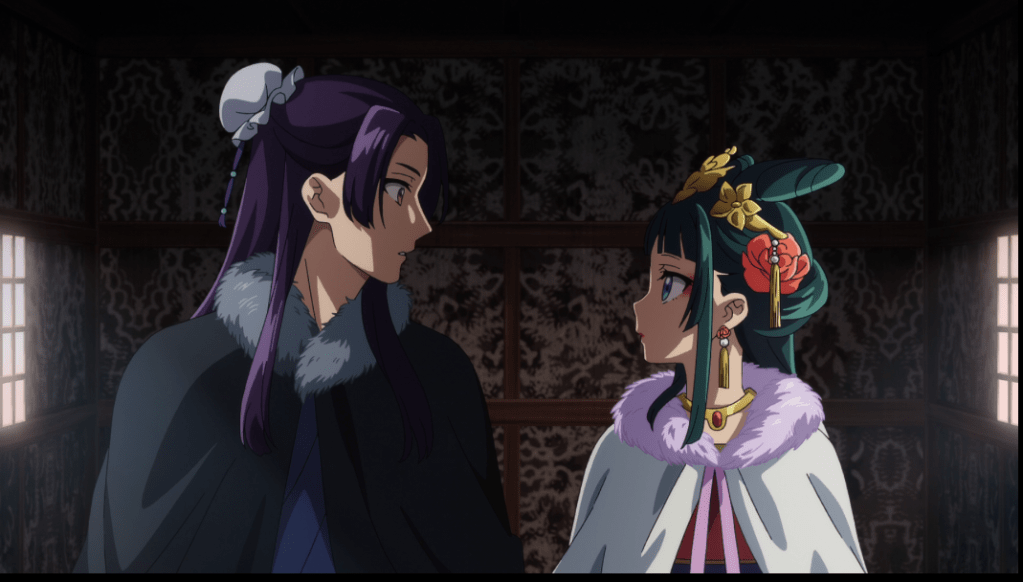


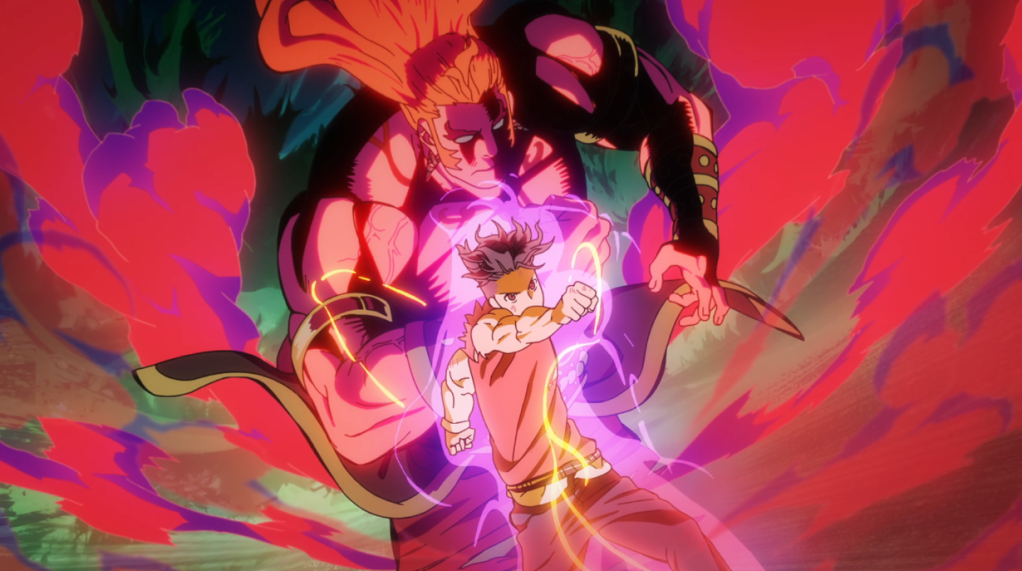

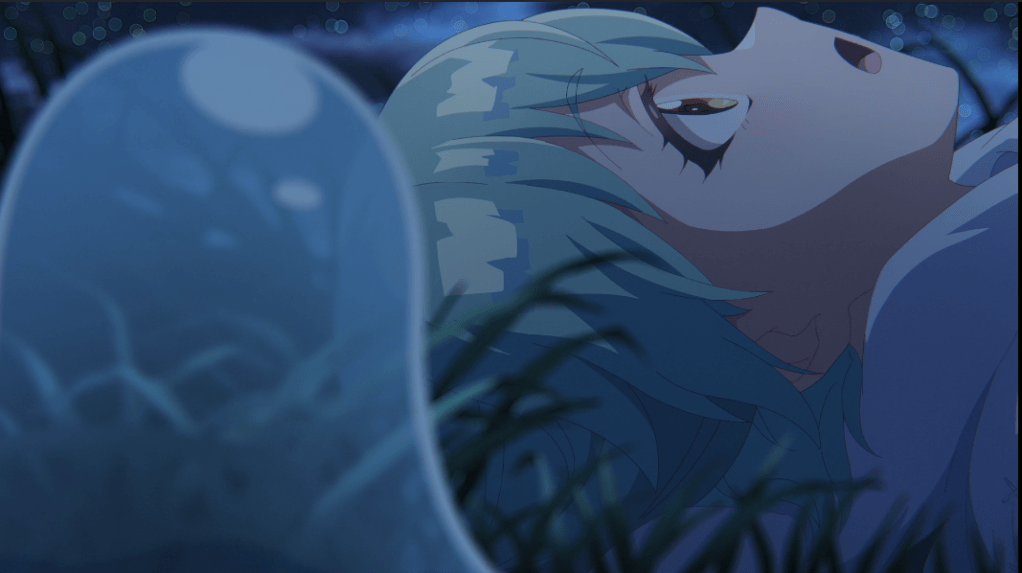
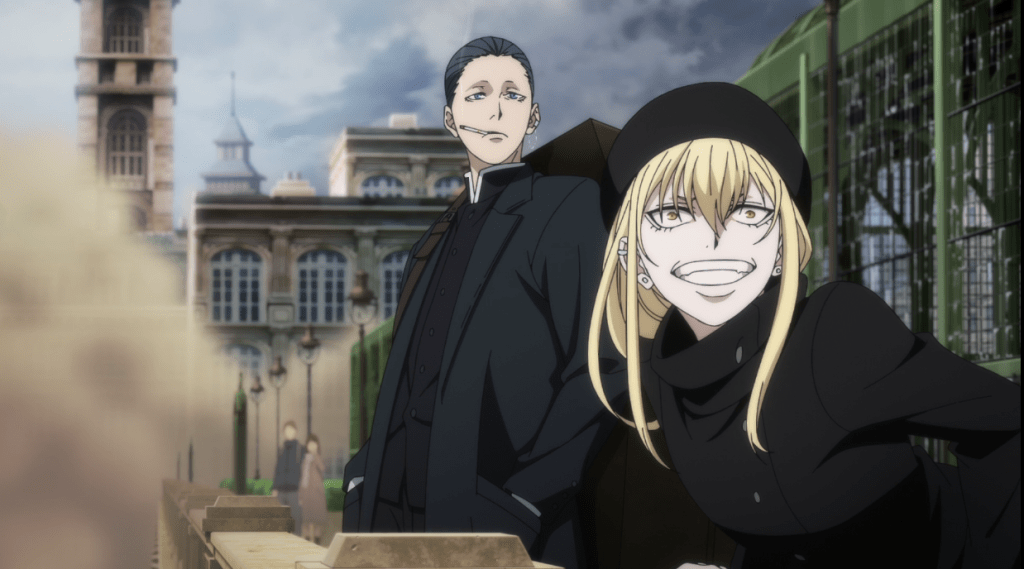
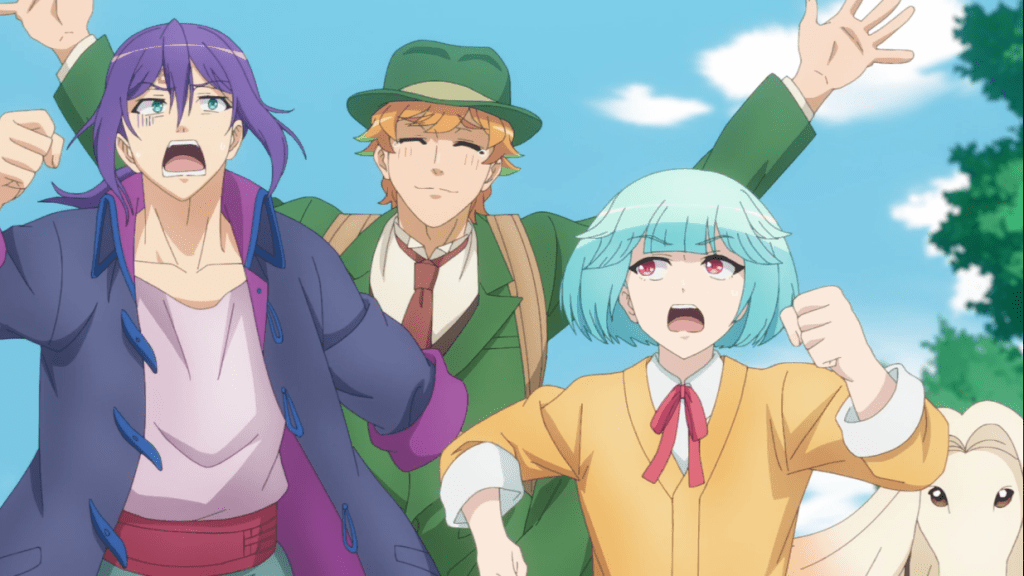

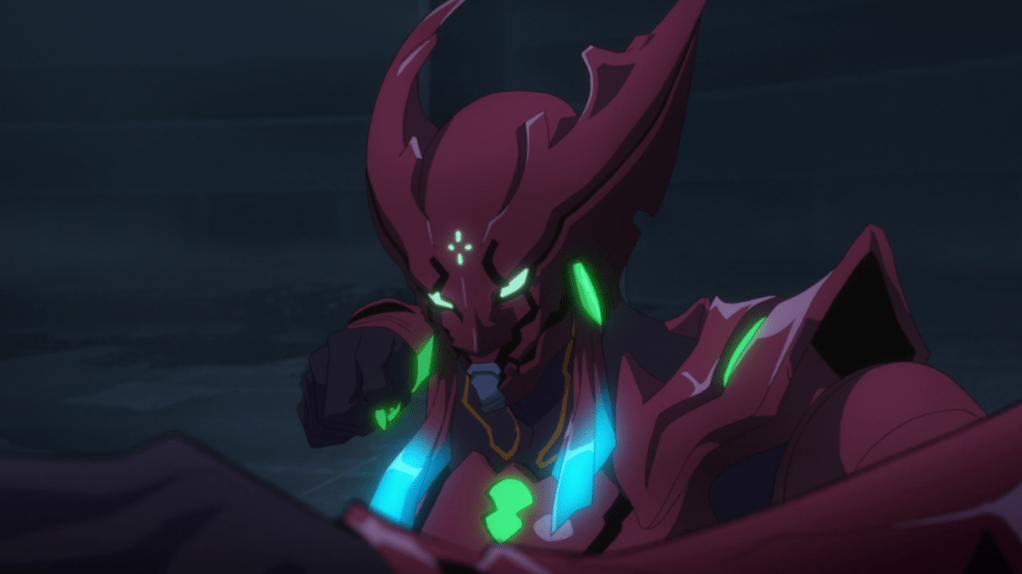
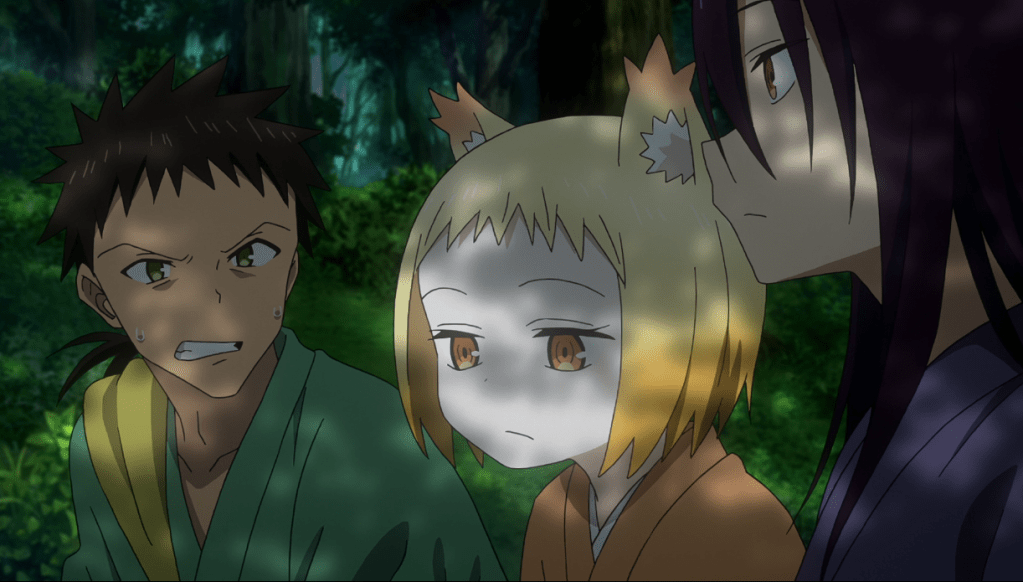



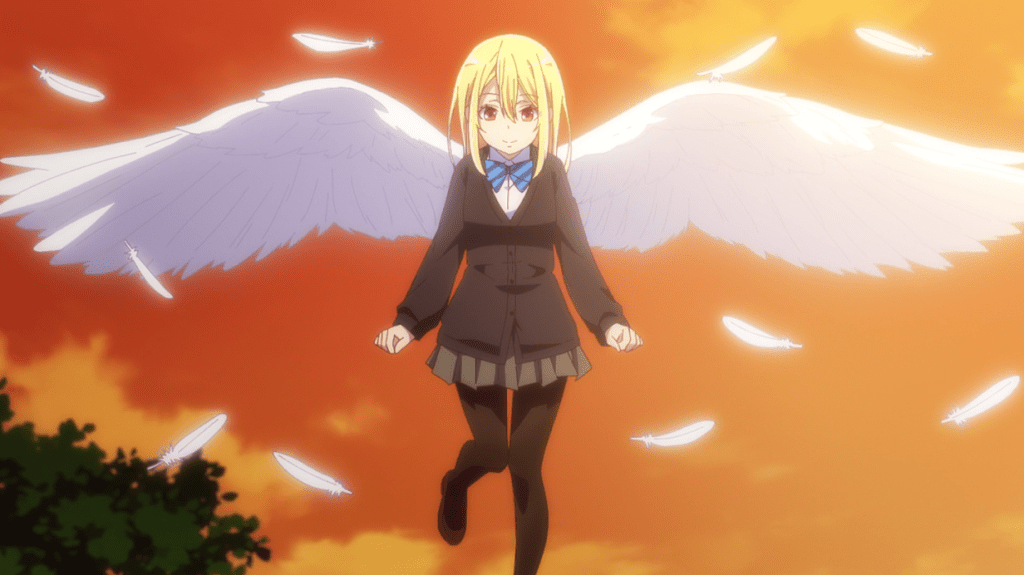
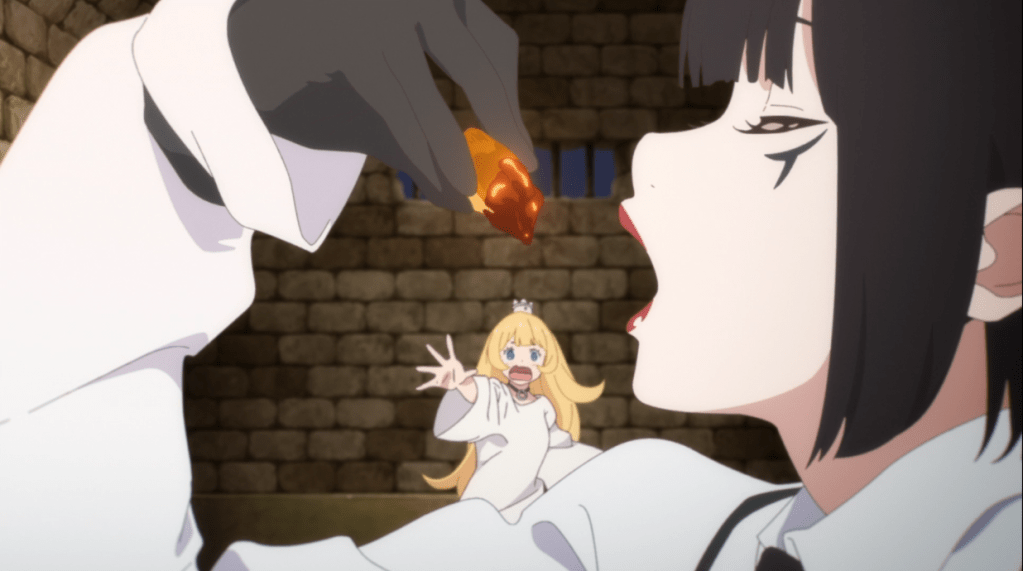

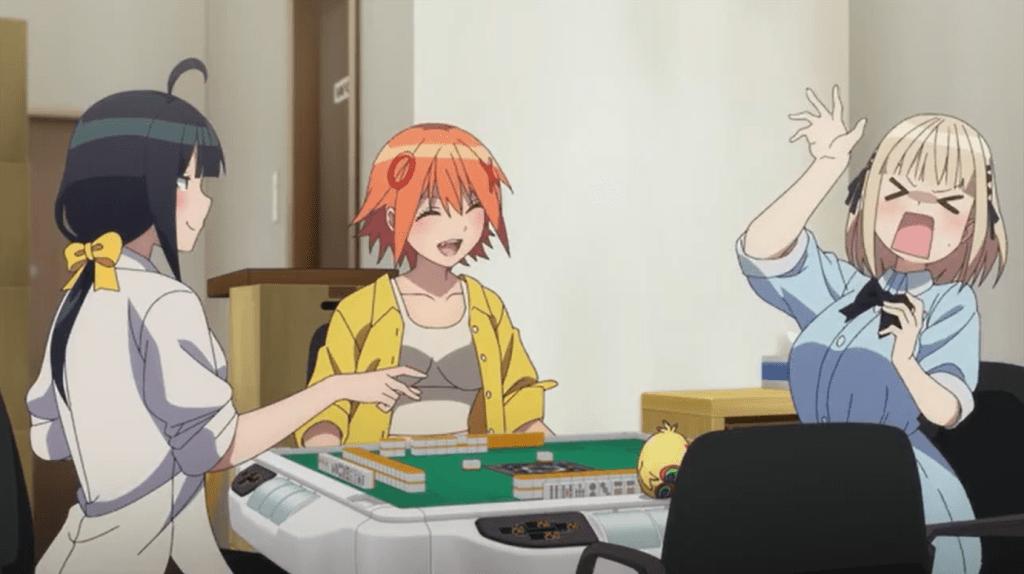


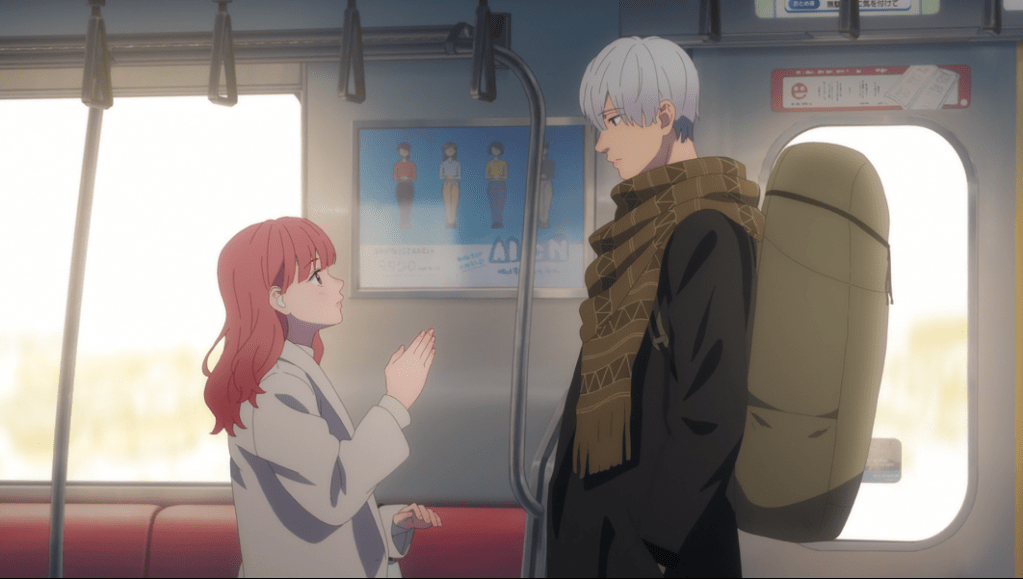


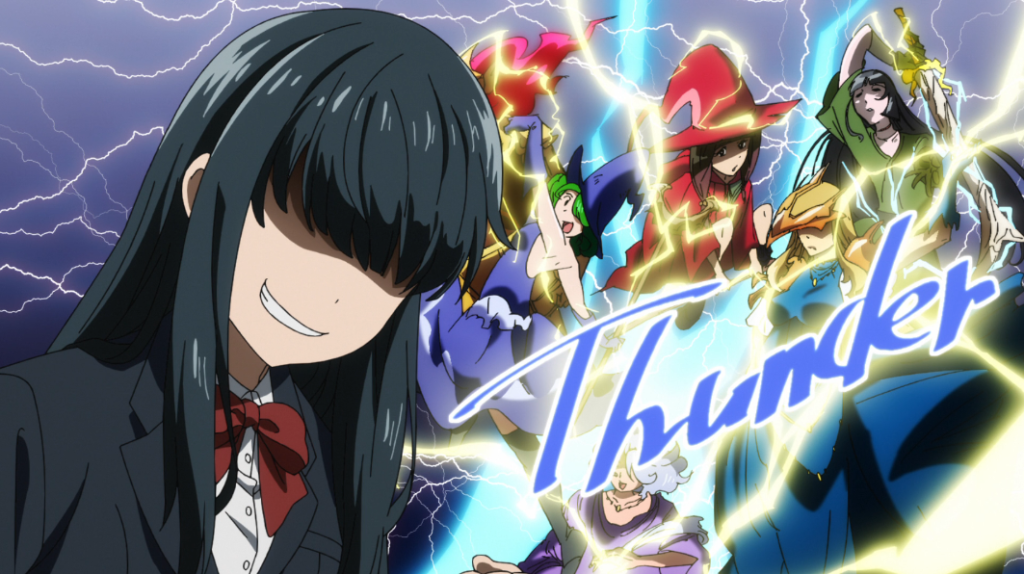
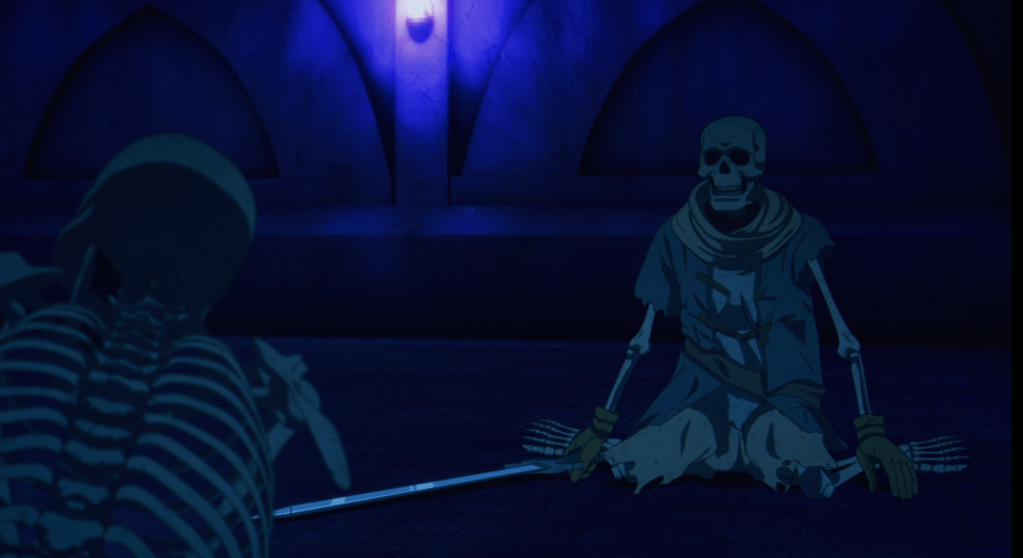


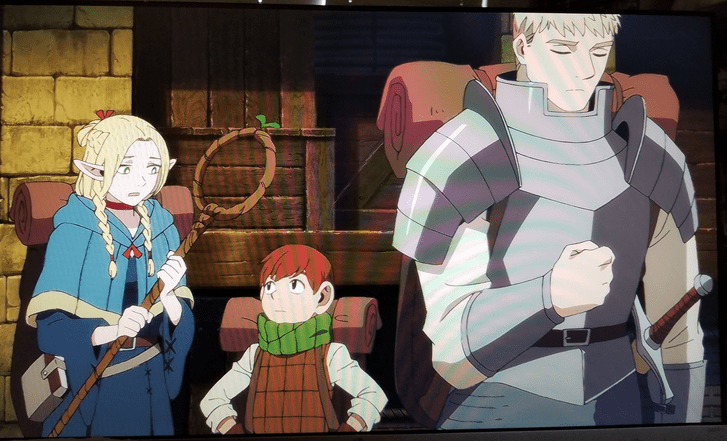

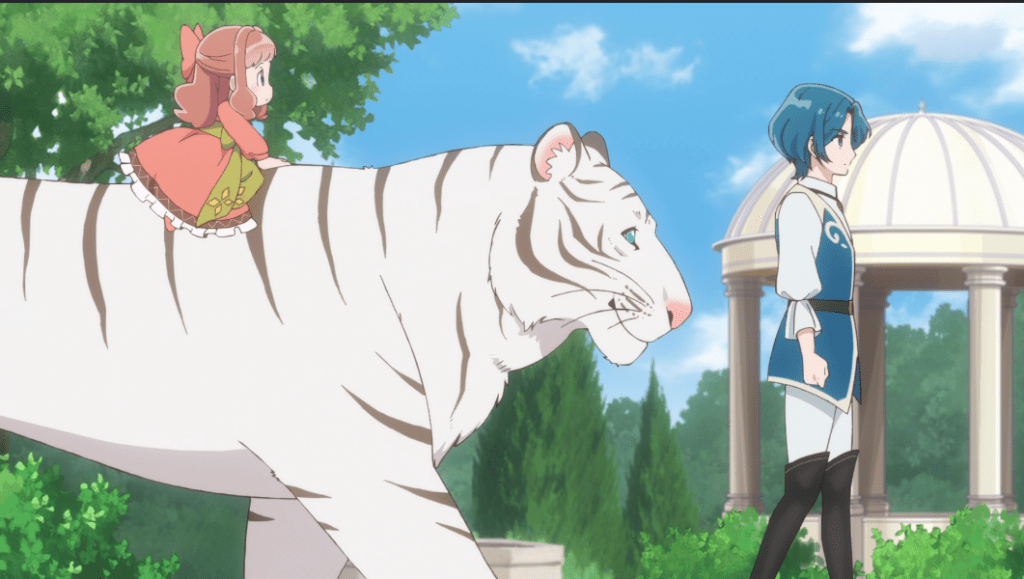
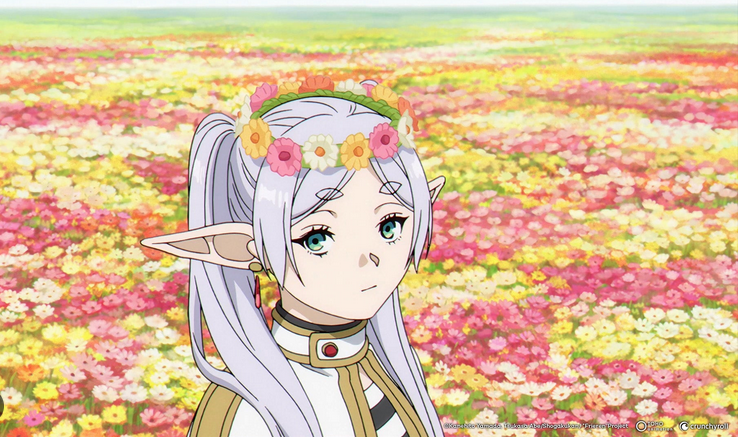


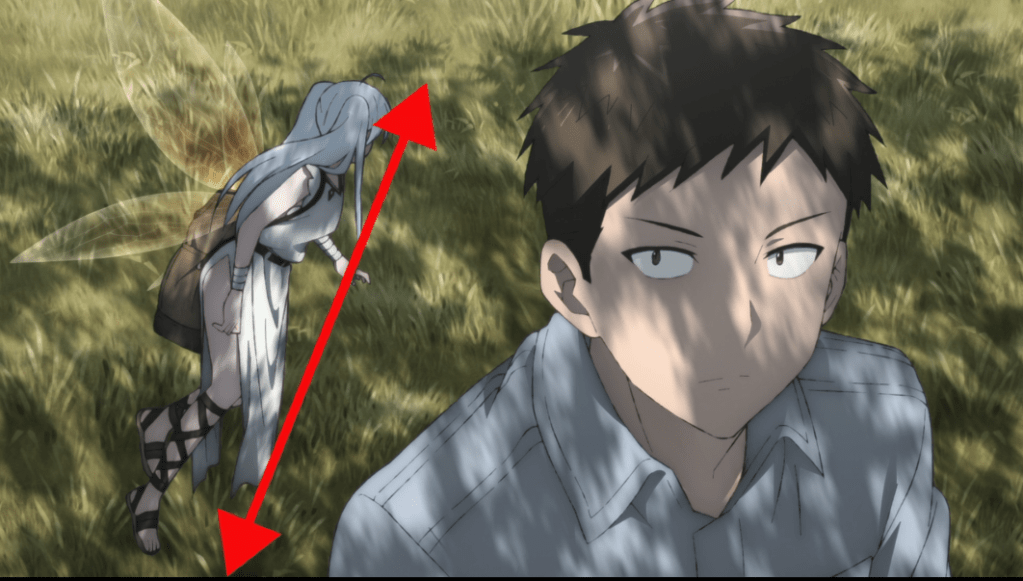

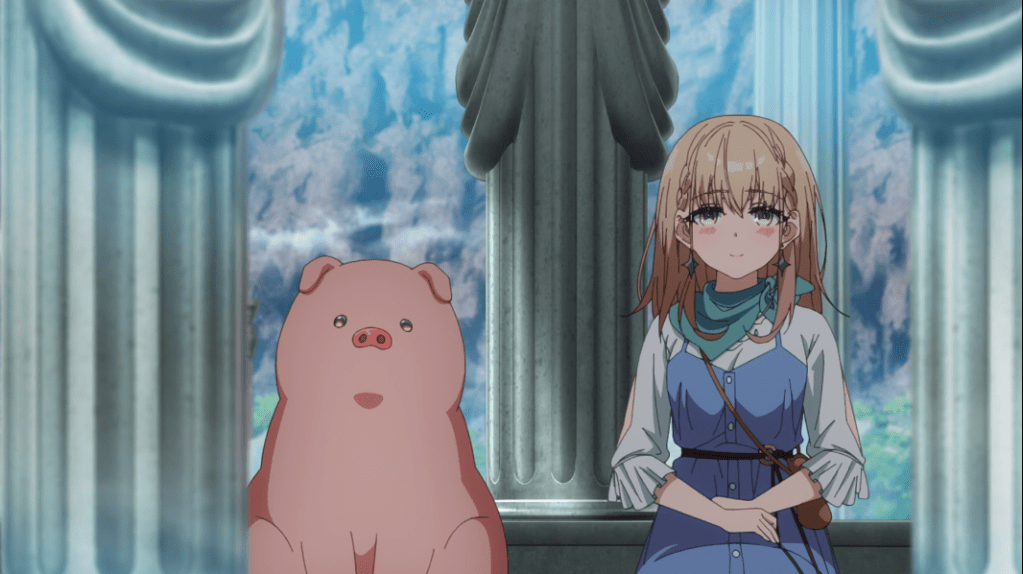
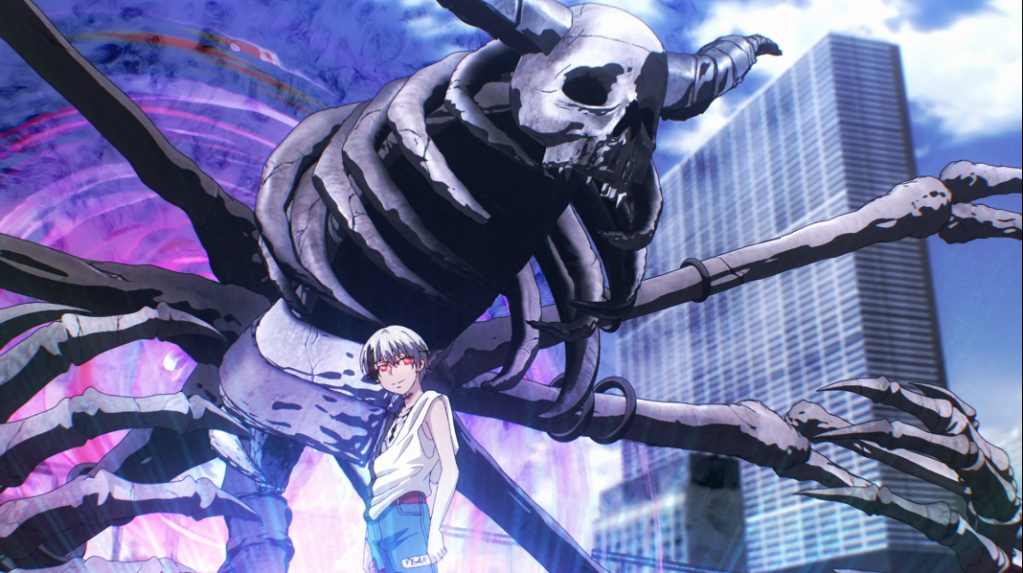
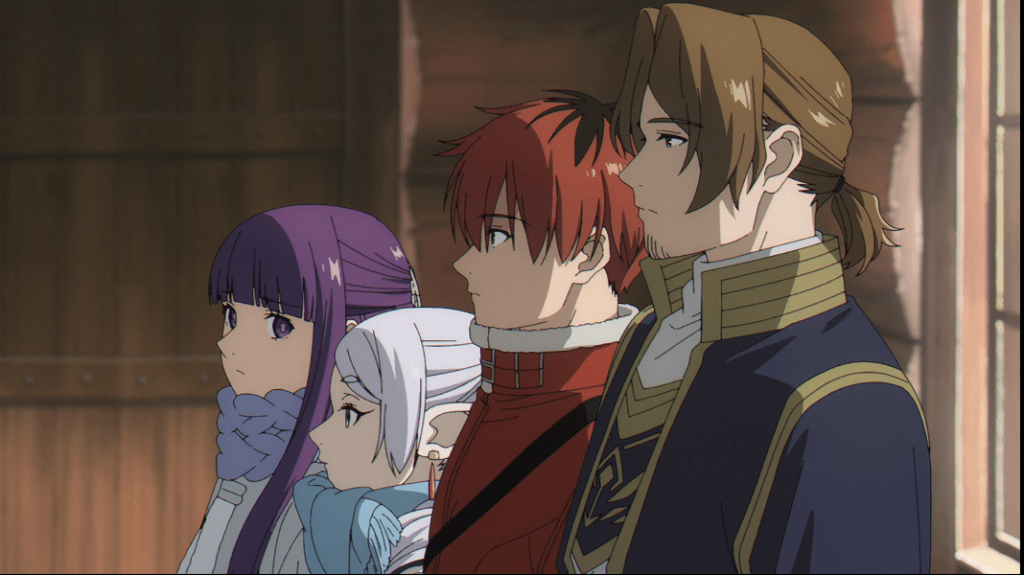


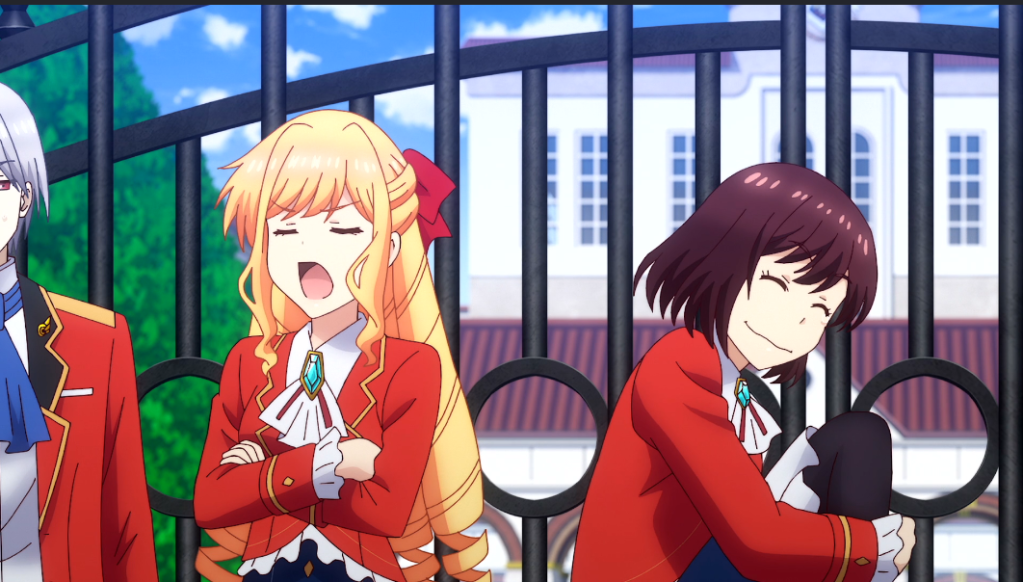

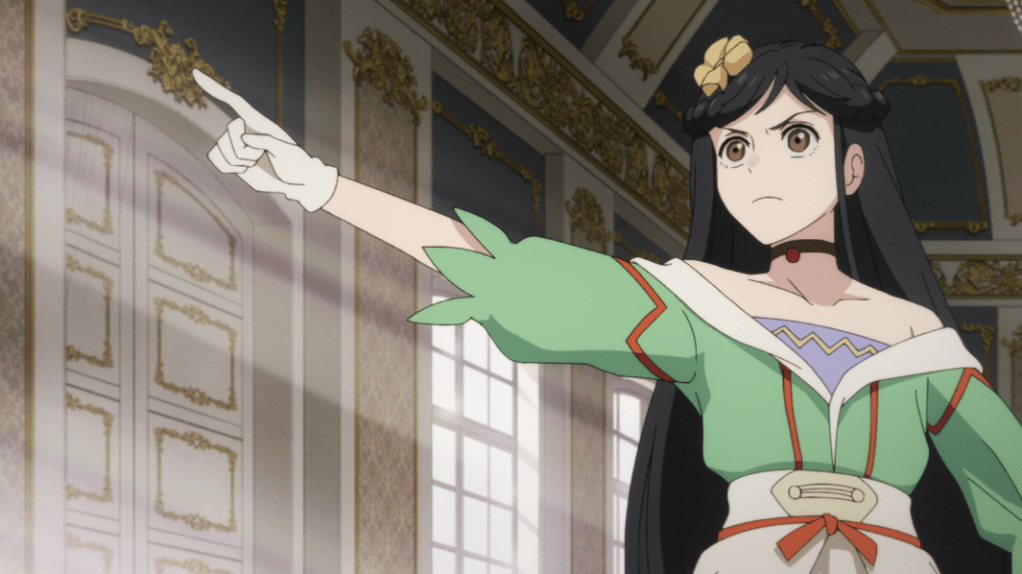


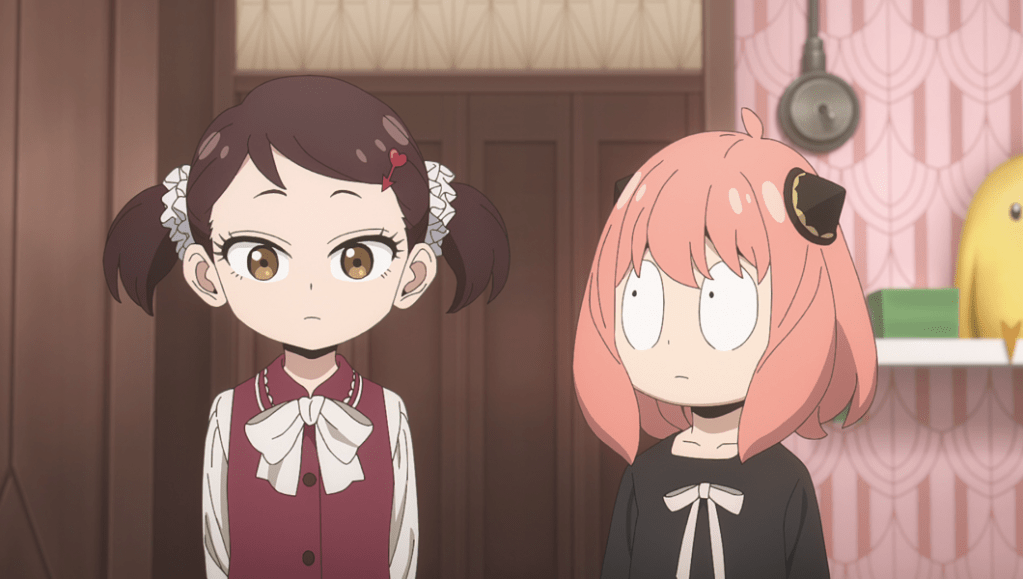




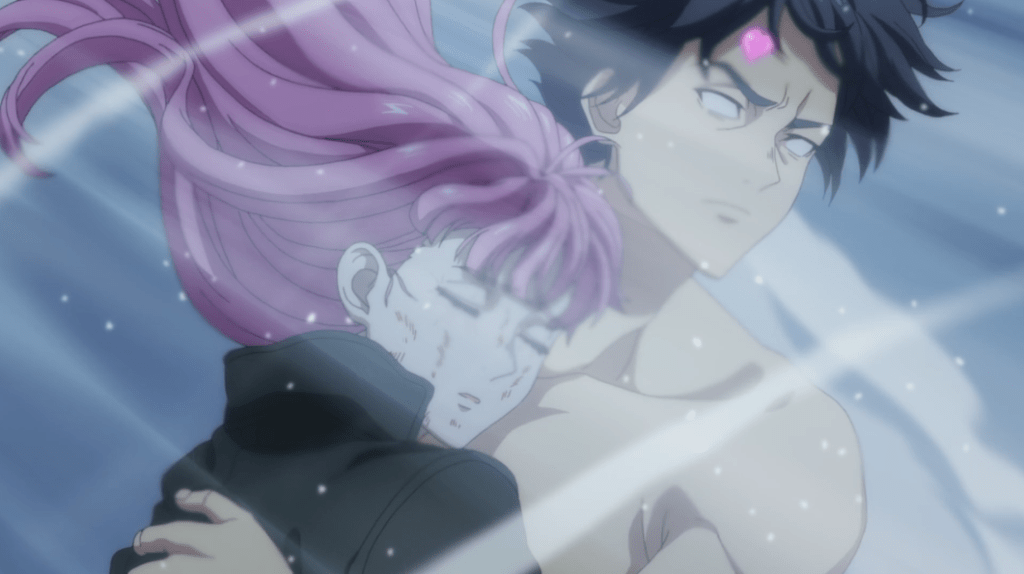
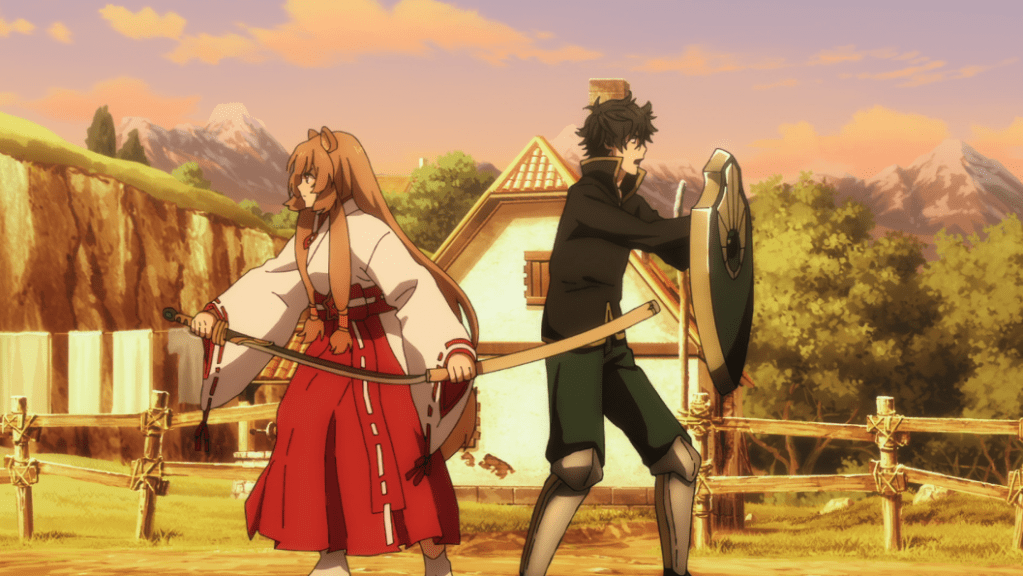
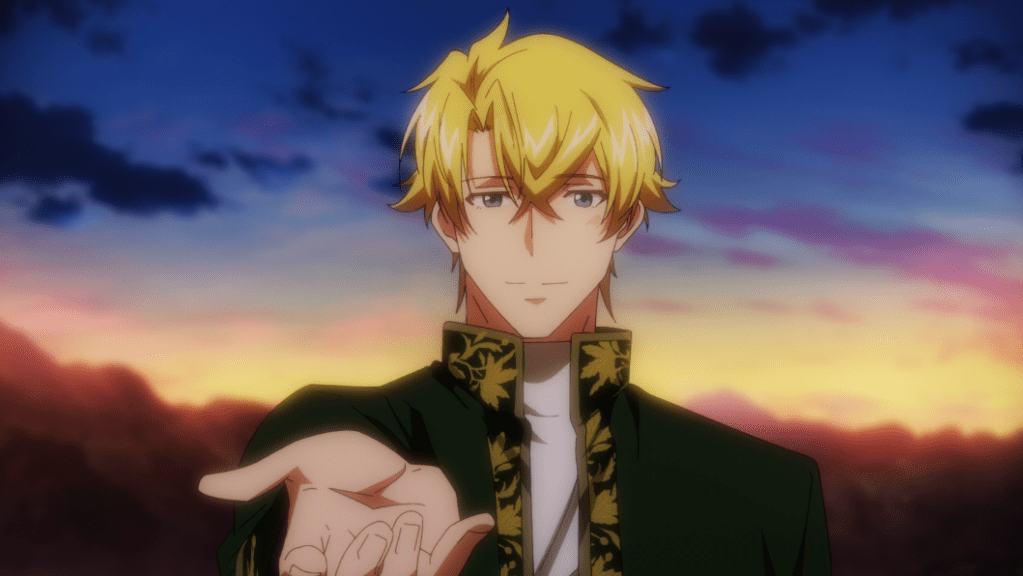

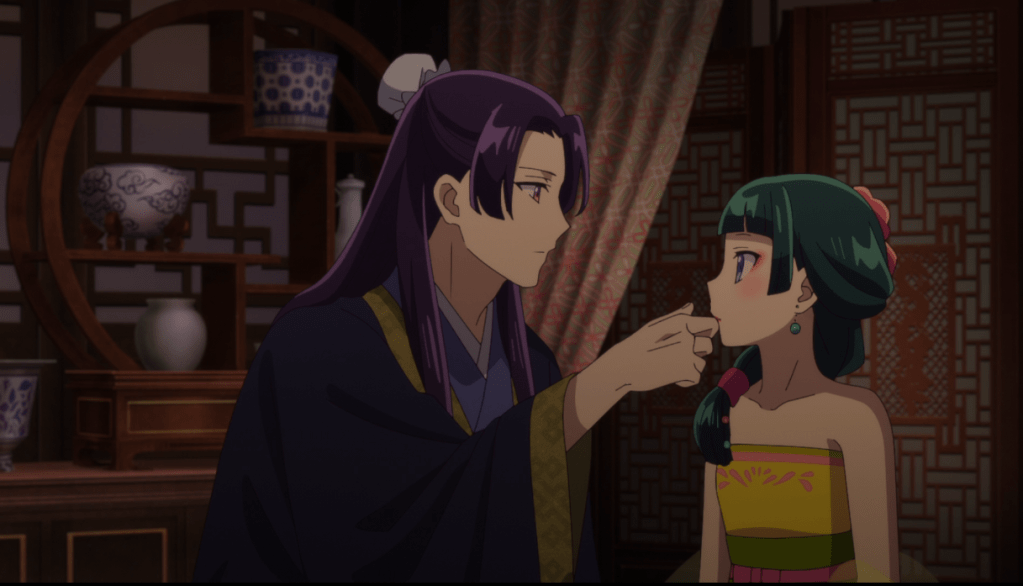


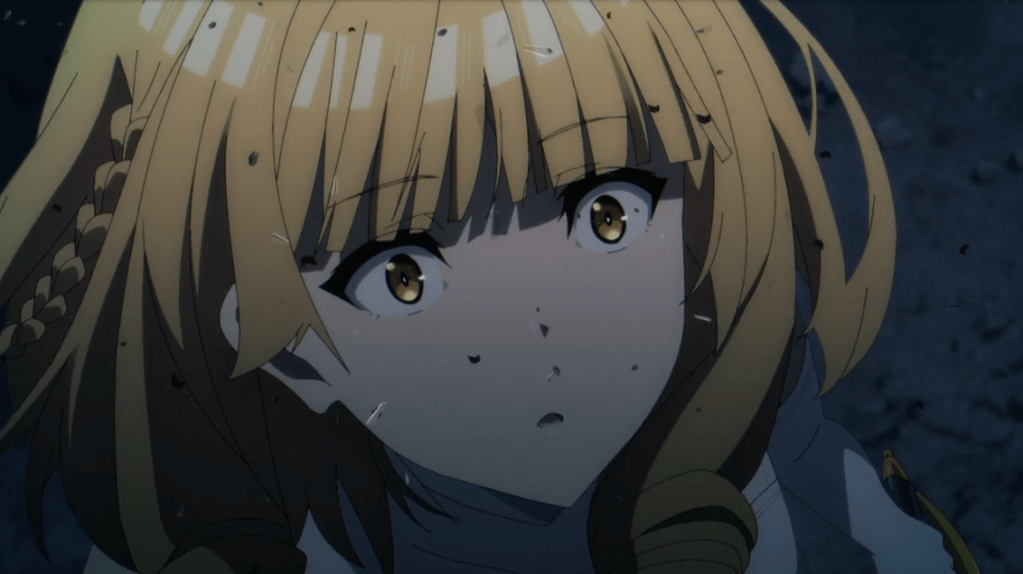

 USA Anime