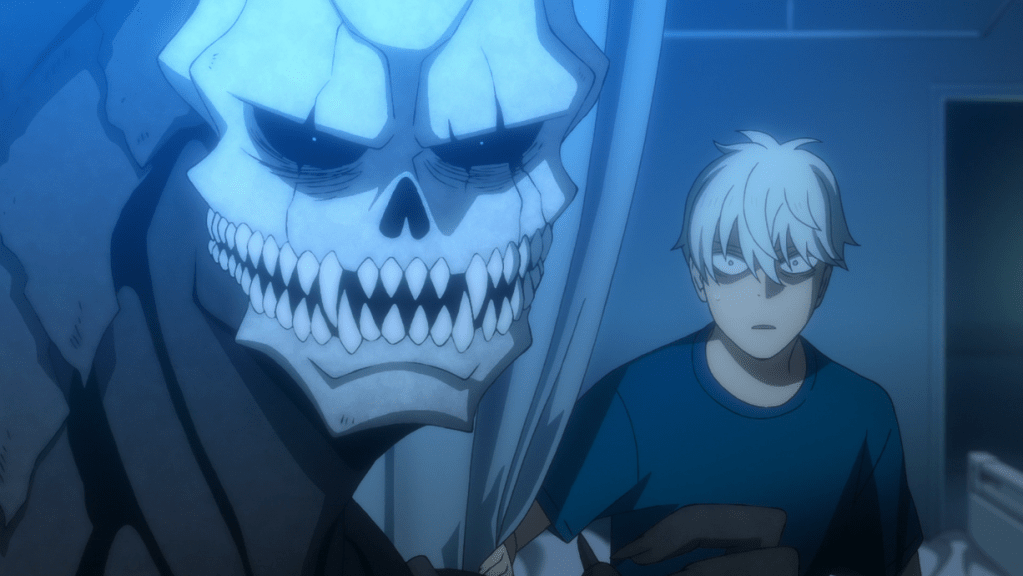
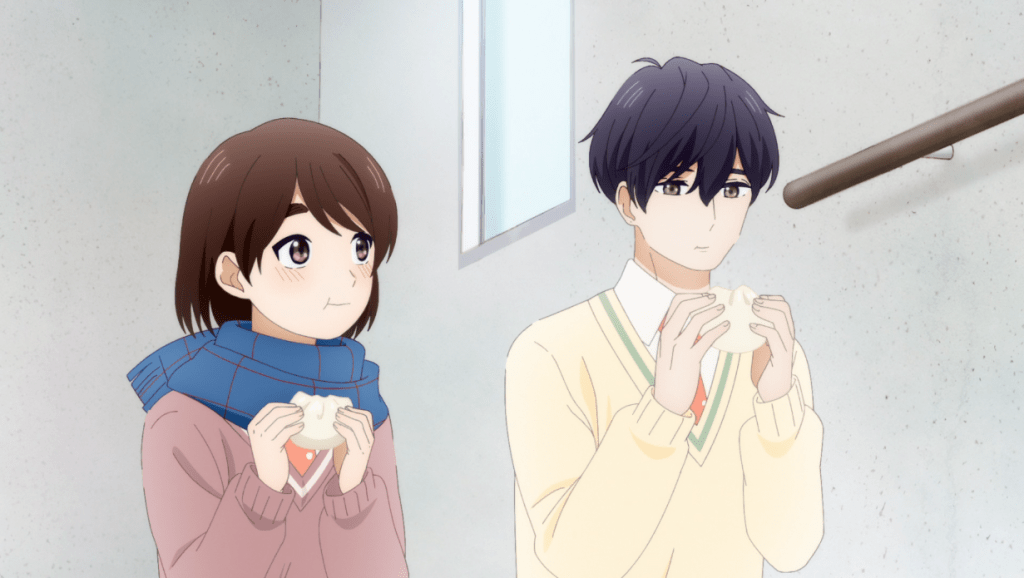
Episode 4 ended with Zagan kicking Nephy out in an effort to distance her from the threats she might face by being associated with an Archdemon. The next two episodes demonstrate that, as well-intentioned as Zagan may have been, this was a terrible idea which negatively affects both characters involved – and, somewhat ironically, proves why they should be together.
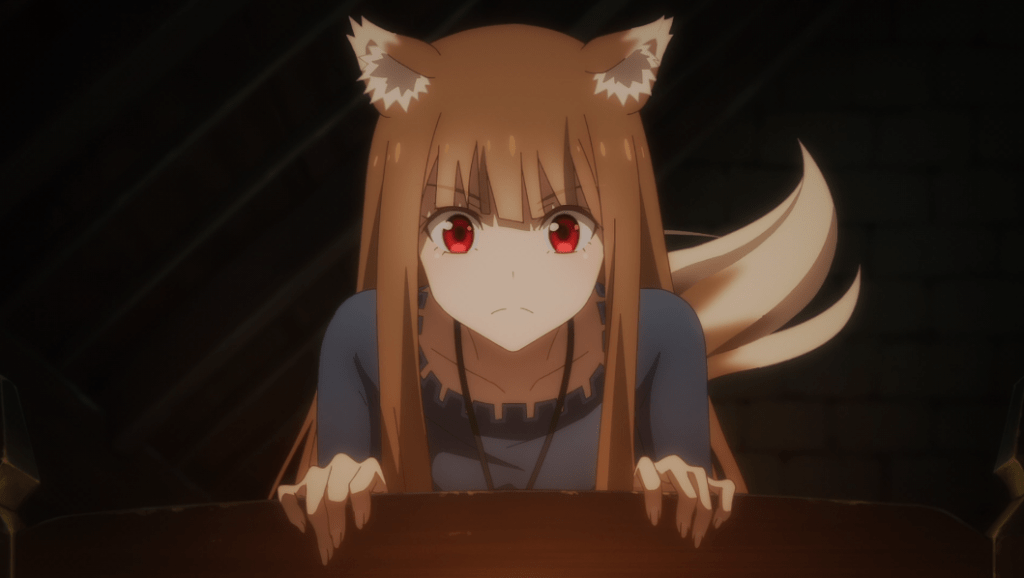
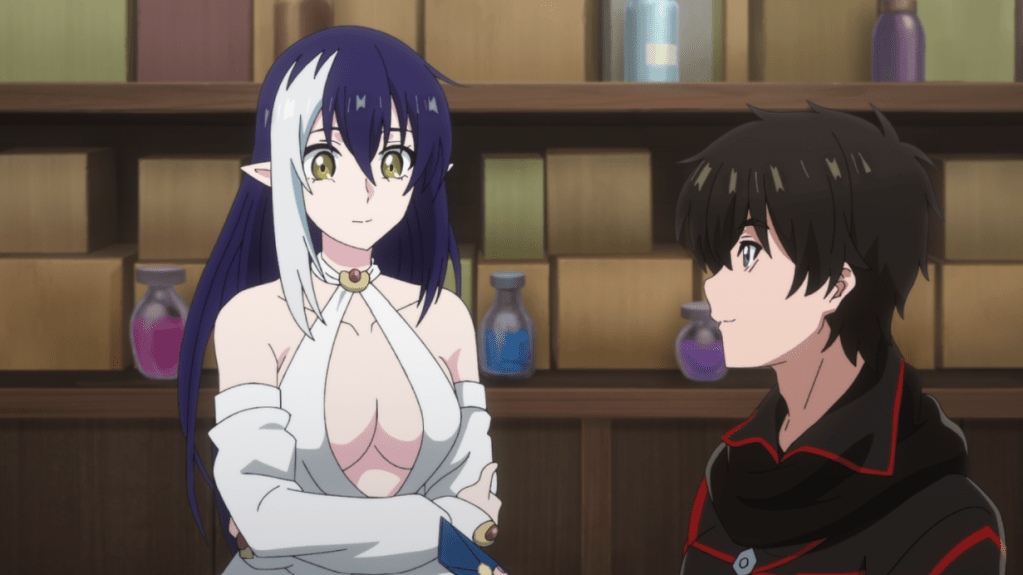
Episode 5 also accomplishes one other important task: it proves that the series can function fine with Zagan mostly absent for a whole episode. Nephy has always had an undeniable cute appeal, but she has also slowly become stronger and more interesting as a character. Zagan’s “why be bothered by what makes you different” attitude seems to have made her more comfortable with herself, to the point that she is becoming more assertive, more willing to clearly stake out what she wants and pursue it with determination. She’s no longer a doormat; she wants to be with Zagan, both because he can understand her and because she can sense his vulnerability, and is willing to resist another sorcerer even from a disadvantageous position in order to affirm that conviction. She’s now a character who can be rooted for rather than just regarded as eye candy.
Episode 5 also brings two other female characters featured in the OP more prominently into play. Manuela had only appeared once before – as the harpy who runs the clothing shop and dressed Nephy up in an outrageous outfit or two – but she clearly took a liking to Nephy at that point, so coming to the abandoned Nephy’s defense in this case seems reasonable. Chastille, meanwhile, was already wavering in her convictions about Zagan, and she’s too good-hearted to hold anything against Nephy despite her association with Zagan. Whether intentionally or not, they play crucial roles by helping Nephy sort out her feelings and understand why Zagan did what he did.
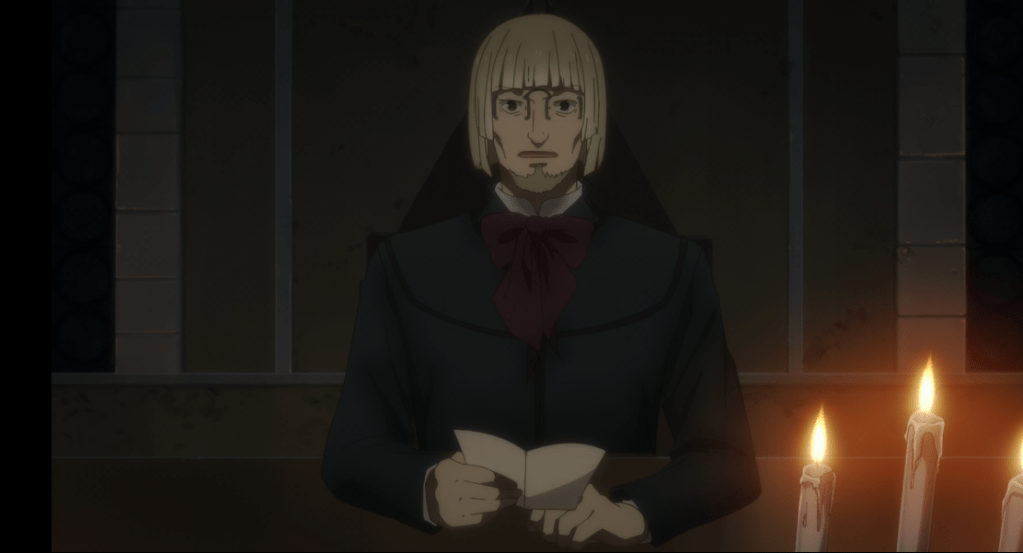
Barbatos turning out to be the mastermind in this case was no surprise, though him being the apprentice of the sorcerer Zagan killed as a child was a more interesting twist. His complete curb-stomping by Zagan – who arrives in time to rescue Nephy after Barbatos takes both Nephy and Chastille – was expected, but that ultimately proves to be one of the least interesting aspects of these two episodes. (This is also why I’m rating episode 6 a bit lower.)
Far more interesting are the world-building aspects in play here. In episode 4, the other Archdemons spoke about the ability Zagan had which made him worthy to join their ranks, but seeing it in action here clarifies why they found it impressive enough to warrant that consideration. Even if they’re more powerful, any sorcerer would have a difficult time facing Zagan down one-on-one, especially with his gimmick now reinforced by the power of an Archdemon’s seal. In many TTRPGs, being able to reliably counterspell allows a caster to control the flow of magical battles, and the “battle” between Zagan and Barbatos in episode 6 is Exhibit A on why. With the big boost the Archdemon emblem gives Zagan, he’s not going to run short on mana (i.e., spell slots) first, either. At least as interesting, though, is the nature of demons in this setting. The adaptation does an excellent job of making the demon an intimidating presence despite its rather amorphous form, and that the demon was beholden to Zagan’s emblem raises big questions about the nature of those emblems and the foundation of Archdemon power.
But that’s a concern for the long term. The more immediate delight is that Nephy and Zagan are back again and Zagan effectively proposed (clumsy as it was). Issue can definitely be taken with Nephy effectively requesting that the slave collar be used as a stand-in for an engagement ring, as it smacks uncomfortably of Raphtalia doing something somewhat similar in The Rising of the Shield Hero with the slave seal. In both cases, the girls do this as a sign of their firm commitment to the guy in question, and any negative connotations be damned. (That we know neither master is going to abuse it is irrelevant on this matter) I do wonder what the townspeople and Nephy’s new female friends (who both saw her without the collar) are going to think about that, but I’m not holding my breath to see if the series will even bring that up.
Taken together, these two episodes round out the adaptation of the first source novel. (Episode 5 adapts Chapter 4 of the original novel, while episode 6 adapts Chapter 5.) Now that the relationship between the two has been firmed up (even if each of them is unsure how far it goes!), I am curious to see where the story goes next.
Episode 4 ended with a crisis which demanded quick action. But while this series is many things, it’s definitely not an action series at heart. It has its own way of dealing with a crisis, and that is beautifully demonstrated by how episode 5 plays out.
As much as the series is about Holo and Lawrence, it is also a thinking person’s series. Understanding an opponent’s motive and goals is critical in a situation like this, as is using the clues that the situation gives Lawrence and Richten to deduce how far along the opposition is in their own plan and how they might logically react to various approaches. By avoiding panic, they realize that using Holo as a playing chip isn’t without some complications on Medio’s side, and that restricts Medio’s actions enough to give them a chance to outmaneuver Medio enough to force a compromise. And that rescuing Holo and going into hiding for a day or two is a necessary part of that plan gives Lawrence the opportunity he needs to prove that Holo’s trust in him was warranted. This is exactly why Holo allowed herself to get caught to protect Lawrence, even if the rescue part didn’t go quite the way she anticipated.
That whole business makes clear one thing about Holo that has been somewhat implied by previous episodes: she’s quite the romantic soul, even if she would probably fiercely deny it as a matter of pride. As much as she might tease, she has definite expectations for any male she might call a companion. It’s also why Yarei’s declaration to her hit her harshly, even though she had resolved to leave the village behind. She had wistfully believed that she was doing so because she was no longer needed, but being so bluntly rejected was a bitter repudiation of her long service to the village. That Yarei was going to see her turned over to the Church was a blow much more because it was a final affirmation that the village had moved on from her than because her life was at risk – because, as she later points out to Lawrence, it really wasn’t as long as he carried some of the wheat.
The series wouldn’t be true to itself without plenty of direct banter between Lawrence and Holo, which is why the wagon scene between them was such a delight. One of Holo’s most devilish aspects is how swiftly she can transition between displaying genuine emotion and teasing, but Lawrence is now at least halfway to holding his own in such exchanges. Easily the most fun part is the way Holo, now in a good mood, is goofing around in the background while Lawrence talks to the wagon driver. I’ll likely be repeatedly replaying that scene for a long time, and it’s a rare new addition to the series for this time around.
Besides that goofing around, the only difference of any significance between this episode 5 and episode 5 of the first adaptation is Yarei appearing instead of Chloe – and frankly, the significance of that reversion to the original novel is debatable, since whether the character from Pasloe speaking to Holo is male or female is inconsequential to how that scene plays out. The episode starts and stops in the same place and uses the exact same scenes, just with some altered building designs. In general, Holo’s expressiveness is a little more pronounced in this version, but that comes at the cost of weaker music support. As I’ve said on previous occasions, Penkin’s music is not bad here, but especially in the wagon scene it just doesn’t carry the same impact.
One more episode to go this adaptation of the first novel. The final scenes strongly suggest that a showdown is coming. This version has proven the equal of the original in most respects so far; can it hold that true through the dramatic events to come?
With its fourth episode, the economic scheme that Lawrence has gotten a whiff of expands, with Lawrence wading into deeper water as he arranges a deal with the Milone Trading Company. But while the potential returns are fantastic, this also leads to the series’ first true crisis and cliffhanger ending.
In the long run this is going to be a valuable lesson for Lawrence, because, though still relatively young, he’s experienced enough that he should have anticipated the trouble. (Holo, who’s not a merchant, did, but her vices kept her from remembering until almost too late.) A gain big enough that he could open his own store has his head in the clouds, and thus not able to see the dangerous situation he’s put himself in. Economically speaking, merchants like him are small fish in a vast sea, and he has swum into the territory of sharks. With so much money potentially at stake, naturally there will be some who won’t be above using violence to make sure that others don’t interfere. And while there’s no better protection in the city than the grounds of a major trading company (which is virtually an embassy), such a company isn’t going to help you in a crisis unless there’s a vested interest in them doing so, either.
Which brings us to the matter of why, exactly, the Medio Trading Company (who’s behind the scheme) went after Lawrence and Holo. Richten, the Milone branch manager, is rightly confused about this point, since under normal circumstances having Lawrence and Holo captive gives Medio no leverage; Lawrence has already passed on the crucial info, after all, and their plans are already in motion. The clue to that goes back to the series’ first current-timeline scene: Lawrence’s conversation at the military checkpoint. The Church of this world, which has been portrayed as analogous to the Roman Catholic Church of medieval/Renaissance Europe, would regard beings like Holo as heretical. The Church has waged wars against pagans, and so would prosecute vigorously anyone associated with a heretic. Even a great company like Milone would be in a tight spot if they were known to be working with a heretic, so the not-so-veiled threat to turn over Holo to the Church is no idle warning.
But for Medio to go after Lawrence and Holo with intent to use them (or, more precisely, Holo) for this kind of leverage, they would have had to know who Holo was. Lawrence wasn’t shy about using Holo’s name, but since she was an obscure local god, only someone from that area would recognize it. Given how episode 1 played out, only two characters could possibly fit that role, and one makes far more sense to be the mysterious arrival in the episode’s epilogue than the other. And that effectively reveals who the noble behind Medio has to be, too.
The episode isn’t all crisis, though. Lawrence is in the best mood we’ve seen him in prior to that, which prompts him to share his long-term dreams. A traveling merchant’s greatest desire being to settle down in a town and open a store is a goal also explored in Ascendance of a Bookworm, so it’s little surprise that Lawrence has a similar goal, but while Holo is genuinely happy to see Lawrence potentially be that successful, it also puts her in a fix. She’s looking to travel north, not settle down, and as she makes clear in her weaker moments this episode, companionship is everything to her now. She’s been alone too long, so she is getting every bit as much out of this relationship as Lawrence is, maybe more. Unlike Lawrence, she just doesn’t measure the value in coins. How effectively the writing portrays that may be the actual true highlight of the the episode.
In terms of comparison, this episode covers the exact same ground as the original episode 4 and stops in the exact same place, and minor adjustments to scene design and framing don’t create any exciting improvements. While the artistic merits are perhaps a bit higher, this production also leans more into darker lighting, not always to the production’s benefit.
After three generally more relaxed episodes, the plot is cranking hard and the tension is building. How will Lawrence be able to pull off the rescue of Holo that she expects? Come back next episode to see!
In my Preview Guide entry for episode 1, I had mixed feelings about this series and the seemingly-stereotypical path it was going down, but I did recognize some potential positive points. In the three episodes since then, those positive points have blossomed and been joined by some unexpected elements, gradually turning this into one of the season’s most welcome surprises. And the series is accomplishing this despite not doing anything all the different or special.
Indeed, a lot of what transpires in these three episodes feels very familiar. Zakan is very much cut from the same cloth as Takuma/Diablo in How NOT to Summon A Demon Lord: a powerful sorcerer who’s such a social misfit that he has no normal friends or clue how to talk to girls (or really anyone else), which commonly results in him coming off as more gruff than he intends. He’s actually a more decent guy at heart than he gives him credit for, though, and is determined to do right by Nephy rather than treat her as property, which results in his behavior being markedly different with her around. There are clothes to buy for Nephy, honest money to earn to pay for them, and new foods for both of them to try. On a more serious note, because sorcerers are persecuted by the Church in this setting, there’s conflict to be had there, too.
One fact which helps set this series apart a bit is how cloyingly cute the interactions between Nephy and Zakan are. Nephy is a gorgeous character design to begin with, and her reactions to things – especially how she blushes in her ears and twitches them when happy – are thoroughly adorable. A good dynamic also starts to form between them as they both get more comfortable with each other, which is especially evident in episode 4. The real turning point, though, comes in episode 3, when Zakan has to fend of some Church knights who have become convinced that he’s behind a spate of recent kidnappings. That’s when the truth about why Nephy refers to herself as a Cursed Child starts to come out: she’s a true mage in an environment which only knows sorcery, and quite powerfully capable in a pinch because of that. (The relationship between magic and sorcery in this setting seems to be somewhat similar to how it works in The Ancient Magus’ Bride – one of the many similarities between that property and this one.) She’s had a rough time in life because people haven’t understood that, and in a surprising move, she reveals that she’s not above taking some satisfaction in the kin that had long mistreated her getting slaughtered. But none of that is a problem for Zakan because he can relate; his life was pretty crappy, too, and he would have conducted the slaughter himself in Nephy’s situation. As the story pushes into episode 4 and he starts formally instructing Nephy in magic, there’s a growing sense that Zakan is as ideal a fit for her as she is for him.
The story shifts more to plot and word-building with the second half of episode 4, as the first half of the title finally comes into play. Apparently Archdemon isn’t just a title in this world; it carries literal, rather than just figurative, power. Zakan’s not the most powerful sorcerer among the candidates to fill the recent vacancy in the Archdemon ranks, but he has an unusual talent which could eventually make him among the greatest of sorcerers, and the other Archdemons recognize that. But they also give the very distinct sense that choosing Zakan is as much about keeping a potential future threat close at hand. Though that certainly ensures that Zakan will be powerful enough to survive anything, he also recognizes how this could endanger Nephy, leading to a heartbreaking but predictable major plot twist.
For as serious and heavy as some aspects of the series are, though, it has a pronounced light-hearted side, too. The one good joke in the first episode proves not to have been a fluke, and the series is arguably at its most entertaining when it leans into its cutesy humor. The closest the series has gotten to fan service is the sputter-worthy first outfit that the winged clothing story proprietress puts her in, but even that is, in a sense, adorable, too. The biggest concern at this point is some troubling signs of the artistic quality not holding up, but that isn’t yet to the level of being a significant distraction.
An Archdemon’s Dilemma will probably never be regarded as one of the season’s prestige titles, and that’s fair. However, it is proving to be a solid mid-tier performer, to the point that it is now a priority view for me. I may not end up reviewing this one every week, but I feel certain that this isn’t the last time I’ll be talking about this series.
This week the English simuldub begins, lagging two weeks behind. Brina Palencia and J. Michael Tatum are back reprising their roles from the dub of the first series, and all’s right with the world. While they had an unenviably tough act to follow in voicing the two protagonists, their performances are widely-regarded in the West as being as iconic as the originals, and the dub of episode 1 shows why. Ami’s performance of Holo conveys her energy and slyness a bit better, but Brina’s performance give the character a more pronounced haughtiness which fits just as well, and you can’t go wrong with either take on Lawrence. Of course, this is to be expected, since Brina and Michael have been voicing the audiobooks for the original novels over the last couple of years, but I know I’m far from the only long-time franchise fan who breathed a sigh of relief at the recent cast announcements.
For returning franchise fans, episode 3 covers the exact same scenes and conversations as its counterpart in the original and stops in the exact same place, further suggesting that this adaptation has no intent to pick up the pace and will stick with the six-episodes-per-novel pattern of the original two seasons. The visuals in some scenes are reimagined and some minor details have been altered in trivial ways (the Milone merchant Lawrence deals with used a hand-held abacus in the original but a tabletop version here), but this is ultimately the exact same episode.
For newcomers, episode 3 represents a shift from the relationship-building focus of the previous episode to a more decided economics focus. We get to see Lawrence in action as he deals first with a trading house merchant to sell his furs and then with a money exchanger as he tries to puzzle out what, exactly, Zheren’s scheme is. Along the way, he also gives Holo a lesson in money and all-too-often glossed-over complexity of a setting where a single standard coin doesn’t exist. Even in modern day, the stability and trustworthiness of a currency directly affects a nation’s power; for instance, the dollar being the world’s most trusted currency is no small part of the U.S. being the world’s most powerful and influential country. That’s doubly true in this setting, where the silver content of a coin more immediately and directly affects the coin’s value. Because of that, decreasing the silver content of coins is risky, since the currency would be regarded as less trustworthy if people found out about it. But what if it was being decreased in stages, at increments so small that even expert moneychangers couldn’t tell? Certainly sounds like a way to get more coins for the same amount of silver. Throw in some rumors that the opposite is happening, thus getting people to speculate in the wrong direction, and those in the know stand to make a hefty sum. By the end of the episode, Lawrence is starting to get a sense of just how big this scheme could actually be: big enough that Zheren is but a bit player to a vastly greater interest.
This episode also shows much better than the second what value Holo can contribute to Lawrence’s business. The previous two episodes revealed that she’s more than a little clever and catches on quickly, and this episode shows why you don’t want to have a battle of wits with her. How completely she bowled over the trading house merchant was a thing of beauty, and she can offer insights and alternate angles that Lawrence might not consider on his own. Lawrence is hardly helpless here, since he still has to use his business acumen to take advantage of what Holo can offer, but she makes for a fearsome back-up in many different ways. And she can apparently be bribed with apples and wine, too!
Just how big and deep is the scheme whose fringes Lawrence has now detected? Look forward to finding out next episode!
Episode 1 may have established the series’ operating premise, but episode 2 is the series’ make-or-break episode, the one which determines whether or not viewers are around for the long haul. That’s because most of the episode is one on-and-off conversation between Holo and Lawrence on a variety of matters, so the appeal almost entirely depends on the chemistry between the two. This was the episode that made me a major fan back when the original version first aired, and I am pleased to say that its new version (which covers exactly the same material and mostly the same dialog) captures every bit of the interpersonal charm that is as much a cornerstone of the story as the economic aspects are.
Plot-wise, very little transpires here beyond the formal beginning of the first story arc and the introduction of the first economic conundrum. (I’ll get back to that shortly.) Holo and Lawrence have their initial few days of journeying together, wait out a rainstorm in a church, and converse with some fellow travelers. Along the way, Holo delights in teasing Lawrence and showing off her superior wit, though we also get the first indications that she’s not too fond of anyone else getting the best of her in a match of wits. That leads to one of the episode’s pivotal scenes: Lawrence getting truly upset with her when some of her sharpest teasing (in response to him getting in a rare good verbal jab) unwittingly touches on some past trauma. Watching how Holo reacts in both body language and expression when she realizes she’s gone too far is a great bit of both writing and visual portrayal and a stark contrast to her delightfully spirited, almost playful behavior elsewhere in the episode. Viewers can also easily sympathize with Lawrence over how much of a handful Holo is to deal with, and yet there’s never a sense (beyond the instance mentioned above) that Lawrence minds it all that much.
And that spirited, playful behavior includes spending a fair bit of the episode nonchalantly prancing around naked in front of Lawrence when they dry their clothes out in their room at the church. While this could definitely be looked at as an extended fan service scene, the camera isn’t particularly lurid in framing Holo during these scenes and they definitely serve a point: to show that she regards being naked in front of Lawrence as a triviality. (It’s also entirely possible that she’s doing some of it deliberately to tease Lawrence further.)
But another key point in this episode is that Lawrence isn’t entirely helpless or a fool. He is very worldly and shows that he knows his stuff on the business front when he’s speaking to the vintner in the common room and dealing with Zheren. The currency manipulation scheme Zheren introduces Lawrence to constitutes the beginning of the series’ other major draw and cornerstone: an intricate look at period economics which goes well beyond what you’ll see in virtually any other anime series. The scheme being described has its current-world parallels – it’s not so different from what sometimes goes on in stocks and cryptocurrency – but the details of how it’s supposed to work in this setting are fascinating and give an introductory sense of economic scale, too. Holo’s ability to tell that Zheren is lying about some aspect of it, but not exactly which detail, also adds a fine sense of mystery and intrigue to the situation.
On other fronts, Kevin Penkin’s use of music in this episode impresses me a little more, though it still has a ways to go to catch up to the original. And the more I hear and see of energetic closer “Step by Step,” the more I like it. It will never fully replace the charming “The Wolf-Whistling Song,” but it is feeling more like a fine alternative and is easily one of the season’s best EDs.
With the plot also now starting to roll, the series is pushing full steam ahead. If this is your first experience with the franchise, there’s a lot of great content to come.
In the world of shy, average teenager Utena Hiiragi, magical girls become celebrities by openly fighting to defend cities from evil organization Enormita. Utena adores and idolizes Tres Magia, the trio which protects her city, so she jumps at the chance when mascot Venalita offer to make her able to transform, too. To her dismay, she becomes the scantily-clad, S&M-themed villainess eventually known as Magia Blaiser and must fight Tres Magia. However, becoming Blaiser unlocks Utena’s subconscious desires, leading to her discover (again, to her dismay) that she takes great delight in humiliating Tres Magia. She eventually becomes the leader of a trio which Tres Magia struggle against, though the superiors in Enormita that the trio eventually meet take a dim view of Baiser’s tease-but-don’t-defeat approach. But as even they discover, opposing Blaiser’s fully-unleashed kinks is no simple matter.
So goes the premise and plot of the series which isn’t just the raciest of the Winter ’24 season; it’s arguably the most explicit anime TV series since 2020’s Interspecies Reviewers. It makes no pretense about what it is, either, with the first defined nudity coming during transformation scenes just 2½ minutes into the first episode and each of the 13 episodes containing defined nudity to some degree. Throughout the series’ run it explores all manner of sexual fetishes (including some that may be fairly obscure) and even features a full-blown lesbian sex scene for good measure. It’s absolutely lurid, so that means means it must be trashy as hell, right?
That’s actually a debatable point. While the content is clearly meant to be titillating, there is a purpose and method to it. For Utena, becoming Baiser is very much a sexual awakening. It forces her to confront that the love she has for magical girls isn’t necessarily platonic and unleashes the big bundle of kinky desires that she has gradually started to develop and understand. Some of her encounters with Tres Magia (and, initially, with ally Leoparde) can even easily be interpreted as sexual experimentation. She has to assume her Baiser identity (i.e., role-play) to fully bring out her desires, but even in her normal identity she starts to take an interest in things like porno mags.
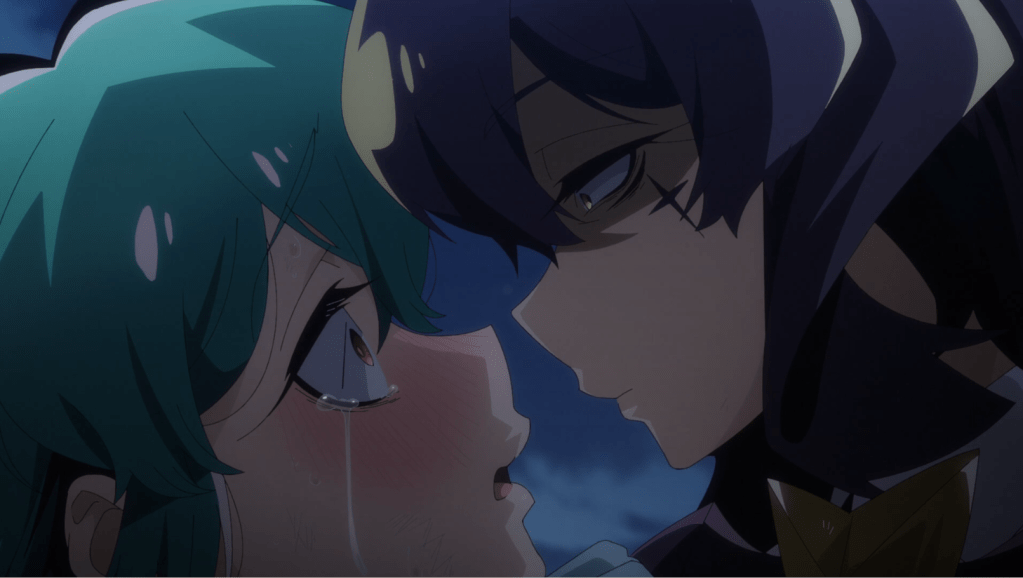
Utena isn’t the only one on a journey of sexual discovery, either. Tres Magia member Azure gradually discovers masochistic thrills through various times Baiser binds and/or blindfolds her, which she mightily struggles to come to terms with, and defensive specialist Sulfur is heavily implied to relieve her frustrations by going on the offensive. Later on, two characters are essentially forced into a lesbian scenario by Basier, but as their backstories come out, that scene could easily be looked at as them being pushed to act on something that they were already inclined towards doing with each other. Tres Magia leader Magenta, though the purest and most straight-laced of the trio, also discovers her own kink at one point. A lot of commentary could also probably be made on S&M play in general here, but I don’t feel knowledgeable enough about that realm to engage in that discussion.
A certain amount of plot is present in the story, though prior to the appearance of the Enormita elites in episode 8, it mostly involves the implication that Venalita is scheming something big that he’s not letting his girls in on. (But do pay attention to news broadcasts early on, as one point brought up in them becomes significant later on.) Even after the elites show up, the series is still largely character-centered, with nearly every recurring character except the mascots getting a good amount of attention. Easily the most interesting developments involve Utena/Baiser and, to a lesser extent, Azure. As much as Baiser gets off on tormenting and humiliating Tres Magia members, she is never actually interested in beating them. In fact, the series’ strongest scene comes when she takes great offense to Azure seeming to give up and succumb to being Baiser’s slave – an act that, if allowed to finish out, is strongly implied would be Azure’s downfall as a magical girl. Utena doesn’t want that; even in Baiser form, Utena still idolizes magical girls, so she expects them to fight back and eventually triumph. That doesn’t mean she’s above perving out on her own growing lesbian tendencies, but she’s never more happy than when the magical girls rebound and show greater strength.
The personalities also keep things lively. Each side gets an earthy, foul-mouthed girl (Leoparde for the villain side, Sulfur for the magical girl side), and those two are constantly at each other’s throats whether transformed or in civilian identities in school. (The magical girl transformation gives the girls on both sides recognition filters, so neither side knows the other’s civilian identities.) Their sharp words and attitudes definitely give the series some extra spice. Haruka/Magenta, meanwhile, is the epitome of the good-hearted outgoing type who is also effectively the team mom; not hard to understand why she was the first picked to be a magical girl. Neroalice is the quiet, elementary school-aged girl who isn’t subjected to the fan service displays that the other girls are, but some of her reality-bending dollhouse play ends up being edgy, too. Of the Enormita members who show up later, the nun is irritating and the overall leader is more generic in nature, but that may well be deliberate. One quirk of the setting is that there are no male characters at all, not even in most crowd shots.
As might be expected, the technical merits focus their greatest efforts on the fan service, with animation and artistic quality being somewhat erratic outside of that. Baiser in particular gets a collection of great expressions, though, and kudos go to Fuka Izumi for a wonderful performance as Utena/Baiser. (I was shocked to learn that this was her first major role, much less lead role. It won’t be her last.) If this series eventually gets an English dub, this will be a hard performance to duplicate. The musical score also shines in the way it keeps a near-constant playful note even when being dramatic.
In all, Gushing Over Magical Girls is absolutely not for everyone. Even setting aside the rampant nudity, certain aspects may be too edgy for some audiences. If you can handle the ecchi aspects, though, then the series can be appreciated either as a simple, lively ecchi romp or as a bold illustration of burgeoning sexuality.
Note: Because I find this title obnoxiously long, I will hereafter be titling these Spice & Wolf (2024).
Rating: B+
The base concept here seems simple enough: a great wolf has spent centuries being the goddess of the wheat in one village, but due to the advent of advanced farming methods, she no longer feels needed. Hence she takes human form as a teenage girl and hitches a ride with a traveling merchant who stopped in town during a harvest festival. In exchange for using her great wisdom (and, upon occasion, giant wolf form) to help the merchant in business dealings, he’ll help her get back north to a home forest that she’s been away from for so long that she’s forgotten where it is. Yet this concept has spawned a franchise which now consists of 33 novels (a 34th is due out in Japan shortly), 16 manga volumes, two seasons of anime, two visual novels, and two VR games. And now it’s getting a brand-new anime adaptation, too.
This series is a total reboot of the earlier anime versions, so this is a great jumping-on point for franchise newcomers; the only way previous franchise experience will make any difference here is that those who have read deep into the novels will know the identity of one character coyly obscured in the prologue. (This character did appear in one of the VR games, but this is her first animated appearance.) Anime-only fans and newcomers should forget about that character for now, as this adaptation will have to run for several seasons before she appears again.
Evaluated as a stand-alone effort, the first episode does a solid job of establishing the series’ premise and core relationship. Craft Lawrence is aforementioned traveling merchant, a mid-20s man who has worked hard to be modestly successful and always has a keen eye out for new opportunities. Holo the Wisewolf is the local god who has long lived in the wheat of the villages of Pasloe but escapes it during an annual harvest by transferring herself into a sheaf of wheat in Lawrence’s wagon. She takes on the form of a girl with wolf ears and tail and convinces the initially-reluctant Lawrence to take her with him as he leaves town, for she seeks to find her former home of Yoitsu. Some hints of the byplay between the two, which forms the core of the series and is its biggest draw, are already apparent by the end of the episode, though next episode should explore that much more. The series’ other major hook – the focus on medieval economics – also pops up in small ways and will become much much prevalent in future episodes. If the Lawrence/Holo relationship is the series’ core, the economics is the plot driver.
The technical merits of the first episode are good enough, but only that. They excel most at depicting the bucolic setting (one roughly equivalent to Renaissance-era Europe), but the colors seem a little flat; presumably this was done intentionally to emphasize the more earthy feel of the setting. The other visual star is, of course, Holo, who is enough different in appearance from your typical animal-themed anime girl to stand out, and good attention is paid to the expressiveness of her ears and tail. The use of near-nudity here is also distinct, in the way that Holo is thoroughly unconcerned with Lawrence seeing her naked and only covers up because she’s cold, but she’s not actively trying to seduce him with her body, either. (Seducing him in other ways is a whole different matter.) The musical score by Kevin Penkin also does a sufficient job of evoking the right mood, but so far this isn’t his strongest effort.
Since this is a remake of previous animation, comparisons are inevitable. The prologue is new, and this version replaces anime-only character Chloe with original character Yarei (whose role Chloe took over in the 2008 series), but the structuring of the episode beyond these details and the sequence of events are almost exactly the same. The animation is distinctly sharper in this version, but the colors were less muted in the original, and Holo’s ear design has changed. (They’re smaller in this version.) The biggest difference is on the musical front. The OP and ED for this series give decent efforts, and would be fine but unexceptional evaluated on their own, but they fall well short of the high bars set by melancholic original opener “Tabi no Tochou” and delightfully playful original closer “Ringo Biyori – The Wolf Whistling Song,” which perfectly represented the two competing aspects of the series. Penkin’s score, while not bad, also doesn’t measure up to the sterling original effort by Yuuji Yoshino. But, again, that’s a very high bar for comparison. Character designs in this version generally have a bit more rounded features than in the original, but that’s entirely a matter of personal taste.
Outside of the OP and ED (where I feel there’s a clear and strong difference), whether this version or the original is better is a matter of personal preference, though I lean towards the original. Either way, this is the rare anime series clearly aimed at more mature audiences and one that I strongly recommend for adult viewers.
Welcome to my seasonal Guide! (For the debut schedule, see here.) I expect to cover every full-episode series that will be debuting this season and most of the sequels/returning series, including Laid-Back Camp 3, The irregular at magic high school 3, That Time I Got Reincarnated as a Slime s3, Mushoku Tensei s2p2, Date a Live V, KonoSuba 3, and The Misfit of Demon King Academy II. (Demon Slayer: Hashira Training Arc debuts much too late to make this Guide, but I may include a write-up for the first episode based on the theatrical release on a slow day. Also, the new Spice & Wolf series is a reboot rather than a sequel, so it will be covered as normal.) I will not be covering the sequels for The Duke of Death and His Maid, since I am not current on that franchise. Sound Euphonium 3 may or may not be covered, since I’m not sure if I’m current there.
Debuts are listed below in oldest to newest order and may be added multiple times per day on busier days.
Note: Where simuldubs are available, previews are based on the simuldub.
Note #2: With the posting of Whisper Me a Love Song, the Preview Guide is complete!
Whisper Me a Love Song
Streams: HIDIVE on Saturdays
Rating: 4.5 (of 5)
Himari is a high-spirited, newly-minted high school student who falls in love at first sight and listen with the fill-in lead singer for her best friend’s sister’s all-girl band. Yori, the singer, likes to sing on her own but isn’t keen about singing for others and had to be bribed into the fill-in performance. She’s blown away when Himari confesses to her by the shoe lockers the next day and instantly smitten with Himari’s cuteness, but their next encounter leads Yori to misunderstand that Himari was speaking in terms of being a big fan instead. She resolves to be a cool upperclassmen to win over Himari’s heart, too, much to the amusement of the girls in the band. Will it give Yori the inspiration she needs to write a love song?
The first episode of this manga adaption doesn’t really do anything too special, but its execution is nearly flawless. It captures the spirit, energy, and (on one side at least) the nervousness of first love and makes it convincing both that both girls are genuinely in love and that there were distinct factors which attracted. It also works in humor and playfulness without it being distracting. The production values also shine on all fronts; Himari is appealing cute in her design, Yori is convincing as the cool older girl with her own style, and the softer color scheme sets the mood just right. The songs so far are also fitting. This is one of the strongest debuts I’ve seen for a romance (much less a clear yuri romance) in quite some time, and that makes it a likely keeper for me.
YATAGARASU: The Raven Does Not Choose Its Master
Steams: Crunchyroll on Saturdays
Rating: 4 (of 5)
This series originally debuted on Saturday 4/6, but due to some kind of behind-the-scenes delays, it did not become available on Crunchyroll until 4/13. As a trade-off, we got two episodes as a starter. I half wonder if this may have been a deliberate move, since the story makes considerably more sense with a two episode debut instead.
This is a story which takes place in a Chinese-themed land where ravens take on human form and “horses” are giant birds which transport carriages through the air. The land is divided into four sections centered around a central mountain, where the Imperial house sits closest to the almighty Mountain God. The current crown prince is soon to undergo his Rite of Ascension, and the ruling house each of North, South, East, and West have submitted a consort to be his prospective bride. The second son of a noble family from the North has also been selected for a year-long stint as one of the Prince’s attendants, partly as a way to learn proper manners. But there are all manner of twists and intrigues, including the new attendant being cleverer and more capable than he lets on, the Prince being a bit odd himself, and one consort feeling out of place in an environment she was not prepared for. (She was essentially an emergency fill-in.)
In other words, this novel-based fantasy story gives all the hallmarks about being a complicated tale of palace intrigue, with its setting being somewhat reminiscent of The Twelve Kingdoms and its actual mystical elements being only minor background factors. Whereas the recent The Apothecary Diaries was a more character-focused story with the intrigues in the background, the reverse seems to be true here, but it’s still too early to tell. Certainly the first two episodes don’t fall short on the lavish costuming and character designs, but with so little time spent on any of the characters so far and so many potential plot threads, it is yet hard to get a grasp on the overall story. Still, this one feels like it might be worth the time investment to sort out.
The New Gate
Streams: Crunchyroll on Saturdays
Rating: 1.5 (of 5)
Shin, along with tens of thousands of other players, became trapped in the cutting-edge VRMMO The New Gate, with death in the game translating into death in real life. When he finally beat the game, thus allowing everyone else to log out, Shin instead found himself transported to a new world which seemed like it was based on the game but too realistic. He eventually discovers that he is in the game world’s setting, but a few hundred years into its future, and many things have changed. While seeking out someone who may be a former support NPC from his time, Shin decides to become an adventurer and live the life for real.
Wow, this light novel adaptation could only be a more naked rip-off of Sword Art Online and In The Land of Leadale if it used more similar character names. The SAO part of the premise is pretty much hand-waved in the first few minutes, as the story seems uninterested in explaining how and why a VRMMO death game could happen. (And honestly, it doesn’t seem much relevant anyway.) It waste little time in jumping to the Leadale-inspired part and showing how OP Shin is and how much the setting has changed. The problem here is that Shin is as generic a protagonist as can be; Leadale’s Cayna may not have been a ground-breaking character, but she was at least interesting. The setting is also as generic as can be, with nothing shown so far providing even an ounce of creativity. Pair that up with a substandard artistic and animation effort and you have not only one of the season’s weakest debuts but also one which offers little prospects for getting better.
Kaiju No. 8
Streams: Crunchyroll on Saturdays
Rating: 4 (of 5)
This manga adaptation was easily the most-anticipated and most-hyped new title of the season, and its debut episode mostly justifies why. While I have some definite quibbles over certain style points, it lays a solid foundation for what should be one the season’s big action series.
In Kafka Hibino’s world, kaiju are a regular problem, so much so that task forces are assigned both to fight the kaiju and dispose of them afterwards. While Kafka dreamed of being in the former, he wound up in the latter, unlike childhood friend Mina, who has gone on to become an ace Kaiju hunter. A newcomer intent on eventually making it into the Defense Force helps spark Kafka to not give up on that goal himself, but that may end up happening in a way he never foresaw: a small, flying kaiju specifically sought him out for some reason and flew into his mouth, transforming him into a human-size kaiju.
The first episode offers some pretty good (though not stellar) action sequences, but I actually found the most interesting part to be the work being done to dispose of the giant kaiju afterwards, an aspect of kaiju titles that tends to be glossed over if not ignored entirely. On the downside, the artistry isn’t the prettiest at times, and some of the attempts at humor seem too over-the-top. Still, the episode does a satisfying job of establishing main cast member and their situation, delivering the central hook, and evoking a sense of mystery about how and why said hook (i.e., Kafka’s transformation into a mini-kaiju) happens. This one’s definitely a keeper.
The Misfit of Demon King Academy 2 s2 (ep 13)
Streams: Crunchyroll on Fridays
Rating: 3 (of 5)
Now that Anos is widely-known as the rightful Demon King, he can’t very well attend school anymore, so he transforms himself into a six-year-old genius with a suspiciously similar-sounding name so he can continue to attend classes. Some of his more clueless classmates don’t seem to figure this out, which allows Anos to infiltrate the Royalist faction which opposes him and give them a good lesson. He also dreams of a time in his earlier life when he interacted with Militia, the Goddess of Creation. Meanwhile, Lay and new sword instructor Shin come to blows over Lay dating Misa.
Honestly, even though I’ve continued to watch this one, I have lost all track of what’s really going on in the plot, but this has never much been a series where the plot mattered all that much. Watching Avos (badly) pretend to be a six-year-old has its amusement value, and his smug confidence is still as entertaining as ever. This return gets only a middling grade because it doesn’t do anything special.
Viral Hit
Streams: Crunchyroll on Wednesdays
Rating: 3.5
If you’re looking for the most timely and provocative new series of the season, this one may be it. Based on a manwha webtoon, it melds bullying and Vtubing into one ugly combination. It looks at monetizing video streams, the way Vtubers and influencers can carry their endeavors to intrusive levels, how videos of brawls can quickly become sensations, and how those with a bit of savvy can take advantage of any situation; in the latter respect it’s somewhat similar to Oshi no Ko, but much more physically brutal. It may be a difficult episode for some to watch despite generally pretty solid technical merits, but it will definitely make an impression.
The premise is that Kota/Yu (CR’s subtitles use the Korean names even though you can hear the Japanese names in the Japanese dub) is a down-on-his luck, bullied high schooler whose mother is hospitalized long-term and whose part-time job just isn’t cutting it. He’s pretty much at the mercy of a thug in class who’s a successful Vtuber, but after a slugfest with the thug’s producer which accidentally gets recorded and posted goes viral, Kota starts to wonder if making money off of videos might be a solution to his problems. He winds up teaming up with the producer and, apparently eventually, they will work with a girl shown prominently in the closer as well.
Though a lurid look at slugfests looks like it will be a staple element, there is definitely some room for social commentary here, and that makes this interesting. It’s also got a kick-ass opener in “Wild Boy” by hip-hop unit MA55IVE THE RAMPAGE; check that out even if you don’t watch the full episode.
KONOSUBA s3
Streams: Crunchyroll on Wednesdays
Rating: 4.5 (of 5)
Last year’s An Explosion on This Wonderful World! series fell well short of capturing the verve and level of craziness which have been hallmarks of this franchise. That’s not a problem for the first episode of season 3. It ventures full-throttle back into the familiar setting and characters, easily making it the most fun debut so far this season.
Seeing the movie Legend of Crimson first is a necessity here, since this episode is a direct follow-up to that movie. Kazuma is shaken enough by some recent bad encounters with lustful women (some of which were in the movie) that he’s decided to retire from being an adventurer and become a monk. He’s even serious enough about it to go check out a monastery, with the girls in tow. An encounter with an especially cloying monster along the way helps change his mind, but he returns home in time to get an invite to visit the Royal Family, much to Darkness’s horror. Nope, nothing can go wrong there. . .
The second season earned a reputation for using a looser art style, and that is exaggerated even further here – and I don’t mean that as a compliment. The artistry is almost too rough in places, and that’s the main reason I am not giving the episode a maximum grade. It’s still a very satisfying return to form for long-time fans of the franchise and offers a lot of promise for the rest of the season.
Date A Live V
Streams: Crunchyroll on Wednesdays
Rating: 3 (of 5)
Though I have seen all (or at least nearly all) of the animation in the franchise, I’ve never been a big fan of Date A Live, so this wasn’t on my highly-anticipated list. Even so, this sequel is overdue, since the end of part IV left viewers with a couple of startling revelations: who Phantom really is and the full extent of how far Kurumi has gone to keep Shido alive. The beginning of part V is a direct follow-up to that, with no recap, so I highly recommend reviewing at least the last couple of episodes of part IV first.
Essentially, this episode involves drawing the battle lines between DEM and Ratatoskr. Isaac has figured out how Kurumi has been consistently thwarting DEM’s attempts and is planning to use that against her, while Shido and his harem (and sisters) try to come up with a way to get around Isaac’s Beelzebub. Shido also attempts to unlock his forgotten memories to try to figure out who Mio Takamiya is, though that doesn’t work so well. Meanwhile, Shido and his allies are completely unaware of how close at hand Phantom is.
While the series hasn’t entirely set aside the tomfoolery that has always been its trademark, it is at least mostly taking itself seriously at this point. That’s a mixed bag , since the silliness and ridiculous scenarios have always been one of the series’ big draws. However, that does also make its drama aspects more effective, and Kurumi is enough of an increasingly compelling character to be show’s true star at this point.Technical merits are on par with previous installments, so this is a necessary set-up episode.
Mysterious Disappearances
Streams: Crunchyroll on Wednesdays
Rating: 3.5 (of 5)
Sumeriko Ogawa is a tall, very voluptuous woman who’s just turned 28. She debuted as a writer as a child but has had frustratingly little success as adult, though she has a big fan in Ren, a seemingly-young bookstore coworker who loves her writing and constantly flirts with her, though he doesn’t seem to talk to anyone else. The night she turns 28, reading a mysterious book under the moonlight causes an initially-exciting but also dangerous transformation, and Ren seems to know way more about this than he should.
So goes this adaptation of a manga which originally streamed on a seinen website devoted mostly to supernatural tales. (Seven volumes of it have been released in print.) It is clearly aiming to be a dark-edged supernatural mystery tale, and the first episode largely succeeds at that. The twist that there are health consequences for being reverted to a younger age is an interesting one that I have rarely seen dealt with before (where did all that extra mass go?), and Ren certainly has all sorts of secrets to unravel. The visual and animation quality is surprisingly good, too. The camera never lets you forget how full-figured Sumeriko is in adult form, but there is somewhat of a point to it, since it’s used to contrast to her physically immature self. (Still a bit fan-servicey, though, especially in the opener.) Overall, this one is well-enough constructed that it has at least a chance to be good.
The Many Sides of Voice Actor Radio
Streams: Crunchyroll on Wednesdays
Rating: 3.5 (of 5)
We’ve seen series about the behind-the-scenes reality of voice actors a few times before, including series where the characters host radio shows. (This is something that’s long been popular in Japan but never caught on in the States.) However, this light novel adaptation offers a fresher twist: both the main characters, who wind up doing one of these talk shows together, are voice actresses whose public and private identities are so entirely different that they’re initially unaware that they are classmates. The cutesy Yuhi (nee Chika) is actually a quiet, somewhat shy loner who doesn’t understand the appeal of the professional persona she displays, while pure girl Yasumi is actually the gyaru Yumiko. Though they act as chummy classmates in the radio show, they don’t initially get along in real life; Yumiko is envious of Chika’s greater success, while Chika is envious of how comfortably social Yumiko is.
Honestly, this series isn’t much to look at, but the characters have a lot of potential, the premise is strong, and there are already hints a good, somewhat combative dynamic between the two leads. The two characters are so starkly contrasting in personality, appearance, and build (Chika’s the classic cute petite girl, while Yumiko is the classic fuller-figured girl) that it helps keep things interesting, too. This one wasn’t on my radar coming into the season but it might be worth following.
Blue Archivethe Animation
Streams: Nowhere legal (as of 4/9) on Sundays
Rating: 2 (of 5)
Blue Archive is a Korean-originating mobile app game which has been available internationally for the last couple of years. Based on the first episode, the anime version seems to be starting by playing out the games first volume; whether it will continue to cover other volumes, too, is not clear at this point.
The setting is Kivotos, an academy city somewhat in the spirit of Asterisk from the series The Asterisk War. The city is ruled over by a General Student Council, but with the Council’s President now mysteriously absent (which may have something to do with the bloodied girl on a train at the episode’s beginning), the city is in chaos. The handful of remaining girls at Abydos High School struggle to maintain the school despite a massive debt and attacks from outside gangs. That is, until a male teacher (the player in the game version) is sent to help them.
There are a lot of unexplained details here, such as why all of the girls (but not the teacher or other furry-type humanoids) have halos, why some of them have animal ears and at least one has elven ears, and so forth, but I get the sense that this is one of those “don’t fret about the details” situations. This is clearly meant to be a “girls with guns” scenario, and everything else is just cutesy affections. (According to details I’ve looked up elsewhere, the halos grant super-human capabilities and at least some regenerative capability, but they’re not fully understood in the game, either.) Lots of bullets fly in the action scenes, but the combat doesn’t seem to be deadly, and plot be damned; just watch the girls, each with her distinctive idiosyncrasy, and enjoy it! While the girls do look attractive, the world-building is weak, the action is more interested in showing off the girls and guns than being intense, and in general there’s not much sense of logic or cohesion. Maybe this gets better as the story progresses, but right now I can’t see this series amounting to much more than a game advertisement.
Oblivion Battery
Streams: Crunchyroll on Tuesdays
Rating: 2 (of 5)
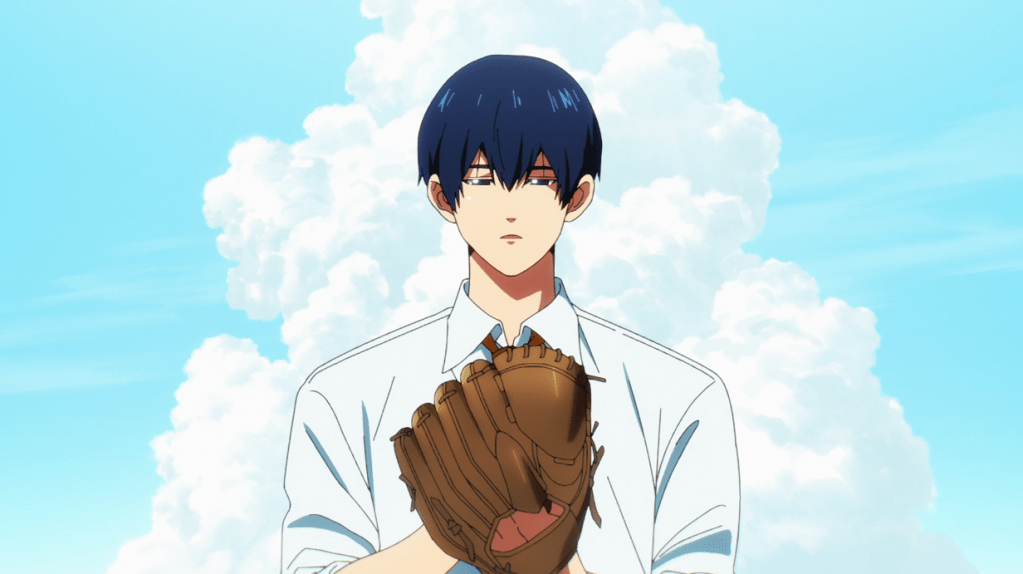
This new baseball series, which adapts a shonen manga, stands out for two reasons, one of which isn’t a good one: it pulls the interesting trick of being about an ace pitcher-catcher combo (hence the “battery” part of the name) but told from the viewpoint of another character, and it has easily the most obnoxious character introduced to date this season, in (former and possibly future) catcher Kei. The gimmick, you see, is that Kei was actually always a screwball, and leaving behind baseball and its disciplined mindset caused him to revert to his worst base tendencies. The reason why that matters is because Kei was apparently in a serious accident that left him with amnesia, and thus no memory of his baseball play with Haruka, a tall, lanky pitcher with such dominating power that only Kei can catch for him at full strength.
While I’m not generally a sports anime fan, I have been known to make rare exceptions, including for baseball. This won’t be one of them, almost entirely because the unleashed Kei is just that irritating. His antics thoroughly overshadow the potential drama of the situation, and the episode’s other attempts to lighten things up are similarly over-the-top. The art style, especially in the character designs, also doesn’t suit me much. I could see this one having some good moments, and Haruka is interesting as a possibly-autistic individual willing even to go to a non-baseball school to be with his catcher/best friend, but I’m not convinced it’s worth putting up with the less agreeable content.
Unnamed Memory
Streams: Crunchyroll on Tuesdays
Rating: 4 (of 5)
I may be slightly overrating this light novel adaptation, but based on its stated premise, this was probably my most-anticipated new series of the season for me, and the first episode gets it off to a satisfying start. In some ways, the base concept is similar to Spice & Wolf: a young but adult man will be traveling and cohabitating with a pretty, young-looking woman who’s actually centuries old. More specifically, Oscar is a prince who’s been cursed to not have any progeny and seeks out a witch who promises to grant the wish of any who successfully climb her tower and endure its challenges. But Tinasha, despite living apart from society by choice (she doesn’t want to unduly influence human society) is actually a kind soul, so no one dies in her challenges and she’ll sometimes help out those with pure motives even when they fail. When Oscar succeeds, she reveals that his “curse” is actually a deviously twisted Blessing, one which so strongly protects any fetus he sires that it would kill any ordinary woman carrying his child. Since that may be impossible to remove (even for the original caster!), Tinasha suggest instead finding a woman capable of enduring that Blessing. And one good candidate sits right in front of Oscar. . .
Essentially, the story looks like it’s going to be about Tinasha coming to live at Oscar’s castle for a year (under the guise of being the witch’s apprentice) while he tries to win her over to the idea of becoming his wife. While hardly a brilliantly original idea, it’s still a neat one, and Oscar being a strong personality rather than a wishy-washy type certainly helps. My one slight concern here is that Tinasha, unlike S&W‘s Holo, doesn’t at all give the impression of being as old and wise as she’s supposed to be; maybe she’s still young by witch standards?
Character designs are pleasing and overall technical and artistic merits are solid, if unspectacular. (The visuals don’t have a particularly distinctive style so far.) The lovely, somewhat melancholy ED could end up being one of the season’s best, so the series will compete with S&W in that sense, too. In some ways it’s kind of unfortunate that this series is airing in the same season as that one, as the character dynamic in that one will be so strong that this one will have a tough time keeping up, but in other ways this one could make a nice counterpoint to Spice & Wolf. I will definitely be following it and don’t rule out episode-reviewing it, too.
Tadaima, Okaeri
Rating: 2.5 (of 5)
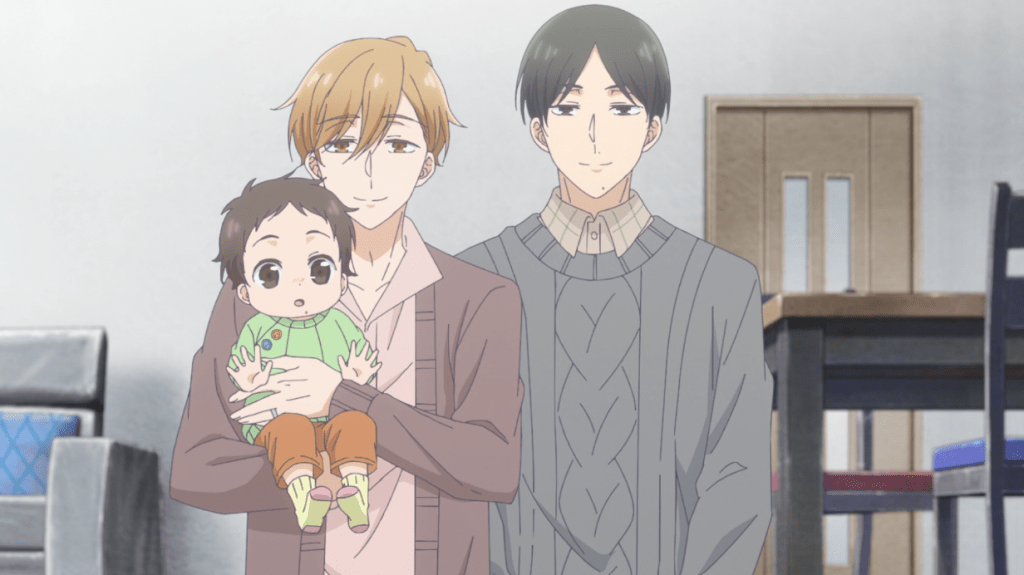
The first episode of this manga adaptation unequivocally proves one thing: a charming, cutesy slice-of-life show about a loving gay couple can be ever bit as bland and boring as a charming, cutesy slice-of-life show about a hetero couple. To be sure, it has plenty of charm and cutesiness working for it, but if that and the tender relationship between the male leads doesn’t have you going gaga then there’s little else here to hold interest.
Actually, there’s one odd twist: in this seemingly-normal world, both genders have people broken into alpha, beta, and omega designations, and there’s prejudice towards out-of-category pairings. (It’s somewhat like a caste system, I think.) The bigger twist is that omega males can still get pregnant, so little Hikari is the biological son of both male leads. An exploration of that aspect of the setting, and how it affects things big and small, might be more interesting, but that doesn’t seem to be the direction this is going. With flat coloring, middle-of-the-road character designs and artistic merits, and the annoying sparkly effects all over the place, this one doesn’t have anything visual to draw audiences, either. Still, I can see this working quit well for the right audiences.
Chillin’ in Another Worth with Level 2 Super Cheat Powers
Streams: Crunchyroll on Mondays
Rating: 2 (of 5)
I will give the debut of this light novel adaptation a little credit: instead of snatching someone from the modern world, protagonist Banaza is borrowed from another fantasy world, with mechanics (though not necessarily culture) similar to his new one. Otherwise, this is a very standard set-up about someone who’s a reject summons to be a hero but still ends up being super-powerful – much more so than he has realized to this point. Exactly why he suddenly becomes ridiculously OP at level 2 (his stats go from single-digit numbers to infinity symbols, and that’s not all) isn’t at all explained in this episode, but given the title, he presumably got some skill that makes him vastly more powerful than the actual summoned hero.
If there’s a reason for all of this then this series might have a chance of being interesting, but otherwise everything about the opener is bland. Unimpressive character designs, ordinary backgrounds, bland personalities, completely standard world structure all are features; even the all-female adventuring party which gets involved with Banaza just ticks off boxes for standard RPG-style fantasy adventures. There’s nothing specifically bad about any of it, but it will need to show a lot more than it has so far to be memorable.
Shinkalion Change The World
Streams: Nowhere legally (as of 4/7)
Rating: 3 (of 5)
Shinkalion is a mecha anime from the 2010s aimed mostly at young audience and connection to a long-standing toy train. (The mecha is essentially a train-type Transformer.) This anime seems to be set ten years after the original (or at least it refers to the enemy having previously appeared 10 years earlier), but no familiarity with earlier installments seems to be necessary. This first episode plays just fine for a newcomer.
That’s because it’s a very generic introduction about a young man discovering that he’s a perfect match for a train-based mecha designed to combat the enemy mecha from before – and hey, they have started to pop up again just as protagonist Taisei joins a Train Club at a new school, a club whose members are secretly part of ERDA, the organization which exists to fight the enemy mecha. Naturally, he’s also got a famous, genius older sister who’s currently missing (and that probably has everything to do with this situation).
Really, the only slight twist here is the train motif. Otherwise this is a fairly blatant Evangelion rip-off, one done with very ordinary-looking technical merits. It does what it does competently, but nothing about it sticks out beyond a banging OP that’s worth listening to even if you don’t watch the episode. (It’s on the end of the episode.)
Girls Band Cry
Streams: Nowhere legally (as of 4/7)
Rating: 3.5 (of 5)
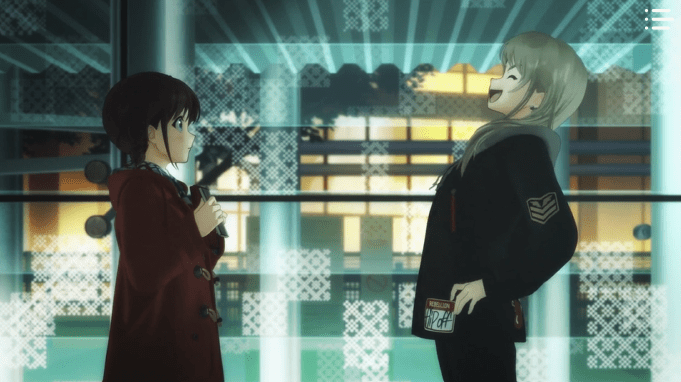
This is an original anime produced by Toei Animation that is being done in conjunction with a live-action act that has already released five singles. For reasons beyond me, it has yet to be licensed for any U.S. streaming service. It is done all in CG of varying quality, and that gives it a visual aesthetic that some viewers may not be comfortable with. If you can get around that, though, then you’ll find a story which features both a storyline and character interactions with the potential to be quite engaging.
In the story, 17-year-old Nina has come to Tokyo on her own in protest of her family, where she feels she doesn’t belong. (And yes, that means she’d dropping out of school.) She doesn’t have any goals yet, but she does run across the singer whose song helped reassure her during a crisis and winds up hanging out with her after a street performance. But that singer is about to get out of performing because she lost out on royalties when her band broke up. Their meeting sets both on a path to finding new purpose. More members should be joining in future episodes, but people at loose ends finding purpose in a meeting is one story element I’ve always appreciated, and Nina and Momoka do have a good chemistry. I am cautiously optimistic here.
Mission: Yozakura Family
Streams: Hulu on Sundays
Rating: 2.5 (of 5)
Taiya lost his family in an accident, which has left him painfully shy as a high school student, with only long-time friend (and school idol) Mutsumi standing close by him. But Taiya is unaware that Mutsumi comes from a family of spies, and her obsessively overprotective elder brother has decided that Taiya is now a threat. The brother is so strong that even the rest of the family can’t reliably stop him, so there’s only one way out: for Taiya to marry Mutsumi and thus join the family, which has a strict “no killing each other” rule.
So yeah, this manga adaptation is an exercise in a young man getting drawn by circumstance into a family of weirdos. One of the siblings is all-white, another sits in a trash can outfitted with weapons, another wears a bucket on her head but has the body of a male pro wrestler, and so forth. All sorts of zaniness will undoubtedly ensue. The problem is that this series has some of the weakest artistry and technical merits of any series to debut so far this season, and struggles in quality control show even in this first episode. The quirky characters and their specialties aren’t enough to offset that. I might try one more episode to see if this one’s going to do anything, but right now I’m not hopeful.
Go! Go! Loser Ranger!
Streams: Hulu on Sundays
Rating: 4.5 (of 5)
This manga adaptation was one of the most hotly-anticipated new series of the season, and its debut episode shows why. It features the super-sentai team Dragon Keepers who fight off an evil organization of monsters in a suspiciously-staged-looking weekly battle, as they have been for many years. The problem is that one of the immortal evil henchmen has fully had enough of the current arrangement: the bad guys have to come up with a weekly monster that will be beaten by the Dragon Keepers as part of a long-arranged truce, presumably to help the heavily-marketed Dragon Keepers continue to look good. But the fed-up Fighter D is determined to change that, so he is going to infiltrate the Dragon Keepers’ training program.
Director Keiichi Sato showed with Tiger & Bunny that he knows how to handle super-hero series, and his Rage of Bahamut: Genesis was one of the great action series of the 2010s, so expectations were running high for this one. He delivers again, providing sharp, stylish battle scenes to go with the quirky premise and interesting behind-the-scenes content on the enemy organization. (The “Monster of the Week” is just one of the evil fighters temporarily taking on a new appearance, which is apparently often decided on the spur of the moment.) There’s a lot to like here, enough so that it should be one of the season’s big hits. I look forward to seeing how the plot plays out.
Mushoku Tensei s2 p2 (ep 13)
Streams: Crunchyroll on Sundays
Rating: 4 (of 5)
The first half of this season took a lot of guff for some of its content (some of it deservedly so), but I ultimately thought it finished strong, with Rudy and Sylphie’s relationship being affirmed. This episode starts off with Rudy acting completely with Sylphie in mind. He’s serious about both marrying her and doing right by her, and in this world that apparently means getting a house first. That gives him an opportunity to team up with Cliff and Zanoba to clear out a “haunted” house, and what they find raises a minor mystery that I could see coming up again later on. Rudy wooing Sylphie remains the main thrust of the story, though, and seeing Rudy genuinely happy is a nice change.
Despite some still shots as the trio is investigating the haunted house, the animation and technical merits in general are still a grade above the norm. This is ultimately a fairly bland episode by series standards, but nothing in here suggests that the franchise’s quality control is dropping off. I look forward to seeing how the rest of the season will progress.
As a Reincarnated Aristocrat, I’llUse My Appraisal Skill to Rise in the World
Streams: Crunchyroll on Sundays
Rating: 3.5 (of 5)
Boy, this could be the big surprise of the season. I came into this isekai show expecting it to be one of the season’s bottomfeeders, and based on the concept, technical level, and all of its story elements (including the MC being able to evaluate everyone in terms of game-like stats), it should be. But execution still matters, and damned if this series doesn’t pull off an unexpectedly involving opening episode.
In this light novel adaptation, Ars was a stressed-out salaryman who likely died of a heart attack before being reborn as the son and heir of a country noble. He’s living a good life but also has realized even by age 3 that the empire he lives in is not in good shape. So he decides to use the Appraisal skill he’s been gifted with to start gathering skilled people around him in order to weather the challenges he sees coming ahead. His first acquisition is a teenage foreigner living on the streets whom he sees as being incredibly skilled, and he’s not about to let prejudice against the young man’s race stop him from making the young man his retainer. Fortunately for Ars, his terribly strong father also appreciates that an “instinct” for evaluating talent is a valuable skill to have.
In other words, Ars isn’t terribly strong himself, but he’s going to get ahead by finding the hidden talents of others, no matter their background. That’s a legitimate and very practical path to success, the kind of thing that can make someone a good leader. And if Appraisal is a bit of a cheat, well, Ars still has to have the will and savvy to use it right. The first episode works because it approaches this seriously and with sincerity and shows characters responding intelligently. The technical merits aren’t anything exciting, but a stirring musical score makes up for that. I’m plenty willing to watch more to see how this concept plays out.
Grandpa and Grandma Turn Young Again
Streams: Crunchyroll on Sundays
Rating: 3.5 (of 5)
The title to this manga adaptation tells you everything you need to know about the premise, but for a little more detail, Shozo and Ine are an elderly couple who have been married for more than 60 years but are still referred to as “lovebirds” by their peers. The morning after they find a golden apple on a tree in their orchard (one originally planted to celebrate their marriage), they awake to find that their hair is still gray but they have otherwise physically reverted to their 20s. What’s more, they’re both considered hotties by everyone around them – including family members.
If you were expecting a serious look at a couple getting a second chance at life, this isn’t it. This is, instead, a fairly rapidly-paced sketch comedy, one which features a number of short bits. This time around they’re mostly centered around everyone reacting to Shozo and Ine getting your again and how that helps the locals in a sports festival, though there is also one bit about the granddaughter and the grandson of one of Shozo’s longtime rivals and how there’s a possibility of them becoming a couple. A lot of it is pretty funny, even if some of it does stray into typical romcom gags. The soft, subdued color scheme and limited animation aren’t going to dazzle anyone, but I found the first episode funny enough to recommend this as a light comedy option for the season.
Vampire Dormitory
Streams: Crunchyroll on Sundays
Rating: 3 (of 5)
What if the boys in Ouran High School Host Club were all vampires? That’s not exactly what this adaptation of a shojo manga is, but comparisons are inevitable. After all, the protagonist is a virtually destitute girl pretending to be a pretty boy, she does break a vase at the work place of male co-protagonist Ruka (a vampire who’s looking for a thrall because it’s a necessity for an upcoming power struggle), and she has to continue to pretend to be a boy for practical reasons. Ruka is also clueless about Mito’s real gender, even though he probably shouldn’t be. (I have to think a vampire’s senses would be keen enough to tell.) The biggest difference is that this series takes itself much more seriously, even with all of the sparkly vampire effects going on, and there’s an actual plot to the story here.
Not that having a plot necessarily makes this good. The series does throw out some intriguing concepts, such as how the taste of blood can be affected by how loved the victim is and how much they love in return, and the quirk that a vampire called Founder is pretending to by Ruka’s butler raises big questions about what Founder is up to. Despite a few too many static shots, it also doesn’t look bad artistically. Those factors buoy this up to a mid-range grade, but the series has a ways to go to make itself as compelling as it wants to be, even with Mito contemplating suicide at one point. (Her life situation really does suck even before the vampires come into the picture.)
Sound! Euphonium 3
Streams: Crunchyroll on Sundays
Rating: 4 (of 5)
This sequel was originally announced in June 2019, but it quickly became a victim of the devastating July 2019 fire at Kyoto Animation’s main studio. But this was too beloved a franchise for a sequel to be permanently nixed, and now, five years later, it finally makes its glorious return.
In this case, “glorious” means “back to the animation quality and story beats fans have long adored.” Previous installments were among the best-looking series of their respective seasons, and this one looks like it will be no different. This time around, Kumiko and crew are the third-years and leaders of the band, and it’s their job to recruit new members for the band and their chosen task to aim for the gold at Nationals this year after falling short last time. Looks like the bass section is getting a bunch of new, somewhat eccentric recruits, including a possible ace transfer student who’s also a euphonium player. Meanwhile, all the familiar faces get re-introduced and the comfortable relationship between Kumiko and Reina continues.
Honestly, this episode doesn’t do anything special, but that’s perfectly fine. One of the hallmarks of this franchise is that the ordinary flow of events still feels special and entertaining. My one quibble here is what it’s always been with this franchise: the very low boy-to-girl ratio in the band, which hasn’t improved at all over time. Granted, this does mean more opportunities for cute girls, but it’s not reflective at all of my own school band experience (where the genders were evenly mixed or perhaps slightly favored boys). But that’s a minor, personal issue. If you’ve liked previous franchise installments, there’s no reason you won’t like this one, too.
Tonbo!
Streams: Amazon Prime on Saturdays
Rating: 1.5 (English dub), 2 (overall)
Wow, how long has it been since Amazon Prime nabbed a new release? And why did they bother to pick up this title? It’s certainly all-ages-friendly, but it has next to zero chance of finding mass appeal among normal anime fans even if it wasn’t on a service little-used by anime fans. I have to think they’re aiming for non-traditional anime audiences here.
The series, which adapts a long-running golf manga (it has a whopping 49 volumes in Japan), features an ex-pro golfer who, it’s implied, has come to the Tokara Islands in Kagoshima Prefecture (southwest of Kyushu) in order to get away from things. There, in such a remote place, he’s shocked to discover an island-made links course and a precocious girl, Tonbo, who seems to have unusual talent with a golf club. Since Tonbo is both an orphan and the only middle school-aged student on the island, presumably she and the ex-golfer will bond over golf.
Sadly, the first episode has nothing else going for it beyond premise, some decent (CG) golf animation, and the fact that a golf magazine is listed as a technical supervisor, so you can be assured that the gold content will be at least somewhat realistic. Technical merits are very mediocre, character designs lean on the cartoonish side, and the English dub is awful; most of the dub actors sound like newbies to voice-over format, and given how off the timing is in place, I’m guessing the ADR director has little or no experience, too. Really, I can’t even recommend this one for golf fans at this point.
Tonari no Yokai-san
Streams: Crunchyroll on Saturdays
Rating: 3.5 (of 5)
In the mountain valley town of Fuchigamori, humans have lived peacefully alongside yokai for ages, so a crow tengu as a neighbor is nothing odd, a family cat transforming into a nekomata is an event to be celebrated, and the ghost of a grandfather reappearing is something to look forward to. Mutsumi is a young girl who lives mostly-happily in such an environment. But a lingering concern about what happened to her absent father also weighs on here.
In some senses, this manga adaptation is exactly the kind of supernatural SOL fare that I fully expected it to be. However, I was surprised by the ominous undertones present when the matter about Mutsumi’s father comes up towards the end of the episode. That add an enticing element which may draw viewers in beyond just those looking for relaxing SOL fare. Buchio is also adorable as the fledgling nekomata who’s a bit on the shy side and hasn’t quite adjusted yet to now being a supernatural entity. Both the character attitudes and the artistry promote a feeling of warmth and comfort, so the series should play well to its style and audience. Not for me, but I can easily see this one gaining a devoted following.
Jellyfish Can’t Swim in the Night
Streams: HIDIVE on Saturdays
Rating: 3.5 (of 5)
This is an original animation from the director of Eromanga Sensei and the creator of Bottom-tier Character Tomozaki, set in Shibuya City, the heart of youth culture in Tokyo. In this set-up, Mahiru is a teen who was once an award-winning artist, but she couldn’t handle the lack of approval from her friends and so stepped away, seeking to be a “normal” high school girl. Her world gets shaken up when she encounters Kano, a former idol who pretty much got forced out after an incident and now anonymously posts her guitar playing online as a sort of revenge. She loves Mahiru’s jellyfish mural and seeks to partner with her. Mahiru is uncertain at first, as Kano seems special to her and represents someone who didn’t back down from adversity, but a spirited performance in front of Mahiru’s mural helps win her over.
This is certainly one of the most visually striking debuts so far, especially in the way it uses color and lighting to contrast to the nighttime settings in Shibuya. The conversations have a smooth, natural-flowing feel to them, and the main characters and their interactions are engaging. The possible negatives here are that the first episode gets a little repetitive in showing where the characters stand and may be a little too on-the-nose with some of its symbolism. Still, there’s an appreciable energy to all of this and the concept is potentially engaging. I am cautiously optimistic about this one, enough so that I’ll probably watch more.
The Fable
Streams: Hulu on Saturdays
Rating: 3 (of 5)
In this manga adaptation, “The Fable” is a name given to a particularly skilled hitman (though he doesn’t care for it much himself). He’s killed too many people, though, so he’s assigned to lie low with his female assistant (who will be posing as his sister) in Osaka for a year. He’s got such a one-track-mind for his job that his boss has to couch it in terms of it being part of being a pro to get him to go along with it, and a “no killing” restriction may be the hardest part of the assignment for the new Akira Sato.
In other words, this looks like a classic “fish out of water” dark comedy scenario, though it does start with the graphic elimination of a human trafficking group. There’s clearly something mentally off about Akira, but his assistant is at least a normal person and the two do have some decent banter as they go through a sequence involving all the odd places he hides guns and gun parts. The almost-too-dark artistic overtones do convey a certain mood but are a bit hindering in places, but the more grounded and gritty look is also less subject to typical anime style points than normal. I could see this one playing well for those who aren’t anime fans, and it’s certainly more mature adult-oriented than most anime fare. Not for me, I think, but this series should find an audience.
Highspeed Étoile
Streams: Crunchyroll on Fridays
Rating: 2 (of 5)
This is an original anime series first announced in 2022 about next-gen auto racing, using vehicles with AI assists and power boosters which can accelerate the cars to speeds over 320 mph for short bursts in straightaways. The first episode here is almost entirely an introduction of the sport in general and a couple of its dominant racers showing why they’re dominant in the final race of a season, with the series’ actual protagonist – the pink-hair, pink-suited, and pink-car-driving Rin – only being barely referred to (much less actually introduced) until the episode’s final couple of minutes. She’s not the only female driver in the sport, either; at least three of the drivers in the race actually shown are young women, including the second-most-dominant one, and there are other young women in the support staffs, so this is much more gender-mixed than most racing is these days.
That being said, character designs which strive to hit just the right mark between cute and sleekly sexy are nearly as much of a focal point as the car designs, so their presence here feels much more like an exercise in fan service than an actual attempt to make any kind of gender statement. This is also all-CG animation, which looks fine when the cars are racing but comes off as stiff when animating people. A musical score mostly composed of classical music numbers is an interesting choice, though. The first episode offers up hints of potential backstories, but if car racing isn’t your thing then there probably won’t be much here to hold your interest.
The Irregular at Magic Academy s3
Streams: Crunchyroll on Fridays
Rating: 3.5 (0f 5)
With everything that’s happened so far in the story, it’s crazy to think that season 3 marks only the beginning of the second year of high school for Tatsuya and Miyuki, but that’s exactly where the story standards. And a new year of school means new characters. Freshly-graduated Mayumi is back for a guest appearance, another flirt with Tatsuya, and to introduce her twin little sisters Izumi and Kasumi, who will apparently be regular cast members. Takumo Shippo also joins the cast as the incoming top student and a young man ambitious enough to potentially cause problems. They aren’t the only introductions, either.
Unlike with the season debut of Slime, though, the series wastes no time in firming up a major plot thread for the arc that’s just starting. It offers the first magic-fueled action sequence and a plot involving a guy who looks like he’s undead who was apparently behind the tower assault last season and is now involved in some kind of media manipulation. Between those, the familiarity of the old gang, the faint romantic tensions, and the family tensions, it’s pretty much business as usual for the series. And that’s not a bad thing.
That Time I Got Reincarnated as a Slime s3 (ep 49)
Streams: Crunchyroll on Fridays
Rating: 3 (of 5)
This episode is a direct follow-up to the events of season 2, so no familiarity is necessary with the two franchise entries which have come out since then (i.e., the movie Scarlet Bond and the short ONA series Visions of Coleus). However, since 2½ years have elapsed since the last series ended, either reviewing season 2 first or watching the recap episode 48.5 first is strongly recommended if you haven’t watched/rewatched s2 recently. This episode directly continues from the end of episode 48 and assumes complete familiarity.
The first couple of minutes conclude Walpurgis with a meal, but after that the entire rest of the episode is about the fallout from Walpurgis and Falmuth’s attack on Tempest. It mostly involves the way Diablo deals with Falmuth and forces them into a compromising position where Tempest is concerned, and he does it (mostly) without violence, too. (Am I the only one who thinks he’s doing all of this because it’s fun for him?) That’s really about it; no hint of a future direction is offered, leaving us anime-only viewers to assume that future plot developments will be built on the loose ends from last season. That and the awful visuals and animation in the new OP and ED are the reasons why I can’t give a better score here.
Astro Note
Streams: Crunchyroll on Fridays
Rating: 2.5 (of 5)
This original comedy series features a pretty standard sitcom set-up: a young man seeking a new job as a chef after being laid off becomes the live-in breakfast chef for Astro Lodge, due in part to being lovestruck on first sight with Mira, the lodge’s manager. (The anime describes it as a “shared house,” but a boarding house might be a more accurate description.) Naturally the lodge hosts a passel of quirky residents, including an indie idol, a jobless man and his precocious son, an old geezer, and a seeming poodle who really doesn’t like protagonist Takumi (and also, curiously, really doesn’t like to be walked). But Mira has a secret: she’s actually an alien princess, who’s come to Earth to look for a key critical to ascending to the throne of planet Wid. (Exactly why this key is on Earth is, of course, not explained in the first episode.)
In other words, this is basically the Rumiko Takahashi classic Maison Ikokku with some elements borrow from Alien Princess series for good measure, complete with Mira being a horrible cook and an opening spaceship-chase sequence borrowed from To Love-Ru. This is a more mature-leaning series in look and feel (all of the characters except the son are adults), and is fairly well-animated, but even with the supernatural flavor this is still mostly a standard wacky sitcom set-up, and not an overly funny one at that. I might watch one more episode to see how involved the sci-fi elements are, but I can’t see it making the cut for my viewing list with so many other high-priority titles available this season.
Wind Breaker
Streams: Crunchyroll on Thursdays
Rating: 4 (of 5)
In this manga adaptation, Haruka is the rare individual who actually looks forward to joining Furin High School, a school full of delinquents, because he intends to fight his way to the top. But he soon finds out, to his dismay, that some things about Furin aren’t what he expected. A gang of Furin students have taken it upon themselves to police the local area and eliminate troublemakers, something that local citizens are firmly behind. They – and in particular restaurant operator Kotoha – also look favorably on Haruka for his efforts to beat down bands of thugs, something that he’s not at all comfortable with, since he’s had such a long history of not being accepted (due to his mixed hair and eye colors) that he’s come to expect that.
I am not a fan of delinquent shows, so the fact that this isn’t getting an even higher rating should be taken as a partial prejudice against this kind of title. But this debut is just that effective at driving home where Haruka stands mentally and what kind of environment he’s getting himself into. And oh, yes, it has some fantastic fight sequences. This is some of the best-designed pure brawling action I’ve seen in a weekly series since Ben-To, and I’d recommend watching for the fight scene which starts around the 13 minute mark even if you don’t watch the rest of the episode. (In particular, a sequence where he runs through some guys to drop-kick a guy holding a knife on Kotoha stands out.) Not a keeper for me, but this one will find an audience.
A Salad Bowl of Eccentrics
Rating: 4
This light novel adaptation is a reverse-isekai tale featuring 13-year-old Sara, a princess from a fantasy realm who escaped through a portal to a new world (i.e., modern Japan) when her empire was sacked in a rebellion. She winds up becoming the guest of Sosuke, the poor private detective who unwittingly broke her fall when she emerged from the portal. She adapts to modern Japanese life quickly and also proves that she won’t necessarily be a freeloader, since she has magic which can help him greatly on her cases. Meanwhile, Livia, a female knight who was Sara’s last defender in the other world, has also made it through the portal and is quickly (and surprisingly enthusiastically!) adapting to the life of a homeless person.
The first episode shows all of the spunk necessary to make this a fun little view. Sara has the sharp, quick wit one would expect in someone who’s been raised amongst palace intrigue and prepared from a young age to possibly eventually rule, and her long-time love of new things means that little fazes her. Couple that with engaging enthusiasm and it’s not hard to see how she can pretty much run over Sosuke. Livia (who looks like she going to be the series’ fan service bait) also shows potential as a fun character in briefer appearances, one who can get down and bloody when need be but is normally high-spirited in her own way. The OP suggests that at least one or two others from the other world might eventually show up, too. Technical merits aren’t the strongest, but the character designs are appealing and every factor promotes the tone well. This one’s a keeper.
A Condition Called Love
Streams: Crunchyroll on Thursdays
Rating: 3 (of 5)
In this shojo/josei manga adaptation, Hotaru has live a whole (nearly) 16 years without romance. She has good friends and family, but doesn’t really understand romantic love. Her first real opportunity to explore it comes up when Hananoi, a popular guy, declares her his soul mate and asks her out. She’s uncertain, but he’s clearly serious about it and doing everything he can to appeal to her, so she eventually decides to give dating a try and see if she can learn about this intense emotion for herself.
In other words, this is about as standard a set-up for a budding romance as they come. That Hananoi’s behavior borders on obsessive is a little concerning, but I could easily see that being interpreted as desirable devotion and honest commitment, too. At the very least, Hotaru seems like a girl who has her head on straight, and she’s got plenty of cute appeal working for her, too. She’s a likable enough lead to carry the series. Technical merits aren’t bad (the screenshot is the worst the artistry ever gets), the artistry isn’t a slave to shojo style points, and the musical score hits the right notes for the tone, so this is a decently well-constructed first episode. I just don’t see anything here that’s going to win over those not normally into shojo romances, though.
An Archdemon’s Dilemma: How to Love Your Elf Bride
Streams: Crunchyroll on Thursdays
Rating: 3 (of 5)
I waffled a lot on how to grade this one, as in some senses this light novel adaptation represents one of the more unsavory trends in fantasy anime in recent years – i.e., the Sexy Slave Girl trope. In this case, the socially awkward badass is Zagan, a powerful, friendless sorcerer who offers an outrageous sum for the elf Nephy after falling in love with her at first site during a slave auction. Naturally, he has no clue how to talk to her, and she seems convinced that he intends to use her as a sacrifice for his experiments. (He indicates that he sees little net value in using sacrifices like that, so we know he won’t even if she doesn’t.) That makes their initial interactions possibly even more uncomfortably awkward for Zagan than they are for her. There’s also a mystery about Nephy being a “cursed child,” too.
The Sexy Slave Girl trope usually goes hand-in-hand with the girl’s life becoming better under her new master, so he is effectively “saving” her, and this series – for better or worse – seems to be going down that route. That will definitely not set well with some audiences, though I do see something noble in the way it looks like Zagan’s first task is going to be convincing Nephy that life is worth living. The execution of the episode’s first post-OP scenes is also incredibly awkward. Despite all of this, I found a certain amount of charm developing as the episode progressed and some genuinely funny moments in the episode’s latter half, enough so that I may actually follow it even though I’m not expecting much from it. Though the premise has some elements of The Ancient Magus’ Bride, the tone is much closer to I’m Giving the Disgraced Noble Lady I Rescued a Crash Course in Naughtiness, and I did find that one to be a fun view.
Laid-Back Camp s3
Streams: Crunchyroll on Thursdays
Rating: 3.5 (of 5)
I was tempted to just say, “Yuru Camp is Yuru Camp” for this one, because that’s an apt description: if you’re already a franchise fan, the first episode of this season is exactly in line with the tone, spirit, and flow of the previous seasons, so there’s no reason why you wouldn’t enjoy this, too.
This episode is a direct follow-up to the send of the second season, so seeing the movie first is not at all necessary. (Familiarity with the characters is expected, though, so this is not a good jumping-on point for newcomers.) The episode is split between Rin and the rest of the girls. The former is reminiscing about her first “camping” outing with her grandfather while on another solo camp, while the latter are up to normal silly antics while crafting homemade alcohol stoves and planning a “day camp” in the yard at Ena’s house. As usual, the episode has its share of scenery porn and plenty of attention to detail, and young Rin is adorable. Nothing too exciting, but this relaxing weekly view is very much welcome back.
BARTENDER Glass of God
Streams: Crunchyroll on Wednesdays
Rating: 3 (of 5)
This series adapts a 2004 manga which was previously adapted into a 12-episode anime series back in 2006. While it changes up a few details compared to the 2006 version, it follows the same premise and progression: a bartender is being sought for a bar set to open in a new hotel, and employees of the hotel are feeling very put-upon with the vague requirement be able to pour a “Glass of God.” After several failures, they finally get the break they’re looking for in the small, private bar Eden Hall, where a man who had seemed inept in previous encounters with the employees proves to be impeccably skilled behind the counter.
This marks the second series this season (after Spice & Wolf) where the reboot seems unnecessary. Since the manga had only been out for about two years at the time of the first version, I can only conjecture that this version is going to adapt additional content as well as doing some minor technical updates. It is using real liquors and mixed drinks, and plays like a foodie series for drinkers, so I could see some appeal here for the drinking crowd. It also looks pretty good and is rich in detail. As a non-drinker, though, it’s just not something that I can get enthusiastic about.
The Banished Former Hero Lives as He Pleases
Streams: Crunchyroll on Mondays
Rating: 1.5 (of 5)
Extra-length or dual-episode (or longer!) releases have become more common over the last year or so, but not every series which has had them has actually needed them. This light novel adaptation definitely didn’t. Sure, the second episode introduces what will apparently be two major recurring characters and elucidates more on a plot angle suggested by the first episode, but absolutely nothing in episode 2 is going to change anyone’s initial impression about the series: that this is a near-bottom-of-the-barrel OP protagonist reincarnation tale.
In this case, Allen is a Duke’s son regarded as such a failure that he’s disowned in favor of his younger brother, but he’s fine with that because he’s been hiding the fact that he’s a reincarnated hero, who retains all his previous powers and fighting skill, and wants to live the ordinary life he couldn’t in his previous one. (There’s no indication that he was a hero from this world or a different one, so this may or may not qualify as isekai.) He meets up and starts traveling with a princess who used to be his betrothed and is secretly a saint, one who is being targeted for elimination by Allen’s father. He also meets a young woman who’s the current hero and a female elf blacksmith and beats a dragon. All of this is nice, inoffensive, and unremarkable to a fault, and some of the season’s weakest technical and artistic merits don’t help. Honestly, I can’t think of a single reason to recommend this series to anyone.
I Was Reincarnated as The Seventh Prince
Streams: Crunchyroll on Mondays
Rating: 1.5 (of 5)
Lloyd, seventh (and by far youngest) prince of Saloum Kingdom, is secretly a reincarnation of a commoner magic student who adored magic but was unable to stand up against the bloodlines of a noble with far stronger magic, and so died. In his new life, though, he has the mana he needs to be able to delight in analyzing and developing magic, including forcing a demon sealed in a forbidden library in the castle to become his familiar.
The two minor factors this series has in its favor (and the reasons I’m not giving it a minimum ranking) are some eye-pleasing female character design and a training sequence that makes for a respectable action piece. Beyond that, though, this is an utterly forgettable light novel adaptation about an obnoxiously OP protagonist. It doesn’t even have the guts to go for anything more than undefined nudity in a bath scene where there’s plenty of opportunities for it, and what is with the outfit that no self-respecting 10-year-old boy would ever be caught wearing? I’ve been known to watch out low-grade isekai series just for brainless entertainment, so I may give this one more episode, but I can’t see it being a keeper in this packed season.
Re: Monster
Streams: Crunchyroll on Mondays
Rating: 3.5+ (of 5)
I almost rated this light novel adaptation even higher, but I’m going conservative on the rating to start because its action scenes take substantial animation shortcuts. Even so, this is an isekai title which makes a quick stylistic impression, and not just because it’s one of the bloodier and more viscerally violent examples of its genre. The pacing, style, and especially keen use of musical score all make this one a grade above the average. Director Takayuki Inagaki had a critically-acclaimed hit with his last outing (Birdie Wing), and while I don’t expect this title to be as big, it has potential to be at least somewhat memorable.
In the story, Goburo was a human who got brutally stabbed to death by a woman in a high-tech, battle-strewn world where esper powers exist. Rather than get a special ability on reincarnating as a goblin, he carried over a previous ability akin to Fate Graphite’s Gluttony skill in Berserk of Gluttony: he gain skills from what he eats. (And eating is a big thing in this setting, which is stressed heavily in the visuals.) He uses that to rapidly evolve himself into a hobgoblin and effectively become the leader of his cave. And he intends to make his cave flourish.
The one possible negative for some here is that goblins in this setting appear to be much like in Goblin Slayer: though there do seem to be female goblins, they keep human women for breeding stock. This is just barely touched on and then forgotten, though, so the story doesn’t obsess over the point like Goblin Slayer does. Also, that it’s quite violent should not be underestimated; the artistry loves its blood splatters. Still, I’ll definitely be watching more of this one.
Spice & Wolf: merchant meets the wise wolf
Streams: Crunchyroll on Mondays
Rating: 4 (of 5)
I’ve got waaaay more to say about this one than will fit in a Preview Guide format, so I’m taking this series straight to episode reviews. Will put that out later on Monday 4/1, once the other debuts for the day have been cleared.
Gods’ Games We Play
Streams: Crunchyroll on Mondays
Rating: 2 (of 5)
In this light novel adaptation, gods have been challenging humans to games for an apparently very long time. To give humans a sporting chance, certain humans – who are called Apostles – are granted super-powers which can mostly only be used in the alternate realm where the games are played. Apostles lose their powers if they register three losses, but if they get 10 wins first, they get a “Celebration.” No human has ever accomplished that feat, but genius Apostle Fay, who’s won his first three games, just might. He winds up becoming the supervisor for recently-discovered “former” goddess Leshea (who looks uncannily like a woman he knew in childhood that he’s been looking for), who’s gotten stuck in the human realm and is looking to use the Gods’ Games to get her way back to her home realm. And she’s determined to make Fay her partner in that endeavor.
Essentially, this is a Creative Challenges series mixed with a Genius Shows Off trope. There are a couple of interesting bits of world-building in play here, such as the implication that humans mostly don’t dominate their own world. That raises the somewhat intriguing possibility that the human realms could be artificial, too. That seems outside of the far less interesting focal point, however, and that’s the main problem. Neither of the main characters introduced so far is all that compelling, but the first episode is also saddled by a musical score which sounds like it’s borrowed from a second-rate VN and very shaky production values; a couple of scenes have some distorted body proportions, for instance. Stuff like that wouldn’t be unusual in a mid-season episode where the production is struggling to stay on schedule, but it’s a bad sign for a first episode. I might check out one more episode of this, but don’t see much promise here.
Studio Apartment, Good Lighting, Angel Included
Streams: CR on Saturdays (1st episode debuted a week early)
Rating: 2.5 (of 5)
The Supernatural/Alien Girlfriend trope has been a staple of anime romcoms for more than 40 years now, and the first episode of this manga adaptation shows it to be as pure and generic an iteration on the concept as they come. Really, the set-up could not be any more ordinary: Shintaro is living alone in a studio apartment while attending high school and working at a restaurant (his family, who is paying for the apartment, is not present but in the picture). One morning he finds a sexy girl sleeping on his balcony, who turns out to be an angel named Towa sent to Earth on what essentially amounts to a study mission. Naturally, they’re both such good-natured people that they start cohabitating despite Shintaro’s limited space.
If you’ve seen Oh! My Goddess, you’ve pretty much seen this, with the slight exception that this one much more distinctly leans into (mild) fan service. Aside from Towa’s character design, absolutely everything about it so far is as generic as can be; Shintaro could be the long-lost identical twin to Nasa from TONIKAWA (another series which has some very similar vibes) and nothing else is exceptional about the production values. The OP (given at the end of the episode) indicates that more girls will eventually enter the picture, so this could eventually be a harem-type series, too, but again, nothing even slightly fresh there. The first episode is competently made and paced, so I can’t give this too low a grade, and this series may work fine if you’re looking for something comfortable and familiar. If you want a bolder or fresher viewing experience, though, look elsewhere.
Train to the End of the World
Streams: Crunchyroll on Mondays
Rating: 3.5 (of 5)
In this original anime series from the director of Girls und Panzer, Shirabako, and Another, the advent of the brand-new 7G network sure changed the world, all right – to a reality-altering degree. Two years later, all adults have turned into sentient animals, as does anyone who ages past 21¼ years, and the physical environment has warped in places, too. Electrical grids are limited and non-local transportation is difficult. In this environment, four girls from a rural village set out on a train to seek a friend who left town before the accident. Their destination is Ikebukero, where a newspaper picture places her only a month earlier.
Really, haven’t you ever wondered if the advent of some new communication network might upend the world more literally than the pitch for it claims? Essentially, this series takes that idea and runs headlong with it. Advertising trailers were very coy about exactly how weird this one was going to be, as they focused almost entirely on the girls and only included animals in innocuous ways, but the end result is satisfyingly different enough that this may be much more than just a “cute girls do xxx” series. The series also works quickly; in just 23 minutes it sets up the concept, distinctly establishes the core cast and the various weirdnesses apparent from the girls’ perspective, and gets its central premise of a train journey rolling. The animation effort from studio EMT Squared is unexpectedly strong, too, the background art is sharp, and character designs – both human and animal – are appealing. The pacing feels a bit frenetic, but otherwise this is a solid opener for a potentially intriguing concept.
With the last handful of titles for the Winter 2024 season having now aired, let’s take a summative look at what worked well and what didn’t this season.
Because of the high volume of titles I managed to follow this season, covering every one of them here would make this post cumbersomely long. Hence I I will only cover those titles where either my opinion has change markedly since the Mid-Season Round-Ups or I have additional commentary to offer.
The following titles from Mid-Season Round-Up part 1 will not be covered here, so refer to the original post for opinions: Fluffy Paradise, Hokkaido Girls are Super-Adorable!, Tales of Wedding Rings (beyond a 2nd season being announced), The Undead Unwanted Adventurer, Tsukimichi – Moonlit Fantasy.
The following titles from Mid-Season Round-Up part 2 will not be covered here, so refer to the original post for opinions: 7th Time Loop, Chained Soldier, The Wrong Way to Use Healing Magic, Solo Leveling. The Witch and the Beast still has at least one more episode to go as I write this (its schedule was thrown off by an unplanned off week), so I may write that up separately.
Gushing Over Magical Girls will also not be covered here because a separate write-up on that is definitely pending.
Banished From The Hero’s Party s2
Season Rating: B
I’ve seen some complaints that this season is a step down from the first because it focuses too much on new Hero Van, who is a far less interesting character, but I can’t agree. Red’s interactions with Van create a good dynamic in the last third of the season, one that may not be as endearing as Red’s interactions with Rit (or, to a much lesser extent, Ruti) but allow him to show off his nurturing side much more clearly. Other characters get their chances to shine, too, especially Theodora with her potential romance, and the last episode caps this season exactly the way it should. The business about the mysterious elvish runes and chimeras unfortunately hasn’t gone anywhere yet, but that seems more a teaser for possible future content. If we get no more animation here then this is at least a pretty good stopping point.
Brave Bang Bravern
Series Rating: A-
This was always going to be an entertaining series, but I did not expect it to wind up being compelling, too. Kudos to director Masami Obari for understanding perfectly the passion which drives this kind of cheese and exploiting it to the max, resulting in an utterly glorious finale and many other strong moments along the way. I especially liked some of the savage twists in the later stages of the series and how they ultimately handled Lulu, all without straying in the slightest from no-so-vaguely homoerotic aspects of the series. This was a blast to watch from beginning to end, with my only complaint being that the secondary cast largely gets ignored for the last quarter or so of the series. This is easily one of the top two new series of the season.
Delicious in Dungeon
First Cour Rating: B++
Not everyone was a fan of the more foodie-oriented early episodes, but the series gets stronger as it focuses more on dungeon ecology (something woefully under-explored in other fantasy anime) and the urgency to act on bringing back Falin finally increases. That culminates in the series’ two strongest episodes: the battle against the dragon in episode 11 and the resurrection of Falin in episode 12. If I were rating the series on those two episodes alone, the first half would get an A instead, as they forge into some aspects of dungeon crawls that are barely touched upon and feature a decision doubtless to have deep consequences. If Metallic Rouge is on a downward trajectory, this is on an upward one, to the point that this series is the other of my top two among newly-debuting titles this season.
Doctor Elise: The Royal Lady With The Lamp
Final Rating: B-
I still really want to rate this higher, as this is a series that I got engaged enough with that it actually became a viewing priority. The latter part of the series also builds a bit more on a notion present from the beginning: that Empress Elise may not have have been fully culpable for the offenses which got her burned at the stake in the first go-around, despite what Elise believed about that herself. In particular, it stresses more the factions within the empire, who are determined enough even to attempt to kill Elise at one point, which vaguely suggests that her gullibility in her first life may have been manipulated. These suggestions don’t entirely let Elise off the hook, as there are also suggestions that she was too self-centered and ignorant to have picked up on what was going on. Definitely feels like that line could be explored more if a second series is ever made, and the series doesn’t get to “the lamp” part of the title by its end. The last episode in particular also feels rushed, with some important details glossed over. (An attempted assassination of an unofficial royal fiancée warrants far more hubbub than it got, for instance.) Mediocre technical merits also limit the series greatly. Despite the series’ flaws and oversimplifications, though, Elise is still a heroine worth rooting for, and she certainly earns the attention of the crow prince this time. I will definitely watch more if a second season is made.
Frieren: Beyond Journey’s End
Series Rating: A
If I was rating the series on the second half only, I might give it an A- instead, as the First-Class Mage exam felt a little stretched out and too prone to some shonen action conventions. Stark’s minimal involvement was also a bit of a letdown. However, the series still fully delivered on its featured action sequences, sentiment, running jokes, and themes, and the exam introduced several interesting and/or likable characters, too. I’ve seen spoilers which indicate that several of them will pop up again in future story arcs, and I welcome that. Overall, this is still one of the best of all anime fantasy series, the #2 title for the season (narrowly edged out by The Apothecary Diaries), and an early strong contender for being one of the year’s top titles.
Ishura
Rating: B
Ishura is a series which seems to be taking the long path from the beginning, and that may have contributed to why it did not make a positive early impression. This first season, which looks like it adapts only the first source novel, spends several episodes introducing potentially major players – individuals who have abilities well beyond those of normal humans – before thrusting all of them into a pitched battle between an empire and a breakaway city-state. Several don’t survive, but the ones that do will move onto the next stage: a competition to see who will be crowned the True Hero, all apparently orchestrated by the suggestion of a young empress. In other words, the whole season is just one big introduction and set-up, one where the pretenders are weeded out from the legitimate contenders. The series plays better with that understanding. The darker, grittier aesthetic may throw off viewers more used to brighter and bolder colors in anime, but that actually suits the tone of the work well. I’m hesitant to give this one a higher grade until I see more about where it goes, but it has long-term potential.
Metallic Rouge
Rating So Far: B- (and descending)
I’ve seen many series which start out with several episodes of a mostly-episodic format before clicking into higher gear as the bigger plot eventually emerges, and almost invariably, those series get better when they do so. Metallic Rouge is the exception. The series’ strongest points were actually when Rouge and Naomi were just dorking around on one assignment or another, as the two have an excellent chemistry with each other. The common sentiment is that the series lost its way as a plot too convoluted for its run time took hold, and I can’t disagree with that verdict. The series also misses the mark on fully carrying through on whatever themes it’s trying to accomplish; this “artificial people are people too” story has been done several other times (both in anime and out) and done way better than this. Technical merits have also become more erratic in the late episodes, which distinctly gets in the way of the series’ Cool Factor. At least the English dub remains very solid; this is the first major role for Monica Flatley (the voice of Rouge), and she gets her character’s attitude down flawlessly. Episode 12, which aired on 3/28, does not seem to be the final episode, so I guess an episode 13 is coming?
Shangri-La Frontier
Rating So Far: B
It somewhat pains me to drop this series’s grade after delivering so many great action sequences, but the more meandering path the series has taken since the epic Wethermon battle has been a bit of a letdown. Cool fights only go so far when there’s nothing much compelling which backs why they’re happening. It’s still a solidly entertaining series, but it has definitely fallen out of priority viewing status for me over the past few weeks.
Synduality: Noir s2
Season Rating: B-
Through to its end, I could never quite escape the impression that this series was merely retreading over terrain that’s been well-traveled before. Indeed, its late episode are, in many senses, highly reminiscent of the late 2000s Gonzo series Solty Rei, though this series never achieves quite the emotional appeal of that one. Still, seeing Noir and Mystere side-by-side and the former finally start to come into her own in the series’ final stages was quite satisfying, much more so that the comparatively weak bigger plot ultimately was. Many of the Magus also grew on me over the course of the series as characters on their own. Overall, though, the series was hampered by taking so long to turn Noir into a compelling character and relying on an utterly uninteresting main antagonist, hence the reason why I’m lowering the overall grade. Still decent entertainment, but not especially memorable.
The Foolish Angel Dances with The Devil
Series Rating: B-
While hardly the epitome of of great teen romance, the later episodes sold the budding relationship between mortal enemies well enough as the two navigated a number of crises, including the revelations that neither may exactly be normal for their type. The more concerning aspect is that the artistic quality became considerably more erratic in the late episodes, especially the last one. Still, that’s not a crippling problem. The series isn’t a gem, but it’s better (and more entertaining) than what its ratings on some other sites might indicate.
Villainess Level 99
Series Rating: B
The quirky fun factor of this one never lets up, and kudos to Patrick for persevering with such a difficult romantic case like Yumellia. What makes this one noteworthy within the “playing the villainess in an otome game” genre is the way it handles the game’s overarching story. Late episodes show that the game’s plot is a tangible force which can compel certain characters to act certain ways in order to advance the plot, even if that means them acting contrary to the way they have changed and developed thanks to Yumellia, and that has some intriguing possibilities and implications. The revelation of how the Demon Lord fits into the prejudice against dark hair, and how he became the Demon Lord in the first place, is also interesting. Overlook the shoddy CG on the dragon and the limited animation in places and this was one of the season’s solid mid-tier performers.
That will be all for now. I am expecting to post a review for Gushing Over Magical Girls on 3/31 and start the Spring ’24 Preview Guide on 4/1. (One series is having a streaming debut on the 30th, a week ahead of its TV debut, but it hasn’t been claimed yet and it’s not clear if it will be available that day. If it is then the Preview Guide will also start on the 31st.)