With “New Town and Nostalgic Feeling,” the series begins the adaptation of novel 3, thus following the exact path trod by episode 1 of season 2 of the original adaptation. And like that adaptation, the depiction of Holo’s hangover after a night out drinking the strong stuff is epic. Whether this version or the original is better is a complete toss-up:
The best joke aside, this episode begins the Kumersun arc, which takes the duo to a new town on their gradual trek north. Much of the episode involves the series playing to its greatest strength: the byplay between Lawrence and Holo. And both are in fine form here. Though Holo still gets the better of Lawrence more often than not, he is learning, and is at least sometimes holding his own at this point – something he couldn’t do as recently as a few episodes back. Even when he is doing his best, though, Holo is still clearly enjoying herself. Companionship means everything to her at this point, so it’s no surprise that the seed of the next potential conflict gets sown in a careless comment implying that she might have to make the last leg of her journey alone. To his credit, Lawrence at least realizes that his practical musing should never have been said aloud and tries to take it back, but has the damage already been done?
The matter arises because Lawrence finally gets around to voicing an issue that has lingered in the background since episode 1: does Holo actually remember where Yoitsu is? Lawrence has only heard of it in passing, and “in the north” is much too general to suffice when they are nearing a point where a specific direction must be set. Holo recalling the hot springs of Nyohirra provides some reference, as does that it’s to the southwest and Holo required two days of travel in wolf form to get there, but that still encompasses a massive area. They’re going to need more to go on, and at this point there’s no ready source of information.
The other potential point of conflict takes the form of one of this arc’s major supporting characters: the young merchant Amartie. He’s clearly a few years younger than Lawrence but more successful even though he’s from the same merchant’s association, a point that probably isn’t lost on Lawrence. even though Amartie proves quite helpful in getting them a room. Of course, he has ulterior motive for helping Lawrence and Holo find a room in a sold-out town: he’s clearly smitten with Holo (whom he believes to be a nun) at first sight. And rather than just flirting with her as the coin dealer back in episode 3 did, this is the kind of puppy-dog obsession which portends eventual complications. He also serves as a stark contrast to Lawrence’s older friend Marc, who has his own stand, wife, baby, and even apprentice. (This version does not mention that Marc is older than Lawrence, which I feel is a key detail here.)
The technical merits here are not spectacular, with the rough spots showing most in distance shots of Lawrence and Holo traveling in their wagon. Even so, it’s still a visual improvement on the original, which saw a new studio take over for the second season and a notable drop in animation quality. Which version is better overall is a toss-up, since each has weak points. The original lacks the scene about the letter which warns Lawrence, too late, about the armor prices, while this version lacks the scene about Holo’s dream, which frames their crucial later conversation about their differing sense of time. New closer “Ringo to Kimi” is a wash with original closer “Perfect World;” both are fine but neither is memorable. To my surprise, new opener “Sign” stands up remarkably well against the great original OP “Mitsu no Yoake,” both in song and visuals. It’s a strong early contender to be one of the season’s best.
I have always felt that the second season of the original adaptation was the stronger of the two on the writing front, in part because original writer Isuna Hasekura had honed his writing skills more by this point, so I am eager to see if this adaptation will produce the same results. It will be forging into not-previously-animated territory around mid-season, as the new OP clearly shows the most important supporting characters from the fourth novel, so there’s also that to anticipate.
With the last handful of titles for the Spring 2024 season having now aired (except for the title whose last two episodes have been delayed), let’s take a summative look at what worked well and what didn’t this season.
Because of the high volume of titles I managed to follow this season, covering every one of them here would make this post cumbersome. Hence I I will only cover those titles which meet one or more of these conditions: it earned some seasonal honor, I have updated my grade for it since the Mid-Season Reports, or I I have additional commentary to offer. I will also not be covering Spice & Wolf (2024) or The Archdemon’s Dilemma: How To Love Your Elf Bride here, since both have been covered in separate episode reviews.
The following titles from Spring ’24 Mid-Season Report part 1 will not be covered here, so refer to the original post for opinions: As a Reincarnated Aristocrat, I’ll Use My Appraisal Skill (beyond it getting a second season); Laid-Back Camp 3; Studio Apartment, Good Lighting, Angel Included; That Time I Got Reincarnated as a Slime 3; The Irregular at Magic High School (beyond it getting a movie for its next arc).
The following titles from Spring ’24 Mid-Season Report part 2 will not be covered here, so refer to the original post for opinions: Chillin’ in Another World With Level 2 Super-Cheat Powers,KONOSUBA 3. I did not finish Jellyfish Can’t Swim in the Night, so it will not be covered here, either.
Best of the Season: Delicious in Dungeon
Rating: A-
This was much more of a sure thing for top honors than anything in the previous few seasons (albeit admittedly because of a lack of stiff competition). Though other series achieved some strong content, this one was consistently fun and looked great while doing so. Izumi is a strong new addition as a regular cast member, we got to see a lot more of what makes some cast members other than Laios tick, and this part displayed a greater sense of ongoing plot. It still had its foodie moments and supreme goofiness (the duplicates and the race changes were both inspired ploys), too! This series has been a big enough hit in the fan scene that cosplays of it were common at a convention I attended last month, and that level of attention is warranted.
Worst of the Season: The Banished Former Hero Lives as He Pleases
Rating: D
This actually ended up being a closer call than I initially expected, since one other title almost dropped to its level, but this one isn’t one of the lowest-rated titles on multiple prominent anime sites for nothing. Rarely have I seen a series so completely fail on nearly every artistic, technical, and writing level, and Allen is easily one of the blandest of all OP protagonists through to the end. An ED that is among the season’s best continues to be its one positive merit.
Most Disappointing: Unnamed Memory
Rating: C-
I can’t list this one as the worst because it did have at least some good content, and I still really want to root for Tinasha and Oscar as a couple. However, this adaptation drops the ball badly. Content trims hurt the plausible development of their relationship, while pacing and plotting issues interfere with smooth story progression. In general, the series too often feels like something’s missing, and the way this season’s ending calls into question everything it has striven for up to that point leaves it on one hell of a cliffhanger. I still feel like there’s a good story possible here, so I will be back for its announced second season and hope that the series can get its act together.
The Rest
A Salad Bowl of Eccentrics
Rating: B
If I had to choose which series this season had the best cast of characters from top to bottom, I would probably choose this one, even over Delicious in Dungeon or An Archdemon’s Dilemma. I love the way Sara is able to cheerily roll with any circumstance without ever feeling like she’s a victim of them and just seems to be enjoying life in general, or how (for example) a cult leader can wind up being a girl band keyboard player before being arrested for insider trading, or the sardonic female butler of the lady lawyer or. . . well, you get the idea. The series never does manifest much of what could be called an actual plot, but that’s fine. I’m perfectly content to watch the antics of this bunch of eccentrics as they live their lives. This season looks like it adapted the first three of six currently-available novels, so I do hope we’ll see more, even though its popularity numbers are relatively low on both Crunchyroll and MAL.
Date A Live 5
Rating: B
This arc essentially wraps up all of the plot lines to date, and the end of episode 12 would be a fine stopping point for the franchise as a whole. (There are actually three more novels which could be animated, but the way episode 12 ends leaves things ambiguous as to whether or not that’s going to happen. Frankly, based on the synopses I’ve read for them, I hope they don’t get animated, as they seem like needless additional complications.) Though I’ve never been a big fan of the franchise, I must give the series some credit for how well it brings things together at the end, including the emotional resolution involving Mio.
Demon Slayer: Hashira Training Arc
Rating: B-
This rating is a compromise, with episodes 1 and 8 pulling up a grade that, if given for episodes 2-7 alone, would only be a C. Sure, it never stops being one of the best-looking shonen action series ever, but this arc stretches the storytelling out even worse than the previous two arcs did, all to allow some exploration of the backgrounds for most of the Hashira who haven’t been addressed to date. Sure, that gives some extra insight into why certain characters are the way they are, but how much of that is actually needed to appreciate the last two story arcs? And let’s not forget that most of this arc outside of the first half of episode 1 and all of episode 8 is just training sequences, either. Yes, Muzan has been plotting something, which gets revealed in episode 8, but so has the leader of the Demon Slayers, and that makes episode 8 (rather literally) explosive. but even their pivotal confrontation drags in the way it plays out, all to relate a few more details that, while interesting, don’t seem like they will have much effect on the plot, either. At least everything does somewhat pay off with plenty of spectacle, which sets up the trio of movies that will compose the Infinity Castle arc, but the franchise’s day as a top-caliber title on anything other than technical merits has passed.
Go! Go! Loser Ranger
Rating: B+
I originally had this series graded at a B, and on reflection, I feel that was too conservative. Taking itself mostly seriously has played out favorably, allowing the series to explore the dynamic between the peon monsters and their bosses and how, in some senses, it isn’t that much different from the dynamic between the Dragon Keepers and their subordinates. It also allows for the development of other forces besides just the monster bosses who are looking for any opportunity to take a shot at the Dragon Keepers. Most importantly, D is coming into his own as a character, a monster peon who was never fully content with his role and doesn’t find that attitude changing much when a monster boss shows up. A second season has been announced, and I will definitely be back for it.
I Was Reincarnated as the 7th Prince
Rating: B-
I was not a fan of this series for most of the season, primarily because Lloyd is an irritating little bastard and stupidly OP on top of that. However, my opinion on that started to change a bit as Lloyd got involved with the assassins and thus came into contact with the demons. This not only led to the series’ biggest and flashiest action sequences – which were fairly impressive by general standards, not just this series – but also turned the series decidedly more serious for a while, including not ignoring the status of the assassins after the big fight is over. In short, the series turned from something that was just an afterthought to watch to something I actually looked forward to watching for the final couple of episodes. I’d rate the last third of the series higher, so consider this score to be an overall average rather than a consistent quality.
Kaiju No. 8
Rating: B++
Boy, this one made a hard push as the season progressed! Even early on, it had peak moments which justified all the excitement and promotion that it was getting, but those moments started becoming more frequent as the story progressed. A big plus was showing that Kafka didn’t have to transform to solve all of the Kaiju problems; he’s got some quite capable people around him, too, and he can contribute meaningfully in other ways even without taking on Kaiju form. The series also reached its best non-action moments as Kafka’s secret comes out and other intriguing tidbits – what, exactly, No. 9 is and why the thing inside Kafka seems so dead-set on destroying Kaiju – but its understanding of how to dramatically present monster fights is the true highlight. The only minor negative, aside from being a bit formulaic, is the flat faces in the character designs.
Mission: Yozakura Family
Rating: B
This one started as a pure fluff piece of spy-themed fun, and it hasn’t entirely pulled away from that in its second half. However, more recent episodes have started to take a more serious bent as the broad outlines of a plot gradually coalesce, one which implies that Taiyo’s parents may have been at least peripherally connected to the Yozakuras, and so their deaths may be connected to a shadowy organization which has been targeting Mutsumi. This is hardly a stunning revelation, since Taiyo’s background smelled fishy from the beginning, but it does give a bit more depth to the story. This one looks to be continuing, and it’s proving interesting enough to be worth continuing to follow.
Mushoku Tensei s2p2
Rating: B+
And honestly, this may be underrating the series, because it’s done some wonderful character development work this season, to the point that this is either the #2 or #3 series for me this season (along with Kaiju No. 8). Roxy finally reunites with Rudy, Zenith is finally back in the picture (sort of), and Rudeus doesn’t come out of it fully intact. It also had one of the season’s best action extravaganzas in the hydra fight in episode 22. There’s also a lot of grief to be managed, with a major character death which directly impacts almost everyone, but the series did an especially fine job of handling that. I still hear some complaints about how the writing seems to constantly set up Rudeus to be able to get away with everything in the end – including, in this case, taking a second wife – but that’s selling short how delicate the character development has been for Rudeus. Things did not work out for him without a lot of complications, suffering, effort, and learning as Rudeus grows into being a father figure. I’m also a fan of Sylphy’s new hairdo. More animation is coming, and I will definitely be back.
Re: Monster
Rating: C+
This one was always a naked power fantasy, one where the protagonist was destined to have a sizable and diverse harem in addition to being the strongest around. That the series never shows anything more than that is the main reason why I have lowered the grade. Well, that and the severely truncated time frame, which bothered me more and more as the series wore on; consider that, in just a little over four months, Oguro has gone from being born to being a powerhouse and a father multiple times, as well as having a palatial remodeling of his home cave. There is a slight mystery aspect afoot in some of the ominous advancement messages, but that isn’t enough to maintain my flagging interest. This series has been at least moderately popular, so I can see it getting another season, but I won’t be eagerly anticipating it if one is announced.
The Many Sides of Voice Actor Radio
Rating: B-
While I continue to like this one in general, its progression has not always been smooth. The last quarter or so of the series involves Yumiko struggling with getting her acting to be sufficient for a big role, and yet the exact nature of her acting deficiency is never clearly defined for the audience. Earlier on, a challenge that could bring an end to the voice acting careers for Yumiko and Chika strays too much into melodrama, resulting in a walk that composes the series’ least credible scene. Technical merits are never more than mediocre, either. Also, the light yuri tease never goes away but also never shows any concrete signs of being anything more than that. Still, I found Yumiko’s struggles to be involving enough to come back each week, and I can give the series a mild recommendation overall.
The New Gate
Rating: D+
While there was at least a slight bit intriguing about the basic concept of a “what if” spin on SAO, this series has not done much with it to stand out throughout this season; Schnee’s commentary on how she felt she had no free will back during the game time is a little interesting, as is the way things have developed since the game time and the late revelation that other players may be present in this setting, but that doesn’t make up for the mound of deficiencies. Shin never progresses beyond being a bland Kirito knock-off, few of the newly-introduced characters have much spark to them, and the action scenes lack for dynamic energy even without factoring in the deficient animation. Worse, the series struggles badly at times to stay on model, especially in the last few minutes of the last episode. (The screen shot above is from that period.) This is second only to The Banished Former Hero as the worst of the season among series I finished.
Tsukimichi: Moonlit Fantasy 2
Rating: B
After the first half, I had felt that this one had dropped off a bit, since the exuberant spirit which characterized the first season had dropped off some in the process of what essentially amounts to empire-building. It also has the knock of being a blatant power fantasy. Despite that, its second season’s second half carries itself on the strength of somewhat more involved plot developments, general attitude, capable cast management, and a good sense for staging high-powered conflicts. Having Makoto realize that he knows the female hero from his previous world also promises to put an interesting twist on future events, and there will be more; a third season has been announced. I’ll definitely be back.
Whisper Me a Love Song
Rating So Far: B-
I dislike having to dock an otherwise-strong series just because of shaky technical merits, but there’s no helping it in this case. The animation has been minimalist all season, and the most recent episodes have also shown a pronounced problem with keeping characters on-model and (especially in episode 10) avoiding distorted facial expressions. The problems have reached the point of big scheduling delays; the series had to take a week or two off mid-season, so episodes 11 and 12 will probably not air until sometime in September, if past series with these kind of production issues are a guideline. That’s a shame, because on the storytelling front, the series even had a good, ready answer for where it would go next once the hurdle of establishing Yori and Himari as a formal romantic couple was cleared: delve into why there was an opening in the band for Yori in the first place, and why the former singer is so antagonistic, with Himari (who associated with parties on both sides) as the bridge. (Short version? Yuri feelings are involved there, too.) I still like the core romances, personalities, and character dynamics here, so I hope the extra time allows the remaining two episodes to be more fine-tuned on the artistic and technical fronts.
That’s it for now. A separate review for the Netflix series Grimm Variations, which I have finally finished, is probably forthcoming later this week on a slow day, but otherwise the next dozen or so days are mostly going to be about the Summer 2024 Preview Guide, so check that out as it gets updated!
Note: The last show of the debut season, Moriarty’s Perfect Crime, does not seem to be available, so I am finalizing this and takig it off sticky status. The August debuts will be written about separately as they come up.
Welcome to my seasonal Guide! (The debut schedule will be posted here, although it may not be available for a few days.) We have three series debuting a week early, so you’ll see a trio of entries this week before the Guide starts in earnest on Monday 7/1.
I expect to cover every full-episode series that will be debuting this season and most of the sequels/returning series, including Shy, Oshi no Ko (which may go directly to episode reviews), The Cafe Terrace and Its Goddesses, Tower of God, and Our Last Crusade or the Rise of a New World. I will not be covering the sequels for NieR:Automata Ver. 1.1a, The IDOLM@STER Shiny Colors, MONOGATARI Series, Fairy Tail, or Sengoku Youjo, since I am not caught up on those franchises.
Debuts are listed below in oldest to newest order and may be added multiple times per day on busier days.
Makeine: Too Many Losing Heroines
Streams: Crunchyroll on Saturdays
Rating: 4 (of 5)
Kazuhiko Nukumizu is a friendless high school student deeply invested in light novels, so he sometimes finds himself wondering about the way romances play out in them. High school life gets a little more interesting (though not necessarily better) when he starts noticing the behavior patterns he knows from light novels playing out in real life around him, including getting (unwillingly) involved with a classmate who’s a female childhood friend who’s just lost out to the exchange student and is having trouble coming to terms with that. Later incidents bring him into contact with another such case (the athletic girl) and yet another girl who’s usually on the losing end in light novels (the painfully socially awkward one).
This one had some buzz around it coming into the season, and after the first episode I can easily understand why. In adapting the source light novels, it is essentially taking the meta approach on a focus that hasn’t often been pursued in anime form: the girl who loses out romantically, and not because someone’s being deliberately cruel. It’s a great angle, with Kazuhiko serving well as the would-be-detached observer who’s gradually getting drawn, Kyon-style, into a bunch of different girls’ stories. How efficiently the first episode teases all sorts of additional story threads while still thoroughly exploring Anna Yanami’s emotional turmoil is impressive, but no less so is the remarkably high-grade visual and animation effort. Perhaps most importantly, the episode finds a good balance between lighter scenes (I actually laughed out loud more than once) and more poignant moments. It’s a keeper.
ATRI -MY Dear Moments-
Streams: Crunchyroll on Saturdays
Rating: 2.5 (of 5)
In Natsuki’s world, sea levels suddenly rose hundreds of feet a few years earlier, leaving significant chunks of civilization underwater. That may or may not be connected to how Natsuki lost a leg and mother in some kind of building collapse. Nowadays he partners with a shady woman to use a submarine to investigate the now-underwater house of his recently-deceased grandmother. There he finds Atri, an all-too-humanlike Humanoid (i.e., android), who turns out to be from a recalled line from several years earlier. But does he have the means and wherewithal to keep her?
I didn’t need to look this one up to know that it was an adaptation of a visual novel, as it has a very similar feel to the VN adaptations that were commonplace from the mid-2000s to the early 2010s. The somewhat interesting twist here is that it combines that with a possibly-environmental theme. (Why the sea levels rose isn’t known, but the Greenhouse Effect is mentioned as a possibility.) While the first episode looks pretty good and was clearly made with care, the problem is that the titular character may be the least interesting character introduced so far. She’s got plenty of energy, but so far it has not amounted to much charm factor. Nor is there any indication so far that the plot is going to amount to much more than a damaged boy being rescued emotionally by an android girl, while the human girl who seems to like him sits by and watches. It’s not without some viewing merits, but I don’t see a lot to get excited about here.
Why Does Nobody Remember Me in This World?
Streams: Crunchyroll on Saturdays
Rating: 3 (of 5)
Boy, novelist Kei Sazane sure has a thing for pairing up a young male human warrior with a busty, blond-haired girl who uses magic, but it must be working because this is the second series this season based on one of his novels. (He also wrote Our Last Crusade or The Rise of a New World, as well as God’s Game We Play.) This one also uses the base premise of a stark contrast between two worlds, but in a literal sense rather than a figurative one. Here Kai comes from a world where a battle between the five Great Races (humans, demons, celestials, beasts, and spirits) ended with humans winning and sealing the rest away, but one day he suddenly and inexplicably finds himself shunted to an alternate world where humanity came out on the short end. The people he knows well still exist there, but they don’t know him. The major difference is that, in this world, the human hero either never existed or never arose. But the pyramids where the other races were sealed in his world still exist, and at one he finds both the sword of the human hero he knew and a chained-up girl who seems to be both part celestial and part demon.
While this concept hasn’t been used a lot in anime, it’s hardly a fresh one. Despite that, it still presents an intriguing mystery, and throws in the bonus minor mystery of why one person that Kai knows to be a young woman in his world is passing herself off as a man in this world. (Her reaction to Kai bringing that up suggests that she isn’t actually a different gender here.) Technical merits are solid but not exciting, and that generally extends to backgrounds and character designs elements as well. I’m not expecting a lot out of this series (especially since I haven’t been overly impressed with Sazane’s other two anime adaptations), but it has just enough going for it that it will probably make my view list for the season.
Bye, Bye, Earth
Streams: Crunchyroll on Fridays
Rating: 4 (of 5)
This series adapts the first novel written by Tow Ubukata, who would later go on to create Mardock Scramble and Psycho-Pass. It is, in some senses, a classic outsider tale: Belle, a girl who looks to be in her early teens, is the only human in a world where everyone else she has ever encountered is either a hybrid animal or at least has animal traits. (She is referred to as “featureless” because of that.) That’s not the only thing which isolates, her, either, as she’s also freakishly strong and has eating habits which unsettle others. Though she has a loving master who trains her, Belle’s only “friend” is the special sword Erehwon, who called out to her years earlier. Desperate to find others like herself and a place to fit in, she accepts a curse, which will start her on the path to becoming a nomad.
Consider the rating for this to be conservative, as I was more impressed then I expected to be. It features fine design work in both characters and background, generally good animation, a strongly evocative musical score (by Kevin Penkin), and a compelling protagonist in Belle. It also presents some very interesting world-building elements, such as the nature of curses in the world (Belle’s master is cursed so that he can only use his skills to teach, for instance), and Belle’s search for her origins provide a compelling basis for the story. The series may also may be aiming for some deeper meaning, as the fact that Erehwon means “utopia” in this setting is suspicious when you consider what that name spells in reverse. The two negatives here – and I consider these to be relatively minor ones – are that the writing overplays the distrust towards Belle (though not to the point of being melodramatic) and isn’t particularly subtle about anything. Still, this is an involving premier that will almost certainly make my view list for the season.
Love Is Indivisible by Twins
Streams: Crunchyroll on Wednesdays
Rating: 3.5 (of 5)
In this light novel adaptation, Rumi is the elder and more athletic of the fraternal Shinguji twins, while Naori is the more girlish and cerebral, but also more perverted, younger sister. Both are, to some degree, in love with their bookworm classmate/next-door neighbor Jun, though Rumi for longer. While in third-year middle school, Rumi worked up the iniative to date Jun for a while, but, feeling guilty because she suspects her sister also has feelings for him, she eventually breaks it off. Meanwhile, Naori tries to be supportive of her sister’s relationship, even though inwardly it does, indeed, crush her.
While I was fully expecting this one to be a love triangle, I was not expecting it to take things so seriously. The first episode splits roughly equally between the viewpoints of Rumi and Naori as both consider the feelings they developed for Jun while growing up as neighbors, hence providing both ample opportunity to establish their personalities and feelings. No idea if this is going to be a regular thing or just for intro purposes, but the first episode does feel more like a prologue than the actual start to the story. The approach here is effective at laying out both of their circumstances and getting invested in them as characters, though. The art style also uses a bit more subdued color scheme and features a couple of shots that lean surprisingly far into fan service for a show that is playing thing seriously. This concept has potential, so I’m at least curious to see how it proceeds from here.
Our Last Crusade or the Rise of a New World2
Streams: Crunchyroll on Wednesdays
Rating: 3 (of 5)
It’s been 3½ years of real time since the first season of this franchise ended with a ton of loose plot threads, yet this season begins sans recap. Because of that, I highly recommend reviewing at least the last episode of the first season if you have not watched it recently, because episode 1 of this season continues directly from where episode 12 of s1 left off.
After the events of last time, Alice returns directly to the Sovereignty, while Sisbell, fearing that astral mages are still out to get her, decides to take a different route. To that end, she bribes Iska and his squad into being bodyguards for the journey by promising patches that will more effectively conceal Mismis’s astral crest. (Empire tech is woefully behind the Sovereignty on this point.) She also, of course, wants to get close to Iska, whom she sees as the only protector that she can rely on. Meanwhile, Alice is sent by the Queen to protect Mismis once she’s learned to have entered the Sovereignty.
My full thoughts on season 1 can be found in this review. For better or worse, this episode continues all the trends seen at the end of last season: Alice is still very much the tsundere, Iska is inching closer to having a harem, Sisbell is clearly smitten, and the former two still have their uncanny habit of coincidental meetings and ordering the same thing when getting food. The level of political intrigue in the Sovereignty also continues to be emphasized, to the point that this seems like a main theme for the foreseeable future. There has been a noticeable visual change, though. Though original animate SILVER LINK is still listed as being involved, Studio Palette (KamiKatsu, The World’s Finest Assassin) has taken over primary production duties, including a new director and character designer. The character design differences are small but readily apparent if you watch this episode back-to-back with one from last season; in general, the new designs are a little softer. That ultimately has little impact, though. This still looks like a middle-of-the-road series in every respect.
No Longer Allowed in Another World
Streams: Crunchyroll on Tuesdays
Rating: 2 (of 5)
Osamu Dezai is a giant of 20th century Japanese literature, but he was also in life a very troubled man, having attempted solo or double suicides multiple times. In 1948, he finally succeeded in a double-suicide with his then-current lover by drowning in a river. Though the protagonist in this series is never named beyond Sensei, he is clearly at least based on Dezai if not actually Dezai; his character design resembles pictures of Dezai in the year before his death and the series’ name is reminiscent of one of Dezai’s most famous novels (No Longer Human). Also, one of his suicide attempts IRL involved sleeping pills, and Calmotin, which he is shown eating in this episode, is a type that would have been available in Asia during his lifetime. In other words, there is some very black humor in this one, to the point of being uncomfortable.
That does seem to be by design, though. The basic premise is “what if a guy who wants to die accidentally ends up being successful in a fantasy world?” and that necessitates a certain amount of black humor. At least some of the humor does genuinely work, too; I got my biggest laugh in ages from the notion presented here that the infamous Truck-kun is actually an “Other World Selection Truck,” and Sensei accidentally defeating a monster tree by unintentionally poisoning it (it was absorbing his energy while he had poison in his system) was a bit amusing, as was the catgirl always getting cut off when she tried to introduce herself. Annette’s situation also sparks some interest. However, jokes about suicide are a bit too edgy for my tastes, and any appeal the story had collapsed hard during the epilogue with the strong implication that Annette had not only fallen for Sensei but was becoming very jealously possessive of him. Middle-of-the-road technical and artistic merits don’t help, either. I might watch another episode or two to see how this one plays out, but so far it’s a hard sell.
The Magical Girl and The Evil Lieutenant Used to Be Enemies
Streams: Crunchyroll on Tuesdays
Rating: 3.5 (of 5)
Byakuya has been raised since birth to be an Evil elite, and he prides himself on becoming the Evil Lord’s right-hand man. But he has encountered the one foe who utterly confounds him: the magical girl Mira. He’s head-over-heels in love with her from first sight, and she seems to like him, too. Can he still carry out his duty if she’s the face of the enemy opposing his side’s efforts toward world domination?
Love After World Domination was one of my favorite titles of 2022, so this role-reversal take on star-crossed lovers on the good/evil axis (the man is the evil one and the woman is the good one this time) was one of my most-anticipated titles of the Summer season. The disappointing side of it is that it’s only a half-episode series, though honesty, that also feels like the right length for what it’s doing. Otherwise this first episode is a comedy delight. Rather than being a genki girl, Myra is soft-spoken and deadpan in delivery, but that also plays perfectly into the cloyingly pathetic side of her that Byakuya cannot resist. Much of the comedy value comes from how Byakuya’s practical side is at war with his earnest desire to coddle her, though Myra’s backstory on how she became a magical girl is amusingly twisted, too. The visuals aren’t anything special beyond her gorgeous character design, but they don’t need to be to make this work. This will definitely be on my view list for the season.
Kinnikuman: Perfect Origin Arc
Streams: Netflix on Mondays
Rating: 3 (of 5)
Kinnikuman is a franchise about big, beefy men in wrestling-like bouts which, between main series and spin-offs, aired more than 200 episodes and nine movies or specials from 1983 through 1992. This new Netflix series is a direct franchise sequel. Since more than three decades have passed since the last installment, it starts with an episode 0, which features the titular character and his long-time partner/friend having a sparring match while they and other major franchise characters reflect on how things got to this point. In other words, it’s essentially a recap episode for the whole franchise, but one which uses all-new animation.
While the episode is clearly designed primarily to be a refresher for established franchise fans, it serves adequately enough as a stepping-on point. Newcomers certainly won’t be able to follow everything, but it does provide at least the general gist of the overall plot and the character relationships. Most importantly, it amply gives a good sense of how the action and dramatics of the series work. Much of it may feel like generic shonen antics, but the source manga precedes Dragon Ball by a few years, so this may have influenced later shonen tropes. I’m not a fan of series about big, beefy guys duking it out, so I won’t be following this, but episode 0 still does a fair job of re-establishing the franchise.
Mayonaka Punch
Streams: Crunchyroll on Mondays
Rating: 2.5 (of 5)
This original series, from the director of Ya Boy Kongming!, marks the second series this season to focus primarily on the in-world equivalent of YouTubers, but it take practically an opposite approach to VTuber Legend. In that series, the female protagonist essentially got rewarded for bad behavior during a video stream, while this case the female protagonist gets punished for it. The exact circumstances leading up to the defining live-streamed altercation are not revealed in this opening episode, but protagonist Masaki seems to clearly be at fault for throwing a punch at one of her costars. That gets her kicked out of a trio who had been doing videos together for years, and her unwillingness to apologize for it hampers her efforts to start anew. Then the pink-haired vampire Live comes into the picture. She awakens after sleeping for 20 years and, after seeing Masaki in social media, believes Masaki is the person she saw in her dreams. A harrowing (for Masaki) encounter between the two at an abandoned hospital leads to an agreement: Masaki will let Live suck her blood if Live agrees to star in Masaki’s new video channel, with the goal of getting one million viewers.
The concept here is pretty neat, and the writing definitely feels like it’s aiming more for social commentary than VTuber Legend. However, this opener wasn’t anywhere near as effective. An unimpressive visual and animation effort certainly has something to do with that; the scene of Live flying around the night sky while carrying Masaki miserably pales in comparison to a similar scene in Call of the Night a couple of years back, and Live is no Nazuna. However, the main problems are that Masaki is a far less sympathetic character (at least so far) than her VTuber Legend counterpart, the comedy moments aren’t as effective, and the episode struggles to find a balance between its comedy and slightly more serious parts. This is hitting on a relatively light viewing day, so I may give the series one more episode to prove itself, but it’s not off to a promising start.
A Journey Through Another World: Raising Kids While Adventuring
Streams: Crunchyroll on Sundays
Rating: 2(of 5)
Takumi was accidentally killed by a god doing interdimensional maintenance, so as an apology, he’s reincarnated with a lot of strong abilities in another world. He quickly runs across 5-year-old twins who seem unusually strong; they also seem to have something to do with the gods, though Takumi can’t get a clear answer on that. Takumi decides to form an adventuring party with them and they start tackling monster-killing and herb-gathering together. They also pick up a couple of special pets.
Why this light novel adaptation merits both a double-episode debut and an English simuldub is beyond me. Sure, it has the cute factor going for it with the kids, and I suppose the whole parenting-while-adventuring is a bit of a twist, but this isn’t a far departure from a standard OP protagonist isekai and the adventuring aspect is very basic. Not going to win any awards on the technical front, either. Perhaps there’s some big mystery involving the twins, but overall this seems like a nice, light-hearted take on the genre, one that’s utterly boring if the cute kids thing doesn’t work for you.
Narenare -Cheer for you!-
Streams: Crunchyroll on Sundays
Rating: 3.5 (of 5)
This original series comes courtesy of studio P.A. Works and Kodai Kakimoto, the director of most of the Bang Dream! franchise. Chief protagonist Kanata was on a national champion cheerleading team in middle school, but some accident which happened during a performance (which may or may not have a lot to do with why a close friend is wheelchair-bound) has apparently distanced her from the sport. That may be starting to change as she encounters a rambunctious parkour expert, an elite gymnast, and an overly-affectionate Brazilian YouTuber and is forced into a situation where she has to employ the kind of jumps she used to do all the time in performances.
While competitive cheerleading clearly is going to form the backdrop of the series, P.A. Works titles are usually very character-driven, and this one looks no different. The first episode efficiently introduces what looks to be all of the core cast while also providing hints about what led to the current status and the start of a path to the presumed destination; in other words, an all-around effective episode. Suzuna’s possibly-exaggerated use of parkour in multiple scene also provides some nice animation opportunities and an eye-catching sense of motion to provide some visual excitement. While I’m having a little trouble getting enthusiastic about the defining topic (and the rating I’m giving it reflects that), this is still well-done enough that I may not be able to deny it.
VTuber Legend: How I Went Viral after Forgetting to Turn Off My Stream
Streams: Crunchyroll on Sundays
Rating: 4.5 (of 5)
In this light novel adaptation, Yuki Tanaka is a third-gen personality for VTuber company Live-On. She hasn’t been having much success with the ladylike persona she plays, but that changes one night when she forgets to shut down her stream, allowing listeners to hear her go on an unhinged, raunchy drinking binge after her normal show. Though mortified when told about it the next morning, she’s even more shocked when her manager gives this behavior a stamp of approval, as Live-On had hired her expecting something like this all along. After some soul-searching, Yuki decides to let her real self show in her streams, much to the delight of some of her fellow VTubers.
I don’t in the slightest engage in the VTuber scene or even follow anyone on YouTube, but this was still one of my most-anticipated shows because the concept greatly amused me. The first episode was absolutely everything I was hoping for and more. Yuki’s drunken rants are an absolute delight, but the way Yuki has to reconcile that people might actually like her real self if she puts it out there is also well-handled; not having her beat around the bush agonizing about it was absolutely the right call. I also loved the visual approach here, though I do have to wonder about her always dressing as her character in person; presumably that was done to enhance the contrast between her look and behavior, and if so, it was effective. I will absolutely be watching more of this one!
My Deer Friend Nokotan
Streams: Crunchyroll on Sundays
Rating: 3.5 (of 5)
First, a little background here: deer crackers are an item akin to a crisp pancake readily for sale at Nara Park in Nara, Japan, where they can be hand-fed to the very tame deer who roam the park. (I have done this myself.) The closer consisting of live-action video of the process for making and packaging these crackers is an interesting choice, and fully in line with the general weirdness which pervades this series. The plot, such as it is, involves former delinquent Koshi, whose efforts to pass herself off as a perfect girl in high school are being upended by the arrival of deer girl Nokotan, who seems to be able to sense her delinquent past. Whether incidentally or as a deliberate scheme by Nokotan (she acts dumb, but at this point whether she is or not is uncertain), Koshi finds herself getting roped into forming a Deer Club with Nokotan, where the main activity is caring for deer – in other words, Nokotan.
This is one of these “anything goes” kinds of comedy series, where CG deer randomly pop up in the backgrounds for no reason at all, Nokotan might take off her antlers (or even the entire top of her head!), and fourth-wall-breaking and narration commentary occasionally takes place. Some of its jokes are uproariously funny – especially the one about how Nokotan first enters a classroom – though not all of them land; for instance, Nokotan’s insistence on emphasizing that Koshi is a virgin is rather tasteless for a series that otherwise doesn’t seem ribald at all. Still, it’s got enough craziness going on that it should regularly prove to be a fun view.
Tower of God s2
Streams: Crunchyroll on Sundays
Rating: 3 (of 5)
The first season of this Korean webtoon adaptation aired in 2020. While it presented some quite interesting world-building aspects and a very diverse cast working toward a goal each for their own reasons, it was also often messy on justifying its character motivations and dodgy about how anything fit together into any semblance of a Big Picture. This episode, which mostly happens after a significant time jump and (at least temporarily) mostly focuses on different characters, won’t do anything to correct those flaws. After a brief recap of key events at the end of the first season and a scene where Yuri asks one of her sisters to search for Bam, the episode instead focuses on individuals who live on the Tower’s 20th floor and are trying to pass a difficult test required to advance further. Bam is back, but he now sports a long ponytail and seems to be affiliated with a criminal organization. Clearly things have happened in the interim, but this episode isn’t going to be the one to explain what.
At this point, it’s unclear if the diverse group introduced here are going to be regulars or just a one-shot group that Bam encounters as he advances. (The episode is from the POV of Ja Wangnan, a blond-haired young man desperate to pass the test lest he lose a significant amount of weight to organ harvesters.) The eclectic mix of characters who should be in this situation and characters who shouldn’t remains, and the brief action scenes are fairly sharp. I never got too enthused about the first season, though, so this one is going to need to show me more to stay involved this time around.
Wistoria: Wand and Sword
Streams: Crunchyroll on Sundays
Rating: 3.5 (of 5)
In a setting where the sky is protected by a massive seal and magic is everything, Will is the odd man out at his Magical Academy: he can’t even slightly use magic, so he has to scrape by on credits via practicum, which in this case essentially amounts to going into a dungeon to kill monsters for credit. But he still dreams of becoming one of the land’s premier mages, which would allow him to stand by a childhood friend, a true prodigy, who has already attained that status. And he has to stick true to what that friend believed about him, even if that means saving a bully who gets in over his head in the dungeon.
To a certain extent, this manga adaptation essentially answers the question, “what if Black Clover had been crossed with Harry Potter?” Will is the Asta-like anomaly: a true warrior in a magic-dominated world, who has both staunch allies and staunch enemies because of that. On the downside, the first episode has a couple of things I dislike: the dramatic cowlick Will sports and possibly my most despised of all character archetypes (i.e., the teacher who goes out of his way to belittle students). The upside, though, more than outweighs both those and the generic story structuring: the setting has some great design elements and interesting quirks and the battle scene towards the end, where Will faces off against the Evil Sentinel, is a fantastic bit of execution in every sense. I’ll put up with a few minor flaws and stock character types if we get more of that. This is directed by Tatsuya Yoshihara, who directed most of Black Clover and was the animation director for Chainsaw Man, and so far that feels like a perfect fit.
Grendizer U
Streams: Nowhere legal on Fridays
Rating: 3 (of 5)
This one is a remake of the 1975-77 series UFO Robo Grendizer, which was itself based on a manga by Go Nagai. It takes place squarely in the same universe of Mazinger Z; in fact, Mazinger Z and various characters from it appear prominently in this first episode. While the episode features a lot of call-outs to franchise fans, familiarity with the franchise is not necessary to understand and appreciate what’s going on here.
The plot isn’t complicated: a mysterious young man is found in the desert near the location of a possible asteroid strike. He has amnesia, but Koji and his friend Sayaka take him in, call him Daisuke, and befriend him.Both Koji and Daisuke turn out to have really big secrets: the former is the pilot of Mazinger Z, a giant robot who serves as a champion of justice on Earth, while Daisuke was once known as Duke Fleed, and is a giant robot pilot from another world. His titular robot comes out when Mazinger Z finds itself in a tight spot against alien attackers who may have come in a search for Duke.
In other words, this is all very standard giant robot fare, down to the classic look of the giant robots and the style of action it delivers. Technical merits and general art style are more current, but this is still as old-school as 2020s productions get. Can’t see it having much draw to those who aren’t already established giant robot fans, but if you’re into that kind of thing then it’s definitely worth checking out.
Sakuna: Of Rice and Ruin
Streams: Crunchyroll on Saturdays
Rating: 4 (of 5)
In this game series adaptation, the daughter of a war god and a harvest goddess, Sakuna is a diminutive harvest goddess herself. Though her parents have been missing since she was young, she still lives an indolent life in the Lofty Realm (where the gods live) mostly off her mother’s ample largess. That all changes when a bunch of humans wander across the Bridge of Heaven from the Lower Realm (where humans left) and set off a chain of events that leads to the destruction of Sakuna’s offering to the head goddess. As punishment, she is sent with the humans to farm rice on the Isle of Demons, where her parents lived for a time (and their last known location), much to her dismay.
Although this one was animated by P.A. Works, it gives off the very distinct vibe of a Studio Ghibli production in the kinds of characters and situations it presents, and especially in its musical themes. Its depiction of the Lofty Realm is vividly colorful and fascinating in its multi-tiered design, and Sakuna makes for a likably-flawed protagonist as a young (but adult!) goddess who is essentially being forced to live up to her responsibilities, even if that means taking her away, literally kicking and screaming, on a boat sailing the heavenly ocean. I’m less of a fan on the designs of the humans, but it does offer a well-executed action scene and a promising premise. This one I might actually follow.
The Elusive Samurai
Streams: Crunchyroll on Saturdays
Rating: 3.5 (of 5)
Boy, know what you’re getting into with this manga adaptation. While the starts out as a light, fun look at a prince (specifically, the heir to the Kamakura shogunate) who’s really good at evading his lessons, the first episode also deals with the fall of the Kamakura shogunate in 1333 and all the very ugly bloodletting that entailed. The adaptation suddenly shifts gears between the two modes by juxtaposing a children’s ball falling off a roof with a severed head falling to the ground. At that point it shifts to accounts of rape, slaughter, mass suicide (historically, more than 800 members of the Hojo clan committed suicide as the end approached), and oh yes, samurai carrying weapons with skewered severed heads. It’s really hard to imagine a greater degree of tonal dissonance than the latter scene, and the way the light-hearted and darker parts too starkly contrast is the main problem with this first episode.
In this version of the tale, Tokiyuki Hojo is the eponymous samurai youth, who sets out with the help of a fake priest (who’s a real precognetic) and his daughter to gather allies. This somewhat follows the actual history, as the real Tokiyuki did escape the fate of his clan and gathered an army to try to return to power, including an attempt to retake Kamakura two years later (which priest Yorishige – again, an actual historical figure – predicts). Presumably this series will be about that period, since Tokiyuki’s ultimate as an adult wasn’t that great. The artistic effort is bright, colorful, and often quite pretty when not deliberately being ugly, and the whole production has a vivid sense of energy, especially in a late scene where Tokiyuki has to scramble for his life among samurai out to kill him. The OP also displays that energy and is worth a listen even if you don’t check out the rest.
While the historical aspect interests me, and the artistic effort is impressive, the priest character is simply too supremely annoying for me to tolerate and the content swings too wildly between tonal extremes. Hence a pass here despite how good the series looks.
SHOSHIMIN: How to become Ordinary
Streams: Crunchyroll on Saturdays
Rating: 2 (of 5)
Kobato and Osanai are two students who have just gotten into the same high school together. To anyone observing them, they act like an ordinary couple, and “ordinary” is exactly what they are both actively striving for, with the implication being that this is something that they both have to put effort into since they’re not ordinary. But aside from the fact that Kobato has a very intuitive mind, there’s nothing overtly unordinary about either of them.
And that’s the major frustration with this opening episode: its playing its cards way too close to the vest. We only have their claims that they’re not ordinary, but no evidence in the slightest to back that up. Are they something supernatural? Or is the “not ordinary” just typical teen angst? The production is a complete tease on this point, since any scene which looks like it might point to an actual indicator instead just ends up being completely normal. So far, this just looks like a bland, low-key character study, with the only distinguishing factor being Osanai’s striking eyes. For this series to win me over for the season, I’ll need to see something much more than this from the second episode.
A Nobody’s Way Up to an Exploration Hero
Streams: Crunchyroll on Saturdays
Rating: 2 (of 5)
In a modern setting where dungeons have been a reality for more than a decade, Kaito is a teenager who has spent a couple of years just farming slimes (using bug spray!) after he got his ass kicked the one time he tried to aim for a tougher critter. That starts to change when he acquires an apparently-rare Servant Card, which summons Sylphy, a pint-sized Valkyrie who can sense monsters as well as throw up both offensive and defensive magic and has loyalty to him “engraved on her heart.” With her help, he starts to level up and tackle slightly more difficult foes. Soon he acquires a second servant card, although this one seems to have a more devilish than divine bent.
The only reason I can see for this light novel adaptation having a double-episode debut is to get to the point of bring Luceria, the devil, into the picture (she is shown being on equal status with Sylphy in the OP, ED, and advertising art), but I don’t think that was necessary since it doesn’t look like she’ll change the series’ cutesy, somewhat light-hearted attitude much. There’s also a pretty childhood friend in the picture, who’s the daughter of a famous dungeon explorer and with whom he dodges the issue that he’s dungeon delving himself for some reason; why this is so heavily-emphasized is unclear at this point. In general, the cute factor is the main thing the series has going for it, as no other aspect to the first two episodes is showing any hint of being compelling and it’s certainly not going to win audiences on the strength of its visual quality or technical merits. It has just enough appeal to avoid being utterly forgettable, but it’s going to have to show a lot more to get anyone excited about it.
Dahlia in Bloom: Crafting a Fresh Start with Magical Tools
Streams: Crunchyroll on Saturdays
Rating: 3.5 (of 5)
Dahlia worked herself to death in her previous life as a corporate drone in a modern setting. In her new life, she’s the daughter of an artificer who makes his living by building magical tools, which are commonplace in that world. Inspired by him, she seeks to become one herself, and draws upon her knowledge of her previous world to come up with new ideas for magical tools. (This is the one aspect in which the isekai element comes into play at all.) But even a few years after designing her first magic tool – a hair dryer – with her father’s help, her skill has yet to catch up with her ingenuity.
Most of this episode is a heartwarming look at the tight relationship between a young girl and the father who both loves and inspires her, but that father isn’t shown in the promotional art for the series and the next episode’s title looks ominous, so he may not be in the picture for long. There seems to be an implication that Dahlia is more an idea person than a good technician, and the prominence of another male character in the OP and art, combine with comments near the end of the episode, suggests that Dahlia will wind up teaming up with an apprentice that her father takes on. This could make for an entertaining story, as the series seems very invested with the fine points of making magical devices and applying magic practically. The artistry is more of a mixed bag; I like Dahlia’s design, but the first episode leans heavily into fairly blatant CG when focusing on outside scenes, hence creating an uneven visual quality. The direction also diligently focuses on its flower motif, so there are hints that flower language could be relevant here; dahlia is a type of flower associated with both creativity and resilience, after all. Overall, I see enough potential here to merit a mild recommendation.
Plus-Size Elf
Streams: HIDIVE on Saturdays
Rating: Ummm. . .
Boy, I thought I knew what I was getting into with this one, but rarely has a first episode of any title left my jaw so completely on the floor as this one did. The premise is pretty simple: a female elf uncreatively named Elfuda has come to our world through a gate and become enamored with french fries. (Food in her world is quite bland by comparison.) She’s gained so much weight from chowing down on them that she can’t go back through the gate (which requires you to be the same weight going both ways), so she winds up in the care of massage therapist Naoe, who helps her get on a strict diet and exercise regimen. Though it succeeds, Elfuda later returns to our world and relapses, since she knows she can just lose the weight again.
I’ll set aside how utterly unhealthy that mentality is (or how Elfuda lost all that weight in just a month) and get to the real substance here. First, this one uses only half-length episodes. Second, the series is unabashedly – I’d even say proudly – a dedicated fan service series, complete with multiple instances of fully-defined nudity. And boy, does the camera play up how sexy it imagines the very plump Elfuda to be! Essentially, this is a fan service title for those who fetishize chubby women. It’s so starkly different from anything else out there in the fan service scene that it’s almost refreshing in a way. The the featured Fast Food restaurant was named Bad Burger was also an amusing poke at the fast food industry. That being said, this is still a very niche title, so only check it out if you’re truly prepared for what you’ll see.
Dungeon People
Streams: HIDIVE on Fridays
Rating: 3.5 (of 5)
Clay, a master thief trained ruthlessly by her father, has made it lower into a particular dungeon than any other adventurer, and done it solo. When a fight against a powerful monster goes awry, she finds herself face-to-face with a girl who claims to be the dungeon’s administrator, and certainly has the power to back that up. She’s long been looking for help in managing the dungeon, and since Clay’s proven herself strong enough that the dungeon’s monsters would respect her, she badly wants Clay to come to work for her. Clay has long sought to surpass her father (who disappeared into a dungeon three years earlier), but she may have just done so in a way she never expected.
There’s a whole subclass of manga and light novels out there about characters who make and manage dungeons, but this is, I believe, the first one to actually make it into animated form. (Not surprising, since many of the others that I’m aware of tend to be too lurid to make a feasible TV anime.) This appears to be a decidedly light-hearted take on the concept, one where serious-minded Clay plays the Straight Girl against the chipper dungeon master. (She doesn’t actually use that term for herself, but you might as well call her that.) It promises, a cute, fun, behind-the-scenes approach to a dungeon and features a remarkably solid animation effort to go with its more simplistic art style. I found it to be quite the delight to watch and will definitely be back for more.
Quality Assurance in Another World
Streams: Crunchyroll on Fridays
Rating: 4 (of 5)
Nikola lives in a village where everything is peaceful and unchanging, but also a little boring, too. That all changes the day a strange, beefy man named Haga shows up, investigating dragons that wander near the village. But while Haga is genuine about doing investigations and making reports about the, he’s otherwise not what he claims to be. And after calamity strikes, it becomes apparent that Nikola may not be, either.
I’m being very coy about the details in this manga adaptation because this is definitely a case where the less you know about it going in, the better. Suffice to say that the late stages of the episode sport a massive twist whose nature the title only partly hints at, and its implications – and especially how the very likable Nikola might fit into them – are plenty intriguing enough to make this a must-watch for me on Fridays this season. Pleasing designs (including one of the oddest takes you’ll ever see on dragons) and a well-above-average animation effort are nice complements, and it’s getting a simuldub in English, too. Whatever your expectations may be based on the title, it’s one you should check out yourselves.
2.5 Dimensional Seduction
Streams: HIDIVE on Fridays
Rating: 3 (of 5)
In this manga adaptation, Okamura is the president and only remaining member of his school’s manga club. Since he only has eyes for anime character Lilliel, he insists that he’s not only not interested in girls, but would find any girl joining his manga club to be a nuisance. But that belief is put to the test when new student Ririsa knocks on his door. She’s every bit as avid (and, perhaps most importantly, knowledgeable) a fan of Lilliel as he is, and she’s looking to join the club because she want to find some who will accept and help her with secret hobby: sexy cosplay, including stunning portrayals of Lilliel in multiple different costumes. Okamura ultimately feels it’s his duty as an otaku to accept her on strictly non-romantic terms, though neither of them may be able to resist the romantic pull when they click so well together.
If you’ve seen My Dress-Up Darling, this one will inevitably remind you of it, and unfortunately for 2.5D, the comparison is not a favorable one. That’s not to say this one is bad; one of the greatest joys in life is when a person finds a common passion with another, and the first episode hits the mark on displaying how that draws these two teens with fringe hobbies together. It also offers some satisfying doses of fan service and nice detail work on the costuming, and Ririsa is instantly likable. There are two problems, though: Okumura is obnoxious in the most stereotypical way possible for a dedicated otaku (though he does win points for at least being considerate of Ririsa in many ways), and too much of what transpires feels too rote, too by-the-numbers. In short, My Dress-Up Darling does everything this episode does but does it better. The OP, ED, and advertising art all indicate that other girls will also eventually get involved in (presumably) turning the manga club into a veritable cosplaying club, with Okumura as the photographer, and it might be interesting to see if that plays out without devolving into expected harem antics. Hence I’m on the fence on this one to start.
My Senpai is an Otonoko
Streams: Crunchyroll on Thursdays
Rating: 3.5 (of 5)
For clarity, otokonoko is a relatively recent Japanese term for men with a culturally feminine gender expression. It is a broader category than just men who cross-dress, but that is the application relevant to this series. Makoto is a boy who like to dress as a girl – wig and all – at school. (But apparently only at school, as the episode’s interesting last scene suggests.) Whether he’s fully trans or just a cross-dresser is unclear, and the first episode doesn’t seem at all interested in delving into that; it just presents Makoto matter-of-factly. He likes girlish things and likes to dress as a girl, though he has no qualms playing sports with the boys. What’s actually important here is that Makoto is unknowingly edging towards finding himself in a love triangle. Saki is a junior who confesses to him thinking he’s a girl, but she is even happier to find out he’s a boy. (The implication here is that she’s a bit relieved to find out that she doesn’t have to go yuri to date Makoto, even though it’s his girlish presentation which attracted her in the first place.) But she may have a romantic rival in Makoto’s best friend Ryuji, who doesn’t seem to want to admit that he’s in love with Makato himself.
In other words, this is a series where gender lies at the heart of everything which goes on in some senses, and yet doesn’t matter at all in others. Love isn’t subject to normal gender boundaries, it seems to be saying in its serious moments, though it actually spends a lot more time in sillier moments. Some of that can be pretty funny, and the artistic effort outside of the frequent SD shots is solid, too. If this series can find a good balance between its serious and silly moments – and the first episode left me with few doubts that it can – then this could be a pretty solid offering.
The Cafe Terrace and Its Goddesses s2 (ep 13)
Streams: Crunchyroll on Thursdays
Rating: 2 (of 5)
The first season of this series went full-bore on the harem route, with most of the girls who weren’t the idiot expressing romantic love for protagonist Hayato by the end of the episode. It was also known for its fan service. Both of those factors are definitely back in play as the series resumes; in fact, there’s not much to the new episode beyond ruminations on this. Sure, there are indication of a group of girls who are probably waitresses at a rival cafe (they figure quite prominently in both the OP and advertisements for the new season), but they have mere cameos here and thus haven’t been formally introduced yet. Hence we get dramatics like one (essentially adult) girl being too scared to go to the bathroom without Hayato and the group getting a cat, which gets named after the grandmother. Oh, and Hayato discovering a picture which suggests that all the current waitresses may have a much older link to the cafe than they realize.
I was never that enthusiastic about the original season (even though it did get a bit better in its later stages), and nothing in this first episode is enticing me to watch more. It’s got one of the better sets of character designs of any recent harem series, and technical merits that are generally above-average for its genre, but that’s not enough. The style hasn’t changed, so if you liked the first season enough to come back then you’ll probably like this one, too.
Failure Frame
Streams: Crunchyroll on Thursdays
Rating: 1.5 (of 5)
Take the premise of Arifureta, throw in the complete ass of a goddess from Tsukimichi, and you essentially have this utterly uninspired light novel adaptation. Toka is the unfortunate soul who had a rough life before his busload of classmates was transported to a fantasy world, and he got the apparent short end of the stick for the granted powers in that world, too: low stats and a Unique Skill that’s supposed to be of limited effectiveness beyond low-powered monsters. The goddess isn’t going to waste time and resources on trash like him, so he’s been dumped into a dungeon to die, and the one girl who’s powerful and protests is knocked out so she can’t interfere. But Toka’s Status Ailment abilities prove more potent she she intimated when Toka is running for his life from monsters. Oh, and there’s a sexy elf warrior who’s introduced in the epilogue, too.
These kind of “raise up from nothing to get revenge” stories are popular because they can be cathartic, but this one is just so over-the-top in being a dick to Toka that it’s hard to take it anywhere near as seriously as it wants to be. Unappealing CG monster designs don’t help, either. At least the sexy elf isn’t a loli vampire. I apparently need a certain amount of trash shows in my viewing schedule every season, and this might fight that bill, but I definitely can’t recommend it at this point.
Pseudo Harem
Streams: Crunchyroll on Thursdays
Rating: 2.5 (of 5)
This manga adaptation presents an interesting twist on the standard harem concept: instead of one guy being played up to by numerous female admirers, he’s getting a whole collection of stereotypical harem girls out of a single admirer. That’s the situation that drama club member Eiji finds himself in during his early encounters with Rin, a very talented new recruit. She presents all sorts of different personalities to him once she realizes that he really gets into that, all in a clear interest to get his attention. And he’s clearly loving it himself. However, in another minor twist, we don’t actually know what he thinks of her, since all of this is from Rin’s perspective.
One of the two major problems with this series is that I can see the novelty of this set-up wearing off fast, especially in what is essentially a fast-paced sketch comedy. The second problem is that this is the least impressive-looking debut to date, with limited animation outside of the moments where Rin shows her different personas, uninviting character designs, and only the basics for background art. Also, hearing Saori Hayami voice both Rin in this series and the tiger in Red Cat Ramen is really throwing me off. There’s definitely entertainment value to be had here, but it’s unlikely to make my viewing cut.
I Parry Everything
Streams: HIDIVE on Thursdays
Rating: 3.5 (of 5)
Noor grew up on stories of adventurers, so he decided to leave his home for the big city to become one after the last of his parents dies. Problem is, he’s unable to develop a major skill in any of the major classes he tries; he’s only truly good at basic parrying. Defeated, he goes back home and trains for years before trying again. He happily accepts the lowest-ranked tasks because that’s all he can get, but when the need arises to protect a noble girl from a rampaging minotaur, his true skill shows even if he doesn’t realize it: he can literally parry to death a foe capable of killing multiple soldiers in a single blow. And he while he doesn’t appreciate how incredible that is, the girl he saved certainly seems to.
Stories about characters who underestimate the strength/utility of their apparently-minor skills are practically their own subclass of fantasy anime. Most commonly these stories overlap with some kind of isekai or “trapped in a game” premise, but this light novel adaptation is an exception. While the setting still seems to use a game-like skill system, this is merely a heavily RPG-influenced world, not an isekai. Not that that ultimately makes much difference here. The opening episode succeeds because it effectively establishes Noor as a hero-wannabe that audiences can root for. I love how he makes efficient use of all the minor class skills he’s picked up over time, and the whole “no sense of scale on his ability” shtick works better here than in The Ossan Newbie Adventurer. Technical merits aren’t anything special, but I can see myself following this one.
Red Cat Ramen (Ramen Akaneko)
Streams: Crunchyroll on Thursdays
Rating: 3 (of 5)
In a world where nobody bats an eye at talking cats walking around on their hind legs, Red Cat Ramen is a restaurant for cat lovers, as it’s owned and operated exclusively by cats. Tamako, the niece of the shop’s previous owner, becomes their one human employee, charged primarily with brushing the other employees – which is crucial, since they’re devoted to keeping cat hair out of the food as much as possible. Oh, and the noodle maker in the back is a surprisingly timid tiger.
As a cat lover myself, I’d love to give this one a higher rating, as it offers a nice mix of cat-themed jokes and practical issues. (Hearing Saori Hayami’s voice as the tiger Krishna is also every bit the laughably dissonant contrast it was probably meant to be.) However, this is a bargain-basement, CG-heavy animation production by a studio with hardly any other lead animation credits, and there’s no escaping that. Tamako is also designed to be as unremarkable both in design and behavior as possible; granted, she’s the viewpoint character, but at least some effort could have been put in there. Still, this one should make a satisfying light distraction for cat lovers if you can ignore the animation quality.
Twilight Out of Focus
Streams: Crunchyroll on Thursdays
Rating: 3
This adaptation of a manga from a magazine which exclusively focuses on (mostly mildly smutty) BL content makes no pretenses about being anything but that, hence giving BL lovers a title to get into for this season. Whether or not it’s good for its genre is hard for me to judge, since I normally don’t watch/read BL at all beyond these previews. However, based solely on its standing as romance, it does last a respectable foundation for the attraction between its main characters.
Or at least for the main characters so far, because the synopsis for this one indicates that at least two more romantic couples will form against the backdrop of a film club at an all-boys boarding school. The starting pair is roommates Mao and Hisashi. The latter is gay, though he’s insecure enough that he’s keeping that fact a secret. (Even though every ounce of his body language points in that direction, so I’m not sure how it’s a secret.) Mao, who doesn’t initially identify as gay, is cool with that, and it takes him all of the first episode to realize what the audience sees almost immediately: that he might be romantically interested in Hisashi. Even as a straight guy I can understand why, as Hisashi is sexy and vulnerable as hell for and great effort is put into playing up his physical appeal in the visuals. That’s really the first episode’s main selling point, since the play-out is otherwise composed mostly of stereotypical scenes, including one scene that could probably qualify as sexual assault. In all, I definitely won’t be watching more, but I can see this finding an audience.
Days With My Stepsister
Streams: Crunchyroll on Thursdays
Rating: 3 (of 5)
Everything about the preview and advertising art for this light novel adaptation suggests that it is going to be a delicate, more serious treatment of what is normally a pretty salacious situation: male and female teenagers suddenly discovering that they’re going to be stepsiblings. That’s exactly how the first episode plays out. The closest thing to comedy in it is the teasing of male lead Yuuta by a young adult female coworker, who’s apparently expecting a juicy story to develop (although how typically-moronic both parents are could also count), and both Yuuta and Saki, who both have more subdued personalities, are careful to quickly set boundaries for their relationship, both when talking to each other and in their individual intros. But is anyone in the slightest going to buy that the insistence that romances between stepsiblings are the stuff of light novels isn’t meant to be ironic?
In other words, we’re probably in for a very slow-burn romance here, with the intent of gradually showing them progressing from being strangers. That’s fine, but my big concern here is that this may be a little too subdued for its own good, both artistically (the animation is anything but ambitious) and in a storytelling sense. The one stand-out element is Saki’s character design. I could easily buy that she’s supposed to be the most beautiful girl in their shared school, but interestingly, she doesn’t act like that. She drops a couple of hints early on that her self-confidence doesn’t match her appearance and she may be suffering from some kind of emotional damage, but I’m waffling on whether or not that’s enough of a hook to keep me watching. I may watch an episode or two more to see how things play out once the cast starts expanding more.
Alya Sometimes Hides Her Feelings in Russian
Streams: Crunchyroll on Wednesdays
Rating: 3 (of 5)
As a teacher who has worked extensively with foreign-born students, I have had several occasions in the past where those students have used their native language to get away with saying things that wouldn’t be appropriate in English. Hence the premise of a high school girl using Russian to disguise how she really feels about the protagonist, while being abrasive towards him in Japanese, seems like a perfectly natural choice even if it wasn’t a twist on the standard tsundere personality type. The twist that the guy actually knows what she’s really saying, but is trying to pass if off as if he doesn’t, is also an amusing gimmick.
Those are the premise-establishing gimmicks for what otherwise seems to be a fairly standard romcom, one complete with some at least mild fan service. (Advertising art of all the main female characters in bikinis has also recently been put out.) Naturally there’s a cute female childhood friend for protagonist Masachika, whose behavior is clearly more than just chummy towards him (which Alya notices but he seems oblivious to), and I expect Alya’s sister to come into the romantic picture at some point as well, along with a fourth girl shown in advertising art who hasn’t been identified yet. Neither that nor its appealing female character designs make it stand out much, though, and I’m not sure how Masachika can ignore the possibility that Alya is the same girl he met as a child; there can’t be that many Russian-speaking girls in Japan, after all. The one factor that is in the series’ favor is a sense of genuine chemistry between Masachika and Alya, and that can carry a series far. This was a fairly highly-anticipated series, one adapting a high-selling light novel series, so presumably there’s more to it than we’re seeing in this first episode. It’s fine for what it is, and it may well make the cut as my romcom view for the season, but nothing I’m getting excited about at this point.
Tasuketsu -Fate of the Majority-
Streams: Crunchyroll on Tuesdays
Rating: 2 (of 5)
While it’s far from being one of my favorite thriller gimmicks, I actually have no problem with death games. Sure, the scenarios that bring them about are typically implausible to the point of ridiculousness, but you’re not meant to take them seriously. The real problem is that so many of them are just poorly executed, and this adaptation of a mid-2010s manga suffers greatly from that problem.
The basic premise is that a group of ten individuals (mostly students, but including at least one teacher) wake up one morning to find that everyone around them is dead. The only thing they have in common is seeing a mysterious message on a computer screen the previous day. That night, they learn the rules from someone calling themselves The Emperor: each night a Yes/No question will be asked (which participants can contribute if they find special machines scattered about a chosen ward). Those on the majority side die. The last person standing gets to meet the Emperor. It’s a nasty concept, and the series certainly doesn’t waste time killing people off, as several of the initial group of survivors are dead (or at least, in some cases, presumed to be dead) by the end of the episode.
How much of this may be a fake-out is the one intriguing aspect here, as the dead include characters featured very prominently in the OP. That’s the one reason to watch more, and the sole reason I am not giving this a bottom-basement grade, as the episode is otherwise a mess. Mediocre visual and animation quality is paired with character designs which look like they come from one of those card game series, and despite taking the time for the apparent male lead to talk to the apparent main female character, events progress at breakneck speed, with little sense of good flow. There’s also little strong sense of tension of emotion, which is critical for shows like this. And that’s without considering the very magical nature of it all, since there’s no indication that this is going on in an alternate world. I will probably have to watch the next episode to see how much of the first (if any) is a bait-and-switch, but I don’t have high hopes here.
The Ossan Newbie Adventurer, Trained to Death by the Most Powerful Party, Became Invincible
Streams: Crunchyroll on Mondays
Rating: 2.5 (of 5)
Essentially, this light novel adaptation is the answer to the question “what if the protagonist of Suppose a Kid From the Last Dungeon Boonies Moved to a Starter Town was 32 instead of a teenager?” In this case, aptly-named Rick Gladiator (the naming conventions for this one are quirky) decided to make a mid-career change after working for years as an adventurer’s guild receptionist, trained brutally for two years with a top-tier party, and so now has no conception of how ridiculously strong he is compared to normal people. He’s fretting over not being able to pass the E-rank qualifying test even though he actually has strength which makes even a B-rank-equivalent knight who tries to duel him tremble in fear.
So yeah, it’s kinda ripping off One Punch Man, too. It also features a presumably super-powerful female elf in a maid’s outfit, much like The New Gate, so it’s drawing inspiration from all over. The first episode does at least have one good original joke in it, in that the only time the female knight actually impresses Rick with her ability is when she trips and makes an unintentional whirlwind-style attack that he can’t follow and predict. The one other interesting factor here is that this is the latest in a recent trend of stories where protagonists or co-protagonists are adult adventurers rather than teen hotshots. (See also The Unwanted Undead Adventurer, My Daughter Left The Next and Return an S-Ranked Adventurer, and Chillin’ in My 30s after Getting Fired from the Demon King’s Army.) Rick having to deal with the stigma of his age does add a somewhat interesting angle here, and there’s just enough other appeal to merit watching at least another episode or two, but with only average technical merits supporting it, I don’t currently have high hopes for this one.
Shy s2 (ep 13)
Streams: Crunchyroll on Mondays
Rating: 3.5 (of 5)
While this franchise is not highly-rated or popular in the West, it was apparently successful enough in Japan to warrant both a second season and a fairly quick turn-around on an entire line of figma (which I saw one dealer offering at a convention I attended in mid-May). I always felt it wasn’t spectacular but was still underappreciated, so I am quite pleased to see its return this season.
Since the last episode aired a bit more than six months ago, the first episode is primarily a refresher. It reintroduces the premise, Teruko/Shy, and most of the other prominent heroes from last season, but also adds in Adam Rockwell/Century, the U.S. super-hero, who is positioned prominently enough here that he will presumably have a significant role this season. The rest of the episode mostly involves Shy getting interviewed by a magazine writer and unwittingly both motivating and inspiring her, hence reminding us again how effective Teruko can be when she’s just genuinely expressing herself. There are only vague hints about what the villain group is up to and a brief cameo by a presumed upcoming antagonist who’s seeking out Shy, but that’s fine for a refresher episode. Overall, it’s a respectable starter for the new season.
My Wife Has No Emotion
Streams: Crunchyroll on Saturdays
Rating: 3 (of 5)
Every few years we get a title like this one, which essentially comes down to a guy getting a female-presenting robot/automaton as a home companion and eventual love interest, in a setting where the presence of robots for such purposes is not uncommon. This adaptation of a 2019-originating manga is merely the latest such iteration. There really isn’t more to the premise here than that: protagonist Takumi is living on his own and finding chores a hassle to keep up with, so he gets second-hand robot Mina to do the cooking and dishes for him. Over time, he finds himself becoming emotionally attached despite Mina’s emotionless behavior, and Mina certainly seems to be tailoring her behavior to Takumi’s tastes. How much of that is just standard programming vs. something special going on is, of course, left ambiguous.
Despite Mina’s cute face, the visual and animation effort by Tezuka Productions certainly isn’t going to garner the series any attention. (My, isn’t it convenient for the animation that Mina is low-end enough that her lips don’t move when she talks?) The way Mina looks after Takumi and fine-tunes her behavior does have a certain amount of charm. So does the way she politely but firmly guides him out of actions where he’s, frankly, in her way for doing her duties; she may be a robot servant, but she’s no pushover. I will reserve judgment for when the cast and setting start expanding next episode, but this one does not currently stand out enough to attract much attention.
Suicide Squad Isekai (ep 1-3)
Streams: Hulu on Thursdays
Rating: 3.5 (of 5)
If you have somehow not heard of Suicide Squad before, it’s DC Comics’ take on the classic “throw a bunch of eccentric criminals together to complete a dangerous mission” scenario. It’s seen many iterations over the last 65 years, including a pair of live-action movies, and now it’s getting an anime version, too. The concept fits well with a deliberate isekai scenario: a government organization needs skilled individuals for a very dangerous mission to scout out a fantasy world beyond a newly-created interdimensional portal, so villains Clayface, Deadshot, Harley Quinn, King Shark, and Peacemaker are forced into the task. Naturally, things go all to hell immediately, and get more complicated when they discover that they weren’t the first such group sent through: that lot sided with one side of a fantasy battle between two major powers, and they’re winding up siding with the other.
The production by Wit Studio is pitching hard the colorful core cast and all of the destructive, action-packed antics they get into, and it’s somewhat working on that level so far. While the male squad members other than King Shark all have at least some personality, Harley is the clear star here and at the center of the one truly intriguing development in the first three episodes: how a princess seems to be taking a particular interest in her, and the sense is that it’s because of how unrestrained Harley is. The visuals are also dynamic and provide plenty of room for fancy animation. But that closer. . . man, what were they thinking there?
I’m not sure if this one is truly a keeper, but I can appreciate it as a bold crossover stunt.
The Strongest Magician in the Demon Lord’s Army Was a Human
Streams: Crunchyroll on Wednesdays
Rating: 2.5 (of 5)
The premise for this one is entirely in the title: Ike was raised by a scholarly demon to be a great magician, and has distinguished himself so much as a commander in the Demon Lord’s army that the current Demon Lord herself, who is renowned for revitalizing the demon armies, has decided to meet him in person. Only his immediate superior knows he’s human, and he must keep it that way, as well as not revealing the knowledge he has about the land’s ancient civilization. But the Demon Lord also seems to know the latter, and perhaps she at least suspects the former too?
Basically, Ike is a guy who looks evil but isn’t. In fact, he’s quite a fair guy who believes that being cruel and oppressive is counter-productive. The big problem here is that he’s also pretty bland, and the same can be said about this debut in general. Nothing about this first episode visually impresses beyond the Demon Lord’s eyes, and it lacks any real sense of tension or excitement. Even Ike’s secret being unwittingly exposed by a bumbling maid (who will apparently be a main source of comic relief) doesn’t juice that up. It does have a kickin’ OP, but that’s about it for merits at this point. In a season that’s looking mediocre overall, it’s at best middle-of-the-pack fare.
As I surmised last review, the episode “Supper of Three and Afternoon of Two” covers the exact same content as “Wolf and the Amber Melancholy,” the OVA episode which served as the effective episode 0 for season 2 of the 2009 adaptation. Both are adaptations of a short story of the same name as the latter, which appeared in volume 7 of the main novel series but which fits chronologically between novel 2 and novel 3 – in other words, the exact point where the series is now.
While this story’s presence delays the start of the next story arc by one week, it is still a welcome inclusion because it provides a fitting epilogue to the Ruvinheigen arc. Though Holo has seemed to weather the crises so far just fine, she is spending time in (a hardly-robust) human form at length for the first time in centuries, so travel fatigue eventually catching up to her is perfectly natural. Undoubtedly, her emotions being in flux is also contributing to this. At least partly because she’s been alone for so long, she’s become more possessive and needy towards Lawrence than she cares to acknowledge, which is leaving her conflicted over how much she craves Lawrence’s undivided attention. That’s fueling jealousy towards Nora. She knows, as the Wisewolf, that Nora isn’t a romantic threat; Lawrence has more than proved his devotion and Nora is as guileless as they come. However, she’s still envious of the attention he gives her and can’t help but notice that Nora has decided physical similarities: she and Nora both appear to be in their mid-teens, are slight of build, and have pretty faces, which seems to be Lawrence’s preferred type. Moreover, Lawrence seems mostly oblivious on this point. She’s not used to this, either, so she could be as much emotionally as physically worn out.
Some of this insight comes from what’s transpired to this point, but the episode also benefits from focusing exclusively on Holo’s viewpoint for the first time. That makes for the deepest dive into what makes Holo tick that we’ve seen to date. Much of what she expresses in her dream sequences and ruminations while rolling around in bed here has come up before, but here her feelings about her past and present situations are more clearly and directly articulated: the weight of self-imposed responsibility that kept her in place for so long, the nostalgia for times long past, and (most interestingly) her unease about how thoroughly she is enjoying her current dynamic. The original adaptation strongly implied that at least some of that unease is because she knows that her period of joy is finite, since she she will far outlive Lawrence, but this adaptation seems content to dwell only on her feelings in the moment.
This certainly doesn’t make for the most exciting of episodes, but it emphasizes further how character-driven the series is. It also gives the original writer a bit of opportunity to show off his research about how people in medieval times viewed illnesses; what Lawrence espouses to Holo about balancing the aspects of the body was a fairly common understanding of medicine several hundred years ago in our world, and while it’s not totally accurate, elements of more modern medicine can be seen in it. The other interesting tidbit that will fly by most viewers is that one of the painting-like dream sequences (the one shown below) is a clear reference to another of the short stories in original volume 7:
The episode also allows Nora and Enek to get their last little bit of screen time and an additional “girl talk” moment with Holo – again at Lawrence’s expense. Sadly, this is Nora and Enek’s last appearances in the series (except possibly for a brief cameo at the beginning of next episode) unless the current adaptation continues through to the completion of the main storyline; Nora only appears again at the end and in a couple of side stories which explore where her life goes after this, and I don’t expect the latter to be animated.
There’s no indication that the series is taking a break, so it will continue next week by beginning the adaptation of the third original novel. These episode reviews will continue as well, even while the Summer 2024 Preview Guide begins. Also watch for a Spring ’24 Wrap-Up due out this coming weekend.
Last episode ended with Lawrence seemingly in deep trouble, though this time viewers don’t have to rely on meta knowledge to know that the worst for Lawrence is now past; with Holo around, humans are a much bigger threat to Lawrence than wolves. The irony here is that, while those humans find out that there are consequences for getting squeamish about directly killing Lawrence, they at least aren’t fatal consequences because they didn’t kill him. (Holo’s rage would have known no bounds if Lawrence had died.)
Holo taking on full wolf form here was to be expected, since this is the same pattern and almost the exact same timing as in the first arc. Logically speaking, it’s also the only real way to resolve the problem of Remerio’s betrayal. That being said, this isn’t a deus ex machina ploy because Holo alone cannot resolve the issue; she’s just the muscle here. Lawrence is the one with the understanding to figure out how to best play the circumstances, including how Liebert was being deceptive about how much gold he had actually obtained. He also has a keen enough understanding of how both business and humans work to know that the best way to get back at Remerio is not to force them into bankruptcy, but instead to force them to continue paying out as they recover, and guarantee it by selling the rights to the payout to the merchant association that Lawrence is aligned with. And, of course, he’s also the one who has to sweet-talk Nora into going along with it.
That Lawrence isn’t blindly trusting Nora here is also significant. He has no reason to believe that Nora would betray them; she doesn’t seem the type, is too naïve, has essentially befriended both Lawrence and Holo (even if Holo is still miffed by the whole shepherdess thing), and was put in the position to make the choice for herself. Despite that, he clearly considered that he has Holo’s ability to chase her down as a back-up plan if Nora flees. Nora, for her part, shows again that she’s far from helpless. She and Enek stand their ground even in the face of how intimidating Holo can be, but she was also sharp enough at a key point to recognize that the giant wolf wasn’t after her or her sheep and so hold Enek back. She didn’t seem fazed for long upon learning about Holo’s true identity, either; doubtless she suspected that something wasn’t right after the wolf chase the previous episode.
For all the big, dramatic elements in this episode, though, the little details are still what I enjoyed the most. The way Holo chose to peacefully resolve the confrontation with the giant wolf, Lawrence taking a clue that Holo was fishing for compliments after undressing (and that going for the tail would probably work best), that Holo is most hung up about whether Lawrence was calling her name or Nora’s name at a key moment, and the way Lawrence strings her along – all of these were delightful little details. I do wonder how Lawrence managed to get Remerio tied up like that, but hey, I can let that detail pass with how well the rest of it was handled. On the downside, the episode suffers from the same problem that episode 6 did: Holo’s wolf form is too cute to be sufficiently intimidating, and all of the dramatic staging with the thunderstorm and the music cannot fully overcome that. (That the sheep don’t seem to be reacting to Holo’s presence also seemed incongruous.) That is the main reason why I cannot rate this episode higher, although many of Holo’s movements in wolf form didn’t look fully natural, either. The direction seems to be struggling here to figure out how to best portray both Holo, and Enek; the latter looked disproportionately small in a couple of shots.
That the original adaptation handles all of this better isn’t the only noteworthy comparison here. The original adaptation left the fact that Holo had knelt before the great wolf more implied than shown and had the conversation about Holo still hating shepherds as they were running instead of before. The original also made it much clearer that most of Lawrence’s conversation at the end involving which name he said was him teasing Holo (and Holo’s reaction to it was more comical) and explained better how Lawrence knew where Remerio’s lockbox was hidden, while this version more clearly shows how beat up Lawrence was and leans into the fan service in one scene just a touch more. The biggest difference, though, is that the two adaptations may start in the same place and cover the same ground, but they don’t end in the same place. In the original, episode 13 was the season finale, and so ended with Lawrence/Holo and Nora parting ways. This adaptation is also going to an episode 13 for its first cour, and the episode title strongly suggests that it will be the content originally released as “Wolf and the Amber-colored Melancholy,” an OVA episode which takes place between novels 2 and 3 and effectively serves as an epilogue to this arc (though it was originally used as episode 0 for season 2).
In other words, that means one more episode review is forthcoming for this cour, so join me here again next week.
Episodes 10-12 conclude the adaptation of the second volume of the source light novels. That and the way episode 12 ends strongly suggest that this is the end of the anime for now. Assuming that’s the case, the series’ last quarter consists of two episode which wrap up all current outstanding plot lines and an epilogue episode which reinforces the series’ concluding status quo. In all, it’s a pretty satisfying way to handle things.
Episode 10 and the first part of 11 deal with the primary source of conflict in this part of the story: the Angelic Knight Raphael. The writing and framing has pushed hard the impression that Raphael is a classic case of a crusader who perhaps crusades a little too ardently, but it has also left hints that Raphael may not be what he appears or what For thinks he is. Indeed, that his intent can be so easily misinterpreted because of his intimidating presence ultimately becomes a joke. Although he has come to judge Chastille, he actually sees her as the uncorrupted hope for the future of the Church, in terms of both talent and conviction, and he definitely doesn’t see sorcerers who aren’t doing truly evil things as the enemy. Moreover, he was actually working with For’s father against true demons rather than trying to kill the mighty dragon. Quite understandably, For is more than a little conflicted about how deferential Raphael becomes once he knows who she really is and especially how he loses an arm to protect her.
While Chastille has all too often been a bumbling crybaby (also to the point of becoming a running joke), episode 11 reinforces what episode 3 shows: there’s a very good reason while Raphael thinks highly of her. Despite hardly being physically imposing, her Sacred Sword gives her the strength to stand back-to-back with Zagan in a serious fight, and she has enough skill and tactical coordination to take advantage of that strength. She spent the previous few episodes struggling to figure out how she fit into Zagan’s inner circle, even toying with the possibility of a romantic attachment she knew was never possible with Nephy around, but considering how indomitable a duo she made with Zagan when teaming up against the demonic golem, her role now seems clear.
And that golem, which has been around in dormant form since episode 4, serves as a perfect back-up villain to rally everyone against a common foe. Considering what little we’ve seen of true demons so far, merging parts of one with a golem just seems like asking for trouble, so it raises the question of what Marchosias was trying to accomplish. Presumably this is something that will get delved into later in the series.
The one negative here is, again, that Nephy’s magic isn’t addressed at all. Granted, the recent fights haven’t been in environments where Nephy can exploit her magic, but still, it being largely ignored for the last nine episodes seems incongruous given how special and powerful it was shown as being, and her status as a “cursed child” (and what bigger meaning that might have) hasn’t even been touched on. At least Nephy does get a fair amount of attention in other ways, and For’s observations about her and Zagan continue to be a delight.
Overall, nothing that the series has done to this point has been spectacular, but it has still delivered solid entertainment in almost every aspect. Its artistic and animation efforts are mid-range, its musical support is capable, it has a real and potentially interesting set of world-building principles with a few odd quirks (past sorcerers with eccentric interests are used as the source for certain foods and devices that aren’t fantasy staples being present in this world), it delivers some amusing comedy beats, and it wraps up existing plots while providing plenty of potential for future development. Most importantly, the key cast members are all highly likable at minimum and highly adorable at best and have entertaining interactions. (If someone doesn’t make a figma for Nephy, they’re missing out on a great opportunity.) Only the first two of 18 existing novels have been adapted here, so there’s plenty of room for continuation, and I will enthusiastically be back if there is.
Even if I hadn’t read the source novel or seen the original adaptation, I think I still would have seen all the major twists in this episode coming. While the series can pull off some genuine surprises, those are predicated more on readers/viewers not fully understanding how things work in a practical sense rather than the developments coming out of nowhere. As I mentioned last review, the story arcs here follow a regular structure, and once you know what to watch out for, the hints about major plot developments are usually there from early in the arc.
In this case, the comments tossed out on a few previous occasions about unusual wolf activity in the forest finally come into play here. One of Holo’s kind (albeit a comparatively younger one, rather than one of her previous companions) is lurking and in charge of the wolves. That he would be more interested in another great wolf intruding into his domain than the sheep makes perfect sense; Holo has shown on many occasions that, despite her intelligence, she’s not entirely divorced from base wolfish characteristics, so why should we expect any differently from another? She would absolutely seem like a threat to him. And the fact that he didn’t show up until the return trip for the gold-smuggling group could easily be explained by him either not being nearby or scouting the group first before making a move. Holo being upwind from the forest during the trip to Lamtra would also explain why she didn’t pick up on his presence at first, either.
Of course, that’s not the only fully-predictable crisis afoot here. Remelio Trading Company is desperate, and apparently thinks that they can come out better with Nora, Lawrence, and Holo eliminated, both in a financial sense and because it would eliminate potential loose ends. Hence them sending out people to deal with those three is obvious enough that Lawrence not anticipating something like that is a little surprising, even if he was distracted by his worry for Holo (who, ironically, is probably the least-endangered individual in this scenario). The most interesting aspect here, though, is that the three agents sent out to do the dirty work clearly aren’t dedicated thugs. How skittish they are about killing even Lawrence – much less Nora or Holo – indicates that this isn’t a normal tactic for them. And as they’ll almost certainly find out next episode, things tend to go awry when you’re pushed into unfamiliar territory like that.
The episode isn’t all dramatic content, though, and the interim scenes where Lawrence, Holo, and Nora are waiting for the gold to be purchased are some of the most fun. I’d dearly like to know what, exactly, Nora whispered to Holo concerning her appraisal of Lawrence, but that’s not revealed in any iteration of this story. Lawrence at least has enough sense to understand that he and Enek are destined to be the victims of the girl talk and take it good-naturedly, especially since this is the first time Nora has really talked to Holo. Yes, the advice Holo is giving Nora woman-to-woman can be called into question, but it’s still a delightful little exchange with multiple layers of meaning.
This episode covers the exact same territory, and has the exact same starting and stopping points, as episode 12 of the original adaptation. However, there are some minor differences, mostly in points of emphasis. Marten Liebert, the Remelio agent, is a bit more talkative in this version and gets a little more screen time, while Holo calling off the wolves who gathered around her and Lawrence is a bit more dramatic. The musical score is also in top form during the flight through the forest; while it’s not necessarily more effective than the original’s, it effectively provides more variety. On the other hand, the old version explains much better what the tactics of the wolves are and why the stretched-out formation that Nora leads the smuggling group on is actually an advantage in this situation.
Ultimately, the most important detail of this episode is the establishment that Holo is not the only giant beast still prowling about the land in this era. But before Lawrence and Holo can encounter more, they have to get through this crisis first with their tails (both figuratively and literally!) intact.
The end of last episode found Lawrence at his lowest point, knowing that he was in trouble both financially and with his companion. Left with nowhere to go but up, he spends this episode gradually digging himself out of that hole, and he does so with the help of two formidable women: one the incarnation of the Wisewolf, the other a shepherdess of uncommon prowess.
The situations with both women each have their complexities, but Holo’s is the more involved case. That’s primarily because Lawrence does not understand that she and he are not on the same page over what the problem really is. Understandably, Lawrence believes that he did wrong by slapping her hand away when she was trying to console him, and she’s justifiably upset about that, but that actually isn’t what’s bothering Holo the most. In a sense, her cleverness is working against her here, as she quickly understands that her presence has unwittingly complicated things for Lawrence, and she’s so mortified that Lawrence letting her off the hook for that (which was, objectively, the right thing to do since Holo was unaware of the impact of her presence) only embarrasses her further. It’s also quite possible that she fully understands the irony that she’s getting upset over a commendable trait of Lawrence, which would only further frustrate someone like her. The scene where she and Lawrence work through that in their room in the inn is one of my favorite in this part of the series, as it shows them having to work through a difficult interpersonal issue with no outside forces in play. This is the series’ character writing at its finest.
The case of Nora may be a little more straightforward, but not completely so. Boiled down, her main problem is that she’s too skilled for her own good. People (most importantly the priest) have difficulty believing that she can remain safe from the wolves despite being in a dangerous area without some kind of heretical aid, so she’s stuck in the very-unfair reality where enduring her plight only continues it. While Holo is the one to propose the gold scheme that is the potential solution to Lawrence’s financial problems, Lawrence gets credit for recognizing that Nora cannot be happy with this situation (especially since he knows she has comparatively loftier goals) and using that to manipulate her into participating, both by framing it as a way to get back at the Church and as a way to fund the path she seeks away from shepherding. While this is undoubtedly some crass manipulation on Lawrence’s part, it’s not like he’s screwing her over here; he sees to it that there are great benefits for her if she’s willing to shoulder the risk. And why wouldn’t she jump at it, since it’s also the perfect opportunity for her to leave this city where she’s not welcome?
The other interesting aspect here is the way that subtle foreshadowing in the previous three episodes have pointed in this direction. Smuggling gold is dangerous because the Church tightly controls its trade as a prime source of income, but that also means there’s a lot of earning potential there – enough to even save a faltering trading house. But while wagons and traveler packs might be diligently checked for contraband, who would bother checking a bunch of innocuous sheep – especially with a figure people are uncomfortable around guiding them? Doubtless the wolves that have been mentioned multiple times are going to play into this endeavor in some fashion (and they are referred to in the next episode’s title), and as the first arc showed, people are willing to pull any kind of treachery if enough money is at stake, so the threat to Lawrence and Nora on this operation may not be just from the wolves. But that’s all for the remaining two episodes of this arc to get into.
As with past episodes, this episode plays out almost exactly like its counterpart in the first adaptation (i.e., season 1 episode 11). The only minor differences are some reimaginings of setting specifics and that this version does not include the close-out scene from the original adaptation – but since that could well be pushed to the beginning of the next episode, I won’t bring that up here. Each version also has slightly different ways of portraying Holo and Nora’s body language, but both versions are equally effective.
In all, this is the best episode yet for the current arc.
The original adaptation fell into a steady and familiar pattern throughout its two seasons: the first two episodes of each arc set up the circumstances as Lawrence and Holo move to a new location, encounter someone new who figures into the overall arc, and generally engage in more relaxed banter. The third episode introduces the scheme or crises, which comes to a head in the fourth episode. The fifth episode features Lawrence trying to figure his way out of the scheme or predicament, and the sixth episode is the resolution of both the crisis/scheme and Lawrence’s efforts. This new adaptation is following the exact same pattern, mostly because that’s the way the source novels are structured, too. Get used to it, because most of the novels in the series which aren’t short story collections have that same structure.
The crisis in this case is the most ordinary of events for a businessman of any era: a market upheaval has suddenly left Lawrence on the brink of bankruptcy. The reason for all the strange reactions he’s been getting the last couple of episodes is because he was unaware that the armor market had collapsed due to the annual crusade being called off. (While this point is specifically mentioned, it probably could have been emphasized more.) That on its own wouldn’t have been a total disaster, but he’s also been bushwhacked by the trading company whom he bought the armor from on a promissory note, who sold the debt to a company desperate to cover its own rear after taking a bath on the armor market itself. It’s not in a position to allow Lawrence any leniency, and medieval economics had no safeguards against this kind of dirty dealing.
While Lawrence did get treated rotten here, this can also be looked at as punishment for his own hubris. He was riding high on having forced what he thought was a great deal out of the merchant in the previous town, but he both overestimated his own knowledge and failed to consider that said merchant would also be eager to wiggle his way out of being in the hole. The finishing blow in this situation is also this arc’s great irony: his efforts to try to get loans for the payment due are actually hampered because Holo is present, not helped. Though Holo was well-meaning in her effort to provide moral support (and perhaps also some help with her intuition and wolf instincts), neither she nor Lawrence was savvy enough to consider how established locals would see the situation. Lawrence has often complained about how expensive Holo is to have around, and that’s exactly how others see it, too. Could a man truly be that desperate if he can afford to have a woman hanging around?
Fine details like this, which the average person wouldn’t even stop to consider, are as much the reason why I have long been a fan of this franchise as the central relationship. It’s also the kind of complication that you’d be hard-pressed to find in almost any other anime series. The way Lawrence snaps at Holo – and then instantly regrets it – is also a great moment, as it both reverses the situation from back in episode 2 and serves as a fine contrast to the banter between the two in the first third of the episode. Yes, Holo actually is the problem in that case, but not intentionally so, and he knows that.
Lawrence isn’t the only one having concerns, either. Nora only appears briefly, but she’s around long enough for us to see that her efforts to improve her situation are fruitless. The Church official won’t let her switch to safer fields, and other travelers would be loathe to engage her because of her Church connections. In other words, she’s boxed in, too. While their situations seem too disparate to be connected, in a meta sense, that scene wouldn’t be there if the story wasn’t angling to have Lawrence and Nora’s paths cross again.
In comparison to the original adaptation, this episode covers the exact same territory and scenes as episode 10 of the original’s first season. One trend that is becoming more distinct as the season progresses is that this new adaptation tends to be a bit more effective in the lighter, more playful moments, while the original tended to fare better in the more dramatic moments. The scene where Lawrence was confronted in the loading dock played out too casually in this version, which drags down what was otherwise a very fine episode.
What game plan will Lawrence come up with for how to get out of this situation? And how will Nora fit into it? Find out next episode!
The first six episodes of the series established the two main characters, justified the series’ title, and (more or less) formalized the relationship between Zagan and Nephy: they are, for all practical purposes, a married couple, even if neither is willing to admit it out loud and they’re still shying away from getting intimate. Ordinarily, the latter would irritate me, but these two (and especially Nephy!) are just so charming and gosh-darn cute as they fumble their way through a proper relationship that it’s almost impossible to watch the show and not root for them. That continues – albeit more in the background – as the story pushes ahead with a twin arc: one part about the dragon girl For and the other about Chastille dealing with the intimidating Angelic Knight Raphael.
Nephy has plenty enough cute factor to carry that aspect of the series on her own, but For still ups that quota a notch. She comes onto the scene in the guise of a much bigger armored sorcerer, attempting to defeat Zagan with physical attacks to gain his power, but she doesn’t realize that Zagan’s offensive specialty is physical enhancements, so even her ability to manifest dragon limbs despite being in humanoid form doesn’t help. She represents practically the ideal found daughter for Nephy and Zagan, as Nephy is drawn to her cute side and Zagan can relate to her desperation to become more powerful just to survive. What’s more, dragons are extremely long-lived – even more so than sorcerers and elves – so she wouldn’t lose her new parents to old age anytime soon. Looked at in a crass sense, it gives Zagan and Nephy an opportunity to play house, though her dragon knowledge also proves useful at times, too.
This eventually intersects with the other main plot thread, which centers on Chastille. She’s losing her position as an Angelic Knight since she refuses to go after Zagan, and she has reason to fear being purged by Raphael, the biggest and baddest of all the Sacred Sword wielders. Her situation is at least as interesting because she’s caught between competing Church forces: the holy quest to defeat sorcerers and the fact that Sacred Swords choose their wielders, and hers hasn’t rejected her despite her noncompliance. Most interestingly, that point doesn’t seem to be lost on Raphael, who should be Chastille’s greatest existential threat but seems more to be scouting her out instead. His behavior suggests that his reputation and the dire claims he makes may actually be a smokescreen, and the implication seems heavy that he may, in fact, be the representative of a more moderate Church faction who secretly approaches Chastille. But someone else apparently wants Chastille out of the way, which leads to her winding up at Zagan’s castle.
These episodes show that the Zagan/Nephy dynamic doesn’t need to carry the show alone. Zagan’s interactions with For land somewhere between a conventional father/daughter and a conventional mentor/pupil relationship, with Zagan’s own brand of sharp-edged pragmatism keeping things colorful. Chastille starts to shade in the direction of a harem love interest, but she’s also firm that she not only sees Zagan/Nephy as a couple but also wants that to happen. Her upcoming struggle is going to be about finding the way she fits in without getting in the way of the lead couple’s romance, though more immediately she has to put up with For, who struggles to reconcile her hate for Sacred Sword wielders in general with the fact that Chastille isn’t the specific one she seeks vengeance on.
In fact, the complexity of the character dynamics, and the writing not following the path of least resistance, is what is most setting this series apart from its peers right now in a positive way. On the downside, Nephy’s special brand of magic has practically been forgotten about; hopefully this will come up again before the end of the season. On a separate point, I have finally pinned down who Chastille and her trio of loyal knight followers remind me of: Captain Milk and her retinue from Legend of the Legendary Heroes, even down somewhat similar basic appearances and the female knight at the center being something of a klutz outside of combat but remarkably capable in a fight.
This series has some good things going for it right now, enough so that it continues to be one of my priority views each week.

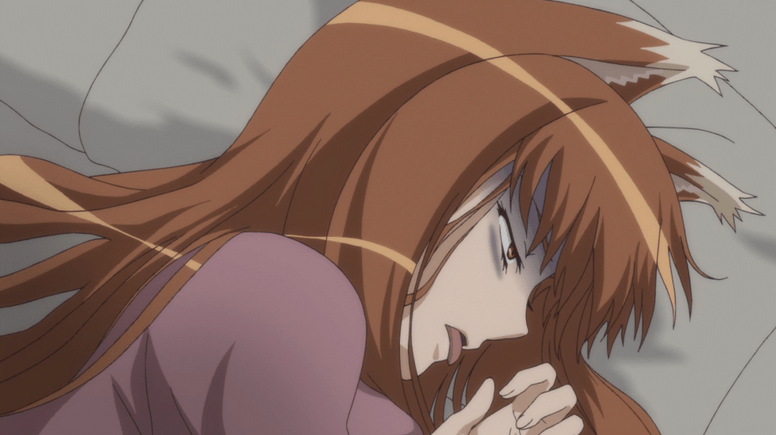

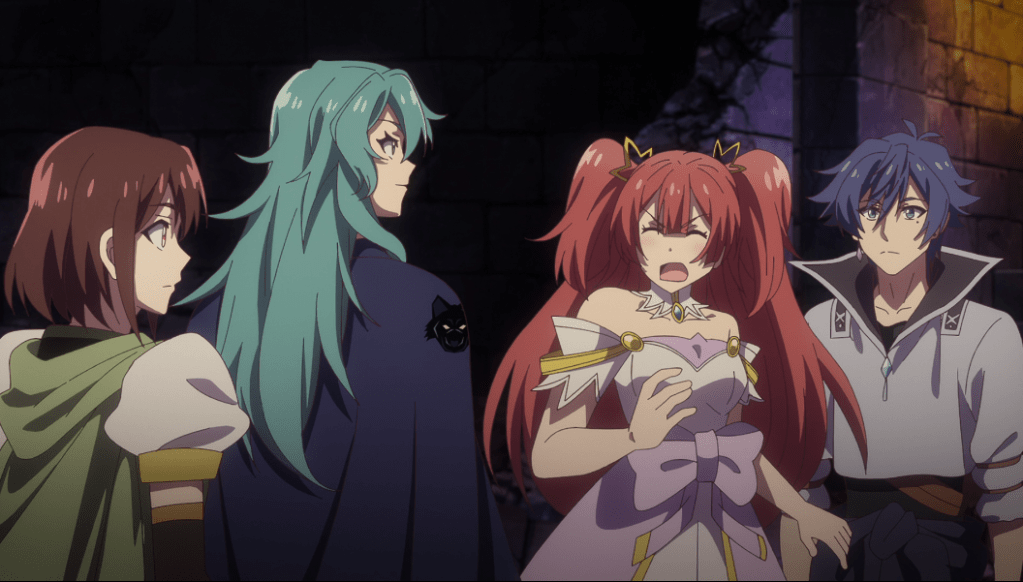


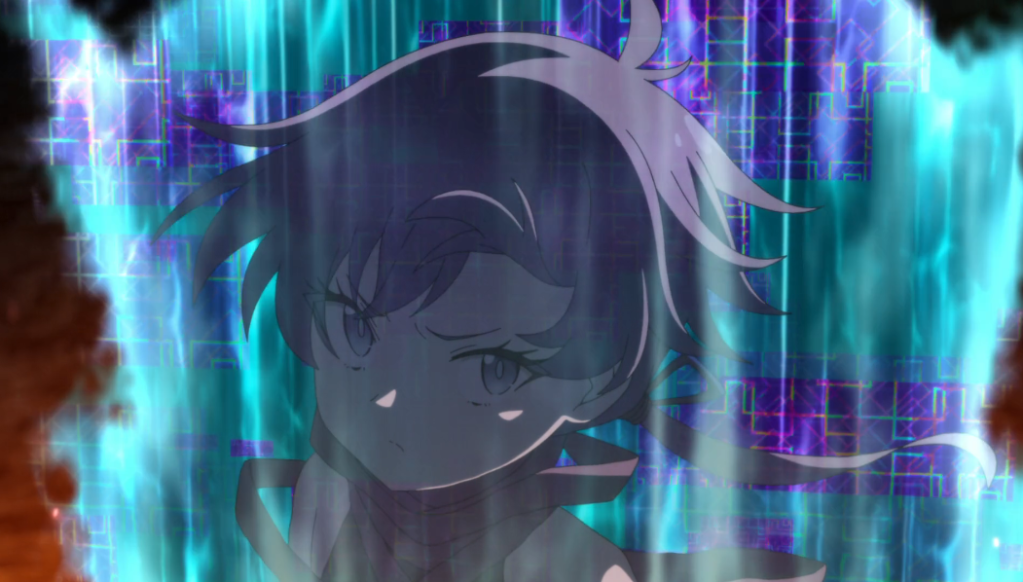

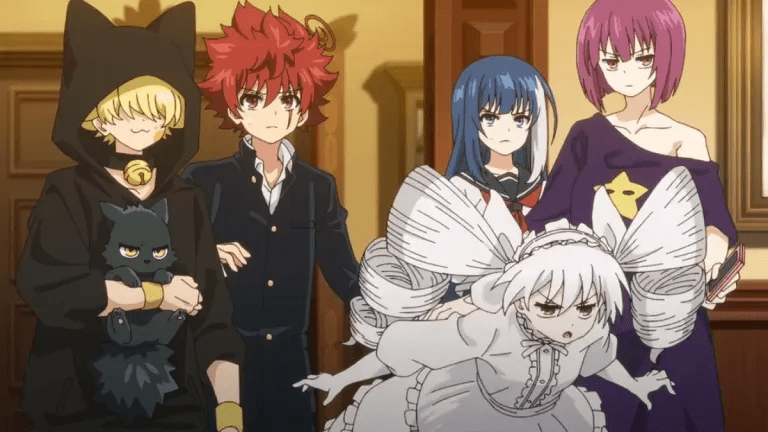
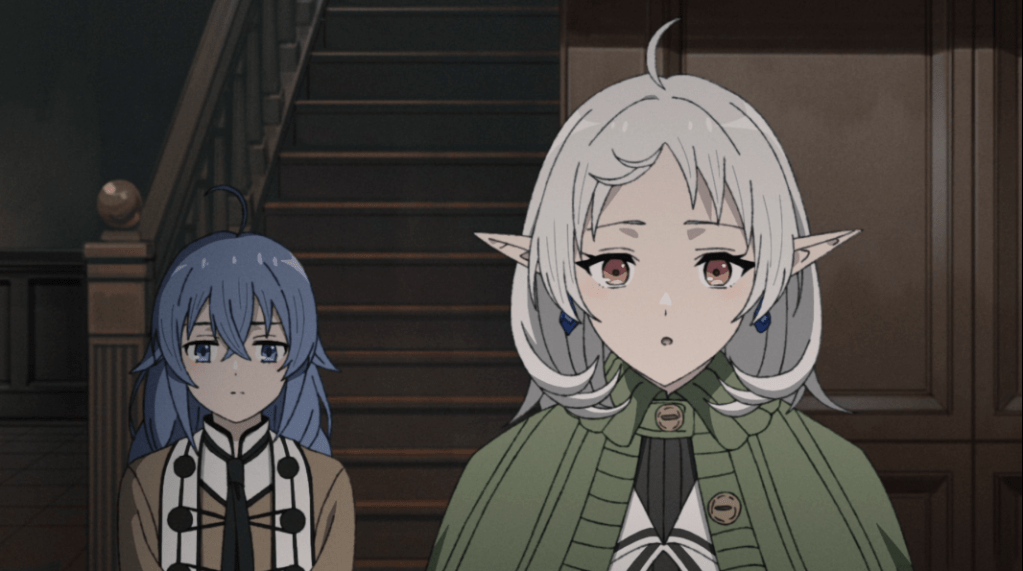


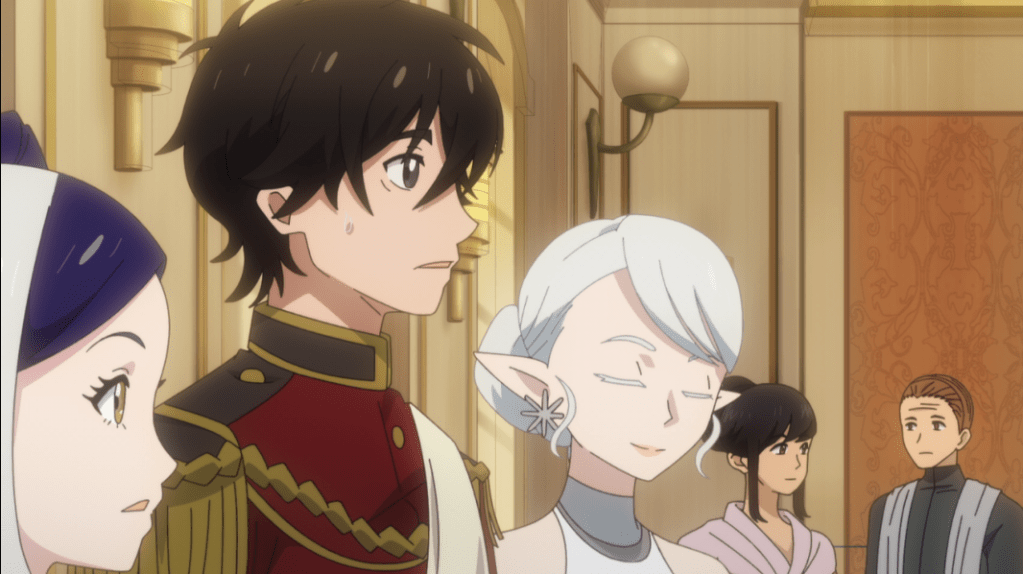


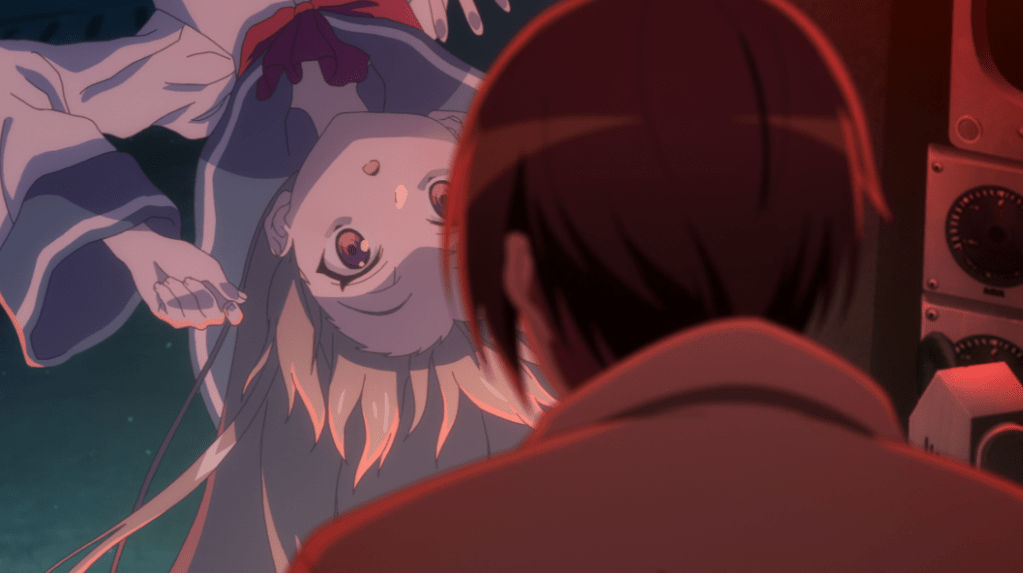


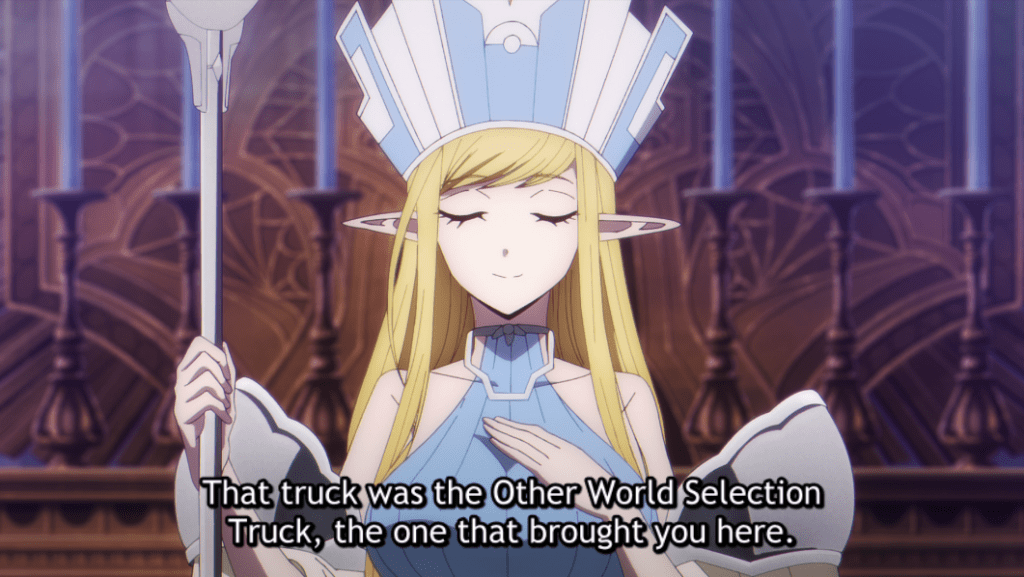


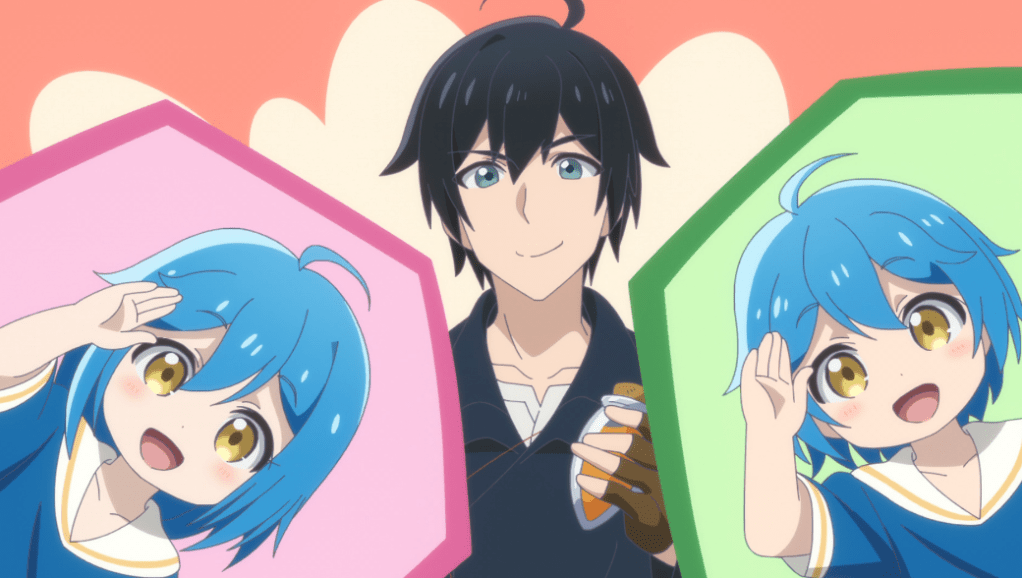

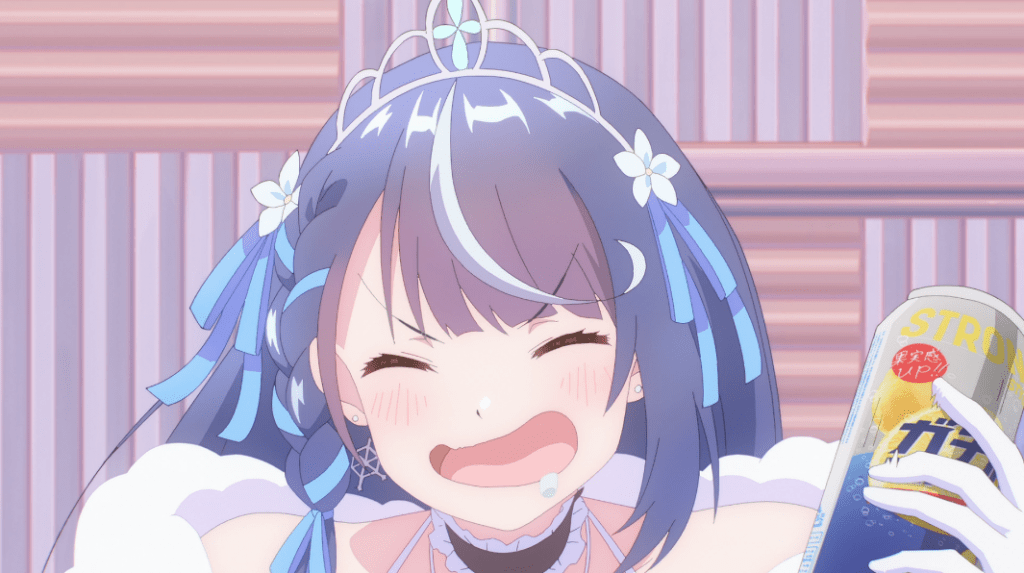
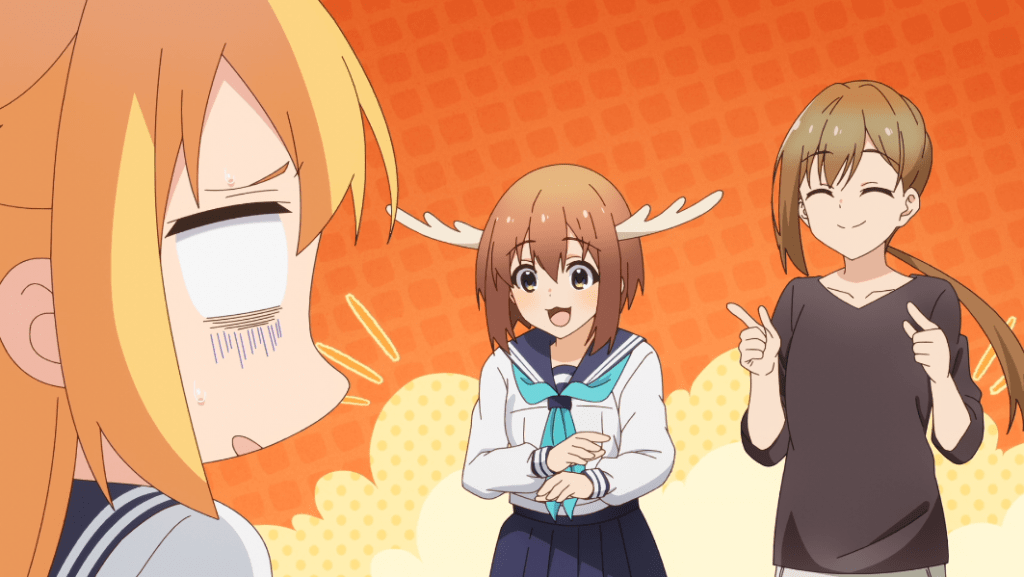
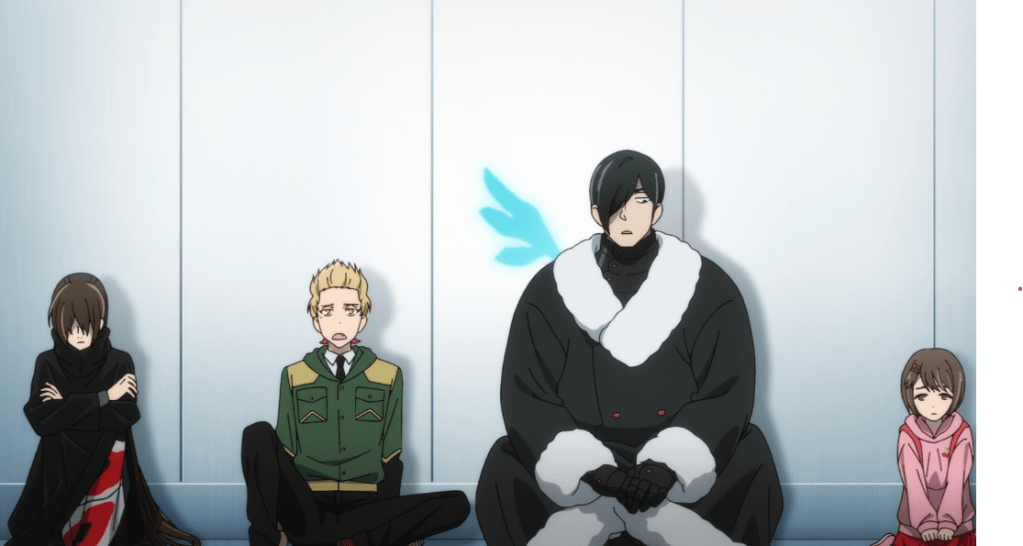
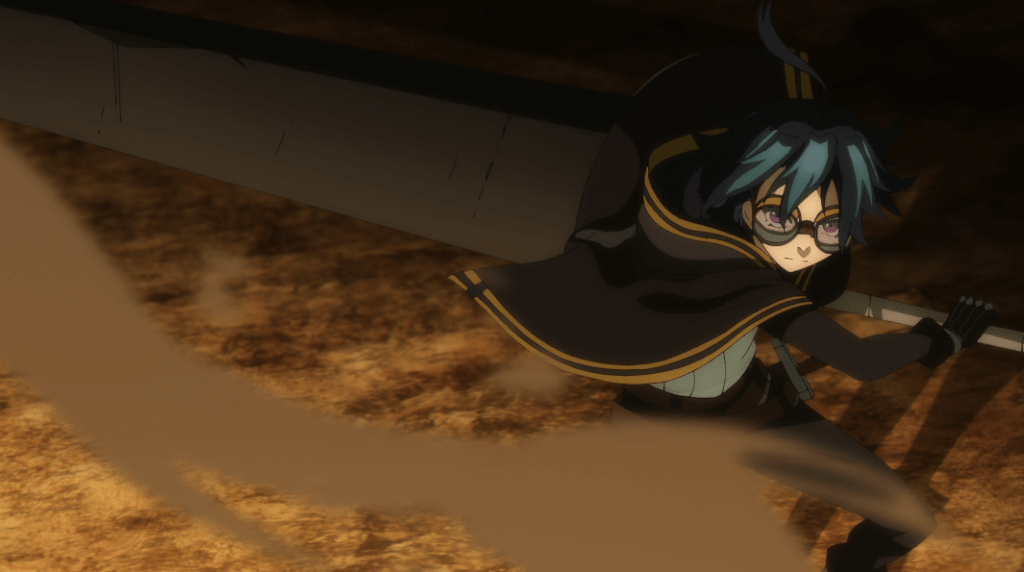

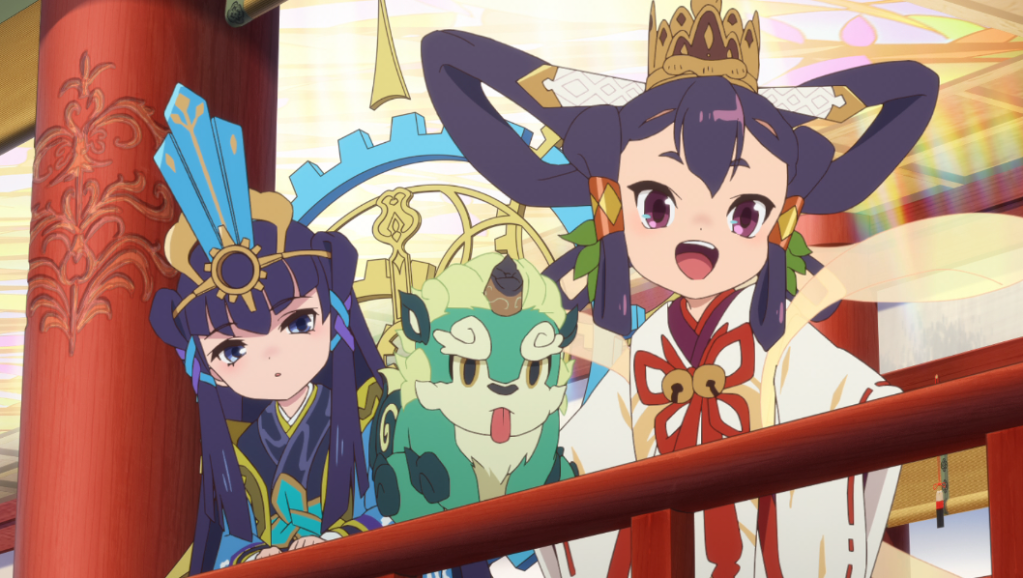

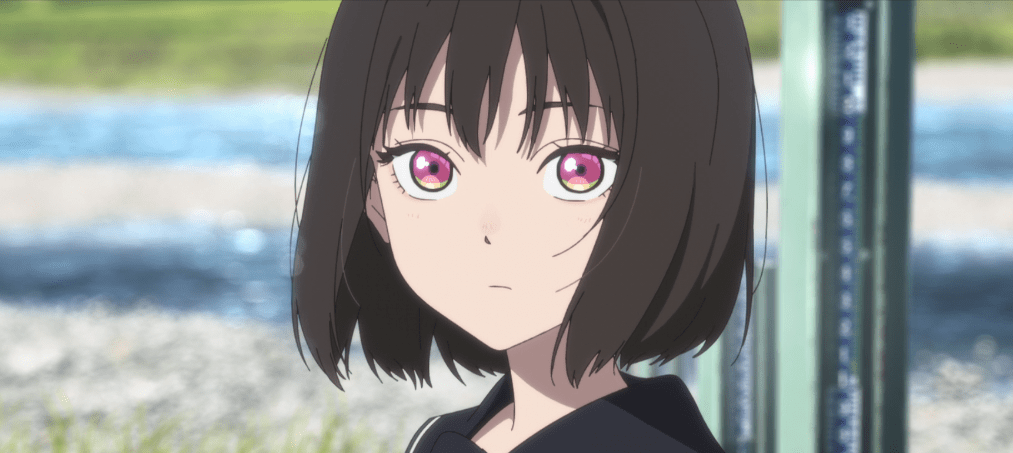
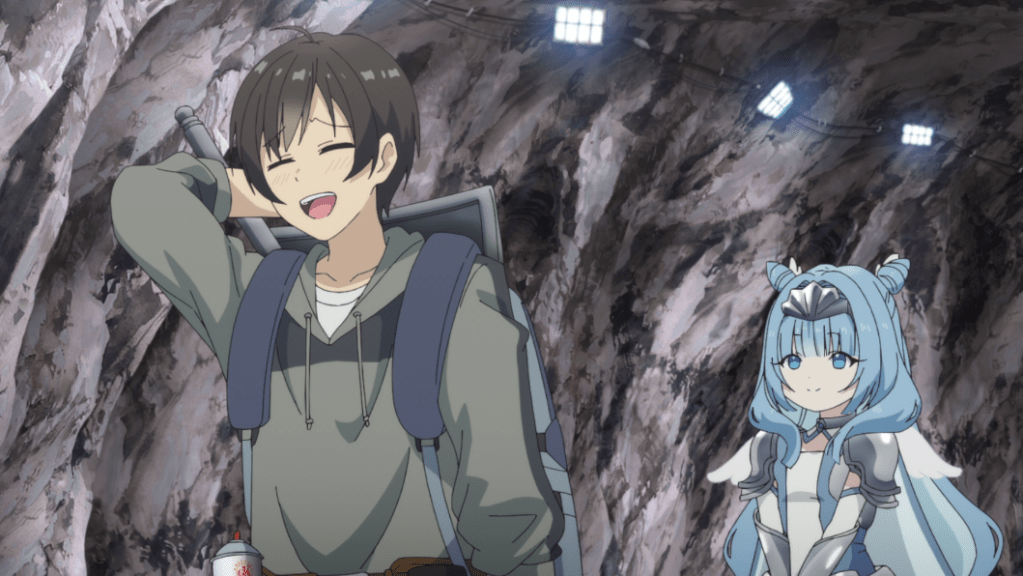
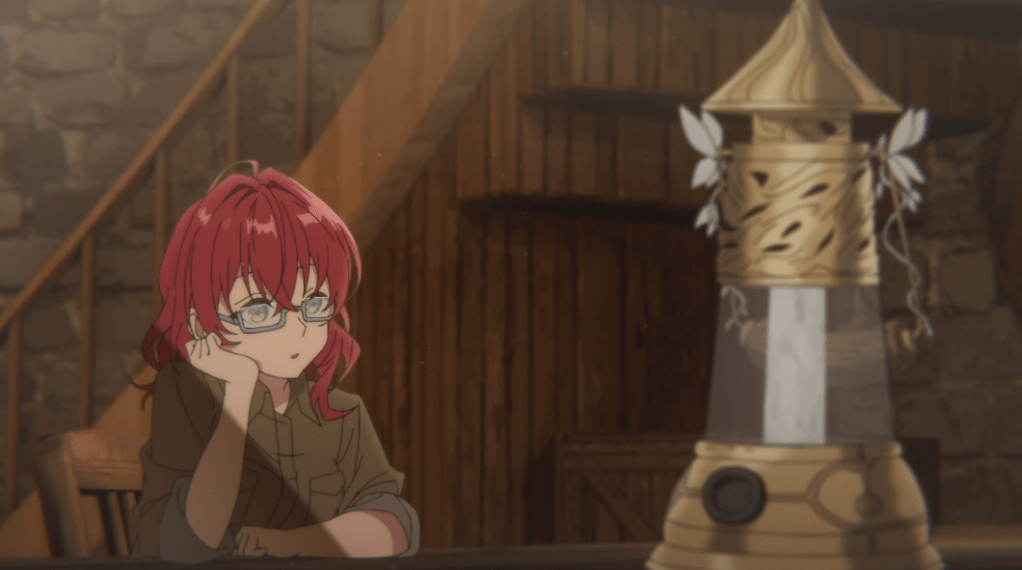


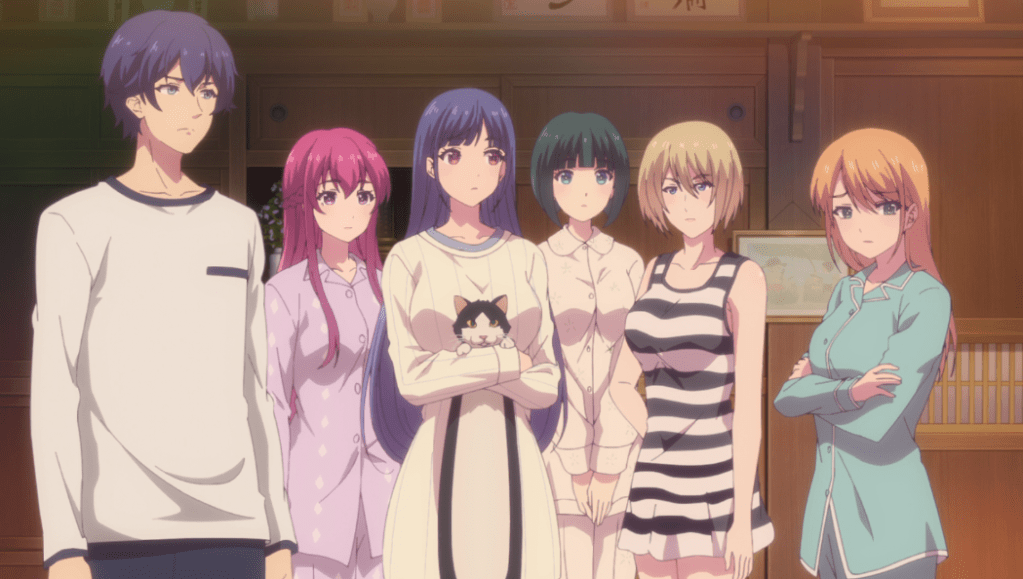
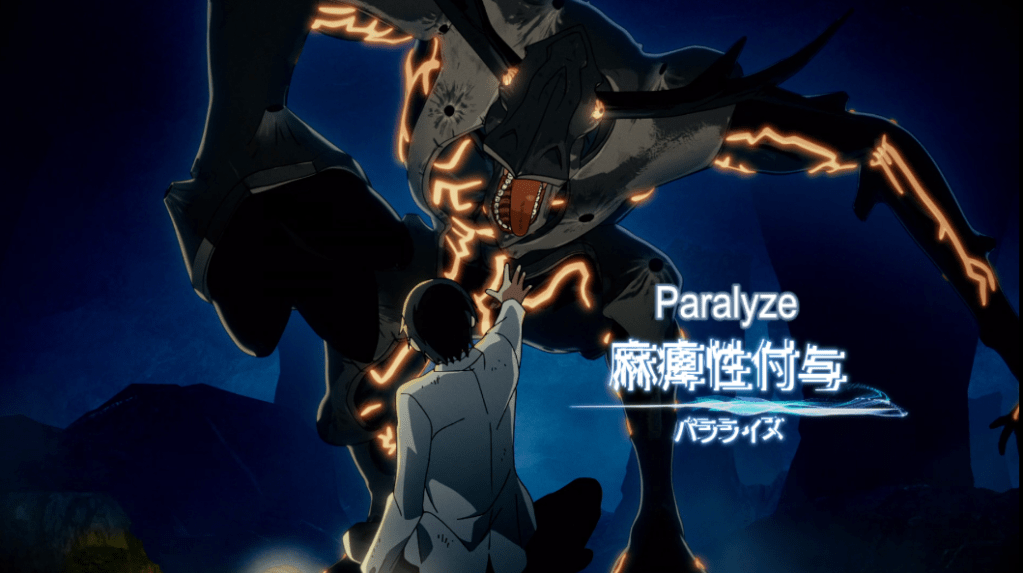


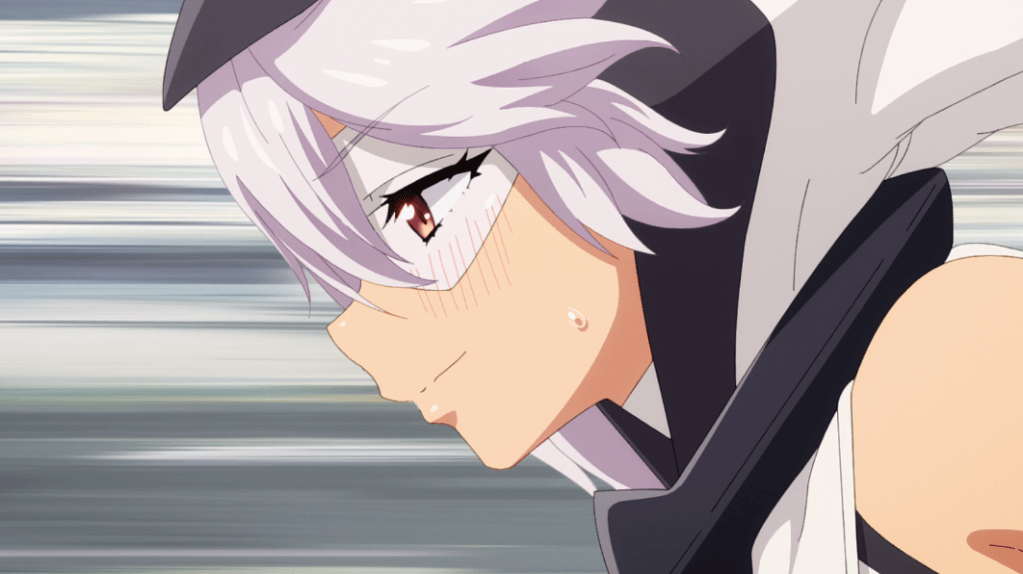
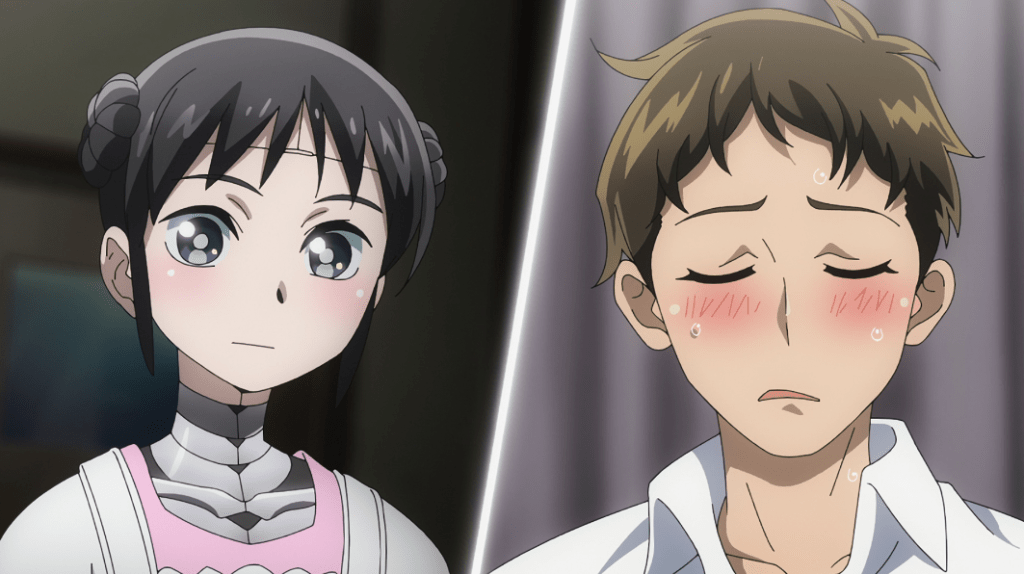


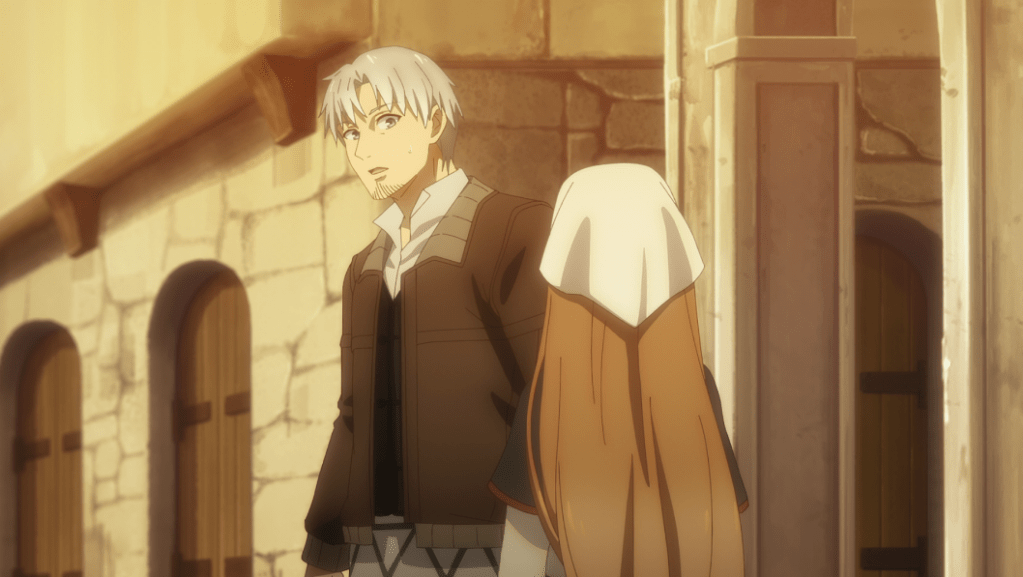

 USA Anime