
Episode Rating: A-
In World War 1, Italy started out neutral despite being part of the Triple Alliance with Germany and Austria-Hungary, using the excuse that the Alliance was a defensive pact and Austria-Hungary had gone on the offensive to start the war. Though they claimed to still being allied to Germany and Austria-Hungary, they were secretly convinced to join the Triple Entente’s side as part of the Treaty of London in 1915. They were won over by a promise of territorial gains that they never actually got after the war; ironically, this was a big contributing factor to fascism being able to take root in the country in the 1920s. Italy’s stand-in for this setting, Ildoa, seems to be on a similar trajectory. And though their presence has largely been ignored to this point, they are now stepping up to have a much bigger role.
Essentially, Ildoa is being portrayed in an opportunistic light. They still want to maintain the appearance of being allied to the intimidating Empire, but they’re definitely trying to hedge their bets and set themselves up to make out big in the war’s aftermath with only minimal risk to themselves. That’s at the core of their activity here, where they’re proposing to negotiate peace between the two sides. To determine how best to pitch the deal, they send a military observer to the Empire’s eastern front, while Rerugen is sent to Ildoa to observe them first. (Sending military observers like this was a common practice in the real world in the late 19th and early 20th centuries.) In one sense the Ildoans are fortunate, in that there are individuals within the Empire military hierarchy who would like to see the war resolved soon. However, the Empire’s leadership isn’t stupid or naive, and they’re much too disciplined to fall for veiled threats and slick promises. Even more simply, Ildoa doesn’t have a proper understanding of how the Empire – and especially its more ruthless elements like Tanya – operates.
And that’s one of the most significant aspects of the middle scenes involving Ildoan Colonel Gassman visiting the Salamander Kampfgruppe. (He’s incorrectly identified as General Calandro, his superior, in the subtitles in the scene at the eastern front camp.) Tanya has always been shown to strictly follow the letter of military law, but only the letter. She’s too much of a pragmatist to give any weight to the spirit of the law, and that catches Gassman off guard. Perhaps seeing someone so young be so callous is partly throwing him off, or perhaps the field experience he’s had so far (Rerugen observes that he’s not just a pencil-pusher) hasn’t been with full modern warfare. Overall, he seems a little too idealistic for the role he’s being asked to serve here, though his boss Calandro seems like more of a sly old fox. But even he turns out to underestimate the Empire on this.
This all leaves Tanya in an interesting situation. She absolutely wants peace, even more than Zettour does, but this is hardly the first time where her taking the utterly pragmatic view on how wasteful war is butts up against the reality that war – especially in the early 20th century – isn’t a pragmatic endeavor. National honor was a big factor going into World War 1, and it was certainly a contributing factor to how the war was waged (especially in its early stages) and how it was resolved. Although Tanya has repeatedly given lip service to this in her motivational speeches, she continues to underestimate just how important this is to many of the combatants. Sure, it may be most practical to end the senseless burning of resources and just return to where everything started, but that also means that all that effort – all those resources and lives spent – ultimately gained nothing. And that’s hard to take, especially for people truly driven by national pride. (Ironically, the Federation seems more in line with her views on this point., though them being happy to get out of this situation with no real territorial losses is probably a factor in that.)
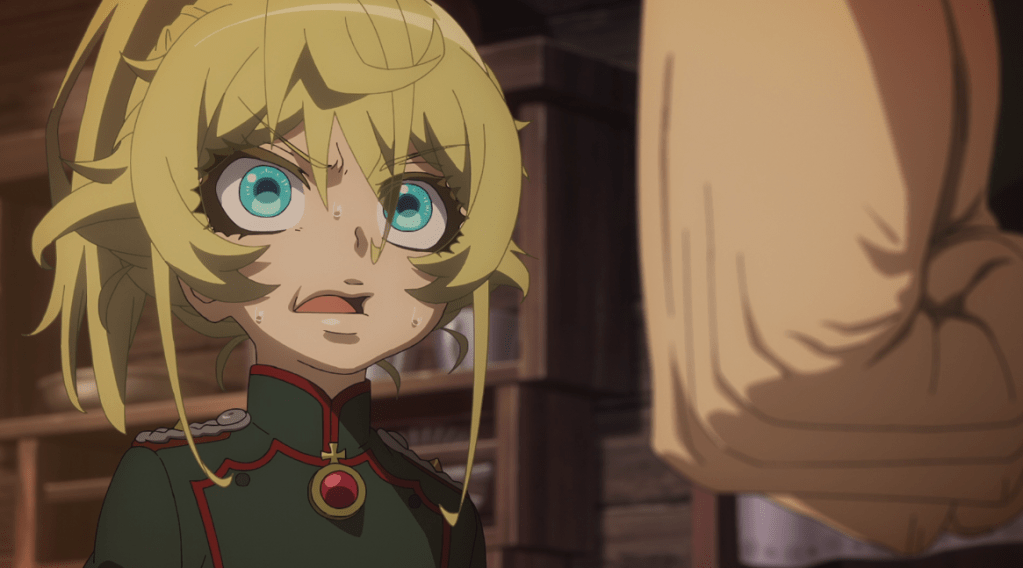
The Concorde effect – aka Concorde fallacy aka sunk cost fallacy – that Tanya refers to at this point is the practice of continuing an endeavor, project, or investment because of the resources spent on it, even if the continuing cost outweighs the potential benefits. That’s absolutely what’s going on here, and it was a contributing factor to why the Treaty of Versailles was written the way it was. The negative consequences of this were borne out by history, but recognizing this from within can be very difficult. That means that groundwork is already being laid for how things might go at the end of this version of the war. That also means the official response to Ildoa’s efforts from the top brass – literally “eat shit” – is predictable.
What, exactly, is this version of Operation Iron Hammer going to look like? It our world, is was a joint operation during the Iraq War in 2003 between American military forces and Iraqi Civil Defense Corps, but clearly it’s going to take on a different character here. We’ll have to wait for next episode to find out. And hopefully it will be as well-constructed an episode as this one is, with its parallel storytelling elements and strong visual support. While it did seem like the episode was condensing some element (especially concerning Gassman’s observations at the Salamander base), it didn’t feel like any important details were sacrificed; we still saw plenty enough to understand why Gassman behaved the way he did. That’s the kind of efficiency I’ve long come to expect from this franchise.

