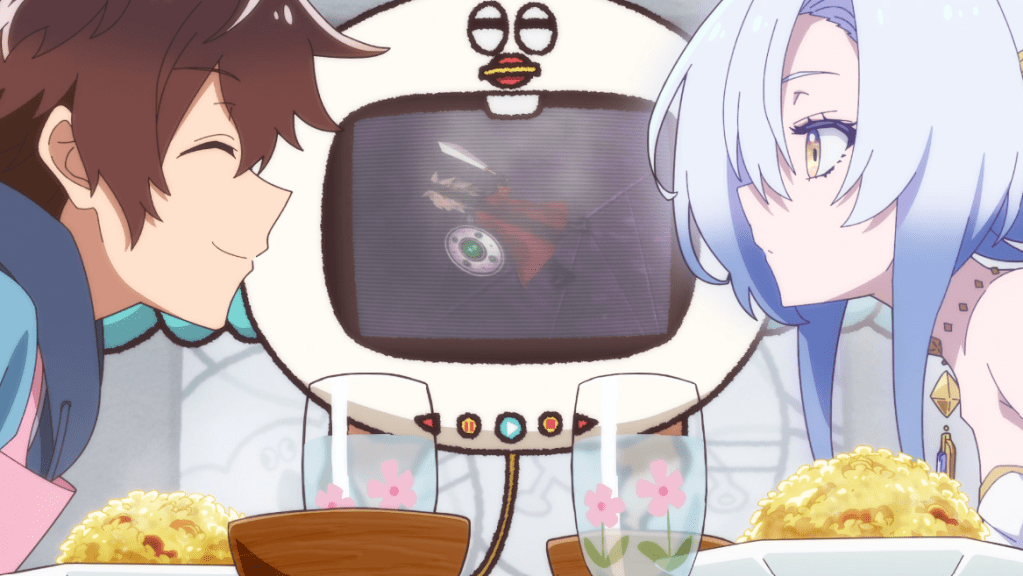
Witch Hat Atelier is the popular quality darling of the season, Needy Girl Overdose stands out for its strikingly bold social commentary about the era of rampant social media, and a couple of others (Akane-banashi and Nippon Sangoku in particular) are getting much-lauded for their writing merits, but there’s no series this season that’s more visually daring and inventive than My Ribdiculous Reincarnation, a jaw-droppingly absurd multi-isekai reincarnation tale. As such, it deserves some attention, and I regret that it took me until week 4 to start breaking it down.
The premise is simple, if silly: the unnamed male protagonist dies and is destined to get reincarnated, but unlike in most such tales, he’s given a choice by his droll attendant Goddess (who gets him only after he’s been rejected as aberrant by other gods) about what he wants to reincarnate as. With popular choices having waiting times of tens of thousands of years, he opts first to choose an option that no one in their right might would come up with (a rib of a hero), and then when that option goes all to hell and he winds up back with Goddess again, he proceed to make a succession of random reincarnation choices. That sets up the series’ modus operandi: he’ll get reincarnated into something odd but with special abilities that such a thing wouldn’t normally have, circumstances eventually spin ridiculously out of control because of those special powers and his perverse personality, and eventually either disaster or a thoroughly disappointing end results, which lead to him going back to Goddess to try all over again. In between his misadventures he banters and tries to woo Goddess, commonly resulting in her executing him, only to bring him back again a few minutes later. They also sometimes eat tasty food.
That alone would make the series one of the most thorough exercises in absurdity to come along in many years, but the series also packs a massive extra gimmick: highly variable visual and animation styles, occasionally even mixed with live-action characters. Some of this can be seen in the base scenarios in the domain of Goddess and (more rarely) other gods, which feature the most traditional anime looks, but the real stars are the flashbacks into each of the protagonist’s reincarnations. Each one uses a dramatically different visual style and even a different type (much less style) of animation and has its own video production specialist.
Let’s look at a chart of what’s been used through the first four episodes:
| Episode | Reincarnated as. . . | Main Animation Type | Video Production |
|---|---|---|---|
| 1 | Rib of the hero | hyper-stylized 2D animation | Maria Tokareva |
| 2 | Hermit crab | moving static graphic designs | Takeru Shima |
| 2 | Right door to the Demon King’s castle | claymation | Biogon Pictures |
| 3 | Clock tower’s second hand | distorted picture book-style | Renoir brothers |
| 3 | “Level up” voice in the Hero’s head | Paper cut-outs manipulated by gloved hands | Shinrashinge |
| 4 | A tomato | Oil-painted models mixed with live-action | isai, inc. |
| 4 | The lock on a treasure chest | manga-style limited animation/coloring | Koji Kumeta |
Some of the video producers are up-and-coming fringe artists (Maria Tokareva is a relatively recent animation school graduate), while at least one is a famous name in anime/manga circles (Koji Kumeta is the creator of Sayonara, Zetsubou-Sensei andi Joshiraku). This makes for a delightfully eclectic mix, but also one that deviates hugely from traditional anime styles; this has, no doubt, contributed to it getting a remarkably low average rating on Crunchyroll so far. Frankly, that’s short-sighted, as it doesn’t do justice to the variety and creativity at work here. Some examples:
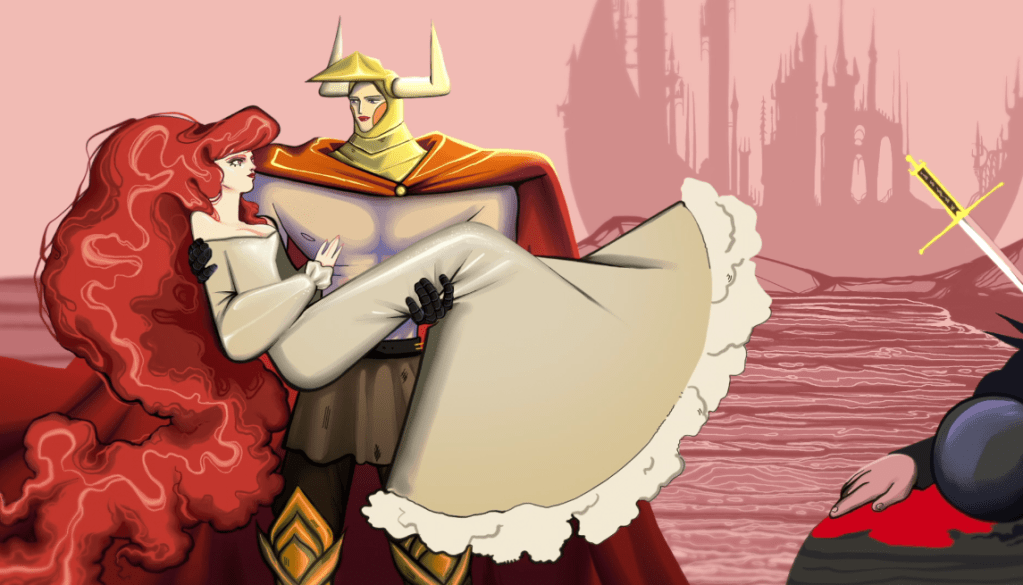
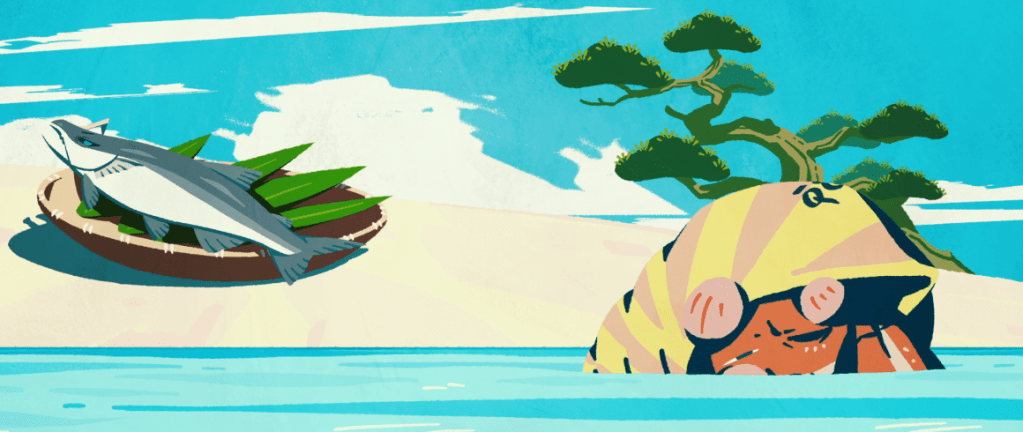
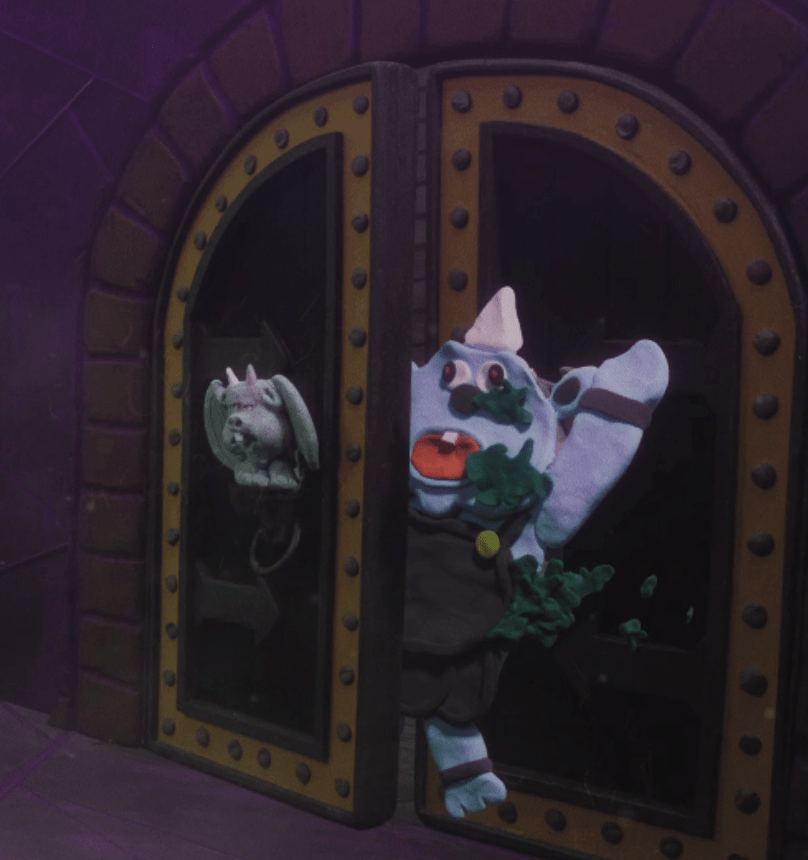
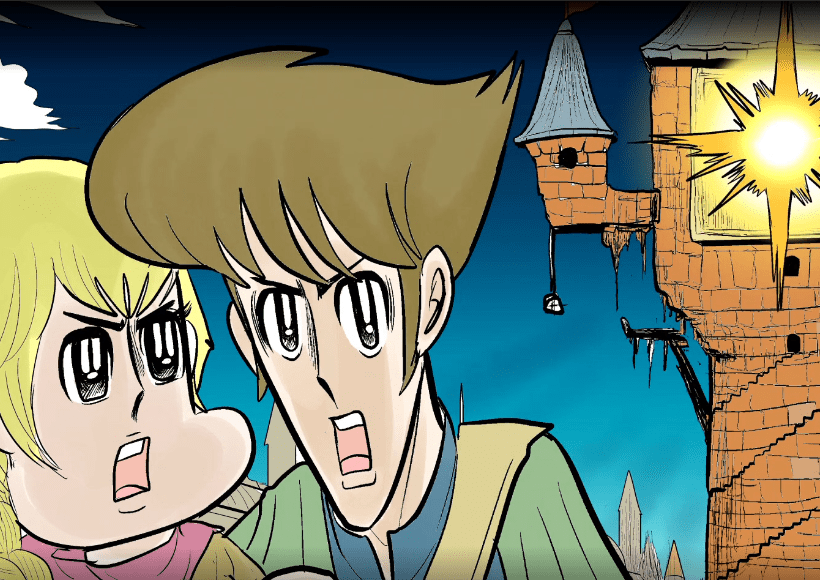
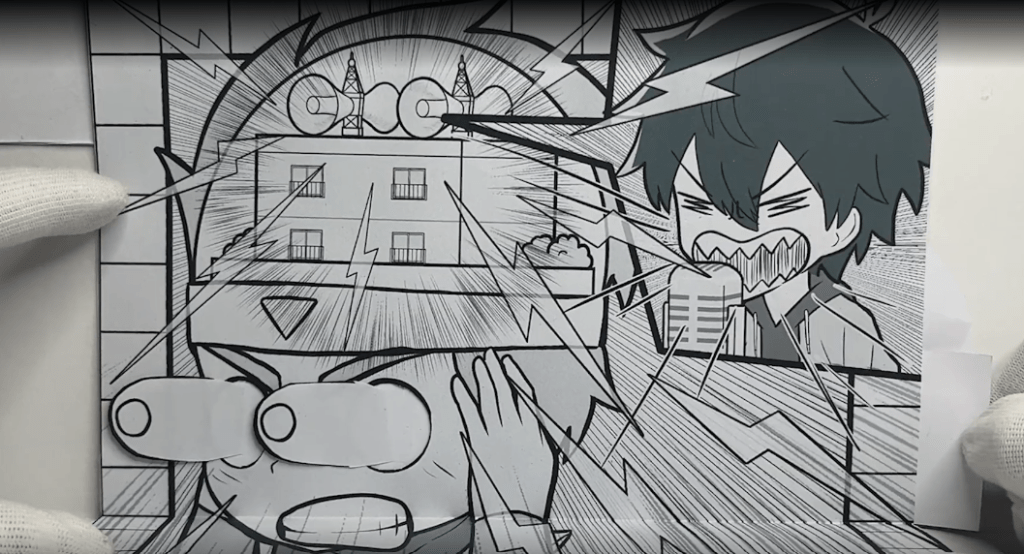
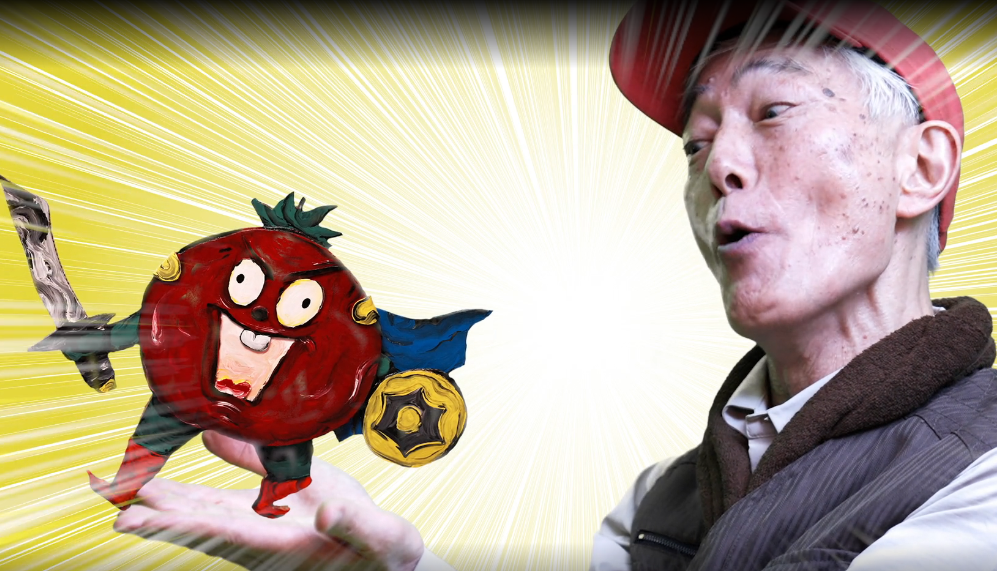
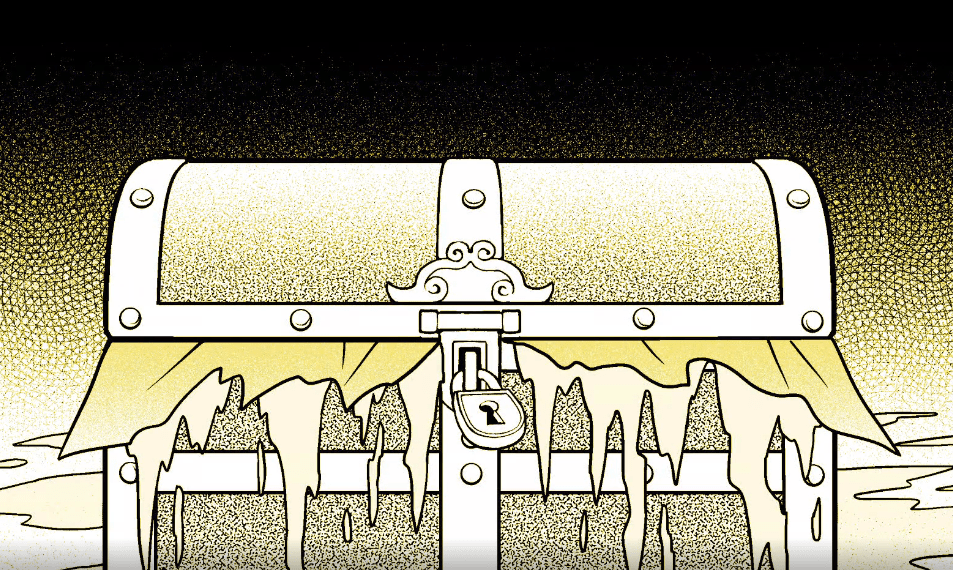
Yes, those are all from the same series.
On top of all this, each scenario ultimately collapses because of utterly stupefying twists, ones delivered so matter-of-factly that they can catch you off guard even if you’re expecting something weird. Don’t even bother to try to predict them, either; what could go wrong when a sentient second hand on a city’s clock tower (which is made of dark matter, because of course it is) is able to cast spells? Or when a hermit crab becomes a Weapon of Ultimate Destruction for a Hero? I bow to original novelist Anti for coming up with all of these insane scenarios, and to director Yasufumi Soejima for coming up with the visual ways to portray all this wildness.
Compared to all of this, the antics of Goddess and the protagonist in her otherworldly realm are much more pedestrian, but they still have a fun dynamic on their own (though the content in episode 4 involving the Goddess suddenly becoming touchy-feely, to the alarm of the protagonist, who feared the consequences when she return to normal, didn’t work quite as well). There are also hints of a story beyond just focusing on these two, as other gods have occasionally contributed observations and a Demon King who may be from from one of the protagonist’s scenarios looks to be getting reincarnated as a fish at the end of episode 4. Is he the fish we saw in episode 2? That would be an interesting development.
Overall, the series has been a wild ride so far. While I may not write this one up weekly, I intend to give summarized reports on it at least every 2-3 weeks throughout the season, much like I did for Touring After the Apocalypse a couple of seasons back.


One thought on “Ribdiculous Reincarnations, part 1”