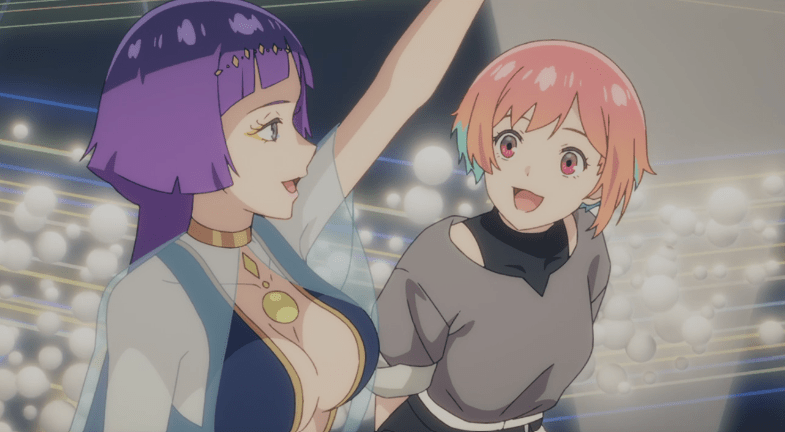
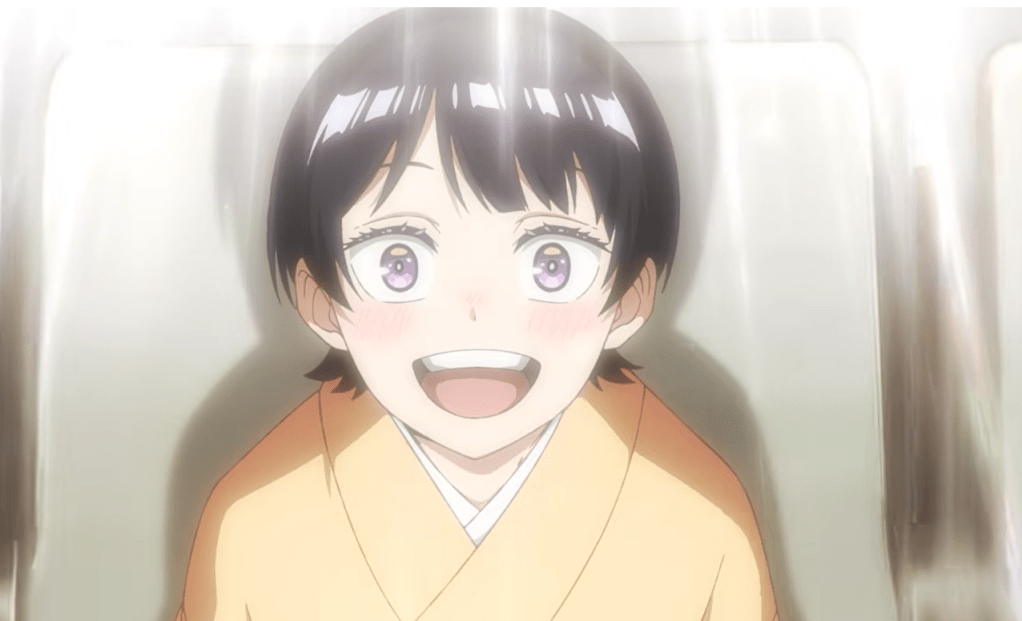
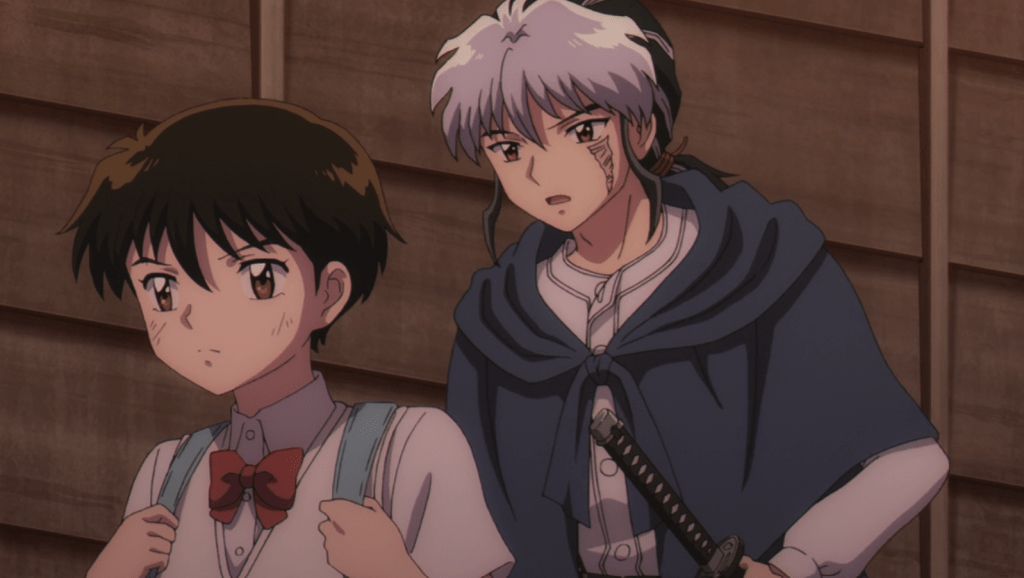
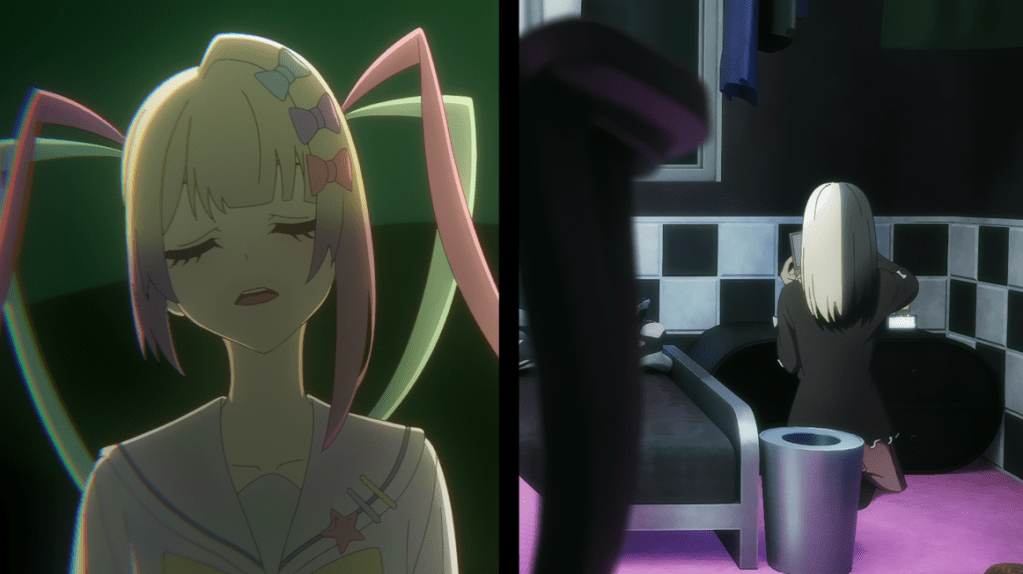
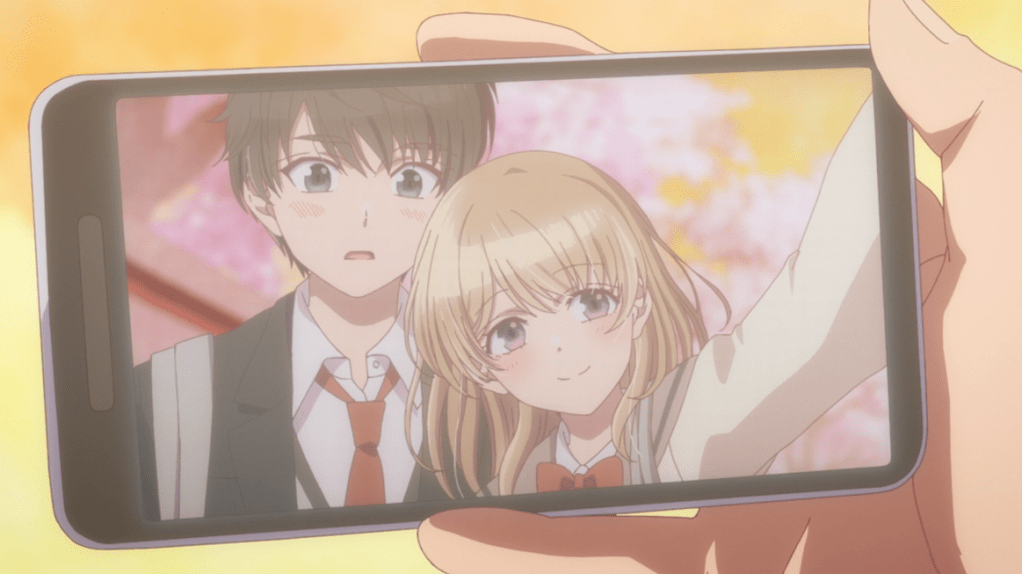
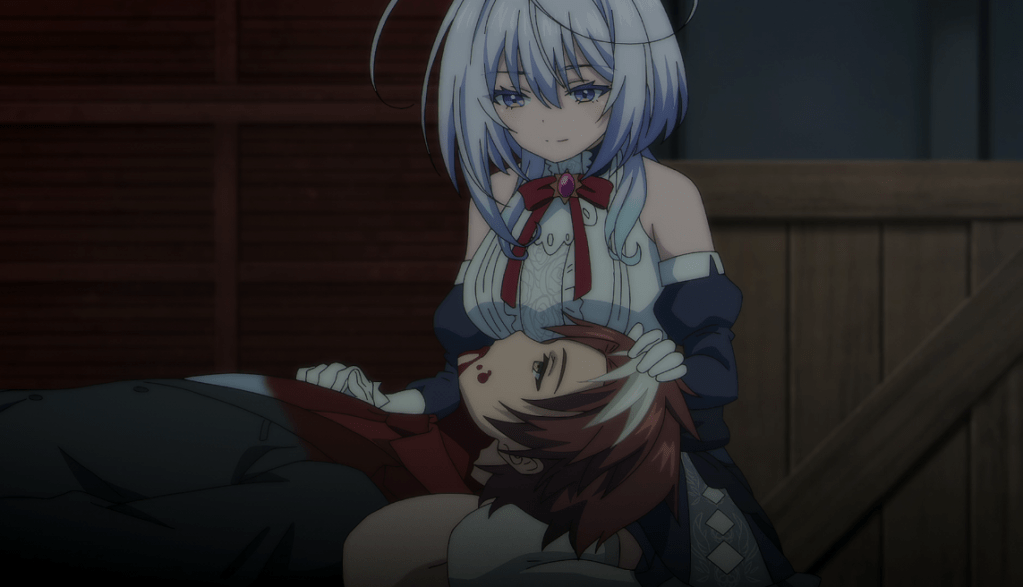
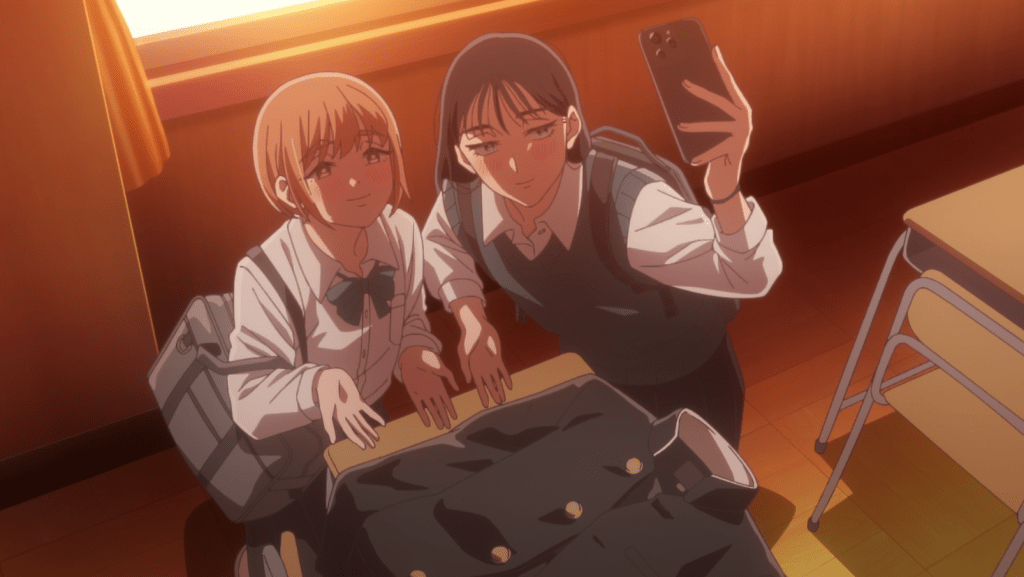
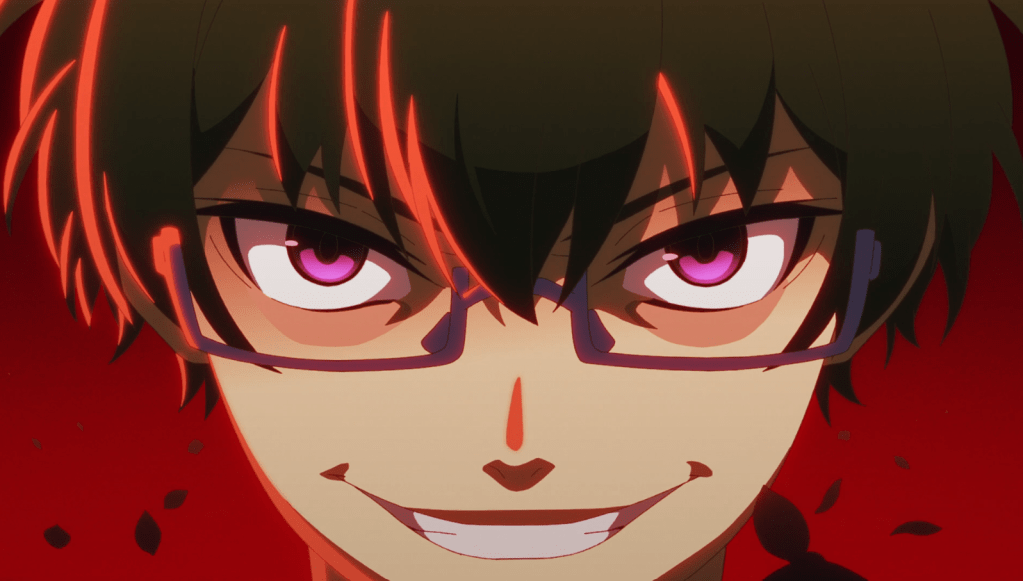
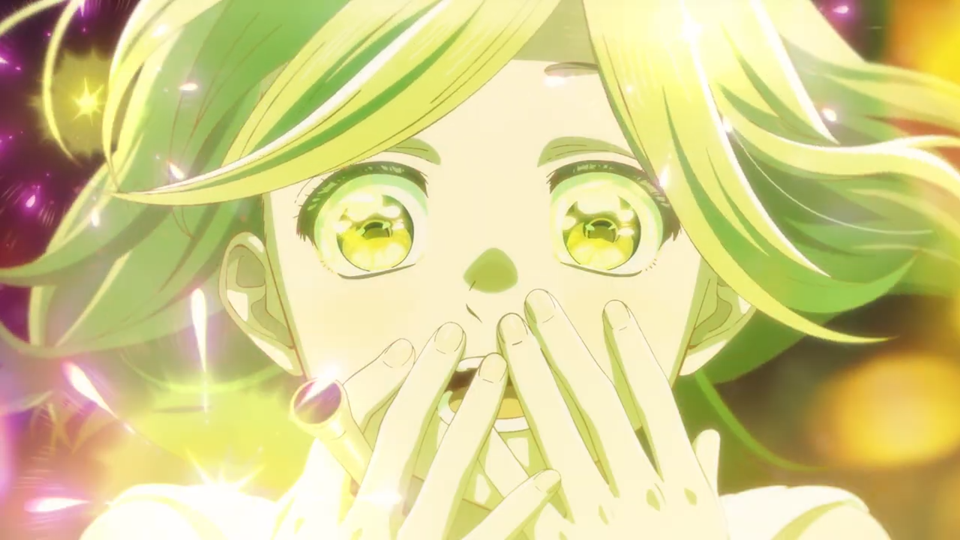
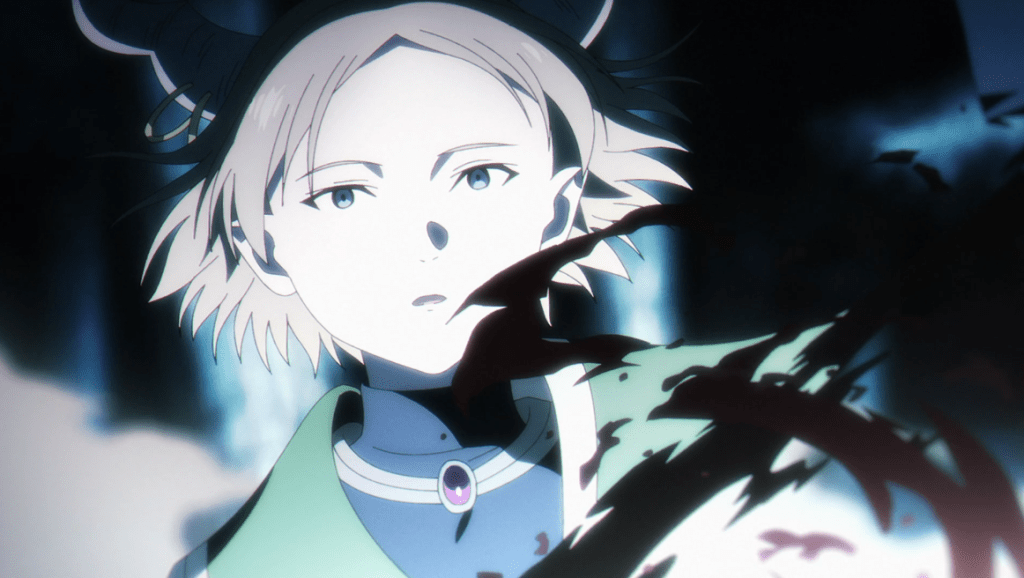
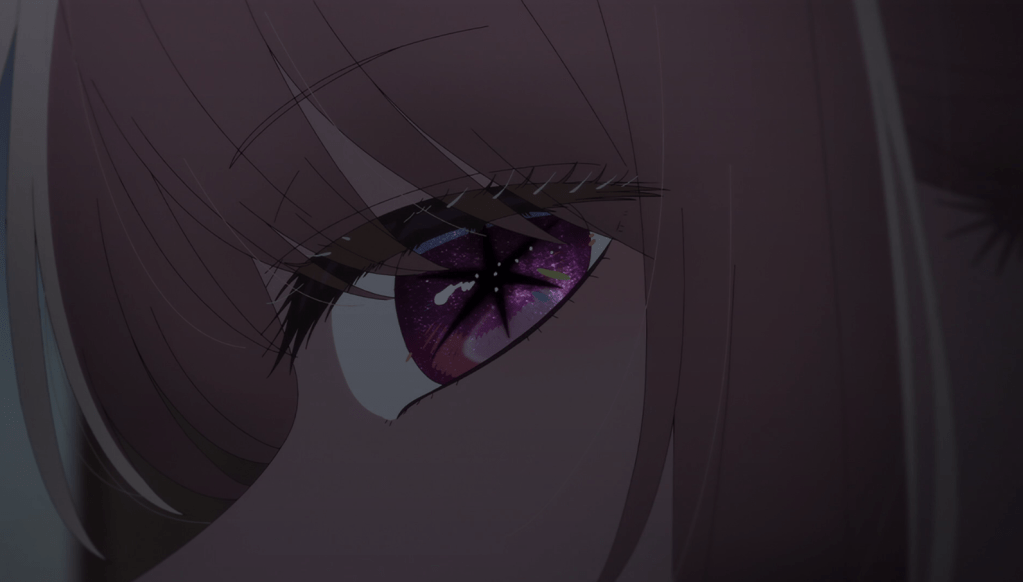
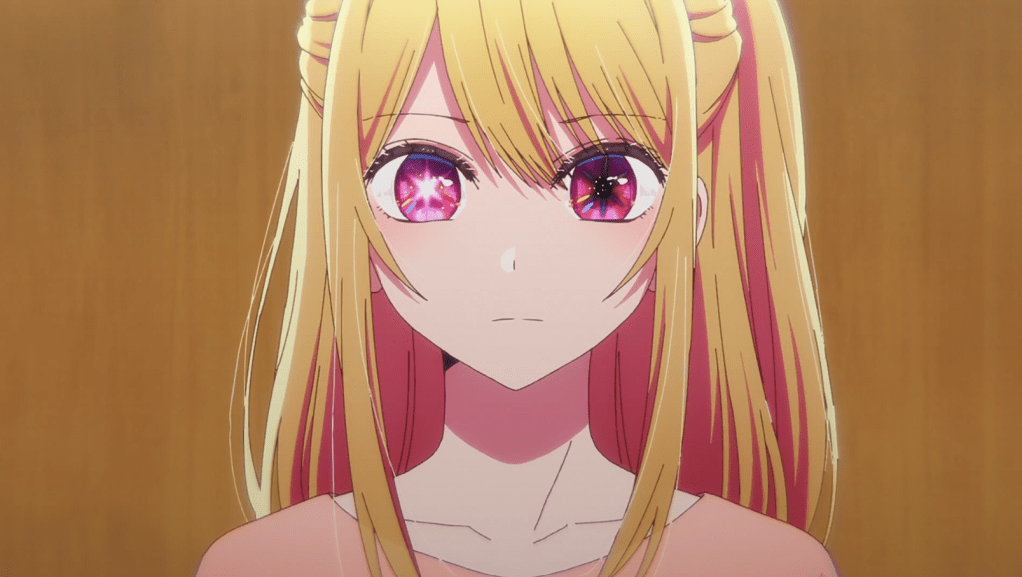
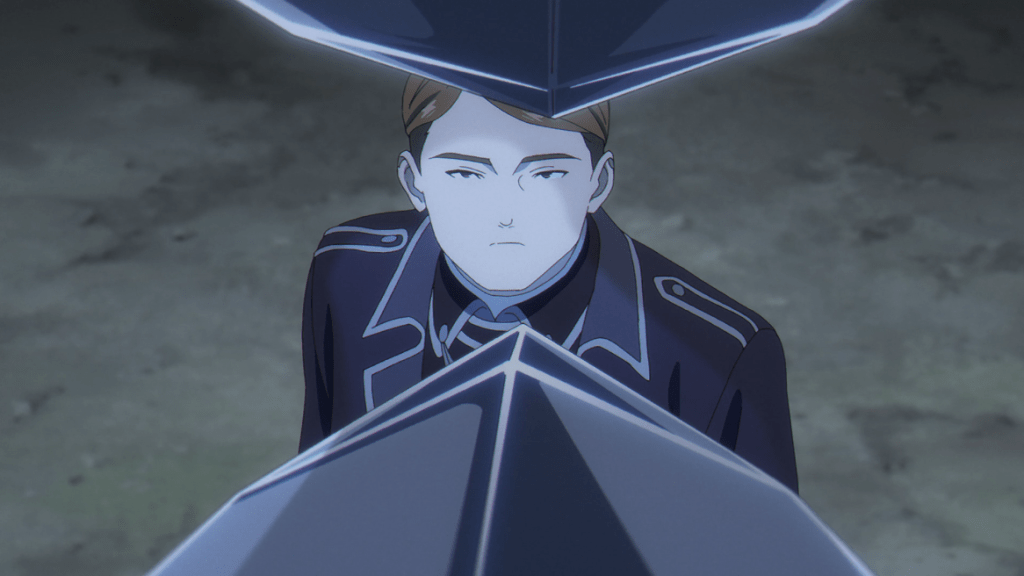
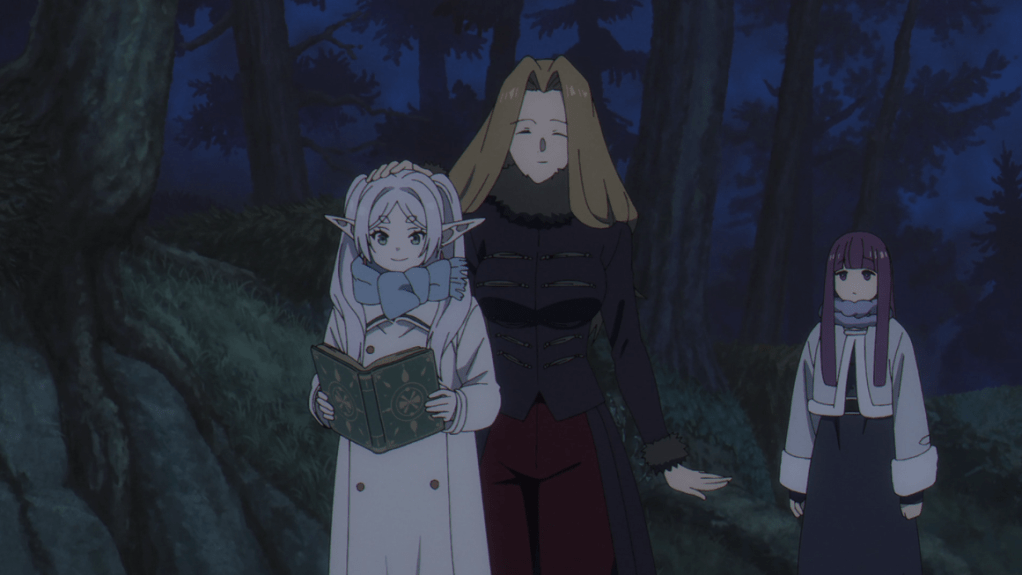
Witch Hat Atelier is the popular quality darling of the season, Needy Girl Overdose stands out for its strikingly bold social commentary about the era of rampant social media, and a couple of others (Akane-banashi and Nippon Sangoku in particular) are getting much-lauded for their writing merits, but there’s no series this season that’s more visually daring and inventive than My Ribdiculous Reincarnation, a jaw-droppingly absurd multi-isekai reincarnation tale. As such, it deserves some attention, and I regret that it took me until week 4 to start breaking it down.
The premise is simple, if silly: the unnamed male protagonist dies and is destined to get reincarnated, but unlike in most such tales, he’s given a choice by his droll attendant Goddess (who gets him only after he’s been rejected as aberrant by other gods) about what he wants to reincarnate as. With popular choices having waiting times of tens of thousands of years, he opts first to choose an option that no one in their right might would come up with (a rib of a hero), and then when that option goes all to hell and he winds up back with Goddess again, he proceed to make a succession of random reincarnation choices. That sets up the series’ modus operandi: he’ll get reincarnated into something odd but with special abilities that such a thing wouldn’t normally have, circumstances eventually spin ridiculously out of control because of those special powers and his perverse personality, and eventually either disaster or a thoroughly disappointing end results, which lead to him going back to Goddess to try all over again. In between his misadventures he banters and tries to woo Goddess, commonly resulting in her executing him, only to bring him back again a few minutes later. They also sometimes eat tasty food.
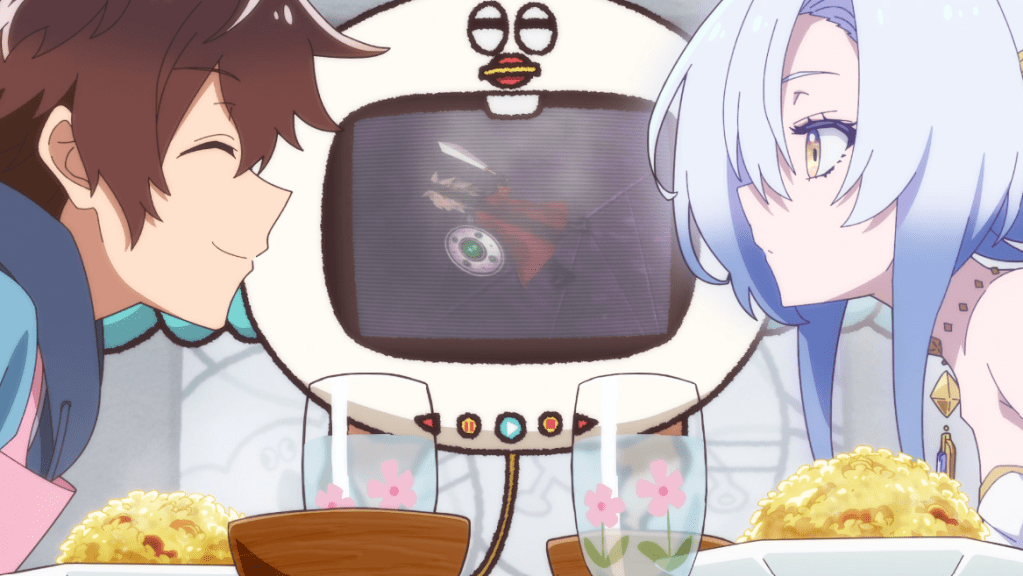
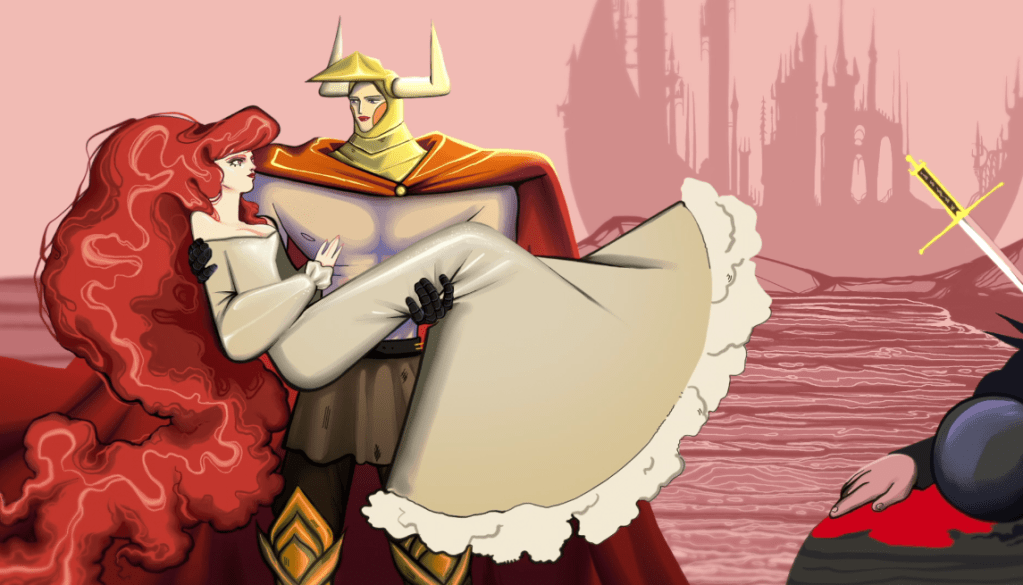
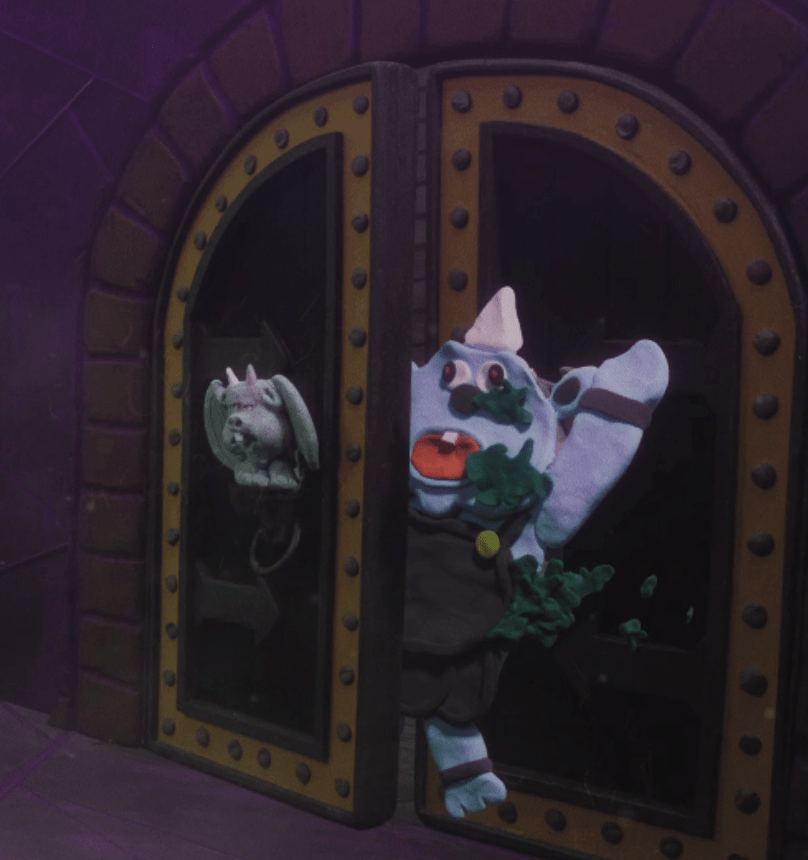
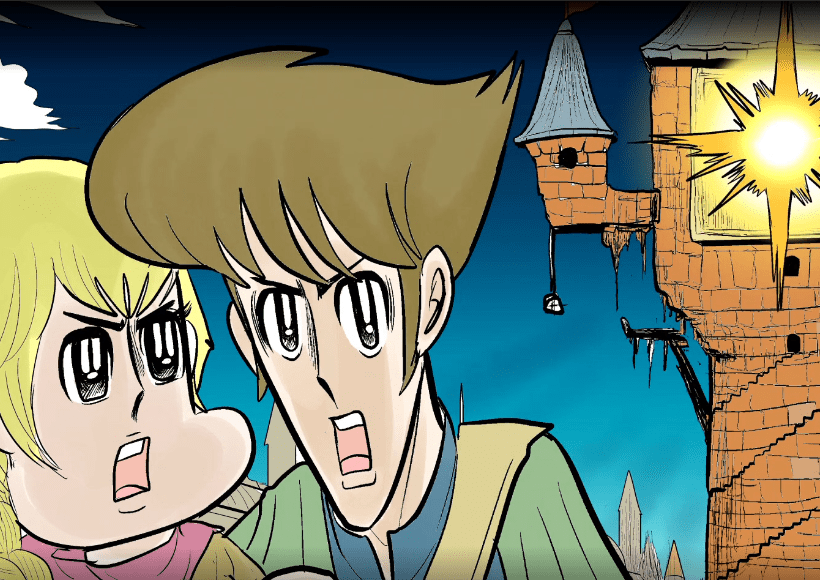
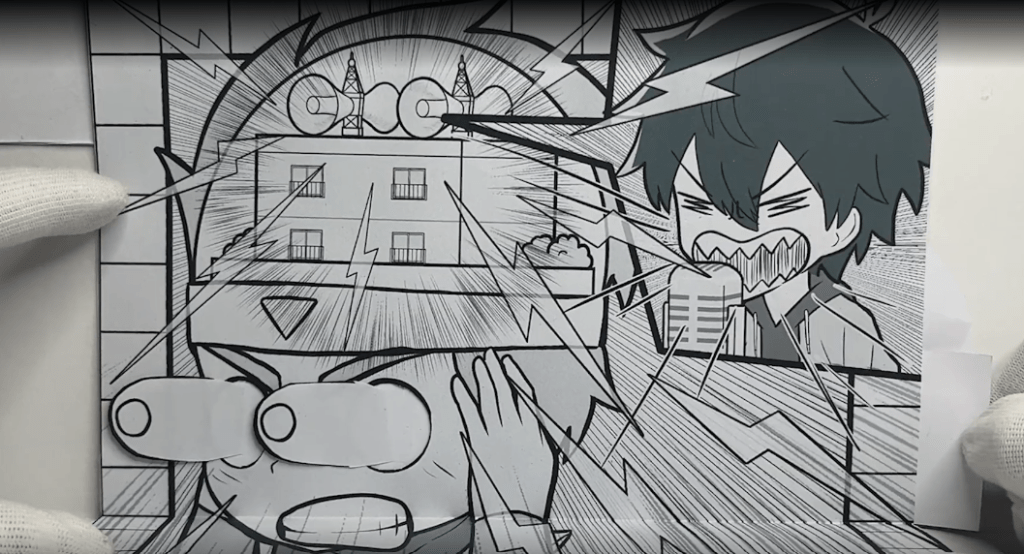
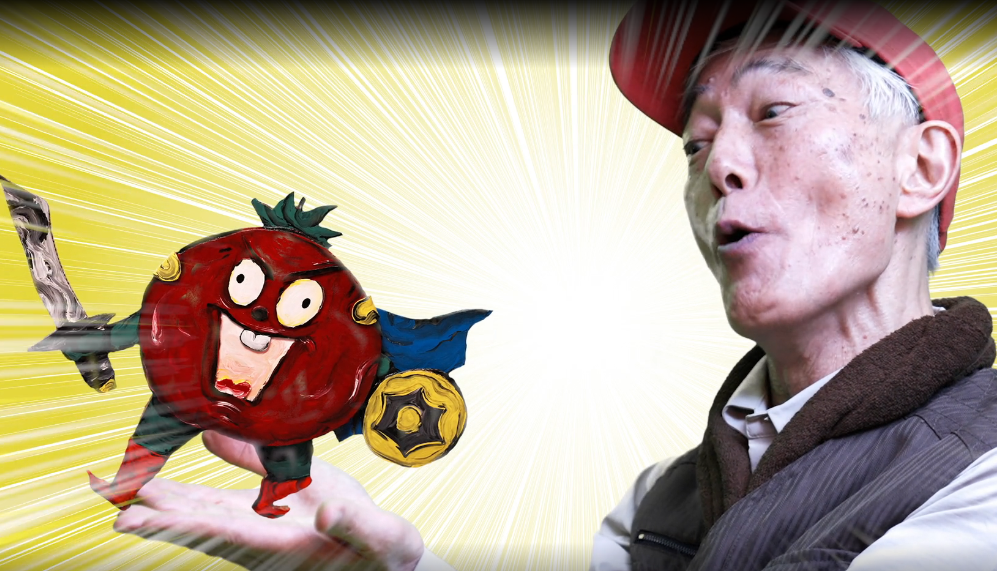
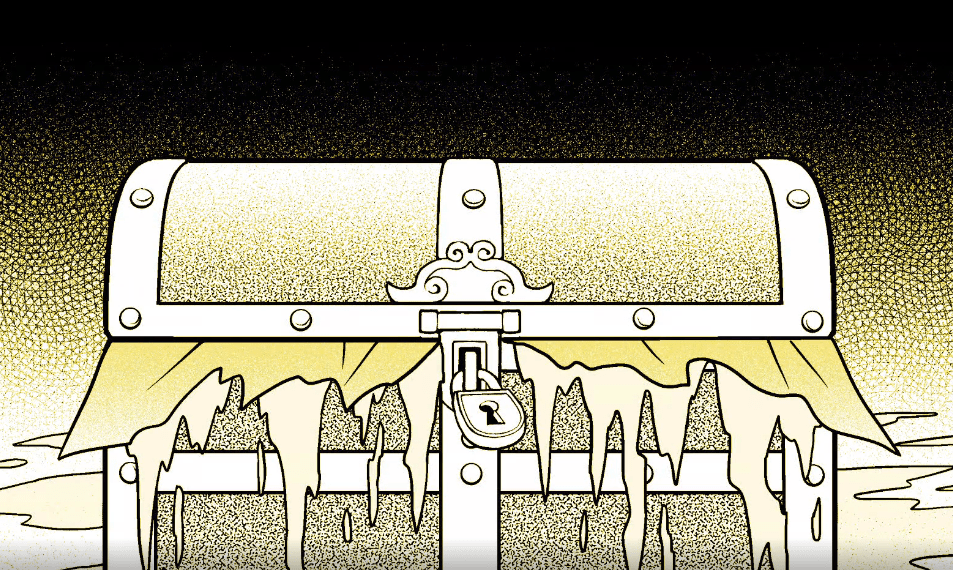
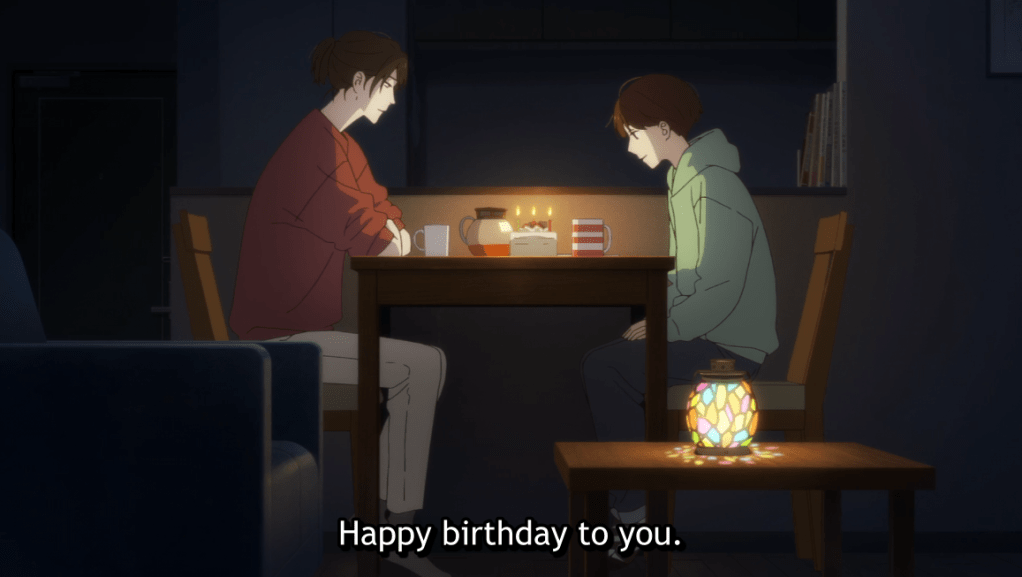
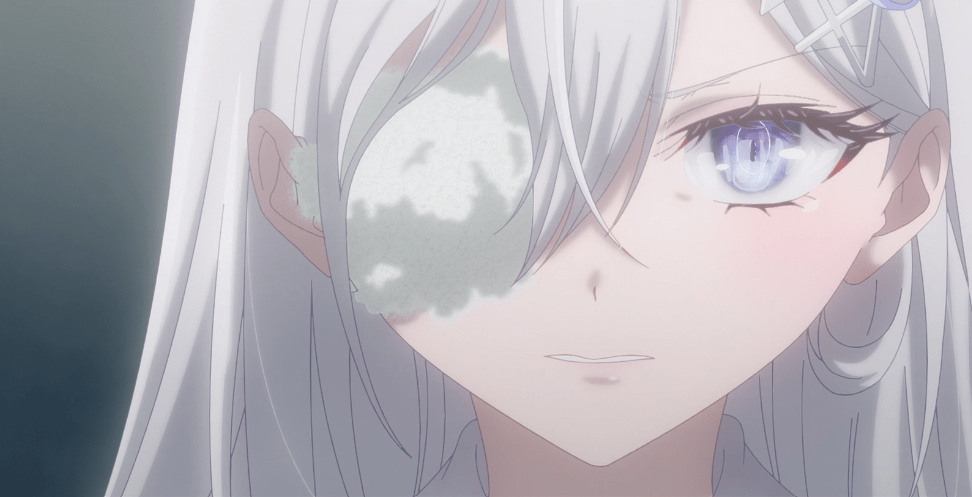
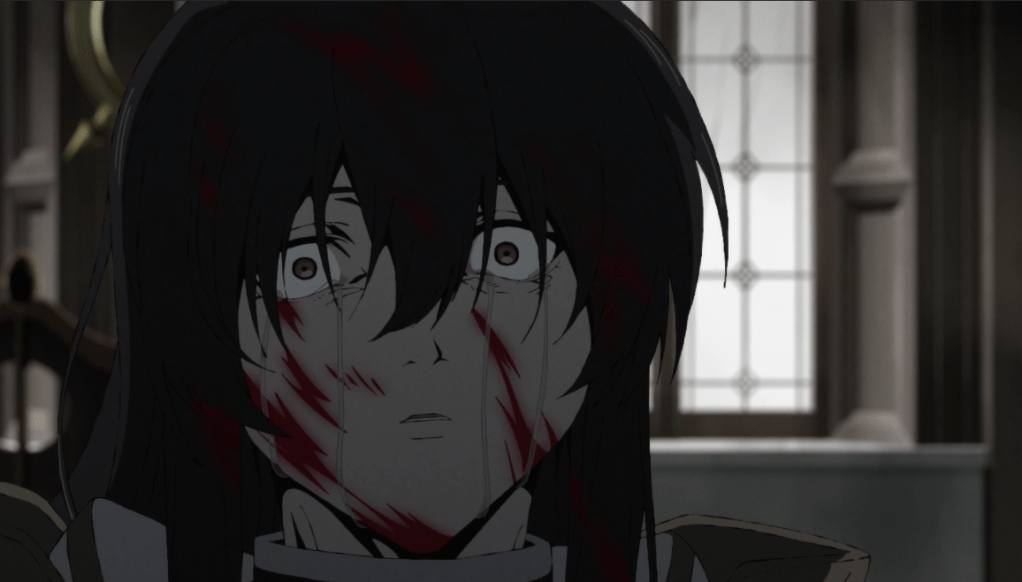
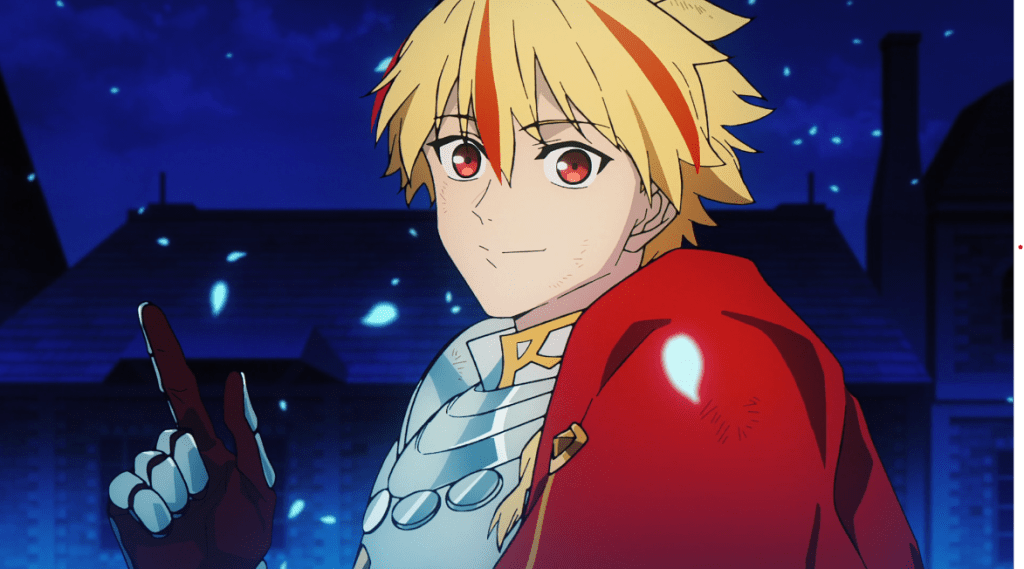
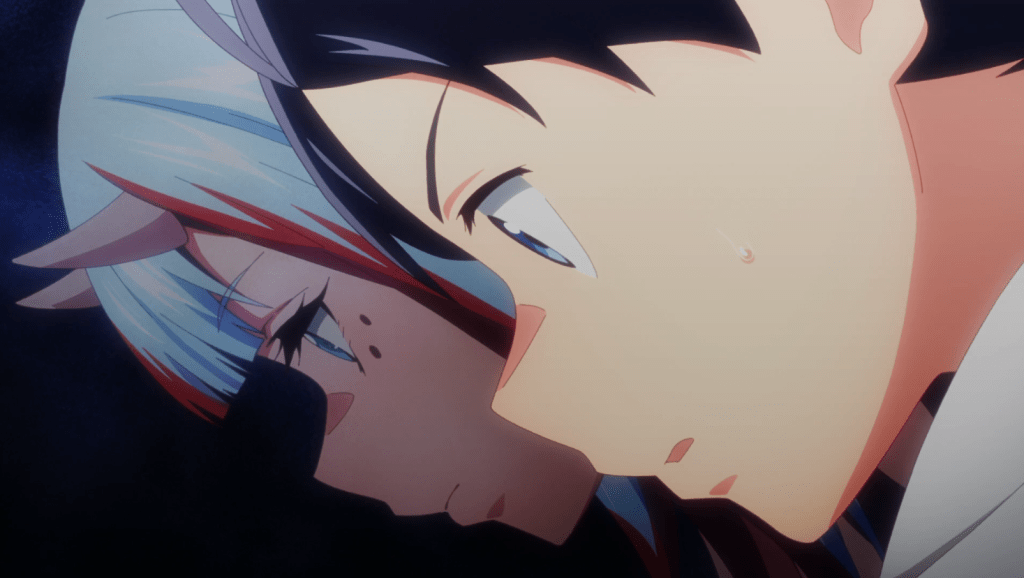
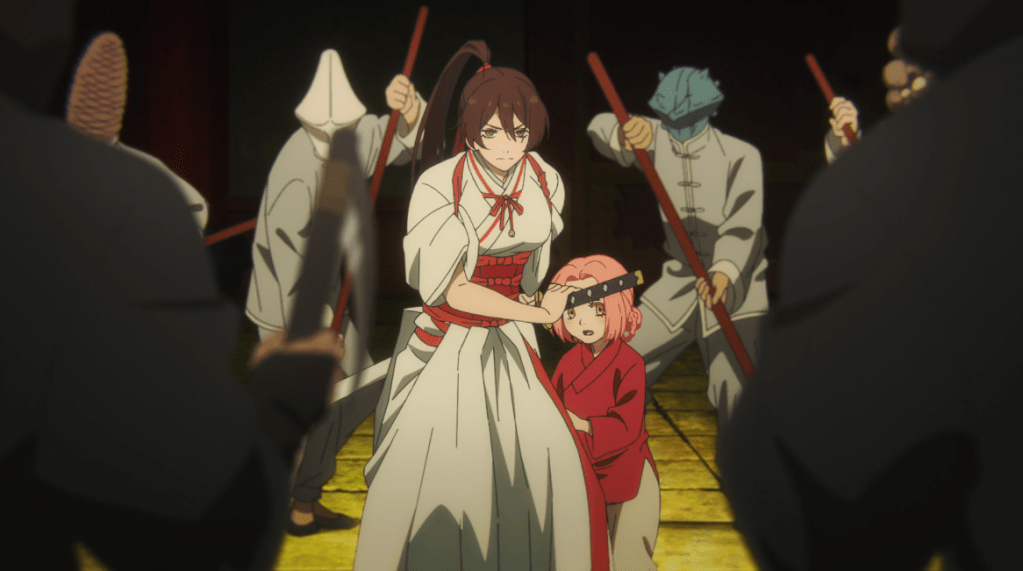
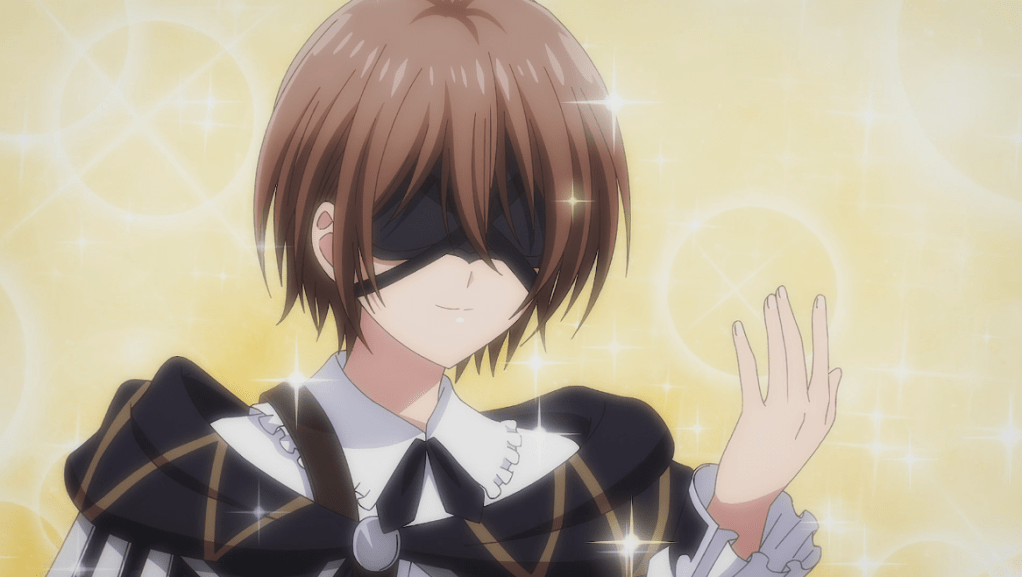
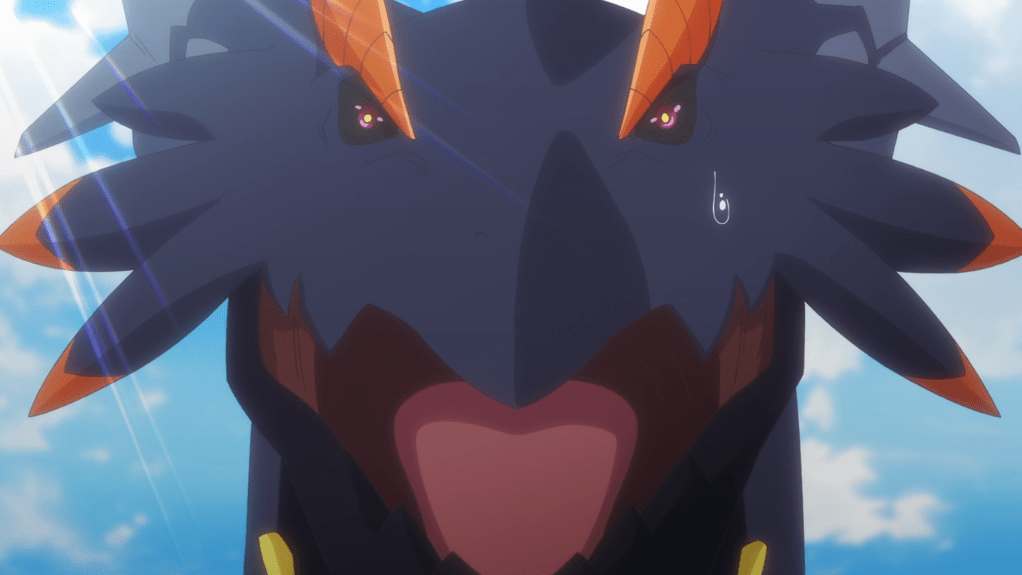
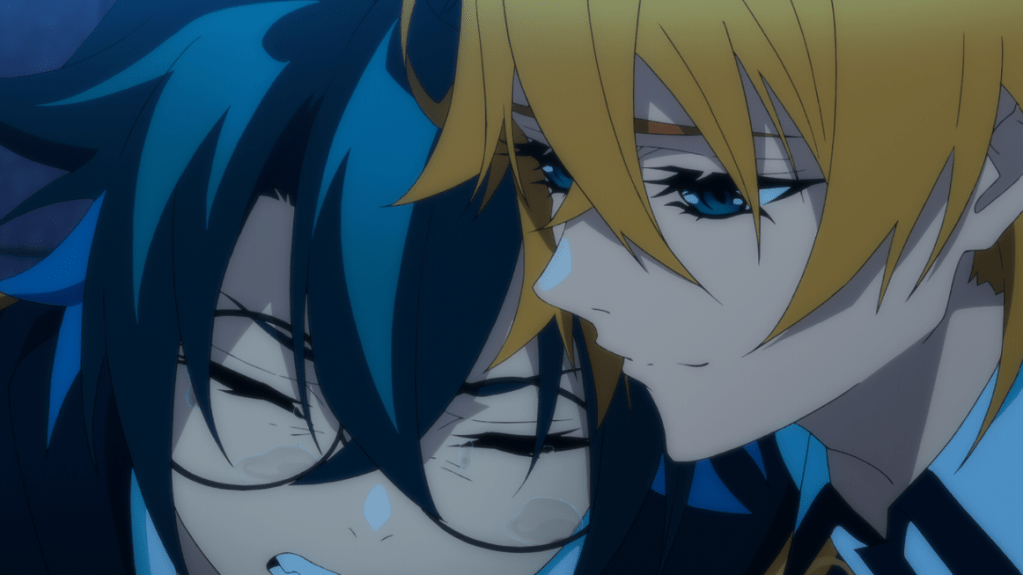
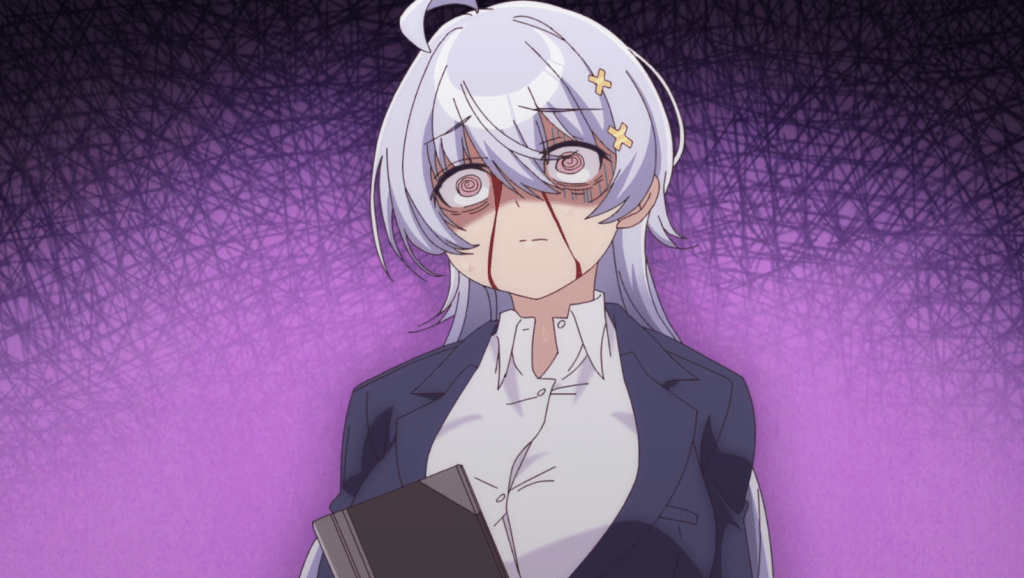
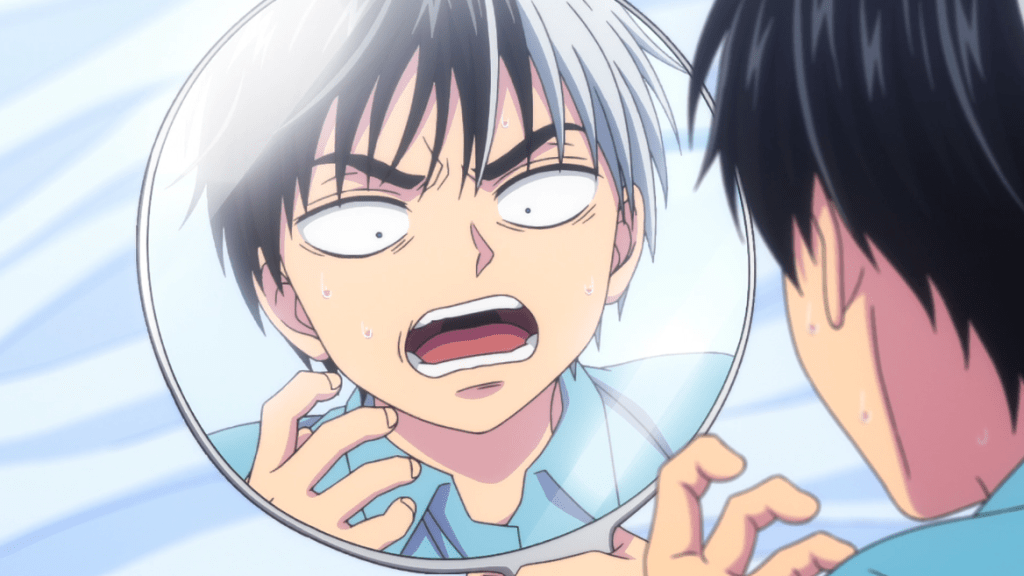
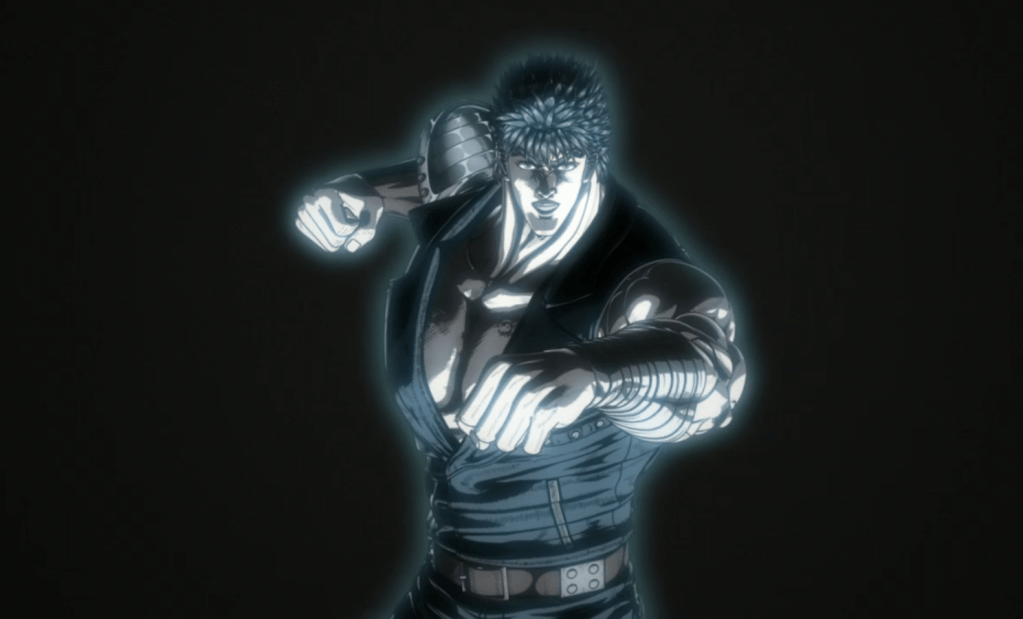
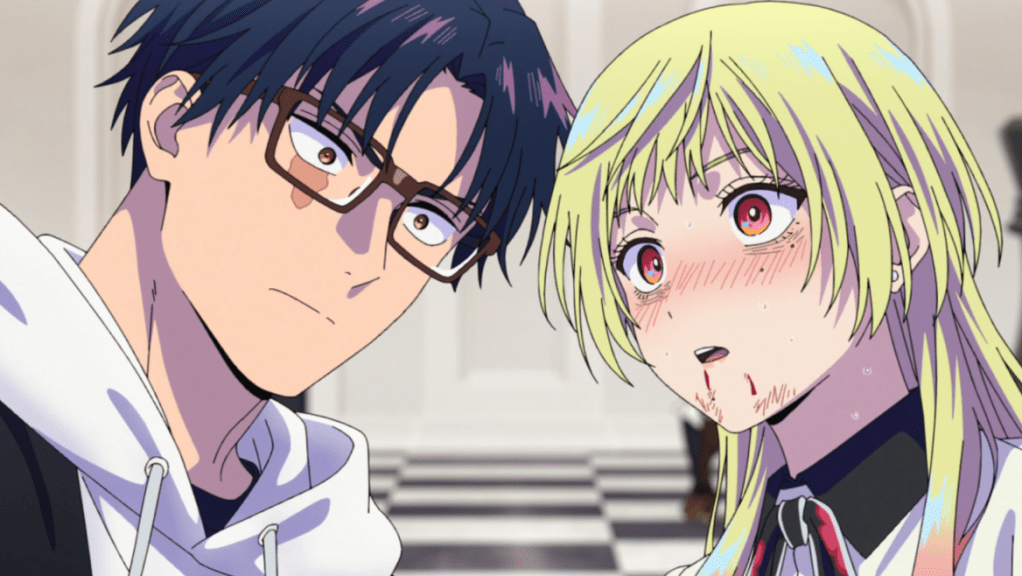
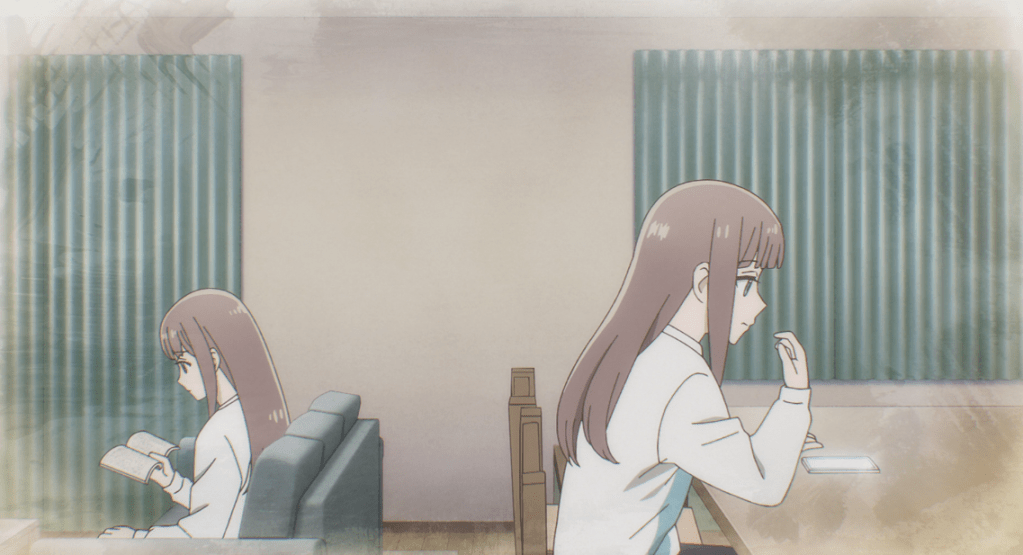
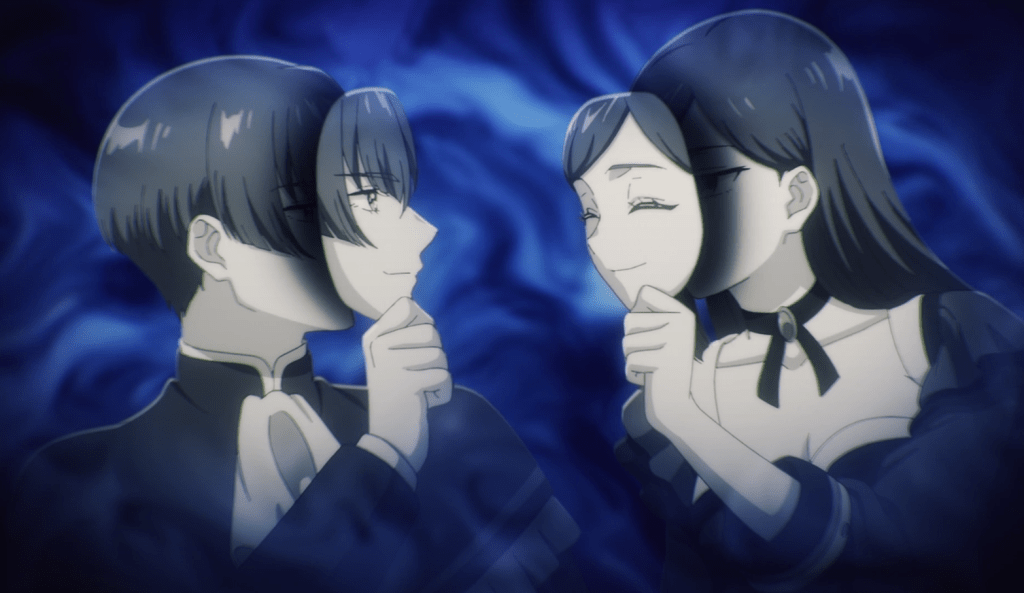
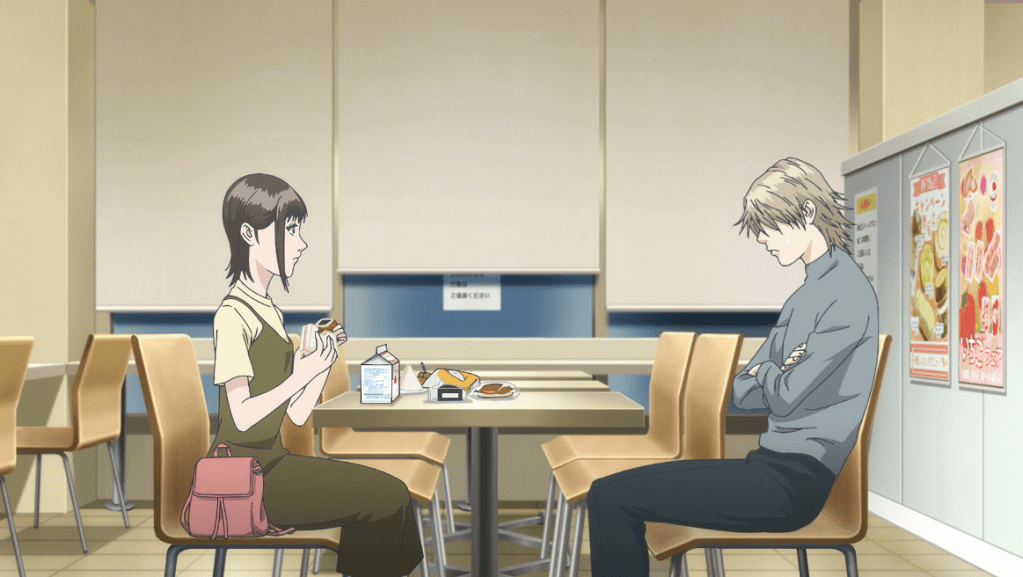
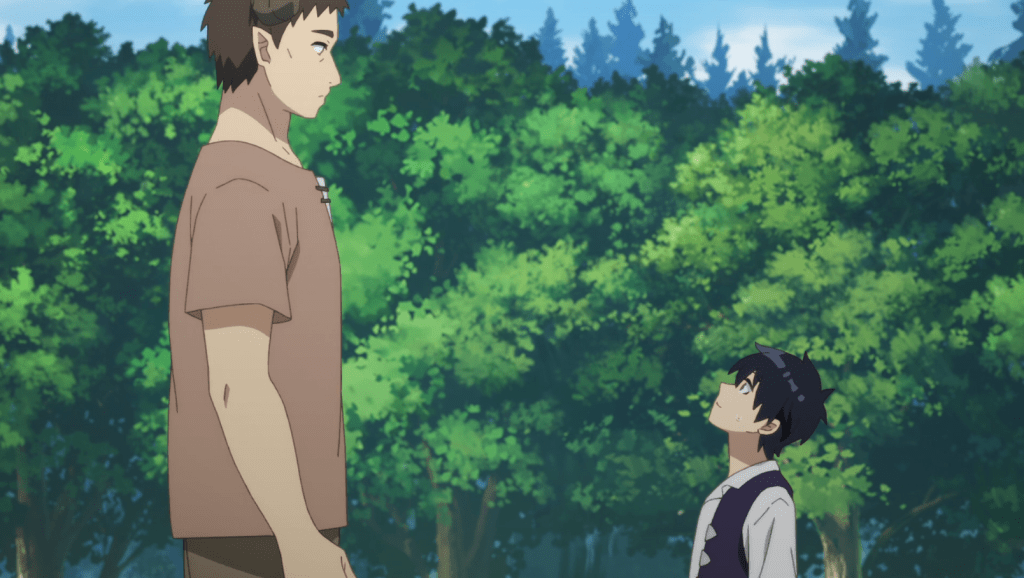
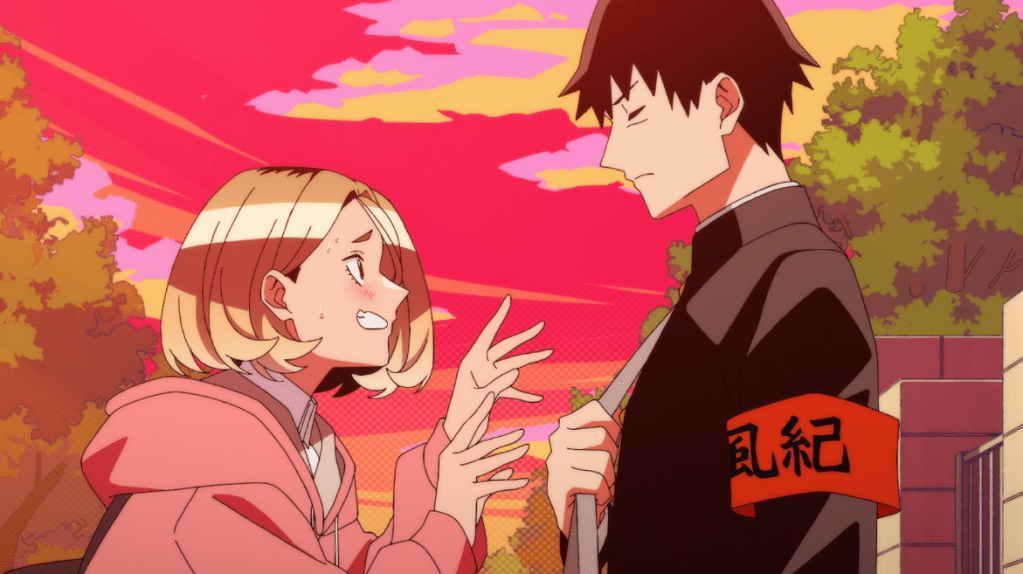
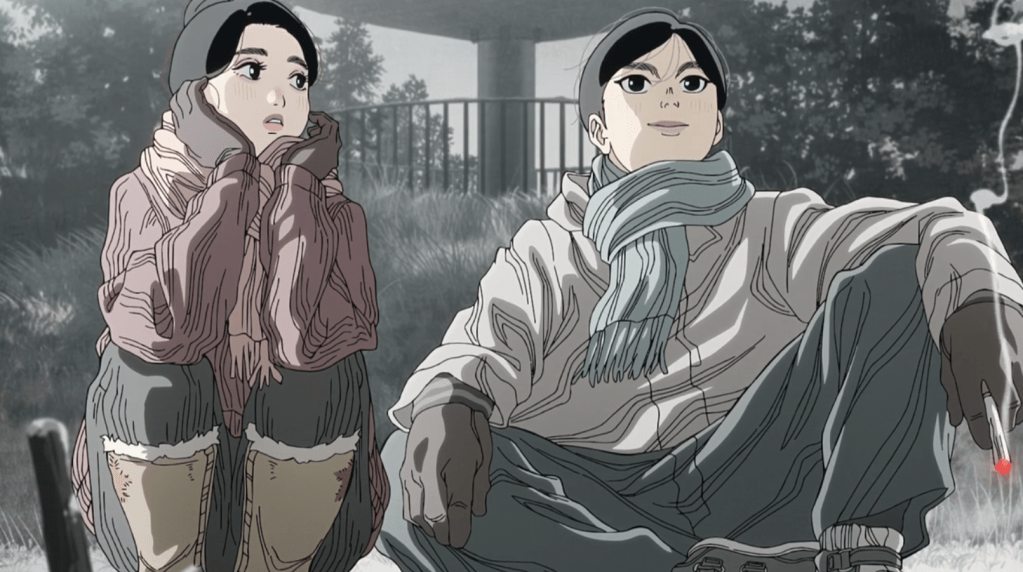
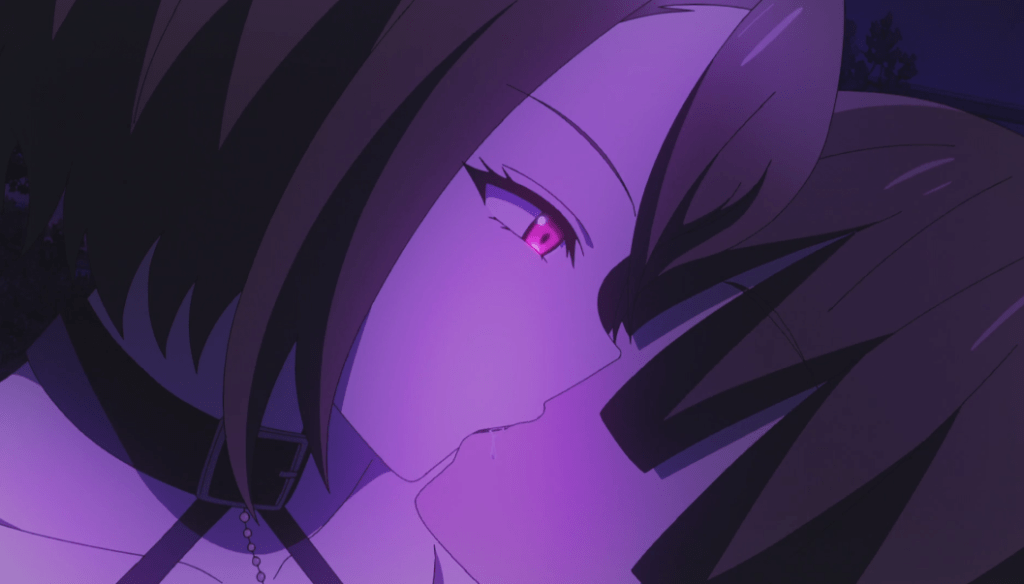
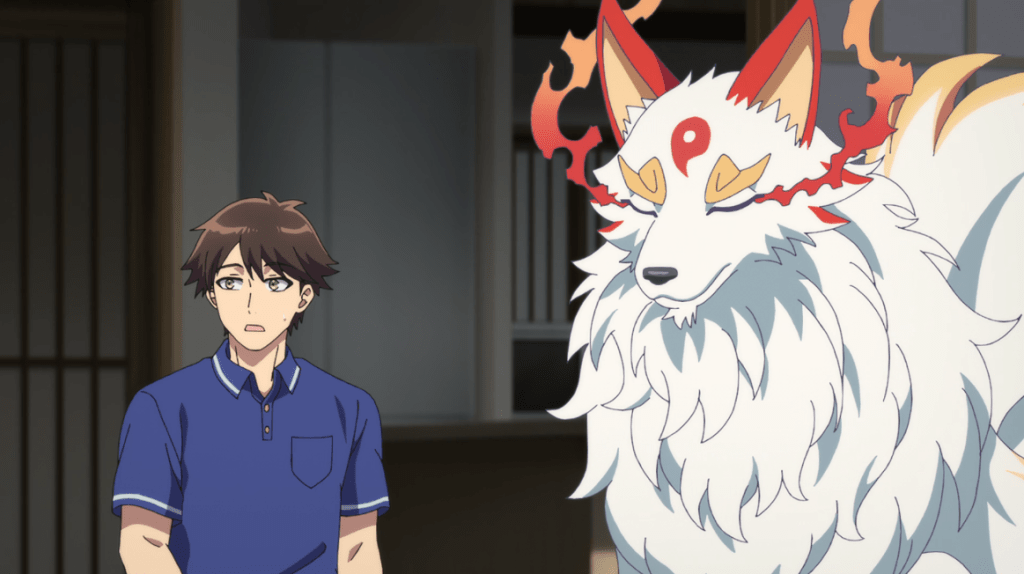
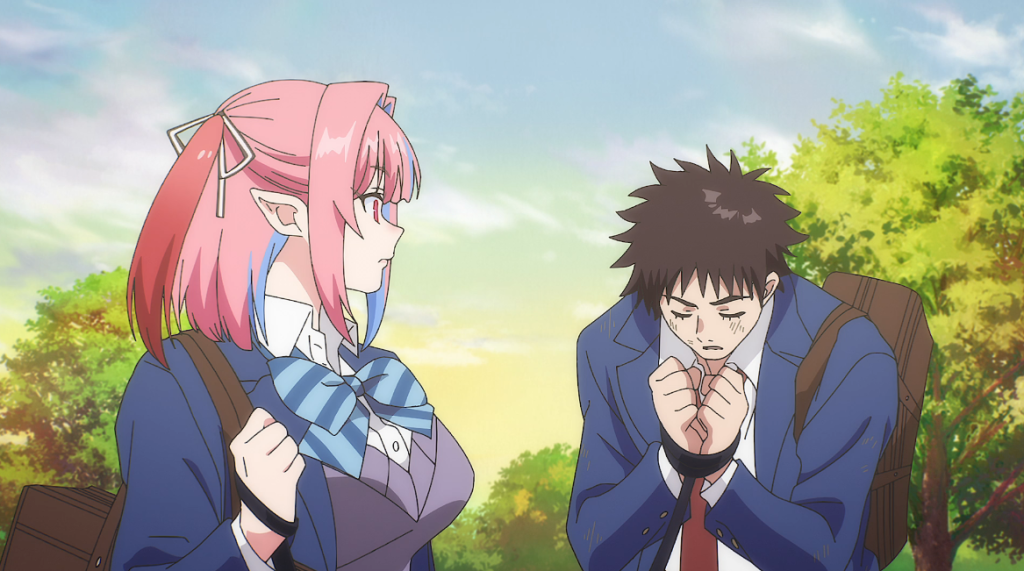
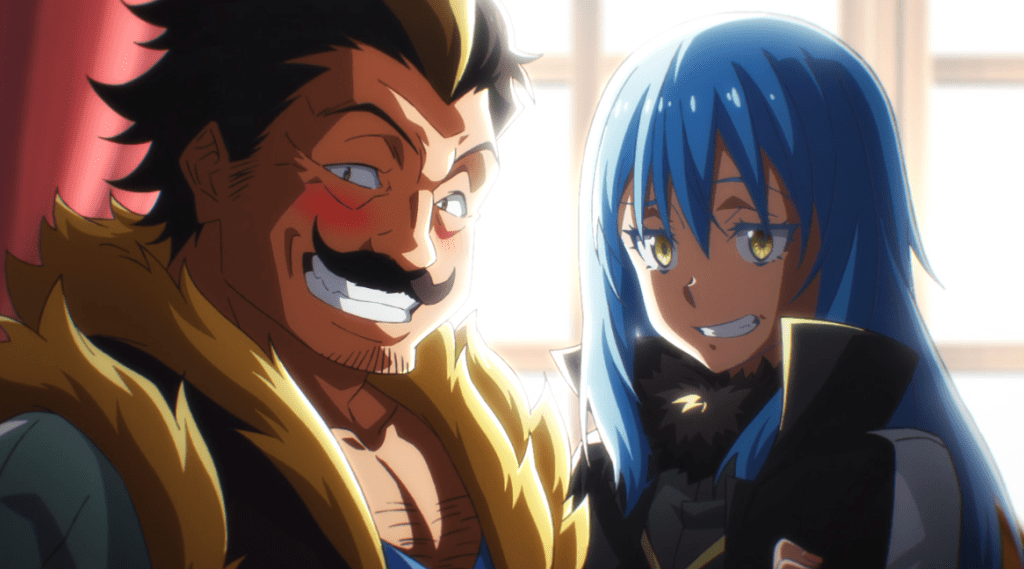
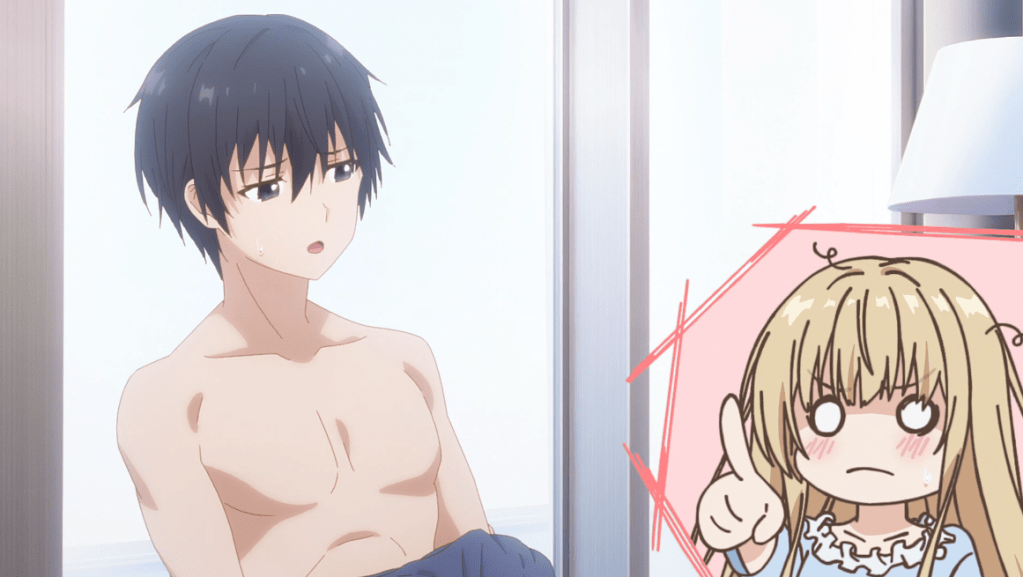
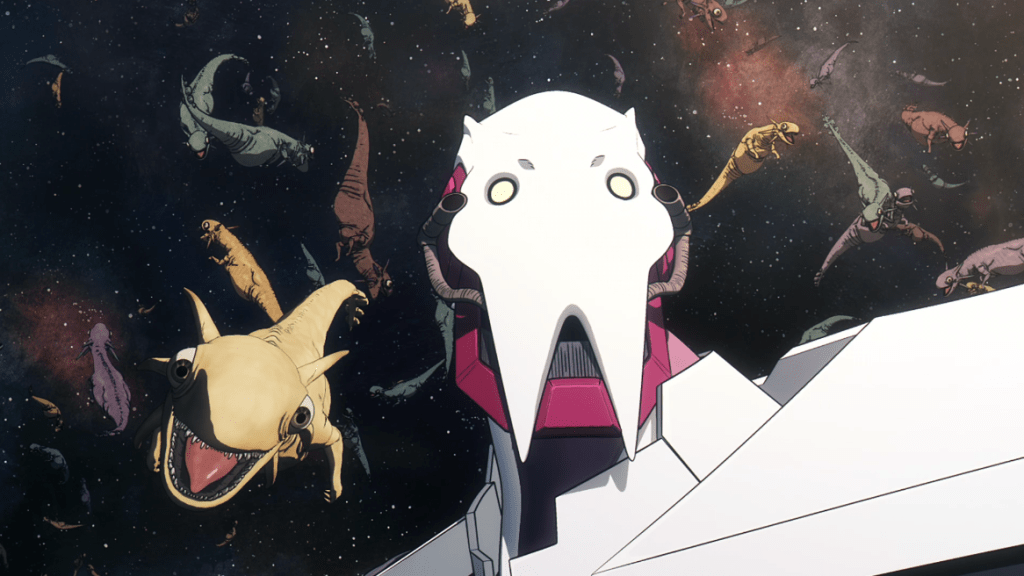
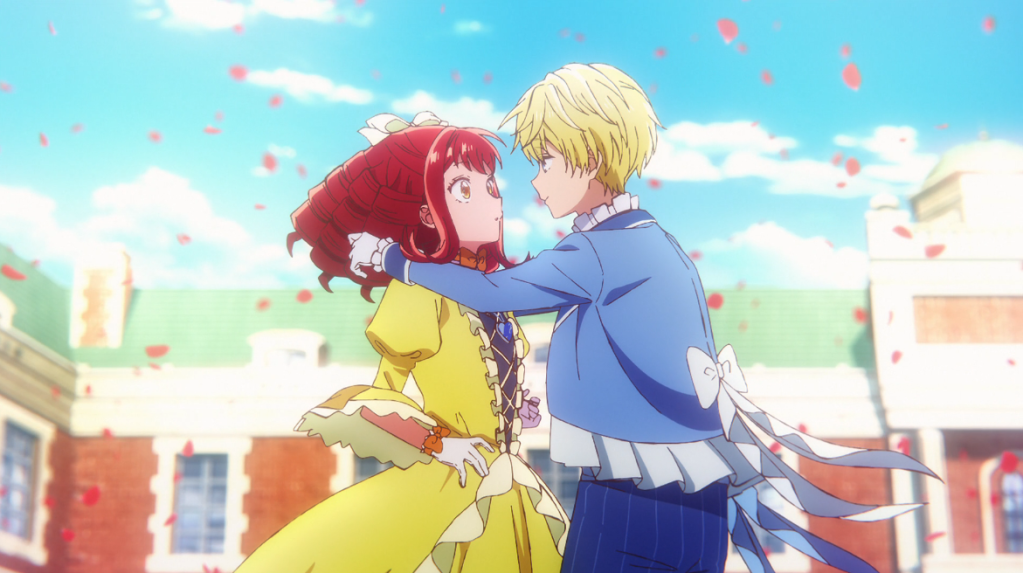
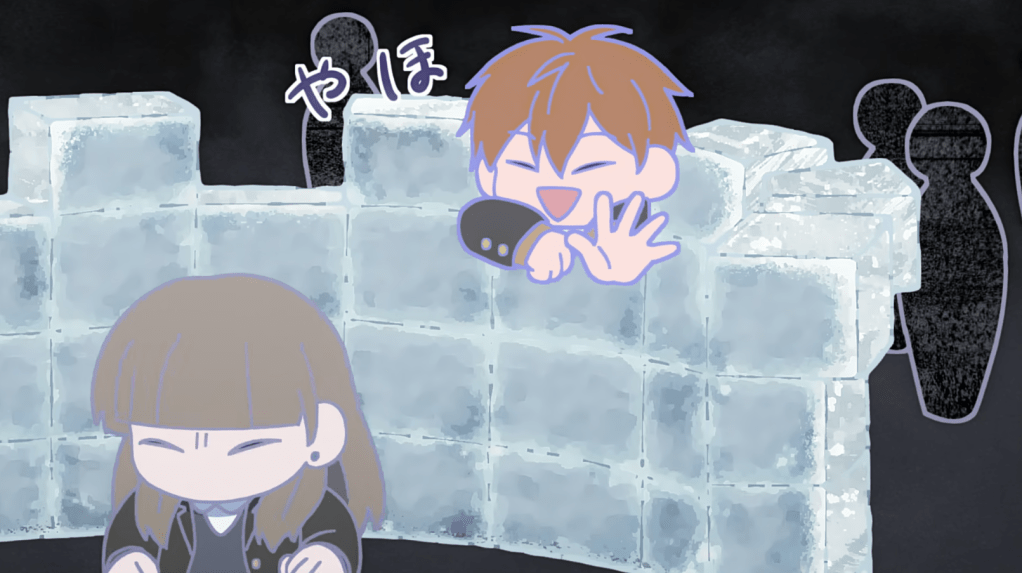
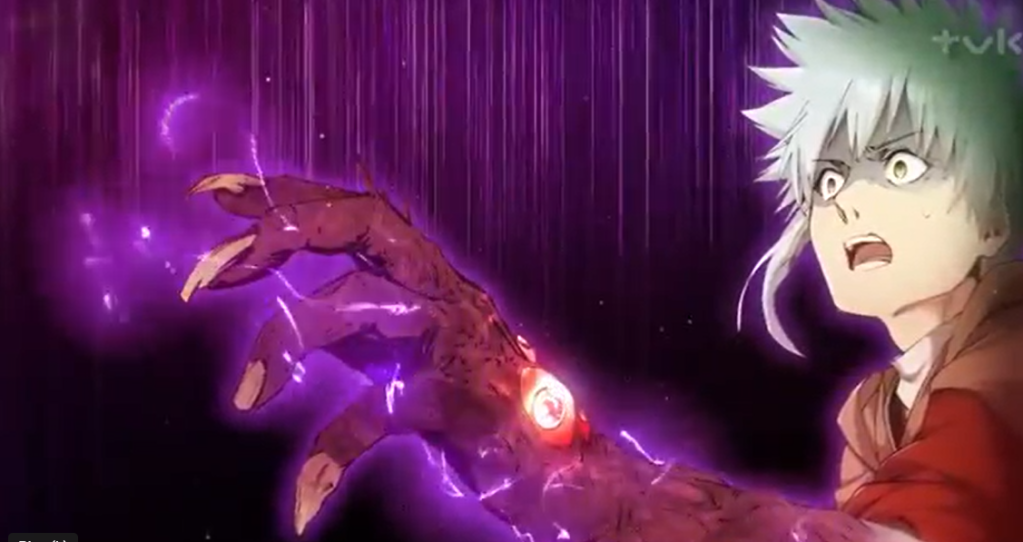
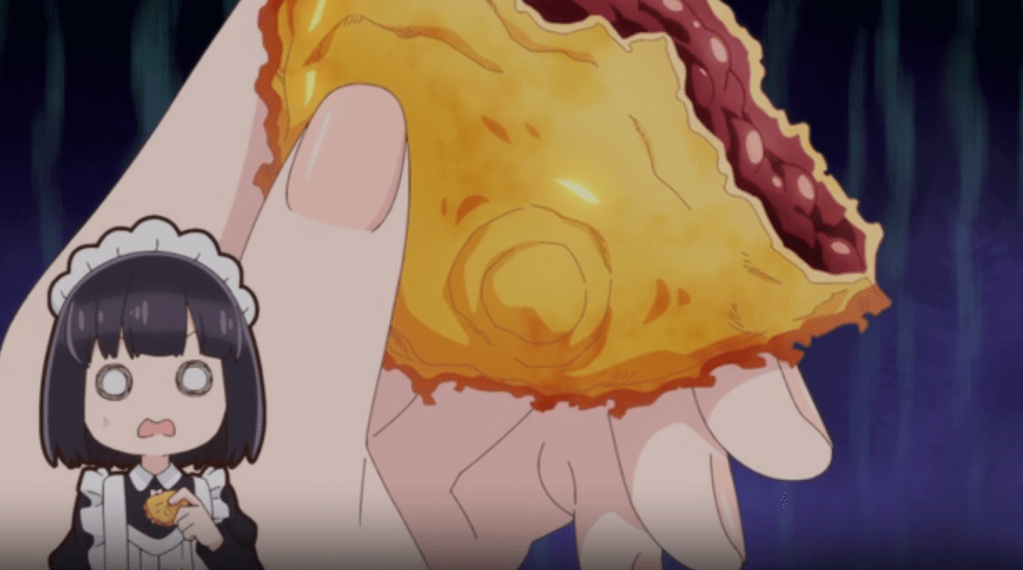
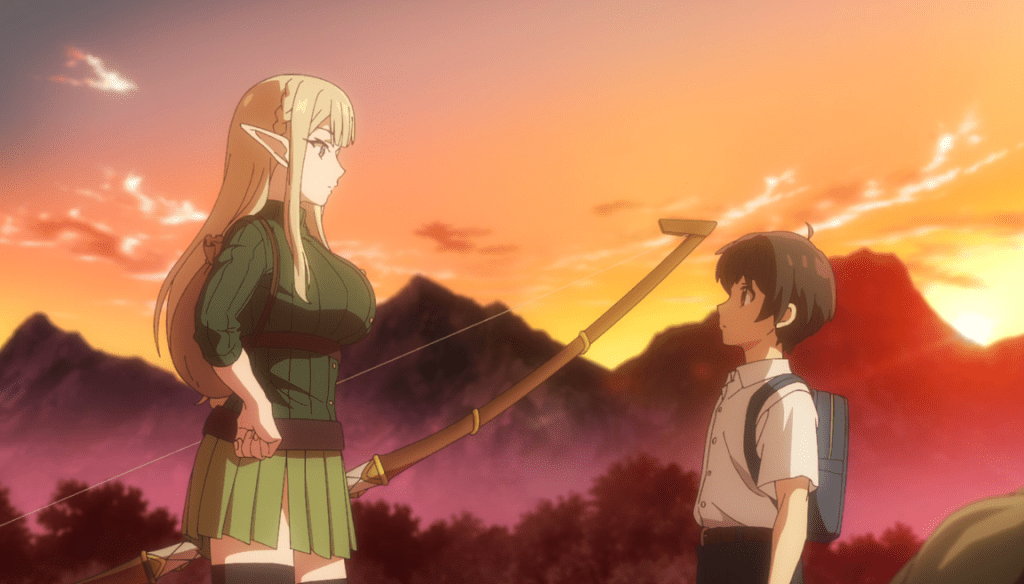
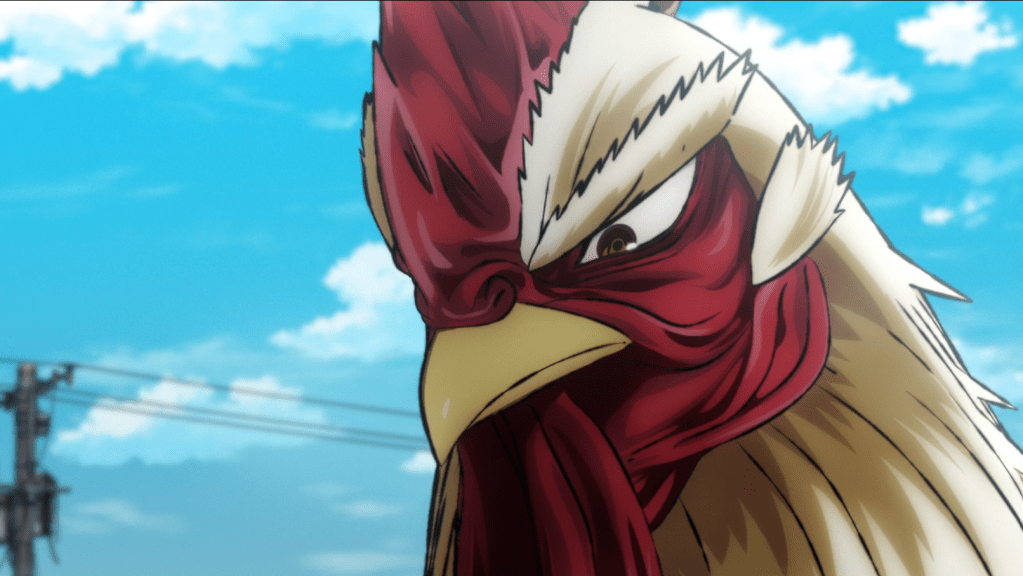
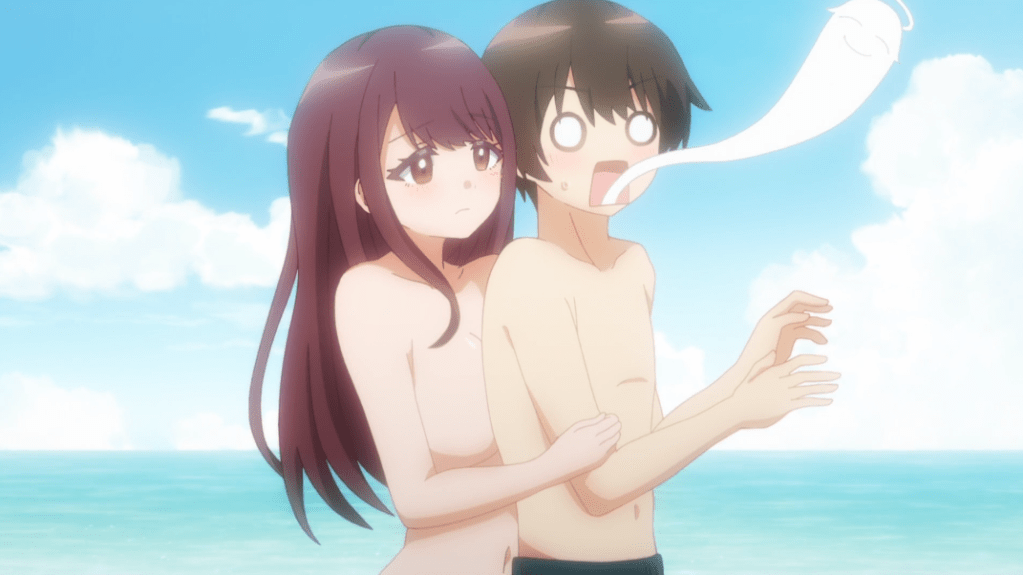
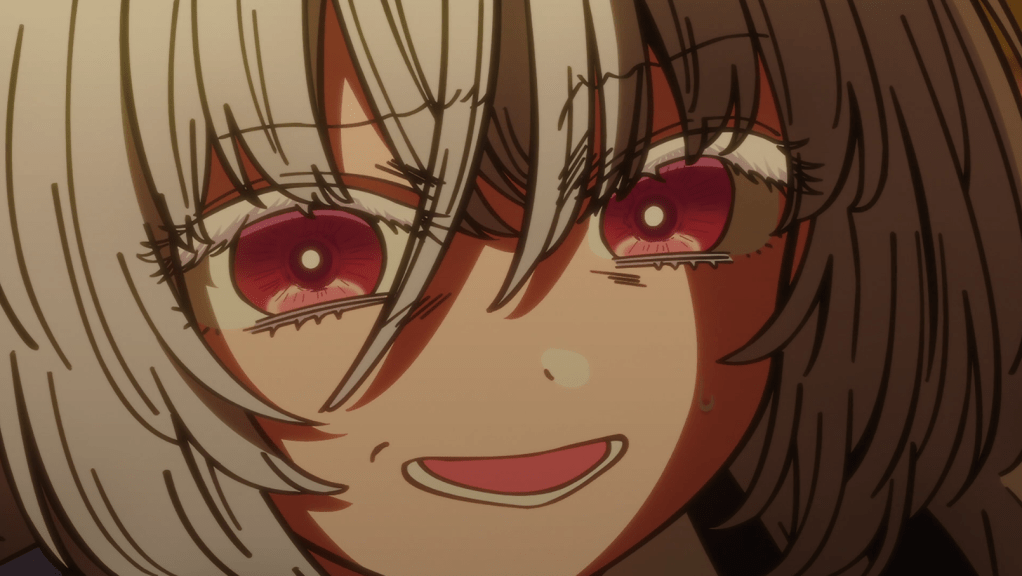
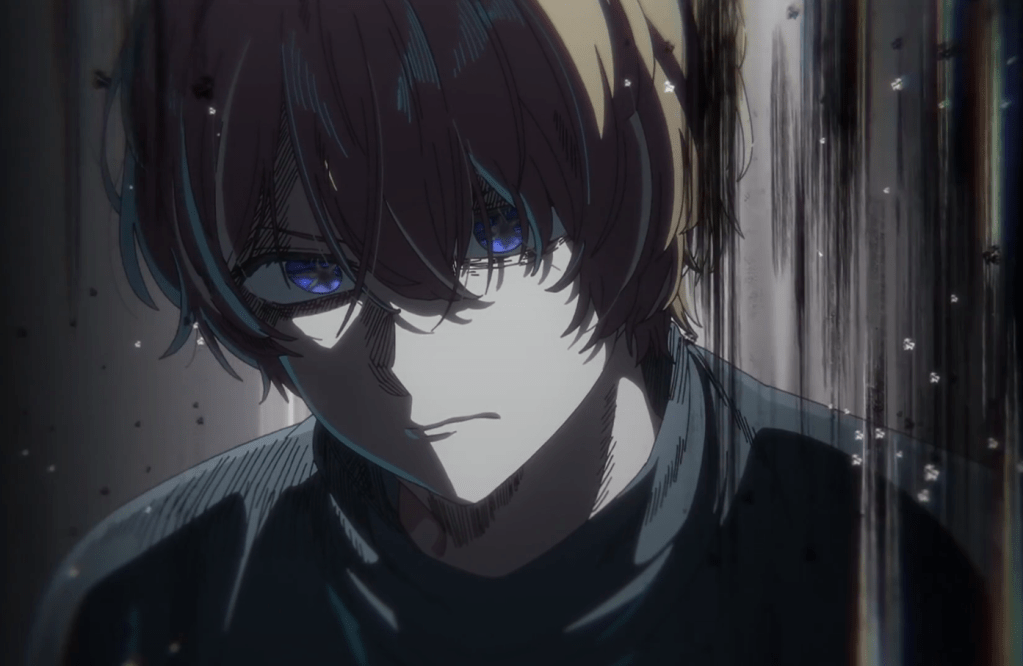
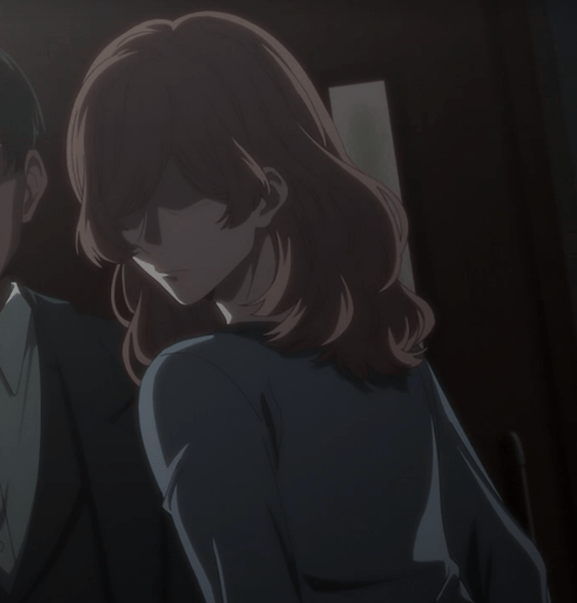
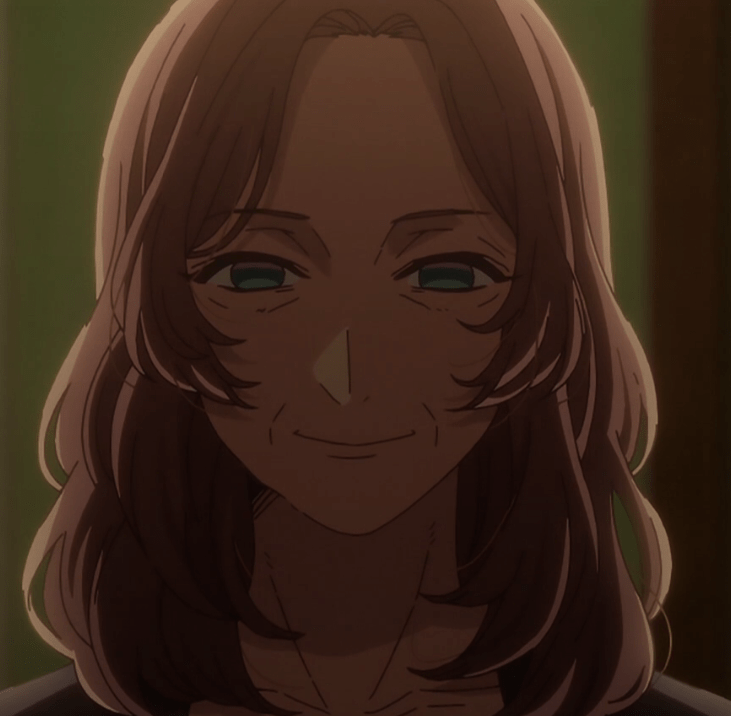
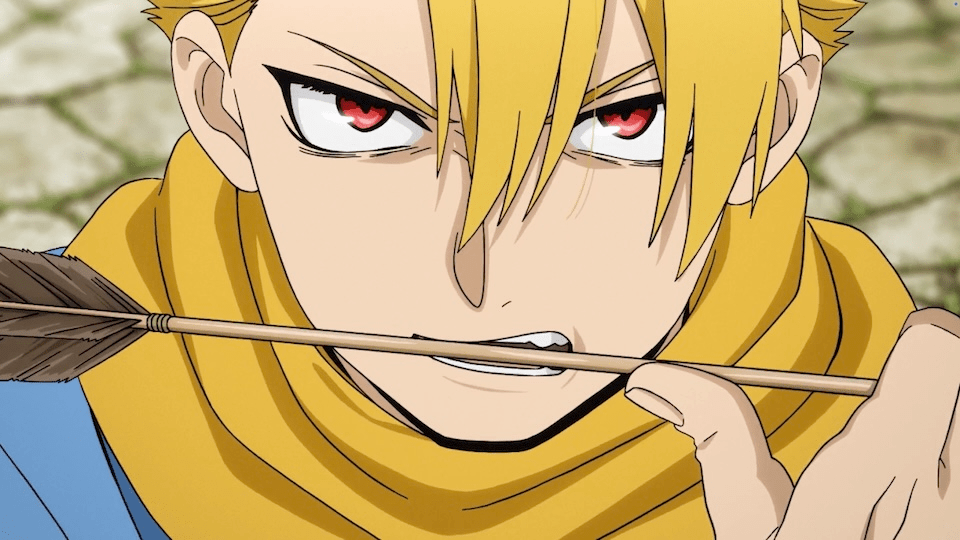
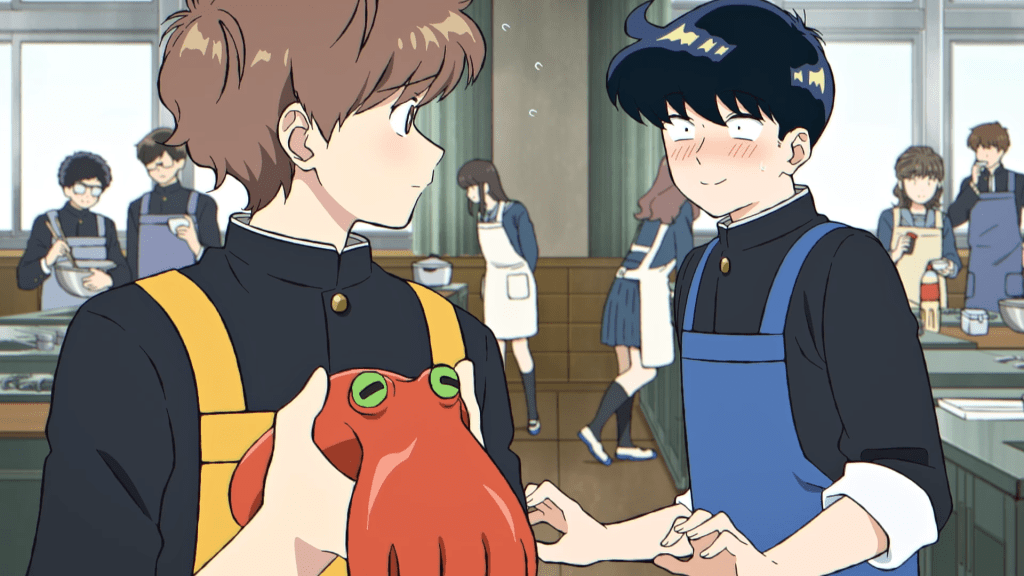
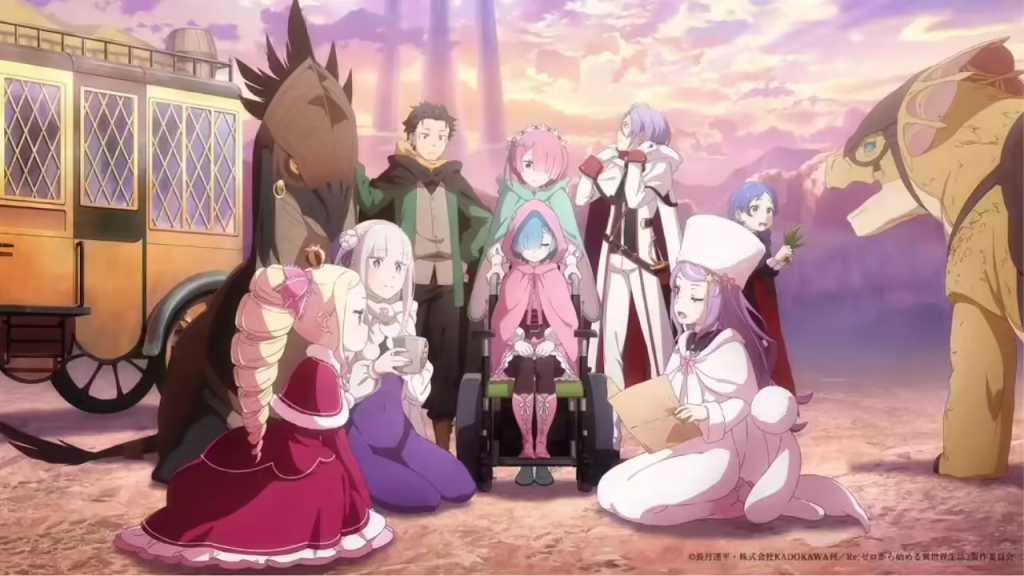
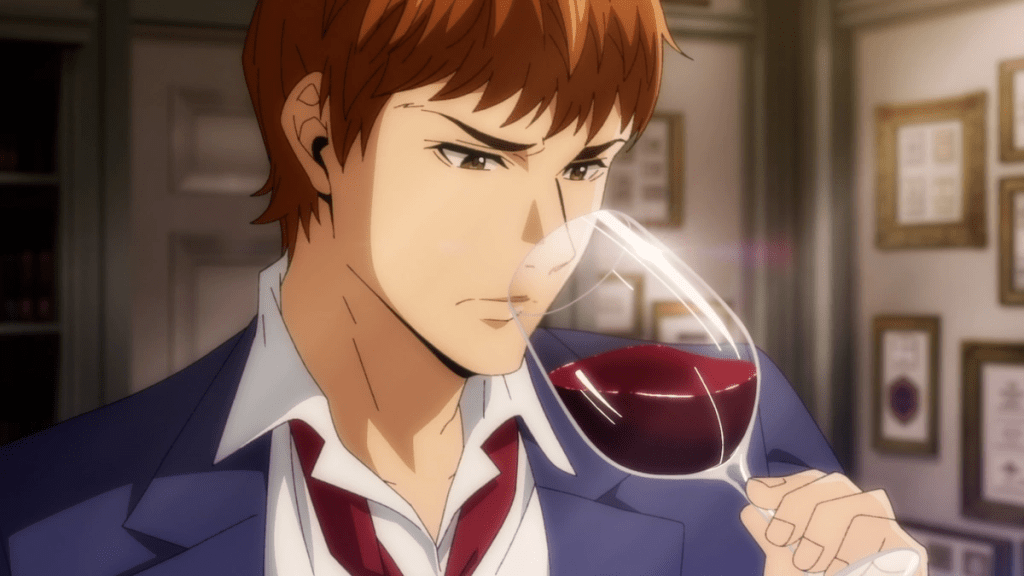
That alone would make the series one of the most thorough exercises in absurdity to come along in many years, but the series also packs a massive extra gimmick: highly variable visual and animation styles, occasionally even mixed with live-action characters. Some of this can be seen in the base scenarios in the domain of Goddess and (more rarely) other gods, which feature the most traditional anime looks, but the real stars are the flashbacks into each of the protagonist’s reincarnations. Each one uses a dramatically different visual style and even a different type (much less style) of animation and has its own video production specialist.
Let’s look at a chart of what’s been used through the first four episodes:
Episode
Reincarnated as. . .
Main Animation Type
Video Production
1
Rib of the hero
hyper-stylized 2D animation
Maria Tokareva
2
Hermit crab
moving static graphic designs
Takeru Shima
2
Right door to the Demon King’s castle
claymation
Biogon Pictures
3
Clock tower’s second hand
distorted picture book-style
Renoir brothers
3
“Level up” voice in the Hero’s head
Paper cut-outs manipulated by gloved hands
Shinrashinge
4
A tomato
Oil-painted models mixed with live-action
isai, inc.
4
The lock on a treasure chest
manga-style limited animation/coloring
Koji Kumeta
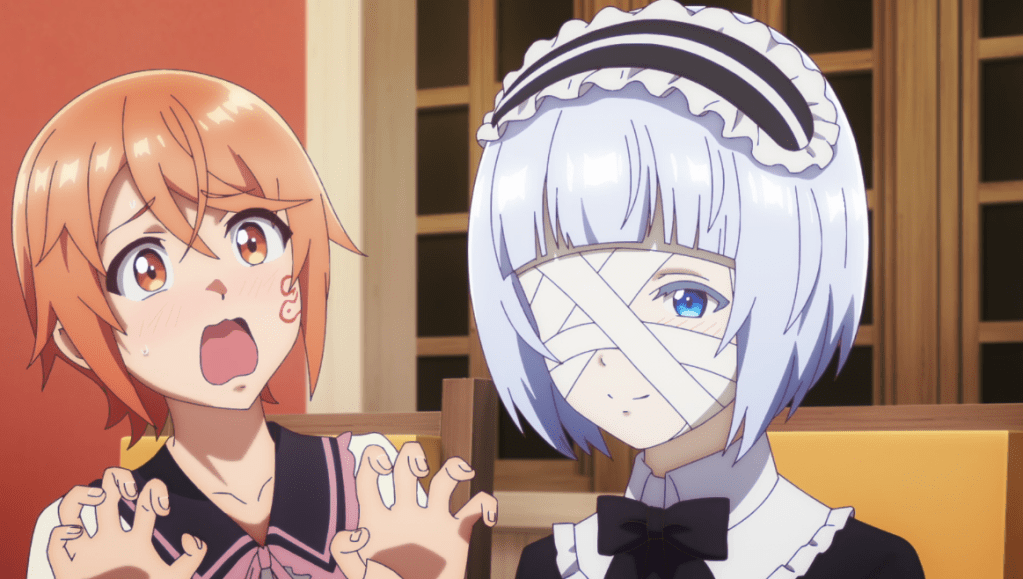
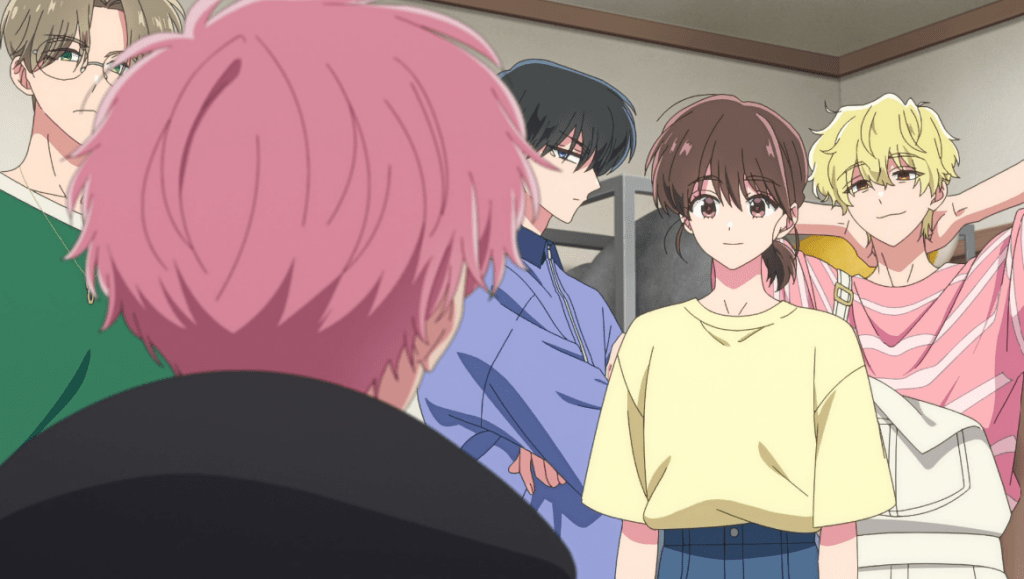
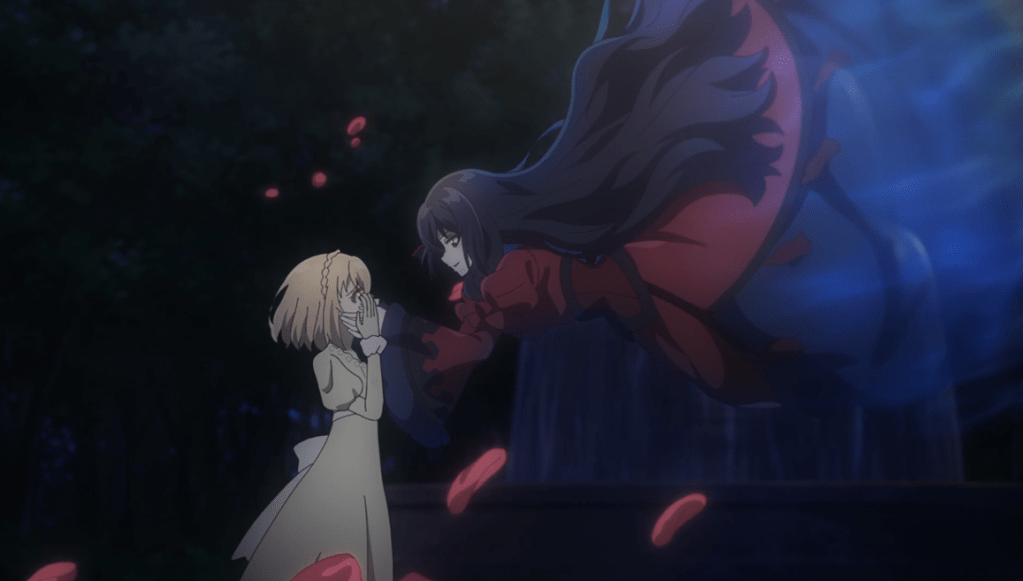
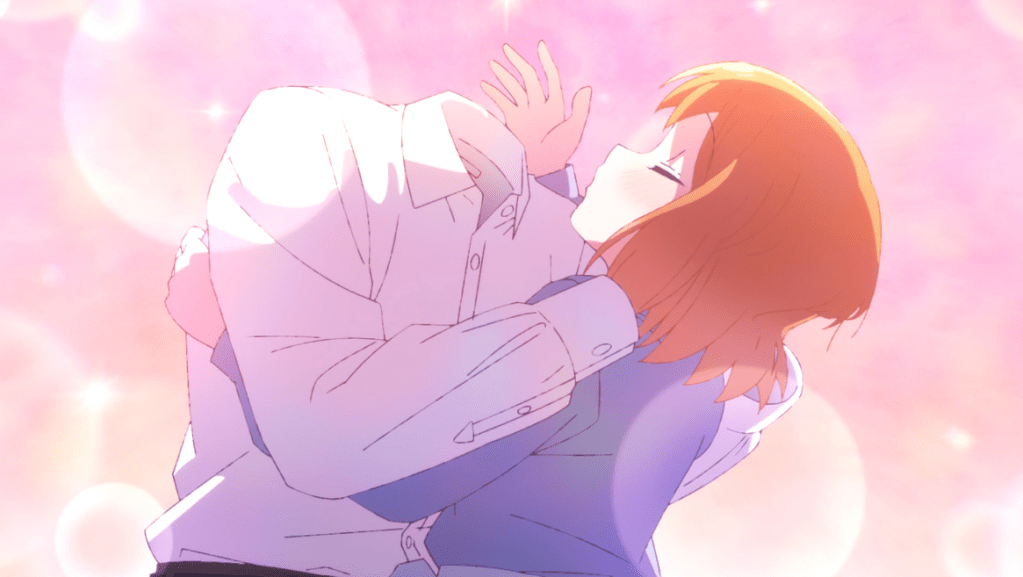
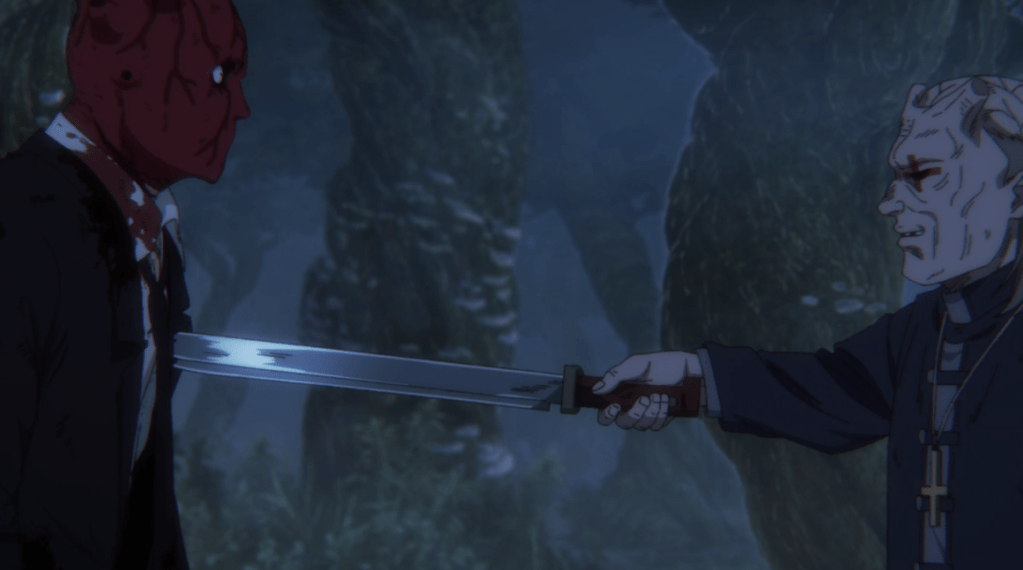
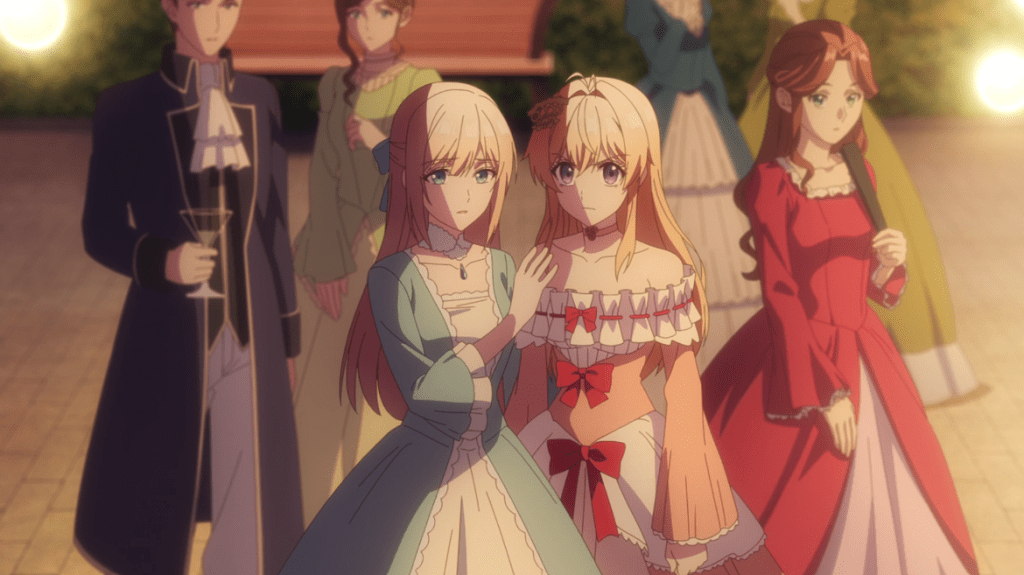
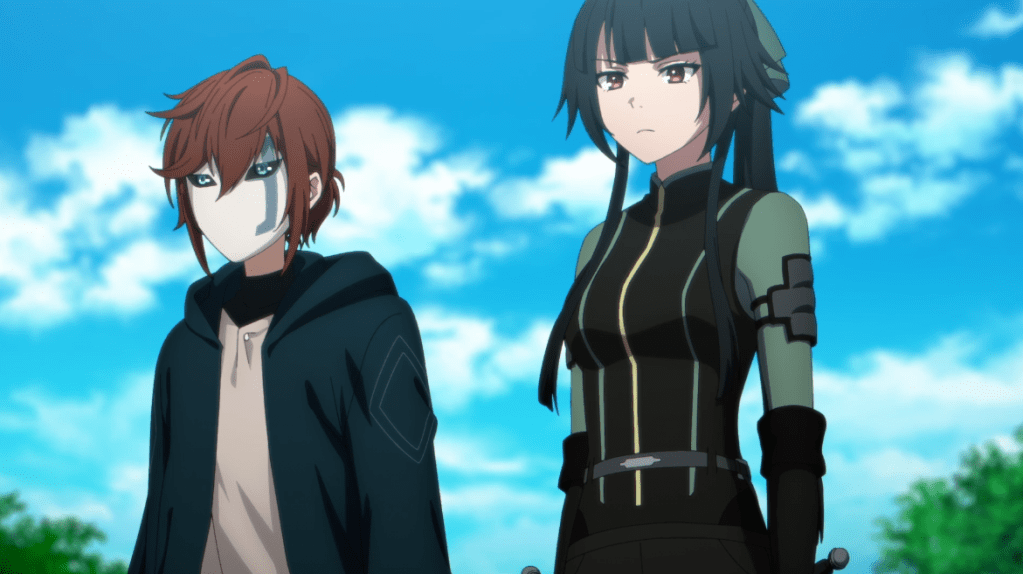
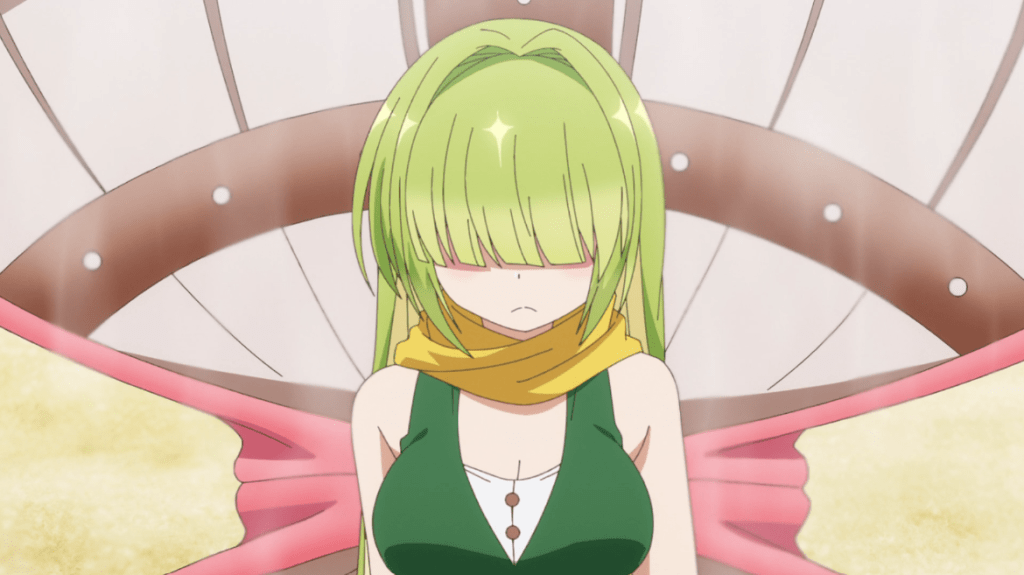
Some of the video producers are up-and-coming fringe artists (Maria Tokareva is a relatively recent animation school graduate), while at least one is a famous name in anime/manga circles (Koji Kumeta is the creator of Sayonara, Zetsubou-Sensei andi Joshiraku). This makes for a delightfully eclectic mix, but also one that deviates hugely from traditional anime styles; this has, no doubt, contributed to it getting a remarkably low average rating on Crunchyroll so far. Frankly, that’s short-sighted, as it doesn’t do justice to the variety and creativity at work here. Some examples:
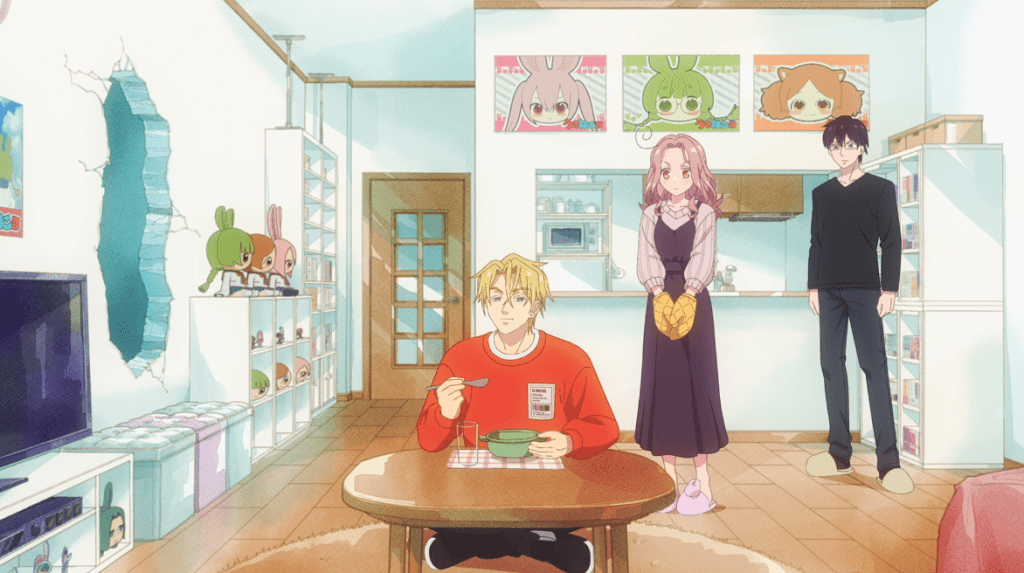
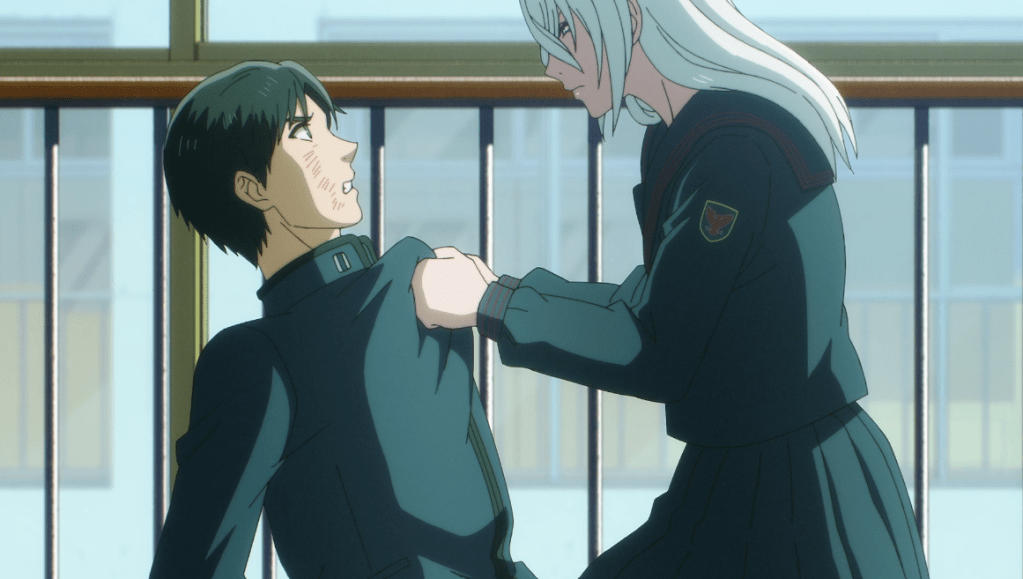
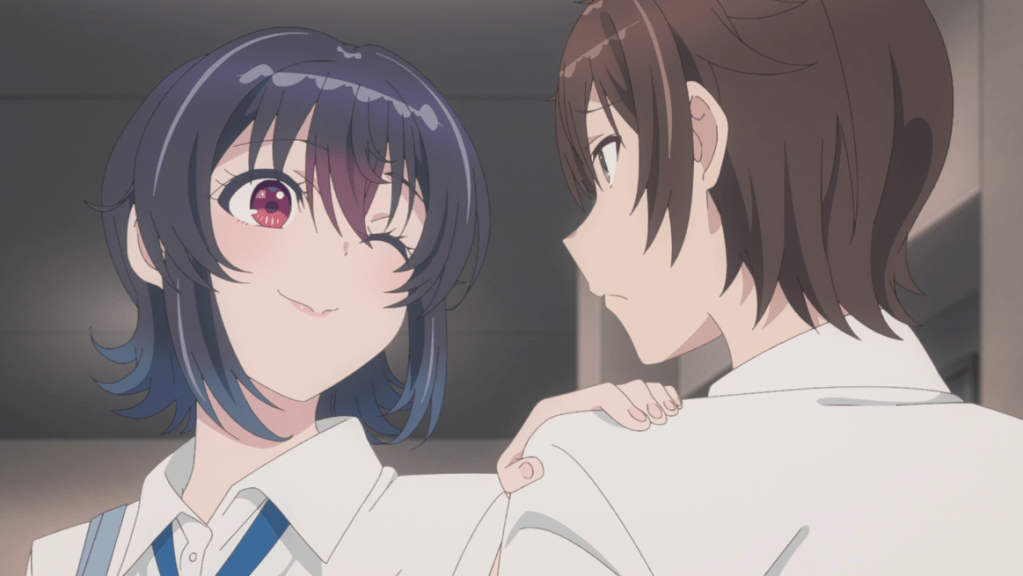
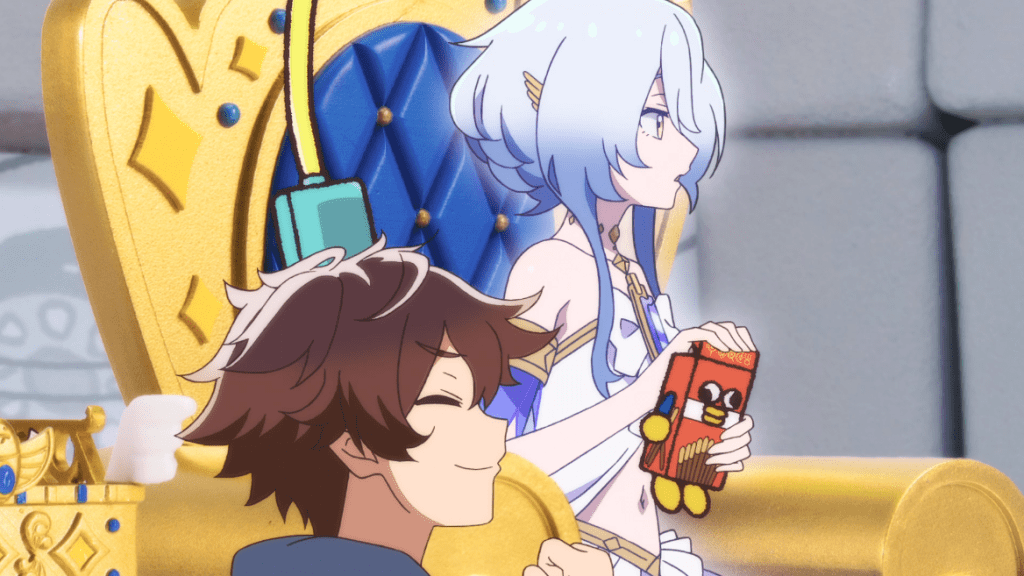
Yes, those are all from the same series.
On top of all this, each scenario ultimately collapses because of utterly stupefying twists, ones delivered so matter-of-factly that they can catch you off guard even if you’re expecting something weird. Don’t even bother to try to predict them, either; what could go wrong when a sentient second hand on a city’s clock tower (which is made of dark matter, because of course it is) is able to cast spells? Or when a hermit crab becomes a Weapon of Ultimate Destruction for a Hero? I bow to original novelist Anti for coming up with all of these insane scenarios, and to director Yasufumi Soejima for coming up with the visual ways to portray all this wildness.
Compared to all of this, the antics of Goddess and the protagonist in her otherworldly realm are much more pedestrian, but they still have a fun dynamic on their own (though the content in episode 4 involving the Goddess suddenly becoming touchy-feely, to the alarm of the protagonist, who feared the consequences when she return to normal, didn’t work quite as well). There are also hints of a story beyond just focusing on these two, as other gods have occasionally contributed observations and a Demon King who may be from from one of the protagonist’s scenarios looks to be getting reincarnated as a fish at the end of episode 4. Is he the fish we saw in episode 2? That would be an interesting development.
Overall, the series has been a wild ride so far. While I may not write this one up weekly, I intend to give summarized reports on it at least every 2-3 weeks throughout the season, much like I did for Touring After the Apocalypse a couple of seasons back.
Now that the Winter season is fully over and all of the series I’ve been following are either ending or going on hiatus, it’s time to look at how the series I followed finished out.
Per usual, the series I’ve been covering in episode reviews (Oshi no Ko and Frieren: Beyond Journey’s End s2) will not be covered here, but the former would definitely be in my Top 5 for the season and the latter would be just outside of that range. I will also not be covering a few series I finished here because my rating hasn’t changed since the Mid-Season-Report and I don’t have anything meaning to add to what I said there. These include Champignon Witch, Dark Moon: Blood Altar, Noble Reincarnation, and The Villainess is Adored by the Prince of a Neighboring Kingdom. Please see the Mid-Season Report for details on them.
Overall, my view at mid-season that this is one of the strongest and deepest anime seasons ever hasn’t changed. Multiple series that might be runner-up picks in other seasons aren’t even cracking the Top 5 here, and that’s without figuring in the commonly-praised You and I Are Polar Opposites, which I never got around to finishing. Of the 18 titles I did watch to completion, here’s how they shake out.
BEST OF SEASON – Journal With Witch
Rating: A+
Again, merely calling this “best of season” feels inadequate; this is the series to beat for best of year, and I have to seriously consider it for my all-time Top 10 list. (And since I’ve been an active anime fan for 35+ years now, I’m not saying that lightly.) While it may not be the flashiest series this season visually, it still provides strong production merits highlighted by plenty of impactful visual moments (especially one 20-second sequence in the final episode that had to be an animator’s nightmare!) and is a stellar achievement on writing, characterizations, pacing, and especially musical support. Major kudos to the writing and production for making these characters feel like people rather than just anime archetypes, and for the way it juggles the complex emotions of all its major cast members. It is a series of devastating lows, simple but poignant triumphs, and learning to cope and grow, and not just for teenage Asa. The series is too far beyond the anime mainstream to ever get hugely popular, but it will be remembered as an all-time classic by many who have seen it.
RUNNER-UP: SHIBOYUGI
Overall Rating: A
Competition for the #2 spot this season was fiercer than in any season I can remember, with probably half a dozen series worthy of this spot. Ultimately I decided to give the award to the season’s greatest stylistic triumph – something I never thought I’d be saying about a death game series. The story presents its arcs out of order, but even that works to help viewers understand where Yuki is coming from, how she got where she is in the time of her chronologically-latest arc, and the way these death games have worn on her over time (both physically and mentally) while at the same time being a sort of comfort. The writing also sprinkles all sots of tantalizing mysteries about how, exactly, things work in this setting and why, but never providing a full explanation actually works to the series’ advantage. Major supporting characters in each arc are interesting as well, with few named characters being completely disposable (even if they do eventually die), and there’s a big surprise concerning one in the final scene, too.
But it’s the visual style and sparse but extremely effective use of music which sell this series the most. It lends the whole series an almost dreamlike quality and emphasizes the delicate nature of the girls even as they (in some cases) fight fiercely, and the use of plushie-style stuffing to replace blood and viscera might seem to tamp down the graphic impact at first, but in some ways it’s all the more horrifying in the long run. Kudos also for an English dub which remains exceptionally strong to the end. I’ll be surprised if this one doesn’t make a lot of Top 10 (or even Top 5!) lists at the end of the year.
TOP 5: Sentenced to Be a Hero
Series Rating: A
Whether this one or Fate/strange Fake more deserves to be in the #4 position for the season (with Oshi no Ko being #3) largely depends on which one I’ve watched more recently, but I’m giving this one the slight edge because of its absolutely searing, twist-filled final episode. It delivers plenty of (sometimes very gross) action spectacle throughout while featuring some of the season’s best visuals, animation, and fight designs, but it also shows itself quite capable of delivering on intrigue and darkly personal stories, too, and a Xylo/Teoritta team that’s in sync is an absolute delight to watch. A second season has just been announced (though with no definite time frame yet), and it will almost certainly be one of the most-anticipated titles of whatever season it returns in.
TOP 5: Fate/strange Fake
Series Rating:A
This is the second of the top-tier action series for the series and rivals Sentenced to Be a Hero stride-for-stride for its action extravaganzas and quality animation effort. This series is a vastly more chaotic affair, though, one which throws in characters and twists from all kinds of angles and doesn’t seem to care much if its audience fully keeps up, and I love it for that. On top of that, Saber/Richard the Lionheart makes for one of the most engaging Heroic Spirits seen in any of the Fate franchise titles, and the season’s final episode – where he’s shown an images of Saber from Fate/Zero – only bolsters his appeal further. (And kudos to Ben Balmaceda for a stand-out English dub performance as Saber.) The season finale also features one shocking big twist and additional guest appearances from the deep lore of the Fate franchise. This series continues to be an especially fun ride, and it’s not over; that the story couldn’t be contained within a mere 13 episodes + starting special was clear from early on, and a “to be continued” notice attached to a bonus video seems to indicate that part 2 will eventually come. Its sequel will also be among the most-anticipated of its season
THE REST
Chained Soldier s2
Series Rating: B-
I’m giving this one a slight bump on rating because its second half does finally coalesce actual plot developments as the Thunder Gods start to make major moves, including big hooks at its end for potential future seasons. And it does this without ever stepping away from its staple of requisite nudity in every episode. Couple it with some respectable power displays and action scenes and it makes for passable lowbrow entertainment.
Hell’s Paradises2
Season Rating: B
The second half of this series gets bogged down in the assorted fights against the Tensen, though the action design, animation, and spectacle of the fights largely carries the series through this run. Only in the last episode does the second expeditionary force become a major player, but their arrival on the scene turns what had been a fairly ordered series of battles into a completely chaotic affair, and that’s not necessarily bad. It doesn’t even end on a stopping point, so almost certainly another season will be coming eventually (though nothing has been announced as of this writing).
Kunon the Sorcerer Can See
Series Rating: B-
I almost rated this one even lower, as the series’ second half took pretty much everything that was interesting about the first half and de-prioritized it in favor of far less interesting (or even outright obnoxious) elements. Hence consider this grade an average of its first and second halves. Hardly anything additional is done with exploring why Kunon sees the things he does with his artificial eye, while his womanizing flattery is played up to the max; the one mildly interesting element there is how he reacts to a trans character. The “magic school” elements also feel very rote, and the the young saint is nowhere near a good replacement for the princess Kunon is betrothed to (who still makes a few token appearances) as a character. Basically, the series has devolved from something potentially special to something just ordinary, and is thus the far inferior of the two series this season featuring blind characters.
Reborn as a Dragon Hatchling
Series Rating: B-
Though I do still like this one, it only really merits additional commentary because of a trio of late twists: one which potentially strains Illusia’s relationship with Myria (Illusia is the name given to the dragon by her), a surprise on who the mastermind in the forest is, and a final scene which indicates that any sequel (one hasn’t been announced as of this writing) is going to happen in a dramatically different setting. I have very mixed feelings about that ending but I’m still curious to see where the story might go next, so I’ll watch a sequel if one is made. The recently-started English dub (featuring Adam Gibb, the voice of Cid/Shadow from The Eminence in Shadow) also seems solid.
Roll Over and Die
Series Rating: B-
As dearly as I love this series, I still have to acknowledge how rough the adaptation is and how limited it is at times on the animation front. Still, in finishing its adaptation through the end of the second source novel (and just a little into novel 3), the series lays out the foundational truths of the world which make this setting a bit different from most other game mechanics-grounded fantasy setting. It also reinforces the yuri nature of its central relationship and the growing “found family” aspects, and watch for the closer to update visually to correspond to plot developments. Flum also continues to be a worthy heroine, though she doesn’t look right in a girly dress she wears for part of the epilogue. I have doubts that this one proved popular enough to warrant a second season being made, but I will be back if it does happen.
Tamon’s B-Side
Series Rating: B++
If SHIBOYUGI turning out to be a top-tier stylistic effort is the season’s biggest surprise then this series turning out to be as good as it is qualifies as the second-biggest surprise; its mention in best-of-season lists is warranted, though its competition is simply too strong for me to put it in my top 5. Even so, it continues to deliver up to the end as Utage interacts with more members of F/ACE and struggles to find a balance between idolizing and respecting Tamon as a fan and honoring her own growing romantic feelings. Some of the side complications involving other F/ACE members (some of which concern Utage, but some of which don’t) are also pretty neat. I give this one a slight edge over The Invisible Man as the season’s premiere romcom.
The Holy Grail of Eris
Rating: B
A case could be argued for raising the grade a notch on this one, as it does deliver on a wonderfully convoluted scheme and at least partially succeeds on turning Constance into a worthy heroine. The one thing holding it back is how rushed some of the developments feels; even as an anime-only viewer, that the writing was condensing or skipping over a lot of content was quite evident. While there might not have been enough content her to warrant stretching the story over two full seasons, even 2-3 additional episodes probably would have at least partly alleviated this problem by allowing certain aspects (especially the crucial politics in Faris) to be elaborated on further. Still, seeing Constance and Randolph hit it off for real was a treat, as was a late twist which finally revealed the truth behind a mystery going back to the prologue scene in episode 1. While I have mixed feelings about the very last scene (which in some ways mirrors the ending of the early 2010s series Dusk Maiden of Amnesia), it’s still fitting for the way the story was presented.
The Invisible Man and His Soon-to-be Wife
Series Rating: B+
This may not be one of the better-looking series of the season (something definitely seemed off about part of the last episode in particular), but it is just too charmingly-sweet to deny. It can at times be really funny while also exploring societal issues unique to the multiracial setting (the “look” at the invisible person village was especially interesting), and I continue to love they way it handles Shizuka’s blindness; the series finds an excellent balance between demonstrating how she can manage on her own and how she reacts differently to certain situations because she’s blind. She and Akira make a neat couple, and there’s a strong supporting cast around them, too. The series has been a delight to watch.
There Was a Cute Girl in the Hero’s Party, So I Tried Confessing to Her
Series Rating: B-
Yeah, this continues to be one of the weakest series of the season on visual and technical merits, and the stakes here certainly aren’t high as isekai fantasy series go, but it remains a fun view through to the end and watching Yoki legitimately win Cecelia over (while still regularly falling prey to his chuuni urges) is quite satisfying. So are the stories concerning the numerous other romances circulating about the main couple; I’m hard-pressed to think of another isekai series which has so many romantic entanglements but only the main one channeling through the protagonist. Not sure where the story can go from its ending point, since the two are officially a couple at the end, but I’ll watch a second season if one is ever made.
Welcome to my seasonal Guide! The debut schedule can be found here.
I expect to cover every full-episode series that will be debuting this season and is available in streaming form, including many of the sequels/returning series. Sequels that I will NOT be covering (because I’m not caught up on the franchise) include Classroom of the Elite; Dr. Stone; Welcome to Demon School, Iruma -kun; Ace of Diamond Act II, One Piece; and Rent-A-Girlfriend.,
Also, five series – Daemons of the Shadow Realm; Go For It, Nakamura-kun!!; Re:Zero s4; The Drops of God; and Witch Hat Atelier – are not being covered here because they were covered in the Crunchyroll Sneak Peek March ’26 feature a couple of weeks back. Please consult that article for coverage of those titles.
NOTE: All series this season have now debuted, so this Guide is complete.
I Want to End This Love Game
Streams: Crunchyroll on Tuesdays
Rating: 3 (of 5)
Back in 6th grade, childhood friends Miku and Yukiya started a game to see which one would react most strongly to the other one saying “I love you.” With neither ever willing to concede defeat, the game still continued as they made their high school debuts four years later, much to the amusement or consternation of their family members. But the game has escalated, with both going out of their way to tug at the other’s heartstrings with their carefully-manicured looks. Because neither will budge, neither realizes that they other did, indeed, completely fall for him/her ages ago.
This manga adaptation treads on some somewhat similar territory to Kaguya-sama: Love is War, except that the central duo are just ordinary youths who are long-time friends rather than elites. (Although there is an implication that Miku is also a top student.) This is also a less exaggerated, more slice-of-life approach, so this one may be looking to take things a bit more seriously. The first episode doesn’t bring in any other characters their age, so it’s unclear yet how anyone other than bemused/exasperated family members react to these two. They do make an appealing couple, but the artistic effort here doesn’t do the show any favors. Overall, this has at least some potential to be interesting but doesn’t do enough to stand out.
Mission: Yozakura Family 2
Streams: Hulu+ on Sundays
Rating: 3 (of 5)
In the wake of the Tenpopo base (last season), the youngest Tenpopo member – the little girl Ai – is now at loose ends, so she comes to live with the Yozakura family. That causes Mutsumi and Taiyo to go into Parent Mode, much to the bemusement of the others. Later, Kyoichiro unwittingly takes an energy supplement designed by Nanao which has an odd side effect: the person taking it regresses in age for a short time, both physically and mentally, so Kyoichiro is effectively now only six years old, much to the amusement and/or dismay of his family members.
With Taiyo now being a competent, fully-integrated Yozakura member, the series has to find some new angles to take, hence the introduction of Ai as a regular cast member. Otherwise this is mostly typical antics. On the plus side, seeing how a Kyoichiro not poisoned by over-protectiveness acts is a treat, but on the minor side there are some troubling artistic slips, too. If you watched the first season then there’s nothing much here to get excited about but nothing which should drive you away, either.
The Classroom of a Black Cat and a Witch
Streams: Crunchyroll on Sundays
Rating: 3 (of 5)
Ever since being rescued by Claude Sirius, one of the lands’ greatest mages, during a terrorist attack two years ago, Spica Virgo (star and constellation names are going to be a recurring naming theme here) has been inspired to become a great mage. The barrier here is that, while she’s remarkably physically resilient, she doesn’t seem to have any magic. But she can understand a cat who claims to be a mage cursed into that form. The cat reluctantly agrees to tutor her on magic, though he sets a seemingly-impossible task before her to discourage her. When she actually succeeds at that task, though, they discover that she does have magic, and that can be used to break his curse – albeit only temporarily at this point, since she’s not strong enough yet for the effect to be permanent. (The way it’s done is also rather embarrassing for both of them.) The cat, who is actually Claude, thus agrees to train her up to first-class mage level, which is what’s necessary to permanently break the curse.
This one adapts a manga from Yosuke Kaneda, who also created Boarding School Juliet. I found myself thinking instead of Black Clover multiple times during this episode, as Spica isn’t far removed from being a female version of Asta. The angle being played here on the “person who can’t do magic joining a magic school/organization” gimmick is a bit different, though; Spica does have magic, but it’s a type that’s apparently not visually demonstrative. That’s all fine, as is Claude turning out to be a bit of a dick, but did the story really have to go with “kiss the cat on the anus to temporarily break the curse” as the gimmick here? The logic behind why it has to be done this way is thin and shaky, but straining credibility is apparently going to be a regular feature here; I also have a hard time believing that others wouldn’t have studied ancient runes well enough to unlock that hidden passage. That aside, this is entertaining enough as a starter episode, though it does have some mild fan service. (It uses a handful of panty shots, though at least in places where it actually makes some sense rather than just being voyeuristic.) Looks like Spica will eventually be joining a classroom of other problem students (naturally), so I’ll probably follow this one at least long enough to see if it does anything fresh there.
Wistoria: Wand and Sword s2
Streams: Crunchyroll on Sundays
Rating: 3.5 (of 5)
NOTE: This one does have an episode 0, but it is almost entirely a recap episode.
Two months have passed since the dungeon praxis, and the final tests for ascension to the tower are afoot. Will has aced all of the tests so far, outperforming even the established elite students, but he’s also pushing his endurance to do so. However, the very last test poses the one question that he, for all his diligence cannot hope to answer. He doesn’t have long to be dejected about the results, though, because Terminalia – the ceremony by the Magia Vander to renew the barrier for the new year – is upon them, and one has a devastating twist to add to it.
Despite being a complete slave to shonen action tropes, the first season of Wistoria was one of the better “magic school” series out there, especially on the visual front, where its action scenes dazzled. The first episode of this season doesn’t provide a chance for it to show off on that specialty but otherwise demonstrates that the visual, character, and storytelling standards the first season established will continue. Still hard to tell at this point if Edward is genuinely looking out for Will at this point or just using that as an excuse to maintain his prejudice (ethically, he’s definitely in the wrong, since that question, while technically fair, was designed to weed out one particular student), but it is satisfying to see that the impression Will made on most of the elite students hasn’t faded. I’m also pleased to see that what the two instigators in the dungeon were up to and talking about is quickly coming to fruition this season, though the “why” behind it remains to be revealed. Still, this looks like a solid set-up for another promising season.
Ichijyoma Mankatsu Gurashi!
Streams: OceanVeil on Saturdays
Rating: 3 (of 5)
Meiko Morita lives in the country, where she looks after four younger siblings, but longs for something different, so she takes a long shot on earning a spot at the prestigious Amamyia Girls Academy in Tokyo. To her surprise, she gets accepted, though she later learns that her being mistaken for a manga-ka with a very similar name may have something to do with it. She soon learns the other catch: her dorm is actually private rooms at a manga café, and she’ll be working there part-time, along with three other eccentric girls, including the owner of the café’s manga (who’s the daughter of the school’s president and thus an heiress), a streamer with a penchant for not wearing pants in private, and a girl who looks like an elementary school student but is aspiring to be a pro gamer.
This manga adaptation looks like a fairly standard light-hearted series about cute but idiosyncratic girls living together, in this case involving a rather odd choice of setting. The first episode suggests that this could be a little fan servicey, though not intensely so nor as a main focal point, but it looks like situational humor and the characters bouncing off each other will be the main focus. The production offers nothing special on either design or animation fronts. Basically, the episode suggests that the series has the capacity to be entertaining but not especially memorable.
Yowayowa Sensei
Streams: HIDIVE on Saturdays
Rating: 1.5 (of 5)
Second-year student Akihito’s class is petrified of their new homeroom teacher, the very busty Hiwamura-sensei, because of her odd behaviors, but only Akihito knows the truth: Hiwamura is so utterly incompetent that it’s astonishing that she’s survived until adulthood, and everything that students find disturbing enough about her to nickname her “Spooky Scary Sensei” can be easily quantified within her incompetencies. He winds up taking pity on her in various ways, to the point of even volunteering to become class president despite his stated goal to live an uncomplicated high school life.
I am unlikely to put up with this manga adaptation because its titular character is the embodiment of a running joke rather than a person; she should be thankful that the class is creeped out by her, as otherwise she’d lose their respect so quickly and completely that the class couldn’t function. Hopefully that’s an intended irony. While the first episode isn’t super-committed to fan service, it also makes clear that how busty she is will be a regular factor; that gives two female characters now this season who have some issues with keeping their massive bosoms fully contained. (And the problem here is that the fan service is too tame to carry the series on its own.) The whole structure here does, I guess, play into the “teen helping out hapless adult” sentiment common in teen-aimed content, and maybe things will improve as the additional cast members shown in the OP and ED get introduced, but Hiwamura-sensei would have to experience a whole lot of character growth, and fast, to get me to watch more.
Kill Blue
Streams: Crunchyroll on Saturdays
Rating: 3.5 (of 5)
39-year-old Juzo Ogami has lived his life as a hitman for an organization, and he’s exceptionally good at it. The rest of his life is a mess, though; he’s divorced and doesn’t live with his daughter (though he still works with his ex-wife) and really has little else going for him beyond his job. When his most recent job leads to him being stung by an artificially-created wasp, he find himself physically regressed to age 13. He still wants to work (he has bills to pay, after all), so his boss assigns him to infiltrate a middle school he intends to send his daughter to next year and scope it out. While there, Juzo discovers, to his shock, that he actually enjoys the education he never really had. He also discovers that opportunities to use his previous skills still arise, and one of his fellow classmates happens to be the daughter of the CEO of the company responsible for the wasp who put him in this predicament.
There’s nothing all that fresh about this adaptation of a manga from the same creator as Kuroko’s Basketball; it’s a pretty standard age regression set-up. However, I did find it rather amusing that Juzo fell so in love with learning and studying (as a teacher, it’s always heartening to see something just click for a student like it does for Juzo here) and the way it worked in an action scene for him even in the school setting was slickly-handled. The angle with the CEO’s daughter also has some promise, and I’m sure the fact that his daughter is nearly the same age is going to come up, too. The series also looks surprisingly good, even if it doesn’t get ambitious on the animation front. Basically, the first episode does just enough to convince me to watch at least a little more.
Fist of the North Star: Hokuto no Ken
Streams: Amazon Prime on Fridays
Rating: 1 (of 5)
Note: The first two episodes are available. This review is based only on the first one.
In a post-apocalyptic world where vicious gangs terrorize the wastelands, Ken, a practitioner of the the dreaded Hokuto no Ken martial arts style, traverses the wasteland with a Big Dipper-shaped pattern of seven scars across his chest. Desperate for water, he collapses in a village which seems to have it in abundance, where he encounters both a mouthy thief and delicate girls who lost the ability to speak after the rest of her family was massacred. When the village is attacked by a notorious horde of motorcycle-riding bandits, Ken rushes to the girl’s rescue.
Fist of the North Star is one of the best-selling manga ever and widely-regarded as one of the most influential, setting stylistic templates for action series and video games which reverberate even into modern day. It’s seen multiple previous anime and live-action adaptations, so theoretically this new adaptation should be updating it stylistically for a new era. However, what we get instead is a travesty. Yes, it retains the gory elements that the original 1984-87 anime adaptation was infamous for, but that’s the one positive thing I can say about an episode that’s a failure on all levels. Character designs are uniformly awful (and that’s even with ignoring that gross inconsistencies in body porportions!), the CG-heavy animation is much too limited, the soundtrack which should be driving all the events is a limp noodle, and the English simuldub is one of the worst I’ve heard in recent years; the narrator even reads “199x” as “one ninety-nine x.” (Unsurprisingly, none of the English cast members have more than one or two other anime credits, if any.) The story doesn’t offer anything to compensate, as it only gives the vague suggestion that Ken is on a mission of revenge to confront the guy seen at the end of the episode, though there’s no explanation yet on why. No, don’t waste your time on this one; if you’re curious about the franchise, try to find the older version.
Botan Kamiina Fully Blossoms When Drunk
Streams: Crunchyroll on Fridays
Rating: 3.5 (of 5)
Ibuki is a college RA who likes to drink (especially highballs) but typically does it alone because of an embarrassing habit of hiccuping when drinking. That starts to change when Botan, a 20-year-old freshmen in her dorm and a complete novice when it comes to alcohol, expresses interest in getting started and winds up sampling one of Ibuki’s drinks. Both Ibuki and later a master’s student who also lives in the dorm quickly discover that Botan becomes much bolder, even flirtatious, when even a little tipsy.
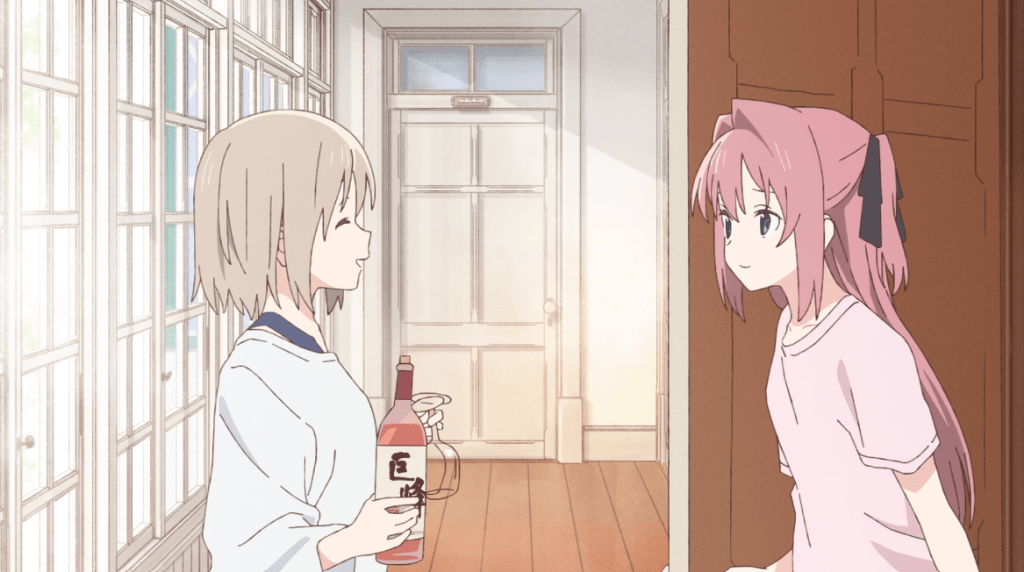
“Yuri” is in the untranslated title for this manga-based series, so the seeming yuri leanings in this first episode (Botan seeming to come on to Ibuki, but the grad student also being interested in Ibuki that way) are almost certainly intentional. That adds the spice to an episode that’s otherwise mostly about Botan sampling different types of alcohol (highballs, wine, and sake all in this episode), so this could be as much an alcoholic version of a foodie series as it is a romantic tease. Surprisingly, this is more inviting than might be expected; I don’t want to exactly say “cute” here, but it definitely has warm appeal, in part because none of the behaviors are taken to common alcohol-fueled anime extremes. The artistic effort, which is otherwise unimpressive, furthers and supports that impression nicely, too. I’m on the fence about following this one, but it’s at least earned another episode.
A Hundred Scenes of AWAJIMA
Streams: Crunchyroll on Thursdays
Rating: 3.5 (of 5)
Awajima Revue School is a prestigious high school which trains students for performing on the grand stage. (Operatic singing is featured in one scene, but both the OP and ED emphasize ballet, too.) Second-year student Kinue got bitten by the acting bug at an early age and strove to make it here, though that meant leaving a good friend behind. She’s now going to be a roommate with first-year student Wakana, who, like most first-years, find the new setting and demanding schedule to be quite a lot to handle.
This one is based on a manga by Takako Shimura, the person responsible for both Wandering Son and Aoi Hana (among several others which haven’t been adapted into anime), and I’m told that the visual presentation here captures the creator’s style quite well. Evaluated separately from that, the character designs are remarkably simple and plain, but the animation isn’t; indeed, there’s a couple of fairly ambitious dance sequences and carefully-animated opera singing, too. While there is one performance number, this seems much more character-driven than I was expecting based on the described premise, though the structuring is a little odd; though Wakana is initially presented as the viewpoint character, most of the second half of the episode deep-dives into how Kinue got there and the regrets of both her and her longtime friend about why they didn’t end up going to the same school. (The friend’s unspoken reasons are interesting.) I never got into the previous adaptations of Shimura’s works, and this one doesn’t look like it’s going to be any different, but I can at least recognize that there’s a style and level of writing quality that will draw some viewers in.
Kujima: Why Sing, When You Can Warble?
Streams: Crunchyroll on Thursdays
Rating: 2 (of 5)
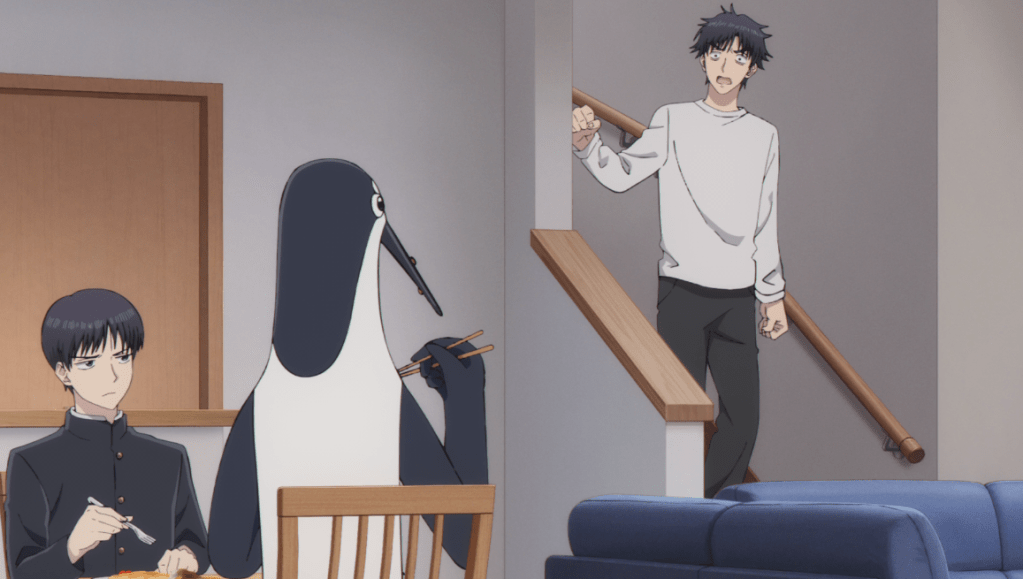
In the latest iteration on the “strange creature shakes up staid family life” concept, Arata Kouda encounters a strange, bird-like humanoid creature on his way home from middle school one day. It says its name is Kujima and it was raised by a man in Russia, though the man said it should come to Japan during the winter to find its flock. It’s looking for a place to stay and really wants to eat Japanese food rather than its normal diet of bugs. Reluctantly at first, Kouda invites Kujima in, and his parents and an older brother studying to retake college entrance exams are even more skeptical at first, especially since Kujima has a tendency to pretend like nothing’s happening when his actions are ultimately illegal (like cutting down bamboo on a mountain without permission to make a somen noodle track in the backyard.
This manga adaptation is aiming to provide low-key entertainment based on the eccentric behavior of an odd critter who forms a relationship with a human, though somewhat atypically, it’s with a boy rather than a girl. It does look pretty good, with attractive character designs and plenty of detail attention given to more natural types of birds. There also seems to be clear intent to use Kujima to rejuvenate a family that just seems to be spinning its wheels. However, the whole things lacks for energy. It depends too much on Kujima being weird, and that alone isn’t funny or a series driver. Frankly, I got bored with this one pretty quick and can’t imagine watching any more of it.
The Warrior Princess and the Barbaric King
Streams: Crunchyroll on Thursdays
Rating: 4 (of 5)
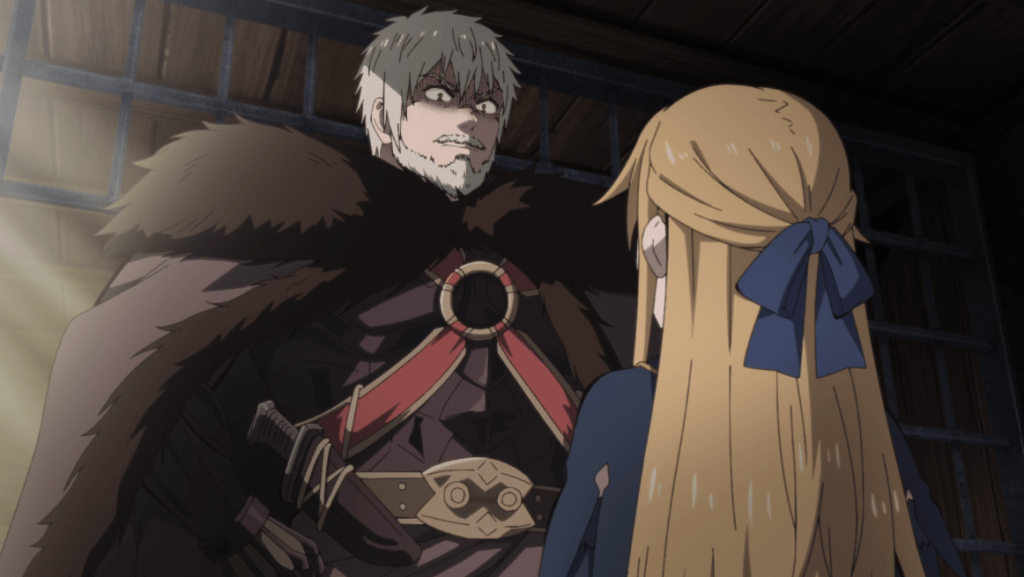
Serafina de Lavillant, daughter of a Margrave and a company captain in the Illdoren Kingdom’s 17th Eastern Expeditionary Force, chose serving as a knight over pursuing marriage, as her brother would prefer and other noble ladies recommended. Seven years into the expedition, marriage has found her anyway, just not in the way she would have expected. In a desperate battle against eastern barbarians, Serafina faces down against Thundering Voice Veor, a barbarian chieftain, and loses after a fierce struggle. Based on stories she heard from her grandfather (who participated in a previous expedition), she expected to be tortured or sacrificed when she was taken prisoner, but instead discovers, to her consternation, that her valor in battle won over the heart of Veor, and so he’s now seeking to take her as his bride. He’s even trying to court her (in his own way) rather than force her.
This one adapts a manga known in English as The Barbarian’s Bride. I’ve read the first volume, and this episode adapts the first chapter and part of the second, though the anime version goes into much greater elaboration on the “seven years ago” flashback, presumably to make sure that the episode ends on a proper cliffhanger. But that additional content also much more strongly sets up the irony of Serafina’s situation. She faced many pressures to marry at home and wasn’t well-regarded for opting to be a knight (even though female knights are apparently a long-standing tradition in this country), and yet out here in barbarian lands, she’s found an an enemy who does respect her as a warrior and specifically wants to marry her because of that. (The flashback also clearly shows that the expedition was about gaining additional lands to help feed their people rather than just conquest for sake of expansion.) That kind of culture shock is going to be a regular feature of this series.
That’s not the only thing this episode has going for it, either. The artistic and especially character design style, with its extra-heavy lines, is a good approximation of the source artistry, and while it does limit animation in places and lean on CG for some group battle shots, it provides some robust action animation, too. The fan servicey nature of a couple of scenes (for both sides of the aisle!) is also going to be at least a semi-regular thing, though it stands out in this regard by showing (atypically for anime) that Serafina actually does have the muscular abs that might be expected of a career warrior. On the whole, this is a pleasingly strong start to one of my most-anticipated titles, and this might even be a candidate for weekly reviews.
Gals Can’t Be Kind to Otaku?
Streams: Crunchyroll on Wednesdays
Rating: 3.5 (of 5)
High schooler Takuya isn’t just an otaku; he’s a devotee of Glittermon, a cutesy series aimed at younger kids. To avoid teasing, he keeps that interest strictly to himself and tries to restrain his otaku inclinations around others. By happenstance, he discovers that one of the two resident gals in his class seems to be a fan of the series, too; she keeps insisting she’s only knowledgeable about it because of a younger sister who’s a fan, but to Takuya she has too many telltale giveaways to effectively deny it. The class’s other resident gal, who’s close friends with the first one, gets more peripherally interested in it, too due to her friend, and that proves to be the icebreaker between them and Takuya. He’s still convinced that they live in an entirely different world than he does, but they don’t seem to care, and so they start to get along.
This one adapts a manga from the creator of The Shy Hero and the Assassin Princesses but spins in a completely different direction, so I can’t say that a fan of one will automatically like the other. While this could be seen as a bit of wish fulfillment, it also treads some similar territory to My Dress-Up Darling in how it shows people from disparate social groups coming together through common/overlapping interests. It’s also noteworthy that, while both Takuya and Kei (the gal Glittermon fan) are both self-conscious about admitting their interest, airheaded Kotoko is the one who takes it completely in stride; the other two may have eventually come to commiserate on their own, but she certainly greased the wheels. The camera does tend to emphasize especially Kotoko’s sex appeal, but that feels more like a bonus than main intent, and Takuya’s flustered reactions tend to be more about his personal space being infringed on. The first episode suggests that each episode will mostly consist of shorter segments, but that’s fine. I may be overestimating what the series is trying to accomplish, but it does feel like it’s aiming at least a little higher than the norm for this type of thing and it’s sweeter than expected in the process, and that’s got me interested enough that I’ll probably watch more.
Magical Sisters Lulutto Lilly
Streams: Nowhere legal on Sundays
Rating: 3 (of 5)
Sisters Fuu (the younger) and Rui (the older) had been close when they were young, but as they get old, Fuu see Rui become more distant and laments that. During those laments, she spots a pink spaceship that no one else seems able to perceive. When she tracks it down, she discovers that it’s a magic ship. The alien piloting it offers to allow her to use magic to help her get over her laments and gives her a trinket which can turn into a magical wand, and thus allow her to transform into her “ideal self.” But humans can only use magic for a year, so she’s on a time limit. At least she gets to bring some weird talking cats home as pets/mascots.
This new magical girl project comes from Studio Pierrot, the same animation studio which once produced Creamy Mami, and indeed, two of the original key cast members form that series are supposed to have guest appearances in this one at some point. This one is as traditional in style, presentation, and story as magical girl series come and definitely skews towards younger viewers. Graded on that scale, it’s a perfectly serviceable but also perfectly unremarkable genre piece.
Pardon the Intrusion, I’m Home!
Streams: Crunchyroll on Tuesdays
Rating: 2.5 (of 5)
24-year-old office worker Rinko sees her apartment as an otaku sanctuary, a place where she can rejuvenate no matter what else life throws at her. Or at least it should be, but one of her neighbors keeps banging on the wall whenever she tries to watch any anime other than Usaneko – admittedly her favorite, but not the only title she’s interested in. Akito, the handsomely, friendly neighbor to her other side, takes issue with this and tries to help, but this winds up in a hole being burst in the wall between Rinko and her testy neighbor’s apartment. Turns out that neighbor is actually the manga-ka behind Rinko’s favorite series, whom she reveres as a god. A hole eventually get burst in the wall between Rinko and Akito’s apartments, too, leading to the three agree to eat together, with Rinko cooking and Haruma, the manga-ka, paying for it.
This one is based on a full-color web manga from this decade, though the premise is something which probably would have been right at home decades ago. The set-up for a love triangle is definitely present, with Rinko literally between the hot guy whom she idolizes but who also has a terrible personality and the hot guy who’s a nice guy who seems a little too comfortable being her “pretend boyfriend.” Or at least that’s the intent, but Rinko is the one who seems most put-upon here, especially since her stress-relief sanctuary has been violated. I’m sure there’s some comedy to be had here, and these characters are at least all adults, but Haruma is just too annoying at this point to be tolerable and the other two aren’t lively enough. Pass here.
Eren the Southpaw
Streams: Crunchyroll on Tuesday
Rating: 3.5 (of 5)
Koichi Asakura, a graphic designer, reflects back 12 year to his high school days, where he felt assured of his talent and ambitions to become a graphic designer. He became shaken upon encountering a work of graffiti art which showed what was, to him, stunning talent, so he sought to lure out the artist responsible. It turns out to be Eren, the pale-haired childhood friend of a fellow art club member who seems to have a thing for Koichi (which he, at least a high school age, seems oblivious to). Eren loved art as a kid, but some incident – which may have involved the death of her father, who longed to be an artist but had no talent for it – pushed her away from it and left her angry at the world. In particular, it leaves her angry at art she regards as substandard, like Koichi’s.
This is based on a mid-2010s web manga later redone on the Shonen Jump+ online platform. It was previously adapted in live-action form in 2019 and was originally announced for an anime version in 2022, though it is only now coming to fruition. Despite its characters being high school-aged for most of the episode, the presentation style (both artistically and in terms of storytelling) has a decidedly more mature feel to it, and pissed-at-the-world Eren certainly isn’t a stereotypical anime beauty. Neither is Koichi the standard protagonist; he comes across as a bit cocky but in a more natural than exaggerated way, and the viewpoint is also shared a bit by Sayuri, the girl who seems interested in Koichi. Overall, this feels much more like an art-centered character drama which might have some romantic elements mixed in, and thus it stands distinctly apart from everything else which has debuted so far. It also has one of the season’s most catchy OPs; definitely check that out even if the series itself doesn’t interest you. I’m a little concerned about some shaky artistic consistency, and the animation certainly isn’t anything special, but this debut is worth a look.
I Made Friends with the Second Prettiest Girl in My Class
Streams: Crunchyroll on Tuesdays
Rating: 2.5 (of 5)
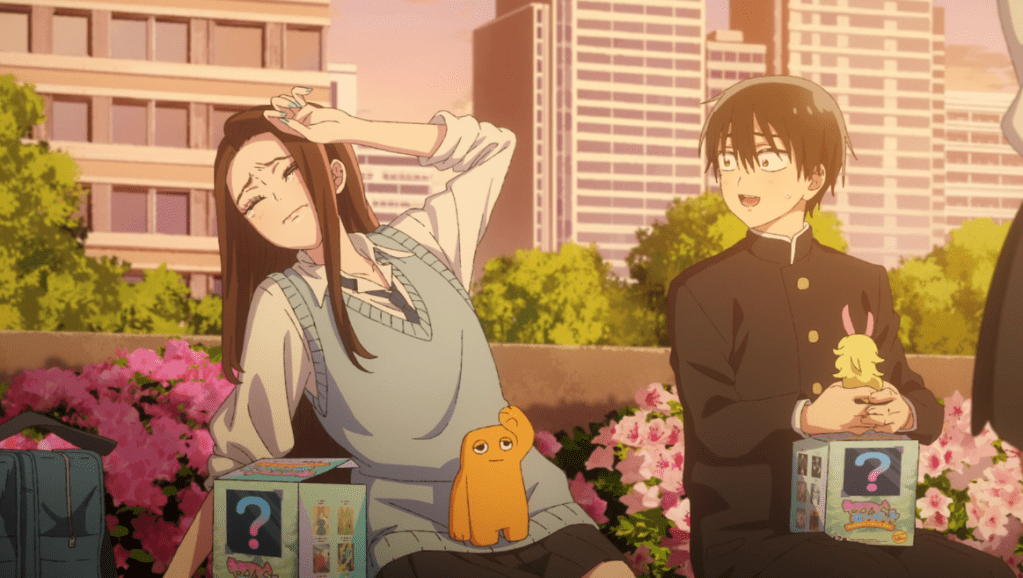
Maki Maehara is a loner more because he’s just never made friends than because he prefers it that way, and it seems like high school will follow that same pattern after he makes a thoroughly underwhelming class introduction. However, one key detail in that introduction – that he’s into B movies – catches the attention of Umi, best friend to the class’s stand-out girl Yuu and a looker in her own right. She’s also into B movies and turns out to have remarkably similar tastes on games and food, too. (Good god, that pizza they order. . .) After Umi speaks to him about her interests in a video store, they start meeting up for game and movie sessions at his place and she even eventually asks him out on what essentially amounts to a date, though both of them have agreed to keep what they’re doing a secret from classmates to avoid a lot of gossip. The downside of that is that it makes Umi seem available, and so another student confesses to her.
There’s nothing actually wrong with this manga adaptation; it’s a perfectly ordinary romcom set-up about a secret friendship that will probably eventually lead to romance. The problem is that this also means that the first episode does absolutely nothing to stand out, beyond maybe some attractive character designs for Umi and Yuu. The set-up has more than just a whiff of male wish fulfillment to it; while you could probably pass Umi’s enthusiasm off as her just being happy to find someone with similar interest, it smack too much of an otaku ideal to be fully credible, and having no inkling on Umi’s viewpoint here doesn’t help. If we do eventually get Umi’s viewpoint. or Maki starts showing more personality than a wet rag, then maybe this one could eventually work out, but it’s not off to a promising start.
My Ribdiculous Reincarnation
Streams: Crunchyroll on Tuesdays
Rating: WTF
The unnamed protagonist is hit by Truck-kun while jaywalking in modern Japan, but he’s actually finished off by a meteor strike. He find himself in an alternate space, where he’s labeled as an “irregular soul,” so instead of being chosen by gods from different worlds, he’s shuffled off to a goddess who gives him a choice in what he wants to reincarnate as, though popular choices like “hero” or “demon king” require thousands of years of wait time. He opts instead to be the rib of a hero, since he figures that still will give him plenty of opportunities to be felt up by women, but while that plan works for a while, it eventually goes catastrophically awry and he eventually winds up back before the goddess, seeking a new odd reincarnation.
I went into this light novel adaptation fully expecting this one to be plenty silly and weird, but I was not prepared for how utterly bizarre this ended up being on both storytelling and especially visual fronts. The artistic style varies wildly between different parts of the episode (the included screen shot is from one of the episode’s most conventional-looking scenes) and the plot progression takes sputter-worthy twists; don’t even try to predict how the “reincarnated as a rib” thing ends up failing because you won’t see it coming even if you know that a distinct biblical reference is involved. (And Judeo-Christian mythology isn’t the only mythology either visually or narratively represented here, either.) Honestly, I watched much of the episode with my jaw dropped and an incredulous look surely on my face. Add to that an acerbic goddess and an overly-enthusiastic protagonist and you have a first episode which may or may not work for you but certainly won’t bore you, and there’s a strong implication that this odd, failed reincarnation is only the first of many. This looks like it could be a lot of fun.
MARRIAGETOXIN
Streams: Crunchyroll on Tuesdays
Rating: 3 (of 5)
Hikaru Gero, the Poison Master, is the ace of the Gero family, which has long excelled at poisonings in the world of assassins. Though he’s long stressed a desire to remain single, he’s not without interest in finding a woman he can love and trust (especially when a close friend who seemed even more unlikely to find a match succeeded), and the issue comes to a head when his lesbian sister is being forced to marry hetero and produce an heir since he won’t himself. He’s determined not to let that happen, so he proposes a deal with a marriage swindler whom he’s supposed to kill: in exchange for saving Mei, Mei will help him find a match. But it quickly becomes apparent that this is not going to be an easy task, since Hikaru has no idea how to present himself around woman that aren’t his targets.
This adaptation of a well-regarded manga was one of the most-anticipated titles of the season, so I was expecting something a bit more special than what we actually get here. The base concept has some interesting swerves: Hikaru is going through this to allow his sister to continue a lesbian relationship and Mei is either a biological guy or trans, who can dress or act like either gender as needed for a swindle. (If he’s not lying about that; he is a swindler, after all.) Otherwise this is a fairly standard mix of “guy who has no experience with women” romcom with “eccentric underworld including characters with outlandish abilities” shonen action scenario, and the fact that Hikaru and Mei eventually getting together would defeat the purpose of their relationship puts a limit on any possible romantic tensions. The production effort is decent but the action scenes are more eye-rolling than eye-popping. The praise the source material has got suggests that the series is capable of more than what we’re seeing here, but it’s not winning me over so far.
Even a Replica Can Fall in Love
Streams: Crunchyroll on Tuesdays
Rating: 3.5 (of 5)
When she was 7, Sunao somehow manifested a duplicate of herself, named Nao, in a moment of emotional desperation. Nao is an exact duplicate of Sunao’s current state and appearance whenever summoned, and she can clearly read Sunao’s memories about anything she’s interested in. (When Sunao isn’t interested in something, it’s much more hazy.) Over time, Sunao has used Nao to deal with troublesome things like apologizing to a friend or going to school for her when she has cramps. Though Nao is dedicated to filling that need, she’s also gradually started to develop some behaviors and connections that Sunao doesn’t have, while Sunao becomes more withdrawn. A turning point on this is reached with Shuya, a former basketball ace who’s had to retire due to injury, seeks to join the Literature Club, which Nao is a part of but Sunao is not.
Stories about replicas commonly take on a horror aspect, but this is a rare one where the viewpoint is actually the replica’s (and that’s clear from the first scene, rather than it being a late-story twist) and the emphasis is entirely on the emotional and psychological aspects of how regular use of a replica would play out. While “nature” dictates that Nao’s base settings are the same as Sunao’s, the different experiences she’s having are causing her to diverge emotionally and behaviorally (the “nurture” influence), and to Sunao’s detriment; before the episode is over, it floats the unspoken suggestion that Sunao using Nao to dodge her troubles is directly leading to Sunao becoming more withdrawn, which could unintentionally make the “taking over my life” scenario eventually play out despite Nao’s loyalty to Sunao. This presents multiple interesting aspects to explore even beyond the gentle potential romance involved as Shuya comes into the picture, and the mechanics of how the replica state works are interesting, too. On the downside, the artistic effort is very flat on its coloring and a bit shaky on quality control. Not sure if I’ll wind up following this one (Tuesdays are very busy this season), but it has potential.
The Most Heretical Last Boss Queen s2
Streams: HIDIVE on Tuesdays
Rating: 4 (of 5)
After a brief recap, the story advances three years from the end of last season, and Pride is now on the cusp of turning 16. That means it’s time for her fiancée to be announced, much to the consternation of Arthur and Stale, who have discovered through research that the intended fiancée, Prince Leon of an allied kingdom, is a notorious playboy. When Pride finally remembers the impending engagement herself, she recalls that Pride in the game left Leon an anthropophobic wreck. The actual Leon is, indeed, a charmer, so Pride steels herself to deal with that while also playing along with his flirts. But she may not be the only one wearing a mask in this scenario.
While this one was never one of my favorites in the genre, I appreciated its mostly-serious take on the subject and the fact that the “villainess” wasn’t trying to avoid her fate for her own sake, but for the sake of those who would be ruined by her. It also differed a bit in that Pride wasn’t a pathetic incompetent as a villainess but a truly vile and exceedingly dangerous monster. We see some of that in this episode in the way she terrorizes Leon in the game flashback, but surprisingly, it’s Arthur who picks up on the fakery in the smiles passing both ways between Pride and Leon as Pride tries to once again navigate the story away from tragedy. Plotting-wise, this is an excellent set-up for the new season, and the guest appearance by Val carries some weight here, too. Kudos also to the character designer for the fitting way all the younger characters have been aged up, and Pride’s dresses still impress. This one’s a guaranteed keeper.
Liar Game
Streams: Crunchyroll on Mondays
Rating: 1.5 (of 5)
18-year-old Nao Kanzaki practically prides herself on being called “stupidly honest” and has no ambitions beyond making her terminally ill father’s remaining days be as stress-free as possible. That makes her possibly the worst person to be chosen to participate in a mysterious contest called Liar Game, where two players are each given 100 million yen in cash and must square off against each other to see who can take the money from the other. At the end of a month, the participants must pay back what they were given; anything extra they get to keep, while anything they’re missing they go into debt over. But maybe that was the point of selecting her for this game: to get entertainment out of seeing how swiftly she gets swindled and whether or not she can get it back. And indeed, she does get swindled by her opponent, who turns out to be a former teacher of hers whom she trusted. In desperation, she seeks help from a legendary conman who has just been released from prison. Nope, no way that can go wrong. . .
Though thus manga adaptation actually looks pretty good, everything about this is so unbelievably stupid that I found this first episode intolerable. There’s no indication that participants are being filmed or serving any greater purpose, so there seems to be no point to this game in the first place, and there’s no evident logic behind how Nao got chosen for it. Absolutely everything about this seems dicey from a legal perspective; what’s to stop paired opponents from just trying to kill each other? (And you know some would that over this much money.) And how can whoever’s running this just make a claim like “stealing this money from your opponent won’t be considered criminal”? Also, Nao clearly has few functioning brain cells, as she’ll look up con men online but we don’t see her trying to hunt down any info on this Liar Game, and even if this con man is implied to be a Robin Hood-type, she’s fully trusting him immediately despite how badly her teacher burned her? The exaggerated reaction of the teacher is eye-rolling, and kickbacks over scheduling field trips? Really? How much money can there actually be in this?
This is based on a long-running but also long-finished manga which has previously seen live-action adaptations, and it is scheduled to run for two straight cours, so it’s apparently expected to be big. If you can tolerate this one, though, then more power to you because I won’t be.
Farming Life in Another World 2
Streams: HIDIVE on Mondays
Rating: 3.5 (of 5)
If I were to make a list of 2020s series based on the frequency that I’ve rewatched them, Farming Life in Another World would at least be in the top 3. While it did have its issues with artistic quality control, it struck the perfect balance in mixing occasionally-OP fantasy trappings with with sim game elements, bucolic charm, and humor, and did it all without using status screens. Hence, this was my second-most-anticipated returning series of the season (after only Bookworm). I am pleased to say the the second season get off to a satisfying start well in line with previous content and so shouldn’t disappoint fans of the first season.
The previous season ended with the expectation of eventual additional growth for the Great Tree Village as it planned to take in additional refugees from both the Demonic Kingdom and the dragon lands, so the early focus this episode is on preparing for said refugees, including building a whole new village downstream. When those refugees, start arriving, though, one problem becomes evident: the new buildings were for human-sized individuals, and the refugees are minotaurs (here being giants with horns rather than man-bulls) and centaurs. A group of dryads – who only need good soil and sunny spaces and so have no need for housing – also get drawn in, as do additional noble girls from the Demonic Kingdom to help with paperwork. One of them proving to be adept at dealing with the centaur refugees is a neat bonus. The slight downside to all this emphasis on handling the newcomers is that many recurring cast members get little more than token appearances, but that’s fine; the cast expanding even more means the attention will have to be spread around more thinly, but I’m sure core members will get their opportunities. It’s also gratifying to hear that the musical style hasn’t changed one bit. This isn’t likely to be one of the top-tier titles of the season but it should provide good, reliable entertainment.
The Klutzy Class Monitor and The Girl with The Short Skirt
Streams: Crunchyroll on Mondays
Rating: 3.5 (of 5)
Poem Kohinata, a teenage gyaru with a penchant for wearing short skirts, comes into conflict with Togo Sakuradaimon, the stiff, righteous class monitor who calls her out on her skirt being too short for school. When they both end up in the same remedial Math class, though, Poem discovers that Togo’s rigidity has resulted in him being a remarkably poor student academically and so she winds up helping him with an assignment. As they talk more, she finds some aspects of his straightforward personality to be maddening but others to be sweet, especially when he insists that her odd first same suits her. Peom’s friends have quite a bit of fun with this when they also encounter Togo and get an inkling about how these two are getting along, and there’s also an overzealous former delinquent as a health monitor, too.
Manga-ka Takuma Yokota has produced several other short-run or one-shot manga prior to the source material for this one, but this is by far the longest-running one and his first to be adapted into an anime. After seeing the first episode, I’m convinced that it just a took a while for him to find the kind of storytelling he’s best at. This one is a romcom with an emphasis on the “com” part, and on the surface it’s a fairly standard set-up involving crazy antics by individuals with extreme personality. However, there’s a surprising level of sweetness to it, too, and the interactions between Poem and Togo have already started to gain traction before the end of the episode. The hall monitor character introduced late in the episode is also a welcome addition, and of course you’ve got to have the bemused friends around, too. (And Poem is an easily-likable character, too.) There isn’t anything deep about this one, and I had no expectations about it coming in, but it’s fun enough that it’s now on my radar.
Nippon Sangoku: The Three Nations of the Crimson Sun
Streams: Prime Video on Sundays
Rating: 4 (of 5)
Though the nuclear war didn’t directly affect Japan, other conditions associated with it eventually led to the country’s collapse into a more feudal state which split what was formerly Japan into three different political entities. Aoteru, a newly-married young man, is a local agricultural specialist fully committed to establish a stable life with his new bride, while she feels that he could accomplish greater things if he only had a little courage. Unfortunately for both of them, it takes an encounter with the tyrannical leader of one of those states to convince Aoteru that the status quo is no longer acceptable.
In a season which has already shown no shortage of stylish-looking anime, this manga adaptation has one of the most boldly different artistic styles and has paired it with a particularly strong animation effort, all under the guidance of the director of most ofThe Ancient Magus’ Bride and backed by a musical score provided by Kevin Penkin. The story itself feels more like a prologue than the actual core of the story, and a substantial color shift for the episode’s final scene further reinforces that impression. Its events promise a potentially-bloody story of political intrigue aimed squarely at adult audiences, so this probably won’t be a light view. Despite the first episode’s evident quality (and fine English dub), this also seems like a title that I am unlikely to follow.
Ingoku Danchi: Deviant’s Apartment Complex
Streams: OceanVeil on Sundays
Rating: 3
In this 4-minute ecchi short, when young Yoshida takes over managing an apartment complex, he’s warned by his father that some of the residents are mentally imbalanced. That certainly proves to be true with Watanabe, a married women whose tendency to be too touchy-feely with boys is only heightened when a mysterious “Libido Cloth” is delivered to her door and sets her on a rampage. Fortunately, the wire cutters Yoshida was carrying while on patrol prove quite useful when he encounters her crazed dominatrix-clad form.
While this one isn’t quite full hentai, it does feature nudity and (clothed) masturbation, so it’s definitely not a tame view. The production effort actually isn’t shabby, but its limited run time (interestingly without OP or ED) forces it to play out uncomfortably quickly. Still, might not be bad for a quick diversion if you’re into S&M-flavored kink.
Ghost Concert: missing Songs
Streams: Crunchyroll on Sundays
Rating: 3 (of 5)
In 2045, human music and singing has been banned; only music produced by the AI app MiucS, which can be custom-produced for the current time and situations, is allowed. Though high schooler Seria doesn’t care much for such music, she otherwise lives a perfectly comfortable life with her friends until she hears a song which shouldn’t exist coming from an alleyway. Turns out Seria is susceptible to being possessed by Great Ghosts, and one such ghost – Cleopatra VII – was calling to her. One of Seria’s classmates and an accompanying priests – who are also spiritual mediums – attempt to rescue Seria from her possession, which leads to a drawn-out battle in the spirit realm resolved when Seria breaks into song. But both Seria’s friends and the Powers The Be have little patience for what’s happened to her (albeit for entirely different reasons).
This anime is an extension of a mixed-media “song battle” project called Ghost Concert, which is partly the brainchild of Noriyasu Agematsu, a composer and producer whom anime fans would probably best-know as the creator of Symphogear and Princession Orchestra. Hence it’s got a distinct musical pedigree, and indeed, song is a key element in the episode’s climactic battle sequence. The first episode raises a lot of questions, though, and not necessarily good ones. No hint is provided about how this draconian system with only AI-produced music came about (the end of the episode implies lethal force was about to be released on Seria for singing) or how this is a bright and cheery-looking future despite that, so a massive initial suspension of disbelief is required, and I was left scratching my head over how Seria bursting into song alongside her possessing spirit resolved anything, especially the struggle over control of Seria’s body. But hey, it did manifest the franchise’s “song battle” concept and the lyrics being sung were on-point for the situation rather than just a random song, so that’s something. Hopefully episode 2 will explain a lot more about this medium group that it looks like Seria is going to have to join for her own survival, so I’ll suspend judgement on the concept for now. The artistic and animation effort leans heavily on CG, but for a series which seems intent on having distinct action elements, the fight design is only mediocre at best.
Akane-banashi
Streams: YouTube on Saturdays
Rating: 4 (of 5)
Akane’s father is a dedicated Rokugo performer, one aiming for the highest rank in the discipline (shin’uchi), and she loves and respects him deeply for that. In mimicking her dad’s performances, she’s even shown a talent for it herself. However, the world of Rakugo is a demanding one, and despite giving an inspired performance (if one that deviates some from the traditional story he’s doing), her dad is rejected without explanation in his advancement test. Years later, when she is in high school, Akane seeks to step foot into that world herself to vindicate her father’s talent.
In most seasons there’s at least one title which I can recognize as being a top-tier effort but can’t get into at all. Last season was one of the rare ones where I didn’t have such a title, but this season, this titles will be the one. This is a very well-made episode with a beautiful animation and overall visual effort, and it feels like a well-written set-up episode for the actual main story, but I could not get emotionally invested at all. The major problem here, I think, is that Rakugo holds no interest for me at all as an art form. While I understand how it’s supposed to work, I find it too formulaic, too enslaved to fixed stories (which seems to be an element in play here), and frankly, too dull. I’m still giving it a good rating in recognition of its evident quality, but I won’t be following it.
MAO
Streams: Hulu+ on Saturdays
Rating: 3.5 (of 5)
Several years ago, Nanoka nearly died (and possibly did briefly die) during a car accident which claimed the life of her parents. When she hears stories of weird sounds in the closed-down shopping arcade in front of which the car accident happened and goes to investigate, she finds herself in a city street in Taisho-era Japan, but one where nearly all the people look like ghosts and monstrous ayakashi roam. She also encounters a strange young man with a sword named Mao, whom his assistant claims is an onmyoji and who refers to Nanoka as an ayakashi herself. Indeed, she seems to fully recover from getting her hand cut off by a mantis-like ayakashi and notices other strange side effects the next day after returning to her own time, so she goes to seek out Mao again in hopes that he has some answers.
That this is based on a manga from Rumiko Takahashi should be obvious to anyone who’s seen an anime based on any of her previous works (the character design style is consistent with her other efforts). Because of that, comparisons to Inuyasha will be inevitable, especially given the time travel gimmick and heroine’s encounter with a sword-wielding young man in the past. While there are clear differences between this one and Inuyasha, that at least some story elements have been carried over is just as clear, so it’s too early to tell if this one will establish its own identity. Taken independently, it’s a solid, reasonably well-animated starter which finds a good balance of action, mystery, and supernatural elements.
Needy Girl Overdose
Streams: Crunchryoll on Saturdays
Rating: 4.5 (of 5)
In a world where social media likes rules, OMGkawaiiAngel – typically shortened to KAngel – is the biggest streaming sensation. She’s a controversial figure because of some of the extremes she’s gone to – rants, performing while overdosed on drugs, denial of the value of education – but she’s still idolized within youth and otaku culture. Behind the scenes, though, the person who may be KAngel is a complete mess, drifting through life in an uncertain and unsatisfied haze as she works at a café and lives with a boyfriend she seems indifferent towards.
Though a related manga exists, this is actually more directly based on a visual novel released in the U.S. as Needy Streamer Overload. (It retained the anime’s title in Japan.) Even then, the anime version seems to be an abstraction of the game rather than a direct adaptation, one which takes a chaotic and extreme stylistic approach that some may see as the spiritual successor of last season’s SHIBOYUGI even though it looks and sounds totally different. Frankly, I’d more compare it to Serial Experiments Lain on speed. It isn’t so much a narrative as a scathing social commentary on influencers and Internet culture, one which bounces between KAngel online, the person implied to be her human originator, and various other individuals perceiving or commenting on her. Even the boyfriend playing video games in the background in the room – the one who eventually pressures her into sex – is part of this, as he’s almost certainly intended to represent the player in the original game. (And that’s a pretty damning bit of commentary itself.) There’s also an upcoming streaming group with the auspicious name Karamazov (a clear reference to the famous novel by Dostoevsky.
The hectic pacing, rapid-fire commentary, and constant jumping around could make this hard to follow, and I paused the episode a few times to make sure I wasn’t missing things, but how caustic and ambitious all of this is can be fascinating. It’s all driven by a techno-heavy soundtrack (and a rave-ready OP) and visuals which lean heavily on symbolism and lots of gimmickry, including even a bit of live-action footage. Honestly, it’s a little early to tell if this first episode is just a gimmicky opener or represents a full commitment to a philosophical approach, and it will probably generate some fairly extreme reactions, but I’m landing on the plus side on this one. Definitely curious to see where this proceeds from here.
Kusunoki’s Garden of Gods
Streams: Crunchyroll on Saturdays
rating: 3 (of 5)
Ever since he was a little kid, Minato Kusunoki has been able to see good spirits, but he’s also had an extraordinary ability beyond that which he’s been unaware of: his handwriting – even of ordinary things like a shopping list – can exorcise evil. He first realizes this ability as a young man, when he goes to an abandoned house in the country as its caretaker, unwittingly dispels the evil pervading it, and attracts the attention of Yamagami, a local mountain god also accidentally freed by one of his handwritten notes. Yamagami becomes a regular visitor, but he also crosses paths with an onmyoji out on missions to deal with a rise in evil spirits, who is absolutely flabbergasted at the extent of Minato’s power.
The first episode of this light novel adaptation doesn’t do anything special for its type; it’s a mostly straightforward story about a young man gradually discovering the extent of his mystical powers as he has mostly-peaceful interactions with gods. (The OP at the end suggests that quite a variety of them will eventually visit his garden.) But it doesn’t play the concept entirely straight, as Minato is also an “oblivious to the fact he’s OP” type, and the introduction of the onmyoji in the first episode suggests that at least some degree of spirit-busting is going to be involved, too. The animation effort is nothing special, but the backgrounds and critter designs are inviting enough and the pacing is efficient and steady. Not sure if I’ll follow this one, but it may be worth checking out more.
Mistress Kanan is Devilshly Easy
Streams: Crunchyroll on Saturdays
Rating: 1.5 (of 5)
Kana the Gourmet, daughter of Beelzebub, is losing interest in food in the devil realm, so she descends into the human realm to cultivate and dine on some tasty livestock in the form of maturing human souls (i.e., high school students). While she does situate herself well within the school, the problem is that the first boy she seeks to feast on, Yoji Kugi, (understandably) misinterprets her poorly-chosen wording for a sexual come-on, and is all in for that, much to virginal Kana’s dismay. He throws her so off her game that he winds up becoming her boyfriend and even shows off a decided masochistic bent, which only makes it harder for Kana to re-establish control of the situation.
This manga adaptation is theoretically supposed to be a comedy, and it’s not getting an even lower rating because it did actually make me chuckle once or twice. However, the premise goes with the most tired and rote angle imaginable on its set-up. It also makes Kanan extra-busty but then doesn’t do anything with that in a fan service sense. (There’s a bit of animated jiggle in a couple of scenes, but that’s it.) The series doesn’t look that good, either. Presumably one of the angels mentioned in passing early on is going to show up eventually, and it looks like other devils, will pop up, too, but the foundation here is too weak for me to want to hold out to see if it gets better as the cast expands.
The Dark History of the Reincarnated Villainess ep 13
Streams: Crunchyroll one-shot
Rating: 3.5 (of 5)
Note: This is not the beginning of a new season, but rather a pair of short OVA episodes combined together into a single regular-length episode.
A pair of side stories explore Iana’s less-than-happy memories from her previous life of two common experiences – birthdays and illnesses – and how they manifest in this world. In the first, Iana’s efforts to make Yomi a birthday present go disastrously awry, so she seeks to buy a hard-to-get “omnipotent potion” for him, while Yomi goes out in a magical disguise to investigate what she’s up to. In the second, Iana has come down ill, and so Sol attends to her. But some maids that the real Iana bullied in the past take this opportunity to get some payback.
Of these two stories, the first leans on the lighter side, while the second leans on the more serious side. Both episodes introduce characters who did not appear in the main series (a hottie doctor in the first part, a hottie who’s a fellow assassin/partner to Sol in the second part) and fully retain the main series’ artistic merits and stylistic quirks, including using the circumstances in the story to explore circumstances in Iana’s past life. Overall, the two parts are not required viewing for franchise fans, and they certainly don’t advance the overall plot, but they are welcome bits of extra fun.
Ascendance of a Bookworm s3
Streams: Crunchyroll on Saturdays
Rating: 4 (of 5)
Myne (or rather, Rosemyne) is back and starting her new life as a noble in the most major transition yet seen in this franchise. Here she is introduced to her new mother (Karlstadt’s first wife) and brothers, where she is further trained in the ways of nobility in preparation for her baptism as a noble. (Apparently Silvester, Ferdinand, and Karlstadt are treating her original baptism as if it didn’t happen and she’s just now coming of age, which is understandable.) All is in preparation for her big public reveal and formal adoption by Sylvester at her baptism, under the explanation that she had been raised in the Cathedral, and this time the adults approve of Rosemyne bestowing her blessing on all since it plays into their narrative that she was placed in the Cathedral to shield her from the attention that her high mana would have drawn. Along the way, Rosemyne gets an emotional reminder of the family she’s had to leave behind, but she’s still compelled to press forward to protect them. And two young nobles learn the hard way that Myne’s constitution, though improved, still sucks.
This is one of my favorite franchises of the past few years (I’ve rewatched the previous seasons numerous times) and so this was overall my most-anticipated title coming into the season. The first episode sees some slight artistic adjustments but otherwise doesn’t disappoint, as Myne’s change of venue is already providing all sorts of opportunities to introduce new cast members and situations. It’s still not the sharpest-looking series, but the more elaborate clothing and setting designs partially offset that, and the potential politicking is only just getting started. I will most likely be returning this series to weekly reviews as future episodes debut.
That Time I Got Reincarnated as a Slime s4
Streams: Crunchyroll on Fridays
Rating: 3 (of 5)
Last season ended with Rimuru and his chief subordinates being cautious about the “eastern merchants” and coming to suspect that Yuki has been running some machinations of his own. They are not yet aware of the schemes of the Rozzo family, While they seem intent on stepping up their plans, Yuki, who’s aware that Rimuru now suspects him, is determined to play more cautiously and less antagonistically. With that going on in the background, Rimuru inspects various enterprises around Tempest while dealing with some modifications to their new dungeon
I watched the last few episode of s3 immediately prior to watching this episode, and so was quickly struck by a distinct shift in artistic style especially in character designs, no doubt connected to the franchise getting its third different director (Naokatsu Tsuda, who’s directed most of the current cycle of Jojo titles). While it’s not a big change, the lines are a bit darker and the characters generally a bit thinner. That aside, the episode has all of the hallmarks of a seasonal starter episode. In that sense it does its job by reminding viewers of the current threats and showcasing current projects and moves, including moving the isekai children to Tempest, but it doesn’t offer much yet to get excited about. Interestingly, the ED heavily features Maribel Rozzo, suggesting that she will have a much bigger role this season. Overall, it’s a decent but unspectacular start to the new season.
The Angel Next Door Spoils Me Rotten
Streams: Crunchyroll on Fridays
Rating: 3.5 (of 5)
The first season ended with Amane and Mahiru’s closeness finally becoming obvious to their classmates in general and the two officially becoming a couple. This season starts with them trying to figure out what they should be doing as a couple and realizing that they have, indeed, been acting like a couple for quite a while now even if they hadn’t made it official. When they make that clear upon their return to school from break, they discover that many of their classmates are more relieved than surprised about it. (What Mahiru said in front of the class in episode 12 of s1 just might have had something to do that that.) They also start to appreciate that everyone knowing they’re a couple means they can now openly do some things that they’d had to be circumspect about before, like going out grocery shopping together.
I’m not sure that this series actually needed a sequel, but the first season (front Winter 2023) was one of the sweetest romances of recent years so it’s certainly welcome back. And it is fun to see these two being more openly flirty, as well as the delight or dismay of their classmates about that. Not much actually happens in this episode beyond both the central couple and those around them adjusting to them dating, so it’s unclear where the series might go from here. Regardless, I’ll definitely be around for it.
Snowball Earth
Streams: Crunchyroll on Fridays
Rating: 3.5 (of 5)
Tetsuo may be painfully shy and socially awkward, but he also becomes humanity’s savior when he teams up with a mecha originally intended to be a bomb and leads humanity in the struggle against invading space kaiju. After 10 years of battle with AI companion/robot Yukio, he’s still friendless and so awkward he can’t even thank people properly, but he’s also leading the charge in the final battle against the space kaiju in deep space. When things go wrong, though, Yukio has to self-destruct as a last resort, leaving Tetsuo jettisoned on an eight-year return course to Earth. When he arrives back planetside, he discovers a world that has become encased in snow and ice.
This manga adaptation borrows heavily from a number of classic mecha series (most especially Gunbuster), but it’s more a mishmash of elements from a variety of different sources than a pure homage to any of them. The first episode only really establishes the story’s premise, so there’s no indication yet what actually transpired on Earth, but it’s clear that the heroic sacrifice was not met with heroic success, and I’m quite interested to see how that aspect in particular plays out. The visual effort is a CG-heavy one from Studio KAI, but aside from the space kaiju’s flight patterns in space not looking entirely natural, the first episode looks good overall and even manages some emotional appeal in Tetsuo’s connection to Yukio.
An Observation Log of My Fiancée Who Calls Herself a Villainess
Streams: Crunchyroll on Mondays?*
Rating: 4 (of 5)
* – CR still lists 4/6 as its official debut day, but the first episode is available on 4/3.
Crown Prince Cecil is impossibly perfect as a 10-year-old, to the point that life has become dull for him since he seems to master everything with little to no effort. Hence he finds it perplexing but also intriguing when his first encounter with his intended fiancée Bertia, a marquis’ daughter, goes in a direction he never expected: she clains that she’s a reincarnation who’s destined to become this story’s villainess. But since the Bertia in the story she knows was pathetic, she’s going to strive instead to be a perfect, admirable villainess, complete with a radical physical makeover over the next year (as opposed to the mere month seen in Haibara’s New Teenage Game). Cecil is intrigued enough to play along, including taking her at her word when she describes an upcoming epidemic that he’s able to head off thanks to Bertia’s warning. In trying to be a villainess, Bertia may unwittingly be winning over the prince’s attention instead.
This light novel adaptation is the first new title to properly debut this season that’s certain to make my weekly viewing list. A reincarnation who unwittingly wins over the prince while trying to be an ideal villainess isn’t a new twist on the “reincarnated into an otome game” concept, but this series takes a significantly different angle on it than I’ll Become a Villainess Who Goes Down in History: the prince, rather than the reincarnation, is the viewpoint character, and that’s definitely a fresh spin. It’s not hard at all to understand why Cecil finds Bertia interesting, and his personal servant’s attitude is a delight as well. There’s also a suggestion at the end of the episode that the destined heroine is a reincarnation, too. This would not be the first recent series to pull that trick (see last season’s The Villainess is Adored), but again, the viewpoint choice here is going to make a lot of difference in how this plays out. This one might even be a weekly episode review candidate.
The Ramparts of Ice
Streams: Netflix on Thursdays
Rating: 4 (of 5)
Koyuki attracted more attention than she was comfortable with for all the wrong reasons in middle school: she stood out because of how short she was and ran afoul of girls who were jealous of how close she seemed to be with a popular boy. This led her to construct emotional walls to isolate herself, to the point that her fierce expression earned her the nickname “Ice Queen” during her first year in high school, which perplexes her because she doesn’t understand why. She really only associates with best friend Miki, an outgoing popular girl with her own image issues, until fateful encounters bring her into contact (in one case literally!) with the boys Minato and Koyuki, the former of which in particular seems to have taken a far less threatening interest in her.
Point of information: Koyuki’s height is listed in the episode as 152 cm, which is basically 5 feet. While that’s definitely on the short side by Japanese norms (she’d be in the 11th percentile for Japanese women), it’s hardly stick-out-like-a-sore-thumb short. That quibble aside, this is otherwise a pretty solid start to a character study about a girl who’s more situationally isolated herself rather than being socially anxious and how new encounters may gradually tear her walls down. I found it particularly interesting that one of the boys she encounters actually recognizes that she’s put walls up, while she recognizes that he seems to be using his own methods for maintaining emotional distance despite his seeming outgoing nature. Koyuki’s friend who’s finding herself trapped into the Perfect Girl role at school when she’s really more the Silly Girl at heart also provides another potentially interesting angle, and there is some light humor here, too. This one is being simuldubbed, and the English vocal cast is well-chosen. This may not be the sharpest-looking series of the season, but it’s showing more potential than any series which has debuted in its regular time slot so far.
The Great Sage Ryddel and the Hands of Time
Streams: Nowhere legal on Wednesdays
Rating: 2 (of 5)
In this “light anime” (which means it’s basically colored and slightly-animated manga panels), Ryddel is a hero who failed to stop a cult from opening the Gates of Death, which warped magic and the laws of nature. Devastated by his favor, Ryddel takes advantage of the changes to extend his life while he looks for a way to turn back time to before his failure happened. A thousand years later he finally succeeds!
This is only a 4 minute short, so this is all you get for the first episode. There might be a decent (if generic) story here, but it’s coming in doses that are too small. If you do decide to check this one out, I recommend waiting until the end of the season so you can watch the whole thing at once.
Haibara’s Teenage New Game+
Streams: Crunchyroll on Wednesdays
Rating: 3.5 (of 5)
Natsuki Haibara is now ready to graduate college and head out into the workforce, and seems destined for a stable but unexciting life, but he has many regrets about how he handled his high school days, especially how a bad first impression (in his opinion) helped isolate him all throughout high school. He wishes for a second chance to redo his high school days – just like in various media he’s encountered – and is shocked to discover one morning that it’s actually happened! Armed with a determination to change his high school luck, he exercises his way into shape and has a more successful high school debut. He even immediately makes several friends that includes the girl of his dreams during high school.
The big problem I have with this light novel adaptation is how drastically Natsuki manages to physically remake himself in just a month. I also have a bit of an issue with how selfish this one was; this wish just feels more like fine-tuning a life that isn’t perfect than avoiding a nasty fate. Set that aside, though, and this one should work fine. It benefits greatly from a very pretty set of character designs, but backgrounds and animation are also solid and the cast, while hardly showing any depth yet, is all distinct and likable without going to extremes. And it is somewhat amusing how Natsuki seems to fail to recognize that he’s remade himself into a hottie. Not expecting anything dramatically fresh or new here, but it’s a promising enough start.
Killed Again, Mr. Detective?
Streams: Crunchyroll on Thursdays
Rating: 2 (of 5)
As the son of a legendary detective, Sakuya has become a detective himself, but he opts for cases that are – at least theoretically – much less adventuresome. Assisted by his father’s helper, the sexy Lilithea, he goes on a cruise to investigate the possible infidelity of a well-known movie director. However, a number of peculiarities keep popping up, like the presence of cats on the cruise ship, a young actress falling out of the ceiling into a men’s restroom, and oh, yes, the dead body in the cargo hold who was a member of a group interacting with the director. Discovering a phone left at the site of the crime results in Sakuya getting killed, too. . . but apparently he doesn’t stay dead, nor is Lilithea the slightest bit alarmed when she find him.
That Sakuya is going to die and return to life (and on a regular basis, too) is heavily implied by the title of this light novel adaptation, but the exact mechanism for how it’s happening is not elaborated on within this episode; it doesn’t seem to be a Re:Zero type of reset-to-a-save-point, though. Honestly, this one could have used a double-episode starter, as too little is revealed here about how this is all going to work. What is clear is that fan service is going to be a thing with this one, as one of the earliest scenes is of Lilithea in a shower and the young actress shows off her share of cleavage, too. Logic also doesn’t seem like the series’ strong suit – a crippling problem for a detective series, I know! – as I highly doubt a crew member on a cruise ship would just blithely direct an unescorted guest to the cargo hold and I can’t imagine how anyone would get away with smuggling multiple cats on board in carry-on bags. Kinda doubt that a cruise ship which only houses 1,100 guests (big for a domestic cruiser but tiny compared to the international big boys) would have such an involved show, either. (I’ve been on a cruise only slightly larger than this one within the past year, and too much of what’s going on in this episode strains credibility to the breaking point.) The writing on this one just doesn’t seem strong, and the visuals are ordinary at best, so this one is going to have to show a lot more to warrant following it.
Kirio Fan Club
Streams: HIDIVE on Thursdays
Rating: 3 (of 5)
While Ami and Nami both being in love with classmate Kirio technically makes them rivals, they’ve essentially become close friends over their mutual fandom. Neither of them has much gumption to actually speak to Kirio directly, and when they do accidentally get a chance to talk to him, things go. . . weirdly. But it’s also possible that this potential love triangle may go in more than just one direction.
Two girls bonding over being interested in the same guy isn’t that unusual a feature in anime romances, though most typically it happens in harem series. (100 Girlfriends is particularly well-known for this, but there are plenty of other lesser examples of it.) That it’s happening in a series which focuses on the girls rather than the guy makes this manga adaptation unusual, and there’s even an implication at the end of the episode that one of the two girls may be falling for the other one, too. There’s no indication yet that the interest also goes the other way, but at least a potential for yuri attraction is in play here. What is clear is that both girls would probably be better off falling for each other, as Kirio looks like the farthest things from a catch. (His eyes aren’t shown the one time he does fully appear, he only mumbles, and asks a really bizarre question.) The personality byplay between the two girls is solid, but the artistic effort is rather plain. What this episode will probably most be remembered for, though, is a conversation about farts that’s even referenced again later on. Keeping the potential yuri element in play would elevate this one to the watchable level, so we’ll see how things develop.
Petals of Reincarnation
Streams: HIDIVE on Thursdays
Rating: 2.5 (of 5)
Toya is a dedicated high school student who suffers from an inferiority complex because of constant comparisons to an exceptionally talented older brother who died. Because of this, he’s desperate for any kind of talent he can use to get ahead. His life gets upended when he encounters new classmate Haito La Buffet, who seems to recognize him. She introduces him to a “branch of reincarnation,” a knife which causes one to bleed petals from the neck but allows the user (if he/she survives) to call upon talents of past lives. People who can successfully do so are called “Returners,” and Haito is one of them. When Toya successfully proves that he is a Returner, too, Haito and wheelchair-bound ally Neuman recruit him for their organization, which aims to deal with malicious Returners. Once Toya discovers what his seemingly-noncombatant talent can do, though, he has grander ambitions.
Though the visual aspects of this manga adaptation can be interesting, the set-up and follow-through are utterly ordinary shonen action fare up until its last pre-credits scene. There Toya reveals that he must have been Light Yagami in one of his past lives, as he is hard-core embracing a villainous motivation, but the post-credits scene implies that this turn of events may not be unexpected. That revelation sparks some interest in seeing how this plays out. The animation also uses a very distinct visual style clearly designed to enhance how sharp the petals streaming out from the necks of empowered character looks, though frankly, the ultimate visual effect is much more distractingly silly than was probably intended. I’m on the fence about this one but will probably give it another day to prove itself.
Dorohedoro s2
Streams: Crunchyroll on Wednesdays
Rating: 3.5 (of 5)
Note: Three episodes are currently available, but this is based only on the first episode.
Six years after the first season, we’re back to the Hole. Risu gets a lead on the current hideout for the Cross Eyes, while masked enforcers Shin and Noi go in search of the doctor, who headed to a house formerly belonging to his wife only to discover that it’s been taken over by dangerous hooligans. Caiman and Nikaido are also around as everything goes all to gory hell.
Frankly, I don’t remember the plot points in this one at all, only that the series is both a visual feast and incredibly gory. Both of those traits are still fully in play here; in fact, the OP uses cross-sections of the bodies of various important characters and each episode opens with a body being split in half length-wise. That’s just for starts is this extremely explicit (and, as always, remarkably vibrantly colorful) gorefest. It’s very well-made for what it is, but you have to have a very high tolerance for graphic content to appreciate it.
Always a Catch!
Streams: Crunchyroll on Wednesdays
Rating: 3.5 (of 5)
As the eldest of several daughters, Maria grew up preparing to take over her father’s dukedom, which meant rigorous military training and not much time spent on being a proper lady, unlike her best friend Aida. When a baby brother is finally born, however, she no longer needs to do that, so she’s off to school in Aida’s country to try to find a husband (because all of the available men in her country of presumably-sufficient rank are taken). In her new country, she learns that Aida is engaged to one of the country’s two princes – and unfortunately not the friendlier one. Worse, Aida seems to be getting set up to be treated as a villainess. But the prince, who’s either an idiot or very near-sighted, does the engagement denial to Maria instead.
I’m going to watch at least the second episode of this light novel adaptation just to see the fallout from the last scene, as the prince, which is a showcase in ineptitude that should make this prince a laughingstock but probably won’t leave Maria looking much better. Having the protagonist be a friend of the “villainess” rather than the villainess herself is also a distinctly different twist, and Maria is the kind of character who’s going to shake up any norm or sensibility. Her military training suggests that she’s eventually going to have some action scenes, too. Not expecting this one to be a quality series but I’m cautiously optimistic that it could be a fun view.
The Beginning After The End s2
Streams: Crunchyroll on Wednesdays
Rating: 3 (of 5)
Some time after season 1 ended, Arthur is still out adventuring under the tutelage of Jasmine. A quest to investigate a village that contact had been lost with leads them to encounter an Arachne, a monster his parents had fought and struggled with previously, but retreating proves not to be an option for Arthur when Jasmine gets ensnared by it. That earns him admonishment from his mother for taking too many risks, however, and he continues to rub Lucas the wrong way.
If you liked the first season of this reincarnation story then nothing in what’s been shown so far for the second season should dissuade you. However, nothing this season’s first episode does is going to win over anyone who was on the fence, either. There are indications that Lucas and Elliot (both introduced in the last episode of season 1) are going to become regulars, and both the ED and the final scene suggest that we’re going to see Tessia back in action, too. There’s no indication yet of a definitive direction yet beyond “Arthur does more adventurer stuff and becomes strong.), and the animation is still as limited as ever in action scenes, but at least Jasmine looks like she’ll be regular for a while too. In all, nothing bad but nothing worth getting excited over, either.
Reborn as a Vending Machine s3
Streams: Crunchyroll on Wednesdays
Rating: 3 (of 5)
If you haven’t watched the last episode of season 2 recently then I highly recommend doing so before watching this episode, as this is at least as much a denouement for the events on the Desert Stratum as it is a start for the new season’s first arc. Kikoyu is now in her adult form, so after one last sales battle with Boxxo and a birthday celebration for both her and Boxxo (based on when he came to this world), it’s time for her to set off to the surface to seek out field’s main body. It’s a sad departure, as Kikoyu did add a lot to Boxxo’s crew in terms of both character and powers, but she’s always had her own priorities and they aren’t trivial ones. That necessitates a replacement, and while both Hevee and Shui have a candidate in mind from the ranks of The Menagerie of Fools, both have concerns about the new candidate’s personality. When the crew finally encounters her by chance, why they might be concerned is at least partially apparent immediately: she calls herself Pity and professes to be a shut-in – in a giant clam. Nope, no trouble there. . .
For better or worse, season 3’s first episode is par for the course for this franchise. Boxxo gets to show off at least one new vending machine form (for fishing gear), the sales battle between Kikoyu and Boxxo goes awry for predictable reasons, and at least a brief return to Clear Lake Stratum takes place before the team sets off again. Nearly all the non-antagonist named characters introduced so far get at least cameo appearances, too, and the plot moves forward as the party discovers (at least generally) where the leading Menagerie of Fools members have gotten off to. Technical merits have been maintained, too. In all, this is hardly a spectacular opening episode, but it maintains established standards for the series and gets its job done.
The Food Diary of Miss Maid
Streams: Crunchyroll on Tuesdays
Rating: 2.5 (of 5)
Suzume is originally from Japan but has been living in the UK for many years, working as a maid. When she takes a vacation to go back to Japan for a visit, it suddenly turns into a year-long stay due to a calamity at her workplace that will necessitate extensive repairs. While trying to settle in in a small apartment, she uses a guidebook to go around sampling various Japanese cuisine, including a foray with her grandmother. She also meets her next-door neighbor, too, who might be a manga artist? And all while wearing her maid uniform, of course, since she apparently didn’t pack a change of clothes.
Snark on that last point aside, this manga adaptation is a light-hearted pure foodie adventure, one whose first episode mainly involves Suzume going gaga over (or being intimidated by!) foods like taiyaki, takoyaki, dango, and something called baumkuchen that I had to look up (it’s a ringed cake originating in Germany that’s also popular in Japan, apparently). There’s also a chibi commentator, too. It’s all quite cute, but it also becomes boring fairly quickly, and an explanation has yet to be offered for why Suzume still wears a full maid outfit even while off the job. (At least people do comment on how odd it is, so it’s not like this is some weird alternate world where it’s considered normal.) The episode gets a big boost with the introduction of her next-door neighbor Nana, and her grandmother looks like she may be at least a semi-regular, too. That helps make the series at least watchable, and there are a couple of funny moments, but the series is going to have to do more to keep an audience.
The Strongest Job is Apparently Not a Hero or Sage
Streams: Crunchyroll on Tuesdays
Rating: 3 (of 5)
Hibiki was an ordinary (if short) 16-year-old student who was walking into class one day when he suddenly found himself in another world being chased by a rabbit monster. He soon discovers that he is an Appraiser (Provisional), which means that he can see the stats on anyone or anything he focuses on, as well as possessing a World Map which can show areas where he’s traveled and monsters in his vicinity. Though the job gives him no combat skills, he doesn’t initially understand how important and valuable his abilities are until he encounters Emalia, a busty loner of an elf archer, and teams up with her to find and catch a rare, valuable monster.
This one is based on a light novel series from the same writer responsible for Heroine? Saint? No, I’m an All-Works Mad (And Proud of It)! (which is getting its own anime adaptation next season). It seems so far to be a lighter-hearted take on isekai stories involving settings with game-like mechanics, thought I’m not sure how far its initial running joke – that Emalia is so busty that she periodically pops buttons off her sweater – is going to fly. She’s clearly being cast more as a “loner who doesn’t know how to make friends” type who dreams of forming a party with Hibiki rather than a potential love interest, but we’ll see. There’s an implication that the Appraisal voice may have its own personality and that gods are integrally involved, and both advertising art and the OP and ED indicate that a few others will eventually group around Hibiki, too (one is introduced at the end of the episode), so this is really just a pretty ordinary foundational episode. I’m not expecting anything big or deep from this one, but nothing here’s an immediate turn-off, either. I’ll probably give it a couple more episodes to see how the party forms up.
Agents of the Four Seasons: Dance of Spring
Streams: Crunchyroll on Saturdays
Rating: 3.5 (of 5)
In this version of the modern world, the four seasons don’t happen naturally; they are brought about by Agents, humans imbued with the power of a god to ritually initiate the changing of the seasons. But something calamitous happened ten years ago to Hinagiku, the Agent of Spring, and so spring has now been absent for a full decade. Now, a timid Hinagiku, accompanied only by her protector Sakura, travels to once again start conducting the rites to bring about spring with as little fanfare as possible. Along the way to their first destination, they encounter a 12-year-old girl who doesn’t remember spring, and that encounter helps bolster Hinagiku’s resolve.
This series is based on light novels from the creator of Violet Evergarden, so you know it’s going to be pitching for emotional appeal, and its first episode is somewhat effective at that. A major mystery lingers about what, exactly, the opening scenes are showing (which are strongly implied to be responsible for Hinagiku not performing her duties for a decade) and what traumatized her so badly that she felt she could only endure until things got better and now speaks in a halting cadence that some viewers may find intolerably annoying. There are also heavy mythical underpinnings in play, including an implied romance between Spring and Winter that no doubt has some impact here, and eventual appearances by the Agents of Summer and Fall are teased, too. The emotional core of the episode, though, comes from Nazuna, the girl whom Sakura and Hinagiku encounter as she ventures up the same hill with the intent of shoveling snow from a grave. Hinagiku’s ceremony does not quite capture the visual and audio majesty that it was aiming for, but it’s still good enough to convey the power that is in play here and the importance of Hinagiku’s role. Enough is going on here to warrant watching at least a bit more.
Rooster Fighter
Streams: Adult Swim, Hulu+ on Saturdays
Rating: 3.5 (of 5)
Keiji is a wanderer, an individual who can’t put down roots anywhere for long as he quests to find and defeat a particular demon, though he won’t hesitate to put down other demons who cross his path, too. He’s also a rooster, albeit one with super-chicken physical capabilities and and super-powered resonance attack which can blow demons apart. And he’s apparently not the only sentient, combat-aligned chicken out there, either.
This manga adaptation is a clear spiritual successor to titles like Fist of the North Star and Dragon Ball, but it’s also plenty well cognizant of how silly some of the genre tropes are. It has more than a bit of a subversive touch to it, including chicken poop and graphic chicken sex; the humor comes from how completely straight it plays everything. The first episode also delivers surprisingly well on the action front, too, including some robust action animation to go along with all the dramatically-featured stills. The oversized heads in human character designs is a little weird, but the giant demons don’t lack for being repulsive twists on humanity (there’s a strong implication that the demons actually are warped humans). A second sentient chicken is briefly introduced at the end of episode 1 and a little chick looks like it’ll become a regular character starting with episode 2, so the cast will soon expand, but this episode does its job in establishing the premise’s foundation.
Do You Like Big Girls?
Streams: OceanVeil
Rating: Hentai
Sota’s a short guy who finds himself as the dorm manager for a dorm of tall, sexy, and apparently sexually frustrated female volleyball players, thanks to his sister (who’s one of the team members). Brief dating and fully-uncensored sex with the resident brunette ensues. In other words, this is a Tall Girl rather than BBW fetish. Its 6½ minute length forces it to move along quickly, so much so that it has no room for character or story development and thus little draw beyond its fetish and nicely-depicted nudity.
Marika’s Love Meter Malfunction
Streams: OceanVeil
Rating: 2.5 (of 5)
A young man is too timid to confess to childhood friend Marika, so he prays for the ability to see girls’ love meters. Shockingly, his wish is granted, but it comes with a problem: Marika’s seems to be broken. What he doesn’t correctly understand is that she’s so in love with him that she’s overloaded her meter.
This one clocks in at six minutes and, at least so far, is only at an ecchi rather than hentai level (i.e., some nudity but no sex). It does actually have a bit of story to it, and Marika is actually trying to flirt, so this looks like just a condensed version of a standard ecchi romcom. Unclear yet whether classmates shown earlier in the episode will join busty Marika in the ecchi content, but even if they don’t, you could probably do worse for ecchi content.
After the conclusion of the Divine Revolte arc, the series returns to its earlier pattern of half-episode vignettes to close out the season, resulting in a remarkably undramatic conclusion to the season which feels more like a break in the adventures than an actual stopping point. Even so, it does drop some hints about a potential bigger story that is upcoming.
Those hints, interestingly, focus on Denken, who appears at the beginning of episode 9 and then again at the end of episode 10. While it initially appeared that he may have been heading for the grave he long sought, the message he was looking at in episode 9 now appears like it may have instead been a missive from Serie, and his destination is the quarantined area known as the Golden Land. This may be connected to the passing reference Revolte made a few episodes back about a demon who studied humans, but if so, why is Denken the one being sent there, apparently to maintain a barrier around the region? And another very brief flash in episode 9, connected to the end of episode 10, indicates that Frieren has encountered that individual herself. Looks like we’ll have to find out next season, which has been confirmed to be coming in the fall of ’27.
The main focus of episode 9 is instead on two smaller adventures that Frieren’s trio takes on, both of which are very typical RPG-styled quests. The first, where they exterminate a flock of small dragons which has attacked a village, may seem random at first, but it does provide both the episode’s requisite action dose and the set-up for the second vignette, as it shows where Himmel got the notebook that he came to use as a memoir. The second involves them getting through a barrier protecting a collapsed monastery to recover that notebook, now known as “Himmel’s memoir.” That the memoir is just an account of minutiae from a “silly journey” is utterly beside the point; being written by the revered hero himself makes this priceless. That the contents of the journal were shown to us from Himmel’s perspective was a neat touch, and isn’t it curious that that viewpoint always eventually settled on Frieren?
Episode 9 also brings up one other key point, one that just bolsters Himmel further as a genuine hero in heart as well as action. We’ve seen examples of that before, but here the rationale takes a different angle: why Himmel always insisted on some kind of payment for what he does. In Himmel’s view, charity can leave a person feeling indebted even if the person offering it doesn’t intend it that way, and that’s not what he wants at all. Receiving a payment, even if it’s just a grimoire with a “worthless” spell, means that the payer is less likely to feel indebted. “If we make people indebted to us, we haven’t really helped them,” Himmel says in very biblical fashion. This is far from the first time Himmel has been shown being very conscious of how people might react to him and the example he’s setting.
Episode 10 also offers its requisite battle scenes; two of them, in fact, with both the vignette about the bridge threatened by bird monsters and a crystal field plagued by a giant wolf-like monster providing some degree of challenge for the trio. These battles are designed well: they move at a swift pace, show off the series’ animation chops, and are varied enough that they don’t get dull or fully predictable. The connects to the past aren’t neglected, either, with one involving yet another dwarf whom Frieren encountered with the hero’s party and the other involving a scenic vista which helped inspire the party to push on against the demon king. Neither of these scenarios packs the emotion that the vignette involving Himmel’s memoir does, and frankly, they feel ordinary by series standards, but that still makes them more interesting than most other fantasy series out there.
Neither episode misses its chances for bits of humor, either, or is short on little details in backgrounds. For instance, in one flashback in episode 9, Eisen is shown doing a one-handed handstand to kill time, and in both episodes 9 and 10 Stark can be seen doing the same (either to kill time or entertain kids) if you watch closely. I also loved little details like how Frieren just casually fires off magical attacks while Stark is holding her to keep her from being blown away by the bird monsters, how Fern can be seen fist-pumping over the prospect of getting a grimoire for a spell that produces perfect pancakes, or how Stark in one scene is using Kraft’s “keep warm” exercise. I deeply respect that the series has enough confidence in the viewer to include things like these without highlighting them.
In all, this much shorter second season doesn’t carry quite the impact that its first season does, but that’s also making a comparison against one of the best pure fantasy series anime has ever seen. It’s still very solid entertainment which boasts far higher than average technical merits and musical support, both an OP and an ED which will likely be counted among the year’s best in both categories, and the mix of action, humor, and wistful sentimentality which helped make the first season so great.
After seeing the final episode, why this season started so late makes perfect sense. Though the series has a full 12 episodes of content, its final part could not feasibly be broken into two individual episodes (just like with the franchise’s first episode!), so only 11 airing slots would be needed. The result is a 53-minute finale which provides some of the strongest and most emotional developments in the franchise since its first episode, as well as two scenes that have been a very long time in coming. Kudos to the production team for beautifully setting up and executing both of them.
The first of these developments concerns one of the series’ foundational ironies: that the person Ruby has long been looking for in this new life has always been literally right beside her, but neither of them were aware of it. The series has indicated on a few occasions before that Doctor Goro was close to Sarina’s heart in her previous life, to the point that her desire to become an idol was even more focused on getting his attention than it was on following in Ai’s footsteps, but exactly how deeply Sarina was emotionally invested in Goro only becomes clear as Sarina’s mother, The 15 Year Lie‘s advertising executive, steps into the picture. Ruby did try to look up Goro, so I’ve always wondered if she also tried to look up her own parents, and of course she did. And what she finds is emotionally devastating: her mother moved on, had additional kids, and eventually lived a happy life – all without her.
On first impression, this definitely casts Marina Tendouji in a bad light, but it’s not as simple as casting her as a villain here. She ultimately couldn’t deal with Sarina’s illness and had to distance herself both physically and emotionally for her own well-being. That’s supremely unfair to Sarina but not necessarily callous, and her body language in the scene where she’s called about Sarina’s death suggests that she did care. But the fact that she couldn’t provide the emotional support her daughter needed meant that Sarina had to find it elsewhere, so it’s no wonder Sarina latched onto Goro. And Ruby’s confusion about her feelings towards her mother is why she struggles with the one scene in the script.
The series has done a fantastic job before at showing a person descending into the depths of mental breakdown, and the production makes Ruby’s situation here every bit as relatable as Akane’s back in the first season episode “Egosurfing” (which I still regard as the series’ second-best episode after its opener.) The stress Ruby’s under as she tries to navigate her packed schedule while still sticking to her goals and learn how to properly act is palpable, and a break is inevitable. Just like with Aqua in season 2, Kana inadvertently triggers it with seemingly-innocuous acting advice: know yourself and base your performance on that. To anyone else that would be harmless, even insightful, but Ruby has never fully stepped beyond her former identity as Sarina, so that’s the hardest challenge imaginable for her. Combined with seeing her mother with her new family, that triggers the break. And since Aqua just happens to come across her in the midst of it, that leads to the revelation fans have been waiting for since early in season 1 episode 1.
Although the series has impressed me on a number of occasions with the strength and impact of its emotional displays, it’s only brought me to tears twice, and the scene where Sarina and Goro are finally knowingly reunited is the second time. Especially high praise goes to the fine musical work and acting by Yurie Igoma (aka Ruby) throughout this scene, but the staging and flow of it are handled well, too. Especially heartening as well is the emphasis placed on how Ruby shouldn’t try to exactly follow in Ai’s footsteps in her path to becoming an idol – or, for that matter, follow in her brother’s footsteps to become a revenge-seeker. Ai was the ultimate liar, and that’s what worked for her, but that’s not Ruby. Her salvation is that she has to do things her own way; she has to be Ruby, not Ai. Beyond Ai and Goro’s deaths, the other great tragedy of the story is that Aqua did at one point embrace that philosophy, too, but then let himself get dragged back into the pit again.
But Ruby isn’t the only one under a heavy load of stress here. Though she’s not shown it much, Miyako has been under an increasing pressure herself in trying to manage Ruby while still leading the company. The writing has always underplayed the potential conflict between her being Aqua and Ruby’s stand-in mother and their boss, but here, as Miyako is approaching her own breaking point, it’s finally allowed to gestate. The scene where she finally encounters and confronts Ichigo may not carry the emotional weight of the Sarina/Goro reunion, but it’s still quite the fierce release of emotion, and the mercifully-brief flashback showing how Miyako ended up where she was back in episode 1 is an excellent (and very necessary) touch for justifying the strength of her emotions. Also especially impactful was the scene where it zoomed out on her as Ichigo is explaining the modifications which needed to be done to Ruby’s schedule, but credit to Ichigo for not letting her dwell on the sense of how he could have done that task better. And kudos to her for making it clear that she’s now the one wearing the figurative pants in that relationship.
And wasn’t it nice to finally see evidence that Strawberry Pro isn’t just Miyako but actually a whole, proper staff? This is, I believe, the first time we’ve seen any of them except the guy that Ruby picked up.
Remarkably given all the heavy content in this episode, it still manages to work in some humor, too. Ruby’s more-playful-than-ever behavior, Kana and Mem’s stunned reactions to it, Miyako’s “discipline,” and even the snipes going all around among Kana, Akane, Ruby, and Mem all provide welcome light moments. But the episode truly saves the best for last on that front: Aqua’s stunning choice of invite for a child actor for the movie. I must admit, I didn’t see that one coming until just a minute or so before Aqua drops the bomb. It’s an incredible choice of scene to end the season on.
But don’t miss that this episode also has a post-credits scene, one that expands just a little bit on the post-credits scene in episode 1. But that “little bit” is enough to be a major tease, too.
Fans who know how the source material ends can complain all they want about that, but that doesn’t change that this part of the story, at least, still has top-tier writing and production. This is legitimately one of top 3-4 series of the season, up there with Journal with Witch, SHIBOYUGI, and Frieren. And a season 4 that will (presumably) round out the franchise has been announced, too!
The foundational truth of Oshi no Ko is that, in an industry built on lies, Ai was the biggest liar of all. It’s the key to the series’ emotional core and any understanding of who Ai was. And that, rather than because she’s Ai’s daughter, is the real reason why Ruby should be the one to play Ai in The 15 Year Lie rather than the more talented Frill or Akane: because the second-biggest liar in the series may be Ruby/Sarina herself.
We’ve known that Ruby has begun to lie more as she’s gotten more deeply-invested in her revenge scheme, but one thing that’s long been overlooked is that she’s been putting up some degree of front ever since she was still Sarina. Back then she had to be the brave little girl who could weather her illness and parent’ with a smile, no matter how she actually felt about it, and she never felt that was her real self. Even though being Ai’s daughter is exactly what she wanted, she still feels like she’s playing a role even now. At least partly because of the trauma of Ai’s death, Ruby/Sarina has never fully been able to accept her current identity or the pain and self-loathing which comes with that. Akane may be the better actress and have a more insightful profile of Ai, but what even she doesn’t fully appreciate are the emotions behind Ai’s façade, and that’s the one critical area where Ruby has the edge.
Frill seemed to understand from the beginning that the portrayal of Ai is going to go beyond portraying her personality – that it’s going to involve channeling Ai’s will towards her killer (whether Aqua and Gotunda actually intend that or not). Her desire to see Ruby in the role instead of her shows that she recognizes that as being more important here than who’s the better actor or the more effective box office draw. Little gets by Detective Akane (she figured out what the movie’s subject matter and lead role had to be just from who was assembled for this audition), so she likely realizes this, too, which is why she doesn’t fight Ruby taking over the role. (Well, that or she’s just too polite to refute Ruby under the circumstances; her inner doubt was a well-timed comedic breaker.) But how will Ruby tackle the biggest challenge of the role, the one Frill mentions? That’s arguably the juiciest hook for future developments to come out of this.
Kaburagi didn’t get where he is by being dumb, either. He’s got a sense of the real intent behind the movie (and how could he not, when the much less experienced Frill could interpret that every scene is “dripping with malice”?) and knows that Ruby being pushed forward for the lead role smells fishy. But, significantly, he’s not stopping it, either, despite being in a position to put his foot down. This reaffirms he, too, seems to sense bigger forces at work here.
And one of those “bigger forces” shows up again later in the episode: Crow Girl is back for Round 2 with Aqua. While she seemed to be pushing Ruby into action, she’s clearly trying to cut Aqua off by quashing any vain hope he might have about Ai’s post-death disposition, and she doesn’t mince any words about it. In fact, she seems to be making the point that Ai didn’t reincarnate (like he did) in as harsh a manner as possible, probably because she knows (like the audience does) that nothing less than that will get through to Aqua at this point. His interactions with Akane were certainly as chilly as could be, though notably, this time Akane isn’t backing down, either.
And again like last episode, that makes Aqua’s scene with Kana all the more of an interesting contrast. He’s so much gentler with her, even to the point of being what passes for playful with her over the panda analogy. Did he truly not understand the impact that the “you’re special to me” comment would have on her – or, for that matter, probably any other girl around his age? Kana’s absolutely the right person to play an idol who was jealous of Ai, though; it will allow her to play into her naturally sharp mouth. This scene also provides further evidence that she’s meant to represent the alternative Aqua didn’t take. Her announced graduation from B Komachi – which now parallels her high school graduation – shows that she’s ready to push forward with her life rather than let herself be tied down to her troubled past. Good for her! But how is MEM-cho going to react to this?
And all of this great drama is capped by a big twist in the last post-credits scene: the introduction of Tendouji, the female advertising expert. I thought she looked familiar, then it hit me: the flashbacks earlier in the episode made a point of mentioning that Tendouji was Sarina’s last name. Given the very similar appearances and the way Ruby was practicing a scene where she calls out “Mother” repeatedly right before this introduction, this has to be Sarina’s mother.
Wow. Her being introduced almost certainly means that one or both of the twins will cross paths with her at some point, or at least see her name in paperwork related to the movie. (And both should recognize her, since Goro would certainly at least pick up on the name even if he doesn’t remember her by appearance.) That has massive potential impact, and makes me respect the episode design – which perfectly set up this surprise without tipping its hand in the slightest – all the more.
One episode is left to go, and apparently it’ll be an hour long season finale. This series is firing on all cylinders right now, neither rushing nor dragging out a single thing. Will we get a phenomenal season send-off, too?
On Monday 3/16, Crunchyroll offered a special Sneak Peek for four titles debuting and one returning for the Spring 2026 season. Here’s an overview of all five entries:
Daemons of the Shadow Realm
Rating: 3.5 (of 5)
Yuru and his twin sister Asa were born under auspicious (or perhaps ominous?) signs and raised in an isolated mountain village, one shielded from outside detection by a magical barrier. Turns out there was good reason for that when someone breaks the barrier and both modern-day soldiers and those with supernatural powers come streaming in to attack and kill off the village, though they seem to want to take Yuru alive. In the midst of this, Yuru learns that his sister isn’t who he thought she was and he apparently has two daemons at his call powerful enough to even knock combat helicopters from the sky.
This one is based on a manga from the creator of Fullmetal Alchemist, and indeed, a somewhat similar visual style is evident throughout. This feels very much like the set-up for a fairly standard shonen supernatural actioner (albeit one that leans on the very graphic side) and is packed with all manner of “what the hell is going on” kind of content, including some good-sized twists. The action isn’t spectacular but it’s good enough, and the mystery elements give the title some degree of intrigue. I don’t expect this one to wow audiences on the same level as a Sentenced to be a Hero or Fate/Strange Fake, but it should suffice.
Go For It, Nakamura!
Rating: 2
Okuto Nakamura is a shy boy who is love-struck at first sight upon entering high school and constantly works our scenarios in his head to approach and befriend his love interest, ones that he can either never execute at all or flub magnificently. It doesn’t help that his live interest is oblivious to him. Oh, and the love interest is a guy, and Nakamura openly acknowledges in his internal monologue that he’s gay.
This adaptation of a 2010s manga was the surprise entry in this exercise (it wasn’t, to my knowledge, advertised as being part of this), and I’m not really sure why. The execution was utterly bog-standard “nervous guy tries to get noticed by oblivious love interest” fare, just with a male rather than female love interest; indeed, had they changed Hiroshi’s gender to female, I don’t think more than one or two lines of dialogue in the entire episode would have had to be changed. Perhaps that’s the point. So yeah, don’t expect any in-depth analysis of gay relationships here. It isn’t without effective humor – I did legitimately chuckle at least two or three times during the episode – and I suppose if you’re looking for BL that’s more cute than sexy it might fly, but this feels like a very niche title.
Re:Zero s4
Note: This is advertising art rather than a screen shot, as virtually nothing in the trailers available so far was in episode 1.
Rating: 3.5
Season 4 resumes in the immediate aftermath of the battles in Watergate City of Priestella, with citizens literally picking up the pieces as Subaru and crew plot their next moves. With no one able to remember Julius but Subaru and Julius and the captured Sins unlikely to be cooperative, Subaru sets of with Emilia, Beatrice, Anastasia, and Julius to seek out a legendary Sage, one whom even Reinhard has previously failed to reach. Along the way they stop by Roswaal’s mansion to pick up the comatose Rem to take along and learn a startling, previously unhinted-at secret about one of their members.
This is a fairly ordinary arc set-up episode by franchise standards, one which allows a lot of cameos and ties up at least one loose end (i.e., concerning Garfiel’s mother). On the plus side, Beatrice is back in action and there’s a fairly major fresh twist involving one long-established character, though I don’t see this particular twist having a big impact on the overall story. Nothing is particularly standing out yet about the upcoming campaign, but the franchise’s arcs have always tended to be slow starters, so there’s no real concern yet.
The Drops of God
Rating: 1.5 (of 5)
Melodrama has come to the world of wine! In this adaptation of a 2000s/2010s manga, Shizuku Kanzaki is the son of a legendary wine expert, but he hardly followed in his father’s footsteps; indeed, he’s never drunk wine. He does have a very keen nose, though, and that’s going to be important when his father dies, he learns that he has an adopted brother, and there’s going to be a wine-related contest between them for his father’s very rich legacy, per his father’s will. At least he’s found a cute female apprentice sommelier to hook up with.
Frankly, I lost track of how many times I rolled my eyes over how ridiculously corny this debut was. It’s got an almost comically odious opponent for Shizuku in the recently-adopted brother, a dying request that seems pointlessly overcomplicated, and an almost supernatural ability which will help Shizuku overcome a challenge that he should be at a gross disadvantage for, to the point that I have to wonder about the father’s motives. At least the token young woman is pretty enough to be a worthy future love interest. Don’t see much of a Western audience for this one.
Witch Hat Atelier
Rating: 4.5 (of 5)
Village girl Coco has dreamed of being a witch ever since one sold her a supposedly-magical coloring book and wand as a little girl, but in her world, only those born to be witches can become one – or so she’s told, anyway. She still pines for magic even as she gets older and can’t resist a chance to observe a male witch who happens to be visiting her village when some magical repairs are need. From that she learns an unexpected truth about magic in her world, and that does eventually lead to her becoming an trainee under the witch Qifrey, where she will live and learn magic among a few peers. It just doesn’t happen in the way she expected or wanted.
This adaptation of a highly-regarded manga is one of the most-anticipated titles of the new season, and its two-episode preview here shows that every bit of the hype is warranted. This is by far the best-looking and best-animated debut of the five titles previewed this night, including a wonderful degree of setting detail in its novel internal and external architectural designs, and that’s far from the only thing this series has going for it. Plucky Coco may not quite be in the league of a Momo or Frieren, but she’s still a young heroine worth rooting for, and the magical system used in this setting is fascinating. The story also finds a couple of opportunities to be flashy and even establishes a solid emotional core to push Coco forward even in the face of adversity. The second episode isn’t quite as strong as the first, but together they should draw in and secure hordes of viewers. I fully expect this to be the most popular new title of the season, and it will be deserving.
That’s it for now. Watch for much more in the Spring ’26 Preview Guide, due to start in a couple of weeks.
Last episode I mentioned that Methode was the one character present whose background hadn’t been established to some degree. While this episode only touches on it briefly, it’s enough to make it an integral part of how her segment of the three-part battle plays out and explain at least a bit about why Methode is the way she is. (Except for the glomping on cute things part. That’s just her.)
Essentially, Methode’s background is most similar to Stark’s: she’s from a village of warriors, only hers was laser-focused on combating demons. Unlike Stark, though, there’s a heavy implication here that she left by choice, most likely because she found her village’s singular focus to be too limiting, especially when it comes to magic. She’s used a wider array of magic than most of the mages we’ve seen so far, and one brief comment this episode suggests that she’s somewhat like Frieren in enjoying the diversity that magic can offer. Because of that, she doesn’t match up well with a fundamentally rock-solid opponent, but she also knows she doesn’t need to; eliminating an obstruction for an ally who’s far better-suited for dealing with such an opponent is more effective. Probably my favorite moment in the episode is her line about how someone else from her village probably couldn’t have won this fight because, ironically, they would have been too over-specialized in combat to deal with something like the other demon’s fog.
That is the pivotal moment in two of the three fights featured this episode. Fern was stuck in an especially bad match-up for her, but take away the magical location-sensing fog constraining her and she makes almost laughably short work of the two teenage-looking demons; I daresay that there are few demons who could defend against a long-range Zoltraak from a hidden position. She’s not the only one who got to show off, though, as Methode also had some slick, even acrobatic moves of her own.
Both of those fights are relatively simple compared to the Stark/Genau battle against Revolte. Seeing a fantasy battle where an inhuman foe fully uses all of their form’s capabilities is a real joy, and Revolte certainly proves why he was a menace to almost anyone else. But the Genau/Stark teamwork was the real highlight of this one. Neither was beating Revolte without the other, and they both instinctively seemed to understand that. The battle teaching Genau both that he isn’t as heartless as he’d like to think and that Stark is worthy of his respect in battle are also nice touches.
Ultimately, though, the episode’s greatest strength is how well it organized and managed these battles. This was a masterwork in shifting back and forth between the battles and keeping everyone involved, and that’s without factoring in the sterling animation and musical efforts. This was an impressive set of battles.
Methode and Genau were both minor characters who didn’t make much of a lasting impression during the First-Class Mage Exams arc, but this three-episode arc definitely raised their merits. The active cast of this series is deeper and richer for it.
Big shout-out goes to music director Takuro Iga this episode, because his expert choice of ominous electronic sounds in the scene where Aqua passes Ruby in the hallway contributes mightily to the impact of the supremely dirty look Aqua gives Ruby. (The fact that the hallway was dimly-lit at the time and happens as Aqua steps out of a well-lit room heightens the effect of the scene, too.) I’d be hard-pressed to think of a better non-comical expression of pure loathing in any recent anime title.
That’s hardly the only interesting and/or impactful scene this episode, too. Crows have been seen in previous episodes this season, and even last season they were observed at Ai’s grave site, so the mysterious girl/god(?) from last season’s last arc making an appearance at Ai’s grave isn’t a big surprise, but this time she appears to Aqua instead. Cannily, the series doesn’t let us see that interaction yet, but it likely will flash back to it at some point, and I’m intrigued to see what she said to Aqua.
Kana, meanwhile, gets a couple of lighter-hearted scenes which bookend Aqua’s darker one, scenes which just further emphasize why she’s long been my favorite character in the series. The way her reaction to learning of Aqua and Akane breaking up interrupted the musical and visual flow was both perfect and perfectly her, as was the sassy way she took to calling Aqua “Ah-kun” – and no, I don’t buy for a minute that Aqua is tolerating it only because being friendly with Kana is more convenient for his plans (though this probably is true). On the back end, Ruby’s flippantly cruel statement about Kana’s highest level of education just reinforces that the interesting translation choice of “crazy cat lady” last episode was exactly in line with Ruby’s normal behavior.
But Ruby also has one other particularly pointed scene: the one where she tells Gotunda that Aqua revealing their secret has made her realize that she can’t trust anyone. That Gotunda saw in her shades of dark-starred Ai raises further speculation about what, exactly, the “real Ai” was that she showed him. That’s also an important scene because only after that vision does Gotunda start pushing for Ruby to play the idol role in “The 15 Year Lie,” so the casting choice makes too much storytelling and emotional sense even if it’s not as practical.
And as the main “behind the scenes” storyline of the episode shows, even artistic efforts in show biz still have to be practical money-makers. A risky subject matter makes the proposal a hard sell to investors, which makes it even more important that the movie’s star has her own star power to help attract attention. And with first choice Yura Katayose being unavailable due to a sudden case of death (thus confirming that her conversation with “Miki” last episode was actually about this project) – though she’s only known to be MIA at this point! – the focus for the role now shifts to Frill, at least from Kaburagi’s viewpoint. That she’s a movie/TV acting star was brought up in her season 2 appearances, so the choice makes business sense, but like Yura, Frill also isn’t content to get a lead role just because of star power even though that’s apparently the way it’s normally done in Japan. But rather than spout off to the wrong guy and get herself killed, Frill instead draws in her two main potential competitors for the role and arranges an impromptu audition among only the three of them to satisfy whether she really deserves the role on merit or not.
Frankly, this seems so self-centered that Akane is fully justified in complaining about it, but I suspect that Frill isn’t being totally honest about her motivations here. After all, she’s seen the script and knows what the role in question is and may have her own particular feelings about it which go beyond just acting. And she did see Akane play the Ai-like personality in Love Now and does know by now who Ruby’s mother was. Whether or not her choosing “liar” as the theme for the audition feeds into that is debatable, as the whole theme of the movie is about lying. But at least her “audition” does establish why she’s an in-demand actor. So what will Ruby come up with to display that theme?
I also like the nice touch about how tired and dejected Akane looks here. We’ve seen her anxious and depressed before, but not like this.
While the industry insider parts early on were a bit on the slow side, the episode still delivered plenty enough fun and punch by the end to be quite satisfying.
SIDE NOTE: While preparing this review, I went back and rewatched much of s1 episode 1. It’s really pretty remarkable how many future characters make cameos in the crowd shots following Ai’s death or in the final shots where Ruby and Ai are teenagers. Worth checking out if you haven’t rewatched it in a long time.
Last episode, Frieren’s team, Genau, and Methode figured out that they were dealing with a demon who used four swords. This episode, that demon and his three subordinates get their formal introductions and we get our first sustained tastes of action in a while. We also, of course, get lots of head-patting.
If there were any doubts about why Serie passed Methode to first-class mage status, this episode should put them to rest. Granted, she’s shown before that she’s capable in combat, analysis, and general versatility, but that’s not her true strength. She can apparently cow even the greatest elf mages with her passion for hugging and petting the heads of adorable things, and even millennia-old elves still count in her mind. (She’s also sharp enough to perfectly understand how to make Frieren putty in her hands.) In one of the season’s funniest scenes so far, she even has Serie cowering behind Genau over this. Given the connection between what can be conceived and how magic works, the female demon may well learn the hard way that Methode was the worst possible match-up for her.
I thought last episode that the pairing of Genau and Stark worked in a couple of scenes, so Stark staying behind with him is no surprise. They may have different personalities but have more in common than either cares to admit: they both have lost their home villages to demons, are both capable melee-range combatants, and neither sees himself as being as good a person as they actually are. And, of course, both now have a regular female traveling companion who nags on them on their eating habits. The first stage of their fight against Revolte fully emphasizes that dynamic motion in action scenes that the series is known for, with a particular focus on the lithe movements of Revolte. Frieren has had some really competition this season on action spectacles, but what’s been shown of this fight so far shows that the series can still hold its own. I’m expecting exciting things from this battle next episode.
Fern’s newest match-up is a little more concerning, though not because Fern’s in particular danger; Frieren absolutely would not be giving Fern that confident “you go girl!” smile if she thought there was any doubt Fern could lose. No, the concern is more about this becoming a mere repetition of Fern’s epic one-on-one against Lugner. This may be a needless concern, as the series has not lacked for variety in its battles to this point and so can reasonably be expected to come up with something special here, too, but it’s at least a thought.
The one other interesting point here is something Revolte mentions to the young-looking demon: the off-hand reference to another demon who is actually studying humanity in what sounds like a scholarly sense. This has proven a flag to manga fans, who say that’s a reference to the next story arc after this one, But is that a tease for later this season or an eventual season 3? Whichever is the case, next episode should be one of the series’ most action-packed to date.