So even a series as grand and respected as this one ultimately has to break down and have a hot springs episode. But that just means it’s going to be done Frieren-style.
Once again, the episode is divided into two distinct parts, this time connected by a common theme: experiencing the hot springs prevalent in this volcanically-active part of the northern plains. The first part involves searching for a hidden hot spring way up in the mountains after their originally-intended destination turns out to have dried up. Surprisingly, Stark is the one who pushes for the side jaunt this time, based on something that it turns out he heard from Eisen about it when he was a kid. This does give the series opportunity to show its staple scenes of the trio traipsing over treacherous terrain and the episode’s requisite dose of action in a relatively brief battle against a three-headed, four-legged lizard with hydra-like characteristics (i.e., its heads can regenerate, so all three have to be destroyed or lopped off at once). That’s not a particularly difficult challenge for this group – with Stark being chased around front-lining and Frieren and Fern striking from the sky – but that isn’t really the point; how put-upon Stark is by his companions has become as much of a running joke as the small fish he catches (on display this episode) or Frieren’s sloppy sleeping habits (also on display this episode). And for the second time this season he also winds up on the bottom of a pile of the trio later on in this segment.
But the action scene is more just ticking off a few boxes than the point of this segment. The “hidden hot spring” does turn out to be little more than a foot bath, but that never was the point here, either. Frieren’s original quartet also visited here and experienced the view together while soaking their feet, and now she’s getting to do it with her new party, too. Eisen’s comments about this in Stark’s flashback are particularly telling here. Aside from frolicking in the flowers back in season 1 episode 2, Eisen has mostly been portrayed as a pretty grumpy character, the one most apt to question things in the original party and at least as apt as Frieren to complain. He had complaints here, too, but in one of the episode’s most deeply sincere moments he also acknowledges that, despite the bother of getting to that hot spring, he wouldn’t trade the memory of it for anything. That fits in quite snugly with the franchise’s overall theme about the value and importance of memories.
The second segment – where the trio is in a fortress city so Frieren can luxuriate in its hot springs – is the more decidedly light-hearted part, though it has its serious moments, too. This centers on a development that has been a long time coming: to throw Fern off from one of her pouting fits (this time about having nothing to do while waiting on Frieren), Stark jokingly invites her out on a date. Fern’s had to put up with a lot because of being around Frieren for so long, but I daresay nothing has stunned her as much as this offer by Stark:
The ceiling-level camera angle used to play out her mumbled acceptance as she left the room is an inspired choice here, helping to emphasis the irregularity of this scenario. Hard to say if Fern is more stunned by the offer or Stark is more left adrift by the fact that she took it seriously and accepted. Frieren’s expression as she’s licking on the popsicle as she walks in on this from a hot spring visit is also classic.
The scenes following it, with Frieren talk first to Stark and then to Fern about it, are also great. Frieren’s not completely blind to the fact that she’s one of the last people anyone should ask about relationship advice; after all, this is a woman who prides herself with a smile on having once thrown a three-day-long tantrum while with Himmel’s party and doesn’t seem to realize how hypocritical she’s being by accusing anyone else of lacking tact and sensitivity. But even in these lighter moments, the series’ trademark sentiment comes through. What Frieren knows about Fern and about dating isn’t something she’s developed through her own observations; they’re things she has been taught by others (i.e., Heiter and Flamme). She just remembers them. But as Stark points out, there’s meaning in the fact that she does still remember these things spoken by people now long past.
Somewhat surprisingly, the episode ends without resolving the date, so apparently some important encounter must happen while they’re on the date. (The Next Episode preview strongly suggests this, too.) So we’ll have to wait until next week to see how that plays out. Still, this whole episode is very much an exercise in the series doing what it arguably does best, so I have no complaints.
While I expected this series to take a markedly different angle on the cosplay scene than Dress Up Darling or 2.5 Dimensional Seduction, I’m not sure I quite expected what we got in this episode. But as usual, the series uses it as an opportunity to examine behind-the-scenes issues in the entertainment industry.
The crux of the problem is that the director of Impawsible got sloppy on multiple fronts. He didn’t make sure he had proper permission in timely fashion from an IP that’s notoriously restrictive, he didn’t respect the impact that a sudden change would have on the cosplay scenario, and he overestimated how far he could push the boundaries with the kind of questions he gave Meiya without getting consequential push-back. All of these are big issues but the latter is arguably the most serious one, as it does (as Meiya later points out) cross the line into the realm of sexual harassment Asking questions like “do you ever have sex in costume” would be a norm for (to use the Japanese rating system) R-18 content, and you could maybe get away with it in a casual conversation among adults comfortable discussing such topics, but it’s wholly out of line for what’s ostensibly a family show, especially in current times.
The director did come across as a bit of a creep last episode in some of his observations about the photos of the prospective cosplayers, but his reaction to the social media backlash (something that probably wouldn’t have happened 20 years ago) and willingness to go along with Ruby’s proposal for an episode about digging into a controversy the show inadvertently created itself suggests that he does accept that he went too far. Whether he genuinely accepts the error of his ways or is just trying to salvage his career is unclear, but his contriteness here feels very Japanese if one sets aside how gimmicky it is. And yet does anything really seem out of line about this given some of the other gimmickry the series has pulled off?
Exploring the IP angle allows a good excuse to get Kana some screen time, as she’s the ideal person to interview Abiko-sensei. (Aqua’s expression when he’s caught by surprise on that point is classic, too!) It also provides an opportunity for the series to explain a bit about why some creators might be very restrictive about allowing merchandise concerning their creations. Abiko’s explanation that she has no issue with cosplay that’s done for the love of the series but does have issue with exploitive derivative products that don’t stay true to her work’s spirit is perfectly in line with her stubbornness about how Tokyo Blade would be portrayed in play. One needs look no farther than a franchise like Love Live to see what can happen when creators don’t stick to their guns on something like this. (If you find that franchise to be adorably sweet and wholesome, don’t ever go trolling for fan art or doujinshi concerning its characters without using rating filters.) That women are used to bring sexier derivative product proposals to creators is also an interesting ploy that no doubt is based on actual observations.
The third issue – about the stress put on the cosplayers to adapt on short notice – isn’t a trivial one, either. We’ve seen in other series how much time and effort goes into cosplay costumes, and to suggest that cosplayers can just radically change what they’re doing on short notice is a clear sign of disrespect for the hobby. Here Aqua represents the casual viewer’s take on how silly and gimmicky this looks, but I did like how Meiya recognized the sincerity inherent in the gesture. The director wasn’t just giving lip service to his apology; by making the costume himself, he clearly understood where he went wrong in his assumptions, and that’s something a dedicated cosplayer could appreciate. Still doesn’t avoid looking gimmicky, but it’s more clever in its approach than it initially appears.
But I also like the aftermath scene where Aqua finally confronts Ruby. There’s no way Aqua wouldn’t pick up on Ruby’s scheming, and with Ruby’s personality (or, perhaps more accurately, the persona she’s developed), she can go a long way in playing dumb on this. I must say, though, that I do quite like this newer, much more devious Ruby. She may be getting fed ideas by Saito, but she still has to make them work, and as the scene with her and Meiya at the restaurant shows, she’s becoming almost scarily good at that. The dance the two have in the ED could very well be a symbolic representation of the way they’re starting to dance around each other in a dramatic sense.
Overall, the episode sticks true to its topical approach, but I’m much more interested in what all this conniving by Ruby is leading to. Hopefully we’ll find out soon.
This episode firmly falls into the “events while traveling” part of the series, which many fans of the franchise would argue is where the series is at its strongest. Indeed, even though this isn’t one of the series’ more exciting and impactful episodes, there’s still a lot to like and a lot of meaning to be found in the two vignettes which compose this episode.
The first of the two returns to a theme brought up at least once before in season 1: that while Himmel may be the hero who ultimately defeated the Demon King, he was hardly the land’s only hero. Kraft’s heroism was so far back that even a statue of him still remaining isn’t enough to prevent his deeds from being lost to the passage of time, but that isn’t the case with the Hero of the South. He was a contemporary of Himmel (or perhaps slightly before), but although he was the strongest of all the human heroes, he wouldn’t be the one to defeat the Demon King, and he knew it because of his foresight. He did, however, play a critical role in Himmel’s ultimate success by clearing a path through his defeat of three of the Seven Sages of Destruction in the battle that ended his life. Granted, you could claim that his knowledge that his deeds would help the ultimate hero bolstered him by letting him know that even his failed effort wouldn’t be in vain, but he still went into that battle knowing that his end was pre-ordained. That’s a pretty powerful bit of heroism in itself.
Frieren’s flashbacks on this provide a set of powerful scenes. One is the broken, bloodied sword in the snow symbolizing the dead of the Hero of the South, and a second is the shot of the strike the killed Schlacht the Omniscient; that he and a fellow precognitive would wind up killing each other somehow seems fitting. And the third is Himmel’s reaction to Frieren telling him the Hero of the South’s words: that he would clear a path for Himmel. This is meaningful because it’s just about the only time in the many flashback where Himmel responds with a frown instead of a smile. He, better, than anyone, understands the weight behind the Hero of the South’s message. Much credit goes to the musical score through these scenes for how effectively it delivers the sentiment of these moments.
Those flashbacks also bring up one other point: as strong as the Hero of the South was, he was just one man, and he is shown fighting alone. Frieren mentioned in episode 27 that the Demon King wouldn’t have been defeated if any of her, Himmel, Heiter, or Eisen hadn’t been there. This scene with the Hero of the South suggests that this wasn’t just because of strength in numbers. No matter how strong the individual, there’s only so much a single person can do.
That idea also pops up – though much more briefly – in the second vignette, the one concerning the sword demon. The battle against the demon towards the end of this part provides the episode’s one flashy bit of animation, but it also is just about the only scene in the series showing the central trio all fighting together in a fully-complementary battle. Otherwise this part is much less remarkable, as it just reinforces some things we’ve already known: about how demons are so deceit-driven and don’t operate within a human moral framework and how Frieren feels obligated to follow up on tasks that Himmel once completed. Somewhat like with the Sword of the Hero back in episode 12 of the first season, what’s so special about that sword that it attracts demons is actually beside the point.
The journey across the north continues. Return next week for the next stage!
One of the recurring themes of the franchise has been the somewhat cynical notion that nearly every successful move in the entertainment industry – even ones that seem fully spontaneous to a layman – has actually been carefully calculated. When characters in this franchise have acted without rigorous planning and intent (Akane slapping Yuki on Love Now, Abiko trying to rewrite the script for the play on her own being the biggest two examples), a mess has transpired, and only those who rigidly stick to that ultimately get ahead. Throughout the first two seasons, Aqua was the calculating one of the two twins, while Ruby acted mostly off of emotion and instinct. That’s definitely not the case anymore.
In fact, Aqua actually takes a back seat for most of this episode, which is almost entirely split between the viewpoints of Ruby, (more briefly) Akane, and a young, frazzled assistant director that Ruby is playing up to on advice from Saito Ichigo. (“Make good connections to ADs because they could one day become big shots” he essentially tells her.) And Ruby is the one that’s doing the calculating now, to the extent that Aqua naturally picks up on how deliberate her effort to come across as the complete ditz actually is; she’s even setting up situations for him to reply within his acerbic “cool guy” persona. Previous seasons have had a penchant for highlighting key moments with rougher alternative frames, and we see that done again here in the key moment where Ruby takes over. No less calculating is Ruby’s pitch to recruit Minami for the upcoming cosplay segment. She knows Minami has the kind of look that would sell in any kind of cosplay piece, and so would be an easy pitch for a director. Minami’s not savvy enough to pick up on how Ruby is using her here, but I wonder if Ruby could get away with that with Frill?
Akane’s presence in the episode is a small one but not at all wasted. She’s clearly happy that Aqua is genuinely trying to be a good boyfriend, but she also understands him well enough to know that, ironically, him keeping such a careful distance from Kana isn’t completely a positive; it shows that he’s conscious of her situation and does care. (She also knows that he’s not indifferent to the attention he draws from the ladies.) Somewhat surprisingly, she also gets the episode’s one true comedy moment in her silent admonition about how cheating by Aqua won’t be tolerated. And remember, this is the same girl who coldly fired back to Aqua last season that she’d help him kill someone if that’s what it came to, so that’s a less playful threat than it would have been from others.
The episode sags some in the parts focusing on the AD. Yes, he does allow the writing a convenient way to fulfill this episode’s quota of extemporizing about behind-the-scene details, but in a series stacked with strong personalities, he doesn’t stand out enough to be particularly interesting. Still, that whole sequence does allow the series to at least dip its toe into the world of cosplay, coming from a wholly different angle than fare like My Dress-Up Darling or 2.5 Dimensional Seduction. It also allows the series to bring up how important obtaining proper permission is at the professional level. Your typical convention attendee doesn’t need such permission, (or, perhaps more accurately, the need for permission is overlooked), but once money is on the table, everything has to be approved. Very curious to see what kind of adaptation the variety show is going to make to adjust to not getting appropriate permission.
This episode also features the debut of the official OP and ED, and both are winners. “TEST ME” by Chamina may not be the massive hit that YOASOBI’s “Idol” was, but it’s still an alluring song backed by such an array of loaded visuals that you could probably write a whole article just analyzing it shot-by-shot. (There are even some clear allusions in it to the long form of “Idol.”) ED “Serenade” by natori evokes the jazzy sound and beat of Creepy Nuts’ “Call of the Night” while having its own dose of striking visuals (including, again, call-backs to the long form of “Idol”); the scene of a cardboard cutout of Ruby during her reporting routine particularly carries meaning, but so does her dancing with Aqua. Both have plenty of rewatch value and could, in the long run, be considered among the season’s best.
While stakes aren’t high here yet, this episode shows that the whole variety show thing is more of an actual story arc than just a set-up. While not the juiciest arc we’ve had, it’s starting to show some potential.
Yumeminga Paradise, which screened in American theaters on January 19th, is a direct sequel to Zombie Land Saga Revenge. Though it does provide a brief summary of past events from both TV seasons at its beginning, this is not an entry point for the franchise, as full familiarity with all previously-established characters is assumed.
Thee final scene of Revenge featured one of the biggest jaw-dropping twists in anime history: an apparent Independence Day-style alien attack. The early stages of this movie reveal that this didn’t happen right away after the climactic concert performance at the end of revenge, however. Instead, four years have elapsed (curiously, the same amount of time that passed since Revenge aired on TV. . .) and Franchouchou has gradually established themselves as a mainstay for representing Saga prefecture. They’re even going to be headliners at a world expo which has been moved to Saga from its originally-planned location for vague reasons. Naturally, that isn’t going to happen without complications, and in this case it’s an alien attack. Oddly, the attack halts right as it seems to be ramping up to global destruction of humanity (Tae having been sucked up by the aliens a few hours beforehand couldn’t possibly have anything to do with that, right?), giving the zombie girls of Franchouchou a few days to find some way to thwart the alien invasion. Because naturally, zombie idols are the perfect group to combat aliens who primarily depend on heat-sensing vision!
If you’re looking askance at the set-up, well, that’s pretty much the whole movie for you. This is absolutely a turn-your-brain-off viewing experience, because think even a little bit about how this plays out and the plot holes start gaping. Tight plotting has never been the style of this franchise, though, and chief director Konosuke Uda (who did storyboarding and episode directing for the first two installments and has since directed the Ranma ½ reboot) wisely doesn’t try. The movie completely rolls with how ridiculous everything about this situation is, down to it blatantly ripping off Independence Day but adding a savage twist. Need a particularly stupid way a devastating alien attack gets abated? Check. Want to see the zombie girls get random power-ups and even see one fight in what’s basically a mecha? Check. The zombie dog gets super-sized for no apparent reason? check. Zombie girls having body parts become detached and use them for very creative purposes? Check. The bicycle-riding cop finally gets to do something useful? Double-check. Oh, and we can’t forget to have a concert with two full performance numbers, either!
The big, long-awaited event here – which has been hinted at enough in advertisements that I feel it can be brought up without major spoilers – is that Tae finally gets her mind back for most of the movie, and she turns out to be quite the bad-ass when cognizant of what she’s doing. This includes revealing why Kotaro insists on referring to her as “Legendary” (but without a qualifier on what kind of legendary) – sort of; much about the exact specifics of what Tae was doing in her previous life is left rather vague, though the connection she has to Kotaro and one of the other Franchouchou members are among the movie’s most interesting revelations. Maybe most unexpected here is the reveal about her age. Another brief scene elaborates a little more on the vaguely-suggested connection between Kotaro and Sakura, further cementing the previous implication that Sakura is here because of Kotaro’s personal preference rather than because she was “legendary.”
The movie even spends just a little bit of time being serious, primarily in the truth of the Franchouchou members’ zombie status being revealed to a few additional characters. Some of them don’t initially take it well, and the strained relationships that creates accounts for the movie’s one bit of true depth. Otherwise the movie is primarily an action romp once the alien attack commences, with time set aside at the end for the big concert. Fortunately, MAPPA proves well up to the task of delivering a number of elaborate action pieces; this may not be quite on the level of the Chainsaw Man movie, but the scenes hold their own and provide plenty enough spectacle to justify seeing the movie in a theater setting if you can.
Maybe the weakest part of the movie (relatively speaking) is the big performance numbers at the end. They slide between CG and regular animation in passable but not flawless fashion and are pretty traditional idol performance numbers rather than some of the boldly-stylish performances sometimes seen during the TV series. They’re still good songs, and there’s even a bit of emotion in the second song because of something happening during the performance, but they don’t stand out anywhere near as much as everything else going on here.
Overall, the movie is a must-see continuation of the franchise for any established franchise fan. It maybe runs just a little longer than it needs to (it clocks in at just over two hours), but it’s still a satisfying viewing experience.
Frieren is back, and all’s right with the world! And this time I’ll be writing about it week-to-week.
Jests aside, this is a strong return. While its first episode in nearly two years doesn’t do anything dramatic, it does deliver on everything I expect from this series, and that makes it plenty good enough.
Plot-wise, this is just a travel episode where they have seemingly random encounters: they discover magic-nullifying crystals, they fall into a cave system that they have to navigate their way out of, and they run across Wirbel and his group at a roadside inn, where Wirbel tries again (and fails again) to recruit Stark. But that’s fine, because plot has never really been what this series has been about. Same with action scenes; that’s mostly limited to Stark fleeing a dragon in modern day and a flashback to a fight Himmel’s party had against a different dragon back in the day, one they ultimately had to flee from, too. (But that brief scene is also arguably one of the highlight pieces of animation so far this season.) The true magic of this episode – and the series as a whole – is that it can do those things impressively well but doesn’t need to rely on them because it has so much else going for it in its little details.
Take the business about the magic-nullifying crystals. It’s a neat bit of world-building on its own, but it also gets used efficiently to set up situations which reveal more about the characters. I especially liked how the episode showed Fern’s reaction to her magic sense being shut down by the cave of crystals, both in the trembling of her lips and in the way she is surrounded with a field of darkness to create the effect of a lost sense. But how Frieren acts here is equally important. Sure, you could look at the way she’s sleeping as a comedy bit, but the fact that she can sleep like that, and doesn’t immediately spring to action when she does wake, is powerful evidence of her absolute trust in Stark. We know from the first season encounter with the plant that put people to sleep that she can act quickly on being woken up if she has to, but she knows she doesn’t have to here even though the situation is definitely a deadly threat.
The rest of the episode reveals more about both Stark and Fern. Stark’s revelation that Fern played as much of a role in “dragging his cowardly butt along” as Frieren did is enlightening but also feels right, and it’s clear that Fern, despite how annoyed she gets with Stark at times, is also at least a little alarmed at the prospect of Start getting attracted away. Also important here is the emphasis placed on what Fern values. She lost everything to war once, so naturally she cherishes what she holds close and what they symbolize to her. That’s shown most clearly in this wonderful shot:
The icon carved by Kraft represents her faith and the hairpiece and bracelet chosen by Frieren and Stark, respectively, represent the people she holds most dear (whether she admits it or not in the case of Stark). That she was fingering that bracelet while being carried by Stark while trying to deal with the fear of the dragon chasing them shows where her feelings lie.
And of course there are the series’ other standard features, too. Few series more slickly and seamlessly insert their humor moments than this one does, and the flashback allows Himmel yet another chance to shine; after all, being a successful adventurer means knowing which battles not to fight, too. The way Frieren smiles even in dangerous situations is also meaningful, as it means she’s more clearly enjoying the adventurer she’s on now than she did earlier in the series. The visual symbolism is also there; watch for multiple instances where a trio of birds are shown flying together, symbolizing the central trio’s current journey. We can’t forget Evan Call’s wonderful musical work, either, which continues to flawlessly hit the right note in both lighter and more sentimental moments.
New OP “lulu.” by Mrs. GREEN APPLE also deserves some attention. The song is great on its own, but the symbolism in the visuals is also striking. The spell that creates a field of flowers wound up being a vitally important recurring element in the first series, so continuing that with a visual emphasis on ephermal flower petals is a natural choice. As the OP flashes through the scenes of Frieren’s progression with her first party, notice how Frieren picks up a blue petal at one point, but only after she’s shown at Himmel’s funeral. The petals she’s holding in her hands in a later shot represent the people she’s traveled with – blue for Himmel, red for Stark, purple for Fern, yellow for Eisen (due to his beard), and white for priests Heiter and Sein – and garlands worn on the head are ages-old symbols of the celebration of life.
On the ED front, milet’s “Anytime Anywhere” from the first series was one of the all-time-great anime EDs, so those were going to be huge shoes even for her to fill. However, new ED “The Story of Us” makes a damn fine run at it. Done all in a visual style resembling crayons or colored pencils, it beautifully flows from Himmel’s writings into Frieren’s ongoing travels (I particularly liked how Himmel’s quill pen became Frieren’s lamp flame), into Frieren having a shadow with butterfly wings, and then finally into Frieren turning into a bird, with one of her feathers fluttering back to Himmel’s book. That’s a potent load of sentiment to cover in just 90 seconds, and I will almost certainly be watching it every episode just to enjoy it further.
Honestly, I couldn’t have asked for more from this series’ return. Even if this is a much shorter season (only 10 episodes this time around, since the animation is rapidly catching up to the manga), it’s still a quite promising one.
The season’s opening episode is a very busy one, but remarkably, not a rushed-feeling one. It uses a sharp, efficient pace to update the audience on what has happened in the six month interlude since the release of the “Pop In 2” video and lay out the current state of affairs for all the major cast members. Interestingly, it does all of this without giving much sense of direction for where the series is going next, which is very unusual for this franchise; nearly every previous episode has either definitively been part of an arc or else was setting up the next one. Or is a direction being hinted at by the final scene? After all, the episode does end with the long-overdue reappearance of a character who played a big role back in the first season’s episode 1.
Professionally at least, everything is going well for the main cast. The new B Komachi is now a legitimate rising star in the idol community, Akane has just completed her first lead movie role, Ruby is getting attention beyond just B Komachi, and Aqua is getting increased exposure in a variety of fields, including (interestingly) upcoming additional roles with Lala Lai. Of this, how busy Aqua is getting is maybe the most significant detail; that he’s allowing himself to go this far is sure sign that he’s let himself continue to be unfettered by the revenge plan not hanging over his head anymore.
The episode places particular emphasis on how none of this is accomplished without a lot of work. MEM-cho is used to show how much effort actually goes into establishing and maintaining a long-last online presence, while both Akane and B Komachi have packed schedules. Aqua is instead used to show how variety shows like his typically film multiple episodes on the same day. (In the half-hour game show business, too, filming a whole week’s worth of episodes in one day has apparently been a norm for decades.) The surprise here is Ruby fashioning her own pitch deck to give to Kaburagi; she definitely didn’t show this kind of personal initiative before. But she does now have a goal beyond just following in her mother’s footsteps, after all.
What’s going on below the surface is more of a mixed bag. Ruby can still project her cheery attitude when performing, but her switch to black stars in the last episode of last season has caught the attention of more than just the music video producer Anemone, and it’s no surprise she’s become more distant off-camera. Kana’s situation is also easily understandable, as Aqua has not only turned her down romantically but is also keeping his distance. And while Kana has long had romantic interest in Aqua, not being able to stay even friends seems to be hurting her every bit as much as (if not more than) losing out to Akane on the dating front. Yes, preventing any semblance of impropriety is the rational choice, but that doesn’t mean totally avoiding her. Aqua is normally the mature one, but he’s not handling this well because he’s too trapped, still too traumatized, by what happened to Ai.
That brings us to the scene with MEM-cho. She’s ideally positioned to stand between Kana and Aqua, and no hint of romantic entanglement means she can talk to him safely. (And even if she was caught in a semblance of a scandal with a guy, there’s a sense that it would be less damaging to her than to Kana.) The most interesting aspect of their scene is that, while MEM-cho is initially surprised by Aqua pushing her down, she doesn’t seem threatened by it or apprehensive about it. And I think she’s right about her observation about Aqua.
The episode ends with Ruby tracking down Saitou Ichigo, the man who was Ai’s producer but has been MIA since episode 1, but that’s not the only other event of note in the episode. Though the song “B no Revenge” (which featured Ruby and Aqua’s father watching the new B Komachi music video) is positioned as the OP, it’s actually listed as an insert song. The means the proper new opener “Test Me” won’t appear until (presumably) next week.
Overall, this episode did an excellent job of capturing and updating many of the themes which have made the series what it is. It shows quite clearly that these characters aren’t static; like real people, they change as their motivations shift, even if they remain haunted by the past. This leaves me practically giddy about what the series might do next.
Welcome to my seasonal Guide! The debut schedule can be found here.
I expect to cover every full-episode series that will be debuting this season and is available in streaming form, including many of the sequels/returning series. The ones I will NOT be covering (because I’m not caught up on the franchise) are the new seasons of MF Ghost, My Hero Academia: Vigilantes, Hell Teacher, Anyway I’m Falling in Love With You, Jujutsu Kaisen, Fire Force, Trigun,Medalist, and ‘Tis Time For “Torture,” Princess. In addition to those, Oshi no Ko and Frieren will not be included here because they will go straight to episode reviews when they debuts.
As always, the entries are posted below in newest to oldest order and multiple updates per day should be expected on busier debut days.
Note: Because Does It Count If You Lose Your Virginity to an Android is a 4½ minute short, it will not get a separate review here.
NOTE #2: Since I won’t be covering Medalist s2 and Frieren s2 has gone straight to episode reviews, the Preview Guide is now complete.
Love Through a Prism
Streams: Netflix
Rating: 3.5 (of 5)
NOTE: This 20-episode series is available in its entirety on Netflix. Only the first episode is covered here.
This is an original series created and scripted by Yoko Kamio, the manga-ka best-known for Boys Over Flowers. It tells the story of Lili Ichijoin, a young Japanese woman who has traveled from Japan to London at the dawn of the 20th century in order to attend a prestigious art school. Her goal is to be an artist specializing in oil painting, and she is good enough to have gotten a recommendation to the school, but her mother has declared that she has only six months to become the academy’s top student or else she’ll be called back home to marry and inherit the family kimono business. While marveling at the new city but also struggling to find her way to the school, Lili encounters a charcoal-stained young man sketching beautifully by the riverside, who gives her directions. Upon later getting to the school, she (naturally) discovers that the eccentric young man, Kit Church, is the academy’s reigning top student – and thus her chief competition.
The most impressive feat by this first episode is the wealth of period detail, especially in vehicle, architectural, and clothing designs; the first episode is worth watching for that alone. The animation job by Wit Studio is impressive, too, though I’m less a fan of the character design aesthetic, especially for Lili. Story content impresses less, as this is a pretty standard “enthusiastic stranger in a new land” set-up combined with a standard “new student at a prestigious school” set-up, complete with the school’s oddball presenting himself as a potential future love interest that the protagonist doesn’t get along with from the start. Ultimately I’m not finding the period detail quite enough to carry the series if the set-up doesn’t interest you, which is why I’ll be passing on this one, but given its pedigree, I can see it being successful.
Hell’s Paradise s2 (ep 14)
Streams: Crunchyroll on Sundays
Rating: 3 (of 5)
Despite 2023 being a loaded year for quality anime, Hell’s Paradise was still one of the year’s most visually dynamic titles and had one of the year’s best OPs. Based on the first episode of its second season, I’m not convinced that it’s going to make as much of an impact this time around. It picks up with the scene the series left off on 2½ years ago: the one proclaiming that Jikka and another Asaemon would be going back to the island, but this time with additional Iwagakure ninja instead of criminals. Meanwhile, the Tensen relax and train, Sagiri’s group prepares to head out while debating if they should seek to join up with Gabimaru or not, and memory-short Gabimaru and his group run into the brothers. A battle that isn’t even finished within the bounds of this episode ensues.
While the content here is still well-animated, I didn’t feel the spark here that most of the first season had. Granted, this was more a “get the ball rolling” kind of episode, so maybe that will eventually return. Right now, though, this isn’t a high-priority view.
Oedeo Fire Slayer -The Legend of Phoenix-
Streams: Crunchyroll on Sundays
Rating: 2 (of 5)
In the 1770s, Edo is plagued by a series of mysterious arsons by a person known only as Foxfire. Former ace firefighter Gengo Matsunaga – who is the son of a legendary firefighter himself – is implored to come out of retirement to re-establish a fire brigade on the cusp of being dissolved, with the encouragement of his wife (who seems enticed by an offer of good pay). But Gengo did retire from the occupation for a reason, and he’ll have to overcome that to get back into firefighting again.
The first impression this series makes is not going to be a good one, as it is a nearly-all-CG production and not one of the better ones. If you can get past that then the concept here is at least somewhat interesting, as it takes a look at the importance of firefighting teams in 18th century Edo. (Edo was notoriously vulnerable to major fires.) The first episode offers some hints of supernatural elements, but this is based on a novel series by an author known for archeological writings, so a goodly amount of period detail is included. (See this interview for more details.) Unfortunately the animation quality is just too much of a limiting factor for this one to have any chance of catching on, and the hints about the arsonist just aren’t compelling enough. With Fire Force also airing this season, is there really a need for another series about heroic firefighters?
Kaya-chan Isn’t Scary
Streams: Crunchyroll on Sundays
Rating: 4 (of 5)
Outwardly, kindergarten student Kaya seems to be a troublemaker, but that’s only because no one realizes that she’s actually an incredibly powerful psychic who’s trying to protect everyone from all manner of supernatural threats, threats which she deals with herself when discovered. After harrowing incidents involving a swing and basic readers, new teacher Chie starts to realize the truth behind Kaya’s apparent delinquency and promises to help protect Kaya from getting into trouble in the physical realm. But even Chie isn’t aware of the bigger darkness lurking in Kaya’s own home, one that even she can’t deal with herself.
Wow, wasn’t really expecting this one to be this good. But a little basic research shows that the original manga-ka is a former kindergarten teacher, and her understanding of what kinds of things scare little kids is quite evident in the horror scenarios presented in this first episode. Sure, it’s fun to watch Kaya aggressively deal with ghosts and try to avoid getting in too much trouble for it, but the horror elements are also remarkably effective in their creepiness and what’s actually going on at home for her provides a tantalizing opening mystery. Chie is also a welcome presence as an adult Kaya can grow to trust, because while she can certainly deal with supernatural threats, she’s still a vulnerable 5-year-old in regular life. Effective visuals and an English simuldub round out the appeal. May not follow this one as I’m not much into horror fare, but this one has a lot of promise if that’s your thing.
The Villainess Is Adored by the Prince of a Neighboring Kingdom
Streams: Crunchyroll on Sundays
Rating: 3 (of 5)
Tiararose (yes, really her name) is a noblewoman of high standing who’s engaged to her kingdom’s prince. She’s worked to prepare to be a proper queen, but is so thrown for a loop which she sees the prince, her fiancé, with a commoner girl he clearly is into that she recalls that she’s actually been reincarnated into the world of an otome game she played many times in her previous life and realizes she’s in the role of the villainess. She sees signs that she’s being railroaded into Tiararose’s condemnation scene, so she braces herself for it, only to find herself saved from banishment by a proposal from Aquasteed Marineforest (yes, really his name), the prince of a neighboring kingdom, who has long been interested in Tiararose. But since Tiararose died in her previous life before getting to play the sequel game featuring Aquasteed, she now has no idea what will happen next.
Can the event in the title for this one even be called a twist on the genre formula at this point? We’ve seen this come up enough times in villainess or villainess-adjacent series in the past couple of years that it’s practically a genre staple now. The story also treats the fact that the protagonist died as so unimportant that it mentions it only in passing, without any elaboration on how it happened. The naming conventions also raise an eyebrow or two. (Tiararose’s betrothed is Hartknights Lacmouth, for instance.) But despite these flaws and a lower-end artistic effort, there is at least some potential here. That the setting is almost immediately going beyond the script that the heroine is familiar with is an interesting variation, and the way the commoner girl awkwardly tries to interfere and draw Aquasteed away (I chuckle every time I type that name!) can be seen as the game trying to enforce its will. We’ve also seen that mechanism in play in other series, but I always like seeing how these “trapped in a game” series handle that aspect. Sundays are loaded this season, so this one may not make my viewing list, but I’m at least a bit interested in how this plays out.
You and I Are Polar Opposites
Streams: Crunchyroll on Sundays
Rating: 3.5 (of 5)
Outgoing Suzuki has a complete crush on her seat neighbor Tani, a much more withdrawn boy. Though she realizes that they have completely opposite personalities, she’s still almost desperate for her attention and practically frantic to figure out how to confess to him, much to the consternation or amusement of those around her. When she finally asks to walk home with him, she’s surprised to get a signal that he might be interested in her, too.
There are a lot of things to like about this manga adaptation, to the point where I can easily understand why it’s getting very favorable reactions so far. While its background art is forgettable, it’s got nice and varied character designs, a well-established supporting cast that feels more natural than gimmicky, and shows indications that the central romance may not be the only one in play. It’s also got a pretty sharp English dub; Beatrice Wegnez (Ayumi in Detective Conan, Kanna in Miss Kobayashi’s Dragon Maid) takes a bit more manic approach to Suzuki than the original performance by Sayumi Suzushiro, but it still feels on-the-mark, and the dialog is suitably snappy and age-appropriate. And I can definitely see the appeal in the central relationship being at least tentatively confirmed by the end of the first episode. I won’t be following this one, though, but Suzuki crossed my tolerance threshold very quickly. If you can put up with her, though, then this one also looks promising. Sunday this season could be a day for romance!
In The Clear Moonlit Dusk
Streams: Crunchyroll on Sundays
Rating 4 (of 5)
In build, voice, and behavior, Yoi has always given off a princely vibe, much to her consternation. Because of that, she can’t see herself as feminine, and the problem continues as she enters high school. That leaves her wholly unprepared to deal with the situation when her school’s established Prince, the hunky Kohaku, encounters her and starts openly flirting with her, having taken an interest in her as a girl from the moment he first laid eyes on her.
If you’re looking for a romance series this season, you’re not likely to find a better-looking one than this manga adaptation (whose title is a reference to a scene midway through the episode where Yoi and Kohaku first talk at length). Though the series uses a somewhat subdued color scheme, it features some of the season’s most attractive character designs and a number of careful choices in how it frames scenes; in the one shown here, Kohaku is very gentle in how he touches and stroke’s Yoi’s tie, while in another, he’s facing her from a couple of steps up to emphasize that he’s looking down to her just like he would to a more normally short girl. (While he is taller than her normally, he doesn’t have the huge height advantage on her we’re accustomed to seeing in shojo romances.) And frankly, I like the uniform designs here, too. Nothing in the way the two’s interactions play out is all that different from other high school romance series, but this is approached almost completely seriously and handled delicately, and the fact that Kohaku may be trying to downplay that his title as Prince was earned honestly (he’s supposedly from a rich family but certainly doesn’t look or act like it) adds another interesting wrinkle. I may not end up following this series, but it has a lot more promise than most of its type.
High School! Kimengumi (2026)
Streams: Amazon Prime on Thursdays
Rating: 2 (of 5)
In this reboot of a long-running mid-80s manga adaptation, Yui Kawa is a new transfer student in class 3-10 at Ichio Junior High School. She’s looking to make fun memories, and she’s certainly come to the right place, because the school is populated with assorted groups of weirdos. The group in her class is the Kimengumi, an energetic group of five boys devoted to adding flavor to the world, but there are numerous others afoot, too, including pretty boys, athletic groups, and delinquent gangs. To the surprise of Yui’s initial female friend, Yui gleefully gets caught up in their antics. But just when junior high is winding down and she’s prepared to go to a different high school than the gangs, Yui discovers that they won’t be separated after all.
The original series is available subbed on YouTube on REMOW’s “It’s Anime” channel, and seeing what was changed for this new version is quite interesting. Although the premise and some events remain the same, this is a dramatic reinterpretation, one which condenses the original and ramps up an already-frenetically-paced series to a mind-boggling degree. The result is a comedy series with the wild and wacky style of ages past but a much more modern visual aesthetic. Nowhere near enough of the antics landed to convince me that to watch this series on a regular basis, but it’s certainly not for lack of effort, and it did have its occasional funny moments. It didn’t work for me but it’s worth a look if you want an all-out humor riot.
Scum of the Brave
Streams: Crunchyroll on Saturdays
Rating: 2.5 (of 5)
In a modern world where ether augmentation surgery has allowed underworld types to use magic, Braves are the bounty hunters who seek to deal with the mafioso Dark Lords. Yashiro, a down-on-his-luck Brave just seeking to drink and play CCGs with his friends, finds himself mixed up in a battle been a student training to be a Brave at an academy Yashiro regards as a training ground for assassins. He winds up defeating the mafia thug when the thug won’t let him extricate himself from the situation, but the student, Aki, later tracks him down, seeks to call him “Master,” and wants to recruit him to help rescue a team member who has been kidnapped by one of the local Dark Lords. Yashiro is reluctant to get involved but agrees when a fee for the rescue is negotiated.
As much as I like the title of this light novel adaptation (from the same novelist behind Sentenced to Be a Hero), Aki’s unusual pupils really threw me off. (What’s seen in the screenshot above is apparently normal for her.) Didn’t care much for her very proper and forthright personality, either, though it should make for a good contrast to the jaded Yashiro, and the whole thing with the CCG play just seems weird. With unexceptional artistic and technical merits behind the series, it doesn’t do enough to stand out.
Dead Account
Streams: Crunchyroll on Saturdays
Rating: 3.5 (of 5)
Soji Enishiro, aka Aoringo, is an Internet flamebaiter of the worst kind, doing anything wild that will earn him money. But there is a motive behind his greed: he’s saving up to pay for a surgery for his ill sister. That all changes when his sister dies before she can get that surgery. He can’t accept that, and so bites hard when he starts getting texts from her again. The truth comes out when he’s attacked by a sledgehammer-wielding young man one night, a person who seems to be aiming for his phone rather than him. It turns out that who Soji has been texting with is actually a digital ghost, and once they manifest they can only be fought with digitized spiritual powers. Soji seems to have the spiritual energy necessary to pull that off even without training, so he’s about to be forcibly recruited to Miden Academy, which apparently trains individuals to deal with these cybernetic ghosts.
Frankly, a series which confronts ghosts which are entirely online would be a more interesting direction to go with this concept, but that wouldn’t leave any opportunity for action scenes, would it? And this is definitely a standard-looking shonen supernatural actioner, just with an updated twist on the nature of the supernatural entities and the powers used to combat them. That twist is enough to give this one a fresher feel, though; the concept of digitized spiritual powers being needed to fight off digitized ghosts is an intriguing one. That and a solid visual, technical, and musical effort are why I can justify giving this one a mild recommendation for now, even if the series does seem to be making excuses for a flamebaiter. Besides, who that’s been online for a long time hasn’t considered the inherent creepiness of an account created by a now-dead person still lingering?
A Misanthrope Teachers a Class for Demi-Humans
Streams: Crunchyroll on Saturdays
Rating: 2 (of 5)
For as-yet-unspecified reasons, Rei Hitoma has left the teacher profession and become a misanthrope. After two years, he decides to try out a job posting for a remote mountain school, one that he soon learns is hidden behind illusions which can only be pierced by wearing a special ring. It turns out that his new school is dedicated to preparing demi-human girls to become human. He is assigned to an advanced class with four students: a rabbit girl, a mermaid girl, a bird girl, and a werewolf girl, each of which has her own reasons for wanting to become human. The OP suggests that a couple more will eventually join, too.
While I don’t necessarily want an infodump here, the biggest problem is the first episode leaves too many things too vague. Why Rei is a misanthrope is a foundational element here, but the reason is not even hinted at; my guess is that has to do with a false accusation in a classroom (speaking as a teacher, that’s the most obvious thing that would come to mind to explain this), but that supposition isn’t based on anything in the episode. How “becoming human” actually happens also desperately needs some elaboration. The writing also seems only half-hearted about playing up the animal characteristics of each girl, instead mostly opting for stock personality archetypes: you have the cheery too-talkative girl, the Wild Child, Low Self-Esteem Girl, and Cynical Girl, with the only slight twist being that the latter is the bunny girl. Each of their reasons for wanting become human is a little interesting, but that’s it, and neither their interactions with Rei nor the artistry offers much spark. A concept somewhat like this has been done before, and done much better on all fronts, by Interviews with Monster Girls, and I recommend watching that instead if you want to try a school-based demi-human girls series.
Reincarnated as a Dragon Hatchling
Streams: HIDIVE on Saturdays
Rating: 3 (of 5)
The unnamed protagonist doesn’t remember who he was before, but he’s pretty sure he was a human. Now he’s a Dragon Egg in a world which has RPG-like stat screens and a Divine Voice who speaks to him. He has to get creative to muddle his way though survival until he can evolve (er, hatch) into a Baby Dragon. But such creatures are considered delicacies and relatively low on the food chain, so he then needs to level up fast to survive. Eventually he gets his first encounter with humans, which becomes dangerous at first but may also win him his first ally if he can just survive the encounter.
In many respects this light novel adaptation – which I will forever remember as “Pokemon: The Isekai” – is a completely standard “reborn as a monster” tale, down to the status screens, game-like mechanics, and need to muddle through being fragile at first. However, this one might be watchable because it captures at least some of the spirit that made That Time I Got Reincarnated as a Slime and So I’m a Spider, So What? successful. The Divine Voice shows at least a bit of character in some of its curious points of emphasis and granted titles, the protagonist’s antics while still in egg form are rather entertaining, and there’s at least a bit of mystery about who or what seems to be guiding the protagonist beyond the Divine Voice. The protagonist also encounters a likely future human companion by the end of the episode, too, and unlike with Beheneko, she’s not portrayed as a sexpot. A jaunty and fun musical score helps a lot in setting the tone and the visuals aren’t bad, so I’m cautiously optimistic about this one even though giving it a middling grade.
Dark Moon:The Blood Altar
Streams: Crunchyroll on Fridays
Rating: 2 (of 5)
The city of Riverfield holds the prestigious Decelis Academy, a rare institution which specializes in night classes. It also has a strict screening process to prevent admission of vampires, which is why new student Sooha is so keen on joining it. Unbeknownst to her, though, a group of seven vampire hotties are already in attendance, and each of these pretty boys finds themselves almost irresistibly drawn to Sooha, even before they known that she also has a superhuman ability. Only one even tries to remain aloof, but evenhe can’t entirely resist her unconscious allure.
This one adapts a Korean webtoon made in conjunction with a kpop boy band, and it is every bit the stereotypical vampire reverse harem tale, down even to the utterly formulaic distribution of character designs and (for the most part) personality types for the Sooha’s corps of would-be love interests. The one minor difference here is that Sooha isn’t exactly helpless herself; she’s strong enough to lift a twin bed (frame and all) over her head without any apparent effort, which suggests that she could probably defend herself if she needed to; indeed, the Next Episode preview shows her doing exactly that when the interlopers who appear in the epilogue sneak onto campus. Not sure if that’s enough of a draw to attract in anyone who isn’t normally a fan of reverse harems and/or bishonen teen vampires, though. Curiously, this one is simuldubbed, and even more curiously, the whole cast is using British-like accents. (Not sure why since the setting doesn’t seem specifically British.) Might watch one more episode just to see if it shows any spark of originality beyond making Sooha not helpless, but I don’t have high hopes for this one.
Hell Mode
Streams: HIDIVE on Fridays
Rating: 2 (of 5)
An unnamed 35-year-old gamer is so jaded with games that are too short or easy that when he comes across a new game advertising a Hell Mode difficulty level, he bits hard. He even chooses the experimental Summoner class since it’s supposed to be the most difficult. Naturally, this is all a mechanism to summon him into a fantasy world where he’s reborn as Allen, the baby son of a serf. He eventually learns that Summoner is a brand-new class created by the local god, and Allen is going to be an alpha tester for it. That’s fine with him, and over the next couple of years Allen learn the basics of his summoning class.
The overarching problem with this light novel adaptation is that, at least in the content covered by the first episode, it doesn’t live up to its auspicious name – not even close. Allen may be the child of serfs, but there’s nothing awful about his life. He’s got loving parents, a potential childhood friend, and (by the end of the episode) even a baby brother, and he’s gradually coming along with his summons, too. Nothing about his circumstances seems especially rough, and even the art style and color scheme are more reminiscent of mindless, lighter-hearted isekai tales. The OP shown at the end suggests that this series will never get particularly dark, either. The theme here seems to be that Allen having a family here makes his life better, which is fine but not what the series advertises itself as being. Hence this one is more boring and misleading than outright bad.
Champignon Witch
Streams: Crunchyroll on Thursdays
Rating: 4 (of 5)
Luna is known as he Champignon Witch (a “champignon” is a common type of edible mushroom) because everywhere she walks and everything she touches sprouts poisonous mushrooms. She cannot have regular contact with people because her touch is poisonous to most humans, but she is surrounded by many sentient animals in her forest home and can experience the world through books she buys with the money she gets for selling medicines, so she’s not lonely – or at least she doesn’t realize she is until she encounters Henri, a handsome young man who takes an interest in Luna after realizing that she inadvertently summoned his soul for a midnight dance by drawing a picture of him. Though this allows him to safely have contact with her, it’s also dangerous, both for his health and because it might attract the wrong kind of attention. (Luna is a “black witch” because she’s a magic-user who isn’t aligned with the “white witches” who serve the kingdom, and such individuals are persecuted.)
This one is based on a manga by the creator of Gakuen Alice, and the reason why it has a double-episode debut is pretty clear by the end: these two episodes taken together are essentially the story’s prologue. In a fairy-tale fashion, they explain who Luna is and how her heart is opened enough by her bittersweet experience with Henri to be able to deal with the actual main male character, who is revealed at the end of episode 2 to have been the person narrating these two episodes. The very old-school sensibility about magic and what Luna can do (her emotions show via flowers which sprout on he witch’s hat, for instance) is charming and even a bit cute at times, but this is counterbalanced a bit by the truth behind the mushrooms she generates and the potential for persecution lingering in the background, waiting for her to get careless; this is put to voice by “crow boy,” a familiar for a “black” wizard who seems to oversee her.. The artistic style, which I think is meant to evoke fairy tale picture books, sets it apart from other titles this season as much as its content does, and it suits the nature of the story well. Not sure if this will make my seasonal viewing list since it falls on an already-packed Wednesday, but it’s at least earned a second look over the next couple of weeks.
Chained Soldier s2
Streams: HIDIVE on Thursdays
Rating: 3.5 (of 5)
The 7th Squad of the Mato Defense Force is back in action, this time rescuing two young girls caught up in a Mato Mishap. After Yuki gets his reward and Tenka makes a delivery to Aoba, it’s time for the commanders to summon for a meeting about the Gods, one headed by Supreme Commander Ren Yamashiro. And as she shows when a Shuuki attack happens during the meeting, there’s a good reason why she’s the Supreme Commander and why Kyouka will have her hands full if she wants to replace her and reform the MDF.
This series picks up not long after the first season left off with no recap, so a bit of review of the last couple of episodes of the previous season is recommended. The main point of the episode is really just to introduce Ren, as there’s no significant plot development her beyond revealing that there could be human factions involved with interests that don’t align with the MDF. This series being what it is, it naturally also has its opportunity for sexy fan service provided by Kyoka, though not any actual nudity this time. Despite a director change, the look and visual style remains unchanged, and that’s for the best; the first season may have been a trashy action show, but it was always a good-looking one. Overall, this episode offers what the first season did, so established fans should have no complaints.
The Invisible Man and His Soon-to-Be Wife
Streams: Crunchyroll on Thursdays
Rating: 4 (of 5)
In Shizuka Yakou’s modern world, nonhuman races coexist and freely interact with humans, so there’s nothing strange about her working as an administrative assistant to Akira, a detective who’s an invisible gentleman. She’s not normal for humans because she’s blind, but that barely hinders her job at all and Akira seems to appreciate that she can always sense when he’s around, even if he goes full invisible. (Normally just his clothes show, but he can apparently mask those, too, when he wants.) In fact, he seems inclined to want to date her, which flusters Shizuka to no end. But that doesn’t mean she objects. Akira is, after all, always a gentleman around her, and him being invisible is hardly a barrier for her.
If you’re looking for a light, adorable series focused on adults to relax to, you could do a whole lot worse than this darling manga adaptation. It’s a delight to watch how Shizuka (the main viewpoint character) reacts to Akira as they go through the early stages of courtship. The level of detail work on how a blind person does things, and how simple accommodations are made for her (like telling her what clock position on her plate a food sample is) is also quite interesting, since it all seems natural rather than pitying. The series also gets kudos for only playing her disability for humor in the lightest of fashions. (She accidentally walks into a large coworker and makes a comment about running into a wall.) Most of the humor comes from the cases Akira winds up working, which are just normal detective jobs which take weird twists when aliens (for instance) are involved. It’s also blessed with excellent pacing for a series of its type. The series is looking like a keeper and is making Wednesday look like the busy day of the week this season.
The Holy Grail of Eris
Streams: Crunchyroll on Thursdays
rating: 3.5 (of 5)
16-year-old Constance’s family, the Grails, had “sincerity” as part of their family motto, but that wasn’t enough to prevent crushing debt. Though Constance had dreamed of marrying for love, she agreed to an arranged marriage to help settle the debt, and at least the young man was nice and handsome. But she unknowingly ran afoul of another young woman who had her sights set on her fiancé and found herself set up for a reputation-killing accusation of theft at the ball. Desperate for a way out of the situation, Constance agreed to help from a mysterious woman who possessed her and quickly turned the whole situation on its head. The next morning Constance learns that the woman is actually the ghost of Scarlet Castiel, a notorious villainess whose execution Constance accidentally had a front-row seat for 10 years earlier. And Scarlet has a price for her help: assistance in getting revenge on the prince and scheming crown princess whom she claims wronged her.
Based partly on the reputation of its source light novels, this was one of the most highly-anticipated series of the season. While its debut isn’t among the season’s best, it’s still good enough to mostly justify its hype. The basic premise is an intriguing spin on the standard villainess formula, and without inserting any time shifts or isekai elements into it, too. Nearly as interesting, though, is what’s implied here. There are definite signs of a cruel underbelly to the high society in this setting, and that raises suspicion that, despite her haughty attitude, Scarlet might have legitimately been wronged and set up to take a fatal fall. But given how masterfully she manipulated the situation when possessing Constance, how did someone like her get so thoroughly outmaneuvered in life? And even with Scarlet’s guidance, can a good-natured person like Constance weather the trials necessary to compete against a force like that? That’s a pretty meaty plot thread, so even if the Constance/Scarlet relationship doesn’t go much of anywhere (too early to tell at this point), the plot along could carry this one. Visuals are decent but not spectacular and certainly not problematic enough to prevent this one from being a keeper.
Roll Over and Die
Streams:Crunchyroll on Thursdays
Rating: 3 (of 5)
Flum Apricot was chosen by the god Origin to leave her village to be part of the Hero’s party, even though she was less than unremarkable: her stats are all stubbornly stuck at 0 and her god-given affinity, Reversal, seems useless. Though she served the party in a support role, Jean (the party’s sage) became disgusted with her inability to fight (and perhaps also saw her friendship with the Hero, Cyrill, as an obstruction to his own romantic designs on Cyrill) and so arranged for Flum to be sold off as a slave while telling the rest of the party that Flum had just gone home. But just as she was about to be killed by ghouls for being useless even to the slaver, Flum comes into contact with a cursed sword, which reveals how her affinity actually works: she reverses any effects applied to her, so strong debuffs become powerful buffs and a curse which melts flesh instead heals her. With an Epic-level cursed sword in hand, she flees with the bandaged slave girl Milkit and seeks out to strike out on her own, for she will not just roll over and die.
This “banished from the hero’s party” iteration is based on a light novel series whose official English translation I’m current on, so I am a bit biased here. Even so, I can’t rate this episode too highly because I find some of its organizational, editing, and pacing choices to be questionable. (Honestly, I expected the first episode to end with Flum and Milkit’s breakout from the slaver.) So this one is a relatively rare case of being carried more by its core concepts than its details. The nature of Flum’s affinity is intriguing (and will be explored in much greater detail in future episodes) and Milkit’s nature is also a bit of a departure from the norm, but most importantly, the two look good together; this is a yuri title, after all. The novels can get quite graphic, and signs that the anime production will hold true to that are already present here. (If you find the first episode’s graphic content to be pushing your limit, be forewarned that it will get worse.) This one may be destined for episode reviews, so there’s no question that I will be following it, but even with its iffy editing choices it’s still the more interesting of the two “banished” series this season.
SHIBOYUGI: Playing Death Games to Put Food on the Table
Streams: Crunchyroll on Wednesdays
Rating: 5 (of 5)
Yuki awakens to find herself in a maid outfit in a luxurious bedroom. Investigating the mansion she’s in, she finds five other young ladies, all also wearing maid uniforms, assembled there as well. All of them are there to escape the mansion by navigating various puzzles and avoiding various traps, for they are in a death game, most by some degree of choice. Yuki is the veteran of the lot, having navigated such games a whopping 27 times before. She knows that not everyone else has to die for some to escape, and more than half usually do survive. She will certainly do her best to maximize the number of survivors. But some may get careless and others may have to be sacrificed along the way. And grieving can wait until the game is over.
No series this season which is getting an extra-length debut (in this case 47 minutes) warrants it more. It isn’t just a lack of convenient stopping point in the middle; cutting this into two parts would have disrupted the beautifully oppressive tone the episode sets. The sense of dread builds on a low burn from the moment the first cast member dies an innocuous death, raising to a searing heat when another character meets a grisly fate in what is easily one of the most disturbing scenes in recent seasons despite there being nothing graphic about what’s shown; what’s implied is plenty enough, and the built-in work-around for the game to prevent showing gore in some ways makes it worse. Later sacrifices which have to be more deliberately made are both stunning and chilling. Director Sota Ueno (Days With My Stepsister) uses a very distinctive visual style on both backgrounds and character designs which only heightens the sense of unease and artificiality of the situation, and kudos to Junichi Matsumoto (The Ancient Magus’ Bride) for an understated but nonetheless unnerving musical score. This one is absolutely not for everyone; I wouldn’t blame anyone for being hard-turned-off by it. But this is an incredible opening execution for the concept, and I’m fascinated to see where the series goes next.
A Gentle Noble’s Vacation Recommendation
Streams: Crunchyroll on Wednesdays
Rating: 2 (of 5)
One moment Lizel, the young genius Chancellor of his kingdom, was in a meeting with subordinates and the next he finds himself on a street in a similar but unfamiliar city. Key differences – the presence of magic compared to sorcery, the existence of adventurers – convince him he’s not in his home world, but he knows nothing about this new place, so he decides to sell his sword for money and hire the most trustworthy figure he comes across. That happens to be Gil, a top-tier adventurer nicknamed Blade. With Blade’s help, Gil starts to learn about this world. He is concerned about how he’s going to get back home, but until he’s summoned back or finds another way back, he intends to treat this like a vacation.
BL-leaning isekai used to be rare, but this is now the second one to debut in as many days. (Granted, this one isn’t as overtly BL as Isekai Office Worker, but the signs are still there.) This one takes an entirely different but equally rare angle, in that the world-hopping protagonist actually came from a different fantasy world rather than Japan. That and the fact that Lizel takes all of this in stride are about the only things noteworthy about this series, though. Sure, Nizel and Gil are both sharp enough that each can estimate the other’s intent, but that just means that the bulk of the first episode comes down to characters sitting or standing around talking – including the most lifeless Adventurer Guild employee imaginable (and yes, a guy instead of a girl, since this is BL) – and frankly, that’s pretty dull. Weak technical merits that get even weaker when the episode tries to slide into comedy moments don’t help. Can’t see anything here to get enthusiastic about.
An Adventurer’s Daily Grind at Age 29
Streams: Crunchyroll on Wednesdays
Rating: 3 (of 5)
Hajime grew up in the slums, scrabbling to survive,but he did, and now he’s a 29-year-old adventurer working for a village where he’s much-appreciated for the medicine and meat he brings in. Hence he has more than a little sympathy for little Rirui, an abandon girl he finds trying (and failing) to kill a slime in the local dungeon. He knows the local orphanage won’t take her because she’s not from this village and it’s struggling as it is, but can he look after her himself? Things get more interesting when it appears that Rirui might be more than she seems, possibly even one of the “ancient species.” And if the local Guild lady is correct, Rirui is a potentially problematic one, too.
This manga-based series falls at or near the bottom of the seasonal barrel on visuals, which is a shame because its story set-up and execution is more inviting than that. It seems to be going down a familiar “adult takes in a little kid” path, and despite following very familiar story beats it manages to start building a cute, endearing relationship between Hajime (who’s not as jaded as he’d like to think he is) and Rirui. The one twist the episode offers is Rirui’s possible true nature, which doesn’t come up until the episode’s last scene but promises all manner of complications once it drops. I’m interested enough to see where this goes to watch another episode or two, but overall this one’s on the fence for whether I follow it or not this season.
Easygoing Territory Defense by the Optimistic Lord
Streams: Crunchyroll on Wednesdays
Rating: 3 (of 5)
In his previous life, Van was (apparently) a corporate drone. Now he’s the 2-year-old fourth son of a powerful marquis. Because of his memories of his past life, he comes across as a prodigy up until his eighth year, when a person’s talent for magic is evaluated. Shockingly, he does not have the elemental magic all other members of his family has, which is considered essential for nobles. (It’s primarily used for attack and defense, which is a noble responsibility.) He instead has production magic, which is considered useless since it just duplicates nonmagical processes. Because of this, he is effectively banished to an unnamed, undeveloped village on the fringe of the marquis’ territory, which he is supposed to develop. Several servants and guards decide to go with him, for better or worse from Van’s viewpoint.
I almost have to wonder if the title for this LN adaptation is meant to be ironic, since the anime version has an OP that’s the antithesis of “easygoing” and fairly brisk pacing. The set-up – which is pretty much all the first episode is – makes this look like it’s going to be a bog-standard “his magic is much more special and useful than it looks like it is” tale, and hey, it even has a grateful slave, too! (Only this time it’s a male slave.) Still, I couldn’t quite bring myself to dislike this one. It has some real characters in its supporting cast, presents the protagonist as likable, and doesn’t needlessly dwell on anything. The technical merits aren’t anything special but it doesn’t look bad, either. The meat of its premise starts next episode, so I will likely give it at least another episode or two to see how it establishes itself from here.
Yoroi Shin Den Samurai Troopers
Streams: Crunchyroll on Tuesdays
Rating: 3.5 (of 5)
The original Samurai Troopers came out in Japan in 1988 and made it to the U.S. in the mid-90s under the name Ronin Warriors. This sequel is set 35 years later. While the first episode’s intro does explain the basic premise of the original, I still recommend reading up a little bit on the original if you never watched it or haven’t seen it in decades. And it may be worth the effort to do so because there’s nothing shabby about this next-generation tale.
Essentially, the Demon Emperor Arago once invaded Earth via Shinjuku, but was ultimately fought off by an armored sentai team called Samurai Troopers. The leadership of Japan tried to learn its lesson for that and so set up a special task for to hedge against another such invasion. The problem with this is that the current crop of advertised heroes are mere poster boys for the task force, and they have neither the power and equipment nor (in most cases) the will to stand up against the demon forces when they suddenly reappear again. but there’s something curious about the Ten Warriors leading the demons: they seem to actually be humans (though they don’t acknowledge this themselves) and are familiar with ’80s music. One who is defeated and captured even seems to be a legitimate heir to one of the original Samurai Trooper armor sets.
So this is still a super sentai-themed shonen action-style series, but it offers up enough intriguing mysteries to keep a viewer’s attention even if one doesn’t become fully invested in the action elements. It also clearly sends a message about image vs. intent when it comes to being a hero. (The poster boys, who’d rather loot than fight when push comes to shove, don’t fare well.) All of this is powered by a fairly strong visual and animation effort, though caution that this does get pretty bloody and that includes kids being killed, too. I can’t see the timing being right for this to catch on as a generational staple the way its predecessor did, but it’s at least worth a look.
The Darwin Incident
Streams: Prime Video on Tuesdays
Rating: 3.5 (of 5)
In 2005, animal rights activists raiding a laboratory to free animals discovered a female chimpanzee in the process of miscarrying, so they chose to save it. That led to the birth of Charlie, a human/chimp hybrid dubbed a “humanzee.” 15 years later, Charlie is now a teenager and ready to start high school, something his adoptive mother seems more concerned about than Charlie does. While Charlie draws a lot of attention and curiosity, the first student to actually try to befriend him is Lucy, a loner whom Charlie helped out what her effort to rescue a cat from a tree went awry. Meanwhile, the same activist group who once rescued Charlie has reformed into a new, more violent iteration, and they have their sights set on Charlie as part of the war they intend to carry out.
This manga adaptation is arguably one of the season’s more thought-provoking titles, and not just about Charlie, who may look very different but sounds like a normal teenager when he speaks. It also delves into controversial topics like veganism and the extent to which efforts to end animal cruelty can be morally justified. It’s not at all subtle about wanting to make statements, either; after all, they did name the girl Charlie befriends Lucy, which is absolutely intended as a reference to a key figure in mankind’s evolutionary ancestry, and makes the point that shooting a disease-ridden animal to protect one’s self isn’t any different than shooting a disease-ridden human for the same reason. While the technical merits and English dub aren’t spectacular, the series does put in an above-average effort to make its teenagers feel more genuine, and there’s certainly some interesting story potential here. It may not be the most graceful handling of its topic, but there’s enough going on here for the series to be worth watching.
The Case Book of Arne
Streams: Crunchyroll on Tuesdays
Rating: 3.5 (of 5)
Louis Hartmann, the son of a detective who always emphasized studying the practical elements of the world, is left alone when his father was murdered, perhaps after getting too close to the “grave-digging vampire” supposedly behind a recent string of blood-draining killings. Louis is determined to ferret out the killer on his own, and he isn’t dissuaded from that when he encounters the girl Lynn Reinweiss and the boy Arne, whom she claims is a great detective. (There’s also a nun who looks like she’s stitched together like a Frankenstein-like monster.) He rebuffs both their offer of help and any notion that this is actually a supernatural matter. Eventually, his convictions are proven both right an disastrously wrong, leaving Arne to step in to resolve the matter.
This series is based on a gothic horror adventure game made with RPG Maker and released as freeware in 2017. If you’re not familiar with the game then the first episode can be misleading – almost certainly deliberately so – because the character positioned as the viewpoint character (and thus the protagonist) actually isn’t in that role for the long term despite some advertisement to the contrary. In other words, this episode is a fake-out about on the level ofthe first episode of The Eminence in Shadow. That means the real structure of the series won’t start until episode 2, but the first episode does lay out what to expect: stories that might look cute up front but can turn out to be quite bloody and supernatural in the end. I went into this with no expectations and so liked the twist in the episode’s late stages, and the content certainly doesn’t hurt for visual design or appeal. Overall, it largely works as a gothic dip into the supernatural realm.
Isekai Office Worker
Streams: Crunchyroll on Tuesdays
Rating: 3.5 (of 5)
Seiichirou is a 30-year-old corporate drone gong home from overtime work when he sees a girl being dragged into a summoning circle. His attempt to rescue her results in him being dragged along to another world, too. Where she was summoned to be a holy maiden to stop an expected eruption of toxic miasma that happens once a century, he’s just an extra, so he decides to get a job working for the kingdom’s accounting – or what passes for it, anyway. He soon gets disgusted by lackadaisical practices that he feels could leave the kingdom unprepared to handle a miasma outbreak and so pushes for reforms, which brings him to the attention of both the prime minister and a handsome knight captain.
This light novel adaptation looks to be a relative rarity in the field of isekai: a BL story. That’s not normally my thing, but the accounting angle being taken here is actually interesting enough to make that only a secondary consideration. While this wouldn’t be the first isekai title to emphasize the summoning kingdom’s finances, this is, I believe, the first one to specifically look at how that might affect preparedness for the kind of calamity that a summoning is normally done for. As might be expected, character designs load up on dashing bishonen, but otherwise the artistic and technical merits are unremarkable. Still, there’s enough of a sense of potential intrigue here to make for a few possible angles of interest even for those not into BL.
The Demon King’s Daughter Is Too Kind!!
Streams: Crunchyroll on Tuesdays
Rating: 3.5 (of 5)
The great Demon King, Ahriman, seeks to forcibly unite all of the demon lands and then conquer the world. There’s exactly one thing stopping him, though: his young daughter Doux. She’s much too kind and good-natured to be a proper demon, and his worry over that (and general doting on her) is too much of a distraction for him to plan a proper invasion. He calls upon Jahi, one of his most trusted underlings, to train her to be a proper demon, but Jahi quickly realizes that she has her work cut out for her. In her own way, Doux is ever bit as much of an irrepressible force as her father, just not in the way a proper demon should be.
A hardened professional who gets completely discombobulated by a young child is a relatively common comedy gimmick, and this series leans heavily into this trope It indulges so much in cute factor that each of its two debut episodes (I can only think that the second one is present to assure audiences that the first one isn’t a fluke) features a children’s song by young Doux. If that was all the series did, it would be a lightly amusing little romp. However, the series also has a completely disarming emotional element to it, too, one which also pops up in both episodes. Both are connected to guest-appearance human characters and how Doux’s interactions with them (and her use of her magic towards them) innocently alters the surprisingly sad circumstances that those characters are dealing with. The message here is simple but inescapable: people can be won over at least as effectively with kindness as with any form of intimidation or cruelty.
Honestly, I’m not sure how I feel about this one yet, as it can so completely upend your expectations. But it’s definitely worth at least a sample.
Tune In to the Midnight Heart
Stremas: Crunchyroll on Tuesdays
Rating: 2 (of 5)
Arisu Yamambuki, the heir to a powerful conglomerate, is an arrogant perfectionist and complete ass. The one thing he’ needs to complete his perfection is to seek out Apollo, a girl whose unpopular stream he followed religiously in middle school until she mysteriously stopped streaming. Three years later, he’s attending a recently-integrated high school with the specific intent of seeking out Apollo, about whom he only know the sound of her voice. To his dismay, he discovers that all four of the girls in the school’s broadcast club have some vocal element he remembers from Apollo but also distinct flaws, and so he can’t conclusive pin down any of them as the real deal. Since all of them aspire to pursue careers in different kinds of vocal work (all of which Apollo mentioned as possibilities), he decides to join the broadcast club on the promise of updating their ancient equipment and supporting them all in becoming professionals.
This manga-based adaptation is one of those “who is the girl I remember from younger days” kinds of light mystery stories. There’s nothing wrong with that premise – who hasn’t wondered whatever happened to a favorite whom they remembered from younger days? – and it does have one of the season’s best titles. (It refers to the name of Apollo’s stream from back in the day.) But this debut has two main problems. The biggest is that Arisu is utterly insufferable, enough so that it kills anything else the first episode tries to do. The second problem is that the distribution of the four girls in the club is too calculated, too manufactured. (Though I suppose that could be meant as a bit of irony, given how calculating a character Arisu is.) And I’m not sure how I feel about the revelation at the end that Apollo is actually present but just not choosing to reveal herself yet; the concept may have played better without that. With artistic and technical merits that are only ordinary, the negatives outweigh the potential interest factors here.
There Was a Cute Girl in the Hero’s Party, So I Tried Confessing to Her
Streams: Crunchyroll on Tuesdays
Rating: 3 (of 5)
Yoki is a demon whose main job is to thwart the hero’s party from reaching the Demon King. Perhaps because he’s a reincarnate, he is actually incredibly OP (more so than the Demon King, in fact), so he has repeatedly defeated the hero’s party but not killed them. Though he uses the pretext of them being too weak to bother with, it’s actually because he’s been lovestruck by Cecilia, the hero’s resident priestess/healer. He even lets the rest of the hero party go to defeat the Demon King just so he can confess to her. When she politely turns him down, he eventually resolves to pose as a human adventurer to rise enough in the ranks as a human to try to win her heart that way. That’s when things start to get complicated.
This one is based on the 2020s manga adaptation of a light novel series which release three volumes from 2013 to 2015, so it’s possible this single cour will cover the entirety of the source material. Its debut episode is getting only a middling grade because it has possibly the weakest technical and artistic merits of the season so far. That’s a shame because the first episode is otherwise surprisingly likable. Cecilia rejecting Yoki at first is perfectly understandable; he did just drop his confession on her out of the blue (from her viewpoint) and had been the main figure standing in the way of her and her party, after all. However, there’s a growing sense by the end of the episode that his chances with her aren’t hopeless after all, since his sincerity (most of the other proposal she receives in the wake of the Demon King’s defeat have been politically-motivated) and the fact that he chose to pass as human and work his way up to win her over have made an impression on her (and, importantly, her mother, too). Whether or not this actually needed to be an isekai story is a debatable point, but it strikes a lighter and sweeter (but not outright comedic) tone than I was expecting, and it does take the more unusual route of focusing on the aftermath of the hero’s victory. Despite the artistry, it shows enough other promise that I will probably follow this one.
You Can’t Be in a Rom-Com With Your Childhood Friends!
Streams: Crunchyroll on Mondays
Rating: 2 (of 5)
Yonosuke Sakai (aka Eiyu) has an enviable problem: he doesn’t just have one female childhood friend who is a neighbor, attends the same school, and has grown up to be a hottie; he has two! While he’s long believed romance would never be in the cards for him with either Shio or Akari, he’s had a harder time convincingly himself of that lately. That’s partly because, unbeknownst to him, both of them have developed romantic feelings towards him, so their cute actions that would have once been innocent aren’t any longer. It’s all Eiyu can do to behave himself around them anymore, even though him not behaving himself is exactly what both of the girls want.
Part of this manga adaptation’s problem is timing. Had this series come out even three years ago it might have fared better with all of its meta romcom shenanigans. Unfortunately for it, 100 Girlfriends and Makeine have combined to raise the bar on the genre; the former is vastly more fun and frenetic, while the latter features better technical merits and vastly better writing. It’s nowhere close to sexy enough to go the salacious route, either; in fact, despite some antics which should be sexy (one of the girls slipping into Eiyu’s bed in the morning, a couple of panty shots, both girls riding his legs in class), it’s so remarkably tame that the series seems to be doing it deliberately. If it wants to go the meta route (which it does seem to want to) then it needs to be even more self-aware than this as well. The artistry and technical merits don’t look bad, but the series flatly fails to distinguish itself in any way. Two more girls are advertised by the somewhat catchy OP, but I can’t see their addition changing this problem much; in fact, they just make it look even more like an inferior version of Makeine.
Wash It All Away
Streams: Crunchyroll on Mondays
Rating: 2.5 (of 5)
Wakana Kinme is a young woman who has been running a laundry service on her own in the resort town of Atami for the past two years. She cheerily approaches her work with great diligence as she goes about her daily routine, seemingly on good terms with everyone. She also catches the attention of the teenage son of a local business owner, whose mother frequents Kinme Cleaning.
This adaptation of a manga by the creator of Sankarea: Undying Love is a perfectly pleasant slice-of-life piece which gets into so much detail about the workings of a laundry business that it’s either very well-researched or else the creator has work experience in this field. It’s also, unfortunately, perfectly dull. The production team seems to realize this and so tends to emphasize Wakana’s generous figure in a lightly fan servicey way. Granted, the first episode primarily involves establishing Wakana’s business, personality, and routine, but I’d still hope for a bit more of a spark here, like a greater emphasis on the stories that could be derived from a person’s laundry. The two mildly curious bits are speculation about why she’s doing this solo (no family, coworkers, or loved ones are shown in her life, which doesn’t allow much room for recreation beyond her nightly hot springs baths) and an offhand comment implying that she might be suffering from amnesia about her past before two years ago. That’s not enough to get me to watch more, though. Sankarea was a strong hit for me, but this one looks like a miss.
Journal with Witch
Streams: Crunchyroll on Sundays
Rating: 4.5 (of 5)
35-year-old Makio hated her older sister and holds no particular affection for her 15-year-old niece Asa, but she’s also not about to let Asa just be passed around the family as a burden after Makio’s sister and brother-in-law (Asa’s parents) die in an accident. Despite being a loner herself, she invites Asa into her messy home on the understanding that she may never love Asa but won’t ever trample over Asa’s feelings, either. For Asa, who feels like she’s been thrown alone into a desert, that’s a relationship she can live with and perhaps even come to find comfort in, especially as she comes to appreciate that not all adults have their acts together, either.
This adaptation of a completed manga by prolific manga-ka Tomoko Yamashita (The Night Beyond the Tricorner Window) is going to be one of the season’s least flashy, most understated titles, and honestly I don’t think it would work anywhere near as well any other way. It is a compelling and surprisingly heartfelt look at an adult who’s alone by choice taking in a teenager who’s alone by circumstance and how both of them try to work that out, told entirely from the viewpoint of Asa. Makio may not be the most caring person in the world (okay, she definitely isn’t), but she does seem to empathize with headspace Asa finds herself in, and that makes for a much more intriguing situation than the more ordinary “adopt an abandoned child” scenario. Major kudos go to Kensuke Ushio (The Dangers in My Heart, DAN DA DAN, Orb) for the gentle, wonderfully poignant background music and to first-time director Miyuki Oshiro for the emphasis on Asa’s viewpoint and understanding of when to, and not to, focus on little details. I’m not sure if I will actually follow this series, but its first episode certainly warrants a following.
The Daily Life of a Part-Time Torturer
Streams: Crunchyroll on Sundays
Rating: 1 ( of 5)
In Sero’s world, torture is legal (though only used on villains!) and torture contract companies are a thing. He decided to try working for torture company Spirytus after a succession of other part-time jobs didn’t work out and has found this job to be his best fit yet. He works with senpai Shiu (a star in the business) and with relative newcomers Mike (who looks young and adorable but has a sadistic streak) and Hyuu (a giant who can’t stand blood but is good with any other kind of torture) as the group deals with various workplace travails like training and shopping for new equipment.
This manga adaptation presumably has an intended audience but I’ll be damned if I can figure out who that intended audience is. It stages itself as a light-hearted workplace comedy consisting of a number of short vignettes, which only occasionally involve actual torture and only suggest what’s being done rather than actually show anything. Even so, that element is always hanging in the background, and the irony I think the writing is aiming for doesn’t overcome the lingering nastiness behind it all. It’s been a while since I’ve had this viscerally negative a reaction to a new series, so I definitely won’t be watching more.
Kunon the Sorcerer Can See
Streams: Crunchyroll on Sundays
Rating: 3 (of 5)
This light novel adaptation tells the story of Kunon, a son of a marques born blind due to a rarely-appearing phenomenon called a Hero’s Scar. He is very dejected with life until, at age 7, he is convinced to learns magic and discovers that he not only has a real talent for water magic but might also eventually be able to use it to create artificial eyes for himself. Indeed, even by age 9 he can somewhat sense colors using his magic. The way this infuses him with confidence even to the point of being a bit cheeky (no doubt at least partly because of a cheeky maid who supports him) delights the princess that he is betrothed to and perplexes his older brother, but it may also run him afoul of the princess’s older brother.
Although in some senses this feels like an ordinary fantasy story, it’s actually very different in it goals an execution, a study not in quickly becoming OP but instead in using one’s magic to compensate for a disability. As long as the story sticks to that angle, the series has the potential to stand out from the crowd. On the plus side, it uses its two-episode debut well to establish its central characters and relationships well, and it even hints at some ingenious uses for water magic, such as effectively making cushioned tires for a carriage. On the downside, the artistic effort is quite ordinary and misses a golden opportunity to do something special with the way Kunon visualizes magic. It also has a quirky sense of humor that doesn’t always work. This one is also middle-of-the-pack as to whether it actually needed a double-episode debut. Still, there’s enough going for it here to warrant watching more.
Noble Reincarnation: Born Blessed, So I’ll Obtain Ultimate Power
Streams: Crunchyroll on Sundays
Rating: 2.5 (of 5)
In this light novel adaptation, the protagonist is named Noah Ararat, he has top-tier water magic, and in the first episode he deals with the aftermath of a flood. Makes me wonder if we’re going to see other Biblical references in this one.
Beyond that, it’s a fairly ordinary-seeming reincarnation story, though in this case the implication is that Noah was originally an adult in the same world who was reborn as the Emperor’s 13th son. He seems to have two broken talents: an unlimited level cap (this seems to be a game stats-based setting) and the hidden ability to gain benefits from his subordinates and/or his domain. After his birth, the story forwards to him at age six (though he acts far more mature than that!) and using his authority to buy up land in a flooded village so it doesn’t get savaged by speculators. He also deals with a troublesome magic sword and puts down a local noble trying to embezzle relief funds. In other words, he’s generally proving to be a great young man.
There’s a lot to be concerned about here, including how he’s suspiciously surrounded by maids who are all young, big-breasted hotties, but two things save the series so far: Noah’s very serious, calculating demeanor and the strong hints of political intrigue which look like they may be in play. It also wins points for featuring a beautiful song for its ED. I’m not at all sold yet that this one will be worth following, but it’s at least earned another episode or two.
Hana-Kimi
Streams: Crunchyroll on Sundays
Rating: 3 (of 5)
Mizuki has been living in America for years, but decides to return to Japan to attend the same high school as Sano, a track high jumper she idolizes. That Sano attends an all-boys school isn’t a barrier to her plans; she’ll just cut her hair and pretend to be a guy. (She has a slight figure, so she doesn’t have to resort to extraordinary measures.) Naturally she ends up as Sano’s roommate in the school’s dorms, and naturally, he’s no longer doing track for Reasons. Her real gender doesn’t remain a complete secret for long; the school doctor quickly figures it out, and Sano soon has strong suspicions, too, while another classmate she befriends is starting to have conflicting feelings about her because he finds himself attracted to Mizuki but hasn’t figured it out.
If all of this sounds like very tropey shojo romcom, that’s because its source material probably did it first. It’s based on an influential manga which originally ran in Japan from 1996 to 2004 and, if it didn’t start the “passing one’s self off as the opposite gender at school” wave of stories which came out in the 2000s, it certainly had a hand in popularizing them. That’s why nearly everything this double-episode debut does feels bog-standard, but at least it’s executed competently and done with very attractive artistry, including plenty of not-so-subtle flower imagery. It also has a solid English simuldub, too! Unlike with Sentenced to be a Hero, though, I don’t see why the double-episode debut is warranted here, as it’s not like the second episode fleshes out the premise or changes the dynamic much. In all, this one should be a staple view for fans of the genre, but I can’t see it drawing in a broader audience.
Fate/strange Fake
Streams: Crunchyroll on Saturdays
Rating: 4.5 (of 5)
This newest installment in the sprawling Fate franchise debuted its 55-minute special -Whispers of Dawn- (effectively episode 0) in mid-2023 and the first episode of the TV series proper at the end of 2024. Now, finally, we’re getting the actual series, and since I haven’t previously covered it, I am including a brief look at the special and episode 1 here.
If you’re not at all familiar with the Fate franchise then this isn’t a good entry point. While comprehensive knowledge of the franchise isn’t required (as the bulk of the characters introduced here are new), the more familiar you are with the franchise’s details, the more likely you are to appreciate the series and what it’s doing differently than previous installments. Essentially, organizations in the United States are attempting to force an artificial Grail War in a fictional city in Nevada, but they’re attempting to do with with six Mages instead of the normal seven to avoid summoning the Saber class. But there’s a wild card in play who’s attempting to make sure Saber (expected to be Artoria again) does show up, and the Einzberns have compelled a Japanese girl who insists that she’s not a Mage (but still has command seals!) to come to the venue and get involved, though she’d rather not. But the people attempting to set this up have woefully overestimated how much control they have over the process. A fake Grail War is sure to engender all sorts of strangeness and chaos, including a Master who isn’t human (or even humanoid!), a Heroic Spirit who’s a god, another Heroic Spirit who has no body because no one knew who he was, and a certain rascal of a student from a certain lord of the Watch Tower, the latter of whom now finds the roles reversed compared to Fate/Zero. And oh, yes, Saber does show, but isn’t Artoria, and makes sure that what’s going to happen isn’t going to be able to be kept completely secret.
While these first two installments are more talking and set-up than action, there is definitely a strong action component present, and this is both as flashy and as bloody as long-time fans have come to expect from the franchise. The most interesting of many intriguing aspects so far are the new Saber and the rather different role for Gilgamesh, who’s still as arrogant as ever but is taking a Native American girl under his wing who knows exactly how to be respectful and couch the situation in terms that Gilgamesh will appreciate. The nature of Berserker this time around is also quite intriguingly different. All of this is supported by an upper-tier animate effort, too. If the rest of the series can live up to the hype established by the previously-released content, this will be one of the highlight series of the season.
Sentenced To Be a Hero
Streams: Crunchyroll on Saturdays
Rating: 4 (of 5)
In Xylo Forbartz’s world, being a “hero” is the worst kind of punishment, as heroes are forced to fight on the front lines against the Demon Blight and are resurrected to fight again if killed. Goddesses, meanwhile, are girls who make pacts with a chosen warrior in order to empower them enough to fight the Demon Lords that are the masters of the blight. Xylo once had such a pact, but it ended so badly that he wound up as a hero and swore never to rely on a goddess again. But that’s exactly the situation he finds himself in which his squire/fellow hero steals a box which turns out to contain the goddess Teoritta, who was being transported to a stronghold when her escort was attacked by Fairies (animals monstrously altered by the Demon Blight). Eventually, the effort to rescue some embattled soldiers from attacking Fairies and a Demon Lord becomes so dire that Xylo has no choice but to listen to Teoritta’s entreaties and bond with her, too.
This is one of the more novel fantasy premises to come along in quite some time, and its 58-minute-long debut is absolutely warranted, since that much time is needed to fully convey both the concept and the foundational reason why Xylo is so reluctant to get involved with Teoritta when he clearly knows how much he could benefit from making a pact with her. It is also likely to be one of the season’s most sumptuously-animated debuts, with an old-school, heavy-lined style reminiscent of last year’s Clevatess and plenty of flashy action scenes to show it off. That spectacle could carry the debut alone, but this episode also does a fine job of laying out its world-building without resorting to an ounce of info-dumping and setting up a core mystery for Xylo to fight back against. (There are suggestions that the circumstances leading to the death of Xylo’s former goddess were a set-up, and the denial of the consequences for Xylo not killing her are mighty suspicious, too.) Complete with a simuldub featuring long-time ADV/Sentai VA David Matranga, this one is a keeper.
Tamon’s B-Side
Streams: Crunchyroll on Wednesdays
Rating: 4.5 (of 5)
In this manga adaptation, teenager Utage is a religiously-devoted superfan of the boy band F/ACE, in particular its “wild child” Tamon. To support her hobby, she works part-time for a housekeeping service, and one such job actually brings her to the apartment of her idol! She discovers that he’s actually a gloomy, self-deprecating wreck when not in Work Mode, but that doesn’t faze her one bit. To her, Tamon is a treasure which must be shared with the world, and she’ll do everything she can to support him – even if that means keeping her distance once her stint as his housekeeper is done. But that’s not what Tamon wants, and he makes sure Utage knows it.
While I’m hesitant to call one of the season’s earliest debuts the biggest surprise of the season, there’s no getting around how much this debut left me stunned. This concept should not have worked anywhere near as well as it did, but that’s what happens when a show nails its emotional appeal, delivers on its honest character motivations, and supports it all with both a keen, dynamic visuals. Sure, the performance numbers are mostly done in CG, and that is the one negative here, but this episode made me actually care about Utage and Tamon, to the point that I could even end up following this show – and considering that I normally stay well away from idol series, that’s no small feat.
Jack-of-All-Trades, Party of None
Streams: Crunchyroll on Wednesdays
Rating: 2.5 (of 5)
There are two “banished from the Hero’s party” series this season, and this is the one which features a male protagonist. In a fantasy setting where roles in adventuring parties are heavily regimented, Orhun started as a swordsman but switched to being an enchanter (a supporting spellcaster) to fill a party need. But though his party became successful enough to become known as the “Hero’s Party,” he was judged to not be capable enough as an enchanter (mostly because he was judged against an unfairly high standard) and so let go. In the wake of that, he’s determined to blend his enchanting and swordfighting into a new fighting style, and in the process of doing so he winds up saving a young mage who was left behind by her party when they ran from a threat too strong for them. Now he’s been invited to help shepherd a major guild’s newbies through an upcoming trial.
The concept of a melee fighter who uses self-buffs and some offensive casting as part of his fighting style is a common one in fantasy RPGs (see the Bladesinger subclass of fighter in Dungeons and Dragons, for instance, or the Magic Swordsman role in DanMachi), so if what Orhun is trying to develop is considered revolutionary then this fantasy world is behind the times. That’s my main beef with what is otherwise a very ordinary set-up for its concept. It does try to make its action more dynamic with some interesting perspective shots in its CG-enhanced battle scenes, but that’s not enough for it to stand out. It’s going to have to do a lot more, and soon, to prove that it’s worth following this season.
Ren Arisugawa is Actually a Girl
Streams: OceanVeil on Sundays*
Rating: 2.5 (of 5)
Note: The first episode had a special debut on 12/12/25. Its regular run starts on 1/4.
In this full hentai short (6:30 run time), Kyohei played with the now-popular TV star Ren as a kid, but no one will believe that he’s her cousin. When Ren unexpectedly shows up at his door one night, apparently fleeing some obligations, Kyohei soon learns that Ren is actually a girl. Since Kyohei is rather pent up, oral sex ensues, but now that Kyohei knows Ren’s secret, he’s about to get dragged into a bigger mess.
Kyohei comes off as an insensitive ass and the runtime is too short for anything to develop properly; this would have probably worked better with a runtime more around 11-12 minutes. Still, there is uncensored nudity and oral sex acts in the version OceanVeil has, so if that’s your thing then this won’t disappoint.
Ichigo Aika: Strawberry Elegy
Streams: OceanVeil on Sundays*
Rating: 2 (of 5)
Note: The first episode had a special debut on 12/12/25. Its regular run starts on 1/4.
In this full hentai short (a bit over 6 minutes), Kota and his new stepsister, the gyaru Aika, get off on entirely the wrong foot at their initial introduction. Kota later has to put up with Aika secretly bringing guys over to have sex when their parents aren’t around. But complications arise when Kota overhears her most recent boy toy trying to violate her rule on using a condom.
This one has the slight twists that the first sexual activity isn’t between the two main characters and that condom use is specifically emphasized, but it’s too soon to tell if anything will come from the story beyond step-siblings getting together sexually. On the downside, while Aika looks plenty attractive enough, the artistry seems to be going out of its way to make Kota look drab. OceanVeil’s version is, at least, uncensored, but so far this isn’t looking like one of the site’s better offerings.
As we say good-bye to 2025, it’s time to take a look at the year as a whole rather than just the highlights of individual seasons.
2025 may have broken the record set in 2024 for anime titles either debuting or airing new seasons, as by my count over 210 non-kiddie titles made the schedule. Among those were reboots or continuations of a few notable titles from decades past, including Cat’s Eye and Black Butler. Trends this year were essentially a repeat of last year: more villainess (or villainess-adjacent) titles, more racy titles, and perhaps a slight increase in LGBTQ-aligned titles. This year did welcome newcomer OceanVeil to the collection of anime streaming sites, a site which initially focused on racy (often outright hentai) titles but looks to be starting to branch out to include some other fare which isn’t found elsewhere. (It has recently acquired Yamibo, Green Green,Bunny Drop,Ren The Fair Princess, and Genshiken, for instance.) Its most important niche-filling role is covering all those steamy AnimeFesta titles.
The Top 10 Series For 2025
Every year I begin this exercise by making a short list of titles worth serious consideration for the Top 10 ranking and then pare it down from there. This year my short list included 15 titles (out of the 87 I watched to completion). It did not include a few series that I’m sure will be on other people’s lists because I did not finish them; among these are The Summer Hikaru Died, SANDA,Takopi’s Original Sin, and CITY The Animation. Among titles I did finish, I did not consider critic-favorite ZENSHU primarily because I was disappointed with its ending, and I always felt that Mobile Suit Gundam GQuuuuuuX was a bit overrated. Of the ones on my short list, I dropped DanMachi season 5 because it only aired four new episodes (although those were fairly strong episodes and will be considered for other awards). Three of the other four that form my Honorable Mention list are ones that I wound up giving B+ grades to: DAN DA DAN, Rock is a Lady’s Modesty, and (most surprisingly to me) Turkey! The other, Apocalypse Hotel, is the one title I gave an A- to which did not make this list, and so should be considered my #11 pick.
Series of the Year: The Apothecary Diaries s2
As redundant as it may seem to put this series in the top position two years in a row, there’s no getting around the fact that this was, from top to bottom, the year’s best series. It has everything going for it: strong artistic and technical merits, a great lead and supporting cast, complex intrigue and mysteries, big twists, and a compelling narrative that’s a big departure from most other anime fare. It even offers a satisfying sense of history (and how it’s important to current events!) and ventures out of the capital on a couple of occasions without missing a beat. And yes, there’s the frog, too, a joke that will live in anime history forever. It was the highest-rated TV series of the year on MyAnimeList, too.
2. Orb: On the Movement of the Earth
The wonder of this series is that its second half can cycle through successive lead protagonists without missing a beat or short-changing any of them on characterization. It features some of the year’s finest character writing in telling a gripping, intense, and sometimes bloody account of the efforts to establish the theory of heliocentrism in a thin stand-in for 15th century Poland. Its crowning achievement is its final scene, which shows how Oczy’s amateur writing ultimately does prove to be the key, just not in the way anyone might have expected. You’d also be hard-pressed to find a more thoroughly cerebral series.
3, May I Ask For One Final Thing?
This one is the complete opposite of #1 and 2 in the sense that it requires no thinking at all; it’s just pure, visceral pleasure. But no series in 2025 delivers more thoroughly on that front, and that includes its great visual flare in the way it portrays Scarlet and her fighting scenes. And as strong a character as Scarlet was, she had one of the year’s best complementary characters in Prince Julius, the charming tease who knows exactly how to read her and push all her buttons.
4. Shabake
Easily one of the most overlooked series of the year, this one is nearly as rich in period detail (though in a much more understated way) as The Apothecary Diaries and among the year’s better-animated titles (again in a more understated way than other top contenders for that title). It mixes its supernatural elements in by usually using them lightly but with undeniable impact as it weaves an intricate murder-mystery that the sickly heir to a prosperous Edo-era store takes it upon himself to solve, since it ultimately does seem to have something to do with him. You may need to do some research to keep up with all of the little details, but that’s never a negative.
5. Clevatess
This is what old-school fantasy looks like when brilliantly executed. The concept is a great one: one of the Great Beasts of the world becomes curious enough about humans to become the caretaker of the baby princeling of a nation he just destroyed (for sending a group of heroes to kill him) and resurrects the woman among the heroes to look after the baby and generally be his servant. Later an exceptionally strong former slave/prostitute joins them as well. The cast is stocked with great characters, the action is crisp and detailed, the pacing and world-building both zing, and it’s blessed with one of the year’s stronger English dubs, too. I’m a bit ambivalent about the direction it seems to be going at the end, but up to that point it’s everything one could ask for in a non-RPG-influenced fantasy tale.
6. Secrets of the Silent Witch
I may be letting my bias show more with this one than the others, but I also do genuinely feel that this is a wonderfully-executed concept. Monica Everett may be among the most powerful mages in the land, but she’s the diametric opposite of May I Ask‘s Scarlet; her struggle to overcome her own social insecurities makes for a compelling character study, and the balance the series finds between its light-hearted and more serious elements is flawless. This is a story which achieves genuine emotion, and not just for Monica; Prince Felix also makes for a fine counterpart and the supporting cast around her is well-defined without resorting too much to one-note stereotypes. The series even manages to make Monica’s use of magic impressive without resorting much to flashy displays. This one is as much a personal favorite for the year as my #1 and #3 picks are.
7. My Dress-Up Darling s2
Marin and Wakana are back for more cosplay activities and relationship-building, and the series zings on both fronts. Marin is positively adorable as we watch her lose her mind when she finally realizes what everyone around her already has: that she’s fallen for Wakana. On the other side, seeing Wakana gradually start to realize what everyone else does – that he has a real talent for being a support person for cosplay – is a treat, too. A bunch of new characters also contribute, and we get both some regular and some seriously perverse cosplay, all without losing the sexy edge that the series has been known for. Cosplay has rarely been as entertaining than this.
8. Call of the Night s2
This series has a tendency to meander around as it explores various philosophical issues, which is fine for for its format. With its second season, though, it proves that it can deliver big-time when a plot is involved, and the motive force behind that plot is a character who appeared briefly in the first season: a detective who’s out to kill vampires. The exploration of how Anko is intimately related to Nazuna’s own forgotten past, and how vampire lore in this setting has a lot to do with it, forms a fascinating core to the season’s key events, and the season’s climax shows that the series can handle both action and drama when needed. This is definitely the stronger of the franchise’s two seasons.
9. Touring After The Apocalypse
Any short description of the concept here isn’t adequate to convey how thoroughly this travelogue-type series is actually one big mystery: what really happened to cause the titular apocalypse? And who (and perhaps what) is Yoko and what is the real agenda behind her being allowed – or perhaps guided? – into this journey? Tantalizing clues are dropped everywhere amongst the absolutely gorgeous scenic vistas and equally beautiful ruins of modern civilization, as are all manner of oddities, some of which may have nothing to do with the apocalypse (like the appearance of aliens, for instance). The uncertainty of it all fascinated me every bit as much as the travails of Yoko and Airi. I can’t think of another series I saw in 2025 that I more badly want to see a follow-up to that doesn’t already have one announced.
10. Rascal Does Not Dream of Santa Claus
I’ve long thought this franchise is underrated and underappreciated, and this newest season only bolsters my high opinion of the franchise. While it also has its mystery and intrigue elements, it’s much more a character study, this time taking place as protagonist Sakuta starts his college life. Full familiarity with all previous content (including especially the movies) is necessary, but getting to see characters featured in earlier installments move on with their lives is a treat. So is every opportunity to watch Sakuta and Mai (who’s now driving!) together. One more installment is coming, and I can’t wait.
Individual Awards
Lead Character of the Year: Scarlet El Vandimion, May I Ask For One Final Thing?
The only hard choice here was whether or not to give this award to Maomao again, as she still deserves it. Once I decided to prioritize variety, though, Scarlet was the easy choice. Our Lady of Beatings was a force to be reckoned with not just in her series but within the anime landscape, too. Sure, there are more complex or thoughtfully-written characters out there, but Scarlet seized control of her series when she let her first punch fly at Terrenezza and won me over the moment she donned those metal-studded gloves. Fighting women in anime are a dime a dozen, but few relish it like Scarlet does or get such cheery satisfaction out of administering a proper beating. How sharply that contrasts with her elegant looks and proper manners is part of her charm, and she can certainly be warm and gentle when she wants to be. Aside from Maomao, distant also-rans would be Alina Clover from I May Be A Guild Receptionist and Kenzaburo/Grace from From Bureaucrat to Villainess: Dad’s Been Reincarnated!
Supporting Character of the Year: Sera, The Water Magician
This award specifically goes to a character who’s not a protagonist or lead ensemble member but still has an outsized impact on his/her show and/or is especially memorable. In her series’ case, the content always brightened whenever Sera was on the screen. She’s plenty skilled enough to go toe-to-toe with protagonist Ryo in a fight but gives no airs of superiority, instead remaining cheery and good-natured as she swiftly becomes good friends with Ryo. She is easily the series’ most dynamic character. Runner-up here would probably be Mio, the hyper-competent maid to Kyros in Betrothed to My Sister’s Ex.
Duo or Couple of the Year: Kazuhiro and Maribelle, Welcome to Japan, Ms. Elf!
This category had a lot of worthy competition this year. Among not-explicitly-romantic pairings, Lilisa and Otoha from Rock is a Lady’s Modesty was arguably the best duo, as the way they played off each other in performances and their fierce insults battles were always highlights, though Soshiro and No. 10 in Kaiju No. 8 were an interesting pair to watch in action, too. Sakuta and Mai make one of the best “settled” couples in Rascal Does Not Dream of Santa Claus, while Marin and Wakana from My Dress-Up Darling are a delight as one of the stronger wannabe-couples. Alina and Jade from I May Be a Guild Receptionist and Melphia and Aristide from Pass The Monster Meat, Milady! are lesser but still solid contenders, while Scarlet and Julius from May I Ask For One Final Thing? had a neat thing going on, too. And we can’t forget returners Miyo and Kiyoka from My Happy Marriage s2 (though I find them to be a less dynamic pairing). However, my judging standard for this award all year has been Maribelle and Kazuhiro, and ultimately none of the others equaled or beat them. They are one of the most charming couples I’ve ever come across in anime, and how well they go together in both work and play makes a series with only middling technical merits completely tolerable.
Scene of the Year: Scarlet Punches Terrenezza, May I Ask For One Final Thing? episode 1
This was the hardest award to choose, because while there were a few legitimate contenders this season, none of them clearly stood above the others. This one may have won out because of recency bias, but it’s also the series’ defining moment, the one which sets it apart from all other villainess (or villainess-adjacent) titles. This unexpectedly brutal display of violence is as electrifying as it is cathartic, the perfect dramatic distillation of Scarlet’s years of pent-up rage over her treatment by Prince Kyle. Other scenes seriously considered here include the infamous “frog” scene from The Apothecary Diaries, the very final scene of Orb, the truth about the Royal Family being cursed by the spirits coming out in Dad’s a Hero, Mom is a spirit, I’m a reincarnator episode 6, and Ryu invoking Alise as part of her Astrea Record spell in Is It Wrong to Try to Pick Up Girls in a Dungeon? season 5 episode 13.
OP of the Year: “Perfect Day” by 310, I May Be A Guild Receptionist
There were a few standouts this year, with other songs considered including “In Bloom” (the first OP for The Apothecary Diaries s2), the soaring “Flower of the Battlefield” (May I Ask For One Final Thing?), and the rap-infused”Black Flame” (The Dark History of the Reincarnated Villainess) and “realitYhurts” (Shangri-La Frontier s2 OP 2). This one (which was used at the ED in a couple of episodes) gets the nod partly because it’s a great song and partly because of its full, original animation which conveys well the spirit of the series.
ED of the Year: “Beautiful Colors” by OneRepublic, Kaiju No. 8 s2
Simply a beautiful song whose lyrics also fit well for the series. The visual approach also supports the song’s title and lyrics well. Other strong contenders here include the cutesy “May the Future Be Happy” (I May Be a Guild Receptionist) and the fairy tale-themed “Inferior” (May I Ask For One Final Thing?).
Insert Song of the Year: “Hunting Soul” by HAYASii (DAN DA DAN episode 18)
There were some great performance numbers in titles like Rock is a Lady’s Modesty and Ave Mujica, but it’s hard to deny the sheer intensity and spectacle of this head-banger. And it comes with a performance by the lead singer of Western rock band Dragonforce, too!
Best English Dub Performance:Morgan Lauré as Scarlet, May I Ask For One Final Thing?
A case could also be argued here for Reagan Murdock’s performance as Prince Julius in the same series, but this performance defined the series nearly as much as the character herself did. I have to think Ms. Lauré had an absolute blast voicing this role, especially all of the creative ways of pronouncing “bitch.” Other noteworthy performances include Katie Wetch as Alicia in Clevatess, most of the English cast for DAN DA DAN, and Alejandra Reynoso and Harrison Xu as Monica and Felix in The Secrets of the Silent Witch.
Most Ridiculous Use of Censoring: Yandere Dark Elf
I don’t think this screenshot needs any further elaboration.
Most Bizarre Enemy: Zombie Pasta, Isekai Quartet 3 episode 4
In a setting where undead exist and the pasta is so fresh that it’s still alive, is undead pasta monsters really all that surprising? Besides, this allows for one of the year’s best lines of dialog: “stop trying to eat the zombie pasta corpse!”
Best Facial Expressions: Monica Everett, The Secrets of the Silent Witch
Iana Magnolia from The Dark History of the Reincarnated Villainess is also a contender here, but it’s hard to beat the diversity of panicked expressions that Monica displays over the course of her series. It’s one of the series’ many fun aspects.
That’s it for this installment. Look for the Winter 2026 Preview Guide to debut on 1/1.
Now that the Summer 2025 season is fully over and all of the series I’ve been following are either ending or going on hiatus, it’s time to look at how the series I followed finished out.
As I noted in the Mid-Season Report, this was the lowest volume of titles that I’ve followed in a few years; in the end, I only completed 17 series. Of those, I will not be covering Isekai Quartet 3 or Touring After the Apocalypse here since I have talked about those separately in episode reviews and The Apocalypse Files specials, respectively. (See the most recent one here.) Of the rest, I am covering here the ones where my evaluation of the series has change since the Mid-Season Report and/or I have additional things to say about. Neither of those applies to Hero Without a Class, Let This Grieving Soul Retire, or Ranma ½, so please refer to the Mid-Season reports for opinions on those three.
As for the rest:
BEST OF SEASON – May I Ask For One Final Thing?
Series Rating: A-
While the series may not have been quite as fresh anymore during some parts of the second half, I don’t feel it actually slumped, and it certainly recovers itself well for its finale. (Even the technical merits are sharper in the final episode.) It’s a delight to the end, and Scarlet has staked a firm claim to being one of the great heroines of the recent past. Expect to see this series mentioned frequently in end-of-year awards in both overall and individual categories. (I could see it being competitive for Series, Character, English Dub Performance, and OP.)
Runner-Up: Shabake
Series Rating: A-
Qualitatively speaking, this one was the equal of May I Ask, so it being only second is mostly a matter of personal preference. It consistently remains one of the season’s best-looking and best-animated titles through to its end while playing out a remarkably intricate mystery scenario which fully integrates supernatural aspects and throws out a number of late twists. (The exact nature and motivations of the series’ main antagonist are both unique and quite interesting, for instance, and Ichitaro winds up being more actively involved in the action-oriented climax than you might expect.) And it also continues to be both a premier period piece and quite possibly the year’s most purely Japanese title. It’s virtually a lock to make my Top 10 ranking for the year.
THE REST
A Wild Last Boss Has Appeared!
Series Rating: B
Raising this series’ grade only to a B may be underselling what the series is accomplishing. Numerous revelations throughout the second half shake up all assumptions about the setting and call deeply into question why Lufas’s player in modern Japan was called into this world to overlay the original Lufas. The writing also raises fundamental questions about how much the player may have affected the original Lufas’s story, since she has a full backstory well beyond what the player ever created. There’s also the mysterious “Goddess Scenario” and how the Demon King seems more peeved by that than anything else, and oh, yes, someone is not who they appear to be (but that doesn’t necessarily mean they’re an enemy, either). Somehow in the the midst of that the writing still finds some opportunities for humor, too, and there are a couple of respectable action sequences as well. This is shaping up to be one of the better recent “transported into an RPG” scenarios, and it will get a chance to prove itself further, since a second season has been greenlit. I’ll definitely be back.
Backstabbed in a Backwater Dungeon
Series Rating: C+
Light becomes a bit more convincing as a mastermind on a hard-core revenge kick as the second half progresses, but the series never fully dispenses with the problems which weighted down the first half: the series is still too determined to try to make Light both a nice guy and a ruthless revenge-seeker, and those two aspects clash. Also, unlike in many other series where the OP protagonist has top-tier underlings, no real rationale is ever given for why all these super-leveled individuals are so powerful or so loyal to light. Almost everyone in the second half who’s not on the Team Light side is also stereotypically awful and irredeemable to a fault and the whole business with liberating humans from slavery by threat-induced decree is poorly thought-out in a practical sense. The series actually looks pretty good, and it does have a nice diversity of characters among Light’s underlings, but the series has simply too many flaws for me to say it’s good or recommendation-worthy.
Dad is a Hero, Mom is a Spirit, I’m a reincarnator
Series Rating: B
This is a very easy series to underestimate because of how cute it looks, but it’s not at all the typical cutesy fluffy isekai title (though it definitely has some of those moments). While it never again achieves the peak impact it did in the stunning episode 6, the series still continues to confront some serious issues and intrigues throughout its second half and leans much more on Ellen’s ingenuity and maturity than her powers. Interestingly, Ellen doesn’t make a path to reconciliation for Gadiel, who clearly looks like he wants to make amends for his ancestor’s misdeeds, but that’s also understandable; humans may have forgotten with the passage of time, but the timeless spirits have not. The one significant negative – and what keeps me from rating this series higher – is that the late episodes entirely ignore the issues with Sauvel’s wife. Still, the series was better overall than expected and I will be back if more is animated.
Dusk at the End of the World
Series Rating: C-
The best thing I can say about the series is that it does tell a whole story; for all the loose ends flapping at the ending, the main story beats, at least, are resolved. Whether they’re resolved well or not is another story. It’s been a while since I’ve seen a series crash and burn as hard as this one did in its late stages, and a distinct slide in artistic quality is the least of those problems. The protagonists of episode 0 do not come off looking well at all as the full truth about the setting’s history comes out, the”LC” relationship’s dynamics are never fully explored, a hackneyed villain pops up in the late stages, and Amoru. . . well, how she’s handled is a complete mess. The action scenes are still the strong points, but otherwise this is the season’s biggest disappointment. So much more could have been done with the concept.
My Status as an Assassin Obviously Exceeds The Hero’s
Season Rating: B-
This one still doesn’t impress me beyond its above-average visual quality, and I still think the story progression and execution is generic so far. However, I’m still giving it a minor rating bump for successfully executing Akira’s moral dilemma about whether or not he should resort to killing and whether or not he can live with himself if he does. Granted, a demon familiar who doesn’t see any issue with it and a sexy elf love interest who’s going to stand with him no matter what being on his side gives him an easier out, and the writing certainly makes his target irredeemably awful, but the story at least allows time for him to explore the issue before making his decision, and I respect that. A solid, reliable English dub effort also helps.
Pass The Monster Meat, Milady!
Season Rating: B
The series may be decidedly ordinary (but not bad!) on the visual front and doesn’t do anything ambitious on the characterization or storytelling front; the central Melpheria/Aristide relationship doesn’t significantly change after their formal engagement, and Melpheria’s concerns about being accepted only go so far. There really isn’t much plot in the final few episodes, either, which all involve transporting to Galbraith, introducing the people who will be around Melpheria going forward, and of course going on foodie binges. Action scenes are mostly limited to one long chase sequence by monster birds, too. The one slight bit of intrigue is that Aristide recognizes what Melpheria is completely unaware of herself: her talents and discoveries could be very powerful and dangerous if noticed and exploited by the wrong people, so he’s determined to make sure her efforts are used only for peaceful means. Delving into that could make any sequel which comes along (one hasn’t been announced yet) more interesting. Still, I don’t mind the focus on the mundane aspects of what she’s doing, and these two still make one of the season’s cutest couples. I’d absolutely watch more.
Tales of Wedding Ringss2
Series Rating: B-
I’ll give the series this much credit: it stays true to its foundational principles through to the end, as virtually every episode has some excuse for nudity and all of the Ring Princesses remain fully devoted to the end. It also completely plays through its storyline, including Sato and Hime eventually having sex and even showing a little of what happens in the aftermath of the defeat of the Abyss King. The emphasis on how the closer ties forged between the Ring Princesses and the Ring King makes the difference in Sato not ending up like his predecessor (the previous one had sex with all of the Ring Princesses but never emotionally connected with them) is appreciable, but that’s also very standard fare. The other biggest limiting factor is that Sato never feels completely convincing as the hero, even if he does grow bolder. Overall, it’s a respectable and complete effort for the type of series it is, but not a memorable one.
The Banished Court Magician Aims to Become The Strongest
Series Rating: C+
At the halfway point I had some optimism that this one might accomplish enough to be memorable within its genre, but sadly, that doesn’t prove to be the case. There’s not really a problem with anything the latter half of the series does; how things play out with a criminal organization and the Blademaster is perfectly fine RPG-influenced action fare, but also perfectly forgettable, even down to the heavy hooks for the direction a continuation (if it ever comes) might go. At least the core cast is likable and balanced enough.
The Dark History of the Reincarnated Villainess
Series Rating: B-
Mediocre artistic and technical merits overall are primarily what holds this one back, as the doses of cleverness seen in the writing in the first half show more prominently in the second half. As the story progresses, it gradually becomes clearer that everything Konoha wrote reflects where she was developmentally and emotionally at the time she wrote it, and that every bit of this is, to some degree or another, a reflection of her tastes – for better or worse. A late plot twist involving an organization which seems to be intruding into the story from the outside to force it to play out properly (for as-yet-unrevealed reasons) offers a big hook for future plot developments if this one earns another season.
This Monster Wants to Eat Me
Series Rating: B+
Very nearly rated this one higher, because it accomplishes about as well as could be hoped for what it sets out to do: show how a pair of yokai posing as humans seek to save a girl from wallowing in depression, though both of them have different motives for doing so and take different angles about doing it. Arguably the most interesting aspect in the later stages of the series is how Miko begrudgingly teams up with “Fishie” to do so, once she realizes what Shiori’s past connection to Hinako is and where her motivation really lies on the matter. She seems to realize that neither of them can do the job on their own, while Shiori comes to regard herself as a monster more because of how selfish she feels her own motives are. The end of the series is more a small victory than a triumph, but it feels all the more satisfying because depression and regret on Hinako’s level shouldn’t be completely solved so easily. This one has some of the season’s best character writing, and it shows most strongly in its final run of episodes.
That’s it for this installment. I’ll be back in a day or two with 2026: Year In Review.
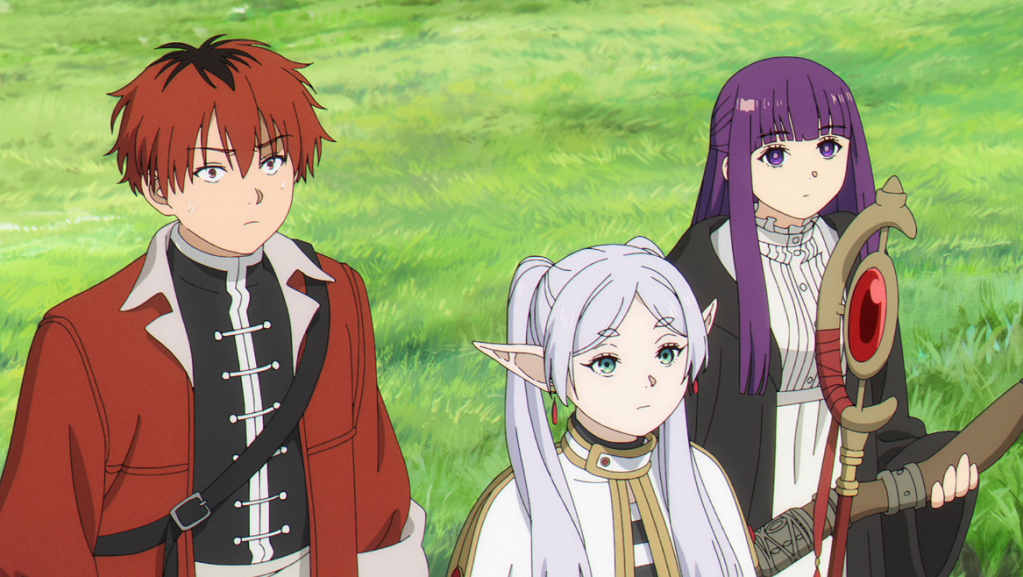
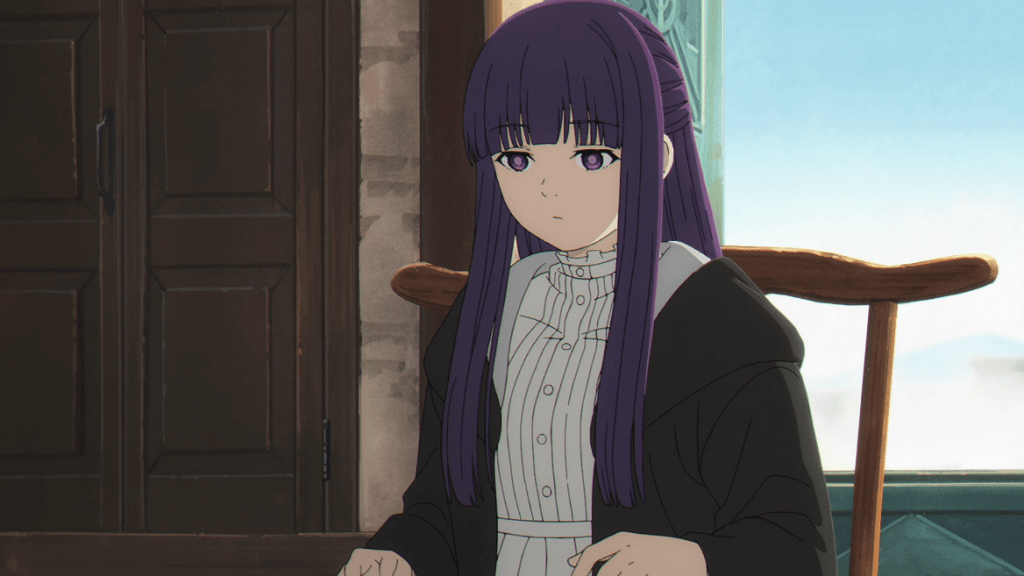
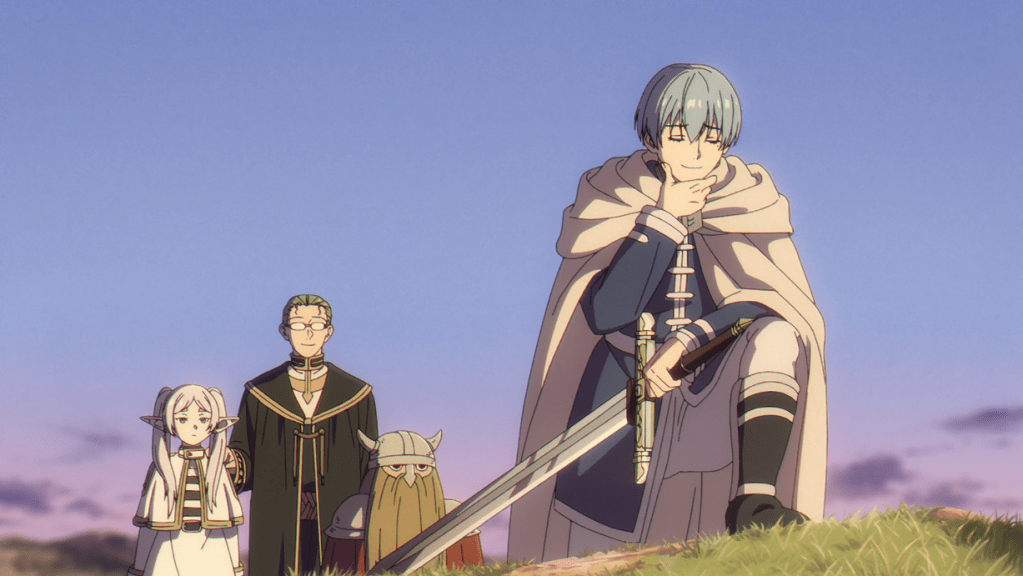
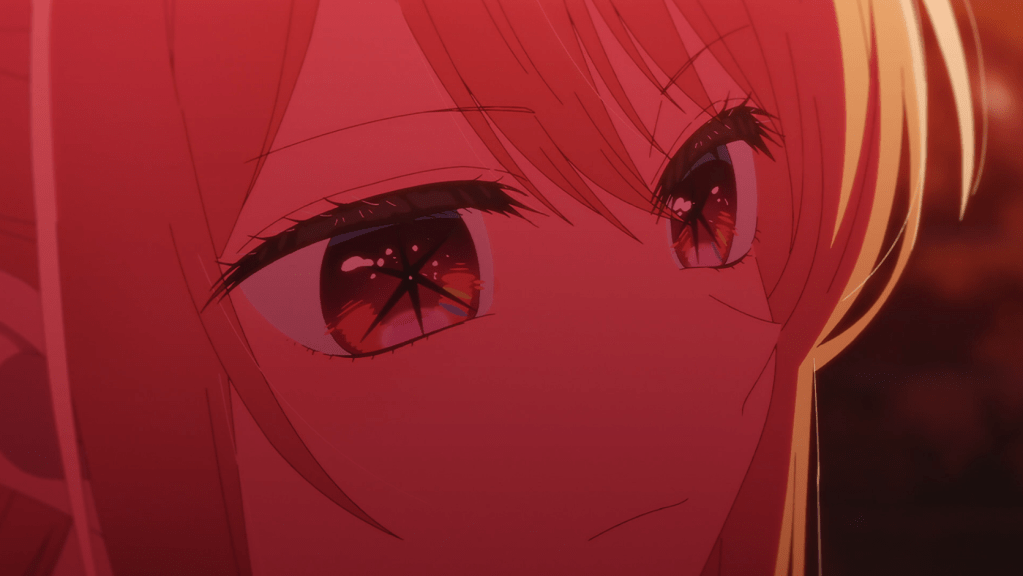

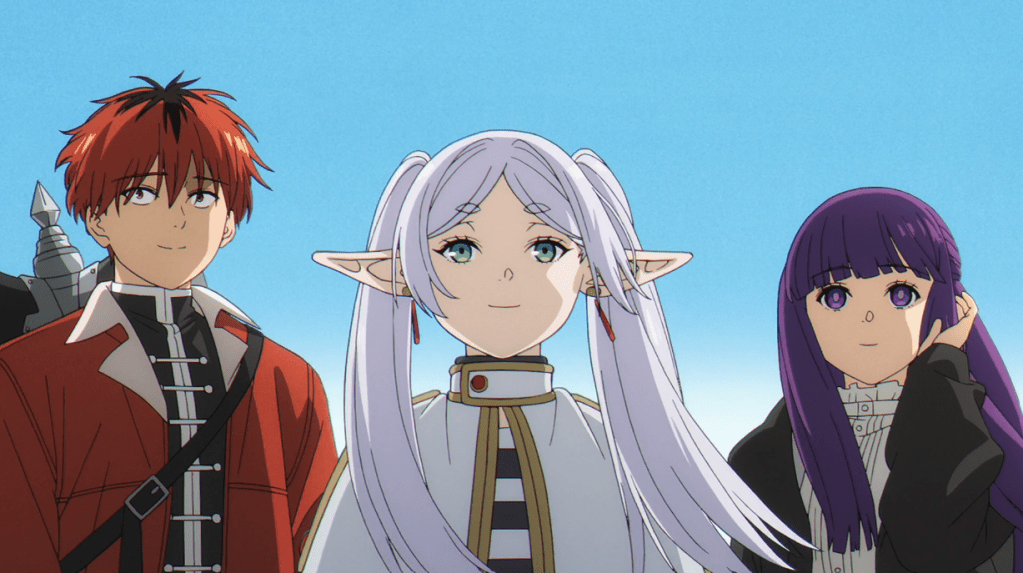
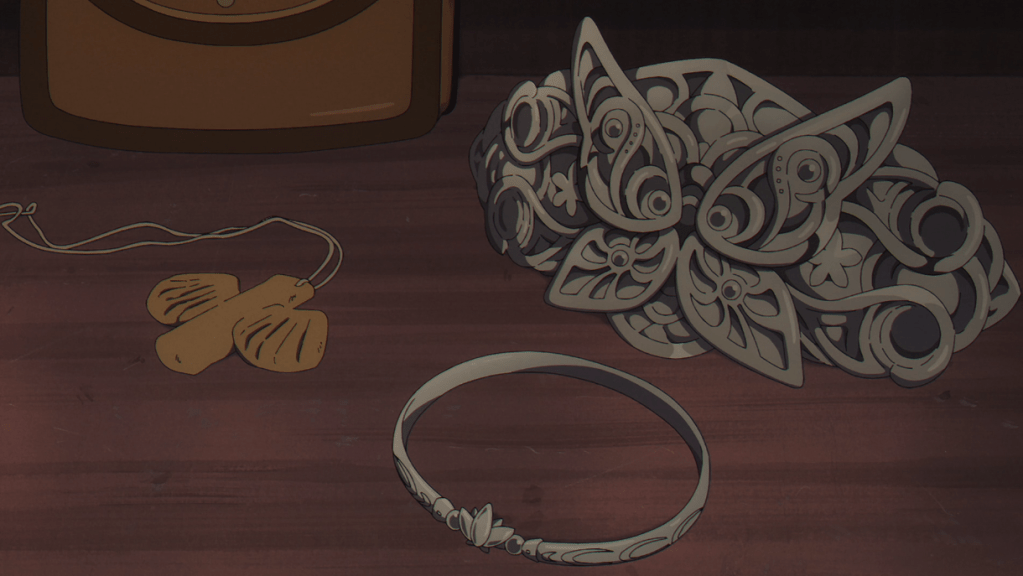

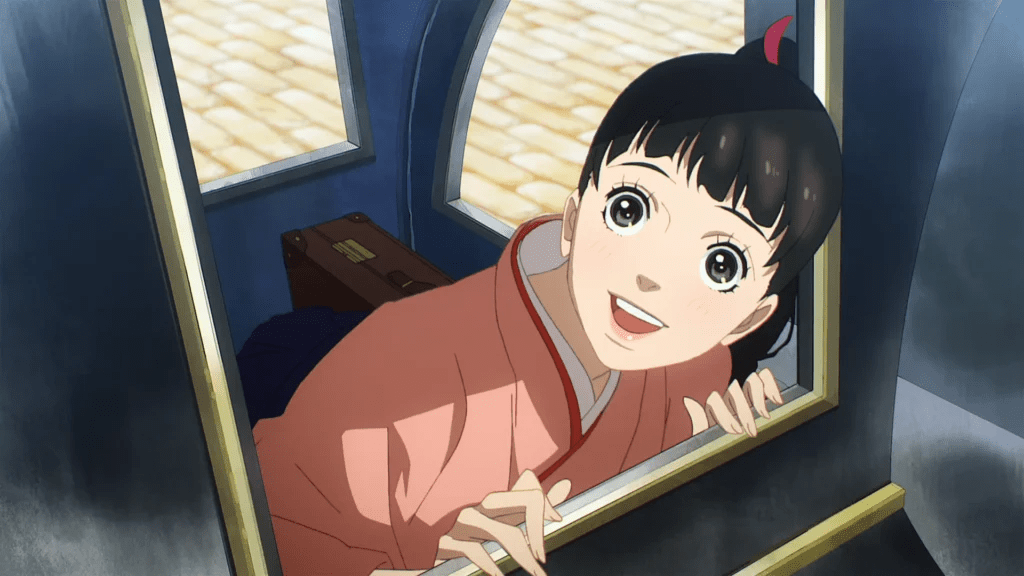
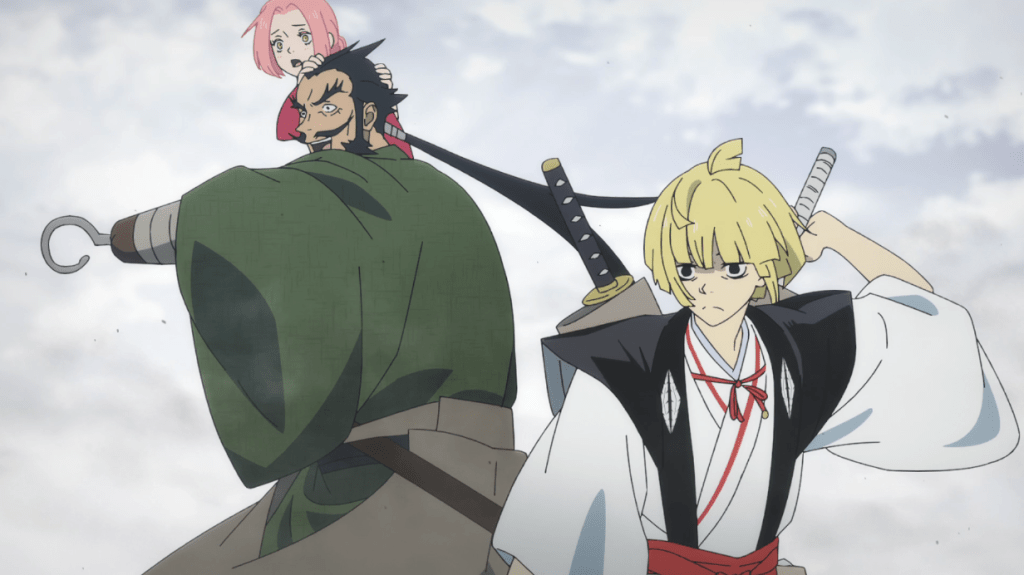
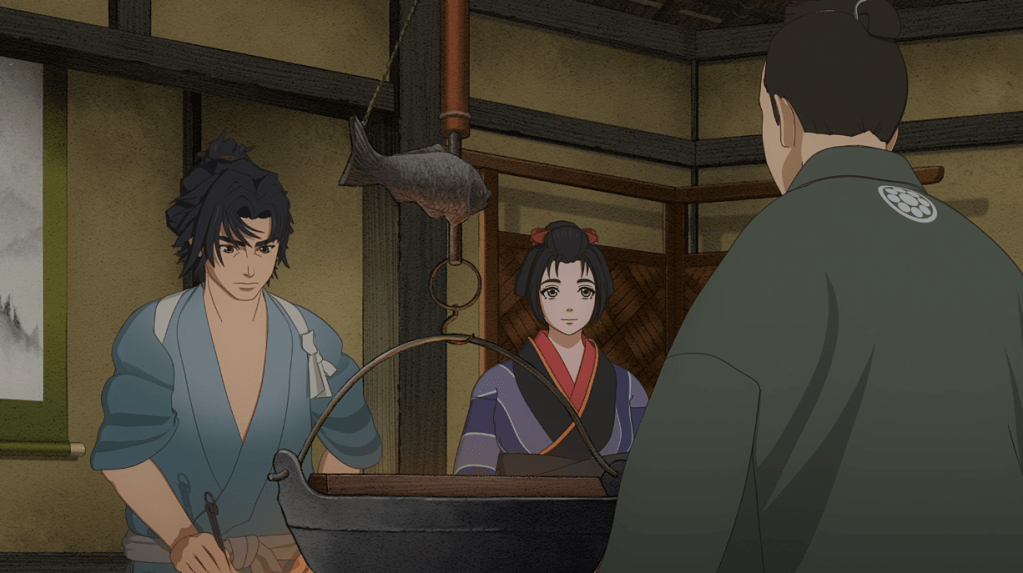
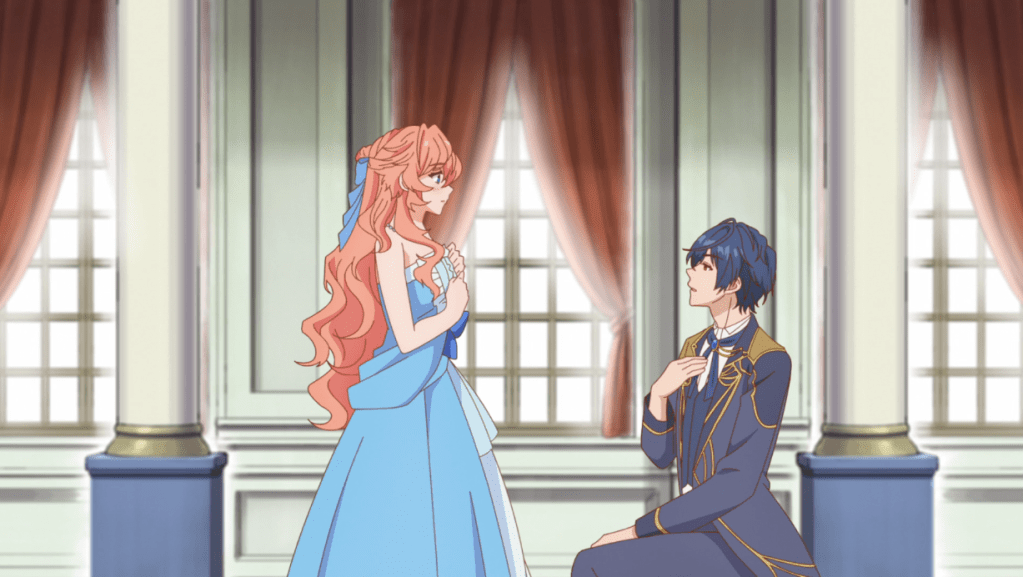
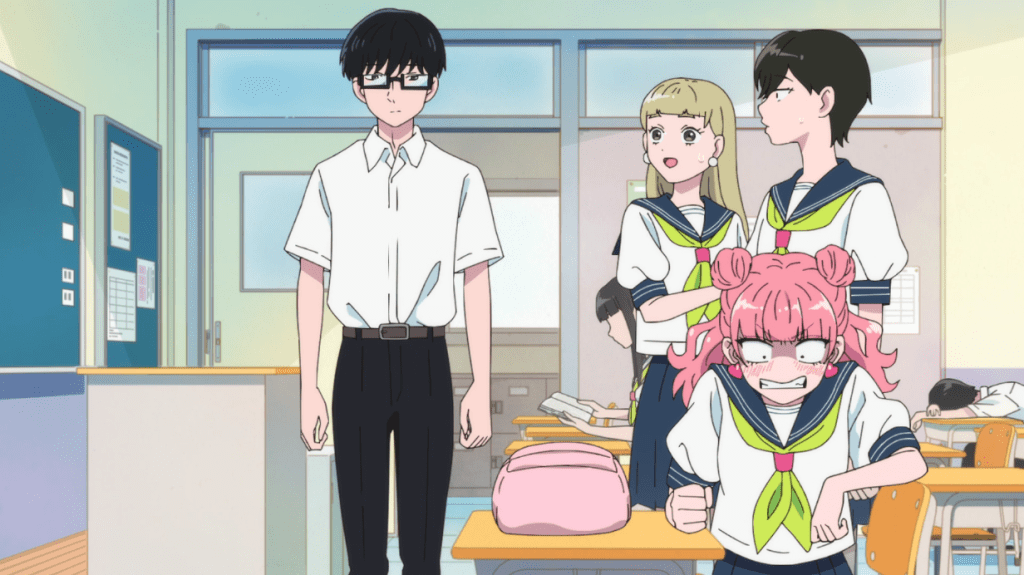
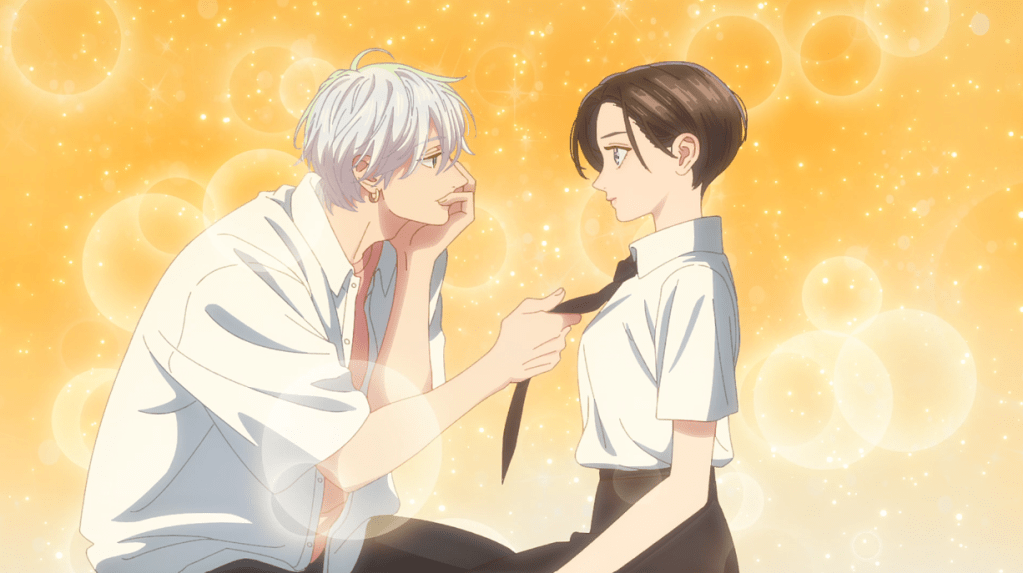
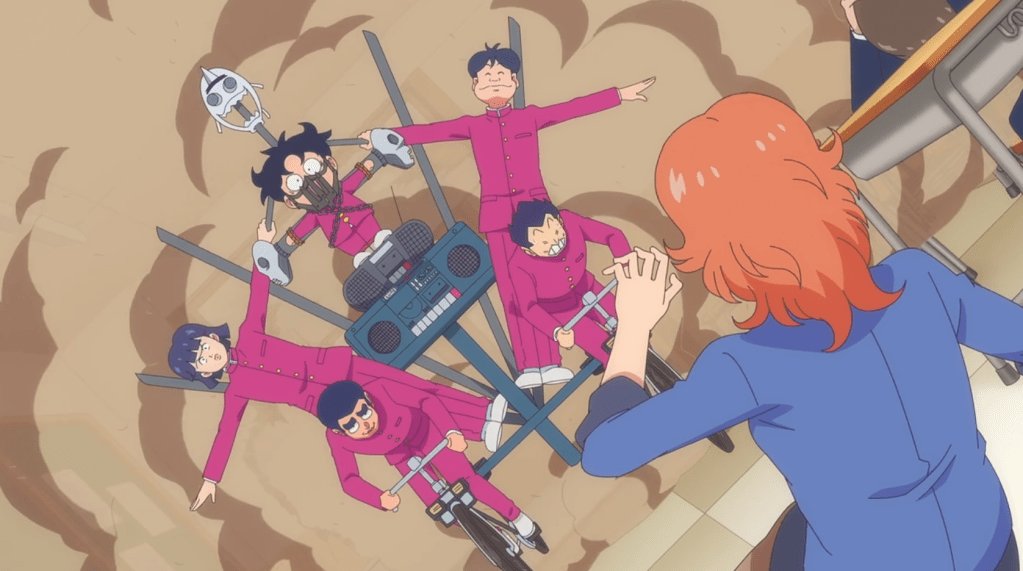
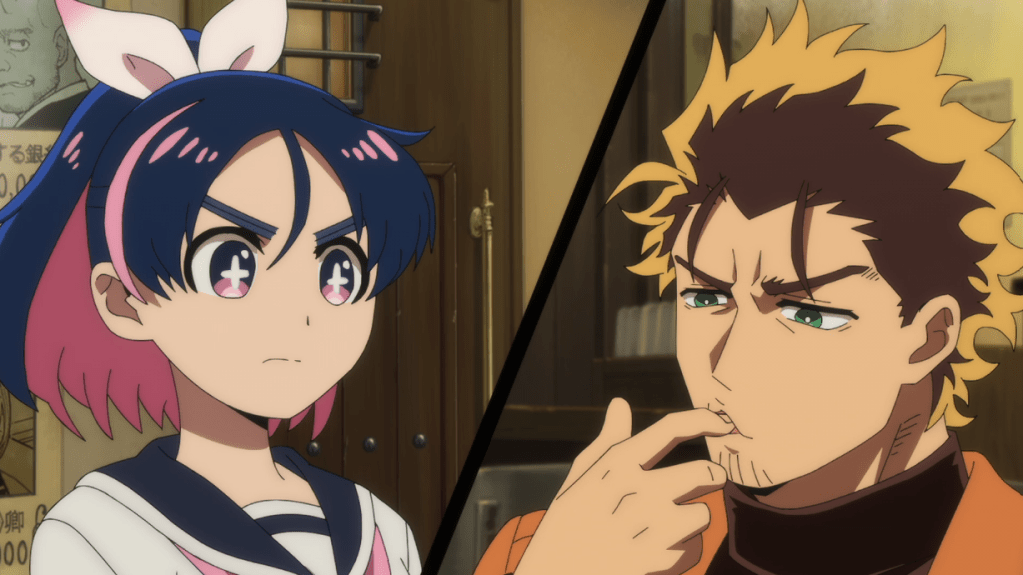
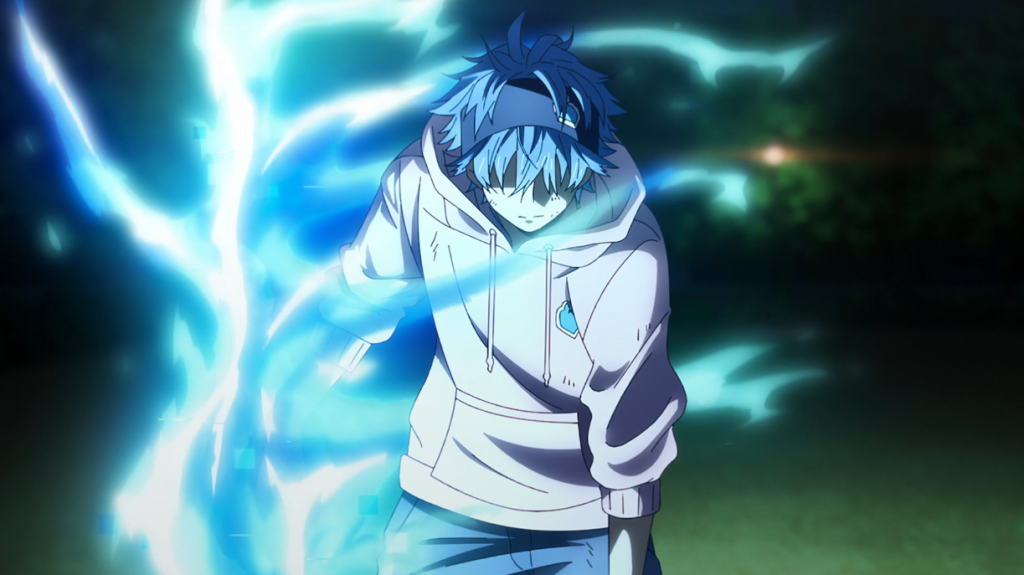


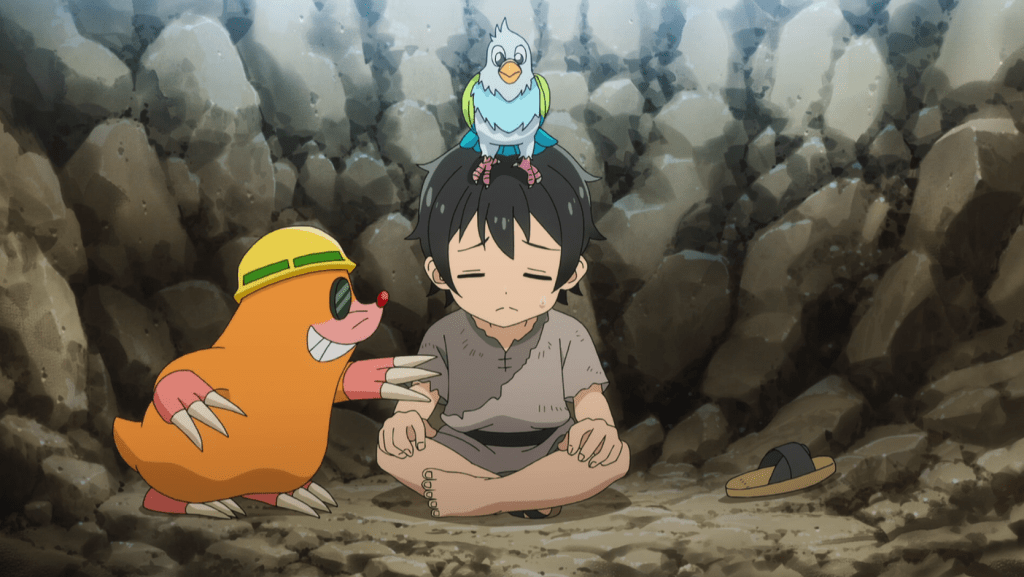


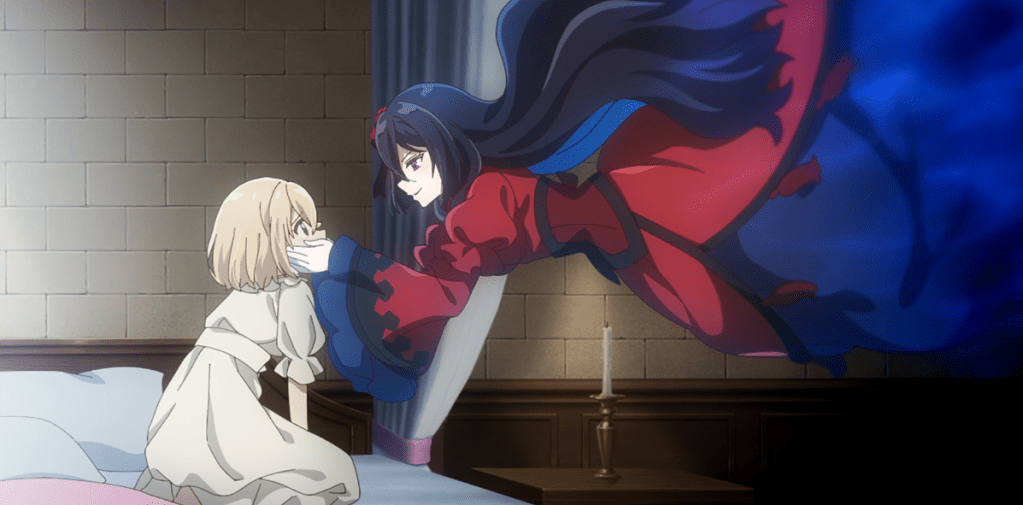

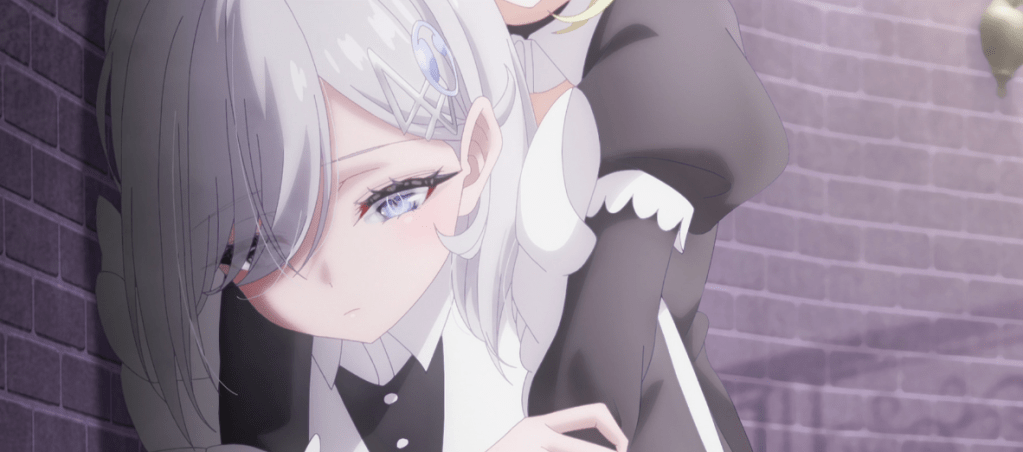


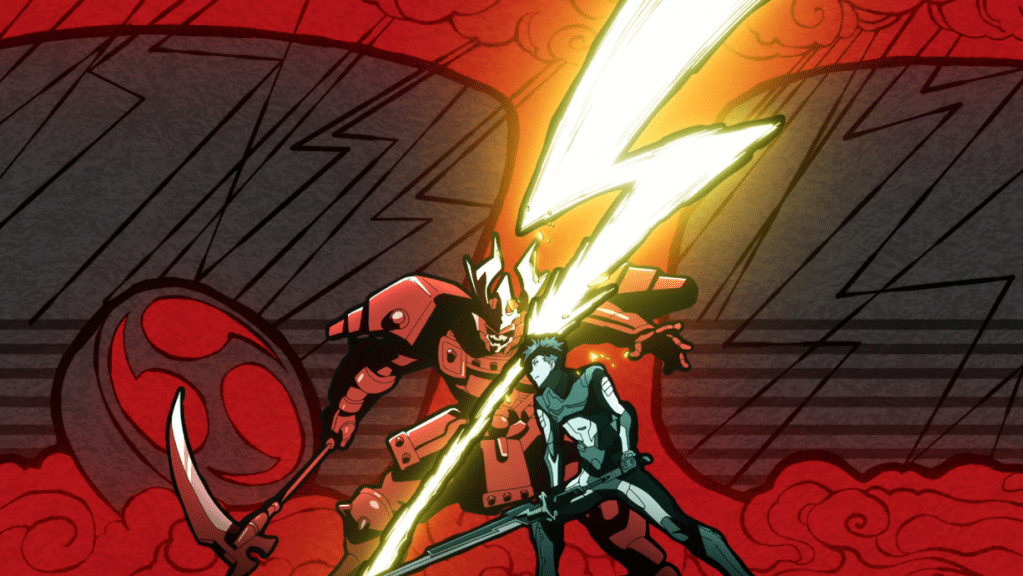
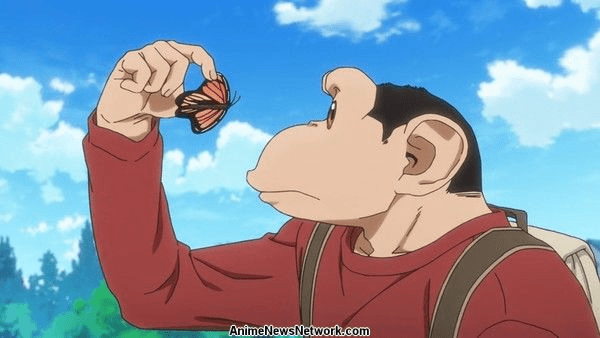

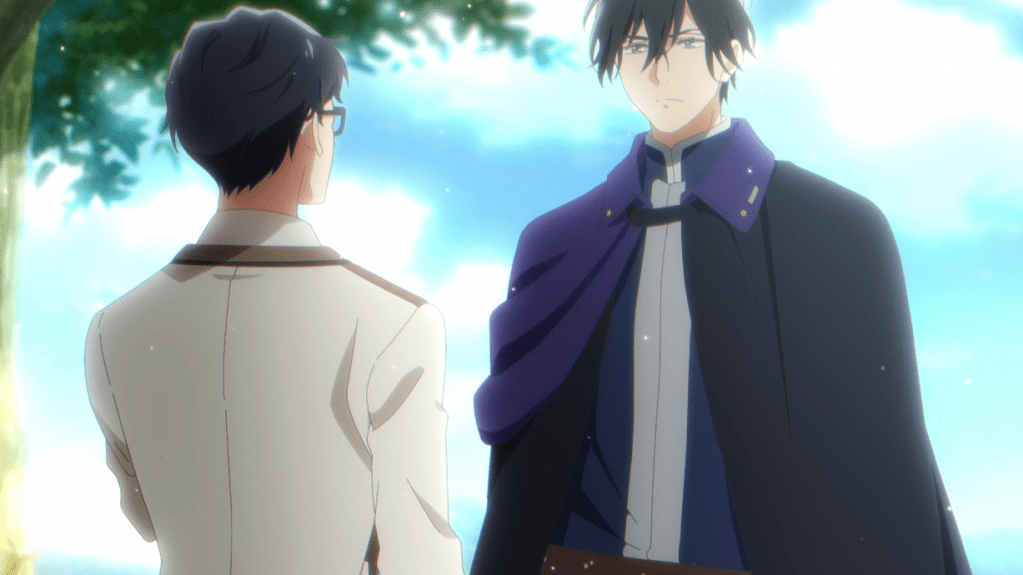

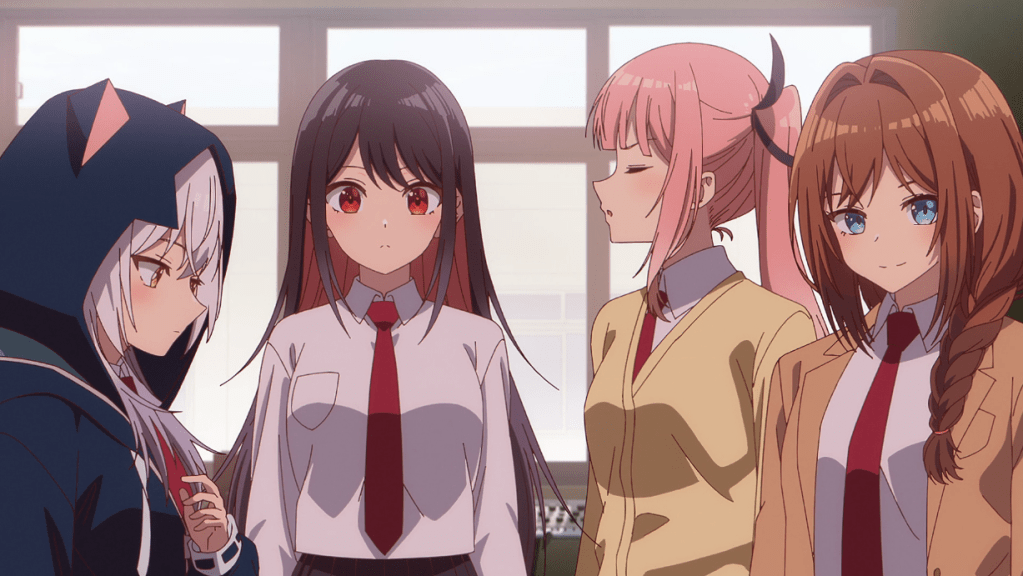
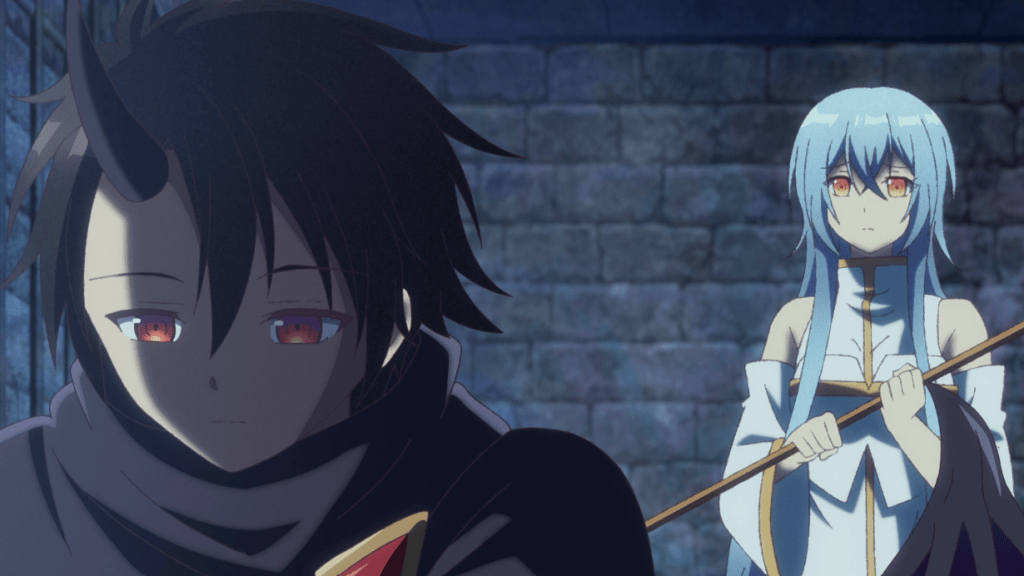



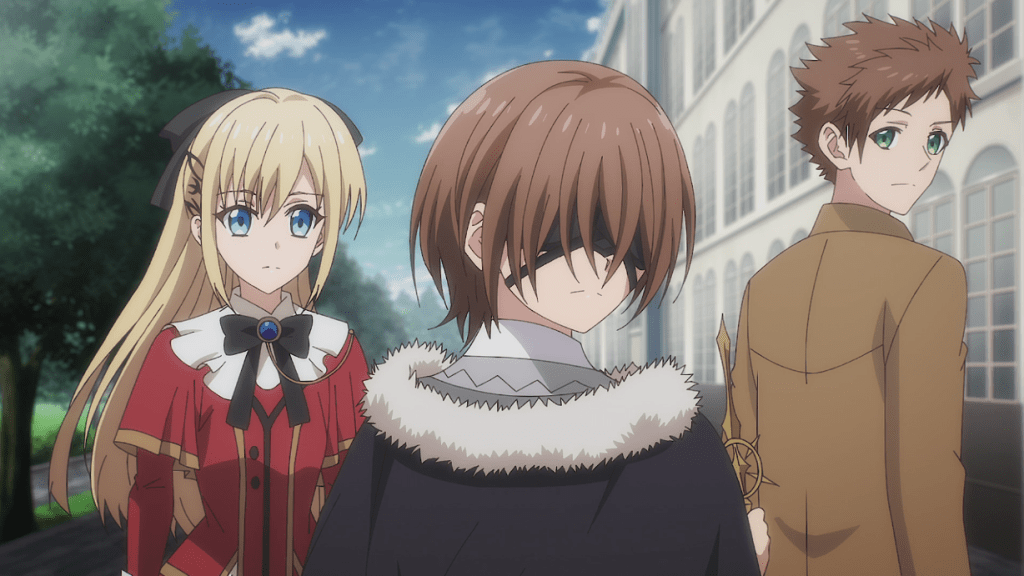


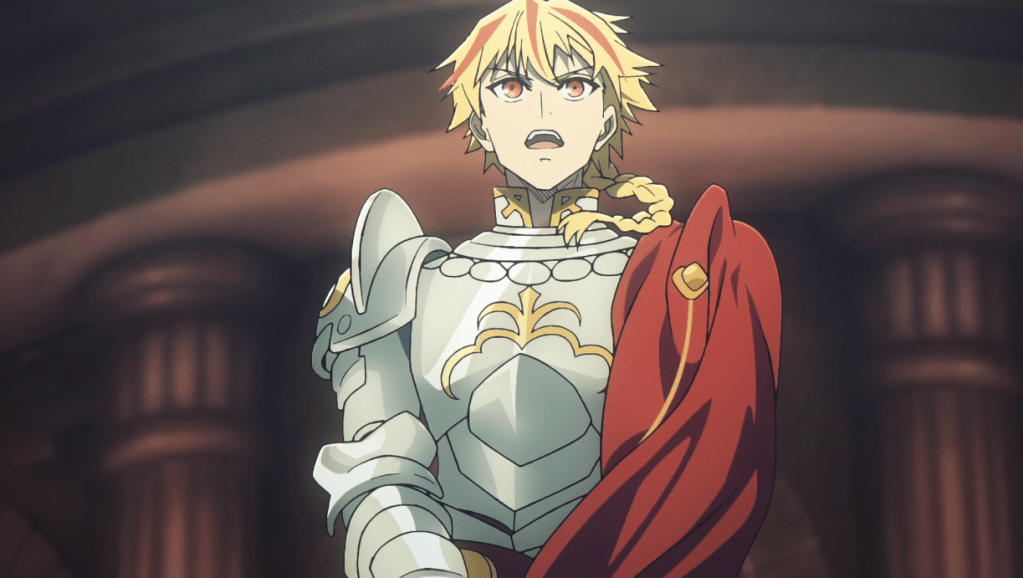


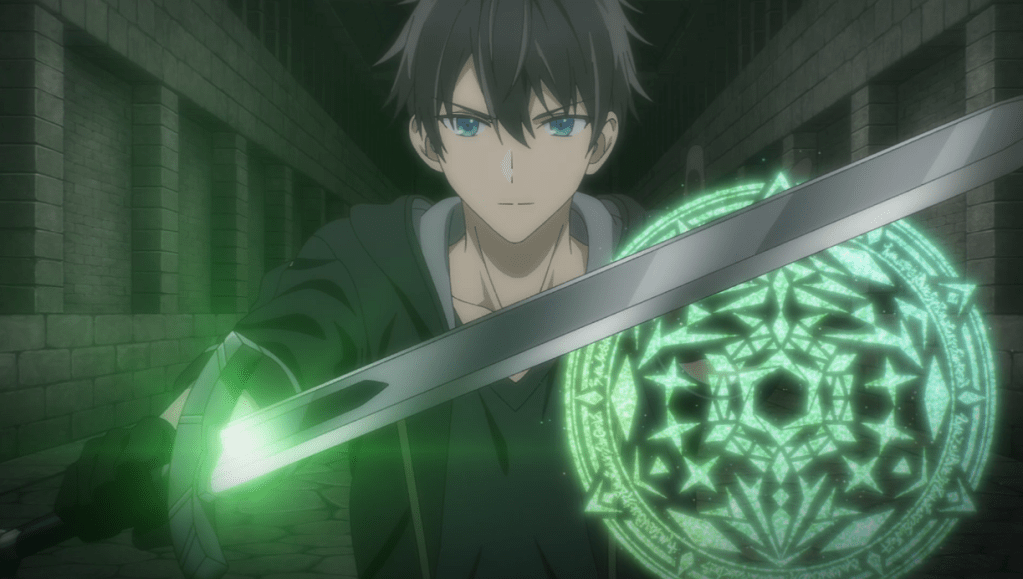
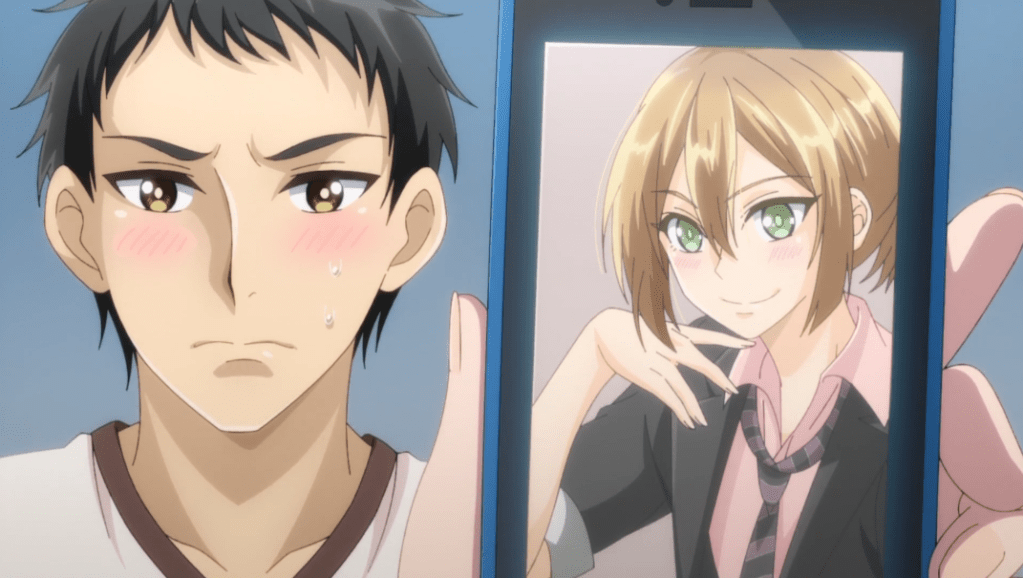
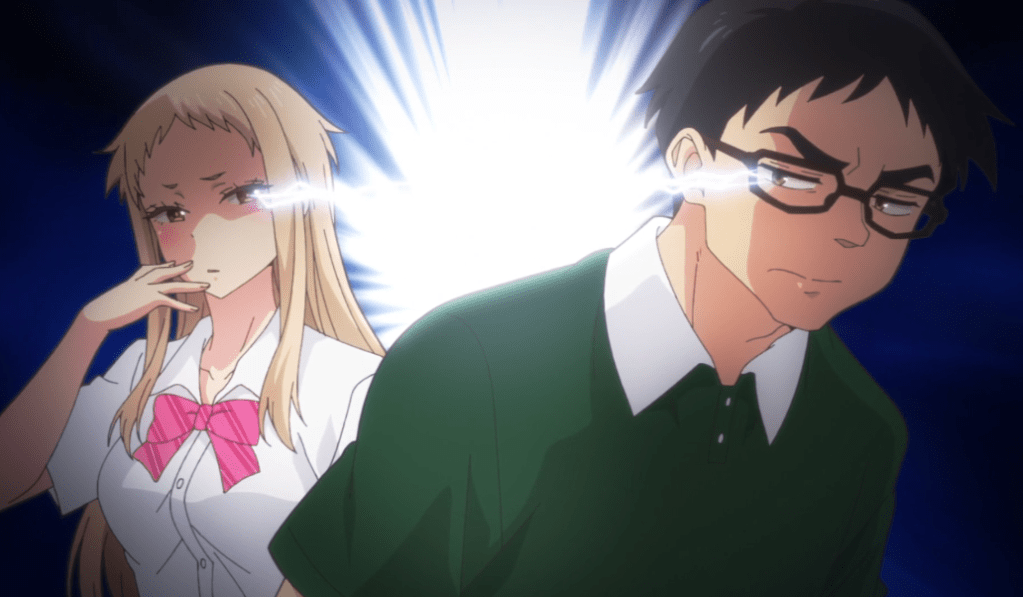
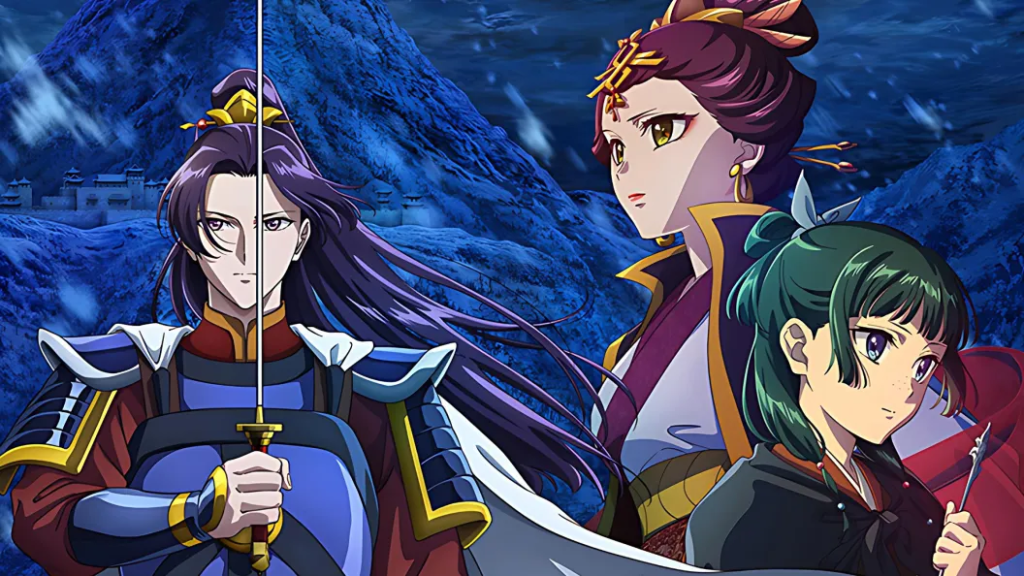
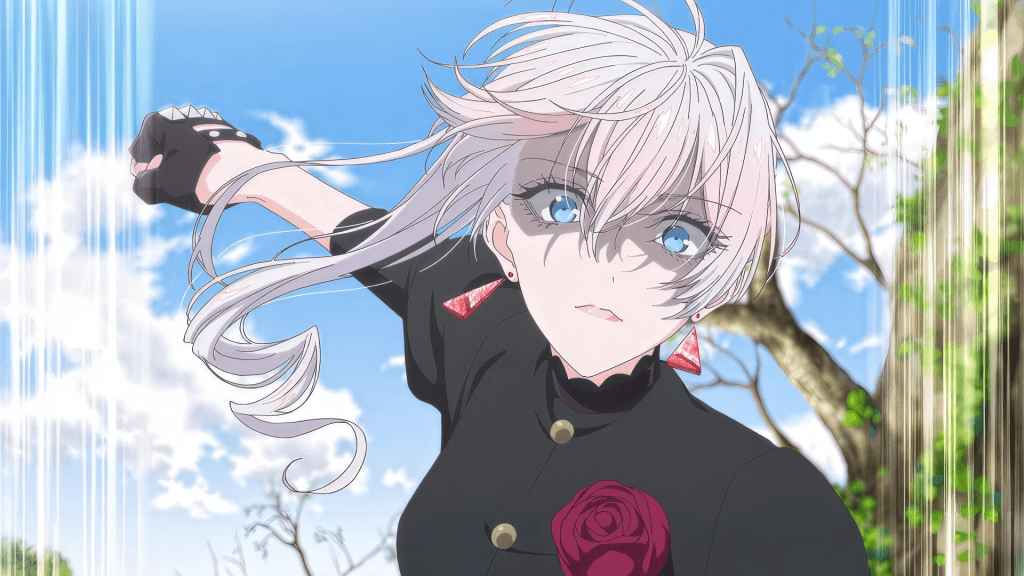
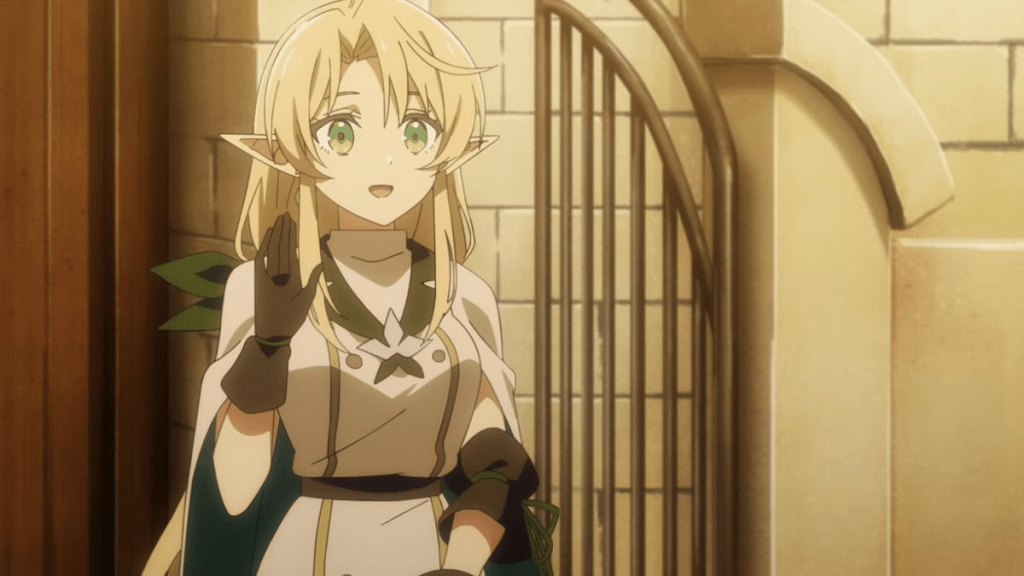
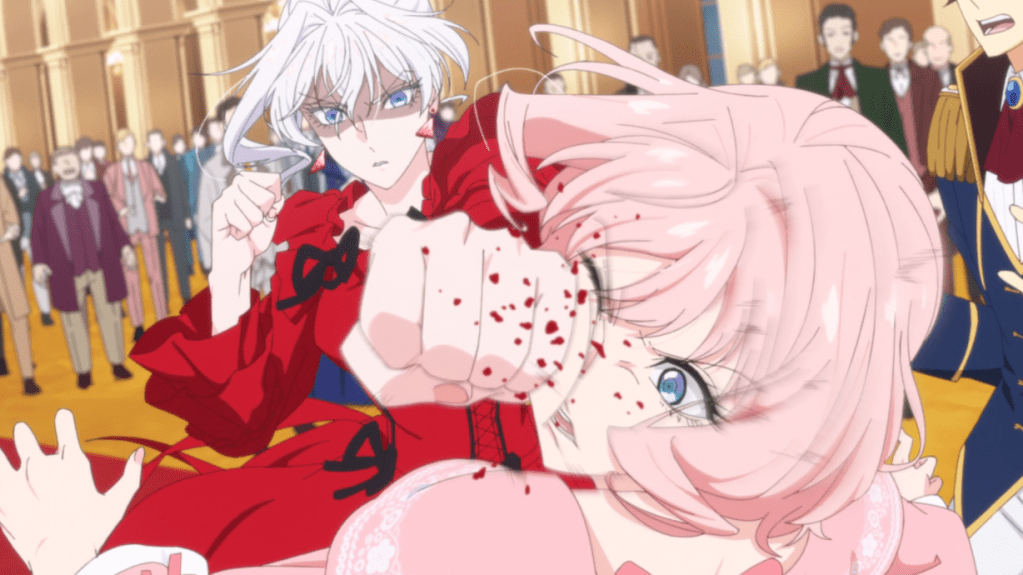

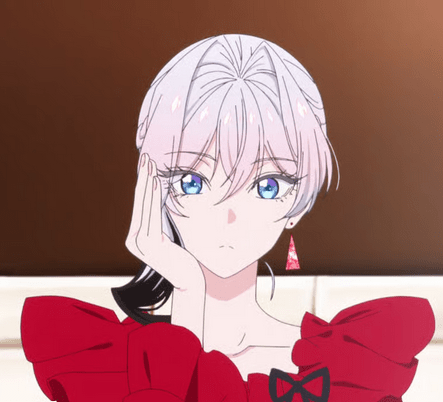


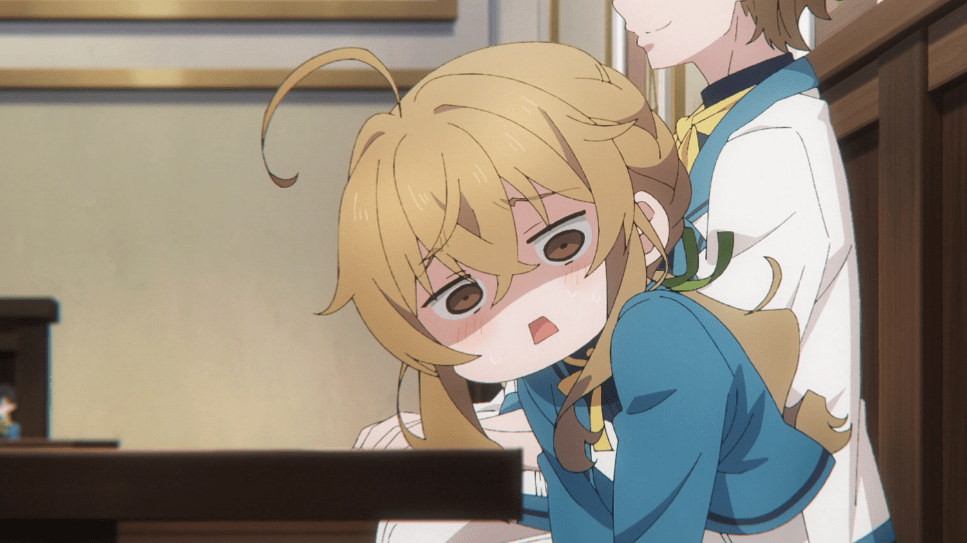

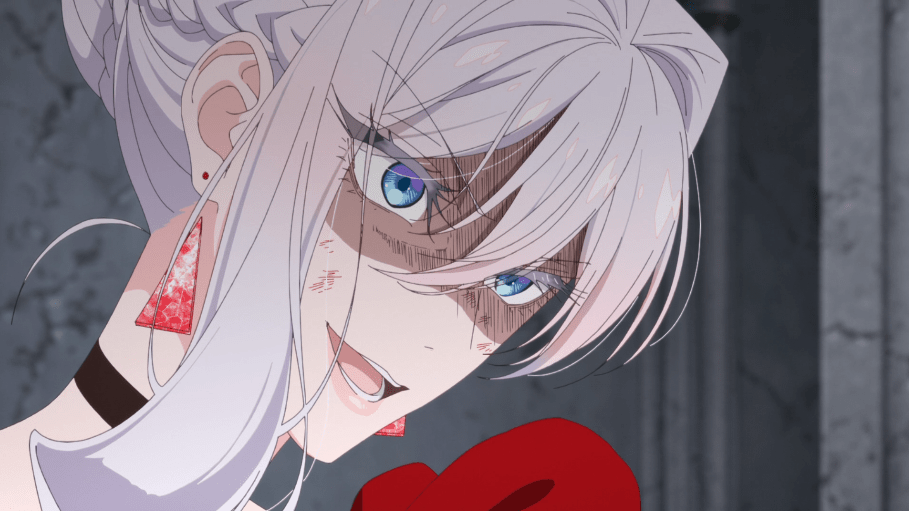
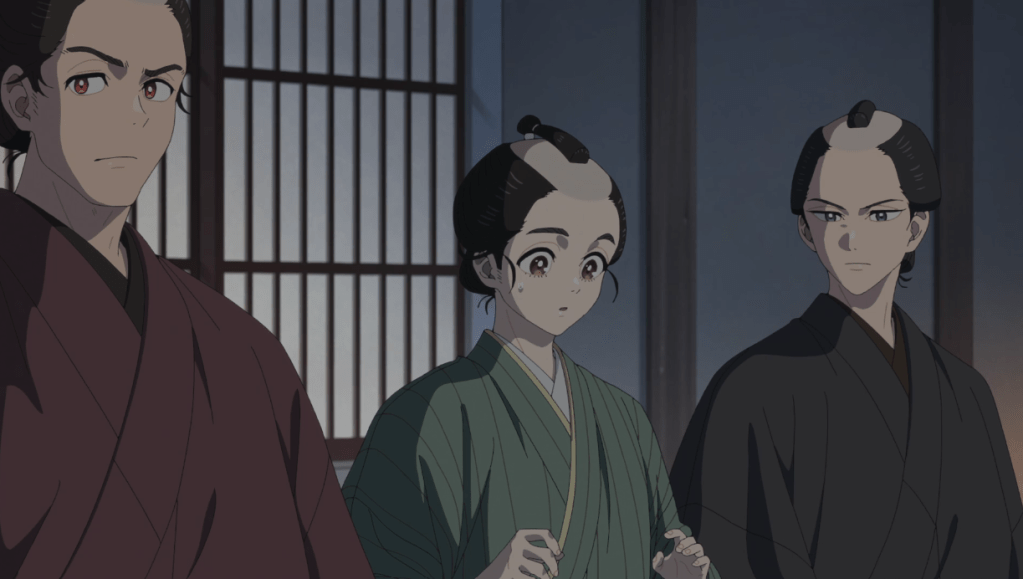
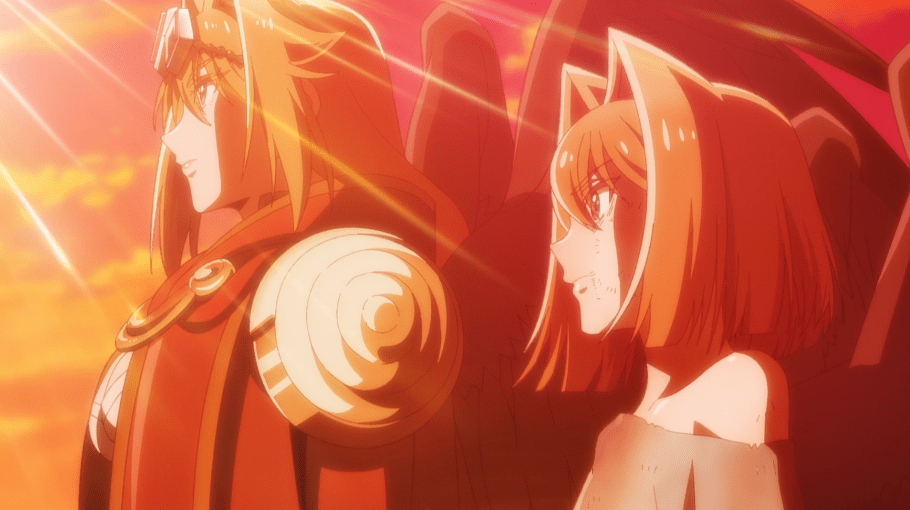
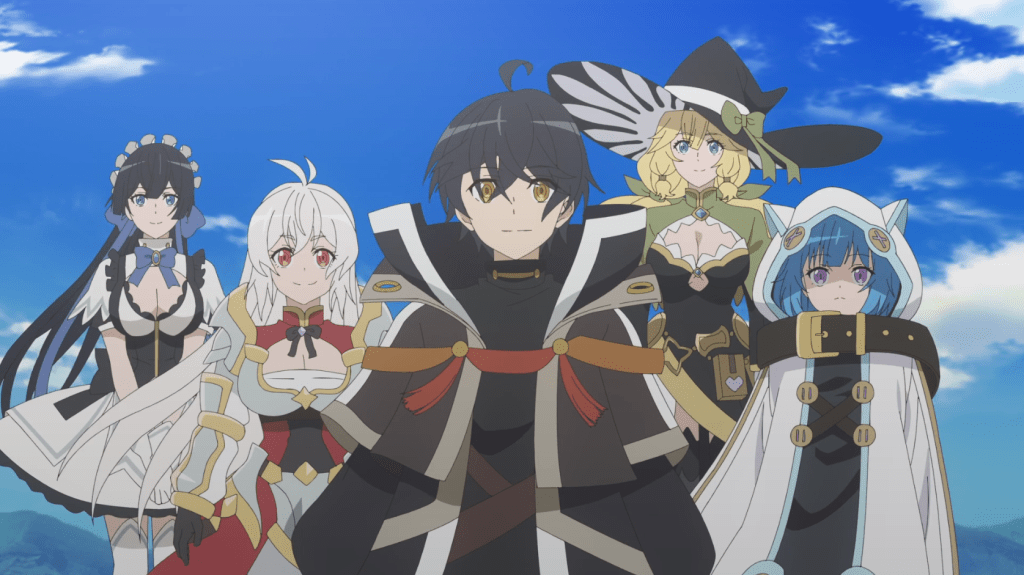

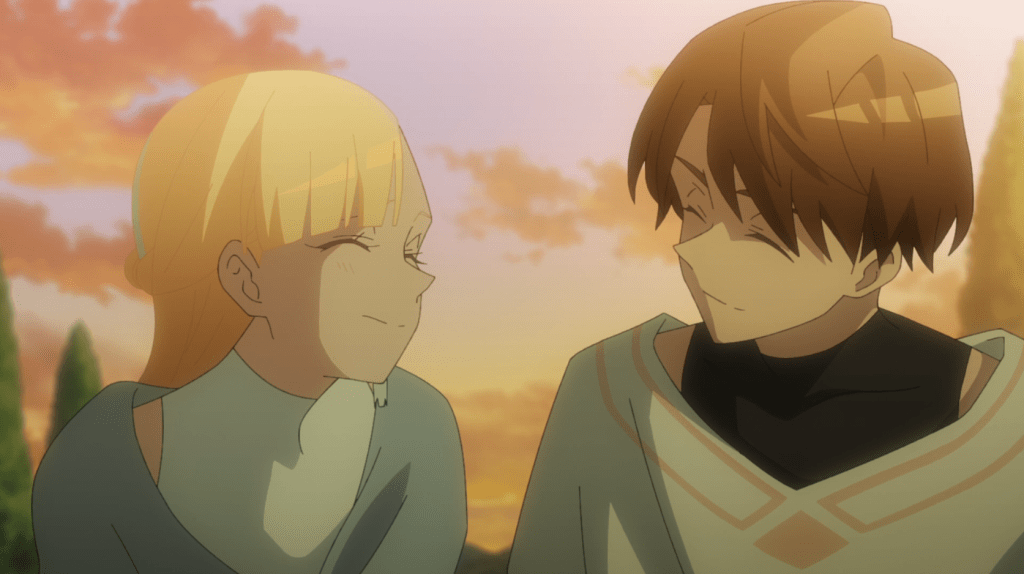
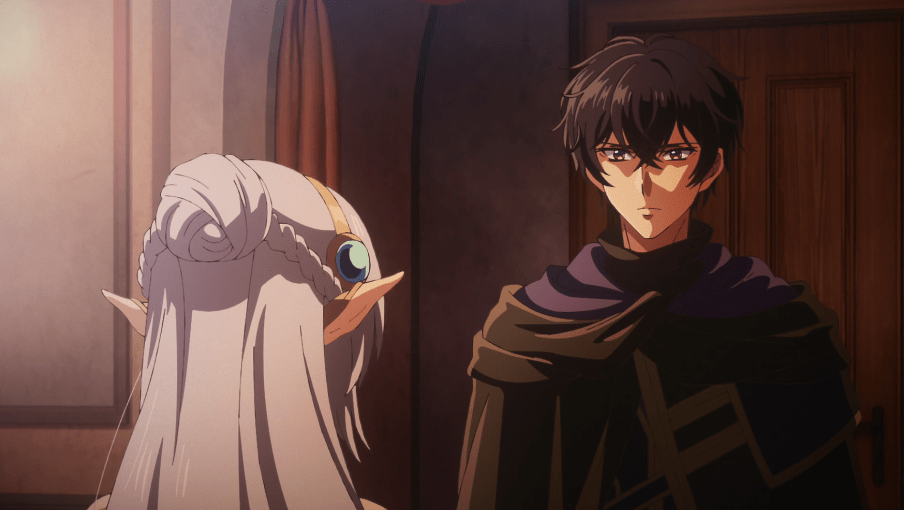
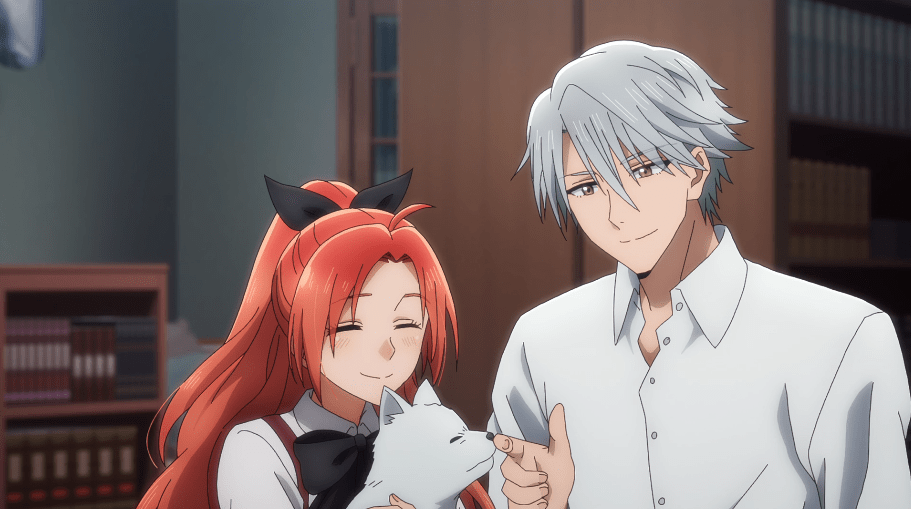
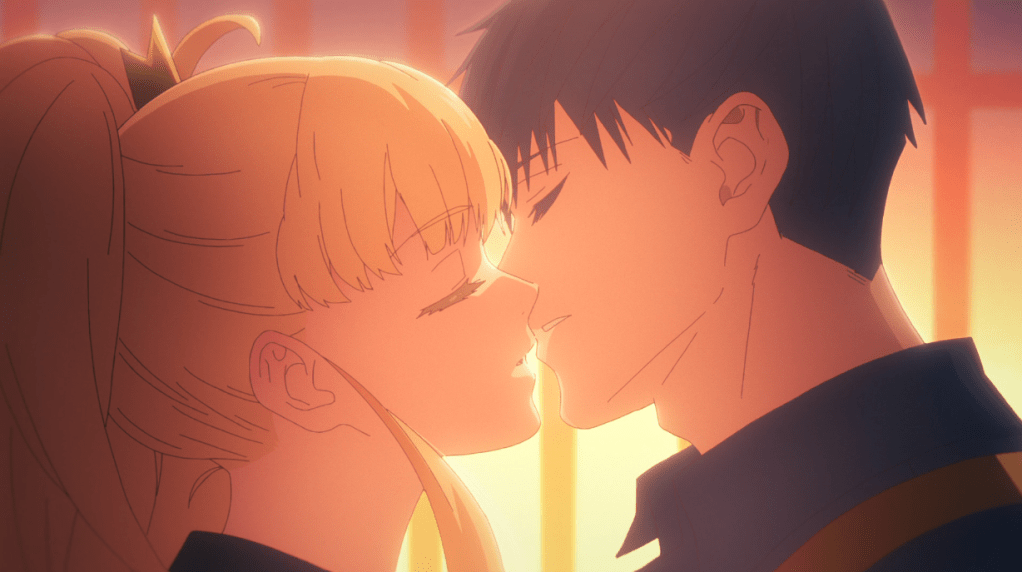
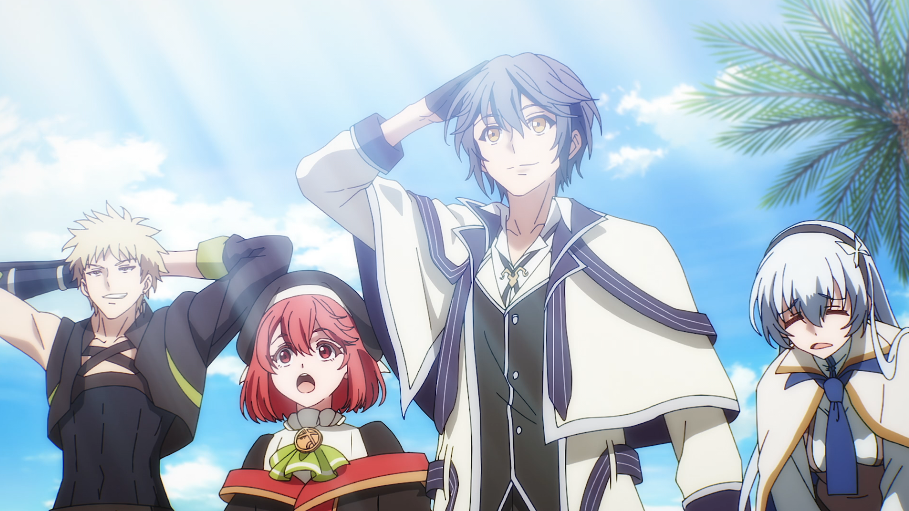

 USA Anime