With the last handful of titles for the Summer 2024 season having now aired, let’s take a summative look at what worked well and what didn’t this season.
Because of the high volume of titles I followed this season, covering every one of them here would make this post cumbersome. Hence I am only covering those titles for which I have updated my grade since the Mid-Season Reports and/or have additional commentary to offer. I will also not be covering Spice & Wolf (2024), Oshi no Ko 2 (which is my Best of Season pick), or Bye Bye Earth here, since all have been covered in other reviews. Our Last Crusade will not be covered, either, since it has released no new episodes since mid-season.
Series from Mid-Season Report part 1 which don’t get additional coverage here include That Time I Got Reincarnated as a Slime (beyond a 4th season and upcoming movie being announced) and The Strong Magician in the Demon Lord’s Army Was a Human.
Series from Mid-Season Report part 2 which don’t get additional coverage here include Dungeon People, Mission: Yozakura Family (which is either ongoing or has more than 26 episodes), Plus-Sized Elf, and Why Does Nobody Remember Me in This World?
Best of Season Runner-Up: Makeine: Too Many Losing Heroines!
Grade: A-
This was, qualitatively speaking, the highest-rated series of the season on Crunchyroll and the highest-rated new series (by a fair margin) on MyAnimeList, and not without reason. Only Wistoria and maybe The Elusive Samurai matched it for visual and animation quality, including a surprisingly dynamic visual presentation for a series which didn’t really have action scenes, but it had much more than technical merits going for it. All three of the main girls were distinct, likable, and compelling, with their own stories about love and life which could get serious at times, but the series was having too much fun to ever wallow in angst and Kazuhiko worked well as the straight man who observed, interacted with, and befriended them but never romanced them (or at least not yet). The series has a lot of meta appeal, heart, and energy, and I’d dearly love to see more animated. It’s practically a shoo-in for a Top 10 spot for the year.
Worst of Season: Failure Frame
Grade: C-
Was the name prophetic? Maybe. The series actually does get a little better in its later stages, especially with the introduction of female leonine gladiator Eve Speed, but it’s also still awash in godawful CG monsters, plenty of repetitive OP displays, and little creativity in how those OP displays are used, and it does nothing to step beyond it basic revenge scheme. Still, the series is popular enough that it’s likely to get a continuation, and I suppose that I have just enough invested in the storyline that I’ll watch more when it comes.
2.5 Dimensional Seduction
Grade So Far: B-
This is actually a mid-series grade, since it is continuing on into the Fall ’24 season. I have frequently seen this series compared to My Dress-Up Darling, but over the second half in particular this has increasingly seemed like an improper comparison since the two have entirely different goals. While DUD emphasizes the technical aspect of cosplaying more, 2.5D instead focuses much more on the motivations behind cosplaying and the general spirit of it. Sure, it’s decidedly inferior in technical aspects, but it accomplishes its objective pretty well. Episode 13’s addition to the cast of the next advertised girl, who seems to be cosplaying to break out of her shell of painful shyness, also looks promising. It’s not a great series, but it is worth continuing to follow.
Alya Sometimes Hides Her Feelings in Russian
Grade: B
The second half of this series makes a hard pitch to move Alya back front and center, but with only limited success. She is still outshone by Yuki at every point where they go head-to-head, and the vagueness behind her desire to be Class President doesn’t help. This is still an entertaining series, and the most popular new series of the season, so a second season promptly being announced for it is no surprise. I’m also told by those who know the source novels that the strongest material is upcoming. Still, I continue to watch the series much more for Masachika and Yuki than for Alya.
Dahlia in Bloom
Grade: C
I really, really wanted to like this series, but there’s no getting around how much it is hampered by its poor technical and artistic merits, an odd choice of recurring transition scene (leaves on a window!), and how generally uninteresting its storytelling is. Dahlia and Wolf’s romance is becoming marginally more convincing by the end of the season, and there is at least some sense of her blossoming as a person, but the execution just isn’t there on any front and those familiar with the novels generally regard it as a poor adaptation. It’s not the worst or most disappointing series of the season, but I do have to relegate it to lower-tier status.
Days With My Stepsister
Grade: B
Of the two series teen romance series this season, this is definitely the better one on all fronts, including artistic quality. It handles the budding attraction between stepsiblings Yuta and Saki, and their efforts to keep it at bay and settle into a proper sibling relationship, with considerable delicacy and introspection through to the end, and unlike closest competitor Love is Indivisible By Twins, it does reach a certain degree of resolution by the end, one which follows naturally from everything the audiences sees up to that point. Really, the series is as much a character study as it is a romance, and it finds a good balance in giving equal attention to the viewpoints of both of its leads. Of all of the series this season, this is the one that stands best on its own, too.
Dungeon People
Grade: B
In the Mid-Season Report I described this series as “reliable low-key entertainment,” and it remains so through to the end. That’s not at all meant negatively, as this series has its own distinct charm and cute factor and firmly sticks to it, even in the rare occasions where it has to get a bit darker (such as when a group of adventurers who have been luring adventurers into dungeons and killing them for their gear have to be violently dealt with). All of the details about the inner working of the dungeon are a delight, as are the two lead characters. I would happily watch more of this one if more is made, though given that it seems to be a bottom-tier series for the season in terms of popularity, that seems unlikely.
I Parry Everything
Grade: B-
I was a bit down on the technical merits of this one at the halfway point, but the second half does improve some and the absurd feats that Noor accomplishes are just too entertaining to deny. The degree of Noor’s cluelessness goes past being a running joke to being mildly irritating at times, but the series follows through so well on its titular concept and general spirit that I can tolerate that. It makes the somewhat odd choice to end with a reflective episode rather than a climactic one, but the extra insight it provides about how everyone sees Noor does nicely round out the story. Not a great series overall, but definitely an entertaining one.
Love is Indivisible by Twins
Grade: C+
Did any series this season feel more like it was spinning its wheels for the whole season than this one? That was the inescapable conclusion I came to as the last episode ended. Jun continues to be caught between the twin sisters and loves them both enough that he can’t pick one over the other, even with one trying hard to physically seduce him to win, and the dynamic between the twins over Jun continues to be complicated as the both try to consider the feelings of the other while staking out their own claims. The one thing which kept this angsty romantic drama somewhat interesting was that it maintains the viewpoint of the twins, rather than the primary male character, through to the end. Hardly the worst series of the season, but definitely the one I felt was the biggest waste of time.
Quality Assurance in Another World
Grade: B-
The elf warrior Akira finally joining the cast is a definite plus, and the cautionary tale about how one bug tester’s intended-to-be-helpful modification of an NPC goes horribly awry has its merits, but the compelling novelty which powered the early part of the series has faded, leaving the series feeling somewhat aimless in the later episodes of this season. Despite not seeming to build towards anything late, it does end on a sort of cliffhanger, and seeing characters take advantage of bugs in creative ways still has its appeal. The English dub continues to be excellent, too. The series just feels like it’s still missing something, though. I’ll continue to watch if another season is announced (one hasn’t been yet as of this writing), but it’s no longer a priority view.
Shy s2
Grade: B-
While I still like this series and its concept and characters, its second season is distinctly the weaker of the two. That’s primarily because the arc about the ninja twins drags badly (especially in its close-out scenes) and is ultimately not as compelling as the arc about Spirit and her mother (which also, honestly, dragged a bit). Hate to chide a series for being too thorough in its development, but that really is part of the problem here. Even so, I’d still watch more if it gets further animation, and the fact that a line of figures exists for this series suggests that it may be more successful in Japan than it is in the West, so that’s not out of the question.
The Magical Girl and The Evil Lieutenant Use To Be Enemies
Grade: B
Thankfully, the second magical girl’s presence is only irregular throughout the series’ second half, allowing it to regain the adorable charm that initially won me over. The ironies underlying all of the sweetness – that Byakuya is the one foe Mira is helpless against, and that her life is better for having met him – also continue to be a delight, and kudos to veteran seiyuu Mai Nakahara for her performance as the gently pathetic Byakuya. Sadly, there will never be additional animation for this one, since the original manga-ka passed away in 2015 and I believe it’s animated most of what got published from the manga.
The Ossan Newbie Adventurer
Grade: C+
The latter stages of the season featured the series’ strongest episodes, especially episode 10’s match between pugilist champion Kelvin and the orc Broughston. Even so, the series remains to the end the weaker of the two series featuring 30ish guys who start late on the adventurer’s path and don’t appreciate how strong they are. It ultimately doesn’t offer much beyond familiar-feeling shonen tropes and features a generally less interesting supporting cast.
Vtuber Legend
Grade: A-
This is my #3 pick for the season in a qualitative sense and the one that I felt was the most purely entertaining series of the season. Nothing else this season was anywhere near as funny, but it also handled its rare semi-serious and character development moments with greater effectiveness than I would have expected. I also found it rather clever in the way it deliberately used CG to invoke both a sense of artificiality and to help reproduce some of the antics of real-life VTubers (which I’m told the series was very accurate about imitating), and featuring a montage of actual VTubers near the end was a really neat touch. I don’t think you have to be an established VTuber fan to fully appreciate this one (I certainly wasn’t), and while it may not work for everyone, both its wit and potential entertainment value shouldn’t be underestimated.
Wistoria: Wand and Sword
Rating: B+
For all that the series is essentially a slave to standard shonen trope, it executes them better than most as Will first fights against, and then later fights with, some of the school’s elite students. This climaxes in an epic battle scene to get out of a dungeon catastrophe in episode 11 before finishing with a wrap-up episode which throws out all sorts of intriguing plot threads and lore. It’s the perfect set-up for a second season announced as this one ends (it’s on the last frame of Crunchyroll’s stream), and I’ll definitely be back for more. A lavish, top-tier visual effort makes this one of the season’s best-looking series and the season’s action star.
That’s it for this season. Please next check out my Fall 2024 Preview Guide, which has already started.
NOTE: The Fall 2024 Preview Guide is now complete. It will be taken off of sticky status with the next post.
Welcome to my seasonal Guide! (The debut schedule will be posted here, although it hasn’t been updated yet if you’re seeing this note.) We have multiple series this season debuting before 10/1, so you’ll see a few entries before the Guide starts in earnest on Tuesday 10/1.
I expect to cover every full-episode series that will be debuting this season and many of the sequels/returning series, including Demon Lord, Retry! R, As a Reincarnated Aristocrat, Re: ZERO, Is It Wrong to Try to Pick Up Girls in a Dungeon? (which is going straight to episode reviews), Sword Art Online Alternative: Gun Gale Online II, Bleach: Thousand-Year Blood War,Seirei Gensouki – Spirit Chronicles,Shrangri-La Frontier, and Arifureta. I will not be covering the sequels for The Prince of Tennis KamiErabi GOD.app, Ruroni Kenshin, Blue Exorcist, Tonbo!, Blue Lock, Love Live! Superstar!!, The Seven Deadly Sins: Four Knights of the Apocalypse, MF Ghost, After-School Hanako-kun, Natsume’s Book of Friends, or Ron Kaanohashi’s Forbidden Deductions, since I am not caught up on those franchises. The remake of Ranma ½ will get covered (from the perspective of someone who has seen part of the original, including its first season), and we’ll see about Dragon Ball Daima
Debuts are listed below in with the newest ones at the top. This listing may be added to multiple times per day on busier days.
Blue Miburo
Streams: Crunchyroll on Saturdays
Rating: 3 (of 5)
A bit of historical context is needed here: Miburo is short for Mibu Roshigumi, a subgroup of 19 members of the Roshigumi, which consisted of ronin originally assembled under the auspices of supporting the Tokugawa Shogunate (though they were actually intended by their organizer to support imperialists). The greater group was disbanded after coming to Kyoto in 1863, and those who remained behind and formed a group based in the village of Mibu were, indeed, regarded as dangerous troublemakers. But that group would, later that year, be renamed the Shinsengumi and dedicate themselves initially to protecting the streets of Kyoto. In other words, this is looking to be a story about the events leading up to the formal formation of the Shinsengumi, and there are definitely some dramatic events in that period which can be mined.
This episode focuses on two of the Miburo and their eventual recruitment of a sharp, white-haired boy named Nio. (Narration and the OP and ED indicate that at least two other boys will be joining as well.) It’s pretty standard shonen action starter fare, just with a more hard-core historical aspect and strikingly pretty character designs. Aside from period trappings, its only other real distinguishing feature this point is big facial expressions, and the animation definitely takes some shortcuts. A lot is apparently expected of this one, since it’s already scheduled to run for two continuous cours, but what I’ve seen of it so far just isn’t compelling enough for me to follow it.
Arifureta s3
Streams: Crunchyroll on Mondays
Rating: 3 (of 5)
Two OVA episodes have been released since the end of season 2, but those aren’t required viewing for making sense of this debut, since it follows directly from the end of episode 12 of s2. Since it’s been a couple of years since the last installment, this episode opens with Yui making a brief recap of last season as part of some sort of journal entry. Even with that, I still recommend rewatching at least the latter part of s2 before starting this one, as viewers are expected to be familiar with certain key points, especially why Kaori looks different and why so many fellow students are now traveling with Hajime. The post-recap parts of the episode aren’t anything special for the series, with the bunny people that Hajime trained into monsters popping up again as part of dealing with slavers from the Empire. The way they’ve taken Hajime’s edgelord tendencies and fully run with it is rather amusing; so much of what he is an how he acts is played so straight despite how ridiculous it is, so humor at his expense on this is always welcome.
Basically, this is just more of the same for the franchise. If you’ve liked it before, this episode shouldn’t disappoint, but it doesn’t do much to distinguish itself.
Shangri-La Frontier s2 (ep 26)
Streams: Crunchyroll on Sundays
Rating: 4 (of 5)
I’m tempted to let this one go with just a “more of the same” comment, as that’s exactly what we’re getting here: more flashy, energetic, and well-animated battles, more rabbit goofiness, more hints of bigger in-game storylines, more SF Mini, and another bangin’ metal-themed OP. On the downside, that also means more excessive lead-in/recap, though I’ll forgive this episode on the latter point since the series is returning after a season off. The series still looks as sharp as ever, too. Plot-wise, Sunraku and his rabbit allies have continued their quest to upgrade Bilac to an Ancient Crafter by going to the area known as Ruins of Past Glories, which is swarming with golems. But they’re also being trailed by some individuals who are none too keen on Sunraku not including them in this mission.
The OP shows several unfamiliar characters, so there should be some interesting new additions to the recurring cast this season. Overall, this episode shows no reason to think that this won’t be another solid season for arguably the best of the game play-through series out there.
Demon Lord 2099
Streams: Crunchyroll on Saturdays
Rating: 3.5 (of 5)
Demon Lord Vetol was the leader of the Immortals in a grand battle against mortal races, but he was ultimately defeated by Graham, the Hero, after a fierce battle. 500 years later, one of his surviving chief subordinates manages to resurrect him, but he learns very quickly that times have changed, and he’s been left behind. After his world fused with that of another (Earth) and much of the population died off, a new world has stabilized in a fusion of magic and technology, and it’s one where Vetol is now at a significant disadvantage due to a betrayal by one of his other former chief subordinates. Vetol will now have to figure out a new way of doing things in a world specifically designed to not be subject to his whims.
Consider this rating a balance of my enthusiasm for how the concept is executed vs. its very pedestrian set-up and execution. The concept is a mix of “reincarnated/resurrected Demon Lord” and “Demon Lord in another world” stories, but the crucial difference here is that the new version of the DL isn’t still all-powerful. Rather than the DL using magic that’s been lost over time, magic has advanced and passed him by thanks to tech devices which more than overcome the DL’s previous advantage (the ability to cast powerful spells quickly), and those devices are specifically designed so he can’t use them. It’s a great way to get the “OP protagonist” concept under control, and Vetol’s brief contact with a magical hacker is promising, too. The series is aiming for a decidedly cyberpunk aesthetic, but we’ll see how effectively that play out. The concept is enough to carry this one for now, and it’s why it will make my weekly viewing list.
The Do-Over Damsel Conquers the Dragon Emperor
Streams: Crunchyroll on Wednesdays
Rating: 3 (of 5)
Somewhere between last year’s 7th Time Loop and Tearmoon Empire lie this light novel adaptation. Like both titles, this one takes the female protagonist (Jill, in this case) back in time six years in order to avoid an ugly fate. She was betrothed to the prince of her country while still young and grew up to fight fiercely on his behalf, but he eventually sought to do away with her when she accidentally discovered the incestuous relationship he was having with his beloved sister. When, upon her apparent death, she flashes back to the moment she first met the prince, she does everything to avoid him, even making a blind marriage proposal to a man who turns out to be the Emperor who causes her country such grief years down the road. Unlike 7th Time Loop‘s Emperor Arnold, though, Emperor Hadis is utterly delighted (he’s a lolicon at heart, you see) rather than calculating about it and promptly whisks her away.
Much like Tearmoon, this one starts out completely serious and continues to have some serious elements throughout, (And younger Jill looks an awful lot like Tearmoon‘s Mia), but after the time loop more humorous elements – even to the point of being silly at times – start to show as well. The first episode struggles to find a proper balance at first, but Tearmoon also did initially and it ended up as one of the most entertaining series of its season. I’m a bit more hesitant about this one (especially with Hadis’s clear lolicon inclination), and its animation isn’t great, but the series looks good artistically, Jill is a likable protagonist, and similar series have worked out before, so I’ll give it at least another episode or two.
A Terrified Teacher at Ghoul School!
Streeams: Crunchyroll on Tuesdays
Rating: 1.5 (of 5)
I chose this screenshot because this is what I’d like to do myself to protagonist Abe Haruaki, who may be the single most irritating protagonist whom I’ve encountered not just this year, but in quite some time. He’s the entire reason why I am rating so low a series that is otherwise pretty standard “everyone in class is supernatural” fare and serves up an impressive range of supernatural Japanese entities, some of which I don’t think I’ve even heard of before. And yeah, it’s definitely not a coincidence that one student keeps misinterpreting his last name as “Seimei,” since the series makes it pretty clear that he’s supposed to be a descendant of famed onmyoji Abe no Seimei, and one who’s unwittingly strongly inherited his famous ancestor’s talent for exorcism. That makes him more ideal for a classroom of youkai misfits than most (including Abe) realize.
But again, Abe is the problem. He has absolutely no business being a teacher, for a plethora of reasons. Speaking as a long-time teacher, classes will eat you alive if you show that kind of timidity in front of students (maybe literally in this case?), and you have no business even trying to be a teacher if you don’t have more backbone than what he’s showing. His school uniform fetish is a tasteless choice, too, and his motives for wanting to get the one skipping student to attend are far from pure. He’s a mess, and not in a way that I find the slightest bit entertaining. There are a couple of mild laughs to be found here, and I could see an exploration of the various youkai being a bit interesting, but this one’s a hard drop for me.
Haigakura
Streams: Amazon Prime on Mondays
Rating: 1.5 (of 5)
This one is based on a manga by the same original creator as Amatsuki (a 2008 anime that no one probably remembers), but properly reviewing its anime version is a bit problematic, since Amazon Prime’s English subtitles mysteriously drop at the episode’s 19:13 mark, leaving the last few minutes untranslated. What is shown up to that point is not promising, however. Young man Ishiyo is a Kashi, a person who combine dance and song in order to capture gods in pearls in a setting where both the immortal and human realms are on the verge of collapse. The problem is that Ichiyo horribly sucks at singing (portrayed here as incomprehensible death metal growling), so the contracts he makes with his “kashikan” (read: supernatural helpers) is imperfect, resulting in them being colorful and sometimes problematic but also fiercely protective. Ichiyo’s not doing too well, including getting into conflict with a fellow Kashi, but apparently he might be getting sent on a mission to the human realm? So much of what’s going on here is unclear even without the translation issue.
The other problem here is that this is far from stellar on the visual front as well, with somewhat limited animation and numerous scenes that just don’t look good. Base designs don’t look bad but don’t stick out much, either, and the same can be said for the musical score. Also doesn’t help that Ichiyo isn’t particularly likable. The joke about Ichiyo’s awful singing is the one truly entertaining moment, but otherwise the promise of supernatural battles isn’t enough to buoy this one up. Pass here.
Seirei Gensouki: Spirit Chronicles s2
Streams: Crunchyroll on Mondays
Rating: 3.5 (of 5)
The first season, in 2021, ended with truncated scenes involving protagonist Kirito Haruto/Rio encountering a few Japanese who had just been transported to his new world by pillars of light, including his former love Miharu. This season starts with the full version of those scenes, including the confirmation that Aki (who appeared very briefly at the beginning of s1) is the biological sister Haruto had whom he never saw again after his parents’ divorce. The new trio meets Aisha and Celia, the possibility that their arrival might have something to do with an old legend about the arrival of six heroes (which is supposed to be heralded by the kinds of pillars of light seen at the end of last season) is raised, and Celia is now dressed in a loaned track suit, but that’s about it. In other words, this episode is more finishing out what started at the end of last season than advancing the story.
The first season was characterized by looking a little better than average and Haruto/Rio being too bland and even-tempered a Nice Guy, but it did have some mildly compelling story points. None of that has changed despite the three-year gap. The one difference is the weird overlapping language effect in the English dub when Aisha uses some translation magic (you hear the words in English but also in another language voiced by Aisha’s VA), which is an interesting effect but also distracting. At least the potential language barrier is brought up, though, and the probability that the other two with Miharu and Aki at the time of the summoning are also out there and need to be found provides an initial plot direction beyond just getting away from Celia’s would-be fiance. While nothing spectacular, it lays a firm enough story foundation that I will likely follow this season, too, even if not as a high-priority view.
Yakuza Fiancé
Streams: Crunchyroll on Mondays
Rating: 1.5 (of 5)
In this manga adaptation, Yoshino is the 17-year-old granddaughter of a prominent Osaka-based yakuza boss. She balks at the proposition of an arranged marriage to seal peace with a Tokyo-based boss’s grandson, but eventually agrees to go to Tokyo to at least meet him. Though charming at first, he is a true yakuza (tattoos and all!), and a masochist at that. When Yoshino turns out to not be the haughty, domineering type he was hoping for, he gets bored with her and tells it to her face. At that point, Yoshino decides to follow her grandfather’s advice: get Kirishima (the grandson) to fall in love with her, then dump him. The problem is that the “get him to fall in love with you” part works maybe too well.
I have all sorts of reasons not to like this one, not the least of which is the unappealing design aesthetic. Among other things, these characters don’t at all looking convincingly like 17-year-olds, and something about the body proportions for Yoshino in particular feels a little off. We’ll also set aside practicalities like how Kirishima could get away with attending school with those kind of tattoos, regardless of his yakuza affiliation being generally-known, or how Yoshino could have sold a kidney when she’s underage. (We are talking about crime families here.) Kirishima’s attitude is ugly in a completely unendearing way, but even so, I find the whole concept of revenge-dumping to be repugnant. This one will probably find an audience – many have been anticipating it – but even Yoshino’s dramatic late attitude reversal isn’t enough to interest me in watching more.
Nina the Starry Bride
Streams: Crunchyroll on Mondays
Rating: 3.5 (of 5)
Manga-ka Rikachi has released nearly two dozen (mostly romance) manga titles over the last two decades, but this is the first one to make it to anime form, and it came highly-anticipated, enough so that it’s even getting simuldubbed. (This review is based on the dubbed version.) The first episode doesn’t do anything spectacular, and certainly isn’t in league with an elite title like The Apothecary Diaries, but it does at least mostly live up to the anticipation.
The concept here isn’t anything special: Nina is a poor orphan whose only distinguishing feature, brilliant blue eyes, results in her being taken in by her country’s second prince and trained to be a replacement for Princess Alisha, who was supposed to marry a prince from an important neighboring nation but has recently died in an accident that probably wasn’t totally an accident. Because that death was kept secret, and because no one at court (including her father!) knows what she currently looks like since the princess was sequestered from an early age, Prince Azure is going to train her to be Alisha’s stand-in for the betterment of the country. Naturally, plucky Nina both isn’t entirely happy about this and is fearful of being caught in the deception, but she also knows lives are on the line and there’s something about Azure which almost certainly will lead to romantic feelings down the road. And naturally, there’s a disagreeable queen who wants to put both Azure and Nina in their places, though she doesn’t (yet) seem to suspect the deception.
The one variation on the norm for this scenario is that Nina doesn’t have to focus on looking and behaving exactly like Alisha since no one in the court has any baseline for comparison. Because of that, more of Nina’s own character comes through. Otherwise the progression of events is mostly predictable, though I do have to wonder how the story will get to the much darker opening scene. The design elements, with their vaguely Middle Eastern aesthetic, are sharp, though the animation is more ordinary, but the series doesn’t strongly stand out here, either. Overall, I am mildly positive about this one and so will probably continue to follow it.
TsumaSho
Streams: Crunchyroll on Sundays
Rating: 3 (of 5)
Keisuke met his wife-to-be Takae at work, and they had a daughter and lived together for several happy years until Takae dies in an accident. A decade later, neither Keisuke nor his daughter Mai has fully moved on from Takae’s passing, but then a 10-year-old girl arrives at their doorstep and very convincingly claims to be Takaer reincarnated, a fact she only recently became awate of. For Keisuke and Mai, it’s a dream come true, even if the situation is fraught with potential problems- not the least of which is Takae’s troublesome mother in her new life.
Boy, this concept could have so easily veered into creepy directions, but at least Takae has common sense enough to chastise Keisuke on how sideways this situation could go if they’re not careful. (Society doesn’t look kindly on middle-aged men interacting with unrelated elementary school girls, and all too often with good reason.) The second episode of the debut starts to hint at potential complications with the introduction of Takae’s mother, and there are just so many other potential pitfalls here, including a younger female coworker of Keisuke’s who seems to be taking an interest in him. But at least the series is taking a remarkably thoughtful approach to its ridiculous concept and especially the processing of grief. Production merits aren’t anything special, so the appeal of this one is all on the gimmick and how it plays out. Right now, I’m enough on the fence about it that I may watch another episode or two.
Bleach: Thousand-Year Blood War s3
Streams: Hulu on Saturdays
Rating: 2 (of 5)
Oh, to be sure, this episode looks good, with its flashy artistry in the display of two Squad Zero members using their Bankai. Despite that, though, the first new episode in more than a year turns out to be a yawner. Watch as Yhwatch and Uryu defeat the needlessly-elaborate (and CG-enhanced) displays of power by two Squad Zero members, then the Quincies move on to go after the Soul King directly. Ho-hum. Even Ichigo and crew arriving too late to help, and being sent on to pursue the Quincies and protect the Soul King (who certainly isn’t going to die as easily as is shown at the end of the episode) doesn’t spice things up.
I think I’ve seen literally every minute of Bleach animation made to date, but even so, I’m finding my interest in it flagging and only watching for completeness’ sake. The Squad Zero people just aren’t interesting, nor are Yhwatch’s flunkies beyond Uryu, or, really, Yhwatch himself. I’m not sure what the franchise could even do to save itself at this point, either. Unless the next episode does something a lot more interesting, this might finally be the point where I let the franchise go.
You are Ms. Servant
Streams: Crunchyroll on Saturdays
Rating: 2 (of 5)
Boy, the official English name for this manga adaptation sucks. Why not just use “Ms. Maid” instead of “Ms. Servant”? Regardless, the name refers to a nameless maid who’s a former assassin who has, for some unrevealed reason, shown up at Hitoyoshi’s door practically desperate to be employed by him. While she’s very capable with knives, she doesn’t otherwise have any domestic skills at all, but she does save Hitoyoshi from being run over by Truck-kun, so he takes pity on her and hires her. And he does, indeed, need a maid.
I can see what this one is aiming for, and some of the sentimentality towards the end of the episode does land, but the major problem here is that this concept has been done before and done much, much better. (See Mahoromatic: Automatic Maiden, and possibly others.) It’s not fresh enough, funny enough, or sexy enough, either, and aside from the maid’s design it does nothing special on the visual front, either. With a lot of stronger content already available on Saturdays, this one looks like a pass if episode 2 can’t turn it around.
The Healer Who Was Banished From His Party Is, in Fact, the Strongest
Streams: Crunchyroll on Saturdays
Rating: 3 (of 5)
In this light novel adaptation, Narusena, as a child, was saved from a monster attack by the healer Laust, and resolved at that point to become an adventurer who could protect him. Years later, she’s become a martial artist and finally tracked him down, only to discover that he’s developed a reputation as incompetent. That doesn’t stop her from forming a party with him, and a little initial dungeon exploration strongly suggests to her that he’s far more capable than what people give him credit for. Meanwhile, something seems to be going on in the local dungeon which is driving tougher monsters up to higher levels than they should be at.
I’m getting distinct shades of I Parry Everything (where the character may not be capable of advanced skills but is is super-strong and super-diverse at the ones he does have), but otherwise these seems like a pretty standard fantasy set-up for recent years. Yet something about it clicks just enough that I’ll probably give it a try. A lot has to do with the design, behavior, and convincing martial arts movements of Narusena, although a well-paced first episode and respectable (if unspectacular) artistic and technical merits definitely help. Very cautiously optimistic here.
Ranma ½
Streams: Netflix on Saturdays
Rating: 4 (of 5)
Did this much-beloved franchise (based on a Rumiko Takahashi manga) actually need a remake? Regardless, it’s getting a 2024 update, and honestly, the production by studio MAPPA looks pretty darn good. Sure, the the slightly softer and more rounded character designs may take a little getting used to for fans of the original, but the animation quality is a distinct upgrade, especially in one much more fully-realized early action scene between female Ranma and Genma’s panda form, and I prefer the scene framing in this version. The English dub is also a substantial improvement, but that wouldn’t be hard; the original female Ranma performance was almost legendarily bad, and Suzie Yeung (Lena in 86, Makima in Chainsaw Man) is more than just competent. In general, the dub seems well-cast. Meanwhile, the Japanese cast features the return of many of the seiyuu who voiced the original series. (The original voice of Soun Tendo seems to have retired, and the original voice of Genma is now the narrator.)
For those unfamiliar with the earlier version, the set-up is relatively simple but primed for all sorts of comedic potential. Ranma Saotome and his father Genma were training in China when they became cursed to change forms when exposed to cold water: Genma turns into a panda and Ranma changes genders. That complicates the plans of Genma’s old friend Soun to have Ranma marry one of his daughters and inherit his dojo. Akane, the youngest and the one most inclined to martial arts, is deemed most suitable for this even though she’s a professed man-hater. But neither Akane nor Ranma are keen on this idea, and their temperaments and some incidents in the bathroom don’t help.
So yeah, it’s a standard, wacky romcom set-up, but it still works even in this day and age because of its well-paced and well-controlled energy. I can easily see this series turning the franchise into a hit for a new generation.
Orb: On the Movements of the Earth
Streams: Netflix on Saturdays
Rating: 4.5 (of 5)
In 15th-century Europe, the geocentric interpretation of the cosmos (where everything rotates around the Earth) dominated and any suggestion otherwise was considered heretical – and at that time, heretical accusations could result in torture or even being burned at the stake. Rafal, a brilliant 12-year-old on an early path to university, accepts the geocentric theory wholeheartedly until he encounters Hubert, a man who had supposedly recanted his heretical belief, who casts doubt in Rafal’s mind and gets him to at least seriously consider the possibility of heliocentrism. Once Rafal does that, he finds it difficult to turn back and eventually resolves to continue his study of astronomy in secret as Hubert’s successor while outwardly professing to pursue theology, since there are dangerous eyes all around.
This adaptation of an award-winning manga was one of my most-anticipated titles of the season, and its two-episode debut doesn’t disappoint. It can be quite harsh at times, with strong suggestions of torture (including in its opening scene!) and a burning at the stake, but it’s also fascinating in the way it portrays a young genius’s eyes being opened to new, dangerous possibilities. The title is a reference to Copernicus’s ground-breaking work On the Revolutions of the Heavenly Spheres, and many references are made to actual historical figures, so this looks like it’s going to be deeply grounded in historical detail even if it is a work of fiction. (Rafal does not yet seem to be based on an actual historical figure.) The animation production by Madhouse has some static scenes but otherwise does a solid job of capturing the look and feel of the setting, and the very distinct musical score by Kensuke Ushio (who is also doing the score for DAN DA DAN) also merits mention. This is a definite keeper.
How I Attended an All-Guys Mixer
Streams: HIDIVE on Fridays
Rating: 2.5 (of 5)
This manga adaptation milks an entire full-length episode out of essentially one joke: college student Tokiwa and his two buddies are invited to a 3-on-3 mixer with one of Tokiwa’s classmates, only to discover that all three of the women attending are dressed as hot guys (because they all work at a drag king bar and just came from work). Assorted hijinks ensue as the meeting moves from a bar to karaoke to an arcade to campus the next day (where one still cross-dresses and is regarded as the campus’s elusive prince) and the guys try to sort out how they feel about women whom they know are supposed to be hot cross-dressing.
Nothing here is truly tasteless, and the episode does get better as it goes on and the personalities of the six characters start to come out more. Suo (Tokiwa’s classmate on left in the screenshot) is the most amusing, as she seems to delight in the trouble the guys are having dealing with this scenario, and there are a few genuinely funny moments throughout. However, this plays more as a simple attempt as humor rather than serious social commentary for now, and that may not sit well with everyone. Also, I think this would have worked better with half-episodes or being mixed in with other elements, as the central joke never changes. Can’t see myself following this one, but I might give another episode a try if I have the time.
Magilumiere Magical Girls Inc.
Streams: Amazon Prime on Fridays
Rating: 4 (of 5)
In the world of job hunter Kana, natural disasters called Kaii necessitate the presence of magical girls, so much so that literally hundreds of companies offer magical girl services. Magilumiere is a small start-up in the field whose only magical girl, Hitomi (on left in screenshot) is being overworked, so they’re looking to hire. Kana gets involved in one of Hitomi’s jobs when a Kaii shows up at one of Kana’s interview sites. Though not a magical girl herself, Kana’s superior memory proves invaluable to the defeat of the Kaii, so it looks like she’s getting recruited.
Essentially, this manga adaptation turns the activities of magical girls into a business, complete with adult women (and apparently one man?) filling those roles as regular jobs. In the process, it offers a lot to like, whether it’s a crisp look which integrates in CG pretty well, respectable action sequences, sharply-defined and likable central characters, or the world-building elements which have magic looking very technologically-based. This one feels like a winner in every respect, and is almost certain to make my viewing list for the season.
The Stories of Girls Who Couldn’t Be Magicians
Streams: Crunchyroll on Fridays
Rating: 3 (of 5)
Yes, this screen shot does reflect what this series really looks like. Much of the artistry looks like it was done with colored pencils, and the whole aesthetic decidedly leans towards kids’ fare. That actually works pretty well for a setting where magic is quite prominent, but it’s likely to be a big barrier for many anime fans.
The story isn’t anything special Kurumi was inspired to pursue magic upon an encounter with a Magician as a child, and studied her butt off to make that happen. Unfortunately, she only ended up in the Standard Program at her school instead of the magic-focused program (a feat she doesn’t fully appreciate since many don’t even make it into the Standard Program even after going through prep schools). But her hope for being a Magician may not be totally dashed when her childlike new teacher declares that she’s going to turn the whole class into magicians.
This has all the feel of becoming a light, cute tale a bit apart from normal anime trappings, but it doesn’t really feel like a title aimed at anime fans. Still, it’s not bad, and hopefully will find an audience.
Sword Art Online Alternative: Gun Gale Online II
Streams: Crunchyroll on Fridays
Rating: 3.5 (of 5)
Six years of real time have passed since the first installment of this spinoff, but in-series only a couple of months have passed. Now it’s time for Squad Jam 3. Karen actually isn’t super-enthusiastic about it, but she did make an in-person promise to the leader of the Amazons for a grudge match, and since Llenn won’t go head-to-head with her again, Pitohui is only too happy to team up with Llenn, Fukaziroh, and M to make one of the front-runner teams for the event. And they will definitely have no shortage of challengers, given that their team members included the 2nd and 3rd place finishers from last time.
In other words, not a lot is actually going on in this episode beyond the set-up for the next big event. This is an opportunity to re-introduce all of the major players from the first season, and given how much time has passed since the original, that’s totally fine; I had forgotten about most of them anyway. Hence, aside from the in media res prologue, this is a pretty tame episode, but the characters look great (including a little fan service) and the production merits look solid. Should be interesting to see how things play out with Llenn and Pitohui on the same side this time.
Blue Box
Streams: Netflix on Thursdays
Rating: 3.5 (of 5)
A mix of sports and romance is hardly unusual for anime adaptations of manga, and that’s exactly what this series is. The only slight difference from the norm here is that two different sports – albeit both ones played in a gym! – are involved.
In this one, Taiki is the boys’ badminton player who’s become entranced with Chinatsu, the up-and-coming star of his sports-oriented school’s girls basketball team, who, like him, is commonly at the gym practicing early before school. Most of the first episode (two are available, but due to time constraints, I only sampled the first) is about him working up the nerve to actually talk with her, but as it turns out, they have more of a connection than they realize: because their mothers were high school basketball teammates who stayed in contact over the years, Chinatsu’s going to be living with Taiki’s family to finish out her school career when hers moves overseas for work. In other words, yes, for all of the effort the first episode does to set the mood, the series is going the “contrived cohabitation” route. And while I know Taiki being clueless about this happening is for dramatic effect, anime parents really are awful about making sure their kids know about new housemates, aren’t they? There’s also another girl in the picture – a gymnast and childhood friend – who looks like she could be the third vertex in an upcoming love triangle.
Although I’m not fond of some aspects of the character designs, this is a good-looking series with some solid animation effort and a gentle, wistful musical score to help establish the tone. While it doesn’t feel like it quite achieved the emotional impact it should, it still lays a solid foundation for future sports and romantic developments.
Kinokoinu – Mushroom Pup
Streams: Crunchyroll on Thursdays
Rating: 2 (of 5)
In this manga adaptation, children’s author Hotaru is depressed because his beloved dog Hanako passed a few weeks earlier after a long life, and his childhood friend/editor Komako can’t shake him out of it. The appearance of a mushroom-capped doglike creature that Hotaru takes to calling Kinokoinu changes that. With its help, Hotaru is finally able to accept Hanako’s loss.
Boy, this one ended up being quite a bit more serious than I was expecting it to be, even if it does have a lighter tone in places. The problem is that it’s too placid for much of its run and Hotaru is too dull, and the rest simply isn’t cute enough to make up for that. Limited animation and a dragging pace don’t help, either. A 23-minute format just doesn’t feel right here; this may have worked better at 15 minutes. Not something I care to watch more of, and I’m not even sure what audience it was intended for.
Trillion Game
Streams: Crunchyroll on Thursdays
Rating: 3 (of 5)
In this adaptation of a manga from the creator of Eyeshield 21 and Dr. Stone, slick conman Haru teams up with socially awkward engineer Gaku to build a new star-up that will eventually turn them both into billionaires, all on the road to achieving even more glorious goals. Towards that end they get key investment from brilliant heiress Kirika, who saw the potential of each when they interviewed for jobs at her father’s company.
That pretty much sums up this two-episode debut, which is going to be in the running for Least-Necessary Extended Debut of the Year. Sure, starting with the second episode as well shows how the prominently-advertised Kirika gets involved in Haru’s scheme, but the style and feel of the show is set plenty well enough by the first episode. I don’t doubt that the paths to success for some recent start-ups who have gotten big quick aren’t much different from what we’re seeing here, and the sharp contrast between Gaku’s anxiousness and Haru’s confidence, as well as Gaku’s clever schemes, can certainly have its entertainment value. The visual aren’t bad to look at, either (although the animation effort is far less ambitious). Still, I’ve never been a fan of conmen-centered titles so this one isn’t for me.
Mecha-Ude: Mechanical Arms
Streams: Crunchyroll on Thursdays
Rating: 3.5 (of 5)
Hikaru is an ordinary middle schooler who gets caught up in great events when a mysterious voice he’s hearing, pleading for help, leaves him to find a glowing cube, which becomes attached to his hoodie and manifests a large, talking mechanical arm. This new arm, called Alma, does not remember much but has apparently escape from some kind of lab, and two opposing forces are attempting to recover it. Hikaru is just trying to keep him alive and out of trouble, but that becomes harder when a representative of one side -the double-Mecha-Ude-user Aki – not-at-all-coincidentally becomes his new classmate.
This shonen action-leaning series is a reboot in series form of a crowdfunded one-shot ONA of the same name released in 2018 (one that does not seem to be easily available online). Though the plot is fairly ordinary and the characters and setting nothing special, it’s an ambitious-looking and especially sounding effort, with spectacular action, an animation style reminiscent of Studio Trigger, and a musical score provided by Hiroyuki Sawano, the man behind the music for Attack on Titan, Blue Exorcist, 86,and The Seven Deadly Sins (among many others). It even has both an OP and an ED that will be among the best of the season. I’m a bit concerned about whether or not the series can offer anything fresh on the long-term plotting front, but so far it’s showing some promise.
Goodbye, Dragon Life
Streams: Crunchyroll on Thursdays
Rating: 2.5 (of 5)
Reincarnation fantasy series don’t come much more bland than this light novel adaptation. In the story, Dolan was the most powerful of dragons in his former life, but in his new one as a human he lives as a humble man in a remote village (albeit one who seems to be more capable than average). While on an exploration to investigate why some lizard folk have disappeared from a nearby swamp, he encounters Celina, a newly-adult lamia on her race’s traditional quest to find a husband, and the two work together to deal with the source of the problem: a rampaging earth elemental. They seemingly part at the end of the episode, though Celina so prominently is shown in the OP that she’s likely going to end up being a cast regular, if not trying to marry Dolan. (And why wouldn’t she? He’s a strapping guy reminiscent of Oscar from Unnamed Memory who certainly seems tougher than average, perhaps even tough enough to survive interacting with a lamia physically.)
The major problem is that there’s just no spark here. Hardly anything is interesting about the situation or the world-building, and what little lingering mystery there is over Dolan’s death as a dragon (i.e., why the man who killed him did so and why he didn’t seem happy about it) isn’t even reference. The production effort is also competent but unexceptional. I might give this one another episode to see if it shows any sign of amounting to anything, but so far it’s just too ordinary for its own good.
DAN DA DAN
Streams: Crunchyroll on Thursdays
Rating: 4.5 (of 5)
Boy, I wish I’d gotten to see this manga adaptation on the big screen when it did the rounds back in September! I have no doubt that something this visually ambitious (courtesy of studio Science SARU) would have looked fantastic on a big screen. Even on my 40″ set, it’s still the most visually stunning debut of the season, a viewing experience I can probably most nearly equate to the first time I saw FLCL back in the day.
The plot here isn’t complicated: a delinquent girl who believes in the occult and is pissed at being dumped by her boyfriend (who doesn’t look like the actor she idolizes anyway) winds up crossing paths with an alien conspiracy theory-obsessed geek when she discourages some bullying aimed at him. Neither can accept the other’s passion, so they challenge each other to experience the other’s passion. The problem comes when both, unfortunately, find what they were looking for: Ken gets possessed by a ghost and Momo gets kidnapped by aliens. And that’s when things get truly wild, as both wind up manifesting powers to get themselves at least partly out of the predicament, all while starting down the path to romance.
Momo being stuck in a position of potential sexual assault may not set well with some viewers, but otherwise this is a wild and perverse opener with a likable central duo, a good relationship foundation, and plenty of energy and visual style to go around. (Not to mention a rapping OP by Creepy Nuts, the guys behind the themes for Call of the Night.) I’ll definitely be back each week to watch more.
Negative Positive Angler
Streams: Crunchyroll on Thursdays
Rating: 4 (of 5)
How anime can take even a mundane topic and make it interesting really is remarkable. That’s definitely the case for this original series, which has a seriously down-on-his-luck college student being rescued by a group of angler friends when he falls off a bridge while fleeing from apparent loan sharks. They can’t take him home right away, since they were boating out to a breakwater to fish, so he winds up being convinced to try fishing as something to do while waiting. Though it hasn’t been a life-altering experience yet, protagonist Tsunehiro does seem to find a connection to the struggle to live inherent in fishing, since he may not have long to live himself. (It’s implied that he has a brain tumor.)
Despite opening with a failed suicide attempt, the episode is more light-hearted than any description might suggest, and it makes some oddly cartoonish choices on character designs at times. What it does take seriously, though, is the overall artistic and animation effort, especially in the technical aspects of the fishing sequences. It also sells its inherent message about how fishing can equate to the flow of life and has an inviting supporting cast already. This comes from a solid pedigree – the director of Saga of Tanya the Evil and FLCL Alternative and the writer for the adaptations of Frieren: Beyond Journey’s End and One Punch Man – and shows a lot promise on many fronts. I won’t be following it, but it should find an audience.
365 Days To The Wedding
Streams: Crunchyroll on Thursdays
Rating: 3.5 (of 5)
In this manga adaptation, Takuya and Rika are single loners at the travel agency where they both work. Both have strong personal reasons to avoid a transfer to a new Anchorage, Alaska branch a year down the road (a job which is going to be given to a single person), so to avoid that, Rika proposes the two set up a fake engagement. Takuya agrees, but their plans to keep this low-key quickly get dashed when their boss and coworkers all delight in the news of their upcoming weeding. All sorts of hijinks will undoubtedly ensue as the two work to establish a backstory to maintain their illusion. But how long is it going to remain just chicanery?
The “fake marriage to ward off other problems” is is a fairly common gimmick in romance stories focusing on adult characters, and doubtless a lot of the hijinks and problems typical with those stories will be in play here. However, the approach is much rarer in anime, and I also like the angle of a pair of social misfits trying to pull it off to be intriguing. They’re convincing enough as an awkward couple and both potential stressors and potential hooks for each to be eventually attracted to the other are already in play. Nothing stellar about the visuals and technical merits, but they’re not bad, either. (And I also like the cat already!) I am mildly optimistic that this one could be worth following.
Re:Zero s3
Streams: Crunchyroll on Wednesdays
Rating: 4 (of 5)
No matter how peaceful this series ever seems to be, it’s always only a matter of time before the hammer drops, before Subaru’s Return By Death ability triggers again. In the case of this movie-length season debut, the series spends nearly 80 minutes priming that hammer and another seven cocking it back before finally letting it fall in exactly the kind of horrific display that this franchise has become well-known for. “Theatrical Malice,” indeed.
Unlike the previous two series, this one starts out quite peacefully. A year has passed since the events at Sanctum (and Subaru officially becoming Emilia’s knight and Beatrice’s contractor) and Emilia now finds herself invited to Watergate, where she might obtain a gem that would help her call back Puck, who has yet to re-emerge. Subaru, Beatrice, Otto, and Garfiel all go with her, and while there they end up meeting with the other four Royal Candidates and some of their key entourage members. Ostensibly this is to discuss the Witch’s Cult, but really it’s just an excuse to re-introduce a number of key players from the previous two seasons and introduce two important ones for the upcoming season, including Julius’s younger brother and the bard Liliana, who performs an impromptu duet with Subaru in one of the episode’s neatest scenes. But even during these calm early parts, hints of trouble lurk, including an unknowing street encounter with the Sin Archbishop of Greed (whom none of that group met) and the troublesome father of Reinhard and son of Wilhelm, who seems determined to make things difficult for both of them. But the real mayhem begins when the Sin Archbishop of Wrath shows up and the dread of the imminent slaughter she’s setting up grows. Even knowing that something is coming, the exact nature of what happens may still be a surprise.
Having all these familiar characters back is a joy, and seeing both Beatrice’s reactions to things and the complicated relationship within the Astrea family is a real delight, as is Priscilla’s reappearance; while I never liked her as a character, she certainly makes an impression, and her interaction with the bard is particularly interesting given her established behavior. (Kudos also to Aya Yamane, or whoever else gives Liliana her gorgeous singing voice.) Even so, this set-up does seem a wee bit long, and Wrath’s shtick stretches towards the point of being tiresome, too. Still, the stunning climax makes up for it and the episode in general does its job of setting up all kinds of story threads for the season. With artistic merits being at least a match for previous seasons (the design of Watergate in particular is quite cool), this installment looks like it’s going to be a lot of fun, too.
Acro Trip
Streams: Crunchyroll on Wednesdays
Rating: 3 (of 5)
Disaffected middle schooler Chizuko was just supposed to be living at her grandfather’s place for a week while her mother took care of moving, but she decided to stay in Niigata Prefecture when something actually caught her attention: Berry Blossom, a magical girl who defends the local area from evil organization Fossa Magna and its (mostly incompetent) bishonen leader Chroma. But as much as she adores Berry, something’s lacking. Her fights just don’t seem like a challenge. That gets the attention of Chroma, who has decidedly masochistic feelings toward Berry, and so he tries to recruit her to join Fossa Magna and engineer better battles between him and Berry. Chizuko is trying to resist, but is she gradually getting lured down the path of evil?
In a season which has other prominent subversive takes on magical girl titles, this one seems to be sailing under the radar. But despite its distinct comedy lean, it’s no less subversive. It’s also more detail-dense than it might appear at a casual glance; much like with Demon Girl Next Door, there are a number of odd things going on in the backgrounds if you watch for them that are doubtless going to lead to something later on. (Other characters in the promo art for the series make cameo appearances in episode 1, for instance.) Other world-building tidbits are afoot, too, such as some of the strictures on magic, how the magical girl doesn’t get along with the police (why isn’t too hard to understand, give one feature scene in episode 1), and so forth. The designs of characters’ eyes are just plain weird, but otherwise the artistic effort is clean and on the simpler side in design, though a little above-average in execution. Overall, I’m more torn on this one than anything that’s debuted up to this point, as I am unsure if the humor aspect is hitting well enough, but with its initial two episodes both available, the series is at least worth a look.
Tying the Knot with an Amagami Sister
Streams: Crunchyroll on Tuesdays
Rating: 2 (of 5)
This manga adaptation is a classic harem romcom set-up: a young man studying for collegiate entrance exams has come to live at a shrine operated by an old priest and his three shrine maiden granddaughters. They somewhat get to know each other through various romcom hijinks and minor crises before the priest finally returns and declares that he’s expecting the young man to marry one of the sisters and take over the shrine – which is ironic, since the young man has little respect for or belief in religion.
The necessities for a romcom set-up are there: unfamiliar people cohabitating under contrived circumstances and a wide variety of girls in build hair color, and age: one is older and curvy but also airhead, one is the same age and has a fiery disposition, and one is younger than protagonist Uryu and the mischievous type. Hence viewers of all tastes can be accommodated! There’s also a vague hint of something genuinely mystical being afoot, and the later stages of the episode do settle down to effectively emphasize the potential beauty of the scenario. The biggest problem is that the artistic merits are definitely not sufficient to support it; this is a potential bottom-tier series on the technical front, and a slight bit of fan service doesn’t help make up for that. The earlier parts of the episode also consist of just systematically checking off necessary elements and pratfalls for a romcom. Maybe this will amount to something, but it’s not looking promising so far.
I’ll Become a Villainess Who Goes Down in History
Streams: Crunchyroll on Tuesdays
Rating: 2.5 (of 5)
The “reborn as an otome game villainess” subcategory of isekai has only been around for a few years but already feels like it has grown stale. This one aims to shake things up by offering an unusual twist: the reincarnate is enthusiastic about being the villainess rather than trying to avoid it. She hates “goody-goody” characters and relishes a chance to make an epic name for herself in infamy, so she immediately starts a long-term plan towards that end after awakening to her past memories at age 7. However, the catch to that plan is already starting to be evident by the end of the first episode: she’s already unwittingly catching the attention of the heroine’s potential suitors (especially the dashing young prince!) and has even made a positive impression on the king for her offer of an economic plan she intends to be regarded as exploitative, but which is sound enough that the king will probably do it.
I tend to like the gimmick of characters who deliberately try to be evil only to have it backfire in a positive way, and that might be enough in this case to counterbalance how uninteresting the rest of the set-up is; even the bit about the special roses is just the standard gimmick to justify the heroine and prince coming together. While the visuals and animation aren’t bad enough to be detriments, neither are they strong enough to be selling points, and the spark that the more successful villainess series of the last couple of years have had isn’t evident. The first episode is just decent enough to merit watching a second, so we’ll see how this one plays out.
Uzumaki
Airs/Streams: Adult Swim on Saturdays
Rating: 4 (of 5). . . if you can handle it
The first episode of this four-episode adaptation of Juji Ito’s horror classic may be the most profoundly disturbing animation I’ve seen in quite some time. It’s also definitely one of the most unique, being done all in a very sharp black-and-white style which gives the inescapable impression of being a manga come to life. Honestly, though, it probably wouldn’t have been as effective done in color, as the sharp black vs. white color contrasts are a critical stylistc point here. It also helps the lavish animation effort by Studio I.G. stand out even more. This is easily one of the best-animated series of the year to date.
The story doesn’t actually amount to much. Kirie’s boyfriend Shuichi is pushing her hard to abandon their small town together because everything is getting too weird. . . too spiral-dominated. The two watch with horror as friends and family members gradually succumb to the spirals, whether it’s a spiral twisting in a teenage girl’s forehead or a middle-aged man literally turning himself into a spiral. It would all be rather ridiculous if it wasn’t also an eye-popping exercise in body horror and driven by a creepy as hell musical score courtesy of indie rock collaborator Colin Stetson. The one knock against it so far is that it feels more like a collection of vignettes strung together than a true narrative, but it’s hard to deny a series that’s been done this well. Whether or not I’ll watch more of it is an entirely different story.
The Most Notorious “Talker” Runs the World’s Greatest Clan
Streams: Crunchyroll on Mondays
Rating: 2.5 (of 5)
In my long time playing RPGs, I have occasionally run into players even in TTRPGs who don’t respect anything but high DPS (damage per second for non-gamers). That attitude seems to prevail in the setting of this light novel adaptation, as the Talker support class is regarded as the weakest because of its low combat strength, and never mind that its abilities can enable a party to perform above their rank. Protagonist Noel, who seeks to follow in his notorious grandfather’s footsteps to become one of the greatest Seekers (read: adventurers), certainly has a chip on his should over being blessed with Talker-oriented abilities, and no shortage of ambition: he’s eager to press his starter group to form a clan, which would allow them to be main contractors, rather than subcontractors, and thus earn more from their jobs. The problem is that not all of his part members are equally ambitious.
Non-isekai fantasy settings which still use RPG-like mechanics are practically the norm in anime and associated media these days, and “someone who seems weak but really isn’t” is a more common theme now than it ever has been. This series uses both, but at least mixes in some twists. Noel is more nakedly ambitious and calculating than the norm for protagonists in this situation, and that’s somewhat refreshing, as is the angle of applying business principles and endorsements to adventuring. The series isn’t subtle on the symbolism it employs, either, or shy about using heavy musical themes for dramatic moments. However, it does nothing visually impressive beyond the massive axe heads wielded by two different characters and has yet to show anything on the storytelling or characterization fronts that’s boldly different. I’ll probably give it another episode or two to prove itself, but so far it looks like one of the season’s mid-range offerings at best.
Let This Grieving Soul Retire!
Streams: Crunchyroll on Tuesdays?
Rating: 3 (of 5)
Note: Though this episode debuted on Sunday 10/29, Tuesday seems to be its regularly-scheduled day.
In this light novel adaptation, Krai and his five childhood friends decide as children to become the greatest treasure hunters in the world, and they eventually go on to do exactly that, forming the renowned party Grieving Souls. The problem is that Krai realizes early on that he’s not insanely talented like the rest of them are (or at least he doesn’t see himself as such), but his attempt to retire from the group results in him being elected its leader instead. Years later, he’s still looking for a way out and trying to get by through pawning jobs he clearly can’t handle himself off on subordinates.
I get the sense that this is a case where Krai has talents he doesn’t recognize in himself, such as having the organizational skills that his powerful friends lack, so he’s actually an indispensable part of the team even if he’s not that capable on an actual adventure. Whether it’s that or him just being grossly overestimated by everyone (a la Masayuki in That Time I Got Reincarnated as a Slime), the first episode displays a promising level of spirit and humor, and I got a good chuckle out of the double-meaning implicit in the title. Technical merits aren’t special but aren’t bad, either. Overall, this one merits at least another episode or two to prove itself.
As a Reincarnated Aristocrat, I’ll Use My Appraisal Skill to Rise in the World
Streams: Crunchyroll on Sundays
Rating: 3.5 (of 5)
The first installment of this series was one of the mild surprises of the spring season, so I was expecting good things from its return. But damn, it certainly didn’t piddle around here! With the first half of the episode dominated by a strategic meeting in support of Lord Couran, this looked like it was going to be a typical “set the foundation, for this season’s first plot arc” kind of episode, and indeed, it does fill that role, including giving Licia a key responsibility in the upcoming plan. The far less expected part was Ars’ reunion with Licia leading to them formally committing to marriage, and Ars not only not wussing out on it when Licia suggests it, but going further to propose doing it sooner rather than later. In a purely strategic sense this is an optimal move for Ars, as she is another talented and loyal person to secure in his inner circle, but he genuinely does seem to appreciate her (if not outright love her) as a person, too. That’s quite the jolt of energy to start the series’ second half off with. With generally solid technical and artistic merits still holding up, this one looks to be a promising continuation.
Loner Life in Another World
Streams: HIDIVE on Thursdays?
Rating: 3 (of 5)
Haruka was his high school class’s loner, and generally comfortable with that. Things don’t change when his whole class gets summoned to a fantasy world. He winds up being the last to choose his powers, skills, and equipment and so ended up with an assortment of leftovers, including one which prevents him from forming parties. He’s totally fine with the loner approach, though, and sets about to exploiting his hodgepodge of skills to build a life for himself in the new world.
This light novel adaptation has absolutely nothing on paper which suggests that it will amount to anything, including originality; we’ve seen this “protagonist triumphs with seemingly trash skills” concept multiple times before, including at least a couple of times last season. The technical merits aren’t better than mid-range, the only thing the protagonist does which is even slightly different than norm is actively try to avoid the summoning circle, and don’t expect any explanation on why the summoning happened; neither the protagonist nor the writing seems to care, in fact. Despite the deck being stack against the series, though, the first episode at least partly works. And that’s because it has flippant attitude aplenty. The first episode is a veritable one-man show, with nobody but Haruka having any meaningful dialogue beyond group chatter, but Haruka (and especially the performance by Shuichiro Umeda) is enough of a character to just carry the series, and the artistry and animation wisely leans into that. So far it’s better than it should be, but we’ll see how that holds up as more characters get involved.
Demon Lord, Retry! R
Streams: Crunchyroll on Saturdays
Rating: 3 (of 5)
The first installment of this series did end with a “To Be Continued” back in September 2019, but even so, the existence of this sequel may be the most surprising of any of the sequels airing this season. It is also the rare case where a sequel actually looks distinctly better than the original, thanks to a new studio and complete turnover in the major production staff roles. Whether this will result in a better series overall remains to be seen, but the start, at least, is promising.
The structure of the episode is also a little odd. At times it in engages in a (significantly upgraded) remake of episode 1 of the original, but that is mixed with backstory scenes of Akira’s time in Japan spent developing Infinity Game, complete with the eyes of certain characters covers with mosaics, certain names bleeped out, and the suggestion that something might have been odd about Infinity Game even before Akira got pulled into his current situation. Essentially, the episode raised a bunch of new questions, and points towards both a more serious and more plot-oriented approach, before going back to where the first season ended at Hakuto’s bath house. Though the silliness of the first season was some fun, this is a promising change. The better artistry is also accompanied by a decidedly stronger fan service lean, but we’ll see if that’s going to remain consistent.
As long as you remember at least the basics of the first season, there probably isn’t any need to go back through more than a summary of the first season. You can also see my full thoughts on the first season here. In general, though, this start leaves me cautiously optimistic.
Oshi no Ko can be brutally harsh at times, but rarely is it outright mean. The cliffhanger ending of this episode is one of those exceptions. Unlike the stunning ending of episode 20, this twist was easy to see coming, but its implications are going to hit harder and, for one character in particular, especially deep. In all, it makes for one hell of a lead-in to next episode’s season finale.
The episode begins innocuously enough, with the group heading out to Miyazaki after MEM-cho introduces video director Anemone and Kana being predictably put off by Akane’s presence. In retrospect, foreshadowing of future developments is present even early on. There’s a very brief shot of Ruby around the 6:15 mark which shows not her feet, but the bare feet and sweatpants of her former life as Sarina. That sets a sobering tone which underlies the rest of the episode, even when the characters are being frivolous. The mention of Ame-no-Uzume-no-Mikoto early on also seems casual, but it takes on a special new significance when one sees how the episode ends; the parallel between that famous myth and the way current life is playing out for Ruby is devastating.
How loaded with memories Miyazaki is for both Ruby and Aqua is also a recurring element throughout the episode, starting with the opening scene of Goro hot-wheeling Sarina around on the hospital’s roof. Naturally, Aqua would check to see what the hospital knew about Goro, and the scene in the middle where he transposes himself (as Goro) looking after a very pregnant Ai with himself looking at Akane as Aqua carries weight on its own. I actually thought for a moment that going to the precipice where Goro fell from might lead to an early discovery, but no, that would be giving the original writer and director too little credit for dramatic effect. This was not the right timing for that discovery, Aqua was not the right person, and it would have left unexplained why Goro’s body wasn’t found. But his visit to Goro’s former home, and his explanation to Akane about Goro’s past, explains a lot about how Goro was as an adult, and his being at Sarina’s bedside when she died. . . well, that’s just heartbreaking.
Even the lighter stuff about the music video production (which also provides the requisite dose of insider info for the episode) isn’t devoid of the heavier elements. Akane tweaking Kana’s cutesy idol outfit was a classic light moment, but that’s more than balanced out by Aqua chillingly imagining Kana in Ai’s place after Akane’s warning about not going out with her publicly once she becomes more well-known. Even if he’s starting to step beyond his revenge scenario, he’s still haunted by Ai’s death, and the darkness is still there. But hey, on a lighter note, I have a sneaking suspicion that Anemone is plenty aware of MEM-cho’s real age.
But even those scattered heavier elements are only set-up for the episode’s powerhouse final sequence. A thieving crow leads Ruby and Akane on a path into the woods to recover a stolen hotel key, and the conversation the two have is quite interesting. We’ve known (or at least suspected) for quite a while now that Sarina was in love with Goro, and much more recently Ruby’s made it clear that she became an idol partly in the hopes of getting Goro’s attention, and she spills enough of that to Akane here that the latter is going to soon realize that some details don’t add up to Ruby’s current life. Ruby’s dream sequences here are, of course, unrealistic because there’s no way that Goro should have know that Ruby is Sarina reborn, but such practicalities don’t matter in expressions of young love. And besides, by this point it should be plain to anyone where this – or, more precisely, Ruby – is going.
I had always wondered why Goro’s body was never found, since his fall seemed to happen in a location that wouldn’t be too hard to spot. However, in looking back at his death scene in episode 1, there’s a very hard-to-see indicator that the killer came down to where Goro’s body was as he died. That the killer would have looked for someplace to hide the body is entirely realistic, and a hard-to-see hole in a cave whose entrance is blocked by a shrine would certainly be a place where a body could lay, undiscovered, for many years if the area wasn’t carefully combed for a missing person. Given the crow appearance present throughout both this episode and the end of the previous one, Ruby being led to this discovery by a crow may not be a coincidence, especially with the mysterious girl talking like she knows the full truth about Ruby and Aqua. Regardless of the truth of that, I cannot imagine a harder blow being dealt to Ruby than finding what are incontrovertibly Goro’s remains, and the star in her eye dimming is evidence of that. “Reunion” (the episode title), indeed.
In one of the episode’s neater points, that brings the Ame-no-Uzume allusion full circle. Ruby is Ame-no-Uzume, performing in the hopes of drawing her sun, her Amaterasu, out of hiding, with the irony being that she never knew he was secluded in a cave all this time. But unless the finale follows up on this allusion, this one isn’t going to see as bright a resolution.
The greater consequences of Aqua discovering that Taiki is his half-brother are actually relatively small, beyond resulting in a false lead suggesting his true father is dead. The consequences of this, however, can’t be contained. Ruby’s situation aside, this is a Major Event that could rock the surrounding area, and there’s still the mysterious girl to consider, too. It’s going to be a hard wait for the next episode to come up and show how this all plays out.
As a final note, I strongly encourage anyone reading this to watch the ED for this episode if they normally don’t. this episode adds a certain extra meaning to the way the visuals feature Ruby, but more importantly, you can now see what the crow at the very end of it is picking up – and once you see what it is, why it was never shown before now is obvious. It’s a neat touch.
Elsa is among the most popular supporting characters in the whole franchise, and this episode beautifully shows why. This may be Lawrence and Holo’s show, but Elsa is the true star of this arc’s climax.
While Lawrence came up with the basic idea and Holo’s abilities as (effectively) a harvest goddess made the miracle possible, the way this plays out is Elsa’s plan, and she’s the one who has to pull if off. She has to be the one to do the talking if it’s to work at all, and she’s the one who has to phrase things in a way that convinces the bishop without alienating the villagers, so Lawrence is really just relegated to a clean-up role this time. She performs with such calm, clear conviction that Lawrence not having to step in to help is the least of her accomplishments; she’s so overwhelmed the bishop that she’s in complete control of the narrative here. Even if he realizes that she has boxed him into a corner, he has no way to deny the evidence before his eyes without looking foolish. Total victory: Elsa!
The matter of the Church trying to throw its weight around was only half of the problem, though, so Lawrence has to finish the job. He’s clearly showing off here, but that can be forgiven because he needs to manipulate the decision every bit as much as Elsa did, just in a different way. Whereas she bowls everyone over with a trick of faith, he does it with twists of economics, including the bold declaration that the agreement set up by Father Franz has to go. It is the root of the conflict, after all, and Lawrence isn’t wrong that ending it will greatly lessen any chance of a stunt like this happening again. But even with the money matter resolved, there’s still a matter of what to do with all the wheat. (The adaptation doesn’t bring up here a key point in the novel: that the bountiful harvest of wheat has saturated the market in the region, hence making selling a large amount of it difficult.)
Why the solution works only only kinda-sorta makes sense in the adaptation alone. The adaptation does point out that biscuits (the English translation of the novel uses “cookies” here, but this is simply a “what’s cookies in one country is biscuits in another” situation) are essentially unknown in the north but common in the south, but the clue which tipped Lawrence off to that – mentions during the meal three episodes earlier that Elsa and Evan were unfamiliar with southern bread varieties – is difficult to notice the first time around and reference is not made to it at all in this episode. The episode could have also stood to emphasize a bit more that Lawrence selling his wheat to villagers at profit was his promised reward for helping solve the problem. The timeline doesn’t exactly work out here, either; if Lawrence and Holo are only around for three more days, how did they already know that the cookies were a huge hit in Ernbech? The turn-around is rather tight there. This is a flaw in the original novel, though, so this point isn’t the anime version’s fault.
The episode ends with Lawrence and Holo setting out on the next leg of the journey, this time to the port city of Lenos, after learning what they could from Father Franz’s books. Though Elsa won’t pop up again for quite a while, this isn’t the last we’ll see of her if the animation continues, and apparently it will; a second season of this adaption was greenlit as this episode’s broadcast concluded, one that will likely cover four of the next five novels. (Novel 7 is a short story collection which has already had one entry adapted, and this series has bypassed a chance to adapt another.) When that will come hasn’t been announced, but I expect the Summer or Fall season of next year is probably reasonable.
On the whole, this adaptation hasn’t been perfect, and you can quibble endlessly about whether or not the character design tweaks are an improvement. However, as a long-time franchise fan I have generally been satisfied with the result and look forward to watching more of their adventures in animated form.
Looks like the trip to Miyazaki is being put off for one more episode because there are still some relationship issues to clear up (or muddy up further, depending on which girl we’re talking about). But a series like this one could never let a whole episode ride doing things as mundane as Aqua having what dates with both his wannabe-love interests. The darkness is never far away with this series, and hoo boy, does it pop up in a big way at the end of this episode!
Kana was my Best Girl at the end of the series’ first season (in fact, she was effectively my pick for Best Supporting Character in 2023), but she has been largely outshone by Akane this season. That doesn’t change as this episode progresses, as Aqua’s interactions with Akane in this episode are definitely more interesting and impactful than his interactions with Kana. Despite that, the shopping date Kana scores with Aqua is still cute and meaningful. Since they have reunited as teenagers, the series has hardly ever let us see what Aqua currently thinks of Kana; nearly every scene between them is either from her perspective or that of other observers. However, there’s always been a sense that Aqua is comfortable with her. They may snipe at each other at times, but as Ruby once pointed out, he acknowledges that she’s worth talking to, and he’s put no small effort into supporting her on various occasions. How far he goes with treating her to dinner steps beyond just being a thank-you for help shopping for a rolling suitcase, and I’m not so sure that Kana’s just in her headspace when she wonders if it’s a coincidence that his color choice is the same one her fans use for B Komachi performances.
Aqua’s dynamic with Akane is very different. They are both, to a certain extent, using each other for their convenience. Aqua’s more open about it to himself, enough so that the very intuitive Akane doesn’t fail to notice, but Akane is also using Aqua to sample what it means to be in a relationship (even if she won’t necessarily admit that even to herself). She’s deeply grateful to Aqua, and certainly empathizes with him, but she can’t firmly say she’s in love when Aqua confronts her about it point-blank. For anybody else, this could just be symptomatic of a teen girl trying to understand what love is, but Akane is both a consummate actor and a skilled profiler. The possibility that she’s just been working out a new role all this time can’t be discounted, even if she may not understand that herself.
But unlike Ruby and (to a lesser extent) Kana, Akane does fully understand the change in Aqua and what it means. She’s also quick to recognize what even Aqua himself hasn’t: the hole in Aqua’s understanding of the situation with Taiki’s parents. The abstract visual here of Akane reasoning that out is a neat, well-handled touch in the same spirit as certain scenes seen during the play, especially the ominous overtones that the scene ends with as Akane realizes that, for Aqua, truth and freedom may be inherently incompatible. Akane’s sense of the lurking monster in Aqua’s soul is especially effective.
Of course, this wouldn’t be Oshi no Ko without all of the accompanying light touches. Akane’s pouty face when Aqua admits that yes, he does actually have a sex drive is positively adorable. And of course Kana’s always great when she goes into full-blown Cute Mode, contemplates what to wear for the date, or freaks out over how far ahead of her Aqua’s been thinking and how out of control of the situation she is. Really, she just can’t get on top of the situation where Aqua is concerned.
And all of that serves to completely throw off the audience from being prepared for the episode’s real bombshell. Ruby has stood before Ai’s grave before this season in order to get in little snippets of screen time – or at least that’s what seemed to be going on. In retrospect, that was all a set-up for this scene, where we see that Ruby isn’t the only one who’s been visiting Ai’s grave. Even before he outright admitted it, that this other visitor was the true Big Boss was evident from the moment he appeared on the screen; if the music or meta structure of how these scenes play out hadn’t given it away, how uncannily even the side view of his head resembles Aqua’s, or how his hair color resembles both Aqua’s and Ruby’s (they certainly didn’t get that entirely from their mother!) would have. That he’s finally appeared at all almost overshadows the significance of him visiting her grave with a full bouquet of flowers in hand, as if she were still dear to him; after all, he did arrange to have her killed. But the attitude he displays is exactly what I’d expect for a person who could do that.
Likely Aqua and Ruby’s true father making a cameo is just a tease for now rather than the start of a plot point, though. And if the story doesn’t come back to that anytime soon, that’s perfectly fine. Just knowing that a monster like that is out there lurking around in broad daylight aligns quite well with the underlying tension of the series. Besides, the series has only two episodes left this season to deal with the visit to Miyazaki. (Although at this point I’m expecting the season to end on some kind of cliffhanger in Miyazaki.)
Last episode ended with Lawrence, Holo, Elsa, and Evan all fleeing Tereo, which is unquestionably the smart and safe move for all of them. However, as becomes apparent during their flight on Holo’s back, the smart and safe move isn’t necessarily one that everyone can live with. And that provides the grounds for the return to Tereo for the arc’s dramatic finale next episode.
Not surprisingly, the catalyst for this comes from Elsa’s interactions with Holo. She knew, from having seen Holo’s ears up close before, that Holo was beyond human, a creature of the pagan myths that Father Franz devoted himself to studying, thus reassuring her that Franz wasn’t just tilting at windmills. However, seeing Holo in her full wolf form only further raised the question in Elsa’s mind about whether Holo is truly a god or not. This is a reckoning of faith for Elsa on two fronts: faith in her religion, but also faith in the man she regards as her father. She is facing the same vexing question that Franz did: does the existence of pagan gods necessarily contradict the existence of God? Unlike Franz, she has evidence of the former right in front of her, even if Holo dodges around admitting to be a god; Holo only concedes that she was regarded as one, and doesn’t let Elsa even question that. Ultimately she’s left only with faith, but she also seems to realize that faith itself is what Franz was most trying to protect. And to her, that means protecting the village that Franz protected with his deal-brokering, whether they believe in her god or not.
To Elsa’s credit, she puts Holo on her own back heel with that, doubtlessly without realizing what she was doing. That Elsa can act to try to protect her village, when Holo could not, stings deeply. Again, Holo isn’t being reasonable here, but by this point Lawrence has clearly learned how to talk her down when she gets in this kind of mood, and Holo has certainly shown that she will listen to reason if the speaker remains calm and confident. She couldn’t have come to Youitsu’s aid when they faced the Moon-Hunting Bear because she didn’t know about it, but there are things that can be done here. All that’s needed is a miracle, and when it comes to matters of wheat, Holo can certainly provide that.
In other words, our quartet here is going to battle a plan built on subterfuge with subterfuge of their own. But this time it isn’t just Lawrence’s plan; Elsa seems to have a big idea of her own. The shell of the plan is there, though: when the villagers are backed into a corner, have Holo produce a miracle probably in some way under the auspices of the Church, in the process making the pagan gods subordinate to the Church. The historical Church long made a practice of co-opting pagan celebrations and rituals by Christianizing them (Easter and Yuletide are both examples of this), so this move even has some historical basis. The big question remaining, of course, is what Lawrence will come up with to monetize the returned wheat. That is the one part of the arc I do remember well, and I can say with confidence that it’s something which makes sense after the fact but which anime-only viewers won’t see coming at all.
While this episode does look good and sound great overall, it also has some minor technical faults. The most readily-noticeable one is that the animation of Holo’s steps in wolf form sometimes are not in perfect sync with the thuds of her footsteps. Balancing that out are some strong perspective shots from both Holo’s view (when she’s looking at Elsa) and from Lawrence (when he’s looking up at Holo after she briefly returns to human form). This is also the most fan servicey the series has gotten since the first two episodes, though it’s done tastefully enough, and enough else is going on in those scenes, that those not into such things may be able to easily overlook it.
On the whole, I still feel like Lawrence is taking all of this too casually, but this is also still the arc’s strongest episode to date. It’s a good set-up for the arc and season finale.
This adaptation of the first novel by writer Tow Ubukata (Mardock Scramble, Le Chevalier d’Eon, Heroic Age, much of the Fafner franchise) was originally announced to be two cours, but not until episode 10 aired on 9/13 did anyone know that this meant two split cours, with the second half now due out sometime in 2025. Plenty enough is going on in its first half (which supposedly adapts about the first 40% of the lengthy novel) to warrant a look at just that much, however. In fact, the argument might be made that too much is going on here.
The story follows Belle, a young woman of indeterminate age; she appears to be in her early-to-mid-teens, but the fact that her actual age is unclear may, in fact, be a plot point. She exists an a world where she is “Featureless,” the only pure human; everyone else has some degree of animal features, and she is regarded with suspicion and/or as an extreme oddity because of that. After leaving her adoptive parents, she is taken in and trained by a Soloist (essentially, an adventurer) who is cursed to only be able to fight as part of training someone, and does odd monster-related jobs for him before eventually setting off in search of her origins. To do so she becomes a Soloist herself (which involves taking on her own curse: to not be able to cut living things) and seeks to become a nomad, which allows her to travel freely. Along the way she encounters a number of eccentric individuals, including the part-rabbit Kitty the All, a princess who is a master songstress, gender-changing merfolk, a king who is melded with a god, and a Soloist who causes everything he touches to wither. She also gets involved in a number of armed conflicts, all while seeking the meaning of her existence. She’s hardly the only one who wants to know how this “Girl of Reason” (whatever that means) will affect things, either.
Depending on one’s viewpoint, the series is either a triumph or a calamity of world-building. Ubukata clearly made a deliberate effort to craft a setting that is as different from fantasy norms as possible, and supposedly he’s on record as admitting that he overdid it in this regard. Some of the tweaks are fascinating; for instance, musical performance is a pervasive theme, but not quite in the standard way. Battles are plays where armies are Acts, units are Bands, specialists are Solists (i.e., soloists), generals are Conductors, strategists are composers, and a good chunk of the army is a marching band. Singing is used to supplement growing crops, manipulating weather, and building structures, but singing purely for entertainment is a foreign concept, and one major test literally involves being able to get a piano to make sound. Swords are “grown” and bonded to their wielders, so a sword being broken is calamitous and using another’s sword is anathema, and they carry both names and spells. Mermaids are gender-fluid in a literal sense and take on the opposite gender of whomever they become attached to (a lot of loaded meaning in that one which may or may not have been intended!), and death notices are delivered by creatures that are part-plant, part-raven.
The problem is that all of these details can be overwhelming in some cases and nonsensical in others, thus making the task of parsing what is really going on here difficult. For now, the story is most appreciable if one gives up on trying to figure out the bigger picture and just goes with the flow on the details. At essence, Belle is on a classic journey that combines coming-of-age and self-discovery themes, while another prominent character is fully on a self-discovery journey as he tries to understand what makes him different as well, albeit in entirely different (and, as is eventually revealed, diametrically contrasting) ways to Belle.
Things get muddled with any attempt to analyze the more complicated elements. Some of this is typical storytelling obfuscation, such as what significance the title “girl of reason” has in the story (titles seem to be very important and laden with meaning in this setting) and what the Divine Tree is really up to; the last episode throws out some fresh, disturbing implications on that. Other cases, however, leave the sense of just not understanding enough about this very unusual world yet, and while some of that may be deliberate information control on the part of Ubukata, clarification is greatly needed in other cases. And then there’s random little tidbits like flowers that sprout cute puppy heads for no apparent reason. This one may tilt too much into the “show, don’t tell” philosophy for its own good, so more exposition would actually be welcome.
While not the most personable of heroines, Belle is at least appealing enough as the protagonist struggling to overcome being the outsider. She can swing a big sword (which looks as heavy as she is!) in a fight but still come across as quite emotionally vulnerable and provide a grounded perspective on all of the relative weirdness in this setting. Over the second half of the first part, the Solist Adonis the Question gradually rises to become the most important supporting character, to the point that major plot developments late in this half are more about him than Belle. At this point, all the rest of the recurring characters seem peripheral to these two, but that’s fine since they are clearly meant to carry the weight of the story.
The technical production by LIDEN FILMS excels in both background and character designs, pairing those with an animation effort that isn’t top-rate but better than average; this is, overall, a good-looking show. Its greatest technical merit lies in the musical score by Kevin Penkin, which sometimes uses tense electronica numbers but also leans heavily into orchestral arrangements.
At the time of this writing, the English dub has been completed up through episode 8. Anchored by Megan Shipman (Anya in Spy x Family, Maple in BOFURI), it is a strong dub, with every role cast right and performed appropriately. It doesn’t seem to lose or gain any meaning in English, either – for better or worse.
The series can be a bit gimmicky in places – nearly all of the names etched into swords spell out something meaningful in English if spelled backwards, for instance – but it does seem to be trying to be bold and different for reasons beyond just being bold and different. (Although it definitely does do that, too, at times.) The seasons ends on something of a cliffhanger, one that promises a major change in status quo for an important character, and despite some flaws along the way, I have become invested enough in Belle’s story that I will be returning to see it through when its second part airs next year.
Last episode ended with a bombshell declaration: genetic evidence that Taiki Himekawa is Aqua’s (and thus also Ruby’s) half-brother. It follows up with another revelation that is stunning in an anti-climactic fashion: that Himekawa’s parents both died in a double-suicide many years earlier, and so the man Aqua has been seeking for all these years has actually been dead for a long time. Understandably, this completely throws Aqua for a loop, as it seemingly shuts down his entire motivation, to the point that he conspicuously loses the star in his right eye. In a sense, though, this is a release for him; he can finally step beyond his revenge, beyond the lingering darkness in his soul, and enjoys life (hence the episode’s title: “Liberation”). He even smiles genuinely for maybe the first time since Ai’s death. But he’s so fazed by the revelation that he uncharacteristically fails to notice that something doesn’t add up here – literally so, in fact.
Last episode conspicuously pointed out that Taiki has only recently turned 20. That means that, if the double suicide happened when he was “five or so,” then it happened 15 years ago. Since Aqua is 17 now (or at least he doesn’t deny that when Taiki asks), that means that Aqua and Ruby would have been only 2 when the double suicide of Taiki’s parents happened, and it’s been fairly well-established that the twins had to be at or close to 3½ when Ai was murdered. In other words, she died well after Taiki’s supposed father did. Thus, the man whom Taiki thinks is his father can’t be his actual, biological father. That means that Taiki’s mother must have had a a secret affair (hardly surprising for the entertainment industry, as Taiki admits himself), which certainly raises the possibility that the affair coming to light might have something – or perhaps even everything – to do with the unknown motive for the double suicide. Also, does it really make sense that a struggling actor would be collected and calculating enough to arrange for the attempts on Ai’s life? Or that his reputation would be great enough to kill for? The plot thread concerning the identity of the twins’ father is far from resolved, and it’s just a matter of time until Aqua realizes that.
But him not realizing that, combined with the play finally finishes this run, allows Ruby (and, to a lesser extent, Mem-cho) some overdue attention as a storytelling focal point, rather than just the token appearances she’s had all season to this point. The revelation that she does remember Goro quite well – to the point of possibly even being sweet on him – and did try to look up Goro when she was younger isn’t at all a surprise; Aqua couldn’t ever detach himself from his previous life, so why should she have done so? What is surprising is that, even a few years later, he was still regarded as missing. He didn’t die in that remote a location, so his body not having been discovered at some point seems unlikely unless the killer climbed down and buried or otherwise disposed of the body. Regardless, the irony that the person she pines for is as close to her as could possibly be resonates more strongly than ever before, and the revelation that part of her reason for resurrecting B Komachi was to make a call-out to Goro is a nice little bit of character development.
The one slight complaint about this episode is that, after emphasizing how Ruby showing off a room that’s a veritable shrine to Ai could be troublesome to explain, the whole “room tour” thing gets pretty much swept under the rug. At least it provides a good explanation for how some Vtubers justify some of their expenses, as well as how low a percentage of them do well enough to make a living off of it. The bit about the songwriter/composer who’s lost his inspiration was, contrarily, a nice little tidbit, though I did find it interesting that he did not need to lean on Ruby casting allusions towards Ai to regain his inspiration; she did that herself.
The destination of the trip that the B Komachi trio, with Aqua in tow, will be going on – Miyazaki – raises all sorts of interesting possibilities. It’s where this story began, and it’s fraught with meaning for reasons that neither Ruby nor Aqua can ever admit. Can’t shake the feeling that something big is going to happen there, and the mysterious little girl shown in the episode’s final scene – the same girl who appears prominently in the OP – raises all sorts of questions over her significance. The season’s only got probably two more episodes left, so how much can it do with this trip? Guess we’ll find out next week.
If I recall correctly, Lawrence has alluded before in the anime to how travelers are always a source of suspicion to locals, and thus the first to be blamed when things go wrong. Those on the fringes of the community and/or which are hated by the locals because of their roles also fall into this category. Thus it’s no surprise at all the accusations would immediately be thrown in the direction of Lawrence, Holo, and Evan when the villagers start to panic. Even Headman Sem, who’s one of the most sensible of the lot, isn’t entirely above this, and Elsa, whose close association with Evan is well-known, isn’t free of danger herself. Faced with such a big lot of unreasonable suspicions and a very real potential for violence, there’s only one viable response: run.
Most of this episode involves building up the circumstances to the point where this approach is inevitable. Despite the danger afoot, though, the course of events carry a remarkable lack of tension, especially involving Lawrence. He’s in a position where he might have to give up his horse, cart, and trade goods and risk his reputation just to insure the safety of him, Evan, and Elsa, and he’s definitely being coerced into a monetary contribution to the village elder, yet he seems unconcerned about all of it. Granted, he has the comfort of a fantastical ace in the hole in the form of Holo, who’s plenty willing to chuck this whole scenario and just take off with everyone on her back, but given how uptight he’s been before about his very livelihood being at risk, this almost seems out of character. That could be explained away if he has a broader scheme in mind here where flight is only a temporary retreat, but so far he’s given no indication of that, and I can’t accept that making peace with Holo has mellowed him out that much.
Holo has little reason to be concerned here, since she knows she can get away and no one can stop her, but thankfully, Evan and Elsa are properly worried; Elsa even faints from the stress. The motherly, no-nonsense Iima (who is really growing on me as a character) also acknowledges the threat enough to encourage them to go. But fleeing is also an opportunity for Evan, who clearly wasn’t happy with his role in town. The only one who needs any convincing is Elsa, who does seem genuinely pious and is desperate to maintain her link to Father Franz. However, she’s also sensible enough to not be too stubborn or a fool, and the disrespect the villagers showed to her earlier – and the village Elder feeling a need to assign her a protector – doubtless made an impression, tool.
As to the core economic matter at hand, Ernbech is clearly playing exceptionally dirty here. Whether or not the death is real, they have chosen a convincing story. From the description and name for the wheat disease, Ridelius’ Hellfire is most likely meant to be analogous to the real-world ergot, which is also known as St. Anthony’s Fire due to the burning sensation throughout the body that is one of the most common symptoms of ergotism in humans. It’s far from automatically fatal but it can be, and it has some nasty side effects, so declaring a whole harvest unsafe based on one case isn’t an unreasonable reaction. (This is, in fact, very reminiscent of modern-day food recalls.) Whoever is behind this knows full well that the village won’t have enough money on hand to pay back for the purchased wheat and will be forced into the unenviable position that Lawrence describes to Sem. To an extent this is a bit of hubris on the part of the village coming back to bite them, as they have had things unusually easy for a long time and, from the sound of it, only respected Franz and not his institution. Still, the villagers won’t appreciate that as their panic leads them to throw out nonsensical accusations; how could Lawrence and Holo have poisoned the wheat when they weren’t here when it was collected, for instance?
Really, the only person in any position to do anything about this is Lawrence, and that makes him the wild card in the plan that the schemers in Ernbech have come up with. If someone was trying to take advantage of Lawrence going there to trigger this, they chose the wrong person to use as a scapegoat, and if not, then their timing is unfortunate. In a meta sense, we also know that there are likely two more episodes to this arc, so we haven’t seen all of the complications to it yet. Some big twist in this scenario still remains., and we’ll see what it is next week.
What better way to prove to someone that you are not going to turn them into the Church for having a secret cache of pagan lore than to reveal that you are one of the very pagan “gods” talked about in that lore?
That’s the tactic Lawrence and Holo opt for in their second encounter with Elsa, and it works almost too well. Can’t really blame Elsa for fainting on the spot when she’s shocked by a stunt like this at a time when she’s already clearly stressed out (and possibly short on sleep) over a number of other matters, but credit to Lawrence for how smoothly he sets up Holo’s big reveal. I wouldn’t want to be on the opposing side when these two are fully in sync like they are here.
While that’s arguably the highlight scene of the episode, there’s still a lot to like in all of the details here. This episode provides a much better feel for what kind of person Elsa is, and she is quite the appealing character. She’s clearly young – the source novel describes her as being of a similar apparent age to Holo’s human form, which means mid-teens – but very serious-minded and driven, perhaps even to the extent of a Type A personality. The writing and especially performance by Lynn (Miyako in Oshi no Ko, Luminus in That Time I Got Reincarnated as a Slime) both effectively portray her as struggling with the strain of responsibility and being deeply troubled by the seeming contradiction in Father Franz, whom she regards as a familial as well as religious father and respects deeply enough to follow his path exactly despite that not normally being an option for her gender. How can one be devout and yet still accept and study pagan lore, especially without it literally being put in your face, like Holo does here? The explanation that Lawrence mentions to Holo – that Father Franz was studying pagan gods as a means to find a way to justify the existence of his own – has historical parallels, but was also, historically speaking, an angle that one had to be very careful with lest accusations of heresy arise; sensibly, that is a concern here, too. Elsa gets bonus points for declaring that she wants to figure it out on her own, rather than have Lawrence tell her, and doubtless she’ll ultimately be more satisfied with the answer that way.
The relationships on display here are also enjoyable. Elsa is clearly the dominant personality in the Elsa/Evan relationship, coming off as a nagging wife or mother, but Evan, conspicuously, isn’t strenuously complaining. That isn’t lost on either Lawrence or Holo, though how each reacts to it differently is interesting. Lawrence apparently just thinks it’s cute, but Holo reads way too much into his words and gets uptight about how ideal that seems – and this after messing with Elsa a bit by deliberately getting clingy with Lawrence in a way that Elsa will notice. Felt like Holo was getting a bit of comeuppance there, but what is most refreshing to see is that the slight misunderstanding doesn’t build into anything more this time. They understand each other well enough not to be thrown by that at this point, and that’s real relationship progress. Even Lawrence bringing up the subject of what Holo wants to do after she gets home doesn’t start a fuss. It is, indeed, too early to worry about that now, but that doesn’t mean it’s not worth pondering in idle moments.
Oh, and kudos to the production crew for getting back on track. Last episode did look a bit on the rough side in places, but the quality control is more consistent this episode. And I must say, this season’s OP has been gradually growing on me, too. Still not quite the equal of the OP for the original second season, but good enough to be worth listening to each episode.
But even though there’s no conflict between Lawrence and Holo, or between them and Elsa, this wouldn’t be an arc in Spice & Wolf without some kind of rising conflict at the end of the arc’s third episode. And it’s a serious one in line with the danger Lawrence suspected last episode, though perhaps from a different angle than expected: someone in Ernbech has died from wheat that came from Tereo Whether this is legitimate or manufactured really doesn’t matter; it’s the excuse Ernbech needed to act, and everyone knows it. This is a different kind of problem than our protagonists have face before, so what tactics will they come up with this time?


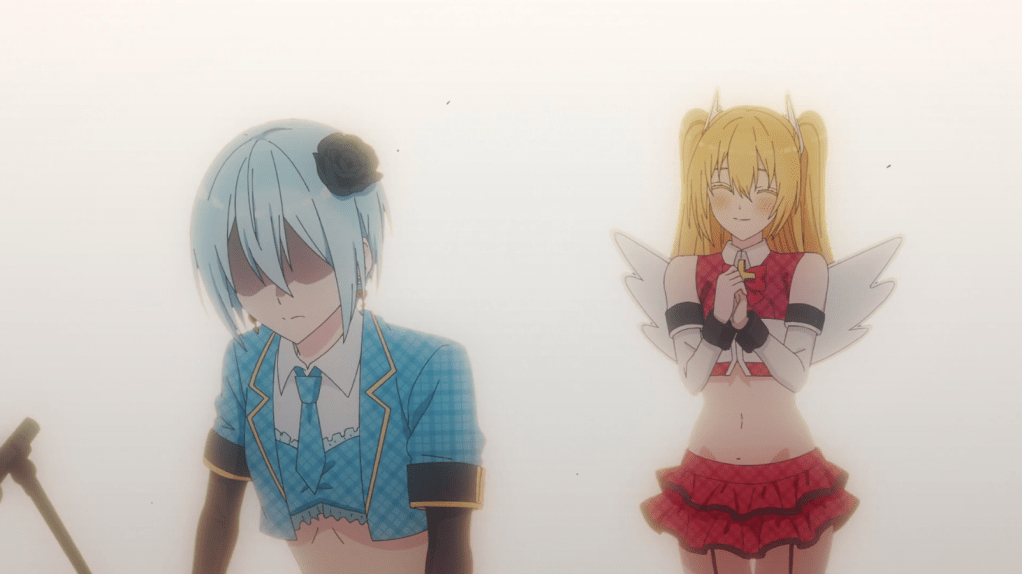

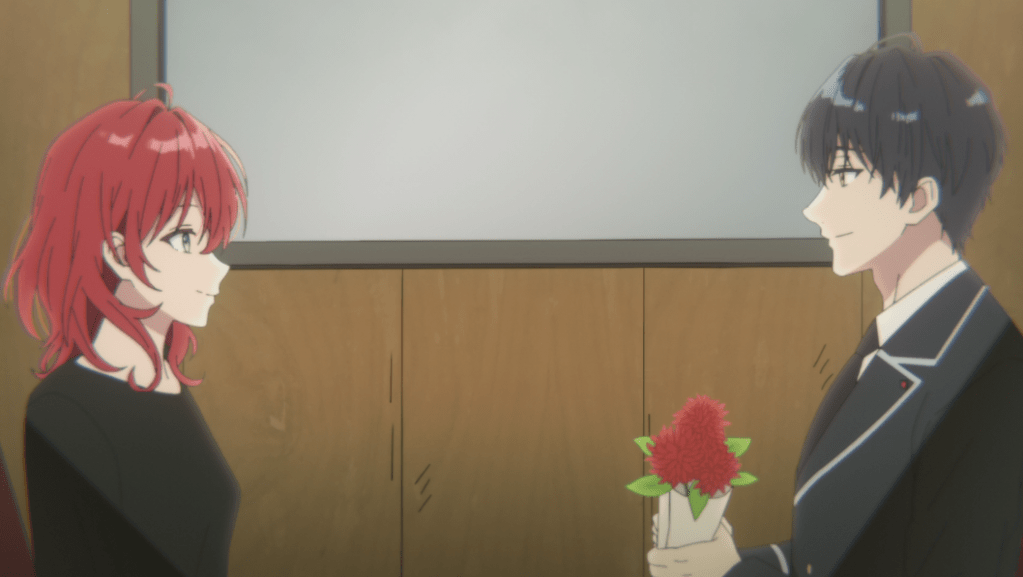
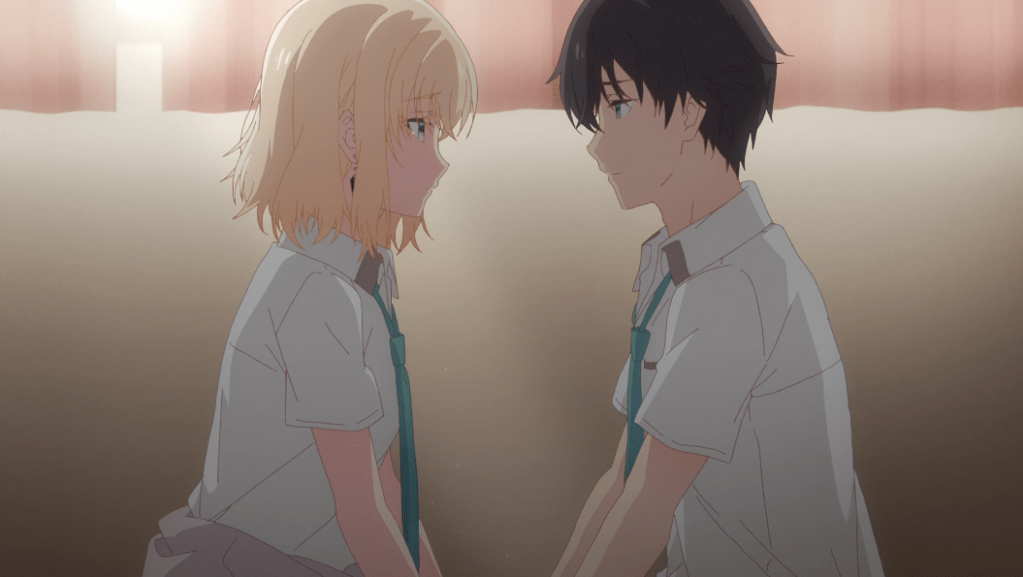


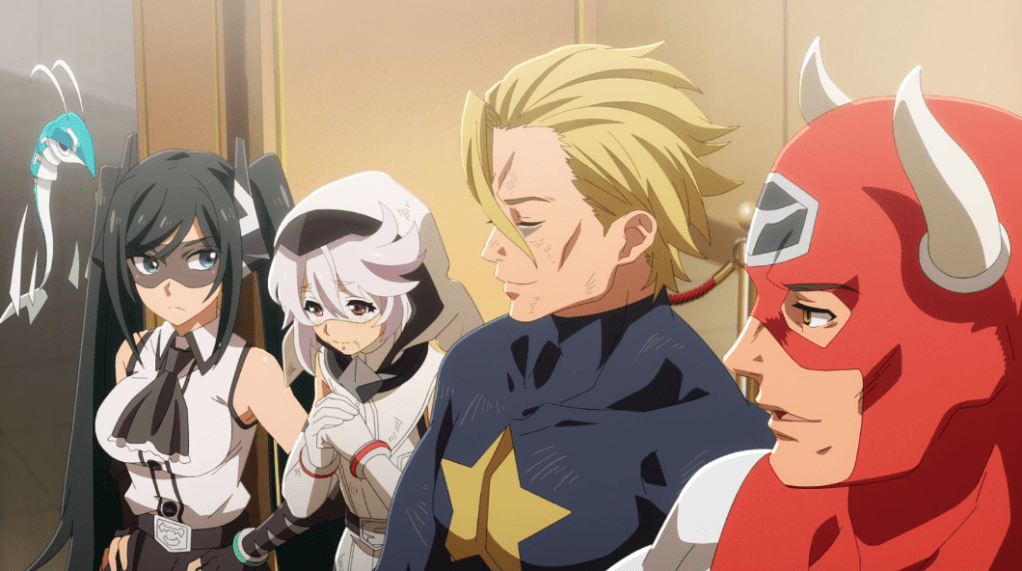
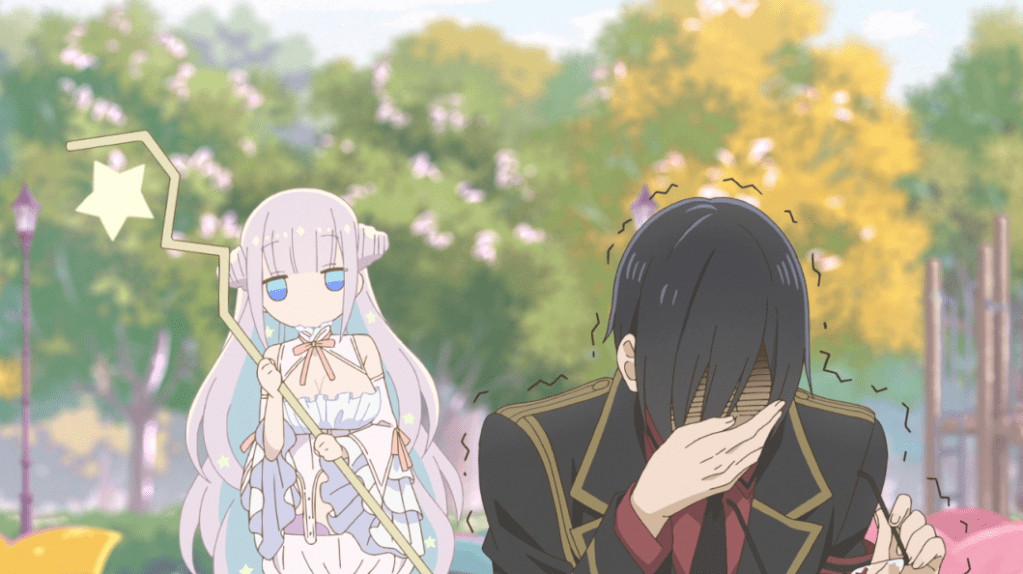





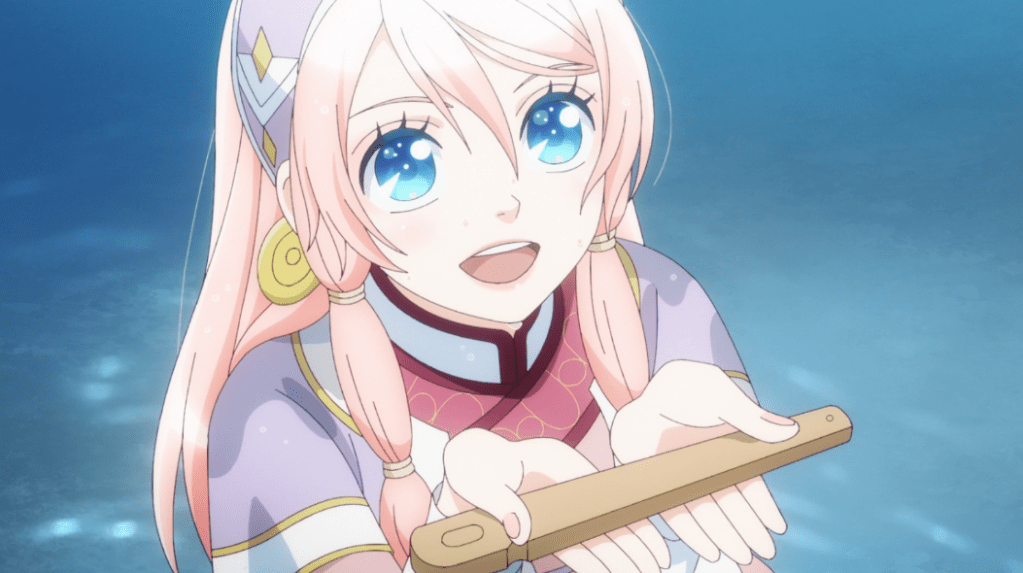

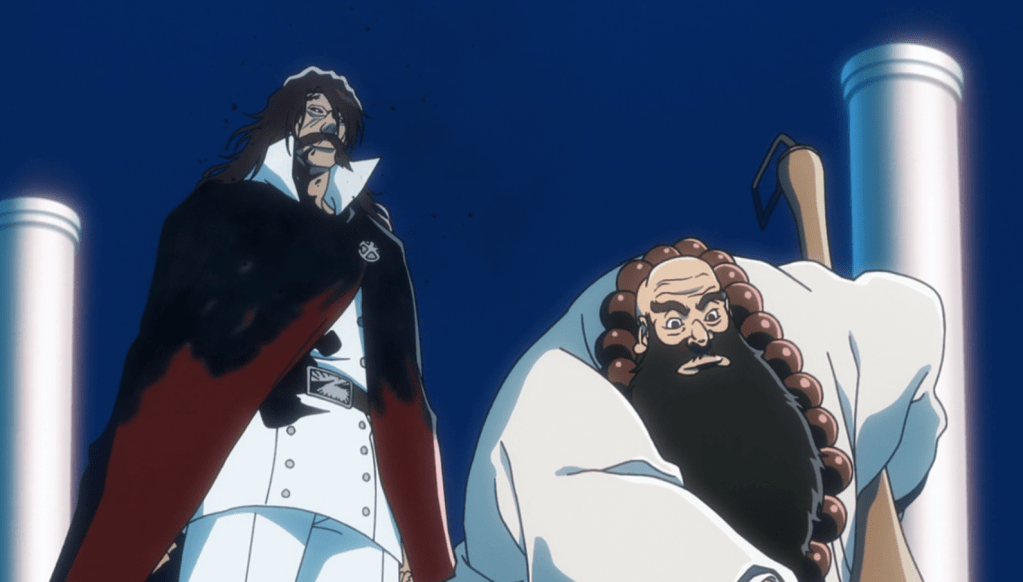

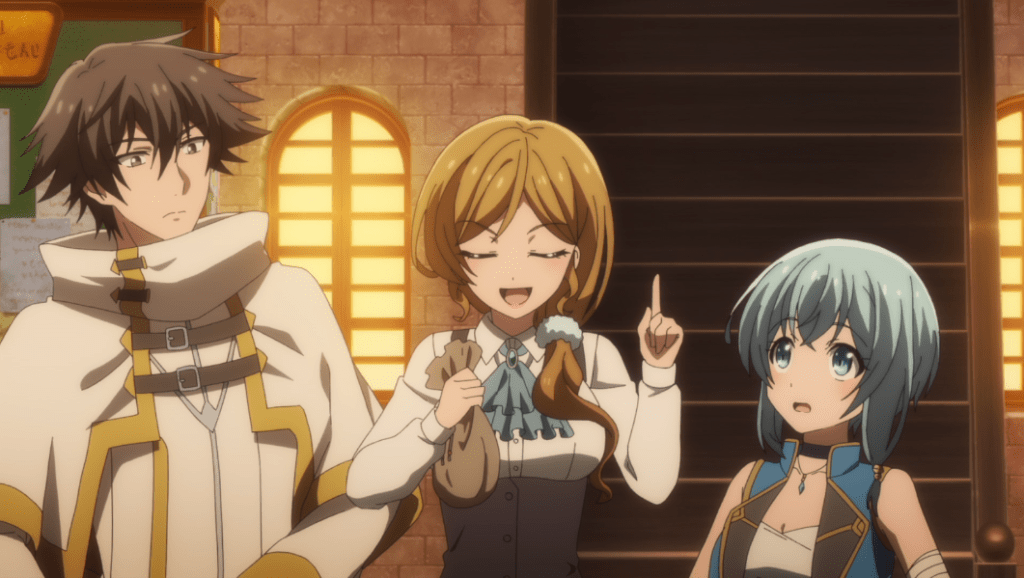

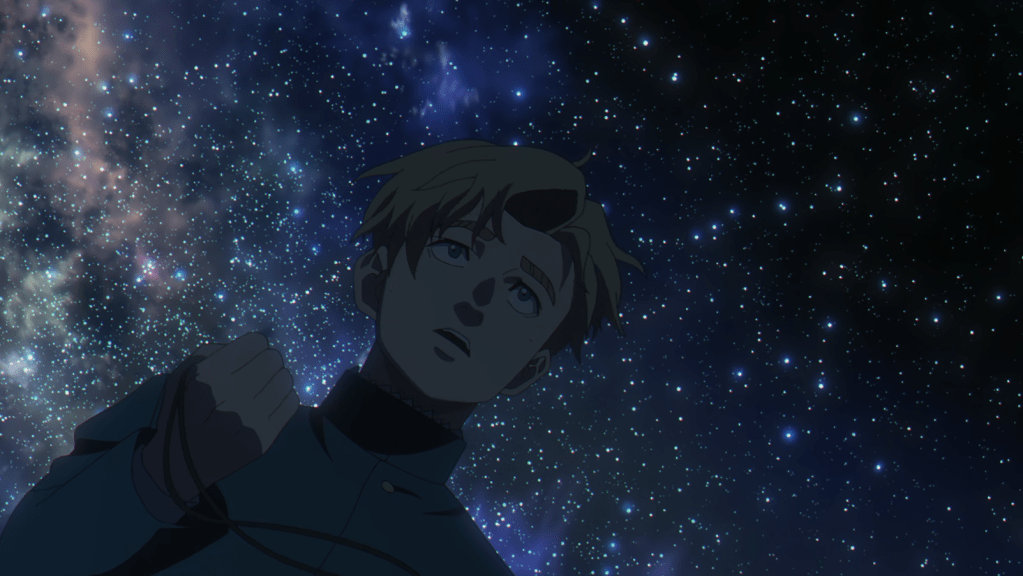


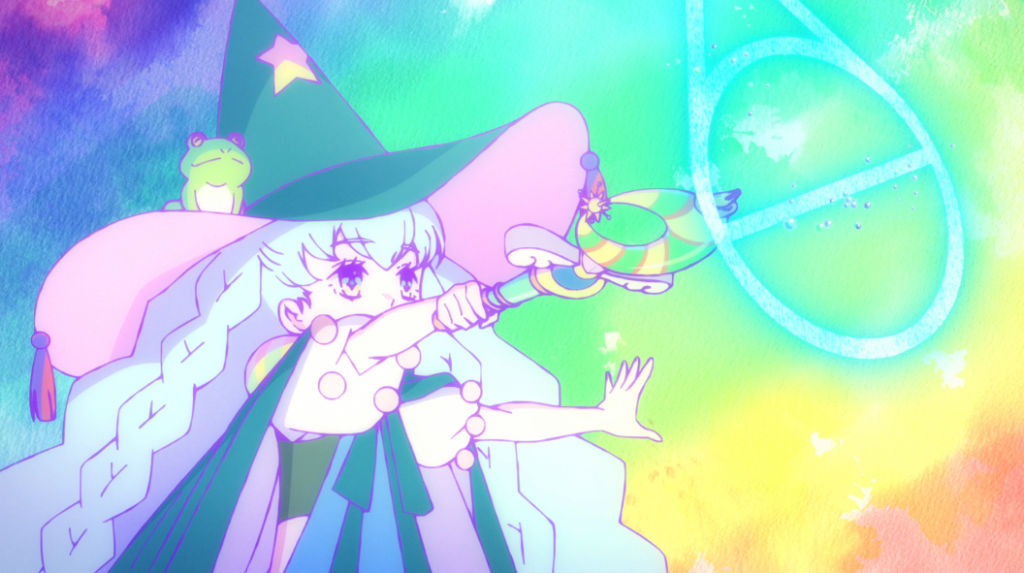


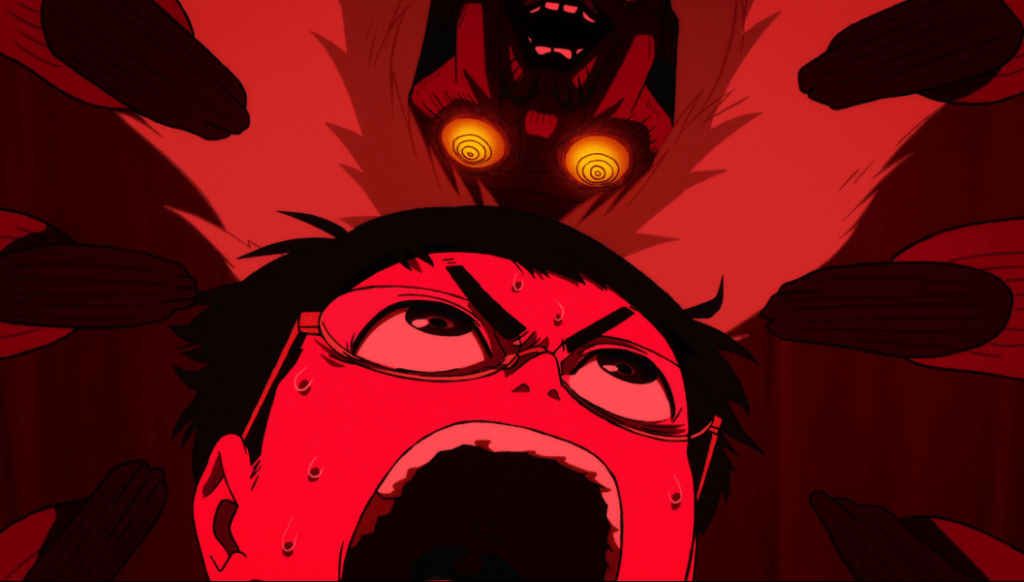
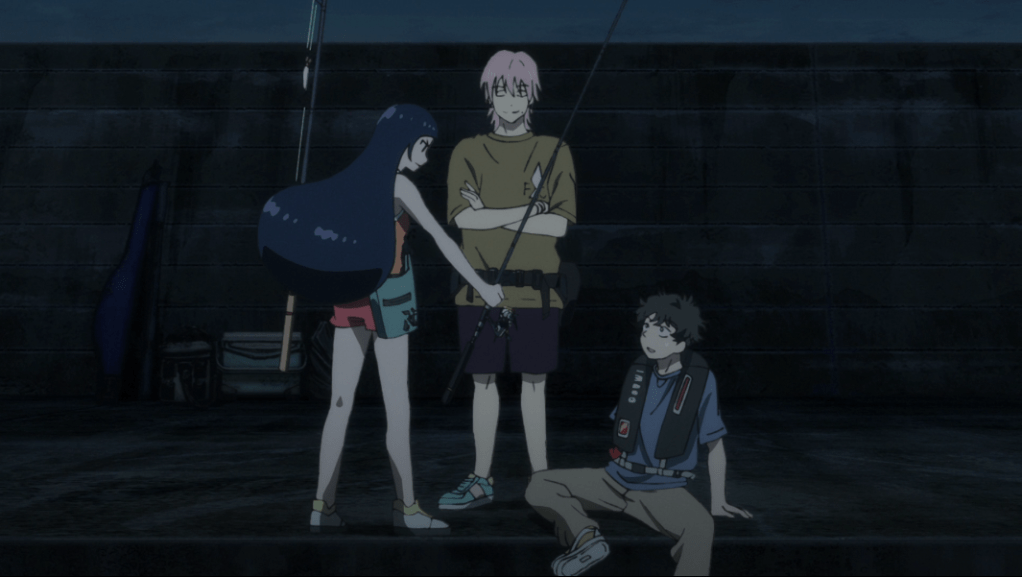


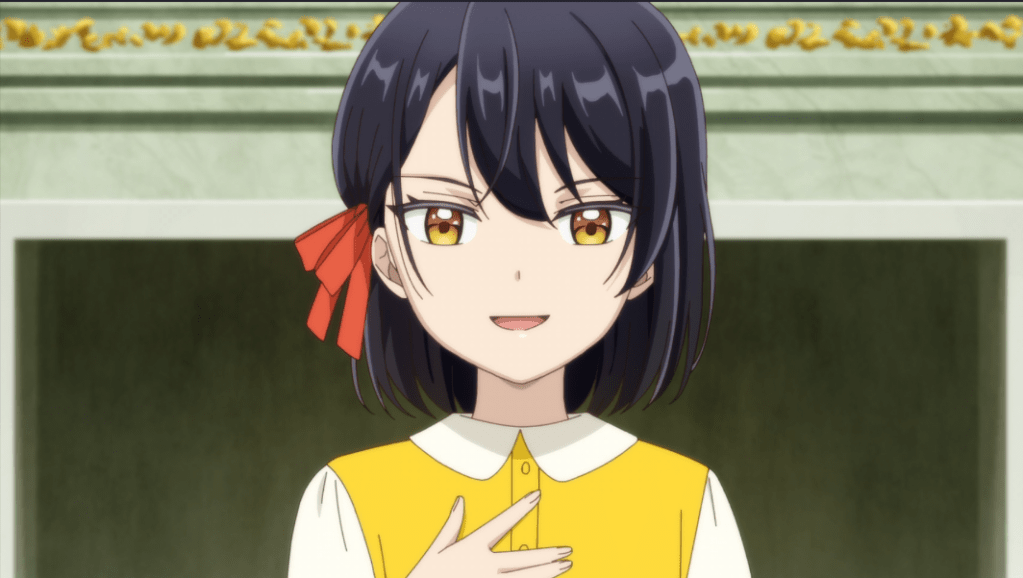





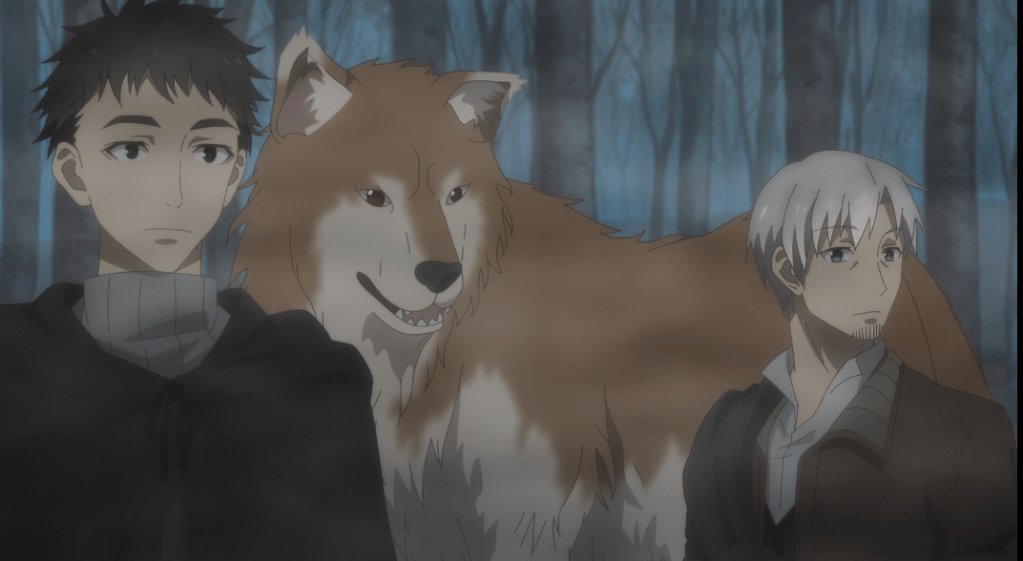


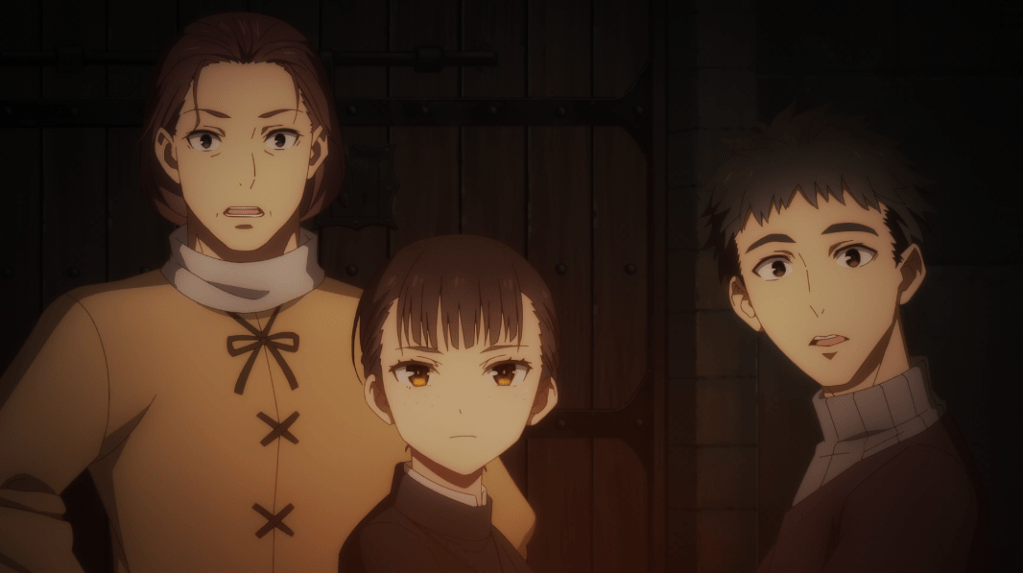

 USA Anime