
Last Update: 4/4/26 at 11:46 p.m. EDT
Welcome to my seasonal Guide! The debut schedule can be found here.
I expect to cover every full-episode series that will be debuting this season and is available in streaming form, including many of the sequels/returning series. Sequels that I will NOT be covering (because I’m not caught up on the franchise) include Classroom of the Elite; Dr. Stone; Welcome to Demon School, Iruma -kun; Ace of Diamond Act II, One Piece; and Rent-A-Girlfriend.,
Also, five series – Daemons of the Shadow Realm; Go For It, Nakamura-kun!!; Re:Zero s4; The Drops of God; and Witch Hat Atelier – are not being covered here because they were covered in the Crunchyroll Sneak Peek March ’26 feature a couple of weeks back. Please consult that article for coverage of those titles.
The initial post will covered titles which have debuted as of 3/28. Additional entries will be added onto the top of the list at they debut, beginning on 3/31. This Guide should conclude with I Want to End This Love Game on 4/14.
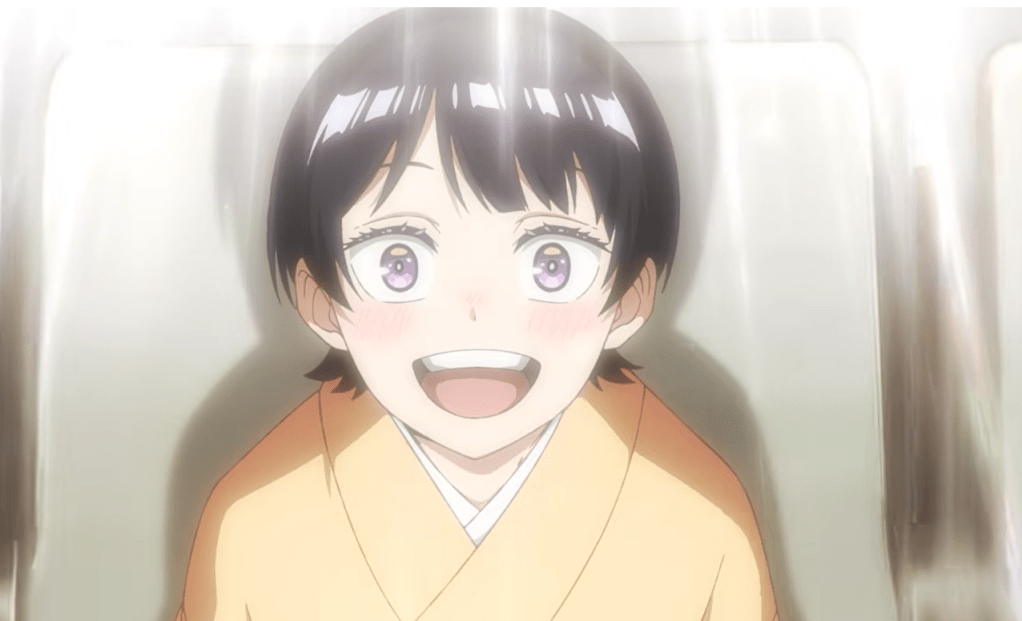
Akane-banashi
Streams: YouTube on Saturdays
Rating: 4 (of 5)
Akane’s father is a dedicated Rokugo performer, one aiming for the highest rank in the discipline (shin’uchi), and she loves and respects him deeply for that. In mimicking her dad’s performances, she’s even shown a talent for it herself. However, the world of Rakugo is a demanding one, and despite giving an inspired performance (if one that deviates some from the traditional story he’s doing), her dad is rejected without explanation in his advancement test. Years later, when she is in high school, Akane seeks to step foot into that world herself to vindicate her father’s talent.
In most seasons there’s at least one title which I can recognize as being a top-tier effort but can’t get into at all. Last season was one of the rare ones where I didn’t have such a title, but this season, this titles will be the one. This is a very well-made episode with a beautiful animation and overall visual effort, and it feels like a well-written set-up episode for the actual main story, but I could not get emotionally invested at all. The major problem here, I think, is that Rakugo holds no interest for me at all as an art form. While I understand how it’s supposed to work, I find it too formulaic, too enslaved to fixed stories (which seems to be an element in play here), and frankly, too dull. I’m still giving it a good rating in recognition of its evident quality, but I won’t be following it.
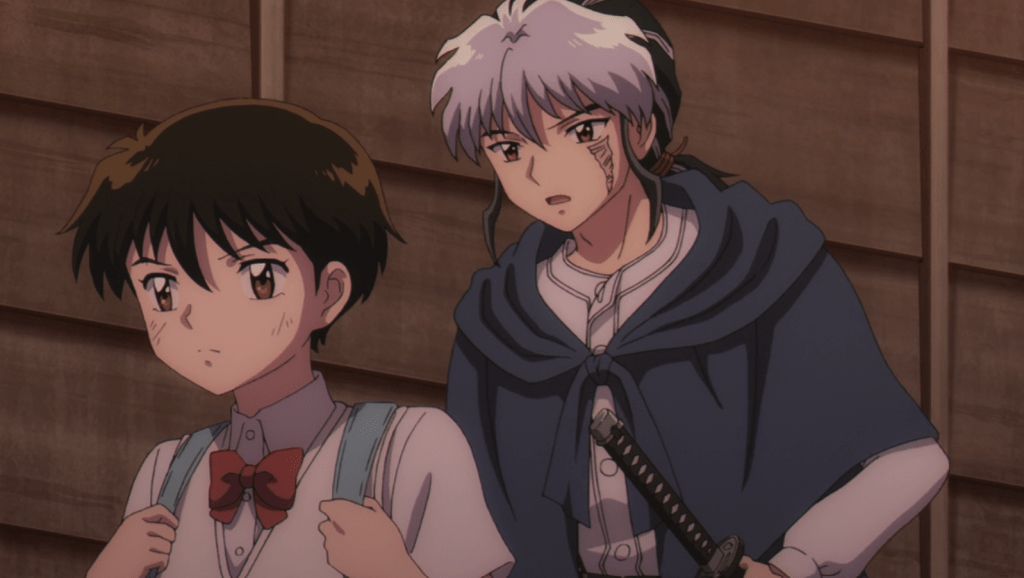
MAO
Streams: Hulu+ on Saturdays
Rating: 3.5 (of 5)
Several years ago, Nanoka nearly died (and possibly did briefly die) during a car accident which claimed the life of her parents. When she hears stories of weird sounds in the closed-down shopping arcade in front of which the car accident happened and goes to investigate, she finds herself in a city street in Taisho-era Japan, but one where nearly all the people look like ghosts and monstrous ayakashi roam. She also encounters a strange young man with a sword named Mao, whom his assistant claims is an onmyoji and who refers to Nanoka as an ayakashi herself. Indeed, she seems to fully recover from getting her hand cut off by a mantis-like ayakashi and notices other strange side effects the next day after returning to her own time, so she goes to seek out Mao again in hopes that he has some answers.
That this is based on a manga from Rumiko Takahashi should be obvious to anyone who’s seen an anime based on any of her previous works (the character design style is consistent with her other efforts). Because of that, comparisons to Inuyasha will be inevitable, especially given the time travel gimmick and heroine’s encounter with a sword-wielding young man in the past. While there are clear differences between this one and Inuyasha, that at least some story elements have been carried over is just as clear, so it’s too early to tell if this one will establish its own identity. Taken independently, it’s a solid, reasonably well-animated starter which finds a good balance of action, mystery, and supernatural elements.
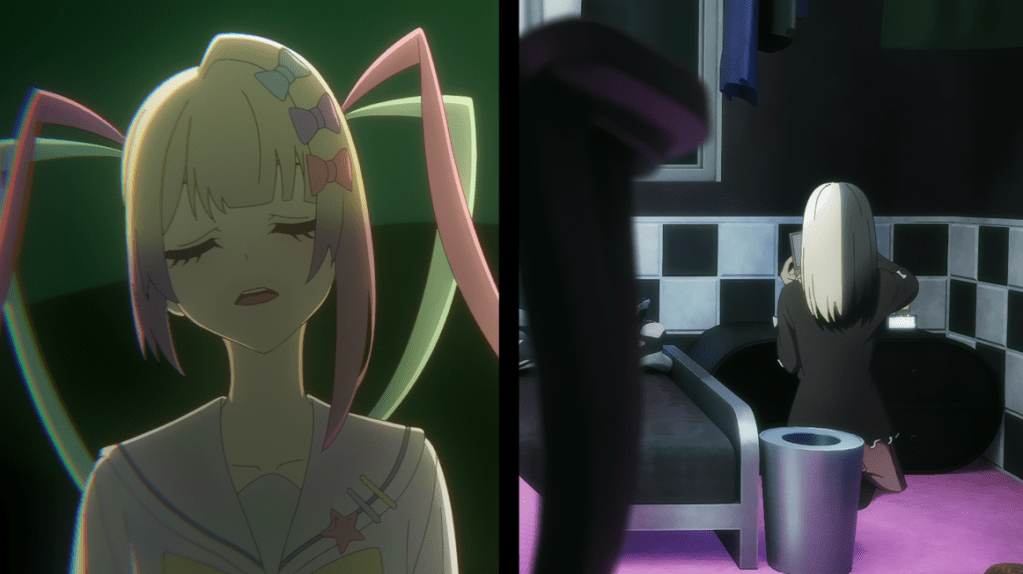
Needy Girl Overdose
Streams: Crunchryoll on Saturdays
Rating: 4.5 (of 5)
In a world where social media likes rules, OMGkawaiiAngel – typically shortened to KAngel – is the biggest streaming sensation. She’s a controversial figure because of some of the extremes she’s gone to – rants, performing while overdosed on drugs, denial of the value of education – but she’s still idolized within youth and otaku culture. Behind the scenes, though, the person who may be KAngel is a complete mess, drifting through life in an uncertain and unsatisfied haze as she works at a café and lives with a boyfriend she seems indifferent towards.
Though a related manga exists, this is actually more directly based on a visual novel released in the U.S. as Needy Streamer Overload. (It retained the anime’s title in Japan.) Even then, the anime version seems to be an abstraction of the game rather than a direct adaptation, one which takes a chaotic and extreme stylistic approach that some may see as the spiritual successor of last season’s SHIBOYUGI even though it looks and sounds totally different. Frankly, I’d more compare it to Serial Experiments Lain on speed. It isn’t so much a narrative as a scathing social commentary on influencers and Internet culture, one which bounces between KAngel online, the person implied to be her human originator, and various other individuals perceiving or commenting on her. Even the boyfriend playing video games in the background in the room – the one who eventually pressures her into sex – is part of this, as he’s almost certainly intended to represent the player in the original game. (And that’s a pretty damning bit of commentary itself.) There’s also an upcoming streaming group with the auspicious name Karamazov (a clear reference to the famous novel by Dostoevsky.
The hectic pacing, rapid-fire commentary, and constant jumping around could make this hard to follow, and I paused the episode a few times to make sure I wasn’t missing things, but how caustic and ambitious all of this is can be fascinating. It’s all driven by a techno-heavy soundtrack (and a rave-ready OP) and visuals which lean heavily on symbolism and lots of gimmickry, including even a bit of live-action footage. Honestly, it’s a little early to tell if this first episode is just a gimmicky opener or represents a full commitment to a philosophical approach, and it will probably generate some fairly extreme reactions, but I’m landing on the plus side on this one. Definitely curious to see where this proceeds from here.
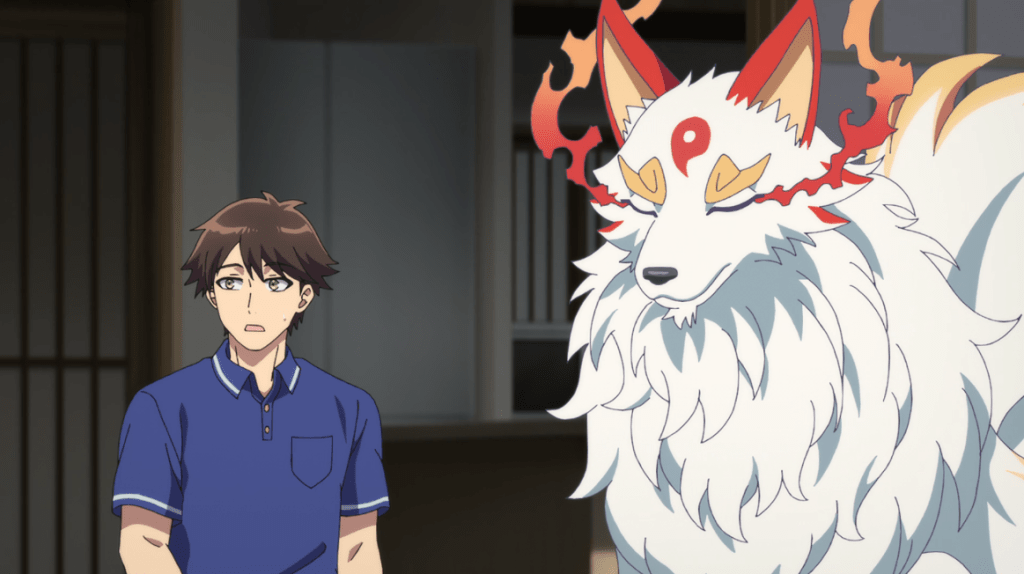
Kusunoki’s Garden of Gods
Streams: Crunchyroll on Saturdays
rating: 3 (of 5)
Ever since he was a little kid, Minato Kusunoki has been able to see good spirits, but he’s also had an extraordinary ability beyond that which he’s been unaware of: his handwriting – even of ordinary things like a shopping list – can exorcise evil. He first realizes this ability as a young man, when he goes to an abandoned house in the country as its caretaker, unwittingly dispels the evil pervading it, and attracts the attention of Yamagami, a local mountain god also accidentally freed by one of his handwritten notes. Yamagami becomes a regular visitor, but he also crosses paths with an onmyoji out on missions to deal with a rise in evil spirits, who is absolutely flabbergasted at the extent of Minato’s power.
The first episode of this light novel adaptation doesn’t do anything special for its type; it’s a mostly straightforward story about a young man gradually discovering the extent of his mystical powers as he has mostly-peaceful interactions with gods. (The OP at the end suggests that quite a variety of them will eventually visit his garden.) But it doesn’t play the concept entirely straight, as Minato is also an “oblivious to the fact he’s OP” type, and the introduction of the onmyoji in the first episode suggests that at least some degree of spirit-busting is going to be involved, too. The animation effort is nothing special, but the backgrounds and critter designs are inviting enough and the pacing is efficient and steady. Not sure if I’ll follow this one, but it may be worth checking out more.
Mistress Kanan is Devilshly Easy
Streams: Crunchyroll on Saturdays
Rating: 1.5 (of 5)
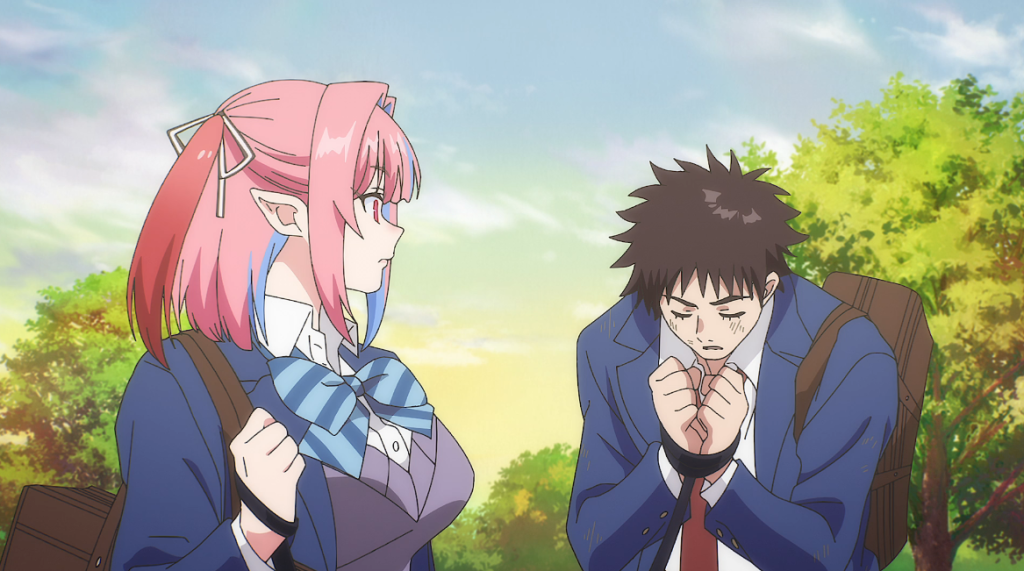
Kana the Gourmet, daughter of Beelzebub, is losing interest in food in the devil realm, so she descends into the human realm to cultivate and dine on some tasty livestock in the form of maturing human souls (i.e., high school students). While she does situate herself well within the school, the problem is that the first boy she seeks to feast on, Yoji Kugi, (understandably) misinterprets her poorly-chosen wording for a sexual come-on, and is all in for that, much to virginal Kana’s dismay. He throws her so off her game that he winds up becoming her boyfriend and even shows off a decided masochistic bent, which only makes it harder for Kana to re-establish control of the situation.
This manga adaptation is theoretically supposed to be a comedy, and it’s not getting an even lower rating because it did actually make me chuckle once or twice. However, the premise goes with the most tired and rote angle imaginable on its set-up. It also makes Kanan extra-busty but then doesn’t do anything with that in a fan service sense. (There’s a bit of animated jiggle in a couple of scenes, but that’s it.) The series doesn’t look that good, either. Presumably one of the angels mentioned in passing early on is going to show up eventually, and it looks like other devils, will pop up, too, but the foundation here is too weak for me to want to hold out to see if it gets better as the cast expands.

The Dark History of the Reincarnated Villainess ep 13
Streams: Crunchyroll one-shot
Rating: 3.5 (of 5)
Note: This is not the beginning of a new season, but rather a pair of short OVA episodes combined together into a single regular-length episode.
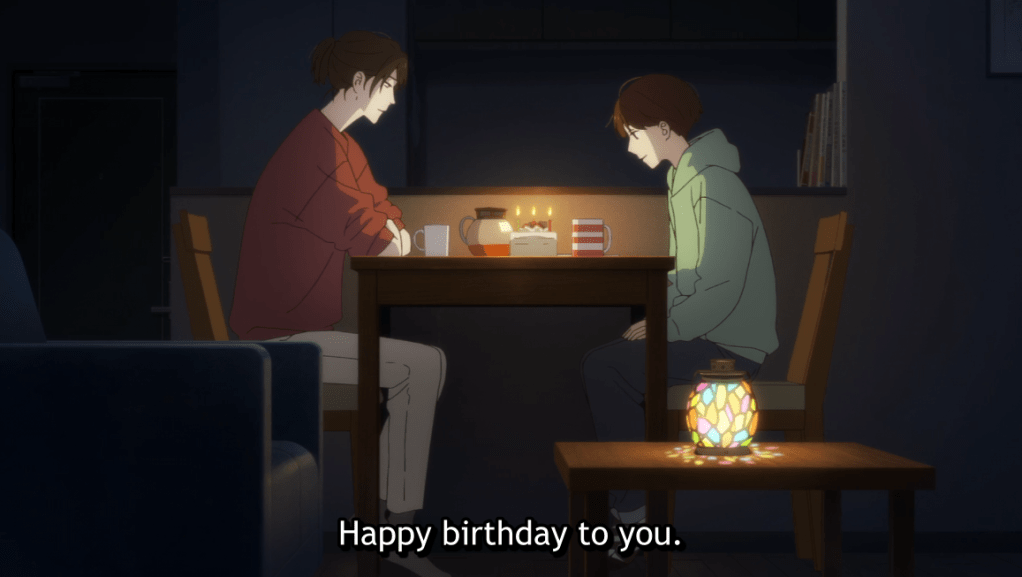
A pair of side stories explore Iana’s less-than-happy memories from her previous life of two common experiences – birthdays and illnesses – and how they manifest in this world. In the first, Iana’s efforts to make Yomi a birthday present go disastrously awry, so she seeks to buy a hard-to-get “omnipotent potion” for him, while Yomi goes out in a magical disguise to investigate what she’s up to. In the second, Iana has come down ill, and so Sol attends to her. But some maids that the real Iana bullied in the past take this opportunity to get some payback.
Of these two stories, the first leans on the lighter side, while the second leans on the more serious side. Both episodes introduce characters who did not appear in the main series (a hottie doctor in the first part, a hottie who’s a fellow assassin/partner to Sol in the second part) and fully retain the main series’ artistic merits and stylistic quirks, including using the circumstances in the story to explore circumstances in Iana’s past life. Overall, the two parts are not required viewing for franchise fans, and they certainly don’t advance the overall plot, but they are welcome bits of extra fun.

Ascendance of a Bookworm s3
Streams: Crunchyroll on Saturdays
Rating: 4 (of 5)
Myne (or rather, Rosemyne) is back and starting her new life as a noble in the most major transition yet seen in this franchise. Here she is introduced to her new mother (Karlstadt’s first wife) and brothers, where she is further trained in the ways of nobility in preparation for her baptism as a noble. (Apparently Silvester, Ferdinand, and Karlstadt are treating her original baptism as if it didn’t happen and she’s just now coming of age, which is understandable.) All is in preparation for her big public reveal and formal adoption by Sylvester at her baptism, under the explanation that she had been raised in the Cathedral, and this time the adults approve of Rosemyne bestowing her blessing on all since it plays into their narrative that she was placed in the Cathedral to shield her from the attention that her high mana would have drawn. Along the way, Rosemyne gets an emotional reminder of the family she’s had to leave behind, but she’s still compelled to press forward to protect them. And two young nobles learn the hard way that Myne’s constitution, though improved, still sucks.
This is one of my favorite franchises of the past few years (I’ve rewatched the previous seasons numerous times) and so this was overall my most-anticipated title coming into the season. The first episode sees some slight artistic adjustments but otherwise doesn’t disappoint, as Myne’s change of venue is already providing all sorts of opportunities to introduce new cast members and situations. It’s still not the sharpest-looking series, but the more elaborate clothing and setting designs partially offset that, and the potential politicking is only just getting started. I will most likely be returning this series to weekly reviews as future episodes debut.

That Time I Got Reincarnated as a Slime s4
Streams: Crunchyroll on Fridays
Rating: 3 (of 5)
Last season ended with Rimuru and his chief subordinates being cautious about the “eastern merchants” and coming to suspect that Yuki has been running some machinations of his own. They are not yet aware of the schemes of the Rozzo family, While they seem intent on stepping up their plans, Yuki, who’s aware that Rimuru now suspects him, is determined to play more cautiously and less antagonistically. With that going on in the background, Rimuru inspects various enterprises around Tempest while dealing with some modifications to their new dungeon
I watched the last few episode of s3 immediately prior to watching this episode, and so was quickly struck by a distinct shift in artistic style especially in character designs, no doubt connected to the franchise getting its third different director (Naokatsu Tsuda, who’s directed most of the current cycle of Jojo titles). While it’s not a big change, the lines are a bit darker and the characters generally a bit thinner. That aside, the episode has all of the hallmarks of a seasonal starter episode. In that sense it does its job by reminding viewers of the current threats and showcasing current projects and moves, including moving the isekai children to Tempest, but it doesn’t offer much yet to get excited about. Interestingly, the ED heavily features Maribel Rozzo, suggesting that she will have a much bigger role this season. Overall, it’s a decent but unspectacular start to the new season.
The Angel Next Door Spoils Me Rotten
Streams: Crunchyroll on Fridays
Rating: 3.5 (of 5)
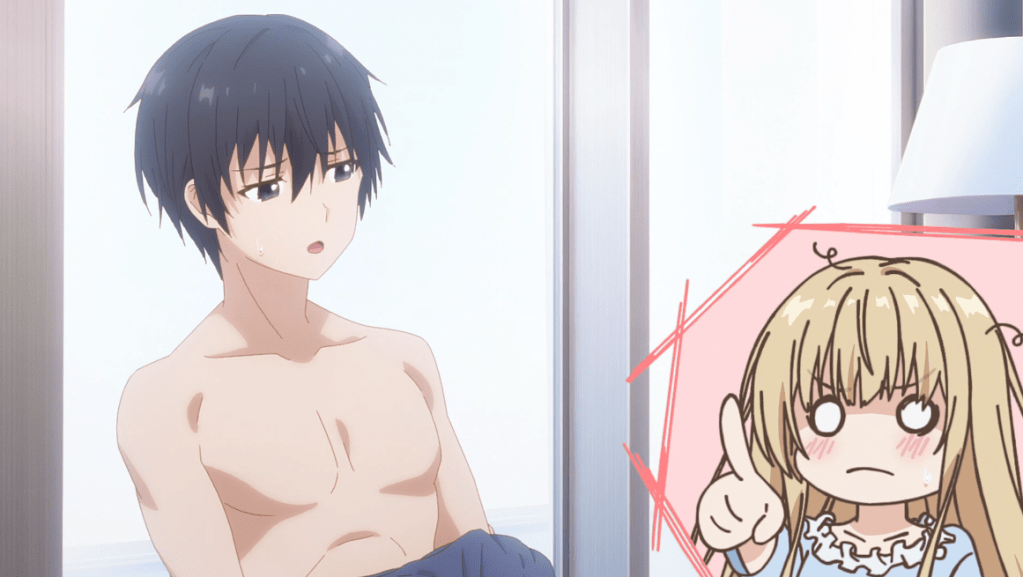
The first season ended with Amane and Mahiru’s closeness finally becoming obvious to their classmates in general and the two officially becoming a couple. This season starts with them trying to figure out what they should be doing as a couple and realizing that they have, indeed, been acting like a couple for quite a while now even if they hadn’t made it official. When they make that clear upon their return to school from break, they discover that many of their classmates are more relieved than surprised about it. (What Mahiru said in front of the class in episode 12 of s1 just might have had something to do that that.) They also start to appreciate that everyone knowing they’re a couple means they can now openly do some things that they’d had to be circumspect about before, like going out grocery shopping together.
I’m not sure that this series actually needed a sequel, but the first season (front Winter 2023) was one of the sweetest romances of recent years so it’s certainly welcome back. And it is fun to see these two being more openly flirty, as well as the delight or dismay of their classmates about that. Not much actually happens in this episode beyond both the central couple and those around them adjusting to them dating, so it’s unclear where the series might go from here. Regardless, I’ll definitely be around for it.
Snowball Earth
Streams: Crunchyroll on Fridays
Rating: 3.5 (of 5)
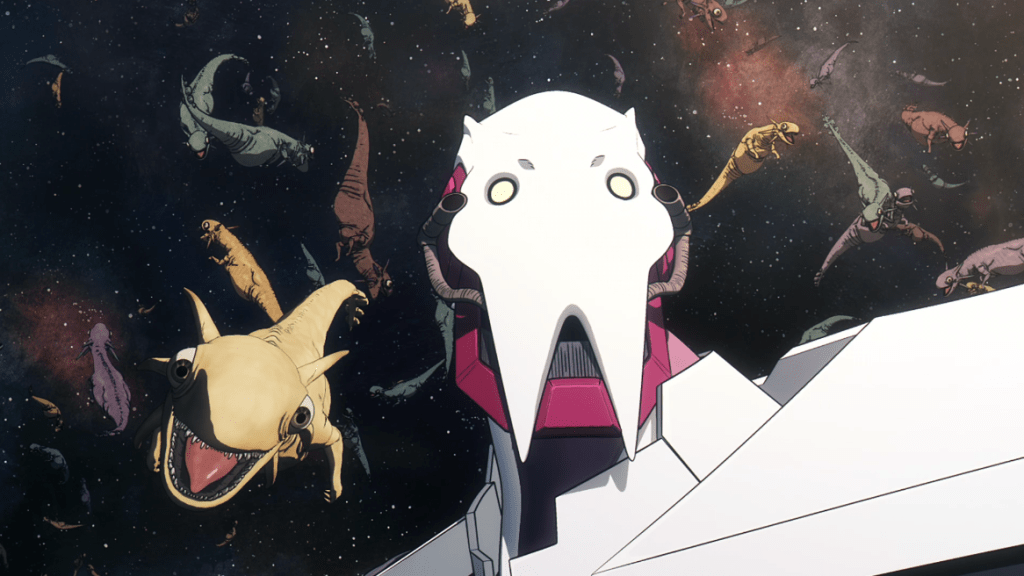
Tetsuo may be painfully shy and socially awkward, but he also becomes humanity’s savior when he teams up with a mecha originally intended to be a bomb and leads humanity in the struggle against invading space kaiju. After 10 years of battle with AI companion/robot Yukio, he’s still friendless and so awkward he can’t even thank people properly, but he’s also leading the charge in the final battle against the space kaiju in deep space. When things go wrong, though, Yukio has to self-destruct as a last resort, leaving Tetsuo jettisoned on an eight-year return course to Earth. When he arrives back planetside, he discovers a world that has become encased in snow and ice.
This manga adaptation borrows heavily from a number of classic mecha series (most especially Gunbuster), but it’s more a mishmash of elements from a variety of different sources than a pure homage to any of them. The first episode only really establishes the story’s premise, so there’s no indication yet what actually transpired on Earth, but it’s clear that the heroic sacrifice was not met with heroic success, and I’m quite interested to see how that aspect in particular plays out. The visual effort is a CG-heavy one from Studio KAI, but aside from the space kaiju’s flight patterns in space not looking entirely natural, the first episode looks good overall and even manages some emotional appeal in Tetsuo’s connection to Yukio.

An Observation Log of My Fiancée Who Calls Herself a Villainess
Streams: Crunchyroll on Mondays?*
Rating: 4 (of 5)
* – CR still lists 4/6 as its official debut day, but the first episode is available on 4/3.
Crown Prince Cecil is impossibly perfect as a 10-year-old, to the point that life has become dull for him since he seems to master everything with little to no effort. Hence he finds it perplexing but also intriguing when his first encounter with his intended fiancée Bertia, a marquis’ daughter, goes in a direction he never expected: she clains that she’s a reincarnation who’s destined to become this story’s villainess. But since the Bertia in the story she knows was pathetic, she’s going to strive instead to be a perfect, admirable villainess, complete with a radical physical makeover over the next year (as opposed to the mere month seen in Haibara’s New Teenage Game). Cecil is intrigued enough to play along, including taking her at her word when she describes an upcoming epidemic that he’s able to head off thanks to Bertia’s warning. In trying to be a villainess, Bertia may unwittingly be winning over the prince’s attention instead.
This light novel adaptation is the first new title to properly debut this season that’s certain to make my weekly viewing list. A reincarnation who unwittingly wins over the prince while trying to be an ideal villainess isn’t a new twist on the “reincarnated into an otome game” concept, but this series takes a significantly different angle on it than I’ll Become a Villainess Who Goes Down in History: the prince, rather than the reincarnation, is the viewpoint character, and that’s definitely a fresh spin. It’s not hard at all to understand why Cecil finds Bertia interesting, and his personal servant’s attitude is a delight as well. There’s also a suggestion at the end of the episode that the destined heroine is a reincarnation, too. This would not be the first recent series to pull that trick (see last season’s The Villainess is Adored), but again, the viewpoint choice here is going to make a lot of difference in how this plays out. This one might even be a weekly episode review candidate.

The Ramparts of Ice
Streams: Netflix on Thursdays
Rating: 4 (of 5)
Koyuki attracted more attention than she was comfortable with for all the wrong reasons in middle school: she stood out because of how short she was and ran afoul of girls who were jealous of how close she seemed to be with a popular boy. This led her to construct emotional walls to isolate herself, to the point that her fierce expression earned her the nickname “Ice Queen” during her first year in high school, which perplexes her because she doesn’t understand why. She really only associates with best friend Miki, an outgoing popular girl with her own image issues, until fateful encounters bring her into contact (in one case literally!) with the boys Minato and Koyuki, the former of which in particular seems to have taken a far less threatening interest in her.
Point of information: Koyuki’s height is listed in the episode as 152 cm, which is basically 5 feet. While that’s definitely on the short side by Japanese norms (she’d be in the 11th percentile for Japanese women), it’s hardly stick-out-like-a-sore-thumb short. That quibble aside, this is otherwise a pretty solid start to a character study about a girl who’s more situationally isolated herself rather than being socially anxious and how new encounters may gradually tear her walls down. I found it particularly interesting that one of the boys she encounters actually recognizes that she’s put walls up, while she recognizes that he seems to be using his own methods for maintaining emotional distance despite his seeming outgoing nature. Koyuki’s friend who’s finding herself trapped into the Perfect Girl role at school when she’s really more the Silly Girl at heart also provides another potentially interesting angle, and there is some light humor here, too. This one is being simuldubbed, and the English vocal cast is well-chosen. This may not be the sharpest-looking series of the season, but it’s showing more potential than any series which has debuted in its regular time slot so far.

The Great Sage Ryddel and the Hands of Time
Streams: Nowhere legal on Wednesdays
Rating: 2 (of 5)
In this “light anime” (which means it’s basically colored and slightly-animated manga panels), Ryddel is a hero who failed to stop a cult from opening the Gates of Death, which warped magic and the laws of nature. Devastated by his favor, Ryddel takes advantage of the changes to extend his life while he looks for a way to turn back time to before his failure happened. A thousand years later he finally succeeds!
This is only a 4 minute short, so this is all you get for the first episode. There might be a decent (if generic) story here, but it’s coming in doses that are too small. If you do decide to check this one out, I recommend waiting until the end of the season so you can watch the whole thing at once.
Haibara’s Teenage New Game+
Streams: Crunchyroll on Wednesdays
Rating: 3.5 (of 5)
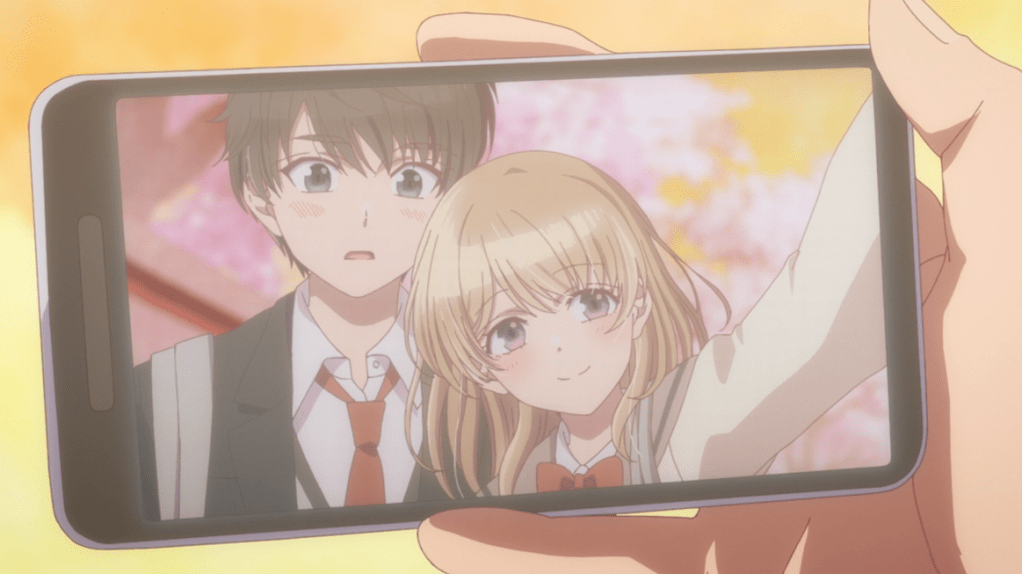
Natsuki Haibara is now ready to graduate college and head out into the workforce, and seems destined for a stable but unexciting life, but he has many regrets about how he handled his high school days, especially how a bad first impression (in his opinion) helped isolate him all throughout high school. He wishes for a second chance to redo his high school days – just like in various media he’s encountered – and is shocked to discover one morning that it’s actually happened! Armed with a determination to change his high school luck, he exercises his way into shape and has a more successful high school debut. He even immediately makes several friends that includes the girl of his dreams during high school.
The big problem I have with this light novel adaptation is how drastically Natsuki manages to physically remake himself in just a month. I also have a bit of an issue with how selfish this one was; this wish just feels more like fine-tuning a life that isn’t perfect than avoiding a nasty fate. Set that aside, though, and this one should work fine. It benefits greatly from a very pretty set of character designs, but backgrounds and animation are also solid and the cast, while hardly showing any depth yet, is all distinct and likable without going to extremes. And it is somewhat amusing how Natsuki seems to fail to recognize that he’s remade himself into a hottie. Not expecting anything dramatically fresh or new here, but it’s a promising enough start.

Killed Again, Mr. Detective?
Streams: Crunchyroll on Thursdays
Rating: 2 (of 5)
As the son of a legendary detective, Sakuya has become a detective himself, but he opts for cases that are – at least theoretically – much less adventuresome. Assisted by his father’s helper, the sexy Lilithea, he goes on a cruise to investigate the possible infidelity of a well-known movie director. However, a number of peculiarities keep popping up, like the presence of cats on the cruise ship, a young actress falling out of the ceiling into a men’s restroom, and oh, yes, the dead body in the cargo hold who was a member of a group interacting with the director. Discovering a phone left at the site of the crime results in Sakuya getting killed, too. . . but apparently he doesn’t stay dead, nor is Lilithea the slightest bit alarmed when she find him.
That Sakuya is going to die and return to life (and on a regular basis, too) is heavily implied by the title of this light novel adaptation, but the exact mechanism for how it’s happening is not elaborated on within this episode; it doesn’t seem to be a Re:Zero type of reset-to-a-save-point, though. Honestly, this one could have used a double-episode starter, as too little is revealed here about how this is all going to work. What is clear is that fan service is going to be a thing with this one, as one of the earliest scenes is of Lilithea in a shower and the young actress shows off her share of cleavage, too. Logic also doesn’t seem like the series’ strong suit – a crippling problem for a detective series, I know! – as I highly doubt a crew member on a cruise ship would just blithely direct an unescorted guest to the cargo hold and I can’t imagine how anyone would get away with smuggling multiple cats on board in carry-on bags. Kinda doubt that a cruise ship which only houses 1,100 guests (big for a domestic cruiser but tiny compared to the international big boys) would have such an involved show, either. (I’ve been on a cruise only slightly larger than this one within the past year, and too much of what’s going on in this episode strains credibility to the breaking point.) The writing on this one just doesn’t seem strong, and the visuals are ordinary at best, so this one is going to have to show a lot more to warrant following it.
Kirio Fan Club
Streams: HIDIVE on Thursdays
Rating: 3 (of 5)
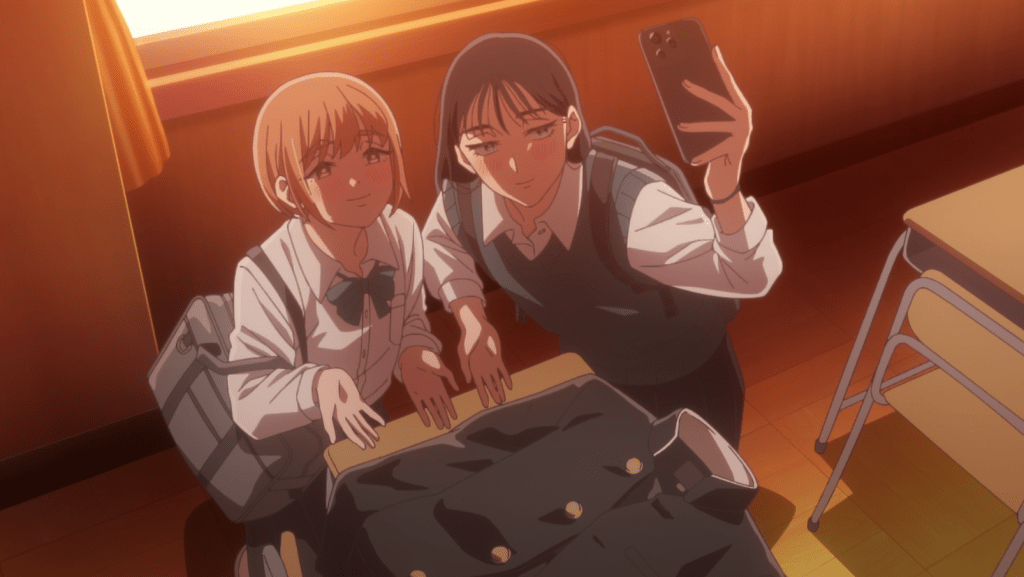
While Ami and Nami both being in love with classmate Kirio technically makes them rivals, they’ve essentially become close friends over their mutual fandom. Neither of them has much gumption to actually speak to Kirio directly, and when they do accidentally get a chance to talk to him, things go. . . weirdly. But it’s also possible that this potential love triangle may go in more than just one direction.
Two girls bonding over being interested in the same guy isn’t that unusual a feature in anime romances, though most typically it happens in harem series. (100 Girlfriends is particularly well-known for this, but there are plenty of other lesser examples of it.) That it’s happening in a series which focuses on the girls rather than the guy makes this manga adaptation unusual, and there’s even an implication at the end of the episode that one of the two girls may be falling for the other one, too. There’s no indication yet that the interest also goes the other way, but at least a potential for yuri attraction is in play here. What is clear is that both girls would probably be better off falling for each other, as Kirio looks like the farthest things from a catch. (His eyes aren’t shown the one time he does fully appear, he only mumbles, and asks a really bizarre question.) The personality byplay between the two girls is solid, but the artistic effort is rather plain. What this episode will probably most be remembered for, though, is a conversation about farts that’s even referenced again later on. Keeping the potential yuri element in play would elevate this one to the watchable level, so we’ll see how things develop.

Petals of Reincarnation
Streams: HIDIVE on Thursdays
Rating: 2.5 (of 5)
Toya is a dedicated high school student who suffers from an inferiority complex because of constant comparisons to an exceptionally talented older brother who died. Because of this, he’s desperate for any kind of talent he can use to get ahead. His life gets upended when he encounters new classmate Haito La Buffet, who seems to recognize him. She introduces him to a “branch of reincarnation,” a knife which causes one to bleed petals from the neck but allows the user (if he/she survives) to call upon talents of past lives. People who can successfully do so are called “Returners,” and Haito is one of them. When Toya successfully proves that he is a Returner, too, Haito and wheelchair-bound ally Neuman recruit him for their organization, which aims to deal with malicious Returners. Once Toya discovers what his seemingly-noncombatant talent can do, though, he has grander ambitions.
Though the visual aspects of this manga adaptation can be interesting, the set-up and follow-through are utterly ordinary shonen action fare up until its last pre-credits scene. There Toya reveals that he must have been Light Yagami in one of his past lives, as he is hard-core embracing a villainous motivation, but the post-credits scene implies that this turn of events may not be unexpected. That revelation sparks some interest in seeing how this plays out. The animation also uses a very distinct visual style clearly designed to enhance how sharp the petals streaming out from the necks of empowered character looks, though frankly, the ultimate visual effect is much more distractingly silly than was probably intended. I’m on the fence about this one but will probably give it another day to prove itself.
Dorohedoro s2
Streams: Crunchyroll on Wednesdays
Rating: 3.5 (of 5)
Note: Three episodes are currently available, but this is based only on the first episode.
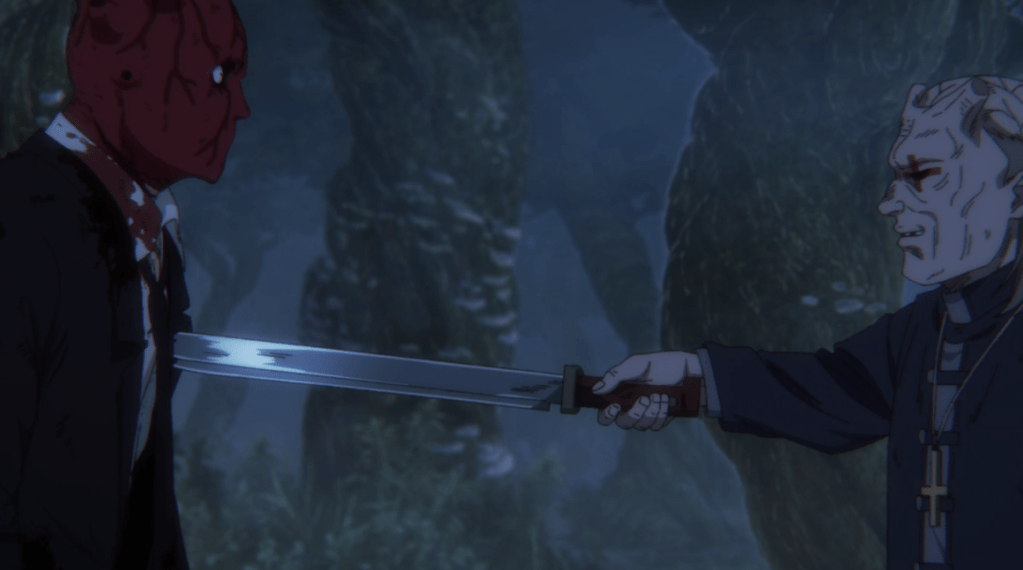
Six years after the first season, we’re back to the Hole. Risu gets a lead on the current hideout for the Cross Eyes, while masked enforcers Shin and Noi go in search of the doctor, who headed to a house formerly belonging to his wife only to discover that it’s been taken over by dangerous hooligans. Caiman and Nikaido are also around as everything goes all to gory hell.
Frankly, I don’t remember the plot points in this one at all, only that the series is both a visual feast and incredibly gory. Both of those traits are still fully in play here; in fact, the OP uses cross-sections of the bodies of various important characters and each episode opens with a body being split in half length-wise. That’s just for starts is this extremely explicit (and, as always, remarkably vibrantly colorful) gorefest. It’s very well-made for what it is, but you have to have a very high tolerance for graphic content to appreciate it.
Always a Catch!
Streams: Crunchyroll on Wednesdays
Rating: 3.5 (of 5)
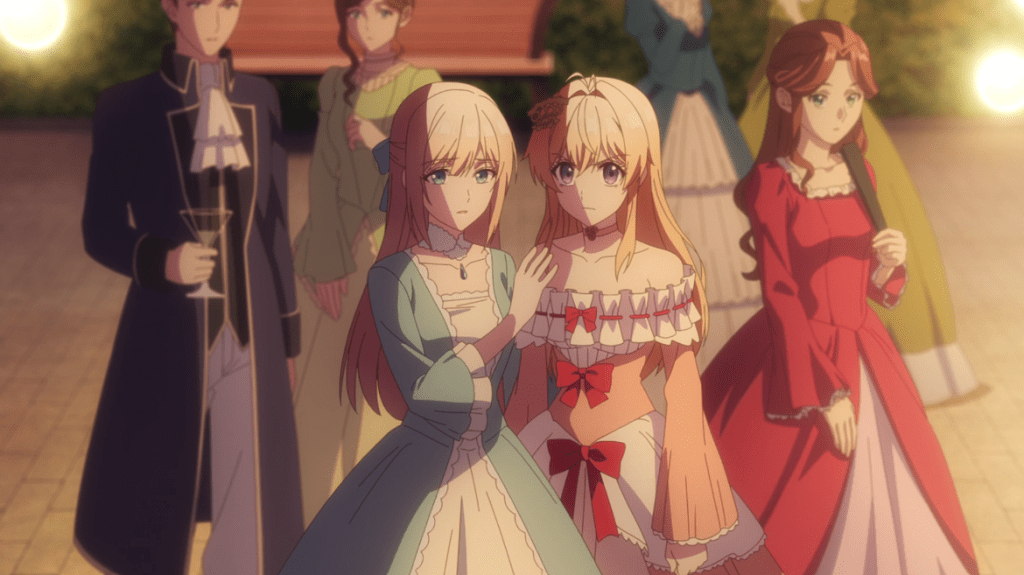
As the eldest of several daughters, Maria grew up preparing to take over her father’s dukedom, which meant rigorous military training and not much time spent on being a proper lady, unlike her best friend Aida. When a baby brother is finally born, however, she no longer needs to do that, so she’s off to school in Aida’s country to try to find a husband (because all of the available men in her country of presumably-sufficient rank are taken). In her new country, she learns that Aida is engaged to one of the country’s two princes – and unfortunately not the friendlier one. Worse, Aida seems to be getting set up to be treated as a villainess. But the prince, who’s either an idiot or very near-sighted, does the engagement denial to Maria instead.
I’m going to watch at least the second episode of this light novel adaptation just to see the fallout from the last scene, as the prince, which is a showcase in ineptitude that should make this prince a laughingstock but probably won’t leave Maria looking much better. Having the protagonist be a friend of the “villainess” rather than the villainess herself is also a distinctly different twist, and Maria is the kind of character who’s going to shake up any norm or sensibility. Her military training suggests that she’s eventually going to have some action scenes, too. Not expecting this one to be a quality series but I’m cautiously optimistic that it could be a fun view.

The Beginning After The End s2
Streams: Crunchyroll on Wednesdays
Rating: 3 (of 5)
Some time after season 1 ended, Arthur is still out adventuring under the tutelage of Jasmine. A quest to investigate a village that contact had been lost with leads them to encounter an Arachne, a monster his parents had fought and struggled with previously, but retreating proves not to be an option for Arthur when Jasmine gets ensnared by it. That earns him admonishment from his mother for taking too many risks, however, and he continues to rub Lucas the wrong way.
If you liked the first season of this reincarnation story then nothing in what’s been shown so far for the second season should dissuade you. However, nothing this season’s first episode does is going to win over anyone who was on the fence, either. There are indications that Lucas and Elliot (both introduced in the last episode of season 1) are going to become regulars, and both the ED and the final scene suggest that we’re going to see Tessia back in action, too. There’s no indication yet of a definitive direction yet beyond “Arthur does more adventurer stuff and becomes strong.), and the animation is still as limited as ever in action scenes, but at least Jasmine looks like she’ll be regular for a while too. In all, nothing bad but nothing worth getting excited over, either.
Reborn as a Vending Machine s3
Streams: Crunchyroll on Wednesdays
Rating: 3 (of 5)
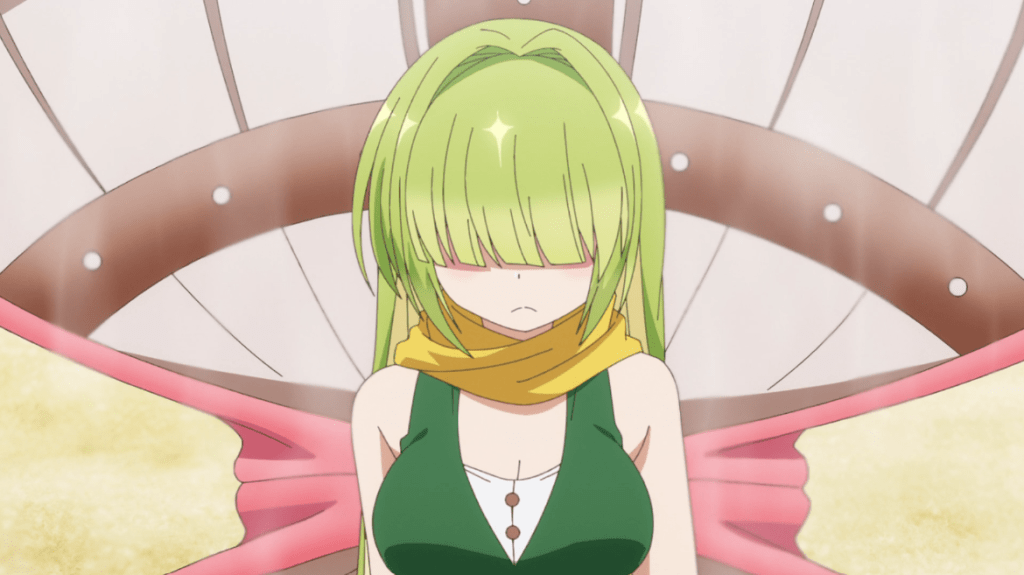
If you haven’t watched the last episode of season 2 recently then I highly recommend doing so before watching this episode, as this is at least as much a denouement for the events on the Desert Stratum as it is a start for the new season’s first arc. Kikoyu is now in her adult form, so after one last sales battle with Boxxo and a birthday celebration for both her and Boxxo (based on when he came to this world), it’s time for her to set off to the surface to seek out field’s main body. It’s a sad departure, as Kikoyu did add a lot to Boxxo’s crew in terms of both character and powers, but she’s always had her own priorities and they aren’t trivial ones. That necessitates a replacement, and while both Hevee and Shui have a candidate in mind from the ranks of The Menagerie of Fools, both have concerns about the new candidate’s personality. When the crew finally encounters her by chance, why they might be concerned is at least partially apparent immediately: she calls herself Pity and professes to be a shut-in – in a giant clam. Nope, no trouble there. . .
For better or worse, season 3’s first episode is par for the course for this franchise. Boxxo gets to show off at least one new vending machine form (for fishing gear), the sales battle between Kikoyu and Boxxo goes awry for predictable reasons, and at least a brief return to Clear Lake Stratum takes place before the team sets off again. Nearly all the non-antagonist named characters introduced so far get at least cameo appearances, too, and the plot moves forward as the party discovers (at least generally) where the leading Menagerie of Fools members have gotten off to. Technical merits have been maintained, too. In all, this is hardly a spectacular opening episode, but it maintains established standards for the series and gets its job done.
The Food Diary of Miss Maid
Streams: Crunchyroll on Tuesdays
Rating: 2.5 (of 5)
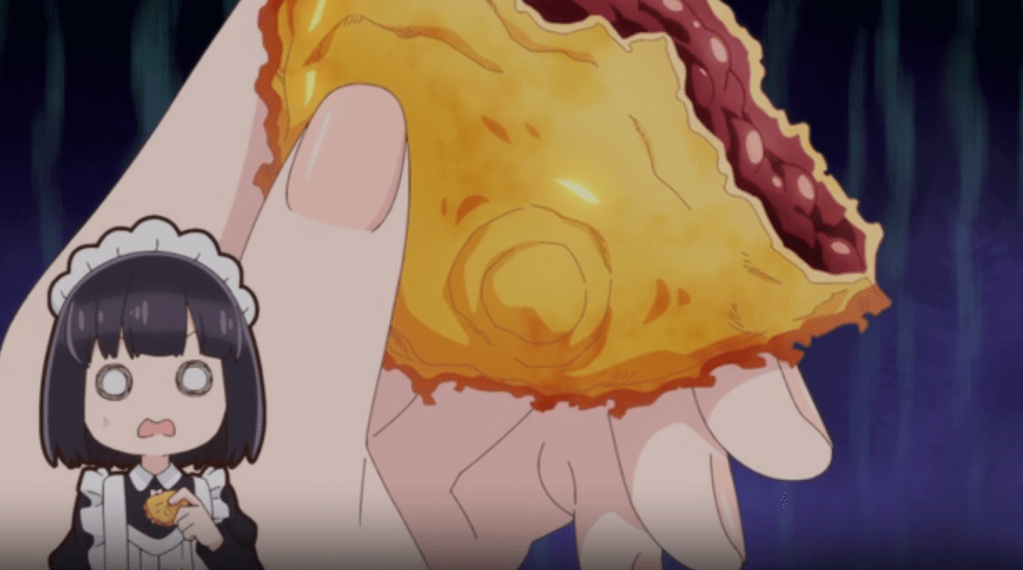
Suzume is originally from Japan but has been living in the UK for many years, working as a maid. When she takes a vacation to go back to Japan for a visit, it suddenly turns into a year-long stay due to a calamity at her workplace that will necessitate extensive repairs. While trying to settle in in a small apartment, she uses a guidebook to go around sampling various Japanese cuisine, including a foray with her grandmother. She also meets her next-door neighbor, too, who might be a manga artist? And all while wearing her maid uniform, of course, since she apparently didn’t pack a change of clothes.
Snark on that last point aside, this manga adaptation is a light-hearted pure foodie adventure, one whose first episode mainly involves Suzume going gaga over (or being intimidated by!) foods like taiyaki, takoyaki, dango, and something called baumkuchen that I had to look up (it’s a ringed cake originating in Germany that’s also popular in Japan, apparently). There’s also a chibi commentator, too. It’s all quite cute, but it also becomes boring fairly quickly, and an explanation has yet to be offered for why Suzume still wears a full maid outfit even while off the job. (At least people do comment on how odd it is, so it’s not like this is some weird alternate world where it’s considered normal.) The episode gets a big boost with the introduction of her next-door neighbor Nana, and her grandmother looks like she may be at least a semi-regular, too. That helps make the series at least watchable, and there are a couple of funny moments, but the series is going to have to do more to keep an audience.
The Strongest Job is Apparently Not a Hero or Sage
Streams: Crunchyroll on Tuesdays
Rating: 3 (of 5)
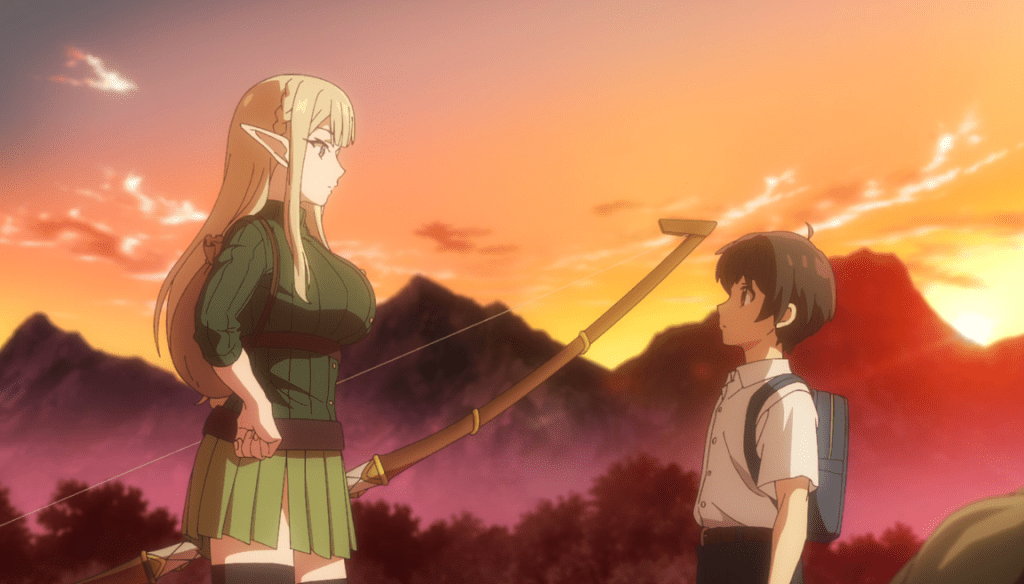
Hibiki was an ordinary (if short) 16-year-old student who was walking into class one day when he suddenly found himself in another world being chased by a rabbit monster. He soon discovers that he is an Appraiser (Provisional), which means that he can see the stats on anyone or anything he focuses on, as well as possessing a World Map which can show areas where he’s traveled and monsters in his vicinity. Though the job gives him no combat skills, he doesn’t initially understand how important and valuable his abilities are until he encounters Emalia, a busty loner of an elf archer, and teams up with her to find and catch a rare, valuable monster.
This one is based on a light novel series from the same writer responsible for Heroine? Saint? No, I’m an All-Works Mad (And Proud of It)! (which is getting its own anime adaptation next season). It seems so far to be a lighter-hearted take on isekai stories involving settings with game-like mechanics, thought I’m not sure how far its initial running joke – that Emalia is so busty that she periodically pops buttons off her sweater – is going to fly. She’s clearly being cast more as a “loner who doesn’t know how to make friends” type who dreams of forming a party with Hibiki rather than a potential love interest, but we’ll see. There’s an implication that the Appraisal voice may have its own personality and that gods are integrally involved, and both advertising art and the OP and ED indicate that a few others will eventually group around Hibiki, too (one is introduced at the end of the episode), so this is really just a pretty ordinary foundational episode. I’m not expecting anything big or deep from this one, but nothing here’s an immediate turn-off, either. I’ll probably give it a couple more episodes to see how the party forms up.

Agents of the Four Seasons: Dance of Spring
Streams: Crunchyroll on Saturdays
Rating: 3.5 (of 5)
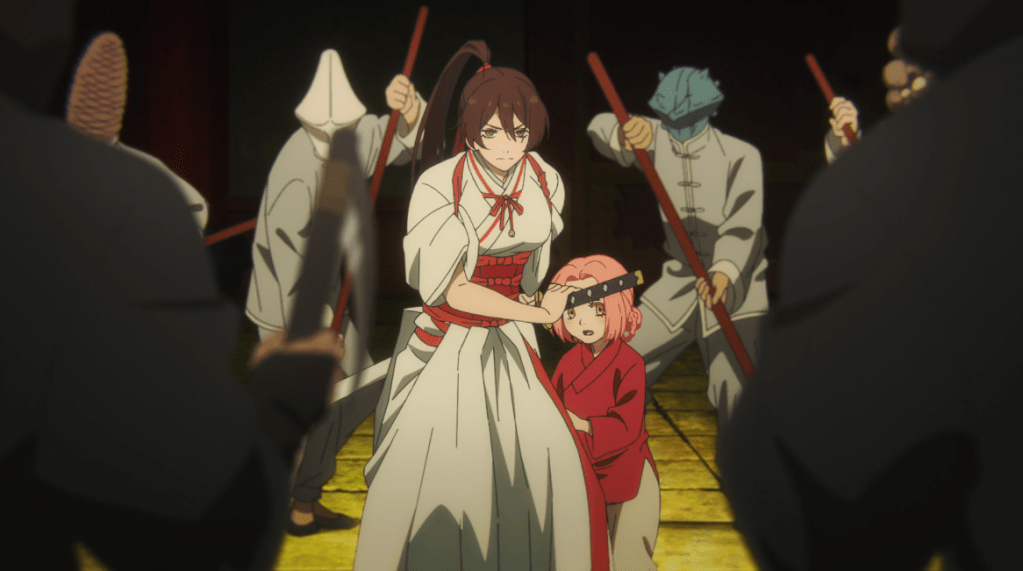
In this version of the modern world, the four seasons don’t happen naturally; they are brought about by Agents, humans imbued with the power of a god to ritually initiate the changing of the seasons. But something calamitous happened ten years ago to Hinagiku, the Agent of Spring, and so spring has now been absent for a full decade. Now, a timid Hinagiku, accompanied only by her protector Sakura, travels to once again start conducting the rites to bring about spring with as little fanfare as possible. Along the way to their first destination, they encounter a 12-year-old girl who doesn’t remember spring, and that encounter helps bolster Hinagiku’s resolve.
This series is based on light novels from the creator of Violet Evergarden, so you know it’s going to be pitching for emotional appeal, and its first episode is somewhat effective at that. A major mystery lingers about what, exactly, the opening scenes are showing (which are strongly implied to be responsible for Hinagiku not performing her duties for a decade) and what traumatized her so badly that she felt she could only endure until things got better and now speaks in a halting cadence that some viewers may find intolerably annoying. There are also heavy mythical underpinnings in play, including an implied romance between Spring and Winter that no doubt has some impact here, and eventual appearances by the Agents of Summer and Fall are teased, too. The emotional core of the episode, though, comes from Nazuna, the girl whom Sakura and Hinagiku encounter as she ventures up the same hill with the intent of shoveling snow from a grave. Hinagiku’s ceremony does not quite capture the visual and audio majesty that it was aiming for, but it’s still good enough to convey the power that is in play here and the importance of Hinagiku’s role. Enough is going on here to warrant watching at least a bit more.
Rooster Fighter
Streams: Adult Swim, Hulu+ on Saturdays
Rating: 3.5 (of 5)
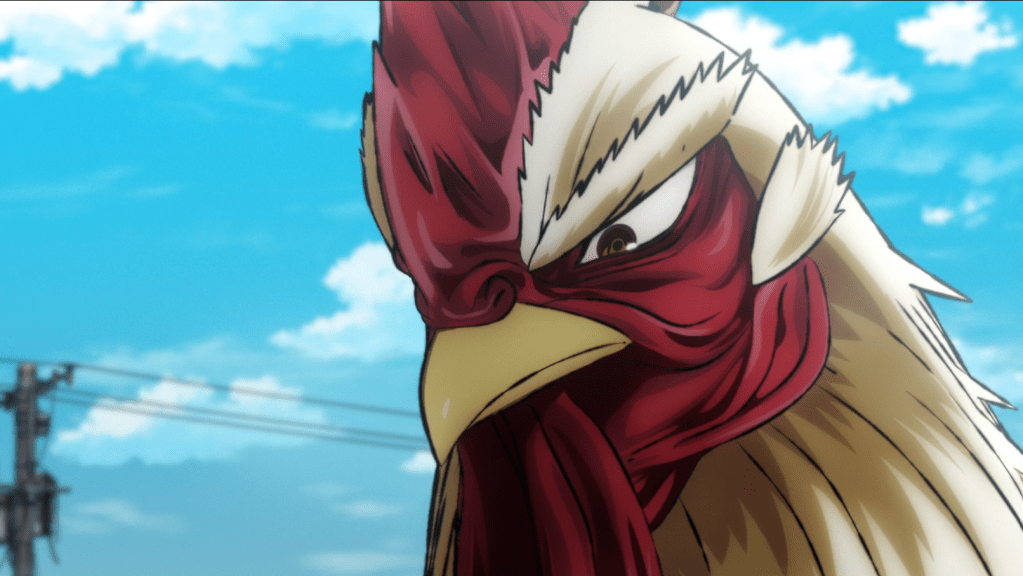
Keiji is a wanderer, an individual who can’t put down roots anywhere for long as he quests to find and defeat a particular demon, though he won’t hesitate to put down other demons who cross his path, too. He’s also a rooster, albeit one with super-chicken physical capabilities and and super-powered resonance attack which can blow demons apart. And he’s apparently not the only sentient, combat-aligned chicken out there, either.
This manga adaptation is a clear spiritual successor to titles like Fist of the North Star and Dragon Ball, but it’s also plenty well cognizant of how silly some of the genre tropes are. It has more than a bit of a subversive touch to it, including chicken poop and graphic chicken sex; the humor comes from how completely straight it plays everything. The first episode also delivers surprisingly well on the action front, too, including some robust action animation to go along with all the dramatically-featured stills. The oversized heads in human character designs is a little weird, but the giant demons don’t lack for being repulsive twists on humanity (there’s a strong implication that the demons actually are warped humans). A second sentient chicken is briefly introduced at the end of episode 1 and a little chick looks like it’ll become a regular character starting with episode 2, so the cast will soon expand, but this episode does its job in establishing the premise’s foundation.

Do You Like Big Girls?
Streams: OceanVeil
Rating: Hentai
Sota’s a short guy who finds himself as the dorm manager for a dorm of tall, sexy, and apparently sexually frustrated female volleyball players, thanks to his sister (who’s one of the team members). Brief dating and fully-uncensored sex with the resident brunette ensues. In other words, this is a Tall Girl rather than BBW fetish. Its 6½ minute length forces it to move along quickly, so much so that it has no room for character or story development and thus little draw beyond its fetish and nicely-depicted nudity.

Marika’s Love Meter Malfunction
Streams: OceanVeil
Rating: 2.5 (of 5)
A young man is too timid to confess to childhood friend Marika, so he prays for the ability to see girls’ love meters. Shockingly, his wish is granted, but it comes with a problem: Marika’s seems to be broken. What he doesn’t correctly understand is that she’s so in love with him that she’s overloaded her meter.
This one clocks in at six minutes and, at least so far, is only at an ecchi rather than hentai level (i.e., some nudity but no sex). It does actually have a bit of story to it, and Marika is actually trying to flirt, so this looks like just a condensed version of a standard ecchi romcom. Unclear yet whether classmates shown earlier in the episode will join busty Marika in the ecchi content, but even if they don’t, you could probably do worse for ecchi content.












 USA Anime