Now that all of the Summer 2026 series I was following have (finally!) finished airing, let’s look at how they fared.
Because I ended up watching an ungodly number of series this season, not every title I followed is going to be covered here; the only ones listed are ones where I have changed my score since the Mid-Season Reports and/or have additional commentary to add. (Saga of Tanya the Evil is also not included here since it was fully covered in separate episode reviews.)
Titles from Mid-Season Report part 1 that are not covered here include Black Torch, Deamons of the Shadow Realm (beyond an acknowledgement that it’s getting more animation), From Overshadowed to Overpowered, I Became a Legend After My 10-Year-Long Last Stand, and Magical Girl Lyrical Nanoha EXCEEDS: Gun Blaze Vengeance.
Titles from Mid-Season Report part 2 that are not covered here include Oh, Boy, Was I Wrong About Her; Skeleton Knight in Another World s2; and The Duke’s Son Claims He Won’t Love Me.
While there were a handful of series I at least half-intended to go back and finish as the season wound down, time constraints kept me from getting to them. Even so, this was another fairly strong season overall, with at least four titles that have a shot to make my Top 10 list for the year (all the ones with A- Overall grades) and several vying for seasonal Top 5 honors. You won’t see a “best of season” heading here, though, because that goes to Saga of Tanya the Evil s2 for its incredible treatment of military drama.
A Livid Lady’s Guide to Getting Even
Overall Rating: C+
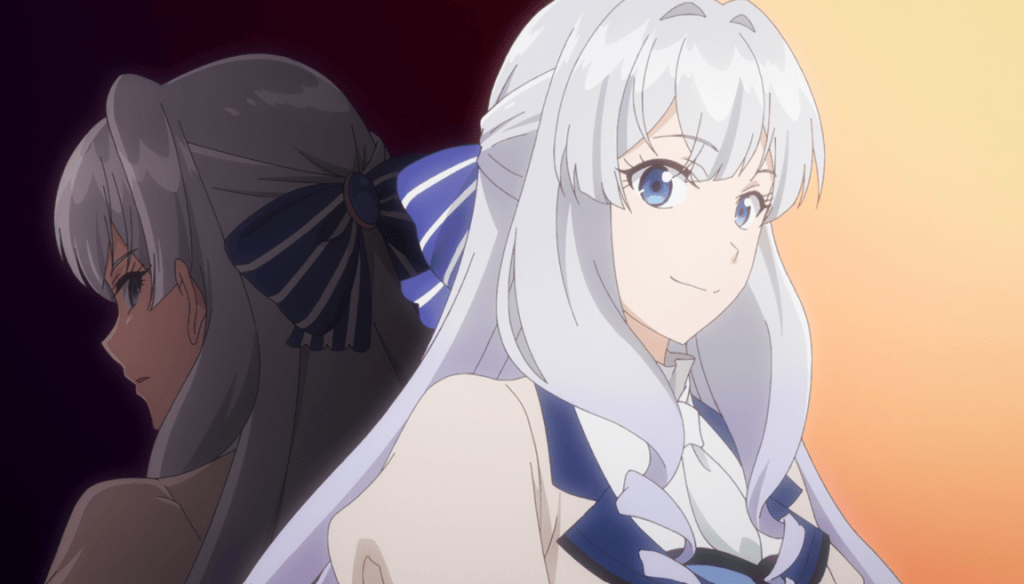
The main problem this series faced in the first half – the dichotomy between being a business-building series and a hard-core revenge series – only gets more extreme as the series progresses through its second half. While Elizabeth can’t be fully faulted for wanting to get revenge, she’s decided that all of Haldoria’s citizens deserves her vengeance, whether they’ve personally wronged her or not, and so she has (or at least seems to have) no qualms whatsoever about getting innocent citizens – even children! – killed as part of her schemes. Two of her most die-hard supporters, who actually know what she’s up to, voice concerns in one late scene about how far she’s going because she’s “too nice” a person at heart for this all not to weigh on her conscience, but there’s no evidence of that; she’s fully crossed the line into villainess territory, and she’s as fully personally OP as any other fantasy protagonist out there on top of that. By the end of the season I actually found myself rooting for Roselia, the noblewoman who’s trying to keep Haldoria together, counter Elizabeth’s plans, and handle the incompetent prince with proper scorn, and that’s not a good look for the series. Nothing about a sequel has been immediately announced, and based on what I’ve heard about the source material, I’m ambivalent on whether I would continue with this one if a sequel is made.
Ascendance of a Bookworm s4
Overall Rating: B
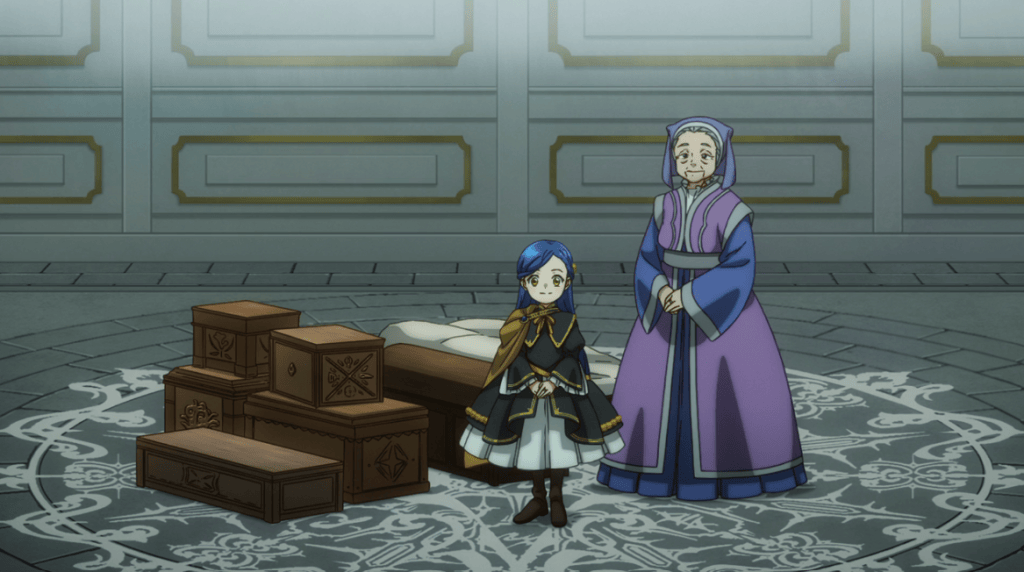
The second half of the series used brisk enough pacing that even I, as someone who’s not anywhere near this far into the novels, could tell that they were rushing things. The end of episode 24 makes it clear what the goal was: finish all the Part 3 content from the source novels and progress the story up to the point where Rosemyne will join the Royal Academy at age 10. The wisdom of this move will, I’m sure, long be debated and ultimately determined by how important the skipped-over details end up being, but if it’s a situation where a more relaxed pacing would have put this key transition point in the middle of another season then this was probably the right call, as it gives this double-cour season a proper dramatic finish. Amusingly, the last episode does explain why “Grandpa” isn’t allowed to be around Rosemyne (he doesn’t understand physical restraint!), and on the negative side, Ferdinand’s comment about how “a lot has happened” during Rosemyne’s unexpectedly-long jureve raises a lot of questions that aren’t getting answered here. The season has at least advanced the story by big jumps, though, and sets up for the animation of Part 4, which has been confirmed.
Clevatess II
Overall Rating: B+
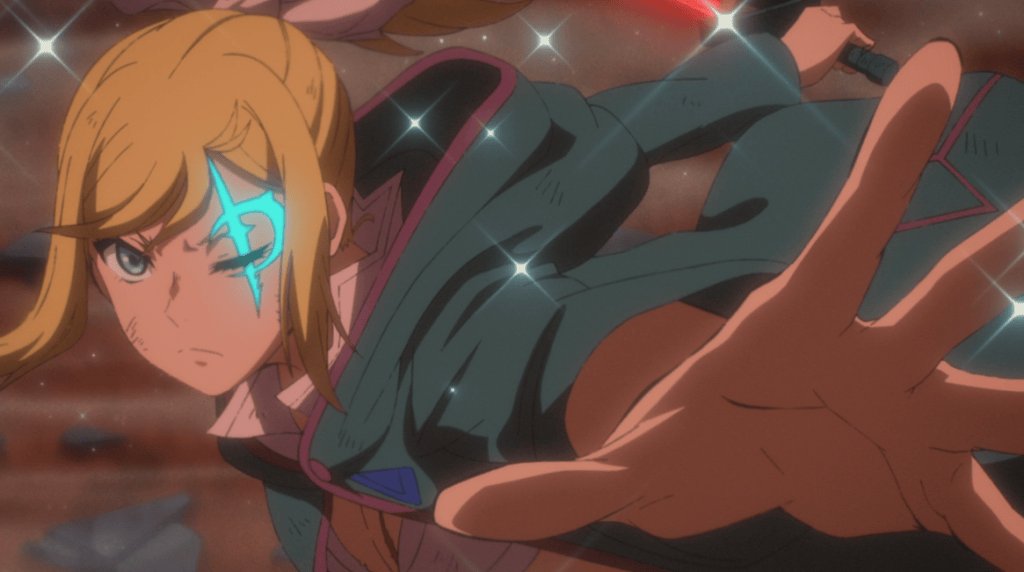
While this hasn’t been quite as compelling a season as the first one was, there’s still a lot to like here. It’s still got arguably the best simuldub of the season, still has some great action pieces and a high overall level of artistic and animation quality, and it’s still got plenty of fun twists and character development for (obviously) Alicia and (less obviously) Clen. It also has quite the rousing climax to the whole “magical school” arc (I especially liked the outcome for the princess) and then follows it up with one hell of a season-ending cliffhanger. I’m more ambivalent about all these revelations about Toa, but nonetheless, they do provide an interesting “ancient history” for this setting. The nature of the cliffhanger means it will be absolutely criminal if it takes too long for a season 3 to come about, though I think the anime may be swiftly catching up to the source manga. We’ll see what develops.
From Old Country Bumpkin to Master Swordsman s2
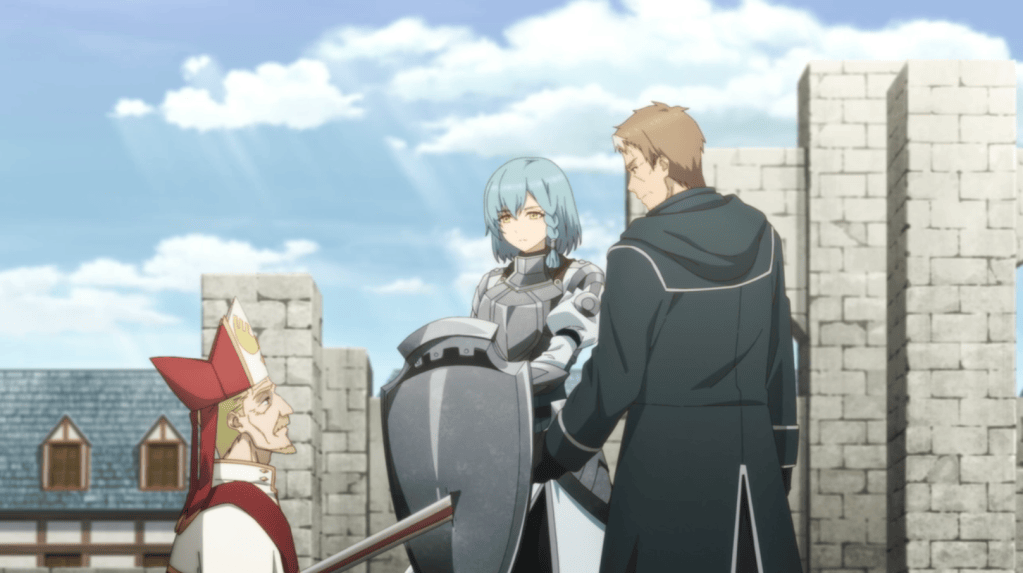
Overall Rating: B-
The first half of the series may have been placid overall, but the second half offers more substantial plot developments. While those developments aren’t especially fresh or complicated (clergy going down an evil path seems to be a recurring theme this season), they do provide plenty of opportunity for well-detailed action scenes, with the highlight being one of the best (and best-animated) examples of coordinated attacking you’ll see anywhere in anime when Beryl teams up with Rose in the climactic showdown and defeats the pope with observations and skill rather than overpowering moves. In a possibly even more significant development, Beryl is now showing signs that he’s not oblivious to Allucia’s clear romantic interest and seems to be at least considering her now. My biggest issue with the series (aside from very mediocre English dub) is that Allucia still looks too physically delicate for the role she’s playing, but I’d still welcome an opportunity to see if the hints of romance are going to go anywhere. Fortunately, this one’s substantial TV ratings in Japan have resulted in a third season already being greenlit.
Goodbye, Lara
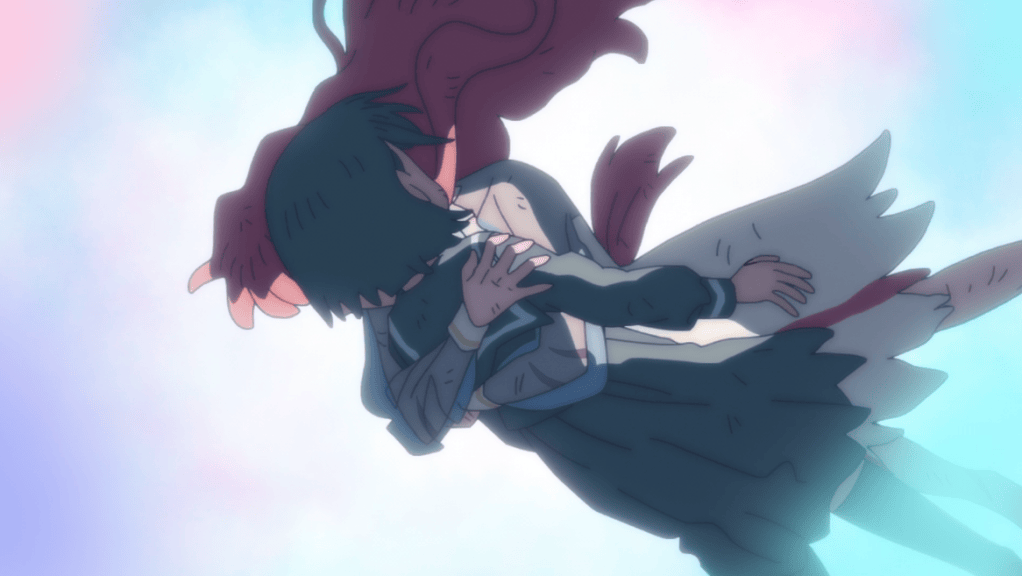
Overall Rating: A-
The ending of this series may not have been the one that a lot of people were hoping for, but it absolutely feels like the right ending, and the one that the series was most strongly angling toward throughout its run in both thematic and storytelling senses. The last couple of episodes in particular featured powerhouse presentations (Grace’s backstory in episode 11, and its relevance to the current situation, hits harder than such late-game flashbacks normally do), but the second half of the series overall landed its dramatic impact as the competing viewpoints came into play; Lara’s sister Lisa in particular had very legitimate reasons for hating humans, as did her father, which made their viewpoints impossible to dismiss as mere racism, for instance. I also liked how the series emphasized the biological impact on Lake Biwa of what was going on with the merpeople. Though I never was fully a fan of the art style, the visual interpretation of it all – and especially the way it linked in other Hans Christian Anderson tales, especially The Swan Princess – was a winner, too, and the musical score also deserves kudos. On the whole, this is probably my #3 title for the season.
Heroine? Saint? No, I’m an All-Works Maid (And Proud of It!)
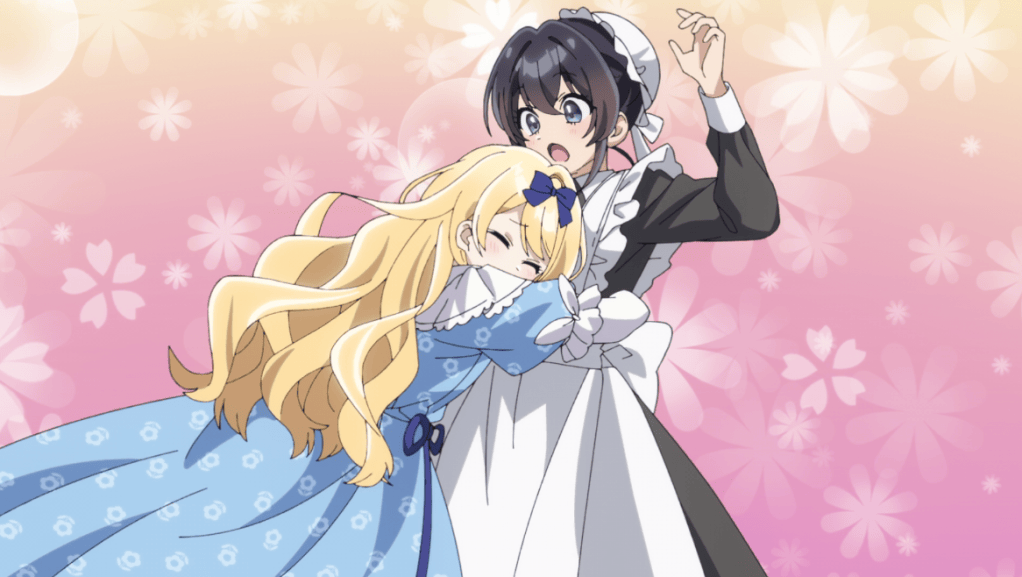
Overall Rating: B-
As much as I like this series, even this rating might be a bit of a stretch, as the series unfortunately remains a lower-echelon title on the technical and artistic fronts. The adaptation pacing smooths out considerably over the second half, though, and the story does feature some interesting plot developments as an additional isekai’d individual becomes active (though everyone is still unaware who else has been isekai’d, beyond Christopher and Anna-Marie being aware of each other). The angle the writing takes on how the game story is adjusting for the changes wrought by Melody (primarily), Christopher, and Anna-Marie remains the most interesting aspect, and the series is at its best when focusing on that. Luciana is also gradually starting to come into her own as a character who can now deal with at least some of her own problems. And while some yuri elements are suggested (I’m convinced that Anna-Marie is bi based on her stated preferences, and Luciana’s attachment to Melody at least borders on romantic), it’s not a focus and probably never will be. I’d love to see more of this one animated, as there are plenty of fun twists to come, but I’m not going to hold my breath.
I Want to Love You Till Your Dying Day
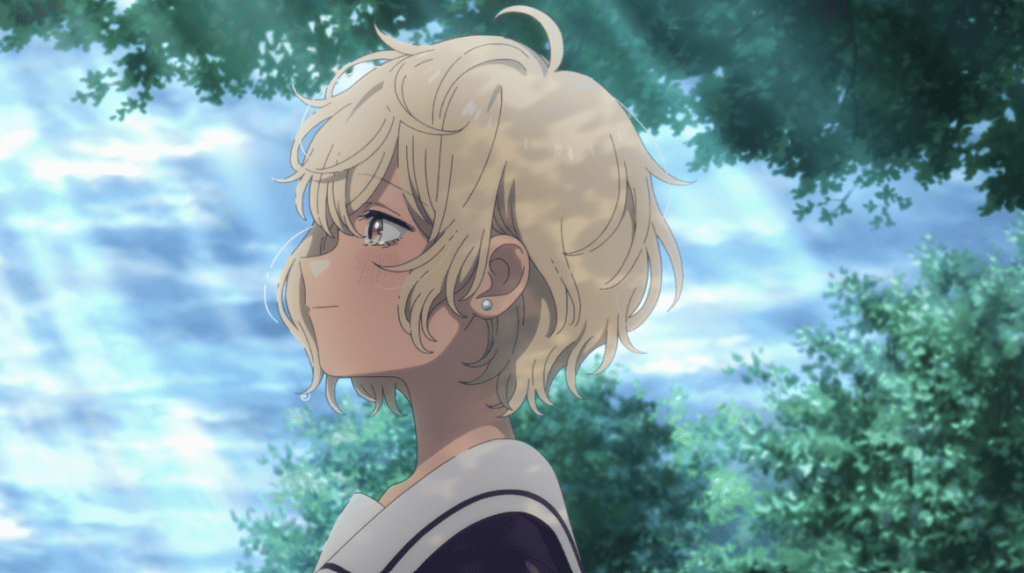
Overall Rating: B-
This series has some of the season’s prettiest character design work, remarkably robust animation for as low-key as the series often is, and individual scenes that can be either sublimely beautiful or terrifyingly bloody, depending on the situation. It also has some fairly strong emotional beats and incontrovertible yuri content, even if most of it isn’t explicitly romantic. (The focus cast members are only 14, after all.) And yet I can’t give this one a high rating overall because it doesn’t come together well in a structural sense. Taken in isolation, its final episode – which focuses on the most important side character finally coming to terms with the shocking death of her partner a few years earlier – is a fine bit of character writing which does, indeed, round out a story thread. But why is the series ending on that? It’s not the focus of the overall plotline, wasn’t an interim point that the story was building towards, and doesn’t even directly involve the central characters. Really, it feels like it should be taking place two-thirds of the way through the season rather than at the end. I’m less concerned that the series has still not at all explained the bigger picture because this is a more intimate tale, but a real sense of urgency is definitely lacking even as it wants viewers to appreciate that some real and horrible fighting is going on. Absent an immediately-following second season, this is one of the rockiest season-ending points I’ve seen for a series in quite some time.
Magilumiere Inc. s2
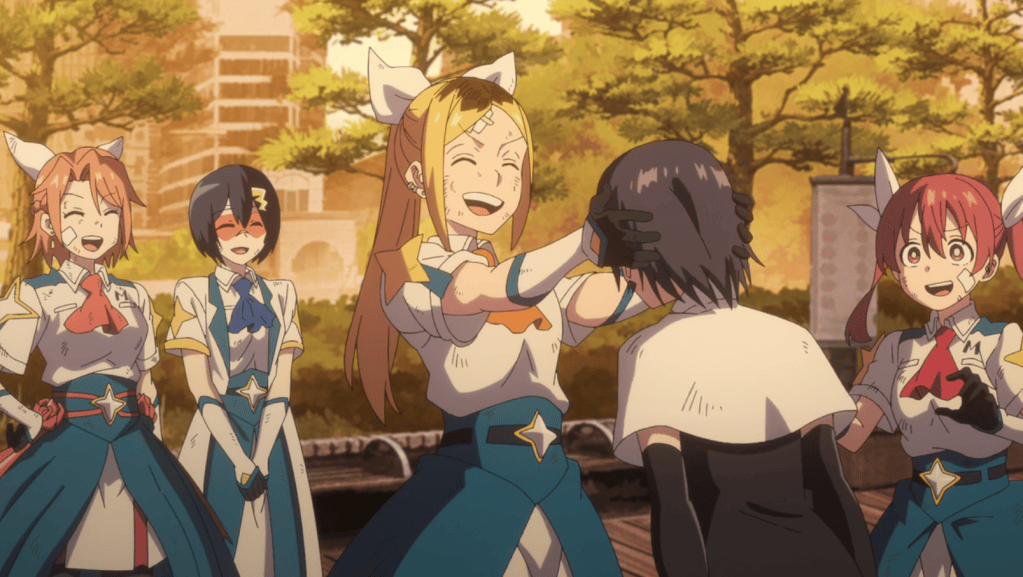
Overall Rating: B-
The season as a whole still suffers from lagging pacing through to the end, and the Kaii serving as the immediate threat over the last three episodes seems shockingly passive (it just sits around and does nothing while the magical girls and their support teams decide what to do), but the final few episodes are buoyed a bit by some of the season’s best character moments, especially the neat way that Kana starts to bond with AST ace Mei over their common past love for a particular anime magical girl. The staff at Magilumiere bulking up is also a plus, with Akane and Iroha serving well as skilled but not stiff veterans that occupy a balance point between Kana and Hitomi and Hibiki serving adequately as a competent trainee techie. The exact motives of one of the main antagonists seems unclear at this point, but that does at least position him to be a long-term threat. The English dub continues to have definite weak points, but there’s enough story threads going on here, and the corporate angle is interesting enough, to keep the series at least mildly interesting. I’ll be surprised if we don’t eventually get another season and I’ll probably be back for it if we do.
Mushoku Tensei s3
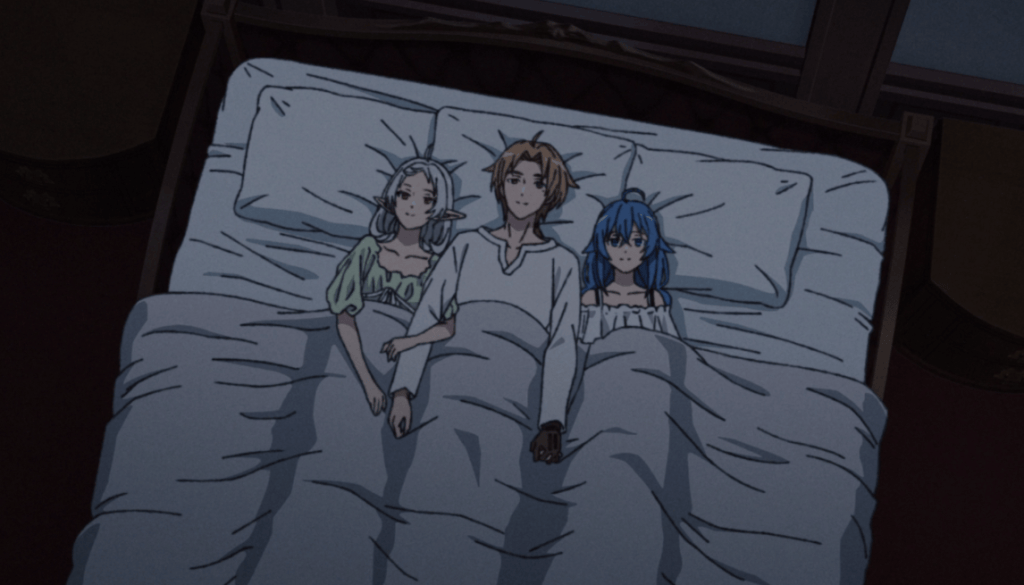
Overall Rating: B+
The season began with Eris, so it’s only fitting that it (or rather its first cour) ends with Eris, too, and in particular with her on a clear trajectory to reuniting with Rudeus. That certainly sets up a loaded encounter for next cour, as Rudeus makes both Roxy and Sylphie aware of it, but the most interesting aspect is what leads up to this: a visit from Rudeus’s future self, who levels some damning, game-changing revelations, among them that not reconciling with the girl whom he had long thought abandoned him would only contribute to a bad outcome. Yeah, this is still kinda-sorta a wish fulfillment scenario (he’ll soon have a harem of three!), but this series has at least done better than most harem scenarios at laying a reasonable groundwork for it: Rudeus initially encountered (and fell for) all three at different points in his life, each helped him in a time of crisis, and each was in turn helped by him. And from what Man-God says, it sounds like destiny is in play here, too. I have to downgrade this season a little because it dwelled a bit too long on emphasizing the comfortable life Rudeus has developed, but its technical merits are still strong, its world-building is still rich, its characterization is better than many give it credit for, it does still occasionally deliver some spectacle and keen practical issues (such as the matter with Nanahoshi’s health), and it finishes on its strongest episode. With the groundwork laid for meaty future prospects, there’s no reason not to look forward to the next cour.
Re: Zero s4
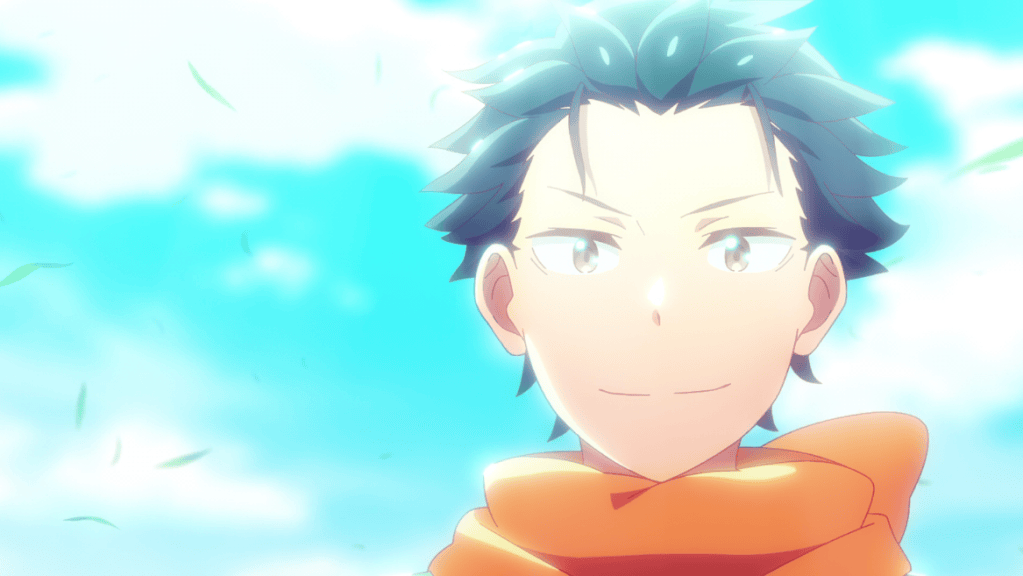
Overall Rating: B++
My one slight disappointment with this season is that it felt like it could have been a little shorter, and I’m not sure I completely followed what all is going on with Gluttony. Even so, it features a lot of strong character moments and some awesome (and impressively-animated) fight scenes; Ram’s duel with one incarnation of Gluttony in the next-to-last episode is now one of my favorite action scenes of the entire franchise, but both Julius and especially Emelia get ample opportunities to show off slick moves, too. (Making ice duplicates of Subaru to assist her in battle was an especially neat stunt in the last two episodes, particularly the scene where one of the dupes leaves behind a thumbs-up as it shatters.) The season’s final scene is also the most satisfying one in the franchise since Subaru made his pact with Beatrice back in season 2. Once again the franchise remind us why it is, at worst, among the best of all isekai franchises.
That Time I Got Reincarnated as a Slime s4
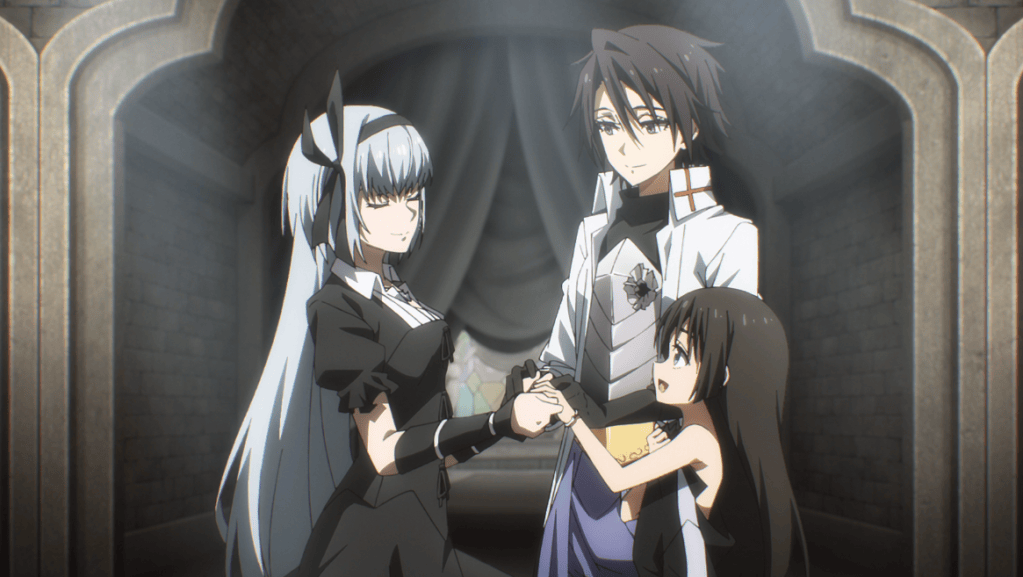
Overall Rating: B
The series sure took its time to bring events to a head, but it (mostly) doesn’t disappoint when it does. It also finally fully explains how Chloe, Shizu, Hinata, and Chronoa (the body in Luminus’s glass case) are all connected and what, precisely, Leon and Luminus have to do with it; the mystery behind the “Great Spirit” that helped Chloe stabilize her magic a couple of seasons ago is also finally answered. While I didn’t mind the use of the time travel gimmick to explain much of this (nothing here makes sense without that gimmick, honestly), one nitpick did bug me a lot: Luminus had been around for over a millennium, and yet she’s essentially never changes her style of dress? For that matter, no effort whatsoever was put into making the culture of 1,000 years past look any different than the modern era culture if Rimiru’s new inventions are discounted. That aside, this was a mostly satisfying resolution to this part of the story, and the series will be returning next year for its next installment.
The Cat and the Dragon
Overall Rating: A-
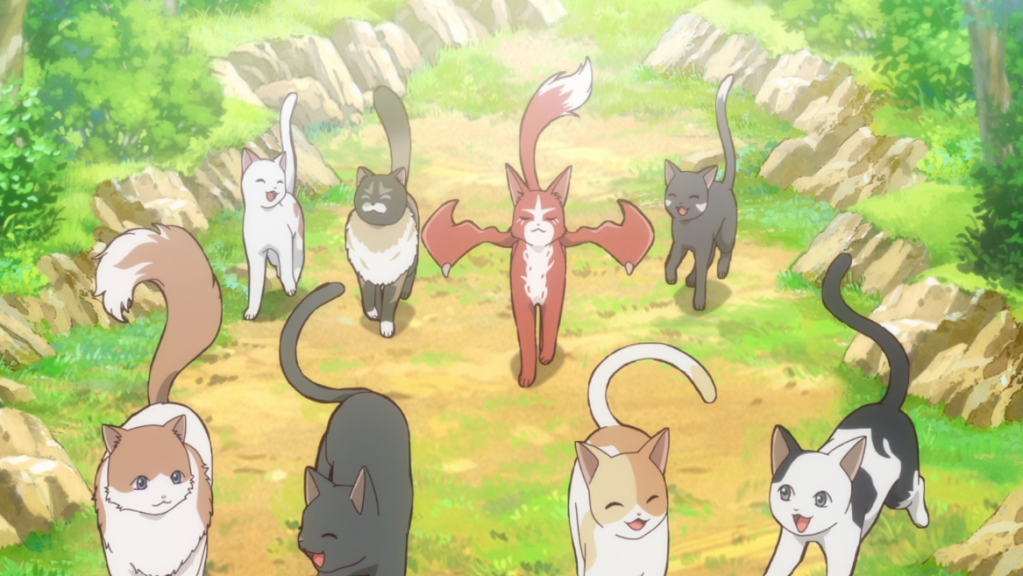
The most delightful sequel news of the season is that a second season of this wonderful series has been greenlit. The initial appeal of the series – that every episode endears the series to the viewer in a different way – does not fade one bit as the back half of the series progresses, and it even provides one of the season’s most poignant episodes in one where an old cat makes one last, sentimental tour of former haunts before passing on. It is, without question, my favorite title of the season and well-deserves to be considered among the season’s best, too.
The Forsaken Saintess and Her Foodie Roadtrip in Another World
Overall Rating: C+
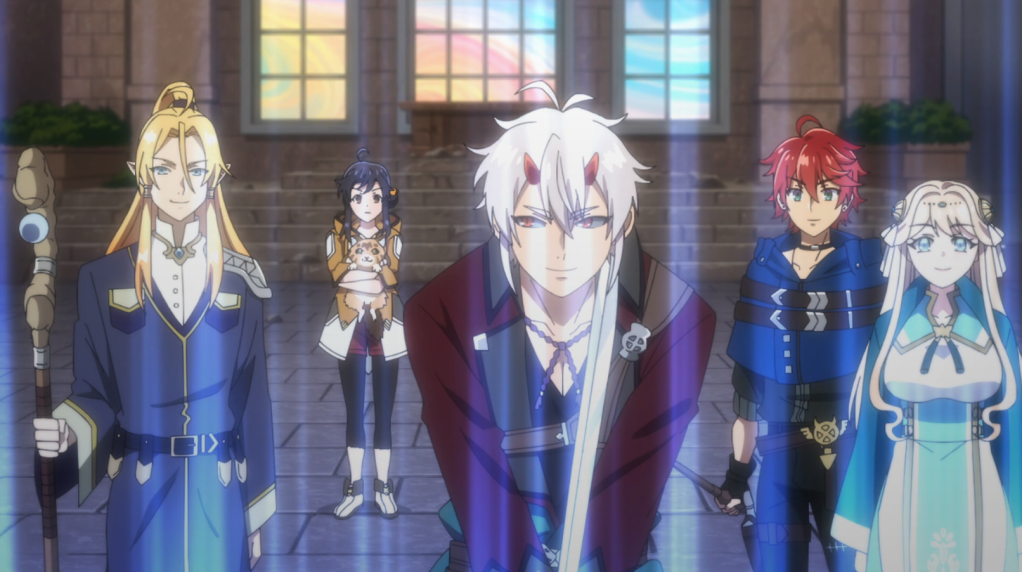
This one doesn’t change its stripes at all despite arguably the Summer ’26 season’s biggest plot twist late in episode 10; it’s still a full-bore fantasy foodie adventure, for better or worse. However, that plot twist – the revelation that it’s actually a stealth “isekaied into an otome game” series, with the Smorgasbord members just being nameless NPCs in the game – is big enough to be worthy of mention here, as it calls for a reevaluation of everything in the series to date. (Pointedly, it also means that the denizens of the otome game summoned someone from outside of the game, which I believe is also a novel twist for the genre.) If this is going to have a big impact on the future plot, though, then it’s beyond this season, as the only impact it has here is that Rin’s presence changes the game fate of the Smorgasbord members (a truth which only one other person besides Rin – a reincarnate who’s more knowledgeable about the setting – is privy to). Despite that twist, it remains a low-key, light-hearted romp. I’ll probably watch more if a second season is made, as I’m curious to see where this twist might go, but it’s not something I will be eagerly anticipating.
The Frontier Lord Begins With Zero Subjects
Overall Rating: B-
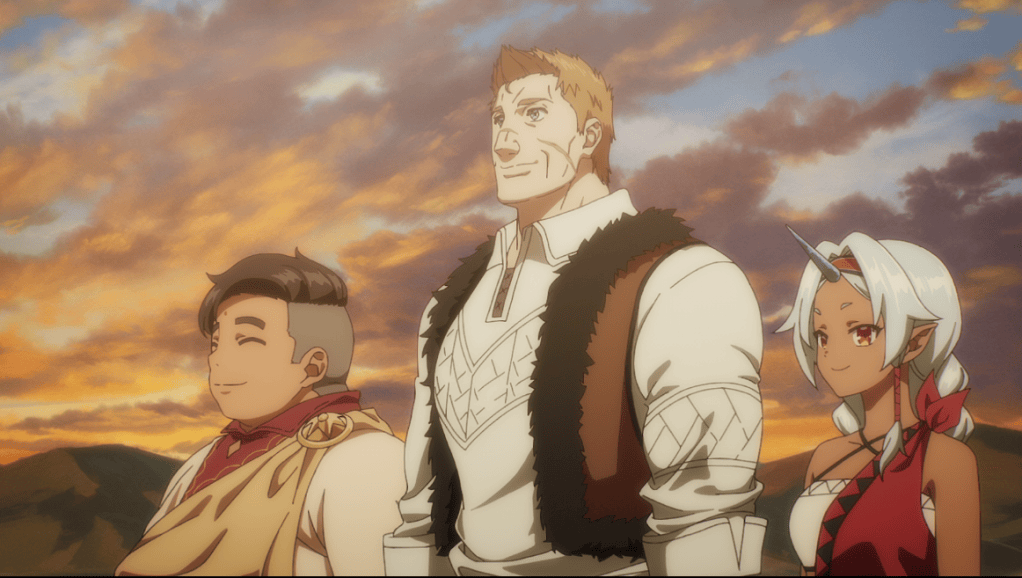
The second half of this one progresses in mostly predictable fashion, with Dias and Alna continuing to collect new recruits (including some human ones!) and having a bit of conflict with some royals who continue to seek to drag Dias into the kingdom’s succession conflict. But one of the advantages to Dias being so good-natured is having allies eager to support him, and that includes the king. (And whatever mysterious being the sheeplike creatures are answering to, apparently.) Not so thrilled about an utterly stereotypical trans character popping up later, and the quality control on the artistry does slip at times, but overall the series has settled into being a fine little civilization-building tale somewhat in the spirit of Farming Life in Another World. And if that one got a sequel then I think there’s a fair chance this one eventually will, too.
The Oblivious Saint Can’t Contain Her Power
Overall Rating: C+
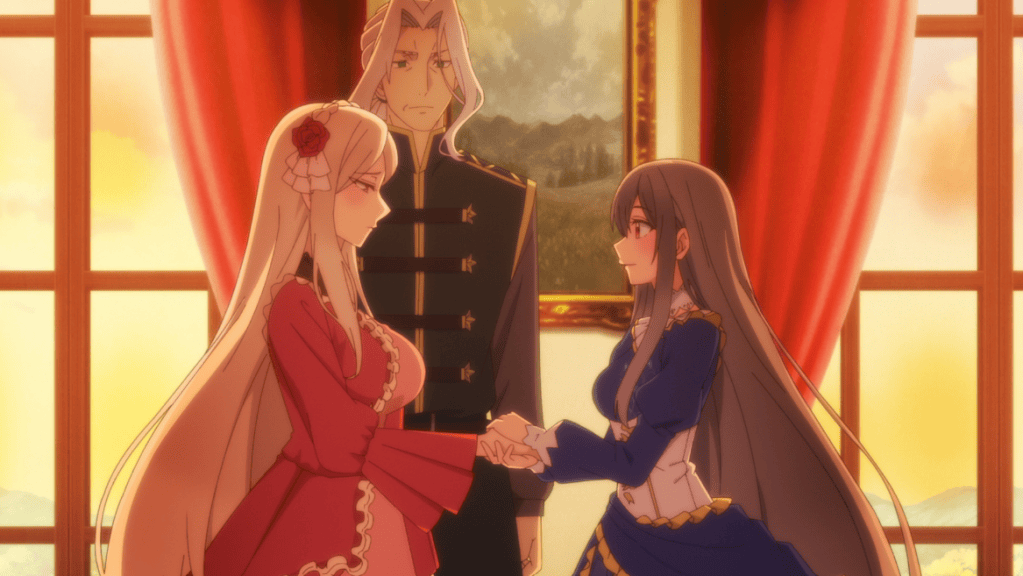
There are two series this season where an overbearing sister must deal with a fit of jealousy when she’s eventually outshone by the deprecated sister/protagonist, and they resolve that matter entirely differently. This is the one with the more positive resolution, and it earns points for how it handles that. It also earns points for Carolina becoming a stronger and more confident character in the end (even if she does still sometimes need a bit of a push) and for not dragging out the resolution of the succession issue. On the downside, it’s still hampered by a lackluster technical effort, though its setting and costuming choices aren’t bad. While I’m sure more can be done with the concept, the series ends on a strong enough stopping point that additional animation doesn’t feel needed.
The Ogre’s Bride
Overall Rating: C+
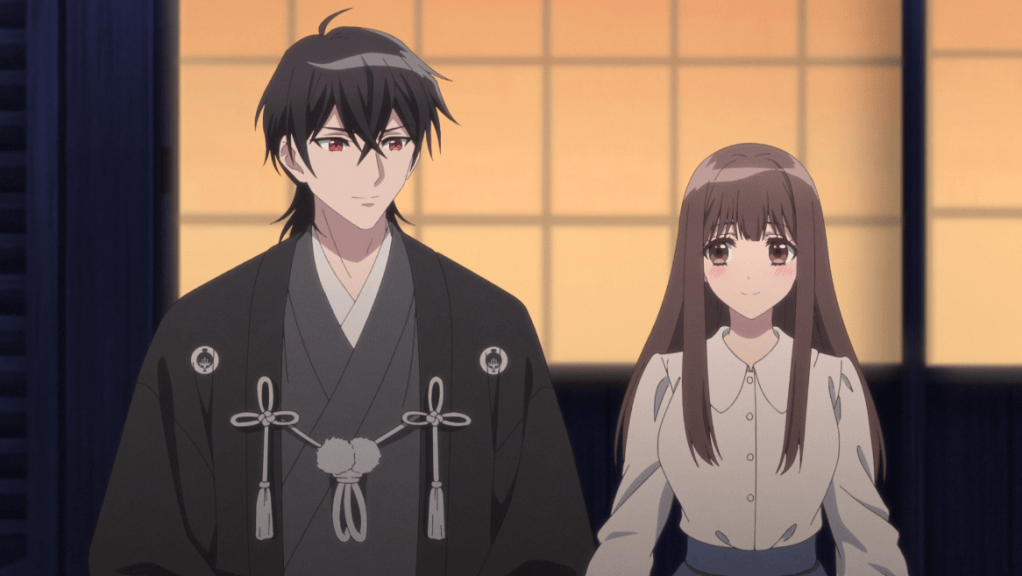
This is one that I really feel I shouldn’t like for a number of reasons, and yet I found it oddly fascinating enough to rewatch most of it. It’s the counterpart to Oblivious Saint in that it shows the Bad End for the jealous sister; really, Karin should be grateful that she just ended up exiled, cut off financially, and separated from her love rather than as a bloody splatter for pulling that push-down-the-staircase stunt. And gods, but the parents are over-the-top pieces of work, too! At least Karin is somewhat understandable as the brat so spoiled she never learned to cope with jealousy. The series’ end does leave some potentially interesting setting angles to explore, such as what are the long-term consequences on a demon who gets forcibly separated from his bride. (And what does it say about Yota that he doesn’t go rogue to stay with Karin, given how powerful the bride attraction factor seems to be?) That there would be any doubt about Yuzu given how obviously more powerful Reiya is since encountering her did bug me, since it felt like the series was trying to play the “commoner among nobles” card even though there are special circumstances in this setting that should override that; this isn’t just a case of the heir falling head over heals for a commoner girl, after all.
On the negative side, Yuzu is still much too passive for my liking; she does have one moment where she somewhat stands up for herself against Karin in the penultimate episode, but this one is still much more interested in seeing the heroine go giddy over a hot guy than giving her much agency. It does earn some points for the unexpectedly cute way that potential rival Sakurako’s situation is resolved, though (unlike with Karin, she and Yuzu clearly won’t be enemies in the long run!), and the technical and artistic merits are generally a step up over Oblivious Saint. Still can’t give this one a high rating, but it’s at least not a total trash-heap title, and it leaves enough room for potential additional story threads (the point that a bride is a potential major asset but also point of vulnerability for a demon could be explored much more) that I could see more eventually being animated. I would at least consider returning for it.
Season Runner-Up: Though I Am an Inept Villainess

Overall Rating: A-
These first 11 episodes are just the first half of the series, which means that its January ’27 return will make it one of the most-anticipated titles of that season for me. The sharp impression it made in its middle episodes fully carried through the rest of the season, turning this into a fantastically fun view. Reirin continues to shine in Keigetsu’s body, and Keigetsu becomes a surprisingly sympathetic character by the end as she gets dragged by Reirin (sometimes literally!) into becoming friends, though how that happens actually makes sense, too. Really, considering how vibrant she is and how thoroughly she takes charge of the situation at the end (even Gyomei ultimately concedes to her wishes), Reirin may be one of the season’s best characters, and that’s not something I expected to say early on in the series. (Let’s not forget how utterly unfazed she is by bugs, either.) The web of intrigues and how they trapped characters into vicious cycles that, in some cases, last for decades was also fascinating to watch play out, mirroring some developments also seen in season 2 of The Apothecary Diaries. With higher-end artistic and technical merits supporting it, this was easily one of the season’s best-looking series, and it ends with solid hooks for its second half.


One thought on “Summer 2026 Wrap-Up”