Episode Rating: A
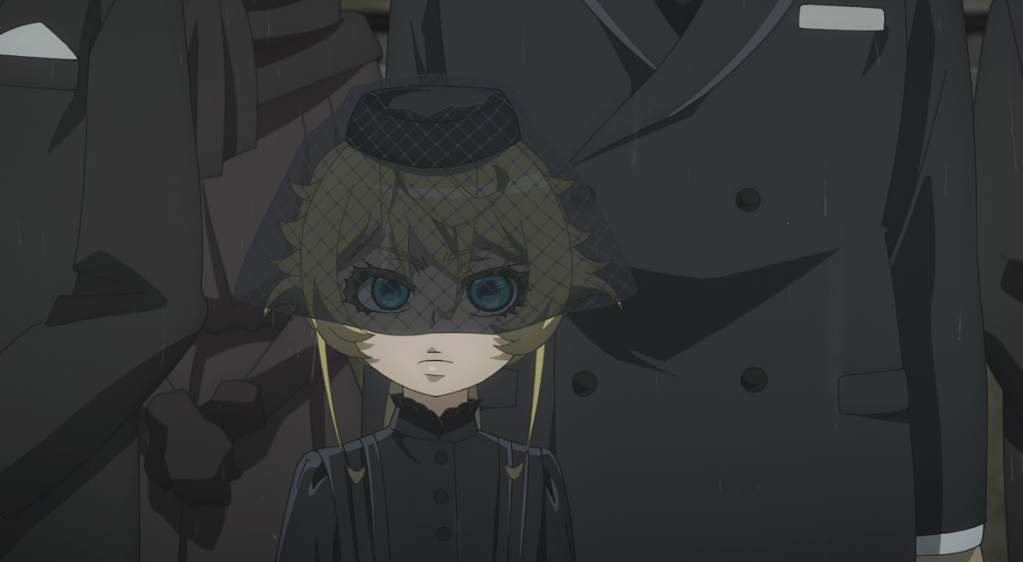
Even if you discount Tanya’s size, age, gender, association with Being X, and status as a cross-gender reincarnation, she’s still an aberration on other fronts. Some of that is a dramatic lack of empathy that she carried over from her previous life, which only reinforces her very studious pragmatism, but it’s also her lack of perspective. In her current life, she’s only really known the orphanage and the military, and so has spent little to no time in a genuine civilian capacity. Hence she doesn’t truly appreciate how the public thinks, and thus why that’s at the core of the disconnect between the country’s leadership and its military.
In Tanya’s understanding, the military is struggling because they don’t have clear criteria for what “victory” means; the goalpost for what constitutes enough to win the best possible concessions keeps getting moved back without additional support for the advancing goals, hence making a situation like the ultimate failure of Operation Andromeda (due to a lack of sufficient supplies) practically inevitable. None of Zettour, Rudersdorf, or Rerugen disagree with her on this point, but the two generals in particular understand what Tanya doesn’t: that the root cause of this isn’t politicians with unrealistic expectations (although they are part of the problem), but instead the public that they are, to some degree, beholden to. Though the soldiers lose their lives on the battlefield, the public has suffered, too. They’ve watched funeral processions of empty caskets carried by wounded soldiers become commonplace, they’ve dealt with the deprivations of a wartime economy, and they’ve become drunk on the propaganda used to bolster national spirit. They can endure if there’s something concrete to be gained from it all, which is why a return to the status quo simply isn’t enough. They must believe that they’ve won, that they’ve achieved “victory,” even if what that actually entails in this situation is a nebulous concept. That’s a very dangerous position for any country – but especially a military power like the Empire – to be in, especially with morale being pushed to the limit, as is shown in Tanya’s encounter with Col. Ulger.
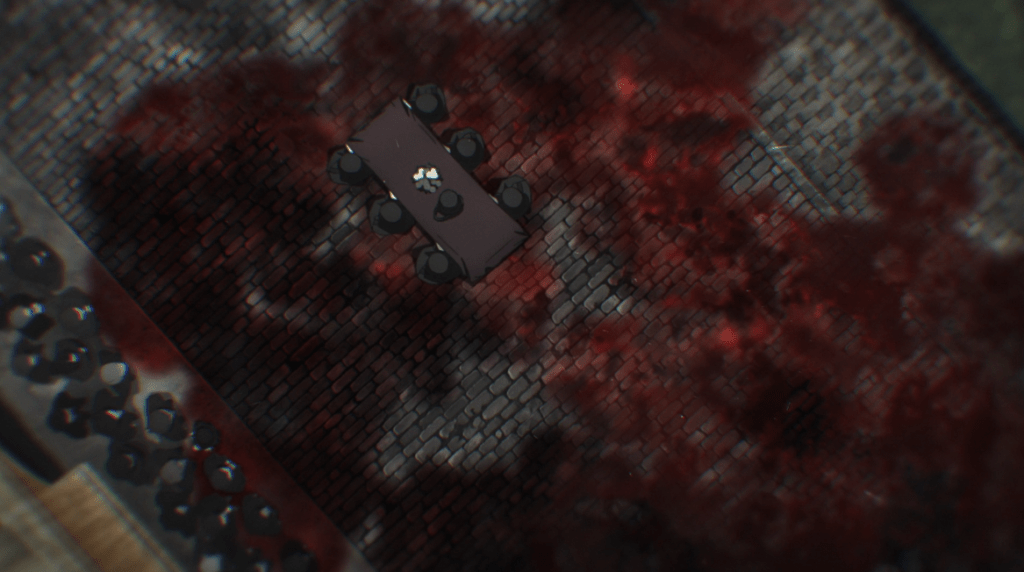
How devastatingly this situation get revealed to Tanya, through her encounters with various familiar military leaders, is what makes this episode so incredible and a big part of why I’m giving it such a high rating. The storytelling isn’t carrying all the weight, either; the scenes with the blood rain over the funeral, where Being X steps in to do some commentary, make a sharp visual impression with a stark contrast between the blood and the gray backgrounds. In the face of such stress, such madness, how many would naturally reach out for religion even if they were otherwise rational, modern men?
That’s not the only thing going on in this episode, either. To this point, the military leaders featured in this series have all been stalwarts dedicated to service to the Empire, but even they are starting to accept how untenable the situation is becoming. Tanya is quick to notice that Zettour’s line of questioning is heading in a potentially dangerous direction and politely heads it off, but I don’t buy at all that Zettour was merely conducting a kind of loyalty test there. She seems to less well pick up on Rerugen’s vague intimations in the same direction at the train station; if the military were to attempt some kind of coup, Tanya’s 203rd Aerial Battallion would undoubtedly be intended to be a key player. Those vague suggestions add an additional chilling undertone to the situation, and I can’t think that Tanya’s comment at the end of the episode – about how she can’t meet her ultimate goal here, in the rear – is an idle one. (And to be clear, I haven’t read much beyond this point in the novels, so this should be treated as pure supposition rather than any kind of hint.)
Despite the lack of action, and despite the usual supporting cast not being present at all, this is still the best episode yet in what’s already proven to be a strong season for this franchise. Admittedly, the series doesn’t take itself entirely seriously (as the epilogue scene shows!), but it wisely sections off its humor so it doesn’t interfere at ll with the powerful thematic points it’s making. Few anime series ever made have done this effective a job at portraying how a war effort can consume not just the soldiers on the front line but the home front as well.
 USA Anime