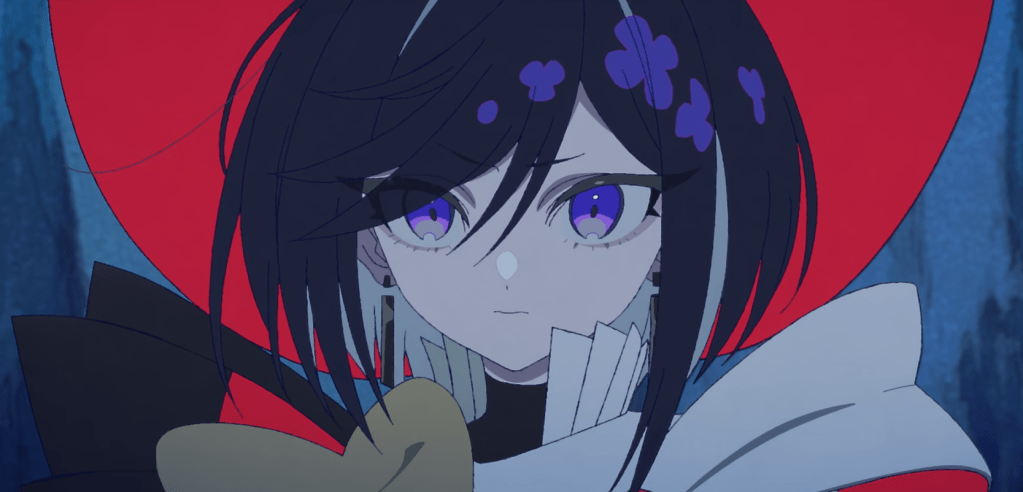
Osamu Tezuka’s 1953-56 manga Ribbon no Kishi (known in English as Princess Knight) is arguably the seminal work of modern shojo manga, as it was the first to apply narrative structure to manga aimed at girls. Its 1967-68 TV series anime adaptation is also easily one of the most influential of all anime titles; nearly every action heroine in anime arguably owes at least something to Sapphire, the princess born with the heart of both a boy and a girl who would dress and fight as a boy in order to protect her kingdom. She also inspired a wave of androgynous heroes/heroines and is certainly the direct predecessor of characters like Utena Tenjou. The original manga has seen a number of republishes and presentations in different formats over the years, including stage plays and musicals, and now director Yuki Igarashi and his new studio OUTLINE have produced an ambitious 109 minute movie version for Netflix.
To be clear, The Ribbon Knight makes no attempt to be a direct adaptation of the original story, instead using some character names and concepts from the original to tell a vastly different tale about a princess of Silverland named Sapphire, who must flee the destruction of Silverland when it is attacked by the indomitable monster Nergal. With the “genius creator” Zirco in tow, she must find her way to Goldland and try to make a living there, but an incursion by a smaller version of Nergal unwittingly spurs her into transforming into the Ribbon Knight (so called because she wears – and seems to get her power from – a gigantic red ribbon) to try to fight it off. But there are complications along the way, as Sapphire doesn’t initially understand the true nature of Nergal (which the authorities in Goldland do seem to understand, or at least to a greater degree), and she is thrown mightily when she learns that the destruction of Silverland may have happened because her parents weren’t prepared to sacrifice her to Nergal. Only with the help of friends and allies she meets along the way – especially the girl Pine – can she eventually face the ultimate challenge presented by Nergal and try to avoid the fate of the countless heroes who went before her.
If you’re looking for any degree of narrative or thematic complexity, you won’t find it here. The story is so streamlined that at times it feels like it was edited down from a longer piece, resulting in a work which focuses almost entirely on establishing the exuberant Sapphire and giving her plenty of opportunities to get in action scenarios, with only bare hints of world-building to give the minimal amount of foundation to it all and minor logical leaps in several places. The writing doesn’t seem interested in explaining any of the mechanics, either; yeah, the recurring heart motif is pretty obvious in its implications, and a full explanation for why Sapphire has the power to transform that she does is hardly necessary when the movie is clearly leaning into magical girl trappings as well. However, the exact nature of Nergal, and why sacrifices can fend it off for a time, is never fully explained, and the corrupting influence of its presence, which is so prominent early on, is largely ignored in the late stages. The story also seems to largely forget that it gave Sapphire an artificial left arm, too.
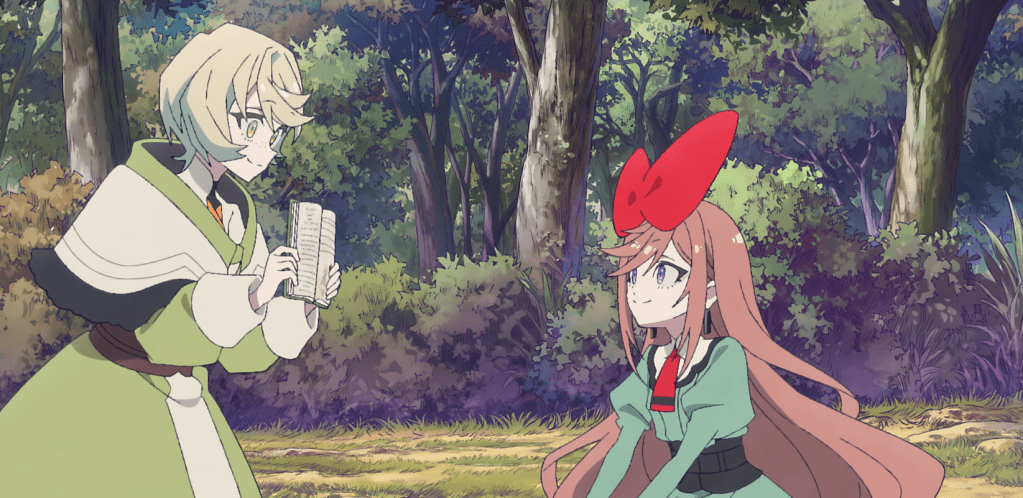
In other words, this is one of the productions where you’re better off not thinking too hard about what it’s doing and just go with the flow. Taken that way, it can be a rousing action story, filled with fantastical fight scenes where the transformed Sapphire is leaping all around like gravity isn’t a factor. On the character front, Sapphire carries the story with verve to spare in both Sapphire and Ribbon Knight forms, but no other cast member is especially well-developed; there’s the girl Pine, who’s eager to claim Sapphire as her first friend her own age, and a knight defender of Goldland who doesn’t sound effeminate but certainly looks and dresses that way. Zirco is little more than a mascot, and a few other characters have distinct personalities but don’t stand out enough to be memorable.
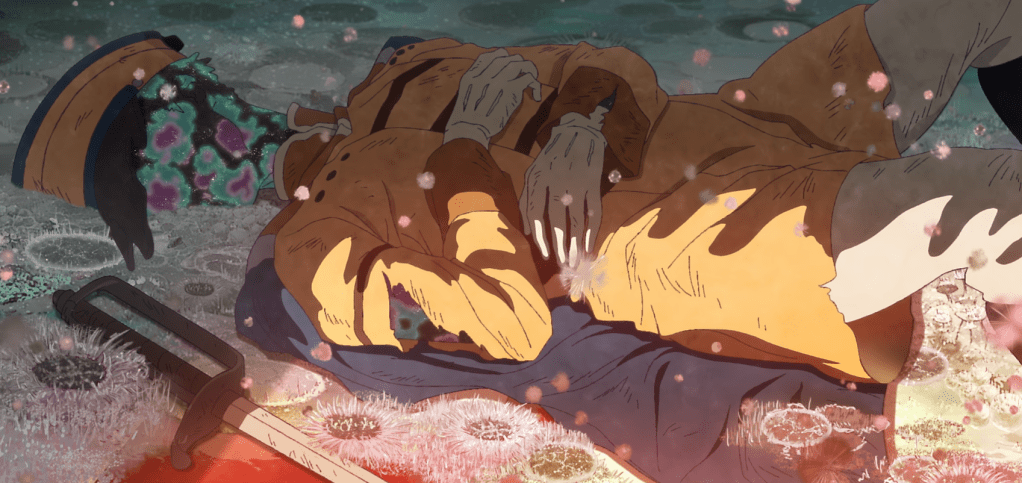
The artistic effort is rich in eclectic detail, with a background style which has shades of fairy tale elements applied to a more gritty fantasy setting. It populates its world with a number of bizarre variations on standard critters, and that’s without considering the monstrous Nergal. The overall visual style shifts at times, sometimes evoking scenes reminiscent of a puppet play, but in default form it mostly strives for an older-school character design style, one where Sapphire’s Ribbon Knight form essentially modernizes the original Princess Knight look but her day-to-day appearance is entirely different, complete with that big, goofy, oversized hair ribbon. The CG animation of the Nergal doesn’t always blend perfectly with the character animation, but for the most part this is a slickly-animation production which emphasizes a wealth of motion and some spectacular use of color. The two full scenes where Sapphire is shown transforming also go hard-core magical girl theme, complete with the movie’s sole scenes of near-nudity.
The English dub was used for this review. It’s anchored by veteran anime VA Courtney Lin (Panty in New PANTY & STOCKING with GARTERBELT, Kana in Magilumiere Magical Girls Inc.), who hits exactly the right note as Sapphire, but none of the other casting choices or performance will be found wanting. Per the norm for Netflix productions, numerous other languages are also available. All dubs are backed by a fine, mostly symphonic musical score.
The story is told in a series of several numbered Acts, perhaps in a callback to the original story’s theatrical origins. (Tezuka drew inspiration for the original manga from Japan’s legendary Takarazuka Revue.) That keeps the pacing brisk and helps smooth some of the more jarring transitions. Overall, that helps this one work well as a lighter – though definitely not always light-hearted – viewing experience.
Overall Rating: B+


One thought on “Movie Review: The Ribbon Knight”