With most of the season’s series now having aired at least their sixth episode, it’s time to take a look at what series have and haven’t been working so far this season.
For the past eight seasons, I’ve followed enough titles to warrant splitting this activity into two or more parts. This season, though, is arguably the weakest to come along in some time, so I decided this was the ideal time to scale back a bit. Some series I would normally have pushed to keep up with in most other seasons (Spy x Family, My Best Friend’s Little Sister Has It In For Me, Chitose in the Ramune Bottle, among others) I simply didn’t bother to with this one. As a result, I’m only current on 17 series this season – my lowest count in at least a couple of years – and so will be doing this activity in a single installment this time. There are a handful of others that I may eventually get caught up on; I will address them in the seasonal wrap-up piece if that happens.
Of the series I am caught up on, all but one (Isekai Quartet 3, which I am episode-reviewing separately) are covered here. Despite few stand-outs, this season has offered a number of mild to significant surprises on both qualitative storytelling and plot twist fronts, as you’ll see below.
A Wild Last Boss Has Appeared!
Rating So Far: B-
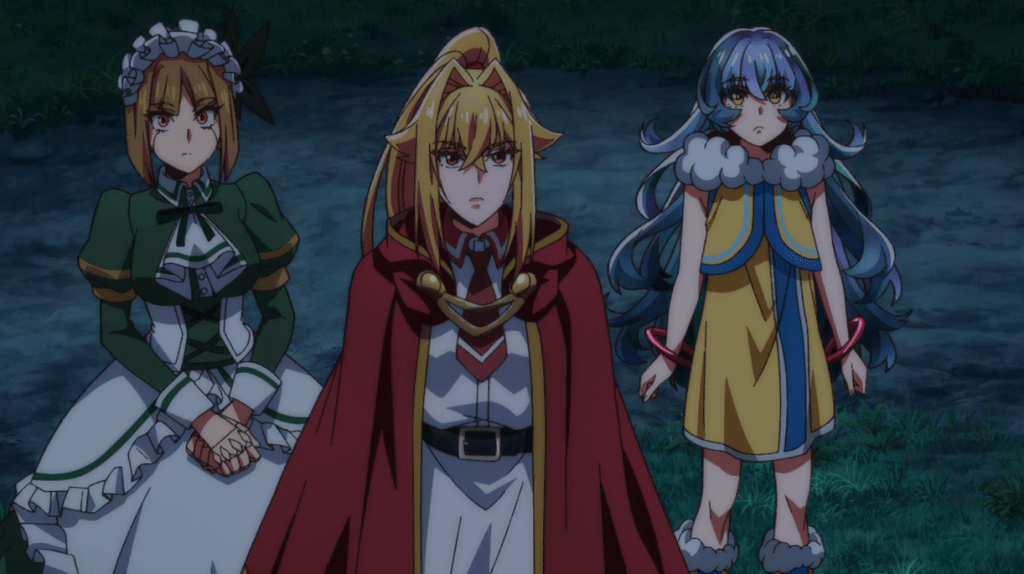
This is one of the mild surprises so far this season. It looked at first like it was just going to be a pretty standard story about a gamer inhabiting his OP character at a point a couple of hundred years down the timeline of his game, a la In the Land of Leadale. However, despite taking a fairly standard “round up the original minions” approach, it’s gone in some more interesting directions than just pure power-gaming. In particular, the series has taken a sharp look at how deeply the actions of Lufas and the Seven Heroes have affected this setting long-term, including the disposition of her former minions. It’s also brought up the notion that a character still existing from the original game persists but doesn’t seem to be a player anymore, and the most recent episode has thrown out the intriguing notion that Lufas may have also existed independently of her player. So if the player’s soul inhabits the current Lufas, where is the original’s soul? Was the player controlling her like a puppet when playing the game? In other words, this series is actually trying to explore its base concept more, which is why its grade and priority status is on the rise.
Backstabbed in a Backwater Dungeon
Rating so Far: C
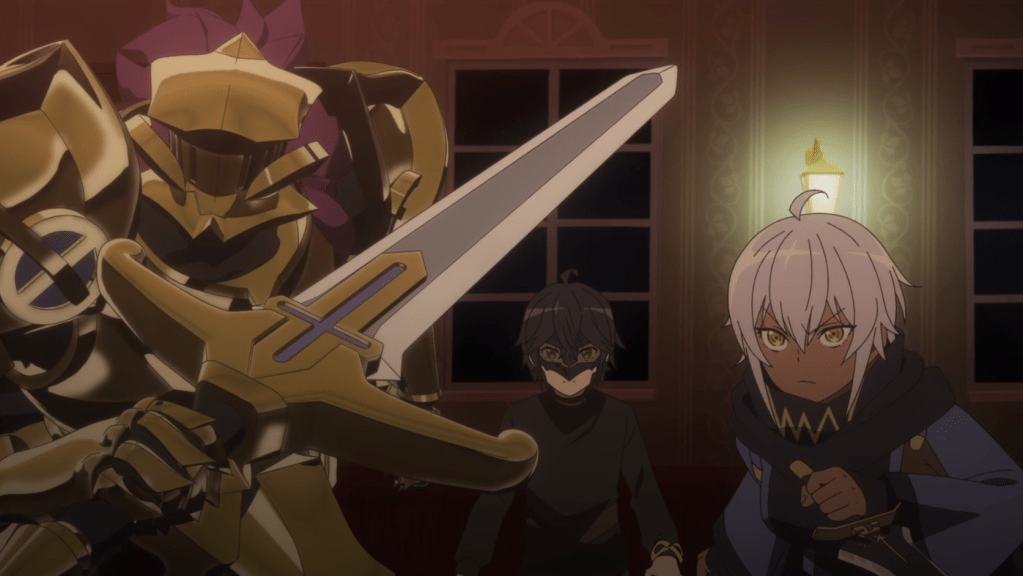
For all of the faults and repugnance of Redo of Healer, it at least didn’t shy from the irony that its protagonist, by getting so wrapped up in his revenge scheme, wasn’t really any better than the people he was inflicting vengeance upon. However, this series wants to sidestep that irony by having Light still be a fundamentally good guy while also having him thirst for vengeance, and that creates a tonal dissonance in his character which leaves him unsatisfying in either aspect. The series also makes its villains cartoonishly evil so there’s no moral ambiguity about Light punishing them, and oh yes, let’s not forget how it skips over Light becoming stronger and assembling his power so he can advance straight from him being a nobody to an ultimate bad-ass (and thus we have little to no idea on who his key servants are). The series actually doesn’t look bad, and Light’s interactions with the junior adventurers in recent episodes have been more appreciable, so I can’t entirely say that this one is a waste of time. However, it’s not a series I can recommend at this point.
Dad is a Hero, Mom is a Spirit, I’m a Reincarnator
Rating So Far: B
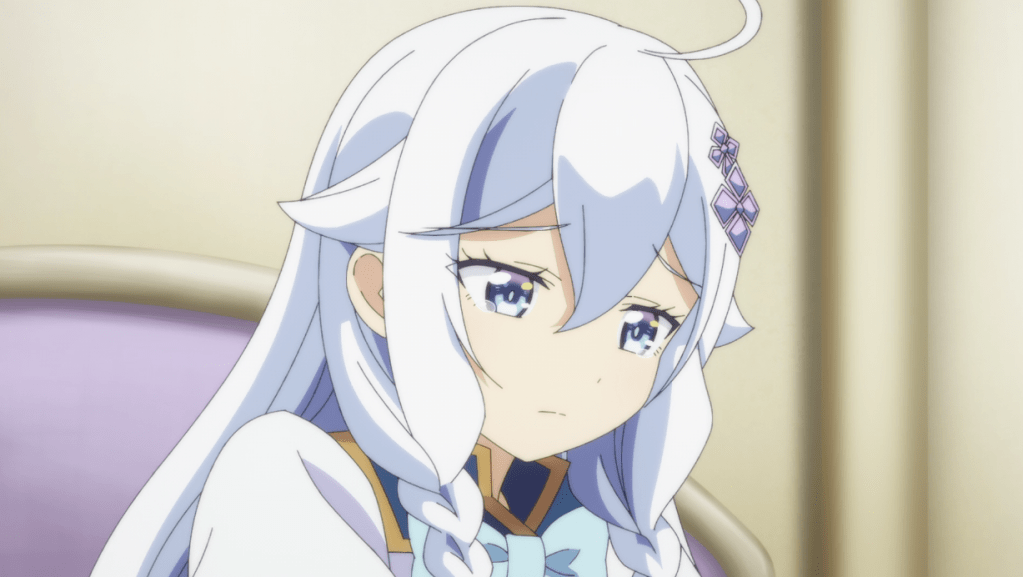
This one has been a more significant surprise. Its title primes the series to be just another OP protagonist romp, but that isn’t at all the way it has played out. Instead, we are getting a remarkably political story where titular protagonist Ellen’s father, Rovel, is a virtual co-protagonist trying to navigate a relationship with the Royal Family of his former home kingdom in such a way that his daughter is not unduly exposed to them. And, as the most recent episode shows, there’s good reason for that, since the Royal Family bears a curse related to their ancestor’s past misdeeds towards spirits – a curse that they’re not even aware that they suffer from since the misdeeds have been lost to history. In other words, the current king may be manipulative and scheming but he’s not actually evil. There are some other interesting world-building aspects in play here, too, such as how the purity or falsehood of marriage vows carries real weight in this setting or how a festival persists without anyone remembering the reason it exists. And while the series regularly has its goofy, cute moments, it’s also capable of a startling level of intensity, as episode 6 in particular showcases. For a series not advertised as being plot-dense, it is becoming remarkably meaty.
Dusk Beyond the End of the World
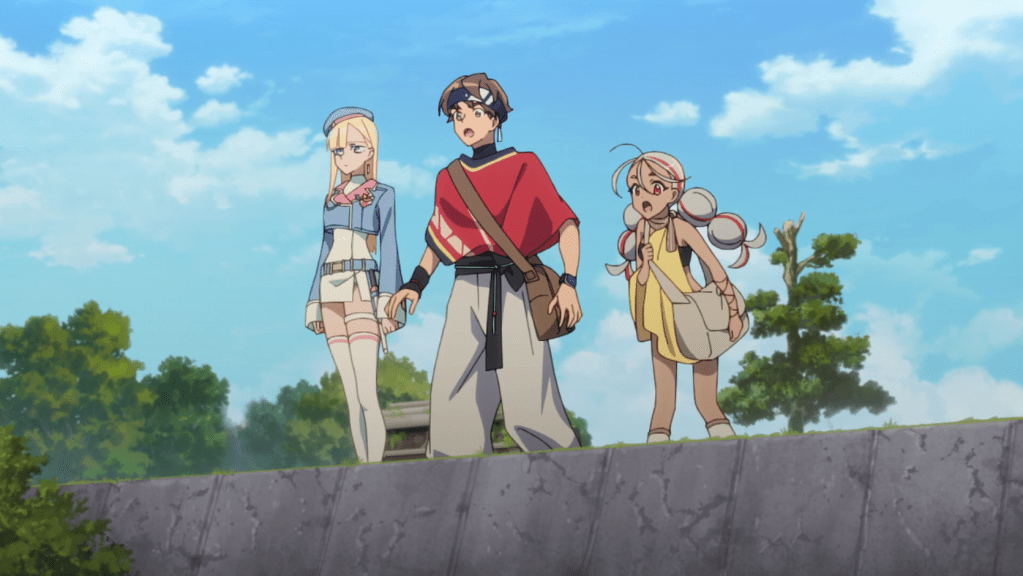
Rating So Far: C+
I had high hopes for this one after episode 0, but it has struggled to deliver so far, with its artistic quality also taking a nosedive in recent episodes. (This screenshot is a prime example.) It does harbor some interesting ideas, such has how this whole “LC” business seems artificially-designed to subsume the inherent limitations of marriage, how OWEL seems curiously devoted to information control, and how and why Akira ended up in the future like this, and at least the series finally gets around to partially explaining the big events which led to the current state of affairs. Amoru is also a neat character design and Yokurata seems like a worthy addition to the core group. However, it also suffers from some over-the-top villains and beating certain points to death, and a permissive attitude towards incest may not set well with some viewers. Still holding out hope that this one will amount to something more, but it no longer has the shining promise that it did early on.
Let This Grieving Soul Retire s2
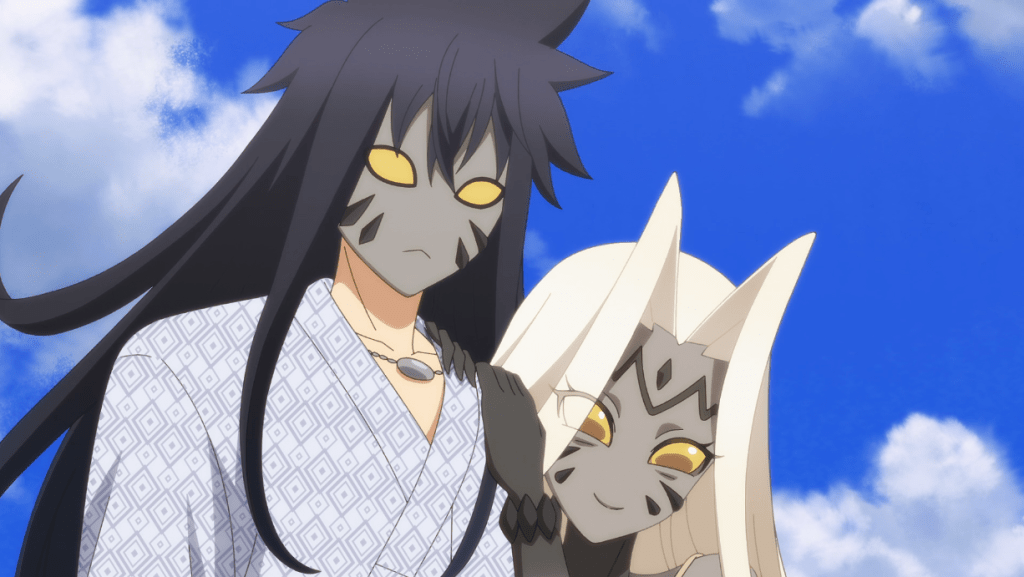
Rating So Far: B
I’m tempted just to say “more of the same” here and leave it at that, because that’s a good way to sum up this season so far. It’s definitely not a bad thing, either. The series maintains its sense of quirky fun as Krai and his party unwittingly put Arnold and his party through hell as they attempt to follow him on a trip to some hot springs. There’s also Cave People, bandits with a stupid organizational name, and a dragon or two involved and Krai once again somehow muddles through it all with everyone misinterpreting his actions. As a bonus, the remaining members of Grieving Souls who haven’t appeared yet in the current timeline – giant Ansem, witch Lucia, and swordsman Luke – finally make their entrance, too. This series may never be a priority view for me, but it never fails to entertain.
May I Ask For One Final Thing?
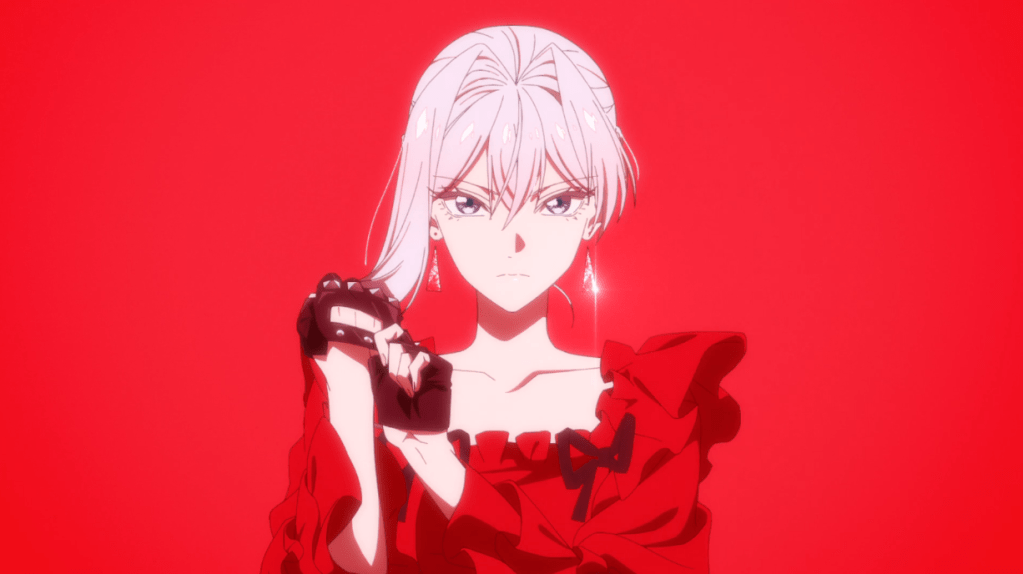
Rating: A-
This one IS a priority view, though; in fact, it’s far and away my favorite of the season, to the point that I’ve probably watched each episode at least three times now. Scarlet makes for an outstanding heroine, one who’s adorable in a completely different way than others, and is easily a contender for Character of the Year honors; there’s something quite satisfying, even cathartic, about the way she administers savage beatdowns while otherwise maintaining a perfectly elegant demeanor. She also has great supporting help in the wonderfully perverse Prince Julius, who finds her endlessly entertaining but, unlike his younger brother, is no fool. There’s even an ongoing plot involving Terrenezza and a surprise revelation about this being a stealth isekai series, too! (Only in this case the protagonist isn’t the one from another world.) Complementing this are good character and background designs, occasionally-sharp animation, and arguably the season’s best OP and one of its best EDs. There’s a lot to like here even if you aren’t normally into inherently violent fare, so it gets my highest recommendation at the midway point.
Let’s also not forget that the series has a truly outstanding simuldub. In particular, Morgan Lauré is giving one of the year’s best dub performances as Scarlet and Reagan Murdock is a delight as Julius.
Hero Without A Class: Who Even Needs Skills?
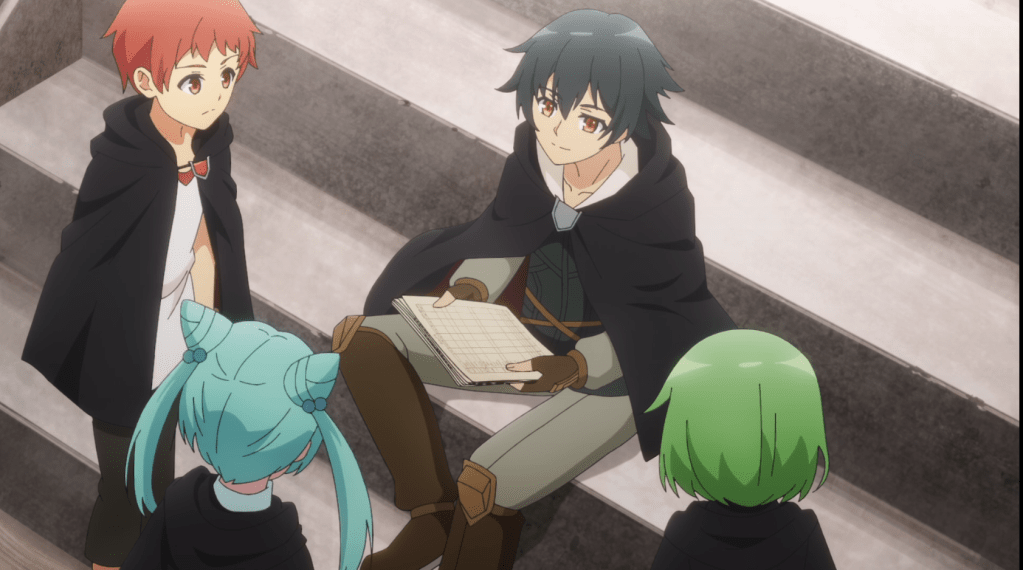
Rating: D
Nearly every season there’s at least one series where I ask myself each week why I’m bothering to continue watching it, and this season it’s this one. The problem actually isn’t the concept, as exploring how a person operating adjacent to an RPG-style System rather than as part of it can still duplicate many of the same effects is a fascinating notion ripe with all sorts of possibilities for exploration. However, this series is barely interested in doing any of that. It’s instead playing out as a completely bog-standard OP Protagonist story, one which is further saddled with one of the dullest protagonists (personality-wise) to come along in quite some time. It then further shoots itself in the foot by ditching the sexy female companions for a gaggle of kids that are essentially becoming groupies as they marvel at all of the ridiculous things Arel can do. There was some potential here, but the series is wasting it.
My Status as an Assassin Obviously Exceeds the Hero’s
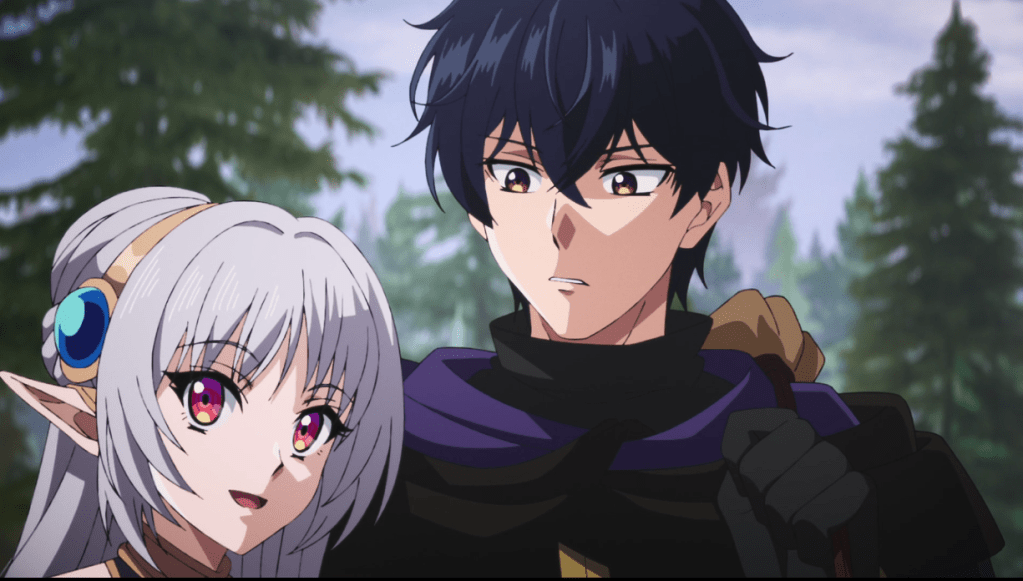
Rating So Far: C+
On the downside, the premise, plot, and general construction of the series feels like a mishmash of elements ripped off from Arifureta and Failure Frame, neither of which is a dazzling example of RPG-inspired fantasy storytelling themselves. And on those fronts it’s doing absolutely nothing special. What it does have in its favor is distinctly better-than-average visuals and animation, with its triumph being the design of the sexy female elf companion/potential love interest for our protagonist. It also has an unusually strong musical score. That makes the series watchable, but I still wouldn’t expect much from it.
Pass the Monster Meat, Milady!
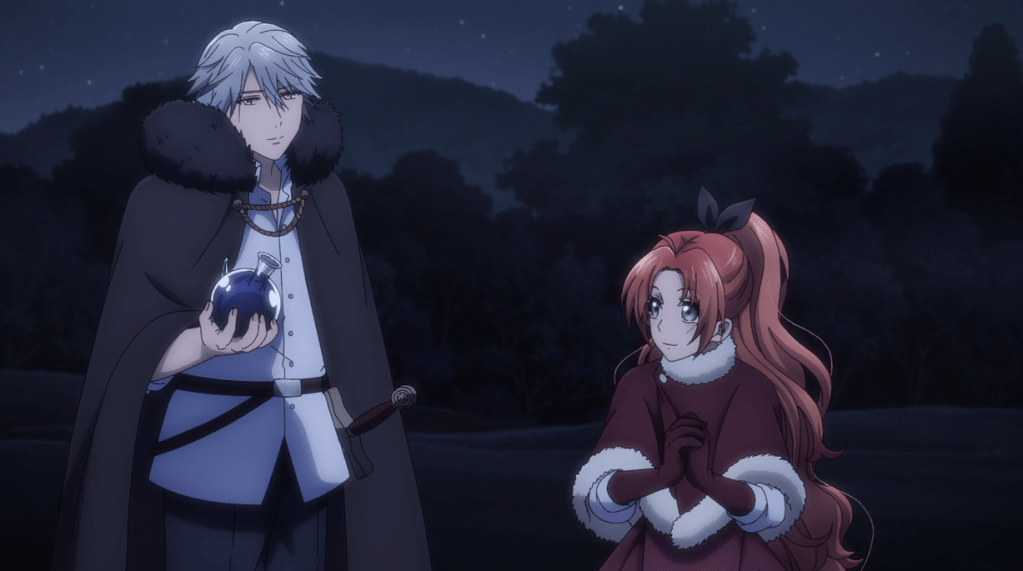
Rating So Far: B
Delicious in Dungeon incontrovertibly proved that a fantasy foodie series about killing monsters and them cooking them is a workable concept. While this series takes a rather different angle on it, the concept still works nearly as well. Melphiera and Aristide make for a delightful central couple as eccentric nobles who don’t fit well with (and are derided by) others but are a perfect match for each other. I’m particularly impressed by how firm the foundations of their relationship are (both bring skills which strongly complement the other) and how practical their engagement will be – and for that matter, that the series doesn’t piddle around for a long time and gets them engaged by the end of episode 4. Both are lookers in their own way, but this relationship won’t be just about looks. I am curious to see what direction the series is going to go now that the central relationship has been established, but there have been hints that Melphiera’s research could eventually prove life-saving for Aristide, too. This is a neat series that’s always fun to watch.
Ranma ½ s2
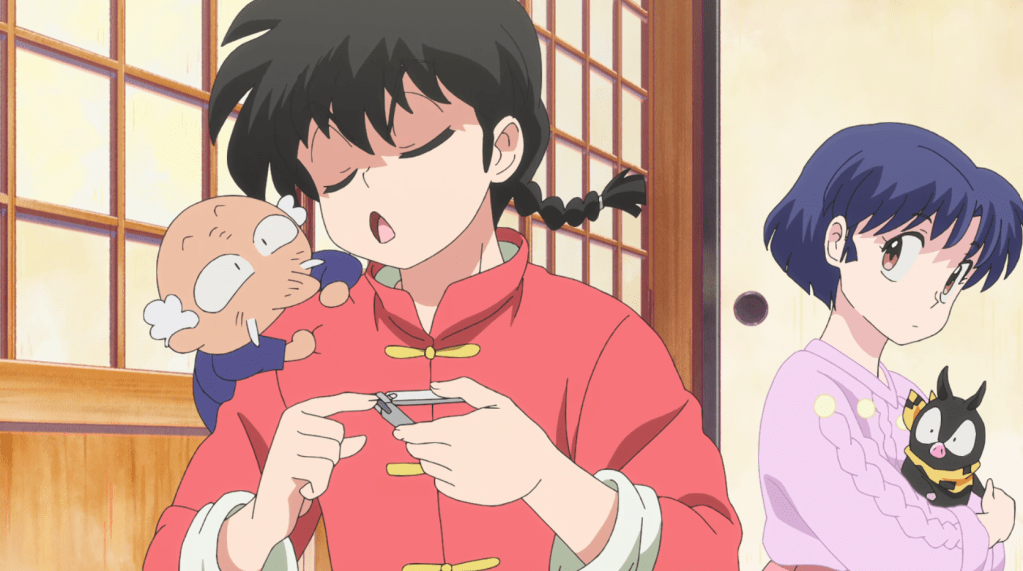
Rating So Far: B
This one could also mostly be described as “more of the same.” The exact specifics may change from episode to episode but it’s still the same spirited shenanigans, whether it’s Shampoo’s grandmother showing up to give Ranma fits (and become a staple character), Mousse stepping into the picture, or the (dreaded by some) debut of Happosai, the series’ resident horny old man, who’s still thoroughly obnoxious despite being tone down some from the earlier adaptation. Let’s also not forget about stupidity like the Martial Arts Delivery Competition, which only this series could make seem sensible. Mileage will vary on Happosai, but otherwise this season offers plenty enough fun to warrant keeping up with it.
Shabake
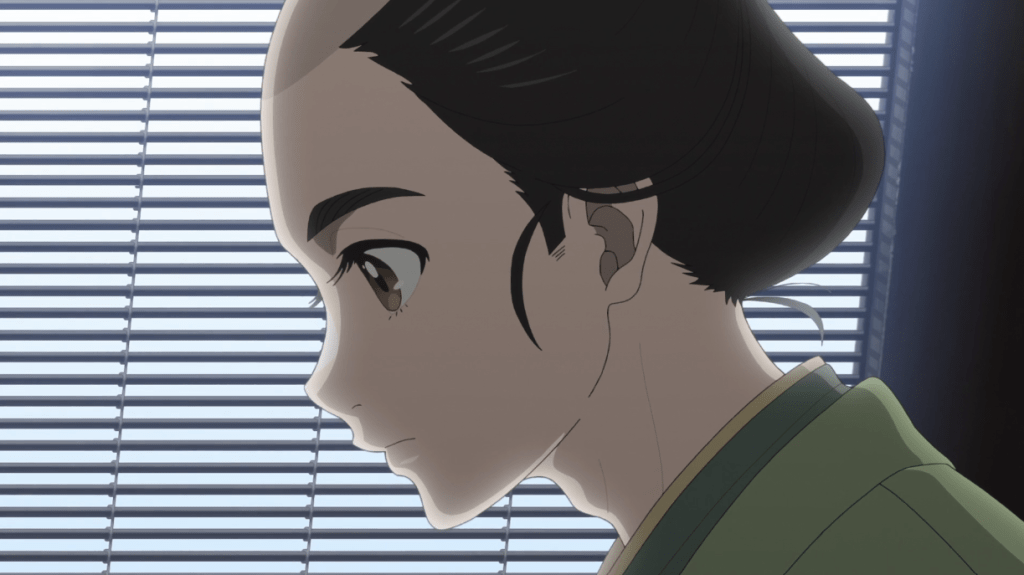
Rating So Far: B+
This supernaturally-tinged period piece is never a priority view for me, yet I still keep coming back to it every week because of how impressively it delivers on its little details. It’s one of the better-looking and better-animated series of the season despite its more understated color scheme, and it certainly has some of the season’s best character design work, but the real joy of watching it is in marveling at all of the little things, whether it’s building or clothing design, how medicine is packaged, or even how the artistry on a dividing screen changes to reflect the current demeanor of the spirit within. It also spins a compelling mystery involving a craftsman’s murder and smoothly integrates in its supernatural aspects without being flashy about it. Give this one a chance and it may surprise you.
Tales of Wedding Rings 2
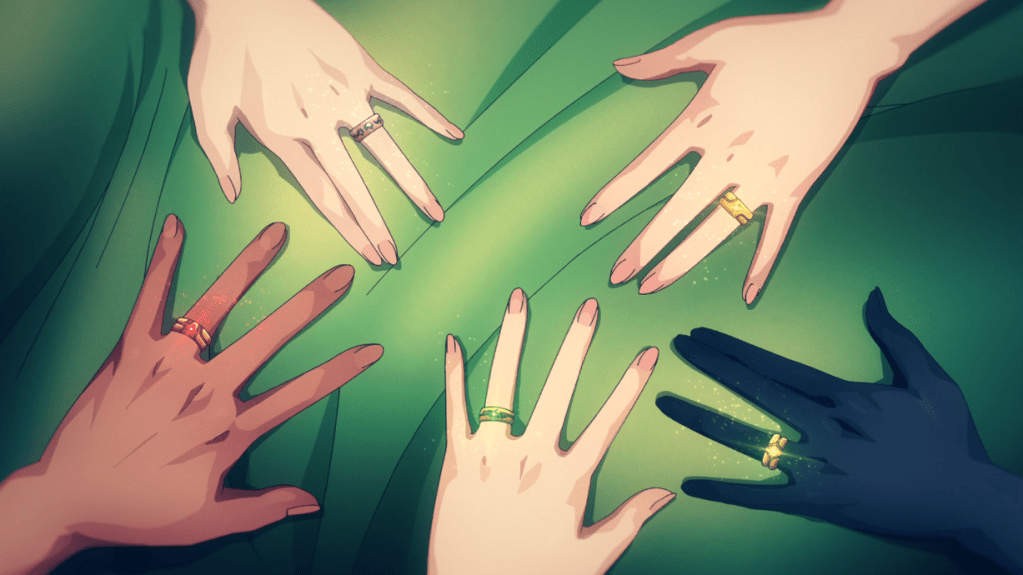
Rating So Far: C+
With Sato’s harem now fully assembled (including tag-along Morion, Hime’s younger sister), this season’s episodes have focused mostly on team and relationship-building and delving more into the history of the Abyss King and his opposite number, the Ring King. This has included dredging up some details which make the whole thing sound a bit more fishy than the standard “oppose the Demon Lord scenario.” Some of the ladies – especially Hime and Granary – also get substantial focus on personal development. The series hasn’t forgotten that fan service is one of its key components, with the OP and most of the episodes finding some excuse for nudity, though it still shies from outright sex despite strong implications that everyone would be stronger for it. Hardly a spectacular series, but it continues to deliver on what it promises.
The Banished Court Magician Aims to be the Strongest
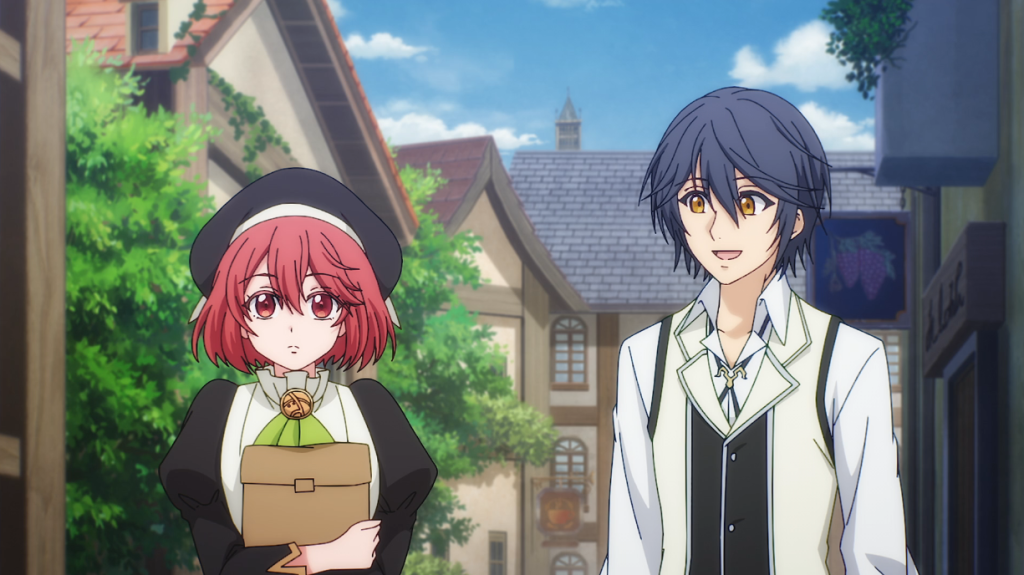
Rating So Far: C+
I want to dismiss this one as just another bottomfeeder in the “banished from the hero’s party” vein, and indeed, it does feature a banished character who’s far more competent than the prince who banished him gives him credit for. Most of what’s aired so far even plays out as utterly standard RPG-influenced adventuring, too. However, the series does have occasional strong points that elevate it a little. Once is the strategy which goes into defeating a floor boss in episode 4; the other is Alec’s confrontation with Regulus, the prince who arrogantly dismissed him for being a commoner, in episode 5. Regulus’ struggle to overcome his prejudice and acknowledge that he may have made a mistake with Alec is some unusually fine writing for a series like this. If the second half of the series can produce more results like that then it may rise above the level of being disposable, forgettable fare.
The Dark History of the Reincarnated Villainess

Rating So Far: B-
I still like the premise here about a woman being reincarnated into (or perhaps trapped in?) a world of her own devising, where she suffers all the consequences of what her adolescent flights of fancy wrought. The most recent episode has also offered some fresh possibilities as the story starts to stray into territory that protagonist Konoha doesn’t remember so well and into having Konoha suffer more direct consequences of writing Iana as a widely-known villainess. On the downside, the series is overdoing her obsession with potential death flags. Tearmoon Empire showed an example of how a series can do that without going too overkill (and even then it was still a little obnoxious at times), so I’d like to see that aspect toned down a bit. And despite certain sharp character designs, the overall artistic and technical effort isn’t strong. Still, the series does have one of the season’s Best OPs in the rap-infused “Black Flame” and has consistently proven to be a mostly-fun diversion.
This Monster Wants to Eat Me
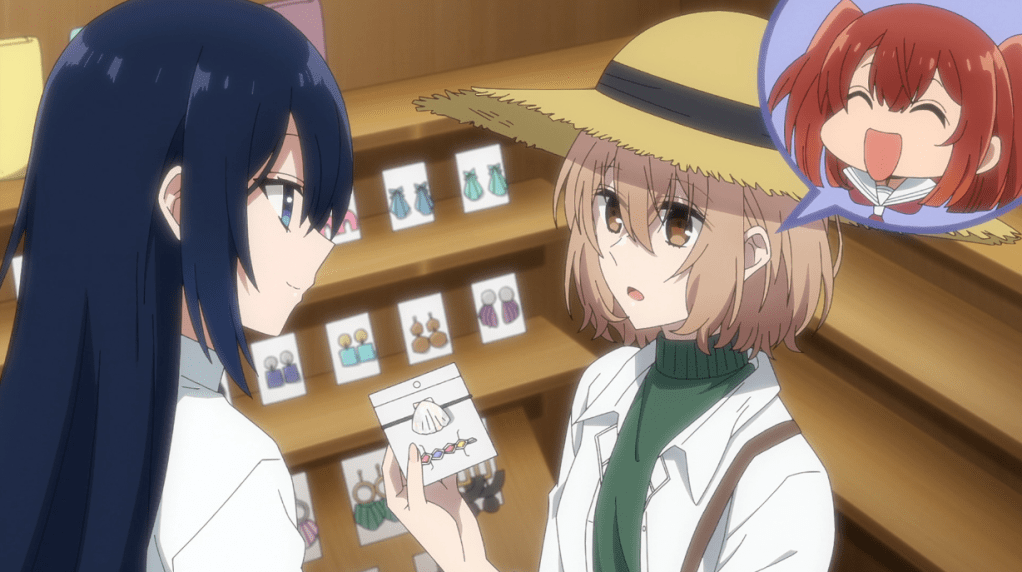
Rating So Far: B
Boy, this is not a series you want to watch when you’re in a funk, as this is one of the most morose narratives to come along in quite some time. Hinako is sympathetic as a girl suffering from extreme survivor’s guilt; she wants to die to rejoin the family she tragically lost (how that happened is finally revealed, as are hints about the physical as well as emotional scars that linger), but can’t bring herself to commit suicide because she feels a voice has told her to live on. (But whose?) Her drifting has caught her in a tug-of-war of wills between two girls: one who’s a mermaid who says she wants to eventually eat her (but is going to protect her from other supernatural creatures until Hinako is ripe enough) and another who purely wants to befriend her and is trying to avoid wanting to eat her – and, in one of the least surprising revelations of the season, she’s not human, either. In addition to what I’m told is a fairly accurate depiction of depression, the series is laced with all kinds of yuri vibes, coming from a similar angle to the eroticism inherent in many vampire stories. How literal vs. figurative mermaid Shiori’s intentions are is debatable, but she and friend Miko look like they’re going to make excellent foils in the kinda-sorta love triangle with Hinako. Not a series for everyone, but worth a look.
Touring After the Apocalypse

Rating So Far: A-
This was always going to be an anticipated show, but the big surprise is how prominent its mystery aspect is. In fact, my biggest regret of the season is that I didn’t go ahead and review this one weekly to thoroughly explore that, as every episode so far has brought up plenty to comment about and speculate on. It also satisfying manages to be cute, melancholy, and even occasionally harrowing all in turn (and sometimes at the same time). I’m not going to say more about it right now because I am almost certainly going to do a full series review at the end, but if you do decide to check it out, be forewarned that it’s not casual viewing (there are sometimes significant details in the background, for instance) and the ED shouldn’t be skipped, since it updates every episode.
That’s it for now. Aside from the regular episode reviews, watch for a second installment of isekai/audiobook recommendations shortly before Thanksgiving.
 USA Anime
Totally agree with you, May I Ask for One Final Thing really is a fun series. I love the main character, she truly relishes her work beating up the bad guys. If only her older brother could see all the good she’s doing cleaning up the trash in the kingdom.
LikeLiked by 1 person