Most of the non-continuing series from the Fall season are now in the books, so let’s look at how they wrapped up. As with this article’s predecessor (the Fall ’23 Mid-Season Round-Up), titles that I covered in episode reviews or full reviews will not be found here, so no Pluto, The Apothecary Diaries, or The Eminence in Shadow. Added in for this run is Zom 100, whose final three episodes went live on Crunchyroll and Netflix on Christmas, and The 100 Girlfriends, which I wasn’t following at the time of the mid-season piece but have since gotten caught up on.
A Returner’s Magic Should Be Special
Season Rating: C+
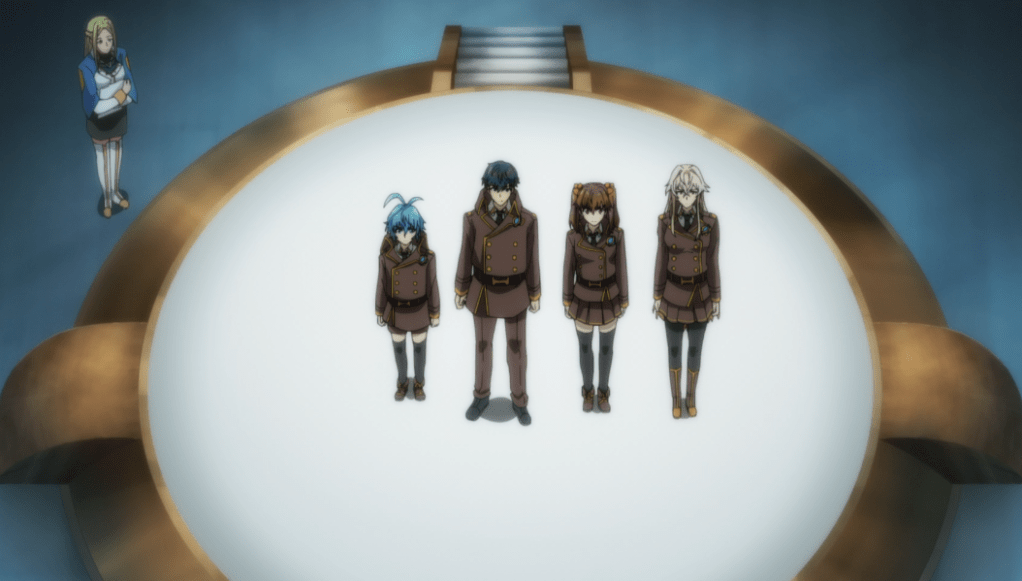
The last five episodes of this series never do amount to anything special, although they do feature some relatively good fight sequences, especially the one in the last episode. (These still excel more on design than animation quality, though.) There is also a sense of the longer story finally coming together as Azrest looking like she’s now formally joining Desir’s team. This elevates the series a little overall, though not to the level that I can recommend it. It is getting a new season, however!
Berserk of Gluttony

Season Rating: C-
Quality doesn’t always correlate to popularity, and that’s good for this series. Despite its inadequacies, it seems to be quite successful on Crunchyroll; the only new series this season which outstrip it in volume of ratings are heavy-hitters Frieren, The Apothecary Diaries, and Shangri-La Frontier. In a sense that’s disappointing, though, as I would rather see better-animated and better-paced series be that popular. Its last few episodes don’t change how much of a letdown this adaptation is, or how its ambition in action scenes isn’t matched by its technical merits. Still, even if it was given Shangri-La Frontier-level visuals, I’m not sure that the series would be much better. At least it did end at the most logical stopping place.
Butareba
Season Rating: B
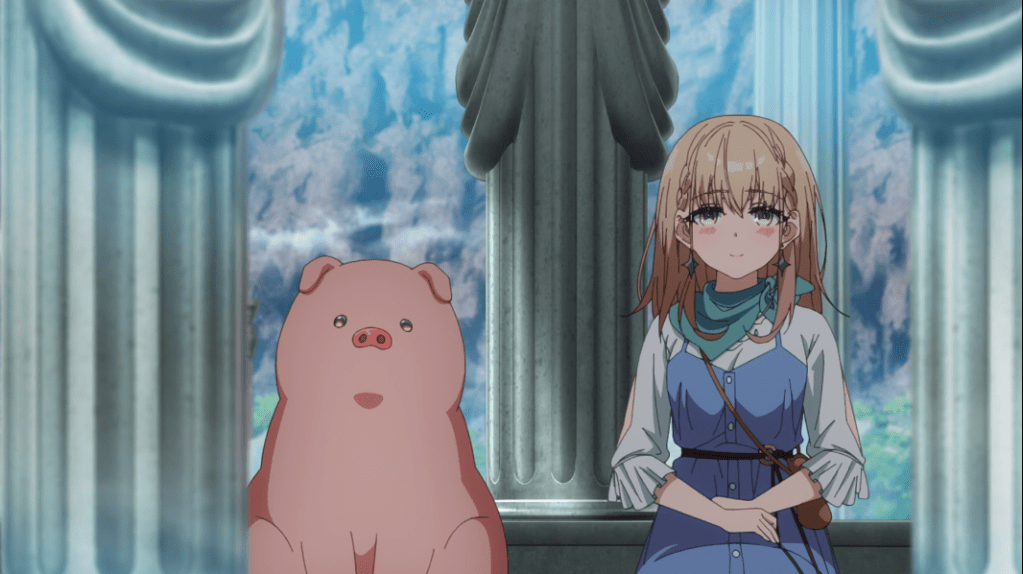
Due to a production delay a few weeks back, this one still has one more episode to air – and according to a recent announcement, the finale won’t come until after January because of further production delays. However, episode 11 is the Big Reveal, the one which explains the whole scenario concerning the Yethma, why the male protagonist came to be Mr. Pig, and what he has to do to return to human form. Remarkably, nearly every bit of it actually makes complete sense, even down to why Yethma body parts are prized. Some of the particulars are every bit as ugly as I might have expected, but the reasoning behind them is more pragmatic than twisted. Just as importantly, though, the relationship between Mr. Pig and Jess proves to be a remarkably sincere one. Given how things turn out, viewers were getting some very wrong initial impressions about this one. The one big negative is that the animation in one key action scene is atrocious, but as long as it doesn’t go “splat” with its finale, I overall consider this to be one of the season’s mid-tier titles on quality.
Dead Mount Death Play
Season Rating: B+
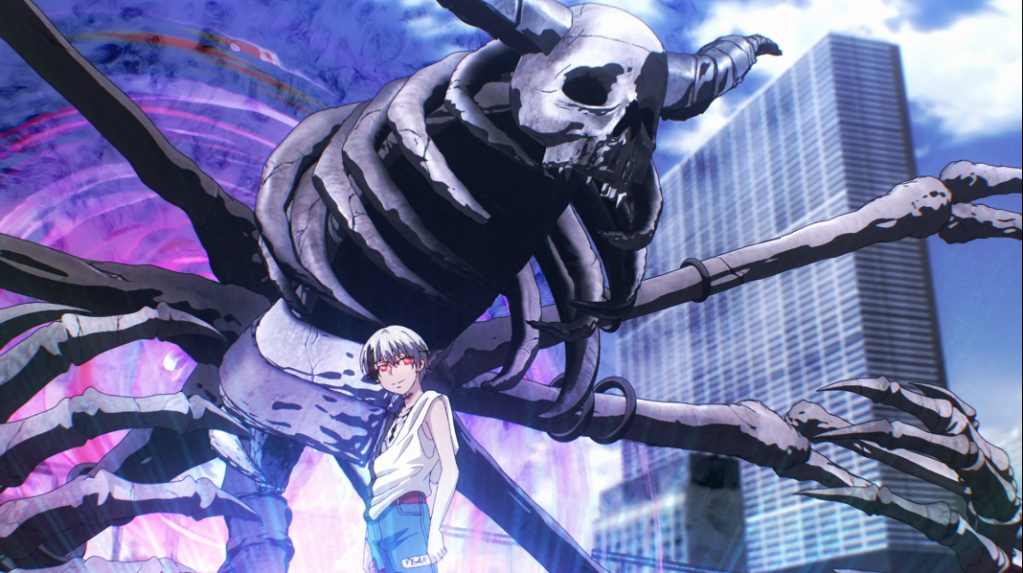
The assorted threads which have been built up over the course of the series have gradually started to converge, resulting in a semi-showdown across multiple fronts. And yet, very little of the showdown is actually about dramatic battles. Many parties involved don’t need to crush their enemies to accomplish their objectives, so I guess you could say that the underlying theme of the last few episodes is “stay true to your goals.” The finale does not wrap up anywhere near everything, but it is still satisfying because it pushes the story forward and allows Corpse God to stand with more confidence in his goals than ever before. It’s definitely among the best of the season’s second-tier titles.
Frieren: Beyond Journey’s End (Best of Season)
Season Rating: A
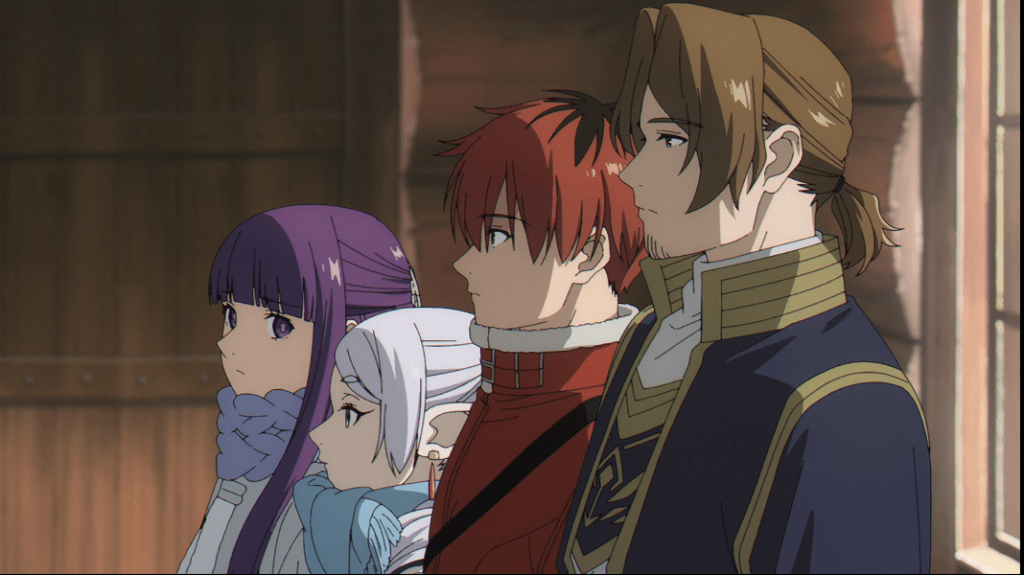
Frieren is going to continue straight into its second cour, which I understand will mostly be one big arc instead of shorter stories linked together thematically. The series has been doing so wonderfully at that approach, though, that I am curious to see how it will handle a more dedicated story. Certainly, the series had no let-downs in its final few episodes, with a fourth member formally being added to Frieren’s party and each episode hitting home to some degree on thematic and/or emotional levels; highlights include learning that Himmel was a self-made rather than destined hero and that he did, at one point, effectively propose to Frieren, and only decades later does she finally understand that. Frieren has certainly grown as a character over the course of the season, and the humor continues to be well-handled, too. This is such a remarkably well-made series on all fronts that it may be my pick for the best of the year, not just the season.
Goblin Slayer II

Season Rating: B
The last few episodes of Goblin Slayer finish the arc stemming from the elf homeland visit and have a one-off about Goblin Slayer being tricked into fighting not-goblins for a change before heading to a finishing arc involving an adventure-seeking princess who, predictably, gets herself into trouble with goblins. As routine as that last arc is within the context of the series, it does have several strong points: it includes the brief participation of two familiar faces, takes a deeper look at how adventurers discuss and adjust strategies according to the situation, and gives a stronger sense of how scenarios play out when different groups are simultaneously working on different but ultimately related objectives. (It felt like a call-out to multi-table role-play events where parties of different levels are cooperatively doing different missions suited to their respective levels.) Most importantly, it shows well how well Priestess has learned and how broad Goblin Slayer’s impact has been, even when he still seems himself as very limited. (And it has a cool fight against a giant, disembodied hand, too!) Maybe not the most thrilling of finishes, but still a largely satisfying one.
Helck

Season Rating: C+
Grade-wise, I have to penalize this series for the drudgery that was the first half of this cour. Thankfully, the second half is a distinct improvement, with the leads getting back to actually doing something, Azudra getting some nice battle scenes of his own, and the spy girl getting some feature time digging into a mystery connected to the backstories. Most importantly for me, Vermilio gets a chance to show off in every respect: her fire magic, her resolve, and yes, even her empathy. She is the indomitable ally and anchor that Helck needed, and some of the animation of her in the final episode in particular is beautiful. Everything about her in the last few episodes reaffirms why she’s one of my favorite characters of the year. The season ends on a proper stopping point rather than a conclusion, and it regains its footing enough by the end that I will probably watch more if another season is animated.
I’m Giving The Disgraced Noble Lady I Rescued A Crash Course in Naughtiness

Season Rating: B-
The later episodes, which mostly form an arc involving Charlotte going in disguise to meet the younger sister she had to leave behind (and which also requires Allen to go back to his parents and former college for a bit), doesn’t at all change the series’ status quo. It’s still not a memorable show, but it remains cute enough and fun enough to be good light viewing. (And man, Allen and Charlotte formally need to become a couple.) The last scene suggests a plot direction for more content, but at this time a sequel hasn’t been announced.
I’m in Love With The Villainess
Season Rating: B-
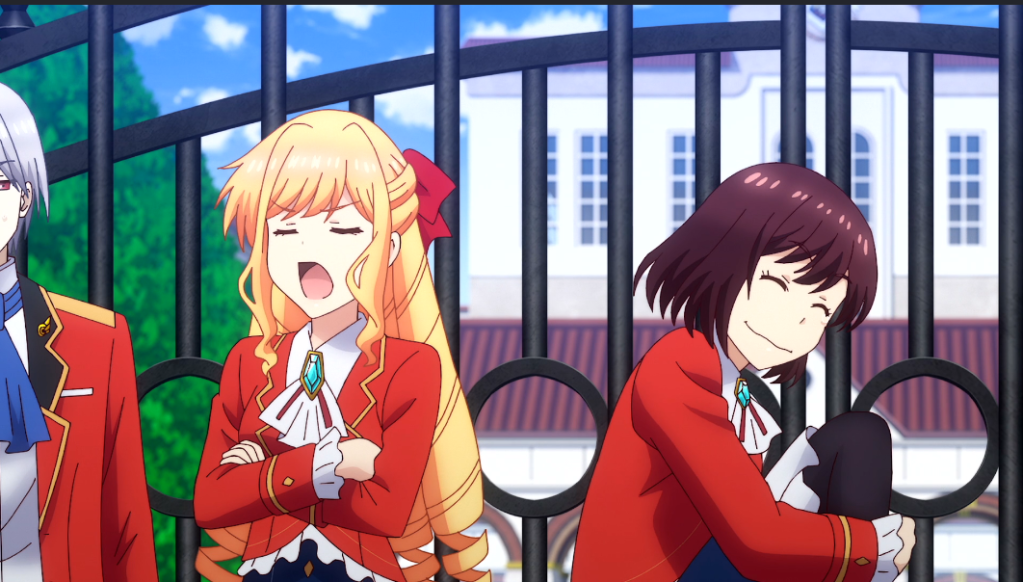
The series wraps up its mostly-serious arc before plunging into a final arc involving a visit from a princess who’s a little too perfect, but that shouldn’t be a surprise since her name is Manaria Sousse (a thinly-veiled reference to “Mary Sue”). The real issue is that she almost immediately becomes a rival to Rae involving Claire and seems to be doing it quite deliberately, and Rae knows from her game lore that Manaria is nearly impossible to beat. That forces Rae to consider how serious she is about Claire and whether she’s really fine with Claire just being happy, and it forces Claire to consider how she actually feels. Satisfying enough in the end, I guess, but not the show’s strongest or most entertaining part. Probably will watch more if they make more, but it’s not a high priority.
KimiZero (aka Our Dating Story: The Experienced You and The Inexperienced Me)

Season Rating: B
Really feel like this is one of the season’s most under-appreciated titles. It doesn’t do anything dramatically different, but what it does as it takes the story through some minor crises, some misunderstandings, and a possible break-up scenario feels very real; indeed, I’ve seen comments from many viewers that the ground covered by episode 11 in particular was very reminiscent of their own high school appearances. (I never dated in high school, so I can’t really relate myself.) The series still can’t completely escape the feeling of at least partly being a wish fulfillment scenario, but it does work hard to show that this relationship is more than just a gimmick. The final episode is satisfying enough that I don’t think more needs to be animated, though I will watch if it is made.
My Daughter Left The Nest and Return An S-Ranked Adventurer
Season Rating: B-
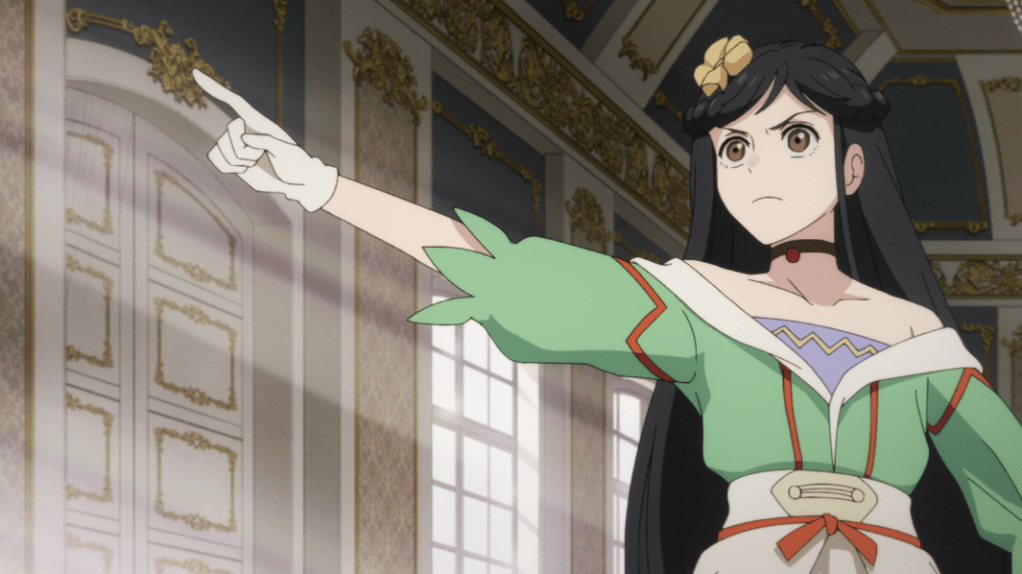
This one joins Frieren as one of the least conventionally-structured fantasy series of the year, albeit in an entirely different way. There are still fantasy action elements, and some of those do still show up in the late episodes, but that’s not really what the series is about. (Which is good, because its artistic and animation qualities leave a lot to be desired.) Even to the end, this is still a remarkably character-focused series, and growing hints of a bigger and more sinister plot (including a fake prince) don’t change that. After resolving the elf situation, the series spends one episode being fairly silly before spending its last two episodes focusing on the regrets lingering on both sides from the way Belgrieve left his adventuring party many years ago (after losing his leg) and whether or not Angeline has matured enough in order to handle a wholly different battlefield: a noble soiree done to celebrate her defeat of a Demon Lord, one that may be done with ulterior motives. She handles herself remarkably well without ceasing to be Angeline and gains a surprising award in the process.
I dearly hope another season of this gets made (although perhaps with a better animation team?), as this series has such a good foundation built that it would be a shame to let it go just at this season.
Shangri-La Frontier

Season Rating: B
The strength of this series is its sharp action sequences, and the final third for this season continues to proved solid on that front. The character interactions also start to come more into play as the third of the trio featured prominently in the OP finally joins the action. As the trio prepares for and takes on a unique quest against one of the seven legendary monsters of the setting, the sense gradually increases that some of these NPCs may be more than just ordinary AI-controlled constructs, something that will hopefully be explored more as the series continues into the Winter ’24 season. Some more looks at other game settings is also a nice touch. I’m lowering the grade a little because the novelty of the series’ approach has worn off, but this one still represents the upper side of the season’s mid-tier titles.
Shy
Season Rating: B
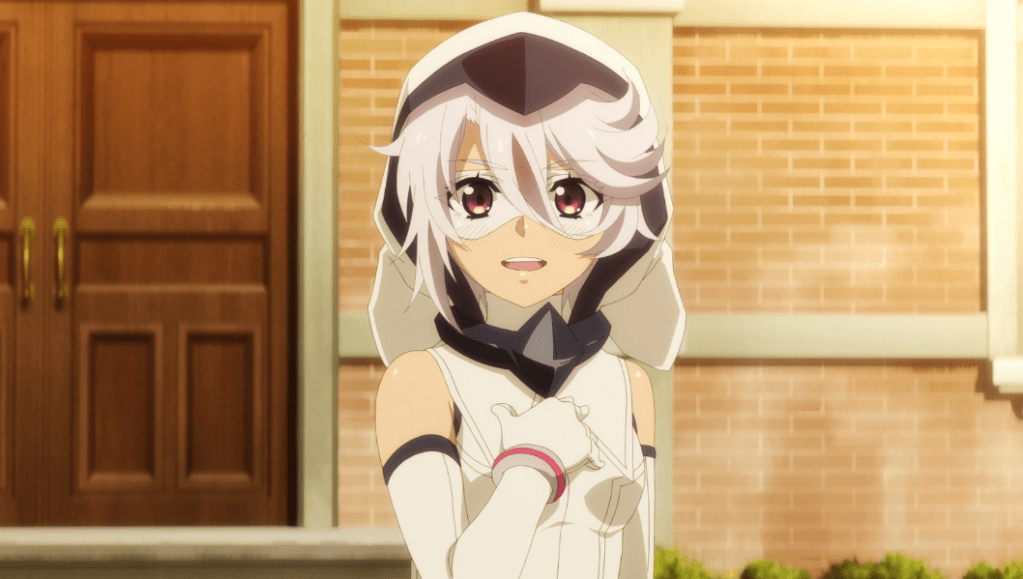
This was never going to be a stand-out series, but it does save some of its strongest content for the Russia Arc and further establish that, why Shy learning to use her powers to fight was an important development, the ranks of the heroes still need someone like her at least as much for her empathy. Because when you’re faced with a villain who takes hidden desires and brings them to the forefront in ugly, powerful fashion, empathy is the surest way to counterbalance it. The last arc fully explores Spirit’s story and origins, but just as importantly, it gives Shy a chance to step up in a big way, and show what she’s learned from other heroes, while still allowing the crucial battles to be more about Spirit. Teru also has a strong anchor grounding her at home, too. This was a delightful series overall, and more is coming, apparently featuring two characters who debuted in the latter half of this episode. I’ll be back for that.
Spy x Family
Season Rating: B
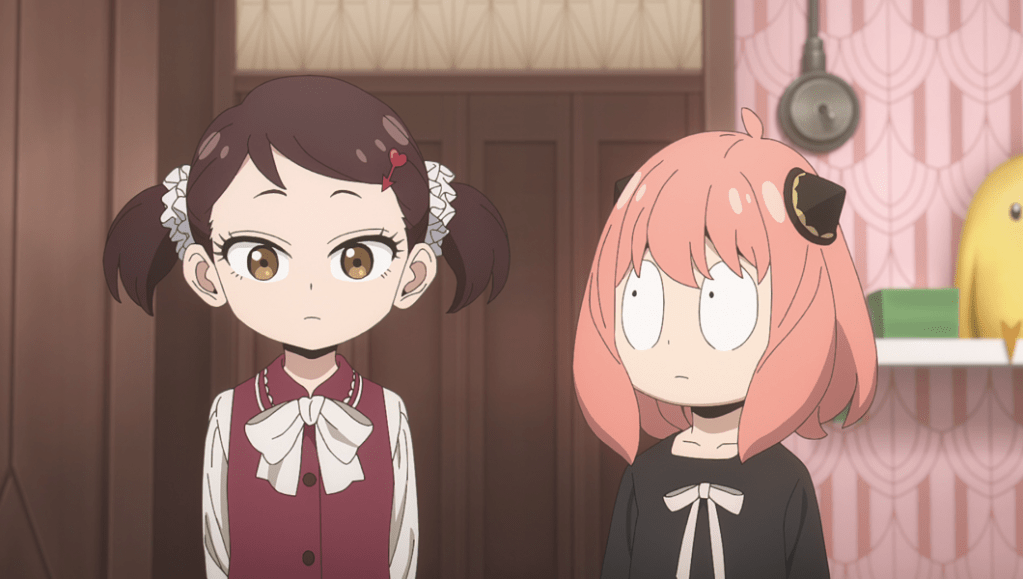
Not much I can add here, as my opinion from before hasn’t changed. Yor’s battle against the assassins on board the cruise ship is the most serious this series ever gets, and it’s one hell of a succession of fight sequences, but it also, satisfyingly, takes time to look at what Yor wants going forward. Aside from that, the rest is just a collection of fun (and occasionally very funny) little sequences, with my favorite being the way Anya gets her mind blown by the fact that many of her classmates don’t find her having been on the cruise ship to be all that special. Still very entertaining, but except for Yor’s fight, not the series’ best content.
Tearmoon Empire

Season Rating: B
This one maintains its previously-described form though to the end of this season, and in this case I consider that a plus. Mia is still inadvertently coming off as a genius to those around her, and that gag still hasn’t gotten old even through to this season’s last episode because the series continues to come up with creative ways to show how she does it. She even has some moments where she shows genuine skill (such as in figuring out that there has to be a sinister scheme afoot behind the rising troubles in Roland), and the way she defeats the chief villain of this arc raises absurdity to another level, yet that entirely fits the tenor of the series. The minor downside is that the more genuine intrigue of the Roland Rebellion isn’t at all the strength of the series, but I still had a good enough time with it that I will happily watch more if more gets made.
The 100 Girlfriends Who Really, Really, Really, Really, Really Love You
Season Rating: B
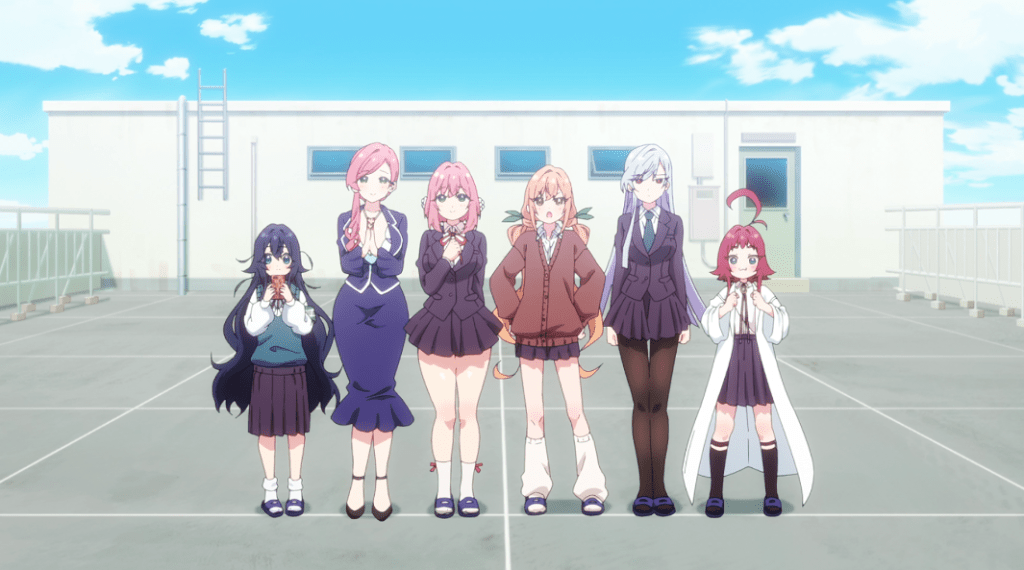
I’ve seen people refer to this one as a “best of season” title and laud it as both the newest evolution of the harem genre and one of the all-time-greats of the genre. I am not on that boat, but I will acknowledge that, as pure harem romcom series go, this is one of the better ones. Surprisingly, the greatest strength of the series is actually protagonist Rentaro, who really does seem genuinely committed to fully loving all six of the soulmates he’s gathered by the end of the season, and he’s endearing because of that passionate commitment. The girls – each of whom fills her own specific archetype niche – are also generally more mutually supportive than at odds with each other (though they do still, to a degree, compete with each other). It’s lighter on fan service than a lot of harem series but is certainly not devoid of it, and some of the antics are rather funny. Several more potential new girlfriends make cameos in the last episode, and we’ll get to the see them when the recently-announced next season arrives.
The Ancient Magus’ Bride 2

Season Rating: A
Last time I said this is “a strong contender to at least make the Top 10 list for the year at this point.” That may have been understating the case, because the overarching arc involving the cursed book and Philomela gets one hell of a strong finish. Ancient gods and otherworldly, Cthulhu-esque beings abound, but the story ultimately comes down to the unrelenting efforts of a group of friends to save one horribly abused girl and make her understand that she can actually have her own life, that she can be happy. In retrospect, much of the slower earlier content was about setting up the circumstance so that this group would have tight enough bonds to want to so determinedly rescue Philomela, with each playing a crucial role in convincing Philomela (Lucy is essentially the “tough love” angle, for instance), and the the emotional and dramatic payoffs are huge. A minor late twist and the series not ignoring the weight of the deaths Chise was indirectly responsible for both cleaned up some loose ends and provided future possible story threads. This is going to be the last animation for a while, because the anime side has now fully caught up to the manga, but the advertisement at the end suggests that more will come eventually. That will be very welcome.
The Demon Sword Master of Excalibur Academy

Season Rating: B-
The final few episodes here draw bigger connections to the past and stronger implications that the Voids may have a distinct connection to events from the past. Also, there’s a grander sense of information manipulation at an epic scale (and spanning centuries) going on here as Leo and Liselia’s team visits Liselia’s former home, which was thought destroyed years earlier by a Void Stampede. Of course, there’s no shortage of Leo showing off his power, and Liselia finally seems to be growing into the role of a Vampire Queen and the kind of leadership that entails. This still isn’t a spectacular series, but it has enough going for it that I would welcome additional animation. As of this posting, however, none has yet been announced. An upcoming English dub for the series has been announced, though, which suggests that the series has been a ratings success.
The Faraway Paladin: The Lord of Rust Mountain

Season Rating: B
The series makes up for a slower first half by devoting much of its last third to a series of battles, including the epic confrontation with Valacirca, which spans episodes 10, 11, and the first part of 12. Valacirca does not disappoint as a foe, and the array of support Will and crew get in order to face him down suitably contributes to the kind of gravitas that a fight of this magnitude should have; this what a fantasy battle against such a potent foe should be. Alphonse’s fight against the boss demon prior to that is also a triumphant bit of dramatic fantasy fight design as well. Lots of great fantasy feels here, with the only thing missing being a good woman for Will. (Reystov clearly has a love interest at the end, and one case easily see Menel getting together with the blond elf.) Sadly, there will probably be no more animated content, as this season covers most of the rest of the novel content; only a couple of short stories from the fifth and final novel have not been animated, and at best those would only amount to an OVA episode or two.
The Kingdoms of Ruin
Season Rating: C-
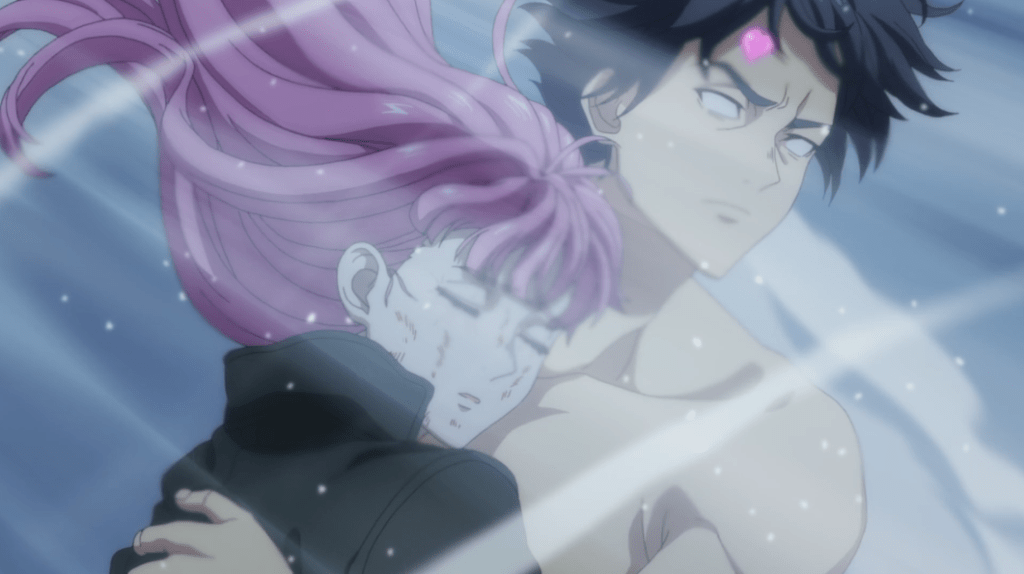
Even though it gets into some slightly more interesting thematic territory in its later episodes, this one is still a mess up to the end. That being said, I will give the series a bit of credit for actually explaining why Doroka is so determined to be the Nice Girl: if she doesn’t act that way, we get the Queen of the Redia Empire instead. So her behavior is both an emotional defense mechanism and a way to to keep her power in check – because the full extent of what her love magic can do is, quite frankly, scary. The scene where she finally breaks down and shows what she can really do is one of a couple of high points in this last third of the series, but it’s not enough to balance out how disappointing the rest of the content is or how much the series sucks at using humor. If another season of this gets made, I might not be back.
The Rising of the Shield Hero s3
Season Rating: B-
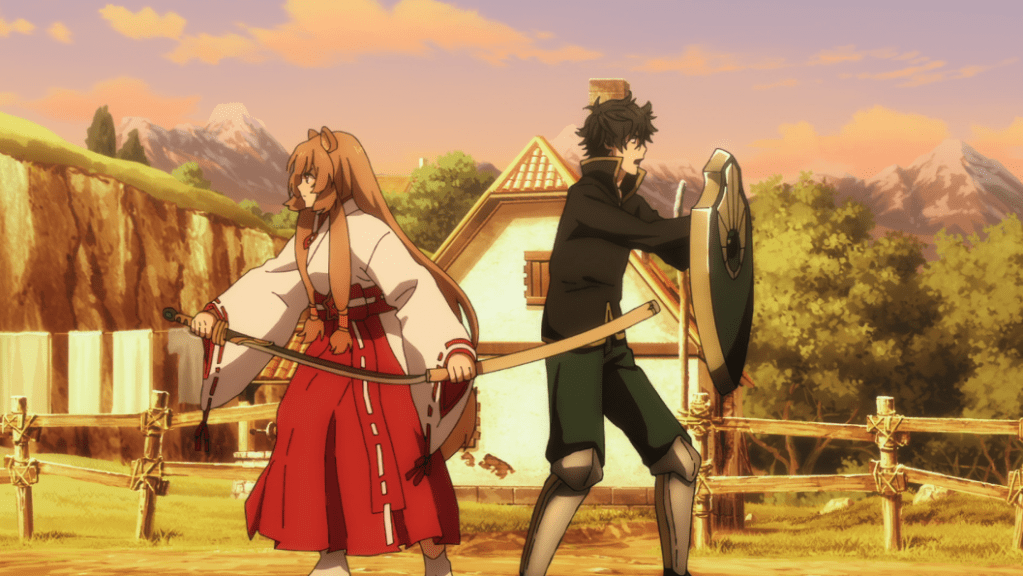
In the end, season 3 is really just the first half of a section of the story which feels like it needs two full cours to play out, so I fully expect more to be coming. While the season isn’t a huge improvement over s2, it is still an improvement, and Naofumi does eventually collect the rest of the damaged Cardinal Heroes by the end of this segment. A dragon also becomes a threat for a while, and the season ends with the surprising reveal that Raphtalia wearing miko robes is a really, really bad idea in this world even though she looks great in them. Because you see, she has a hidden background which has never even been hinted at before and. . . well, the series felt like it was pulling a plot twist out of its ass there. I do like the continuing mystery over why the former king cares so much about the white tiger-themed demi-human siblings; perhaps getting into that further will eventually reveal why Atla (the female one) seems to have game-breaking power in her strikes. But really, Naofumi, when are you going to fix that house? Will probably continue to watch when more comes out, but it’s not something I will be eagerly awaiting.
The Saint’s Magic Power is Omnipotent
Season Rating: B-
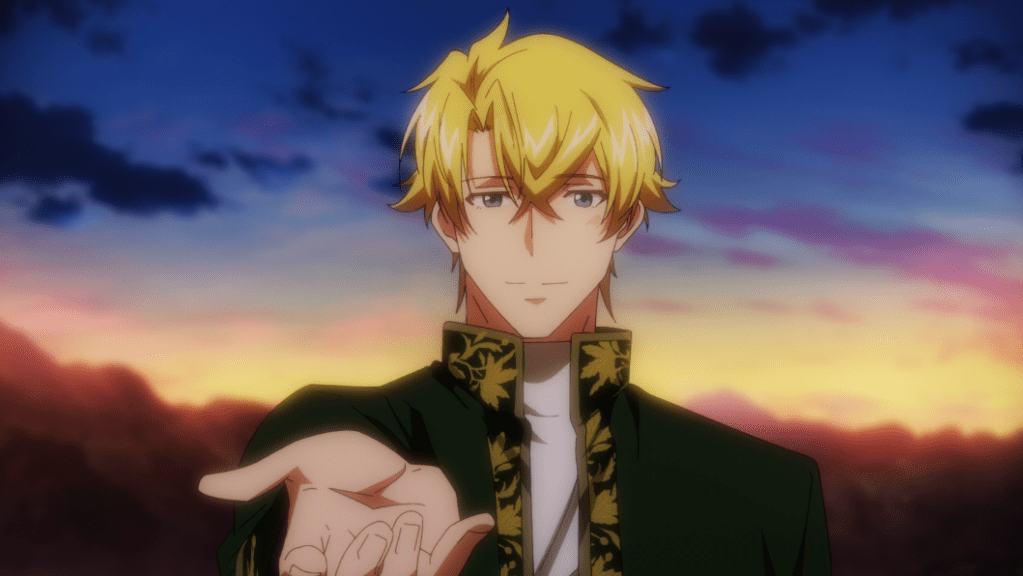
Throughout the season, this series was hampered by its slow pacing, but it was still always gradually building towards one thing: what Sei’s future would be like after her services as the Saint would no longer be needed. Sure, she could continue to work at the institute, as her potions would always be in demand, but independent working women is just not a thing in this setting. She would always be the subject of power plays among the nobility. Fortunately for her, a ready solution was already at hand. Commander Hawke comes from a family of sufficient standing to make a suiting match, and he both genuinely loves her and serves as the impetus for her Saint power, and Sei is clearly more fond of him than she knows what to do with. By finishing the season with Hawke’s proposal, the series finishes on its strongest and most satisfying possible note.
Zom 100: Bucket List of the Dead

Season Rating: B+
The zombies have come to Akira’s home village, driven there by malcontents introduced in episode 9 (i.e., before the long hiatus). All of them feel like life has treated them badly, but as each of their brief backstories shows, each of them has to take at least some of the blame for how their lives didn’t turn out happier. The essential lessons of these episodes are not to drag down innocent people with your own problems and that each person at least contributes to their own luck (or lack thereof) by what they do or don’t do. But even though these episodes heavily emphasize that and Akira’s attempts to make amends with his father, Zom 100 is still Zom 100. There’s lots of zombie action, lots of creative ways to deal with said zombies, and of course more censored male nudity. Each of the four principal cast members gets his or her turn to shine before they all leave again at the end for more adventures. Overall, a solid, good-looking production, and I would certainly watch more if another season gets animate with a proper production schedule.
That’s it for now. Check back in a couple of days for the Best of 2023 piece!
 USA Anime
The strongest of the season for me was Frieren, Apothecary, Ancient Magus and to a lesser extent Shadow in Eminence and Jujutsu Kaisen. With some complaints about feeling shanghai`d by Jujutsu dumping all of its previous story telling in favor of going all “The world is pain and death”.
Regarding Butareba, as a man who disliked sexually deviant characters like Rudeas, do you think it would be worth watching? Is the MC too much of a lech in that context?
LikeLike
Pig is not Rudeus. He’s not totally devoid of lewd thoughts but he actively tries to be respectful of Jess as the series progresses.
LikeLike
Glad to hear it. I will give it a go.
LikeLike
No Overtake? You missed a hidden gem.
LikeLiked by 1 person
I’ve heard a couple of others say that, too. The problem was that it didn’t impress me enough with its first episode to break through this season’s enormous logjam of good/entertaining titles.
LikeLiked by 1 person
Yeah… Overtake was one series that really needed the full three episodes.
LikeLike
Yeah, Tear Moon Empire was surprisingly good. I really didn’t have high hopes for this series, but it was really cute and funny. I also liked how Mia is slowly finding out that her demise in her past life wasn’t entirely her fault. Yes she was a foolish leader, but she also wasn’t given an opportunity to get better either, and it’s very likely she was set up.
LikeLiked by 1 person