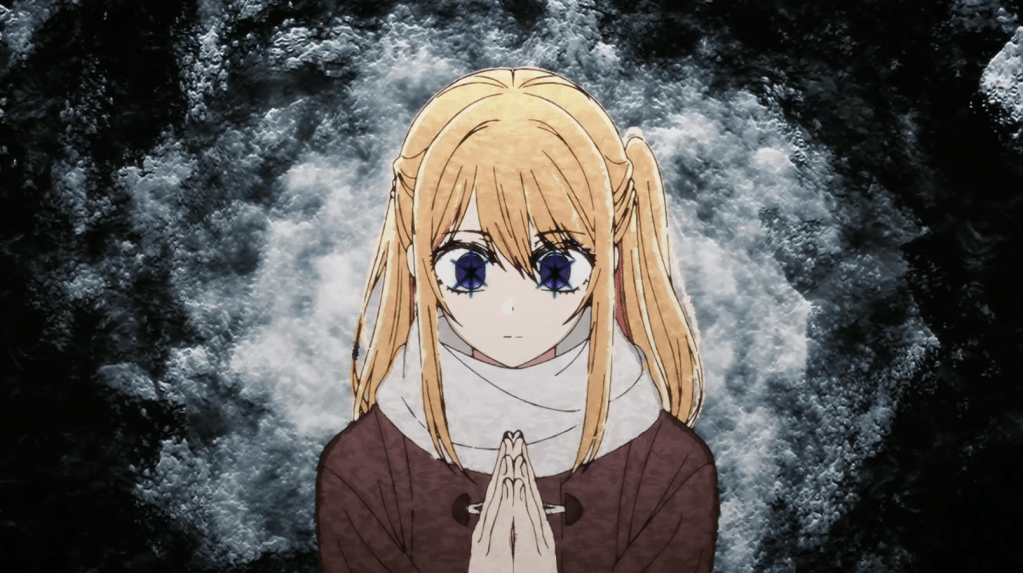
Spice & Wolf episode 25 (season finale)

Rating: B+

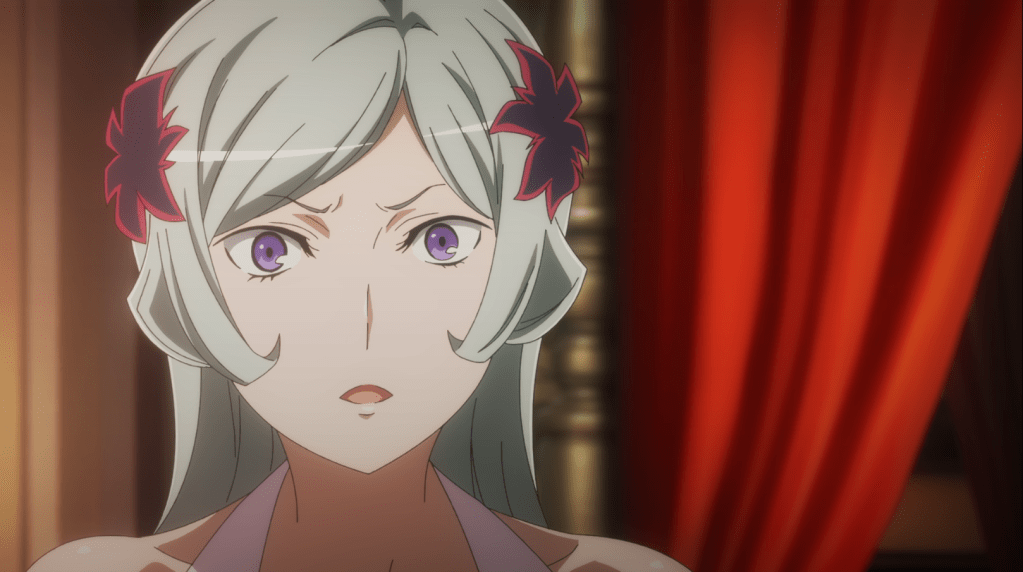
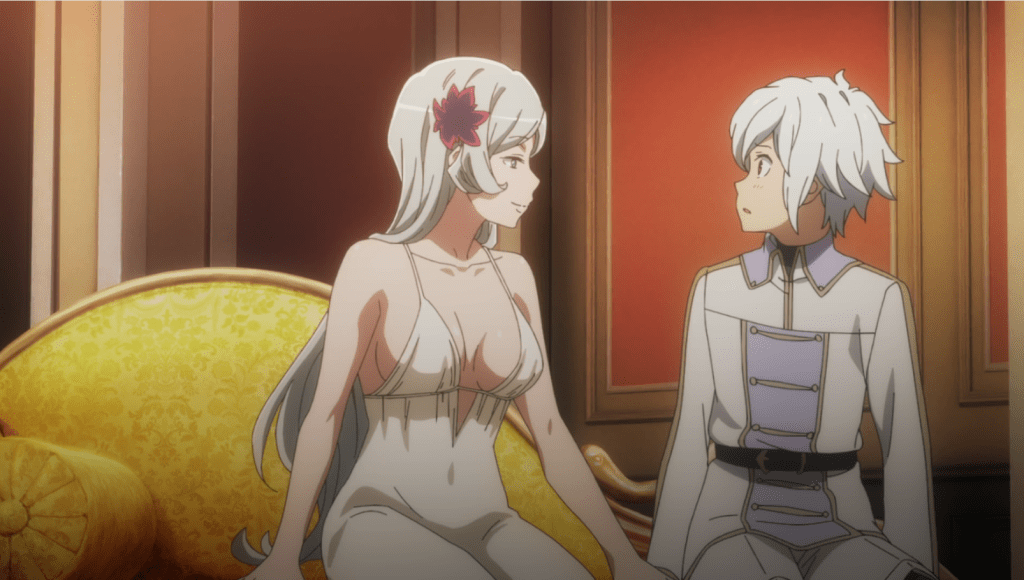
Elsa is among the most popular supporting characters in the whole franchise, and this episode beautifully shows why. This may be Lawrence and Holo’s show, but Elsa is the true star of this arc’s climax.

While Lawrence came up with the basic idea and Holo’s abilities as (effectively) a harvest goddess made the miracle possible, the way this plays out is Elsa’s plan, and she’s the one who has to pull if off. She has to be the one to do the talking if it’s to work at all, and she’s the one who has to phrase things in a way that convinces the bishop without alienating the villagers, so Lawrence is really just relegated to a clean-up role this time. She performs with such calm, clear conviction that Lawrence not having to step in to help is the least of her accomplishments; she’s so overwhelmed the bishop that she’s in complete control of the narrative here. Even if he realizes that she has boxed him into a corner, he has no way to deny the evidence before his eyes without looking foolish. Total victory: Elsa!

The matter of the Church trying to throw its weight around was only half of the problem, though, so Lawrence has to finish the job. He’s clearly showing off here, but that can be forgiven because he needs to manipulate the decision every bit as much as Elsa did, just in a different way. Whereas she bowls everyone over with a trick of faith, he does it with twists of economics, including the bold declaration that the agreement set up by Father Franz has to go. It is the root of the conflict, after all, and Lawrence isn’t wrong that ending it will greatly lessen any chance of a stunt like this happening again. But even with the money matter resolved, there’s still a matter of what to do with all the wheat. (The adaptation doesn’t bring up here a key point in the novel: that the bountiful harvest of wheat has saturated the market in the region, hence making selling a large amount of it difficult.)

Why the solution works only only kinda-sorta makes sense in the adaptation alone. The adaptation does point out that biscuits (the English translation of the novel uses “cookies” here, but this is simply a “what’s cookies in one country is biscuits in another” situation) are essentially unknown in the north but common in the south, but the clue which tipped Lawrence off to that – mentions during the meal three episodes earlier that Elsa and Evan were unfamiliar with southern bread varieties – is difficult to notice the first time around and reference is not made to it at all in this episode. The episode could have also stood to emphasize a bit more that Lawrence selling his wheat to villagers at profit was his promised reward for helping solve the problem. The timeline doesn’t exactly work out here, either; if Lawrence and Holo are only around for three more days, how did they already know that the cookies were a huge hit in Ernbech? The turn-around is rather tight there. This is a flaw in the original novel, though, so this point isn’t the anime version’s fault.

The episode ends with Lawrence and Holo setting out on the next leg of the journey, this time to the port city of Lenos, after learning what they could from Father Franz’s books. Though Elsa won’t pop up again for quite a while, this isn’t the last we’ll see of her if the animation continues, and apparently it will; a second season of this adaption was greenlit as this episode’s broadcast concluded, one that will likely cover four of the next five novels. (Novel 7 is a short story collection which has already had one entry adapted, and this series has bypassed a chance to adapt another.) When that will come hasn’t been announced, but I expect the Summer or Fall season of next year is probably reasonable.

On the whole, this adaptation hasn’t been perfect, and you can quibble endlessly about whether or not the character design tweaks are an improvement. However, as a long-time franchise fan I have generally been satisfied with the result and look forward to watching more of their adventures in animated form.

Oshi no Ko episode 22

Rating: B+

Looks like the trip to Miyazaki is being put off for one more episode because there are still some relationship issues to clear up (or muddy up further, depending on which girl we’re talking about). But a series like this one could never let a whole episode ride doing things as mundane as Aqua having what dates with both his wannabe-love interests. The darkness is never far away with this series, and hoo boy, does it pop up in a big way at the end of this episode!

Kana was my Best Girl at the end of the series’ first season (in fact, she was effectively my pick for Best Supporting Character in 2023), but she has been largely outshone by Akane this season. That doesn’t change as this episode progresses, as Aqua’s interactions with Akane in this episode are definitely more interesting and impactful than his interactions with Kana. Despite that, the shopping date Kana scores with Aqua is still cute and meaningful. Since they have reunited as teenagers, the series has hardly ever let us see what Aqua currently thinks of Kana; nearly every scene between them is either from her perspective or that of other observers. However, there’s always been a sense that Aqua is comfortable with her. They may snipe at each other at times, but as Ruby once pointed out, he acknowledges that she’s worth talking to, and he’s put no small effort into supporting her on various occasions. How far he goes with treating her to dinner steps beyond just being a thank-you for help shopping for a rolling suitcase, and I’m not so sure that Kana’s just in her headspace when she wonders if it’s a coincidence that his color choice is the same one her fans use for B Komachi performances.

Aqua’s dynamic with Akane is very different. They are both, to a certain extent, using each other for their convenience. Aqua’s more open about it to himself, enough so that the very intuitive Akane doesn’t fail to notice, but Akane is also using Aqua to sample what it means to be in a relationship (even if she won’t necessarily admit that even to herself). She’s deeply grateful to Aqua, and certainly empathizes with him, but she can’t firmly say she’s in love when Aqua confronts her about it point-blank. For anybody else, this could just be symptomatic of a teen girl trying to understand what love is, but Akane is both a consummate actor and a skilled profiler. The possibility that she’s just been working out a new role all this time can’t be discounted, even if she may not understand that herself.

But unlike Ruby and (to a lesser extent) Kana, Akane does fully understand the change in Aqua and what it means. She’s also quick to recognize what even Aqua himself hasn’t: the hole in Aqua’s understanding of the situation with Taiki’s parents. The abstract visual here of Akane reasoning that out is a neat, well-handled touch in the same spirit as certain scenes seen during the play, especially the ominous overtones that the scene ends with as Akane realizes that, for Aqua, truth and freedom may be inherently incompatible. Akane’s sense of the lurking monster in Aqua’s soul is especially effective.

Of course, this wouldn’t be Oshi no Ko without all of the accompanying light touches. Akane’s pouty face when Aqua admits that yes, he does actually have a sex drive is positively adorable. And of course Kana’s always great when she goes into full-blown Cute Mode, contemplates what to wear for the date, or freaks out over how far ahead of her Aqua’s been thinking and how out of control of the situation she is. Really, she just can’t get on top of the situation where Aqua is concerned.

And all of that serves to completely throw off the audience from being prepared for the episode’s real bombshell. Ruby has stood before Ai’s grave before this season in order to get in little snippets of screen time – or at least that’s what seemed to be going on. In retrospect, that was all a set-up for this scene, where we see that Ruby isn’t the only one who’s been visiting Ai’s grave. Even before he outright admitted it, that this other visitor was the true Big Boss was evident from the moment he appeared on the screen; if the music or meta structure of how these scenes play out hadn’t given it away, how uncannily even the side view of his head resembles Aqua’s, or how his hair color resembles both Aqua’s and Ruby’s (they certainly didn’t get that entirely from their mother!) would have. That he’s finally appeared at all almost overshadows the significance of him visiting her grave with a full bouquet of flowers in hand, as if she were still dear to him; after all, he did arrange to have her killed. But the attitude he displays is exactly what I’d expect for a person who could do that.

Likely Aqua and Ruby’s true father making a cameo is just a tease for now rather than the start of a plot point, though. And if the story doesn’t come back to that anytime soon, that’s perfectly fine. Just knowing that a monster like that is out there lurking around in broad daylight aligns quite well with the underlying tension of the series. Besides, the series has only two episodes left this season to deal with the visit to Miyazaki. (Although at this point I’m expecting the season to end on some kind of cliffhanger in Miyazaki.)

Spice & Wolf episode 24

Rating: A-

Last episode ended with Lawrence, Holo, Elsa, and Evan all fleeing Tereo, which is unquestionably the smart and safe move for all of them. However, as becomes apparent during their flight on Holo’s back, the smart and safe move isn’t necessarily one that everyone can live with. And that provides the grounds for the return to Tereo for the arc’s dramatic finale next episode.

Not surprisingly, the catalyst for this comes from Elsa’s interactions with Holo. She knew, from having seen Holo’s ears up close before, that Holo was beyond human, a creature of the pagan myths that Father Franz devoted himself to studying, thus reassuring her that Franz wasn’t just tilting at windmills. However, seeing Holo in her full wolf form only further raised the question in Elsa’s mind about whether Holo is truly a god or not. This is a reckoning of faith for Elsa on two fronts: faith in her religion, but also faith in the man she regards as her father. She is facing the same vexing question that Franz did: does the existence of pagan gods necessarily contradict the existence of God? Unlike Franz, she has evidence of the former right in front of her, even if Holo dodges around admitting to be a god; Holo only concedes that she was regarded as one, and doesn’t let Elsa even question that. Ultimately she’s left only with faith, but she also seems to realize that faith itself is what Franz was most trying to protect. And to her, that means protecting the village that Franz protected with his deal-brokering, whether they believe in her god or not.

To Elsa’s credit, she puts Holo on her own back heel with that, doubtlessly without realizing what she was doing. That Elsa can act to try to protect her village, when Holo could not, stings deeply. Again, Holo isn’t being reasonable here, but by this point Lawrence has clearly learned how to talk her down when she gets in this kind of mood, and Holo has certainly shown that she will listen to reason if the speaker remains calm and confident. She couldn’t have come to Youitsu’s aid when they faced the Moon-Hunting Bear because she didn’t know about it, but there are things that can be done here. All that’s needed is a miracle, and when it comes to matters of wheat, Holo can certainly provide that.

In other words, our quartet here is going to battle a plan built on subterfuge with subterfuge of their own. But this time it isn’t just Lawrence’s plan; Elsa seems to have a big idea of her own. The shell of the plan is there, though: when the villagers are backed into a corner, have Holo produce a miracle probably in some way under the auspices of the Church, in the process making the pagan gods subordinate to the Church. The historical Church long made a practice of co-opting pagan celebrations and rituals by Christianizing them (Easter and Yuletide are both examples of this), so this move even has some historical basis. The big question remaining, of course, is what Lawrence will come up with to monetize the returned wheat. That is the one part of the arc I do remember well, and I can say with confidence that it’s something which makes sense after the fact but which anime-only viewers won’t see coming at all.

While this episode does look good and sound great overall, it also has some minor technical faults. The most readily-noticeable one is that the animation of Holo’s steps in wolf form sometimes are not in perfect sync with the thuds of her footsteps. Balancing that out are some strong perspective shots from both Holo’s view (when she’s looking at Elsa) and from Lawrence (when he’s looking up at Holo after she briefly returns to human form). This is also the most fan servicey the series has gotten since the first two episodes, though it’s done tastefully enough, and enough else is going on in those scenes, that those not into such things may be able to easily overlook it.

On the whole, I still feel like Lawrence is taking all of this too casually, but this is also still the arc’s strongest episode to date. It’s a good set-up for the arc and season finale.

Series Review: Bye Bye, Earth part 1

This adaptation of the first novel by writer Tow Ubukata (Mardock Scramble, Le Chevalier d’Eon, Heroic Age, much of the Fafner franchise) was originally announced to be two cours, but not until episode 10 aired on 9/13 did anyone know that this meant two split cours, with the second half now due out sometime in 2025. Plenty enough is going on in its first half (which supposedly adapts about the first 40% of the lengthy novel) to warrant a look at just that much, however. In fact, the argument might be made that too much is going on here.

The story follows Belle, a young woman of indeterminate age; she appears to be in her early-to-mid-teens, but the fact that her actual age is unclear may, in fact, be a plot point. She exists an a world where she is “Featureless,” the only pure human; everyone else has some degree of animal features, and she is regarded with suspicion and/or as an extreme oddity because of that. After leaving her adoptive parents, she is taken in and trained by a Soloist (essentially, an adventurer) who is cursed to only be able to fight as part of training someone, and does odd monster-related jobs for him before eventually setting off in search of her origins. To do so she becomes a Soloist herself (which involves taking on her own curse: to not be able to cut living things) and seeks to become a nomad, which allows her to travel freely. Along the way she encounters a number of eccentric individuals, including the part-rabbit Kitty the All, a princess who is a master songstress, gender-changing merfolk, a king who is melded with a god, and a Soloist who causes everything he touches to wither. She also gets involved in a number of armed conflicts, all while seeking the meaning of her existence. She’s hardly the only one who wants to know how this “Girl of Reason” (whatever that means) will affect things, either.

Depending on one’s viewpoint, the series is either a triumph or a calamity of world-building. Ubukata clearly made a deliberate effort to craft a setting that is as different from fantasy norms as possible, and supposedly he’s on record as admitting that he overdid it in this regard. Some of the tweaks are fascinating; for instance, musical performance is a pervasive theme, but not quite in the standard way. Battles are plays where armies are Acts, units are Bands, specialists are Solists (i.e., soloists), generals are Conductors, strategists are composers, and a good chunk of the army is a marching band. Singing is used to supplement growing crops, manipulating weather, and building structures, but singing purely for entertainment is a foreign concept, and one major test literally involves being able to get a piano to make sound. Swords are “grown” and bonded to their wielders, so a sword being broken is calamitous and using another’s sword is anathema, and they carry both names and spells. Mermaids are gender-fluid in a literal sense and take on the opposite gender of whomever they become attached to (a lot of loaded meaning in that one which may or may not have been intended!), and death notices are delivered by creatures that are part-plant, part-raven.

The problem is that all of these details can be overwhelming in some cases and nonsensical in others, thus making the task of parsing what is really going on here difficult. For now, the story is most appreciable if one gives up on trying to figure out the bigger picture and just goes with the flow on the details. At essence, Belle is on a classic journey that combines coming-of-age and self-discovery themes, while another prominent character is fully on a self-discovery journey as he tries to understand what makes him different as well, albeit in entirely different (and, as is eventually revealed, diametrically contrasting) ways to Belle.

Things get muddled with any attempt to analyze the more complicated elements. Some of this is typical storytelling obfuscation, such as what significance the title “girl of reason” has in the story (titles seem to be very important and laden with meaning in this setting) and what the Divine Tree is really up to; the last episode throws out some fresh, disturbing implications on that. Other cases, however, leave the sense of just not understanding enough about this very unusual world yet, and while some of that may be deliberate information control on the part of Ubukata, clarification is greatly needed in other cases. And then there’s random little tidbits like flowers that sprout cute puppy heads for no apparent reason. This one may tilt too much into the “show, don’t tell” philosophy for its own good, so more exposition would actually be welcome.

While not the most personable of heroines, Belle is at least appealing enough as the protagonist struggling to overcome being the outsider. She can swing a big sword (which looks as heavy as she is!) in a fight but still come across as quite emotionally vulnerable and provide a grounded perspective on all of the relative weirdness in this setting. Over the second half of the first part, the Solist Adonis the Question gradually rises to become the most important supporting character, to the point that major plot developments late in this half are more about him than Belle. At this point, all the rest of the recurring characters seem peripheral to these two, but that’s fine since they are clearly meant to carry the weight of the story.

The technical production by LIDEN FILMS excels in both background and character designs, pairing those with an animation effort that isn’t top-rate but better than average; this is, overall, a good-looking show. Its greatest technical merit lies in the musical score by Kevin Penkin, which sometimes uses tense electronica numbers but also leans heavily into orchestral arrangements.

At the time of this writing, the English dub has been completed up through episode 8. Anchored by Megan Shipman (Anya in Spy x Family, Maple in BOFURI), it is a strong dub, with every role cast right and performed appropriately. It doesn’t seem to lose or gain any meaning in English, either – for better or worse.

The series can be a bit gimmicky in places – nearly all of the names etched into swords spell out something meaningful in English if spelled backwards, for instance – but it does seem to be trying to be bold and different for reasons beyond just being bold and different. (Although it definitely does do that, too, at times.) The seasons ends on something of a cliffhanger, one that promises a major change in status quo for an important character, and despite some flaws along the way, I have become invested enough in Belle’s story that I will be returning to see it through when its second part airs next year.

Oshi no Ko episode 21

Rating: B+

Last episode ended with a bombshell declaration: genetic evidence that Taiki Himekawa is Aqua’s (and thus also Ruby’s) half-brother. It follows up with another revelation that is stunning in an anti-climactic fashion: that Himekawa’s parents both died in a double-suicide many years earlier, and so the man Aqua has been seeking for all these years has actually been dead for a long time. Understandably, this completely throws Aqua for a loop, as it seemingly shuts down his entire motivation, to the point that he conspicuously loses the star in his right eye. In a sense, though, this is a release for him; he can finally step beyond his revenge, beyond the lingering darkness in his soul, and enjoys life (hence the episode’s title: “Liberation”). He even smiles genuinely for maybe the first time since Ai’s death. But he’s so fazed by the revelation that he uncharacteristically fails to notice that something doesn’t add up here – literally so, in fact.

Last episode conspicuously pointed out that Taiki has only recently turned 20. That means that, if the double suicide happened when he was “five or so,” then it happened 15 years ago. Since Aqua is 17 now (or at least he doesn’t deny that when Taiki asks), that means that Aqua and Ruby would have been only 2 when the double suicide of Taiki’s parents happened, and it’s been fairly well-established that the twins had to be at or close to 3½ when Ai was murdered. In other words, she died well after Taiki’s supposed father did. Thus, the man whom Taiki thinks is his father can’t be his actual, biological father. That means that Taiki’s mother must have had a a secret affair (hardly surprising for the entertainment industry, as Taiki admits himself), which certainly raises the possibility that the affair coming to light might have something – or perhaps even everything – to do with the unknown motive for the double suicide. Also, does it really make sense that a struggling actor would be collected and calculating enough to arrange for the attempts on Ai’s life? Or that his reputation would be great enough to kill for? The plot thread concerning the identity of the twins’ father is far from resolved, and it’s just a matter of time until Aqua realizes that.

But him not realizing that, combined with the play finally finishes this run, allows Ruby (and, to a lesser extent, Mem-cho) some overdue attention as a storytelling focal point, rather than just the token appearances she’s had all season to this point. The revelation that she does remember Goro quite well – to the point of possibly even being sweet on him – and did try to look up Goro when she was younger isn’t at all a surprise; Aqua couldn’t ever detach himself from his previous life, so why should she have done so? What is surprising is that, even a few years later, he was still regarded as missing. He didn’t die in that remote a location, so his body not having been discovered at some point seems unlikely unless the killer climbed down and buried or otherwise disposed of the body. Regardless, the irony that the person she pines for is as close to her as could possibly be resonates more strongly than ever before, and the revelation that part of her reason for resurrecting B Komachi was to make a call-out to Goro is a nice little bit of character development.

The one slight complaint about this episode is that, after emphasizing how Ruby showing off a room that’s a veritable shrine to Ai could be troublesome to explain, the whole “room tour” thing gets pretty much swept under the rug. At least it provides a good explanation for how some Vtubers justify some of their expenses, as well as how low a percentage of them do well enough to make a living off of it. The bit about the songwriter/composer who’s lost his inspiration was, contrarily, a nice little tidbit, though I did find it interesting that he did not need to lean on Ruby casting allusions towards Ai to regain his inspiration; she did that herself.

The destination of the trip that the B Komachi trio, with Aqua in tow, will be going on – Miyazaki – raises all sorts of interesting possibilities. It’s where this story began, and it’s fraught with meaning for reasons that neither Ruby nor Aqua can ever admit. Can’t shake the feeling that something big is going to happen there, and the mysterious little girl shown in the episode’s final scene – the same girl who appears prominently in the OP – raises all sorts of questions over her significance. The season’s only got probably two more episodes left, so how much can it do with this trip? Guess we’ll find out next week.

Spice & Wolf (2024) episode 23

Rating: B+

If I recall correctly, Lawrence has alluded before in the anime to how travelers are always a source of suspicion to locals, and thus the first to be blamed when things go wrong. Those on the fringes of the community and/or which are hated by the locals because of their roles also fall into this category. Thus it’s no surprise at all the accusations would immediately be thrown in the direction of Lawrence, Holo, and Evan when the villagers start to panic. Even Headman Sem, who’s one of the most sensible of the lot, isn’t entirely above this, and Elsa, whose close association with Evan is well-known, isn’t free of danger herself. Faced with such a big lot of unreasonable suspicions and a very real potential for violence, there’s only one viable response: run.

Most of this episode involves building up the circumstances to the point where this approach is inevitable. Despite the danger afoot, though, the course of events carry a remarkable lack of tension, especially involving Lawrence. He’s in a position where he might have to give up his horse, cart, and trade goods and risk his reputation just to insure the safety of him, Evan, and Elsa, and he’s definitely being coerced into a monetary contribution to the village elder, yet he seems unconcerned about all of it. Granted, he has the comfort of a fantastical ace in the hole in the form of Holo, who’s plenty willing to chuck this whole scenario and just take off with everyone on her back, but given how uptight he’s been before about his very livelihood being at risk, this almost seems out of character. That could be explained away if he has a broader scheme in mind here where flight is only a temporary retreat, but so far he’s given no indication of that, and I can’t accept that making peace with Holo has mellowed him out that much.

Holo has little reason to be concerned here, since she knows she can get away and no one can stop her, but thankfully, Evan and Elsa are properly worried; Elsa even faints from the stress. The motherly, no-nonsense Iima (who is really growing on me as a character) also acknowledges the threat enough to encourage them to go. But fleeing is also an opportunity for Evan, who clearly wasn’t happy with his role in town. The only one who needs any convincing is Elsa, who does seem genuinely pious and is desperate to maintain her link to Father Franz. However, she’s also sensible enough to not be too stubborn or a fool, and the disrespect the villagers showed to her earlier – and the village Elder feeling a need to assign her a protector – doubtless made an impression, tool.

As to the core economic matter at hand, Ernbech is clearly playing exceptionally dirty here. Whether or not the death is real, they have chosen a convincing story. From the description and name for the wheat disease, Ridelius’ Hellfire is most likely meant to be analogous to the real-world ergot, which is also known as St. Anthony’s Fire due to the burning sensation throughout the body that is one of the most common symptoms of ergotism in humans. It’s far from automatically fatal but it can be, and it has some nasty side effects, so declaring a whole harvest unsafe based on one case isn’t an unreasonable reaction. (This is, in fact, very reminiscent of modern-day food recalls.) Whoever is behind this knows full well that the village won’t have enough money on hand to pay back for the purchased wheat and will be forced into the unenviable position that Lawrence describes to Sem. To an extent this is a bit of hubris on the part of the village coming back to bite them, as they have had things unusually easy for a long time and, from the sound of it, only respected Franz and not his institution. Still, the villagers won’t appreciate that as their panic leads them to throw out nonsensical accusations; how could Lawrence and Holo have poisoned the wheat when they weren’t here when it was collected, for instance?

Really, the only person in any position to do anything about this is Lawrence, and that makes him the wild card in the plan that the schemers in Ernbech have come up with. If someone was trying to take advantage of Lawrence going there to trigger this, they chose the wrong person to use as a scapegoat, and if not, then their timing is unfortunate. In a meta sense, we also know that there are likely two more episodes to this arc, so we haven’t seen all of the complications to it yet. Some big twist in this scenario still remains., and we’ll see what it is next week.

Spice & Wolf episode 22

Rating: B+

What better way to prove to someone that you are not going to turn them into the Church for having a secret cache of pagan lore than to reveal that you are one of the very pagan “gods” talked about in that lore?

That’s the tactic Lawrence and Holo opt for in their second encounter with Elsa, and it works almost too well. Can’t really blame Elsa for fainting on the spot when she’s shocked by a stunt like this at a time when she’s already clearly stressed out (and possibly short on sleep) over a number of other matters, but credit to Lawrence for how smoothly he sets up Holo’s big reveal. I wouldn’t want to be on the opposing side when these two are fully in sync like they are here.

While that’s arguably the highlight scene of the episode, there’s still a lot to like in all of the details here. This episode provides a much better feel for what kind of person Elsa is, and she is quite the appealing character. She’s clearly young – the source novel describes her as being of a similar apparent age to Holo’s human form, which means mid-teens – but very serious-minded and driven, perhaps even to the extent of a Type A personality. The writing and especially performance by Lynn (Miyako in Oshi no Ko, Luminus in That Time I Got Reincarnated as a Slime) both effectively portray her as struggling with the strain of responsibility and being deeply troubled by the seeming contradiction in Father Franz, whom she regards as a familial as well as religious father and respects deeply enough to follow his path exactly despite that not normally being an option for her gender. How can one be devout and yet still accept and study pagan lore, especially without it literally being put in your face, like Holo does here? The explanation that Lawrence mentions to Holo – that Father Franz was studying pagan gods as a means to find a way to justify the existence of his own – has historical parallels, but was also, historically speaking, an angle that one had to be very careful with lest accusations of heresy arise; sensibly, that is a concern here, too. Elsa gets bonus points for declaring that she wants to figure it out on her own, rather than have Lawrence tell her, and doubtless she’ll ultimately be more satisfied with the answer that way.

The relationships on display here are also enjoyable. Elsa is clearly the dominant personality in the Elsa/Evan relationship, coming off as a nagging wife or mother, but Evan, conspicuously, isn’t strenuously complaining. That isn’t lost on either Lawrence or Holo, though how each reacts to it differently is interesting. Lawrence apparently just thinks it’s cute, but Holo reads way too much into his words and gets uptight about how ideal that seems – and this after messing with Elsa a bit by deliberately getting clingy with Lawrence in a way that Elsa will notice. Felt like Holo was getting a bit of comeuppance there, but what is most refreshing to see is that the slight misunderstanding doesn’t build into anything more this time. They understand each other well enough not to be thrown by that at this point, and that’s real relationship progress. Even Lawrence bringing up the subject of what Holo wants to do after she gets home doesn’t start a fuss. It is, indeed, too early to worry about that now, but that doesn’t mean it’s not worth pondering in idle moments.

Oh, and kudos to the production crew for getting back on track. Last episode did look a bit on the rough side in places, but the quality control is more consistent this episode. And I must say, this season’s OP has been gradually growing on me, too. Still not quite the equal of the OP for the original second season, but good enough to be worth listening to each episode.

But even though there’s no conflict between Lawrence and Holo, or between them and Elsa, this wouldn’t be an arc in Spice & Wolf without some kind of rising conflict at the end of the arc’s third episode. And it’s a serious one in line with the danger Lawrence suspected last episode, though perhaps from a different angle than expected: someone in Ernbech has died from wheat that came from Tereo Whether this is legitimate or manufactured really doesn’t matter; it’s the excuse Ernbech needed to act, and everyone knows it. This is a different kind of problem than our protagonists have face before, so what tactics will they come up with this time?

Terminator Zero

Like its namesake cyborg, The Terminator is a franchise that just won’t die. The franchise’s seminal movie was originally envisioned as a standalone, but its unexpected success eventually led to Teminator 2: Judgment Day, which is widely considered to be one of science fiction’s most influential and ground-breaking works. Though that was also not intended to have a sequel, four more movies and a two-season TV series followed, though not all are part of the same timeline. The wisdom behind some of those installments can be heavily debated, but one thing never present in the franchise was, somewhat surprisingly for such a special effects-intensive franchise, an animated version. That changed when writer Mattson Tomlin teamed up with director Masashi Kudo (character designer for the Bleach franchise, director for Hayate the Combat Butler) to produce this eight episode series for Netflix, which – in a neat marketing maneuver – debuted on August 29th, the anniversary of the Judgment Day established in the second movie.

The anime version of this Hollywood franchise follows a similar trajectory to the anime versions of the Marvel titles in the late 2000s/early 2010s: shift the setting to Japan and make Japanese (or at least part-Japanese) characters a core part of the cast. The future in this case is initially in 2022, while the main action happens in Japan in 1997, on and after Judgment Day. The story focuses most prominently on Malcolm Lee, a scientist who has developed the advanced AI Kokoro with the secret intent of opposing the expected rise of Skynet. A Terminator has been sent back in time with the apparent purpose of stopping Malcolm, hence making Malcolm’s children prime targets, and by extension Misaki, a young Japanese woman who’s their effective nanny, as well. (Their mother died a couple of years earlier.) The future human resistance has also sent a warrior back, in this case a young woman named Eiko, spurred on in part by a mysterious old woman called The Prophet. (The series more than vaguely suggests that she’s Sarah Connor, though how Sarah would have gotten to Japan is not even slightly hinted at.) While bloody trouble arises outside, Malcolm desperately tries to convince Kokoro that humanity is worth saving before activating her for that purpose.

The change in setting is a trivial detail, as the original concept was about as culturally-specific as Romeo and Juliet is. The only real impact it has on the story is in the significance of some of the naming conventions and the very Shinto aspect of how Kokoro’s avatars appear. The series is otherwise a very dedicated homage to the early entries in the franchise, down to even using variations of numerous key scenes from both the original and Terminator 2. With a total run time of around 3½ hours, it does progresses the story a bit more slowly, taking (for instance) the entire first episode to get the Terminator and Eiko back to 1997. This has the advantage of allowing certain elements to develop more (especially Malcom’s efforts to convince Kokoro), but it also throws off the taut pacing which has characterized most movie entries in the franchise. This is more of a macro effect, though, as various individual action sequence execute perfectly fine in isolation, creating many impressively tense situations.

Most importantly, the series gets the tone right. This is a dark, heavy tale which take views on humanity and technology that are mostly pessimistic, and the grimness of the situation is emphasized throughout. It can be seen in the animated version of the impact of a nuclear weapon on a person (not quite as harrowing as in Barefoot Gen but not much short of it), in the effective recreations of the hellscape of the dystopian future, and in the extreme violence which humans and machine inflict on each other; all of the franchise films have featured ample graphic violence, but this series intensifies it to a gorier level. The musical score by married couple Michelle Birsky and Kevin Henthorn also deserves a lot of credit here. It doesn’t exactly mimic the work on the second movie by composer Brad Fiedel, but it does provide the pounding, metallic, ominous sound which drives forward action sequences and tense moments.

The animation effort comes primarily from Studio I.G, though the list of other contributing studios is quite long indeed. Particular care was devoted to the integration of 3DCG and regular animation, resulting in an animation effort that is mostly smooth but not movie-grade; weaknesses show most in a car pursuit scene where several police cars are trying to box in a car driven by Eiko. Contrarily, scenes featuring Kokoro and her three incarnations impress greatly. Design elements, especially in character designs, find a good balance between anime-specific aesthetics and Western animation styles, resulting in character designs which look sharp but still grounded; in particular, Malcom’s daughter Reika is, thankfully, not incongruously cute, and all of the children have pleasingly multiracial looks, while Misaki is pointedly Japanese in appearance. Mechanical designs come courtesy of Atsushi Takeuchi and Shinobu Tsuneki, and their experience with the Ghost in the Shell franchise shows quite clearly in the excellent design work on the Terminators, robots, and other cyborgs present in the story. (The robotic cat present in early episodes is a particular delight.) Kudos to them also for replicating and using Terminator designs which originally appeared in Terminator 3, which is one of the rare references to any content beyond the second movie. While the production does have some near-nudity, calling any of it fan service would be a stretch.

This review is based on the English dubbed version of the series. Anime voice work regulars will only be heard here in very minor roles, with many roles being done by complete anime newcomers (including what sounds like genuine children for the children’s roles). Of those relative newcomers, the only one familiar to a wider audience might be Rosario Dawson, who voices Kokoro. Despite the lack of experience, the casting is solid (except maybe for the Terminator) and most roles are performed very well; the only weak point is in the role of Misaki, where Sumalee Montano struggles early to figure out how to voice Misaki in her passive behavior. She improves greatly in the later stages as her character becomes firmer in behavior.

Though the series initially seems very straightforward, it features some big twists starting about halfway through the series. Some of these are fairly predictable (Misaki’s real identity, why Malcolm knows what he does) and/or in line with gimmicks pulled by the movie content, but others may come as more of a surprise. One late, final twist is even utterly confounding, since it seems to violate the time travel theories that the series takes great pains to expound upon in an earlier episode. Still, the series ultimately sticks to the franchise’s prevailing theme of trying to break out of the cycle of fate and delivers a bittersweet ending somewhere between the pure pessimism of the first movie’s ending and the somewhat hopeful outlook of the second.

Does that mean there will be more? We’ll see. Like most entries in the franchise, the ending here is vaguely open-ended, certainly leaving room for more but not requiring further elaboration since the story’s point has, to a degree, been accomplished. Overall, the series is clearly aimed at established franchise fans, and will play best to such audiences, but I can still give it a general recommendation as a solid entry in the field of dark, graphic sci fi action fare.

Overall Rating: B+

Oshi no Ko episode 20

Rating: A-

The first episode of Oshi no Ko is rightfully famous for its numerous big twists, but since then its episode-ending cliffhangers have mostly followed an expected flow of events. (The sole exception to this might be Akane successfully imitating Ai at the end of episode 7, which was rightfully one of the feature scenes of all of 2023.) However, the final scene of this episode is a legitimate bombshell, one which I did not anticipate in the slightest and could see having significant repercussions down the road. It’s big enough that it almost outshines all of the other neat content of this finale for the Tokyo Blade arc.

But not quite, because this episode did a lot of other excellent things, too. Chief among these is the scene that the episode is named for (“Dream”). Just as Aqua drew on the rage from Ai’s death for Toki’s battle against Blade, so, too, did he draw on the long-time dream he’d had that Ai had somehow miraculously survived just as Akane’s character does in the play. Knowing that this was just Aqua’s fanciful yearning doesn’t change one bit how much of an emotional impact seeing Ai back alive again had. It’s a great scene in isolation, but is made even greater by how it signifies that Aqua succeeded in conveying the emotion he wanted in his last scene in the play and why the director recognized that accomplishment.

Another point is the resolution (for now) of the Akane/Kana acting spat. Though they did not admit it to each other, both were ready to acknowledge defeat to the other after being dazzled by the acting performance of the other: Kana respected the subtlety of Akane’s performance, while Akane could not get over how brightly Kana shone. Neither seemed to fully accept how amazing they had been themselves, and in both cases that felt more like self-deprecation than humility. They weren’t the only ones, either, as Kaburagi reaffirms that he was floored by what Kana can really do. As keen as he is on the show business front, he seems to have deeply underestimated her for quite some time and completely missed that it was her conflict with Akane (which he specifically engineered) which drew out her best more so than her idol experience.

We can’t forget some other smaller but still impactful details, such as how slick the action sequence was in the fight between Toki and Blade. There was a sense earlier in the season that the series may have been conserving its animation budget a bit, and damned if it hasn’t shown off what it was saving up for over the last few episodes. The industry angle this time comes from the way Kaburagi philosophizes about where “extremely cute” comes from and the private bar where fringe actresses work to make ends meet. Kana also reminds us that she can be gold on the comedy front, too. Her briefly-flashed expression when she sees Aqua carrying Akane at the end of the play is classic, and the episode certainly went all-in on the gag about how Kana was acting drunk at the dinner party despite her drink being labeled on-screen as ginger ale.

But none of that stacks up to the stunner the episode drops at its end. In pressing Kindaichi for Lala Lai backstories, he and Taiki catch wind of mention about something concerning the workshops the troupe once did being a mistake Kindaichi didn’t care to repeat – a salient revelation, since those workshops were how Ai got involved with the troupe. That this somehow involves Ai seems likely. But there’s a much more interesting piece to the puzzle afoot here, and it unexpectedly involves Taiki: he’s likely Aqua and Ruby’s biological half-brother. In retrospect, the only clue which even faintly hints at that is Kindaichi’s drunken comment only moments before about how Aqua and Taiki have similar acting approaches, but there was zero reason at the time to suspect that was implying that they were related by blood. Given Taiki’s comment about having spent time at a children’s home, I doubt Aqua is going to get anything significant from Taiki about their father, but that’s still one hell of a cliffhanger for the series to drop.

Sadly, it’s going to be two weeks before we see the follow-up, as an announcement about an upcoming stage play about the 2.5D stage play (nope, no irony there!) has clarified that September 4th’s episode will be an arc recap. Because of that, there will only be a review next week if the recap proves worthy of independent commentary.

Spice & Wolf (2024) episode 21

Rating: B+

The previous three arcs have shown that Lawrence and Holo have a supreme talent for stumbling into the midst of complicated situations. Here they actually recognize that they are about to do so once again, and to Lawrence’s credit, he at least initially moves to avoid it. This time, though, Holo’s the one who can’t let it go, and she’s the one who apparently has some scheme in mind. But at least they have learned some lessons from past folly here and are fully talking things over in advance.

Last episode hinted vaguely at a messy conflict, but the mess isn’t exactly what might initially be expected. Yes, this is a village which worships a giant snake – possibly a creature like Holo or Dian – which may or may not have once lived near the village. And yes, a church exists in the village, and the villagers don’t respect the authority of the religion it represents. But they actually have no conflict with the building itself, nor, apparently, with those who run it. The deceased Father Franz deeply ingratiated himself to the village by arranging a very favorable trade agreement with the town of Enberch (a former snake worshiping village which converted generations ago). Elsa was effectively his ward and decided to follow in his footsteps, even though it’s not something a woman can normally do.

What’s not specified here is what kind of leverage Franz used to pull that deal off, which is a significant point since the trade agreement is, in Lawrence’s eye, too favorable to Tereo. It allows the farmers of Tereo to be idle in the off season, which is not normal at all, and doubtless rankles authorities in Enberch, who (presumably) couldn’t do anything about it while Father Franz was still alive. His passing gives them an angle to attempt to void the agreement and an excuse to attempt to strengthen Enberch’s authority over Tereo. The church in the village not having an official custodian would provide an angle for the Church to get involved, which would be bad for everyone in Tereo. I’m extending into supposition here, but Elsa being recognized as Franz’s official successor might help fend that off, so the townspeople aren’t necessarily against her at all; that would explain why Elsa was so tense when she met with Lawrence the previous day, if she was stressing over that. But that also means that someone is using recognizing Elsa as legitimate as a political maneuver, too.

The reason this all becomes potentially dangerous is because of Lawrence’s guess that the church is actually the abbey they seek. That means that Franz was the abbot, which means he was the one collecting pagan lore. Given that, why both the village chief and Elsa were evasive about the abbey is more understandable; that a storehouse of pagan lore would be sitting in the middle of their village is not a detail anyone would want publicized. The Church in Enberch getting wind of that could give Enberch the excuse to act (under the guise of dealing with pagans), and anyone connected to that pagan lore would certainly be in trouble.

It’s a messy situation, to be sure, but what I like about it is both the practicality of it all and the way the clues to the situation are sprinkled throughout the arc’s first two episodes: the unusually idle village folk, the unusually elaborate architecture on the church, the snake motifs everywhere. Even the little detail about how the miller was going to the church because the mill isn’t the most hospitable of places to spend the night in the winter or the way the brewer lady keeps her guests in check. The Lawrence/Holo dynamic is still neat, but the wealth of little details powers this episode just as much.

So what is Holo’s plan to get an in with Elsa? Speaking fully in speculation (it’s been a decade or more since I read the source novel, and I only really remember Elsa debuting here and how the arc ends), I suspect Holo might reveal her true nature to Elsa to convince her that she doesn’t have to worry about Lawrence and Holo having devious ulterior motives. But we’ll see for sure next episode.