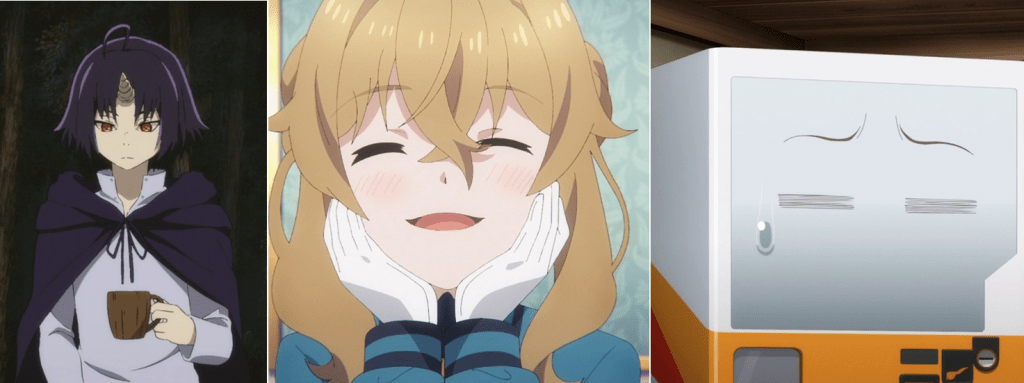
With the Summer 2025 season entering its seventh week, it’s time to take a look at how some of the season’s titles are doing so far.
Even with a couple of series which I held on through four episodes falling to the side (The Summer Hikaru Died, Tougen Anki), I have still wound up staying current on 22 series this season. Hence I am again splitting this endeavor into two weekly installments. This part covers all series which have hit episode 7 by 8/15/25 and some of the series hitting episode 7 on 8/16. The rest of the series will be covered in next week’s installment.
Feature Title: Clevatess
Rating So Far: A-
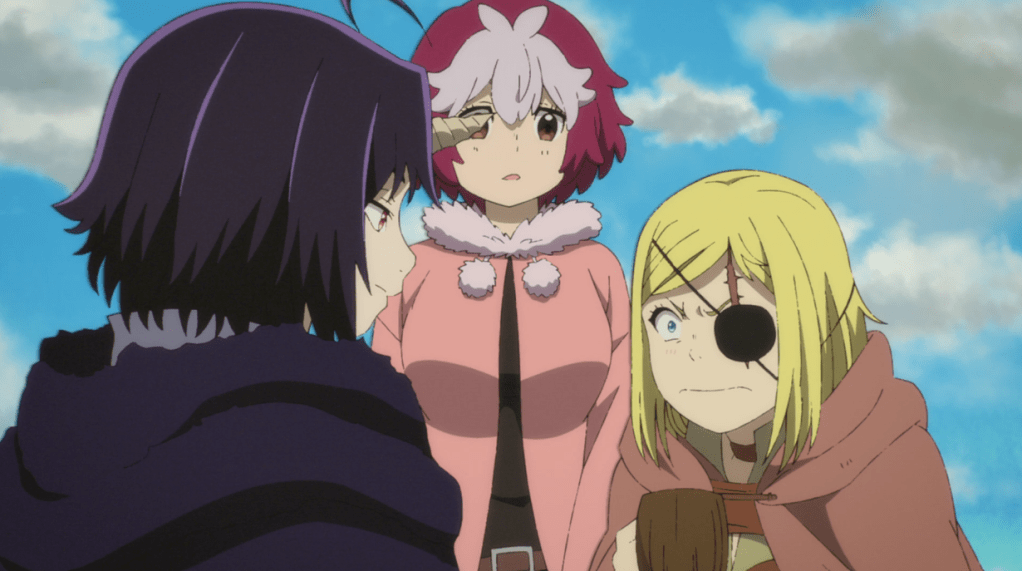
This was one of my Big Three for the season coming out of the Preview Guide, and absolutely nothing which has transpired since episode 1 has dissuaded me from that evaluation. In addition to initially-established strengths (compelling leads, great visuals and animation, bloody action, and a top-tier English dub effort), subsequent episodes have shown an interesting take on a developing magic system, worthy challenges for both Clevatess and Alicia, and a new regular cast member who’s both figuratively and literally stronger than she appears and has a background most anime series wouldn’t have the guts to touch. It’s even shown some capability for light humor, too. This is true old-school fantasy, completely devoid of any RPG trappings, and I’m having a blast watching it.
Other Titles
Betrothed to My Sister’s Ex

Rating So Far: C+
As stories about a dashing man falling for a downtrodden woman (who’s actually a beauty) and trying to build her up through wealth and kindness go, this one is nowhere near in the same league as close kin My Happy Marriage. The shortcomings are especially strong on the artistic front, but the writing presents the Kyros/Marie relationship in a mostly bland (if also sometimes cute) fashion. The series does have three saving graces, though. One is Mio, Kyros’ sardonic maid and very capable right-hand woman, who has the most personality of anyone in the series. The second is the way the series touches on cultural elements and implies that Marie’s appreciation of Kyros’s Ips heritage is a big reason why he’s attracted to her, which gives a firmer grounding to his feelings. And the third and most important is the building plot surrounding the supposed death of Marie’s sister Anastasia, which is looking more and more like an act of subterfuge possibly perpetrated by Anastasia herself. The latter mystery in particular is more keeping me watching at this point than the central relationship.
Call of the Night s2
Rating So Far: B+
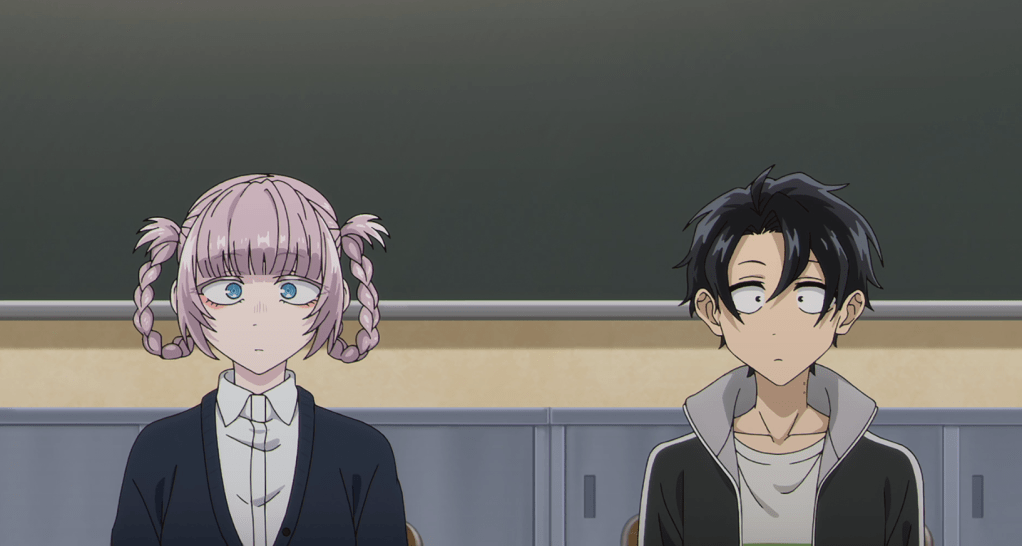
While the series fully retains the philosophical bent that it showed in its first season, this season also shows a more decided plot progression as it places more emphasis on Anko, the vampire-killing detective who appeared late in the first season, and the way she deals with vampires. This results in an interesting twist on vampire lore: vampires in this setting aren’t vulnerable to crosses or holy water, but instead to things that held meaning to them when they were human. This is a problem, since vampires often wholly forget their lives as humans (Nazuna included). That has led to a deeper dive into the pasts of various vampires who have appeared so far, including an involved look at Nazuna’s unusual background and how it’s connected to one other prominent, previously-introduced vampire and possibly the main antagonist, too. That adds some extra juice to a series which already had a lot going for it, and so it continues to be a solid performer.
DAN DA DAN s2
Rating So Far: B+
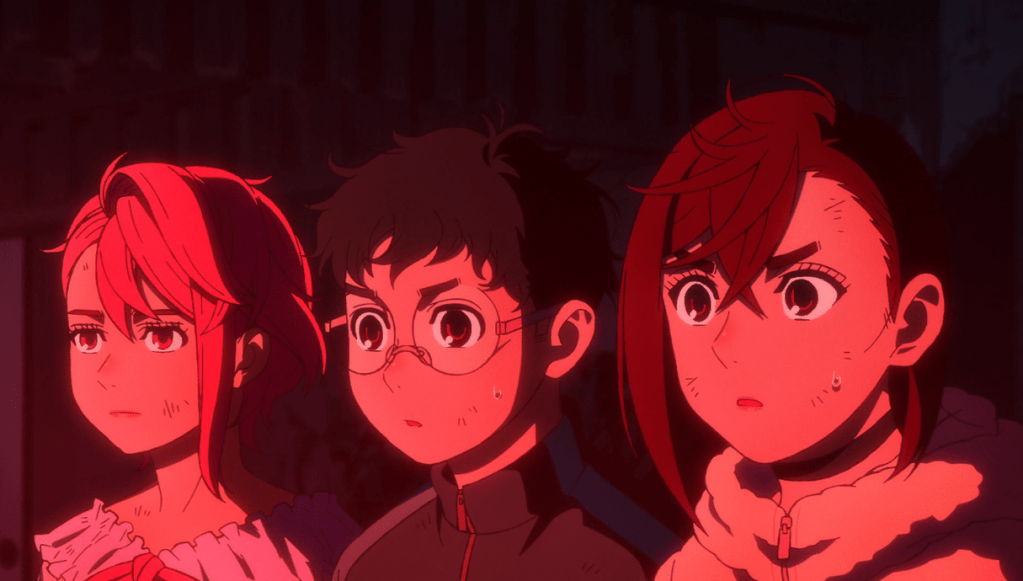
To no one’s surprise, this one is the animation darling of the season, with most episodes containing some degree of outlandish spectacle. It also deserves kudos for pulling off what may be the year’s most audacious stunt by tapping DragonForce lead vocalist Marc Hudson to play the leader of a death metal band which backs the attempted exorcism of Evil Eye from Jiji. (And that’s quite the spectacle, too.) Okarun and Momo’s progressing relationship also continues to be neat, with Aira increasingly being relegated to the position of third wheel rather than serious romantic rival, and its English dub is up there with Clevatess as one of the season’s best. But despite all the superlatives that could fairly be directed at the series, I continue to have a tough time getting as enthusiastic about this one as I do many clearly lesser titles this season; it’s never a priority view for me even on its debut day. That’s why I am not grading it as high as some others might.
New Saga
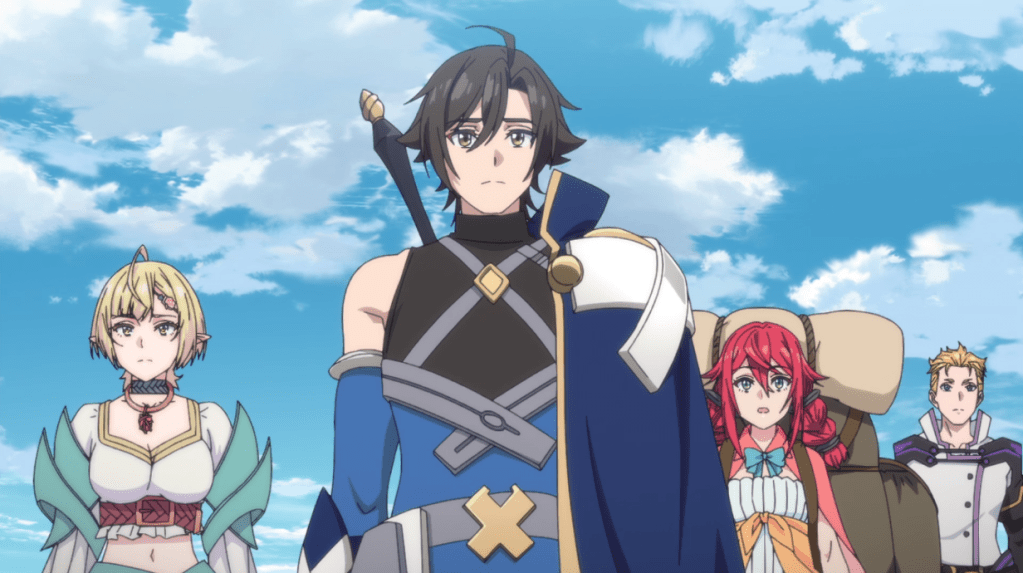
Rating So Far: C
This is a wholly generic “travel back in time to prevent a bad ending” scenario on top of being saddled with a mediocre artistic effort and serious animation limitations. Neither the cast nor what it’s been doing so far sparks much interest, though the shocker ending of episode 7 does offer some promise of a meatier development (as well as providing what is, by far, the series’ most graphic scene). Only two factors distinguish the show to any degree: one of the major supporting characters shares a name with me (the first time I’ve seen that happen in an anime) and the really odd set list for the background music. Some numbers are even lightly jazzy, which which muddles how seriously the series wants itself to be taken at various points. It’s still watchable, mindless entertainment, but nothing more should be expected from it than that.
Private Tutor to the Duke’s Daughter

Rating So Far: C
This one started with a bit more promise, and indeed, the initial arc (where Allen is trying to figure out why Tina can’t properly cast magic and correct it) is a fairly compelling story. However, the story has gone downhill since relocating to the academy. The more formal introduction of Lydia has added very little to a cast that’s now basically an overloaded harem scenario, complete with three of the girls being decidedly underage. Moreover, the squabbling of that trio grates on the auditory nerves. The end of episode 7 promises a new and potentially dangerous plot direction, so hopefully the series may pick back up, but right now it’s floundering.
Rascal Does Not Dream of Santa Claus

Rating So Far: B+
This franchise doesn’t get enough credit for the depth and intricacy of its character writing and story concepts, and what has made the franchise great on those fronts is still on display this season. The main arcs so far have been about Sweet Bullet singer Izuki and Sakuta’s former middle school classmate Ikumi, but behind them all is the mystery of the “miniskirt Santa” who claims to be giving out cases of Puberty Syndrome as gifts, as well as a lesser but still evident mystery involving Sakuta having multiple sightings of child-aged Mai. Having a firm knowledge of the entire franchise is essential for keeping track of everyone; I highly recommend reviewing the recently-available movies Sister Venturing Out and Knapsack Kid to fully understand Ikumi’s situation in particular. But the series also doesn’t overlook Sakuta’s firm connections with past friends and associates and especially his ongoing relationship with Mai. It’s not at all a casual-viewing series, but it works well as a series which requires more effort to fully appreciate and the new college setting gives it more flexibility than such fare normally has. It remains a strong, reliable performer.
Reborn as a Vending Machine s2

Rating So Far: B-
This one surprised me a bit by delivering something I never expected from it: a major, redefining plot twist in episode 6, involving the true goals of the Menagerie of Fools and what they were prepared to do to pursue them. That doesn’t cause the series to stray from its base nature – i.e., setting up situations where Boxxo can creatively use his vending machine transformations and productions – but it does give the series a more distinct long-term plot beyond just contesting against the Netherlord’s hordes and provides some interesting character development for several long-established cast members. This is hardly high-tier storytelling, and the action scenes still don’t amount to much, but it still serves well as reliable light entertainment.
Secrets of the Silent Witch
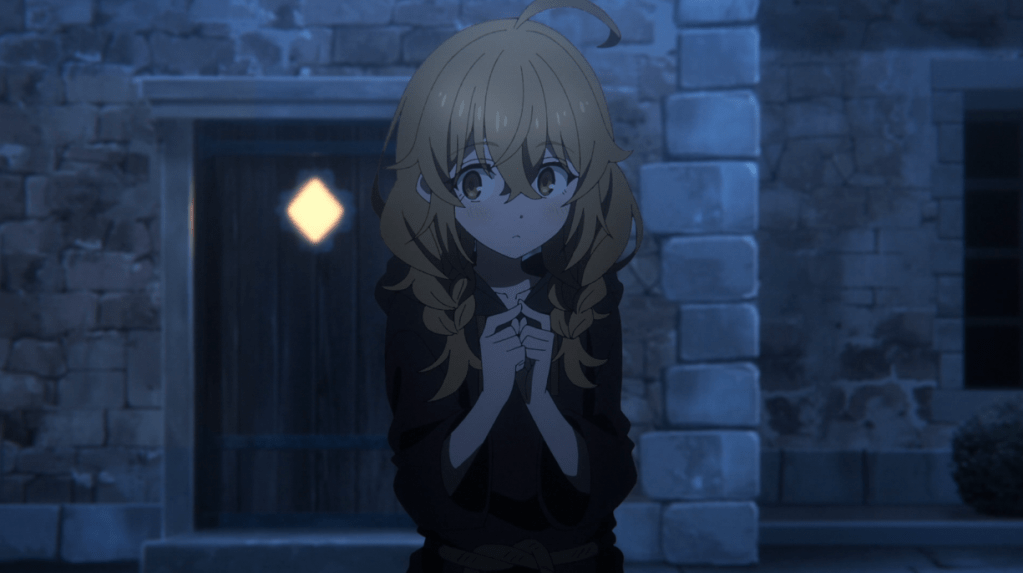
Rating So Far: A-
Monica is, of course, the reason to watch the show, as she’s a joy with her varied facial expressions, endearing fluster, and the way she manages to still seem quite vulnerable despite being so magically strong that even another one of the Seven Sages refers to her as a “monster.” But that’s hardly all the show has going for it. The supporting cast has proven surprisingly robust, too, especially Prince Felix, who can shift from charming and gentle to mischievous (probably my favorite humorous scene of the season so far is him feeding cookies to the nearly-passed-out Monica) to jaded to intimidating all without changing his demeanor much. Really, though, most of the characters who have assembled around Monica have been a delight and the series’ timing on both comedic and serious content has been impeccable. While the series could maybe stand to have Monica show off her magic a bit more, it’s doing just fine as is. It’s easily one of my three favorite series of the season and gets my highest recommendation.
Summer Pockets

Rating So Far: B
The episodes aired so far in the Summer season have finished Ao’s arc, covered Shiroha’s relatively short arc, and begun what I have been assuming is the series’ concluding arc: the one for Umi. The pace of its progression does not suggest that what’s left of her arc will stretch out for a full half-season without some major twist. However, Umi is the one making the iterations we’ve seen so far possible, and Key stories have a well-earned reputation for heart-rending tragic elements (there’s been some of this so far, but not to the degree normally seen in Key titles), so presumably something is going to happen which will force one more iteration, and the revelations of episode 19 give some suggestion about what direction that might take. While the series is still full of typical Key light humor and dedicated sentimentalism, the story is coming together a bit more.
Welcome to the Outcast Restaurant

Rating So Far: C+
This season’s iteration on the “indispensable person banished from the hero’s party” concept has established a decent supporting cast and minor plot threads surrounding them, such as Atelier’s inheritance, and while it hasn’t leaned heavily into “things are going wrong for the hero’s party in the protagonist’s absence” angle, it has at least addressed it. However, the series still doesn’t feel like it’s done much with the concept, and a staid “protagonist is sick and needs to be cared for” episode didn’t help; these have always annoyed me for how overkill they go, and it’s hard to buy someone as robust as Dennis collapsing due to overwork. Still, it’s got just enough going for it on the plot and character fronts to be watchable.
That’s it for this installment. Watch for part 2 to debut probably on August 23rd.
 USA Anime
3 thoughts on “Summer ’25 Mid-Season Wrap-Up, part 1”