Final Update: 3:37 p.m. EST 1/12/25
Welcome to my seasonal Guide! (The debut schedule can be found here.)
One series – Solo Leveling s2 – previously debuted in a theatrical release. A write-up on that one can be seen here, so it will not be revisited in this Guide. Season 2 of The Apothecary Diaries is also not covered here since that series is going straight to episode reviews.
Beyond those, I expect to cover every full-episode series that will be debuting this season and many of the sequels/returning series, including Ishura, My Happy Marriage, The 100 Girlfriends Who Really(x5) Love You, and Unnamed Memory. I will not be covering sequels for Blue Exorcist, Dr. Stone, Kinnikuman, Precure, Toilet-Bound Hanako-kun, or UniteUp! Grisaia: Phantom Trigger the Animation is being covered, but see the comments below on that one.
Debuts are listed below in with the newest ones at the top.
NOTE: With the posting of The Red Ranger, this edition of the Preview Guide is now complete except for possible minor error corrections.
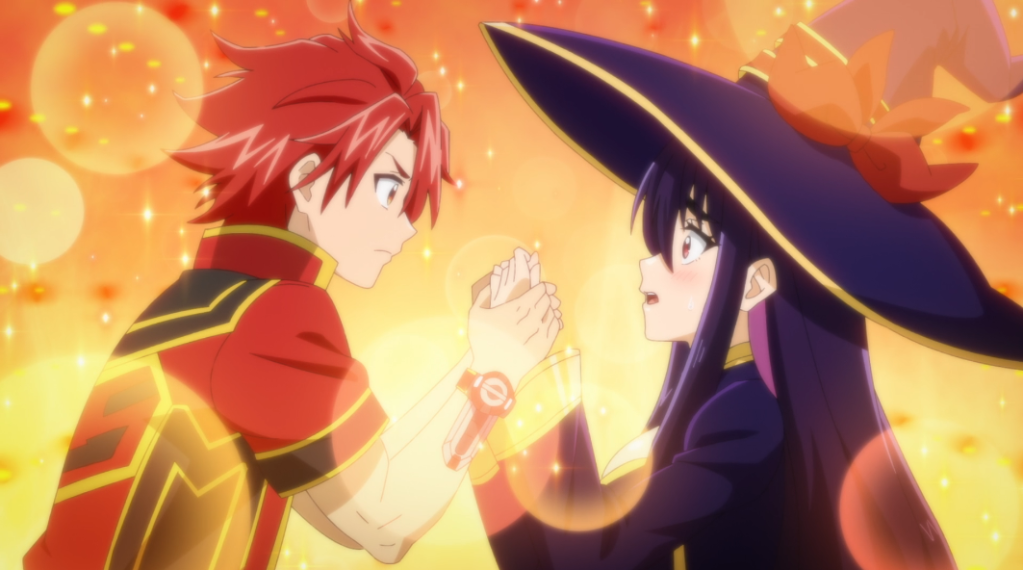
The Red Ranger Becomes an Adventurer in Another World
Streams: Crunchyroll on Sundays
Rating: 3.5
This concept – crossing a cheesy combining-robot super sentai series with an isekai series – had to happen at some point, didn’t it? That’s the basic gimmick of this manga adaptation. Togo is Kizuna Red, the leader of a five-member team attempting to defeat the Break-Up King and his forces from separating all of the bonds in the world. Though he succeeds in defeating the King, he finds himself falling into another world instead of falling to the ground in his own. There he becomes an adventurer while looking for a way home and crosses paths with Yihdra, daughter of a disgraced court mage, who is seeking to reestablish her family’s legacy as overseers of her kingdom’s magic. She has very magical girl-like sentiments about magic that Togo can deeply relate to, and he has abilities that she’s perplexed by, so the two wind up forming an adventuring party.
So the whole thing is silly in a high-spirited way, even down to the visual effects that happen when Togo transforms or defeats foes (there are always explosions) and the ridiculous attack names, which are all centered around forming bonds (Marriage Beam Gun, Proposal Pot Shot). Yihdra plays the straight woman in all of this as Togo utterly overwhelms all her common sense, but by the end of the episode she’s also clearly starting to find his unbridled passion and sincerity hard to resist. I love how the series goes whole-hog on its concept and runs with it, and I even don’t mind Yihdra’s blatantly fan servicey get-up (which Togo, curiously, seems utterly unfazed by). This one’s definitely earn at least a couple more episodes from me and may be a keeper.

The 100 Girlfriends Who Really (x5) Love You 2
Streams: Crunchyroll on Sundays
Rating: 3 (of 5)
I am far from being a big fan of this franchise (frankly, I feel it’s way overrated), but the first season did have its moments, and one of those is used to start off the second season. The body-switch is a gimmick with a long history in harem series, but this is one of the most expansive and quickest uses of it that I’ve seen, with all the existing girlfriends being involved. Seeing the same personalities in different bodies – even if only for a few minutes – is fun, and I can see why Rentaro is excited by it short-term but prefers them back in their original bodies long-term: in anime, personality and body type are much more inextricably linked than in most other visual media. But that and the fourth-wall-breaking comments definitely make for a cheeky, high-energy opening to the season.
I was less impressed when the series settles back into its more normal routine, which, of course, involves Rentaro discovering another one of his soulmates and trying to win her over. This time there’s a plausible reason why Rentaro hasn’t encountered her before even though they’re in the same school: because she’s from the middle school wing. All of the girls feel some kind of personality/body type niche, and Kurume is both the Angry Girl and the Hungry Girl, with an out-of-control ability to make food associations on just about anything, get obsessed with that food, and angry at herself for how that tends to create a largely-self-imposed isolation from others. She also represents the younger love interest so common in these series; whether she’s truly underage or not is a matter of personal taste, but since she and Rentaro are both teens and only one grade apart, I don’t see that as a big deal. Looks like she’s going to need some work to integrate in with the rest of the girls, but that’s fine; this series would be unwatchable if things went too smoothly.
I still have some misgivings about the overall premise behind the series, but at least it’s watchable.

Babanba Banban Vampire
Streams: Netflix on Saturdays
Rating: 1.5 (of 5)
In this adaptation of a BL manga, Ranmaru is a 450-year-old vampire with a manly physique but a feminine air about him. His preferred taste is 18-year-old virgin boys, so he’s been working in a bath house for a decade partly to repay the kindness of the owner’s son an partly to watch over the now-15-year-old boy as his future prey. The problem is that Rihito, the son, has bumped into a girl on his first day of school and fallen instantly in love. Ranmaru is not about to let what he desires most get corrupted early.
In a purely technical sense, this debut episode is better than the rating I’m giving it, but this is such a blatant case of grooming that the series almost seems to be trying to make a joke of it, and frankly, that made me uncomfortable. Ranmaru is even shown getting obvious erections thinking about it. The first episode packs in as much female-oriented fan service as the raciest male-oriented romcoms, too, and I’m not sure what to make of the surprise revelation of who one of Ranmaru’s first lovers was. I am so not the audience for this one, so my rating should probably be taken with a grain of salt, but I can’t see this holding much appeal if you’re not already into BL.
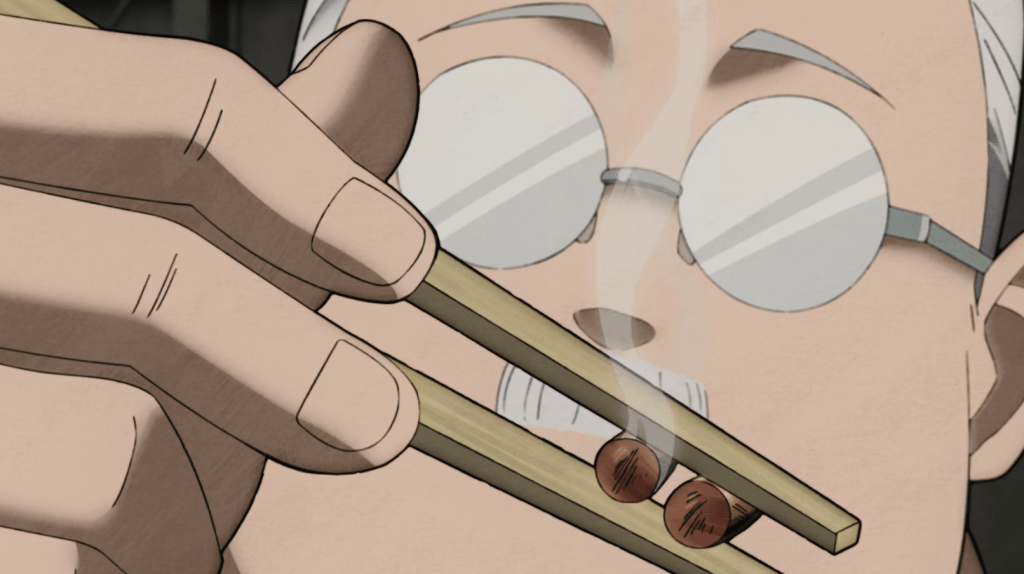
Sakamoto Days
Streams: Neftlix on Saturdays
Rating: 4 (of 5)
In this manga adaptation, Taro Sakamoto was the most elite of assassins until love struck him, at which point he retired, started a family, and became the owner/operator of a convenience store. Five years later, former coworker (and big admirer) Shin tracks him down and tries to convince Sakamoto to come back, but the latter refuses. Shin’s under orders to kill Sakamoto if he can’t recruit him, which he reluctantly tries to do, but he quickly learns that even though Sakamoto has gotten fat, not even a mind-reading assassin is still a match for him. In the end, Shin winds up working for Sakamoto as a clerk at his store.
This was one of the most-anticipated new series of the season, and the first episode lives up to the hype. Shin’s actually the viewpoint character, since Sakamoto almost never speaks out loud, but that just allows audiences to appreciate more how slick Sakamoto is, especially at using all sorts of ordinary objects to thwart would-be attackers. Sharp action sequences are frequent highlights, but this is a good-looking series in general, with one exception that really bugged me: Shin’s head seems disproportionately small for his body. This one looks like it has real promise as a rousing action/comedy.

I Left My A-Rank Party
Streams: Crunchyroll on Fridays
Rating: 3.5 (of 5)
In this light novel adaptation, Yuke Feldio is a B-rank Red Mage/Alchemist, which basically means he’s the dedicated buffer and supporter for his elite and famous A-rank party. But after five years with the party, he feels he is not being respected enough to be paid a fair share, so he decides to leave the group, and they’re all perfectly fine with shooing him out the door since none of them had seen him as an equal anyway. While applying for a new party, Yuke encounters a trio of former students who are now a fledgling D-rank party, and they invite him to join them. Yuke can see that they learned well from him, and they quickly come to appreciate how useful he can be, so they become the new up-and-coming party Clover.
Given the title, how stereotypical the three girls look and act, and the basic premise of the series, I wasn’t expecting much from this one. However, director Katsumi Ono showed with Skeleton Knight in Another World that he knows how to deliver fun, high-spirited fantasy series, and that definitely shows here, turning this into one of the season’s more pleasant surprises for me. Doubtless this will be another scenario where the high-level party starts floundering without its key support element (as much as I’d like to criticize this stereotypical short-sightedness, I have personally experienced tabletop RPG groups with the same attitude as Thunder Pike IRL), but seeing how well Yuke works with the girls – and how much happier he seems with them – helps overcome some of the more standard aspects, and seeing that the girls learned their lessons well is another plus. The world also adds the mostly-novel twists of adventuring parties being able to live-stream their adventures. (Slime has done this previously, but I think that’s the only other series where I’ve seen that.) I also loved that when Yuke gets hugged by the armored warrior girl, his reaction was about getting crushed by the hug, rather than her breasts pushing against him. Technical and artistic merits are decent, too. This will make my seasonal viewing list, so don’t underestimate it.

Übel Blatt
Streams: Amazon Prime on Fridays
Rating: 3 (of 5)
This one is based on a manga which ran from 2004 through 2019. That starting date is important, because the series’ first episode definitely feels like it comes from an earlier fantasy era, when dark, bloody titles like Berserk and Claymore were more en vogue. This is strongly implied to be one big revenge tale, where a survivor of a gruesome betrayal by a group that would become known as the Seven Heroes has returned, 20 years later, to seek vengeance on those heroes. Only now he looks decidedly more elfin than he did when he was supposedly slain; the first episode reveals nothing about how that came to pass, but presumably it will be explained later on.
This episode involves the protagonist, Koinzell, seeking to get smuggled onto a ship to the Other Side (where the Seven Heroes are) at a port for flying ships controlled by warrior monks. There he meets a trio of characters suggested by the ED to become regulars: an elf girl, a human man also looking to be smuggled, and a human woman who’s organizing the smuggling and seems to be a talented warrior herself. Naturally, things don’t go smoothly, much blood gets spilled (mostly by Koinzell), and Koinzell seemingly dies but gets better.
There’s a clear efforts here to make this a brooding, violent tale about a corrupt world, but the first episode struggles some to execute that smoothly. It doesn’t help that action scenes take big shortcuts, and the style of dress used for most of the female characters is. . . interesting. Most crucial scenes are either a bit over the top or not enough, but at least the world-building looks interesting visually. I’m leery about whether or not this one call pull off what it’s aiming to do, so I’m giving it a neutral grade for now.

Farmagia
Streams: Crunchyroll on Fridays
Rating: 1.5 (of 5)
This one is the anime version of a recently-released RPG/farming sim game for Switch, PS%, and Stream, and the way the first episode plays out suggests that it’s going to follow the story of the game pretty closely. I’m pretty sure it’s entirely intended for people already familiar with the game, as it spends no time whatsoever explaining its setting or world structure. What is evident from this episode is that the world consists of mini-continents that look like they sprout from the corpses of immense creatures and that farmers called Farmagia raise crops that turn into “buddy monsters,” some of which perform tasks for the Farmagia and others of which serve various utility purposes in towns, including lighting fixtures. Clearly a lot of creative effort went into the visual design elements, and that’s the one thing that I will give the episode credit for because otherwise the debut episode is a mess.
The single biggest problem is main protagonist Ten, who may be the most obnoxious lead character to come along in some time. He’s an utter idiot who shouts everything he says. There’s also a girl who eats things to see if they’re poisonous or not; I think that’s supposed to be funny, but it’s not. The others of the main quintet are as bad but aren’t memorable, either. Events proceed at a frenetic pace, including minimal action scenes and pathetic attempts at humor at inappropriate times. And that’s without figuring in some not-good CG, too. Honestly, I found the whole thing unwatchable. More power to you if you can appreciate this one.
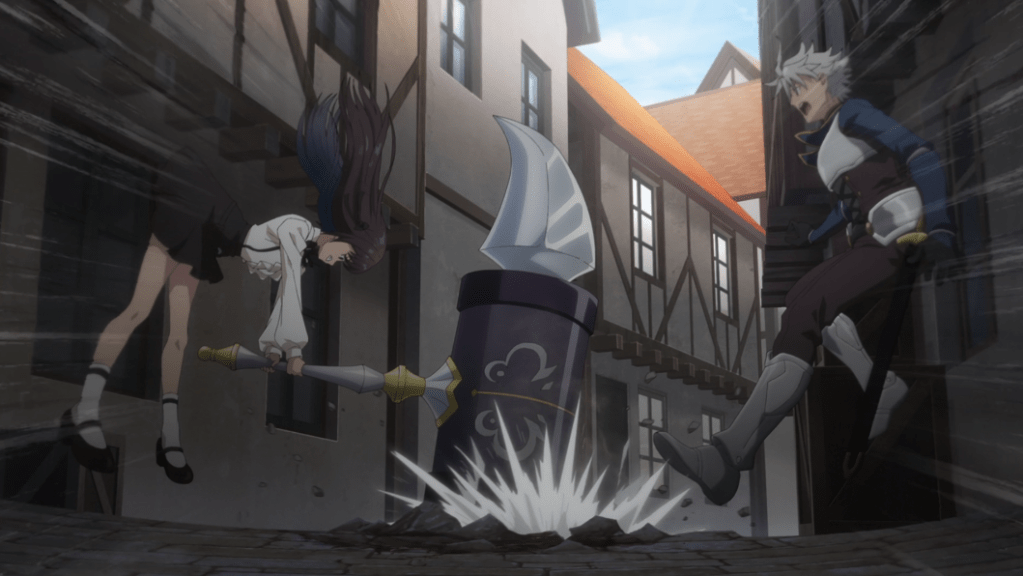
I May Be a Guild Receptionist
Streams: Crunchyroll
Rating: 4 (of 5)
Adventurers Guild receptionist girls have become a staple in fantasy anime over the last decade, but they have always been nameless bit characters or, at best, significant supporting characters. This new light novel adaptation is, to my knowledge, the first where a guild receptionist is both a central and titular character, and that alone makes this title stick out. The more surprising big plus is that this artistic and animation effort from CloverWorks also looks surprisingly good, easily visually placing this among the cream of the crop of fantasy series so far this season.
The concept is gimmicky, but fun: Alina Clover dreams of having stable, safe employment where she can clock out on schedule and enjoy her downtime, so she signed up to be an adventurer’s guild receptionist (in a guild office which looks remarkably high-tech for a fantasy setting, such as having quests displayed on holographic billboards). The problem is that adventurers struggling with a dungeons are causing her overtime, and she can’t tolerate that, so she decides to take matters into her own hands and deal with a troublesome dungeon boss herself. The follow-up problem is that, despite her efforts to conceal her identity, the leader of a strong party recognized her and now wants to recruit her, but she’ll have none of that.
A lot is unexplained at this point, such as how Alina is so out-of-proportion strong or where she’s getting that massive hammer from. But those are questions which can be sorted out with time. Alina is an appreciable lead and the first episode is paced well, uses a number of interesting selections on shot framing, and even establishes a possible future dynamic between Alina and the leader of the Silver Swords. It’s even got an entertaining musical score, too. It’s possible I’m overrating this one a bit, but it feels like a winner so far.
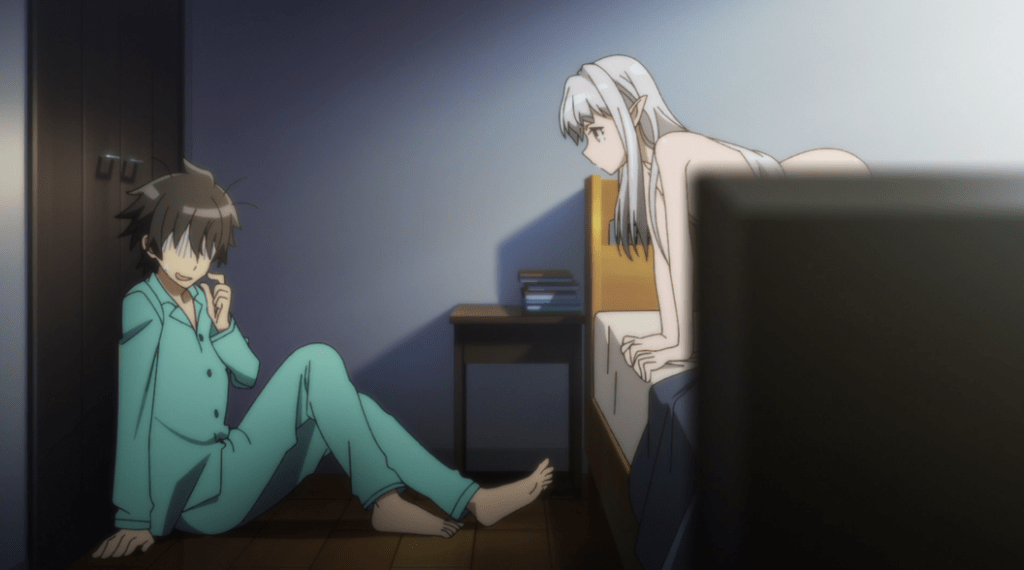
Welcome to Japan, Ms. Elf!
Streams: Crunchyroll on Fridays
Rating: 3 (of 5)
Since he was a child, 25-year-old Kazuhiko has found himself wandering a fantasy land while dreaming, so his favorite recreational activity as an adult is sleeping. If he dies in that fantasy world, he just wakes up back in his room. Marie, an elf sorcerer he’s well-acquainted with in that other world, happens to be with him when one of those deaths occurs, and to both Kazuhiko’ and Marie’s shock, she’s naked in his bed in Japan when he wakes up the next morning. (The situation strongly suggested that she would have died, too.) Marie quickly shows a fascination with this new world, so Kazuhiko takes the day off to get her some clothes and show her around.
A lot of the mechanics of what’s going on here need to be sorted out, such as whether Marie can also go back to that world when sleeping, but the OP/ED and series concept suggest that she’s going to be in modern Japan for the long term. But a whole series about adjusting to life in modern Japan – with a tinge of potential romance and some fan service thrown in for good measure – doesn’t at all sound like a bad concept, and this episode does earn points for considering practical issues like language barriers. (Marie can understand Kazuhiko, but not Japanese in general.) Character designs and animation are far from the most refined (which is the main reason I’m not rating this higher), but the pacing is good and both main characters seem likable so far. This isn’t going to be a flashy or high-concept series, but I can see it offering steady entertainment, and so think it’s likely to make my seasonal viewing list.
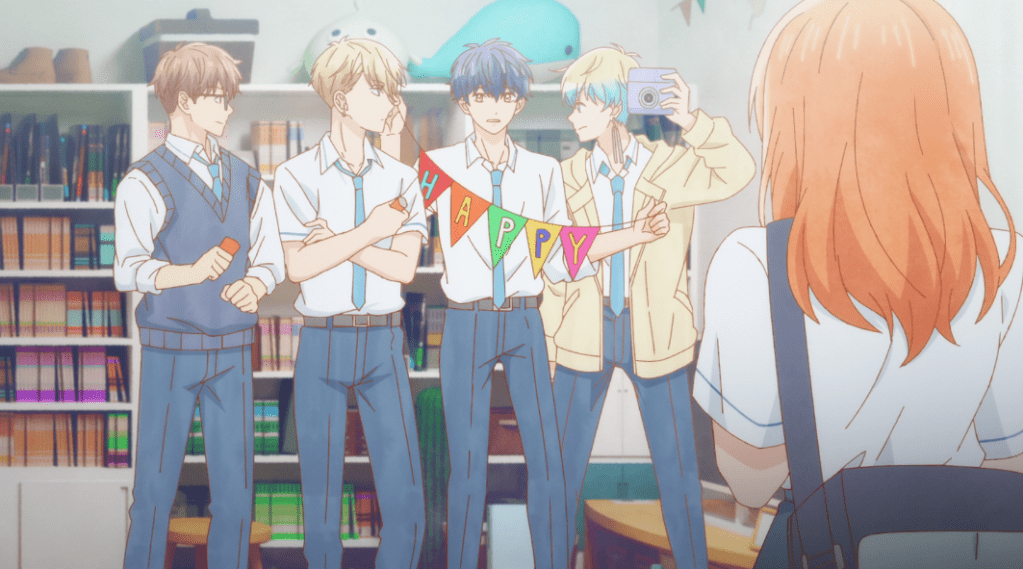
Anyway, I’m Falling in Love with You
Streams: Crunchyroll on Wednesdays
Rating: 3
Mizuha’s 27th birthday (in 2030) isn’t going well, which causes her to reflect back to the time of her 17th birthday. At that time, she still hung out with the gang of four neighborhood boys she grew up with, with nary a hint of romance complicating things among them – at least on her end, anyway, since she saw herself as a big sister to all of them. But one of those boys didn’t feel the same, and him taking steps to make that clear on her 17th birthday threatens to upset the long-time dynamic among the quintet.
In many respects this is a fairly standard “things get complicated among friends when romance comes into the picture” scenario, but with a couple of non-standard twists. One is that all four of the guys in question are tall, incredibly hot bishonen (must be something in the water in Mizuha’s childhood neighborhood!), which makes it hard to not look at this as a reverse-harem scenario, especially since at least one or two of the other boys are implied to have beyond-friends feelings, too. The other is the timing. The teenage part takes place in 2020, and while the series dodges mentioning it by name, the beginning of COVID is having a distinct impact on the course of events. That is, to my knowledge, a first for anime, and I’m rather curious to see if it will continue to be integrated into the story going forward. Otherwise this feels like a fairly standard teen romantic drama with some mild touches of humor; decent, but nothing special on both artistic and writing fronts.

Aquarion: Myth of Emotions
Streams: Crunchyroll on Thursdays
Rating: 2 (of 5)
This is technically a sequel to Aquarion Evol, and thus the fourth title in the Aquarion franchise, though I’m not sure that any previous familiarity with the franchise is necessary here since this seems to be an entirely different cast. Very basically, the concept is more or less the same: a quartet of youths who may be reincarnations from thousands of years earlier (though only one of them seems to be aware of that) are assembled in a secret school program to train to fight mythical creatures. That involves piloting Vector Machines to face the threat. There’s supposed to be a fourth Vector Machine, but those in charge initially seem unaware that the trio of Vector Machines have to combine to make Aquarion. There’s also a girl who supposed died (and even had a funeral) but still keeps showing up and is the one who remembers the most about the reincarnation stuff.
There’s a strong suggestion that a lot of what we’re seeing as reality here isn’t real, and the visuals do lean heavily into CG effects. But that doesn’t matter so much as the very curious visual style, which feels like it’s aimed at a much younger audience than any previous franchise installment. I don’t care for it, especially in the very angular character designs (and especially in characters’ eyes), and it’s plenty enough to discourage me – and probably a lot of others – from watching more. Maybe there’s an interesting storyline and characters here, but not enough of that shows to warrant putting up with those visuals.
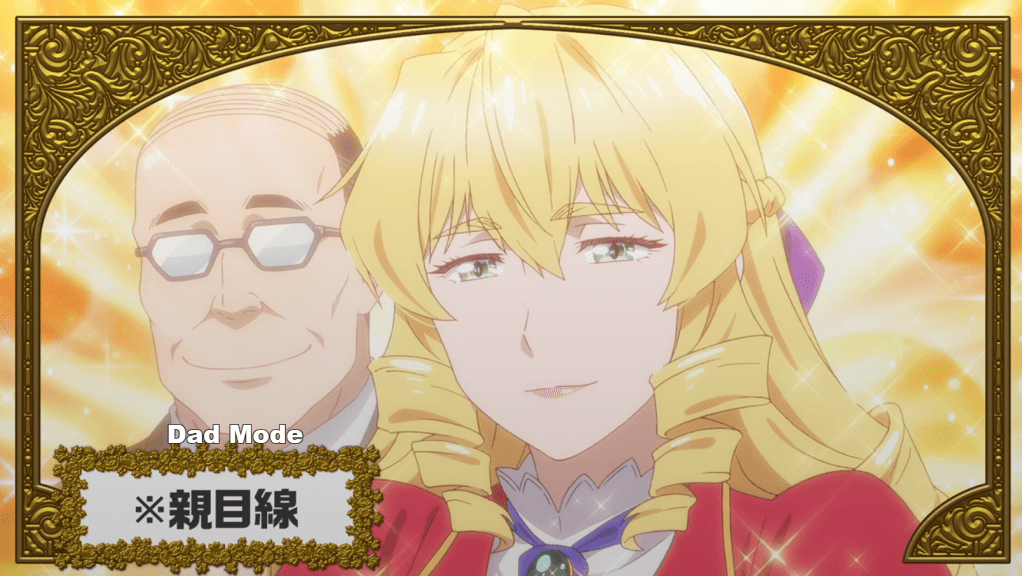
From Bureaucrat to Villainess: Dad’s Been Reincarnated!
Streams: HIDIVE on Thursdays
Rating: 3.5 (of 5)
Kenzaburo, a 52-year-old bureaucrat, is only vaguely familiar with isekai reincarnation scenarios and otome games, in the latter case mainly because he’s seen one of his daughters play one. Thus he finds it odd that he’d be chosen to be reincarnated into that same otome game after getting hit by Truck-kun, and as the ringlet-endowed 15-year-old villainess-to-be, too! Though he doesn’t really know the ins and outs of otome games, he decides to play along as best he can, using his life experiences to guide himself (or rather herself, since he’s now Grace Auvergne, daughter of a duke) through various counters. The problem for him is that he can’t help sliding into Dad Mode at times, and thus unwittingly starts scoring points with the commoner girl who’s supposed to be the game’s heroine.
The grade I’m giving this one is a compromise, as this brilliant twist on the standard villainess set-up is getting bogged down so badly by some of the season’s weakest visuals that I can’t justify rating it as high as I want to. The writing and storytelling gimmickry here are enormous fun, especially the main character slipping into Dad Mode at times and delighting in how some things that were being cumbersome for him in his original life (like reading small print) were now so much easier for him, although the implication that he’s earning romance flags with the heroine is an amusing bit, too. I’ll fully admit that this series may be more squarely aimed at me than most in this genre, since I am close to the same age and can relate to some of Kenzaburo’s original-life issues, but it’s such a delight in every sense other than artistry that it’s certain to make my view list for the season. It even has one the season’s best EDs – or would have if, again, it wasn’t saddled with its animation limitations.

Even Given the Worthless “Appraiser” Class, I’m Actually the Strongest
Streams: Crunchyroll on Thursdays
Rating: 2.5 (of 5)
Disrespecting and maltreating supporters in a fantasy RPG-influenced setting is hardly just an anime thing; references to (and humor about) this is probably nearly as old as fantasy TTRPGs are. Sadly, adventurers being complete dicks to supporters – even to the point of treating them as disposable – is entirely believable, since in any setting, even run-of-the-mill adventurers are still elites in skill and ability. The opening episode of this light novel adaptation dwells on this to a depressing degree, even establishing that being relegated to lower-class status is something set at birth. Ein is the unfortunate soul in this case, as the hereditary Appraiser class boasts no combat abilities. Since he can’t continue a family business, he’s relegated to being a “trash-picker” for an adventuring duo, so of course he’s abandoned to bait away dangerous monsters while the other two escape. That’s only the beginning of his deadly troubles, though a kind soul apparently connected to an underground World Tree (the hidden source of mana in this setting) does seem intent on helping him.
The OP and ED both show Ein doing awesome things, but this first episode gives no indication about how that’s going to come to pass. But he’s also just started to meet the bevy of beauties who, according to the OP and ED, will eventually gather around him. First, though, he has to endure almost getting eaten and having fingers and an ear temporarily severed; this is actually a pretty graphic first episode. It’s not quite to the edgelord extreme of an Arifureta or Failure Frame, and it certainly looks better, and does a better job of setting the mood, than either of those (although that isn’t saying much). The OP and ED make the series look like it will eventually become the most generic of power fantasy series, so I’m currently regarding this one with a wary eye, but I’ll reserve harsher judgment until I see more.

The Daily Life of a Middle-Aged Online Shopper in Another World
Streams: Crunchyroll on Thursdays
Rating: 2 (of 5)
I’ll give this light novel adaptation credit for one thing: it starts with will likely be the cheekiest opening minute of any series this season. Rather than go into detail about how 38-year-old Kenichi overworked himself to health problems, moved to the country, and from there gets transported to another world and discovers that he can call up an Item Box and screen for an online shopping site, the series just summarizes that in a montage of images set to the opening theme from 2001: A Space Odyssey, with his display screen taking the place of the monolith and it ending with “2037: Another world odyssey.”
Sadly, that’s the most creative this debut episode ever gets, with the rest playing out as a very standard take on the growing subgenre of isekai stories centered around taking goods from modern Japan and selling them in the new world. There are at least tidbits which could lead to something more: Kenichi does get at least some credit for briefly wondering how things he’s ordering end up there, by the end of the episode he’s strongly implied to be in a physical relationship with a barmaid he unwittingly charms, and he’ll have to watch out for syndicates as he sells his goods, but these are only little sparks. The OP shown at the end of the episode strongly suggests that he’ll eventually form an adventuring party, but really, nothing on either writing, characterization, or artistic fronts feels compelling here. It’s hardly the worst debut of this season, but I’m expecting little from it.

Ishura s2
Streams: Hulu on Wednesdays
Rating: 3.5 (of 5)
One of the best aspects of the first season of Ishura was the diverse array of Shura it introduced to us. Though the plot did advance in the later stages of the first season, this season returns to the form of the first season’s early episodes by introducing two (possibly three?) new Shura and bringing back one familiar one. One of the newcomers is Mele the Horizon’s Roar, a giant archer who can divert raging floodwaters with his shots or successfully face down the Demon King’s Army but gentle enough to grant the request of a dying human child. He will be participating in the grand hero tournament announced in the first season. The second is the (former?) spy Kuuro the Cautious, whose gift is clairvoyance and an uncanny ability to snipe foes in a crowd with a hand crossbow. He’s involved with Aureatia but seems to be on a different trajectory. There’s also a suggestion that a storm worshiped as a god by desert tribesman might be one, too, but that’s more hazy.
In other words, this season is at least starting out as “more of the same,” including on visual and graphic content fronts. That’s fine for now, as both of the characters featured here are interesting additions, but the real test will be when the plot starts to thicken later this season. For now, though, if you at least tolerated the first season then this one shouldn’t change your mind.
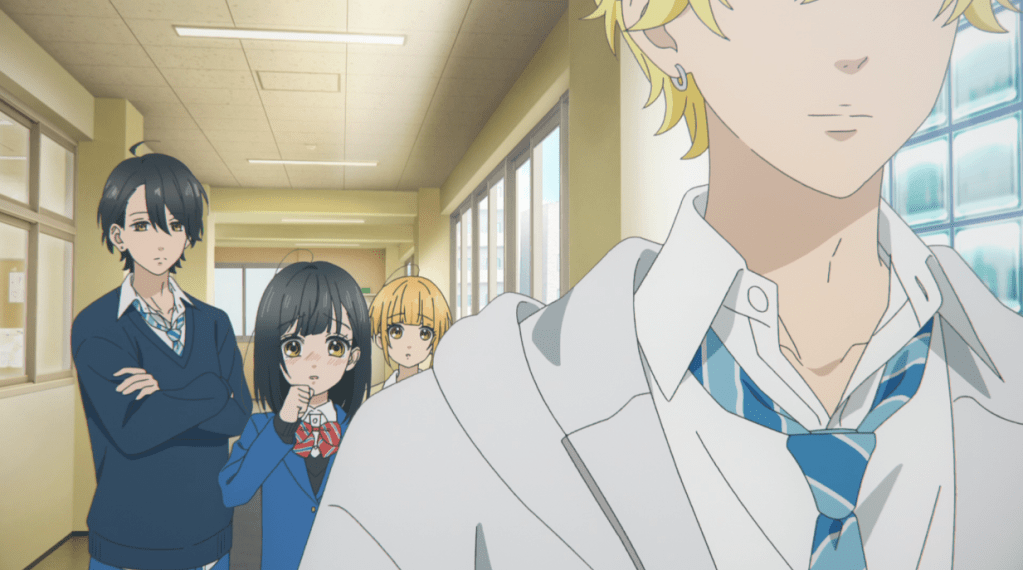
Honey Lemon Soda
Streams: Crunchyroll on Wednesdays
Rating: 4 (of 5)
In this manga adaptation, Uka was bullied in middle school and there earned the nickname “Stony” because of her tendency to freeze up in social situations. Though academically capable of going to a better high school, she winds up going to a lesser one in part because of Kai, a yellow-haired boy with a penchant for lemon soda who made quite an impression on her during a brief street encounter while she was trying to make up her mind. Once in high school, she still struggles to change even before discovering that her former bullies are also attending the school, but thanks in part to a not-so-gentle push from Kai, she is able to stand up and start to change her circumstances.
Boy, I did not expect this one to hit me as hard emotionally as it did. Structurally speaking, it’s a fairly standard story about a girl who has been bullied who is slow to adjust to not being bullied and thus needs a push to make a change. Enter the popular stand-out who can come across as cold and a bit harsh, but he’s not completely uncaring and he does pay more attention than he lets on, and one timely display of the latter near the end of the episode is what got to me. On the artistic front, the way the oversized eyes are drawn in close-ups is what sticks out the most, and not necessarily in a good way, but the overall aesthetic is passable. I have concerns about whether this series can maintain the high impact level it introduces in the first episode, but it at least makes a good first impression.
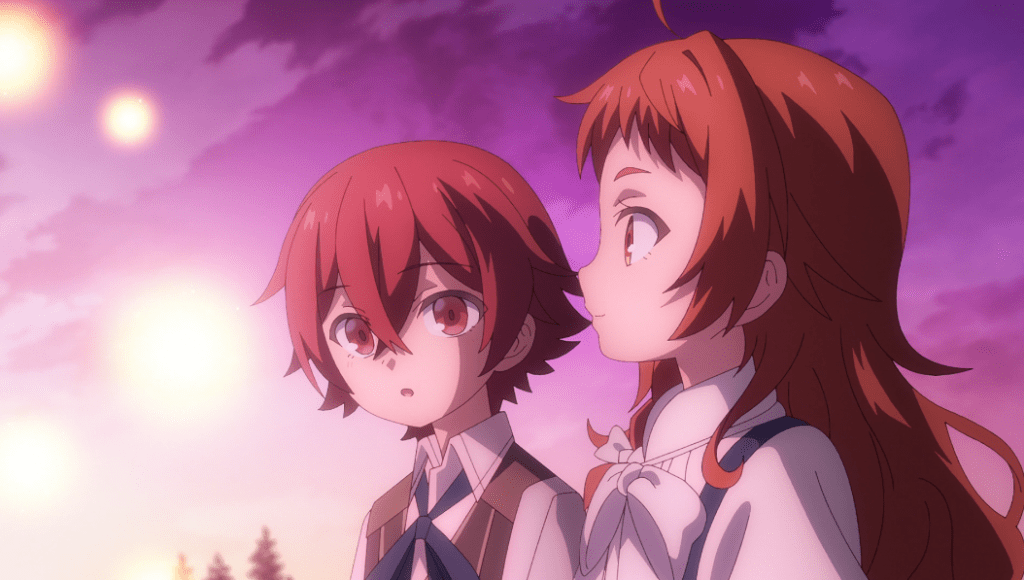
Magic Maker: How to Make Magic in Another World
Streams: Crunchyroll on Wednesdays
Rating: 4 (of 5)
The flood of isekai titles each season may produce a lot of samey dreck, but the high volume also assures that we will at least occasionally see sometime entirely different. This light novel adaptation is one such title. Its first big twist is that the first episode doesn’t actually focus on the story’s protagonist; all but the last scene come from the viewpoint of Marie, a tomboyish daughter of a country noble. From her observations, we can tell that Shion, the younger brother she adores and looks out for, was probably an isekai reincarnation from birth, though that fact isn’t absolutely confirmed until the viewpoint shifts to Shion in the episode’s last scene. That makes for an interestingly different perspective.
The second big twist is that this world may have monsters and fairies (although the latter are quite rare), but it either doesn’t even have the concept of magic or else it is such esoteric knowledge that its existence is not commonly-known. Hence Shion, rather than tapping into an established magical tradition, has to build magic from the ground up from the basis of a magic-like effect derived from the courtship of fish. This is such a fascinatingly different approach that I greatly look forward to seeing where the series goes with it. A firm establishment of the core cast, including not everyone apparently being able to see the magic-like effect, is another plus, and while the series doesn’t look spectacular, it’s not bad, either. This one’s a definite keeper.

Flower and Asura
Streams: HIDIVE on Tuesdays
Rating: 3.5 (of 5)
Fledgling high schooler Hana has always loved dramatic recitations, and has such a talent for it herself that Mizuki, the president of her new school’s Broadcasting Club, actively seeks to recruit her. But Hana is reluctant to ask for anything, and the ferry service to the small island where she lives (she’s the only teenager) would make her participation difficult. But Mizuki isn’t about to let such a promising candidate go so easily, and Mizuki does seem interested even if she doesn’t want to admit it.
This adaptation is based on a manga written by the creator of Sound! Euphonium, and that definitely explains the feel of the first episode. Plot-wise, it’s a fairly typical “draw the newbie into a club of eccentrics” scenario, Hana is fairly typical as the reluctant but talented newcomer, and Mizuki is a standard go-getter of a senpai, but the interesting setting (Hana must take a boat to school!) and the dramatic visual presentations of the recitations offer some promise, as does some ambitious use of symbolism. I can’t see me getting involved in this one enough to follow it, but it should appeal to the same kind of audience who got wrapped up in Sound! Euphonium.
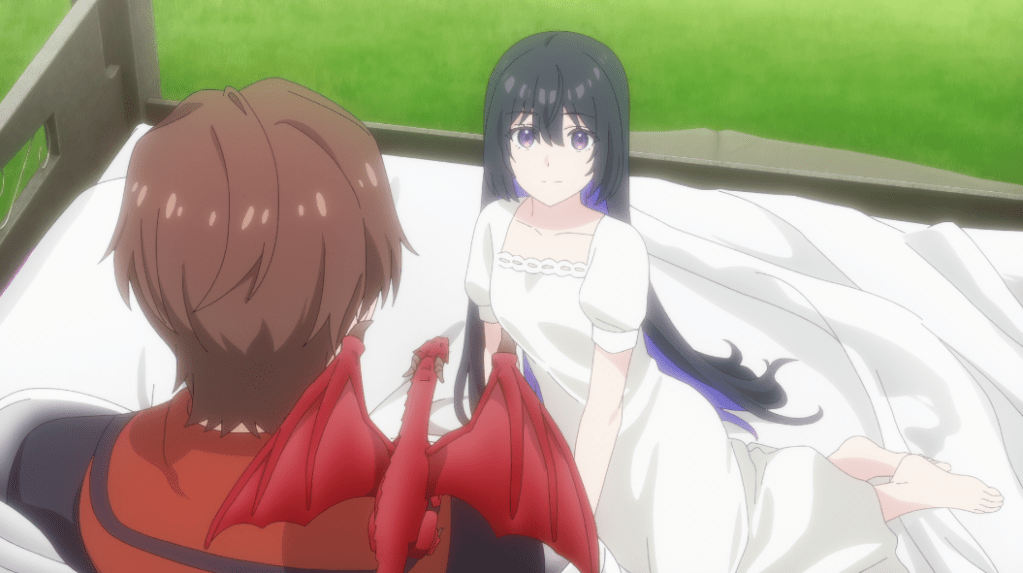
Unnamed Memory p2 (ep 13)
Streams: Crunchyroll on Tuesdays
Rating: 3 (of 5)
Crunchyroll is marking this as a continuation rather than a separate season, and so is number the return episode 13. However you interpret it, I strongly recommend rewatching episode 12 before continuing with this one, as having the events of episode 12 fresh in mind is crucial for understanding what’s going on here.
Last season ended with a stunning turn of events, one which radically rewrote the backstory of one co-protagonist and effectively ended the existence of the other (or at least the version viewers had been following to that point) – for in this causality, changes to the past eradicate the future rather than creating a branch in reality. Because of that, Tinasha is no longer technically a witch (even though she’s as powerful as one) and so has to put herself into magical sleep so she can see future Oscar in his proper time. And he does, indeed, show up to a Tuldarr that was never destroyed, seeking a cure to his blessing/curse from them rather than from a legendary witch. She again goes to Farsas for half a year to research how to break the curse, but this isn’t the Oscar who came back in time to save her, and she has difficulty reconciling that. Also, the current leader of Tuldarr is intent on having her marry her nation’s prince in order to rejuvenate the fading magical power of their royal bloodline, leaving Tinasha conflicted in priorities.
The meat of an interesting storyline is here, as is the dynamic of the central couple having to re-establish their romance (since they’re both technically different people than the last time). However, like with the first half of the series, signs of issues in the storytelling are already starting to creep into the picture. How much the ruler of Tuldarr actually knows about the barrier-protected area where Tinasha sleeps, and who or what may be within, seems inconsistent, and his insistence on marrying her to his son seems improbably ballsy given the kind of prestige she should have within Tuldarr. The story’s gotten in trouble for cutting corners before, and I’m worried that’s happening again here. Still, I’ve always liked scenarios like these – where the characters have to replay history but with different circumstances – so I’m giving this series the benefit of the doubt for now.
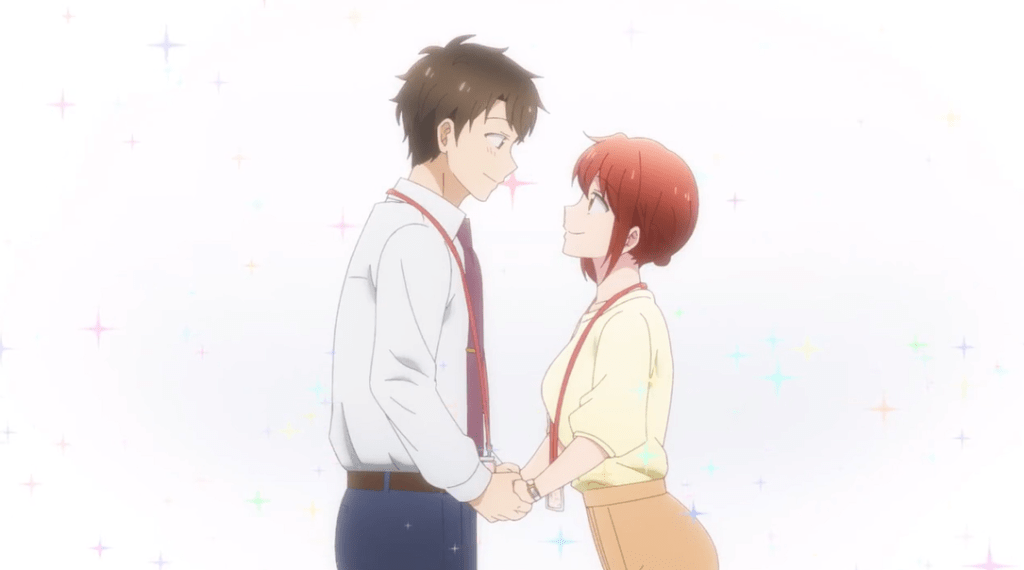
I Have a Crush at Work
Streams: Nowhere legal on Mondays
Rating: 3 (of 5)
This adaptation of a seinen manga is essentially the reverse situation of 365 Days to a Wedding, the series that it will inevitably be constantly compared to (for better or worse). Instead of pretending to be engaged, coworkers Masagu and Yui are pretending to not be involved at all once they clandestinely agree to start dating. Like 365‘s Takuya and Rika, that means jumping through all kinds of hoops to keep up the appearances and deflect suspicion from their actual relationship, but in this case it’s because both are keen to avoid getting caught up in workplace gossip. Expected hijinks ensue.
With both visuals and animation support being rather bland, this series is largely going to be carried by the comedy inherent in their efforts to avoid looking lovey-dovey around people at work. Masagu and Yui do at least have a certain amount of chemistry together by the end of the episode, enough so to be convincing that they actually are a couple, though their reactions to various relationship hurdles (like addressing each other by first names) seems rather juvenile for individuals who are supposed to be 28. At least they are strongly implied to have sex towards the end of the episode, which, frankly, may be the series’ saving grace and gives me a little hope for this one. Can’t see following it unless it gets picked up by a proper licensor, though.

My Happy Marriage 2
Streams: Netflix on Mondays
Rating: 4.5 (of 5)
Despite heavy competition, the first season of My Happy Marriage was among the best-looking series of 2023, and that has certainly not changed with its continuation into its second season. (An OVA episode also available on Netflix technically takes place between the seasons, but it is not necessary viewing before starting this season.) Its gorgeous backgrounds and character designs and elegant animation effort still continue to dazzle and the usually-gentle and subdued soundtrack continues to offer just the right note of support. The real question, then, is whether the story can go anywhere compelling after the major resolutions at the end of season 1. If the first episode is any indication, that won’t anything to be concerned about.
Essentially, Miyo is playing “let’s meet the future in-laws,” as the elder Kudo comes to Tokyo to ask Kiyoka to come investigate something out near his country estate – something that Prince Takaihito also wants to see happen, curiously, including Miyo coming along. Though the sightseeing is wonderful for her, the real problem is Kiyoka’s mother, who is so rude and denigrating towards Miyo that she almost seems to be picking a fight. While Kiyoka won’t have anything to do with her unpleasantness, Miyo is determined to get on at least civil terms with her. But that’s not the only conflict powering the story, especially with Takaihito proclaiming that a “catastrophe” is coming, demons seeming to creep around on the fringes of civilization, and Miyo getting the sense that someone was watching her in Tokyo.
In other words, this is practically an ideal episode to start off the season with and easily one of the two strongest debuts so far this season. If you liked season 1, there’s no reason you shouldn’t be satisfied with the start of this one, too.
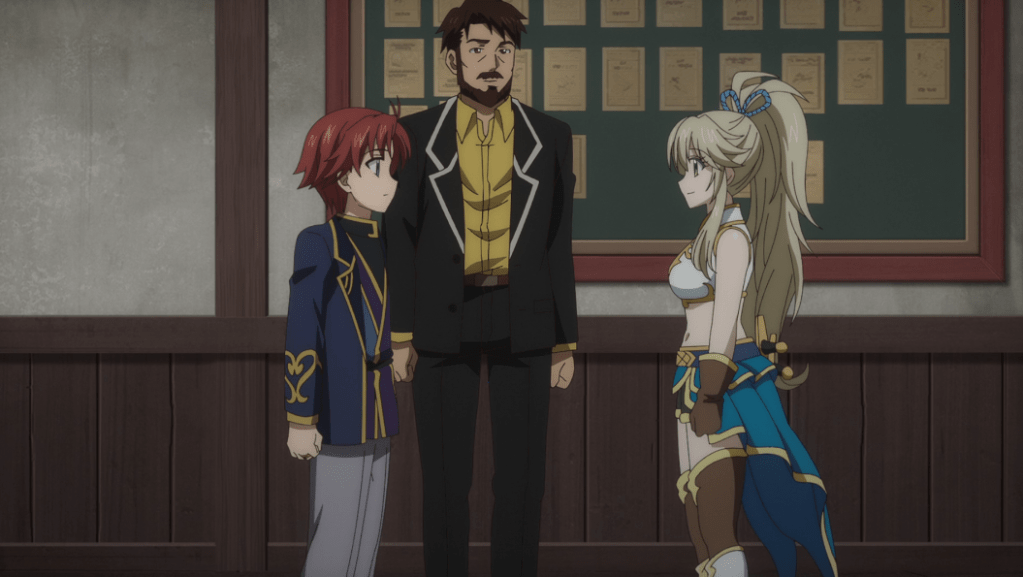
I’m a Noble on the Brink of Ruin, So I Might as Well Try Mastering Magic
Streams: Crunchyroll on Mondays
Rating: 1 (of 5)
If someone were deliberately trying to make the blandest and most juvenile isekai power fantasy imaginable, it would look something like this light novel adaptation. Nothing about it isn’t generic: the protagonist passed out while drinking in modern-day Japan and finds himself in the body of 12-yar-old Liam Hamilton, the fifth son of a noble, in a fantasy world. The family’s due to lose its noble title unless it distinguishes itself (the setting’s one interesting world-building feature is that noble titles only last for three generations), so Liam’s already making plans of his own. That plan involves mastering magic, which he just happens to be godly talented at, and he just happens to attract the attention of an eccentric master who gives him key pointers and gifts. When he aims to become Hunter (read: adventurer), he quickly picks up a sexy blonde warrior-type and a more mature brunette caster-type as regular party members and later familiars, which empowers them at the risk of being subject to his whims, but of course he would never abuse that, and now a princess is getting involved, too!
Yeah, it’s going all those places with barely an ounce of deeper thought about anything, including what happened to the original Liam, who doesn’t appear to have been dying or anything. Add on top of that some of the lamest-looking monsters, essentially no fight animation, and the weakest visual effort you’ll probably see all season (especially for any characters beyond the featured ones) and you have a series which shows little hope of getting any better. The source novel, which got a one-star review on ANN, is from the same novelist who wrote My Unique Skill Makes Me OP even at Level 1 (which was one of the most lackluster series of 2023), so expectations here are really low.

Medaka Kuriowa is Impervious to My Charms
Streams: Crunchyroll on Mondays
Rating: 3 (of 5)
Between her looks and personal charm (and, as she gets older, killer figure) Mona has been a social queen bee literally since birth. Once she realizes that, she prides herself in it, to the point that, by the time she’s 17, she can effortlessly charm anyone. Because of that, she’s thrown for a loop when new transfer student Medaka not only pointedly ignores her but also seems to actively resist even her sexier efforts. As she frets over whether or not she might be getting charmed by him instead, she’s completely unaware that Medaka is hardly unaffected by her but is determined to stay away from women in pursuit of his religious path.
We’ve seen gimmicks like the one presented by this manga adaptation before, and they always hinge on how likable both characters are and whether the chemistry between them is believable. On those points, the first episode is a mixed bag. Mona is clearly a narcissist and an egotist, but she’s not a malicious one; she seems to just be an attention hound rather than doing things like using her charm to manipulate people, and there is a certain adorability to how she tries to use sex appeal. (She only uses it as a last resort, and is mindful of pushing too far with it.) Thanks to a delicate balancing act, she comes across as at least tolerable. Medaka, meanwhile, is fairly believable as a young man working hard to fight off his urges. Too soon to tell if the chemistry is happening, but perhaps until the series can sustain itself with support for a surprising concentration on fan services. (Nothing too racy, but there are underwear shots, suggestive camera angles, and very short skirts.) I’m giving this one a lower mark primarily because the first episode wasn’t as funny as I felt it should have been, but I will probably give this one another episode or two to see how other cast members featured in the OP and ED fit into the developing dynamic.

Promise of Wizard
Streams: Crunchyroll on Mondays
Rating: 1 (of 5)
Normally I reserve a rating this low for something truly awful, but in this case the rating is a reflection of how utterly dull and lifeless its first episode is. The series adapts a mobile game of the same name where the player is a Great Sage summoned from modern Japan into a fantasy world where Wizards (who are, of course, all dashing bishonen) are struggling to fend off the Great Calamity (i.e., their moon), which descends once a year to wreak havoc. Normally it isn’t a problem, but for some reason it’s much tougher to deal with this time, hence the need for the Great Sage to lead and support them.
In other words, it’s pretty standard older-school isekai set-up, with the only minor twist this time being that one of the world’s governments seeks to control the Great Sage so that they can, by extension, control the Wizards, and the Wizards are having none of that. It’s clearly also aiming for a literary flair, with characters names including Cock Robin and Shylock. However, the first episode is completely lacking in energy and style. One of the Wizards’ companions is apparently gravely injured and they’re hoping the Great Sage can do something about it, but there’s zero sense of urgency about that or the soldiers who are trying to capture them. None of the wizards shown so far have any compelling spark of appeal, and viewpoint character Akira (the young woman in the center above) is as drab in both appearance and personality as you’d expect a dedicated viewer insert character to be. A weak animation effort, which shows little more liveliness than anything else, is the final blow. This one was a chore to sit through, so I can’t recommend it for any audience.
ZENSHU
Streams: Crunchyroll on Sundays
Rating: 4.5 (of 5)
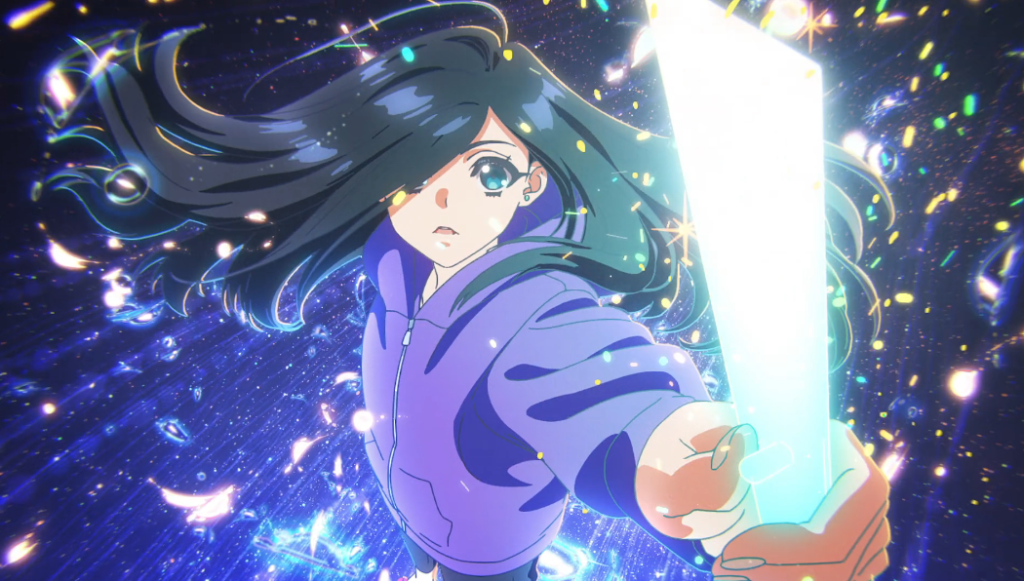
This was one of the season’s most highly-anticipated new series based largely on the strength of it being an original production from studio MAPPA and the director of two of the funniest series of the past 11 years: Monthly Girls Nozaki-kun and Sleepy Princess in Demon King Castle. The anticipation was warranted, as based on the first episode, it’s absolutely a keeper. I can easily see this being one of the biggest new titles of the season.
The premise is a variation on the standard “transported into a story world” isekai, only this time, instead of being a lonely otaku, the interdimensional traveler is Natsuko Hirose, a young “genius” animator who became a sensation with her directorial debut but is now struggling mightily with her follow-up project. Ironically, her isekai transport is triggered by the same thing which just did in the director of one of her favorite anime movies: food poisoning. She awakens to find herself in the world of that depressing movie and watching as key events play out just like they did in the movie. While struggling with accepting the reality of the situation, she discovers her unique magic – the ability to literally bring what she animates to life – to prevent one of the movie’s defining tragedies.
The description above may not sound like anything special, but execution matters here, and this debut positively shines in its details and animation. Natsuko’s creation of a monsters straight from storyboards (it even has animation notes surrounding it as it moves!) is the greatest visual spectacle, but the crisp, vibrant animation shines in other scenes, too, as do the designs for both Natsuko and movie hero Luke, while other characters seem to deliberately retain more cartoonish looks. Credit also goes to strong musical support and all the neat little background details, such as the crumbling walls of Last City. One issue I could see here is that the subtitles and the English simuldub refer to mini-unicorn Unio by different pronouns, but otherwise this is the strongest debut so far this season.

I Want to Escape from Princess Lessons
Streams: Crunchyroll on Sundays
Rating: 3 (of 5)
In this light novel adaptation, Leticia, the daughter of a duke, is a rambunctious and free-spirited girl who feels quite constrained when she’s chosen to be betrothed to Crown Prince Clarke, as it means constant training and expectations that she will behave as a proper lady. When, at age 17, the prince shows up to a ball with a new woman on his arm, she’s actually delighted with the assumption that this means the engagement is broken off and quickly plans to move to a family home out in the country, much to the consternation of her older brother. But the OP and ED strongly suggest that this move will not free her from entanglements with Prince Clarke, whose heart may not have turned as far away from Leticia as she thinks.
This is one series which might have benefited from a double-episode debut, as it feels like the crux of the main story’s gimmick hasn’t been fully revealed by the end of the episode. Most of this first episode involves Leticia learning to endure, stone-faced, through the rigorous training to be a future queen, which does successfully cast her as a sympathetic character. Because of that, the sudden tonal transition when Leticia finally believes that she’s been released from all of that is all the sharper. It reveals that Leticia may have been holding in her exuberant spirit to get by, but it’s still there and quite capable of making a spectacle of herself. The OP strongly suggests that Prince Clarke is going to continue to pursue her and attempt to win her over, though, and the real series may be about her continually attempting to dodge his efforts. Frankly, that’s a less appealing long-run prospect, but at least this first episode is executed well and looks pretty good. I’m on the fence about following this one.

Medalist
Streams: Hulu on Saturdays
Rating: 4 (of 5)
In this manga adaptation, 26-year-old Tsukasa was part of a competitive ice dancing team, but is now looking for a skating job to get by between ice skating shows. He’s less than enthusiastic about taking up his former partner’s offer to be an assistant skating coach, but that changes due to encounters with a timid 5th grader named Inori. She desperately wants to skate, but her mother doesn’t want her to because her older daughter was a dedicated skater whose career was cut short by injury and Inori’s on the verge of being too old to start. But Tsukasa finds common ground with Inori on that point, and Inori shows she clearly has the talent. They just may wind up inspiring each other.
As much as the first episode sometimes descends into silly antics, there isn’t another series which has debuted so far this season which even comes close to matching the emotional pull this one offers. There’s no hint of romance on the horizon (or at least, hopefully there’s not?), but Inori and Tsukasa nonetheless need each other, so I can see this becoming a heartwarming coach/student relationship. A skating routine shown at the beginning of the episode looks pretty sharp, too. Seriously doubt I’ll follow this, and it’s not going to be a titan like Yuri on Ice was, but I can easily see this one finding an audience.

Okitsura
Streams: Crunchyroll on Saturdays
Rating: 3 (of 5)
In this manga adaptation, Teruaki is a recent transfer from Tokyo to a high school in Okinawa. Though he seems to be fitting in well, he’s woefully deficient on knowledge of both local customs and Uchinaaguchi, the local language, which is mostly used by older Okinawan natives. The latter is a particular problem because the girl he quickly becomes sweet on, the energetic Hina, speaks mostly in Uchinaaguchi, so he doesn’t understand most of what she’s saying. Thankfully, fellow student Kana translates for him, but unfortunately for Kana, Teruaki is oblivious to the fact that she’s doing it because she’s sweet on him and using it as an excuse to be around him.
Whether or not an actual love triangle is forming here is unclear at this point, as Hina is always viewed by others, and so we don’t know how she feels (or, for that matter, if she’s even mature enough to be interested in romance). But that’s a sidelight in this first episode. The story instead focuses much more on the lightly comical portrayals of the language and cultural barriers Teruaki is faced with, as well as stuffing in all kinds of cultural tidbits on Okinawa. On those fronts, the first episode works pretty well; in fact, all the landmarks featured in the ED are starting to get me interested in visiting Okinawa at some point. Other recent series (Laid-Back Camp, Hokkaido Girls are Super-Adorable!) have shown that these travelogue-flavored series can work with sufficient supporting gimmicks, but I’m currently doubtful that the approach used here will keep my interest.
I’m Living With a Otaku NEET Kunoichi?!
Streams: HIDIVE on Saturdays
Rating: 3 (of 5)
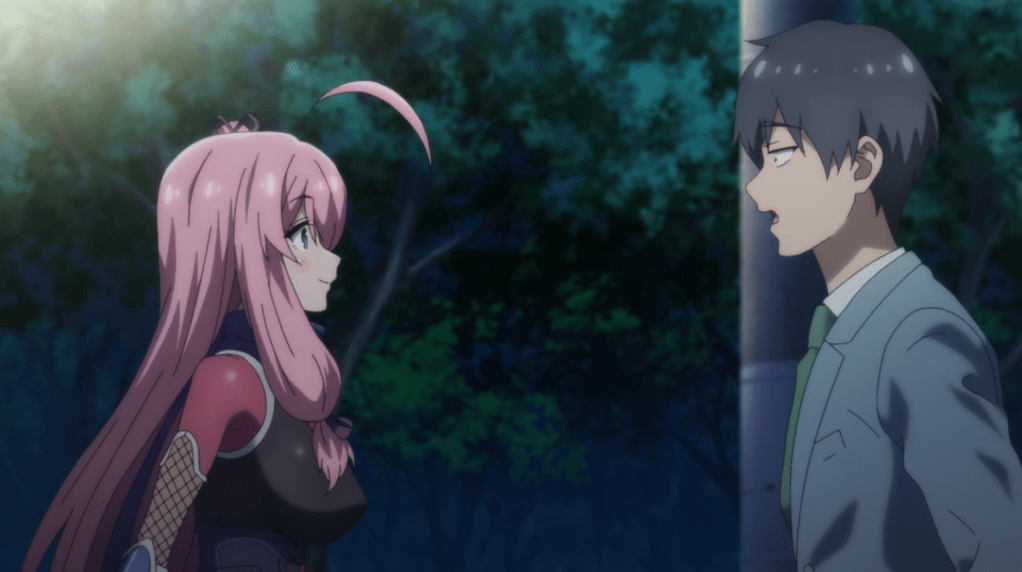
In this manga adaptation, Tsukasa is a perfectly ordinary unmarried salaryman. . . or so he thinks. Unbeknownst to him, his “warrior blood” has started to awaken, and that’s attracting the attention of supernatural monsters. One night a sexy pink-haired ninja swoops in to rescue him from one such monster. Shizuri promises to become Tsukasa’s personal protector from other monster attacks if he’ll let her stay at his place and play video games all day when not performing ninja tasks. (The implication is that she left her ninja village and doesn’t have a place to stay in the city.) Tsukasa, who’s always been a loner, finds this more agreeable than Shizuri had expected, hence setting the stage for future romantic hijinks. But Shizuri also has a “crazy psycho lesbian” stalker from her village – one who’s also a masochist – to deal with, and at least one other female ninja seems to be waiting her turn.
The most negative thing I can say about this debut is that it might have worked better in half-episode format. (Weirdly, the OP plays twice within the episode, so maybe these are two half-episodes mashed together?) The set-up is gimmicky enough that it almost feels like something else may be going on here, as Shizuri is very specifically and deliberately trying to be a NEET rather than just naturally lazing into it. Regardless of that, this is a surprisingly fun debut, with Shizuri being a delight to watch as Tsukasa plays the passive straight man. It looks surprisingly good for what it is, too, and its quirky use of musical score complements the overall light-hearted tone. It’s also surprisingly mild on the fan service front; camera angles definitely tend to linger on busts and rears, but the only scene showing skin (Shizuri’s in a neck-to-toe body suit almost the whole time) is one brief bath scene, and that’s hardly a sexualized scene. I expect this one to become even more lively as additional cast members shown in the OP start popping up, so I’m cautiously optimistic about it at this point.

Sorairo Utility
Streams: HIDIVE on Fridays
Rating: 3 (of 5)
This one is a series-length retelling of on one-shot animation from late 2021 about a high school girl Minami, who finds herself looking for a new hobby when the mobile game she’s poured countless hours into declares that it’s soon shutting down. At the prompting of a friend, she tries out various sports and school clubs, but none of them seem to fit for her. A chance encounter with an elderly man having back troubles leads her to a golf driving range, where she becomes entranced with an older high school girl taking swings. That girl convinces her to try it for herself, and after a few miscues, she may well have found the fit she was looking for.
If Birdie Wing was the sensationalistic version of “girls do golf,” this one is its down-to-earth cousin. The first episode is a by-the-number execution of a person discovering a new sport that they can become obsessed with, but Minami is an inviting protagonist and Haruka is a fine fit as the upperclassman enthusiastic about drawing a newcomer into the sport. In a writing sense, the episode does everything it needs to do to pitch its series, even including throwing in a vague bit of yuri baiting. The visuals, unfortunately, are a big limiting factor here. This is far from one of the best-looking shows of the season, and its detail-rich depiction of golf can only go so far to offset that. It’s the entire reason I’m not rating this one a notch or two higher, because otherwise I think this series has potential.
Tasokare Hotel
Streams: Amazon Prime on Fridays
Rating: 3.5 (of 5)
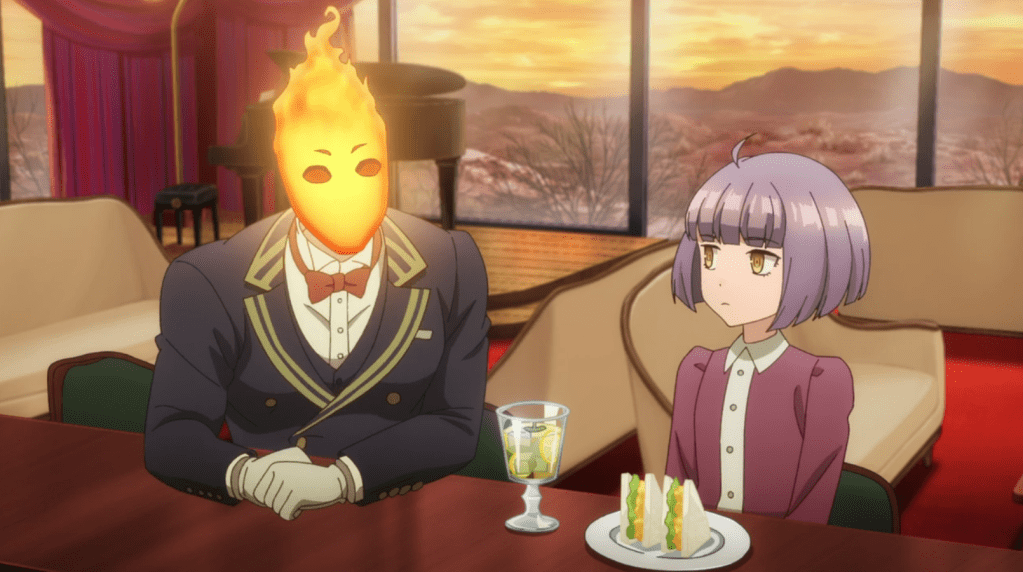
The Tasokare Hotel exists in a realm on the border between life and death, where guests check in free of charge to learn about themselves and which way they should go from here: on to the afterlife or back into the land of the living. They do so by being assigned to a room and investigating details found in the room (which can change from day to day) until they remember crucial details, often with the assistance of a hotel staff member. Until they remember their identities, their face (or in some cases entire head!) is not revealed. A girl who eventually remembers her name to be Neko Tsukahara is a newly-arrived guest with a mystery about how she ended up there (viewers see in an opening scene that she was apparently stabbed), but she finds helping another patron to sort out her identity and life to be interesting enough that she asks to stay on as staff, just like a porter named Hatori did before her.
This is a very odd little series which feels very much like one of those mystery-solving mobile games (which it is, in fact, derived from), so its main appeal is going to be to the kind of anime crowd who enjoys titles like Death Parade. Though there are indications of possible darker elements (both Neko and the other patron she helps ended up here because of some degree of bloody violence, for instance), the general tone is a bit more light-hearted and a number of odd supporting characters abound, including the manager whose head is a ball of flame, the apparently-human standoffish kitchen girl, the female bartender who’s dressed like a flapper and has horns, or the demonic-looking bar patron. There’s a sense that episodic mysteries may be framed by overarching mysteries involving Neko and Hatori, and that’s a perfectly fine structure to work with. I will probably give this one another episode or two to catch my interest, though normally this kind of series isn’t my thing.

I’m Getting Married to a Girl I Hate in My Class
Streams: Crunchyroll on Fridays
Rating: 3 (of 5)
Anime’s had a lot of situations over the years where youths have been caught in arranged engagements by parents or grandparents, but few grandparents have been as obnoxious about it as the set involved in this scenario. As crass as this set-up may sound, this is actually a high-energy comedy, and that energetic spirit is just enough to carry this starter episode. There’s also a very clingy female cousin of Saito’s and a gyaru who’s a close friend of Akane (and who is in love with someone, though whether it’s Saito or Akane is unclear at this point) to round out the core cast and doubtless offer additional complications. The first episode drops a lot of hints that should be fodder for future episodes, including suspiciously absent parents on both sides and a vague suggestion that Akane may be a full-blown tsundere here, so it doesn’t look like the series is going to depend just on romcom elements. I’m wary on this one, and the artistry is certainly nothing special, but I’m willing to give it a chance.
Thanks to meddlesome grandparents, archrival high school students Akane and Saito aren’t just getting forced into an arranged marriage; they’re actually legally married, assigned to live in the same “love nest” of a house, and even required to sleep in the same bed, all because their grandparents have regrets about how they didn’t hook up with each other at the same age (when they also had a strong rivalry) and so intend to make damn sure their grandkids don’t make the same “mistake.” Saito reluctantly puts up with this because it’s a precondition towards eventually taking over his grandfather’s highly-successful company (which will otherwise be relegated to being run by a stray dog), while Akane reluctantly does so for as-yet-unrevealed reasons whispered to her by her grandmother. But they still consider each other rivals and intend to maintain that appearance at school.

Momentary Lily
Streams: Crunchyroll on Thursdays
Rating: 2.5 (of 5)
Like all studio GoHands projects, this is an original animation effort, one helmed by the director of Coppelion, Hand Shakers, and most of the K franchise. And for all of the spectacle that’s going on visually, the plot may be the most ordinary of all of GoHands’ works: mysterious techno-aliens have appeared who erase any humans who get near them (leaving their clothes and carried items behind). All that’s now left in the otherwise-mostly-intact city are a quintet of teenage girls who all have crystals(?) called Andvari which can summon fantastical weapons which both protect them from the erasing effect and allow them to combat the techno-aliens. Then they meet a lone new girl wandering alone who lacks her memories from before the catastrophe but seems able to all a very potent weapon of her own.
Plot-wise, this seems like as standard a post-apocalyptic scenario as they come in anime, although the comment “we can’t become friends because it would be sad if we vanished” near the end of the episode is mildly intriguing and the random cooking segment in the middle seems so completely out of place that one character even apologizes for it. Nothing sticks out so far about any of the characters, either; they’re all walking anime stereotypes. But hey, it’s not any of that which matters here; it’s GoHands’ crazy visual style. This is the ultimate refinement of the techniques they have developed through previous titles, for better or worse, and mileage will definitely vary on that. The use of color is almost too vivid at times, with multiple lens and lighting effects in almost every shot (watch for rainbow effects around the edges of many shots), and GoHands’ trademark heavy use of ground-level angles and rotating viewpoints is in such full force that I could see tracking the action scenes leaving some viewers dizzy. That contributes to the action scenes being almost too busy to easily follow. Copious attention is also paid to animation of hair blowing around and the ample jiggling breasts of one (and later to a lesser extent two) of the girls, again for better or worse.
Honestly, the visual style presented here doesn’t bother me, so the lower grade is entirely based on the weak non-visual aspects. I’m just intrigued enough by what’s going on in the setting that I may watch more, but right now this isn’t looking like a keeper.

Grisaia: Phantom Trigger the Animation
Streams: Crunchyroll on Wednesdays
Rating: 2 (of 5)
This one is an odd acquisition for Crunchyroll, as it doesn’t have any of the other animation in this franchise. In fact, originating animation The Fruit of Grisaia and sequel The Eden of Grisaia are only available for streaming via Google Play (and only for purchase), and the prequel The Labyrinth of Grisaia is only available on BR and DVD, and the three installments of the OVA Grisaia: Phantom Trigger (for which this seems to be a sequel to) aren’t available legally in any form. The production staff may have been aware of the latter point, as they spend the first two minutes having one of the characters give a brief recap of the previous Phantom Trigger events, though I still think you have be to be at least generally familiar with the concepts underlying the franchise’s earlier installments (i.e., that Mihama Academy was a school for children who are assassins but is now a school to train elite operatives for covert organization SORD) for this to make any sense.
In this installment, Shiori Arisaka is a new teacher at Mihama Academy who is back in the classroom after some dangerous shenanigans. Taiga is an elementary student who is placed in Arisaka’s Class A because of her pedigree, where is she put under the guidance of explosives expert Chris. She’s gradually exposed to what all it means to be an agent with an eye towards making sure she respects the job and doesn’t get full of herself.
Going into this with only a passing familiarity with the franchise, I had a rough ride following the first episode. Because of this, I can only recommend this one to franchise veterans. Its artistic merits are ordinary and nothing about the first episode is compelling enough to make me want to figure things out. Big pass here.

Ameku M.D.: Doctor Detective
Streams: Crunchyroll on Wednesdays
Rating: 3 (of 5)
In this double-episode debut, Dr. Takao Ameku is a genius doctor in the Department of Investigative Pathology at the hospital her family runs, though she often gets mistaken for a high school student. She specializes in cases where diagnosis is difficult, but she also has a penchant for sticking her nose into any case she finds interesting. Such is the case with a soon-declared-deceased young man who arrives in the emergency room with blue blood and lower left leg apparently bitten off. With underling Dr. Takanashi and later two detectives in tow, she gets to the bottom of the sneaky cover-up.
In other words, this title based on a novel series is probably going to be one of those “mystery of the week” titles, albeit with a medical focus and the possibility that each “week” will cover two or more episodes. The first two episodes establish the key players and present a suitably twisty case whose solution at least partly depends on expert-level medical knowledge, and Dr. Takao is every bit the eccentric troublemaker that would be expected. (I couldn’t help but think of Maomao from The Apothecary Diaries, though her eccentricities are distinctly different.) It does look decent, and I could see it working for genre fans, but this type of series is really not my thing without bigger attached gimmicks than what we see here.
Headhunted to Another World: From Salaryman to Big Four!
Streams: Crunchyroll on Wednesdays
Rating: 3.5 (of 5)
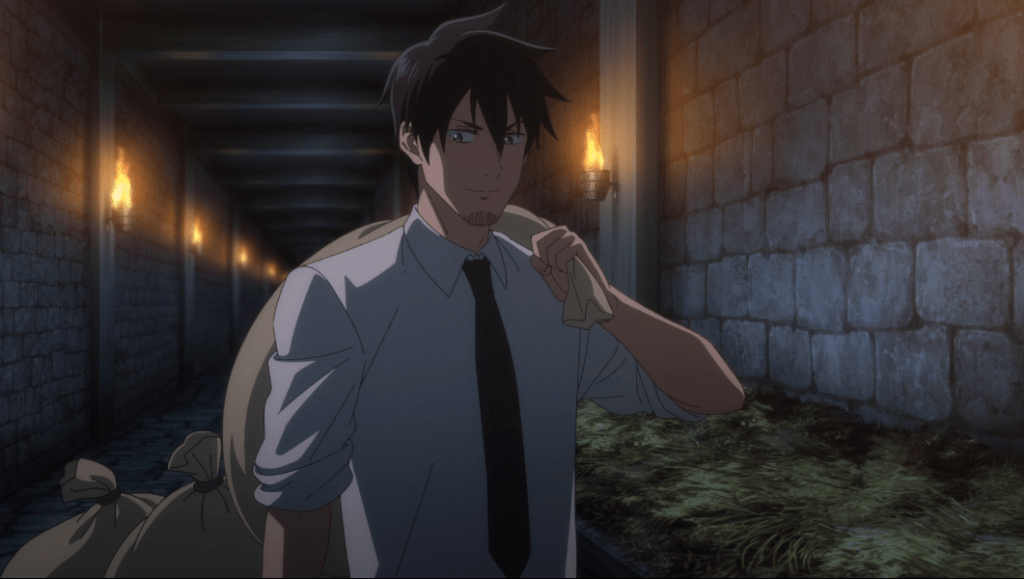
In this manga adaptation, Dennosuke is an Overseas Manager for his company but feels very put-upon. Following an accident in his newest assignment, he finds himself summoned to another world by that world’s Demon Lord, who has specifically sought him out to be the fourth of his army’s lead generals, much to the dismay of both him and the other three generals (who, according to the OP, all happen to be hot ladies, though that’s not immediately obvious in the regular episode in two cases). Dennosuke doesn’t have any magic or special powers – he is, in fact, still a perfectly ordinary human – but he does have the negotiating and managerial skills that the immature demon nation desperately, and that’s exactly why the Demon Lord is so keen to secure Dennosuke’s services and convince him that he will be valued here. A test negotiation with a minotaur soon proves the Demon Lord right to at least one of his generals.
I was not expecting anything from this one at all, but was mildly surprised by how effective its approach is. There have been a few anime and LNs about situations where a hero’s party falls apart because the seemingly-worthless person who was actually keeping everything together was banished, but this is the reverse situation: the Demon Lord is fully aware that a stabilizing element is needed in his immature organization more than another powerhouse, and so is doing everything he can to recruit Dennosuke rather than just force him into the role. In other words, he’s trying to win Dennosuke over by being the ideal boss. This is a decidedly different tack than previous isekai efforts, and I’m quite interested to see where it goes. Artistic merits here are also sharper than the other isekai debuts so far this season – including a sexy female general exclusively featured in the ED – and a soundtrack which draws on American Southwest-flavored acoustic guitar provides additional interesting flavor. This one could be a keeper.
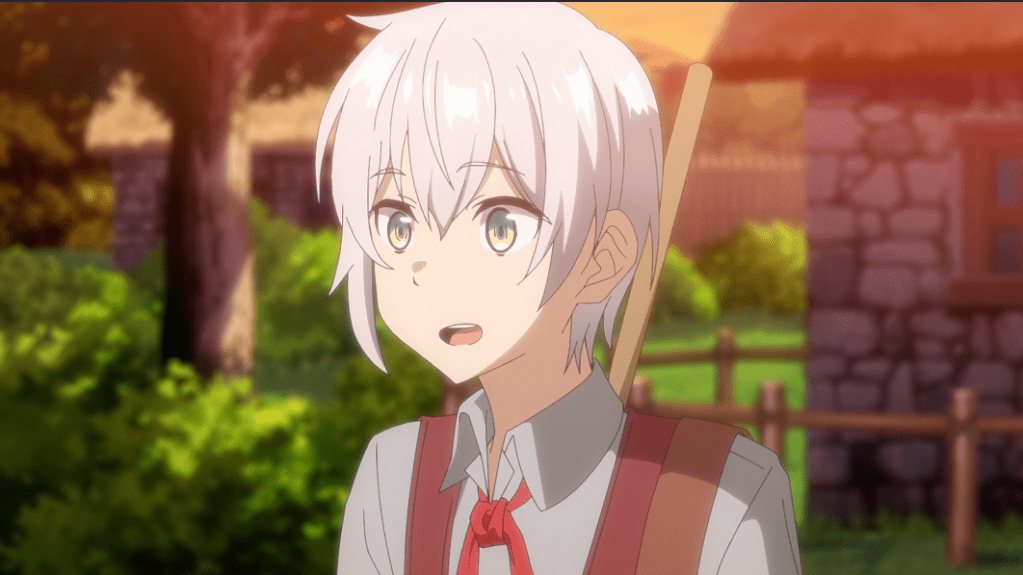
Possibly the Greatest Alchemist of All Time
Streams: Crunchyroll on Wednesdays
Rating: 2.5 (of 5)
In this light novel adaptation, Takumi was accidentally summoned to another world as part of a hero-summoning ritual. But this time it’s not the fault of the goddess; she’s just trying to correct a bad situation brought about by a worldly nation conducting a forbidden ritual. She doesn’t trust that Takumi would be treated well by that nation as an “extra,” so she diverted him and gave him her blessing to compensate. Takumi doesn’t want to be a hero or adventurer, so he tries to focus on developing craft skills, especially alchemy, as he establishes himself in the village of a girl he rescues from a monster. He also picks up a pet poisonous spider along the way. Meanwhile, at least one of the actual summoned heroes already has reason to be wary of the empress who summoned the trio, thanks to the secret blessing of the same goddess.
Let’s be frank here: this one is not worth watching because of the main character. He’s as bland as they come, and the first episode seems to be speeding him towards becoming OP as quickly as possible. Technical and artistic merits are also quite ordinary. What might make this one watchable is the bigger forces in play. There are heavy implications that the Sidonia Empire which summoned the heroes may be up to no good, and Goddess Nolyn’s moves seem more calculated than she’s letting on, even if she does seem to be genuinely concerned for Takumi. If the story keeps those elements in play then it could offset the show’s weaker aspects. Will watch a couple of episodes more before deciding if this one is a keeper or not.
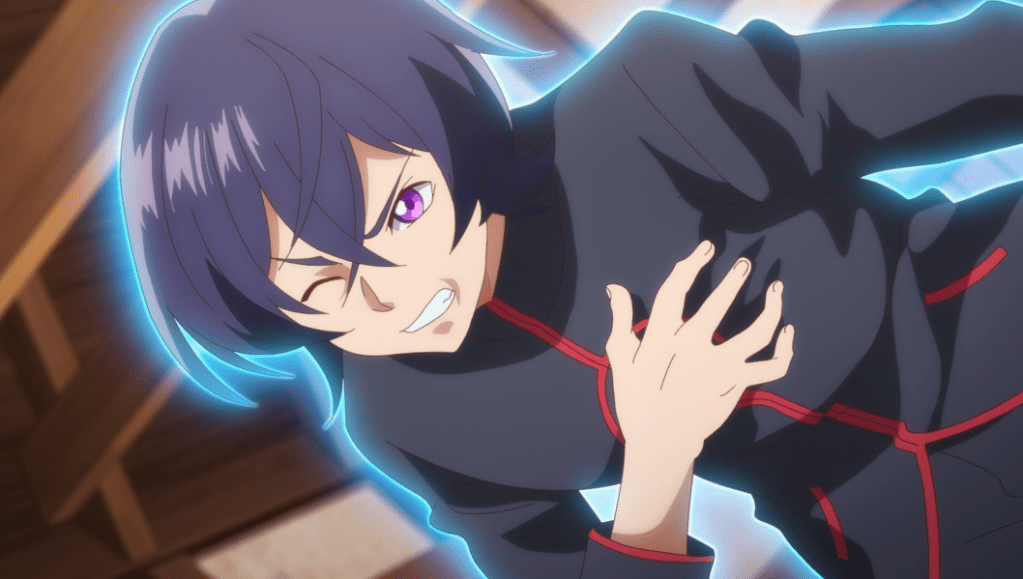
Bogus Skill <<Fruitmaster>>
Streams: Crunchyroll on Mondays
Rating: 2 (of 5)
In Light’s world, people gain a skill from eating a special fruit, and that skill determines what kind of career they are best-suited to. But this can only be done once, as eating a second skill fruit is invariably fatal. Light was hoping for a combat-oriented skill so he can become an adventurer, but that instead went to childhood friend Lena, who was whisked off (despite her protestations) to become one of her generation’s heroes. Light instead gained Fruitmaster, which is as far from what he wanted as could be. But after months farming fruit, he accidentally discovers a hidden benefit of his skill: it makes him immune to poisonous fruit, so he’s the one person who can safely pick up a second skill. And that godly second skill may allow him to eventually stand with his childhood friend again.
This manga adaptation (which chains back to a light novel) looks destined to be one of the season’s bottomfeeders. The whole business with the fruits looks like just the newest gimmick to give everyone in the fantasy setting a guiding skill, and of course the protagonist gets the skill which looks weak at first but is actually totally game-breaking. And rather than have him gradually build up strength by acquiring multiple lesser skills and combining their abilities (which would have definitely been more interesting), he gets what’s apparently one of the strongest right away, hence giving him a shortcut to OP land. And of course he’s eventually going to be surrounded by a bevy of beauties, although one is a girl who looks like she may be 10 whom he lives with because she’s presumed to be an orphan. But hey, she picks up the Appraisal skill, which means she can mightily contribute to Light’s efforts even at such a young age.
Such an uninspired story construction is matched by equally uninspired visuals and a weak animation effort. I’ll probably watch another episode or two to see if this one will go anywhere interesting, but right now it’s not looking promising.

Beheneko: The Elf-Girl’s Cat is Secretly an S-Ranked Monster!
Streams: HIDIVE on Saturdays
Rating: 3 (of 5)
In this light novel adaptation, an unnamed knight dies in battle against demons and finds himself reincarnated in a dungeon as a baby behemoth, an S-ranked monster who, when fully grown, can terrorize entire nations. But at this age he looks just like an adorable kitten. Though capable of handling most monsters (and gaining skills from eating them), he finds himself on death’s door after an encounter with one of the few monsters he can’t currently handle, only to find himself rescued by Aria, an elf adventurer – a very busty elf adventurer, and one who doesn’t have the faintest clue what he really is. He decides to claim her as his master and become her knight, and she names him Tama, and thus a beautiful friendship begins. Of course, an all-too-aggressive fellow adventurer who wants Aria for his wife has to be dealt with first. . .
This one is clearly going to be one the season’s most fan servicey titles, as it does feature brief (uncensored) nudity and plenty of scenes of Tama riding around on Aria’s cleavage. Despite that, the first episode is actually more tame than it could have been, offering hope that it could be tolerable to those not so keen on fan service. It does use game mechanics quite prominently and doesn’t look the sharpest on the animation front (and the less said about the local Guildmaster, the better!), and those expecting it to be anything dramatically different than standard RPG-guided fare will be disappointed. However, Tama is adorable, and based on the first two volumes of the manga adaptation, the relationship which develops between him and Aria is a strong selling point. This won’t be a breakout series or anything, but it should provide reliable, sexy fantasy entertainment for the season.
 USA Anime
I’ll have to disagree on Zenshu. That was the most overwrought example of style over substance I’ve seen in years. The writing failed to make me feel anything more than annoyance for any of the characters, and when the big spectacle arrived, all I found myself thinking is “Boy, this is some truly self-indulgent mental masturbation for animators.”
LikeLike