See here for part 1.
This half of the report covers Orb (which I somehow overlooked in my first half) and all fall season series I have been following which are first hitting episode 6 or 7 between 11/16 and 11/20 inclusive. Mostly these are the series that were later starters, though in one case (Reincarnated Aristocrat) the series is here instead of in part 1 because it took an unexplained week off.
Arifureta 3

Rating So Far: C+
Thanks in part to much improved technical merits, this anime adaptation has gradually become more watchable as has progressed into its third season. It also gets a somewhat interesting plot line going about how the Haulia Bunny Tribe decides to start asserting itself politically, too, with only a comparatively minor helping hand from Hajime. That being said, it’s still blatant edgelord fare, to the point of absurdity; Hajime and crew now fly around on a massive sci fi airship that would look more fitting in outer space, and I think it may actually be impossible at this point for Hajime to make a mistake. I’m really starting to wonder if how seriously this series takes itself isn’t part of a really big joke. It’s barely passable as lowbrow fare.
As A Reincarnated Aristocrat, I’ll Use My Appraisal Skill to Rise in the World 2

Rating So Far: B
While the first season did set the bigger plot in motion, it largely focused on assembling Ars’ core supporters and allies. This season has moved on to dramatically advancing the plot, sometimes with diplomacy and sometimes with Ars facing his first real, direct battles. Along the way his Appraisal ability essentially levels up, too. The series is doing a pretty good job so far of showing how Ars is gradually growing into the role of being a leader who could conceivably rise much further, but this would all be a bit more credible if Ars is allowed to age up some more. At least he’s not having it easy; no shortage of capable foes are popping up in his path.
Bleach: Thousand-Year Blood War p3
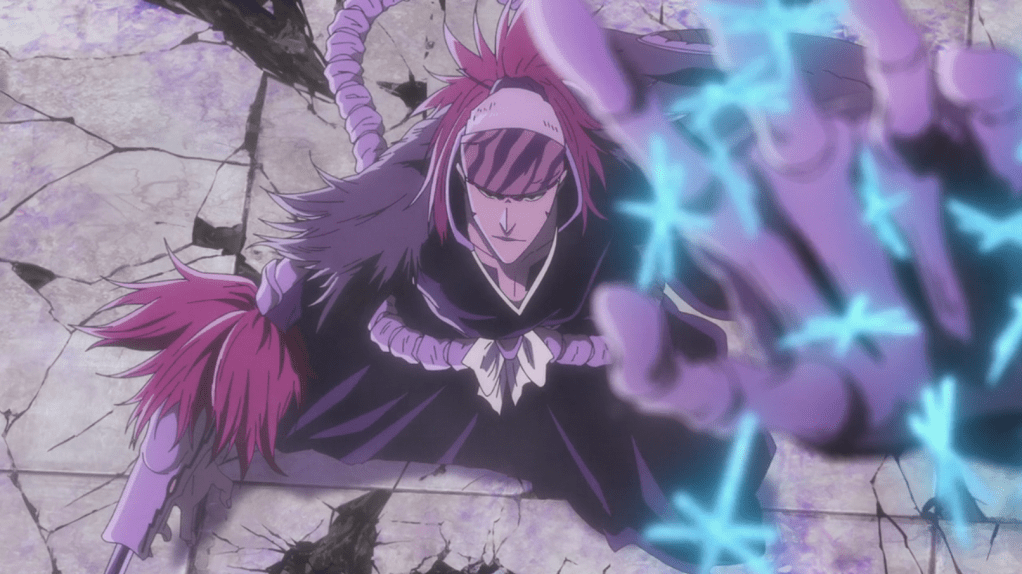
Rating So Far: B-
At this point, I’m watching Bleach much more because I’m a completionist than because I care about the storyline. Other than Uryu having turned on Ichigo and friends/allies and Grimmjow being back as a kinda-sorta ally, this story about Ywatch killing, absorbing, and replacing the Soul King isn’t mechanically much different from any of the franchise’s previous apocalyptic storylines. Like its predecessors, the plot has little more to it than an excuse to set up lots of flashy battles. That being said, the flashy battles are amazingly flashy. The franchise has never looked better than (for example) episode 33, and that and the way the series is getting just about everyone who’s ever appeared before and is still alive involved is enough to carry the content on its own. So turn your brain off and come for the sheer spectacle; who cares if it makes sense?
Demon Lord 2099
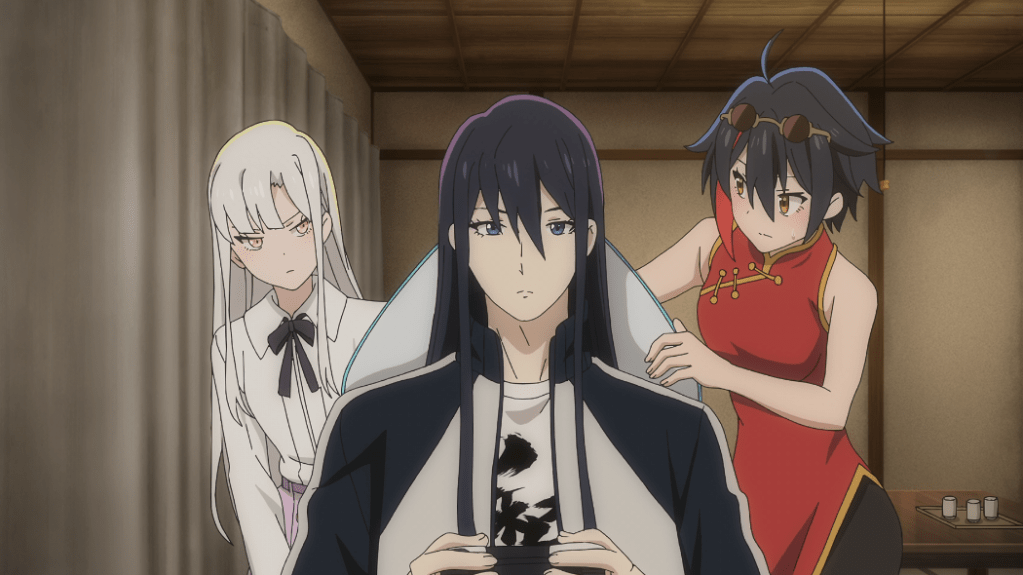
Rating So Far: B-
This “reincarnate into the future of the same world” tale invited initial comparisons to The Demon Sword Master of Excalibur Academy, and despite being an entirely different style of show, it still maintains some structural similarities. It is also easily the season’s most overlooked and underappreciated series. A former demon lord becoming a pompous, arrogant gaming streamer to reconstitute his worship-based power is a neat and fitting approach for a cyberpunk-influenced setting, and there are some unexpectedly philosophical elements involved when Veltol encounters the still-existing former hero, now reduced to being a vagabond. It can also surprise with some remarkably lavish action sequences, highlighted most by some in episode 6, and features a solid core cast. If you passed this one by at the beginning of the season, consider giving it another chance.
Nina the Starry Bride

Rating So Far: B
Nina may still act immaturely at times – she’s certainly no Shurei from The Story of Saiunkoku – but few anime heroines persevere more thoroughly on raw gumption than she does, and that (along with some protection by gorgeously handsome princes!) has enabled her to navigate some deadly-dangerous situations and still come out ahead;. Even a prince intent on using her (unknown to him, fake) status as a priestess-princess to start a conquest of her home country is having trouble reckoning with her, as even being slashed across the chest by a sword doesn’t stop her. Some big plot twists towards the end of episode 7 promise that the story will remain lively. On the technical side, the series benefits from some very pretty character designs, but the more subdued coloring prevents the look of the series from standing out.
Orb: On the Movement of the Spheres

Rating So Far: A
I may be a little biased here, since I’m a sucker for historical dramas. However, for as ugly as the content can be (torture, suicide, violent deaths, and characters being burned at the stake have all been a thing), this is a beautifully-rendered version of a manga that was known much more for its keen writing than visuals (especially in regard to its limited background art!), and it does so without sacrificing the writing one bit. These are sharply-defined characters who each have their own well-developed world views as they struggle to pursue the truth of the universe (i.e., heliocentrism) – even if that pursuit might put them at odds with the Church. Stunning twists, dramatic events, and an especially strong musical score are all highlights of one of the year’s most cerebral series. It’s my current front-runner for Best of Season honors and, unless it flounders in its second half, will likely to make my Top 10 (if not Top 5) for the year.
Ranma ½

Rating So Far: B+
The original Ranma ½ anime adaptation has long been one of the most beloved series in Western fandom, so many familiar with it approached this new version with trepidation. However, a strong case can be argued that this version is better. With support from a crisp animation effort, the series looks great, and the tighter and more efficient storytelling keeps events moving along. It proves that it can hit more sentimental notes when it needs to (see the first half of episode 5), but it also deftly captures the spirit of madcap fun which characterized the earlier version. Nowhere does that show more strongly than episode 7’s epic “Rhythmic Gymnastics Martial Arts” showdown. (For newcomers, this is just the first in a regular running gag of making martial arts versions of activities that have nothing to do with martial arts.) The wonderful English dub is hitting all the right notes, too. Sure, there’s a big controversy over some mild censoring involving butt cracks and nipple-less breasts, but that’s ultimately a trivial issue to me. If you were holding off checking this one out because “remake,” don’t; you’re missing the season’s funniest series.
Seirei Gensouki: Spirit Chronicles 2
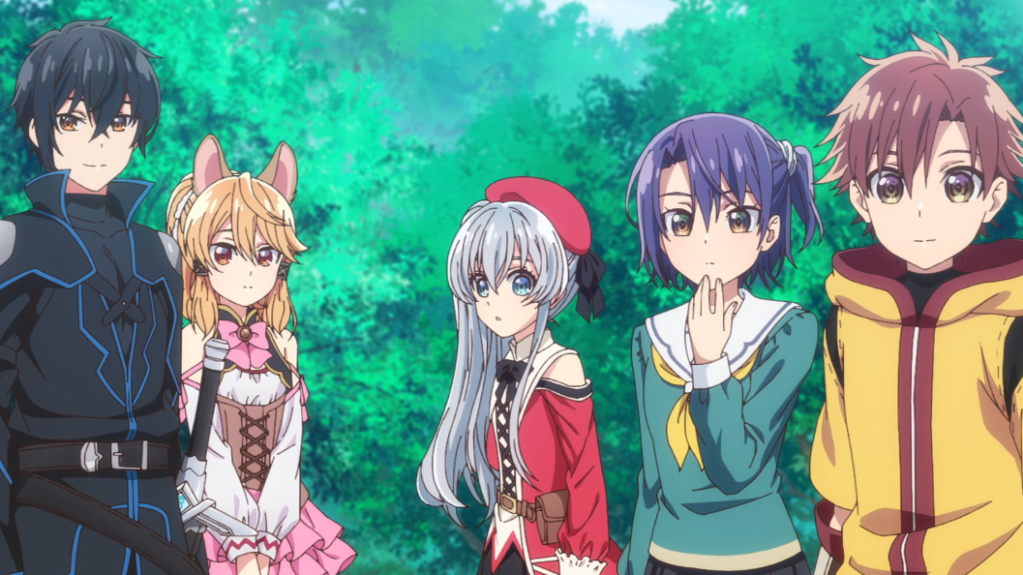
Rating So Far: B
Frankly, I didn’t have a high opinion of the first season when it first aired (due in no small part to the MC being a blatant Kirito clone), but the series grew on me more during a rewatch immediately prior to its second season’s debut, and that has carried over into this season. The lackluster personality of Haruto/Rio is still the series’ weakest point, but he is unusually insightful for an OP lead and he does at least have the conflict over keeping his past and present lives separate as he interacts with the newcomers from Japan (including his former love and biological little sister!) and one of the other summoned Heroes. Essentially, the series depends primarily on the people around Haruto being much more interesting, and giving significant chunks of the content from viewpoints other than Haruto’s doesn’t hurt. The seeds of greater plot threads lain in the first season are also now starting to bear fruit, including some surprising reappearances by characters first seen early in the series. It still hasn’t strayed far from being an OP power fantasy at heart, but it has more going for it than the lesser isekai series this season.
Shagri-La Frontier 2

Rating So Far: B+
There may not be much plot to this series, and it may not amount to anything more compelling than watching the MC get into all sorts of antics in VR games, but it still tackles what it does with gusto. The animation alone doesn’t get the credit for that, although it is a big factor; the design of the action scenes deserves at least as much credit. Sunraku also doesn’t give enough credit for how much his smarmy personality helps carry the series, either, whether he’s playing in Shangri-La Frontier or some other rando VR game. The SF Mini bits also deserve a shout-out, especially the one at the end of episode 6 about customers at an armorer being creeped out by Sunraku jealously staring in from outside. Still among the season’s most purely entertaining series.
The Do-Over Damsel Conquers the Dragon Emperor

Rating So Far: B-
This one is probably my second-favorite new series of the season (behind only I’ll Be a Villainess), but I have to rate this one distinctly lower for a couple of reasons. The first is that the series doesn’t entirely divorce itself from the inherent creep factor of a grown man having a physically 10-year-old girl as his bride, even if she is mentally older (though he doesn’t know that) and nothing physical is going on. Revelations over the course of the season have shown that his preference for girls under 14 isn’t a lolicon fetish, but rather a security measure (a fragment of a jealous goddess oriented on him can possess women age 14 or older), but that still seems a little too convenient. The balancing of cutesy and serious elements could also be better, but that’s a minor factor compared to the animation limitations that occasionally include still frames in the midst of action scenes – disappointing, since at other times the action flow actually looks pretty good. On the plus side, Jill is a delight and calls up comparisons to Tanya from The Saga of Tanya the Evil as the prepubescent-looking girl in a military uniform with a military attitude, and the contrast between her gung-ho confidence and occasional cutesy moments is utterly adorable. Not hard at all to understand how she wins people over despite her age. The musical score is a big plus on this one, too. Even with the growing animation problems, this is still a very fun series.
The Healer Who Was Banished From His Party Is, in Fact, the Strongest

Rating: B-
I was going to rate this one a step lower, but a strong episode 7 – one which furthers two key relationships and reinforces in a big way that a bigger plot is in motion – bumps the evaluation up overall. It also doesn’t hurt that this is one of the better-looking of the lower-tier fantasy series this season, with some actually decent animation, and has a co-lead in Narusena (featured above) who more than makes up for the bland personality of the titular character. Add in a potential romance beyond just the main characters and we have an RPG-styled fantasy series which seems to be striving to be more than just a typical tale about dungeon-crawling. The limp personality of Laust (who is, of course, far more capable than rumors about him suggest) is still a limiting factor on what this series can accomplish, but this one is still at least a step above the season’s bottomfeeders.
 USA Anime
2 thoughts on “Fall ’24 Mid-Season Report, part 2”